
The Ninth Jewel of the Mughal Crown: The Birbal Tales by James Moseley, 2001.
 The characters in the stories, Emperor Akbar and his friend and advisor Birbal (birth name Mahesh Das) were real people who lived in India during the late 16th century. Over the years, stories and legends have grown up around them, although the truth is pretty incredible by itself.
This book, which is a collection of some of the stories about Akbar and Birbal, begins by explaining a little about their history, and there is another section in the back that explains more about their lives. The book’s introduction says that Akbar’s father died when he was young and that Akbar’s reign was considered a Golden Age in India’s history, although it mostly focuses on his “Nine Jewels.” The section in the back gives a little more context.
To begin with, Akbar was one of the Mughal Emperors. The book doesn’t explain much about what that means, but understanding it helps to set the stage for the stories. The Mughal Empire consisted not only of modern day India but also some of the surrounding countries. The empire was first established by Akbar’s grandfather, Babur, through conquest. Babur was born in the region that we now call Uzbekistan, although his family’s origins were Mongolian. They were distantly descended from Genghis Khan. They were also descended from Tamir (sometimes called Tamerlane), giving them Turkic and Persian connections. The early years of the Mughal Empire were unstable, but when Akbar’s father died and Akbar became emperor at a young age, his regent helped him to stabilize the empire and expand it through a mixture of further conquest and diplomacy. The reputation of wealth and power in the Mughal Empire eventually led to the adoption of the word “mogul” in English to describe a wealthy and powerful person, especially one who has high standing in a particular field of expertise (something which, as you’ll see, was of particular importance to Akbar). Using the riches and resources gained through his territorial expansion, Akbar worked to develop the economy of his empire and to support the arts and learning.
 Akbar had a great love of learning, but unfortunately, was dyslexic at a time when people didn’t understand the condition very well. (To put it into context, Akbar was a contemporary of Elizabeth I of England.) Even though, like the European Emperor Charlemagne (who lived much earlier but was also apparently dyslexic), he wanted to learn to read, he struggled with it throughout his life because of his condition. Akbar didn’t want his reading difficulties to interfere with his learning or his love of the arts, so he found another way around the problem. In a way, it’s similar to what Charlemagne did, surrounding himself with learned advisors who would read to him and discuss important topics with him, verbally teaching him whatever he wanted to know. Akbar chose his advisors very carefully, seeking out people who had demonstrated excellence in subjects that were important to him. Akbar’s advisors became famous for their fascinating and unusual skills and personalities. He had nine special advisors who were close to him, which is why they were called, “The Nine Jewels of the Mughal Crown.” Legends grew up around these men and their abilities:
Tansen – An expert in music, whose singing voice was said to be so amazing that he could make candles burst into flame with a song.
Daswant – A master painter.
Todar Mal – An expert in finance.
Abul Fazl – A great historian.
Faizi – Brother of Abul Fazl, a famous poet.
Abud us-Samad – A master at calligraphy, he also designed the imperial coins.
Man Singh – A great military general.
Mir Fathullah Shirazi – A man of many skills, including the fields of medicine, astronomy, philosophy, and finances.
Birbal – Akbar’s Minister or Raja, who had a reputation for cleverness, quick wit, and the service of justice. He was the “Ninth Jewel”, and his stories are the focus of this book.
 There are many more stories about Birbal than the ones included in this book, but they are all about how Birbal uses his wits to serve Akbar and aid the cause of justice. Like all good legends, the stories are partly based in fact, but have grown with each retelling to the point where it can be difficult to say where the real people leave off and the legends begin.
In the first story in the book, Akbar meets Birbal when he is still a child. Fascinated by the boy’s combination of courtesy and boldness and his unusual wit, he gives the boy a ring and tells him that when he is grown, he should come to his palace at Fatehpur Sikri. Years later, Birbal does go there, but when he shows the ring with the emperor’s seal on it to the guard on duty, the guard refuses to let him in until he promises to give him half of whatever the emperor gives him. When Akbar sees Birbal, he is pleased to meet him again but stunned when Birbal asks him to give him 100 lashes. When Birbal explains the reason for his bizarre request, it not only gets the laughter of the court, but the approval of Akbar, who appreciates this bold approach to the problem of bribery.
 From then on, Birbal gains a reputation for his ability to mediate disputes and find unusual solutions to problems. His favored position at court gives him some jealous enemies, but he handles them with the same cleverness that he uses to solve every problem.
In one of my favorite stories, one of the noblemen at court attempts to cheat Daswant out of his rightful fee for painting his portrait by changing his appearance (shaving his beard, shaving his mustache, etc.) after each portrait sitting and then claiming that the portraits Daswant paints do not really look like him. When Daswant explains the situation to Birbal, he gets the nobleman to promise to pay for an “exact likeness” of himself in the presence of Akbar. Then, Birbal shows him a mirror, which Akbar agrees contains an exact likeness of the nobleman and deserves payment.
 In another of my favorite stories, Birbal determines who is the true owner of a coin purse when a flour merchant and an oil merchant each claim that it belongs to them. He pours the coins into a pot of boiling water and notes the oil that bubbles to the surface. Because the coins are covered in oil, they obviously belong to the oil merchant. If they had belonged to the flour merchant, they would have been covered in flour.
One of the interesting aspects of Akbar’s friendship with Birbal was their religious differences. Akbar, like the rest of his family, was Muslim, and Birbal was from a family of Hindu Brahmins. The Mughal Empire was a multi-cultural society, and Akbar was aware of it. At one point, he attempted to develop a new religious movement that combined aspects of Islam and Hinduism in order to further unite his subjects, but it never caught on as a mainstream religion, possibly because Akbar’s own strong personality as its leader was one of the most attractive features. Akbar did seem to genuinely believe in religious tolerance and promoted widespread education among his subjects.
Birbal, the historical person, was eventually killed in battle, and Akbar greatly mourned his loss. The Mughal Empire continued for generations beyond Akbar, although it eventually collapsed through a combination of military, administrative, and economic decline; the decentralization of power in the empire; internal discord; and interference from outsiders that paved the way for the British colonization of India. That’s kind of a simplistic description of a long, complicated period of history, but the end of the Mughal Empire was marked by the beginning of British rule in India. In 1858, the British East India Company deposed the last of the Mughal emperors, sending him into exile, around 300 years after the reign of Akbar began.



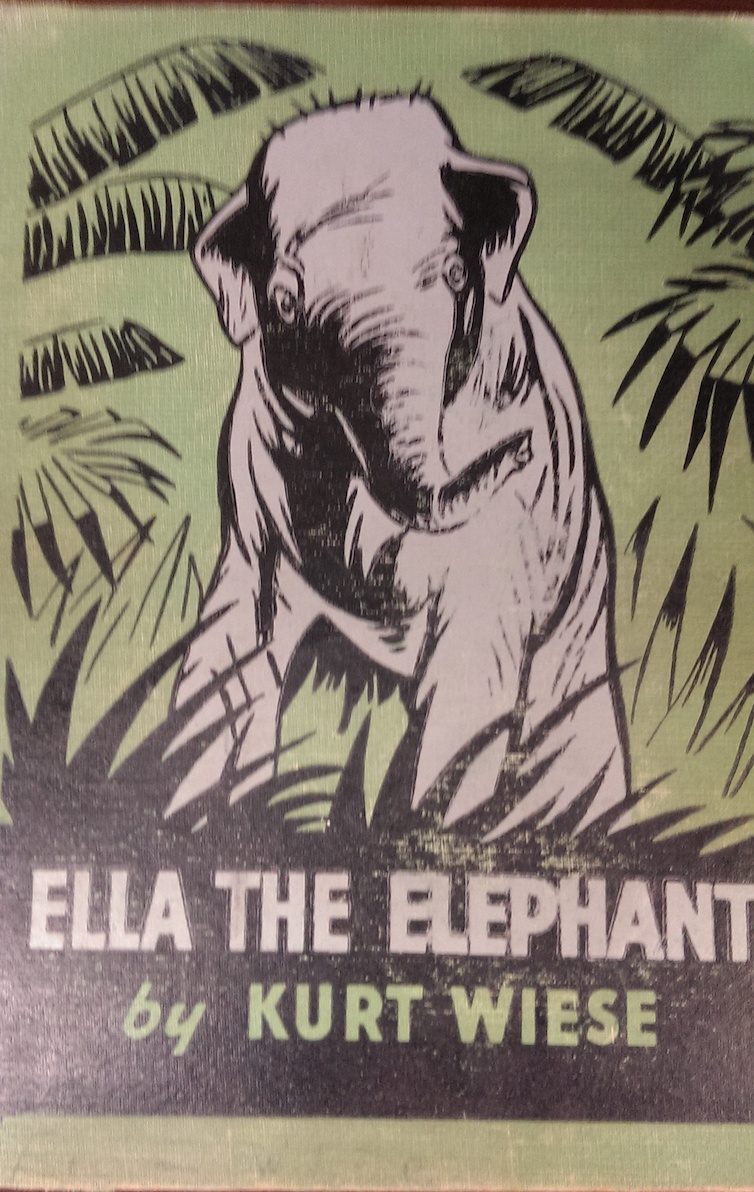
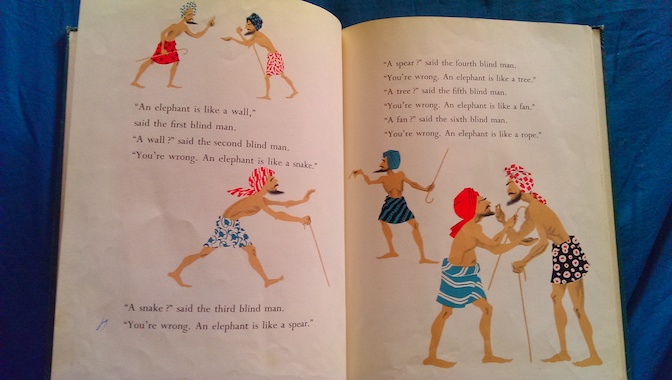
 Ella is a happy baby elephant in India. Her mother takes good care of her, and she enjoys moving with the herd. However, Ella’s carefree life with her mother ends abruptly when the herd is captured by humans!



 Jestress's Forgotten Books and Stories