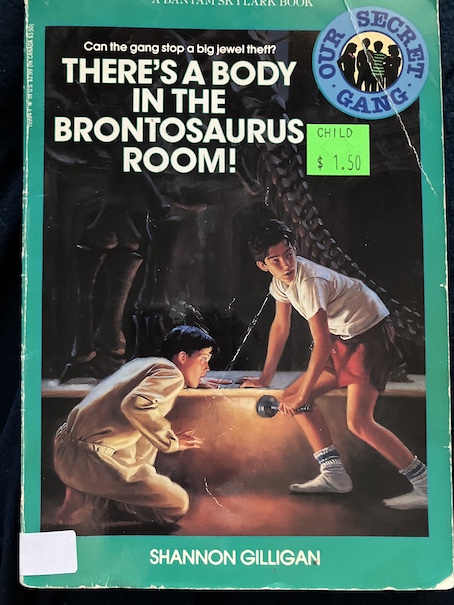
There’s a Body in the Brontosaurus Room! by Shannon Gilligan, 1992.
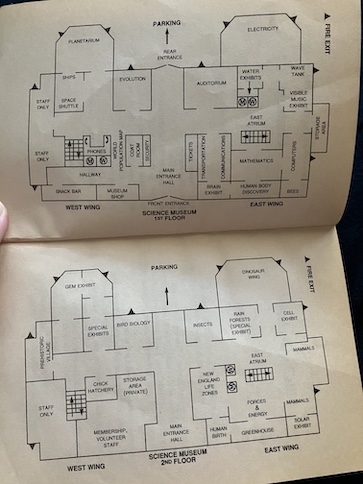
This is the last book in the Our Secret Gang series. This story takes place in a museum, and at the beginning of the book, there are maps of the interior of the museum, which help in keeping track of the action. Members of the detective gang in the story take turns narrating different books, and this one is narrated by Davey.
The fifth and sixth grade classes at the kids’ elementary school are having a camp-in at the Museum of Science in Boston. When the kids are getting on the school bus, Tim notices that a teacher is reading a copy of a newspaper with an article that says the police have received a tip that there will be a jewel robbery at the museum they’re visiting because there is a visiting exhibition of valuable gems. The kids think that they may have found the next case for their detective gang, and they’re glad that they brought some of their equipment with, like their walkie-talkies.
When they stop for dinner at a pizza place, they learn that students from Longmeadow Middle School will be joining them for the camp-in at the museum. By coincidence, Jeanine knows one of the boys from Longmeadow, Jeremy, because she takes horseback riding lessons from his mother. Jeremy ends up joining the others for dinner. Even though Davey rolls his eyes at his little sister’s jokes that Jeanine is his girlfriend, he feel unexpectedly jealous at the way Jeanine blushes around Jeremy.
While they’re having dinner, Tim notices a boy who is all by himself and crying. Jeremy says that he’s a new boy at his school named Matthew. Kids have been trying to make friends with Matthew, but Matthew never seems interested.
As they’re getting ready to leave, Jeanine makes plans to meet up with Jeremy and hang out at the museum. Davey gets angry because he wants the whole gang to investigate their possible mystery, and he doesn’t want Jeremy being forced on the group. Davey and Jeanine have an argument about his jealousy, and Jeanine separates from the group at the museum to hang out with Jeremy. Davey worries that this will split up Our Secret Gang or at least that they’ll lose Jeanine.
To make matters worse, Davey sees Mr. Berrar, the headmaster of the special school for science and mathematics that his parents and school principal wanted him to attend, at the museum because he is one of the museum trustees. Davey’s secret is that he is a genius at mathematics, and his parents and school principal wanted to send him to a special high school, skipping multiple grades, even though he didn’t feel ready to do that. Davey managed to persuade his parents that he would be happier remaining in a normal school with his friends, but he dreads other kids finding out and teasing him for being a nerd.
While Davey and the other kids are looking at the gem exhibit and talking about the security features they’ve noticed, still considering whether someone could be planning to rob the museum, Davey spots Jeremy in an area that’s marked “Private-Museum Staff Only.” What is he doing, sneaking around an off-limits area?
The rest of the detective gang, minus Jeanine, solves a small mystery for a girl from another school who lost her retainer, Lorraine. It only earns them $3 in detective fees, but Davey decides to hang out with Lorraine for a while and see if Jeanine gets jealous of them like he was of Jeanine and Jeremy, which she does. Davey thinks it’s only fair that Jeanine feel some of what he’s been feeling, and since she’s been giving him the cold shoulder and not helping with the detective activities of the group or joining her friends in looking at the exhibits, she deserves it.
Just as all the students are getting ready for bed, a girl starts screaming that there’s a body in the brontosaurus room! She says that it was lying right underneath the dinosaur, but when everyone rushes to look, it’s gone. Then, Matthew apparently has an attack of appendicitis and is taken away in an ambulance. Something about the ambulance strikes the kids have peculiar, but they have trouble thinking what it is at first. By the time they realize what was wrong, things have already started happening in the museum. The guards are missing, and security devices have been turned off. It seems that the robbery rumors were true. What can the kids do to stop it?
The book is available to borrow and read for free online through Internet Archive.
My Reaction
I first read this book as a kid, and one of the things I liked about it most was the title. I still think about when I’m at a museum with dinosaur exhibits. I never went on one of those camp-ins at a museum when I was a kid, but it’s something that I would have liked, especially if there was a mystery involved!
The romantic bickering in the story is juvenile, but I remember similar incidents from when I was about the age of the kids in the story. Some adults still do things like the kids in the book do, like seeming to flirt with someone else to make a partner jealous and get their attention. It’s never a good idea. It just adds another person to an already-complicated and highly emotional situation without resolving whatever was behind the initial problem.
As an adult, I thought that Jeanine was a little thoughtless and rude for ditching her friends to hang out with a guy she seems to have a crush on. When you already have plans with a group of people, suddenly tossing them aside to make plans with someone else and ignore them is rude. However, Davey’s jealousy and possessiveness is also inappropriate, and his behavior is part of the reason why Jeanine broke off from her usual group instead of just having her other friend join them. If Davey had either allowed Jeanine’s friend to join their activities or simply told Jeanine that he was hurt that she seemed to be abandoning the group and their latest project to pay attention to this other guy, his behavior would have been more reasonable. Part of the problem with simply inviting a new member on short notice is the secret nature of the group. To invite Jeremy to join them, the whole group would really have to agree on it, and that’s difficult in the public setting of the story. I think Jeanine should be a little more aware of the awkwardness of the situation because she knows why their group and its activities are secret, but it still doesn’t excuse Davey’s behavior. A large part of the problem is that Davey hasn’t given much thought to his real feelings about Jeanine, and he’s having trouble coping with the realization that he feels more strongly about her than he’s been willing to admit. The two of them sort things out when they have an honest talk with each other about their feelings.
Halloween doesn’t start out well for Susannah’s best friend, Lucy. Her father accidentally threw out her costume, thinking that it was trash because it was mostly made out of tin foil. (She was planning to be the Death Queen character from a comic book.) As she desperately tries to put together a last-minute costume for Susannah’s Halloween party, her father tries to buy her a costume at the discount store. Unfortunately, all the discount store left was a Little Bo Peep costume. Lucy thinks that she’s going to be mortified, showing up in something so childish when she told everyone her costume would be really cool. When another girl from school, Carla, comes by and teases her about her costume, Lucy gets the idea to make it a kind of double costume, painting her face an evil green so she can rip off her sweet Little Bo Peep mask and be the sinister Death Queen underneath.
Carla says that the secret identity costume idea is pretty good, but before she can go to the party, she has to buy a costume of her own. She had to wait for her stepfather’s pay day because her parents bought a new dress for her older sister, Nadine, for a high school dance earlier. As Carla explains about her delay in getting her costume, she mentions her sister’s social worker coming to dinner. Susannah asks why Nadine has a social worker, and Carla says that her sister got into trouble with drugs a couple of years before, but she’s not really supposed to talk about it. Lucy and Susannah want to do some trick-or-treating before the party, and Carla asks if they’ll wait for her to get her costume first. The other girls aren’t willing to wait, but they say that they’ll get some extra candy for her when they start out, and they’ll meet her at her family’s apartment at the Eucalyptus Arms apartment house. In her recounting of that Halloween night, Lucy says right out that it was at the Eucalyptus Arms that someone gave them poisoned candy.
When they reach the Eucalyptus Arms, Carla isn’t home yet, but they meet up with Knieval Jones (Lucy’s nemesis and Susannah’s occasional helper from the previous book), who is dressed like a vampire, and get some stale granola bars from Carla’s sister, Nadine. A nice lady name Mrs. Sweet gives them homemade cupcakes, and Mr. O’Hare, who is a vegetarian and thinks that sugar is poisonous, gives them organic treats from the natural food store. However, the strangest experience they have is in Mr. Mordecai’s apartment. Mr. Mordecai is a strange man with whitish eyes. He insists that they come in and pay their respects to the deceased “Jeremiah.” There is a coffin in the room with a wreath on it. The kids are spooked, but Susannah notices something odd about the wreath, which gives her an idea of who/what “Jeremiah” is. Mr. Mordecai gives them popcorn balls, and they leave.
They meet up with Carla, and Susannah’s grandfather, Judge Higgins, drives all four children to the party. However, Knievel and Lucy get into a fight over their treat bags, spilling both of them into the gutter and ruining their candy. Lucy is mad at Knievel, but then Knievel suddenly gets sick. At first, Lucy thinks that he’s just eaten too much because he’s been sampling his treats and stealing some of hers. Knievel misses the party because he’s sick, but it turns out to be much worse than that. The next day, the police come to the school to tell them that Knievel was poisoned and to interview the children about everything that happened the night before.
Because Lucy and Knievel spilled and ruined their bags of candy, it’s hard to say exactly what Knievel ate before he got sick, and Lucy never ate any of it. Carla had the same treats as the others, and she is also ill and being examined by a doctor, just in case she was also poisoned. Susannah turns her treat bag over the police for analysis. She never touched her candy because she had more than enough to eat at the Halloween party.
By process of elimination, they determine that the poisoned treats had to come from one of the apartments at the Eucalyptus Arms, and that it must have been in something homemade or unwrapped, not wrapped, commercially-made candy. Lucy says that they really know better than to eat unwrapped treats from a stranger, but Susannah points out that Knievel was hungry and ate treats almost as fast as he got them, regardless of whether they were wrapped or not. There are only a handful of suspects who could have handed out the poison in homemade or unwrapped treats, but which of them did it and why?
The title of the book is based on the fact that the apartment house is painted an ugly shade of green and all of the questionable treats the kids received were colored green.
The book is available to borrow and read for free online through Internet Archive (multiple copies).
My Reaction
One of the best things about this book for me is that it was originally published in the year I was born, and it’s a Halloween story, and I happened to be born only a few days before Halloween. Even if I hadn’t already read and liked the first book in this series, that would have endeared me to this book right away. I originally read the first book in the Susannah Higgins series as a child in elementary school, but I think that’s the only book in the series that I read at the time. It might have been that the library didn’t have the full series and the first book was the only one I could find or that book was one of the many that I found at a used book sale and the others weren’t there. It’s been so long that I can’t remember. I just remembered one scene from the first book for years, and it took me a long time to figure out what I was remembering.
Because I was very young during the early 1980s, it was a long time before I understood that this was a period when people were especially worried about the possibility of poison and razor blades in Halloween candy. Like other kids of the 1980s and 1990s, I had to watch those Halloween safety videos that warn you to be careful and to inspect candy for signs of tampering before eating it. (Specifically, I saw this video, which I found one day on YouTube. I watched this 1970s film on reel-to-reel when I was in elementary school because they hadn’t yet installed TVs and VCRs in the classrooms yet and they had a library of old films that I’m pretty sure they bought when they originally built the school in the 1970s. The sound quality wasn’t any better when I saw it for the first time, but it still cracks me up that the ultimate solution to the girl’s unsafe Halloween costume turns out to be gradually changing it to be a different costume.) In 1974, a father murdered his own son for the insurance money, hoping that some random sadist would be blamed for the crime because there were already urban legends about such things. Even though it wasn’t long before the truth of the father’s crime came out, this incident added to the urban legends, seeming to confirm the stories of Halloween poisonings. Because of this, my early Halloweens were very different from the ones my parents had in the 1950s. I was allowed to go trick-or-treating, but I never received any homemade treats, like the popcorn balls and candy apples my parents sometimes got. By the time I was trick-or-treating, only fully-wrapped, commercially made candy was considered safe and acceptable.
At first, I thought that the solution to this mystery would be that Nadine had made marijuana granola bars because we were told right away that she was involved with drugs in the past. There have been real-life cases of children accidentally getting into drugs owned by family members, including cases that have become part of the Halloween urban legends. However, that’s not the case in this story. Susannah’s Aunt Louise, who is a nurse at the children’s hospital, tells Susannah that marijuana was one of the first things they ruled out when they were testing to see what had poisoned the children. The children were vomiting and hallucinating, so Aunt Louise says that it appears to be an overdose of some kind of medicine.
Aunt Louise wasn’t mentioned in the previous book in the series, but she comes to stay with Susannah because her grandparents have to go out of town. Again, Susannah’s parents are simply not mentioned in the story. It’s never clarified whether Susannah is an orphan or living with her grandparents for another reason, although I think it’s implied that she’s an orphan by the parents’ absence and the lack of any mention of why.
Carla is a new character who didn’t appear in the previous book, but again, children in these books do not live in conventional two-parent households. Nadine is actually Carla’s stepsister, and the two of them haven’t known each other very long and are having problems adjusting to their parents’ remarriage and living together. Books with divorced parents or blended families were becoming increasingly common in children’s literature during the 1980s and 1990s, and they were a regular staple of books that I read when I was young. It was pretty common for there to be at least one character with divorced parents in the books I read, but this series stands out to me because it seems like every kid in it so far is either from a divorced family or lives with relatives other than their parents, for some reason. A mixture of different family situations is to be expected, but an overwhelming number of kids in almost the same situation just seems a little odd.
The author does a good job of making everyone at the apartment house look equally suspicious. A number of people at the apartment house have secrets, and some of them are truly dangerous. One of the characters in the story, a man Nadine and Carla call “Uncle Bob” because he’s a friend of Nadine’s father, seems to be showing inappropriate attention to the girls. Carla is afraid to be alone with him, hinting that things that he does when she’s alone with him make her uneasy or even frightened. Uncle Bob isn’t the poisoner, but he does seem to have inappropriate sexual interest in the girls. There isn’t anything explicit described in the story, but the way that the characters refer to Uncle Bob and the dirty magazine that Lucy says she found in his trash can along with a bunch of empty liquor bottles imply what Uncle Bob is like when other adults aren’t watching. Carla says that she’s tried to tell her parents about it before, but nobody believed her because Uncle Bob has been such a good old friend of her stepfather, and he can’t picture him doing anything wrong. When she finally confides the problem to Nadine, Nadine confirms that she’s had the same experience with him and that her father didn’t believe her either, but she’s going to make sure that he listens this time. Susannah also says that they are going to tell the police about it and her Aunt Louise, and while Uncle Bob may not have actually done anything that would cause him to be arrested, he’s going to get some severe warnings and maybe some professional help.
When the story begins, in 1912, the four Linnet children are in a bad situation. With their father on his way to serve in the army in India with a stop in Egypt, they have been left behind to stay with their grandmother, who is not an indulgent, “grandmotherly” sort of grandmother. First, she’s planning to give away the children’s dog because she doesn’t like dogs. Then, she’s planning to send the two eldest children, Robert and Nan (short for Anna), to boarding school, while keeping the younger children, Betsy and Timothy, to be tutored at home. Worse, she locks the children up by themselves, sometimes in the dark, leaving them to scream.
Admittedly, the reason why they were locked up was because their grandmother had arranged a tea party to show them off to her friends, and the children, not liking parties, had barricaded themselves in a hen house, fighting off the gardener and their grandmother’s companion with rhubarb stalks until they were finally caught. They were locked away from the party guests until they were ready to apologize, which none of them want to do. (Bad strategy on the part of the adults. Some things are their own punishment. Rather than locking the children up, which is cruel, they should have let the children suffer the consequences of their own bad choice. Don’t get them out of the hen house; insist that they stay out there, not being allowed any of the goodies at the party or even being allowed back into the house until they first clean themselves up in the yard. The kids aren’t very good at planning, and I’m sure they don’t have food stores in the hen house. Everyone gets hungry eventually, and it should be clear to the children that it’s their personal choice how long they want to stay that way. But, the grandmother also shouldn’t give away the children’s dog without their consent, so it’s hard to feel too sympathetic here.) Realistically, it is acknowledged that their grandmother could be quite kind with children who were gentle, quiet, and well-behaved, but also realistically, this is not the case with her grandchildren. Frankly, the children are wild and have no inclination to compromise with their grandmother. With all of these things combined, it is clear that life with their grandmother is going to be impossible, and Robert decides that there’s only one thing to do: escape.
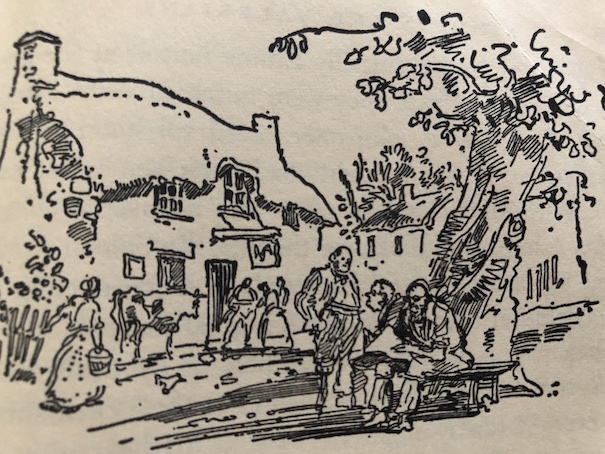
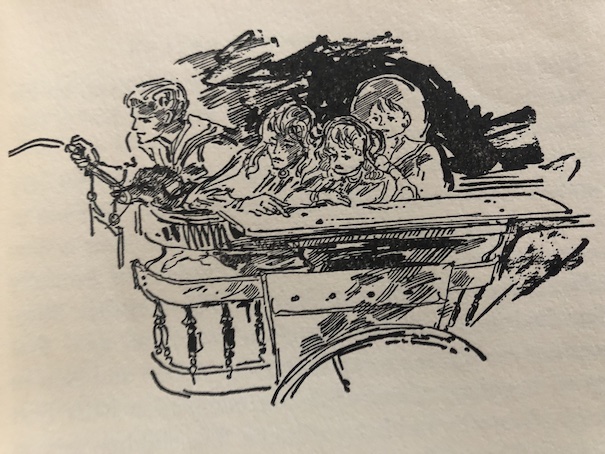
Robert manages to break out of the room where he’s been locked up, and he frees his siblings and their dog, Absolom. The four children set off with their dog, intending to walk to the mountains (just some mountains, somewhere to the west – nowhere specific and no real plan involved) and make their living there because Robert imagines that would be a good idea. As they pass an inn, they spot a pony and cart tied up outside, and they decide to appropriate them for some transportation. Besides, Robert has always wanted a pony. Nan is concerned that they’re stealing, but Robert says that they’re just “borrowing.”
The Linnet children have much more in common with their Uncle Ambrose than with their grandmother or other relatives. Uncle Ambrose is similarly unsociable and impatient. Uncle Ambrose was once a teacher, but now that he’s retired, he has no desire to spend time with children again. He also doesn’t like dogs. But, it turns out that the pony they “borrowed” belongs to him and takes them to his house. When Uncle Ambrose realizes who the children are, he takes them into his house and keeps them over night, although he doesn’t introduce himself to them immediately. The children feel much more at home with Uncle Ambrose, even when they don’t know who he is, because his house is a bit shabby and untidy, and he has a pet owl and a cat with kittens. Also, in spite of his gruff manner and assertion that he’s not happy about having children around, Nan has the sense that he actually likes them. The children decide that they’re going to try to behave themselves in this house because they like being there and want to stay.
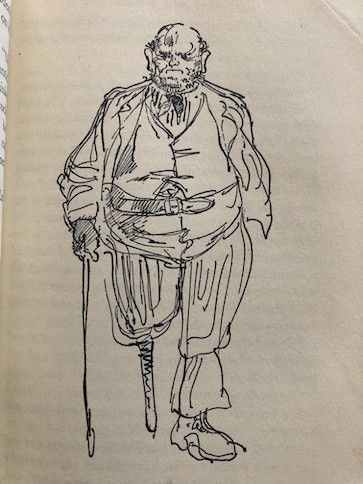
In the morning, Uncle Ambrose goes to town to get the groceries that his peg-legged gardener, Ezra, neglected to get the other day when the children stole the pony and cart in town. When he returns, he also has the children’s luggage with him. Uncle Ambrose went to see his mother about the children, and when he suggested that he could keep them at his house, the children’s grandmother eagerly took him up on the offer. The children are all intensely relieved that they won’t be sent back to their strict grandmother and her overly-tidy house and can stay with their eccentric uncle, the peg-legged gardener who comes home singing in the middle of the night when he gets drunk, and the wonderfully untidy garden outside, where they can play.
Uncle Ambrose confesses to the children that he has actually missed his students since he retired from teaching. He isn’t particularly fond of children by themselves, but he is fond of teaching them. As a condition of the children staying with him, Uncle Ambrose insists that they allow him to educate them. The children agree to this because one of their reasons for running away was so they would not be split up when Robert and Nan were sent to boarding school. The children just want to stay together with their dog. Uncle Ambrose agrees to this, saying that he doesn’t approve of sending young girls to boarding school at all, although he insists that girls be properly educated as well as boys. He says that he wouldn’t even consider sending Robert to boarding school until he’s had a better grounding because he’s not satisfied with the reports he’s had of Robert’s academic abilities. The children aren’t thrilled at the idea of studying, but they agree to it because staying together and studying with Uncle Ambrose sounds better than being split up or the other alternative, being sent to stay with their Uncle Edgar in Birmingham. Also, Uncle Ambrose is willing to give the children some time each day to themselves, to play or do what they want. He won’t even insist that they show up for meals, but if they miss them, they’ll just have to go hungry. (See? I told you it was a better strategy than fighting to get them out of the hen house.) As much as the kids don’t like the idea of studying, they love the idea of having some freedom. Freedom means that adventures could happen.
Now, the story at this point could have been a complete story by itself – a group of wild, undisciplined kids are left with their strict grandmother, and after a battle of wills between the children and the grandmother and some overly-harsh punishment, the children run away, finding a gruff but kindly bachelor uncle who rediscovers the pleasure of having children around and also happens to have once been a teacher and can tutor the children while their father is away, managing to inspire the children to behave a little better and learn to make some better decisions by granting them a little freedom to make some of their own choices instead of being too controlling. That’s all very nice as a single story. However, in this case, all of that is just the background for the story to come. We’re still in just the first part of the book.
Segue to the Magic
After it’s settled that the children will stay with Uncle Ambrose, they decided to go into town for their first free excursion. They stop at the little store in town to buy some sweets and a picture postcard to send to their grandmother because Nan has been thinking over their time with her and has realized that they were badly behaved and feels guilty about it. The store is managed by Emma Cobley, an old woman in an old-fashioned dress and cap and a red shawl who owns a black cat named Frederick. Emma is a little creepy and she warns the children to stay away from Lion Tor because it’s a dangerous place. (A “tor” is “a high, craggy hill.”)
When the children return to the house, Ezra insists upon introducing them to the bees. The children think that this is a very odd thing to do, but Ezra says that it’s important, and he asks the bees to look after the children. Timothy asks if it’s possible for bees to look out for people, and Ezra says that they once saved his life when he fell into an old tin mine and showed the vicar (the children’s uncle, after he retired from teaching – they’re all living at the vicarage now) where to find him. When Ezra hears that they’ve been to Emma Cobley’s shop, he tells them not to go there anymore. The most Uncle Ambrose buys there is stamps, but neither of them ever buys anything else from her, and Ezra is reluctant to tell the children why. There is something a bit creepy about Emma and some suspicious things in her shop, like the overly-appealing candy and the one postcard that she refuses to allow the children to buy or even look at for long.
As the children start having lessons with Uncle Ambrose, Robert asks him if he will be giving them pocket money. Uncle Ambrose says that he doesn’t give pocket money, but there are opportunities for earning some. He gives them a list of chores that they can do and what he’s willing to pay for doing them. He also points out to Robert that, as the oldest boy, he can’t expect to wriggle out of the tougher chores or leave them to the girls, but if he’s willing to tackle the tougher chores, he will pay him well for it. Uncle Ambrose has somewhat chivalrous sensibilities about what girls can handle, and he also reminds the boys that there are consequences for misbehavior, lying, or stealing. He says that he would never use corporal punishment on a girl, but he has caned boys before and could do the same to his nephews if they give him reason. He tells the children that, from this point on, they cannot interrupt their lesson time with any subjects that aren’t related to the lesson. (He never does hit any of the children and does make reasonable exceptions to this rule later in the story.) It isn’t just the threat of punishment that keeps the children in line, though. It turns out that Uncle Ambrose is an excellent story-teller, and when he starts describing other countries or historical events, the children are captivated. In many ways, Uncle Ambrose makes learning fun because he really loves his subjects and knows how to share what’s fascinating about them with other people. There are parts of the learning that seem like drudgery, but they are balanced out by the parts that are truly fascinating.
The children also gradually begin learning more about the other people who live nearby. There is a black man (called a “Negro” in the story) called Moses Glory Glory Alleluja. (That’s apparently his real name in the story and not just a nickname, to which I say, “God help us all!”) When the children first see him, they’re startled and afraid of him because he’s carrying a curved knife and looks like “a coal-black giant.” They stop and stare at him because they’re afraid, and Ezra tells them not to hurt the poor man’s feelings because he’s a gentle man. As he gets closer to the children, they realize that he’s not as fearsome as they had first thought from a distance. He’s actually very pleasant, and the knife he’s carrying is just a scythe for clearing plants.
Moses works for Lady Alicia (a sort of man-of-all work – cook, gardener, butler, etc.), and Lady Alicia also has a monkey called Abednego. When the kids go with Ezra to pick up a couple of extra beds that Uncle Ambrose is borrowing from Lady Alicia for the children, Abednego takes Betsy’s doll, and she has to chase after him to get it back. In the process, Betsy meets Lady Alicia, an elderly lady in very worn fancy clothes and wearing jewelry. The two of them introduce themselves to each other and explain a little about who they are. Lady Alicia once lived there with her husband and son, but she says that her son, Francis, was “lost” years ago on Lion Tor at the age of eight. She doesn’t explain at this point how that happened or even if her son died or simply disappeared. Her husband also disappeared a few years later overseas because he was a traveler and explorer. She doesn’t seem to expect to see either of them again. This is really where the main plot of the book is introduced.
The Magic
So, now we know that there’s a creepy old lady who owns a shop that isn’t quite what it seems to be and a mysterious and sad old lady whose husband and son have disappeared, and it’s all connected to Lion Tor. The children’s first encounter with Lion Tor happens when Betsy’s siblings realize that she’s missing at Lady Alicia’s house. Not knowing that she’s with Lady Alicia, they assume that she’s wandered off into the woods to pick flowers and go searching for her. Nan finds her way to Lion Tor, where she discovers a cave that is filled with paintings. She knows they weren’t done by cave people ages ago because people in the drawings are wearing modern hats. The artist turns out to be a bearded man in ragged clothes who seems unable to speak.
Nan learns that this man is called Daft Davie, but Nan doesn’t think that’s fair because he seems intelligent and artistically talented, even though he isn’t able to speak. Ezra explains to her that Davie used to work for a blacksmith in another village nearby but some boys kept teasing him and tormenting him because he couldn’t speak, so he eventually went to live by himself at Lion Tor.
The boys eventually find Betsy with Lady Alicia. To their surprise, Lady Alicia seems to be enjoying Betsy’s company, even though she doesn’t normally like visitors. She invites the children to return again with Nan, making an odd comment about how the Linnet family seems “inevitable” but might do her some good.
Uncle Ambrose allows Nan to use the parlor of his house as her private room, where she can do her sewing and darning or just have time to herself. He says that he hasn’t done much with the parlor himself, other than putting furniture in it, because the parlor is usually for the lady of the house, and he’s unmarried. Now that Nan is there, she counts as the lady of the house as the oldest girl, and Uncle Ambrose can tell that she’s a reflective kind of person who can use some quiet time to herself, away from the other children. Nan is appreciative, and she’s also surprised when Uncle Ambrose tells her that the previous lady of the house was Lady Alicia. Before her marriage to the local lord, she was the daughter of the previous vicar, and he found some of her old books in a hidden cabinet in the room.
Uncle Ambrose removed the books from the hidden cabinet and put them on the bookshelf in the room, but out of curiosity, Nan investigates the hidden cabinet and finds that it still contains a notebook. However, the notebook belonged to a young Emma Cobley, not Lady Alicia. The notebook contains what looks like evil witchcraft spells. Nan is alarmed, although later, she’s confused because she sees Emma Cobley at church. She isn’t sure what to think because she can’t imagine that a real, evil witch would go to church. Nan considers that perhaps Emma used to practice witchcraft in her youth but repented later and changed her ways. However, if that’s true, why does Ezra disapprove of her, and how can they explain Emma’s creepy black cat? When Nan studies the spells in the book, seeing spells that can prevent a person from speaking, cause a person to lose his memory, and cause a person to forget affection for another, Emma’s true character and some of the mysterious events of the past begin coming a little more clear.
When Nan talks to Ezra later, he says that Emma Cobley’s father was a black-hearted warlock who taught her evil spells. Ezra says that his own mother practiced white magic and that his family is descended from ancient peoples who were called fairies or gods. Nan had thought that there was something gnome-like in his appearance and isn’t surprised that he’s a bit magical. Ezra further describes the day that Lady Alicia’s son disappeared at Lion Tor. They’d been on a picnic with the boy’s nurse, and the nurse and the boy had been playing hide-and-seek. A mist came up, and they were unable to find the boy. They feared that he might have drowned in the marsh because his cap was nearby, but they were never able to establish that. Some other people thought he might have been kidnapped by gypsies, but there was no evidence of that, either.
In the cemetery of the churchyard, there is a memorial to Lady Alicia’s husband, Hugo Francis Valerian, and his son who was named after him, but the husband’s death date is unknown. The children argue about what that really means. Robert says that the Valerians are dead, but they’re just not buried at the site of the memorial because they were lost and nobody knows exactly when they died and where the bodies are. However, Betsy has the feeling that they’re not dead, and Nan agrees that disappearing isn’t the same as dying. But, is that really true? Are the Valerians alive or dead, and if they are alive, where are they?
Pieces of the past continue falling into place. Betsy and Nan accidentally find old love letters that Emma Cobley wrote to the elder Hugo Valerian … love letters that also contain angry threats when the love wasn’t returned. Pictures that Davie painted on the walls of his cave resemble ones from Lady Alicia’s tapestry. Uncle Ambrose doesn’t believe in the power of witches and thinks that what Ezra has been saying about magic and spells is just superstition, but Ezra knows a few things that Uncle Ambrose doesn’t. He’s the one who knows how to undo Emma Cobley’s wicked spells.
The book is available to borrow and read for free online through Internet Archive. Sometimes, this book also appears under the title The Runaways.
My Reaction and Spoilers
A Few Concerns
I didn’t like the parts with the harsh punishments or threats of it for the children. Locking children up or caning them would be considered child abuse by modern standards, although my feelings about that are somewhat offset because they kids are pretty wild and the book makes it clear that they are badly behaved in the beginning and provoked the punishment they received. I’m willing to let it go partly because nobody actually gets caned and because of the fairy-tale atmosphere of the story. In fairy tales, there is often a cruel relative, and in this case, it’s more like an overly-provoked one at her wit’s end. In either case, the children’s situation with their grandmother in the beginning establishes the reason why they go to live with their eccentric uncle and have magical adventures.
Some people might not care for the different standards for boys and girls in the story. It’s old-fashioned, out of date even for the time when the book was first published, but the setting is also old-fashioned, so I think it’s meant to establish the time and place. It’s common in older children’s books and stories that imitate them for boys to be given more freedom than girls but also for boys to be subjected to harsher, more physical punishments when they get out of line. Uncle Ambrose seems to have similar feelings in that direction, although he does give the boys and girls the same lessons because he feels that girls’ minds also need to be educated, and he allows all of the children to have equal free time and ability to play and explore the area together.
As another reviewer of this book observed, it seems a little strange that the children would be so frightened of Moses when they first meet him because they used to live in India, and you would think that they would be accustomed to the idea that there are people of different races in the world. This can’t be the first time that they’ve seen people who look different, although I suppose they could be a little intimidated by him being especially tall and carrying a scythe. That might be something that would be a little startling to see very suddenly until you look again and realize it’s just a really tall guy with a farm implement because we’re living in the countryside now. I liked the warning from Ezra to the children to behave themselves and not hurt Moses’s feelings. I thought it was good to emphasize that other people’s feelings are important, and that comment helped to humanize Moses because, even if he looks a little strange or intimidating at first, he’s still a human being with feelings.
However, there is another part of the story not too long after that, when they’re looking for Betsy and Robert, who has a habit of play-acting, pretends like he’s a Roman emperor giving a command to a “coal-black Nubian standard-bearer”, saying, “Slave, lead on.” There seems to be some self-awareness in the story that this wasn’t a good thing for Robert to say to Moses (who is a servant, not a slave, although Ezra later says that there is a rumor that Lady Alicia’s husband may have bought him in a slave market overseas when he was young), and Timothy is concerned that Robert might have offended him. The story says that Moses isn’t the kind of person who takes offense or holds grudges, and he seems to understand that Robert is play-acting, but I felt like this somewhat undermined the message of considering other people’s feelings by suggesting that the best way to be is not to have any particular feelings to consider. That’s not something anybody can count on in real life or insist that others provide for them. Real human beings are not like stuffed teddy bears, who can take endless abuse or respond to any comment with a constant smile and still be lovable and want to snuggle afterward, like none of it matters. Real humans have both feelings and limits, and this is one instance where I felt like someone should have thrown a little cold water on Robert’s play-acting. The whole story has an air of unreality about it, which is part of the charm, but I think even fantasy stories should be real about human behavior.
The Fantasy
The fantasy in the story is really very light, compared to most fantasy books. Although it becomes well-established by the end of the book that Emma Cobley is definitely a witch who cast evil spells which caused Lady Alicia to lose both her son and her husband, the spells and their undoing were done in such a way that Uncle Ambrose never seems to realize that it was all magic. Basically, the children and Ezra find the little figures with pins in them that Emma made, and Ezra recites a magical rhyme that allows them to remove the pins, thus breaking the spells. Then, they burn the figures and Emma’s old spell book, destroying her magic forever. After that, Lady Alicia’s son and husband both come back, Emma actually becomes a much nicer person, and everybody lives happily ever after.
The pace of the story is fairly slow, which is actually part of its atmospheric charm. For a book dealing with an evil witch, black magic spells, and unhappy people, it’s really pretty relaxing. I think part of that effect is because of its gradual pace and also because there are never very serious consequences for anybody in the story. It’s sad that Lady Alicia, her husband, and her son were all parted from each other for a period of years, but when the spells are broken, they are pretty quickly very happy again. Emma Cobley does try to prevent the children from learning her secrets and breaking the spells, but really, nothing bad happens to the children at all. There is one semi-frightening part where the boys and their dog are up a tree with Emma and her friends below it, but then Uncle Ambrose comes and takes the children home, and everything is fine. Emma tries to cast spells on the children at once point, but the children don’t even notice until they find the figures of themselves later. Ezra tells them that the witch’s spells were ineffective against them because he made his own figures of the children first and put them in the church, so they are protected. Emma herself faces no consequences in the end, either. They don’t have to destroy the witch to destroy her magic, and once her magic is gone, she is so changed and everyone is so happy that there’s no retribution, only forgiveness.
On the one hand, the lack of consequences in the story for things the children do make the story feel like the stakes are low. There is a sense of sadness around characters in the story, but is no particular sense of urgency. They are not racing the clock to break the spells, and the villains are pretty ineffectual at putting up obstacles to their success. On the other hand, it seems like most of the story focuses on atmosphere over action. This little village is an enchanting place to be. It’s charming, and the lack of consequences for the children, whether it’s for being racially insensitive or facing down a witch or even just staying out late, make the story feel like a very safe kind of adventure. Uncle Ambrose, Ezra, and their bees won’t let anything serious befall the children, and the worst punishment they have for misbehavior is being sent to bed with gruel (a kind of thin porridge) instead of a proper supper. Uncle Ambrose told them that if they missed meals, it would be their fault, and they’d have to go without. However, he never lets children go to bed hungry, and he even allows them sugar on their gruel. Again, very low stakes, but charmingly so. This story is not stressful, which is good, but it’s not for people looking for excitement.
I was a little impatient with the children for not making the connection between the spells in the book and Daft Davie even after seeing the figurines, including the one with the pin in its tongue. This spell is supposed to prevent people from talking, and who else do they know who can’t talk? There aren’t that many people in the area, and there’s only one person in the story whose main characteristic is an inability to speak. Even as they’re breaking the spells, they don’t know who they’re breaking them for, like they can’t even guess, and Nan is surprised when Davie can suddenly talk afterward. I think this is one of those stories that wants to make readers feel clever for figuring it out before the characters, but that can also feel a little frustrating. If there’s one thing I would change about this story (other than the racial bits), I would want the children to realize the truth about the spells faster and break them more deliberately.
I don’t really mind that Uncle Ambrose never believes in the magic. The book leaves the situation a little open for the characters, and possibly even the readers, to believe that there are other explanations for what happens. Maybe “Davie” lost his memory and ability to speak through an illness. The children in the story know that’s not it, but it’s not important for anybody else to know. Although, perhaps Uncle Ambrose knows more about magic than he lets on because, for reasons that are never explained, his pony never grows old, and his pet owl seems immortal. But, maybe that’s for the readers to decide.
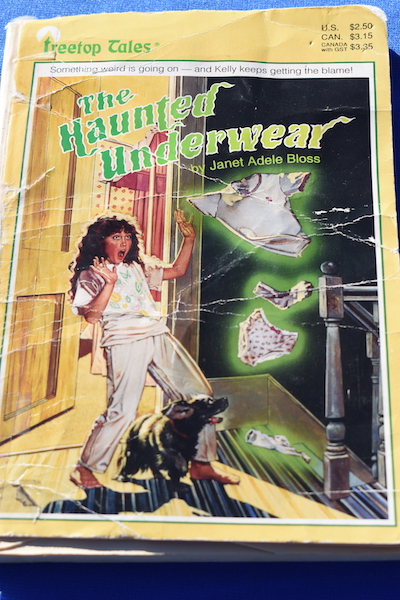
Things have been rough for ten-year-old Kelly Towser since her parents decided to adopt a four-year-old boy named Stevie. For the first part of her life, Kelly was an only child, and now she misses that peaceful period of her life. Now, her parents don’t have as much time to spend with her. Everyone showers little Stevie with attention and presents. Although she doesn’t say so, Kelly worries that maybe her parents adopted Stevie because they were disappointed in her or secretly really wanted a boy instead.
To make
things worse, Stevie’s little-kid antics get on Kelly’s nerves. Stevie keeps making messes, throwing his toys
all over the place. Kelly’s parents tell
her that she used to make a lot of messes when she was little, too. Kelly doesn’t remember doing it, but her
parents say that she used to like to throw her clothes all over the place, even
hiding her underwear in random locations in the house. They used to joke about her “haunted
underwear,” mysteriously showing up in strange places.
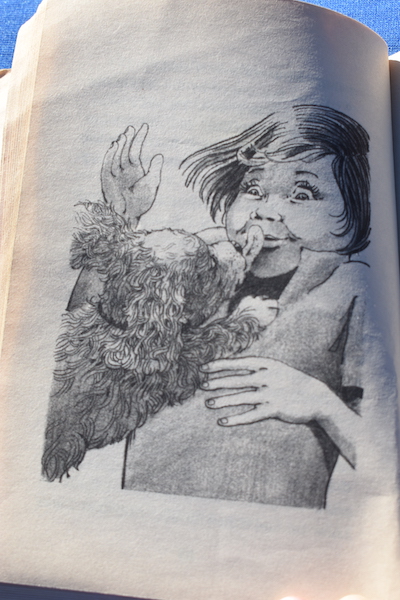
Because Kelly complains that Stevie is getting all kinds of presents, and she isn’t, her parents agree to give her a special present to celebrate her getting a new brother. After thinking about it a little, Kelly decides that she wants a new puppy. The family already has a dog named Star, but Kelly thinks that the new puppy could be a friend for Star while she’s at school.
At the
pound, Kelly selects a cute brown puppy.
One of the workers tells her that the puppy was found abandoned at the side
of the road, dirty and hungry. Stevie is
excited about the new puppy and wants to play with him, but Kelly is determined
to keep the puppy for herself, something that she doesn’t have to share with
Stevie. When Stevie insists that the dog’s
name is Boscoe because he used to have a dog named Boscoe, Kelly insists that
the dog’s name is Jingle. Stevie gets
upset that she isn’t sharing the dog, but Kelly doesn’t think that Stevie would
be careful with the puppy because he has already pulled Star’s tail.
As older readers might guess, Kelly soon finds herself in a similar position with Jingle as her parents are with Stevie. Star gets jealous of the new puppy in the same way that Kelly is jealous of Stevie, feeling like she’s been replaced in her own house.
Kelly
does try to get her parents’ attention with some silly stunts, but when her clothes
and underwear mysteriously start appearing around the house, she has no
explanation. Her parents punish her,
thinking that this is just another attention-getting stunt, but Kelly knows it’s
not her. She starts thinking that the
real culprit is Stevie, trying to steal her parents’ attention and affection
more than he already has. However, there
is another explanation for the mysterious underwear ghost, and as Kelly
investigates, trying to catch Stevie with her underwear, she learns a number of
important things.
I figured out pretty early who was responsible for the underwear around the house, although it helped that I’ve had experience with dogs. Star, feeling neglected because of the new puppy, was trying to get Kelly’s attention in the same way that Kelly was trying to get her parents’ attention. Stevie does look guilty for a while because Kelly discovers that he is a sleepwalker and has been having nightmares. However, when she gets up in the night to catch Stevie sleepwalking with her underwear, she finds Star taking it instead. Understanding Star’s feelings help Kelly to better understand her own feelings, and she resolves to spend more time with Star so she’ll feel less neglected. When her parents discover the truth, they apologize to Kelly and reassure her that they didn’t adopt Stevie as a replacement for her and that they don’t love her any less.
Kelly’s mother also talks to Kelly about what she knows about Stevie’s history. Although they don’t know the names of Stevie’s birth parents, Kelly’s parents know that Stevie’s mother wasn’t married and had no money and gave up him for adoption in the hopes that he would be raised in a more stable home. Stevie has not seen her since he was two years old, two years ago. Stevie is troubled by nightmares because his young life has been very chaotic, and he has been moved from foster home to foster home, with people always giving him up. He deeply fears that his new family will also give him up and is terrified when they seem like they’re going to go somewhere, afraid of that they’ll never come back. That is what his nightmares are really about. Kelly comes to realize that his situation is very much like Jingle’s, that the fact that someone gave him up doesn’t mean that he’s bad and that all he needs is time, attention, and love to grow out of his problems.
Even though things work out okay, this is one of those books where I found myself getting impatient with the parents. I think that some of Kelly’s bad feelings might have been resolved much sooner or avoided altogether if Kelly’s parents had spoken more honestly with her in the beginning, preparing her to be patient with Stevie and to understand when he has problems. Apparently, they did tell her at least some of what they knew about Stevie’s past in the beginning, but they don’t seem to have spoken to her much about how that might influence his behavior and how he will need a lot of time and reassurance to get over his fears.
When I used to volunteer at an animal shelter, we used to tell people who were adopting dogs that they would have to expect that their new dog would destroy something that they owned, especially if it was an energetic young puppy. When you bring a new dog into your house, it doesn’t know the area, it doesn’t know you very well, and it doesn’t know the rules that go with you and your house. It’s almost certain that, soon after arriving, it will relieve itself in the wrong place or pick the wrong thing to use as a chew toy. Something is likely to get ruined or some mess will be made. The best you can do is to take some preemptive measures, like securing valuables, closing the doors to rooms with things that the dog shouldn’t get into, and taking the dog to the place where it should relieve itself immediately on arriving at the new home. These steps can help head off problems, but at the same time, something is still likely to go wrong because the dog needs time to learn what you find acceptable and unacceptable and will probably do something wrong while learning. We didn’t tell the new owners this to scare them off from adopting but to help manage their expectations so that they wouldn’t panic and try to return the new pet at the first sign of trouble. I think that Kelly needed a similar warning about her new brother to help manage her expectations.
Early in the story, Kelly says that when her parents first started talking about adoption, she thought that it would be great because she’s always wanted a little brother that she could teach to do fun things like roller-skating or flying a kite. Her attitude toward her new brother only soured when he seemed to be taking all of her parents’ attention and crying all the time and making messes. She thinks at one point that it’s hard to love someone who seems determined to get you in trouble, which is what she thought Stevie was doing with the underwear. My thought is that, if Kelly’s parents had explained more to her that Stevie might misbehave or be nervous in his new home and would need time to be taught how to live in their family, perhaps Kelly wouldn’t have been so upset and the parents would have been less quick to blame Kelly for the underwear issues. Knowing that there might be some problems that would be temporary would have been reassuring to Kelly that there were better things ahead for her and her new brother.
Also, even though the parents seemed to understand that Kelly was seeking their attention, they didn’t really do anything positive about it at first, just punishing her for leaving the underwear around. If they had told her, straight out, in plain English, that even though they’ve been very busy with Stevie that doesn’t mean that their feelings for her have changed and that she doesn’t need to pull stunts to get their attention because they would be spending some quality time with her soon, it might have helped to head off Kelly’s bad feelings. The closest they get to that at first is when they tell her that she’s old enough to know that there are better ways to get their attention than silly stunts. They don’t mention what the better ways are, and they don’t follow it up with much of an attempt to give her a little attention. What annoyed me most was that Kelly’s mother waited for Kelly to approach her to talk, but in her place, I think I would have taken the initiative, especially after Kelly’s stunts included some potentially dangerous bike stunts. I’m a great believer in direct communication. I tell people if there’s something I want them to know, and if I want to know what they’re thinking, I ask. Over the years, I’ve discovered that if you leave people guessing what you’re thinking or what you want, you discover that most people aren’t good at guessing. I won’t say that Kelly’s parents are the most clueless ones I’ve seen in children’s books because they made more of an attempt to tell Kelly things and talk to her than some other parents in books do. All the same, it always gets to me when problems in books could be avoided with just an extra conversation or two. There were a couple of times in the book when I wished that I could step into the scene, call “Time!”, and make the characters just stop and really talk to each other and take a real look at the situation.
The book is available to borrow for free online through Internet Archive.
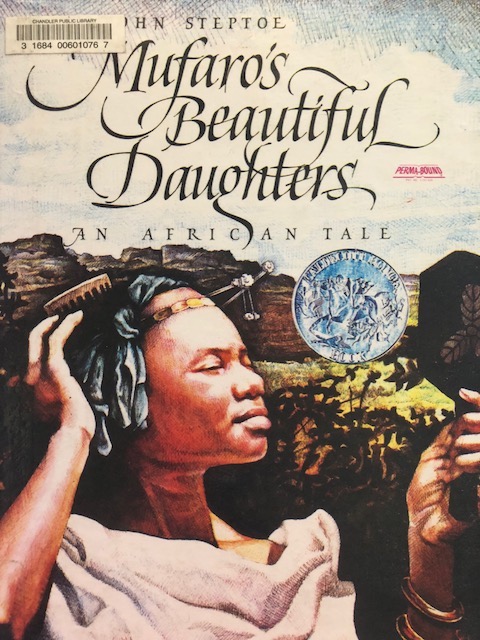
Mufaro’s Beautiful Daughters by John Steptoe, 1987.
This story, based on an African folktale, is somewhat similar to other folktales and fairy tales from other parts of the world such as Cinderella, Mother Holle, and Vasilisa the Beautiful, where a girl with a kind, hard-working nature triumphs over a mean sibling because someone in authority recognizes her good nature and rewards it.
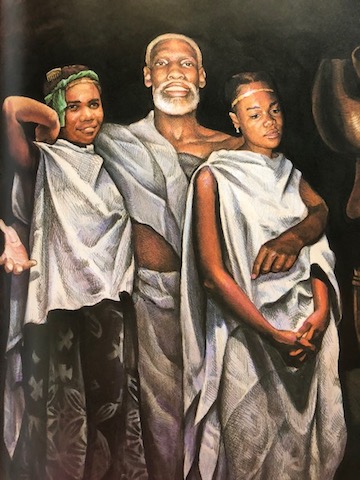
In a small village in Africa, a man named Mufaro has two daughters, Manyara and Nyasha. Both girls are beautiful, strong, and clever, but they have very different natures. Nyasha is kind, gentle, and patient. Manyara is bad-tempered, jealous, and self-centered. She frequently taunts Nyasha about how, one day, she will be the queen and her sister will be her servant. When Nyasha asks her why she is so mean, Manyara says that she hates the way people praise Nyasha for her kindness. She thinks that Nyasha is their father’s favorite child, and she wants to prove that Nyasha’s “silly kindness is only weakness.”
Since there is nothing that Nyasha can do to change her sister’s mind or attitude, she just continues doing her usual chores and being kind to people and animals. In particular, she makes friends with a small garden snake, knowing that his presence in her garden will keep away pests.
Manyara is sneaky and always behaves herself when their father is present, so Mufaro doesn’t know about the troubles between his daughters. When a messenger arrives, saying that the Great King is seeking a wife and that beautiful, worthy girls are summoned to his city so that he can choose from among them, Mufaro is proud and eager to present both of his beautiful daughters. Manyara tries to persuade her father to send only her, but Mufaro is firm that both girls must present themselves for the king’s decision.
Manyara decides that the only way to get the better of her sister is to be the first to arrive and present herself to the king, so she slips out in the middle of the night and begins the journey alone. However, both the journey and the king are not what Manyara thinks they are. Along the way, Manyara encounters various strange characters who ask for help or offer advice, but thinking that a queen doesn’t need to pay attention to others or do anything she doesn’t want to, Manyara ignores them all.
Nyasha, on the other hand, gets ready to leave at the appointed time in the morning. Everyone worries about Manyara but decides that the best thing to do is to follow her to the city, since she seems to have gone on ahead. As Nyasha travels with the rest of their friends and family, she listens to the people Manyara ignored and shows them kindness.
When they finally reach the city, Nyasha encounters a terrified Manyara, who hysterically insists that when she went to meet the king, she found a horrible monster instead. However, like everything else, it’s just another part of the test, and Nyasha is the one who passes because she, like her sister, has actually met the king before, but unlike her sister, she actually paid attention to him.
The pictures in the book are beautiful and colorful. A note in the front of the book says that the buildings in the illustrations were based on an ancient city in Zimbabwe that is now ruins. The note in the book also explains that the names of the characters in the story come from the Shona language. The meanings of the names are clues to the characters’ natures. Manyara means “ashamed”, and Nyasha means “mercy.”
The book is a Caldecott Honor Book. It is currently available online through Internet Archive.
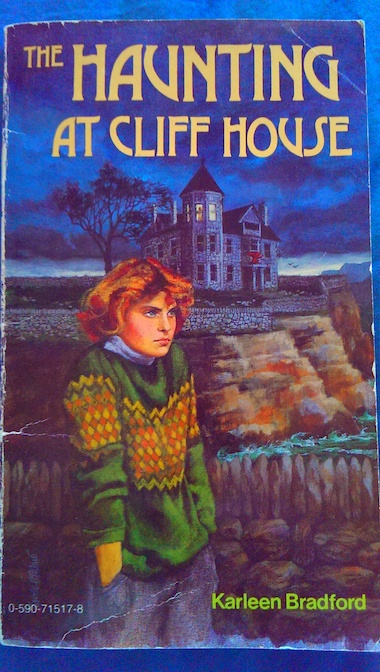
The Haunting at Cliff House by Karleen Bradford, 1985.
This is a relatively short chapter book, but suspenseful, thoughtful, and well-written.
When her father inherits an old house in Wales from a distant relative, Alison, a young teenager, finds out that he plans for the two of them to spend the summer there. Alison’s father is a university professor and is writing a book, and he thinks that the house in Wales sounds like a great place for him to get some writing done while he and Alison have a look at his new inheritance. Alison isn’t enthusiastic about the trip, but she and her father are very close, especially because she lost her mother at a very young age. Besides, the only place she could stay in Canada would be with her grandmother, and her grandmother didn’t seem enthusiastic about having her.
From the moment they arrive at the old house, called Pen-y-Craig or Cliff House by the locals, Alison has a bad feeling about it. It stands on a lonely cliff by a small town. The carved dragon over the door gives her the creeps, and there is something disturbing about a particular room in the house. Sometimes, she can almost hear a voice calling out to her, and she has visions of another girl, about her age. At first, she tries to tell herself that it’s all her imagination, but it soon becomes obvious that it’s not.
Some of the local people know that the house has an unhappy history, and Alison eventually learns that the great-aunt that her father inherited it from even refused to live there during her last years because it disturbed her too much. A little more examination of the room that had disturbed her helps Alison discover the reason why. After having a vision of a young girl hiding something behind a brick in the fireplace of one of the bedrooms, Alison searches the spot and finds a diary dating from 1810, written by a girl named Bronwen, who was the same age as Alison. Like Alison, Bronwen was brought to the house by her widowed father and was unhappy about it, but those aren’t the only parallels between Bronwen’s life and Alison’s.
Alison becomes uncomfortable with her father’s new friendship with a Welsh neighbor, Meiriona. Alison likes Meiriona’s younger brother, Gareth, but when it looks like her father’s friendship with Meiriona is turning into romance, Alison becomes jealous and fears changes in her close relationship with her father, a situation that mirrors Bronwen’s life when her father falls in love with her governess, Catrin. Although Meiriona tries to be nice to Alison, Alison can’t bring herself to like her, and she argues with her father about it.
The only person who seems to understand her feelings at all is Gareth, and Alison confides her worries in him, both about Meiriona and about Bronwen, whose spirit keeps calling out to Alison to help her, although Alison doesn’t know how. She struggles to read through the diary, whose pages are not all legible anymore because they’re damaged with age, to learn what happened to Bronwen and what Bronwen wants her to do now. Gareth tries to reassure Alison that her father’s relationship with Meiriona will not be as bad as Alison thinks. He thinks that the relationship would be good for both Alison’s father and Meiriona because they are both lonely, and he doesn’t think that Alison should worry about losing her father because he’s not worried about losing his sister, even if she goes to Canada to study and spend more time with Alison’s father. At first, Alison isn’t comforted by these reassurances. However, Gareth agrees that the matter of the ghost is serious, and he can feel her presence as well. Gareth warns Alison to be cautious about the ghost but to try to help if she can and to call out to him if she’s ever in danger. Alison would really rather just go home to Canada, run away from her father and Meiriona, and forget the whole thing about Bronwen, but history seems to be repeating itself, and Bronwen’s voice calls out to her insistently for help that only Alison can give.
It’s a bit of a spoiler, telling you this, but although Alison at first thinks that the diary ends with Bronwen killing herself in despair, thinking that her father only loved Catrin and not her and that there was nothing left for her to live for, the truth is that Bronwen’s suicide attempt didn’t succeed and that she made another mistake that she wants Alison to help her to change. Bronwen attempted to kill herself by going to a cave by the sea during a terrible storm, planning to allow herself to drown, but when the water started rising, she became too frightened and decided to leave by a secret entrance to the cave. Not knowing that Bronwen was safe, Catrin attempted to save her and drowned in the cave herself. As Bronwen was climbing to safety, she heard Catrin calling for her but was too frightened of the storm and angry at Catrin to go back for her. Although Bronwen lived on after the incident, she could never get rid of her guilt at Catrin’s death, realizing that, even in the middle of her resentment toward Catrin, Catrin loved her more than she knew, even to the point of giving up her own life while attempting to save hers.
Now, the anniversary of Catrin’s death is approaching, and so is a storm very much like the one that killed her. At the top of the cliff by the cave, Alison finds her time merging with Bronwen’s, and she will only have one chance to help Bronwen make the right decision the second time around. Helping Bronwen to prevent the worst mistake of her life and to make a better choice also helps Alison to reconsider her own choices and future. Just as Bronwen misjudged Catrin, Alison may have also misjudged Meiriona. Instead of losing her father or being forced to accept a poor substitute for her mother, Alison may be gaining a kind of sister who will love her more than she realizes.
Something Queer at the Birthday Party by Elizabeth Levy, illustrated by Mordicai Gerstein, 1989.
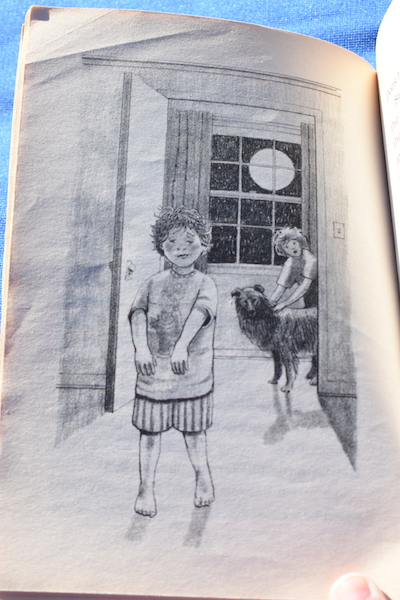
Jill and some other friends are throwing a surprise birthday party for Gwen. They send out invitations secretly and create a mystery game for Gwen with a series of clues to lead her to the party. As part of the game, Jill pretends that someone broke into her house and stole a painting of her and her dog, Fletcher. The clues to the thief lead Gwen into the room where all of their friends are hiding, waiting to surprise her.
Gwen loves their little mystery and the surprise, and the party seems a success. But when it’s time to bring out the cake and open presents, Jill discovers that they are missing from the closet where they were hidden. At first, Gwen thinks that it’s just another mystery game, but Jill tells her that the presents really are missing. Who took the presents, and where are they now?
Gwen takes her party and all the guests on a hunt across town for her missing presents, but the big clues turn out to be right back where they started, and Fletcher leads them right to what they’re looking for.
The solution to this mystery touches on a problem that children with a birthday near Christmas understand: When your birthday is near a major holiday, people don’t pay as much attention to it or give as many presents. My grandmother said it was the same with her when she was young, and she was also the eldest child in a large family, so her birthday was never quite what it should have been. In the story, one of the girls’ friends had this problem, and it was the motive behind this temporary theft. The culprit didn’t mean to keep the presents forever, they just wanted to pretend that they were all theirs for a little while. Gwen forgives the culprit and shares the rest of her birthday with this person.









 The Haunting at Cliff House by Karleen Bradford, 1985.
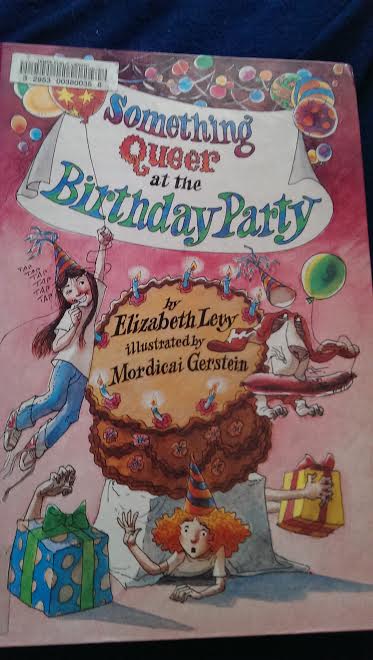 Something Queer at the Birthday Party by Elizabeth Levy, illustrated by Mordicai Gerstein, 1989.
 Gwen takes her party and all the guests on a hunt across town for her missing presents, but the big clues turn out to be right back where they started, and Fletcher leads them right to what they’re looking for.
 Jestress's Forgotten Books and Stories