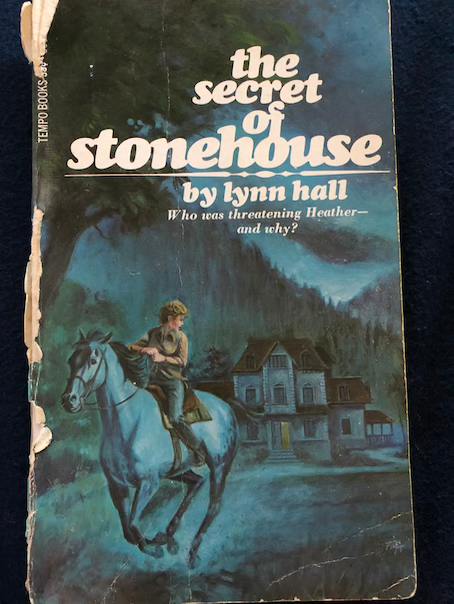
Dangerous Play

Thirteen-year-old twins Ryan and Chris Taylor are visiting Kansas State University during homecoming week because their parents used to attend the university, and the boys are looking forward to getting their first look at life on a college campus. They’re also looking forward to the big football game. At least, Chris is looking forward to the game. Ryan isn’t as athletic and doesn’t see the appeal of sports as much as Chris does. Ryan is more studious. However, both of the boys are hoping to meet Trent Dasher, the star quarterback on the Kansas State football team. Chris wants to ask him for sports advice, and Ryan is hoping to get some pictures of him for their school’s newspaper. Meanwhile, their parents are looking forward to reliving their college years. They met in college, and they spent their honeymoon at the same hotel where they are now staying with the boys.

The twins go in search of Trent Dasher. They contacted him before arriving, so he should be expecting them, but they discover that he is missing. When they go to his dorm room, his roommate doesn’t know where he is. Then, the boys overhear a conversation between Coach Butler and Dean Murray in the athletic offices, in which the coach says that Trent has been behaving oddly recently, and now, he can’t find him. The twins ask Trent’s roommate, Danny, for more information about Trent and if he knows anything about where he might be. Danny says that he and Trent don’t really confide in each other. Even though they’re sharing a dorm room, they’re both pretty busy with their own activities. Danny has noticed that Trent has been unusually nervous recently and that he’s missed some classes, which is out of character for him. Danny suggests that they look for Trent at the Wildcats’ Lair, a snack bar in the University Union where Trent likes to hang out.

Before they leave Trent’s dorm room, the boys sneak a look at Trent’s belongings, and they learn a few things about him. Trent has a girlfriend named Jeannie who lives in their town and has written letters to him. He’s also in danger of failing his chemistry class if he doesn’t get some extra help, and if he fails chemistry, he could lose his scholarship. The boys figured that his problems with his classwork and the threat of losing his scholarship are probably what was worrying him so much.

When the boys go to check out the Wildcats’ Lair, they meet a girl who says that she’s Trent’s girlfriend. Unfortunately, she isn’t Jeannie. When the boys address her as Jeannie, assuming that she’s the one who wrote the letters, she says that’s not her and gets angry. The twins are embarrassing, thinking that they might have just accidentally created a new problem for Trent by complicating his love life.

The boys finally locate Trent talking to a tutor called Wilson about getting help to pass his chemistry exam. It seems like the mystery of the missing athlete is over, but then, Wilson tells Trent that the way he “helps” students is by selling them the test answers. Trent gets angry and refuses to cheat. The boys try approaching Trent, but he doesn’t want to talk to them because he has too much on his mind.

The twins are a little offended at being brushed off by Trent since he knew they were coming and had agreed to meet them, but they can also see that Trent is in trouble and could use some help. They decide to go after him, and they hear him talking to someone on the phone about a special “deal.” Since they just heard him turn down an opportunity to cheat by purchasing test answers, what kind of “deal” is he looking into to solve his problems?

The boys follow Trent and see him meeting with Coach Hatfield from Flint Hills University, Kansas State’s rival. It seems that Coach Hatfield has made Trent an offer to come play for their team, or at least, that’s how Trent interpreted his offer. With his scholarship to Kansas State in danger, Trent is considering the possibility of switching schools. However, it turns out that Coach Hatfield wants something very different. He wants to bribe Trent to throw the upcoming homecoming game and make sure his team loses! He says that he’ll make sure that Trent has enough money for his tuition if he does. Trent is appalled and refuses.

The twins continue to follow Trent as he goes to talk to his girlfriend, Cindi, who is the girl they met earlier. She asks him about Jeannie, but Jeannie is just a high school girl from his home town who has an unrequited crush on him. He’s really serious about Cindi. Trent tells Cindi everything about the troubles he’s been having and the unethical offers he’s had. She asks him why he hasn’t gotten help from the legitimate tutors or from his professor, but he says that the chemistry tutor quit and hasn’t been replaced yet and that his professor seems to have a prejudice against athletes. Trent is thinking that maybe he should just quit college and get a construction job so that he and Cindi can get married, but Cindi doesn’t think that’s a good idea.

Even if Cindi can help Trent find a solution to his problems in chemistry, Trent’s football problems are just beginning. He turned down Coach Hatfield’s proposition, but the Flint Hills football team isn’t going to take no for an answer. They’re prepared to use violence to make sure that the upcoming football game goes their way. Chris and Ryan witness some of them kidnapping Trent! They’ve got to get help and prove that Trent is in trouble to save him!

The book is available to borrow and read for free online through Internet Archive.

There wasn’t really much mystery to the story, which was a disappointment to me. The boys figure out where Trent is and directly witness his kidnapping, so there’s nothing really for them to figure out. It’s more about how they manage to rescue him. It’s more of an adventure story than a mystery. Part of the premise of this series is also that the twins have a kind of psychic connection and can sense each other’s thoughts, but that didn’t really enter into this particular story. The resolution of the situation didn’t depend on them having this ability, and for most of the story, the twins just talk to each other openly about everything without a need to communicate anything silently.

Things turn out okay in the end because Trent is able to make it to the football game and help his team win. The book doesn’t mention any of them going to the police about the coach and football team participating in an actual kidnapping, which made me feel a little weird. It’s great that the boys were able to rescue Trent and that he was able to win the football game honestly. Trent never compromises his values, in spite of the pressure he’s experiencing from all sides, and in the end, there’s an honest solution to his problems with his grades, but still, kidnapping is a serious crime, and I thought that there should have been serious consequences to go with it.

As for Trent’s troubles with chemistry, it turns out that his chemistry professor is actually an old friend of the boys’ parents, and he isn’t really against athletes. The only reason why he hasn’t noticed Trent failing and helped him to get the extra tutoring he needs is that, at a large university, classes are made up of hundreds of students, and professors rely on graduate assistants to help manage the grading. The professor doesn’t know that much about how individual students are doing. They mainly help when students approach them for help, which Trent hasn’t done. When the twins explains Trent’s problems to the professor, the professor talks to Trent, telling him that he should have come to him earlier and that he will help him improve his grades, not because he’s a star athlete but because he’s a student in need of help to complete his degree.

Although I wasn’t thrilled by the mystery itself because it wasn’t much of a mystery, there are some interesting points in this story about both prejudices people have about athletes and the system of success/failure at universities. First, the prejudice part is an obvious one. Many people assume that people are either smart and good at studying or that they’re not smart and that’s why they’re mainly good at sports – like life’s options are brain vs. brawn, with no in-between. The twins themselves represent this notion because Ryan is the studious one and Chris is the athletic one. This seems to be how other people think of them and how they think of themselves. 

Ryan in particular has this view. He’s good in school subjects, better than his brother, but not that good at sports and has no interest in sports. Chris is offended that his brother seems to think that his athletic prowess also makes him the dumber twin and that Ryan is often telling him that he needs to read more and study more or he’s not going to make it in college. Chris argues with Ryan and tells him that just because he’s into sports and not as good at studying as Ryan is doesn’t mean that he can’t manage. Ryan is correct that a student athlete can’t just be all about sports and neglect his school work, as Trent’s situation indicates, but he does underrate the athletes’ abilities to manage and think their way through problems. The boys also have some prejudices against girls, with Ryan particularly thinking of cheerleaders as being brainless, but Cindi, who is also a college cheerleader, comes through for them and helps to rescue her boyfriend. I didn’t like the way the boys talked about girls in the story, but Cindi’s role helps to highlight that theme of underestimating people and their abilities.

Success and failure are major themes in the story. Trent is a successful athlete, and generally, a pretty good student, apparently. However, the failure of one single class could endanger his scholarship and end his entire university career. As the chemistry professor points out later, it’s not just a matter of Trent losing his scholarship because of failing that class; this is a class that is required to complete his degree. We don’t actually know what Trent’s major is, but he apparently needs to understand at least some chemistry for it. Failure of this particular class is just not an option. A student whose scholarship was assured or who had other resources for paying for their education could simply retake a failed class and try to pass the next time, but there’s pressure for Trent because he really relies on his scholarship. Without it, there won’t be a next time for him. What the story points out is that it’s not just Trent’s failure but also the system’s failure. Professors with hundreds of students, and also the pressure of having to do their own researching, writing, and publishing on the side, just can’t keep up with every individual student and give them all the support they need. They rely on graduate assistants and tutors to fill in the gaps and provide that support. Trent falls through the cracks because the chemistry tutor left and hasn’t been replaced yet, and he was reluctant to talk to his professor about it. His lesson is one about how the university system functions and his need to go to his professor about his problems to get the help he needs.

It turns out that Trent isn’t the only one whose future hangs by a thread because of one possible failure. The reason why Coach Hatfield and his players are so desperate to win this upcoming football game is that Coach Hatfield will be fired if they don’t. The Flint Hills football players are desperate to save their coach. They see it as loyalty and as avoiding having to get a new coach that they won’t like as well, but that doesn’t justify engaging in a serious crime to accomplish their goals. In real life, they would be endangering their own futures by pulling this kidnapping stunt. The fact that the coach is willing to go along with such a thing may be a sign of why his career has reached this desperate point in the first place. It might not be just that he’s been unable to deliver the football victories that his university wants but that he also engages in reckless, irresponsible, and unethical behavior. At the very least, we know that he is likely to lose his job because his team lost the football game, but I still think that there are serious legal consequences for his actions.
Ruth Fielding and the Gypsies

Ruth Fielding

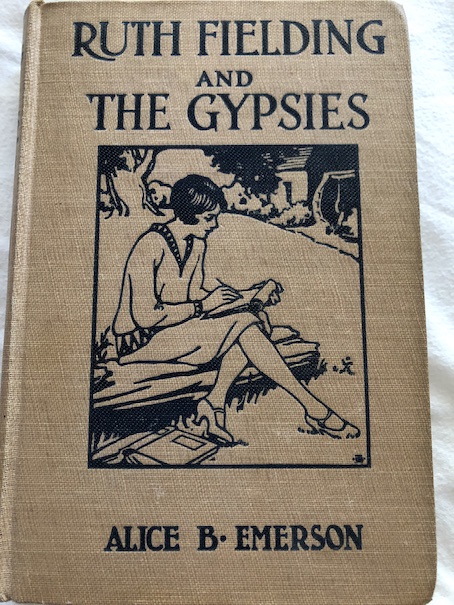
Ruth Fielding and the Gypsies; Or, The Missing Pearl Necklace by Alice B. Emerson (Stratemeyer Syndicate), 1915.

Just as a quick note before I begin to describe the plot of this book, this book is part of the Ruth Fielding series, an early Stratemeyer Syndicate, before they started writing some of their more popular and best-known series, like the Hardy Boys and Nancy Drew. Some books in early Stratemeyer Syndicate series are awkward because they use racial terms that polite people would not use now. During the mid-20th century, around the time of the Civil Rights Movement, the Stratemeyer Syndicate revised the books it had in print, updating the technology and slang terms in the stories to be more modern and removing or altering some questionable racial terms and attitudes. Unfortunately, the Ruth Fielding series had already ended by that time, and these books were not among those that were revised and updated. I’ve explained this before on the pages for some the Stratemeyer Syndicate book series and individual book reviews, but I have to explain it again here because some people might object to the word “gypsy.” I know that’s not really the correct or polite way to refer to the Romany or “Travelers”, as they’re sometimes called, but it can’t be helped here because the Stratemeyer Syndicate put it right in the title. This is one of those books where I just can’t avoid it, and it’s all through the book. Some of the attitudes and stereotypes around the characters are also likely to be objectionable, but I’ll address that further in my reaction section.

The Ruth Fielding series is interesting because it was kind of a precursor to Nancy Drew, with a similar type of heroine, but one that, unlike Nancy Drew, grew up, went through school, and had a career during the course of the series. There are some aspects of this series and the development of the characters that I think were better done in this series than in the Nancy Drew series. There are also times when the books are surprisingly thoughtful about the conditions of life and society in the early 20th century, when they were written, and this book and the next one begin to mark a turning point in the main character’s life. Ruth is a poor girl, and before her education is over, she will have to seriously consider her career options, which is something you don’t see much in the Stratemeyer Syndicate series that are still in print because those characters never age. The characters in the earlier series did, which is why those series ended. There are some things in the series that I don’t like, like the racial terms and attitudes and when the stories are more adventure than mystery because I really prefer mystery, but this is what the books are like. In these reviews, I’m just explaining what the books and characters are like. On the bright side, if you don’t like what the books are like, you can consider that I read and reviewed them, so you don’t have to. You can find out what they’re like from my reviews and save yourself some time.

The Plot

Ruth Fielding is with her Uncle Jabez in a boat on the river near the Red Mill where they live when the boat overturns. Uncle Jabez falls out and hits his head. He almost drowns, but Ruth holds his head above water. She can’t pull him out of the river by herself, but she calls for help and attracts the attention of a passing gypsy boy. The gypsy boy, called Roberto, pulls Uncle Jabez out of the water.

Uncle Jabez is grateful, but the incident brings back an earlier argument about whether boys are more useful than girls. Uncle Jabez argues that boys are more useful than girls because they are stronger and can do heavier work, and he thinks that his near-drowning proves that. Of course, Ruth, Aunt Alvira, and Ruth’s friend Mercy are all offended by that assessment. Aunt Alvira points out that the boy who helped Uncle Jabez wouldn’t have been able to do that if Ruth hadn’t already been holding his head above water and calling for help. Ruth says that not all work is heavy work. Uncle Jabez says that girls are costly because they need money for education, and they’re not likely to have careers afterward, like men do. Ruth says that the reason why she wants an education is so that she can have a career and support herself.

Ruth knows that a poor orphan like her is lucky that she can attend boarding school with her friends. Her friend, Helen, is from a wealthy family, who is willing to fund her education in anything she wants to study, whether it eventually produces money or not, but Ruth doesn’t have that luxury. Eventually, she will have to get a job of some kind. Aunt Alvira says that, when she was young, most girls got a basic education and then got married, which is probably what Uncle Jabez is expecting Ruth to do. However, Aunt Alvira knows that modern girls have more ambitions. (Keep in mind that this story is set around 1915, contemporary to the time when it was written.) Ruth’s music teacher at school thinks that Ruth has a promising voice, and she wonders if she can train as a singer, although that’s not the kind of thing that her uncle would think of as something useful.

Before returning to boarding school with her friends, Ruth goes on a car trip with Helen and Helen’s twin brother, Tom. It turns out to be an unexpectedly eventful trip. Not long after setting out on the trip, they meet up with Roberto again and begin talking with him. The others ask Roberto about being a gypsy and if he wouldn’t prefer a more settled life with a regular job. Roberto says that, while he could work as a farmhand easily enough, few people would hire him for other jobs because he’s a gypsy, and people don’t trust gypsies. Besides, he sees little use in such a life. Tom says that he could afford better food and better clothes if he had a better job. Roberto says that he does well enough traveling around with his family, taking odd jobs, and helping his uncle at horse trades. He tells the others a little about his family and his life with them. After he leaves, Tom makes jokes about the rumors of gypsies kidnapping people.

Further down the road, Tom accidentally hits a lamb in the road with his car. The lamb is still alive, but its leg is broken. The farmer is angry, says that the lamb is useless now, and demands that Tom pay for the lamb. The price he demands is about twice as high as it should have been, but Tom pays it anyway to avoid further trouble. Then, they learn that the farmer, who doesn’t want to be bothered nursing the lamb until it heals, plans to simply kill it and feed it to his dogs. The girls are upset about the poor little lamb, and they plead for its life. Ruth is sure that the lamb can be healed. The farmer says that the lamb is his to do with as he pleases, but Helen points out that the lamb isn’t his anymore because Tom just paid for it. The farmer protests, but they take the lamb anyway. At first, Tom says that he doesn’t know what else to do with the lamb except take it to a butcher, but the girls persuade him to let them keep the lamb and try to help it.

Later, there is a storm, and the group seeks shelter in an old, empty house. The girls go inside while Tom parks their car in an old shed. The girls find the house spooky and wonder if it could be haunted. In some books, investigating a haunting in an old, abandoned house like this would be the main mystery, but in this one, it’s just one episode that gives them a clue to something else. While the girls are exploring the upstairs rooms and Tom is still outside, two strange men enter the house. The girls don’t let the men know they’re there. They’re not sure of who the men are or what their intentions are, so they listen to their conversation. They can’t understand everything the men say because half of their conversation is in an unfamiliar language, but from what the girls understand, they have either committed a theft or are going to be involved in one. The girls don’t want the men to find them or Tom, so they scare them out of the house by spooking some bats, which take flight and frighten the men away.

All of this would be exciting enough, but as they all travel further, Tom’s car breaks down. Tom leaves the girls and sets out on foot to get some help. The girls wait at the car for him, but it starts getting dark, and they start to get worried. A group of gypsies passes by with their wagons, and although Ruth isn’t sure it’s a good idea, Helen asks the gypsies if they can give her and Ruth a ride to her parents’ house. The gypsies ask the girls some questions, and then, they agree that the girls can come with them. Helen leaves a note for her brother that they’ve gone with the gypsies, but when she isn’t looking, one of the gypsies takes the note and destroys it.

It turns out that Ruth’s concerns about the gypsies were justified. The leader of this gypsy band is an elderly woman, who the girls recognize from Roberto’s stories as his grandmother, although Roberto is not currently among the group. The grandmother is a greedy woman, and she has realized from the girls’ car that at least one of them is from a wealthy family. To her, that means that they have relatives who would be able to pay a ransom for the girls. The girls become captives of the gypsies. The old woman also has an ability to hypnotize people with her eyes, and Helen seems particularly susceptible to it. During the night, while spying on the old woman, Ruth also learns that she is involved with the thieves they saw in the empty house.

The girls try to escape from the gypsies, and Helen gets away, but Ruth is caught. The old woman makes Ruth disguise herself as one of the gypsies so no one will notice her among the others. Can Ruth find a way to escape, or will Tom, Helen, or Roberto manage to help her?

This book is now in the public domain and available to borrow and read for free online through Project Gutenberg.

My Reaction and Spoilers

The Mystery/Adventure

The story covers not only Ruth’s adventures but the adventures of Ruth’s friends while she is captive, including Tom’s encounter with a suspicious farm couple and Helen’s frightening experience on a whitewater river. In the end, Roberto does help Ruth to escape. By the time Ruth returns to her friends and is able to tell her story to the authorities, the gypsies are well out of the area.

However, there is still something that bothers Ruth. She knows that Roberto’s grandmother had a valuable pearl necklace in her possession, apparently the spoils of the theft that the men in the empty house were talking about. Ruth wonders who they robbed and where the necklace came from. At first, it seemed like this plot line was going to be left hanging, but when Ruth returns to boarding school with her friends, she gets the answer. A new student is joining the school, Nettie Parsons, and she is the daughter of a multi-millionaire who made his money in sugar. She is the one who was robbed of the pearl necklace, which really belongs to her aunt, and there is a $5,000 reward for its return. $5,000 would be a pretty decent reward even in the 2020s, but it went much further in the 1910s. Ruth realizes that she knows who has that pearl necklace, and if she can get it back for Nettie, she would not only be doing a good turn for a classmate but getting the much-needed reward for herself. $5,000 would be enough to give Ruth some monetary independence and could fund her continued education.

Like other early Stratemeyer Syndicate books, the story is more adventure than mystery, although there are some mystery elements. Ruth gets some of the clues to the theft that the gypsies committed, but it’s more by coincidence than investigation that she discovers who the pearl necklace belongs to. Ruth does get the reward in the end, which allows her to finish at Briarwood Hall and go on to college in later books. However, while the old woman was apprehended with the necklace on Ruth’s information, I think it’s important to note that Ruth does not chase her down and apprehend her herself. Ruth is still at boarding school when others do that on her behalf, and she is then summoned to identify the apprehended suspect. On the one hand, this would never happen that way in a modern, 21st century book. In modern books, the girl heroines are much more active and would insist on catching the bad guys themselves. On the other hand, I have to admit that the way the book did it would actually be the more likely way this situation would play out in the real world, with the boarding school kid just providing information and being kept at boarding school while others apprehend the criminals. I think if the book was rewritten in the 21st century, Ruth would be more active in catching the criminals and retrieving the necklace, but there is some realism in the way the book actually ends.

Ruth’s career ambitions are not resolved in this story but are addressed more directly in the next book in the series.

Stereotypes and Racial Attitudes

I was curious about the notion that gypsies kidnap people because I’ve read about that in other books, and I wondered where that idea came from. According to an article that I found, it seems to come partly from traveling gypsies being used as scapegoats for missing or murdered children (like in old movies, where the small-town sheriff is anxious to blame a “drifter” for a crime) or as “bogeymen” in stories parents told to scare their children into not wandering away from home and also partly from people noticing children among traveling Romany groups who did not seem to resemble the people raising them, particularly if the children seemed to be lighter-skinned or have lighter hair or eyes than the adults. The reasons for the children not looking like the adults have been proven in modern times to be because the children were either adopted or were simply biological children who didn’t look like their parents through quirks of genetics, which sometimes happens. Light-colored eyes and light-colored hair are recessive traits, while dark eyes and dark hair tend to be more dominant traits, but even a dark-eyed, dark-haired person can carry the recessive genes for light hair and eyes, and those recessive traits can come out in the next generation. Basically, the children resemble previous generations in the same family, such as grandparents or great-grandparents, and if observers could see all the generations of the family together, it would be more clear how the traits were handed down to the children. (People also used to think that it was impossible for two blue-eyed parents to have a brown-eyed child, but that also happens sometimes because genetics can be complicated, eye color can be influenced by combinations of multiple genes together, and genetic mutations sometimes take place.) Basically, some people overreact when they see a child who doesn’t match the adults they’re with and start imagining kidnapping, but often, there are other, logical explanations, and being too quick to scream “kidnap!” causes problems. Some people do this to families who have had interracial adoptions. Personally, my brain would be more likely to consider possible divorces or previous relationships or possible affairs or maybe that the adult was actually a hired caretaker rather than a parent to be the next most-likely explanations after adoption for children who don’t look like parents, and I wouldn’t be eager to publicly ask questions about the sexual or reproductive history of total strangers. Unless the child appeared to be in immediate physical danger or was screaming, “Help!” or “This isn’t my daddy!” or something similar, I would be unlikely to interfere. “If you see something, say something” can be helpful, but it also helps if what you see is the big picture.

I also noticed that the gypsies in the story are described as being non-white people because they have darker skin, and even Ruth seems to dislike them and be suspicious of them for that alone. Granted, these particular people are actually criminals in the story who kidnap Ruth and Helen, but Ruth was thinking that just from looking at them. While I would have understood Ruth being reluctant to trust them because they’re strangers and because they know from the men in the empty house that there are thieves in the area, it’s their darker skin that bothers Ruth first. When Ruth first meets Roberto’s grandmother, Ruth thinks that the gypsy woman is too dark and strange/foreign to be trustworthy, and she later hates that her gypsy disguise involves bare feet and her skin dyed darker. She is ashamed of the way she looks in that disguise and thinks that she would be embarrassed for Tom to see her looking like one of the gypsies. Ruth’s prejudices bothered me more than if another character had done it because, while the older Stratemeyer Syndicate books do have inappropriate racial language and attitudes, the characters who are outright racists are typically the ones the stories show to be unfriendly antagonists or outright villains. From what I’ve seen so far, it’s rare for a friendly main character to be outright disparaging of racial appearances even if they have stereotypical notions about other people.

It’s really an irony that Ruth has prejudices against non-white people because the beginning of the story involves an argument with her uncle about his prejudices about girls. If this book had been written, or at least revised, during the 21st century, the rest of the story would have involved overturning both sets of prejudices. In the book as it is, nobody’s prejudices seem to be proven wrong.

Uncle Jabez’s assertions about girls’ usefulness go largely unchallenged. The girls are kidnapped when they’re by themselves, after Tom leaves them alone. Ruth copes decently with her captivity by helping Helen escape, but she needs help to escape herself, and men apprehend the criminals in the end, not Ruth herself. If Ruth’s uncle has any rethinks about the relative usefulness of boys and girls, he doesn’t mention it, and he isn’t presented with any strong evidence in favor of girls. Ruth is just content that she got the reward money for the return of the necklace, so she isn’t solely dependent on miserly Uncle Jabez’s grudgingly-given support.

There are no prejudices about gypsies proven wrong in the story. While I’m sure that most real-world Romany are not kidnappers, the gypsies in the books are criminals and kidnappers. Roberto is fond of his family and their traveling lifestyle, but at the end of the book, he accepts a new job as a gardener at Ruth’s school. He cuts his hair more like mainstream American styles of the time, and he starts wearing more mainstream American clothes. Ruth notes that his skin is still darker, but she is happy about these other changes. It is revealed that Roberto’s family came from Bohemia (a region now part of the Czech Republic) about ten years before, and his grandmother will now be deported back there, but Roberto wants to stay in the United States. He Americanizes his name and starts having people call him Robert. That’s quite a conversion from his attitudes much earlier in the book. Granted, having relatives arrested for theft and kidnapping can have an effect on a person, but from his earlier descriptions of his grandmother, I’m pretty sure that these sort of situations are not new to Roberto’s grandmother and the rest of their group. Maybe getting caught is new, but there is an implication that his greedy grandmother has done shady things before for the sake of money. But, part of the happy ending of this story is that Roberto gets assimilated into mainstream American society and becomes less ethnic, which is bound to leave a bad taste in the mouths of modern Americans.

So, Did I Like the Book?

I liked parts of it. As I pointed out, there are things in this book that are highly problematic for modern people, and I think the book as it is would be more suitable to adults who are interested in nostalgic children’s literature or the evolution of children’s literature. However, there are parts of the book I did find interesting, and I can see ways in which the book could be rewritten to make it both more exciting and more acceptable to modern people. For example, I really liked the part with the empty house where they overheard the thieves talking and the way the girls scared the thieves with the bats. If I were rewriting the story, I would extend that scene and leave out the part with the lamb, which didn’t contribute much to the rest of the story.

Of course, I would just have the criminals be part of a random criminal gang, not Romany. (How common were traveling caravans in the early 20th century anyway? I’ve never seen even one in real life. Was that really a common thing at one point so that it ended up in so many children’s books? From what I’ve read about Romany populations and migrations in the United States, some of the stereotypes about them had some basis in fact, like that some of them occasionally resorted to stealing to survive, but were exaggerated in the press for the sake of sensationalism, so I’m thinking that the prevalence of gypsy caravans and fortune tellers were probably also greatly exaggerated in literature.) I picture the criminal gang organized with the two guys who hide out in the old house being the thieves, and the others being a seemingly-ordinary and pleasant-looking couple who act as the fences of their stolen goods. Then, the girls could hitch a ride from this nice-looking couple after their car breaks down. At first, they wouldn’t know there was a connection between the “nice” couple and the thieves, but they would later accidentally see the couple talking with the thieves and the thieves handing over their goods. The girls would get caught spying on them, so the criminals would kidnap them because the girls now know too much.

Later, after the girls get away from the criminals, Ruth could find out that the necklace they saw being handed over wasn’t among the thieves’ belongings when the police caught up with them. Thinking about the place where the thieves were caught and something she may have heard them say, she could then realize that the thieves doubled back on their trail after the girls escaped from them, returning to their hideout in the abandoned house to hide the necklace because they still don’t know that the girls were in the house when they were talking there before. Then, Ruth could sneak away from her boarding school for a day to go back to the house and look for the necklace, finding it in a clever secret hiding place. I think that arrangement of events would make Ruth more active in solving the mystery, better justifying her acceptance of the reward at the end.

The Mystery of the Creep-Show Crooks

The Three Investigators

The Mystery of the Creep-Show Crooks by M. V. Carey, 1985.

The Three Investigators are at the beach when Bob finds a plastic tote bag that appears to belong to a girl. Trying to figure out who the bag belongs to, the boys look through it to see if there’s some kind of identification. They find a teddy bear, a copy of People magazine, a self-help book about achieving success, some makeup, and a pair of earrings, but nothing with the owner’s name on it. When Jupiter takes a closer look at the book, he realizes that it’s a library book from the Fresno Public Library. The boys decide to contact the library, tell them that they found the book, and ask how to contact the person who checked it out. However, this simple attempt to return lost property turns into a much bigger mystery.

The librarian in Fresno gives the boys’ phone number to a frantic woman looking for her missing daughter, Lucille Anderson. Sixteen-year-old Lucille apparently ran away to Hollywood to try being an actress. Her parents are worried, the police haven’t been much help, and the boys’ inquiry about the tote bag and library book is the first lead they’ve had to Lucille’s location. Since the Three Investigators are all about solving mysteries, they immediately decide to search for Lucille themselves.

The self-help book immediately offers a few clues. The premise of the book is that anyone can become successful at whatever they want to achieve by imagining that they’re already successful. This is actually a real theory that I’ve heard of before, after a fashion. In real life, the theory is that you will also adopt the positive habits of the successful person you envision yourself to be, therefore promoting positive change in your life. (“If your habits don’t line up with your dream, then you need to either change your habits or change your dream.”) The self-help book in this story doesn’t seem to go into those details, though. Judging by the pawn tickets that Lucille has used as bookmarks, it’s not going very well for her.

Mr. and Mrs. Anderson come to Jupiter’s uncle’s salvage yard to meet the boys and collect Lucille’s bag. The Andersons bring along pictures of Lucille, and they talk to the local chief of police. There isn’t much the police can do, and runaways of Lucille’s type are unfortunately all too common. However, the police chief vouches for the boys’ reputations as amateur investigators, so the Andersons agree to let the boys try to find Lucille.

The boys’ first move is to check out all of the pawn tickets. They discover that, at each place where Lucille pawned something, she used a different name, the name of an actress who is already famous. Lucille has also been using makeup to change her appearance. The boys spot her at a pizza place, but because of her disguise, she gets away from them before they fully recognize her. They talk to some other people at the pizza place who know her under the name Arianne Ardis. At first, Lucille’s new friends are reluctant to say much about her to strangers, but the boys explain that her parents are frantic and need to know where she is. Lucille’s friends tell them where Lucille has been living.

It turns out that Lucille is being helped by a kind woman named Mrs. Fowler. Mrs. Fowler owns a large house, and she sometimes takes in teenagers like Lucille and gives them a place to stay and some work to do while they’re getting themselves established in life. Mrs. Fowler met Lucille at the hair salon where Lucille works part time. Now, Lucille is doing some house-sitting and helping Mrs. Fowler’s housekeeper while Mrs. Fowler is on a trip to Europe. Lucille says that it gives her some security and time to take acting classes and look for acting work. It’s a pretty cushy position for a teenage runaway. When the boys convince her to call her parents and bring her parents to see her, Lucille is angry and says that she doesn’t want to go back home with them because she is actually getting somewhere with her life and acting career.

Lucille tells them that she’s been offered a leading role in a new horror movie called Dracula, Mon Amour. It’s supposed to be a sequel to the classic Dracula. It sounds cheesy, and her parents are understandably skeptical. Lucille’s father doubts whether this movie offer is legitimate, and he recruits the Three Investigators again to research this film company and the movie producer to find out whether they’re even real filmmakers.

It doesn’t take the boys long to determine that the supposed producer isn’t who he claims to be. He’s assumed someone else’s identity, and when the Three Investigators meet with the real producer, he says that the phony is probably out to take advantage of this girl in some way. He says that there are some real weirdos out there and tells the boys to warn the young actress to back away from this supposed movie offer. However, when they go to tell Lucille what they’ve learned, they discover that she’s missing and may have been kidnapped! Why would phony movie producers kidnap a teenage runaway/wannabe actress? To make matters worse, the Three Investigators start to suspect that this horror movie crew might have something to do with a series of robberies committed around town by people dressed as horror movie creatures.

The book is available to borrow and read for free online through Internet Archive.

My Reaction

For part of the mystery, while the characters are pondering the real identity of the movie producers and Lucille’s whereabouts, I found myself wondering why Lucille left her tote bag of stuff on the beach. I wouldn’t have expected a teenage runaway, who has few personal possessions and probably can’t afford to replace any she loses, to be so careless with her things. At first, I wondered if this was an oversight or plot hole in the story, but it’s not. Lucille’s tote bag and its contents are key to the mystery. They’re the reason why the criminals are interested in Lucille. In a way, this story reminds me of the movie Charade with Cary Grant and Audrey Hepburn. In both stories, there is a bag full of seemingly innocent contents, but someone wants something in the bag very badly. The challenge is to figure out what they want and what its significance is.

There are also a couple of twists about the crimes being committed. The main criminals aren’t doing all of the things everyone suspects them of doing, and there is another criminal involved because there is another crime that isn’t discovered until the end.

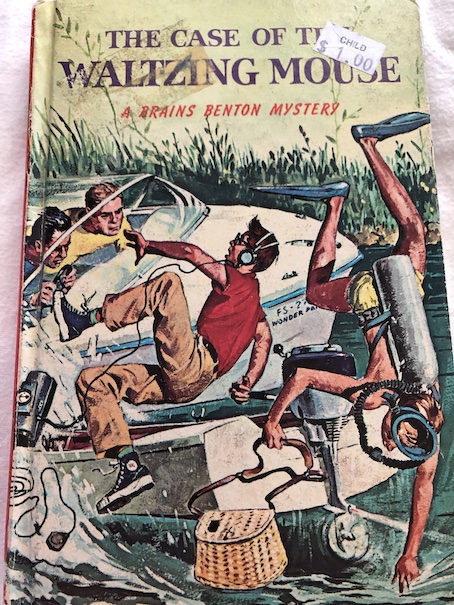
The Case of the Waltzing Mouse

Brains Benton

The Case of the Waltzing Mouse by by George Wyatt (Charles Spain Verral), 1961.

The Crestwood Garden Club holds an animal show to raise money for their Community Camp Fund. Brains and Jimmy enjoy seeing all of Professor Gustave’s animals, but they become concerned when a seal knocks over a creel where its fish are stored, and they see that there is a large amount of cash concealed inside. Professor Gustave says that he carries that much cash with him because he is always traveling from town to town with his animal show and can’t depend on a single bank for his money.

Brains still seems concerned about the money and the way it’s concealed, but Jimmy is hoping that Brains won’t find a mystery that will disrupt their vacation plans. Every year, they spend a few weeks at a lakeside cabin that their families rent, and all Jimmy wants to do is go swimming and fishing.

However, while Jimmy’s older sister, Ann, is driving the boys to the cabin, they come upon the professor’s trailer of animals. The animals are very upset, and the professor is nowhere to be seen. After searching the area, they find the professor, and he tells them that he was attacked by a couple of men. One of them is a guy called Blackie, who used to work for the professor, but the professor fired him because he mistreated the animals. The men were trying to take the creel with the money in it, but the professor threw it into the bushes, and they didn’t find it.

It turns out that the professor is also going to be staying at a cabin by the lake for awhile. They help him to get settled there with his animals, but Brains is still concerned that the men will be back for the professor’s money. The concern is justified because the men later attack the professor while he’s in a boat on the lake, and the creel is lost overboard. The professor is very upset, not just because the money is now at the bottom of the lake but because the money actually doesn’t belong to him. The professor says that it really belongs to someone else, although he doesn’t say who.

Brains realizes that they can get the creel back because a policeman friend of theirs is also staying at the lake and has offered to teach the boys how to skin dive. Jimmy has wanted to learn to dive and is willing to dive for the creel. Unfortunately, the situation is complicated when the men kidnap the professor for ransom, saying that they’ll let him go if the boys bring them the money.

My Reaction

There were parts of this book that I didn’t really care for. I’ve noticed that the Brains Benton books sometimes include stereotypical attitudes of boys looking down on girls or discounting their abilities. Near the beginning of the book, Jimmy’s sister Ann is trying to get the boys to hurry getting ready to go to the cabin, but Brains wants some extra time to take care of a new device that he’s just gotten. Jimmy says, “But, after all, she is a girl, and girls and women just don’t understand how it is when a fellow gets interested in something highly scientific and technical.” No, Jimmy, I don’t think that’s the issue. It’s not about not understanding how someone can find science interesting; Ann’s just in a hurry to get going. She would probably be just an impatient if you were taking extra time to pick out a different shirt or get your hair combed just right. Granted, some of Jimmy’s comments are tongue-in-cheek. When Ann later tells them to stay out of trouble because she knows that they’ve gotten into trouble with their detective business before, Jimmy mentally lists the dangerous situations they’ve been in while denying that they were really that bad. “Women! Always exaggerating!”

The mystery wasn’t too bad. We do know who the villain is from the beginning, so like the other books that I’ve read in this series, it’s more of a “howdunit” than a “whodunit.” Readers get to watch Brains and Jimmy figure out how to rescue the professor and save his money. There is one other element of the story that is more of a mystery than the professor’s kidnapping. The professor says that the money isn’t really his, and the boys see a mysterious girl talking to Blackie. Is she the one who really owns the money, and if so, what is the relationship between her and the professor?

Ruth Fielding at Lighthouse Point

Ruth Fielding

Ruth Fielding at Lighthouse Point or Nita, the Girl Castaway by Alice B. Emerson (the Stratemeyer Syndicate), 1913.

When this story begins, Ruth’s friend Helen is finally being initiated into the society that Ruth and some of their friends founded at their boarding school, Briarwood Hall. In the second book of the Ruth Fielding series, when the girls started attending Briarwood, they found themselves caught between two rival social groups. One of them had the reputation for being led too much by the school faculty instead of the students themselves. Ruth, Helen, and some of the other girls craved more independence from the teachers. However, the other main social group, which was more student-led, was led by a sly bully of a girl named Mary Cox. That group had basically turned into a cult of personality centered around Mary Cox, where everyone else had to do whatever she said. The initiation into Mary Cox’s group was a mean trick, and Mary Cox, known as “the Fox” to many girls at school because of her slyness, used bullying tactics to dominate the other girls.

For awhile, Helen was a member of Mary Cox’s group, finding it exciting, but Mary Cox took exception to Ruth very soon after they first met because Ruth is more independent-minded and not easily led or intimidated by Mary. Although Ruth was one of the new girls at school and one of the youngest, she decided to assert her independence and create a new society without some of the problems that plagued the older ones. She found other interested girls who felt the same way she did, and they soon attracted more members who were similarly tired of the old groups. Ruth’s group is called the Sweetbriars, or S.B.s for short, although Ruth frequently reminds people that the group is not hers exclusively. To avoid the problem with Mary’s group, having everything monopolized by one person, Ruth established in the rules that leadership of the Sweetbriars will rotate, with no member serving as the club president for more than one year. That way, no one will have total control, and there will be opportunities for new people with fresh ideas to get more involved.

Helen, who eventually figured out what kind of person Mary was, stuck with her group for awhile anyway, out of loyalty to the membership, but since then, Mary’s group has fallen apart. Helen was one of the last to leave it, but Mary is still resentful that many of her old members have joined the Sweetbriars, including Helen.

Shortly after Helen’s initiation, Ruth and her friends are talking about taking a summer trip to a friend’s beach house. They started talking about their summer plans over the winter break, and now, they’re making the final arrangements. Mary, still looking for ways to cause trouble for Ruth and the Sweetbriars and regain her social dominance, tells Helen that the only reason she’s being invited to the beach house is because she’s now a Sweetbriar, implying that the other girls wouldn’t have wanted her around if she hadn’t joined their club. Frankly, Helen is a bit of a sucker and falls for Mary’s manipulation. She confronts the other girls about what Mary said.

The other girls all remind her that, first of all, they started planning this trip well before her initiation. Second, they are inviting people who aren’t part of the Sweetbriars. They’ve invited Madge, who is the student leader of the faculty-led social club, and she’s coming. They’ve also invited some boys, brothers of girls at the school and their friends, who attend the nearby boys’ boarding school. Helen says that Madge is also an honorary Sweetbriar, even though she’s in another club, and the other girls correctly realize that Mary’s comments to Helen were a manipulation to secure her own invitation. The girl whose family owns the beach house, Jennie Stone (nicknamed “Heavy” by the other girls because she’s “stout”), is actually one of Mary’s roommates at school, and she reminds Helen that she also invited Mary but that Mary was non-committal about accepting.

The girls debate among themselves whether or not Heavy should renew the invitation and encourage Mary to come with them. It’s pretty obvious to the girls (except maybe Helen) that Mary is being manipulative and probably has a trick up her sleeve. (They don’t call Mary “the Fox” for nothing, and if the reader has any doubts that this is a ploy, Mary is listening to this whole conversation through the keyhole.) Mercy, known for her outspokenness, thinks they should all just forget about Mary because her meanness will spoil the fun. Ruth doesn’t like Mary, either, but she can see that Helen will feel bad if they act exclusionary, and Mary will try to use that against them. Ruth tells Heavy that it’s only right for her to invite her roommate, and not only does Ruth want her to invite Mary, she insists on it.

So, Mary will be going to the beach house with the other girls, but before their trip even gets started, the situation is rocky. When the girls get on the boat that will take them from the school to the train station, Mary goofs off, teasing one of the other girls, and she ends up falling overboard. Since Mary can’t swim, Ruth has to jump in and save her. This is the second time that Ruth has saved Mary’s life since she arrived at the school. The first time, Mary credited the rescue to Helen’s brother, Tom, who also helped, but this time, Ruth gets the credit alone, and everyone witnessed it. One of the other girls says that Mary will have to change her attitude toward Ruth now, but Ruth knows that isn’t likely. Just because Mary might owe her some gratitude for the rescue doesn’t mean that Mary will like her, and Mary is the kind who would resent “owing” a person she doesn’t like.

Worse still, Ruth learns that her Uncle Jabez has lost a considerable amount of money in a bad investment, and he might not be able to afford to sent her back to Briarwood Hall! It’s a heavy blow because she’s finally settled in there and has a good group of friends. He’s become so paranoid about money again that he might also stop the money he was contributing toward Mercy’s education, which would be a double blow.

Ruth is an ambitious girl and determined not to give up on her education so easily. Raising the money for her next year’s tuition would be difficult all on her own, but Ruth knows that she has to find a way to do it over the summer. At first, she isn’t sure that she should go to the seaside with the others as planned, but Uncle Jabez surprises her by giving her some money and telling her to go. As the girls set out on their trip, Heavy also tells Ruth that Mary Cox’s family is having trouble. Mary’s father died a year ago, leaving the family with money problems, and her brother left college to tend to his father’s business affairs. Now, her brother has disappeared on a business trip, and she and her mother are worried about him. With the girls’ problems hanging over their heads, they all set off for Heavy’s family’s seaside bungalow at Lighthouse Point.

When the party arrives at Lighthouse Point in Maine, there’s a storm, and they hear that there’s a shipwreck on a nearby reef. The young people all go down to the seaside to watch the rescue efforts. At first, they think it’s all very exciting, but then, the destructive power of the storm and the real risk to the rescuers makes them realize the seriousness of the situation. They watch, horrified, as a lifeboat overturns in the storm. It seems like there won’t be any survivors of the wreck, but some people are saved.

Among the survivors is a girl who calls herself Nita. Nita, who is about the same age as Ruth and her friends, admits to being a runaway, but she is evasive about where she came from and what her situation is. The ship captain’s wife, Mrs. Kirby, is also rescued, and she says that it’s her impression that Nita was not well cared for when they first met and that Nita was trying to go to New York, possibly to stay with some relatives there. Nita says that she wants to go to New York, but she is still evasive about why, what she plans to do there, or if she knows anyone there.

In spite of her recent traumatic experience, Nita is very self-controlled, mentally sharp, and even a bit sly. The party of young people and Heavy’s Aunt Kate take Nita with them to the bungalow where they give her a bed and question her more about her past. She lets a couple of things slip, referring to a man named Jib Pottoway, who was a “part Injun” (that’s how Nita puts it, she means that part of his family is Native American, saying that “Jib” is short for Jibbeway, which is apparently either an older version or slang corruption of Ojibwe) “cow puncher” who lent her books to read. Nita apparently came east from somewhere in the western United States, having romantic notions from books about how poor girls can make friends with wealthy families in the east who can help them with their education and help them rise up in society. She’s been finding out that the realities of the east are very different from what she’s read in books, but she still has her stubborn pride. Nita says that she can move on if the others don’t want her around or if they’re getting too nosy about her past, but Aunt Kate is reluctant to let her go until she knows whether Nita is going to be able to manage on her own or has somewhere to go.

Since Nita has only the clothes she was rescued in and those are ruined, the part gets her some new clothes to wear. They notice that a somewhat disreputable man named Jack Crab seems strangely interested in Nita, as if he recognizes her from somewhere. There is an explanation later when Tom picks up a newspaper clipping that Jack Crab drops about a girl named Jane Ann Hicks, who has run away from her wealthy uncle who owns a ranch in Montana. Nita certainly first the description of the missing Jane Ann. In her uncle’s and the reporter’s words, “‘Jane Ann got some powerful hifalutin’ notions.’ She is now a well-grown girl, smart as a whip, pretty, afraid of nothing on four legs, and just as ignorant as a girl brought up in such an environment would be. Jane Ann has been reading novels, perhaps. As the Eastern youth used to fill up on cheap stories of the Far West, and start for that wild and woolly section with the intention of wiping from the face of Nature the last remnant of the Red Tribes, so it may be that Jane Ann Hicks has read of the Eastern millionaire and has started for the Atlantic seaboard for the purpose of lassoing one–or more–of those elusive creatures.” They’ve got her pegged, although the “or more” part of lassoing millionaires makes her sound more like a gold-digging adventuress than an overly-romantic teenager who’s read too many novels. However, if Nita really is Jane Ann Hicks with a wealthy, ranch-owning uncle, why would she need to find a wealthy benefactor to buy her the piano she says she wants and fund her education?

Nita runs away from the beach house, but unfortunately, she trusts the wrong person and is soon in need of Ruth and her friends to rescue her again.

The book is now public domain and is available to borrow and read for free online through Internet Archive (multiple copies) and Project Gutenberg.

My Reaction and Spoilers

Racial Language and Other Issues

I think I should start with a warning that there are some issues with racial language in this book, which is pretty common with early Stratemeyer Syndicate books. I already mentioned the word “Injun” and the newspaper article that mentions “Red Tribes” above. I also noticed that in the article that describes Jane Ann’s disappearance, it is mentioned that she was raised by her uncle alone at his ranch “for a woman has never been at Silver Ranch, save Indian squaws and a Mexican cook woman.” I’m sure they’d be thrilled to find that they don’t count. The Stone family’s cook at their beach house is a black lady called “Mammy Laura” who speaks in a stereotypical way with phrases like “lawsy massy.” (Although, to be fair, Mr. Hicks the rancher also speaks like a stereotypical cowboy, so stereotypes are being used in a very general way and not directed at any group in particular. I know, it’s still not great.)

It’s also a little uncomfortable how they keep referring to Mercy as “the lame girl” or “the cripple.” They don’t seem to mean it as an insult, more as a general description, and it’s true that it’s one of Mercy’s characteristics and a major part of her storyline in the first book. Her health has improved since then, although it’s established that she’s never going to be able to walk as well as other people and will always need some assistance, like crutches. It’s just that it feel like we’re being beaten over the head with it when they keep repeating that she’s “lame.” I think they’re trying to do it as a descriptor, trying to make the writing a little more colorful by referring to characters by some part of their appearance and not just by name, like how they keep calling Ruth “the girl from the Red Mill”, but it falls flat because it seems insensitive and shallow. First of all, this isn’t something that readers are likely to forget and need to be constantly reminded about Mercy. Second, it gives the impression that this is Mercy’s main characteristic. Mercy is the most blunt and sarcastic character among the girls, and she has quite a lot of personality, so she does have characteristics beyond her disability. Third, in the first book, they establish how much Mercy hates her disability and how bitter she was about it until she found a way to improve her situation, make friends, and move forward with her life and education. It doesn’t seem like she’d enjoy people constantly calling her “cripple” and “lame”, and it would be completely in character for her to bluntly say so if asked, so it’s a little uncomfortable when the invisible narrator of the book keeps doing it.

Heavy’s nickname is also a little irritating. She doesn’t seem to mind it, but this is a good opportunity to point out that older Stratemeyer Syndicate books do have a tendency to use characters’ weights as one of their defining characteristics. Even up through later series, like Nancy Drew, characters are often specifically described in terms like “slender”, “slim”, “stout”, etc. Typically, in Stratemeyer Syndicate stories, the slimmer characters are either the main characters or the nicer or more talented ones, while the fatter ones are either more comic relief, socially awkward, or villains. Actually, one of the things I like about Heavy is that she doesn’t fall into this pattern. Heavy is pleasant, cheerful, practical, and generous.

The Runaway

As Ruth considers Jane Ann’s position and why she would run away from her uncle, she remembers that she also considered running away from Uncle Jabez when she first came to live with him. Both Ruth and Jane Ann are orphans who depend on their uncles, who control the family finances and their education. Jane Ann’s uncle is far richer than Uncle Jabez, but he also has firm ideas about the kind of life Jane Ann is going to live as the future heiress to his ranch and what kind of education she’s going to need. He rejects the kind of education a girl would have on the east coast of the US as being too “effete” for a young woman who will someday have to manage a ranch with tough “cow punchers.” However, Jane Ann wants some of the refinements of east coast culture, like her own piano, an education, and the company of other girls her own age who share her interests, none of which are available at her uncle’s ranch. It’s true that Jane Ann has a lot of unrealistic notions about life from the books she’s been reading, but that’s largely because cheap romantic novels have been her main source of information about life outside of her uncle’s ranch. Getting an education and more interaction with the outside world would do her some good. Actually, I think Jane Ann’s problem does reflect a problem that exists even in modern education, when parents and instructors are so focused on job training and the roles they think the young are going to fill in life that they neglect the subjects that give students a broader view of life and how the world works, their roles as human beings outside of career roles, and their relationships to other human beings in the world.

When Mr. Hicks comes to the beach house later, looking for his niece, Ruth talks to him about what she knows about Jane Ann/Nita and what Jane Ann really wants. Mercy also adds some criticism because she has “a sharp tongue and a sharper insight into character”, pointing out to Hicks in no uncertain terms what a young girl needs and how she feels about things. Her criticism of the name “Jane Ann”, which seems as dull and plain to the other girls as Jane Ann thought it was herself, seems a little overdone. Jane Ann’s uncle picked that name because it was his grandmother’s name, and it is traditional for certain names to be reused in families. It’s not as romantic and modern as the girls think it should be, but it’s also simple and classic and could really belong to just about any time period, so I don’t think it’s as old-fashioned as they’re implying. I do appreciate Mercy’s straightforward talk and how she speaks her mind without being intimidated by either Hicks’s age or wealth. Mercy really is a character with a personality, which makes her different from some of the other cookie-cutter characters in Stratemeyer Syndicate books with little variation in their personalities, and she’s one of my favorites in this series.

Like other books in the series, there is an element of mystery, but the book tends to lean more toward adventure. However, as the series goes on, the stories are becoming more mystery, and this one is more mystery than previous books. There is first the question of who Nita really is. The newspaper clipping provides a clue, although it’s not a firm answer until Jane Ann’s uncle shows up, looking for her. Then, there is the question of where Jane Ann went after she left the beach house. Ruth is sure that Crab had something to do with her disappearance, but she and her friends have to do some intentional investigating and searching for Jane Ann to rescue her. In spite of some of the problematic language, I like the direction this series is heading.

At the end of the story, there is still something unresolved, and that’s how Ruth is going to pay for her boarding school. Jane Ann’s uncle offers a reward for rescuing her, but Ruth can’t bring herself to accept it because she doesn’t want it to appear that she was only helping Jane Ann for the sake of the money. Instead, she and her friends will be rewarded with a trip to the ranch where Jane Ann and her uncle live.

Odd Piece of Trivia

When Jack Crab tries to pester Nita about what her name is, Mercy bluntly tells him off using a children’s retort:

“Puddin’ Tame!” retorted Mercy, breaking in, in her shrill way. “And she lives in the lane, and her number’s cucumber! There now! do you know all you want to know, Hardshell?”

I not only appreciate that she pokes fun at Crab’s name, calling him “Hardshell“, but she brings up an interesting piece of children’s lore. The “Puddin’ Tame” retort was old-fashioned when I was a kid in the 1980s and 1990s, but it was a popular playground retort for decades, maybe over a hundred years, although I’m not sure of its actual age, and it’s possible that it’s still circulating in schools and playgrounds somewhere. When kids say it, the quick rhyme is more important than the meaning, although there are theories that “Pudding Tame” or “Pudding Tane” (as some people say it) is a reference to a devil character called Pudding of Thame.

The Mystery of the Other Girl

The Mystery of the Other Girl by Wylly Folk St. John, 1971.

It’s a rainy Saturday in Florida for the Barron family when Stevie (short for Stephanie) gets a strange phone call from Mobile, Alabama that’s meant for her ex-boyfriend, John Henderson. Stevie just broke up with John, who likes to call himself “Ian” because he thinks it sounds classy, the day before, and she has no idea who the strange girl on the phone is or why she’s trying to reach John/Ian at her number. Stevie asks the girl for her name, and she says that she’s Morna Ross, but suddenly, the girl screams and is cut off, like someone put a hand over her mouth, and then someone hangs up the phone at her end. Stevie is disturbed by the call, fearing that something bad happened to the other girl, but she doesn’t know what to do about it because she doesn’t know Morna Ross and doesn’t know exactly where she was calling from or why she wanted to talk to Ian.

Since Stevie already has a date to go dancing with friends at a place where Ian and his band are performing that night, she tells her friends about the weird phone call and asks them what she should do. They say that they’ve never heard of Morna Ross and tell her that she should talk to Ian about it. However, Stevie feels too awkward about the breakup to talk to Ian and asks a couple of her friends to do it for her.

That evening, Stevie and her friends run into Stevie’s old friend, Hope. She and Hope haven’t seen too much of each other lately because she’s not interested in dancing and dating and other things that Stevie wants to do. This evening, though, Hope is out with a visiting cousin from Mobile, Alabama named Phil Walters. Stevie is glad that Phil is getting Hope to come out of her shell a bit. Stevie and Phil say that the style of dancing popular with teenagers today is better than older styles of dancing because they don’t have to take any lessons to learn it – it’s just moving to the music, like everyone else. On impulse, she asks Phil if he’s heard of Morna Ross, but he says he hasn’t. Stevie’s friends say that when they asked Ian, he claimed not to know Morna Ross at first, but then he said something about her being a girl who’s “crazy about him.” Apparently, he dated her before he dated Stevie, and since he and Stevie broke up, he decided to invite her to the Old Seville Festival that’s happening next week, a local celebration of the history of their town. Stevie thinks it’s strange that Ian didn’t mention that Morna lives in Mobile, since that’s the place she was calling from. Stevie’s friends think maybe Ian was lying about Morna being crazy about him and that he probably doesn’t really know her because Ian is always bragging about things, like how great his family is. Hope thinks Ian makes up things to brag about because he wishes they were true even though he knows they really aren’t. After she thinks it over, Stevie thinks that’s true, that Ian likes to keep up appearances and a superior attitude because, underneath it all, he’s actually a very insecure person. But if he made up his relationship with Morna, and he doesn’t really know her, why was Morna trying to call him?

Before the evening is over, Ian confronts Stevie and reminds her that their first date was almost a year ago, at the last Old Seville Festival and that he’s planning to see her there again this year because they promised each other that they would see each other during the festival every year. In return, Stevie confronts Ian about Morna. Ian says that she’s just another of the girls who have come to see his band perform and likes him. When Stevie asks why nobody’s met Morna at any of the teenage hangouts in town, he says that they like to hang out at the more adult spots. He begins spinning a story that Stevie is sure is at least half fiction about how he and Morna order non-alcoholic drinks at adult nightclubs but they sneak in some gin to mix in with it and how they’ve tried marijuana. (Keep in mind that marijuana was illegal everywhere in the US at this time.) Ian says that he and Morna don’t really want to become potheads, but they see trying these things as part of growing up, “to experience everything and then make a choice.” Stevie pauses to wonder about the word “everything.” (That is always a good thing to wonder about when someone talks about wanting to try “everything.” Define “everything.”) Stevie asks him where Morna lives, and he says that she lives across town, but her family has moved around a lot because her father deals in real estate and sometimes even sells their own house and moves his family to a different one. (Ian sounds like he thinks that’s clever. I thought it sounded really suspicious, like maybe Morna’s family is actually involved with the mafia or something and has to keep on the move.) Stevie doesn’t really believe any of this, but she pries a few more details out of Ian about what Morna looks like. Although she thinks that Ian made up most of the things he said about Morna, there is still the girl who called her earlier and screamed like she was in trouble. She was a real person, even if what Ian said about her wasn’t all true.

When Stevie gets home, she tells her mother what Ian said about Morna and how Ian likes to make up things. Stevie is still concerned about the girl who called and wants to find out who and where she is and if she’s okay. Her mother says that her father will be coming home from a business trip the next day, and they can ask him what to do about it. Stevie’s father is a fingerprint expert at the police department, so he knows about police procedures and can make inquiries. Stevie wishes that she had Morna’s fingerprints so her father can analyze them himself, and in another weird development, she gets that opportunity.

The next day, Stevie gets a letter from Morna. The letter is addressed to her and not Ian. Morna didn’t know her home address, so she addressed it to the high school she attends, and the letter was forwarded to her from there. Stevie handles it carefully so she won’t disturb any fingerprints. The letter even has Morna’s return address, so she knows where she lives in Mobile. The contents of the letter are strange. Morna talks about her school band and how they’re always short of instruments. She says that she’s liked Stevie since she saw her playing with her school band in a competition (Stevie really is in her school’s band) and wonders if her school would be willing to sell spare instruments. The letter is oddly worded, the word “see” is underlined twice, and there are doodles all over page. Also, the specific instrument Morna says that she wants is written in French and doesn’t sound at all familiar to Stevie. Stevie looks up the term Morna uses, and it turns out to be a French horn. But, if Morna meant “French horn”, why didn’t she just say that? Also, the price she mentions for the French horn is far less than what an actual French horn would cost. It seems like Morna is either crazy or trying to say something else in her letter.

Stevie has a younger brother named Lyle who is really smart, and he suggests that the letter might be in some kind of code. As they talk it over, Stevie realizes that the French horn refers to Ian because he plays the French horn in her school band. Lyle wants to study the letter more to see if he can figure out other parts of the code, and Stevie decides to invite her friends over to see it, too, because most of them are also in the band and might notice something else in the message that’s music-related. Little by little, the kids begin working out the real meaning of Morna’s message. First, the amount of money that didn’t make sense is meant as a clue the reader that there’s more to this message than just an inquiry about musical instruments. Second, Morna phrases sentences oddly in order to work certain words into the message and put them in the right order for her hidden message. Third, the doodles around the message are the beginnings of pieces of music. Stevie and her friends providing their musical knowledge and Lyle coaches them through code-breaking techniques. After awhile, Lyle goes to his room to work on the code alone because he finds it easier to think by himself and likes surprising people with his discoveries. When he returns, she has the final solution.

Morna’s message says that she has to get in touch with Ian. She says that she is being watched and her mail is being read, which is why she has to communicate in this way. Morna asks Stevie to write to her in the same way, promising to explain the situation later. Stevie remembers that Ian wanted to see her at the Old Seville Festival, so she decides to tell Morna when and where to come if she wants to see Ian. Shortly after Stevie mails the letter, Morna calls again, saying that she needs to warn Ian because someone might try to kill him. Then, she screams and someone hangs up the phone again.

At first, Stevie’s father thinks that Morna is some kind of prankster or maybe having some kind of paranoid fantasy because she’s into drugs or something, but Stevie is sure that Morna really is scared. The danger is real, and Stevie’s family realizes it when Lyle is kidnapped at the Old Seville Festival.

The book is available to borrow and read for free online through Internet Archive.

My Reaction

I was pretty sure, for much of the early part of the book, that the whole thing with Morna’s mysterious phone calls and messages was just an act that Ian dreamed up and got someone to do for him as one of his dramatic bids for attention. It seemed weird to me that Morna second phone call ended exactly the same way as her first, like it was part of a rehearsed routine. Also, someone who wanted to interrupt Morna’s phone calls and keep her from talking could do it in easier ways that wouldn’t involve dramatic screams that would get attention. They could have just unplugged the phone or held down the hang up button. (Remember, this is the early 1970s. Morna’s using an older style of telephone that has to plug into the wall, and there are buttons where the handset rests that hang up the phone. That was the first type of phone I ever used as a kid, and I know that you can push those buttons down with your hand to end a call even if someone is still holding the handset.) I would think that if a sinister person was watching Morna, they would cut her off that way rather than try to put a hand over her mouth while she screams. Also, if they really didn’t want her to communicate with anyone, I don’t think they’d let her write any kind of letter, not even one that just seems to be about band instruments. Even if they couldn’t figure out the code, I doubt that they’d want to take the chance that she might communicate something to the wrong person. It all just seemed too theatrical and not realistic. So, I couldn’t really blame Stevie’s father for initially thinking that the whole thing might just be some kind of prank. However, I did wonder why he didn’t just phone the Mobile police department and ask a colleague to do a welfare check on the girl at the address on the envelope to find out if it was a prank or not. Better safe than sorry, and if it turned out to be just a prank, knowing that the police knew about it would probably be enough to get the girl to stop.

As it turns out, it’s not just a prank. There is something genuinely sinister going on, although I wasn’t sure what it was for quite awhile. I thought it might have something to do with drugs because there were repeated references to drugs in the story, but that’s not what’s going on. It turns out that Ian/John has been having trouble with his self-image and even self-identity because he’s adopted. He’s aware that he’s adopted, which is why he secretly worries that he doesn’t really fit in with his family or friends and makes up fantasies about himself to impress people while being inwardly insecure. However, there’s quite a lot that Ian/John doesn’t know about his past, not even his birth name, and the truth of Ian’s past is even stranger than anything that he’s ever imagined. His blood relatives love him and didn’t forget about him, even though they couldn’t take care of him when he was a baby, and now, they’re trying to protect him from a very real threat. Finding out the truth comes as a shock to Ian, but it’s an important step in making peace with himself and realizing just how important he is just for being himself, not only to his adoptive family but to the family who gave him up for adoption and to the friends who cared about him even when he was a bit of poser and who took great risks to protect him and help him find the truth.

Lyle is fun as an eccentric genius character who has a pet walking catfish. I hadn’t actually heard of a walking catfish before reading this book, but that’s part of the fun. I enjoy stories that bring up interesting facts that I didn’t know before. Walking catfish can actually survive out of water for long periods of time and move across land. The walking catfish ends up playing a role in catching the bad guys in a way that actually makes sense, which is nice. I also like that, although Lyle is pivotal in solving the mystery, he didn’t get all the answers too easily, like some geniuses in stories, and he needed some specialized knowledge from other people. That makes him a more realistic character.

I would like to discuss the costumes that the characters wear to the Old Seville Festival, though. They explain that it’s common for people attending the festival to dress in historical costumes from different time periods in the town’s history to get into the spirit of the event. Ordinarily, I would think that’s fun and be completely supportive, but there’s one exception that I think crosses the line a little. Some people, including Lyle, dress in Native American costumes. I’m not Native American myself, but I know that real Native Americans are usually not too happy to see traditional forms of dress being used as costumes. I would cut the characters more slack for it if they confined themselves only to wearing clothes like traditional Native Americans, but what pushes it over the line for me is that Lyle is described as darkening his hair and his skin as part of his costume. He also does some kind of warpaint on his face, but it’s the skin coloring that he does that I think is unacceptable. I think that’s going too far, and that’s what pushes this costume into the realm of the tasteless and offensive. A little more restraint, just sticking to the clothes might have been okay, but looking like one of those white actors trying too hard with makeup to pass for a minority in an old black-and-white movie is just too much. It’s one of the things that really dates this book because fewer people today would be willing to take it that far, at least not without some embarrassment or criticism from other people. It was published in the early 1970s, and may possible take place a little earlier, in the 1960s, because no exact year is given. I’ve heard some people claim that it was normal for them to wear racial face makeup as part of costumes when they were kids, and never having seen that even once when I was a kid in Arizona during the 1980s and 1990s, I’ve wondered just when and where kids did that of their own free will when they were given the opportunity to wear literally anything else, and I think I have at least a partial answer here. Lyle carries a tomahawk as an accessory to his costume and gives war cries. He also comments about how hippies are bringing Native American style headbands back into style, which further dates the story.

I should also explain that Lyle is not just dressing as any random Native American; he is trying to be a real historical figure. He is specifically trying to be William Weatherford, a mixed-race plantation owner known for his involvement in the Creek War in the 1810s. I like the part where Stevie wonders about the authenticity of Lyle’s costume. Apparently, Lyle got some help from someone at the local museum, but Stevie realizes that nobody else at the festival is going to know (or care) whether Lyle’s war paint designs are accurate or not, and even if he’s dressed accurately as a Native American of the area, the real William Weatherford probably typically dressed in the British style favored by other plantation owners of the era because he was living in the same manner as fully white plantation owners and going by his English name rather than his Native American name. I’m not actually sure how the real William Weatherford dressed because this isn’t a part of history that I know much about, but Stevie’s logic makes sense. My guess is that he probably wore a variety of different clothes in his life, depending on his circumstances at the time. (After all, various other historical figures did. Emperor Hirohito was photographed at various times wearing traditional Japanese ceremonial clothing, Western-style suits, and military uniforms, depending on the event.) One thing I could state with confidence is that William Weatherford probably didn’t have a pet walking catfish on a leash, which Lyle does because he insists on bringing his pet to the festival with him.

It’s part of the plot that Lyle is wearing an outlandish costume and has his walking catfish with him when he’s kidnapped, but I still think that there are equally outlandish historical costumes that he could have chosen that could have chosen that would have worked. It’s important that Lyle dyed his hair for the costume, so he had the same hair color as Ian on the day he was kidnapped when his ordinary hair color is much lighter, but I think there could be other ways around that or maybe he could have worn a hat so his hair wasn’t visible at first. I wouldn’t mind if he just dyed his hair, but the skin coloring is just too much.

Personally, I prefer the costumes that Stevie and her friends wear to the festival. They decide to dress as Gibson girls from the late 1800s and early 1900s. They basically wear old-fashioned-looking skirts and blouses and put their hair in the typical Gibson Girl hairstyles. Historical costumes that are based on wearing different clothes and hairstyles are the type of costumes I favor.

Aside from the costume issue, I really liked the story. I honestly wasn’t sure what the real problem was until the very end of the book. I had several theories, but Morna really surprised me when she explained who she really was and why Ian was in danger. I thought that she might turn out to be a relative, but the situation wasn’t what I expected.

The Girl in the Window

Kiley Mulligan Culver lives in a fairly small town, Meander, in the southern United States.  Although not much usually happens in their small down, about a year before the story begins, a little girl named Leedie Ann Alcott was kidnapped.  The crime literally hit Kiley very close to home because she and her father (Kiley’s mother died when she was a baby) live on the Alcott family’s estate.  The Alcott mansion was once a plantation, and Kiley and her dad, who is an author, live in the old house that once belonged to the plantation’s overseer, so they know the Alcott family well.  Mr. and Mrs. Alcott are divorced, and Mr. Alcott lives in another state.  Mrs. Alcott owned a children’s clothing shop in town, Kiley would sometimes babysit or play with Leedie Ann, who was younger than she was.  In some ways, Leedie Ann was kind of like a little sister to Kiley.  At the time she disappeared, Leedie Ann was four years old, and Kiley was about nine.  Mrs. Alcott never received a ransom note for Leedie Ann, but everyone is sure that her disappearance was a kidnapping, not just a child wandering off.

A year later, when the story begins, Leedie Ann has still not been found, and no one knows what happened to her.  After Leedie Ann disappeared, her mother closed her clothing shop, and a strange gypsy woman named Pesha came to stay with her.  Pesha is mysterious and secretive, and no one knows why Mrs. Alcott has her staying with her, although they seem to be holding seances.

Then, one evening, Kiley looks up at the Alcott mansion and sees Leedie Ann Alcott standing in the window of her old room! But, before she can do anything, another, shadowy figure closes the drapes on the window.  By the time that Kiley can tell her father what she’s seen, Leedie Ann is gone.  Her father goes to the Alcott house to ask Mrs. Alcott if everything is all right and if she needs anything, and everything seems to be normal (or what passes for normal at that time).  Kiley’s father thinks that Kiley imagined the whole thing, but Kiley knows that she didn’t, and she is sure that she wasn’t mistaken and that it was really Leedie Ann.

Kiley tells her friend, Sarah, about what she saw and persuades her to help find out whether Leedie Ann is really in the Alcott house or not.  Sarah is nervous about it, but she agrees to go along with Kiley’s plan to go to the Alcott house and ask to use the bathroom, pretending that she has been waiting for Kiley to meet her at her house but that she just can’t wait anymore.  While Sarah is supposedly using the bathroom, she’s supposed to check Leedie Ann’s room upstairs.  Kiley can’t do this herself because she wouldn’t have the same excuse that Sarah would and because Mrs. Alcott would know that Kiley knows where the downstairs bathroom is and that she would have no reason to go poking around upstairs.

When Sarah follows through on Kiley’s plan and checks Leedie Ann’s room, she tells Kiley that she did see Leedie Ann there!  However, Pesha saw her spying and made her leave the house.  Kiley and Sarah think that perhaps Pesha has both Mrs. Alcott and Leedie Ann under a spell and is holding them prisoner in their house.  But, what can the girls do to help them?

Kiley comes up with a daring plan to trick Pesha into revealing what she knows about Leedie Ann Alcott by writing an anonymous letter to her as if she already knew that Pesha was involved in her disappearance, but the plan backfires.  The police reopen the inquiry into Leedie Ann’s disappearance (don’t ask me why they didn’t notice that the letter appeared to be written by a child), but Kiley accidentally implicates an innocent person.  Adults in town are nervous, and Sarah’s mother doesn’t want Kiley to see her anymore.  Just as Kiley thinks things can’t get any worse, Pesha asks for her help, offering a charm to help restore Kiley’s friendship with Sarah in return.  Pesha claims that her only purpose is to use her psychic abilities to help Mrs. Alcott find Leedie Ann and that what Kiley believed was Leedie Ann in the window was actually a mannequin left from Mrs. Alcott’s clothing store that Leedie Ann had always begged to have as a life-size doll for herself.  Is Pesha really as innocent as she claims to be?  Can Kiley trust her?  What about Mrs. Alcott?  Above all, where is Leedie Ann Alcott?

Although Kiley may have made a big mistake, the reopening of the kidnapping case does bring to light the real secret behind Leedie Ann’s disappearance.

The book is available to borrow and read for free online through Internet Archive.

One of the side plots in the story is about how differences between people can lead to mistrust because people sometimes get a false impression.  Kiley knows that her friends’ mothers don’t really approve of her because she is being raised by her father alone.  Some of her friends’ mothers, especially Sarah’s because she’s overprotective, think that Kiley is a wild child because she doesn’t have a mother to look after her, and they worry that Kiley will be a bad influence on their daughters.  Kiley does sometimes get into trouble because she’s a little daring and a little impulsive, but those are more personal character traits rather than the result of growing up without a mother, and some of her escapades are undertaken in the name of helping someone, like trying to find Leedie Ann.  Her friends’ mothers don’t understand Kiley’s intentions, though, and they never ask enough questions to find out what is really going on.  It seems oddly cold behavior from mothers to me.  Where I grew up, other people’s mothers would have taken more of an interest in a motherless child, purposely checking up on her and wanting to have her hanging around where they could keep an eye on what she was doing.  If they push her away, then she’s even less monitored than she was before.

However, Kiley realizes that everyone’s suspicions about Pesha, including her own, were also based largely on the fact that Pesha is different from everyone else.  For awhile, Kiley helps Pesha to hide from the police because Pesha fears their inquiries.  The two of them get to know each other better.  Pesha is actually a Holocaust survivor. Pesha has the tattoos on her body that the Nazis used to put on prisoners in their concentration camps (I’ve see those tattoos in real life, and I recognized them from the book’s description before Kiley understood what they were) and she tells Kiley about a place in Germany where her family was and terrible things happened.  Besides Jewish people, gypsies were also targets of the Nazis during the Holocaust and were sent to concentration camps along with them.  Pesha fears the police because she fears being locked up again, something that Mrs. Alcott tells to the police to explain Pesha’s sudden disappearance.  Knowing this helps Kiley to become more sympathetic to Pesha and more determined to help straighten out the mess that she helped to cause, eventually discovering the real whereabouts of Leedie Ann in the process.

Something that bothered me about the adults in the story, pretty much all of them, is their lack of interest in asking questions and taking charge.  Even after Kiley’s father realizes that she was helping Pesha to hide from the police, he doesn’t ask enough questions about why she was doing it.  He simply reports Pesha to the authorities and orders Kiley to stay out of it, just like he simply told her to stop imagining Leedie Ann Alcott and making up stories back when Kiley first saw the girl in the window.  Kiley’s father didn’t want to ask the awkward questions to verify what Kiley saw, so it was easier to assume that she didn’t see anything.  Part of that is a plot device, so that Kiley has a reason to dig for the truth herself, but it also figures into the way other adults, like Sarah’s mother, treat Kiley and how they approach the whole inquiry into Leedie’s disappearance.  Instead of checking on what motherless Kiley is doing and helping her father to supervise her, they want to just shrug her off as a problem they don’t want to deal with, figuring that someone else will handle it because they don’t want to get involved.  Then, when Sarah’s mother finds out about Sarah helping Kiley to write the letter that reopened the investigation, she refuses to tell the police the truth about it, allowing the investigation against Pesha to go forward even when she knew it was groundless, just because she didn’t want to get involved.  Disbelieving adults/adults not wanting to get involved is a trope of children’s mysteries because the adults’ non-involvement provides a reason for the children to investigate, but I still find it annoying and irresponsible.

Pesha’s innocence is finally established when Kiley finds the courage to admit what she did in front of everyone at Pesha’s court hearing.  Kiley comes to realize that a quality that she and her father both have is honesty.  Her father didn’t try to hide it when he discovered that Kiley was harboring a fugitive the way Sarah’s mother tried to hide the truth to avoid becoming involved and to hide her child’s involvement, and that’s something to be proud of.  The aftermath of her confession also gives Kiley the opportunity to spot the tell-tale clue of Leedie Ann’s current whereabouts, and Leedie Ann is safely returned to her mother.

Father’s Arcane Daughter

Father’s Arcane Daughter by E.L. Konigsburg, 1976.

Winston Carmichael lives a very sheltered life during the 1950s. His family is wealthy. They live in Pittsburgh, and he attends a good school, but much of his free time is also taken up trying to entertain his sister, Hilary, called Heidi. He particularly has to look after Heidi every week on Thursday, while his mother leaves to get her hair done. Heidi has some developmental disabilities and is hard of hearing, so Winston’s overprotective family is especially overprotective of her. Because of that and because of her frustrations with her own limitations, Heidi is spoiled and frequently acts out when she doesn’t get her way, making her a pain for Winston to help care for. Even servants have often quit over Heidi’s behavior. However, Heidi’s disabilities are only part of the reason why the children’s parents are overprotective. The other reason is the mysterious disappearance of Caroline, Winston and Heidi’s much-older half sister, from their father’s first marriage. Winston is aware that Caroline was kidnapped years before he was born and is now presumed dead, a traumatic incident in their family. Then, one day, a woman claiming to be Caroline comes to the house to see their father.

The story is actually told in the form of flashbacks as Winston recounts it to a woman, who is at first unnamed. Winston explains how he knew about Caroline’s disappearance and how he wanted to know more about this mysterious woman claiming to be Caroline, partly in the hopes of reducing the shadow that Caroline’s disappearance has cast on all of their lives. The children’s father tells them the story of how Caroline was kidnapped 17 years earlier on her way home from the exclusive college that she was attending in Philadelphia. The kidnappers demanded a large ransom in cash, and it took longer than they thought for Mr. Carmichael to assemble that amount of cash because rich people don’t have all of their money in cash and getting large amounts of cash attracts attention from the authorities. Then, the ransom drop went badly and turned into a shootout between the police and the kidnappers at the house where the kidnappers were hiding. At some point, the house caught fire (no one is quite sure what started the fire), and everyone inside the house was killed. At the time, they assumed that Caroline was one of the people who was killed in the fire, but Mr. Carmichael was never sure because the kidnappers had said something earlier about moving Caroline. He always hoped that maybe Caroline wasn’t in the house and somehow survived, but having heard nothing from her for years, it has seemed likely that she died. After Caroline’s presumed death, her despondent mother died of alcohol-related causes. Mr. Carmichael remarried, and he and his new wife had Winston and Heidi. Still, Mr. Carmichael always hoped that maybe Caroline was alive and he would find her one day.

Caroline’s sudden reappearance, although happy for her father, is strange, and Mrs. Carmichael is suspicious that this woman’s real purpose is to claim the inheritance that Caroline was supposed to inherit from her mother’s family. The deadline for claiming the inheritance is approaching, so the woman claiming to be Caroline could be an imposter who is just after the money. Winston studies his mother’s scrapbook, containing all the known details of Caroline’s life, and he comes to understand his father and his family a little better. Caroline becomes more of a real person in his mind, not just a shadowy figure from the past, but he’s still not sure if the woman claiming to be Caroline is the real Caroline.

“Caroline’s” story is that she was rescued from her kidnapping situation by one of the kidnappers, who apparently had a change of heart, but that she had a kind of identity crisis and a sudden realization that she didn’t know who she wanted to be or what she really wanted out of life. She changed her name to Martha Sedgewick, using information given to her about a dead woman by the kidnapper who released her, and went to Ethiopia. There, she taught English for a time and then worked as a nurse. She says that she found it a very liberating experience. Winston, who feels trapped in his stifling, sheltered life understands that feeling. Caroline said that she fell in love for a time but never married the man she loved because there was a war and he died.

Caroline says that when she finally returned to the United States, she found a job as a nurse at the nursing home where her Grandmother Adkins was living. Caroline says that, at first, she wanted to see her grandmother again and get her opinion about whether or not to reveal herself to the rest of the family. However, Grandmother Adkins was senile when she finally saw her, and Caroline merely acted at her caregiver. Mrs. Carmichael thinks this is suspicious and continually quizzes “Caroline” about old acquaintances, trying to catch her slipping up and revealing herself as an imposter. Surprisingly, “Caroline” never seems to slip, and Winston finds himself becoming fond of her. Caroline has had a wide experience of life and is very well read, and she is a very interesting person to talk to. Winston blossoms intellectually under her influence.

I particularly liked the part where Winston realizes that many of his relatives have given him books to read as presents that they have never read themselves. They like to give him books that have a reputation for being “good” books, and it seems like the proper thing to do and something that will enhance their own reputations, but they never actually read the books themselves and can’t talk about them. Caroline hasn’t read all the books that have been deemed “good”, the kind that people read in order to become educated or have a reputation for being educated. However, Winston can tell by talking to Caroline that she has done a great deal of general reading just because she has a curiosity and a desire to know things. She has become a much more knowledgeable person than the people who collect all the “right” sort of books just to have them and never even open them. Many people in the Carmichael family are largely about appearance, but Caroline has substance.

However, Caroline’s presence in the house makes things uncomfortable for the family, not only because of their doubts about her true identity, but because she challenges the life the family is living and the habits they take for granted. Even though some of those habits have been making life uncomfortable for them, the changes that Caroline subtly begins to make also make them uncomfortable by bringing them out of their shells and forcing them to confront things that they have been trying not to confront. For example, Heidi is never scolded for bad habits like snatching things from others’ plates at dinner because she is young and has disabilities. Caroline doesn’t make those allowances, freely telling the family that she doesn’t like it.

Eventually, Caroline’s father is satisfied that she is his daughter and grants her the Adkins’ inheritance, although at his wife’s insistence, there is a proviso that the fortune will revert to the Carmichaels if any evidence surfaces in the future that Caroline isn’t the real Caroline. Caroline accepts those terms, but a battle of of personalities and wills still continues between her and Mrs. Carmichael over the children. Caroline insists that Winston be allowed more freedom, pointing out that Mrs. Carmichael has been using him as an unpaid babysitter while she goes to get her hair done every week. Caroline recognizes that Winston is young and needs to have some freedom and fun, and Mrs. Carmichael is pained that Caroline has caught on to the fact that her hair appointments are also a convenient excuse to get some freedom for herself.

At Christmas, Winston feels sorry for Heidi, watching other people at the family’s Christmas party, but not being able to understand what is being said around her, and knowing that she can’t understand them. On impulse, he gives her the book of poetry that he had intended to give Caroline. To his surprise, she really likes it. He knows that she can read, but he never thought of her as having the mental capacity to understand anything really complex because of her babyish behavior and fits when she doesn’t get her way on something. However, Heidi really does understand the poems and is able to read them to Caroline and tell her what they mean. At first, Winston refuses to believe it, jealous of the attention and coddling that Heidi has always received and not wanting to share Caroline and the intellectual discussions they have with Heidi.

Heidi continues to listen to their discussions and follow them as best she can. Gradually, in their company, Winston notices that her behavior begins to normalize and more of her true intelligence shows, although she reverts to her old habits around their mother. Hilary/Heidi has always been underestimated by her family because of her disabilities as well as being overprotected. Under Caroline’s influence, she learns that she is capable of more than anyone, including herself, believed possible.

Unfortunately, Mrs. Carmichael still distrusts Caroline, and in her determination to protect Heidi from her influence, will not allow her to spend time with her anymore. Caroline tells Winston that she is tired of all the Carmichaels’ pretenses, the way they try to ignore the real issues with Heidi, and she gives him an envelope, which she says will provide Winston with all the evidence he needs to decide whether she’s the real Caroline or not. Winston has to decide which is more important to him, learning whether the Caroline he knows (or thinks he does) is a pretense or accepting the realities of his family’s problems and the help Caroline can offer in learning to deal with them.

There is also a movie version of the book called Caroline? I saw the movie before I read the book, but I’ll explain the difference between the two below because it involves some spoilers.

The book is available to borrow and read for free online through Internet Archive.

Themes, Spoilers, and My Opinions

The everyone in the story, even the children, speak in a very educated and deep-thinking way, which I found interesting. At first, I thought that the children, especially Winston, should speak a little more colloquially, but then, I decided that it’s really right for him to speak in a more erudite way because of the school he attends and because much of the story emphasizes that he has been very sheltered and largely cut off from forming the sort of childhood friendships that children his age have, so he would probably use much less slang than most kids his age.

During the story, Winston is in the habit of thinking of Heidi by insulting terms, like “troglodyte”, because she is strange and awkward and her weird habits and temperamental fits cause problems for him, like preventing him from bringing friends to the house. At a couple of points, he thinks of her as a “golliwog”, which is an insulting racial term, based on a style of old dolls that look like black-faced minstrels, and later, even Heidi describes herself that way. (The term was actually coined in an old children’s book, where one of these dolls comes to life with some other toys. The doll character was actually a nice character, but since the dolls are considered ugly, its meaning has become an insult.) Winston doesn’t mean that in the racial sense here. He’s trying to convey that Heidi has an awkward, abnormal appearance.

As Winston opens up to Caroline, he finally admits to her that he knows that Heidi is “damaged”, not “special.” In other words, he understands that Heidi has disabilities and that she has been deliberately spoiled by their mother who wants to protect her from having to deal with them. Their mother herself has trouble facing the realities of Heidi’s disabilities and is actually ashamed of her daughter for not being normal, so she tries to ignore them, covering them up with cuteness, pretty dresses, presents, and indulgence. Heidi’s babyish behavior early in the story is not because her mind is infantile, but because of the coddling and overprotection she has received and poor socialization, and also because her family is afraid to face the difficulties that lie ahead for her because of her condition and underrates her capacity to do what other children can do and learn what they learn. It’s true that Heidi has some physical disabilities from birth, and she needs a hearing aid to help her hear (she reads lips up until the point that Caroline insists on her getting a hearing aid) and braces to help correct the way she walks, but her mind is excellent. Through Caroline’s attempts to help her, Heidi herself comes to realize how limited her life has been and the potential she has to expand it if she gets the help she really needs to learn how, and she eventually stands up to insist on what she wants for herself, asking her brother to kidnap her and take her to Caroline to get the help she needs and wants. Caroline acknowledges to Heidi, without being ashamed of her or trying to hide the truth, that she is not “normal” and never will be completely normal, but tells her that if she’s willing to work at it, she can realize her true potential in life, and ultimately, that’s what Heidi wants.

The movie followed the themes of the book very well, showing the effect that Caroline has on the lives of the Carmichaels, helping Hilary/Heidi to realize her true potential, helping her parents to realize what she is capable of and what she needs to make the best use of her real talents, and helping Winston to find his own sense of independence. There are some differences. In the movie, for example, Caroline wasn’t kidnapped. Supposedly, she was killed in a plane crash, although her body was never positively identified, and there was some doubt in her family about whether or not she got on the plane. In the movie, Caroline gives a similar story about feeling the need to go out and find herself, but I think she says that she became a nurse in India, not Ethiopia. (It’s been a while since I’ve seen the movie.)

One thing I am grateful for is that both the book and the movie do give a definite answer to the question of whether “Caroline” is the real Caroline or not. I’m often frustrated with movies and stories that leave loose ends like that, like Disney’s Candleshoe, where they never completely establish whether Casey/Margaret is really Margaret.

When Hilary/Heidi decides that she wants the help of Caroline and a friend of hers, who is a doctor, she asks Winston not to open the envelope. Winston keeps it sealed for years, but Hilary (who long since dropped her childhood nickname) is the women he’s talking to when he’s telling the story from his perspective, and at the end, they decide to open the envelope together and find out the truth.

Do you want to know the truth about Caroline?

The Real Spoilers

So, is Caroline actually Caroline, the same Caroline who was kidnapped and evidently killed years before? No, actually she’s not. She really is Martha Sedgewick, the identity that she supposedly took when she said that she was going off to find herself in Ethiopia. However, she is not posing as Caroline for the sake of the inheritance; she’s doing it for the sake of the family and the children. Grandmother Adkins put her up to it.

Martha really was a nurse in the nursing home where Grandmother Adkins lived before her death. She had lived in Ethiopia with her parents, who had died, and so had the man she loved, as she had said before. She had returned to the United States, alone, lonely, and depressed, before getting a job at the nursing home. Grandmother Adkins noticed her striking resemblance to Caroline, and in her confused stated of mind, sometimes thought that she was Caroline. She talked to Martha about the family all the time, which is how she knew all the right details for playing the part of Caroline. Grandmother Adkins knew that if Caroline never returned to claim her inheritance from her mother, that money would pass to Mr. Carmichael, and by extension to his new wife, whom Grandmother Adkins detested. Toward the end of her life, Grandmother Adkins urges Martha to go claim the Adkins inheritance as Caroline – revealing that, in spite of her supposed senility, she has been deliberately coaching Martha to be Caroline for that purpose. Martha decides to go through with the pretense, not because it was Grandmother Adkins’ dying wish or because she really wanted the money, but because she saw Mr. Carmichael at the funeral and was touched by how sad and lonely he looked. Martha didn’t have a family, so she decided to give Mr. Carmichael his daughter back.

In the end, she actually developed romantic feelings for Mr. Carmichael, but she could never admit to them because of their established relationship as father and daughter. Mr. Carmichael might have felt the same way, but he also couldn’t admit to those feelings without destroying the pretense that Martha was his daughter and admitting that Caroline was really dead. Martha came to love the children, and since she realized that they would never be her stepchildren, she did her best to be their big sister.

Miss Trollope, Caroline’s old headmistress, figures out the truth, and “Caroline” openly discusses the situation with her, including her desire to return to college and learn to educate children with disabilities, like Hilary. The real Caroline’s grades were never good enough to attend a university, but Miss Trollope approves of what “Caroline” wants to do and the good she is doing for the Carmichael children, so she does nothing to reveal the pretense or hinder Caroline’s education. However, Miss Trollope later admitted the truth to Hilary when she pressed her for answers.

The reason why Hilary and Winston are discussing this situation and telling the story in the book is that “Caroline” has just died. Hilary is now a business executive, and Winston is a writer. Hilary is a decisive person as well as intelligent, and she decides to put the papers proving Martha/Caroline’s true identity in her coffin, under her head, to be buried with her. Winston says that Hilary is mysterious and arcane, providing the title of the book. Caroline’s life was hidden and arcane, but Hilary’s true depths are also hidden and arcane because of the person she is.

Searching for Dragons

Searching for Dragons by Patricia C. Wrede, 1990.

This is the second book in The Enchanted Forest Chronicles, continuing the adventures of Princess Cimorene, although the story is told from the point of view of Mendanbar, King of the Enchanted Forest.  The Enchanted Forest is no ordinary kingdom, and Mendanbar is no ordinary king.  To be King of the Enchanted Forest means being a skilled enchanter.  Mendanbar can use the forest’s magic directly, making him more powerful than wizards.  Most of the creatures in the forest obey him, and unlike ordinary people, he can find his way around the forest almost automatically, even though things in the forest tend to move around.

At the beginning of the story, Mendanbar’s steward, Willin, pesters him about the subject of getting married.  Mendanbar hasn’t given the matter much thought since his father died three years earlier, but then, there’s been a lot to do.  Queen Alexandra has several daughters, any of which would be considered “suitable,” but Mendanbar doesn’t like any of them.  Mendanbar is annoyed because he’d just gotten the elf clans’ feud settled and was looking forward to a period of relative calm, so he decides that he’s going to give himself the day off, for a change.

He decides to take a stroll by the Green Glass Pool to relax, but on the way, he encounters a princess.  That’s not too unusual for the Enchanted Forest (home to many fairy-tale creatures and the events that make up fairy tales), but this princess strikes Mendanbar as a particularly scheming and ambitious one.  She tells him a great tale of woe in which her wicked stepmother cast her out that Mendanbar can tell is carefully rehearsed and might have even been the idea of the stepmother in question, with the idea of hooking an adventurous prince.  (Royal families do things like that, see the previous book in the series.)  However, Mendanbar is puzzled because the forest usually keeps out people who are obviously selfish.  Then, the princess mentions crossing an area of waste to get into the forest, and Mendanbar is alarmed because there shouldn’t be a wasteland there.  Forgetting about the princess, he hurries off to investigate.

Sure enough, Mendanbar discovers that a section of the forest is actually missing, destroyed to the point where there are just dead stumps.  Even the magic is gone.  Upon further investigation, Mendanbar finds dragons scales.  He isn’t sure why the dragons would want to attack the Enchanted Forest because they haven’t had any quarrels and mostly leave each other alone.  On the advice of a nearby talking squirrel, Mendanbar goes to see the witch Morwen.

After examining the dragon scales, Morwen demonstrates that, although they appear to be different colors and look like they’re from different dragons, they have actually been disguised.  They are actually from one dragon only.  Morwen also doubts that a dragon was really responsible for the damage to the forest.  After all, why would a dragon waste time disguising his scales when he could just pick them up?  Also, healthy dragons don’t shed that many scales.  Morwen is a friend of Kazul, who is the current King of the Dragons, and she advises Mendanbar to go see Kazul. 

Morwen also chides Mendanbar for not visiting Kazul when she became the king the year before.  Mendanbar feels a little guilty, saying that he’s just been very busy, which is true.  However, Morwen points out that what he could use is more effective help to organize things in the kingdom, not just making lists of things for him to do, like his steward does.  It’s part of the reason why people are saying that Mendanbar should get married.

Before Mendanbar can visit Kazul, he gets an unexpected visit from Zemenar, the Head Wizard.  Zemenar says that the wizards have been having problems with the dragons (again, see previous book) and that the dragons will not let them enter the Caves of Fire and Night.  He hopes that Mendanbar will allow them access from the Enchanted Forest.  Mendanbar doesn’t really trust the wizards, and he refuses the request on the grounds that he has something important to discuss with the King of the Dragons himself.  Zemenar tells Mendanbar about Kazul’s princess, Cimorene, blaming her for the the “misunderstanding” between the wizards and dragons.  Mendanbar at first imagines that Cimorene is much like the scheming princess he met that morning, but soon discovers that she’s anything but.  Taking the enchanted sword that only the kings of the Enchanted Forest can use with him, Mendanbar goes to visit the dragons.

At Kazul’s cave, Mendanbar meets Cimorene, who informs him that her official title is now Chief Cook and Librarian.  She tells him that part of the point of advertising this title is that it cuts down on the number of princes who come around.  Lots of princes want to rescue a princess, but few people want to rescue a Chief Cook and Librarian.  Mendanbar finds Cimorene a surprising change from the other princesses he’s met.  Mendanbar also makes a positive impression on Cimorene by using his sword to fix a broken sink, even if she describes the magic as being a bit “flashy.”

However, all is not well among the dragons.  Although Cimorene is reluctant to admit it at first, Kazul has mysteriously vanished.  She was planning to go out and search before Mendanbar showed up.  Kazul had been visiting her grandchildren when she decided to go by the Enchanted Forest to investigate someone growing dragonsbane.  Mendanbar shows Cimorene the dragon scales he found, and she indentifies them as belonging to Woraug, a dragon who was changed into a frog in the previous book.

It doesn’t take the two of them long to realize that the wizards are back to their old tricks and scheming.  However, what would they really have to gain by setting the Enchanted Forest and the dragons against each other?  And where is Kazul?

Like the other books in this series, this book is full of humor and a touch of mystery.  There are many parodies on fairy tale tropes, including an Wicked Uncle who’s not very wicked and does both a favor and an evil deed for his nephew by sending him to boarding school instead of abandoning him in the forest to have an adventure, as he’d hoped.  There is also romance between Cimorene and Mendanbar.  As you might have guessed, Cimorene is just the kind of practical princess Mendanbar needs to help him manage the magical chaos that is the Enchanted Forest and Mendanbar is the kind of king who is happy to find an intelligent princess who can do magic and rescue dragons.

The book is currently available online through Internet Archive.

The Secret of Stonehouse

Stonehouse

The Secret of Stonehouse by Lynn Hall, 1968.

Heather has lived her entire life (as far as she can remember) in Scotland with her grandmother and her uncle, Donald.  Donald has raised her since she was small.  He’s been like a father to her, and she loves him like a daughter.  However, he recently decided to move the two of them to the United States, taking them to a small town in Wisconsin.  Heather can’t understand the reason for the move, and for the first time in her life, it seems like Donald is keeping secrets from her.

Donald seems oddly concerned that Heather shouldn’t tell people that she is adopted, something that he’s never seemed concerned about before.  Heather has asked him about her parents before, but all he can tell her is that his wayward brother Ewen brought her to the family farm in Scotland, saying that she was his daughter and that her mother was dead.  Ewen simply left her with Donald, never trying to see her or talk to her again and never sending her any money. Heather also knows that, although says that he’s going out to search for a new job, he’s been hanging out in other places, spending time with the mysterious Mr. Worley.

Heather makes friends with a boy named Gus who lives nearby.  Gus lets her ride one of the horses that his family owns, Cloud, and invites her to go riding with him sometimes and participate in local riding events called “shodeos.”  Heather loves horses and enjoys their rides together.

On one of these rides, the two of them go near a large, old, stone mansion that gives Heather a strange feeling.  Gus’s family tells her the tragic story of the family who used to live there, the Selkirks.  They were wealthy, but young John Selkirk was killed in an accident the day that his beautiful young wife, Molly, gave birth to their only child, a little girl named Hebron.  John’s parents never recovered from the loss of their son and passed away soon after, leaving just Molly and the baby.  However, when Hebron was only three years old, she was apparently abducted for ransom and later murdered, and her mother died soon after.  The story makes Heather uneasy, and the house gives her a strange feeling, like she’s drawn to it.

However, other sinister things start happening.  Someone in a car that looks disturbingly like Donald’s tries to run her and Cloud off a bridge.  When Donald spends the night away from home “on business”, someone sneaks into the house.  Heather begins to realize that someone is out to get her, some mysterious person means her harm.  Memories, dangerous ones, are beginning to surface in Heather’s mind, and someone is determined to try to keep her from remembering.

Part of the mystery is pretty obvious (at least, I thought it was, and you might guess it from my plot description), but the part that I didn’t guess was who was behind it all.