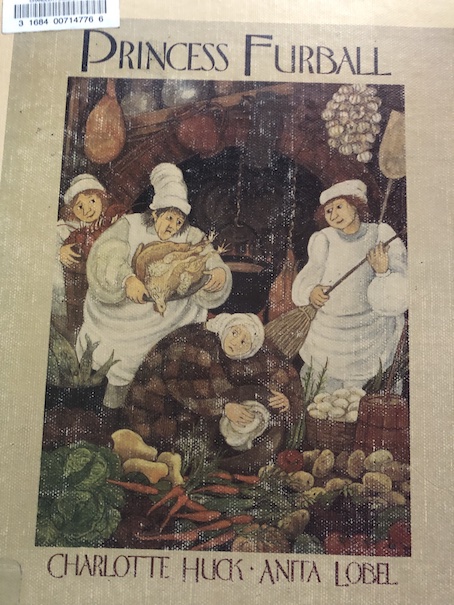
Princess Furball

There was a princess whose mother died when she was only a baby and whose father never paid much attention to her. In spite of this misfortune, she had a happy childhood because her nurse loved her and let her play with other children. She arranged lessons appropriate to a princess with skilled tutors and let the princess learn how to cook in the royal kitchen.

However, when the princess was grown, the old nurse died, and the princess was very lonely. Her father only cared about the money he could get from the princess’s marriage, and to the princess’s horror, he arranged a marriage to an ogre who promised him fifty wagons of silver in exchange for the princess.

Unable to face the prospect of such a horrible marriage, the princess requests a special gift from her father for her wedding. She asks for three dresses: one golden like the sun, one silver like the moon, and one as sparkling as a the stars. She also asks for a special fur coat made of a thousand different types of fur. At first, the princess doesn’t think the king will be able to meet her demands, but to shock, he sets his people to accomplishing the task and presents her with everything she asked for.

Deciding that there is no other option but to run away, she takes the three dresses with her along with three small golden treasures that belonged to her mother: a ring, a thimble, and a tiny spinning wheel. She also takes along her favorite soup seasonings, which she got from the castle’s cook. Then, she puts on the bulky fur coat and flees into the woods.

In the woods, she is found by the hunting party of a neighboring king. At first, they mistake her for some kind of strange animal. When they find out that she’s a person, they take her back to their castle and put her to work in the kitchen. There, they make her do all the messy cleaning jobs. Nobody knows her real name, so everyone just calls her Furball after her strange, bulky coat made of a thousand patches of fur.

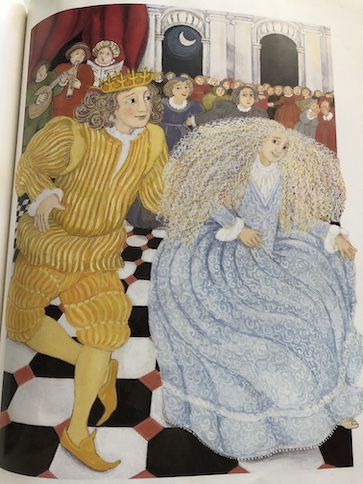
The princess always wears the fur coat as a disguise, but one day, she finds out that the young king of this kingdom is having a ball. She slips away from her kitchen duties and dresses in her dress like the sun. When she is unrecognizable as the kitchen servant, she is able to meet and dance with the king. Being herself is essentially a disguise!

When she slips away from the king and returns to the kitchen, the cook has her make soup for the king, and she uses her special blend of seasonings. When no one is looking, she she also puts her golden ring into the king’s bowl. When the king finds the ring, he asks the cook about it. The cook admits that Furball made the soup, so the king questions her about the ring, but she doesn’t explain.

At the king’s next ball, the princess repeats the same performance, this time wearing the dress like the moon. This time, she slips the golden thimble into the king’s soup when she returns to the kitchen. Again, she doesn’t explain when the king questions her about the thimble.

As in many fairy tales, it’s the third time that’s the charm. When the princess shows up to a ball dressed her her dress like the stars and doesn’t have time to completely change when she gets back to the kitchen that all is revealed, and there’s a happy ending!

The book is available to borrow and read for free online through Internet Archive (multiple copies).

I remember reading this book when I was a kid in elementary school! I think I read it when I was about 7 years old, when the book was pretty new. I always liked fairy tales. There is a brief explanation at the beginning of the book that the story is a Cinderella variant. This version is very similar to the English folktale Catskin and to the tale of Many Furs or Thousand Furs by the Brothers Grimm.

Like so many little girls, I was fascinated as a kid with the concept of the dresses that resemble the sun, the moon, and the stars. The fur coat made of many animals is a little alarming to me now, but it makes a good disguise in the story. I love the illustrations that show the princess in all of her different dresses and the Furball disguise!

The story doesn’t explain why the princess put her treasures into the soup, but my guess was that she wanted an excuse to see the king again and a way to keep him intrigued about her identity and her relationship to the mysterious princess who keeps showing up to his balls. It’s only after the king decides that he really loves the mysterious princess that it’s safe to reveal her identity.

Prince Caspian

The Chronicles of Narnia

Prince Caspian by C. S. Lewis, 1951.

This book starts with the four Pevensie children from the previous book in the series heading to their boarding schools by train. The girls are going to one school, and the boys are going to another. As they’re waiting for their trains at the station, they suddenly feel themselves being pulled and dragged by some unseen force. They feel like it’s magic of some kind, and they all join hands to stay together. The next thing they know, they’re in a forest. They wonder if they might have returned to Narnia.

They explore the area and realize that they are on an island. When they search for food, they find an abandoned apple orchard and the ruins of a castle. Something about the ruins seems strangely familiar to the children. When Susan finds a golden chess piece, they realize that the castle is the ruins of Cair Paravel, the castle where they used to live as kings and queens during their previous time in Narnia. The children are sad that the castle is now ruins. They’re also puzzled at how it can be ruins when they last saw it intact, and when they lived there, the castle was on a peninsula, not an island. Even though their previous adventures only took place a year before for them, it looks like many years, maybe centuries, have passed in Narnia.

They find their way into their old treasure room and discover that it is undisturbed. They leave the jewels and riches there, but they find the special presents that they were given during their last adventure and take them because they may be helpful during this adventure. The one thing they can’t find is Susan’s magic horn, which can be used to summon help in desperate times. Susan realizes that she had it with her during the stag hunt right before they returned to their own world from Narnia, and it was probably lost in the woods.

When they rescue a dwarf from some men holding him captive, the dwarf thanks them. He says that they were planning to drown him as a criminal, but he doesn’t fully explain. Instead, he offers to catch some fish for them all to have breakfast because all the children have are apples. When the children mention that there is firewood at the castle, he is amazed. He’s heard stories about an old castle there, but he wasn’t sure that it was real. The rumors are that the forest around the castle ruins is haunted.

After they eat, the dwarf explains that he is a messenger for Caspian, the king of Narnia. He then qualifies that by explaining that Caspian should be the king. The old Narnians recognize him as the rightful king, although he is considered one of the new Narnians himself. Prince Caspian was an orphan raised in the castle of his Uncle Miraz. He was mostly raised by his nurse and wasn’t very close to his aunt and uncle, but his uncle acknowledged him as his heir because he had no children.

According to the dwarf’s story, Prince Caspian has a fascination for the old days of Narnia from his nurse’s tales, when there were fauns and talking animals in Narnia, but his uncle says those are just fairy tale stories for little kids. The Pevensie children realize that the legends that Prince Caspian was told as a young child were about them and their adventures. People still tell stories about them, but not everyone believes them.

Miraz forbids Caspian from believing in those stories or talking about them again and sends away Caspian’s nurse. Instead, he hires a tutor for Caspian called Doctor Cornelius. Caspian misses his nurse, but he enjoys his lessons with Doctor Cornelius. From Doctor Cornelius, he learns that his ancestors and other humans came to Narnia from another land and conquered it. However, Doctor Cornelius is reluctant to explain exactly whom his ancestors conquered. Doctor Cornelius quietly admits that Miraz forbids anyone from talking about Old Narnia because it’s supposed to be a secret. Over time, Doctor Cornelius lets Caspian know the secrets of Old Narnia, which confirm to him that his nurse’s stories were true.

Caspian’s ancestors were the ones who silenced the taking animals and drove away or killed other races who inhabited Narnia. The reason why Miraz won’t let anybody talk about the history of Old Narnia and denies that other species once lived there is to cover up that his ancestors stole Narnia from its rightful inhabitants and that most of the humans are merely transplants to this land, not its rightful heirs. Doctor Cornelius reveals himself to be a dwarf, one of those few who still live in Narnia in secret. He is also part human, which is how he is able to pass for a human. He says that there are others there in disguise. Caspian feels like he should apologize to Doctor Cornelius, although he knows that what his ancestors did to the dwarves was not his fault. Doctor Cornelius says that apologies are not necessary, but he knows that Caspian will one day be king and can help the remaining Old Narnians who still live there, hiding from Miraz.

The stories about the woods around Cair Paravel being haunted were invented by Caspian’s ancestors to hide Narnia’s past and also because they want the forest to separate them from the sea. Caspian’s people fear the sea because, although they deny that Aslan exists, the legends all say that Aslan will return from across the sea. They fear the wrath that Aslan may visit on them for what they did to Narnia and its peoples. However, not all humans have this fear of Aslan and Old Narnia. Others, like Caspian, are fascinated and would like to see Narnia become more like its past self, with magic and talking animals and dwarves and fauns. As Caspian gets older, he realizes that many people in Narnia are unhappy with Miraz and the way he rules Narnia. He is a cruel king.

One night, while Caspian’s aunt is very ill, Doctor Cornelius wakes him and prepares him for a journey. He tells Caspian that he is not just the prince but the true king of Narnia. His father was the true king, and after Caspian’s parents were dead, Miraz took the throne for himself. Miraz murdered or exiled Caspian’s father’s old friends and supporters. Caspian was too small at the time to understand or have any memory of this, but now, Miraz is planning to murder Caspian. His aunt’s “illness” was actually childbirth, and now that she has given birth to a son, Miraz is planning to eliminate Caspian so his own son can be his heir with no opposition from the true heir. Doctor Cornelius says that Caspian has no other choice but to flee to another, friendly kingdom. To help him on his way, Doctor Cornelius gives him some food, a purse of gold, and Susan’s magic horn, an Old Narnian artifact found after she and her siblings disappeared from Narnia.

While Caspian is fleeing, he has an accident and is knocked unconscious. He is found by a dwarf and talking animals. They almost kill him as one of their enemies, but Caspian explains who he is and why Miraz wants to kill him. The dwarf still wants to kill him, but the badger realizes that Caspian is a hopeful sign. The golden age of Narnia was when human children ruled, and young Caspian’s belief in the Old Narnian stories and assertion that he has longed to meet Old Narnians like them are signs that he could be a true high king like King Peter. The badger says that he would be willing to follow King Caspian if he remains true to Old Narnia and its people.

Caspian is allowed to stay among the Old Narnians in hiding. He gradually makes friends with different species, and they begin to form a rebellion against Miraz. Doctor Cornelius finds Caspian and warns him that his uncle is searching for him. Caspian’s supporters convinced him that it was time to blow Susan’s horn to summon help, and that was how the Pevensie children were summoned back to Narnia.

The dwarf explaining all this to the Pevensie children is the same doubting dwarf who almost killed Caspian and ended up joining his supporters. The men trying to kill him were Miraz’s people. Trumpkin, the doubting dwarf, now doubts that the Pevensie children are the help they were hoping for. They are children again, not the great kings and queens they were when they left Narnia. The children aren’t too troubled by his doubts because they know who they are and the victories they have already achieved in Narnia. They have not lost all the skills they gained in Narnia before, and the more time they spend in Narnia, the more they become like the kings and queens they once were and still are. They outfit themselves from their old treasury and prepare to once again battle again evil in Narnia in support of Aslan.

The book is available to borrow and read for free online through Internet Archive (multiple copies, including some in different languages).

My Reaction

The books in The Chronicles of Narnia are famously Christian allegories, and Christian themes continue through this book. There are people who are doubters, but those who remain faithful believers in Aslan (who represents Jesus in this series) are the ones who prevail in the end. Like Jesus, Aslan wants his followers to do what they can on their own but is often near to offer them strength, support, and hints about the right thing to do. However, some people are more perceptive to his guidance than others, especially Lucy, and there is a theme that runs through the story about belief in things from people who have not seen them directly and are relying on other people’s experiences. As Lucy has a greater capacity for perceiving Aslan, some other people have a greater capacity for general belief. Edmund has learned his lessons from the previous book. Feeling badly about his earlier doubting of Lucy and how he had once belittled her, he becomes her biggest supporter during times when she can see Aslan and others can’t, urging his older siblings to listen to her. Some people, including Peter and Susan, doubt whether Lucy has actually seen Aslan when they haven’t seen him himself. Trumpkin, the doubting dwarf, is the classic Doubting Thomas of the story. He doubts everything, every step of the way, from Caspian’s intentions to the existence of the Pevensies and Aslan, but he keep son going until he sees the Pevensies himself and has the opportunity to see their abilities in action. Among Caspian’s followers, there are some, like the badgers, who have always believed in Aslan and always will, and there are others who are won over when they see for themselves.

There are also themes in the story that can apply equally to religious issues and political ones. Miraz struggles from the beginning to control the narrative of how his family came to rule Narnia and how he himself became the king when his brother’s son was actually the true heir. There are people who know the truth about both of these issues, but he’s not above censoring people, exiling them, and even killing them to prevent people from talking about the truth openly. Miraz is not a good king and has his self-interest in mind more than his subjects’, but he’s sharp enough to know that nobody really likes him or wants him to be king except he has convinced them that he has the authority to be king and that their self-interest lies with him. If people came to see him and his family for who and what they truly are and what they’ve actually done, he would lose all of that, and he knows it. Authoritarian rule is like that. It relies on maintaining the sort of image that, realistically, they can’t maintain if people know what the individuals involved are really like. Authoritarians try to make themselves look stronger and better than normal humans to cover up for their flaws, but the image collapses when they can’t or won’t deliver what they promise, and people see them for the flawed humans they really are, often more flawed than the people they tried to convince were weaker.

Aslan eventually reveals that Caspian and his people are not just from a foreign country in the world of Narnia, but their distant ancestor were actually pirates from our world. They had conquered and looted an island in the South Seas, murdered many of the inhabitants, and taken the women for their own. Then, they had argued and fought among themselves. Some of the pirates took their women and tried to hide in a cave from the others, but it was a gateway to the world of Narnia, and that was how they got there to later conquer Narnia. When Caspian hears this, he says that he wishes that he had come from a more noble lineage than murdering pirates, and Aslan tells him that, further back than the pirates, he is also a son of Adam and Eve, just like the Pevensies, and that lineage is noble enough. I liked this explanation because, in modern times, people have struggled with the concept of having slave-owning ancestors, fearing criticism, punishment, or some form of reparations for it. I’ve heard some people saying that they don’t want to be ashamed of themselves or their ancestors. They are hung up on one part of their family’s history, a history that, when you think about it, goes back as far as humans go, and they fear blame and shame for that. I don’t think I’ve heard many consider that their family didn’t always own slaves. They were something other than slave-owners before that, even if some of them can’t quite remember what that was. I’m not big on ancestor veneration and imitation, but everyone’s ancestry goes back too far to remember every generation. Even if some generations weren’t good examples, they’re not the only past generations, if you see what I mean. Maybe, instead of looking at what their family used to be and lost and might be blamed for even having, they should consider that what they’ve become since then might just be a return to what they were before that period in their family’s history, which might just be better and noble enough.

Earlier in the story, when the Old Narnians talk about whether to support Caspian or continue to support him, there are some who waiver in their support or withhold it, also out of self-interest. While nobody really likes Miraz, Narnian history and legends influence the way that the Old Narnians feel about Aslan and his supporters. Most of the Old Narnians remember the White Witch from the previous book as a wicked ruler, but the dwarves and wolves fared better under her than other species. Their descendants forget that their relatively better treatment came from their collaboration with the witch and their participation in her wickedness, and even then, the relatively better treatment still wasn’t that great. (Plus, some of the wolves are actually werewolves, not just talking animals, like the others.) They just vaguely remember that there was a time when a ruler put them in a better position relative to other species, which they are not now. In fact, they feel like they are now treated worse and given fewer supplies than the other groups. The other groups say that’s not true, but it feels like it is to them because they are no longer better off than the others. They miss that and want it back. When they become impatient with Caspian and feel like he won’t give them the treatment they want, they rebel, and some of them are killed. Prince Caspian and the others feel badly about that because the might not have rebelled and been killed in the struggle if circumstances were different and they had felt more satisfied, but they had no choice but to defend themselves from their attack.

The book also looks at the type of people who support authoritarian rulers. Much of their support also has to do with self-interest or apparent self-interest. Miraz does have supporters among the human nobility who helped him accomplish his rise to power and who helped do his dirty work in getting rid of his brothers old allies. Since then, some of them have become disillusioned with Miraz. Miraz has not followed through on what he promised them before in exchange for their loyalty and support, furthering his own self-interest instead of theirs, and that’s the one thing they can’t accept. The thing about supporting someone who is selfish and is willing to throw former supporters to the wolves or even kill relatives in pursuit of power … is that you end up being one of those former supporters who may be thrown to the wolves or killed when your leader pursues self-interest and power. Some people never think anything through. They may have assumed that they would be a special exception to the leader because of their support, but nobody is special to Miraz but himself. Everyone else is just a tool to be used until he can’t find a use for them or they seem to be a hindrance.

When Aslan reveals the true history of Caspian’s people to them, many of them are afraid that Aslan is going to kill them all for what they’ve been and what they’ve done, which is another factor in their support of Miraz and his narrative. Even some of those who knew the truth before were too scared to say anything or do anything about it because they feared the blame, guilt, and consequences that might follow acknowledging the truth. A major reason for their fear is that they and their ancestors have not been merciful to anybody, so it never occurs to them that someone else might have better intentions for them.

At the end of their adventure, when it’s time for the Pevensies to go home, Aslan tells them that Peter and Susan will not be returning to Narnia next time because they are getting too old, but Edmund and Lucy will return someday. It’s a common theme in children’s fantasy books that only children can experience certain types of magic, and when they get older, they can no longer experience it or believe in it. It’s a trope that is meant to explain why grownups don’t experience this type of magic in the real world and why the adults in stories think that the children are just imagining things when they experience magic, but to me, it doesn’t logically follow in this story. We already know that at least one adult the Pevensie children have met believes in Narnia and magic because he has also experienced them, and we know that the ancestors of Caspian’s people arrived in the world of Narnia as adults. The Chronicles of Narnia don’t seem to have a consistent principle about who can visit the world of Narnia or believe in it, not in age or even in moral character because Caspian’s ancestors were murdering pirates. I think, in the case of Caspian’s ancestors, it might have something to do with explaining how even flawed and immoral people can rise to power or even seemingly have God’s favor, when it seems like they’re the last ones who should. It seems to be a combination of random chance (happening to wander into the right cave, in this case), their own choices (conquering other people), and possibly, part of a much longer game on Aslan/God’s part (eventually producing Caspian, who is the kind of ruler Narnia needs, even though it involved a lot of evil along the way – the evil being the humans’ choice, not a requirement). That’s some speculation and interpretation on my part, but I think the story kind of sets that up. Aslan seems completely aware of what’s going on and what has been happening but hasn’t tried to interfere until the critical moment in this story when Prince Caspian needs his help to fulfill his destiny.
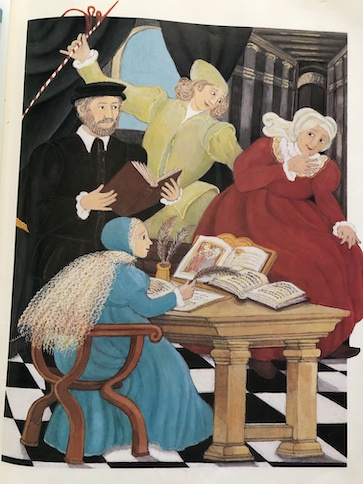
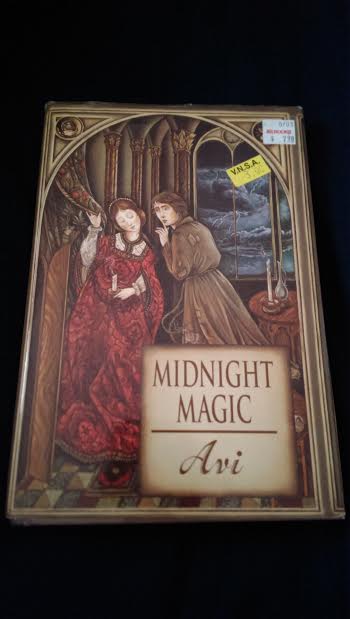
Murder at Midnight

Murder at Midnight by Avi, 2009.

This story is a prequel to Midnight Magic.

Fabrizio was an orphan living on the streets of the medieval city of Pergamontio before he was taken in as a servant by Mangus and his wife, Sophia. It was really Sophia’s idea that Mangus needed a personal servant. Mangus says that he is able to take care of himself, and he is impatient with Fabrizio because Fabrizio is ignorant and uneducated.

When Sophia goes to visit her sister, Fabrizio tries extra hard to please Mangus so that Mangus will continue to let him live in his house. Mangus is primarily a scholar, but he supplements his income by performing magic tricks at a local tavern. That evening, a black-robed figure appears at the magic show, warning of danger coming to Mangus. The next day, the magistrate, DeLaBina, accuses Mangus of spreading papers with treasonous messages about the king around the city. During this time, all writing is by hand, and no one can understand how these papers can all look so identical unless they were produced by magic.

At first, DeLaBina offers to let Mangus go if Mangus gets rid of the papers and reveals the identity of the traitor. When Mangus protests that he cannot do real magic and that he knows nothing about the papers, he is arrested. Shortly afterward, DeLaBina is murdered. Fabrizio’s only hope of saving his master, and himself, is to find the real traitor.

The book is available to borrow and read for free online through Internet Archive.

My Reaction and Spoilers

I didn’t like this book as well as I liked the original Midnight Magic.  Partly, the problem was that I feel like some of the events of this story should have changed people and events in the other book, and they don’t because this book, which is supposed to take place earlier than the other story, was actually written after the other story. It all just seems out of order, and I didn’t like the addition of Prince Cosimo to the royal family.  In this book, Prince Cosimo is the crown prince of Pergamontio, not Prince Lorenzo from the previous book.  Prince Cosimo did not appear in Midnight Magic (although his absence is explained by the end of this book) and was never even referred to in that book (which is the part that really bothers be me everyone in that book would have known all about him and what happened to him, and I feel like Fabrizio should have at least thought about him in passing, it’s just weird when characters suddenly exist in a series that you know didn’t exist before).

Basically, there is a plot (although not by the person who did the plotting in the other book) to overthrow the king, who is wildly superstitious. The printing press is a relatively new invention in this time period, and Pergamontio has never had one before, which is why no one can understand why the writing on the papers is so strangely uniform.  This is the other thing that bothers me about this book.  Pergamontio is supposed to be somewhat backward in comparison to other kingdoms, partly because the king is so superstitious, but it just seems like going a bit far for people to suspect that oddly-uniform writing would be a sign of witchcraft because people of that time would already be aware of the existence of signet rings and official seals which were used as stamps in wax to mark documents, like a kind of signature.  Like a printing press, those would also produce an identical image, time after time of use.  Basically, they’re all just complex forms of stamps.  Superstitious or not, I think that people of that time who were capable of reading probably would have been able to tell that a stamp of some kind was being used, even though they might not have seen one as complex as a printing press before.

In the story, a family has recently brought a printing press to the city, and printing the treasonous papers was the first job they were hired to do. Shortly afterward, Maria, the daughter of the family, was arrested while passing out the papers. Her parents are taken into custody by Count Scarazoni, who is a sinister character in his own right but is actually in opposition to the real traitor in this book.

Scarazoni was the figure in the black robe who tried to warn Mangus. Fabrizio is arrested when he tries to gather up more of the papers for Mangus so they can learn where they came from.  He is nearly executed for treason, but he is saved by Scarazoni because Scarazoni realizes that the real traitor wanted him dead because he feared that Fabrizio might know too much. At the prison, Fabrizio meets Maria and helps her to escape as well. Maria explains to him the true origins of the papers, and they find DeLaBina’s body.  This is the murder referenced in the title of the book, and they must solve it to uncover the identity of the real traitor!

As in the other book in this series, Fabrizio and Mangus use a magic trick at Mangus’s trial to shock the traitor into revealing himself.  Although, at the end of the story, the king still believes that Mangus is a real magician, Scarazoni points out that without Mangus’s “magic” the real traitor might not have been discovered. The king tells Mangus that he will let him go provided that he confine himself to his own home and no longer practice magic, setting events up for the beginning of the other story.

Where the Wild Things Are

Where the Wild Things Are by Maurice Sendak, 1963.

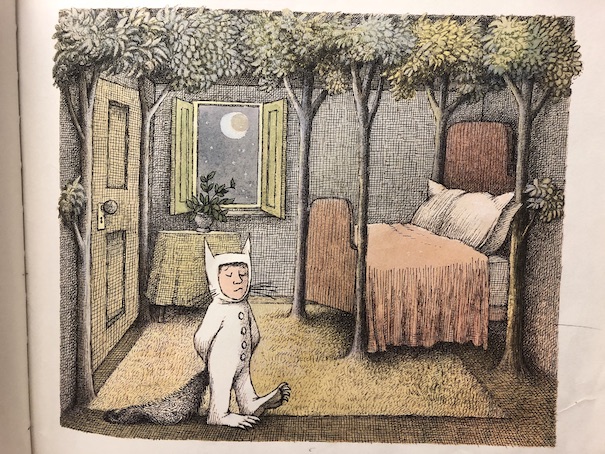
One evening, Max puts on his wolf costume and starts causing trouble all over the house. His mother calls him a “wild thing” and sends him to bed early without supper.

As Max mopes in his room, a forest grows around him, and Max climbs into a boat and sails away.

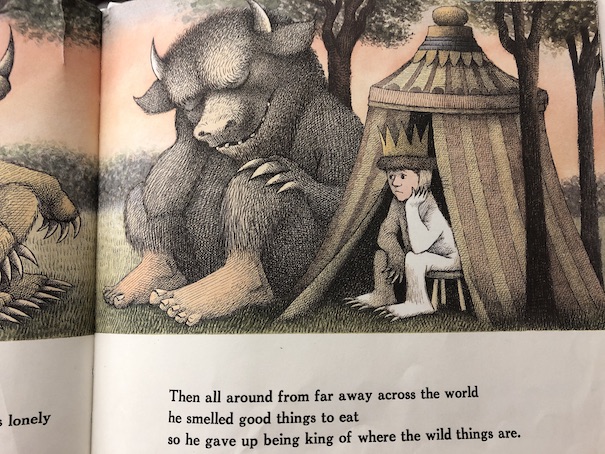
Max eventually arrives at “the place where the wild things are.” There are all kinds of wild beasts and monsters there, and they make Max their king because he’s the wildest of them all.

After they all go parading about and swinging from trees, Max sends all the wild things to bed and is lonely because he wants to be with someone who loves him.

So, Max sails home again to have his supper, which is waiting for him, still hot.

Max’s magical journey is in his own head. Angry and hurt at being told off for his behavior, he imagined himself far away from where he was being punished, in a place where he could act any way he wanted and tell other people what to do. But, that wasn’t satisfying because what he really wants is to be loved and cared for. Wild monsters don’t get the kind of nurturing that small human boys get from their mothers, so there are benefits to being a civilized human. This is a classic children’s book about the power of a child’s imagination and how love and human feeling wins out over anger.

The book is a Caldecott Medal Winner. It’s available online through Internet Archive.

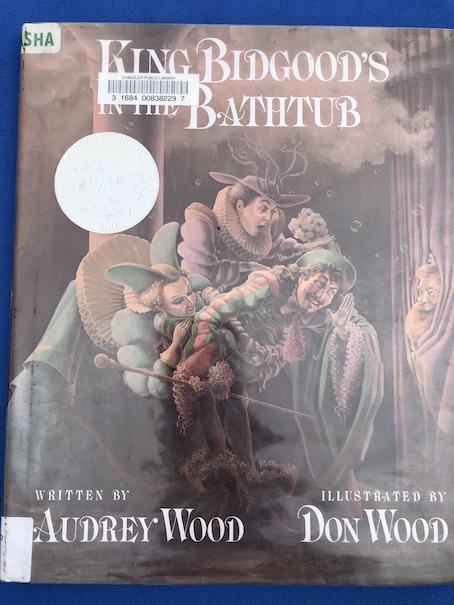
King Bidgood’s in the Bathtub

King Bidgood’s in the Bathtub by Audrey Wood, 1985.

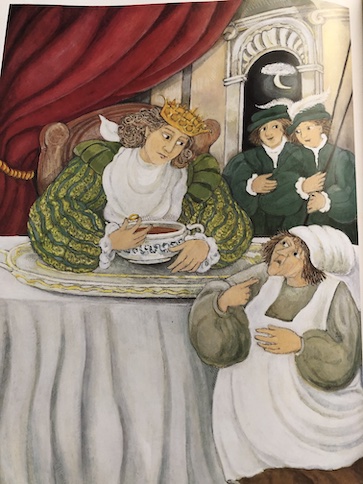
King Bidgood loves being in his bath, but one day, he just doesn’t want to get out!  When the young page realizes that the king is refusing to leave the bath, he calls out to the courtiers, asking what to do about it.

One by one, they try to interest the king in other activities, but each time, he keeps inviting them to join him (fully clothed, although he apparently isn’t, just mostly hidden by bubbles) in order to prove that absolutely everything can be done in the bath.

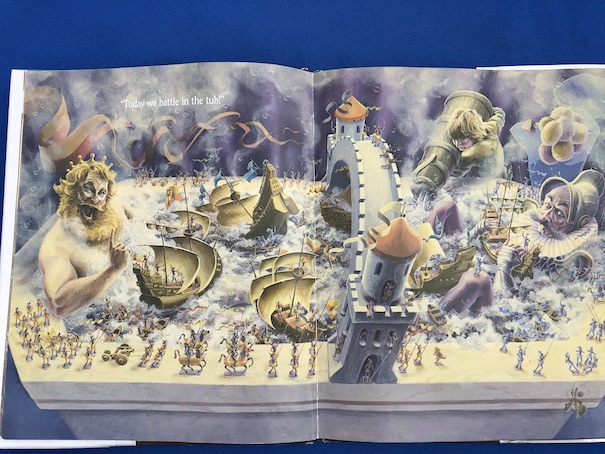
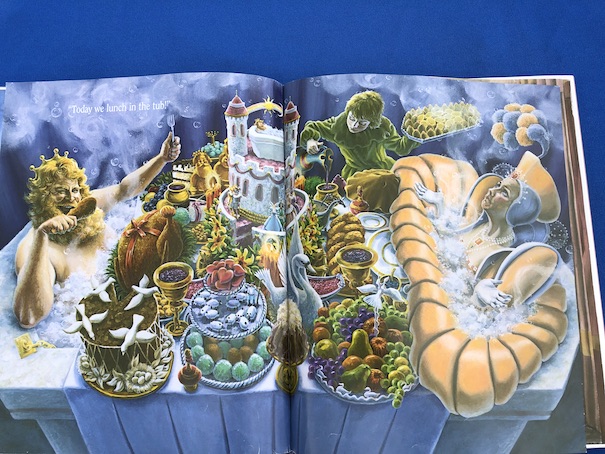
When the knight says it’s time for battle, they end up having a battle with toy ships in the tub.  When the queen tells him that it’s time to eat, they have a fancy feast right there in the tub.  The king’s activities eventually include a fishing trip and a dance.

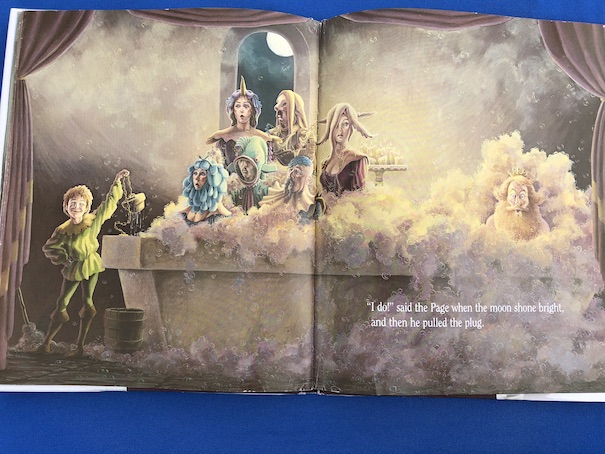
In the end, the page is the one who figures out how to put an end to this never-ending bath.

I love the pictures in this book, and the repetition as each person steps forward with a suggestion should appeal to young children.  This book is a Caldecott Honor Book. It is currently available online through Internet Archive.

Searching for Dragons

Searching for Dragons by Patricia C. Wrede, 1990.

This is the second book in The Enchanted Forest Chronicles, continuing the adventures of Princess Cimorene, although the story is told from the point of view of Mendanbar, King of the Enchanted Forest.  The Enchanted Forest is no ordinary kingdom, and Mendanbar is no ordinary king.  To be King of the Enchanted Forest means being a skilled enchanter.  Mendanbar can use the forest’s magic directly, making him more powerful than wizards.  Most of the creatures in the forest obey him, and unlike ordinary people, he can find his way around the forest almost automatically, even though things in the forest tend to move around.

At the beginning of the story, Mendanbar’s steward, Willin, pesters him about the subject of getting married.  Mendanbar hasn’t given the matter much thought since his father died three years earlier, but then, there’s been a lot to do.  Queen Alexandra has several daughters, any of which would be considered “suitable,” but Mendanbar doesn’t like any of them.  Mendanbar is annoyed because he’d just gotten the elf clans’ feud settled and was looking forward to a period of relative calm, so he decides that he’s going to give himself the day off, for a change.

He decides to take a stroll by the Green Glass Pool to relax, but on the way, he encounters a princess.  That’s not too unusual for the Enchanted Forest (home to many fairy-tale creatures and the events that make up fairy tales), but this princess strikes Mendanbar as a particularly scheming and ambitious one.  She tells him a great tale of woe in which her wicked stepmother cast her out that Mendanbar can tell is carefully rehearsed and might have even been the idea of the stepmother in question, with the idea of hooking an adventurous prince.  (Royal families do things like that, see the previous book in the series.)  However, Mendanbar is puzzled because the forest usually keeps out people who are obviously selfish.  Then, the princess mentions crossing an area of waste to get into the forest, and Mendanbar is alarmed because there shouldn’t be a wasteland there.  Forgetting about the princess, he hurries off to investigate.

Sure enough, Mendanbar discovers that a section of the forest is actually missing, destroyed to the point where there are just dead stumps.  Even the magic is gone.  Upon further investigation, Mendanbar finds dragons scales.  He isn’t sure why the dragons would want to attack the Enchanted Forest because they haven’t had any quarrels and mostly leave each other alone.  On the advice of a nearby talking squirrel, Mendanbar goes to see the witch Morwen.

After examining the dragon scales, Morwen demonstrates that, although they appear to be different colors and look like they’re from different dragons, they have actually been disguised.  They are actually from one dragon only.  Morwen also doubts that a dragon was really responsible for the damage to the forest.  After all, why would a dragon waste time disguising his scales when he could just pick them up?  Also, healthy dragons don’t shed that many scales.  Morwen is a friend of Kazul, who is the current King of the Dragons, and she advises Mendanbar to go see Kazul. 

Morwen also chides Mendanbar for not visiting Kazul when she became the king the year before.  Mendanbar feels a little guilty, saying that he’s just been very busy, which is true.  However, Morwen points out that what he could use is more effective help to organize things in the kingdom, not just making lists of things for him to do, like his steward does.  It’s part of the reason why people are saying that Mendanbar should get married.

Before Mendanbar can visit Kazul, he gets an unexpected visit from Zemenar, the Head Wizard.  Zemenar says that the wizards have been having problems with the dragons (again, see previous book) and that the dragons will not let them enter the Caves of Fire and Night.  He hopes that Mendanbar will allow them access from the Enchanted Forest.  Mendanbar doesn’t really trust the wizards, and he refuses the request on the grounds that he has something important to discuss with the King of the Dragons himself.  Zemenar tells Mendanbar about Kazul’s princess, Cimorene, blaming her for the the “misunderstanding” between the wizards and dragons.  Mendanbar at first imagines that Cimorene is much like the scheming princess he met that morning, but soon discovers that she’s anything but.  Taking the enchanted sword that only the kings of the Enchanted Forest can use with him, Mendanbar goes to visit the dragons.

At Kazul’s cave, Mendanbar meets Cimorene, who informs him that her official title is now Chief Cook and Librarian.  She tells him that part of the point of advertising this title is that it cuts down on the number of princes who come around.  Lots of princes want to rescue a princess, but few people want to rescue a Chief Cook and Librarian.  Mendanbar finds Cimorene a surprising change from the other princesses he’s met.  Mendanbar also makes a positive impression on Cimorene by using his sword to fix a broken sink, even if she describes the magic as being a bit “flashy.”

However, all is not well among the dragons.  Although Cimorene is reluctant to admit it at first, Kazul has mysteriously vanished.  She was planning to go out and search before Mendanbar showed up.  Kazul had been visiting her grandchildren when she decided to go by the Enchanted Forest to investigate someone growing dragonsbane.  Mendanbar shows Cimorene the dragon scales he found, and she indentifies them as belonging to Woraug, a dragon who was changed into a frog in the previous book.

It doesn’t take the two of them long to realize that the wizards are back to their old tricks and scheming.  However, what would they really have to gain by setting the Enchanted Forest and the dragons against each other?  And where is Kazul?

Like the other books in this series, this book is full of humor and a touch of mystery.  There are many parodies on fairy tale tropes, including an Wicked Uncle who’s not very wicked and does both a favor and an evil deed for his nephew by sending him to boarding school instead of abandoning him in the forest to have an adventure, as he’d hoped.  There is also romance between Cimorene and Mendanbar.  As you might have guessed, Cimorene is just the kind of practical princess Mendanbar needs to help him manage the magical chaos that is the Enchanted Forest and Mendanbar is the kind of king who is happy to find an intelligent princess who can do magic and rescue dragons.

The book is currently available online through Internet Archive.

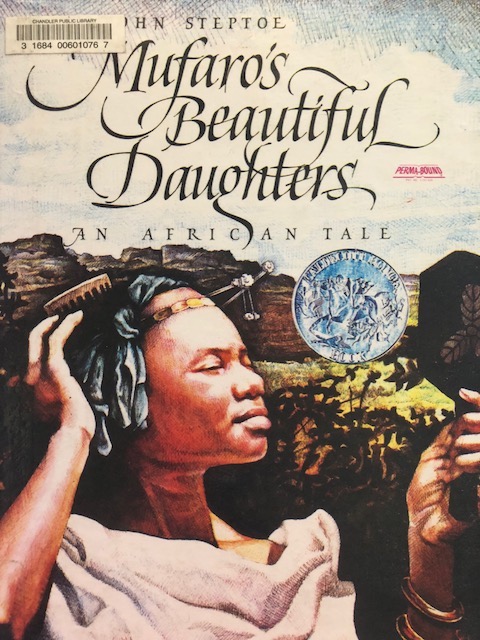
Mufaro’s Beautiful Daughters

Mufaro

Mufaro’s Beautiful Daughters by John Steptoe, 1987.

This story, based on an African folktale, is somewhat similar to other folktales and fairy tales from other parts of the world such as Cinderella, Mother Holle, and Vasilisa the Beautiful, where a girl with a kind, hard-working nature triumphs over a mean sibling because someone in authority recognizes her good nature and rewards it.

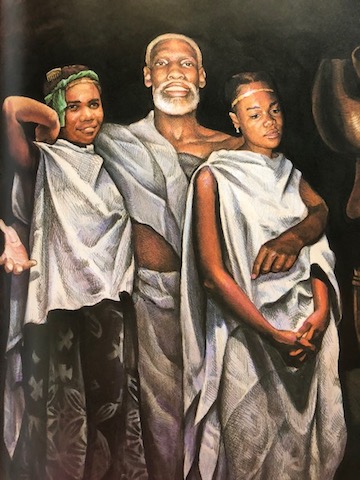
In a small village in Africa, a man named Mufaro has two daughters, Manyara and Nyasha.  Both girls are beautiful, strong, and clever, but they have very different natures.  Nyasha is kind, gentle, and patient.  Manyara is bad-tempered, jealous, and self-centered.  She frequently taunts Nyasha about how, one day, she will be the queen and her sister will be her servant.  When Nyasha asks her why she is so mean, Manyara says that she hates the way people praise Nyasha for her kindness.  She thinks that Nyasha is their father’s favorite child, and she wants to prove that Nyasha’s “silly kindness is only weakness.”

MufaroSisters

Since there is nothing that Nyasha can do to change her sister’s mind or attitude, she just continues doing her usual chores and being kind to people and animals.  In particular, she makes friends with a small garden snake, knowing that his presence in her garden will keep away pests.

Manyara is sneaky and always behaves herself when their father is present, so Mufaro doesn’t know about the troubles between his daughters.  When a messenger arrives, saying that the Great King is seeking a wife and that beautiful, worthy girls are summoned to his city so that he can choose from among them, Mufaro is proud and eager to present both of his beautiful daughters.  Manyara tries to persuade her father to send only her, but Mufaro is firm that both girls must present themselves for the king’s decision.

Manyara decides that the only way to get the better of her sister is to be the first to arrive and present herself to the king, so she slips out in the middle of the night and begins the journey alone.  However, both the journey and the king are not what Manyara thinks they are.  Along the way, Manyara encounters various strange characters who ask for help or offer advice, but thinking that a queen doesn’t need to pay attention to others or do anything she doesn’t want to, Manyara ignores them all.

Nyasha, on the other hand, gets ready to leave at the appointed time in the morning.  Everyone worries about Manyara but decides that the best thing to do is to follow her to the city, since she seems to have gone on ahead.  As Nyasha travels with the rest of their friends and family, she listens to the people Manyara ignored and shows them kindness.

MufaroCity

When they finally reach the city, Nyasha encounters a terrified Manyara, who hysterically insists that when she went to meet the king, she found a horrible monster instead.  However, like everything else, it’s just another part of the test, and Nyasha is the one who passes because she, like her sister, has actually met the king before, but unlike her sister, she actually paid attention to him.

MufaroSnakeKing

The pictures in the book are beautiful and colorful.  A note in the front of the book says that the buildings in the illustrations were based on an ancient city in Zimbabwe that is now ruins.  The note in the book also explains that the names of the characters in the story come from the Shona language.  The meanings of the names are clues to the characters’ natures.  Manyara means “ashamed”, and Nyasha means “mercy.”

The book is a Caldecott Honor Book.  It is currently available online through Internet Archive.

MufaroWedding

The Ninth Jewel of the Mughal Crown

BirbalTales

The Ninth Jewel of the Mughal Crown: The Birbal Tales by James Moseley, 2001.

BirbalTalesRealBirbalThe characters in the stories, Emperor Akbar and his friend and advisor Birbal (birth name Mahesh Das) were real people who lived in India during the late 16th century. Over the years, stories and legends have grown up around them, although the truth is pretty incredible by itself.

This book, which is a collection of some of the stories about Akbar and Birbal, begins by explaining a little about their history, and there is another section in the back that explains more about their lives.  The book’s introduction says that Akbar’s father died when he was young and that Akbar’s reign was considered a Golden Age in India’s history, although it mostly focuses on his “Nine Jewels.”  The section in the back gives a little more context.

To begin with, Akbar was one of the Mughal Emperors.  The book doesn’t explain much about what that means, but understanding it helps to set the stage for the stories.  The Mughal Empire consisted not only of modern day India but also some of the surrounding countries.  The empire was first established by Akbar’s grandfather, Babur, through conquest.  Babur was born in the region that we now call Uzbekistan, although his family’s origins were Mongolian.  They were distantly descended from Genghis Khan.  They were also descended from Tamir (sometimes called Tamerlane), giving them Turkic and Persian connections.  The early years of the Mughal Empire were unstable, but when Akbar’s father died and Akbar became emperor at a young age, his regent helped him to stabilize the empire and expand it through a mixture of further conquest and diplomacy.  The reputation of wealth and power in the Mughal Empire eventually led to the adoption of the word “mogul” in English to describe a wealthy and powerful person, especially one who has high standing in a particular field of expertise (something which, as you’ll see, was of particular importance to Akbar).  Using the riches and resources gained through his territorial expansion, Akbar worked to develop the economy of his empire and to support the arts and learning.

BirbalTalesRealAkbarAkbar had a great love of learning, but unfortunately, was dyslexic at a time when people didn’t understand the condition very well.  (To put it into context, Akbar was a contemporary of Elizabeth I of England.)  Even though, like the European Emperor Charlemagne (who lived much earlier but was also apparently dyslexic), he wanted to learn to read, he struggled with it throughout his life because of his condition.  Akbar didn’t want his reading difficulties to interfere with his learning or his love of the arts, so he found another way around the problem.  In a way, it’s similar to what Charlemagne did, surrounding himself with learned advisors who would read to him and discuss important topics with him, verbally teaching him whatever he wanted to know.  Akbar chose his advisors very carefully, seeking out people who had demonstrated excellence in subjects that were important to him. Akbar’s advisors became famous for their fascinating and unusual skills and personalities.  He had nine special advisors who were close to him, which is why they were called, “The Nine Jewels of the Mughal Crown.”  Legends grew up around these men and their abilities:

Tansen – An expert in music, whose singing voice was said to be so amazing that he could make candles burst into flame with a song.

Daswant – A master painter.

Todar Mal – An expert in finance.

Abul Fazl – A great historian.

Faizi – Brother of Abul Fazl, a famous poet.

Abud us-Samad – A master at calligraphy, he also designed the imperial coins.

Man Singh – A great military general.

Mir Fathullah Shirazi – A man of many skills, including the fields of medicine, astronomy, philosophy, and finances.

Birbal – Akbar’s Minister or Raja, who had a reputation for cleverness, quick wit, and the service of justice.  He was the “Ninth Jewel”, and his stories are the focus of this book.

BirbalTalesMeetingThere are many more stories about Birbal than the ones included in this book, but they are all about how Birbal uses his wits to serve Akbar and aid the cause of justice.  Like all good legends, the stories are partly based in fact, but have grown with each retelling to the point where it can be difficult to say where the real people leave off and the legends begin.

In the first story in the book, Akbar meets Birbal when he is still a child.  Fascinated by the boy’s combination of courtesy and boldness and his unusual wit, he gives the boy a ring and tells him that when he is grown, he should come to his palace at Fatehpur Sikri.  Years later, Birbal does go there, but when he shows the ring with the emperor’s seal on it to the guard on duty, the guard refuses to let him in until he promises to give him half of whatever the emperor gives him.  When Akbar sees Birbal, he is pleased to meet him again but stunned when Birbal asks him to give him 100 lashes.  When Birbal explains the reason for his bizarre request, it not only gets the laughter of the court, but the approval of Akbar, who appreciates this bold approach to the problem of bribery.

BirbalTalesPortraitFrom then on, Birbal gains a reputation for his ability to mediate disputes and find unusual solutions to problems.  His favored position at court gives him some jealous enemies, but he handles them with the same cleverness that he uses to solve every problem.

In one of my favorite stories, one of the noblemen at court attempts to cheat Daswant out of his rightful fee for painting his portrait by changing his appearance (shaving his beard, shaving his mustache, etc.) after each portrait sitting and then claiming that the portraits Daswant paints do not really look like him.  When Daswant explains the situation to Birbal, he gets the nobleman to promise to pay for an “exact likeness” of himself in the presence of Akbar.  Then, Birbal shows him a mirror, which Akbar agrees contains an exact likeness of the nobleman and deserves payment.

BirbalTalesCoinPurseIn another of my favorite stories, Birbal determines who is the true owner of a coin purse when a flour merchant and an oil merchant each claim that it belongs to them.  He pours the coins into a pot of boiling water and notes the oil that bubbles to the surface.  Because the coins are covered in oil, they obviously belong to the oil merchant.  If they had belonged to the flour merchant, they would have been covered in flour.

One of the interesting aspects of Akbar’s friendship with Birbal was their religious differences.  Akbar, like the rest of his family, was Muslim, and Birbal was from a family of Hindu Brahmins. The Mughal Empire was a multi-cultural society, and Akbar was aware of it.   At one point, he attempted to develop a new religious movement that combined aspects of Islam and Hinduism in order to further unite his subjects, but it never caught on as a mainstream religion, possibly because Akbar’s own strong personality as its leader was one of the most attractive features.  Akbar did seem to genuinely believe in religious tolerance and promoted widespread education among his subjects.

Birbal, the historical person, was eventually killed in battle, and Akbar greatly mourned his loss.  The Mughal Empire continued for generations beyond Akbar, although it eventually collapsed through a combination of military, administrative, and economic decline; the decentralization of power in the empire; internal discord; and interference from outsiders that paved the way for the British colonization of India.  That’s kind of a simplistic description of a long, complicated period of history, but the end of the Mughal Empire was marked by the beginning of British rule in India.  In 1858, the British East India Company deposed the last of the Mughal emperors, sending him into exile, around 300 years after the reign of Akbar began.

Hester the Jester

HesterJester

Hester the Jester by Ben Shecter, 1977.

This cute picture book takes place in a Medieval kingdom.  Little Hester’s father is the court jester.  Then, Hester decides that she wants to be a jester, too.  At first, Hester’s parents tell her that she can’t because she’s a girl.  (If you’re thinking that you know where this story is headed, wait.)

One day, the king is so sad that Hester’s father can’t cheer him up, no matter what he does.  When Hester starts putting on her jester act for her father and makes him happy, he decides to go ahead and have her perform for the king.  Hester does cheer the king up, but that isn’t the end of the story.

Hester tells the king that she has discovered that she doesn’t like being a jester after all because it makes her feel too silly.  So, the king, now in a much better mood, asks her what she would like to do instead.

This starts a sequence where the king allows Hester to try out various roles and see if she likes them.  She tells him that she wants to be a knight because knights are important, but she ends up not liking that when she learns that knights have to go into battle.  Then, Hester decides that being a king is even more important, so the king decides to let her try it.  But, Hester isn’t good at giving other people wise advice, as the king does.

HesterJesterKnight

In the end, when Hester’s mother is sad and doesn’t know what to do now that her daughter has become a king, Hester decides that what she most wants to do is to go home and be her little girl again.

In a way, this book seems like two little stories in one.  First, there’s Hester proving that she can be a jester even though she’s a girl, and then, there’s Hester trying to decide what she really wants to be the most, now that the king is letting her try anything she wants.  What she decides that she wants most is to be herself and go home.

So, is this little book anti-feminist, saying that girls are better off just forgetting about the other stuff they might want and staying girls?  I don’t think so.  Basically, this is just a silly little story about a little girl, one too young to have a profession of any kind, who is allowed to see the realities behind some of the things she’s been wanting to try.  Some parts, she likes, and some she doesn’t.  But, she’s too young and inexperienced for all of them (and some, she will never want to try again because she’s learned that they’re not what she really wants after all), so she’s just going to be what she is: a little girl with plenty of time to grow up, who needs her mother and whose mother needs her.  All throughout the book, Hester speaks her mind about what she wants and is honest about the things she doesn’t like, admitting when she changes her mind.  As for what might happen when Hester grows up and finds something else she might want to do . . . who knows?  By then, she may be willing to try new things again.  But, she knows what she wants for now and has a little better idea of some things that she won’t want in the future.
The book is currently available online through Internet Archive.

Midnight Magic

midnightmagicMidnight Magic by Avi, 1999.

The story takes place in Italy, toward the end of the Middle Ages.  Mangus, a formerly wealthy scholar and philosopher, is living under house arrest because the king believes that he has practiced black magic. Mangus was merely performing magic tricks to earn extra money, and in fact, does not believe in real magic.  However, the king is very superstitious and easily influenced by his scheming advisor, Count Scarazoni, who needed a scapegoat to distract everyone from his schemes.  Unfortunately, many people in the kingdom of Pergamontio believe that Mangus is a real magician with frightful powers.  Even Fabrizio, an orphan who is Mangus’s only remaining servant, believes that magic really exists.

When a messenger arrives, summoning Mangus to the castle to see the king, they are afraid that the king has reconsidered his decision to spare Mangus’s life. However, it turns out that the king is in need of Mangus’s help. He believes that his young daughter, Princess Teresina, is being tormented by a ghost, and he wants Mangus to use his magic to get rid of it.

Mangus again protests that he does not do real magic, but both the king and Count Scarazoni promise dire consequences if he fails to help them deal with the problem.  Mangus isn’t sure why Count Scarazoni has asked for his help because he knows that the count doesn’t really believe in magic, except perhaps as a way of appeasing the king.  The king promises that if Mangus can free the princess from the influence of the ghost, he will not only end Mangus’s house arrest but reward him with a generous pension.  Mangus has little choice but to agree to do his best, and the promise of the pension for his master convinces Fabrizio to do everything he can to make sure that Mangus succeeds, not only to save his master’s life but to restore his family’s fortunes.

But, what is the secret of the ghost?  Fabrizio believes in ghosts, even though Mangus doesn’t.  Princess Teresina insists that the ghost is real, appealing directly to Fabrizio to convince Mangus that it is. Adding to the mystery is the disappearance of the princess’s brother, Prince Lorenzo, and the murder of the princess’s tutor. Danger lurks in the castle, and conspiracies are around every corner. Could the troubled spirit really belong to the murdered prince?

The book is available to borrow and read for free online through Internet Archive.

My Reaction

I love historical books and spooky mysteries, and this is both! The Italian kingdom where the story takes place is fictional, but it takes its inspiration from real kingdoms of the later Middle Ages and early Renaissance, with Machiavellian intrigue, power struggles, and arranged marriages, even for children, that could influence the balance of power and successions. (There is talk of a potential arranged marriage in the story, but no child marriages actually take place.  If a child is old enough for ghost stories and murder mysteries and isn’t too frightened by them, there is really nothing more concerning than that to prevent them from reading this book.)

Princess Teresina is one of the most intriguing characters in the book.  Although young, she isn’t a shrinking violet or anyone’s fool, and she’s definitely not a tea party and ball gown kind of princess.  Like real life Medieval princesses, she is the product of a family who came to power by the sword and maintains it by the iron fist in the velvet glove and some clever political maneuvering, although some members of the family are more clever about it than others.  Princess Teresina well knows the family she was born into and what’s expected of her as royalty, and she knows to be careful about who she trusts and what the consequences of trusting the wrong people can be.  Although apparently terrified by the ghost, the princess has a kind of toughness and shrewd determination to do what she thinks is necessary.  She seems to be smarter and knows more than most people give her credit, and Fabrizio often wonders just how much she really knows.

One of the best things about the story is that, as soon as you think you know what’s going on, you learn that there is more to the story. There are conspiracies within conspiracies!

Hint: If you like pseudo-ghost stories, spooky stories of the Scooby-Doo variety, where there are logical explanations for the supernatural phenomena … you won’t be disappointed.