The Vampire Mystery

The Boxcar Children

The Alden children are introduced to a local author by their grandfather. Charles Hudson lives in an old house that his family has owned for years, next to a graveyard. He is known for writing a book about a vampire, and he explains to the Aldens that he was inspired to write the story because there are local stories about a vampire in that graveyard. He grew up hearing those stories, and he used to scare his brother with them when they were kids.

Mr. Hudson is now trying to sell the house. He doesn’t really want to, but he’s getting older, and the house is really too big for him to easily maintain it by himself. However, strange things have started happening since he decided to sell. His For Sale signs have been stolen and vandalized, people have been hearing strange sounds coming from the cemetery, and one of his neighbors, Mrs. Fairfax, found what looks like blood on her porch. His nervous realtor, Josh, seems to think that the vampire stories are real and that the vampire is trying to stop anyone new from moving into the house. He got that idea from the author’s book, where the sale of a house near a cemetery awakened the vampire’s wrath. Of course, Mr. Hudson and Mr. Alden say that’s just a story, but it’s still spooky to the Alden children. When they went outside to explore the cemetery, they also saw a mysterious figure lurking around. Mr. Hudson worries that the stories about the vampire will make it hard for him to sell his house.

The author says that he needs to out of town to meet with a movie producer about making a movie based on his book, and he’s a little worried about not having anyone to look after the house while he’s away. The Alden children offer to look after his house while he’s away, watering the plants and keeping things tidy for potential buyers. Mr. Hudson gratefully accepts their offer of help.

However, the next time the children go to the house to check on it, they find that the police are already there because someone vandalized the house during the night. The vandal ripped out some flowers in the garden and left a threatening message painted in red on the porch: “Leave me to rest in peace or you will be sorry.” The neighbor, Mrs. Fairfax accuses the children of doing the vandalism because she doesn’t like kids. Fortunately, Josh the realtor is there and vouches that the children are friends of Mr. Hudson and are just helping him with some things while he’s away.

At a local bake sale, the children have an odd experience when Benny bumps into a man who looks a lot like Mr. Hudson. In fact, he thought for a moment it was Mr. Hudson. The man left quickly, and he dropped a vial of something red, which the kids think looks a lot like blood!

Who could be behind the vandalism at Mr. Hudson’s house? Is Mrs. Fairfax so worried that a family with children will move in that she would fake the return of the legendary vampire to prevent anyone from buying Mr. Hudson’s house? Is Josh really as scared of the vampire as he pretends, or does he have his own reasons for wanting to sabotage the sale of Mr. Hudson’s house? What about the mysterious man who looks a lot like Mr. Hudson? Was that really blood in that vial, and could he actually be … the vampire?

The book is available to borrow and read for free online through Internet Archive (multiple copies).

I enjoyed this mystery! It’s mildly spooky, but not too scary. The children and the adults around them, for the most part, are pretty sure that whoever is doing these things isn’t a real vampire. They’re just not sure who’s pretending to be a vampire. There are some spooky moments, where someone is lurking around the cemetery, and later, someone enters Mr. Hudson’s house during the night, and the kids almost catch that person there. The person does some things to scare and distract them, but nobody gets hurt.

I had a couple of theories about who was doing what, and in a way, they both turned out to be right! It’s a bit of a spoiler, but there are two people who are doing secretive things in the story, and they’re not working with each other. They have separate motives for what they’re doing. Their separate plots just kind of build on each other’s, further building up the legend of the vampire.

It’s a fun, mildly spooky mystery that would be fun to read about Halloween, although it’s not specifically a Halloween story.

The Legend of the Christmas Rose

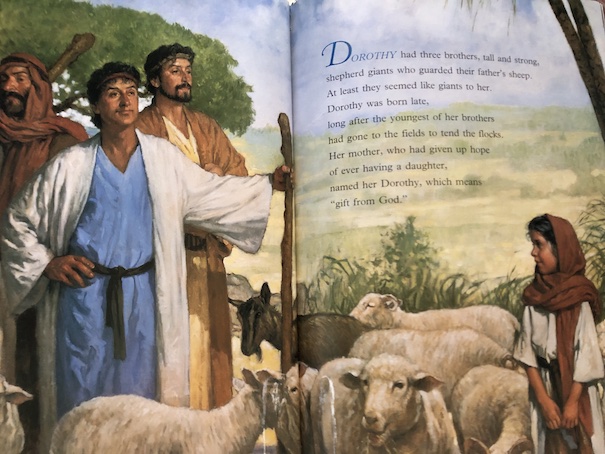
The Legend of the Christmas Rose by William H. Hooks, paintings by Richard A. Williams, 1999.

Dorothy is a 9-year-old girl with three brothers, who are all much older than she is. Her three brothers are all shepherds, and her daily chore is to take water to them when they’re out in the fields with the sheep. Her brothers love her, but they always treat her like a small child because they’re so much older.

One day, she spots some strange travelers on the road. She worries that they might be robbers, but her brothers tell her not to worry. There are more travelers on the road these days because the Roman Emperor has ordered everyone to return to their home towns to be taxed. However, because there are so many strangers traveling through the area, Dorothy’s brothers plan to spend the night in the fields with their sheep to keep an eye on them.

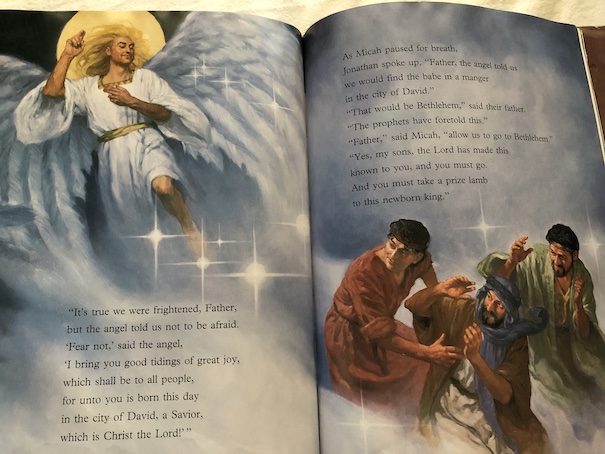
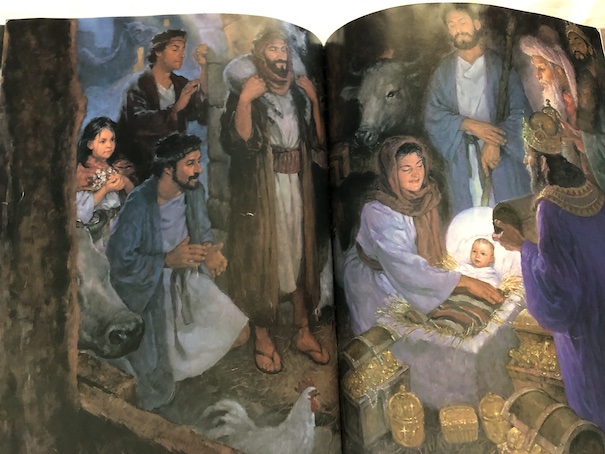
Early the next morning, the brothers return to the family home, excited. They tell their father that they saw angels in the field during the night. An angel appeared to them and told them that they would find a newborn Savior in a manager in the City of David, which is Bethlehem. Their father says that there is a prophecy about this. Because God has sent His messengers to announce the birth of the Savior to them, the brothers should go to the city and take a lamb with them as a present to the Savior.

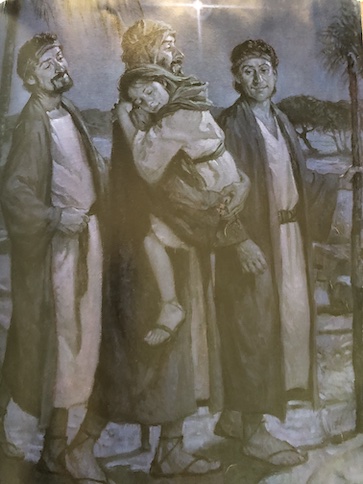
Dorothy helps her brothers to pack their supplies for the journey to Bethlehem, but she knows that she will not be allowed to go with them because she is too little. In spite of that, Dorothy makes the sudden decision to follow her brothers secretly. However, as they travel, Dorothy suddenly realizes that she doesn’t have a present of her own to offer when she arrives.

When Dorothy begins to cry about her lack of a present to give, an angel appears to her and produces snowy white flowers. Dorothy is happy because she can bring the flowers with her as a present.

The book is available to borrow and read for free online through Internet Archive (multiple copies).

My Reaction

There is an Author’s Note at the back of the book that explains about the Christmas Rose plant and its associated legends. The Christmas Rose is a real plant, but technically, it’s not a rose, and it doesn’t always bloom at Christmas. It’s native to southern and central Europe, where winters are relatively mild, and the flower can bloom in Christmas, but in colder climates, it tends to bloom in spring. It’s actually a member of the hellebore family, which is toxic to humans, although it has been used medicinally as a purgative, and it does contain a chemical that can be used to treat heart conditions. The story in the book also references the plants’ medicinal uses.

There are multiple legends about the origins of the plant. The version presented here, the legend about an angel giving the flower to a young shepherd girl to offer as a present to baby Jesus, comes from Medieval nativity plays. There is an older Greek legend where the plant was discovered by a shepherd around 900 BC. In that version of the story, the shepherd used the plant to cure three princesses who were afflicted with delusions that they were cows. After he cured them, the princesses’ father, the King of Argos, allowed the shepherd to marry his youngest daughter.

Overall, I liked this picture book version of the legend. I like books about folklore, especially ones that use lesser-known stories. The pictures in this book are also realistic and beautiful, taking up full pages.

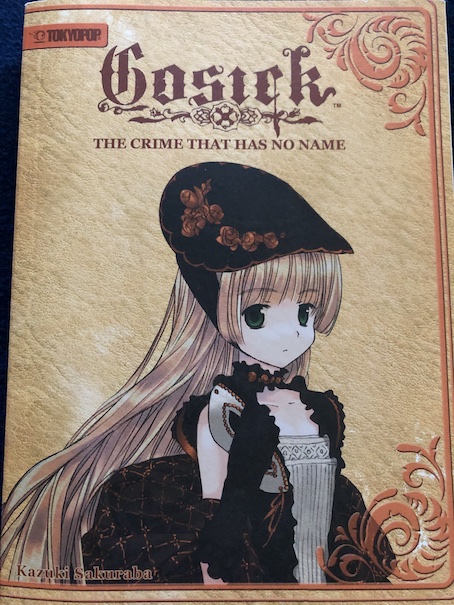
The Crime That Has No Name

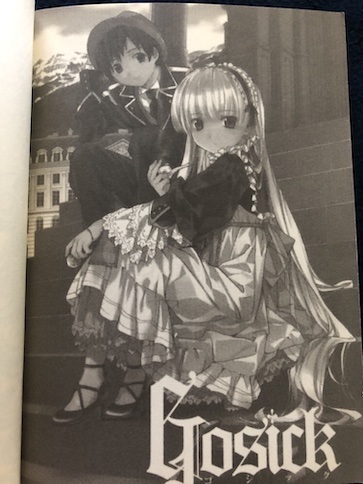
This is the second book in the Gosick series. Only two of these Japanese light novels were printed in English, but there is also an anime based on the series that has been dubbed in English.

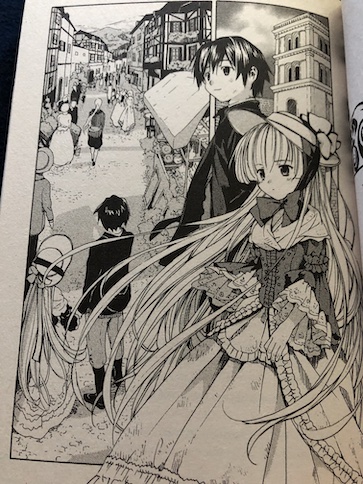
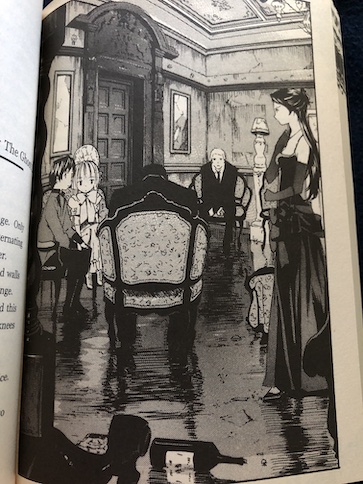
It’s 1924, and mysterious things happen around the fictional European country of Sauville. The students at the elite boarding school called St. Marguerite Academy are obsessed with ghost stories and spooky legends, as are many of the people of Sauville. Kazuya Kujou, a Japanese student attending the school, is among the few who doesn’t enjoy these stories, but he can’t help but become involved. One of his closest friends is the mysterious and enigmatic Victorique, who is the subject of some spooky legends herself. Victorique is both a student and prisoner at the school. She is a child genius, and rather than attend classes with the other students, she prefers to spend all of her time reading and studying by herself in the conservatory at the top of the library. Kazuya is one of the few people who ever sees or speaks to Victorique because he brings her assignments from class.

The reasons why Victorique is allowed to skip class, have special library privileges, and housing away from the other students but is still a prisoner, forbidden to leave the school, are partially, but not completely, explained in this book. Victorique is not a normal girl or a normal student, and there are some dark secrets in her past that even she doesn’t fully understand.

When the story begins, Kazuya has just received his allowance from home, and another friend at school, Avril, convinces him to come shopping with her. Avril is one of the students who really loves ghost stories, and she insists on telling them to Kazuya, even though he doesn’t want to hear them. Avril knows about Victorique, and she tells Kazuya that the rumor is that Victorique isn’t really a human but a legendary creature call a “gray wolf.” Kazuya doesn’t think Victorique is anything other than an extremely smart but also extremely temperamental girl.

While they are shopping, Avril is a little offended that Kazuya has her help pick out a present for Victorique. Kazuya wants to give Victorique something because she’s normally not allowed to leave the school. Avril and Kazuya study some items being offered for sale by a nun, and Avril suggests that Kazuya give Victorique a fancy turban. As they look over the other items, a music box that is apparently some kind of magic trick bursts open and releases a pigeon. Then, the nun cries out that the most expensive item for sale, a fancy plate with historical value, has been stolen! Kazuya thinks that Victorique will enjoy hearing about the theft even more that getting a present.

When Kazuya tells Victorique about the theft, she says that it’s not that interesting because it’s a very simple matter. Before she can explain why it’s simple, her half-brother, Inspector Grevil de Blois, comes to the library to once again indirectly consult with his sister about the case. When he walks in and sees Victorique sitting there, wearing the fancy turban that Kazuya bought for her, he panicks, mistaking her for someone called Cordelia Gallo. Kazuya has no idea who he’s talking about, but neither of them seems to want to explain. Once Grevil realizes that he was mistaken, he pretends like nothing happened and starts talking about the case. Victorique simply explains that the thief was the nun, and that she was the one who set up the distraction with the music box and the pigeon.

The next day, Kazuya looks at the newspaper, and he sees that Grevil was unable to catch the nun before she got away. Then, something else in the newspaper catches his attention, a notice that says, “Descendants of the Gray Wolves. Midsummer Feast is near. We welcome you all with open arms.” The people of Sauville, and the school in particular, are obsessed with legends and ghost stories. The story of the Gray Wolves is a popular legend about a mythical race of people who are smarter than normal humans. The basis of the legend is that people who were unnaturally smart were said to be human-wolf hybrids. Kazuya remembers that people at the school call Victorique a “reincarnation of a Gray Wolf”, like they’ve been calling him “the Reaper” based on their stories and legends. He decides to show the notice to Victorique.

When Kazuya shows the notice to Victorique, she is shocked. After she accidentally trips and falls and throws a childish fit about it, she shows Kazuya a centuries-old account of a village of gray wolves who spoke human language. Kazuya doesn’t know what to think about the stories. To be honest, he’s never been very interested in the legends and ghost stories of Sauville, even though everyone else is obsessed with them. Instead, he finds himself wondering if Victorique is unnaturally sensitive to pain because it seemed like she really overreacted from her trip and fall. As an experiment, he gives her forehead a slight flick. When he does that, Victorique reacts as if he had just slapped her and tells him that she’ll never speak to him again. He tries to apologize, but Victorique ignores him, so Kazuya just storms out of the library.

Later that night, while Kazuya is studying, he looks up and sees what looks like a large suitcase moving on its own outside the window. It turns out to be Victorique, trying to sneak out of the school with way too much luggage. She’s still not speaking to Kazuya, but Kazuya is concerned about her because even normal students aren’t allowed to leave the school grounds after hours, and Victorique isn’t supposed to leave the school at all. Kazuya doesn’t know exactly why Victorique is sneaking out of the school, but he knows that, while she is extremely intelligent, she has very little knowledge of or experience with the outside world. He worries that she won’t be able to cope on her own. Even though Victorique still isn’t speaking to him, he leaves the school with her and finds out that she’s taking a train to the village that is hosting the Midsummer Feast and inviting the descendants of the Gray Wolves.

Victorique and Kazuya find themselves on a train with the thieving nun from before. She’s heading to the same town they are because she says that she grew up there. She introduces herself as Mildred Arbogast. When they get to town, the innkeeper says that they had better get inside because there’s a storm coming and the Gray Wolves come out on nights like that. He says that the Gray Wolves live in a village in the mountains and that they’re werewolves. They look like normal humans, but they hunt people when they come out. When the innkeeper describes them as being short with golden hair, it suddenly occurs to him that Victorique looks just like them.

In spite of Victorique looking like a Gray Wolf, the innkeeper allows them to rent rooms for the night. He lets Kazuya know that, since that notice appeared in the newspaper, other people who have been curious about the Gray Wolves have been showing up, but he thinks that they’re asking for trouble because the Gray Wolves won’t tolerate anyone looking into their affairs. When Kazuya says that the nun is from this town, the innkeeper says that isn’t true. It’s a small town, so everyone knows everyone else, and the nun is a total stranger.

When Victorique finally starts talking to Kazuya again, she says that the reason why she wanted to come to this place was to clear her mother’s name. Her mother is Cordelia Gallo, which is why Grevil mistook her for Cordelia. Victorique shows Kazuya a pendant she has made from a gold coin. On the other side of the pendant is a picture of Cordelia Gallo, and she really does look like Victorique. For the first time, Victorique talks to Kazuya about her mother. Cordelia was a dancer, but at some point, she became involved with Victorique’s father, the Marquis de Blois. After she gave birth to Victorique, she mysteriously disappeared, and Victorique was raised in isolation in her father’s mansion. (This is why Victorique is so naive about the outside world and awkward and temperamental around other people. She’s extremely learned in terms of book knowledge but low on experience with the outside world and other people.) Victorique only remembers seeing her mother once, when she sneaked up to her window one night and gave her the pendant, but she knows that her mother still watches over her. Victorique also knows that her mother was originally from the village of the Gray Wolves. Apparently, Cordelia was once a maid there, but she was banished from the village for committing a terrible crime. Her father became involved with Cordelia because he wanted a child with the blood of the Gray Wolves, although he has always been a little afraid of Victorique, which is why he keeps her at a distance, either held prisoner in his mansion or at the school for her entire life. (The Marquis de Blois is a nefarious character with grandiose schemes of power, which are addressed further in other stories in the series and in the anime based on them, and he wanted a child like Victorique as part of those schemes.) Now that an invitation has been extended to the descendants of the Gray Wolves, Victorique is determined to see the village where her mother came from and, if possible, clear her name of the crime she supposedly committed.

The next day, Victorique and Kazuya travel to the village of the Gray Wolves along with the nun and three young men, who say that they’re college students. The village has a Medieval look to it, and the people there wear old-fashioned clothes. People there recognize Victorique as Cordelia’s daughter immediately. It makes them uneasy, but they say that they do not hold her responsible for what Cordelia did and say that she is welcome to stay for the Midsummer Festival, even though her mother is a murderer.

The leader of the Gray Wolves, Sergius, explains that the Gray Wolves aren’t really werewolves. They’re normal people, but they prefer to live in isolation from the outside world. People just assume things about the Gray Wolves because they have odd, old-fashioned lifestyles, don’t mix with other people much, and inhabit a village in a mountainside surrounded by real wolves. The Midsummer Festival is one of the few times that they allow other people in from the outside. The purpose of the festival is to welcome home the spirits of their ancestors and pray for a good harvest.

Sergius invites Victorique and Kazuya to stay with him for the festival. In his manor, a maid called Harminia says that Cordelia murdered the previous village chief, leaving gold coins scattered around his body. Cordelia was an orphan who worked as a maid for the village chief at the manor. She was blamed for the chief’s death because she was the only other person who had access to his study, where he was murdered. Victorique says that they only have until the end of the festival to investigate the murder her mother was accused of committing because the village won’t let them stay any longer. However, there are more crimes afoot in the village, and the original murderer is still there after all these years.

There is an English translation available to read for free online at Internet Archive.

This is not a series for young kids. It’s more for teens and young adults because parts get truly violent and disturbing. I find the series interesting for its references to other detective series, ghost stories, and legends, but I have to admit that the plots of the stories get a little over-the-top. As the series goes on, the stories get weirder.

This particular story fills it parts of Victorique’s back story, which even she doesn’t fully understand at first. As I said, the Marquis de Blois is a nefarious character with an over-the-top, long-term plan to seize power in Sauville, using his young daughter’s mysterious heritage and Sauville’s obsession with legends and stories. His plot is revealed later, but this book focuses on Victorique’s mother backstory. Years ago, Cordelia was framed for a murder she didn’t commit. If she hadn’t been, she would never have left the village, and Victorique wouldn’t have been born. Victorique eventually discovers who committed the original crime and clears her mother’s name, but nobody from the outside will be able to return to the village for a long time because the drawbridge to the village gets destroyed. At the end of the book, Victorique still doesn’t know where her mother currently is, but she learns a few things about her life.

The motive for the original murder concerns prophecies and fortune-telling, like the first story in this series, although in a different way. The Gray Wolves believe in prophecies, just like the rest of Sauville believes in legends. In a similar way, there is at least some truth to these prophecies just like there is always at least some basis for Sauville’s legends. The previous chief of the village was murdered because he gave his murderer a prophecy at a past Midsummer Festival that person couldn’t bear to hear. As Victorique explains it, “It’s just fortune-telling. You didn’t have to take it seriously. But you had strong faith in the laws of the village and the words of the village chief. You could not doubt the divination.” Because this person didn’t doubt what the village chief said, they believed that the only way to change their fate was to kill the person who made the prophecy. Ironically, it is that crime that makes the prophecy come true.

The story raises the questions of whether fate is unavoidable and whether prophecies are self-fulfilling. If the murderer had asked the previous chief a different question at the festival or just refused to believe what he said, would things have turned out differently for everyone? There’s no real answer to that, but the murderer’s belief that the prophecy had power is what set everything in motion. Victorique and Kazuya also receive prophecies about their futures that cause them some worry. Because I know how the rest of the series goes, I know that there is some truth in the prophecies for them, that they will be caught up in events larger than themselves that will separate them, but that’s not the entire story for them. There is a separation coming for them in this series, but it’s only a temporary one. As strange as this series is, it actually does have a happy ending for our heroes. Whether the two of them might be separated again once WWII starts is a matter of speculation because the series doesn’t extend that far. It’s possible, but they will have plenty of time together first, and as Victorique points out, you don’t really have to believe fortune-tellers.

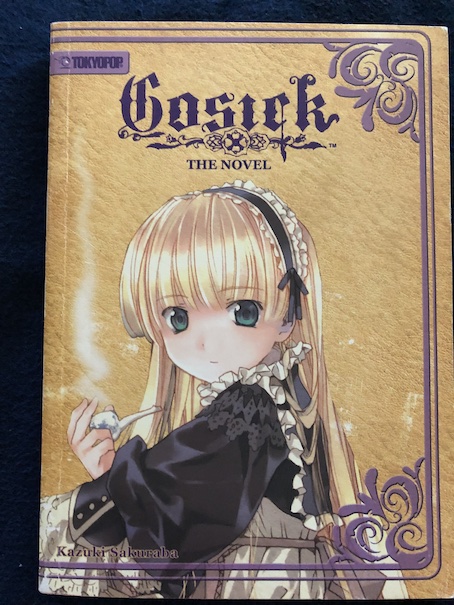
Gosick: the Novel

The year is 1924, and a boy from Japan named Kazuya Kujo is attending a prestigious boarding school called Saint Marguerite Academy, in the small European country of Sauville (fictional). The students at this school have an obsession with ghost stories. Kazuya is a very serious boy, and he doesn’t see the appeal of all of these gruesome stories, although his friend, Avril Bradley (an international student from Great Britain) loves them and insists on sharing scary stories with him. Part of the reason why Kazuya doesn’t like all the scary stories is that other students insist on calling him “the Reaper” based on a character from one of the more popular ghost stories. However, he’s not the only student at school who stands out, and some of the school’s ghost stories have more truth behind them than Kazuya would have dreamed.

There is one seat in Kazuya’s class which is always empty. That seat belongs to Victorique, and Kazuya is one of the few people at the school who has ever seen her. Victorique never comes to class, preferring to spend her time reading and studying by herself in the conservatory at the top of the library. One day, when their teacher gives Kazuya some papers to take to Victorique, Avril tries to ask Kazuya what Victorique is like. Kazuya doesn’t want to explain much about Victorique, just saying that she can be blunt and kind of mean, which is true. Victorique is brilliant, a child genius, and she looks like a little china doll, but she’s not easy to get along with. She’s temperamental and not used to dealing with other people in general. She smokes a pipe, like Sherlock Holmes, and makes deductions using her “fountain of knowledge”, even about places she hasn’t been and things she hasn’t witnessed, like Nero Wolfe.

Victorique is not allowed to leave the school grounds (for reasons which are explained as the series continues), and aside from Kazuya, there’s only one other person who visits her: her older half-brother, a local police detective. He never admits that he gets help from Victorique on his cases, and he typically prefers to act like he’s talking to Kazuya rather than speak to Victorique directly. Victorique, who is often bored, enjoys solving puzzles and mysteries, so she does give her brother help, although there is little affection between them.

One day, Victorique’s brother, Grevil de Blois, comes to consult with her, through Kazuya, about the murder of an elderly fortune teller. After hearing a description of the murder, Victorique correctly realizes that the fortune teller was killed by her maid. However, that isn’t the end of it. Kazuya thinks that it’s unfair that de Blois always takes the credit for Victorique’s solutions to mysteries. This time, when he finds out that the grateful family of the fortune teller has given de Blois a yacht as a present and that he’s planning to spend the weekend on it, Kazuya decides that he’s going to make de Blois share this present with Victorique. Victorique is normally forbidden to leave the school grounds, but with Kazuya threatening to reveal the true secret of his success, de Blois agrees to take Kazuya and Victorique with him on the weekend yachting trip. Neither of the two kids really likes de Blois, and the thought of spending an entire weekend with him, even aboard a luxury yacht isn’t great, but it is one of the rare opportunities Victorique has to leave the school.

Victorique has rarely been anywhere other than the mansion where she was born and the school, so everything is new and fascinating to her as they take a train to the seaside to meet de Blois at the yacht. When they get there, de Blois informs them that they’ve been having trouble understanding the maid who murdered the fortune teller because she only speaks Arabic, but apparently her motive was revenge for something she calls “the box.” Then, de Blois suddenly gets word that the maid has escaped. He has to leave the kids aboard the yacht, but he tells them to just stay there and wait for him.

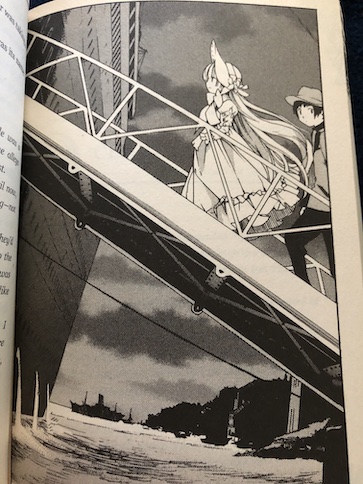
Victorique realizes that the yacht once belonged to the fortune teller and that some of her belongings are still on it. Among them, they find a strange invitation to a dinner party called “Evening at the Bottom of the Box” on a luxury cruise ship anchored nearby. The invitation also mentions that the main dish will be rabbit. This is chilling because it is known that the fortune teller kept rabbits and periodically allowed her dog to hunt them. It was part of her fortune telling – she would predict things based on which rabbits survived the hunt and which did not. (There is a graphic description of this at the beginning of the book that I hated. Although I found the overall mystery intriguing, there are some very gross and violent things in it.) Since they are bored and want to learn what the mystery is about, Victorique and Kazuya decide to use the invitation and attend the dinner in the fortune teller’s place.

When Victorique and Kazuya join this mysterious dinner party on the luxury ship, Kazuya suddenly recognizes that the name the of ship is the same as the one of a ghost ship in one of the scary stories that Avril told him at school! The ghost stories that have been going around the school have more truth to them than Kazuya or even the students who are obsessed with them have guessed. Some dark things have happened in the history of Sauville which have become part of its local legends. Events that resemble the ones that happened years before and are described in the ghost story are starting to repeat themselves. There is at least one murderer among the dinner party guests, and someone is playing a deadly game. Now, Victorique and Kazuya will have to play along to find the answers and save their own lives!

This is the first book in the Gosick series of Japanese light novels and one of only two that were published in English. There is a full set in Japanese, of course, and I think the German language translation is also a complete set. There is an English translation of this first book available to read for free online at Internet Archive. Because not many copies were published in English, English copies are collectors’ items and can be expensive. As of this writing (September 2023), the cheapest copies on eBay are about $30, and they can go for much higher on Amazon. All of the stories in the series have been made into an anime, and that is available in the US on Amazon Prime. Because of the violence in the story, I would recommend this book and the anime for teens or young adults. It’s not for young kids!

This was the first book in this series that I read, one of only two published in English. The first time I read it, I was surprised at how many tropes of old ghost stories and detective stories that the series references. Victorique uses a pipe, which is an obvious reference to Sherlock Holmes and his famous pipe, but Victorique is also frequently a Nero Wolfe type of detective, relying on an assistant to go places that she can’t go and give her information. She spends most of her time amassing knowledge through reading, and she is able to use that knowledge to make order out of the “chaos” of a mystery.

The basis of this mystery is in fortune telling, and at the beginning of the story, Victorique is reading a book about fortune telling. She explains to Kazuya Kujo how fortune telling actually works. Basically, it’s all about psychology. People think that fortune telling works because they believe it will work, and they make things happen to cause the predicted future to happen. It’s like all prophecies are self-fulfilling prophecies – they may or may not have happened except that people believed that they would, so they made sure they did. People remember and record accurate predictions because those are the most exciting and amazing, and they forget all the inaccurate ones. Fortune tellers are also good at reading people and telling people what they want to hear, which is what they already think will happen or what they’re hoping and working to make happen.

Fortune telling is at the heart of the mystery. Mysteries in this series tend to have over-the-top plots, and this one is no exception. The grudge against the fortune teller and the other guests invited to the dinner goes back to when the fortune teller staged a very large experiment in fate at the request of some very wealthy and influential clients. This past fortune telling experiment was along the lines of the ones that she did with rabbits, only it was with human children. As I said, there are violent and gruesome aspects of this story, and in this case, they were playing with human lives.

As with other books and stories in this series, the ghost stories that the kids pass around at school turn out to have at least some basis in fact. Sauville (remember, it’s a fictional country) and some of its leading citizens have violent histories. There is a long history of conspiracies, power struggles, and general skullduggery in this place. Because of the citizens’ long obsession with stories and legends, much of what has happened there has become legendary, and important people have used the citizens’ superstitions and stories to obscure the truth. Solving the crime means exposing what really happened and the truth behind the legends.

What I found most interesting about this story was its references to some classic characters in detective fiction and ghost stories, and I appreciated Victorique’s thoughts on the nature of fortune telling and human expectations. In the end, it may be more important what people believe and work to make true than what was actually predicted. However, I have to admit that the over-the-top plots of these mysteries are probably a large part of why this series wasn’t printed beyond the second book in the United States. In the beginning of the book, there is also a reference to Kazuya being suspected of a crime. This incident was in the Gosick manga, not the light novels. It is shown in the anime, but I don’t think the manga was printed in English.

Fin M’Coul

Fin M’Coul retold and illustrated by Tomie de Paola, 1981.

This is a retelling of a classic Irish folktale. The story is fun and silly, but one of the parts of this story I like the best is the introduction of the Giant’s Causeway – a real place with a magical look. There’s a geological explanation of this rock formation, but this story introduces the folkloric explanation.

In ancient times, when Ireland was inhabited by giants and magical creatures, a giant named Fin M’Coul lived on Knockmany Hill with his wife, Oonagh. One day, as he is building a causeway between Ireland and Scotland, Fin M’Coul hears that another giant, Cucullin, is coming.

Cucullin has a fearsome reputation, and he has beaten up many other giants, just to prove how strong he is. So far, Fin M’Coul has been able to keep out of his way, but Cucullin is now looking for Fin M’Coul to beat him. In fact, he’s so close that there’s no time for Fin M’Coul to get away.

Fin M’Coul goes home to his wife and asks her what he should do. Oonagh says that he won’t have any peace until he gets this confrontation with Cucullin over with, but Fin M’Coul doubts that he could be a match for Cucullin in a fight. Oonagh decides that they’re going to have to defeat Cucullin with cunning rather than strength.

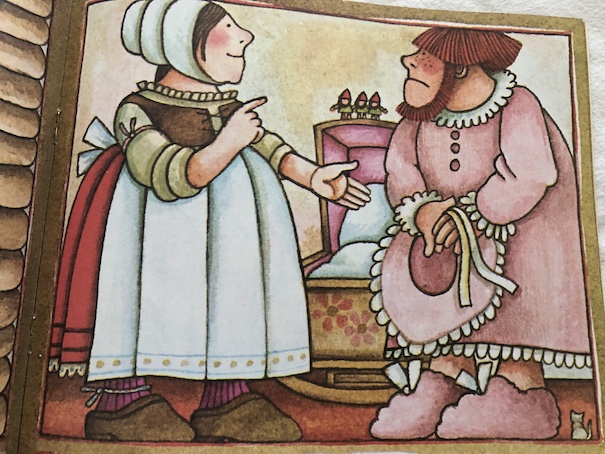
She quickly does a special charm to bring them success, and then, she begins setting the scene for the trick they’re going to play on Cucullin. She makes up a giant cradle and makes her husband dress in baby clothes and sit in the cradle. It’s ridiculous, but Oonagh has a plan.

When Cucullin comes, Oonagh tells him that her husband isn’t home, but she invites him to come in and wait with her and her “baby.” Not only is the “baby” astonishingly large, even by giant standards, but Oonagh carefully convinces Cucullin of the baby’s unusual strength. She tricks him into thinking that the “baby” can eat bread and cheese that’s rock hard while giving Cucullin bread with a frying pan in the center and a real stone instead of cheese. Not only does Cucullin break his teeth on these things, but if Fin M’Coul’s “baby” can eat these things, how much stronger could Fin M’Coul be?

Oonagh’s tricks allow Fin M’Coul to get the upper hand against Cucullin and defeat him once and for all!

There is a brief section in the back of the book that explains a little about the background of the legend. I love the pictures in this version of the story. Tomie de Paola books always have fun illustrations, but if it weren’t for the little people and animals in the pictures with the giant characters, you might almost forget that the main characters in the story are all giants.

The book is available to borrow and read for free online through Internet Archive.

Carrie’s War

Carrie’s War by Nina Bawden, 1973.

The story begins with an adult Carrie reflecting on her youth during World War II, taking her children to see the place where she stayed as a child evacuee and remembering an incident that has haunted her for the last 30 years. Adult Carrie is a widow who was married to an archaeologist who died only a few months before the story begins. In some ways, Carrie says that her husband was very much like a boy she used to know during the war, Albert Sandwich. The family trip and Carrie’s memories take them back to a small mining town in Wales and an old house called Druid’s Bottom, now a ruin, that used to house a mysterious skull … and what Carrie regards as the worst mistake of her life. Although adult Carrie knows that, logically, what happened couldn’t have really been her fault, there are some things in life that are difficult to prove or disprove, and she’s always blamed herself for what happened.

When Carrie Willow was eleven years old, she and her younger brother, Nick, were evacuated from London along with other children to avoid the bombings. All of the children were told to report to their schools with a packed lunch and a change of clothes, and none of them had any idea where they would be taken after that, only that their parents wouldn’t be going with them. Their mother tried to frame it all as a great adventure that they would enjoy, but the children were understandably worried. They had to wear labels on their clothes with their names on them, and they had to carry gas masks, which is never a reassuring thing to be told you might need. (Young Carrie thinks to herself that her mother is such an optimist that, if they found themselves in Hell, she’d look on the bright side and say, “Well, at least we’ll be warm.”)

The children’s teacher takes them aboard a train, and they head off into the countryside, ending up at a coal-mining town in Wales that doesn’t look like much. That’s where Carrie meets Albert, another boy who rode with them on the train. Albert is tall and serious and wears glasses. His first concern is that the town isn’t big enough to support a proper library. Carrie is mostly concerned about keeping her brother with her and making sure that someone will be willing to take them both together. (Hosts for WWII evacuees were told how many children they were expected to take in, but they were given the opportunity to choose which ones they would host from among the children available. Sometimes, siblings were split up if they couldn’t find accommodations that could house them together.)

Carrie and Nick are eventually chosen by Miss Evans, a woman who lives with her brother. Originally, Miss Evans had been hoping for two girls so they can share the one spare room that she and her brother have, but Carrie persuades her that she and Nick sometimes share a room at home because he has bad dreams. Miss Evans is a shy and nervous woman, and her brother, Samuel Evans, is ultra-strict and fussy. Everything in their house is super neat, and they have special rules to keep it that way. Carrie and Nick aren’t even accustomed to picking up after themselves because their family has a maid who does all the cleaning. The house has a bathroom with running hot and cold water, but if they have to go to the bathroom in the middle of the day, Mr. Evans wants them to use the outdoor one in the yard to avoid messing up the new carpet on the stairs with too much “traipsing” up and down. Even Miss Evans uses the outdoor bathroom, although Samuel Evans never does because he thinks it’s unseemly because of his position in the community as a store owner and town Councillor. So, for starters, Mr. Evans makes strict rules for others to follow that he doesn’t follow himself.

Carrie can tell right from the first that Samuel Evans is a bully who pushes people around, especially his sister. He’s much older than his sister and helped to raise her after their parents died. Really, Miss Evans was raised with Mr. Evans’s son, Frederick, who is now in the army, being more like her brother than her nephew. Now that Mr. Evans’s wife is dead, there’s no one else in the household but the two of them. When Miss Evans and Frederick were young, Mr. Evans used fear, intimidation, and harsh physical punishment to keep them in line. However, Mr. Evans can’t really bully the children because Carrie is careful not to show that she finds him intimidating, and Nick just isn’t intimidated because he refuses to be impressed by anybody with false teeth. Still, Carrie realizes that they should try to keep out of his way and not make him angry.

Samuel Evans is also very strict about religion. One day, when Nick eats some biscuits in his shop, Mr. Evans declares that he’s been stealing and that he’s going to get the strap for it. Carrie is horrified because their parents don’t use physical punishment, and Nick is terrified. Miss Evans is too afraid to intervene, so Carrie steps in and defends Nick, just saying that he didn’t understand that it was stealing to eat the biscuits. Mr. Evans says that’s not a good excuse, but Nick says that if he whips him, he’ll go to school and tell the teacher that Mr. Evans beat him for taking food because he was hungry. Mr. Evans realizes that, while other adults might not fault him for punishing a thief, they would if it looked like he was starving and neglecting his charges as well as beating them. Instead of giving Nick a beating, he prays out loud for Nick to turn from his “evil ways.” It’s difficult for Carrie to listen to because she realizes that Nick hasn’t been starved, wasn’t really hungry, and should have known better than to take the biscuits, and now, he’s made an enemy of Mr. Evans. They don’t have much choice other than staying in the Evans house because they can’t go back to their parents yet, and there just aren’t any other places in town for them to stay. The kids become fond of Miss Evans, who they start calling “Auntie Lou”, but they always have to be wary of Mr. Evans.

When their mother comes to visit, Mr. Evans acts extra nice to the children and tries to be charming to their mother. The children’s mother has some misgivings about how the children are being treated, but the children don’t complain about some of the harder aspects of living with Mr. Evans because they don’t want their mother to worry. She’s been working as an ambulance driver in Glasgow because her husband’s ship makes port there, and she can see him sometimes. She needs to know that her children are safely settled somewhere to continue her work, and the children have also grown attached to Auntie Lou and don’t want her to get into trouble, even if they don’t like Mr. Evans.

Shortly before Christmas, Auntie Lou explains to the children that she and Mr. Evans have an older sister named Dilys, and she’s giving them a goose for Christmas dinner. The reason why the children haven’t met Dilys before is that Auntie Lou and Mr. Evans don’t really get along with her and hardly ever see her. Mr. Evans in particular resents Dilys because, years ago, she married into the Gotobed family. The Gotobeds owned the mine nearby where their father was killed in an accident. Mr. Evans always blamed the Gotobeds for their father’s death because they didn’t have adequate safety measures, and he felt like Dilys was turning her back on the family by marrying Mr. Gotobed’s son. Now, Dilys is a widow, and she’s not in very good health, which is another reason why she doesn’t get out much. She lives in the old house known as Druid’s Bottom, at the bottom of Druid’s Grove, where the yew trees grow. A woman named Hepzibah Green looks after her and the farm where they raise poultry. Local people are rather superstitious about Druid’s Grove, but Carrie thinks it sounds wonderfully spooky and exciting. Auntie Lou and Mr. Evans send Carrie and Nick to Druid’s Bottom to pick up their Christmas goose from Hepzibah Green because Auntie Lou gets sick and can’t go herself.

On the way to Druid’s Bottom, Carrie and Nick are scared because they think they hear something chasing them, making odd sounds. It turns out that it’s only Mister Johnny, a cousin of Mr. Gotobed, Dilys’s deceased husband. Mister Johnny has developmental disabilities and can’t talk very well or understandably to most people, which is why he lives with Dilys in Druid’s Bottom and is cared for by Hepzibah. Hepzibah has been Johnny’s nurse since he was a baby, and she now cares for the elderly and ill Dilys as well.

Albert Sandwich has been staying at Druid’s Bottom, also in Hepzibah’s care, since Carrie and Nick last saw him. Albert tells them that Hepzibah is a kind of witch who knows some kind of healing magic. Albert hasn’t been to school with the other children because he was very sick after they last saw him, and Albert thinks that he only survived because Hepzibah gave him herbal medicines. Albert loves Druid’s Bottom because of Hepzibah and also because the old house has an impressive library. In the library, Albert also shows Carrie a strange curiosity – an old skull. The story surrounding this skull is that it’s the skull of an African slave boy who was brought to this house years ago. (Albert explains to Carrie that he doesn’t believe that because he’s examined the skull. He explains that the number of teeth suggest that the skull was from an adult, not a boy, and the size and shape suggest that it’s the skull of a woman. Albert suspects that some local person actually found the skull at the site of an Iron Age settlement nearby.) According to the legend of this skull (or what people say the legend is), the young slave boy died of a fever, and on his deathbed, told the Gotobed family that they must keep his skull in the house or the walls would fall. Hepzibah says that one of the Gotobeds’ ancestors tried removing the skull from the house once, and during the night, all the crockery in the kitchen broke and the mirrors in the house cracked for no apparent reason. When they brought the skull back into the house, they didn’t have any further problems. Albert is skeptical of this story, but it’s captivating for Carrie.

Carrie finally meets Dilys Gotobed one day when everyone else is busy and Hepzibah asks her to take tea up to Mrs. Gotobed. Dilys is a sad and weak old woman who doesn’t have much time left to live. She lives mostly in her memories, spending each day wearing the fancy ball gowns that her husband bought for her years ago one last time before she dies. All of her talk of death gives Carrie the creeps, but Dilys makes her promise to take a message to her brother after she dies. She insists that the message must be delivered only after her death because it’s sure to make Mr. Evans angry and Dilys isn’t up to dealing with his anger. The message is somewhat cryptic. Basically, Mrs. Gotobed wants Mr. Evans to know that she hasn’t forgotten him and she remembers that they’re still brother and sister, but she feels like she owes more to others than she does to family. Dilys has done something that is sure to make Mr. Evans angry, but she wants him to know that she did it only because she thought it was the right thing to do and not just to spite Mr. Evans. Carrie reluctantly agrees to deliver the message after Dilys is dead.

The meaning of the message becomes clear when Dilys finally does die. Dilys’s only relatives are Mr. Evans and Auntie Lou, but she wanted to provide for Hepzibah and Johnny because of their companionship over the years. At first, Carrie thinks that Mr. Evans will be reassured that his sister thought of him near the end, but Carrie hasn’t fully grasped Mr. Evans’s reactions. Mr. Evans flies into a rage at the suggestion that Hepzibah might inherit from Dilys instead of him. He storms over to Druid’s Bottom to search for a copy of Dilys’s will to establish who is going to inherit. Mr. Evans later says that he couldn’t find one, and even Dilys’s lawyer says that Dilys’s didn’t make a will or leave one with him. If that’s true, and there is no will, Dilys’s estate would go to her nearest relatives, which basically means Mr. Evans. But, is that the truth?

While Dilys may have meant to provide for Hepzibah and Johnny, she was so ill near the end of her life that she may have forgotten about making a will. Her mind wasn’t entirely there, so she may have thought that she’d already done it when she hadn’t. However, there is another explanation. What if Mr. Evans did find something in writing from Dilys about her last wishes for her estate? What if he stole or destroyed Dilys’s will or something she left behind? That’s what Albert believes. He’s ready to believe the worst about Mr. Evans because he is unquestionably a mean, bitter, and vindictive man, but Carrie still has trouble believing that Mr. Evans could do something so deliberately evil. Albert somewhat blames Carrie for delivering the message Mrs. Gotobed gave her for Mr. Evans, alerting him to the possibility that there might be another heir to the estate, depleted though that estate is. Carrie was only doing as Mrs. Gotobed asked as one of her final wishes, but Carrie does feel responsible, especially if Mr. Evans did what Albert suspects.

In the midst of Carrie’s guilt that Mrs. Gotobed’s wishes are not being honored and her anger at Mr. Evans for wanting the house all to himself and kicking out Hepzibah and Johnny, Carrie decides that there’s only one thing left to do in order to make sure that Mr. Evans never takes possession of the house. It’s a terrible, impulsive decision, and it’s only after she’s done it that Carrie realizes that she also may have misjudged the situation yet again. It’s also only when she returns to Druid’s Bottom as an adult that she comes to see the full truth of the situation and that what she’s done may not have been as bad as she thinks.

This book is very well-known, and it was made into a television mini series in 1974 (you can sometimes find clips or episodes on YouTube) and a movie in 2004. The book is available to borrow and read for free online through Internet Archive (multiple copies).

My Reaction and Spoilers

I saw the 2004 movie before I read the book. The movie follows the book very well, and after I looked up the television mini series, I decided that it also follows the book well. The section in the back of the book about the author explains that Nina Bawden was also a child evacuee from London during World War II, so the book was partly inspired by her experiences.

In real life, when children were evacuated from London to be safe from the bombings during World War II, they went through some of the same feelings of homesickness and unfamiliarity that the children in this story also go through. First, they’re worried about being far from home. They don’t even know where they’re going and who they’re going to be staying with when they get there. During the scene where they’re being selected by foster families, they worry about who will choose them and what will happen to them if no one wants them. It’s all very realistic, and people who were among the child evacuees of the time describe going through a similar process.

There’s also the adjustment that the children have to make living in a household with unfamiliar people and different rules and circumstances from what they’re used to in London. London at the time was a large cosmopolitan area, like it is today, but back in the 1940s, small towns and houses in the countryside had far fewer amenities than in modern times. Real life child evacuees were accustomed to indoor plumbing in London, but they didn’t always find that in the places where they had to stay during the evacuation. The characters in the story find a mixture where they’re staying. The fussy head of the Evans household has indoor plumbing, but he doesn’t allow everyone to use it during the day because he doesn’t want everyone constantly going up and down his wonderful carpet on the stairs, so they also have to use the outdoor privy.

Mr. Evans’s fussiness and anger issues are also, sadly, true to life. The real life evacuees came from a variety of backgrounds and were accustomed to different styles of home and family life, and what they encountered in their foster homes during evacuation could be wildly different from the life they had at home, both for better or for worse. Some foster families could be warm and welcoming to the child evacuees, but sadly, many were not, resenting the new obligations that had been thrust on them because of the war. (Households were told that they had to accept evacuees if they had room for them, and there was no option to refuse.) There were foster families who ended up keeping or adopting children they took in during the war because they were orphaned or abandoned by their parents by the time the war ended. Some children ended up drawing closer to their foster families than their birth families because they came from an unhappy home life in the beginning, and they found themselves liking the new life they found. Others had a very unhappy experience, feeling unwanted, unwelcome, or even abused by their temporary foster families. Unhappy children could try to reunite with their parents, transfer to a different household, or even just run away, and some did all of these things. (To hear about the experiences of real life evacuees in their own words, listen to this documentary or this interview series on YouTube.)

In the story, Carrie and Nick seem to come from a happy home life with close-knit family. Their family is not poor because they could afford a nice house with a maid, and their parents seem kind and understanding and do not use physical punishment of any kind with the children. The Evans household is a step down for them. The fact that Mr. Evans, as a shopkeeper, doesn’t seem to have as much money as their family did when they lived in London isn’t so much of a problem as Mr. Evans’s personal issues and bullying nature. Mr. Evans is a troubled person, twisted by anger and resentment, and rather than dealing with these issues himself, he takes them out on other people, even people who are not the source of his anger and resentment.

As the story unfolds, the children learn about Mr. Evans’s sad history with his older sister, Dilys. He and Dilys were once rather close, but their relationship unraveled when she married Mr. Gotobed, the son of the man who owned the mine where their father was killed in an accident. Not only did it seem like a betrayal, to marry into the family of the man Mr. Evans blamed for their father’s death, but Dilys also suddenly became a wealthy woman by marrying into a wealthy family, while the rest of her family was still poor working class. There were apparently even times when Dilys rubbed it in, making the situation worse. Mr. Evans had to work his way up from the son of a miner to becoming the local shopkeeper and a prominent member of the community, and even then, he’s still not as well-off as his sister, who simply married into money and has never had to work herself. Instead of just taking pride in his achievements, Mr. Evans can’t get over the injustice of his relative position with his sister, that she has it all easy, and he’s had to work and scrimp for everything he has. That’s why’s he’s ultra-protective of things he owns, like the biscuits in the shop or the new carpet on the stairs, and why he’s so controlling of the people in his life. In spite of his accomplishments, he feels “small” next to his sister who married wealth and always has more than he has. He’s constantly trying to assert his authority to avoid feeling “small”, but it never really works because he can’t change who his sister married, he’s never going to be rich, and he can’t internalize the idea that he can still be somebody worthwhile even if he’s not the guy who has the most money and power. He’s tied his sense of self-worth to what he has and the amount of control he has over everyone, so he can’t give up any part of it. He’s had all of these resentments for so many years that they’ve all been brewing inside him and explode out whenever any little thing in his tightly-controlled world goes wrong or he thinks he stands to lose something he regards as his. This life hasn’t been healthy for his younger sister, Auntie Lou, who has lived with Mr. Evans and his controlling nature and temper tantrums since she was young, and it’s not really healthy for Carrie and Nick, either.

Carrie becomes sympathetic to Mr. Evans, although Nick can’t understand why, because she sees the sadness and loneliness at the core of his bad behavior. Carrie is a very sympathetic/empathetic person, but one of the questions of this story is how far should someone go with sympathy/empathy when they’re dealing with a person who is causing harm to people around him. Mr. Evans is a toxic person. He is causing harm to others, and before the story is over, Auntie Lou runs away from the house to marry an American soldier she met, leaving her brother to live alone. By this point, the children know that they won’t be living with Mr. Evans much longer because their mother has sent for them to join her in Glasgow because she’s found a place for them to all live together. Carrie and Nick won’t be living with Mr. Evans or facing his temper problems, stinginess, or selfishness anymore. Carrie feels sorry for for Mr. Evans, an aging man who is now left alone. His only other living relative, his son, has already said that he isn’t planning to come back and run his father’s store after the war, although Mr. Evans doesn’t know it yet, so he’s going to be even more alone than he knows. Carrie sees the sadness of Mr. Evans’s situation and feels badly for him, even though at least part of this situation is his own making. However, Nick and Albert don’t like Carrie’s sympathy for Mr. Evans because her attempts to reach him emotionally put everyone else in a vulnerable position to Mr. Evans’s wrath because he’s never as sympathetic, understanding, or rational as Carrie expects him to be.

When the question arises of whether or not Mr. Evans could have stolen or destroyed Dilys’s will in order to get her house and get rid of Hepzibah and Johnny, Albert is prepared to believe that he did. He is a vindictive man, driven by his bitterness, and does not always behave rationally. Nick says he sometimes cheats his customers in petty ways, like giving them 97 saccharine tablets instead of the full 100 he owes them, but other times, he has Carrie give someone the correct change when she’s made a mistake. Sometimes, he extends extra credit or provides free groceries for people in need. Mr. Evans is definitely flawed, but he does still seem to have a system of ethics. Would he really commit a crime, like inheritance fraud?

For all of her sympathy for the sad Mr. Evans, Carrie doesn’t really understand him. For much of the story, she expects him to react to situations as she would and thinks that she can reach him through her own kindness and understanding. By the end of the story, she is partially successful, and she ends up getting to know him better than other characters do, but at the same time, she can’t control Mr. Evans, and it must be acknowledged that Mr. Evans doesn’t control himself. He has a long-standing habit of lashing out at other people that he doesn’t fully confront until he finds himself completely alone with no one else to lash out at but himself. As hard as Mr. Evans works at his professional life, his personal life is a mess because of the way he’s treated the people who should have been close to him, and Carrie can’t solve that for him. While Mr. Evans recognizes the kindness and sympathy that Carrie offers him and becomes fond of her for it, she’s still a child, and Mr. Evans is an adult who has control issues and temper tantrums and long-standing personal issues that have gone unaddressed for far too long. Perhaps Mr. Evans realizes that toward the end, partly through Carrie’s kindness, but it’s hard to say because he’s been wrapped up in feeling resentful and sorry for himself for so long.

Apparently, Mr. Evans wasn’t lying when he said that his sister didn’t leave a will. During a rare moment of candor, Mr. Evans reveals to Carrie that he was deeply hurt when Dilys didn’t even leave him a note or letter on her death. All he found in her jewelry box when she died was a single envelope with his name on it, and all it contained was an old photograph and a ring that he had bought for her as a present years before, when they were still close. Carrie thinks that it’s a hopeful sign, that Dilys remembered how much the present meant to both of them and how much it reminded them of better times, but Mr. Evans says that there wasn’t even a word of farewell with it. This candid moment reassures Carrie that Mr. Evans didn’t find a will and steal it, and more than just being greedy for the property, he is feeling hurt and abandoned by the final loss of his sister and the relationship they once had. What he really craved in the end, more than authority, control, money, or property, was a genuine connection with his sister that he realized he would never have again.

It’s sad, and much of it is still Mr. Evans’s fault, although Dilys also deserves some of the blame because there were times when she rubbed salt into Mr. Evans’s wounds by flaunting the difference in their wealth and social status. A death can make people rethink the relationships they had with other people, but those relationships were forged and maintained (or not) when the person was alive. Death can’t change the way people lived when they had the chance. Mr. Evans and Dilys both had chances to fix things between the two of them in the years leading up to the end, and they never took them. Not only that, but Mr. Evans’s bitter feelings and vindictiveness also poisoned the other relationships in his life. So, in the end, it seems that Mr. Evans isn’t evil, even though he can’t really be called “good”, either. Mr. Evans isn’t out to steal his sister’s estate. If he had found a will and an explanation from his sister, he probably would have honored it, even though it would have hurt to do so. What hurts him the most is not finding anything, only the ring, probably because Dilys wasn’t really in her right mind toward the end and couldn’t get her thoughts together well enough to leave anything in writing, which is why she asked Carrie to talk to her brother instead. There also isn’t as much money connected with the estate as there once was. Since Dilys’s husband died, Dilys hasn’t had any income, she hasn’t been able to keep the house up or retain a staff other than Hepzibah, and she has very little money left. She was living in prideful, genteel poverty while Mr. Evans was feeling resentful of what he thought she still had. In the end, Mr. Evans was the victim of his own pride and bad relationships.

The worst mistake that Carrie ever made in her life was trying to sabotage Mr. Evans’s attempt to take the house away from Hepzibah and Johnny by removing the skull from the house. Caught up in the stories about the skull and its supposed curse that would destroy the house if it was ever removed from the house, Carrie comes to believe that the stories are true and decides to use the legend of the skull to destroy the house and keep it out of Mr. Evans’s hands since he won’t let Hepzibah and Johnny live there. As Carrie and Nick leave Wales, they see that the house is on fire from the train, and Carrie comes to believe that the fire was her fault because of the skull. For years, she believes that Hepzibah, Johnny, and Albert were killed in the fire and blames herself for their deaths. But, again, Carrie still doesn’t understand the full situation.

So, does Carrie end up changing anything for Mr. Evans? I think she touched his heart a bit because she cared about him in ways few other people did (mostly because Mr. Evans himself didn’t have much caring for other people), but as far as Mr. Evans’s life and behavior goes, it’s hard to say whether she would have had any long term effect because (spoiler), she later learns that he died not too long after she and her brother left Wales to rejoin their mother in Scotland. He was under stress when Carrie last saw him, full of unresolved grief and anger at Dilys’s death and feeling abandoned by Lou because of her elopement. Then, while he was in the midst of taking control of what was left of his sister’s estate, Dilys’s house caught fire and burned, and then, Mr. Evans received word that his son was killed during the war. The shock of it all was too much for him, and he had a heart attack and died. Sad as that is, Mr. Evans’s death ends up changing things for the better for Hepzibah, Johnny, and Albert.

In spite of her sense of guilt, Carrie does grow up, get married, and have children. The return to Wales with her children when she’s an adult leads her to confront the past and her feelings about it, but it also reveals the truth (also a spoiler): Hepzibah, Johnny, and Albert are all still alive. The house was damaged by the fire but not completely destroyed. In fact, not only were Hepzibah and Johnny allowed to stay on the property after Mr. Evans died, but Albert has saved up enough money to buy the property and restore it. Albert has never married, and there are hints that he might marry the widowed Carrie and become her children’s new stepfather.

The Illyrian Adventure

The Illyrian Adventure by Lloyd Alexander, 1986.

This is the first book in the Vesper Holly series. Vesper Holly is like a female Young Indiana Jones.

The story begins in 1872, when Professor Brinton Garrett and his wife, Mary, receive a letter saying that Professor Garrett’s colleague, Dr. Holly, has died overseas. Dr. Holly named Professor Garrett as executor of his will, gave him the rights to organize his person papers for publication, and made him the guardian of his 16-year-old daughter, Vesper. When Professor Garrett and his wife arrive at Dr. Holly’s country estate in Pennsylvania to meet Vesper and take charge, they at first expect that they will have to comfort a timid and grieving orphan. However, Vesper is anything but timid and seems to have gotten over whatever grief she was feeling and has quickly taken charge of the situation. She welcomes the professor and his wife, calling them Uncle Brinnie and Aunt Mary, and she quickly persuades them that, rather than her coming to live with them, it would be better for them to take up residence at the Holly estate, where there is plenty of room and Uncle Brinnie would have full access to her late father’s library and papers. At first, they’re reluctant to leave their own home, but Vesper Holly is practically a force of nature and very difficult to resist.

Vesper is intelligent and multi-talented, with interests in everything from science to women’s rights. (In some ways, she seems kind of like Mary Sue – impossibly talented and skilled at everything, with her main flaws seeming to be that she is difficult for everyone else to keep up with.) Uncle Brinnie quickly realizes that she is a daunting girl to have as his ward, and rather than he and his wife taking charge of her, Vesper has efficiently taken charge of them.

Soon after Professor Garrett and Mary settle in at the Holly estate, Vesper asks Uncle Brinnie if he’s read a piece of classic literature called the Illyriad and if he knows anything about Illyria. Professor Garrett has read this less-known classic piece, and while he’s never been to Illyria, he knows that it’s an incredibly unstable place. While the Illyriad is thought to be mostly legend, Vesper says that her father believed that there was more truth to it than most people know. He believed that the magical army described in the story may actually have been an army of clockwork automatons. Professor Garrett remembers Dr. Holly saying something like that before, but no one in the academic community took the theory seriously, and Professor Garrett says that he thought Dr. Holly had abandoned the idea. Vesper reveals that her father was still working on the theory and that, shortly before his death, he wrote to her, saying that he found something that seemed to support his ideas. Unfortunately, he died before revealing what he found. Vesper says that she wants Uncle Brinnie to take her on an expedition to Illyria so that she can finish her father’s work. Once again, Professor Garrett balks at the idea because of the dangerous political situation in the region, but also once again, Vesper’s powers of persuasion win.

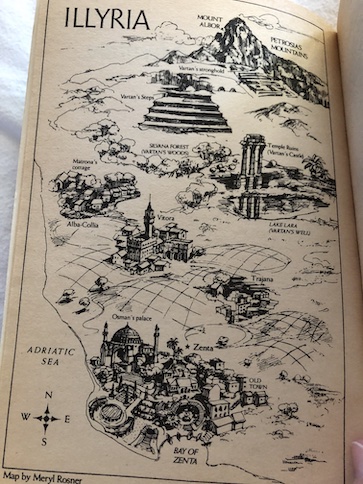
Professor Garrett is sure that they won’t be granted permission to enter the country much less move around Illyria because of the unrest there, but to his astonishment, Vesper gets them permission to do both by writing to the king of Illyria himself. Although the king never met Vesper’s father, he has read Dr. Holly’s research and is fascinated by his theories, which is why he also grants Vesper a personal audience. Before their meeting with the king, Vesper and Professor Garrett are caught up in a riot while touring the city, and someone tries to stab Vesper! Although it could have been an accident during the riot, Vesper is sure that someone deliberately tried to kill her, and she tells the king about it at their meeting. The king is troubled by the news and admits that he had assigned someone to follow Vesper and Professor Garrett to protect them. It’s a failure on the part of his guard that they were attacked anyway.

The king’s vizier immediately says that they have to crack down harder on the native Illyrians, bringing up the cultural and political struggle that has made this country so dangerous. (Don’t worry too much about understanding it. This isn’t a real life historical situation with real groups of people.) Vesper boldly says that it doesn’t make sense to her that one half of the country crack down on the other half of the country, and she advocates for more respect for the native Illyrians and their wishes. The vizier is scandalized at a girl speaking up to the king like that, and the king tells Vesper that the situation isn’t that simple. The king has been trying to modernize and improve the infrastructure of the country with projects like building schools and railroads lines, but each of these projects has been ruthlessly sabotaged, apparently by the native Illyrians. The vizier has suggested hiring outside sources from other countries to complete the projects, but the king still thinks it’s important to keep the projects within the country. Hiring outsiders would be costly and would make Illyria dependent on outsiders. (Right about at this point, I was sure that I fully understood who the real villain of this story was and who was really responsible for the sabotage, and it wasn’t the native Illyrians. However, there is one more important character yet to be introduced.)

The king grants Vesper and Professor Garrett the ability to travel to the village Vesper wants to visit to pick up the trail of her father’s studies, but before they leave the palace, the king introduces them to anther visiting scholar, Dr. Desmond Helvitius. Dr. Helvitius is there to catalog the palace archives and conduct research for a book about the early history of Illyria. Dr. Helvitius says that, based on his studies, he believes that the army from the Illyriad Dr. Holly was researching never existed and was purely imaginary and says that the palace archives, which are thorough and complete, prove it. However, Vesper insists on seeing the archives herself, and she quickly notices that there is a gap in the records. Our heroes ponder what is missing and why Dr. Helvitius doesn’t want anyone to know that anything is missing.

As Vesper and Uncle Brinnie continue in pursuit of Dr. Holly’s theory, there are further attempts on their lives.

The book is available to borrow and read for free online through Internet Archive (multiple copies).

My Reaction and Spoilers

Although there are themes of history and archaeology in the Vesper Holly stories, I think it’s important to point out that all of the history and archaeology in the stories is fake. The locations they visit are fictional. The series takes place in the Victorian era, but this is not really a historical fiction series because they mostly focus on the history of places that don’t exist. The Indiana Jones and Young Indiana Jones franchise based their adventures on real places, people, artifacts, and legends that exist outside of the franchise, but that’s not the case with Vesper Holly. Really, the Vesper Holly series is just an adventure series. The locations and circumstances only exist to create the opportunities for adventure. That’s fine and fun, as long as readers understand that’s the case.

The name of Illyria comes from an ancient name for a region in the Balkans where people spoke a language that was called Illyrian, but Illyria didn’t exist as a country in the 1870s. People stopped referring to Illyria in the sense of a nation after the Ottomans invaded the region in the 15th century, and that was after it had already been under both Roman and Byzantine control. The term “Illyria” sometimes emerged after that in a cultural sense. The Illyriad doesn’t exist and seems to be based on the real piece of classical literature, the Iliad. I couldn’t find any references to a King Vartan, but there is a St. Vartan or Vardan, who was an Armenian military leader and martyr, who died in 451 AD. The political and social tensions in the story are between the ethnic Illyrians and the Zentans. The captial city of this fictional Illyria is Zenta, and I think it is based on the city now called Senta in modern day Serbia, which was the site of a battle in 1697, where the Ottomans were defeated and lost control of the region. So, my overall impression of the time period and location of the story is that it seems to take place in a sort of alternate reality of the Victorian world, semi-based on real places and historical concepts from Eastern Europe and the Mediterranean, especially the Balkans, but not adhering strictly to real history so the author could set up the adventure creatively.

The Illyrian characters in the book use words like “dragoman” (a term for a guide and interpreter, usually used in the Near East, particularly in areas with Arabic, Turkish, or Persian influence) and “effendi“, which is an honorific for a man of high status in eastern Mediterranean countries. It’s plausible that these terms would be used in the Balkans in the 19th century, but this isn’t really my area of expertise, so I can’t say how common that would have been.

The adventure in the story is good, and it has an element of mystery that adds an interesting twist to the ending. At the beginning of the story, Vesper and Professor Garrett explain that Dr. Holly had a theory about the historical events behind a legend described in a piece of classical literature. His theory was that this special army described in literature was actually some kind of mechanical or clockwork army, an army composed of something man-made rather than real humans. Professor Garrett and his colleagues never took Dr. Holly’s theory seriously because it does sound rather unbelievable, too technologically advanced for the time when the historical events took place. However, Vesper believes in her father and his theories, and now that he is dead, she wants to investigate and find the proof that her father wanted for the sake of his memory. If they had really found an amazing clockwork army, it would have been an incredible adventure, but I was pleased that what they actually found is a more plausible explanation that would have fit the time period. It turns out that Dr. Holly was half right; the legendary army was not composed of real people, but there is another kind of army that nobody considers until Vesper actually finds it. Legends tend to magnify things out of their original proportions. This particular legend not only exaggerated the army’s capabilities but also its size.

I liked the twists to the story, but Vesper herself got on my nerves a bit. Vesper only really makes sense if you look at her as being the kind of heroine of tall tales. She is overly perfect with no noticeable flaws. She rarely gets frightened or upset at anything, from the death of her own father to being threatened with death herself. She cheerfully pulls her new guardian into dangerous situations, and her guardian can’t even really get angry with her for doing it. Vesper is incredibly persuasive, whether it’s dealing with her guardian or a foreign king, and her guardian is adoring of her and constantly admires her intelligence and abilities. Like Sherlock Holmes with Watson, Uncle Brinnie is always one step behind both Vesper and the readers in figuring things out. Characters who are overly perfect can be a little grating, partly because there are times when they drag their friends into dangerous situations but, somehow, it’s never their fault because they’re perfect. In fiction, this kind of confidence and seeming perfection are strengths, but in real life, over-confidence is a sign of incompetence and lack of awareness. People who charge directly into dangerous situations in real life are just kind of clueless about the dangers they’re plunging into. The books in this series are just meant as fun adventure stories, not serious or true-to-life in either characterization or historical background, so Vesper’s amazing qualities, whether it’s her ability to eat all kinds of strange foods or learn new languages in barely any time at all or to compete intellectually with professional academics who are decades older than she is, fits with the story type. Vesper isn’t mean to be a real person so much as the ultimate teenage adventurer.

Kids can enjoy this teenage heroine who is on top of every situation, can rush into danger without any sense of fear, and gets her way with little argument from anyone. However, I think I would enjoy Vesper more if she did have a few more flaws and limitations. I would have liked it if Vesper had a definite fear of something, like Indiana Jones’s fear of snakes. It could be played for comedy, like in the Indiana Jones movies. I also would have liked it if Professor Garrett could have appeared more sharp than he did and provide more useful knowledge so that Vesper had to depend a little more on him professionally during their expedition. I felt like the story dumbed down the professor a bit so Vesper could appear more brilliant, and I don’t like it when characters are made to look stupid so another character can look more intelligent by comparison.

Vesper’s relationship with her deceased father is never really explained or developed, either. When we first meet her, she is well over being sad about his death and ready to embark on an adventure in his name. I would have liked it if she and her Uncle Brinnie had a heart-to-heart talk about her feelings during their travels. Dr. Holly seems to have spent a significant amount of time away from home or involved in his research work. Vesper is a motherless only child who does not seem to attend a regular school or have friends her own age. I would expect that this unconventional life would have an effect on her development and that she would have feelings about it. I would have liked her to explain more to Brinnie that her eclectic range of knowledge and expertise with languages comes from having been dragged around the world with her father from a young age, from spending time around her father’s professional colleagues and witnessing their discussions with each other, and from becoming an active research assistant to her father because their family consisted of only the two of them, and sharing his interests was a way for them to bond. I picture Dr. Holly reading pieces of classical literature to Vesper as bedtime stories because he would have little or no interest in the typical nursery rhymes or picture books.
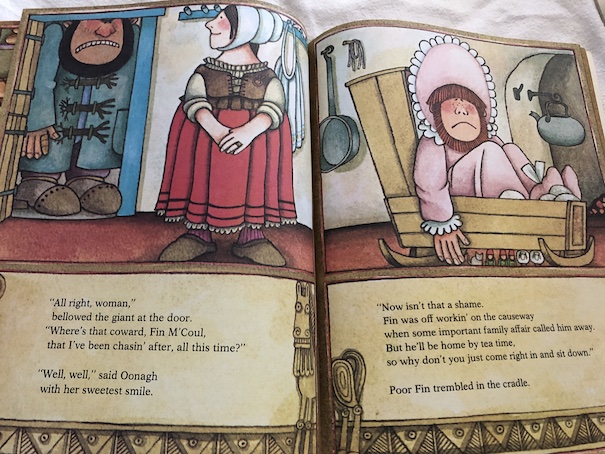
If Vesper had more knowledge of ancient history and literature than things typical children know and like, that could also show character quirks and development. It might even be a flaw in the sense that Vesper knows more about how to speak to and relate to professional academics than girls her own age at a time when female academics were often not taken seriously. Vesper occupies an odd position in life but without the obvious awkwardness that would cause in real life. Her confidence and ability to stride forward in situations that would cause anyone else hesitation might actually come from the knowledge that, if she allowed anyone else time to think about what she’s barging into, she would never be able to accomplish what she wants to accomplish because other people wouldn’t accept it. She could be feeling more of the awkwardness of her position more than she lets on, and some discussion of her need to hide her own feelings, act more confident than she feels, or compensate for other people’s feelings about her would add depth to her character. It’s possible that later books in the series develop other sides of her personality and history more, but I would have liked more of that in this book.

Silver on the Tree

The Dark is Rising Sequence

Silver on the Tree by Susan Cooper, 1977.

This is the final book in The Dark is Rising Sequence, and it focuses on the epic battle between the forces of good (the Light) and the forces of evil (the Dark). Like the other books in this series, it uses and references folklore and Arthurian legends. At the end of the previous book, the characters used a magical harp to wake “the Sleepers” in Wales. The man that the children know as Merriman Lyon is actually Merlin from the Arthurian legends, and Will Stanton has discovered that King Arthur had a son named Bran who was brought into the 20th century by Guinevere and Merlin to protect him from his parents’ troubles in their own time.

Twelve-year-old Will Stanton is spending some time with his brothers at Midsummer because his oldest brother, Steven, has come home for a visit from his service in the navy. While the boys are out fishing, Will begins having visions of the distant past. He sees people who seem to be fleeing from something, and these people are talking about the terrible things that their pursuers would do to them if they caught them. Will watches as they bury something, some kind of treasure. He sees smoke on the horizon and has a sense of fear that tells him these people are right to be afraid. Then, suddenly, Will is back with his brothers in modern times, and a strange black animal, probably a mink, is sitting there, staring at Will. His brothers run the mink off, commenting on how oddly it was behaving.

Steven talks to Will in private about some odd things that have been happening that have let him know that Will must be involved in something strange. Strangers in other countries that Steven has visited have approached him and, with no explanation, have asked him to tell Will that the Old Ones of different regions are “ready.” Steven wants to know who these people are, how they know Will and know that Steven is will’s brother, what Will is involved in, and what they mean when they say that they’re “ready.” Will doesn’t want to answer at first because he knows that Steven won’t understand, but Steven insists that he wants an explanation. Will explains to him, as best he can, about the Old Ones, the magic of the world and the universe, and the opposing forces of the Dark and the Light that are fated to battle with each other. (This is the most complete and concise explanation of how magic works in these stories and how their universe is ordered.) As Will expected, Steven doesn’t believe him and insists that he can’t be an “Old One” because he is only twelve years old and Steven remembers when he was born, but Will asks him whether it’s any more plausible that a twelve-year-old boy would be involved in smuggling or other suspicious activities. Steven doesn’t know what to think, but then, some white moths come, and Will recognizes them as creatures that are reputed to carry away memories. After they leave, Steven doesn’t remember their conversation at all and is no longer interested in the idea of the “Old Ones.”
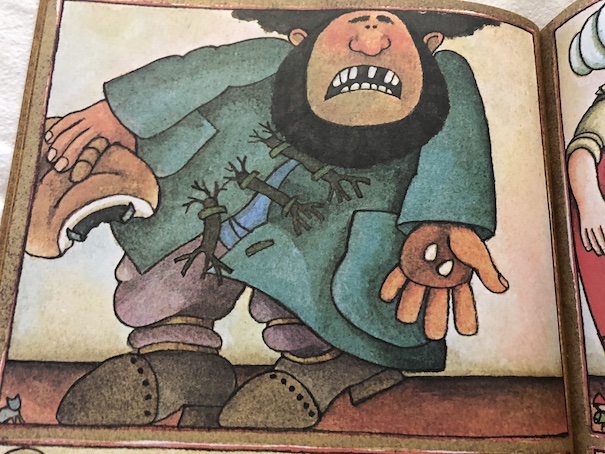
On the way home, Steven deals with a young local bully who stole an instrument case from a smaller boy. The bully threatens to send his father after Steven, and Steven, being a tough member of the navy, says that he’d be happy to talk to his father about the bully. The father does come to talk to Steven eventually, and the Stantons see that the young bully’s bad behavior is fueled by racist things that his father thinks and says. The father of the bully has no self-awareness. The Stantons are disgusted by him, but Will’s father says to his kids that they know that such disagreeable people exist and “You can’t convince them, and you can’t kill ’em. You can only do your best in the opposite direction—which you did.” (The part of the observation about not killing people sounds a bit violent, but I think I understand. You might not like certain people, and you might find them a hardship to have around, but you can’t just get rid of them, out of the world, anymore than the racist bully has either the right or the ability to get rid of all the people he doesn’t like. All people are a part of the world and all have a right to be there … no matter how much of a trial and hardship some of them make themselves to other people because they either don’t understand that other people are making allowances for them on a daily basis that they don’t make for others or deny knowing it to preserve their self-image and justify their bad behavior. Yeah, I’m a bit fed up with some people myself, but we’re all stuck with each other, so we all have to make the best of it.) Will finds himself evaluating this man as an Old One, trying to decide if he is also an agent of the Dark. He seems to be an ordinary human, but it has already been established that even ordinary humans can also serve the Dark, even unknowingly. Will finds himself thinking that people have multiple sides to their personalities, indicating that this obnoxious man may have a role to play in the upcoming struggle, either for good or evil, and whichever role it is will be his personal choice. On the other hand, there is a concept in this story that there are people and things outside of the battle between Light and Dark, people who are either neutral or a mixture of Dark and Light. In other words, this jerk could simply be just a random jerk and hold no other significance but that. (Spoiler: He doesn’t appear again in this story, and the jerk isn’t significant. He’s just a rude guy with a nasty son and some personal issues that are causing him to be a bad example. On the one hand, I’m was a little disappointed because I thought they were setting something up with this incident, but on the other hand, the character was so oblivious and full of himself that saying that he’s insignificant in the grand scheme of things actually pleases me.)

Later, the mink shows up again and kills some of the Stanton family’s chickens, not even carrying them off. It seems like the mink is merely killing for the pleasure of killing, not to eat. Will recognizes that the animal is another creature of the Dark and almost kills it, but he decides not to because it wouldn’t do any good. He knows that the Dark is rising, and killing this small creature won’t stop what is about to happen.

Will continues to have visions of the past and a sense that he is sometimes between time periods. Old Ones can travel between time periods, and even Will has done this before. The rising of the Dark that is happening in the 20th century is actually the Second Rising. The First Rising of the Dark was during the time of King Arthur, about 1500 years earlier. Will travels to that time with Merriman/Merlin and witnesses that struggle. There is a connection between the First Rising and the Second Rising. They are both part of the same, larger battle. Old Ones aren’t bound by time like normal humans, and the struggle between Light and Dark also transcends time.

To protect the six signs that Will had to gather in the second book of the series, he and Merriman hid them in the past, during Roman Britain. Now, Will has to retrieve them because they will be needed for the upcoming struggle. Will and Merriman have to go through multiple time periods to get the signs, and then, they have to summon the other Old Ones for the final battle. However, one of the Old Ones, a vital one, is missing. Will realizes that he must go to Wales once again to find the Old One known as The Lady.

In Wales, Will is reunited with Bran from the previous book and with the three Drew children from previous books, whose parents are staying at a local golfing hotel at Merriman’s suggestion. All of them will be needed for the battle is coming. They will each have to face their own tests of character and courage, and when it’s over, their futures will be in their own hands. They all go on their own trips through time, and Will and Bran visit the Lost Land, where Bran was actually born.

The book is available to borrow and read for free online through Internet Archive (multiple copies).

My Reaction and Spoilers

I often find myself feeling a little disappointed at the ends of books or tv shows that have a long wind-up to some kind of epic battle or revelation because what happens rarely meets my expectations. When a single event or plot point has been built up over a long time, the imaginations of readers and viewers sometimes have such high expectations that the final resolution of it can feel a little like a let down. With this one, I had some mixed feelings.

I liked it that all of the major characters had roles to play in the final events. I would have been disappointed if some of the major characters had fallen away. I didn’t want Bran to replace the Drew children in the story, for example. However, everyone has a role and at least one major test of character or bravery. There is a twist toward the end where a minor character but someone we’ve seen before in a sympathetic role turns out to have been secretly evil all the time. It’s a terrible blow to one of the other characters, but he comes to accept that this person deceived him about who she really is and the attachment he felt was to the facade not the person as she actually is.

One of the aspects of this series that interests me the most is that it’s pretty thorough in the way it addresses the problem of evil in human beings. Throughout the series, it has shown what the agents of evil in the form of agents of the Dark are like. Some of them are deceptive about who they really are and what they really want, like the secretly evil character in this book, shocking even people who are close to them when they learn the truth. It’s true that many of us have been shocked by someone in our lives who wasn’t quite what we thought they were or had something unsavory about them or their behavior that we never suspected because they were careful to hide it. In the first book of the series, there was a betrayal of trust that led someone to turn to the Dark side. In other books, we’ve also seen neutral people or natural forces, people who choose a side by accident and aid the causes of good or evil unwittingly because they’re wrapped up in their own issues and don’t see the bigger picture, and as mentioned about the bully and his father, there are also people who are a mixed bag, with the potential go to either way, shift back and forth, or just hover somewhere in the middle. The series covers quite a lot of the nuances of the choices people make about their behavior and the choices they make between good and bad.

That being said, even though this book explains the background to the battle between Light and Dark in a more straightforward way than other books, I felt like I never completely understood the motives of the Light and the Dark. It seems like the two of them are just naturally opposing forces. They don’t seem to have any specific over-arching goal that they’re trying to accomplish other than defeating each other. What their exact plains are once they’ve achieved victory isn’t clear.
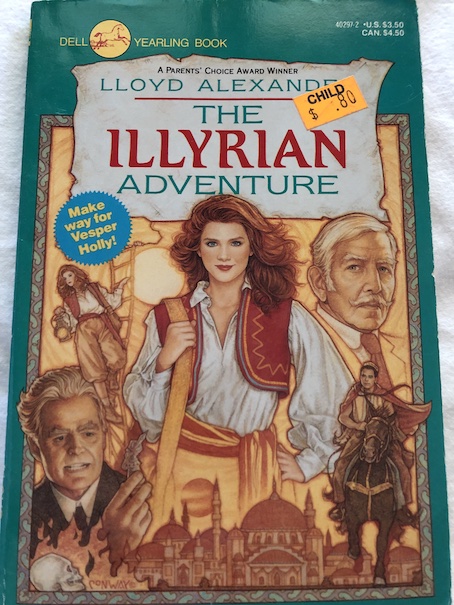
Of course, readers know that the Light will win, and when it does, Merriman says that there won’t be further battles between Dark and Light. Merriman and other Old Ones move on to another world, where they say they have work to do, although Will Stanton will remain as “the Watchman” to continue watching over the world. Merriman says that the two of them will see each other again someday. Merriman says that the future of this world is in the hands of the children and other people of the world, referencing man’s ability to destroy the world. This book, and the rest of the series, was written during the Cold War, when people were particularly afraid of the threat of nuclear weapons. It seems like the legends and prophecies are over. Bran remains in the present although his father, Arthur, invited him to the past because he has become part of the 20th century and is bound to his friends and adoptive father by affection.

I enjoyed all the references to old legends during the course of the story. The Lost Land is a legendary country off the coast of Wales. They don’t use the name Lyonesse, but I think that’s what they’re referring to. Accord to the book, people can still hear the bells of the lost city, a legend that’s been applied to other lost towns in legends, and a phenomena that has a scientific explanation, When Bran and Will go there, they meet a bard named Gwion (Taliesen).

The Grey King

The Dark is Rising Sequence

The Grey King by Susan Cooper, 1975.

This is the fourth book in The Dark is Rising Sequence, and it picks up not long after the previous book ends.

Will Stanton has been very ill with hepatitis, and the doctor ask advised his parents to send him somewhere to rest for a while and recover his strength. In the previous book, his sister Mary had gone to stay with relatives in Wales after she had the mumps, so his parents agree to send him there. Even after he recovers, Will has a nagging feeling that he’s forgotten something very important. What he’s forgotten are the clues that he and his friends discovered at the end of the previous book, but little by little, they come back to him.

Will calls his relatives Aunt Gem and Uncle David, but really, they’re distant cousins. On his way to stay with them on their farm, Will sees a mountain that locals call “the Grey King”, which begins bringing back Will’s memory of the clues to the next item of power that he and his friends are supposed to find. An encounter with a strange dog with silvery eyes brings back the rest of Will’s memory, reminding him that he is the youngest of the Old Ones and it is his mission to find a magical harp in Wales.

The owner of the dog is an albino boy named Bran, who surprisingly knows the clues that Will had been struggling to remember. Bran reveals that Merriman visited him before Will arrived, told him to keep an eye out for Will and help him, and taught him the first part of the clue rhyme as a show that he can be trusted. The boys talk about what the clues in the rhyme mean. Will is supposed to find the harp on “the Day of the Dead”, which Will thinks means Halloween and which is coming soon, but he’s confused because the rhyme also refers to the end of the year. Bran says that Halloween might have once been regarded as the time of the New Year (which is true, and I discussed it in the History section of my Halloween Ideas site), and the two of them discuss some old traditions and superstitions about Halloween.

On Halloween, Bran and Will go into the mountains, and Will’s knowledge and abilities are tested before they are given the harp. Yet, Will is not the one to play it because he doesn’t know how. Bran is the harper. He also seems to have a strange connection to one of the lords who guarded the harp in the mountains. On the way down, the boys have a frightening encounter with a fox who has been killing sheep in the area, but weirdly, nobody else else can see the fox but the boys. A disagreeable farmer shoots poor Bran’s brave dog because he thinks that the dog is the one killing the sheep, and Bran is inconsolable. (I hate books where the dog dies.)

However, their work is not yet done. Will has to use what he’s learned from Bran about playing the harp to wake the Sleepers, who will aid the Light in the upcoming battle against the Dark. Bran also comes to learn his true identity and that of his mother. Although he is not one of the Old Ones, Bran is special and will play a pivotal role in the battle between Light and Dark.

The book is a Newbery Medal winner. It is available to borrow and read for free online through Internet Archive (multiple copies).

My Reaction and Spoilers

Even though this book is the Newbery Medal winner in the series, I didn’t like it as well as the earlier books. It’s partly because the dog Cafall dies, and I always hate books where the dog dies. I love dogs, and also, I realize that it’s often a cheap way to give readers and emotional wrench, to kill off a beloved animal. Also, I missed the familiar characters from the earlier books. The Drew children are not in this story, and even Merriman doesn’t play much of a role. For most of the story, Will is alone, although he does make an important friend in Bran, whose past is more mysterious than most people know.

Although, Cafall also represents one of the innocent sacrifices in the name of the battle between good and evil. Bran is angry at Cafall’s death and says that neither he nor his dog were part of Will’s battle or quest, and it wasn’t fair for them to be dragged into it or for Cafall to be killed. He’s partly right, although he is actually much closer to the center of this battle than he knows. Another character in the book talks to Will about the apparent callousness of the Light for those who end up being sacrificed in the struggle. Will’s answer is that some things cannot be helped. They might want to protect everyone and make things work out well for everyone, but circumstances don’t always make it possible, and there are times when trying to save someone or make someone happy could cause something else to happen that would be worse for everyone. I’m not completely satisfied with that explanation because, in this particular instance, I don’t see why this sacrifice was necessary and I feel like it could have been avoided, like I felt that another tragedy in The Dark is Rising could have been avoided. I suppose the principle that avoiding one sort of bad thing could lead to something worse could be true, but I just don’t feel it in these stories.

I was more convinced and intrigued by the concept of people who aid the dark without knowing that they’re doing it. In the previous book in the series, the author addressed the idea of neutral parties in the struggle between good and evil, but this book introduces the idea of ignorant or deluded people who do bad things without realizing. In the story, they aren’t regarded as true agents of the Dark because they haven’t consciously joined the Dark side and don’t even know that there’s any Light/Dark struggle happening around them, but they are doing what the Dark wants them to do and hurting people and the cause of the Light either because they are being tricked and manipulated into doing it or because they have some other motive that allows them to do bad things because they don’t care as much about the concept of good and evil as much as accomplishing their own goal.

In this case, the unwitting helper of the dark is the farmer who shot Bran’s dog. He genuinely did think that the dog was killing his sheep, so he thought that he was just protecting his property by killing the dog. That could be seen as a good motive gone astray, but when Bran’s real history is revealed, it is also revealed that the farmer also has darker motives for his bad behavior that he has been trying to keep hidden. It’s not just about protecting his sheep but also his resentment against Bran and Bran’s father, so he enjoyed hurting them by killing their dog. The farmer’s resentment goes back to when Bran’s mother, Guinevere, brought him out of the past to be raised by his adoptive father in the 20th century. Bran’s real father is King Arthur, but by the time Bran was born, Guinevere had already betrayed Arthur and feared that he would reject his son because of what she did. She wanted Bran to grow up in a safe place, away from his parents’ struggles. At her request, Merlin (which is Merriman Lyon’s real identity), brought her forward in time to the 20th century to find a new home for Bran. Bran’s adoptive father is a good man, and Guinevere knew that her son would be safe with him. He loved her in return and wanted her to stay and marry him, but Guinevere knew she couldn’t stay, so she left secretly, leaving Bran behind. Her departure might have been hastened because the farmer was jealous of Bran’s adoptive father for having Guinevere. Although he didn’t know Guinevere’s true identity, she was a beautiful woman, and the farmer wanted her for himself. He apparently tried to attack her or maybe even force himself on her, and he was fought off by Bran’s adoptive father and a friend of his. Although the farmer is a married man, he still harbors possessive feelings about Bran’s absent mother and resentment toward the men who stopped him from taking her. By extension, he also resents Bran. In the end, he is driven mad by his obsessions and his manipulation by the forces of the Dark.

Greenwitch

The Dark is Rising Sequence

Greenwitch by Susan Cooper, 1974.

This is the third book in The Dark is Rising Sequence, and it brings together the two sets of characters who have already been established in the series: the three Drew children from the first book and Will Stanton and the Old Ones from the second book.

The story begins with the theft of the grail that the Drew children found in the first book with their Great-Uncle Merry, otherwise known as Merriman Lyon. The grail was stolen from the museum where it was being studied, and Merry wasn’t there because he was supposedly on an extended trip to Greece. However, when word of the theft spreads, Merry comes back to see the children. He is the only person other than the children who know that the thieves who took the grail were not ordinary thieves but agents of the Dark, the forces of evil. Merry say that he believes that they took the grail because it will lead them to something else that they’re seeking. He says that he will need the children’s help again and asks them to trust him. There will be danger, but he promises them protection. The children agree and accept Merry’s invitation to spend their holidays in Cornwall with him again.

Meanwhile, Will Stanton is bored because his older brothers and sister are off doing other things. Even though he is secretly one of the Old Ones and has great powers, he is also still the youngest in his family and feels left out of things that his older siblings are able to do. Then, a mysterious stranger arrives and introduces himself as Will’s Uncle Bill. Will was named after Bill, who is one of his father’s brothers and has been living in the United States for as long as Will can remember. Will’s parents are glad to see Bill, and Bill offers to take Will with him on a trip to Cornwall because a friend of his who is also staying there will have a couple of nephews about Will’s age staying with him. Will is eager to go, and his parents agree to let him.

Of course, the friend that Uncle Bill is talking about is Uncle Merry, and the nephews are Simon and Barney Drew, along with their sister Jane. At first, the Drew boys don’t like Will much because they think he’s going to interfere in their mission with their Uncle Merry, not knowing yet that Will has special powers and is directly involved in the fight against the Dark as their ally.

Shortly after they arrive in the village where the Drew children stayed in the first book, Will and Uncle Merry mention a pagan ceremony that is still being practiced in the area called the Greenwitch. Uncle Merry says that Jane may watch it, but not the boys because only women are allowed to attend the ritual. However, the dog Rufus that the children befriended on their last visit is kidnapped, and they are given the warning that the captain who owns him had better stay away from the Greenwitch if he wants him back. Unbeknownst to the children, the captain, who is the man who owns the house where they stayed last time, is another of the Old Ones.

Still, Mrs. Penhallow, the wife of a fisherman they met in the first book, invites Jane to come with her to see the Greenwitch being made. Jane doesn’t know what that means at first, but she goes to the ceremony anyway. Jane watches the local women weaving branches together to make a strange figure. It makes Jane uneasy because it doesn’t seem human but it has a kind of power. The women tell her that few people can sense its power but that people make wishes on it before tossing the Greenwitch into the sea for luck. Jane is given the opportunity to make a wish herself, and she finds herself wishing that the Greenwitch could be happy because she senses a loneliness about the figure. She feels a little silly for that wish after she realizes that she could have wished to find the grail again instead. One of the women there approves of the sentiment of Jane’s wish although she notes that it’s also a dangerous one because it’s difficult to know what might make someone happy. Some people find happiness in dark or dangerous things, but in this case, it might be a very good wish.

However, the forces of darkness are also targeting Barney. Barney has recently been developing artistic skills, like the children’s mother, and an artist who serves the Dark steals one of his drawings to gain control over him. The Dark needs Barney, at least for a short period, because he can do something that none of them can; Barney can look into the grail and tell them what he sees.

The book is available to borrow and read for free online through Internet Archive (multiple copies).

My Reaction

There are even more pagan references in this story than in the previous two. The Greenwitch is a fictional ceremony, but it seems like it’s based on or inspired by a kind of folk magic. It might be that the local women who make the Greenwitch are meant to represent a coven performing magic. I’m not going to go too deep into the history pre-Christian traditions because this isn’t a real ritual that I can trace and the history of neo-paganism is complicated. If you’re curious, I recommend watching this documentary about the life of Gerald Gardner, the founder of Wicca. I don’t really believe in Wicca myself, but I think Gerald Gardner is a delightful eccentric and fun to hear about. (Just don’t show the documentary to kids without watching it yourself. There are a couple of things in there that night not be suitable for young kids.)

It’s not all focused on the folklore of the British Isles, though. At one point in the story, the characters seek the help of Tethys, a figure from Greek mythology. The Greenwitch is meant as a tribute to her, so she has power over it, and the characters need something from the Greenwitch. This story introduces the idea that, although the stories are about the struggle between good and evil, Light and Dark, there are also some powerful, ancient forces that are not part of this struggle, including Tethys and the Greenwitch. These forces are neutral, and their neutrality requires that they neither help nor hinder either side in the struggle. Tethys and the Greewitch are among those neutral forces.

Part of this story also involves characters doing things they shouldn’t because they don’t have all of the information they really need to make better decisions. Ignorance and half-knowledge are annoying parts of stories like this, plot devices to allow characters to get into dangerous situations. It all works out for the best in the end, though.