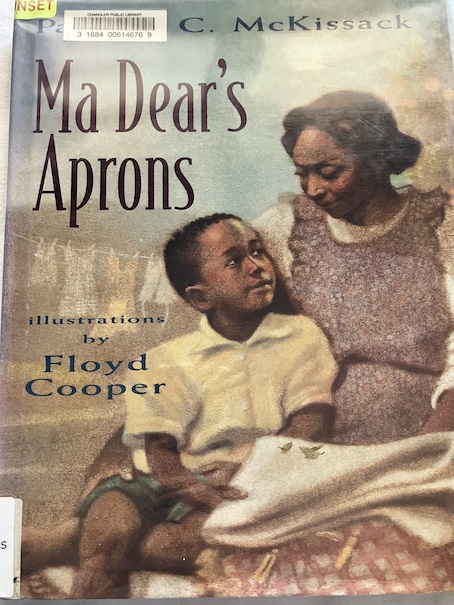
Ma Dear’s Aprons by Patricia C. McKissack, illustrations by Floyd Cooper, 1997.
Young David Earl’s mother, called Ma Dear, has a different apron for every day of the week, and David can always tell what day it is and what the task of the day is by which one his mother is wearing.
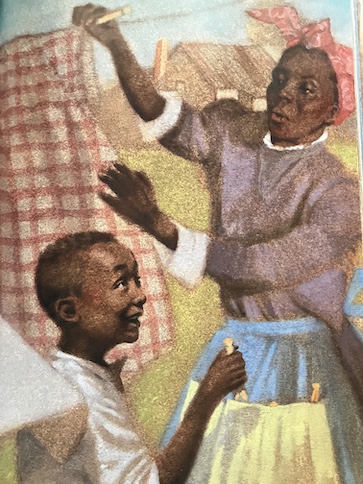
On Monday, she likes to wear her blue apron because that’s wash day, and she keeps clothespins in the pocket of that apron. After she’s done with the laundry, she has time to talk to David Earl, and she tells him about his father, who died as a soldier.
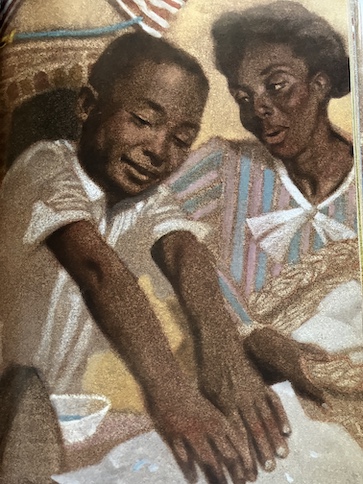
On Tuesday, she wears her yellow apron, when she does her ironing. On Wednesday, they deliver the finished laundry to their clients, and Ma Dear gives David Earl a treat from the hidden “treasure pocket” in her green apron.
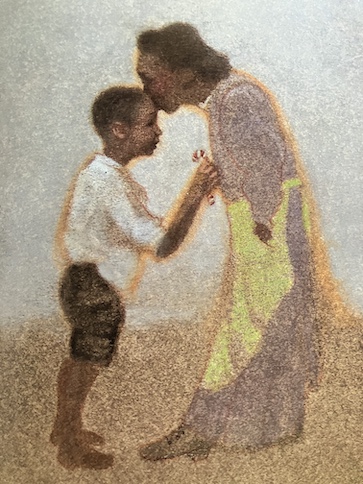
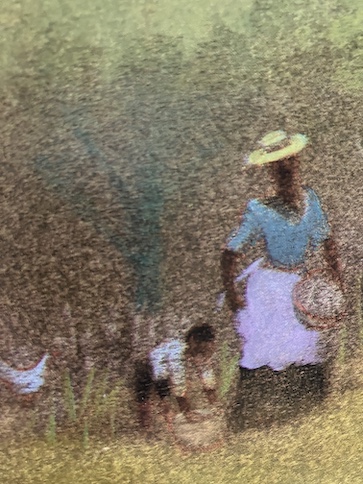
On Thursday, Ma Dear wears her pink apron, and they pick vegetables and visit people who are sick or elderly at their homes. On Friday, Ma Dear cleans the house of another family, so she wears her brown apron. David Earl comes along, and she sings to him while she works. Saturday is for baking pies to sell, so she wears her flowered apron. She also gives David Earl a bath on Saturdays.
The best day of all, though, is Sunday. Ma Dear doesn’t work on Sunday, so she doesn’t wear an apron
My Reaction
The book starts with an author’s note, explaining that the characters in this story are based on her own family. “Ma Dear” was the nickname of her great-grandmother, Leanna, and Leanna was a single mother in Alabama during the early 1900s, who earned money by doing laundry, cooking, and cleaning for other people, like Ma Dear in the story. The story is about the family stories told to Patricia C. McKissack about her great-grandmother and how she made time for her children, even when she was tired from working hard. The aprons in the story are like one that Patricia McKissack inherited that used to belong to Leanna.
The author’s note, which I would have probably ignored when I was kid because I was too eager to get into the story, made this story better for me. I liked the explanation that this was a family story about a real person. The aprons are a device to help readers connect to memories of the real Ma Dear, similar to how the girls in Aunt Flossie’s Hats (And Crab Cakes Later) hear family stories and memories because they’re associated with the hats in their aunt’s collection. It’s a sweet way to share family memories.
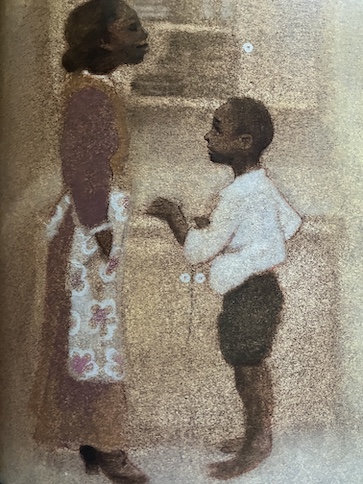
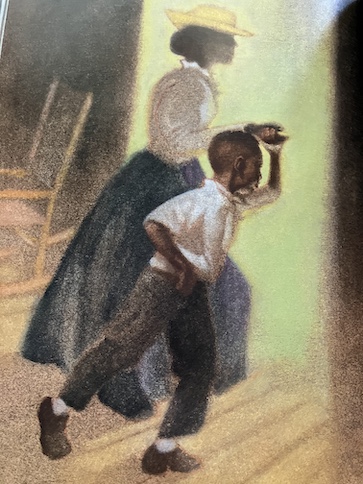
I also like the soft, old-fashioned pictures that accompany the story. Their softness and sometimes slightly blurred quality help create the mood of memories.
 Jestress's Forgotten Books and Stories