The Castle in the Attic

CastleAtticThe Castle in the Attic by Elizabeth Winthrop, 1985.

Ten-year-old William’s life is being turned upside down.  Mrs. Phillips, his nanny, is leaving for good!  Mrs. Phillips has lived with William’s family and helped to take care of William ever since he was born. Both of his parents work, so William spends most of his time with Mrs. Phillips after school. She fixes him his snacks, takes him to his gymnastics lessons, spots for him as he practices his routine, and reads stories about King Arthur with him. However, now that William is ten years old, Mrs. Phillips thinks that she would like to go live with her brother in England, which is where she is from. William is upset because he can’t imagine life without Mrs. Phillips. Mrs. Phillips tells him that he will be fine without her and that his parents will start spending more time with him after she leaves. William tries everything he can think of to get her to stay, but she is determined that it’s time for her to go.

As a leaving present, Mrs. Phillips gives him a toy castle that has been in her family for generations, along with a little lead figure known as the Silver Knight. Still, William is determined to find a way to keep Mrs. Phillips from leaving.  Then, he discovers that the toy castle is magic! When the little knight comes to life and gives him a magic token that can make people small, William thinks he’s found the way he’s been looking for. With Mrs. Phillip’s impending departure and his fears of losing her, William suddenly realizes that he can use the magic coin to keep Mrs. Phillips with him.  Before she can leave, he shrinks her and puts her in the castle with the knight.

Of course, turning his nanny small and keeping her inside the toy castle was unethical, as Mrs. Phillips and the knight point out, but William’s mistake proves to be only the beginning of a fantastic journey that will fulfill a legend, free the knight’s kingdom from the reign of an evil wizard, and give William the confidence he’s been looking for.

Over the drawbridge of the castle is a poem about the beginning of a quest. Mrs. Phillips had said that there was a legend about the little knight, and when he comes alive, he tells William that his name is Sir Simon and that he was turned to lead by an evil wizard who has taken over his kingdom. The poem is the key to defeating the wizard, and the little token is really only half of one that the wizard was wearing around his neck. When William turns Mrs. Phillips small, he cannot reverse the spell because he lacks the other half of the amulet. To get it, he must become small himself and fulfill the poem by crossing the drawbridge as Sir Simon’s squire.  The two of them set out together to defeat the wizard and retrieve the other half of the token. Along the way, they become separated, and William must continue on to the wizard’s castle and finish the quest by himself. William has an inner strength that he doesn’t fully appreciate at first, and he can use it to defeat the evil wizard!

There is a sequel to this book called The Battle for the Castle.

My Reaction

I liked this story when I was a kid, and it’s a good coming-of-age story.  The sequel is also a coming-of-age story, but in a different way.  This book is about William coming to a better understanding of what kind of person he is and what he’s really capable of doing.  He can do more and handle more than he thinks he can.  In the end, although William is still a little sad at saying goodbye to Mrs. Philips when she leaves, he feels a little better about her going because he knows that he can take care of himself now, thanks to his magical adventures. Mrs. Phillips tells him that he always had what he needed inside himself but that he just didn’t believe it before.

The next book focuses on what it really means to be a man instead of a boy.  As William and his best friend grow up and are under social pressure from other boys to do a certain stunt in order to prove that they’re really grown-up, William and his friend set out on a magical adventure that teaches them that there are more ways of becoming a man than one.

My Crazy Cousin Courtney

CousinCourtneyMy Crazy Cousin Courtney by Judi Miller, 1993.

Cathy Bushwick usually spends the summer at camp, but this summer, her mother is having her stay in the city because her cousin Courtney is coming to visit them in New York.  Cathy and Courtney are actually second cousins because their mothers are first cousins.  They’re the same age (thirteen) and met once when they were five, but neither of them remembers it.  All that Cathy really knows about Courtney before she arrives is that she’s somewhat neurotic (Courtney is troubled by anxiety and panic attacks) and that the reason she’s coming to visit is that her parents are thinking of getting a divorce and need time alone to discuss it.

Cathy understands what it’s like to live with a single parent.  Her parents are divorced, and her father went to California years ago to become an actor.  She hasn’t heard from him since.  Her mother used to be an actress, but with Cathy to take care of, she became a theatrical agent for animals instead (she finds animals for people to use in commercials).  So, when Cathy hears that Courtney will be visiting from Beverly Hills, she’s very excited.  At first, she hopes that she and Courtney will be like sisters and that Courtney might have even heard of her father in California.

Cathy’s illusions are shattered almost immediately.  Courtney not only hasn’t heard of her father but she’s nothing like Cathy imagined.  When she and her mother go to meet her at the airport, she’s wearing heart-shaped sunglasses and a hot pink shirt that says, “KISS ME QUICK,” and she has a pile of luggage.  She’s used to having money and getting the best of everything, and she’s immediately disappointed with the modest apartment where Cathy and her mother live.  When she learns that they don’t even have a pool, she gets upset and wants to go home.  But, it’s no use.  She’s stuck there for the summer.  And, they’re stuck with her.

But, things don’t turn out to be as bad as Cathy fears they’re going to be.  In some ways, they’re worse.  Once Courtney reconciles herself to spending the summer in New York, she has some very specific ideas about things that she’d like to do, and a lot of them end up getting the girls in trouble.  Shy, sensible Cathy finds herself getting locked in Tiffany’s after closing time because Courtney thought she saw a spy stealing their designs, rescuing Courtney from the dolphin pool at the aquarium, and lots of other things that she never thought she’d find herself doing.  Then, one day, the girls think they’ve witnessed a murder.  What are they going to do?  Is Cathy going to survive the summer with her crazy cousin Courtney?

This book is the first in a series about Cathy and Courtney.  Courtney may be a bit wild, but she’s not as crazy as Cathy thinks.  Over the course of the summer, the two become friends, and they learn quite a few things about each other and about themselves.  By the time Courtney has to go home, a little of each of them has rubbed off on the other, and neither will be quite the same again.

The book is available online through Internet Archive.

More Stories from Grandma’s Attic

This is the second book in the Grandma’s Attic Series (I’ve only read two of them, although there are more in the series than that).  Like the first one, grown-up Mabel shares stories from her childhood with her granddaughter: short, humorous stories about life on a farm during the 1800s, often with a moral to them (the stories typically have Christian themes).  The stories are entertaining, thoughtful, and mention interesting details about life in the past.  Watch what happens when Mabel and her friend try to play “mother” to a piglet!  Also, is it possible that the doll Mabel found in the mud is actually . . . alive?

This book is available to borrow and read for free online through Internet Archive.

The Nuisance in Ma’s Kitchen

Mabel helps to nurse an ailing baby goat, but when the goat is better, she has trouble accepting that it’s time for it to return to the barn with the other goats.

Grandma’s Sampler

Mabel learns that it’s better to be careful and to fix mistakes early when her over-confidence jeopardizes her chances of winning a contest with her sampler.

Mrs. Carter’s Fright

Mabel and Sarah Jane love babies!  They admire Mrs. Carter’s new baby so much when she comes to visit that they’re inspired to pick a “baby” of their own from a litter of piglets.  But, when they borrow Mrs. Carter’s baby carriage for their “baby,” they accidentally give everyone a fright!

When Grandma Needed Prayer

Young Mabel questions the need to pray on a busy morning, but when she and her friend get lost later, they come to understand the importance of being able to stop and pray.

The Stranger

A stranger comes to the farm and visits with them one day.  He seems to know them, and doesn’t introduce himself.  While he helps them with chores and spends a pleasant evening with them, no one is willing to admit that they don’t know who the man is.  Who is the mysterious stranger?

The Big Snow Storm

When Mabel’s Ma is sick during a big snow storm, the family doesn’t know how they’ll manage to get help for her.  But, ironically, the storm actually brings help to them.

Grandma and the Slate

Mabel’s brother, Roy, gets a new slate to write on for school.  Mabel admires it and wants to try writing on it herself, but Roy teases her that she’s just too young.  Then, when Roy makes a bargain with Mabel to give her the slate if she does something for him, he ends up getting more than he bargained for.

A Pig in a Poke

Grandma Mabel explains to her granddaughter that the word “poke” used to mean a bag or sack.  If someone bought a pig in a poke, it meant that they bought something sight unseen, not knowing exactly what they were going to get or what quality it would be. Young Mabel once saw her brothers do that the day they bought a trunk that had been locked for years because the key was lost.  Will their trunk contain a fabulous treasure or just a disappointment?

Grandma’s Day Off

Young Mabel persuades her mother to let her have a day with no chores and finds out that a life of leisure isn’t all it’s cracked up to be.

How News Spreads

When Mabel’s family hears that the girl Sarah Jane’s brother wants to marry is buying cloth for a wedding dress, Mabel and Sarah Jane get the wrong idea.

Charlotte

Mabel finds a doll lying in a mud puddle and brings it home to play with.  But, Charlotte turns out to be an unusual doll.  Wait, did she just move?!

The Slate Pencil

Mabel finds a lost slate pencil at school. Even though she knows who lost it, it’s a nice pencil, and she’s tempted to keep it for herself.

What Shall We Write About?

Mabel and Sarah Jane want to write exciting stories like the ones in the magazines, but they don’t have anything interesting to write about.  Then, Sarah Jane finds a diary that her cousin Laura left behind when she visited.  Could it be a source of story material?

The Cover-Up

Roy is punished for teasing Mabel by having to wash the dishes (since he told her that she was such a baby and couldn’t do it right).  He tries to hurry through the chore and ends up breaking one of the plates.  Is there any way he can keep everyone from finding out?

The Haircut

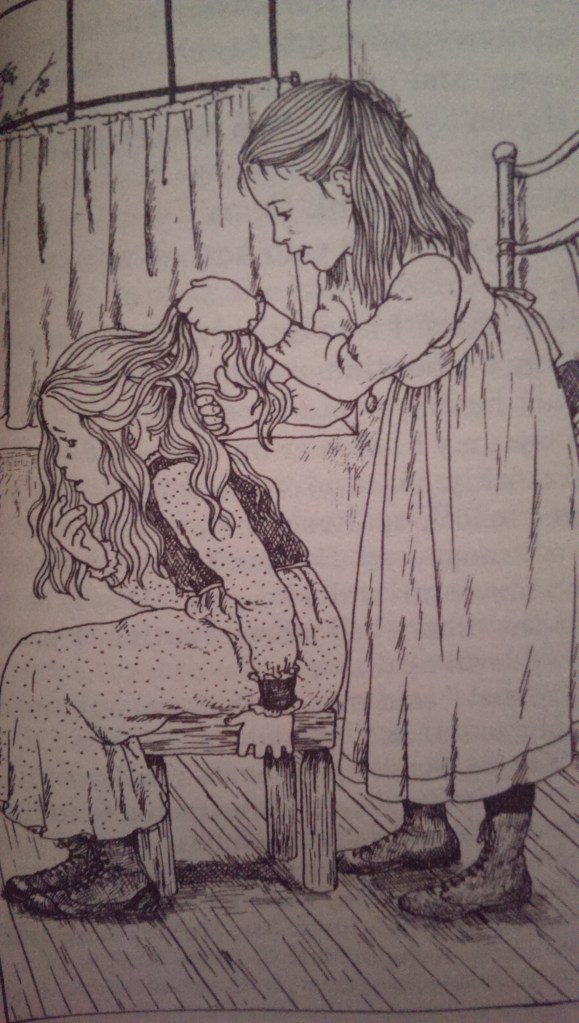
Mabel is honored when her friend, Sarah Jane, decides that she’d like to carry a lock of her hair in her new locket.  Unfortunately, Sarah Jane accidentally cuts off more of Mabel’s hair than she means to.  What will Mabel’s mother say when she sees it?  Or is there some way that they can cover it up?

Grandma Makes a Friend

Mabel resents the new girl in class, Alice, because the teacher gives Alice Mabel’s seat next to her best friend and Alice always seems to have nicer clothes to wear and everything.  But, hating people isn’t a healthy way to live your life, and Mabel’s mother convinces her to give Alice a second chance to be her friend.

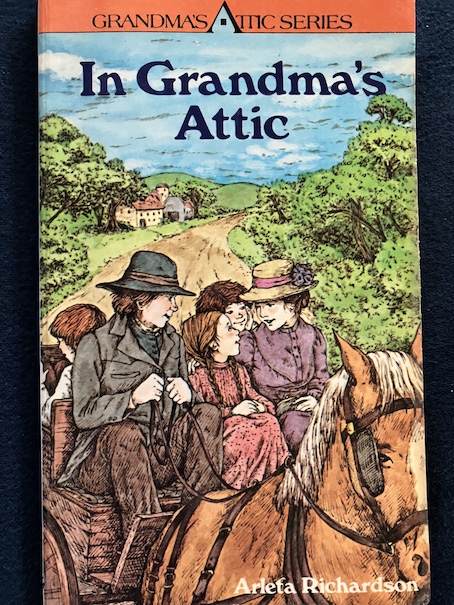
In Grandma’s Attic

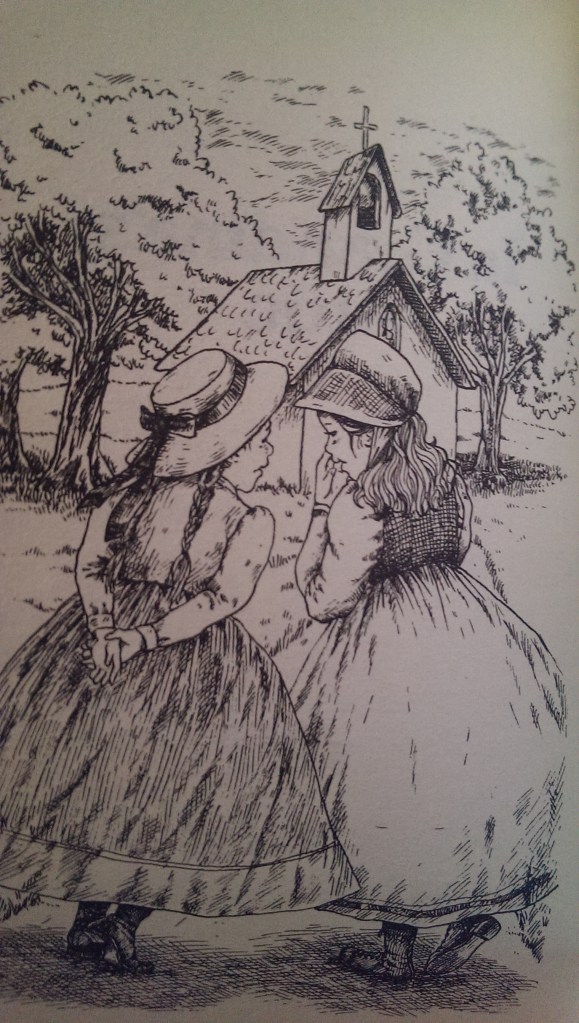
The books in the Grandma’s Attic Series are collections of short stories (although I think later books in the series are novel-length stories) told by a grandmother to her granddaughter about life when she was young.  They typically begin with the young granddaughter (unnamed in the stories) asking her grandmother, Mabel, about an object in her house, and Mabel then tells the story about it.  These are usually short, slice-of-life family stories with a humorous twist, often with a moral (the stories generally have Christian/Biblical themes).  The inspiration for the stories was the author’s own grandmother, who grew up on a farm in Michigan in the 1800s.  I’m kind of sentimental about them because the books I have were presents from my own grandmother, who also grew up on a farm.

This series is good for discussing aspects of life in the 1800s. They include little details about daily life like the types of chores children did, how they got to school and what lessons were like, and other little household details like warming clothes on a wood-burning stove and throwing water from washing dishes outside because they didn’t have a modern sink.  They’re also good for talking about morals or making ethical decisions (it’s not just Christian themes, Mabel also talks about more general issues of growing up, like honesty, responsibility, and the awkward mistakes children make when they try to act more grown-up than they really are) or just for a good laugh because some of the stories are really funny (learn the perils of attempting to sit down in a hoop skirt without really knowing how)!

In Grandma’s Attic is the first book in the series and it is available to read for free online through Internet Archive.

Pride Goes Before a Fall

Mabel and her best friend, Sarah Jane, badly want to wear hoop skirts like the fashionable young ladies and have everyone admire them, even though their mothers say they are really too young. When they get the chance to wear them in front of everyone, they make a mistake and learn the lesson in the title of the story.

When God Knew Best

Mabel talks about a childhood disappointment that turned out well in the end because she was saved from disaster.  Sometimes disappointments are blessings in disguise.

The Red Bonnet

A lost bonnet gives everyone the wrong impression, and a search begins for a not-so-missing child.

Grandpa’s Apron

The other guys teased him when he asked Mabel to make him a work apron with pockets because aprons were supposed to be women’s clothing, but his comes in handy in some unusual ways.

Ma’s Busy Day

Being a mother is hard work, and when a hectic day leaves Mabel’s Ma no time to change her aprons when one after the other gets dirty, the layers of aprons she has on at the end of the day become a record of the day’s events.

Grandma’s Mistake

Mabel misunderstands something her mother says, and it causes her problems at school.

The Button Basket

A strange Indian (Native American) comes to the farm and trades a beautiful basket for food.  Unfortunately, they can’t speak the same language, so they never learn the reason why, and they marvel over the mystery of the basket’s origins.

The Little Gray Shoes

Mabel learns that vanity comes at a price when she insists that she wants a beautiful pair of gray shoes that don’t fit her properly.

Nellie and the Buttons

Why does their horse, Nellie, keep trying to bite the buttons on Mabel’s new coat? Nellie might be smarter than they think.

The Pearl Buttons

When Mabel has trouble fastening the buttons on her new dress, she finds a creative solution that causes her some embarrassment.

Nellie’s Trips to Town

When Mabel’s family makes a trip to town, their horse and buggy suddenly disappear.  Then, as soon as they get a ride from a friend, they are suddenly returned.  Why?

The New Pump

Young Mabel learns the hard way why it’s a bad idea to lick cold metal in the winter.

You Can’t Always Believe

When strange things start happening around the farm, Pa blames one of Mabel’s brothers but learns that it isn’t a good idea to be too quick to blame.

The Old Door

Mabel’s brother plays a trick that causes some embarrassment for their mother.

Pa and the Dishwater

Mabel’s fear of the dark makes it difficult for her to throw the dishwater outside after they wash the supper dishes.  When she thinks she’s found a shortcut for getting rid of the dishwater, it gets her into trouble.

The Dishes

Mabel tries to put off her chores so that she can play with her friend, but the guilt she feels takes the fun out of it.

Ma’s Birthday Cake

Mabel is so pleased to be making a cake for her mother on her birthday, but has she gotten the recipe right?

Grandma’s Warm Clothes

Mabel and her brothers used to warm their clothes by the stove on cold winter mornings, but Mabel’s attempt to make it easier on herself and her forgetfulness have unintended consequences.

Grandma’s Prayer

Mabel thinks that a selfish prayer she made may have brought bad luck to her family.

Molly Blue

Molly Blue the cow always gives Mabel trouble.  Her family thinks it’s funny until they see how much Mabel needs their help.

Grandma and the Gun

Gun safety is a big issue in modern times, and it was back then, too.  Mabel is a curious child and makes a mistake that almost has very serious consequences, but she learns an important lesson.

What Grandma Lost

When Mabel’s brothers are sick and she gets to take the family’s horse and buggy to school by herself (a special privilege for a child of her time), she decides to show off a little.  But, in her attempt to look more grown-up and responsible, she ends up proving that she’s not as grown-up and responsible as she thought.

What Did You Expect?

Not exactly a full story, but Mabel shows her granddaughter what a miracle looks like because she believes it can happen.

Just Tell Me When We’re Dead!

JustTellMeJust Tell Me When We’re Dead! by Eth Clifford, 1983.

This is another book in the Mary Rose and Jo-Beth series.

Mary Rose and Jo-Beth are visiting their Grandma Post with their father while their grandmother is getting ready to go into the hospital for an operation. Their cousin Jeffrey, an orphan who lives with their grandmother, is supposed to come and stay with them until their grandmother is better, but he doesn’t want to go.

Jeff has never really gotten over the hurt from when his parents died. They used to travel a lot, but they would never take him along because he was too young. Then, one day, they were killed on one of their trips, which is why Jeff now lives with his grandmother. Now that his grandmother is going to the hospital, Jeff is afraid that she will die, too, and unable to face that, he runs away to be on his own.

JustTellMePic2The first place he goes is to an island in the middle of the lake near his house. The island has campgrounds and an amusement park, which is now closed for the season. Mary Rose and Jo-Beth, realizing where Jeff has gone, follow him there. But, the children are not alone on the island. When Jeff is captured by two criminals who are looking for loot that they stashed on the island years before, he has to keep his wits about him to find a way to summon help. Meanwhile, Mary Rose and Jo-Beth have no idea what they’ve just walked into.

At the end of the adventure, Mary Rose, Jo-Beth, and their father help Jeff to make peace with the loss of his parents and to understand that, even though unexpected and scary things can happen in life, his parents never meant to leave him. They loved him, and his grandmother and other relatives also share his sense of loss.

The book is available to borrow and read for free online through Internet Archive.

Be a Perfect Person in Just Three Days!

PerfectPersonBe a Perfect Person in Just Three Days! by Stephen Manes, 1982.
“Some people want to be astronauts or ballet dancers or plumbers.  Milo Crinkley wanted to be perfect.”
So begins the story of Milo’s journey toward perfection.”Be a Perfect Person in Just Three Days!”  Milo can’t resist trying it when the book by that title falls off the shelf at the library, hitting him on the head when he’s looking for a scary monster book.  The picture of the author, Dr. K. Pinkerton Silverfish, looks a little strange, but Milo figures that it’s worth a try.  After all, the book practically jumped off the shelves at him, begging to be read.  Also, when Milo starts reading the pages, Dr. Silverfish practically seems to be reading his mind, even guessing that he’d try peeking at the end of the book to see how it ends.  (“Didn’t I tell you not to look at the last page of this book? Do you want to become perfect or don’t you?”)PerfectPersonBroccoli
But, Dr. Silverfish’s three-day program isn’t anything like Milo could have imagined.  Could wearing a stalk of broccoli around his neck for an entire day really be a lesson in perfection?  Or skipping all meals the next day?  Or drinking weak tea?  Dr. Silverfish is a bright man, and there are lessons to be learned, but as to whether or not Milo becomes perfect . . . don’t skip to the last page.

There is also a movie version of this book, but the last lesson is different in the movie version, giving the story a slightly different twist.  You can see a shortened version of this movie on Internet Archive. In a way, I kind of like the movie’s twist a little better than the book’s ending because it involves the reader doing something that he never thought that he could do.  The final lesson of the movie was that, while no one is ever perfect, people can do many things that they never thought they could do, which can give them more confidence.  The book focuses more on the boring nature of perfection.  Both of the movie and the book do have the same basic theme: that there may be other options in life that are even better than perfection.

The Dragon Charmer

DragonCharmerThe Dragon Charmer by Douglas Hill, 1997.

This is a great fantasy story about a girl who learns to face her fears and persevere in spite of them. It has a good moral and is encouraging to anyone who failed at something but wanted to try again.

Elynne Danneby is afraid of dragons, which is a shame because her family makes its living by dragon charming. Every year, the dragons stop by her family’s farm on their migratory path, and Elynne’s father puts on a show for people who come to see the dragons. By playing a special tune on his pipes, Dan Danneby can put the dragons into a trance and safely walk among them. Only certain people have the ability to charm dragons. Elynne possesses that talent, but she has been unable to use it since she made a mistake while trying to charm dragons when she was a small child. They tried to attack her, and her father had to save her from them. Ever since, the dragons have terrified Elynne, but she is still fascinated by them and desperately wants to conquer her fear in order to charm them like her father does.

DragonCharmerPicThen, one day, a rare crimson dragon comes to the farm and lays an egg. It is extremely uncommon to see a dragon’s nest or a baby dragon, and Dan is excited about trying to charm the baby after the egg hatches. However, Dan’s assistant is greedy and decides to steal the egg and sell it. Elynne overheard him talk about his plans before the egg was stolen, but because she wasn’t sure of what she heard, she didn’t tell anyone. Elynne feels guilty about not preventing the theft of the egg, and in spite of her fear, she is determined to get it back. In the process, she not only conquers her fear but learns about a talent that she never realized she had.
The book is full of black-and-white drawings in a sort of cross-hatch style.

The book is available to borrow and read for free online through Internet Archive.

The Plain Princess

The Plain Princess by Phyllis McGinley, 1945.

I would dearly love to see this book in print again!  It’s a charming modern fairy tale about a young princess who learns what beauty and happiness really mean.

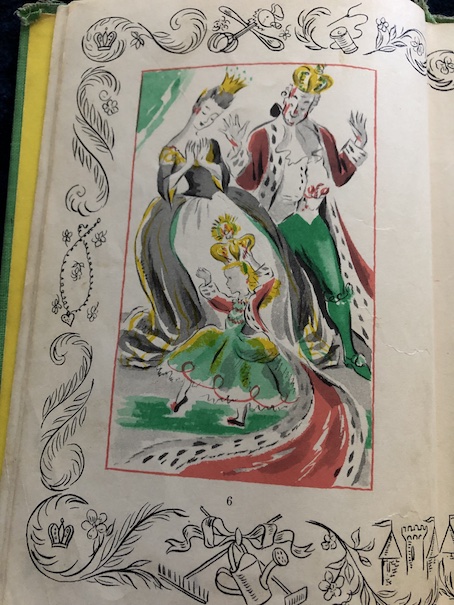
Esmeralda is the only child of the king and queen, and she has just about everything that a girl could want. The author paints a pretty picture of Esmeralda’s charmed life at the castle and all of the beautiful things she has.

However, Esmeralda has one serious problem: she is plain. In her kingdom, in order for a girl to be considered beautiful, her nose must turn down, her mouth must turn up, and her eyes must have a twinkle in them. Esmeralda’s appearance is exactly the opposite. It is a serious problem because her plainness causes people to lose respect for her, and the prince that she is betrothed to refuses to take much of an interest in her.

Although her parents consult the finest physicians and wizards available, none of them can provide any solutions for Esmeralda’s condition. It is only after the king places an advertisement in the newspaper that a widow, Dame Goodwit, with five daughters of her own comes to the castle and offers a solution. However, she insists that Esmeralda must come and live with her family for nine months. At first, Esmeralda is distressed at leaving her home and living in much simpler circumstances that she is accustomed to, but the reasons soon become as plain as the princess herself.

As Esmeralda interacts with and becomes friends with Dame Goodwit’s daughters, Annabelle, Christabelle, Dulcibelle, Floribelle, and Echo, she comes to see herself and her old life at the castle differently.  At Dame Goodwit’s, she is expected to take care of herself and her belongings by herself, for the first time in her life.  She is given chores to do and becomes responsible for herself in ways that she never was before.  She also comes to see that, even though Dame Goodwit’s daughters are not princesses, in many ways, they are more knowledgeable and accomplished than she is, able to do many things that Esmeralda has never even tried before.  Little by little, Esmeralda learns and tries new things, even coming to enjoy her time with the family and becoming especially fond of little Echo, the youngest girl.  Her new experiences change her, her behavior, her attitudes, and eventually, even the way she looks.

The book is available to borrow and read for free online through Internet Archive.

My Reaction

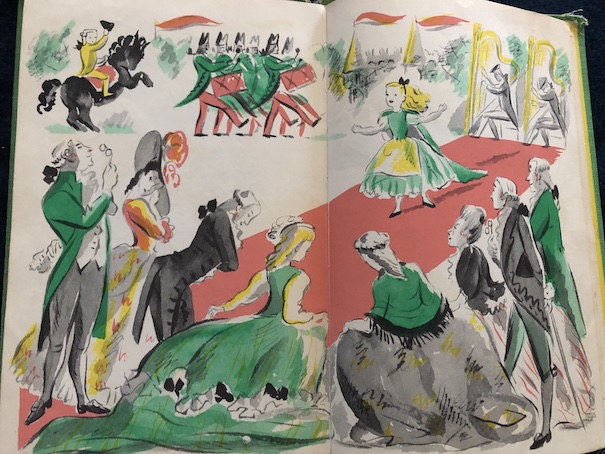
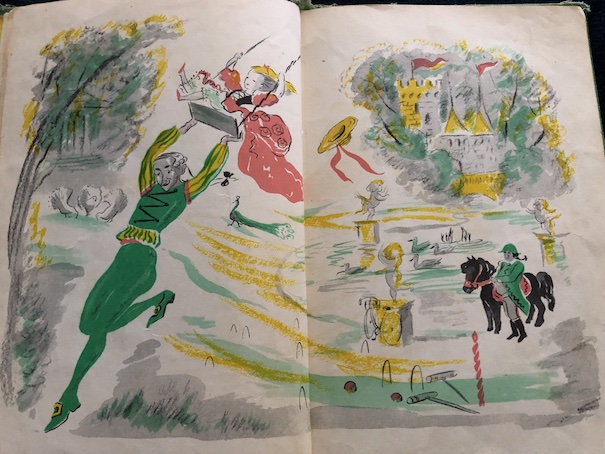
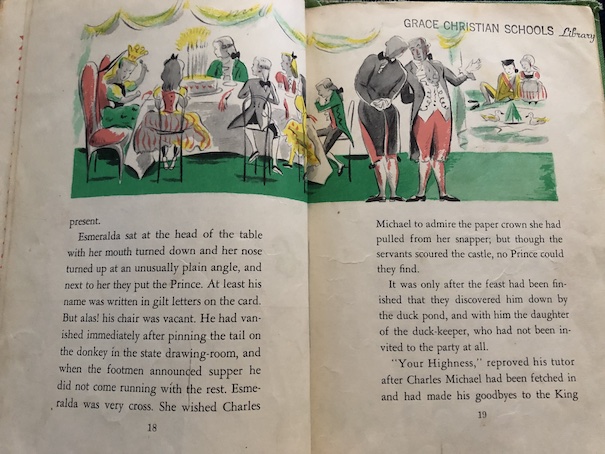
In spite of the fairy tale atmosphere, there isn’t really any magic in the story, as the widow herself points out. The real magic of the story is in the lessons that Esmeralda learns: that beauty and change come from within and that the way we see ourselves and those around us is important. For those who might be concerned at the emphasis on “beauty” and “plainness”, it soon becomes apparent that the outward signs of beauty really stand for positive character traits: humility, pride in one’s own talents and accomplishments, and unselfish caring for other people. The book also has some very pretty illustrations, some of which are wide scenes taking up two pages. It’s a beautiful book and a beautiful story for any young girl.

I don’t think that the book was ever made into a movie, but there are multiple versions that are stage plays (the link is to a video clip from a stage version of the story), including some that are musical.  I have seen a script for one of them that has added religious themes that weren’t in the original book, but the site has since been removed.  I’m sure that the script still exists, I’m just not sure where to find it now.  Some of the narrator’s and characters’ dialog was taken directly from the original book, but the religious parts were added.  As I recall, it implied that the princess’s personality changes came through the grace of God or developed as her religious side also developed, but I can’t remember now exactly how they said it.  I think it may have included some Biblical quotes related to the personality traits the princess acquires.  At one point, it was the only script that I could find available for free online.  There are other play versions that are available for purchase elsewhere, such as Dramatic Publishing and Steele Spring Stage Rights.