Old Black Witch

OldBlackWitch

Old Black Witch by Wende and Harry Devlin, 1963.

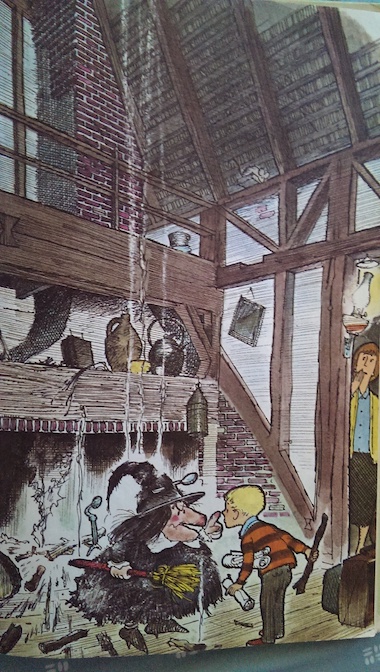
OldWitchChimneyA boy called Nicky and his mother are looking for a new place to live somewhere in New England.  The mother wants to buy an old cottage with the idea of turning it into a tea room.  At first, they have trouble finding a place, but finally they buy an old house that badly needs fixing up, not knowing that there is an old witch living there.

The witch (whom they call Old Black Witch, since she’s dressed all in black and sooty and doesn’t seem to have any other name) has been sleeping in the chimney of the house for about a hundred years, and they wake her the first time they try to start a fire in the fireplace.

The witch is furious to discover that the house has new owners and worried about where she’s going to live because she needs an old house to haunt.  Nicky and his mother invite her to stay and live in the attic, which has enough dust and cobwebs to satisfy her tastes, while they clean up the lower part of the house for the tearoom.

The locals have heard stories about the house being haunted, but the nice tearoom soon becomes popular with ladies in the area, especially after Old Black Witch decides to help out Nicky’s mother in the kitchen.  Old Black Witch’s blueberry pancakes are wonderful and win many fans for the tearoom.

Then, one night, a couple of burglars break in.  Since Old Black Witch is kind of evil herself, she can’t really fault them for wanting to rob the place . . . until she suddenly realizes that they’re stealing from her, too, and uses her magic to fix the burglars for good and give herself the pet toads that she’s been wanting.

This book is available to borrow and read for free online through Internet Archive.

OldWitchToads

My Reaction

One of the things that I like about this story, which was a favorite of mine when I was a kid, is that Old Black Witch isn’t particularly evil although she isn’t too nice, either.  She’s as bad and disagreeable as a cranky old witch who’s lived in a chimney for over 100 years ought to be, but not so bad that she can’t make some new friends and help them out once in a while.  Friendly enough for the kids, but not too sweet to be a real witch.  It’s part of a short series, although I haven’t managed to find any of the other books yet.  Some of the pictures are in full color and some are in black and white.  Don’t ask me why she has a spoon in her hat because I’ve never been completely sure, either.  Somehow, on her, it looks good.

The back cover of the book has the recipe for the blueberry pancakes.

OldWitchPancakeRecipe

There was a short film version of this story from 1969 called Winter of the Witch.  It follows the book fairly well, but with some variations (there were no burglars).  In the film, the pancakes have the power to make people happy, and that’s what gives Nicky’s mother the inspiration to open a pancake parlor in their house.  The witch finds a new sense of purpose, although she still plans on going back to her old, wicked ways once the world is happy enough to need a good, old-fashioned scare.  I don’t think that it was ever released on dvd, but it is possible to see it on YouTube and Internet Archive.

Journeyman Wizard

JourneymanWizardJourneyman Wizard by Mary Frances Zambreno, 1994.

This book is the sequel to A Plague of Sorcerers.

Jermyn Graves has finished his apprenticeship and is ready to move onto his Journeyman studies.  As a Spellmaker, an especially rare type of wizard, he really needs to study with a Master Spellmaker, and for years, there has only been one in the Wizard’s Guild: Lady Jean Allons.  Jermyn’s current teacher, Theoretician William Eschar, once studied under her himself.

Mistress Allons is a formidable old woman, and Jermyn is nervous about going to live with her and completing the next part of his training. Master Eschar says that she is strict but an excellent teacher, and he has fond memories of her from his own youth.  However, much has changed for Mistress Allons since those days.

Mistress Allons lives in her manor house in the small town of Land’s End with her widower son-in-law, Duncan, and her granddaughter, Brianne, who is only a little younger than Jermyn himself. Since the death of her only daughter, Annalise, in a mysterious accident during a magical experiment, Mistress Allons has not really practiced magic and no longer even keeps a familiar.  As Jermyn soon learns, everyone in Land’s End is still haunted by Annalise’s death.

Although Brianne has magical talent, both her father and grandmother refuse to let her study magic.  In defiance and because her talent will not allow her to leave magic alone, Brianne has taken to studying magic with a local Hedgewitch, Maudie.  Hedgewitches, or Wise Women as they call themselves, practice a very natural form of magic, but it can also be very dangerous because of its raw, undisciplined nature.  Although magical accidents are usually rare, that type of magic is more prone to them than the more formal kind that Jermyn is studying.  Jermyn tries to convince Brianne of the danger, but Brianne sees it as her only hope for learning anything, in view of her father and grandmother’s opposition.

Jermyn is not there for very long before Mistress Allons herself dies, the victim of another strange magical accident. Was it really just a terrible accident, or was it actually murder?  Jermyn struggles to find the answers while some people believe that he may have been responsible for Mistress Allons’s death himself.

I enjoyed the fascinating combination of mystery and fantasy in this short series.  While Jermyn’s magical studies are fictional, the book has some interesting insights into cross-disciplinary studies as Jermyn comes to understand something that Mistress Allons was trying to explain to him about using lessons from art and science to solve magical problems because different fields of knowledge are connected and the principles of one discipline have some bearing on the other.

There is also something interesting that Jermyn says to the evil wizard who is responsible for everything about how he can’t really do all the things that he thinks he can do (specifically flying) because the kind of drugs that evil wizards use to boost their powers also cause hallucinations.  When I was in college, I did a report about witchcraft trials, and some of the plants used by supposed “witches” in their potions also had hallucinogenic properties, which is probably the origin of the belief in flying witches.  Just an interesting little cross-over from real history.

The Mysterious Queen of Magic

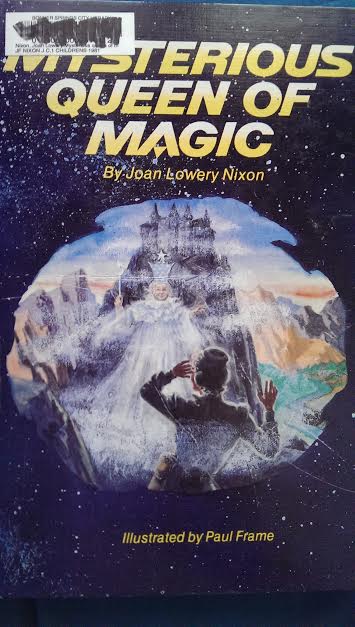
KleepQueenMagicThe Mysterious Queen of Magic by Joan Lowery Nixon, 1981.

This is part of the Kleep: Space Detective series.

Kleep and Till meet a strange young man who is looking for Kleep’s grandfather, Arko.  The young man, Mikkel, tells them a wild story, that an evil wizard is after him.  He is controlling Mikkel’s people on the planet Durth, putting them under a spell and forcing them to become his slaves. Mikkel believes that Arko may have the key to getting rid of him because an old wise man told him to ask Arko how to find Queen Stellara.  Queen Stellara was a legendary queen who could do magic, and Arko has some old write-rolls, scrolls of the kind people used to use before people began using computers alone for learning, that talk about her and her kingdom.  However, Arko doesn’t believe in wizards or magic spells or anything of the kind.

Kleep remembers Arko telling her the old stories from the write-rolls when she was little, and unlike her grandfather, she believes that wizards and magic may be real and wants to try to help Mikkel.  When Arko says that he doesn’t believe in magic and can’t help Mikkel, Kleep and her friend Till decide to use the scrolls to try to help Mikkel find Queen Stellara.  Taking Kleep’s robot, Zibbit, with them, they journey to the planet Loctar, where Queen Stellara was supposed to live.

Although this series is mostly sci-fi with a bit of mystery thrown in, this book is more fantasy.  When Kleep and her friends arrive on the planet Loctar, they discover that they must face a series of challenges to reach the legendary queen’s palace, like heros in a fairy tale.  Magic is real, and they must prove themselves worthy in order to meet the queen and ask her for the solution to the problem of the evil wizard.  But, their ordeal doesn’t quite end there because, while Queen Stellara provides them with the means to fight the wizard, they must face him themselves!

A little corny, but fun, although it’s not my favorite book in the series.  The others were more sci-fi, and this is more fantasy.  Also, for a “detective” series, there isn’t much mystery, more adventure.  It sort of reminds me of the original Star Trek episode Catspaw, except that the magical beings in this one are apparently really magical and not just aliens.  Like the other books in this series, I like the pictures, too.

KleepQueenMagicPic3

A Wizard’s Dozen

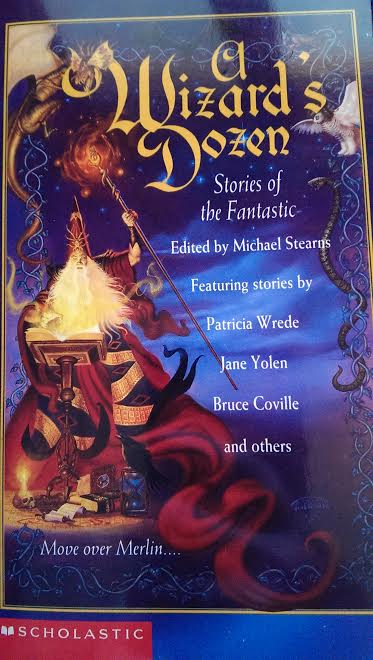
WizardsDozenA Wizard’s Dozen: Stories of the Fantastic edited by Michael Stearns, 1993.

This is a collection of fantasy stories (roughly middle school level) by different authors.  The tone of the stories varies from light and humorous to dark and serious.  The stories in this collection are:

The Sixty-two Curses of Caliph Arenschadd by Patricia C. Wrede

Caliph Arenschadd has a temper, but unlike other rulers, who have been known to cut off people’s head when they’re angry, Arenschadd is also a wizard.  Because he likes to show off his magic, he has thought of something more creative than executing people: a list of curses to inflict on those who anger him.  As people get him angry, he progresses through the curses in the order that he thought of them, each one worse than the last.  Worse still, he also inflicts the curses on the families of people who annoy him, which is how Imani, the young daughter of the caliph’s vizier has experienced so many at her young age.  However, the caliph has made a serious miscalculation in his latest curse.  This time, he has turned the vizier and his family into werewolves without being able to remove the curse.  As far as anyone knows, it’s impossible to cure lycanthropy.  As the vizier and his family find themselves becoming a threat to those around them, can Imani and her friend Tumpkin find a way to break the curse?

Fairy Dust by Charles De Lint

When Marina’s friend Jason manages to catch a real, live fairy in a jar, she tries to convince him to let it go, but he refuses.  He wants to keep it, just overnight.  But, the fairy ends up dying, and suddenly, Jason himself is severely ill.  Marina is sure that Jason is suffering from a fairy’s curse, but is there anything she can do to save him?

This experience touches on Marina’s absent father, an impractical dreamer, although it does turn out that he has taught Marina an important lesson, and she learns for herself that when she sees someone doing something that she knows is wrong, it is also wrong for her to keep silent.

The Princess Who Kicked Butt by Will Shetterly

In a mystical kingdom, people’s names tell everyone something about their destiny and character.  When a new princess is born in the kingdom, the Fairy Who Was Good With Names comes to bestow a new name on her.  However, the fairy sneezes and no one clearly hears the name that the fairy gave her.  Thinking that the fairy said the princess was “the Princess Who Read Books,” the king and queen make sure that she has plenty of reading material while she’s growing up and don’t give it much more thought.  Later, when the Evil Enchanter tries to force the princess to marry him and her parents to hand over the kingdom, the princess’s true name and her real skills become known.

The Sea Giants by Betty Levin

A great-grandmother translates whale songs for her family to tell them an ancient story: There was once a family that was barely surviving on small fish, small prey, and the little berries that they were able to forage for themselves.  The father wished that he were bigger, stronger, and more powerful so that he could catch bigger prey for his family.  One day, the father and mother paddled out to sea in search of food, and they met a group of giants in their own canoe.   The giants took them back to their own village and gave them food, but although the food they were offered was much larger than anything they could catch themselves, next to the giants, it was about as small as the small prey that the people ate back home.  After while, the couple returned home to their children, guided by a strange gray dog which turns out to be a porpoise.  From then on, the family’s luck begins to change, and they do become more prosperous.  However, the father is unable to forget about the giants, and he feels called to join them again.

Efrum’s Marbles by Joy Oestreicher

Efrum is a giant, but he’s no ordinary giant.  Although Efrum is big (being a giant), he hasn’t grown at all since the age of six.  He is over 30 years old, and he is still a child, which is weird, even for a giant child.  He spends his days playing with other giant children, and his favorite game is marbles.  In fact, he has a favorite marble.  No one knows quite what this marble is made of because no one has ever seen another like it.  It’s strange, and it kind of looks like . . . an eye?  Then, a young giant girl named Brinda plays marbles with Efrum, and for the first time ever, Efrum is tempted to let someone else win his precious, mysterious marble, which clever Brinda realizes may be the first step in helping Efrum to grow up.

“Come Hither” by Tappan King

Meg hates being the middle child in her family.  Her older sister is praised for being responsible, and her younger sister is pampered.  Meg feels like getting into trouble is the only way that she can get attention.  When she gets into trouble and is grounded from her older sister’s birthday party, she decides to amuse herself by messing with her sister’s computer.  She makes a mistake while typing and ends up receiving an invitation from a mysterious elf to join her for a party in his land.  Has Meg just made a serious mistake?

With His Head Tucked Underneath His Arm by Bruce Coville

In a kingdom constantly at war, few young men survive to become old.  Young Brion escapes for a time by pretending to be crippled, but one day, his pretense is exposed, and he is executed for refusing to fight.  However, Brion’s death doesn’t prevent him from returning to end the suffering of his land and hopefully save more people from his fate.

The Queen’s Mirror by Debra Doyle and James D. MacDonald

This is a re-telling of the story of Snow White.  An older servant tells the young princess about the history of the magic mirror, which belonged to the princess’s grandmother, who ordered her own daughter’s death because she feared and resented her beauty.  There are no dwarves in this version, and it’s a slightly different take on the story.  There are hints that the events in the story repeat with the generations.

The Breath of Princes by Alan P. Smale

When Stephanie is kidnapped from her town by a dragon, the dragon tries to convince her that being a dragon’s prisoner is a much better fate than the one that awaits her in small-town life: drudgery, boring marriage, children, etc.  Of course, he plans to eat her eventually, when he gets tired of her.  Young men try to rescue her, but in a way, Stephanie fears that one of them will succeed.  If they do, she will no doubt be obligated to marry the rescuer, and considering what some of them are like, it might even be worse than being eaten by a dragon.  The man she has always dreamed about is a prince she was lucky enough to meet once, but no prince has come to save her.  There may be a way for Stephanie to save herself from either fate, but she has to sacrifice her innocence in the process.

Harlyn’s Fairy by Jane Yolen

Harlyn lives with her Aunt Marilyn, and when she spots a fairy in the garden one day, her aunt begins to worry about her.  Harlyn’s mother is mentally unstable and prone to paranoid delusions, so Aunt Marilyn keeps a close eye on Harlyn.  She discourages her from reading fantasy stories (although Harlyn loves them) for fear of the effect they might have on her mind.  But, Harlyn really did see a fairy.  The question is, what is she going to do about it?

Lost Soul by Vivian Vande Velde

A young man meets a beautiful, mysterious woman by a stream.  She charms him so much that he no longer loves the woman he was going to marry.  In fact, he is so obsessed with her that he can think of nothing else.  What will he do when he realizes that she doesn’t feel the same?  Is she even . . . human?

The Way of Prophets by Dan Bennett

The royal family of the Stuard Isles has a tradition.  At the age of seventeen, each of them must make a journey alone along an old road known as The Way of Prophets.  The things that they see and the things that happen to them along their journey tell them what their destinies are.  They learn what really matters to them and find a focus for their time as rulers.  So many centuries have passed that no one can be quite sure where the original Way of Prophets was, so mostly, the journey takes on a kind of symbolic meaning, but there are stories that say that, every once in awhile, a young ruler finds their way to the true Way of Prophets, and the kingdom changes in some important way.  When Prince Ransom sets out, he hopes to find the true path himself.  However, when he does, it doesn’t turn out to be quite what he imagined, and it makes him question what he really wants most from his destiny.

I love this story for what the prince’s father told him, “When I am gone, when you take the throne, you will be powerful.  That is guaranteed.  Your knights and armies will make sure of it.  And you will be loved and respected.  That, too, is guaranteed.  No matter what you say and do, there will always be those ready to smother you with love and respect, if you let them, simply because you wear the crown.  Because of who you are, Ransom — because of who you will become when I am gone — you need never be hungry or alone.  But there is no guarantee that you will matter.”  If what Prince Ransom wants most is to matter, can the Way of Prophets make it happen?

Faith by Sherwood Smith

Faith tells her friends fantastic stories all the time.  She comes from a poor family with a lot of problems, so most people assume that she just makes up stories to try to make her life sound better than it really is and avoid thinking about the problems.  Usually, her two best friends don’t mind much, but lately, Melissa has been getting tired of hearing Faith talk about how her dog can talk or how her radio can tune in to Middle Earth.  She’s growing up and losing patience with fantasy stories.  Even the girls’ other friend wishes that Faith would stop asking them to believe these wild stories.  Then, after a visit to the trailer where Faith lives, she begins to change her mind.

The book is currently available online through Internet Archive.

The Witch King

WitchKingThe Witch King by Maeve Henry, 1987.

Robert is the son of a fisherman in a small village by the sea. All his life, he’s grown up hearing stories of a mysterious City to the south that was fashioned ages ago from a silver tree. Wondrous things are said to happen there. People from the City used to visit the Witch Women in Robert’s village for advice, but no one has come there from the City in a long time, and people now doubt whether the City really exists. People have even stopped believing in the Witch Women. However, Robert believes in the old stories, and he wants desperately to see the City for himself.

The stories say that someday the Witch King will come to the City and plant a seed so that a new tree will grow. Robert wants to see this story come true, and Granny Fishbone, a strange old woman who tells Robert the old stories, says that the time of the Witch King is close. She gives him a pendant in the shape of a fish and tells him that it came from the City and that it is time for Robert to take it back there.

With some misgivings, Robert’s family lets him set off on his seemingly crazy quest of finding the City. To Robert’s surprise, he is met on the road by the Royal Wizard of the City. As Granny Fishbone said, the time of the Witch King is near, and there is trouble in the City. The Spell that controls the City is failing, and the King has been seeking a remedy for the problem.

The City has become corrupt because a usurper murdered the rightful king years ago and took over the City. He had his wizards cast a spell on the City that let him control everything in it, and he manipulated historical accounts to make it seem as though he was the founder of the City himself. Robert knows differently because Granny Fishbone is really one of the Witch Women, and she told him the true story about the miraculous tree and the founding of the City. The king’s grandson, David, is also corrupt and wants to learn to control the spell over the City for his own power. He believes that he is the prophesied Witch King, and he tries to convince Robert of it so that he will help him.

When Robert learns that David’s plans for controlling the spell may mean sacrificing his own sister, Princess Sophie, who Robert loves, Robert does his best to thwart his plans by telling the king and the Royal Wizard.  Although David at first seems to have the upper hand, he is not the true Witch King. Granny Fishbone was correct that the time of the true Witch King has come, and Robert has a much bigger role to play in the story than he thinks.  As the ancient prophesy says, the City will have to be destroyed in order to be saved.

Susan’s Magic

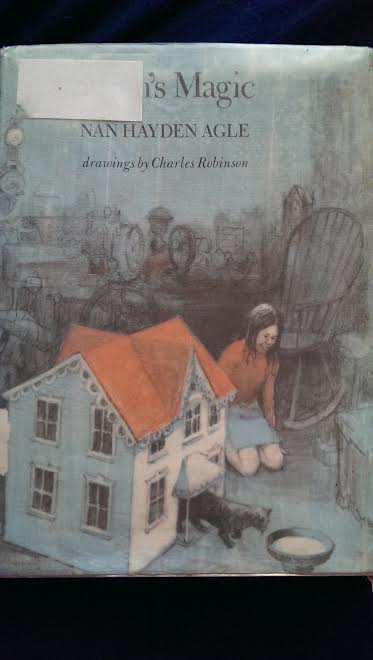
SusansMagicSusan’s Magic by Nan Hayden Agle, 1973.

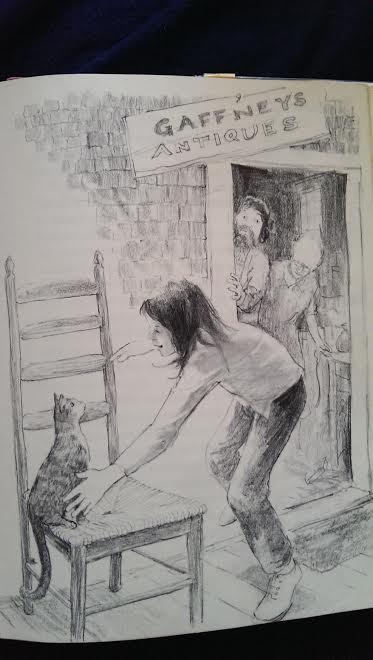
Susan Prescott believes in magic, although her mother tries to tell her that it’s all imagination.  Susan gets feelings about things and sometimes seems to have the ability to make things work the way she wants them to.  That’s part of the reason why she can believe that old Mrs. Gaffney is really a witch.  People say that Mrs. Gaffney used to be a fortune teller but had to stop when one of her predictions became frightening true and people got scared of her.  Now, Mrs. Gaffney runs an antique shop, living in a small apartment above it.  But, whether Mrs. Gaffney is really a witch or not, Susan’s life soon becomes entangled with hers through a series of unforeseen events.

Susan lives with her mother, who is a practical, down-to-earth woman, and her older brother Mike, who likes to play football.  Her parents are divorced, and her father lives in another state, only visiting occasionally, often at unpredictable times.  Susan’s father is known for not being very dependable, and he apparently left the family to be with another woman, although the story doesn’t provide many details.  Susan misses her father and is hurt by his absence, lack of dependability, and that he is more interested in being with someone else, somewhere else, instead of with her, her mother, and her brother.

The story begins when Susan sets out one day to buy a present for her mother’s birthday, and another girl she knows from school tells her to have a look at the flea market being held that day at a church.  Susan doesn’t have much money, and even most of the used items at the flea market are beyond her small savings.  Then, she foolishly spends what little money she has on cupcakes and lemonade.  Susan is angry with herself for her  foolishness, but her mistake leads her to greater adventures.

SusansMagicPic1One of the things at the sale which especially captures Susan’s attention is a small stuffed toy elephant.  The elephant is very worn, and Susan feels sorry for him, wanting to take him home and take care of him.  However, her money is gone, and she still has no present for her mother.  Then Mrs. Gaffney spots her looking sad and offers to lend her the 25 cents she would need to buy the elephant.  Although Susan has reservations about accepting such a loan, she does anyway, telling Mrs. Gaffney that she’ll pay her back.

Susan brings the elephant, which she names Trunko, home, and when her mother thinks that Susan meant to give it to her for her birthday, she doesn’t correct her although she has become very attached to him herself.  Her mother, sensing Susan’s attachment to the toy, says that they can share it and that Susan can sleep with it.  Susan thinks this is a good arrangement until someone calls the house to say that the toy elephant was donated by mistake and that the original owner is sad and wants it back.

At first, Susan can’t bear the thought of giving up Trunko. But when she learns that the real owner is Hugo, a member of her brother’s football team, that he has had the toy ever since he was small, and that he really misses it, she realizes that she has to let him have it back.  To thank Susan for giving him back Trunko (originally named Stanley), Hugo gives Susan a stray cat that had been living under his porch.  Susan loves the cat immediately and names her Sereena.

However, Susan’s mother says that they can’t keep the cat because the hill nearby is a bird sanctuary.  Susan tries to persuade her mother otherwise, but she says that they’ll just have to find another home for Sereena.  Susan tries to get an older girl from school to look after the cat for awhile while she tries to persuade her mother to let her keep her, but the other girl refuses.  Then, unexpectedly, the cat runs into Mrs. Gaffney’s shop as Susan is walking past it.

In Mrs. Gaffney’s shop, Susan accidentally breaks a teapot, increasing her debt to Mrs. Gaffney.  However, Mrs. Gaffney turns out to be a cat lover and agrees to look after Sereena for Susan.  This is the beginning of a new relationship between Susan and Mrs. Gaffney as Susan offers to work for her in order to pay off her debt.  Mrs. Gaffney could use some help in her shop because sales haven’t been good, and she’s worried about losing it.

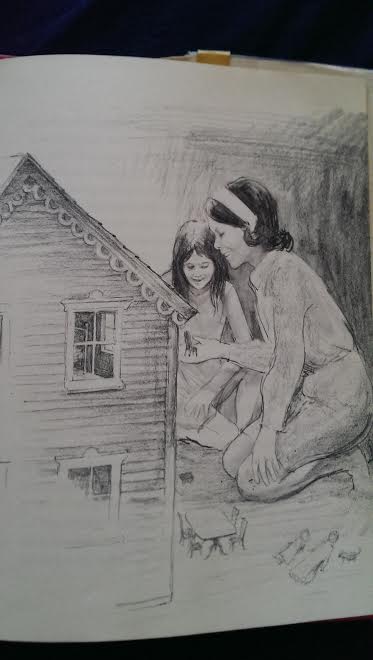
Sereena herself turns out to be good for Mrs. Gaffney’s shop, attracting customers’ attention to the items for sale.  Susan feels jealous about how much Sereena likes Mrs. Gaffney and her shop, as if Sereena has abandoned her like her father and Trunko have.  But, when a beautiful dollhouse in Mrs. Gaffney’s shop catches her eye and it turns out to be even more valuable than Mrs. Gaffney believed it was at first, Susan has to decide whether she is willing to give it up to help Mrs. Gaffney earn enough money to fix up her shop or if she will hold Mrs. Gaffney to her earlier promise to sell it to her for much less.

SusansMagicPic2In spite of the talk about magic and witches, this is not a fantasy story at all.  Susan’s concept of magic has more to do with a way of living, dealing with change, and solving life’s problems.  For the first part of the book, Susan’s “magic” focuses on getting what she wants for herself and getting things to work out the way she wants them to.  But, as the book goes on, Susan matures in the way she deals with the complications in her life.

Toward the end of the book, Susan thinks about reality and fantasy: “The magic part of living was how you fit yourself around real things, she guessed.  A magician was extra good at fitting. That’s why being one was important.”  What Susan really wants and the kind of person she wants to be change.  She comes to realize that, while she can’t get and keep everything she wants in life in the sense that it’s always with her all the time, caring about people and things is also a kind of ownership.  Giving up the toy elephant and sharing the cat with Mrs. Gaffney do not mean losing them completely because she still cares about them and the people connected with them.

Susan also realizes that, even if she doesn’t get exactly what she wants in the beginning, as long as things work out for the people she cares about, she can still be happy.  Although she has to make sacrifices at times for the people she cares about, she earns the love and respect of the people who mean the most to her.  Susan says, “Anyway, magicians don’t lose. They win. Dad, Trunko, and Sereena are mine still in a way.”  She will always be close to her mother and brother, even without her father’s presence, and Hugo, Mrs. Gaffney, and Sereena are all her friends.  Susan is a winner not because she gets what she wants for herself but because she knows how to make things work out in the best possible way for everyone she cares about, and that’s a kind of magic.

The book is currently available online through Internet Archive.
In some ways, this story reminds me a little of the Miyazki movie Whisper of the Heart, which also features a young girl who likes making up stories and who is led to an antique store by a friendly cat and meets an older person who helps her to learn about the person she wants to be and the kind of life she wants to live.  The two stories are not the same, though, and Whisper of the Heart was based on Japanese manga, not this book.  In some ways, however, both this book and Whisper of the Heart are the kind of stories that take on a new life when you read them as an adult because, at that point, you understand some of the feelings behind them better.

The Castle in the Attic

CastleAtticThe Castle in the Attic by Elizabeth Winthrop, 1985.

Ten-year-old William’s life is being turned upside down.  Mrs. Phillips, his nanny, is leaving for good!  Mrs. Phillips has lived with William’s family and helped to take care of William ever since he was born. Both of his parents work, so William spends most of his time with Mrs. Phillips after school. She fixes him his snacks, takes him to his gymnastics lessons, spots for him as he practices his routine, and reads stories about King Arthur with him. However, now that William is ten years old, Mrs. Phillips thinks that she would like to go live with her brother in England, which is where she is from. William is upset because he can’t imagine life without Mrs. Phillips. Mrs. Phillips tells him that he will be fine without her and that his parents will start spending more time with him after she leaves. William tries everything he can think of to get her to stay, but she is determined that it’s time for her to go.

As a leaving present, Mrs. Phillips gives him a toy castle that has been in her family for generations, along with a little lead figure known as the Silver Knight. Still, William is determined to find a way to keep Mrs. Phillips from leaving.  Then, he discovers that the toy castle is magic! When the little knight comes to life and gives him a magic token that can make people small, William thinks he’s found the way he’s been looking for. With Mrs. Phillip’s impending departure and his fears of losing her, William suddenly realizes that he can use the magic coin to keep Mrs. Phillips with him.  Before she can leave, he shrinks her and puts her in the castle with the knight.

Of course, turning his nanny small and keeping her inside the toy castle was unethical, as Mrs. Phillips and the knight point out, but William’s mistake proves to be only the beginning of a fantastic journey that will fulfill a legend, free the knight’s kingdom from the reign of an evil wizard, and give William the confidence he’s been looking for.

Over the drawbridge of the castle is a poem about the beginning of a quest. Mrs. Phillips had said that there was a legend about the little knight, and when he comes alive, he tells William that his name is Sir Simon and that he was turned to lead by an evil wizard who has taken over his kingdom. The poem is the key to defeating the wizard, and the little token is really only half of one that the wizard was wearing around his neck. When William turns Mrs. Phillips small, he cannot reverse the spell because he lacks the other half of the amulet. To get it, he must become small himself and fulfill the poem by crossing the drawbridge as Sir Simon’s squire.  The two of them set out together to defeat the wizard and retrieve the other half of the token. Along the way, they become separated, and William must continue on to the wizard’s castle and finish the quest by himself. William has an inner strength that he doesn’t fully appreciate at first, and he can use it to defeat the evil wizard!

There is a sequel to this book called The Battle for the Castle.

My Reaction

I liked this story when I was a kid, and it’s a good coming-of-age story.  The sequel is also a coming-of-age story, but in a different way.  This book is about William coming to a better understanding of what kind of person he is and what he’s really capable of doing.  He can do more and handle more than he thinks he can.  In the end, although William is still a little sad at saying goodbye to Mrs. Philips when she leaves, he feels a little better about her going because he knows that he can take care of himself now, thanks to his magical adventures. Mrs. Phillips tells him that he always had what he needed inside himself but that he just didn’t believe it before.

The next book focuses on what it really means to be a man instead of a boy.  As William and his best friend grow up and are under social pressure from other boys to do a certain stunt in order to prove that they’re really grown-up, William and his friend set out on a magical adventure that teaches them that there are more ways of becoming a man than one.

Chitty Chitty Bang Bang

ChittyChitty Chitty Bang Bang by Ian Fleming, 1964.
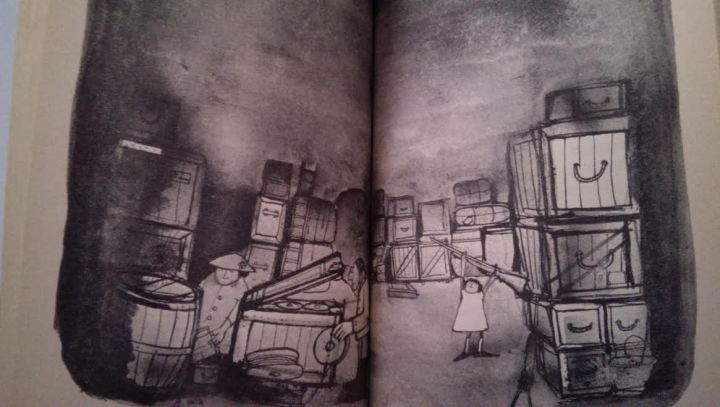
Not everyone is aware that the creator of James Bond wrote a children’s book, although the movie Chitty Chitty Bang Bang is a children’s classic.  However, the movie differs greatly from the original book, which doesn’t have anything to do with a toy-obsessed baron who has forbidden children in his kingdom, and there is no Truly Scrumptious (sorry).

Commander Caractacus Pott, retired, is an explorer and inventor who lives in a little house in the countryside with his wife Mimsie and their children, a set of eight-year-old twins named Jeremy and Jemima.  Some of the locals call Commander Pott, “Crackpott” because of his strange inventions, which never earn him very much money until one of this inventions pays off when he sells the candy whistles he creates to Lord Skrumshus’s candy company.

With the money he earns, Pott decides to buy something that his family has wanted for a while: their own car.  But, they don’t want just any boring car like everyone else.  They want something special.  They find it when they spot a former racing car that’s due for the scrap heap.  No one wants it because it would take a lot of time and money to fix.  The Pott family falls in love with it immediately, and Jemima thinks it might even be magical because the license plate says “GEN 11”, which looks like “genii” (or “genie”).  The garage man is relieved to find a buyer who appreciates the car’s history and potential and says that she’s sure to reward them for saving her from being scrap.

After Pott spends a great deal of time fixing up the car (which they name “Chitty-Chitty-Bang-Bang” because of the sounds it makes) and adding some additional inventions of his own, he begins to suspect that both Jemima and the garage man are right: the car is magical and does want to repay them for saving her life.  He starts to notice changes that the car makes to herself overnight, adding extra buttons and features that he knows he didn’t put there.  He’s not sure what they’re for until the family gets stuck in traffic the first time they decide to take the car out for a picnic. Messages on the car’s dashboard light up, telling Pott to pull some of the car’s mysterious levers.  When he does, the car sprouts wings and flies over the other cars in front of them, over towns and beaches, and even over the English Channel!

ChittyPic2

Chitty-Chitty-Bang-Bang takes the Pott family to a sandbar so they can have a private beach all to themselves.  But, that’s only the beginning of their adventure!  Chitty-Chitty-Bang-Bang can also turn into a hovercraft, and the family decides to take it on a special holiday to France.  When they reach the coast of France, they find a cave and start to explore it.  Someone has set up various devices inside to scare people away, but that only makes the Pott family more curious and determined to find out why.

It turns out that the cave is a hideout for a band of smugglers, and when the Pott family destroys it, they want revenge!

ChittyPic1

At the end of the book, there is a recipe for “Monsieur Bon-Bon’s Secret ‘Fooj'” (they mean ‘fudge’, Monsieur Bon-Bon is a character in the story).

Having known the movie version since I was a kid, I really prefer the movie to the book.  With a magical car at their disposal, the more fairy-tale story about the castle and tyrannical, toy-obsessed baron seems more fitting than the story about smugglers.  But, that being said, the book is still a lot of fun.

The book is available to borrow and read for free online through Internet Archive.

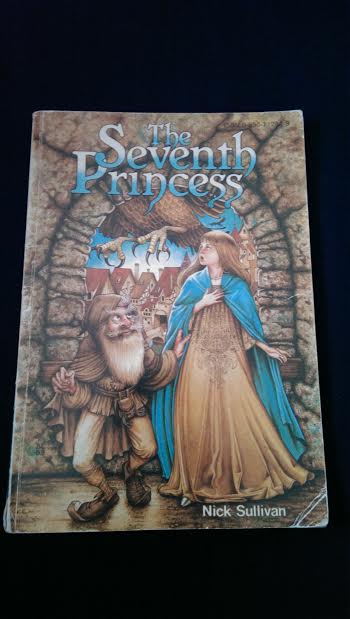
The Seventh Princess

The Seventh Princess

The Seventh Princess by Nick Sullivan, 1983.

Jennifer never remembers her dreams, so she doesn’t think that she’ll be able to complete the essay that her teacher assigned them to write: My Strangest Dream.  While she’s worrying about not being able to finish her homework, she dozes off on the school bus on her way to school.

Suddenly, Jennifer finds herself in a beautiful carriage being driven through a dark forest.  Jennifer is happy that she’s apparently going to have a dream that she can write about, so she decides to enjoy it as much as possible, trying on the beautiful gown, cloak, and jewelry that she finds in the carriage with her.  Eventually, the carriage stops at a huge palace, and Jennifer comes to the realization that the carriage never had a driver.

She is greeted by Duke Rinaldo, the Lord High Chancellor of the kingdom of Eladeria. Jennifer is informed that she is Princess Miranda, the king’s adopted daughter.  Actually, Jennifer is the seventh of the king’s “daughters.”  There were six others before her . . . and their fates are unknown.

This is no ordinary dream.  The king of Eladeria is ill, possibly bewitched.  The king’s son is missing.  There is treachery in the palace.  People live in terror of the evil enchantress Swenhild and her harpies.  Soon, they will demand a tribute: a golden-haired princess with blue eyes . . . like Jennifer, er, Princess Miranda!

The only one who seems to want to help Jennifer is her new friend, Samson the dwarf, who is the palace’s court jester.  He introduces her to his friend, Prospero, who can do magic and understands more of what’s happening than most people.  He tells her that her only hope is to find the Paladian Scroll and use its power.  Can Jennifer and Samson find this mysterious scroll in time?  It might still be possible to save the other princesses, but Jennifer worries about whether she’ll ever wake up in her own world again.

This book is available online through Internet Archive.

My Reaction

One of the things that I love about this book is how it brings in some lesser-used fantasy creatures, like the harpies, and characters, like the dwarf jester.  The “was it a dream or wasn’t it” trope has been used a lot, but the adventure within the dream itself is fun, exciting, and very well-done.