#36 The Castle Mystery by Gertrude Chandler Warner, 1993.
Mr. Alden takes his children to Drummond Castle because an old friend of his is helping to clean and organize the place before it becomes a museum. The Drummond family used to live there, and they had the castle built to look like a castle in Germany. However, the last of the Drummond family has died, so turning the mansion into a museum will give the place new life. When the Aldens first arrive, they think the castle looks more like something from a scary story than a fairy tale, but Mr. Alden’s friend, Carrie, shows them some of the more whimsical elements of the place.
However, Carrie’s assistants aren’t happy about the Aldens helping. None of them really seem like team players, even with each other, and they’re not sure how much help the Alden children can be. There are a lot of things that the assistants won’t let the Aldens do when they try to help. They also seem a little suspicious of each other because a valuable Stradivarius violin that once belonged to the Drummond family has disappeared. Carrie insists that they don’t know that the violin has been stolen. The last of the Drummonds may have just hidden it somewhere, and they will find it when they’ve finished cleaning and organizing the place.
Then, the Alden children begin to notice strange things happening in the castle. They see lights in parts of the castle where no one is supposed to be and hear violin music coming from somewhere. Sometimes, the furniture covered in dust sheets gives them the feeling that someone is hiding under the sheets. When it seems like the kids are poking around the castle too much, the assistants all suddenly find tasks for them to do.
The kids catch one of the assistants, Mr. Tooner, looking for something under the floorboards in their grandfather’s room. He claims that he was fixing the floor, but Mr. Alden says that nothing was wrong with the floor. Sandy, another assistant, seems to know her way around the castle better than the others, but she’s oddly defensive about why she knows the place so well. She also makes an odd comment about how it would be nice to hear the Stradivarius “again”, but she dodges questions about when she heard it the first time. Tom is the antiques expert, and he insists that his work is highly specialized and that he wants to work alone.
The Aldens explore the spooky castle, the girls get trapped in the cave under the castle, and they find a secret, hidden room that brings them closer to the solution of the mystery. Each of these assistants has a previous connection to Drummond Castle that they don’t want to discuss, but only one of them is a thief.
My Reaction
I remember liking this book as a kid, although I’d forgotten what the solution of the mystery was until I reread it. It holds up pretty well, and I enjoyed how everyone associated with the castle has their own secrets and past connections to the place. It makes them all really great suspects and also gives readers some subplots to figure out along with deciding who the violin thief is!
The castle setting is also great! Technically, I suppose that it’s really more of a castle-like mansion, but it has all the trappings of a castle, some fanciful, some whimsical, and some spooky. There is also a cave under the castle, which features in a part of the story where Jessie and Violet get locked inside the cave because there is a gate that closes it off. One of the best parts of the book is the discovery of a hidden room because what castle would be complete without one!
#4 The Mystery of the Green Ghost by Robert Arthur, 1965.
Bob and Pete are looking at an old, abandoned house that’s in the process of being torn down when they hear an unearthly scream from the house! There are stories that the old house is haunted, and the boys run away, only to be stopped by a group of local men, who ask them what’s going on. When the boys explain, the men talk about calling the police or going inside the house to investigate. The men decide to just go in and have a look around themselves, in case someone’s hurt and needs help right away. They tell the boys that they can leave because they will handle the situation, but the boys decide that they can’t leave without having a look themselves.
As they take a look around inside, they see the remains of the ornate wall paper and impressive features of the once-rich house, and the men talk about Mathias Green, who used to live in the house. At first, the searchers can’t find anything, but then, they spot a greenish figure on the stairs. Thinking that there’s some prankster in the house, the searchers go upstairs to confront the person, but they can’t find whoever it was. The boys suggest that they have a look at the dust on the floor and try to follow the person’s footprints, but the only footprints the searchers can find are their own. Could they have seen a ghost?
The searchers do notify the police about what they’ve seen in the house, but the police don’t take it too seriously … at first. However, they soon begin receiving other reports from various people around the city who claim to have seen a greenish, ghostly figure. Even then, the police might not have take the reports too seriously, except that a couple of officers on patrol witness a greenish, ghostly figure in the cemetery … at the burial site of Mathias Green, who died falling down the stairs in his house, 50 years before.
While Bob and Pete were at the house, Bob had his tape recorder with him, and he plays the recording of the scream they heard for their friend and fellow investigator, Jupiter. Jupiter is willing to believe it could be the scream of Mathias Green’s ghost, and the boys review the information they know about Mathias Green. Mathias Green was once the skipper of the ship, and he sailed to China. For reasons that nobody fully understands, he had to leave China suddenly, and the rumors were that Mathias’s wife was a Chinese princess and that Chinese nobles had a grudge against Mathias. Mathias brought his wife back to the United States with him, and they built their house in Rocky Beach after Mathias had a fight with his sister-in-law, and they moved away from San Francisco. They had some Chinese servants, but when Mathias was later found dead, apparently from an accidental fall down the stairs, the servants and his wife disappeared. People assumed that they left for fear that they would be blamed for Mathias’s death, and Mathias’s sister-in-law inherited the house. Recently, Mathias’s niece decided to sell the house to a developer, who is planning to tear it down and build more modern houses.
Local newspapers have picked up the stories about the green ghost and its apparent connection to the old Green mansion, and some of them have implied that the ghost is looking for a new place to haunt now that its house is being torn down. The Three Investigators have access to more information than most people because Bob’s father is one of the reporters covering the ghost incidents. The police chief tells them, off the record, that he witnessed the ghost himself, in the cemetery, and it looked like it disappeared by sinking down into Mathias’s grave. Then, the police chief learns that the workmen tearing down the house have discovered a hidden room. Bob’s father and the boys are allowed to come with him to see what the room contains.
The discovery is a shock. The hidden room contains an ornate coffin, holding the skeleton of Mathias’s Chinese bride, dressed in elaborate robes and with an unusual necklace of gray pearls, called ghost pearls. The story is that the reason why Mathias and his bride had to suddenly flee China was that Mathias reportedly stole the pearl necklace to give to his bride. When she died in Rocky Beach, he couldn’t bear to be parted from her, so he “buried” her secretly in his house, along with the necklace.
The discovery of Mathias’s wife’s hidden burial chamber doesn’t lay the ghost to rest, though. Bob and Pete get a phone call from Mathias’s niece, Lydia, asking them to visit her at the vineyard where she lives, to talk about what they witnessed at the house. She says that the ghost has actually appeared at her vineyard! Jupiter is not invited to the vineyard because he didn’t witness the appearance of the ghost with the others, but he couldn’t go anyway because he’s temporarily in charge of his uncle’s salvage yard while his uncle is out of town. He tells Bob and Pete to go ahead and meet with Lydia and let him know what they learn.
At the vineyard, Bob and Pete meet Lydia’s distant cousin, Harold, and Lydia’s great-nephew, Charles, who is actually the great-grandson of Mathias Green and the real heir to Mathias’s estate. Charles, who is called Chang, grew up in China, and they explain that he is descended from Mathias’s first wife, who died of an illness in China. After the death of his first wife, Mathias put his young son into an American missionary school in China and left him there as a boarding student. When he married his second wife and had to flee China, he left his son behind. His descendants remained in China since then, until it became unsafe for Americans or people of American descent in China. Then, Charles, who is an orphan and part Chinese (hence his nickname of Chang), was sent to live with Lydia in the United States. Until that point, he knew very little about his ancestors and his relatives in America. Technically, Mathias’s estate should have come to Chang’s side of the family when Mathias died, but they were living in China at that time and were not in touch with the rest of the family. Lydia says that Chang should even technically own the vineyard that she and Harold have built with the family’s money, but Chang doesn’t want to take it from them, so Lydia says that she is leaving it to Chang in her will. Chang is satisfied with this arrangement, but the family has debts, and if they don’t resolve them, they might lose the vineyard entirely.
Lydia believes that the green ghost is Mathias’s ghost, and he is haunting them because he’s angry with her for selling his old house to be torn down. The ghost has been scaring away workers at the vineyard, and if they can’t get the harvest processed, they won’t be able to keep the vineyard. However, Chang doesn’t believe that his great-grandfather would want to hurt his own family. Chang might be willing to believe that the ghost is an evil spirit, masquerading as his great-grandfather. That’s not the only possibility, though. There could be a human being with a motive for wanting to ruin the vineyard. Then again, there is the question of who really owns the ghost pearl necklace. If Mathias’s family owns the necklace, they could sell it to cover their debts, but it might really belong to the family of Mathias’s Chinese wife. Her family is more difficult to trace, but one person has stepped forward, claiming to be her heir. Then, someone attacks Harold and steals the necklace from him. Was the necklace always the ghost’s target, from the beginning? Meanwhile, back in Rocky Beach, Jupiter has a revelation. There was a dog present when Bob and Pete were searching the Green mansion with the men, and the dog … didn’t do anything. That might be the most important clue of all!
The book is available to borrow and read for free online through Internet Archive (multiple copies, including some in other languages).
My Reaction and Some Spoilers
I enjoyed the mystery and the reference to Sherlock Holmes about the dog that did nothing in the nighttime. In this story, Jupiter takes the dog’s non-reaction as a sign that there was no supernatural presence in the house because animals are supposed to react to the presence of ghosts. There is definitely a human behind all the spooky happenings, and I was partly right about who it was. However, the author threw in a complication by inserting another mysterious villain who kind of usurped the original plotter’s plot for his own purposes and partly distracts the characters from the original villain for part of the story.
This added villain is a mysterious old man from China who claims that he’s 107 years old and that he wants the pearls because drinking dissolved ghost pearls is the key to immortality. This mysterious old man is wealthy, and he has bought up the family’s debts, meaning that he will get control of the vineyard, if they can’t pay their debts. However, he’s not really interested in the vineyard for its own sake. He just wants those pearls. Although he does some criminal things in the story, nothing much seems to happen to him at the end, and he works out a deal with Lydia, so she can keep the vineyard. It’s left open whether or not he truly ended up with the pearls or whether the pearls actually have properties for preserving someone’s life, but it seems that he truly believes it, and he has no other motivations for his part in the story.
This almost Fu Manchu style character, who uses hypnosis to control people, adds an element of exoticism to the story that I thought wasn’t really necessary. I liked the ghost mystery well enough with its original villain and without him, and I felt like the introduction of the extra villain sent the plot a little off the rails, but he does allow the story to end on a somewhat creepy and ambiguous note. We don’t entirely know who he is, and we never really find out what happens to him. We don’t know if he’s really as old as he says he is or if he continues much further in his quest to live forever. He just disappears after getting what he can of the pearls, presumably to go hunting for more elsewhere.
As far as I’ve been able to determine, the ghost pearls aren’t real, and the legend about them prolonging people’s lives isn’t real. However, there are legends and superstitions from around the world about pearls being associated with wisdom and longevity and having healing powers. Pearls can be dissolved in an acidic liquid and drunk by a human, as in the famous story about Cleopatra drinking a pearl in vinegar, which was supposed to be an aphrodisiac.
Getting back to the mystery, though, I did like the Scooby-Doo-like mystery, and I was satisfied by the original plot, and the villain’s methods and motives. I was looking at that character with suspicion for a number of reasons. Perhaps, if the part about the pearl necklace, the ancient man who drinks pearls, and Mathias’s bizarre room with his dead wife weren’t in the story, the solution would be too obvious, but overall, I enjoyed it. I also appreciated how Jupiter worked out some of the details of the first haunting by visiting the house and studying the scene while his friends were at the vineyard. He comes to some conclusions about how that first haunting occurred that Bob and Pete didn’t think about, and his solution also provides a reasonable answer to the question of why that group of men happened to show up outside the house on the evening the haunting happened, to witness it.
The Ghost of the Gracie Mansion by Susan Kohl, illustrated by Ned Butterfield, 1999.
The year is 1803, and the Gracie family has decided to temporarily leave New York City because of the Yellow Fever Epidemic. William Gracie, the eldest son of the family, is disappointed because he has started working for his father’s shipping business, and he was looking forward to being promoted to clerk this spring. He wants to follow in his father’s footsteps, and he’s serious about wanting to learn the business. The trip that they’re taking to their new country home at Horn’s Hook, north of the city, seems to delay his plans because it’s so far away from everything, from his father’s business and from the Tontine Coffee House, where businessmen and other important people meet to discuss the issues of the day. However, William can’t help but admit that the situation in New York is serious. People are dying of Yellow Fever every day, including children, and his parents just want the family to be safe.
William begins to feel a little better when his father tells him that he’s arranged for them to work together from the family’s country mansion. His father says that captains of the ships he owns will stop at Horn’s Hook on their way to New York Harbor to report to him, and William will help him to prepare the cargo lists and timetables for the ships. Their temporary exile from New York hasn’t put a stop to their business or William’s education in that business; they’re just going to be doing things a little differently until the crisis is over.
While the family is traveling to their new country house, Mr. Gracie tells them about the history of the place. There used to be another house on that land, but it was destroyed during the American Revolution (an event still in relatively recent memory at the time this story takes place) as the British and the Patriots struggled to control it because that location is a strategic spot on the Harlem River. Mr. Gracie says that their new house is built over the basement of the old house, and that’s important because he’s aware that the former owners had a secret tunnel that led out of their basement in case they needed to use it as an escape route during the war. He told the builders to look out for it while they were building the new house, but if any of them ever figured out where it is, they never admitted it. The Gracie children are excited about the idea of their new house having a secret tunnel, and they’re eager to find it!
The new Gracie house is beautiful, really more of a mansion than just a house. However, there is something strange going on there. Soon after they arrive, William’s younger sister Sarah sees someone in the house dressed all in white. Sarah thinks that she saw the ghost of the person who owned the house that used to be on their property. The others don’t believe her because Sarah has a vivid imagination and is always making up stories, but Sarah insists that she saw someone.
When things start disappearing from the house, the rest of the family begins to believe that there may be some unknown person in their house. Sarah still thinks it’s a ghost, but William thinks maybe someone has found the secret passageway into the house. Who is this mysterious intruder?
The book is available to borrow and read for free online through Internet Archive.
My Reaction
I always like historical novels, particularly historical mysteries, and I really enjoyed this one. The mystery is meant for children in elementary school, and it isn’t too difficult, but it’s fun to see the Gracie children searching for the secret passage and trying to learn who is sneaking around the family’s country mansion. I also enjoyed that the story offers history lessons on multiple levels. The immediate situation for the characters is the yellow fever epidemic of 1803, but the story also touches on the American Revolution. The solution to the mystery is also related to Revolutionary War history. The Gracies, headed by father Archibald Gracie, were a real family who made their money in shipping, although the events in the story are fictional. There is a section in the back of the book that explains more about the family’s history. They associated with prominent people in New York in the early 19th century, and Alexander Hamilton makes an appearance in the story when he visits the Gracie Mansion. The Gracie Mansion is a real place. When it was first built, it was in the countryside outside the limits of New York City, but since then, the city has grown around it. It is now used as the home of the mayors of New York City.
Although this book was published before the coronavirus pandemic of the early 2020s, I also appreciated the part of the book at the beginning, where William is concerned that the current epidemic has changed his plans and impacted his ability to learn his father’s business. However, his father explains to him that they are still in business, and he has made arrangements for them to continue working in a different way during their time away from the city. People who lived through the quarantines and lockdowns of the covid pandemic will understand how it impacted the way people worked or continued their education and how people had to find ways to work around the problem. I appreciated that this story shows how people have had to deal with public health crises before in history and how they have always had to find creative solutions to deal with problems of this nature.
In this particular situation, the Gracies are a wealthy and privileged family, so their options for escaping from the crisis and working from outside the city are greater than other people of their time. Not everyone had a countryside mansion where they could go to escape the disease, and not everyone had employees who could report to them wherever they were. What Mr. Gracie and his son are doing during the course of the story is the early 19th century equivalent of “working remotely”, pre-Internet, and they accomplish it through people coming to report to them and taking goods and information into the city on their behalf. Even though the Gracie family can stay outside the city, they are still sending their ships into the city’s harbor because the cargo the ships carry is necessary there. There are people in the city who are waiting for the supplies the ships are carrying. The crews of the ships are what people in the 2020s came to call “essential workers” – the people whose type of work was necessary, no matter the circumstances, and who could not perform their duties from a remote location. The same is true for all the other people who must remain in the city because their jobs require them to work with or on behalf of the people who are still there.
A group of friends in Summary, Indiana has had a club together for years, and they’ve always thought that their club would last forever. They call themselves the Silly Stuff Club because they collect all kinds of weird and silly things that they find at sales. However, when one of the girls, Sarah, finds out that her family is planning to move to another state, it looks like their club might come to an end. The club meets in the old carriage house on Sarah’s family’s property. If their family moves, where will the club go, and where will they store their collection of silly stuff? The other girls in the club aren’t just losing a friend but also losing their club’s home and maybe even the club itself.
Then, Lily gets an idea. Down the road, there is an old mansion that’s been abandoned for years. The Winston estate is the property of Melva Winston, who is something of a legend in their town. According to the story, the Winston heiress rode out of town on her motorcycle about 50 years earlier, and she hasn’t been seen since. Lily reasons that the Winston estate is huge and has outbuildings, and somewhere on the estate property, there is probably a place that they can claim for the club. Since nobody lives there or goes there anymore, who is to know or care if they move in?
Some of the other girls in the club don’t like that idea because they’ve been warned to stay away from the old Winston estate. An empty old house can be dangerous, and they might get in trouble for trespassing. Still, nobody has any better ideas, so they decide to sneak onto the property and have a look around.
When they do, they discover that the house isn’t quite as empty as they thought. After all these years, Melva Winston has returned to town. She now calls herself Annie, after one of her middle names, Anastasia. The girls’ sudden arrival startles her, but when she overhears them talking about needing space for their club, she becomes sympathetic. She also realizes that she could use their help. There’s plenty of space in her big house, and she agrees to give them some space in the attic for their club, and in exchange, she asks them to look after her cat while she goes out of town for a few days. She’s hired a local woman, Ms. O’Leary, to do some cleaning for her, but the woman is allergic to cats. The girls are eager to accept because the old mansion would be a fantastic place to have their club, and it would solve their problems … except missing Sarah when her family moves.
Then, one night, a couple of the girls see someone sneaking around the old mansion when no one is supposed to be there. Ms. O’Leary tells them that there were rumors that one of Annie’s ancestors, who made the family fortune in veterinary pharmaceuticals, became an eccentric toward the end of his life, and rumor has it that he hid a great deal of money somewhere on the property. Are the rumors true, and is someone looking for the hidden money?
My Reaction
This book is something of a mystery to me, even after reading it. It is clearly intended to be park of a series because it’s marked as being part of the Creative Girls Club Mystery Book Series, but when I looked up this series, there was only one other book in it. From the descriptions I’ve seen online, it might not even really be that there are two books in the series so much as one book with two different titles because the plots given for the two books sound alike. I’ve only ever seen one of the books, so I can’t be sure.
The book is clearly set up to introduce the set of six girls in the club and establish a basis for the rest of the series. Each of the girls in the club has her own section at the beginning of the book, providing her backstory. So, what happened?
The series had a web page that was given on the inside cover, so I looked it up. It still exists, after a fashion, but the Creative Girls Club is now a subscription box service with craft kits for girls ages 7 to 12. I think what probably happened is that the book series was meant to be a vehicle for marketing the craft kits, but they changed their minds and decided to just move forward with the craft kits in a subscription service without the associated books and characters. There are no actual crafts included in this book for readers to do, although that might have been planned for later books.
The craft kits are by Annie’s Attic, and Annie’s Attic published this book. The book incorporates Annie’s Attic by having the girls move their club to the attic of Annie’s mansion. Ha, ha. At the end of the book, Annie decides to open a craft store and studio in the old mansion, and the girls decide to reinvent their club as a crafting club in Annie’s attic, calling it the Creative Girls Club, and thus setting up the premise for the subscription box service.
Overall, I thought that it was a pretty nice mystery for kids. It kind of worked its way around to Annie’s Attic and the Creative Girls Club in a somewhat contrived way, but still, there are plenty of things in the stories for kids to like, from the club in the attic of an old mansion to a secret room and hidden treasure.
The Richleighs of Tantamount by Barbara Willard, illustrated by C. Walter Hodges, 1966.
The Richleighs are a wealthy Victorian family in England, their enormous wealth the product of generations of marriages between wealthy families. There are four children in the family (from oldest to youngest): Edwin, Angeline, Sebastian, and Maud. The four Richleigh children are accustomed to their family’s wealthy and luxurious lifestyle, brought up by their fond parents and the governesses and tutors they hire to oversee the children’s education. Overall, the children are happy and appreciate their privileged lifestyle, but there is one thing that bothers all of them. It has bothered them for a long time. They don’t understand why their parents won’t take them to see their family’s ancestral home, Tantamount.
The wealthy Richleigh family owns several grand houses (including one in Scotland and one in Italy), but Tantamount is a mystery to the children. They know it exists because their family has a painting of it, and their grandfather talked about it once. A distant ancestor built this castle-like mansion in Cornwall, on a cliff overlooking the ocean and in a mixture of styles from around the world, and it’s supposed to contain some amazing things. Yet, the children’s father says he has never been there himself. The children’s parents don’t even like to talk about the place, and they’ve never taken the children there. The children know that something mysterious must have happened there at some point, but they have no idea what it is. They just know that they would love to see the place and find out what all the mystery is about! They often speculate about what the place is like, what once happened there, and why they’ve never been allowed to see it.
One day, Sebastian, who is the one who usually asks the most questions, decides to press their mother for answers about Tantamount. She tells him that his great-great-great grandfather, who built the place, was an eccentric and that the mansion is just too big, too inconvenient, and too remote to be of any comfort or use. This inconvenience is one of the reasons why most of the Richleigh family just cannot be bothered to go there. Also, his mother admits that the Richleighs are actually a little ashamed of the house because it is so hideously, overly elaborate and vulgar, even by the luxurious standards of the Richleighs. Sebastian says that he would still like to go there for an adventure, but his mother sees no point to it. She tells him that he can’t always have everything he wants, that he’s already a very indulged boy, and that he should just be happy with what he has. However, the children’s burning desire to see Tantamount and experience what they imagine as its mysteries isn’t really about the physical ownership of the house or the fantastic things that are supposedly kept there but about the spirit of mystery and adventure. As wonderful as everything the Richleigh family has, the children are chasing something else: excitement!
The children’s parents are actually the ones who don’t seem to understand the emotional attachment that people can have to physical belongings. Twice a year, they have their children donated old toys of theirs to the poor, which is a good thing, but poor Maud is traumatized when her parents tell her that she must give up her old rocking horse, Peggy, and that they will replace it with a brand new one. It’s not because Maud has outgrown rocking horses, but Peggy is looking a little shabby from use, and they want the children’s toys to all be in the best condition. They don’t consider the emotional attachment that Maud has to Peggy from her hours of playing with her or that Peggy’s shabbiness is a sign of Maud’s love for her. When they tell Maud that old toys are dangerous for children to play with, Maud asks why they aren’t dangerous for poor children to play with, her mother just tells her not to answer back. (Meaning that she doesn’t have a good answer, and she knows it.) Sebastian says maybe it would be better to just buy the poor children a new rocking horse instead of sending them Peggy, but his father tells him not to be impertinent, showing that this ritual about giving toys to the poor isn’t really about doing something nice for the poor so much as updating the children’s toys for the newest and “best” when that isn’t really what the children themselves want.
Soon after the children’s father gives away Peggy, he falls seriously ill, apparently from something he caught from the family he gave Peggy to. The children worry about what his illness will mean for their family, especially if he dies. Their first thoughts seem fairly petty. They first think that maybe this wouldn’t have happened if he hadn’t decided to give away Peggy. Then, they realize that, with their father ill, they won’t be able to travel to Italy this summer, as the family planned. Then, they think that, if their father dies, they will all have to wear gloomy black, and either Edwin will become head of the family at age 16 or that their uncle will look after the family. Their uncle is a more dour man than their father, so that’s also a gloomy prospect.
Fortunately, the children’s father recovers, and the children are relieved. His doctors advise him to take a sea voyage to recover. The parents will be traveling without the children, and they won’t be going to Italy, but the children say that they understand that this is important to their father’s health. However, this does leave the question of what the children will do while their parents are traveling. The parents ask the children for their opinions about what they would like to do this summer because they want the children to have a pleasant time together while they are gone. There is only one thing that all of the children want, and this time, the children’s parents agree: the children will spend the summer at Tantamount.
The parents make arrangements with Mr. Devine, the agent who manages the property on behalf of the family, for the children to go there for the summer. The children will be chaperoned by their governess, Miss Venus, and Edwin’s tutor, Mr. Gaunt. Before they leave, the children’s father tells Edwin that, since he is 16, he’s no longer just a child, and if any situation should arise which requires him to take charge, he should, as the heir to Tantamount. If anything serious happens, and they need help, they can also send word to Mr. Devine. The children’s mother tells them that there will also be a housekeeper at Tantamount who has a daughter of her own, who will also be helping out.
From the moment their parents leave for their voyage and the children make their final preparations to leave on their trip, they feel like everything is changing. Although they were always aware that they were privileged, they never really noticed much about the details of their lives or home or thought very much about the people who served them. Alone for the first time with Miss Venus and Mr. Gaunt, Angeline is struck with the thought that she never really noticed much about Miss Venus as a person, even what she truly looked like. Before, she was always just the governess, just another part of the steady routine of the children’s lives, but now, dressed for travel and just as excited as the children, she really seems to be a real person. Even Mr. Gaunt is excited and not so much his usual somber self. The children quickly realize that, without their parents there to insist on proper behavior, stiff manners, and a certain appearance, the governess and tutor are relaxing and become more themselves. Mr. Gaunt tells the children stories about his past travels across Europe, and they’re much more fun to hear about than his usual dull lessons. As they step outside of their usual rigid routine, it seems like everything has magically come to life for the children.
When they first arrive at Tantamount, it’s dark, and the place seems sinister. However, they receive an enthusiastic welcome from the housekeeper, Mrs. Pengelly. In the morning, the children see how grand the place truly is. The rooms are big and elaborately decorated, and there are amazing views of the sea.
Even more exciting than that, the children also quickly realize that life at Tantamount offers them the opportunity for more freedom than they’ve ever had in their lives. Without their usual nurses to pick up after them or fuss over what they’re wearing, they are free to make these simple choices for themselves. The idea of looking after themselves for a change and doing things as they want to do them is exciting by itself. Some parts of looking after themselves seem a little daunting at first, but Angeline realizes that it’s also good for them. Young Maud worries about what “they” will say about things the children are doing, but the older children point out that there is no “they” to worry about. Their parents and nurses aren’t there, and everyone who is there technically works for them.
Eagerly, the children begin to explore Tantamount. It is filled with strange and wonderful things, but most of it is in shabby and neglected condition. There are magnificent statues that are crumbling and a beautiful chandelier lies smashed where it fell on the floor of the ballroom. Angeline first thinks that their father will blame Mr. Devine and Mrs. Pengelly for the condition of the house, but Edwin points out that the house has been neglected for generations by the Richleighs themselves. Who knows how many years ago the chandelier fell when nobody in their family even cared whether it was still hanging or not? Edwin himself says that if their ancestral home was neglected to the point where it started falling apart, their own family was to blame. The children discuss which is more of a “folly”, as Mr. Gaunt put it, to build such a grand place in such a remote location or to forget forget about it and let it fall apart. The word “folly” can refer to an unnecessary building like this, and Edwin says that Tantamount is a “folly” in the sense that the family has done well enough without it for years. Edwin says that their ancestor probably had fun building it and that men like that build grand things for travelers to marvel at, but apart from that, they have little use. Since then, most family members have barely even thought about Tantamount. The children begin to feel sorry for the mansion, almost like it’s a neglected animal with a personality of its own. The place starts to feel sad to them.
Edwin also points out that Tantamount is actually dangerous in its crumbling condition. He even saves Maud from stepping onto a section of floor that would have crumbled underneath her. The children realize that they will have to be very careful of everything they do in Tantamount.
Tantamount is a sad and scary place, but still exciting because the children’s adventure is only just beginning. When Miss Venus and Mr. Gaunt see the condition of Tantamount, they decide that they and the children cannot possibly stay there for the summer. However, the children have only just had their first look at the place and have only just begun to delve into its secrets and consider what might be done with the crumbling old mansion. Even more importantly, they have had their first real taste of the freedom and responsibility that Tantamount has offered them, and they won’t give it up so soon. Edwin asserts himself as the de facto head of the Richleigh family and tells the governess and tutor that they may leave if they find it too uncomfortable, but he and his siblings will be staying because they are family and this is their home.
At first, the children are nervous at sending the adults away, but Edwin has thought it out. He has noticed that Miss Venus and Mr. Gaunt are fond of each other, and he suspects that they might take this opportunity to run away and get married. The other children wonder if they will tell their parents that they are at Tantamount alone, but Edwin doubts it. It would take awhile for any message to reach their parents, and the tutor and governess also wouldn’t be too quick to admit that they had abandoned the children, even if the children did request it themselves. The children have also begun to suspect that Tantamount might not be all that it seems. Although their family neglected the place badly themselves, what exactly has Mr. Devine been doing as the steward?
The Richleigh children befriend Nancy and Dick, two sailor’s children who live by themselves nearby. Nancy and Dick are a little afraid of the Richleigh children at first, partly because Edwin attacks them when they first meet, thinking that they’re trespassers, and partly because they know more about the dark history of the Richleighs and Tantamount than the Richleigh children do. However, the children all become friends, and Nancy and Dick teach the Richleighs many things that they need to know to survive on their own at Tantamount. The Richleigh children are happy to get help from Nancy and Dick, and they’re especially happy that, for one in their lives, they’ve made friends on their own instead of just associating with the people their parents have picked out for them to meet. Nancy and Dick are far less fortunate than the Richleighs, and they open the children’s eyes to what poverty really means. Nancy and Dick are also on their own because their mother is dead and their father hasn’t yet returned from the sea.
The Richleighs are impressed with the things that Nancy and Dick know and can teach them, and they also enjoy the carefree summer that they spend with Nancy and Dick. While they’re happy to accept help from them, the last thing the Richleighs want is any adult finding out that they’re living alone at Tantamount. There are still mysteries there for the children to solve, and the last thing they want is to give up the first real freedom that they’ve ever experienced!
The book is available to borrow and read for free online through Internet Archive.
My Reaction and Spoilers
The Richleighs are practically the personification of a privileged Victorian family. Readers are told that the Richleigh children are accustomed to luxury, although the book is also quick to say that they aren’t spoiled because readers might find them insufferable if they were. However, in the first few chapters, readers might also realize that the Richleigh children are living a rather repressed and highly controlled life. They have all kinds of toys to play with but no control over whether or not they get to keep their favorite old toys. Their parents get rid of anything that they personally think is getting too shabby without regard for sentimentality. Peggy wasn’t just a toy to Maud; she was like an old friend, and she and her siblings are sure that her new owner won’t appreciate her as much or might do something horrible, like sell her for drinking money or turn her into firewood. The parents are unconcerned about Maud’s feelings. They and the children’s nurses are always telling children not only what they should do but how they should feel. When Angeline expresses an opinion, her nurses tell her that “Ladies don’t have opinions – they’re nasty things to have.” When Sebastian tries to make his mother understand how much it would mean to him and his siblings to see Tantamount, he talks about “adventure”, but the book hints that he may have also been thinking of “escape” – escape from the luxurious monotony of their lives, from the constant supervision and control of the adults, and from constantly being told who they are, what they should do, and how they should think and feel. The two oldest children, Edwin and Angeline, realize that their parents are prepared to give them anything they want, but only provided that the children want the things their parents think they should want, like the new rocking horse.
When the children are left to the own devices at Tantamount, they have to take responsibility for themselves and manage everything by themselves for the very first time in their lives. Rather than finding it frightening, however, the Richleigh children find it exciting. Young Maud is the one who’s the most worried because there has never been a time in their lives when the children haven’t had someone taking care of them and telling them what to do. Angeline thinks that learning to do things for themselves will be good for them, and she delights in making simple choices, even deciding what to wear without someone to tell them. However, Maud doesn’t even know how to dress herself without help, and she worries about what “they” would say. Sebastian points out that there is no “they” to say anything. The children themselves are in charge, and Sebastian is looking forward to them doing what they want to do. Maud doesn’t know how they’ll even begin to know what to do without someone telling them, but Edwin reassures her that they’ll figure it out.
Since Edwin is the oldest boy and he already has their father’s permission to act as the heir to Tantamount, the children immediately decide that he’s in charge. It fits the general pattern of Victorian society that they’re all accustomed to, and it makes Maud feel a little better that someone’s in charge. However, because Edwin now gets to run things the way he wants, he doesn’t just want to give his siblings orders. He establishes the group as a family council so they can discuss things and make decisions together. Although he maintains his position as the head of the family council, he cares about how the others feel, and over the course of the summer, he particularly comes to value the thoughts and advice of Angeline, who proves herself to be a sensible and practical young lady.
It isn’t long before the children discover the dark secret of Tantamount that they always suspected was there: it is being used as a hideout for smugglers and has been for some time. The reason why Mr. Devine hasn’t tried to maintain the house or a staff there is that he doesn’t want anybody snooping around and learning the truth about what he’s been doing there. When the children figure it out, they also realize that no one else is aware of their discovery yet. The locals might have their suspicions, but so far, nobody knows that the Richleigh children have made this discovery and that the children are staying at Tantamount all by themselves. However, this situation can’t last. Eventually, the smugglers will come back or Mr. Devine is bound to check on them, and the children will have to decide what they will do when that happens.
The children also must confront the knowledge that their own ancestors must have been the ones who started the smuggling and wrecking business and were responsible for the deaths of many sailors. There was a hint to the dark history of Tantamount in the painting the children have admired for years, but the children just didn’t understand the meaning of it before. The children’s parents don’t seem to be aware of any of this, or they would never have allowed the children to go to Tantamount at all. The children realize that the reason why Tantamount was abandoned by the family was that, at some point, some of the Richleighs decided that they didn’t want any part of this nefarious business anymore, so they got as far away from Tantamount as they could, created new lives and homes for themselves, and tried to prevent the younger generations of the family from finding out what happened there. This is the dark side of privileged families. Although much of the Richleighs’ wealth has come from wealthy marriages, not all of it has, and some has come from some dark sources.
The children still love Tantamount, even for its darkness, and they wish they could do something to cleanse it of all the bad things that happened there. Tantamount has changed them and allowed them their first tastes of freedom, independence, and self-discovery. The oldest children realize that their time there can’t last because their parents will come for them at the end of the summer, and there is still the matter of the smugglers. They try to think of a way to preserve some of the feelings of this transformative summer even when it’s time for them to go home.
In the end, the real villain eventually brings about his own end while trying to destroy Tantamount and hide its secrets forever, and the children pledge to themselves that they will rebuild it someday, but in their own way and for much better purposes. This is a secret that they keep from their own parents, just between the four of them, because this is something that they want and will pursue independently at some point in the future.
There are sad parts to the story as the children reflect on the abandoned and neglected nature of Tantamount and the evil that has happened there. However, there is also adventure and mystery and the kind of magic that comes from a carefree summer spent in a fantastic place!
#29 The Mystery of the Sinister Scarecrow by M. V. Carey, 1979.
Jupiter Jones is going on a buying trip with Hans and Conrad, the men who work for his uncle’s salvage yard, to see someone who had some things to sell to his uncle. Jupiter’s friends, Bob and Pete, go with them, but they’re all stranded when their truck blows a tire. They look around for a place where they can call the salvage yard to explain their situation and get help, and they see a large house with a cornfield nearby.
However as Jupiter approaches the house to ask to use the phone, he is suddenly tackled by a man with a jagged rock in his hand! Hans comes to his defense, and the man is surprised and sorry when he realizes that he’s just tackled a boy. It turns out that the man is nearsighted and has lost his glasses on the ground. He starts to explain that he thought that he was tackling a scarecrow, and then, he suddenly stops and says that he’s been having trouble with trespassers. Jupiter asks him what meant when he talked about the scarecrow, but the man dodges the question. Instead, he asks them why they’re there, and they explain about wanting to use the phone.
The man invites them into the house to use the phone. The man isn’t really a farmer. His name is Dr. Wooley, and he’s an entomologist who’s working on a book. He’s studying army ants, which are carnivorous. He shows them the colony he’s studying, but the sight of all those ants just encourages them to finish their call and leave fast.
However, Jupiter is still intrigued about why Dr. Wooley seemed to attack him because he thought he was a walking scarecrow. He persuades Bob and Pete to return to the area with him to investigate. When they stop in a cafe, a man there hears them talking about the scarecrow, and he says that he’s seen the walking scarecrow himself. He works in the area, doing security for a nearby museum. The boys ask him for details about his sighting of the walking scarecrow, and he says that he saw it near the Radford house, which is where the boys met Dr. Wooley.
When they go to the place where the man saw the scarecrow, they meet a woman named Leticia. Leticia asks them what they’re doing, and they explain about looking into a sighting of a walking scarecrow. Suddenly, Leticia gets very excited. She has seen the scarecrow herself, but no one will believe her. She asks the boys if they will come to the house and explain to Mrs. Chumley that she really did see a walking scarecrow.
Leticia Radford is a jet-setting heiress who lives in the mansion by the cornfield. Mrs. Chumley has been with her family a long time as a secretary and housekeeper, but she’s been confined to a wheelchair for years after being in a car accident. Leticia spends most of her time traveling in Europe, but she returns home periodically, usually after one of her disastrous romances. She has phobias of both insects and scarecrows. Actually, her fear of scarecrows is related to her fear of insects and other creepy-crawly things. Leticia explains that, when she was a child, a scarecrow fell on her when she visited a pumpkin patch one Halloween, and when it broke apart, it had spiders in it, so she always associates scarecrows with bugs. Until the boys explain that other people have seen the walking scarecrow, Mrs. Chumley had thought that Leticia had imagined it.
Leticia blames Dr. Wooley for the walking scarecrow because he made a scarecrow after he moved into the cottage on the estate property to do his research on the ants. Dr. Wooley makes her nervous because she associates him with both bugs and scarecrows. Leticia says that the scarecrow seems to be targeting her because it has shown up multiple times, seemingly looking for her, and once, it hid in her car and threw bugs on her.
While the boys are in Leticia’s mansion, explaining to the other people in the house that Leticia hasn’t imagined the scarecrow, Dr. Wooley shows up, angrily accusing the boys of faking their car trouble the day before just to get into his lab. Dr. Wooley says that someone dressed as a scarecrow entered his lab, hit him on the head, and stole a jar of some of the ants he’s been studying. It doesn’t take them long to figure out where the ants went because Leticia finds them in her bedroom, along with the jar from Dr. Wooley’s lab.
It’s obvious that someone is purposely trying to frighten Leticia by dressing as a scarecrow and tormenting her with bugs, the two things guaranteed to terrify her. The boys are surprised when Dr. Wooley is the one who hires them to find the person tormenting Leticia. Dr. Wooley says that he isn’t responsible for frightening Leticia, but he can see that it all looks bad for him because he was the one who made a scarecrow and the ants in Leticia’s room were his ants. He doesn’t want his professional reputation ruined, and he also feels sorry for Leticia. Leticia can’t figure out why anyone would target her because she’s never been a threat to anyone, but she may be more of a threat to someone than she knows.
My Reaction
The combination of a mystery involving scarecrows and insects and someone who is afraid of both scarecrows and insects is a little strange, but I thought the author did a good job of explaining how the two are related in this story. Leticia’s two fears are connected because she thinks of scarecrows as being homes for bugs.
One of my questions during the mystery was wondering whether someone is trying to convince Leticia that she is crazy (“gaslighting” her, like in the movie of the same name) or just trying to drive her away from the house. I had a couple of theories about what could be going on. Some of what I considered turned out to be right, but someone I suspected turned out to be completely innocent.
At first, I also wondered if there would be an unexpected romance between Leticia and Dr. Wooley because the story establishes that they are both single, and there are points when they hang out together when they don’t have to. However, the story doesn’t end with any clear romance. Leticia is still afraid of insects at the end, which would make romance with an entomologist awkward. She does allow Dr. Wooley to continue his work on her property, though. The boys also notice that Leticia seems to branching out and finding new interests at home rather than running off to Europe again, so that might represent some new developments in her character and a possible turning point in her life.
The Children of Green Knowe by L. M. Boston, 1954, 1955, 1982, 1983.
Seven-year-old Toseland is traveling by train to stay with his great-grandmother Oldknow at the old family home, Green Noah, for Christmas. His mother is dead, and his father now lives in Burma with his new wife, who Toseland doesn’t know very well. He has no brothers or sisters, and he spends most of his time at boarding school, so he is often lonely, wishing that he had a family outside of school, like the other boys. His great-grandmother is the only other relative he has, and he has never met her before. He is a little nervous at the idea of meeting her because he knows that she must be very old.
When Toseland arrives at the station, it’s raining, and there has been flooding, but there is a taxi-man waiting to take him to the house. When he arrives, he is immediately fascinated by the large, old house and all of the things in it. It reminds him of a castle, and he marvels at how his great-grandmother could live in such a place. He is surprised at how at home he feels there and how easily he likes and gets along with his great-grandmother. For the first time in his life since his mother died, he really feels at home, and when he asks if the house partly belongs to him, too, his great-grandmother reassures him that it does.
The two of them talk about what to call each other. Toseland’s great-grandmother asks him to call her Granny (although she is still often called Mrs. Oldknow throughout the book), and she asks him if he has any nicknames. Toseland says that the boys at school call him Towser and his stepmother calls him Toto, but he doesn’t like either nickname. Granny Oldknow says that Toseland is a family name and there have been other Toselands before him. The last one was his grandfather, and his nickname was Tolly, so Granny asks him if he would like to be called that also. Toseland says that he likes that nickname better than the others, and his mother used to call him that, so he is called Tolly from that point on.
Granny Oldknow shows Tolly to his room and helps him begin to unpack. It’s a wonderful room with many old toys that used to belong to the other children who have lived in the house in the past. Among the toys is an old dollhouse which Tolly realizes is a miniature version of the house they’re in. When he finds the miniature version of his room, he notices that there are four beds in it instead of one. He asks Granny Oldknow if other children stay at Green Noah, and she cryptically says that they do sometimes, and he might see them, but they come when they want to.
Tolly becomes fascinated by a portrait of three children in old-fashioned clothes with their mother and grandmother. Granny Oldknow tells him that those three children lived in the house long ago. The oldest boy was an earlier Toseland, who was nicknamed Toby. His younger brother was named Alexander, and their little sister was named Linnet. Granny Oldknow had been an orphan when she was a child and was raised at Green Noah by an uncle. Because she was an only child, she often lonely and liked to pretend that the children in the picture were her siblings, so Tolly decides that he’d like to do the same thing.
Tolly asks his great-grandmother questions about Toby, Alexander, and Linnet and learns details of their lives. Toby had a sword because he was going to be a soldier when he grew up, a pet deer, and a horse named Feste who loved him. Alexander had a book in Latin that he loved to read and a special flute. Linnet used to keep birds in a wicker cage that is still in Tolly’s room, along with the toy mouse that used to belong to Toby. Sometimes, Tolly thinks that toys in his room move when he’s not looking, and at night, he hears children moving about and laughing, and he thinks that it’s the three children from the painting.
Tolly comes to the conclusion that the three children are still around Green Noah and that they’re playing hide-and-seek with them. He tries to play with them, too, and the children apparently give him a twig in the shape of a ‘T’. Granny Oldknow tells him that she used to play hide-and-seek with the children when she was young, and they would give her an ‘L’ twig because her first name is Linnet, like the little girl in the painting. Later, he hears the children singing Christmas carols. Tolly becomes frustrated that the children tease him and never really show themselves to him, but Mrs. Oldknow tells him that “they’re like shy animals” and that he has to give them a chance to decide that they’re ready to come to him.
He finds the key to the old toy box in his room, and inside the box, he finds more things that belonged to the three children. When he shows them to Mrs. Oldknow, she talks about how things were when the three children were alive at Green Noah. Tolly is shocked when he realizes for the first time that Toby, Alexander, and Linnet are all dead. Mrs. Oldknow gently tells him that they lived at Green Noah centuries ago and could not be alive now. Sadly, the children all died young in the Great Plague during the 17th century. Their illness was sudden and brief, and they all sickened and died in one day along with their mother. Tolly and his great-grandmother are descended from the children’s older brother, who wasn’t at home when this happened. However, the children never left Green Noah, which used to be called Green Knowe years ago. Tolly still loves the children, even though they’re ghostly and elusive. He craves the sense of family he gets from them, having been deprived of family feelings for so much of his young life.
Mrs. Oldknow continues to tell Tolly stories about the three children and other members of his family. As his connection to his ancestors grows, Tolly begins to catch glimpses of the children more and more, and eventually, he’s able to see them and talk to them. He asks the children about their mother, and the children say that she’s in heaven but doesn’t mind them coming back to visit their old home from time to time. The children don’t seem sad at being dead, enjoying the freedom of playing around their old home with the animals and the spirits of their old pets, who keep them company. Their final illnesses had only lasted a few hours before they died, and their deaths happened so long ago that they say that they hardly remember the Great Plague and what it felt like. Tolly is still sad and frustrated that the children appear and disappear so suddenly, but his attachment to them grows and so does his attachment to Green Noah itself. As Christmas comes, Tolly develops a bond with his family, both living and dead, and a realization that the old family home that connects them is also his home, a place they can all return to.
The book is the first in a series and is available to borrow and read for free online through Internet Archive (multiple copies).
My Reaction and Spoilers
This is a ghost story, but it’s not a scary ghost story. There’s nothing frightening about the three ghost children. It’s sad that they died so young, but at the same time, they’re not very sad about it themselves. They seem to enjoy playing together endlessly with the animals around their old home and seeing the new relatives who inhabit the house, their older brother’s descendants. Even their former pets are no longer sad at the children’s passing because they are also spirits who continue to play with them through the centuries. There is one semi-scary part of the story involving a witch’s curse placed on an old tree called Green Noah, which is how the name of the house was changed from Green Knowe, but Tolly is protected by the ghosts of his ancestors.
There is never any desire for the characters to rid Green Noah of its ghosts. They are family and are part of the place, as much a part of it as the living are. The ghosts do not feel trapped there, either. They are just revisiting the home they loved and the family members who now live there. They can come and go as they please, and the ghost children often do.
This also is not the kind of story where a child knows that a place is haunted but can’t convince the adults or tries to hide the ghosts’ presence from the adults. Mrs. Oldknow is fully aware that the ghosts are there and has known about them since her own childhood. Generations of children in the family have probably known about them and played with them, and they are also not the only family ghosts who inhabit the old house. At one point, Tolly and Mrs. Oldknow hear a woman singing and the rocking of a cradle, and Mrs. Oldknow says that she’s heard it before around Christmas, a grandmother singing to a baby. Tolly is confused because even little Linnet wasn’t a baby when she died, and Mrs. Oldknow says that this isn’t the children’s grandmother but somebody from generations earlier than the three children. This grandmother ghost has been around so long that Mrs. Oldknow doesn’t know who she or the baby are supposed to be, although we are told that they are about 400 years old, where the three children died about 300 years earlier. Generations of the same family have lived in the house and have all left their mark on it, and part of them is still there. Now, Tolly has also become part of this family home, and it’s also a part of him. The ghosts are hesitant to fully show themselves to Tolly at first and seem more attached to Granny Oldknow, probably because she’s lived there longer, since she was an infant. The ghosts know her, and she knows all of their stories. However, they are all family, and Tolly develops a new connection to his family as his great-grandmother tells him the stories about them, and he can hear and see the ghosts more often.
Really, that feeling of connection and connectedness is the primary focus of the story. In the beginning, Tolly is lonely, feeling like he doesn’t have a family and doesn’t belong anywhere or to anyone. His father lives far away in Burma with his new wife, and Tolly doesn’t feel connected to them. His mother is gone, and he spends most of his time at school, even having to remain there during the holidays when other students are going home to their families. His great-grandmother inviting him to Green Noah is the first time that Tolly feels a real connection to anyone in his family since his mother’s death, and through her stories and his encounters with the ghosts, he comes to see that he really is part of a much larger family, going back ages. Just because most of his family is now dead or scattered doesn’t mean that they’re not his family. They still love him, and he loves them, even across the centuries. Green Noah really is a family home, and it’s a place that family can return to, even those who seem to be gone forever. It’s a place that has known both the joys of a happy family and the tragedies of loss that families experience from time to time. Through it all, it’s still home, and importantly, it becomes the home that Tolly has been wishing for.
The story takes place in the days leading up to Christmas, and by Christmas, Tolly has received important presents. First, the ghostly Alexander grants him the give of his special flute, which had been a reward from King Charles II for singing so beautifully for him when he was alive. Tolly also has musical talents, and his great-grandmother decides to switch him to a different school so he can develop his talents and so he can stay at Green Noah during his school holidays. On Christmas, Tolly also receives his own pet dog, very much like the one that the ghostly Linnet owned, and he names his dog after hers, just as he has been named after all the other Toselands who have gone before.
In some ways, the story reminds me a little of When Marnie Was There (some people might know the story from the Miyazaki movie version), which has similar themes of family and belonging and ancestors reaching out across time to remind children that, while life is brief and often complicated, love is eternal and everyone belongs somewhere and to someone. However, The Children of Greene Knowe is a much gentler story, and it also contains some shorter stories about Tolly’s family.
The Mansion of Secrets by Frances K. Judd, 1951, 1980.
Kay’s cousin, Bill, is relieved when he finds a buyer for the old Greeley mansion. The former owner, Manuel Greeley, was an elderly man who passed away without leaving a will. As a lawyer, Bill was put in charge of trying to find the nearest Greeley relative as heir, who turned out to be a distant nephew of Manuel’s. The nephew isn’t interested in keeping the house for himself because he’s an airplane pilot and spends most of his time traveling, so he asked Bill to sell it on his behalf. It’s not a particularly desirable property because it’s a few miles outside of town and rather isolated. There’s also a local rumor that the place is haunted and that there’s a treasure hidden somewhere on the property, earning it the nickname “Mansion of Secrets.” The man who says he wants to buy the mansion, Clarence Cody, is from another state, Wyoming, and he doesn’t care about the isolated nature of the house because he wants to turn the place into a resort and riding school. The mansion would be an idea location because it already has stables and pastures on the property.
Kay is still fascinated by the stories of ghosts and treasure she’s heard about the house and asks Bill if she and some friends could take a look around the place before he completes the sale. She’s always wondered what it was like inside, and she thinks this might be her last chance to find out. Bill decides that the request is harmless enough, lends her the key to the house, and tells Kay that she and her friends can go out to the property and take down the “For Sale” sign for him. He doesn’t expect that Kay and her friends are really going to find any ghosts or treasure.
However, when Kay and her friends go out to the old mansion, they spot a strange woman on the property. This strange woman uses some tools to pry up one of the boards of the stairway and seems to find something hidden under the step, but she becomes frightened and runs away when she realizes that Kay and her friends are there. When the girls try to run after her, she gets away from them.
Then, a man shows up and introduces himself as Peter Greeley, Manuel’s grandnephew. He says that he just came to take some of the pictures from the walls of the house. The girls ask him if the stories about treasure in the house are true, but Peter says he doesn’t think so. He admits that he’s searched the house himself to see if he could find anything, but he never has, so he thinks that it’s just a story.
The girls investigate the steps where the mysterious woman was searching and discover another step with something hidden inside. The papers they find turn out to be blueprints of the house, and there are several spots marked with red ‘X’s and labeled “IMPORTANT.” Two of the ‘X’s represent the step where the woman was searching and the step where the girls found the blueprints, so the girls figure out that the other ‘X’s are also secret hiding places. The girls decide to try checking another one to see what they find, and they discover a hidden panel that holds diamond jewelry! The girls realize that they need to tell Bill and Peter immediately because this treasure and anything else hidden in the house legally belong to Peter, and he should claim it before moving forward with selling the house.
When they show the diamond jewelry to Bill, he takes it to the bank for safe keeping, and he goes out to the house with the girls to check out the other hiding places marked on the blueprints. They split up to search different spots, and Kay’s friends discover some antique Bibles that are valuable collectors’ items. Kay decides to consult the blueprints again, but someone stole them while everyone was looking at the Bible! Realizing that the thief could be hiding somewhere in the house, Bill decides to search, but the thief knocks him down and runs away. They don’t know who it was except that it was a man wearing a mask. Bill decides that the only thing to do is to call Peter Greeley and arrange for someone to guard the house.
They don’t know who either the man or the woman sneaking around the house are, but somehow, both of them seem to know something about what Manuel Greeley was hiding in his house and even where some of it was hidden. With Clarence Cody pressing to finalize the sale of the property, Bill, Kay, and their friends try to find the other stashes of hidden treasures in the house before anyone else can steal them.
The book is available to borrow and read for free online through Internet Archive. That copy is one of the older versions, where Kay’s friend “Wendy” is still called “Wilma”, and her nemesis at school is called “Ethel” instead of “Chris.” Those names changed in later printings of the stories. It also shows the girls with their true hair colors on the cover, something which most other books in the series don’t do. Kay is supposed to have brown hair, Betty is blonde, and Wendy/Wilma has dark hair (I think they usually just say “dark”, implying dark brown or black hair).
My Reaction and Spoilers
Spooky old houses with secret hiding places and hidden rooms are classics in children’s literature, and it’s fun in this book to see them find various kinds of valuable objects hidden in this house by its eccentric former owner. I have to admit that the hidden room of animal trophies was more creepy for me than it was for the characters in the story. I’m an animal lover, and I would not be happy to find myself in a room with deceased animals staring at me reproachfully from the walls. The last thing on my mind at that point would be figuring out how much they were worth. It’s also a bit coincidental that one of Manuel’s “treasures” turns out to be a valuable jar of ambergris, a key ingredient in perfumes, when Kay accidentally broke a jar of the stuff on a class trip to a perfume factory.
Of course, Kay breaking the jar wasn’t actually her fault but that of her school nemesis, who bumped into her on purpose and made her drop it. Kay is one of those characters who seems a little too perfect at everything she does, and even her missteps are often someone else’s fault. I don’t hate Kay, but I have to admit that I’d prefer her being a little more realistic as a human character. Minor klutziness that wasn’t someone else’s fault wouldn’t be a bad characteristic for her to have. There is only one minor flaw that I’ve seen in Kay, which is occasional impatience. Her impatience is only very minor and never enough to seriously interfere with her investigations, but it does appear in this book, toward the end.
Even though they mention rumors of the house being haunted early in the story, there was never a point where the characters really thought that there were ghosts in the house or had to come to the realization that strange things happening were caused by humans instead of ghosts. They knew right from the beginning that there were real humans lurking around the house, looking for hidden treasures. Between the two people initially caught sneaking around the old house, looking for things, the man is more sinister than the woman, and he becomes the repeat visitor. It turns out that the woman used to work for Manuel Greeley and she was searching under one of the steps because Manuel told her to do that if her wages weren’t completely paid by the time he died. When Kay learns the reason why she was searching in the house, her situation is easily resolved.
In many Kay Tracey books, the mystery is less about who the villains are than where they’re hiding and how to catch them. What I mean is that the Kay Tracey mysteries are generally not the kind of mystery book where you have maybe five or six main suspects for committing a crime and the story is about figuring out which of them did it. Instead, the villains and criminals are typically people Kay and her friends have never met or seen before in their lives. In this case, they figure out that they’ve seen the man sneaking around the old mansion before in advertisements because his main career is being a model. It doesn’t take too long to find out his name (at least his professional name) by tracing the advertisements back to an agency, but tracking him down is harder. They eventually catch him when he returns to the mansion but the more mysterious part is how he knew about the mansion’s treasures and the secret hiding places marked on the blueprints. Kay eventually realizes that the man doesn’t have a connection to old Manuel Greeley but to the architect who designed his house. In a rare display of imperfection, Kay almost misses the key clue to the relationship because she gets impatient with the woman who is telling her about the architect and his family.
The Partridge Family will be performing at the Larkland Rock Festival, which is great because, not only was their presence specially requested by the governor of the state, but Laurie will get the chance to meet her crush, fellow rock singer Jerry Jingo. There is a catch, though. Instead of arranging for the family to stay in a hotel, Reuben has rented an old mansion outside of town for them.
Shirley isn’t thrilled about the accommodations because it sounds like a lot of extra work with no one to do the cooking and cleaning for them, but Reuben promises that he will arrange for a housekeeper, cook, and chauffer. When Shirley asks Reuben about the owner of the house, Reuben says that the owner, J. Watterson Trumbull, doesn’t live there. In fact, he is currently living in a sanitarium because he’s an incurable firebug. That bit of disturbing news doesn’t daunt Shirley, though. Reuben finally wins her over to the idea of staying in this nice, old mansion, and she even starts thinking that it might be fun.
Unfortunately, due to a mix-up at Reuben’s office, there are no servants waiting for the Partridge Family when they arrive at the Turnbull mansion. The only person they find there is a young man named Duke, who says that he is the caretaker. When Shirley asks him if Reuben contacted him about the family staying there, he says that he hasn’t heard anything from anyone because the phone is out. However, he welcomes the Partridges in. There aren’t many provisions at the house, so they make do with some canned soup for dinner. There are plenty of beds, and bedding, though. Laurie thinks that Duke is handsome, but the house is creepy. She says that it reminds her of the Collins House from the Dark Shadows tv show. Duke tells the family more about the house’s firebug owner and that the house is called Satan Hall (a detail which Reuben had not mentioned before).
All in Satan Hall is not what it seems. On their first night there, Laurie hears crazy laughter coming from somewhere. Duke is also not what he appears to be. It’s soon revealed that he is not the caretaker, but he and his friends are rock music fans, squatting in what they thought was an abandoned house while they were on their way to the rock festival. They’re worried about the family discovering the truth. Meanwhile, unbeknownst to the people in the house, J. Watterson Turnbull has escaped from the sanitarium and is on his way home to stage what he hopes will be his biggest fire yet!
This story, while somewhat spooky, isn’t quite as mysterious as some of the other mysteries in this series because the reader ends up knowing the truth about Duke and that Turnbull has escaped before the Partridge Family figures it out. Really, I thought that Duke and his friends didn’t behave very realistically. When the Partridges moved into the house, most of Duke’s friends hid upstairs, in the attic, while he covered for them as the “caretaker.” However, being rock fans on their way to the very festival where the Partridges would be performing and realizing that the Partridges were in need of help, I’m surprised that he didn’t just explain their circumstances, that they were looking for a place to stay and just happened to seek shelter there, and maybe apply for a job working for the Partridges during their stay. It would have been a fairly easy way to earn a little extra cash doing some household chores or running errands for the family, it would have justified their stay in the house, and they would have gotten to brag about staying in a mansion with a rock group. Instead, they try to hide and be mysterious.
However, the youths hiding in the attic are not responsible for some of the other strange things about the house. Besides being a firebug, Turnbull also created some special illusions in different rooms in order to give guests a scare. Before the end of the story, Turnbull does burn down the mansions (something he ends up regretting, although fortunately, no one gets hurt). However, he does develop a new interest in music, which the sanitarium hopes will help take his mind off of fire.
The book is available to borrow for free online through Internet Archive.
The Mystery of the Midnight Visitor by John and Nancy Rambeau, 1962.
One day, Gabby is going fishing on the beach at Morgan’s Landing. Miss Wellington, a family friend, owns the property along with the old mansion known locally as Morgan Castle. She has given permission to Gabby to fish there, but Gabby is surprised to meet a stranger on the beach as well. This stranger is an old man who says that his name is Admiral Lavendar. When Gabby tells him that he’s on private property, the old man moves on. Then, Gabby spots smoke coming from Morgan Castle!
When Gabby goes to investigate, he finds that someone has shut Miss Wellington in a closet and that there is a fire in the bedroom that had once belonged to Mrs. Morgan, the former lady of the house. He gets Miss Wellington out of the closet, and they call the fire department. The firemen put out the fire and tell Miss Wellington that it was apparently caused by a dropped candle.
Morgan Castle was once owned by the wealthy Morgan family that gave Morgan Bay its name. However, the house has become shabby over the years. Miss Wellington inherited the house after Mrs. Morgan died because there were no other Morgans left. However, she doesn’t actually live in Morgan Castle because she has a house of her own. People have been saying that perhaps the house should be torn down because of its poor condition. Miss Wellington doesn’t have much money and says that she would find it difficult to manage the upkeep of the house.
Gabby and his brother Bill and sister Vinny don’t want to see the old beautiful old mansion destroyed, and there is still the mystery of who dropped the candle and why to consider. A small silver box that Gabby found on the beach turns out to be a jewelry box that once belonged to Mrs. Morgan. Mrs. Morgan wasn’t particularly interested in jewelry, but she did own one particularly fine emerald necklace that was never found after her death. Perhaps the person who dropped the candle was looking for it!
To give Morgan Castle a new purpose and prevent it from being torn down, the kids convince Miss Wellington to let them turn it into a Historical, Boat, and Tennis Club, dedicate to celebrating local history and providing entertainment for local people.
At first, the mysterious Admiral Lavendar looks like a likely suspect for the person sneaking around Morgan Castle, but he turns out to be very helpful to the children and their plans. There is another stranger in town who has the knowledge to seek out Mrs. Morgan’s lost necklace.
This book is part of a series that were once used as classroom readers.
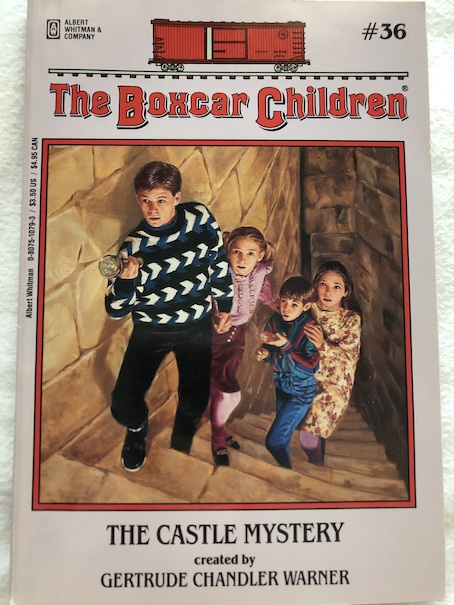


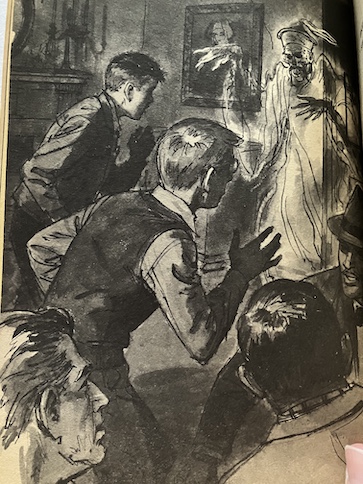


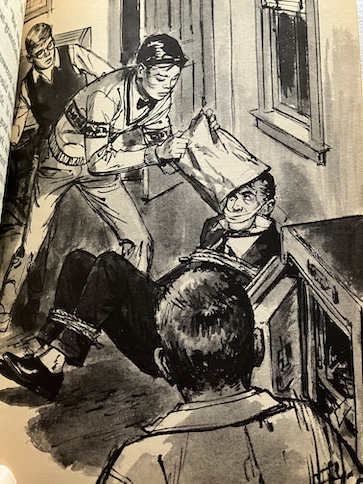
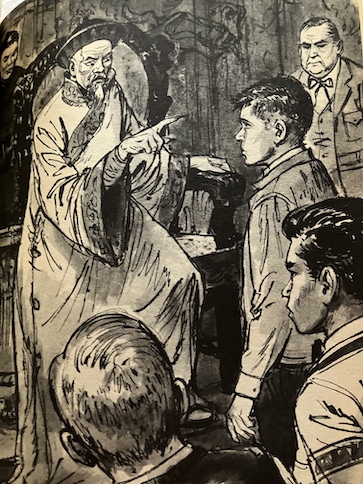

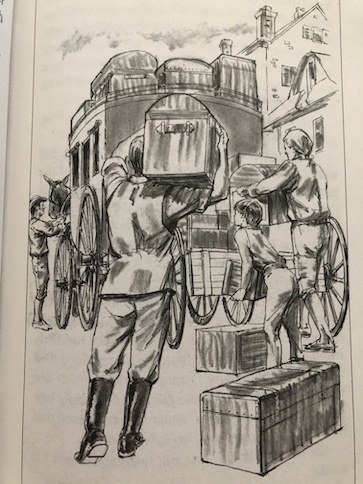
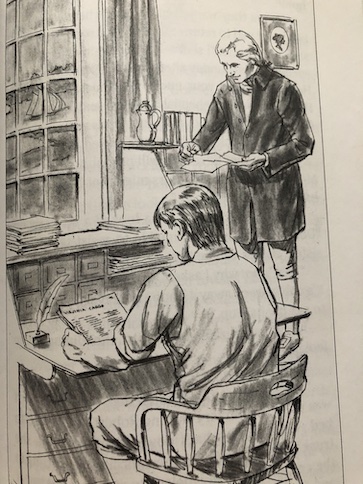


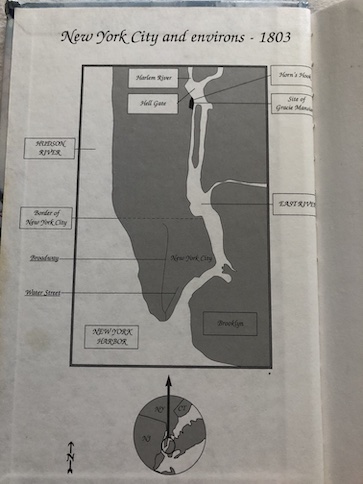
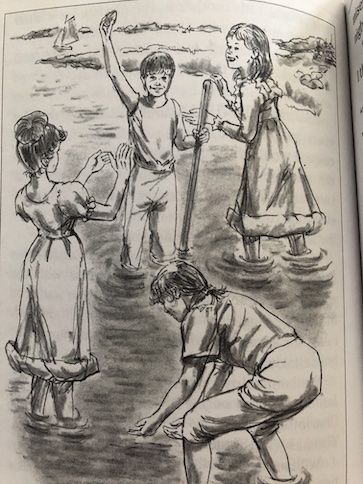

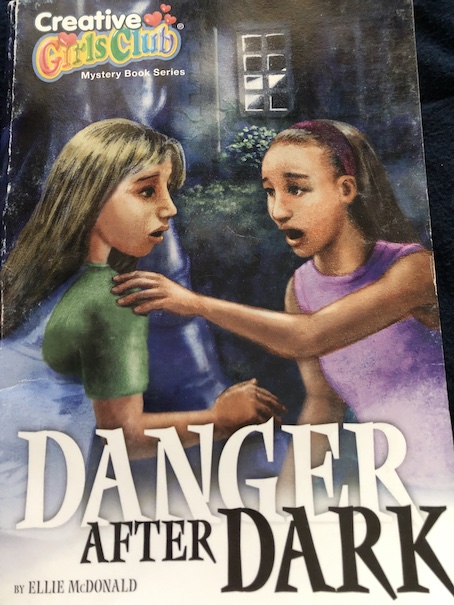

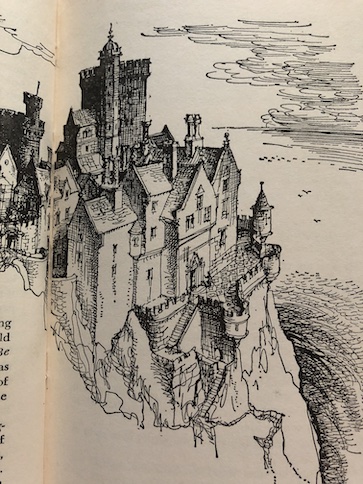
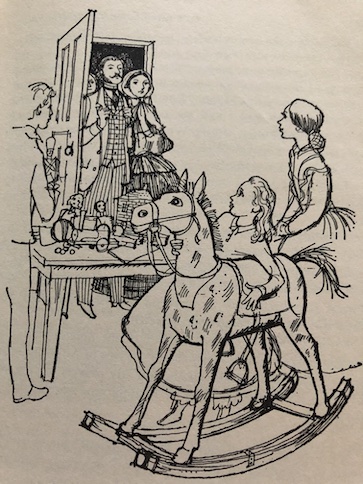
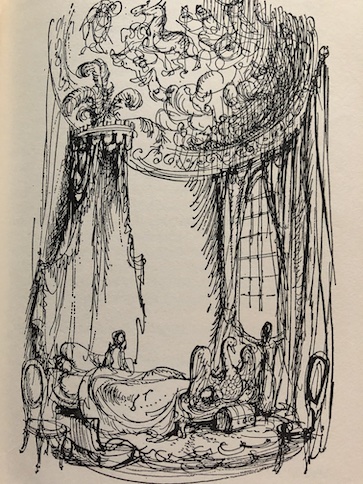


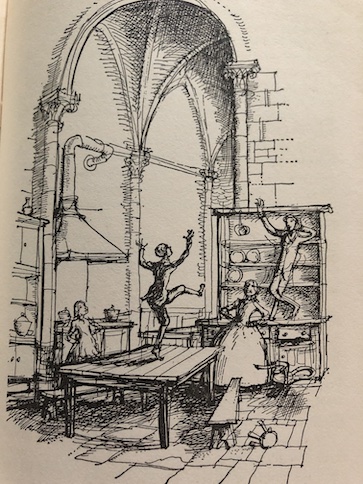


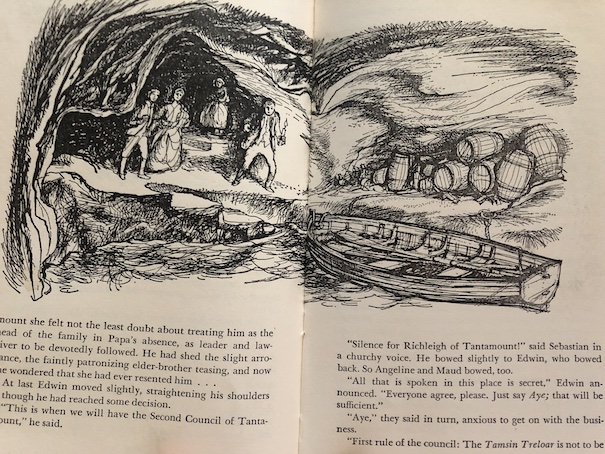
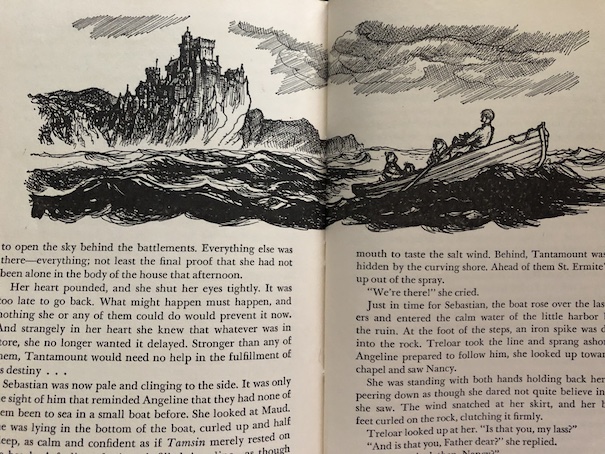


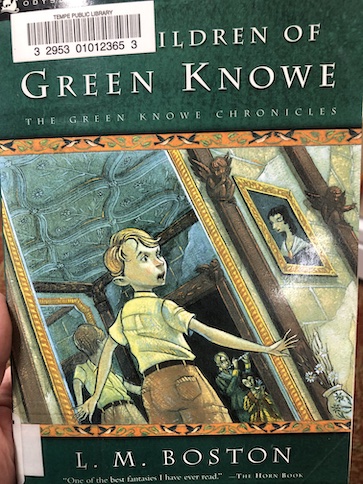


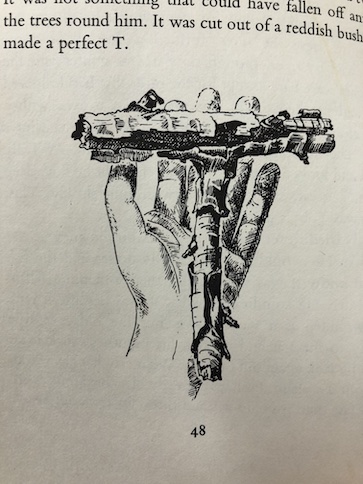
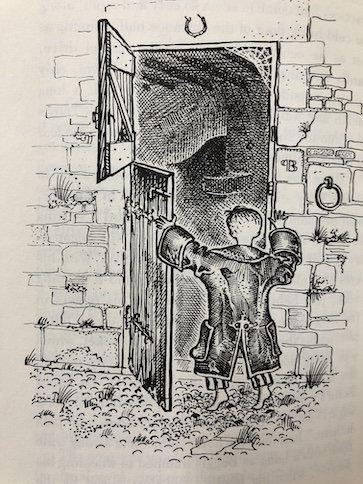


 #2 The Haunted Hall by Michael Avallone, 1970.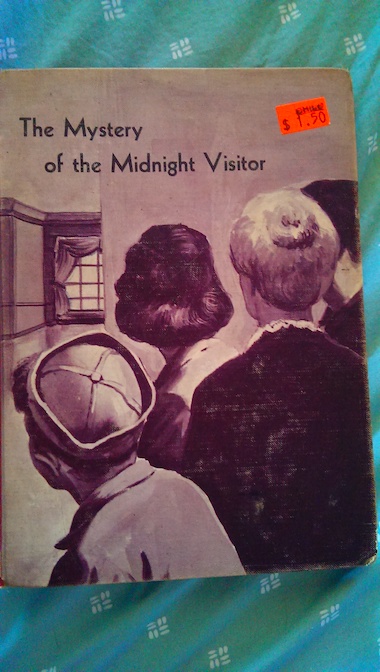


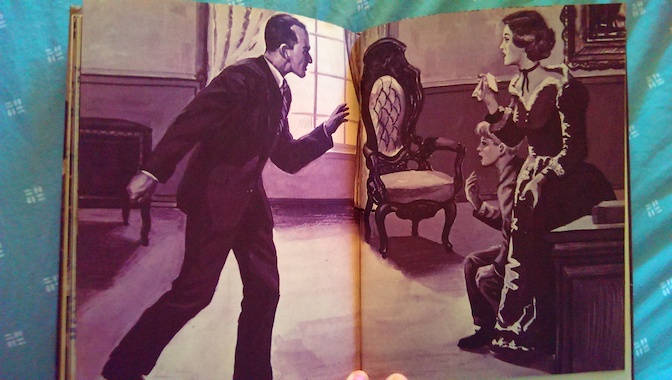
 Jestress's Forgotten Books and Stories