The Mystery of the Haunted Lighthouse

Three Cousins Detective Club

Sarah-Jane’s parents have been planning a trip, and her cousins, Titus and Timothy are coming, too. At the request of an old family friend, Ned, they are going to visit him and take a look at an old lighthouse that he is thinking of buying. He wants to turn the lighthouse into a bed and breakfast.

However, strange things have started happening at the lighthouse. Someone has vandalized the outside, and Sarah-Jane sees a frightening face up in the tower. Could the old lighthouse be haunted?

The theme of the story is faithfulness.

The book is available to borrow and read for free online through Internet Archive.

Since this is a Christian-themed mystery, readers can guess that there won’t be any real ghosts. This is more of a light, pseudo-ghost story, like Scooby-Doo mysteries, with another explanation for what’s happening.

There’s more than one kind of haunting. People can be haunted by memories, and living humans are also attached to the places associated with their happy memories. There is someone who has an attachment to the lighthouse and is unhappy that it’s being sold. This person needs to reconcile their feelings to the situation.

Some Christians don’t like the concept of ghost stories at all. In the book, Sarah-Jane likes hearing ghost stories, although she admits that she doesn’t like remembering them later, when she’s alone at night. She enjoys a little spooky excitement, as long as she knows it’s just a story, and she’s hearing it in a safe setting.

Aunt Flossie’s Hats (and Crab Cakes Later)

On Sunday afternoons, a pair of sisters, Susan and Sarah, go to visit their Great-Great-Aunt Flossie. They love her house because it is full of interesting things, especially Aunt Flossie’s hat collection.

When their aunt welcomes them in, she offers them tea and cookies and promises that they will get some crab cakes later. After they have their tea and cookies, Aunt Flossie lets the girls try on her hats and tells them stories about them.

The girls are fascinated by the different colors and styles of the hats, but to Aunt Flossie, they represent memories. As the girls pick hats to try, Aunt Flossie tells them what the hats remind her of.

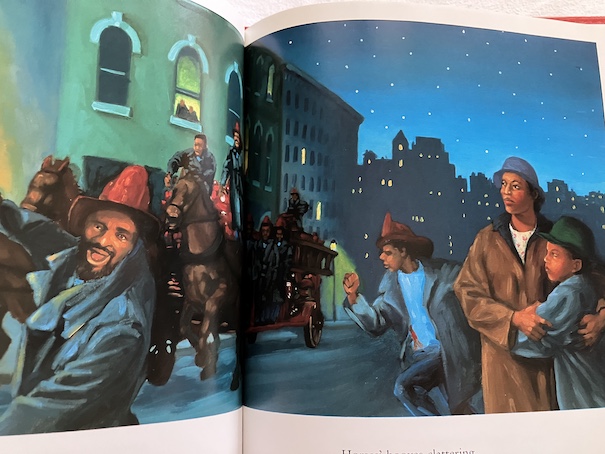
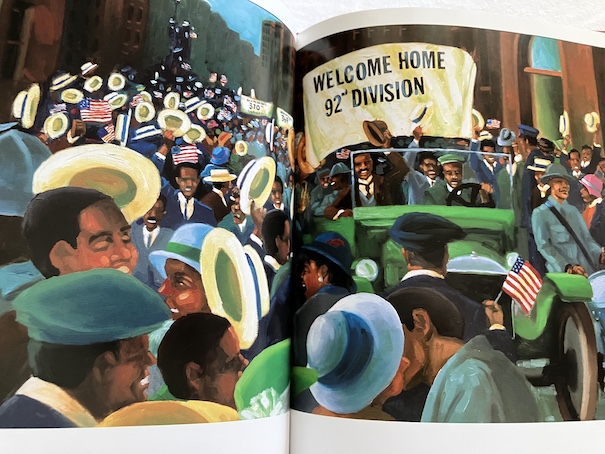
One hat that still has a slight smokey smell reminds Aunt Flossie of a big fire she witnessed in Baltimore. Another hat, one with a red feather, reminds Aunt Flossie of the parade she saw at the end of the Great War (what WWI was called before WWII).

Aunt Flossie’s favorite hat has pink and yellow flowers, and it reminds her of the time when she almost lost it, but it was rescued by a friendly dog. The girls love Aunt Flossie’s stories about her hats, and they love the crab cakes they get later with their family!

The book is available to borrow and read for free online through Internet Archive (multiple copies).

This is a sweet, slice-of-life story about an elderly aunt sharing her memories with her young nieces. The girls enjoy their time with their aunt, trying on the hats in her collection and getting glimpses of the past through her stories. By spending time together, getting together for tea (and crab cakes later) and trying on the hats, the girls are also building new memories. Years later, they will be able to tell stories about the afternoons they spent with Aunt Flossie and the stories she would tell them about her hats. A note in the book’s dedication indicates that the story is based on memories of the author’s own elderly Aunt Flossie.

The pictures in the book are colorful, like the colors of the aunt’s hats, and they’re also a little soft. I think the soft quality of the images is a good match for the memories the aunt shares with the girls and the new memories they’re creating by sharing stories and spending time together as a family.

Grandma’s Records

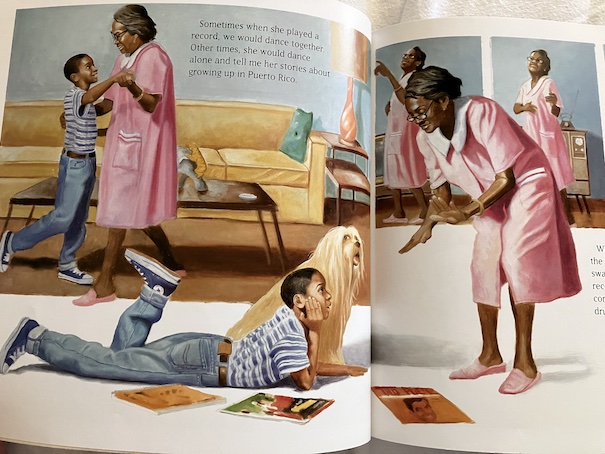
Every summer, a boy goes to visit his grandmother. He loves summers with his grandmother because she plays records from her record collection, teaches him to dance, and tells him stories about life in Puerto Rico, where she grew up.

She instills a love of music in her grandson and uses it to share memories with him about his grandfather and their home town. Sometimes, she lets him choose records from her collection to play, complimenting him on his choices. The boy likes art, and he makes sketches based on the album covers.

Then, his grandmother’s nephew comes to visit from Puerto Rico, along with his band. The boy is thrilled to meet them, and they give the boy and his grandmother tickets to see them perform in New York.

It’s a special occasion! They love the performance, and afterward, they visit with the band backstage. The boy and his grandmother continue sharing music with each other as the boy grows up, and as an adult, he continues to play it in his art studio.

At the end of the book, there are lyrics to one of the songs, In My Old San Juan (En Mi Viejo San Juan – YouTube video), both in English and Spanish. It’s a popular sentimental and nostalgic song for Puerto Ricans living abroad, as this YouTube video explains. The book is available to borrow and read for free online through Internet Archive (multiple copies, including one in Spanish).

The story is really about the author/artist of the book and his own grandmother. At the end of the story, the picture he’s drawing in his studio is the cover of this book. It’s a touching tribute to his grandmother and the special memories he shared with her as they bonded over music! Parts of the story reflect on their Puerto Rican heritage, which is something they share and discuss with the grandmother’s nephew and the members of his band. I like how the author emphasizes that what makes the music so special are the memories associated with it. At first, the memories are his grandmother memories, but through his experiences with his grandmother, he builds memories of his own associated with the music they’ve shared. It is these memories as well as the music that helps to fuel his art.

Mirror of Danger

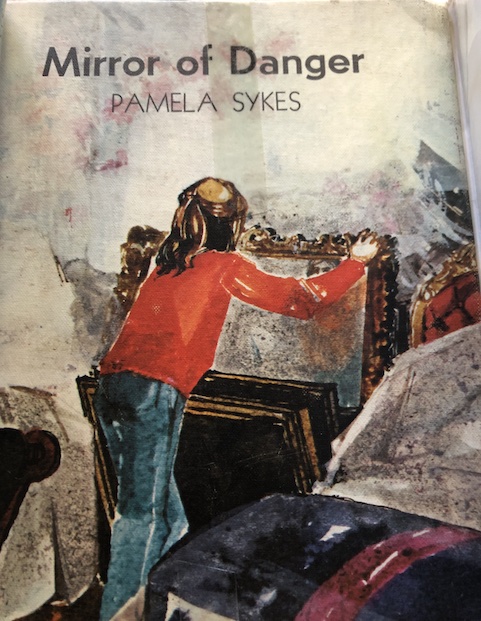
Mirror of Danger by Pamela Sykes, 1973, 1974.

In the beginning, Lucy is an orphan who lives in the countryside with her elderly Aunt Olive. The two of them are very fond of each other. Then, Aunt Olive dies, and Lucy has to go live in London with her distant cousins. Even though Lucy inherited her aunt’s house, there were bills to settle, and the trustees in charge of Lucy’s legacy had to sell the house to pay them and provide money to help support Lucy. Lucy’s cousins have agreed to take her for Christmas, but Lucy isn’t sure whether or not she will be living with them permanently. It depends on how well Lucy gets along with the children of the family. People keep telling her “we’ll see” and reminding her to be brave and sensible and that changes are natural after someone dies. Her trustees and her aunt’s old friends want to do what’s best for Lucy, although they’re secretly a little concerned about whether their plans are what’s best for her. If she doesn’t get along with her relatives, they might have to send her to a boarding school, although they know that type of environment isn’t really suited to Lucy’s personality.

Since Lucy was raised and home-schooled by an elderly and old-fashioned woman, she is not accustomed to living in a big family or with other children and not even accustomed to any type of school environment. The adults who know her understand that Lucy is a quiet, reserved child who acts older than her age. Before she goes to stay with her relatives for Christmas, one of her trustees, Mr. Thomas, talks to Lucy about her life with her aunt and the need to give her other relatives a chance to be friendly. He says that Aunt Olive was an old woman who had a tendency to look back to the past, but Lucy is young and still has her future ahead of her. Mr. Thomas advises her to look forward. However, Lucy can only think of how much she already misses her life with her aunt and how she can’t imagine being happy with these relatives she’s never even met. She escapes thinking about these things by imagining herself other places, immersing herself in past memories.

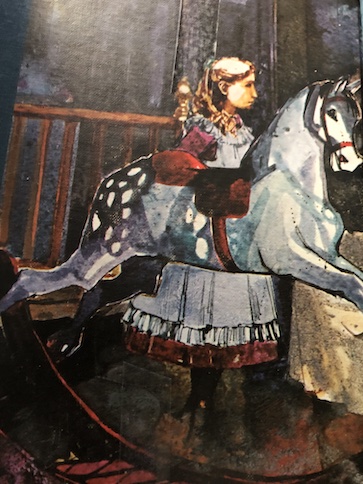
Lucy feels out of place in her new home and worries if these relatives really want her. The father of the family, called Uncle Peter, is an architect, and the mother, called Aunt Gwen, is an artist who used to design theatrical costumes. Their three children are pretty close in age to Lucy. Patrick is the oldest, Rachel is closest to Lucy’s age, and Bill is the youngest. Their house is an old Victorian house, which pleases Lucy, but she doesn’t like it when she finds out that Uncle Peter is modernizing it. Home renovations are part of what he does as an architect, but Lucy prefers old-fashioned styles to the modern ones, which feel too stark and have garish colors. The children of the family are noisy, and Lucy has to share a room with Rachel, when she’s used to having a room of her own in a quiet, old-fashioned house. Rachel points out that they haven’t been in this house very long themselves, and there are rooms in this house that haven’t been renovated yet. When the renovations are done, Lucy could have one of those rooms for herself, but again, Lucy feels like the renovations are destroying the old-fashioned charm of the place. She doesn’t see why everything has to be new and modern. While she has no idea where else she could go, Lucy just can’t imagine herself living in this house with these people.

Then, Lucy makes an unusual new friend. Alice is a girl about Lucy’s age, and she used to live in the aunt and uncle’s house 100 years before. Now, she haunts it as a ghost. Lucy first sees Alice in a mirror in the attic, where there are many antiques that have been stored away from Alice’s time. Alice brings Lucy back in time to visit her in the Victorian era because Alice is lonely in the past. She has six older siblings, but four of them have already left home to marry or start careers, and two are at boarding school. Her parents are away much of the time, so most of the time, she is alone with her tutor, whom she calls Mademoiselle. Alice says that she really wants someone to play with.

Alice shows Lucy her toys and games, which are all familiar to Lucy, looking like the ones she always played with at Aunt Olive’s house. However, Alice is spoiled and cheats at games to win. The two of them argue about it, and then Alice sends Lucy to the attic because her tutor is coming, and Alice doesn’t want her to see Lucy. Lucy finds herself in the attic in her aunt and uncle’s house in modern times, unsure of what just happened.

Over the next few days, Lucy spends part of her time with her relatives, preparing for Christmas, and part of her time in the Victorian era with Alice, which is also around Christmastime. Things are still awkward between Lucy and her cousins. On the one hand, she has some fun with them, doing things that Aunt Olive would never have allowed her to do, like going to the movies without adults and eating take-out fish and chips. On the other hand, Lucy is still overwhelmed when her cousins get boisterous, and she is repulsed by their ultra-modern Christmas decorations. Although Alice intimidates and even frightens Lucy, whenever things get overwhelming for her in modern life, Lucy retreats into the past with Alice … only for Alice to get intimidating and frightening again as she tries to keep Lucy in the past with her.

In some ways, Lucy feels more comfortable in the past than she does in her aunt and uncle’s modern home. She likes the homey feel of the house as it was in the Victorian era. The old-fashioned Christmas decorations and Alice’s party are far more charming to her than the modern ones, and she likes the old-fashioned party games better than dancing to modern music. However, Lucy becomes increasingly afraid of Alice. Alice tries to trap Lucy in the past and make her forget all about the present. When Lucy resists and tries to remember things about her family or modern times, Alice gets angry and threatens her. She says that she’ll make something bad happen if Lucy tells anybody about her. Alice has sinister intentions for Lucy. Alice is a lonely and selfish child who isn’t above lies, cheating, and manipulation to get what she wants. She exists only in the Victorian era, and what she wants more than anything is a playmate to join her for all eternity. She says that she always gets what she wants. She wants Lucy.

The book is available to borrow and read for free online through Internet Archive (multiple copies). The original British title of this book was Come Back, Lucy, which was also the title of the tv mini-series from 1978 based on the book. You can sometimes see trailers, clips, or episodes from this series online on YouTube. This fan page has more information about the tv mini-series and the book and its author.

My Reaction and Spoilers

The heart of the story is about looking back and living in the past instead of looking forward and living in the present. Aunt Olive, as an elderly woman, had a tendency to live in the past, bringing up Lucy as if she were a Victorian girl instead of a modern one. Because that was the only life Lucy knew from a young age, she clung to it after Aunt Olive’s death. It was what was familiar and comfortable to her when her life was changing, and she needed comfort. Her London relatives know that this is the case, but they’re not sure how to connect with her at first and to help her see that modern times and a new home can also become comfortable.

There’s a difference between just liking old-fashioned, vintage things and styles and the type of living in the past that Lucy does at first. There are people in modern times who still like the Cottagecore aesthetic and who try to live a slower pace of life and enjoy old-fashioned things and simple pleasures, something that came out of the coronavirus pandemic. But, just having a few vintage things and learning to slow down and appreciate the small things in life isn’t quite what Lucy does. It is the sort of thing she misses from the old-fashioned house in the country, where she used to live, but the problem is that she uses her memories of that time, Aunt Olive, and the stories that Aunt Olive used to tell her about life in the past to take her mind off the things and people in the present too much. Whenever things get stressful or upsetting to her, she retreats into past memories, so she doesn’t have to think about how her life has changed or learn to appreciate the things around her or get along with other people. Her relatives can tell that she’s shutting them out, and while they’re sympathetic to her struggling through her grief, it’s also hurtful that she’s rejecting them. She’s not just using her past memories or love of old-fashioned things for comfort but to avoid dealing with things in the present and forming new relationships.

At the same time, Lucy feels like her relatives don’t really care about her or the life she had before she came to them because they never express sympathy about Aunt Olive’s death or ask her any questions about what she was like. However, that’s due to a misunderstanding and miscommunication rather than her relatives trying to ignore Lucy or Aunt Olive’s death. If Lucy had bothered to read Aunt Gwen’s letter to her all the way through before she arrived at their house, she would have known that Aunt Gwen had told her children not to bring up the subject of Aunt Olive until Lucy did because she didn’t want them upsetting Lucy by forcing her to talk about her death if she wasn’t ready. Her relatives planned to wait for Lucy to feel ready to talk to them and for her to raise the subject herself. Because she was too upset to read the letter, Lucy didn’t understand that and has been waiting for them to talk to her first. At the end of the story, Lucy does read the letter, and she and her relatives have an honest talk about everything, including Alice. This is exactly what Lucy needs to free herself from Alice.

Alice is a similar sort of malevolent child ghost to Helen in Wait Till Helen Comes or Emily in Jane-Emily. She is selfish, and she has no concern for Lucy and Lucy’s life and future. Alice is dead, and she lives only in the past because that’s the only place where she can live. She has no future left. The one thing that past Alice is waiting for is a message from her parents, who are looking for a house in the country to buy. When the message finally arrives for her on December 21, 1873, Lucy has her final encounter with Alice on the 100th anniversary of the event. Alice is happy because she wants to move to the new house and live there with her parents, but she’s also decided that she’s going to bring Lucy with her by drowning her in an icy pond. In a frightening scene, she tricks Lucy into walking out on thin ice, but fortunately, Lucy is saved by her cousin Patrick.

After this incident and her brush with death, Lucy is finally able to release all of her bottled-up feelings about Aunt Olive and the changes in her life and explain everything to her relatives about Alice and how Alice has been influencing her to do and say things that upset them. Aunt Gwen had suspected that Lucy had seen a ghost or at least thought that she had, but she had thought that maybe Lucy had seen someone who made her think that she was seeing Aunt Olive’s ghost. Then, Aunt Gwen saw a door in the house open and close by itself, making her think that maybe the ghost was real. Rachel knew that Lucy was upset about someone named Alice because Lucy was talking in her sleep, but she didn’t know who Alice was. By the time Lucy reveals everything, all of her relatives have had encounters with Alice or things Alice caused to happen. Lucy isn’t sure when she explains things whether or not they all believe her that Alice is a real ghost. Aunt Gwen is convinced, and so is Bill because he met Alice face-to-face at one point and can describe her. Uncle Peter does consider the idea that Alice is a ghost in Lucy’s mind, inspired by all of Aunt Olive’s stories about her Victorian youth and the old house they now live in, but then, he looks through more of the things in the attic and finds Alice’s old scrapbook with her final note about moving to the countryside and starting a new life on December 21st. In the context of the story, Alice is a real ghost who posed a real threat to Lucy, and not just the imagining of a distraught child.

There are a couple of factors that end Alice’s threat to Lucy. The first one is getting past the 100th anniversary of Alice leaving the house, which seems to hold great significance to the ghost, like it was her last opportunity to connect with the house in the present. We never find out Alice’s full history or why she haunts the house as a child in the time shortly before she was supposed to move to the country. She simply disappears after her attempt to kill Lucy so she can remain in the past forever and go to her new home with her. Alice is a ghost who is conscious that she is a ghost, and she knows that Lucy lives in a different time period with people who inhabit her house in the future or present time. Because Alice is a child and seems forever stuck as a lonely child, it seems that she died young somehow and is aware of it, but we never find out exactly how that happened. I have a theory that she was killed in an accident on the way to her new home, but we are never told that. It feels like a let-down that we don’t get the rest of the story about Alice, especially because Lucy says that she would like to learn more about the historical Alice so she can think of her more as a person and less as a ghost.

There is a sequel to this book called Lucy Beware, so perhaps more of that information is revealed in the sequel. The sequel is much more rare than the original, book, though. It only rarely comes up for sale, even online. I’ve checked Amazon, eBay, Etsy, Alibris, and Abe Books, and currently, none of them have a copy. It’s not even on Internet Archive. (At least, not yet, as of this writing.) You can try to get the sequel through an interlibrary loan, but not all libraries will loan out books that are considered “rare.”

The most important factor that breaks Alice’s connection to Lucy is Lucy’s changing feelings. Lucy has some control over when she goes back in time and when she returns to the present, although it takes her a while to see it. There are times when she deliberately seeks out Alice in the past, even when Alice disturbs her, because she just finds the present time and her relatives so overwhelming. While she doesn’t really want to stay with Alice in the past forever, especially at the expense of her own life, Alice gives her someone to talk to about things that she can’t bring herself to talk about with her relatives and a place to retreat to so she doesn’t have to think about the present or her future. At one point, Lucy and Rachel are talking about the importance of making plans for the future. Rachel says that everyone needs to think of the future, and she is exhilarated by all of the possibilities that modern life has to offer for young women. However, because of her life with Aunt Olive, who lived mainly in the past, Lucy is unaccustomed to thinking about the future and finds the prospect frightening. To a woman like Aunt Olive, girls should simply receive a basic education and then get married. Beyond that, Lucy doesn’t know what she wants out of life. She has never considered having a career or learning to support herself because Aunt Olive never discussed things like that with her and never prepared her to make decisions like that. At the beginning of the story, Lucy finds it difficult to look much beyond the immediate future anyway because it seems uncertain where she will live since Aunt Olive is gone. However, once she and her relatives open up to each other and it becomes clear that they do want her to stay with them, her doubts and fears about her immediate future are resolved. She has people who love her, care about her feelings, and want her to talk to them about things, so she no longer feels so overwhelmed about her situation and in need of a retreat. Aunt Gwen says that Alice no longer has influence over her because, whether or not Alice still wants Lucy, Lucy no longer wants or needs Alice. Lucy can now face her present and future without feeling the need or temptation to escape into Alice’s past.

It’s true for people who are victims of living narcissists, too. Abusive people count on their victims being unable to leave them, and they even try to gaslight victims into thinking that they really need them in their lives, for some reason. As soon as their victims realize that they can escape and manage without them, their abusers lose their hold on them. Lucy has no more desire to return to her abuser/attempted murderer because she has dealt with the insecurities that made her vulnerable to Alice and kept her tied to the past, and she has forged new bonds with other people.

One other thing that I really liked about this story was the description of the antique games and game pieces that Lucy kept from Aunt Olive’s house. If you’ve never heard the term before, Spillikins is an old name for Pick-up Sticks. One of the more unique gaming pieces was the set of fish-shaped game counters. There were real fish-shaped game counters (link repaired 12-11-23) like that that were used in the 1800s for playing card games.

Mystery of the Green Cat

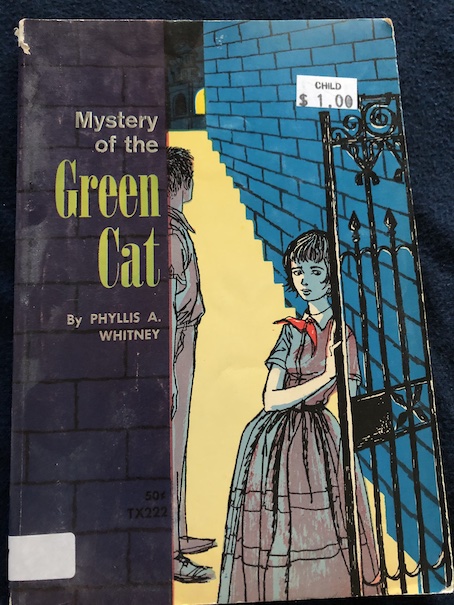
Mystery of the Green Cat by Phyllis Whitney, 1957.

Things just haven’t been the same for twins Andy and Adrian Dallas since their mother died two years ago. Now, their father has remarried to a woman he met through his work, and Adrian has been having an even harder time coping with it than Andy has. The twins have always been different from each other, not identical in appearance or personal interests, but now, Adrian is frequently angry and moody, and he’s getting on Andy’s nerves.

Their new stepmother, Emily, isn’t bad, and Andy can tell that she’s trying hard to be nice to them so that they’ll like her, but it does make the boys uneasy that their father seems to be having an easier time moving on from their mother’s death than they are. Also, Emily has two daughters, Jill and Carol, who have been living with their grandmother. Now that Emily has remarried, Jill and Carol are coming to live with her, her new husband, and the two boys in San Francisco. Emily has been saying that they’ll all be one big family now, but all of the children have misgivings about it. The twin boys have never lived with girls before, and they’re not looking forward to having a bunch of girly stuff around or Carol practicing her dancing in their new house. Meanwhile, the two girls aren’t sure that they’re really looking forward to suddenly having a couple of brothers. Carol is optimistic and thinks it might be fun, but Jill remembers that she hasn’t gotten along with the brothers of some of her friends. This new blended family is a major adjustment for everyone.

Adrian is so angry and upset about the coming of the girls that he refuses to go meet them at the airport with the rest of the family. Andy goes, although he is uneasy about meeting his new stepsisters, and Jill can tell that he’s not really happy to see them. Andy’s father explains Adrian’s absence by saying that he had a summer school art project to work on, although he does warn Jill that Adrian might need some time to get used to being around girls because he doesn’t make friends easily. Jill bluntly asks if that means that Adrian doesn’t want them around, and her stepfather says that it’s more that Adrian is still mourning his mother and having trouble adjusting to his new stepmother. But, he adds that he and his sons have really been lonely since his first wife’s death, and they’ve really needed someone like Emily in their lives, and he’s sure that Adrian will eventually realize that. He asks Jill, as the oldest girl, if she would try to make friends with Adrian. Jill’s not sure how she’s going to do that if Adrian doesn’t want to be friends with her. (This is a recurring theme in other mystery stories by Phyllis Whitney. The solution usually involves shared experiences binding people together, and this is partly the case in this book, too.)

The Dallas family house is situated on Russian Hill, and as they approach it, Jill’s mother points out another house higher on the hill, which she calls a “mystery house,” knowing that Jill loves mystery books. Her stepfather says that there are two women living there, Mrs. Wallenstein and Miss Furness. The two women are somewhat reclusive, and nobody really seems to know much about them. Andy says that Mrs. Wallenstein is a baroness, but his father says he thinks that’s just a rumor. The two elderly ladies also have a Japanese family working for them. The wife is their cook, and the husband is their gardener. Later, Jill spots someone spying on the Dallas house, peeking down from a wall surrounding their property, and Andy says that’s probably the daughter of the cook and gardener. Andy and Adrian have seen her around before, although they haven’t spoken to her much.

While they’re all sitting at the table, eating and talking, someone suddenly throws a rock through one of their windows. The rock came from the baroness’s house, so the father of the family says he’s going to call her and talk to her about it. However, when he calls, Miss Furness answers the phone, denies that anyone at her house would do such a thing, and hangs up. The boys tell Jill that this isn’t the first time someone has thrown rocks, but the last time, the rock just landed on the terrace and didn’t break anything. The boys haven’t wanted to tell the parents about the last time. Jill asks why not, and Andy refers to a “green cat” but doesn’t really explain what that means.

Later, the Japanese girl from the house next door stops by and introduces herself to Jill as Hana Tamura. (Hana’s English is imperfect, and this is one of those books where the author tries to write like the character is speaking to reflect the accent. Hana switches her ‘r’s and ‘l’s when she speaks in that stereotypical way Asians in old movies speak.) Hana admits to breaking the window and says that she did it by accident. She was just climbing the wall to see the new children who moved in next door when she kicked a stone loose from the wall that broke the window. She offers to pay for the damage. Jill’s mother says that won’t be necessary, but Hana insists that she accept some money. Jill’s mother invites her to stay and visit with Jill and Carol, but Hana says she can’t because Miss Furness doesn’t like her visiting with neighbors. Miss Furness doesn’t seem to like people much. Jill is disappointed because she could use a new friend in her new home, and Hana is interesting because she’s the first Japanese person Jill has ever met. (That’s interesting to me because Jill and Carol were originally from New York, and I would think that they’d see all sorts of people there.) Before Hana leaves, Jill asks her if she knows anything about a green cat. Hana refuses to answer, but Jill can tell that she’s a little disturbed at the mention of the cat. Jill’s mother is a little concerned that Hana isn’t being allowed to associate with neighborhood children and says that she’s going to try to talk to Miss Furness about it.

It turns out everyone has completely misunderstood the relationship between Miss Furness and Mrs. Wallenstein (“the baroness”). Rather than Miss Furness being the housekeeper for Mrs. Wallenstein, she’s actually Mrs. Wallenstein’s sister and the head of the household. When Jill spots Mrs. Wallenstein watching her with binoculars, Adrian says that she’s done that before and also finally confides that Mrs. Wallenstein was the one who threw a rock at him and Andy when they were on the terrace, not Hana. The “rock” Mrs. Wallenstein threw was actually just a little pebble, and Andy scooped it up, refusing to even show it to Adrian, although he doesn’t immediately explain why.

After a visit to the house next door to deliver a letter for Mrs. Wallenstein that was accidentally delivered to the Dallas house, Jill comes to realize that Miss Furness doesn’t treat her sister well, reading her mail and keeping people from her, and that Mrs. Wallenstein is in need of help. Andy finally explains to Jill that the rock Mrs. Wallenstein threw had a note tied to it, asking them to help her find her “little green cat.” He didn’t want to tell Adrian before because he didn’t think Adrian would take it seriously. The kids aren’t sure what the “little green cat” is, but both Jill and Andy want to help poor Mrs. Wallenstein.

Miss Furness doesn’t really mean to be mean to her sister, but she is extremely overprotective of her and keeps her isolated from other people because she has been suffering from ill health and memory problems. Mrs. Wallenstein went through hard times in her life after her husband died, and she was badly injured in an earthquake in Japan, which is why she’s now confined to a wheelchair. Sometimes, when Mrs. Wallenstein starts reminiscing about the past, she becomes confused about what’s past and what’s present, and it all begins blending into one. Her sister has been trying to shield her from past traumatic memories, but Mrs. Wallenstein has the feeling that there’s something important that she wants to remember, and she can’t quite figure out what it is. The key to unlocking Mrs. Wallenstein’s memory and learning the truth about the past lies in finding the little green cat.

The book is available to borrow and read for free online through Internet Archive.

Themes and My Reaction

Adjustment to changing family situations is a common theme in Phyllis Whitney’s young adult mystery stories, but this one is a little different from most. Most books by Phyllis Whitney are told only from the point of view of a girl, using third person limited. Even when boys play a major part in stories, the focus is usually on the girl. This book is told mostly from Jill’s perspective, but Andy is the one who begins the story, giving some insight into how he and his brother are feeling before the girls arrive. Although the boys and girls are separate when the book begins, their feelings toward each other are pretty similar. All of the children are trying to adjust to major changes in their lives and having misgivings about suddenly having new siblings of the opposite sex.

I think it’s also important to point out that, although the story focuses on a blended family, there is no divorce in the story. The two parents who are entering into a second marriage were widowed. This book was written in the 1950s, and in the first half of the 20th century, people didn’t talk about parents getting divorced as much. In children’s books of this time period, single parents and remarriages were usually the result of the death of a parent. It’s not that divorce was never mentioned; it’s just that it wasn’t nearly as prevalent in children’s literature, partly due to the social stigma against divorce at the time. I’ve sometimes thought that, in some ways, it was also probably easier for authors to explain the loss that accompanies a parent’s death, which would not have been the parent’s choice and was just a tragedy that couldn’t be helped, than the reasons why parents would willingly choose not to continue living with each other or why one parent would no longer live with the children. This is different from modern children’s books, where it’s usually more common to see divorced parents than dead ones. In fact, quite a lot of modern children’s books include divorced parents. Both death and divorce involve feelings of grief and loss, but if the loss is from a death that just couldn’t be helped, the author can avoid addressing the painful questions of “why” the separation happened. In real life, the reasons for a divorce can involve complex and sensitive issues that many adults would find difficult to discuss with children, including marital infidelity, emotional neglect, financial problems, addiction, and physical or psychological abuse. There’s never a happy reason for a divorce, so saying that the absent parents in the story died allows authors to skip over all of that. Death is sad, but it’s a little more self-explanatory. Andy and Adrian’s mother died from an unspecified long-term illness, and there’s no need for the characters to explain more than that. I could be wrong about some of my theories here, but that’s the impression that I sometimes get from older books. There is less social stigma surrounding divorce in modern times, and the prevalence of divorce in society has made it increasingly important to address children’s feelings about divorce in children’s literature, which is why there are now more books about it. That being said, the loss of a parent because of death is something that children still experience today, and the author of this story makes some important points about the feelings that someone can experience when they lose someone close to them.

As Jill gets to know Adrian, she comes to learn some of the reasons why he’s really unhappy. It’s partly because, when they moved to the new house after his dad remarried, he and Andy had to start sharing a room to make room for the two girls. Adrian and Andy have very different interests, and sharing the space has been particularly hard on Adrian. Adrian is a tidy person, and he’s very serious about art. He needs space to work on his artwork, and Andy is messy and likes to hoard pieces and parts for building things. Jill starts making friends with Adrian when she figures out how to make a better working space for him, but she upsets him again when she accidentally breaks the vase holding his brushes, which reveals the second reason why Adrian is unhappy. When the family moved to the new house, his father got rid of many of the things that used to belong to his first wife. Adrian has been blaming his stepmother for the loss of many of these sentimental reminders. Adrian doesn’t have many reminders of his mother left, and the vase was one of them, so now he blames Jill and her mother for the loss of that. As all the little reminders of his mother seem to be disappearing and Emily and her daughters are moving into the space, Adrian is afraid of losing all of the memories he has of his mother. It’s a situation that’s somewhat similar to Mrs. Wallenstein’s problem, using physical objects as a reminder of the past.

Mrs. Wallenstein has suffered sadness and trauma, which is part of the reason why her memory is so faulty. However she badly wants to remember some of the things she’s forgotten since her injury in the earthquake because they hold the key to the truth about her husband’s death. He died or disappeared under mysterious circumstances, and his business partner was murdered. Some people claimed that her husband might have actually killed his partner, but Mrs. Wallenstein doesn’t believe that. The clues to what really happened are tied up with the mysterious green cat.

However, part of the story also involves selfishness and self-centeredness. Mrs. Wallenstein’s husband’s business partner was a very selfish man, always needing to be the center of attention and taking credit for things that Mrs. Wallenstein’s husband did, and that’s tied in with the story of what happened to the two of them. In his own way, Adrian is selfish, too. It’s true that he’s still grieving for his mother, but the way he shows his grief is selfish, and Jill finally tells him so. Just because his stepmother isn’t his mother is no reason for him to be constantly cold and rude to her. Adrian is also rude and inconsiderate to other people, including Jill, their new friend Hana, and his own brother. Each of them is also dealing with something hard in their lives, but all Adrian cares about are his own feelings. While they all tiptoe around him, trying to make friends with him and be extra careful of his feelings because he’s “sensitive”, he says rude and condescending things to them or suddenly goes into a moody pout if he’s reminded of his mother’s death and/or his father’s remarriage. As Jill says, he’s sensitive, but only about himself; Adrian has no sensitivity for anyone else’s feelings. He’s even careless with Mrs. Wallenstein’s green cat after he learns that it has no monetary value, not considering what it means to her and her past. For someone who’s hyper-aware of belongings that have meaning for him, it’s an incredibly selfish thing to do. He not only doesn’t try to help the others solve the mystery of the cat, but when he finds out some information on his own, he deliberately doesn’t tell them until he can show off how clever he is while taunting the others about how they’re not as clever as they think they are. I honestly thought that he was going to be more help to the others in the story and reconcile his feelings through their shared adventure, but only Andy does that. Adrian resists right up until the very end, when Emily has a very honest talk with him about his feelings and hers.

I was a little annoyed at the way Hana’s speech was shown in the book because it always annoys me a little when authors try to show someone’s accent through spelling. It often seems to detract from what characters are actually saying, and the r/l swapping when Asians speak has a stereotypical feel to it. It’s not that Asians in real life never do the r/l swap, but it’s usually way overdone when it appears in books and movies, so it gets on my nerves. The real life r/l phenomenon is really based on the fact that Asian languages have a tendency to use the same symbol to represent r/l sounds, and the sound those symbols represent is about halfway between the two, depending on the language. In that case, it’s not really so much “swapping” the sounds as making one sound that is more in the middle than English speakers are used to hearing. The speaker may not actually be hearing the difference if they’re not accustomed to thinking of a difference between those two sounds, while listeners who are accustomed to listening for a difference in those sounds are confused about which of the two sounds they’re actually hearing when someone makes a sound that’s kind of in-between.

That being said, the perceptions of Asians, particularly Japanese people, in the book is favorable. This book was published about 12 years after WWII, so I thought it was nice that the characters were looking at the Japanese characters favorably. Jill is genuinely interested in being Hana’s friend, and Jill’s mother wants Jill to be friends with Hana. Later, Hana tells Jill and the boys a little about her own history, how her parents were married before WWII, but because her mother was unsure about coming to the United States, she ended up staying in Japan without her husband for a time. Hana was born shortly before the war started, and her father was unable to come to see her or bring his wife and child to the United States during the war. In fact, Hana and her mother were only reunited with her father a year before the story starts, so she was 13 years old the first time she met her father. Although the other children in the story have had their share of loss and family problems, Hana’s story about her own life helps to highlight that other people have their troubles, too.

The author, Phyllis A. Whitney, spent the first 15 years of her life in Asia because her father worked for an export business. She was actually born in Japan and also lived for a time in China and the Philippines. Because of all of the travel in her early life, Phyllis Whitney’s books often include travel to various countries around the world, people from different cultures, and children getting used to new homes or living among unfamiliar people, for various reasons.

There are some interesting tidbits of information about Asian cultures in the story, particularly about Japanese culture. I thought the part about how Japanese traditionally calculate age was interesting. There are also some interesting pieces of information about San Francisco and its landmarks. I’d heard of Telegraph Hill before, but I didn’t know the origin of the name until the book explained it.

I liked the book, both for the interesting tidbits of information and for the plot itself. This mystery is one of what I think of as the “mysterious circumstances” type of mystery. That’s a name I made up to describe mysteries where no crime (or at least no obvious crime) has been committed but yet there’s evidence of strange happenings and unknown events that must be figured out. I honestly wasn’t sure what direction this story was going to take when it started out, and I changed my mind several times along the way, but it has a very satisfying ending.

Song and Dance Man

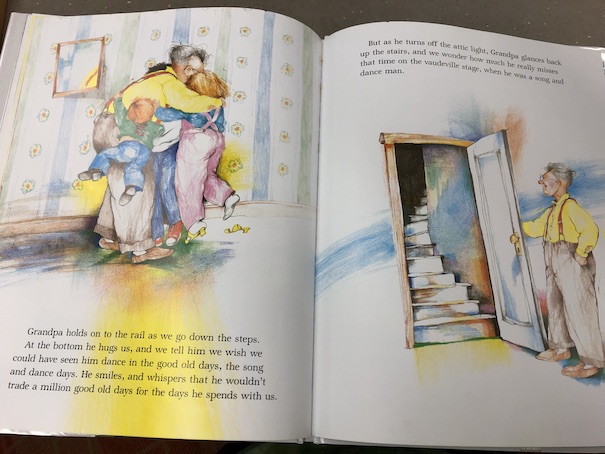
Song and Dance Man by Karen Ackerman, illustrated by Stephen Gammell, 1988.

A grandfather likes to tell his grandchildren stories about when he was a young man and he was a vaudeville performer, a “song and dance man.” Back before the invention of television, live vaudeville performances were a major form of public entertainment in the United States during the late 19th century and early 20th century. A typical vaudeville performance in the United States was like a variety show with short skits, music, singing, dancing, comedy routines, juggling, magic acts, ventriloquists, and various other stunts, acrobatics, and miscellaneous acts.

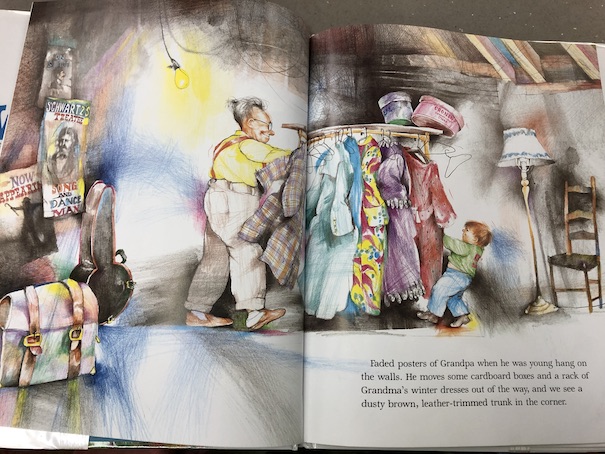
When his grandchildren come to visit, he likes to take them up to the attic, where his old costume pieces and tap shoes are stored, and he gives them a private performance of his old vaudeville act.

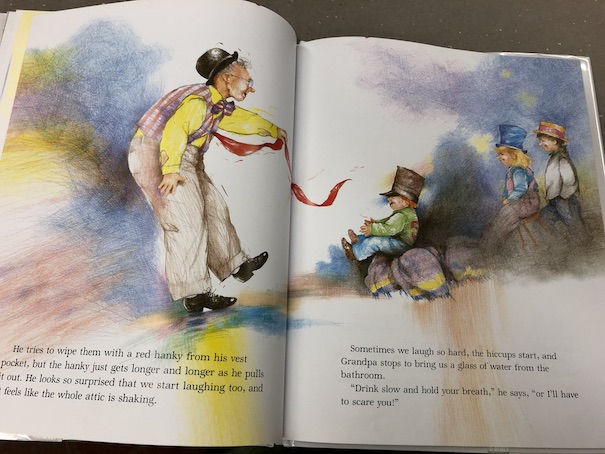
He sings songs, plays the banjo, tells jokes, and also does small magic tricks for the children, like pulling coins out of their hair.

The grandfather loves performing for his grandchildren, and they love seeing him perform. The children can tell that he misses the “good old days” when he was a performer, although he says that he wouldn’t trade the time he has with his grandchildren for his life in the past.

In a way, the fact that the children’s grandfather was a former vaudeville performer dates this story. In the early 21st century, children’s grandparents are mostly people who were born in the mid-20th century, probably between the 1940s and 1970s, depending on the age of the grandchildren and how old the grandparents were when they were born. By the mid-20th century, vaudeville had already gone out of fashion, declining in popularity during the late 1920s and early 1930s, around the time when sound movies were first being produced, although some earlier vaudeville performances actually included short silent films among the other skits and acts. The book talks about television ending vaudeville’s popularity, but it was really movie theaters that were the main competition for vaudeville. Some movies produced during the 1930s and into the mid-20th century carried on some of the vaudeville traditions, like certain types of comedy and song and dance routines, as former vaudeville performers, including Fred Astaire and Bob Hope, transitioned into movie performers. Vaudeville elements show up frequently in Shirley Temple movies, and the Road series of movies with Bob Hope, Bing Crosby, and Dorothy Lamour also features many call-backs to vaudeville variety acts, which is part of the reason why they’re so episodic, light on over-arching plot, and punctuated with song and dance routines. The people who were adults when vaudeville was still big would have been the parents or grandparents of modern, early 21st century grandparents. I first saw this book when I was a child, and my grandparents would have been among those old enough to remember vaudeville. The book was published in the late 1980s, a little over 30 years ago. The children in this book would be from my generation, about the age I was when this book was new, not the current 21st century generation of children. Even so, it is a fun glimpse at the past and can be a good opportunity to introduce children to the idea of changing tastes in entertainment and occupations that used to exist but either don’t exist now or have taken different forms in modern times. Modern grandparents could still use this book to talk about family history and memories of the past.

This book is a Caldecott Medal winner. The book is available to borrow for free online through Internet Archive.

The Hundred Penny Box

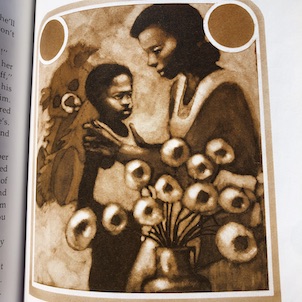
The Hundred Penny Box by Sharon Bell Mathis, 1975.

Michael’s great-great-aunt, Aunt Dew (short for Dewbet), has moved in with him and his parents because she is one hundred years old and no longer able to live on her own.  It has been a big adjustment for the entire family, but even though Michael has had to give up space in his room for her, he is glad that she has come to live with them because the old woman fascinates him.  She is (apparently) extremely absent-minded, often calling Michael by his father’s name, John, although some of that seems to be deliberate because she wishes that Michael’s parents had named him after his father.  Other times, she seems to forget that she’s no longer living in her old house or just starts singing an old spiritual song, forgetting what she was talking about before.

John is extremely fond of his elderly aunt because she raised him after his parents died in a boating accident, and she loves him like a son.  Aunt Dew’s own sons are long grown and gone.  However, Michael’s mother, Ruth, finds Aunt Dew’s presence in the house difficult.  Ruth thinks that Aunt Dew doesn’t appreciate some of the nice things that she does for her, and she thinks that Aunt Dew doesn’t like her.  It’s not completely true, but Aunt Dew does seem more comfortable around Michael after spending many years of her life raising boys, and Aunt Dew admits to Michael that she finds it difficult to talk to Ruth because they don’t know each other like she and John do. Aunt Dew and Ruth also have a conflict over some of Aunt Dew’s old possessions.

Aunt Dew is upset that Ruth got rid of some of her old things after she moved in with them.  Michael thought it was a mean thing to do, and Aunt Dew misses these objects.  When Michael argues with his mother about these objects, Ruth explains to him that she’s not trying to be mean.  Ruth compares Aunt Dew to a child, like Michael, saying that she “Thinks she needs a whole lot of stuff she really doesn’t.”  Ruth sees it as just clearing out things that are old and worn out and no good in order to make room for newer, nicer things, comparing it to when Michael got old enough to realize that he didn’t need his old teddy bear that was falling apart and was willing to get rid of it along with some other things in order to make room for Aunt Dew to move in.  Ruth sees clearing out old things as a way to move forward in life and thinks that it’s important to help Aunt Dew adjust to her new life with the family.  However, a lot of Aunt Dew’s long life and past are tied in with some of these objects, and as a one-hundred-year-old woman, Aunt Dew has more past behind her than future life to make room for.  Michael helps her to hide some of them in her closet to keep them from being thrown out, but he’s particularly concerned about her hundred penny box.

When Aunt Dew’s husband was alive, he started a penny collection for her with one penny to represent every year that Aunt Dew has been alive.  After his death, Aunt Dew continued to collect pennies, putting another penny into the box every year to represent her age.  Michael loves the pennies in the box because, when he counts them with Aunt Dew, she will stop him at certain years and tell him stories about things that happened during those years, telling him a lot of family stories.  Michael’s mother isn’t interested in taking the pennies, but she thinks that the old box they’re in is too worn out and should be replaced with something else.  However, Aunt Dew sees that box as being like herself: old and worn and holding all of the years of her life.  To throw it out would be almost like throwing out Aunt Dew herself.  Michael’s mother doesn’t see it that way, but Michael sees the connection.  To try to save the box, Michael hides it from his mother.

The conflict about Aunt Dew’s things isn’t really resolved by the end of the story because Michael’s mother still doesn’t understand how Aunt Dew feels, and we don’t know if she will come to understand or if the box will remain hidden or not.  I found parts of the story frustrating because Ruth doesn’t seem to want to listen to either Aunt Dew or Michael, discounting them as the kid and the old lady.  Even though Ruth is frustrated with Aunt Dew, I think that part of it is her fault for not really listening or trying to understand how she feels. This may be part of the reason why Aunt Dew feels like she can’t really talk to Ruth. To be fair, Ruth doesn’t mean to be mean, but at the same time, she kind of is because she’s too stuck on what she thinks is best and that idea that she knows better than a young boy and an old woman to consider that her ideas might not be what’s best for her family and family relationships and that she needs to give a little. My guess is that she’ll understand how Aunt Dew feels when she’s also an old woman, with more past than future ahead, but with a little imagination and empathy, I think she could see that decades sooner.  I remember reading this book when I was a kid and liking it for the concept of the hundred penny box and the old woman’s stories, but I find the lack of resolution a little frustrating now.  It’s one of those books that makes me want to sit the characters down and explain a few things to them, but I can’t.

Besides the concept of the penny box, I’m also fascinated by the name Dewbet, which I’ve never heard anywhere else besides this story.  The pictures in the book are also unusual, and there’s a note in the back of the book that explains a little about the art style.  The pictures, which are in sepia tones, are painted with water colors, and the light areas were made with water and bleach.

This is a Newbery Honor Book, and it is currently available online through Internet Archive.

There is also a short film version that is available to buy or rent from Vimeo. Teachers Pay Teachers has lesson plans for this book. If you would like to see a reading and discussion with the author of the book, there is a copy on YouTube.

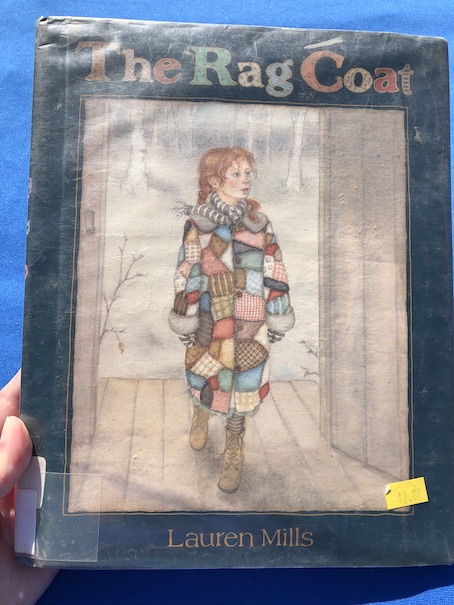
The Rag Coat

Minna is a poor girl, the daughter of a coal miner.  Her father has been ill with the miner’s cough, so Minna has to help her mother to make quilts that the family can sell for money.  She wants to attend school, but she can’t because she is needed at home and her family can’t afford a warm coat for her when winter starts.  It’s too bad because Minna really wants to make some friends her own age, and she would meet other children at school.  Her father says that he will find a solution to the problem, but he dies before he can.

After Minna’s father’s death, some of the other women in the community come to the house to work on making quilts with Minna’s mother.  When the women say that the quilt pattern they are using is named after Joseph’s Coat of Many Colors, Minna wishes again for a coat.  When the other women, who are mothers themselves, realize that Minna cannot go to school until she has a coat, they decide to make one for her.  They don’t have much money, but they do have plenty of quilting scraps.  They decide to make a new, quilted coat for Minna out of their old scraps.

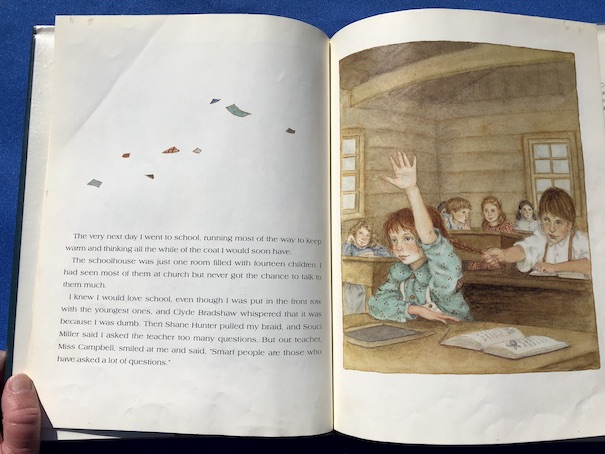
Minna starts going to school and does well, although she gets some teasing because, as a new student who has never been to school before, she has to sit with the youngest children, and Shane pulls her braid.  Something that Minna particularly likes at school is Sharing Day (what my school always called “Show and Tell”), where students are given the chance to show special things to the class and talk about them.  Minna decides that when her coat is ready, she will show it to the class during Sharing Day.

As the coat is being made, Minna admires all of the beautiful colors of the cloth scraps in the coat and adds a piece of her father’s old jacket as well.  Each of the other scraps in the coat also has a story that goes with it.  The cloth pieces come from old clothes and blankets that people in the families of the quilting mothers have used, and they memories attached to them.  The mothers tell Minna all of the stories as they work on the coat, and Minna loves it.

However, when Minna wears the coat to school for the first time, the other kids make fun of her for wearing rags.  Minna is really upset and runs away into the woods.  After thinking about it, Minna remembers what her father said about how people really need other people, and she decides to go back to school.  There, she tells the other students that the rags in her coat are actually their rags, and she begins reciting the stories that go with them.

One of the scraps is from Shane’s old blanket from when he was a baby.  He was born so small that everyone was afraid that he’d die, but the blanket kept him warm, and he later carried it around with him until it fell apart.  Shane is happy, seeing the scrap of his favorite blanket again in Minna’s coat.  Everyone else gathers around Minna, looking for their scraps in the coat and listening to the stories behind them.  Each of the scraps in Minna’s coat is like an old friend that none of them ever thought they’d see again.  The other children apologize to Minna for their teasing and Minna says that friends share and that it took all of them to make her coat warm.

The book doesn’t say when this story is supposed to take place, but based on the children’s clothing, I think it’s about 100 years ago or more. It doesn’t say exactly where this story takes place, either, but a note on the dust jacket says that it takes place in Appalachia. The author said that she was inspired by Appalachian crafts that she learned from the women in her family and a patchwork coat that she wore as a child. However, years later, the author revisited this story and rewrote it in a longer version, and some of the explanations that accompany the new version of the story elaborate more on the background.

The author rewrote this story in a longer, novel form called Minna’s Patchwork Coat (2015). In the back of that book, the explanation behind the story mentions that the year of the story is 1908. It also discusses some cultural references and songs included in the expanded version of the story that were not part of the original. It states that the inspiration for this story came not only from the author’s experiences but from a song written by Dolly Parton, Coat of Many Colors, which was made into a picture book itself after the publication of this book.

There is also an expanded retelling of the story called Minna’s Patchwork Coat, and I’d like to talk about some of the differences. For example, the ending message of the story is slightly changed in the longer version, or at least the emphasis of the moral is different. The original book emphasized how much “people need people” and how the goodwill of many people (in the form of the quilting mothers and their hard work and scraps, cast-off from all of their children) changed Minna’s life. They emphasize it at the end, talking about how Minna’s coat is the warmest of all of them and that it took a lot of people to make it that way. However, in the expanded version, Minna also explains that when she started school, she liked her classmates better than they liked her because, thanks to their mothers’ stories as they made her coat, she already knew who the other children were, but none of them really knew anything about her. The message of the expanded version is that it is important to learn others’ stories to learn who they really are and to become friends with them.

Actually, I don’t like the second version of the story as well as the original. I thought that the moral and the story were stronger when the focus was on how people benefit from having relationships with other people because people can do great things when a lot of people contribute a little. Remember, it took a lot of people to make Minna’s coat warm because each of them contributed at least one scrap to it and others took the time to put them all together. It was their stories that made the coat special, more than just an ordinary coat. The expanded story has that element, too, but more emphasis is placed on Minna needing to share her story with the other children to win their respect and approval. I didn’t like the notion that Minna needed to win their approval by telling her story. Also, this story takes place in a small mining community. I find it difficult to believe that the other kids wouldn’t basically know her story already. Her mother knows their mothers. Their families see each other at church before Minna goes to school. The disease that took her father’s life isn’t terribly unusual for coal miners, and probably, a number of the other children are the children of coal miners as well. It seems to be the major industry in the area. Minna’s family might be more poor than the others’ since her father’s illness and death, but I don’t see why their circumstances would be so different and incomprehensible to people who must have seen her and her family around and who knew them from church or through their parents’ associations. One thing that small towns and communities are known for is everyone knowing everyone else and their business, so why didn’t they all know Minna’s story already? Even if the quilting mothers didn’t talk about helping to make the coat for Minna, the other kids should have known about the family’s money circumstances and the tragic death of Minna’s father. I don’t see why the other kids would have known so little about her or thought that she was so unusual.

The expanded version of the story also features a Cherokee midwife and a biracial friend for Minna who did not appear in the original story. This friend, Lester, is also something of an outcast among the other children, and Minna and the stories from her coat help the other children to be more accepting of him as well. It’s a nice thing, I guess, but it felt a little artificial to me because I knew that it wasn’t part of the original story. I hesitate to criticize it too much because the basic message of the story isn’t bad, but I guess that the way the second version came out just doesn’t have the same feel to me. The author put things into it that weren’t in the original, and with that change in emphasis on the ending, it makes the story and characters feel a little less natural to me now. I often feel the same way when I see a movie version of a story that adds things that weren’t in the original book.

The Secret of Stonehouse

Stonehouse

The Secret of Stonehouse by Lynn Hall, 1968.

Heather has lived her entire life (as far as she can remember) in Scotland with her grandmother and her uncle, Donald.  Donald has raised her since she was small.  He’s been like a father to her, and she loves him like a daughter.  However, he recently decided to move the two of them to the United States, taking them to a small town in Wisconsin.  Heather can’t understand the reason for the move, and for the first time in her life, it seems like Donald is keeping secrets from her.

Donald seems oddly concerned that Heather shouldn’t tell people that she is adopted, something that he’s never seemed concerned about before.  Heather has asked him about her parents before, but all he can tell her is that his wayward brother Ewen brought her to the family farm in Scotland, saying that she was his daughter and that her mother was dead.  Ewen simply left her with Donald, never trying to see her or talk to her again and never sending her any money. Heather also knows that, although says that he’s going out to search for a new job, he’s been hanging out in other places, spending time with the mysterious Mr. Worley.

Heather makes friends with a boy named Gus who lives nearby.  Gus lets her ride one of the horses that his family owns, Cloud, and invites her to go riding with him sometimes and participate in local riding events called “shodeos.”  Heather loves horses and enjoys their rides together.

On one of these rides, the two of them go near a large, old, stone mansion that gives Heather a strange feeling.  Gus’s family tells her the tragic story of the family who used to live there, the Selkirks.  They were wealthy, but young John Selkirk was killed in an accident the day that his beautiful young wife, Molly, gave birth to their only child, a little girl named Hebron.  John’s parents never recovered from the loss of their son and passed away soon after, leaving just Molly and the baby.  However, when Hebron was only three years old, she was apparently abducted for ransom and later murdered, and her mother died soon after.  The story makes Heather uneasy, and the house gives her a strange feeling, like she’s drawn to it.

However, other sinister things start happening.  Someone in a car that looks disturbingly like Donald’s tries to run her and Cloud off a bridge.  When Donald spends the night away from home “on business”, someone sneaks into the house.  Heather begins to realize that someone is out to get her, some mysterious person means her harm.  Memories, dangerous ones, are beginning to surface in Heather’s mind, and someone is determined to try to keep her from remembering.

Part of the mystery is pretty obvious (at least, I thought it was, and you might guess it from my plot description), but the part that I didn’t guess was who was behind it all.

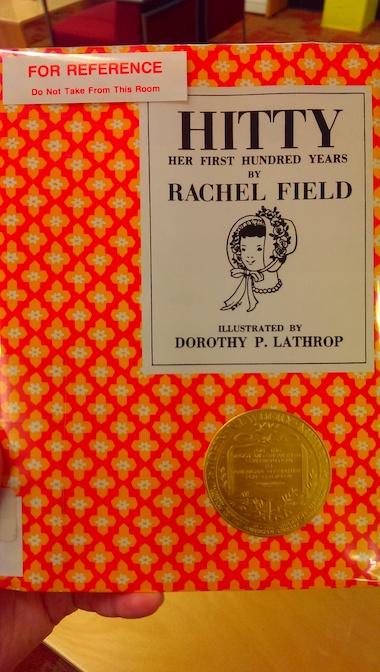
Hitty, Her First Hundred Years

Hitty

Hitty, Her First Hundred Years by Rachel Field, 1929.

Sometimes, I debate about how much detail I should use when describing the plots of books, but since this is such an old book and a more recently released version has altered the events in Hitty’s life significantly, I’ve decided to cover it in detail.  I do not have the updated version and haven’t read it, so what I describe below is the older version.  The book is episodic in nature, following the life and travels of a small doll named Hitty.  This book is a Newbery Award winner and is currently available online through Internet Archive (multiple copies).

These are the memoirs and adventures of a hundred-year-old wooden doll, which she writes as she lives in antique shop. She doesn’t recall exactly when she was made, but she knows that it was about a century earlier and that she was carved by a peddler in Maine for a little girl named Phoebe Preble.

HittyMemoirsThe peddler did some odd jobs for the Preble family on their farm that winter, while the weather was too bad for him to travel. They named the doll Mehitabel (a Biblical name from the Old Testament), and Phoebe nicknamed her Hitty. At her mother’s insistence, Phoebe made clothes for Hitty and embroidered Hitty’s name on the doll’s petticoat. Phoebe’s mother says that as long as she has her name on her clothes, she’ll always know what it is, whatever happens to her. Phoebe doesn’t see what could happen to Hitty because she wants to keep her forever, but Hitty is destined to live an adventurous life.

Phoebe misplaces Hitty more than once during their time together. The first time, she accidentally leaves her at church (when she wasn’t even supposed to bring her there in the first place). Then, Phoebe takes Hitty out to play one day, but she and her brother are frightened when they see some American Indians. (Phoebe lives in the early 1800s.) When they run away from the Indians, Phoebe accidentally leaves Hitty behind. Then, Hitty is picked up by a curious crow and carried to the tree next to the Preble house. She hangs from a tree branch for awhile before they realize that she is there and rescue her.

HittyShipwreckedThen, Phoebe’s father, who is the captain of a whaling ship, convinces his family to join him on a voyage. Life aboard ship turns out to be both exciting and perilous. One day, the ship catches fire, and the Preble family and all the crew abandon it. Hitty, once again, is unfortunately left behind. Although Hitty sees Phoebe gesture back at the ship and knows that Phoebe wants to return for her, it is too late for that.

However, luck is with Hitty, and instead of being burned, she is washed overboard as the ship goes down. Miraculously, she is washed ashore and found once again by the Preble family, who are now castaways on an island. They hope for rescue but fear the “natives” on the island. (Yep. “Savages”, “natives”, etc. These are sadly a common feature in vintage children’s literature. See Edward Eager’s Magic by the Lake for a funnier spoof version. The scene in this book is the sort of generic “savage natives” or “native savages” scenes he was making fun of, except that nobody tries any silly ooga-booga talk to communicate with them, and they don’t turn out to be cannibals. But, it does occur to me that if this book had been written in modern times, people would have insisted that the author give the proper name for the civilization on this island instead of just calling them “natives” and thoroughly research their actual habits and customs and present them in an informative, realistic way for the education of children reading this book, while writers and parents during this period didn’t seem to care about any of that.  Keep this in mind the next time someone tells you that younger generations are lazier and not as well-educated.)

One day, the natives come to have a look at the castaways, and their leader catches sight of Hitty and demands (through gestures) that she be handed over to him. Phoebe doesn’t want to give up her doll, but her father tells her that she has to. It turns out that the natives think that Hitty might be an idol that gives the castaways power, which is why they want it for themselves. Hitty is taken back to the natives’ village, and they use her as an idol themselves, making a little shrine to house her.

Hitty probably would have remained there if she had not been stolen from the temple by some curious monkeys and once again found by members of the Prebles’ party, who return the doll to Phoebe. Fortunately, the family sees a passing ship and manages to get rescued before the natives can come after Hitty again.

However, Hitty’s adventures are still not over. The ship that rescues them is going to India, and unfortunately, this is where Hitty and Phoebe are permanently separated when Phoebe loses her in a bazaar. Instead of being found by Phoebe or her family again, Hitty is found by a snake charmer, who uses her in his act, positioned near the snake. Even though Hitty is made of wood and not vulnerable to snake bites, she still finds the experience frightening.

From this point on (we’re about halfway through the story), Hitty changes hands repeatedly, gaining and losing owners every few years or so. Most of her new owners give Hitty a change of clothes, but they always keep her petticoat with her name still embroidered on it so, as Mrs. Preble once said, Hitty and her new owners always know her name.

An American missionary couple spot Hitty with the snake charmer and realize that her design looks like dolls in America. They have no idea how she got to India, but they buy her from the snake charmer and give her to their daughter, Thankful. Hitty lives with Thankful for a couple of years, and she enjoys her time with her, even though she really misses Phoebe.
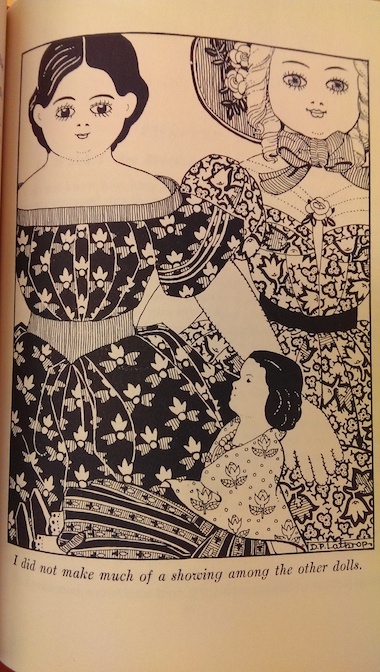
HittyOtherDollsThen, Thankful gets sick, and her parents decide that it might be time to send her home to the United States to stay with her grandparents. Thankful takes Hitty with her when she goes home to Philadelphia. Because Thankful’s early life was spent entirely in India, she has been unaccustomed to spending time with American girls her age, and she doesn’t know how to behave around the American children she meets when she first arrives in Philadelphia.  When the some of these (still 19th century) American girls first meet Thankful and Hitty, they think that Thankful is strange and make fun of her for her unusual habits and the way she dresses, telling her that her doll is ugly, too. Hitty has to admit that she isn’t as fancy as the other girls’ dolls. Thankful is so embarrassed by what the other girls say that she decides to hide Hitty in a sofa. After that, the sofa is taken up to an attic for storage, so Hitty remains hidden for a number of years.

HittyQuakerDuring her time in the attic, Hitty resents Thankful for abandoning her, in spite of all the charitable talk of her missionary parents. However, when Thankful is grown, Hitty is finally found by one of Thankful’s younger cousins, Clarissa Pryce, who really appreciates her. She doesn’t know how Hitty came to be in the attic, but thanks to the name still embroidered on Hitty’s petticoat, knows what to call her. Clarissa is a quiet, conscientious girl in a family of Quakers. She dresses Hitty as a Quaker girl, and Hitty lives with her for many happy years, learning to write as Clarissa goes through her schooling.

By now, the time of the Civil War is approaching, and Clarissa’s family are abolitionists. Hitty doesn’t really understand what the war was about, but she remembers being with Clarissa and watching soldiers march off to war. (This is where the updated version of the book differs greatly.  In the older version, Hitty doesn’t witness the war directly, but in the newer one, she does when she is sent to Charleston.)

Eventually, Clarissa gets older and is sent away to boarding school. Hitty is put into storage for awhile and then sent to the Pryces’ relatives in New York, along with some other things. However, Hitty’s package is misdirected and ends up being delivered to the wealthy Van Rensselaer family by accident. There, she is found by Milly Pinch, a seamstress doing some sewing for the Van Rensselaer family. Miss Pinch makes some stylish new clothes for Hitty, although she still lets her keep the petticoat with her name on it.

The Van Rensselaers’ young daughter, Isabella, sneaks into Miss Pinch’s room one day and finds Hitty, and a debate ensues about who really owns her. Mr. Van Rensselaer, on hearing where Miss Pinch found Hitty, says that rightfully, Hitty belongs to their family but that the clothes she is wearing are obviously Miss Pinch’s because she made them. Miss Pinch is gratified that he is being fair about it, but because Isabella really wants both the doll and clothes together, the family purchases them from Miss Pinch and gives her an excellent employment recommendation for her sewing.

Isabella is rather spoiled and has several dolls already, but she genuinely likes Hitty and takes care of her. Unlike Thankful, she even speaks up for Hitty when others say disparaging things about her plainness. While living with Isabella, Hitty even gets the chance to meet Charles Dickens. However, Hitty is stolen from Isabella by a gang of mean boys.

One of the boys in the youth gang takes the doll home with him and gives her to his younger cousin, Katie. The family is poor, but Katie loves her and gives her plenty of attention. When Katie gets sick and goes to live in the country for awhile, Hitty is accidentally lost in some hay and spends a long time in the barn, living with the mice.

When she is finally found, a pair of traveling artists are staying at the farm, and one of them keeps her to use as an artist’s model. He uses her to amuse children when he paints their portraits and even adds her into still life paintings. Hitty worries about how her painted features have faded, but the artist thinks that she’s much easier to paint than newer china dolls because the light doesn’t glare off of her. She stays with him for many years while he travels around the country, but he eventually leaves her with a pair of spinster ladies, Miss Hortense and Miss Annette, in New Orleans when he rents a room from them.

HittyBrideWhile living with these ladies, Hitty learns that Miss Annette’s fiancé died young, fighting for the Confederacy in the Civil War, and she still feels bitterly toward the North because of it. From her time with Clarissa, Hitty knows that many people in the North could say the same about the South, but of course, she can’t actually say so out loud. The ladies make new clothes for Hitty, dressing her as a bride, with her clothes made from an heirloom handkerchief, and put her on display at the Cotton Exposition (aka the 1884 World’s Fair). From there, Hitty is stolen by a little girl named Sally, whose father is the captain of a riverboat that carries cotton up and down the Mississippi River.

Hitty learns that Sally is a lonely child who travels with her father frequently because her mother is an invalid and cannot always take care of her. Sally knows that it was wrong for her to steal Hitty, but she so badly needs a companion that she is even willing to risk jail if it means that she can keep Hitty. However, after attending a revival meeting where there are warnings against the evils of theft and getting caught in a sudden thunderstorm, Sally panics, thinking that God may be about to strike her down for her sins, and throws Hitty into the river. (I found this scene a little disturbing because, when Sally fears that God will smite her with lightning for stealing, she not only makes a desperate apology but asks if anyone has to be struck, couldn’t it be one of the newly-baptized kids, who are sinless and would know that they were going to heaven? The fearful apology is understandable, but it’s a little disturbing to hear this little girl try to throw someone else under the bus like that.)

From the river, Hitty is rescued by a couple of black boys (the book says “Negro” because it was written in the 1920s) who are fishing. One of them gives Hitty to his sister, “Car’line.” (Her name is probably really Caroline, but Hitty just says the name as she hears it, and the boys have a Southern accent. This is one of those books where they try to give the impression of accents with odd spellings like, “How you come by dat doll?” It’s not the worst example I’ve seen of this, but I have to admit that I’ve never really liked the use of odd spellings like that.) Car’line’s family is the poorest one that Hitty has ever lived with, with a fairly sizable family living in a small cabin. However, Hitty likes the way Car’line treats her and how close her family is, and she loves the music that they sometimes play and the old spirituals that they sing.

At Christmas, Car’line’s family goes to a big party at a house that was apparently once an old plantation. The wealthier owners of the house give presents to the poor children of the area, like Car’line. While they are at the party, one of the women at the house, Miss Hope, recognizes Hitty from a newspaper report that a doll in heirloom clothing had disappeared from the Exposition in New Orleans. Car’line is upset when Miss Hope tells her that the doll really belongs to someone else and should be returned, but Miss Hope understands Car’line’s feelings toward Hitty and soothes her by giving her the doll she had played with as a child, a fancy French doll named Mignonette, as a replacement for Hitty.

As the end of the book draws closer, Hitty changes hands more often than before, and she doesn’t describe her time with new owners in as much detail, partly because her new owners tend to be adults and mostly display her, not play with her. Miss Hope attempts to return Hitty to the ladies in New Orleans, but since the heirloom handkerchief clothes are ruined, they decide that she should really be returned to the artist who had her before. When they try to mail Hitty to his address in New York, it turns out that he has moved without leaving an accurate forwarding address. Hitty spends some time as a package in the postal service, ending up in the dead letter office, where she is sold off, along with other undeliverable packages, to people who are willing to take a chance that there might be something interesting or valuable in them. She doesn’t spend much time with the man who bought her because her package is accidentally left behind at a tobacconist’s shop, where she is accidentally delivered to a house with an order of pipes. The lady of the house has been wanting to try a craft project for turning a doll into a pincushion, so she adds padding to Hitty and puts some pins in her (terrifying but not actually painful for Hitty). From there, Hitty is sold at a craft sale, where she is bought as a present for someone’s great aunt. The great aunt doesn’t think much of the pincushion, but her friend collects dolls and recognizes that Hitty is a collectable. For awhile, Hitty lives happily with the friend as part of her collection, until she is lost out of a car on her very first automobile ride. Then, she lays alone in the countryside, fearful that this is going to be the end for her, until she is found and rescued by some picnickers.
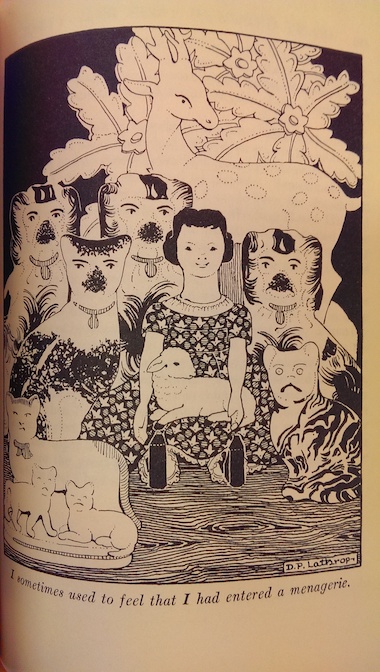
HittyCollectableIt is at this point that Hitty learns something astonishing: not only is she now about a hundred years old, but she has actually managed to make it back to her home state of Maine. To her further astonishment, she even returns to the Preble house where she originally lived, which is now the summer home of an elderly woman. Hitty knows that it’s far too late for her to have any hope of seeing Phoebe Preble again, and she never learns what exactly happened to Phoebe in her later life (which I thought was kind of a shame, bu it fits with the story of a doll, drifting from one owner to the next, unable to control her destiny or ask any questions of the people around her). The elderly lady collects antiques, and Hitty becomes a part of her collection, although the lady has no idea that this is Hitty’s original home.

Eventually, the elderly lady dies (it’s implied, but not stated – one summer, she simply never comes back), and her collection is auctioned off. Hitty is again surprised when she discovers that people view her as a valuable antique now. An Old Gentleman buys her at the auction, and when he takes her with him to New York, he comments that he supposes that it’s probably the first time she’s been outside of Maine and that her travels are about to begin. Hitty is amused.

At the end of the story, it is revealed that the Old Gentleman has purchased her for Miss Hunter’s antique shop, which is where she is now writing her memoirs. Miss Hunter and the Old Gentleman are delighted by Hitty and consider her a “museum piece.” Even though they could sell her, they don’t seem anxious to do so. She has become their shop’s mascot, and many people who visit the shop like to say hello to Hitty. Still, Hitty knows from her experiences that change is a part of life, and she is looking forward to seeing more changes in the world around her and the new adventures she may have with future owners!

My Reaction

In some ways, I was surprised by how much I enjoyed this story.  The length may seem a little daunting at first (262 pages about the adventures of a doll!), but the reading time is faster than you think, partly because of the episodic nature of Hitty’s life.  Books that are episodic can sometimes be a drag because, no sooner are the characters out of one situation, they plunge straight into another.  If it isn’t done right, it can leave the reader feeling like it’s all getting tiresome and repetitive and wondering where it’s all heading.  It’s a little different with Hitty, partly because the writing quality is good and partly because her owners and their lives are so varied.  I didn’t think much of the whole “natives” episode (because I never like “savage native” scenes in anything), but her other owners are a eclectic range of people, young and old, who have different interests and uses for Hitty.  Hitty ends up in some worrying situations, but you can feel reassured that she is going to be all right in the end because you know from the beginning that these are her memoirs that she is writing during the course of the story.

Hitty is unable to move around much on her own, which is part of the reason why she moves from place to place because of accidents or intentionally being carried or shipped by people.  However, she does seem to have the ability to move by herself in some small ways, such as writing her memoirs and when she tries to imitate Isabella’s dancing lessons, only to discover that she can’t quite do it because a doll’s legs aren’t jointed in the same way that human ones are.

Apart from the “savage native” scene, I don’t think the book was too bad, racially speaking.  I can’t recall any really objectionable terms being used.  Black people, when they appear, are called either “black” or “Negro”, and nothing insulting is said about them.  They are not treated cruelly in the course of the story.  Hitty enjoys her time as Car’line’s doll and doesn’t think badly of her or hold her in lesser esteem than other owners because she was poor.  The people in India aren’t described too badly, either, although Hitty thinks that the snake charmer was weird, and she seems to think well of the Indian nurse who took care of Thankful.  Thankful’s parents never discover that the Indian nurse gave her additional herbal remedies when she was ill, but Hitty appreciates the nurse’s devotion to the girl, doing everything she could to help her.  Hitty even says that she doesn’t know which medicines helped Thankful the most or if it was really the combination of all of them that saved her from her illness.
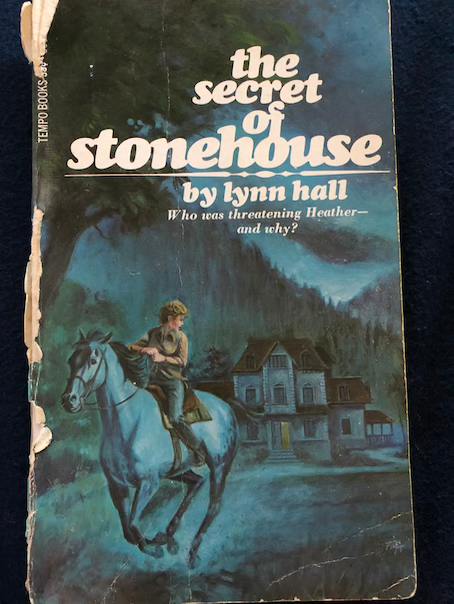
Some of Hitty’s owners are obviously nicer than others, with Thankful being arguably among the worst of them.  Even though Thankful’s upbringing is very religious, she and her new American friends are apparently rather shallow and thoughtless.  Even though her new “friends” in Philadelphia aren’t even nice to her, Thankful still worries about how she looks to them and is ready to chuck her beloved doll to please them.  Even spoiled little Isabella takes better care of Hitty and is more loyal to her, standing up to mean people as best she can instead of trying to appease them.

Mostly, Hitty prefers to be owned by young girls because she likes it when they play with her and carry her around, but she does enjoy being with adults who pay attention to her and treat her as a personality instead of as a mere object.  I was glad that none of the children Hitty lives with dies young, which could have been a risk in real life but would have been tragic.  Even with the elderly owner who presumably died, which was probably why her collection was being auctioned, Hitty never sees her die and doesn’t explicitly know that she is dead.  Whether Hitty will ever be owned as a child again now that she is considered an antique is unknown, but the author leaves the end of the story open, so just about anything could happen in Hitty’s future.

In a way, though, Hitty’s fate is already known.  Great Cranberry Island is the part of Maine where Hitty is supposed to have come from, and the Preble house is based on a real house. The story was based on a real doll that the author found in an antique store.  This doll is now at the Stockbridge Library Museum in Stockbridge, Massachusetts. There is also a cafe that is named after Hitty. There are fan sites dedicated to Hitty, some of which have tips for creating a doll very much like her.