Something Upstairs

Something Upstairs cover

Something Upstairs by Avi, 1988.

This story begins with a famous quote:

Those who cannot remember the past are condemned to relive it.

Santayana

It’s an appropriate quote for the story, which is about memory and a repeated wrong that has led to a seemingly endless cycle of violence. The story is framed as having been told to the author by the boy who actually had this frightening adventure.

Kenny Huldorf is unhappy when his parents decide to move the family from California to Rhode Island. Kenny was happy in California, the weather was much better there, and the streets and buildings in Rhode Island all seem small and old. The house they move into is called the Daniel Stillwell House, and it was built in 1789. Right from the beginning, the house gives Kenny a strange feeling, like there’s something or someone there when there shouldn’t be anyone or anything.

Kenny starts to feel better when his parents give him the big, renovated room with the private bathroom in the attic of the house. He likes that room, but there are two smaller rooms off the attic that haven’t been renovated, and they give Kenny a strange feeling. His parents think they were probably old servants’ quarters. One of them has a stain on the floor that makes Kenny think of death, and even more frightening, Kenny gets an odd sense that, somehow, it’s a death he may be responsible for. For a time, Kenny tries to tell himself that it’s nothing but an old stain and occupies himself with unpacking and getting settled. Since school hasn’t started yet, Kenny gets bored and does some exploring of the area. He starts wondering about the history of the town and the house.

Then, one night, Kenny hears a strange sound from the room with the stain. When he goes to investigate, he sees a pair of ghostly, glowing hands reaching up out of the stain on the floor. The hands pull the rest of the ghostly person out of the floor, and Kenny can see that it’s the figure of a boy. When the boy tries to reach out to him, Kenny reacts defensively, and the ghost boy seems frightened and vanishes. The next day, Kenny asks his parents if they believe in ghosts. His father says he doesn’t but that Providence is a very old town and a lot of things have happened there over the years. His mother later says that she doesn’t really believe in ghosts either, but she believes that places have memories. Kenny’s parents conclusions seem to be that Kenny is sensing the general history of the town, but Kenny feels that it’s something more specific than that, that the ghost he saw is a specific person from a specific incident in the history of the house.

The family was given a scrapbook with a list of former owners of their historic home, so Kenny decides to do some research about the past owners and see if he can learn more about where the ghost came from and who it is. When he arrives at the local Historical Library, Kenny is surprised to find out that someone there is expecting him. He is directed to the office of an historian named Pardon Willinghast. Willinghast tells Kenny that he keeps track of the owners of historic homes, which is how he and others at the library recognized his last name, and he expected that someone from the Huldorf family might come to ask about the house. Kenny gives him the list of past owners and asks what Willinghast can tell him about them. Willinghast looks at the list of names and says that there probably won’t be much about them in the library but that he’ll do some research and see what he can find. Kenny also gets the idea to have the local pharmacy test a sample of wood from the stained floor to find out what the stain is.

The next time Kenny sees the ghost, he tries to talk to the ghost boy and ask him who he is. The ghost has trouble talking but manages to communicate one word: “slave.” The pharmacy tells Kenny that the stain on the wood is human blood. They can tell that the stain is more than 100 years old, which is why they haven’t reported it to the police, like they’d have to with a recent blood stain. When Kenny talks to Willinghast again, he wants to know about people who lived in his house over 100 years ago who might have owned slaves, which limits the scope of his investigation to the first three families who owned the house. Willinghast is oddly vague in his reply, and when the subject of abolitionists comes up, he makes vague references to “agitators” and people who want to “rush history.” When Kenny tries to ask him about a murder that may have occurred in the house, Willinghast becomes agitated himself and tries to discourage Kenny from inquiring further. He says that if a slave was murdered, it probably wouldn’t even have been reported in a newspaper because it wouldn’t have been considered important.

However, now that Kenny understands that a young slave was murdered in his house and is still haunting it, he can’t leave the situation alone. He continues trying to communicate with the ghost boy, and the ghost gradually finds it easier to talk to him. He says that his name is Caleb and indicates that he is tied to the stain on the floor. He can’t seem to move very far from it. He says that he’s a memory of what happened there. He is aware that he was murdered, but he doesn’t know who did it because he was killed in his sleep. He senses that he was killed by someone who wanted to keep him a slave because he and other black people were trying to free themselves from slavery. Kenny asks Caleb if there’s anything he can do to help him, and Caleb asks him to find his murderer. Kenny asks how he can do that when the murder happened so long ago.

Then, the attic changes, and Kenny finds himself back in the past, in Caleb’s time. Kenny looks out the window and sees a strange man in a black cape watching the house. As he explores the town, he witnesses a public argument about slavery and someone asks him to deliver a note. The next morning, Kenny is back in his own bed, in his own time. When Kenny talks to the ghost again, he describes what he saw in the past, and Caleb recognizes these events and people as being part of the circumstances that led to his death. He has trouble believing that Kenny really cares about what happened to him so long ago. He says that white people have broken their promises to him before, but Kenny insists that he does care and that he wants to not only solve his murder but prevent it so Caleb can finally be free from haunting that room.

However, that’s going to be even more difficult than Kenny thinks. On his next trip into the past, he discovers who their true enemy is: Pardon Willinghast. Willinghast isn’t just an historian. Almost like Caleb, Willinghast is memory, a piece of the past that keeps coming back to haunt the people who live in Caleb’s old house and who have tried to help Caleb before. Willinghast has figured out that if someone from the future comes to the past and they lose something they’ve carried with them or if they get hurt or change themselves in some way, they can get stuck in the past, seeming like ghosts to the people there. (Or, so he says.) He has used this knowledge before against other people who have tried to help Caleb, blackmailing them into helping him instead. Now, he has the lucky key chain that Kenny always carries with him. Until Kenny gets this key chain back, he’s stuck in the past, and Willinghast won’t return it until Kenny does what he wants. In fact, he implies that Kenny is already doing what he wants, leaving Kenny to wonder if he’s accidentally leading Caleb into a trap while trying to help him escape from one.

Kenny set out to help Caleb, but he’s in danger of becoming a part of the same cycle of murder that has been repeated over and over for almost 200 years. As Kenny tries to help Caleb, he knows he’s being manipulated by Willinghast into playing a role in a very old story, but since he doesn’t have a copy of the script, he struggles to figure out what has to change to break the cycle. Can he find a way to break cycle and escape without either himself or Caleb losing their lives?

Th book is available to borrow and read for free online through Internet Archive (multiple copies).

My Reaction and Spoilers

This is a book that I remembered from when I was a kid, but strangely, I’m sure that I never heard the end of it back then. I’m having trouble remembering exactly why I never heard the end. I think it might have been one that a teacher was reading aloud, and maybe I was absent the day she finished it. Either that, or I started reading it myself and chickened out before the end because I was spooked.

This book poses a kind of “gun-to-your-head” type of decision, forcing both Kenny and the readers to consider what they would do if they were forced to make a choice between two horrible options. In this case, Kenny is put into the position of being pressured into committing a murder or being trapped forever in the past. Willinghast committed the original murder, and he tells Kenny that the only way he’ll return his keychain to him and let him go home is if he shoots Caleb himself this time. Willinghast is confident that he can force Kenny to do what he wants because he’s done the same to others before him. Other past owners of the house have tried to help Caleb before, but Willinghast has manipulated each of them into betraying Caleb and shooting him instead. These are the betrayals that Caleb referred to earlier. Willinghast claims that each of these people has lost their memory of what they’ve done when they return to their own time, so Kenny won’t have to worry about feeling guilty about killing Caleb. But, if Kenny gives in, he knows that Caleb will remain a ghost, and someday, someone else will also be in Kenny’s position, another pawn in Willinghast’s sick game of endlessly repeated murder. As long as Willinghast gets his way, not only is Caleb going to be his perpetual murder victim, but every person who tries to help will continue to be victimized and forced to participate in his bloody crime.

There is also a deeper theme to this story. Violence begets violence, and hate begins hate. Murder, revenge, hatred, and yes, also slavery and racism, are part of violent cycles that draw other people into them long after the original deed was done. People are haunted by the past in many ways … especially those who feel like they’ve got something to prove about it. It’s a theme that’s been very much on people’s minds in the early 21st century, and there are many, like Kenny, who are unwilling to be pulled into going along with violence, murder, racism, and everything that goes with it just to save some past people’s public images or some modern people’s egos.

Willinghast has correctly realized that the reason why he’s able to come back is because he’s a part of Caleb’s memory as his original murderer. Every time Caleb’s ghost tries to solve his murder and change the past, Willinghast gets reawakened to interfere. In his role posing as the historian, he rewrites the accounts of Caleb’s death in the archives to trick the people trying to help him. He’s not about truth but manipulation, much like the pseudo-historians who resurface to tell “their truth” when certain controversial topics come up. He has a vested interest in lying to cover up his own shameful deed and to force others into helping him get things his way. Willinghast does not care either about accurate history or about the welfare of future generations; he only uses them to cover up his own misdeeds. He’s used other people to repeat his dirty work before, and he’ll do it again, blaming Caleb each time for bringing it on himself by trying to survive instead of just accepting his own murder and staying dead … unless things are different this time around. The violence ends when someone finally says no and refuses to play along. So, what Kenny is really looking for, in this situation where he seems to be given a choice between two horrible options, is a third option that allows both him and Caleb to escape.

Because the story is framed as one being told by Kenny to the author later, readers know from the beginning that Kenny finds another solution to the problem that doesn’t include murdering Caleb or being trapped in the past as a ghost. The suspense comes from the readers wondering how he’s going to do that. Kenny’s solution isn’t entirely peaceful (spoiler) because he ends up shooting Willinghast, but that could be seen as an act of self-defense, not only saving himself but also Caleb and all of Willinghast’s future victims. It seems like eliminating Willinghast was the only way to end the cycle of murder because it wasn’t really Caleb’s attempts to save himself or bring his murderer to justice but Willinghast’s attempts to cover up his crime that kept the cycle going. Willinghast blames Caleb for trying to avoid being murdered, but the truth is that it’s his original act of murder that created this situation from the beginning and his continual cover-up and recruitment of unwilling abettors that has kept the cycle going. Readers can debate whether there was another way to solve the problem, but once Willinghast is gone, the cycle is broken.

Some might also point out that the reason why Willinghast targeted Caleb in the first place was that Caleb shot one of Willinghast’s associates first, but the reason why Caleb did that was that Willinghast’s associates were violently targeting a black neighborhood, and Caleb was trying to hold them off. Once again, violence begets violence until someone decides not to participate. In the end, Kenny commits a violent act, but the cycle ends because he gets the one person who was at the center of all of the other violence from the beginning. Kenny also remembers everything that happened when he returns to his own time, which brings up a point that I’ve already mentioned but I’d like to explain in more detail: Willinghast is a liar.

The only reason why Kenny knows, or thinks he knows, that Willinghast has power over him and can prevent him from returning to his own time as long as he holds one of his belongings is because Willinghast says so. Nobody else in the story says that, and frankly, Willinghast is a known liar. He was never a real historian. He’s only another ghost from the past masquerading as one to trick people into doing his bidding. He fakes historical records to manipulate people. He is an admitted murderer. He said that Kenny wouldn’t remember what happened in the past when he returns to his own time, so he wouldn’t have to feel guilty about shooting someone, but Kenny remembers everything. This didn’t occur to me when I first encountered this story as a kid, but looking at it now, I can’t help but think, why the heck should Kenny believe anything that Willinghast says about how the time travel works?

At the point in the story where Willinghast tells Kenny that he’s trapped in the past as long as he has his key chain, Kenny already been to the past once and returned from it without either Willinghast’s help or interference. Kenny did not get to the past by Willinghast’s power, but through Caleb’s memories. Willinghast was counting on Kenny to be frightened and confused so that he would rely on his word for what’s going to happen to him in the past and feel like he had something real to lose for not going along with his plans, but even as I read the story, I doubted him. I think what he said about Kenny needing his key chain to return home might have just been another of Willinghast’s lies. I don’t recall seeing anything in the story that proved that Willinghast was right, and it seems that none of his other victim/accomplices put his lies to the test to find out. There is no one else trapped in the past as a ghost because we never see any such people in the story. So, if that hasn’t actually happened to anyone before, how would Willinghast or anyone else know that such a thing was even a possibility?

The fact that Kenny remembers shooting Willinghast also suggests that everything Willinghast said may have been a lie. He claimed that none of the other time travelers retained their memories, so Kenny wouldn’t remember if he shot Caleb. If Kenny wouldn’t remember shooting Caleb, how would he be able to remember shooting Willinghast? Unless Willinghast needs to be alive after Caleb’s death to rewrite people’s memories, it sounds like the idea that Kenny wouldn’t remember what happened in the past was a lie. We never see or hear from the other people Willinghast manipulated, so we don’t know for sure that they had no memories or guilt over what happened. That could be another subject for debate among readers, but from what I saw in the story, I’m thinking that Willinghast should be considered a liar on everything he said. I think the real trap wasn’t that Willinghast was holding Kenny in the past so much as Willinghast was making Kenny believe that he was. Although he tried to make Kenny believe that he only had two choices, Kenny himself found a third one. Perhaps there were other possible choices, but we know that there was at least one more option than Willinghast led Kenny to believe he had.

Because there are violent themes in this story, it isn’t for very young kids, but it does combine some historical details with excitement for kids who enjoy scary stories. There is also some use of the n-word on the part of the villains in the story, so be warned. The story is thought-provoking on the subjects of history and personal choices.

In the end, after Kenny has finished telling his story to the author, he says that he knows that Caleb survived the room where he was murdered before and no longer haunts it. Caleb ran away after Willinghast was dead, but Kenny doesn’t know where he went after that or what happened to him. He finds himself worrying that the violence caught up with him again somewhere else and that maybe he’s just haunting a different house now because the memory of all that was done to him will never end. This is the final question the story leaves readers. Is that how it really is? Is there an end to the wrong, or are Caleb and others like him still ghosts who haunt us all?

This story reminds me somewhat of a YouTube video made by Kaz Rowe in 2022 about the history of ghost hunting. While talking about the history of belief in ghosts and our society’s fascination with ghosts and ghost stories, Kaz Rowe points out that many of our historical American ghost stories focus on moments when our society failed and innocent or vulnerable people suffered. The ghosts that haunt our society often represent unresolved situations – unpunished crimes, unacknowledged injustices, perpetuated wrongs, and tragedies that can’t be undone. There is a feeling that there was more that our society could have done and should have done to prevent needless death and suffering, and that’s probably true. Perhaps some of these problems were the result of people who thought (or convinced others) that they only had one option or just one choice between two bad options – black-and-white thinking, if you will – so they made terrible choices, never considering or choosing to acknowledge that there might be other ways. One of the difficult parts of studying history is considering the choices not made and the things people of the past left undone. It does create an unsettling a sense of the unresolved, that the past is still with us and haunting us today. What Kaz Rowe was talking about is that part of the interest in communicating with ghosts is that sense of the unresolved. There were people in the past who needed help and didn’t get it, people whose voices weren’t heard when they needed someone to listen, and people who suffered when no one seemed to care. When people reach out to ghosts, they seem to be saying that, even if no one heard them or cared about them in their time, someone does care now and wants to hear what they have to say. We don’t have the ability to go back and change the past, like the character in the story, but there may be the hope that caring and listening can, in some way, offer peace to the ghosts of the past because someone finally understands what they went through and how they felt.

Do I think Caleb and others are still haunting us? Yes, after a fashion, I think so. There is the haunting feeling of a past that can’t be changed or entirely made right. Caleb isn’t haunting Kenny’s house anymore, but he is haunting Kenny’s mind because of the shared trauma of what they went through and Kenny’s lingering fears about Caleb’s life after the events.

In that sense, I would say that maybe the ghost hunters have it right. Maybe the best thing to do with the ghosts of the past is not to be afraid of them but to pay attention to them and see them and their situations for exactly what they were. The haunting in the back of our minds comes from our inability or unwillingness to see what we can sense is there and is begging to be seen. That feeling comes from the human impulse to investigate and understand. It’s the unknowables and uncertainties in life that are the most frightening. When you know, even when you know the worst, you stop worrying so much about it. There are no more unanswered questions and things that just don’t add up, the questioning little voices in your head fall quiet, and the ghosts have nothing more to say because they’ve been heard and seen.

Two Are Better Than One

Two Are Better Than One by Carol Ryrie Brink, 1968.

This is a gentle coming-of-age story about two thirteen-year-old girls in Idaho during the early 1900s, but it’s told in a interesting format, as the reminiscences of one of the girls as an old woman and focusing on a story that the girls were writing together as teenagers. It’s like a story about a story within a story.

One Christmas, elderly Chrystal Banks receives a special present from her old friend, Cordelia Crump. The package contains two miniature dolls (she calls them “pocket dolls”) that Chrystal gave to Cordelia 60 years before. At first, Chrystal doesn’t remember giving her friend Cordy” these dolls but admits that her memory is starting to fail her. As she studies the little china dolls and their exquisite details, she begins to remember them and when she gave them to her friend. The dolls’ names are Lester and Lynette, and Chyrstal remembers how Cordy used to say that the little dolls were magical because any day she carried them seemed to become special and exciting. Even when Chrystal and Cordy grew older, supposedly too old for dolls, they still continued to love and believe in the magic of their special pocket dolls.

Before young Chrystal Reese (as she was known before her marriage) gave the dolls to Cordy, they were a Christmas present to Chrystal from her Uncle Dick. That was the Christmas when the girls were in seventh grade and were early thirteen years old. Uncle Dick had acquired a number of interesting presents for Chrystal on his trip to Europe. He doted on his niece because she had no parents or siblings, living only with her grandmother and Aunt Eugenia and their dog, Rowdy. All of the presents are wonderful, but the little dolls are something special. As she unwraps them, they are hidden within a small box inside another box inside of another box (not unlike the story itself). Chrystal loves the elegant, detailed, jointed dolls immediately and names them Lester and Lynette because they just seem like the right names for the dolls.

Immediately, she goes to see if the little dolls will work well in the dollhouse that she’s made out of orange crates. She has spent considerable time and most of her allowance money putting paint and wallpaper into the little house and making furniture for it. She made all of the dollhouse furniture to fit two small dolls that she already has, Elsie and Eileen. However, Elsie and Eileen are four inches tall, and Lester and Lynette are only about two-and-a-half inches tall, so they won’t work in the house. At first, Chrystal is unsure what to do with the tiny dolls. She loves them, but she’s going to have to figure out where to put them and how to play with them if they won’t fit into the doll house. Then, she gets the idea to give the little dolls to her best friend, Cordy. It’s a sacrifice to part with such a lovely present so soon after getting it, but she wasn’t satisfied that the little bottle of perfume she was going to give Cordy was really a good present. Besides, the girls are so close that they already share everything with each other, and as they like to say “Two are better than one.” Giving the dolls to Cordy won’t be like giving them so much as sharing them with someone who can help to make them even more fun.

Cordelia Lark (her maiden name) grew up in a well-off family with mostly boys. Her father was president of the local bank and president of the school board and a civic leader in other ways, and Cordy had four brothers and no sisters. Cordy and Chrystal are kind of like the sisters neither of them ever had. They like to call each other “Tween”, which is their special pronunciation of “Twin.” They justify being twins because their birthdays are only two weeks apart, so they’re almost exactly the same age.

On the way to Cordy’s house to give her the special Christmas present, Chrystal passes by the courthouse. When she and Cordy pass the courthouse, they can see the barred windows of the jail, and they make up stories to spook each other about how one of the prisoners might escape. On this particular day, Chrystal sees one of the prisoners gripping the bars of his window and looking out. He’s the first prisoner Chrystal has ever actually seen. She’s a little afraid of him, and when he starts talking to her, she doesn’t know what to say at first. The man first asks her what she’s staring at, and then he wishes her a Merry Christmas, even though he’s not having one. Not knowing what else to do, Chrystal murmurs “Merry Christmas” back and hurries on.

When Chrystal gets to Cordy’s house, the two girls exchange presents. It turns out that each of them almost got the other some perfume, but each of them changed their mind at the last minute and decided on something better. Cordy’s present to Chrys (as she sometimes calls her) is a book, which makes Chrystal happy because she loves books and didn’t get any for Christmas this year. But, it’s not just any book. This is Chrystal’s first grown-up novel instead of a children’s book. (They mention the Oz books, the Little Peppers, and the Little Colonel series as books they’ve read.) It makes Chrys feel grown-up. It’s a romantic story about a Southern girl during the Civil War who falls in love with a Northern soldier and eventually marries him. Chrys says that Cordy shouldn’t have told her the ending before she’s read it, but she’s still thrilled at having her first grown-up book.

Chrys worries that, since Cordy gave her a grown-up present, she’ll think that the little dolls are babyish, but Cordy loves Lester and Lynette immediately. She says nobody gave her a doll this year, and she felt disappointed because she loves dolls, and it just didn’t seem like Christmas without one. Chrys explains that these are pocket dolls, and they’re meant to be carried around in pockets, so they can go everywhere with the owner. Cordy says that they’re so tiny and perfect that they must be magic, and she decides to keep the names that Chrys gave them, Lester and Lynette. Cordy thinks that the little dolls are perfect to take along on adventures.

When Chrys tells Cordy about the prisoner, the two of them are nervous, although they don’t really think he can escape. Chrys asks Cordy to walk her home, but after they pass the courthouse, Cordy realizes that she’d have to walk past the courthouse alone on her way home. So, Chrys and Cordy turn around and walk the other way again, but then, they realize that they still have the same problem. No matter which way they go, they have to pass the courthouse, and no matter who walks who home, one of them will have to go alone at least partway. After they go back and forth a couple of times, they pause in front of the courthouse, and Cordy has an idea. She gives Chrys the Lester doll, keeping the Lynette doll for herself. That way, each of them will have someone to keep them company, and it will be like they aren’t alone. It gives each of them enough courage to go the rest of the way home, and it’s the beginning of their adventures with the dolls.

Chrys is inspired by her first grown-up book, and she thinks that maybe she’d like to write novels when she grows up. When the girls are in school, they like to write notes and funny poems with each other when they’re supposed to be studying, and Chrys suggests to Cordy that they start writing a novel together. Cordy agrees, and they decide to take turns writing chapters. They decide that the story will be about Lester and Lynette, and Chrystal writes the first chapter. Chrystal calls the story “The Romantical Perils of Lester and Lynette.”

However, the girls get in trouble for goofing off and not paying attention in class. Their strict teacher, Miss Hickenlooper, decides that the two girls can’t sit together anymore, and she confiscates Lester and Lynette and locks them in her desk. The girls are devastated. If the teacher wanted them to move desks, that was disappointing but justified, but she had no right to just take the dolls. The girls think that they’ll have to wait until the end of term to get them back, but they continue writing the story about the dolls. Chrystal had been going to write the first chapter about an elopement, but because the dolls are now imprisoned in the teacher’s desk, she decides to write it as a prison escape instead.

In the new version of the first chapter of the story, Lester and Lynette are brother and sister, and they are imprisoned in a castle overlooking the Rhine river in Germany (part of the the girls’ geography lesson in school) by their evil guardian, Baron von Hickenlooper. Lynette is rescued/kidnapped by a Viking pirate named Oskar, who carries her away from her brother, who still remains in the castle.

From this point on, the events in Chrys and Cordy’s lives alternate with new chapters of their tandem story about Lester and Lynette. Pieces of the girls’ lives work their way into the story. When the girls are ready to trade turns writing the story, they give each other what they’ve written so far and say “Muggins!” (The word comes from playing games like Dominoes and Cribbage where, if one player spots that another has missed a score or failed to count something properly, they can call “Muggins!” and add the overlooked points to their own score. I think what they’re implying is that this story is a game where one person picks up whatever the other one has left unfinished.) The girls also continue adding verses to an unflattering poem that they started writing about their teacher.

By accident, the girls loose track of the mean poem about their teacher, and Miss Hickenlooper finds it. At first, the girls are terrified that Miss Hickenlooper is going to be furious with them and do something horrible in punishment, but to their surprise, she starts crying. Miss Hickenlooper end up having a heart-to-heart talk about the girls’ experiences in Miss Hickenlooper’s class, what Miss Hickenlooper hoped for when she started teaching, and why she took Lester and Lynette from them. Miss Hickenlooper had wanted to be a teacher for a long time and was looking forward to it, but she had been away from it for a long time because she had to take care of her mother during a lengthy illness. Since she started teaching again, she can tell that her students haven’t been happy with her, but after reading the poem, she realizes that it’s worse than she thought. Even strict teachers can be respected by their students as long as they’ve taught their principles well and the students are learning valuable lessons. Miss Hickenlooper feels like she’s failed as a teacher because she hasn’t managed to connect with her students at all, and she’s making them miserable. The girls come to the surprising realization that their teacher really does care about her students and what they think of her.

The talk between the girls and Miss Hickenlooper was a little uncomfortable because the girls realize that they’ve done an injustice to Miss Hickenlooper by writing the mean poem about her, but I actually liked this part of the story because it’s the kind of honest communication that I often find missing in stories. Rather than anyone blustering or dodging or trying to save face, the girls and their teacher honestly discuss what happened and how they feel, and everyone involved learns something from the experience. The girls appreciate having this “human” communication with their teacher, and it earns their respect, more than any angry tirade or show of strength on their teacher’s part ever would have. It’s this very kind of open honesty and humanity with real feeling behind it that’s been missing from the class so far, and it’s what has prevented Miss Hickenlooper from really connecting with her students.

The girls apologize to Miss Hickenlooper about the poem, and Miss Hickenlooper admits the justice of some of their complaints. Miss Hickenlooper admits that maybe she went a little far in making Cordy turn out her pockets and taking her dolls from her for an extended period of time. Getting into someone’s pockets and taking personal possessions is a kind of invasion of privacy, and Miss Hickenlooper says that she only did it because the girls weren’t paying attention in class, which is true. In return, Chrys and Cordy acknowledge that they only wrote the poem to blow off steam because they were angry, but they also went too far, and they really should have considered their teacher’s feelings. The girls promise not to write any more poems like that, and Miss Hickenlooper gives Lester and Lynette back to them. Miss Hickenlooper says Cordy can keep the dolls in her pocket if she wants as long as the girls pay attention in class from now on. To further apologize, the girls make cards for their teacher and give her the two bottles of perfume that they almost gave each other for Christmas (“Two are better than one.”), and they start going out of their way to be nicer to her.

The girls’ talks with Miss Hickenlooper through the rest of the school year give her feedback that helps her to improve as a teacher. Later, when the girls are watching a lightning artist (someone who paints pictures very fast, not the more modern definition of someone who works in animation) at work and happen to see Miss Hickenlooper in the store as well, they point out that one of the artist’s pictures reminds them of the Rhine that they studied in class. Miss Hickenlooper doesn’t think much of the quality of the painting, but she admits that it does look like the Rhine and that another painting the artist did reminds her of Switzerland when she was there. The girls are amazed that Miss Hickenlooper has been to Europe because, other than Chrys’s Uncle Dick, they don’t know anyone who has. They ask her why she never talked about it in their geography lessons because that would have made them much more exciting, hearing about other countries from the perspective of someone who was actually there. Miss Hickenlooper is surprised. She says that she was only focused on teaching the lessons that she was assigned to teach and just never thought about including anything personal because she didn’t think her students would be interested in her personal stories. Again, it’s that personal element that Miss Hickenlooper needs if she wants to connect with her students on a personal level.

As the story continues, the girls also start to consider their attitudes about boys and men and future husbands. So far, most of their knowledge of boys has come from the boys at school and Sunday school and Cordy’s brothers, all pretty immature and rowdy. But, the girls are growing up, and so are some of the boys. New young men also come into the girls’ lives.

A friend of Chrystal’s grandmother asks her if she would be willing to rent a room to her 19-year-old son, who is looking for a place to stay as he takes his first teaching job at the local college. (That sounds young for a college teacher. In modern times, a nineteen-year-old would be a college student himself. Remember, this is the early 1900s, and education in the United States was very different then. Back then, teachers didn’t need to have the advanced degrees that they do now, and Mr. Banks later explains that he skipped grades when he was younger to get through school faster.) Chrystal’s grandmother agrees, although Chrystal isn’t anxious to have a teacher living in her house after her problems with her own teacher at school. Chrys also isn’t sure what to expect from a man living in the house because there’s never been a man in this house before. Cordy’s brothers are pretty rowdy. However, their new lodger, Mr. Banks, turns out to be quiet, polite, and very nice. (His last name is an indication that he’s going to be Chrystal’s future husband. There’s six years’ difference in their ages, but as times goes on, and Chrystal gets older, that’s not going to seem like as much of a gap.) He is the first person to ever address Chrystal as “Miss Reese”, which makes her feel grown-up.

Cordy’s family also has a boarder, Mr. Crump, who is attending the local college (obviously, Cordy’s future husband, based on her future last name). Mr. Crump is working his way through college by selling pots and pans, and Cordy goes with him to help carry things, bringing along Chrys because “Two are better than one.” The girls end up giving him some advice on his sales patter that helps him make more sales.

Meanwhile, the girls’ Sunday school class, which calls itself the Dorcas Club, decides to host a masquerade party with the boys’ class (who have dubbed themselves the Armored Knights) as their guests. Chrys and Cordy think of the boys as immature and uncouth and roll their eyes at the older girls who are boy-crazy. Then, because the party is on Presidents’ Day, all of the girls in the group want to go dressed as Martha Washington, and there’s a big argument about it. Originally, Chrys and Cordy wanted to be Martha Washington, too, but since that’s what all the others want, they decide that they want to do something completely original. Inspired again by the dolls, they decide to go dressed as dolls. However, because they don’t want to be like the prissy girls trying to be pretty and impress the boys, they decide not to go as elegant dolls but as old rag dolls in patched clothing.

The girls do win prizes for both the funniest and most original costumes at the party because they’re the only girls who don’t show up as some version of Martha Washington. However, the triumph turns against them because the girls who are in charge of the main entertainment for the evening have decided to turn it into the girls’ very first dance party with the boys, something that Cordy and Chrys weren’t expecting. Rag doll costumes are good for fun and games, but not so much for serious dancing and the possibility of budding romance. While all of the boys are wearing various fanciful costumes themselves, like pirates and clowns and cannibals, it turns out that they’re only interested in the girls who dressed in pretty clothes as Martha Washington, and none of them want to dance with the rag dolls. Chrys and Cordy were proud of themselves for being more original than the other girls, but it seems that the boys prefer “pretty” to “original.” At the end of the evening, none of the boys even want to walk Chrys and Cordy home. Chrys and Cordy feel embarrassed because their efforts to be “original” seem to have strayed a little into the outlandish at a time when the other girls and boys are starting to seriously get interested in each other.

Fortunately, their families guessed that something of the sort might happen and asked the young men boarding with them to go to the house hosting the party and walk the girls home if they had no one else to walk with them. Mr. Crump confirms to the girls that boys would prefer to walk with girls who made an effort to look pretty instead of girls who look like rag dolls. Mr. Crump says that there will be other parties, and next time maybe they’ll go as something more elegant, like Martha Washington, but the girls aren’t too thrilled about doing this type of party again. Mr. Banks takes a different view and says that he actually thought that the rag doll costumes were rather clever and that it was really better for the girls to be different instead of trying to be like every other girl in order to not stand out. “Sometimes it may hurt, but I think it’s better to be original.” Mr. Banks the college teacher is more mature than Mr. Crump the college student, and I think he has the right idea. Looks and clothing styles change, and people have different priorities when they get older, but original thinking and an interesting personality are hard to replace and never go out style. When Chrystal says that she doesn’t even know how to dance, Mr. Banks offers to teach her, so she can be more confident at future parties.

Having the boarders walk them home actually turns out to be an unexpected victory for Chrys and Cordy because, while the other girls were making fun of them for not having any of the boys dance with them or walk them home, Chrys and Cordy ended up being escorted by young men. Getting boys is all well and good for young girls, but being escorted by young men makes Chrys and Cordy look like young women, putting them on a higher level than mere girls. Chrys and Cordy don’t see it that way at first because Mr. Crump and Mr. Banks are just their families’ boarders and friends and treat them like younger sisters (at this point in their lives, anyway), but the other girls notice that the young men are more mature than the Sunday school boys, and it causes them to look at Chrys and Cordy with a little more respect for having their attention. In some respects, Chrys and Cordy might seem less mature than the girls who are excited about wearing makeup and getting boys because they’re into outlandish costumes and dolls and “romantical” stories, but in other respects, they may actually be a little more mature than the other girls for being confident in their individuality and the new awareness they’re acquiring of other people’s feelings. In the end, girls want to marry men, not little boys, anyway.

Through the spring, the girls have other adventures and continue writing their story with their dolls. Along the way, there are other signs that the girls are growing up. They notice that this is the first year when they’re more interested in getting new Easter bonnets than they are in their Easter eggs. Cordy’s family is heavily involved in the social life of the local college because two of their boys are students there, and Cordy even gets to go to some of the campus parties. She helps to serve punch there and sometimes gets to dance. She eventually arranges for Chrys to come with her to help with serving and have her first dance, too. Miss Hickenlooper also discusses the girls’ future with them, suggesting that they take exams to see if they can skip the eighth grade and go straight into high school because she thinks they’re smart enough to pass. The girls are uncertain if they want to go on to high school so quickly. They know they’re growing up, but they haven’t thought about high school yet (and this is a time period when not everyone even attended high school). There is also the horrible thought that one of them might pass the test while the other didn’t, and they might end up going to different schools and being in different grades. Miss Hickenlooper says that they don’t necessarily have to go on to high school yet, if they feel that they’re not ready, even if they’re offered the opportunity, but she urges them to take the tests anyway to see if they have the option. It makes the girls start questioning their future lives, what they really want, and where their education will take them.

At one point, Cordy’s brothers find their unfinished novel in Cordy’s room, steal it, and use it to make fun of the girls. The story isn’t really very well written because Chrys and Cordy are only thirteen years old. As readers will have noticed, there are spelling mistakes all through the story, and the girls also get mixed up about geography because they’re just focused on making the story exciting instead of really thinking about the setting. After their characters’ adventures on the Rhine, the girls send them floating in a boat to a tropical island with coconuts and palm trees because they don’t think about just how far away the tropics actually are. (Being shipwrecked on an island is also a common trope of vintage and antique children’s books, so they’ve probably read this type of story themselves. Just scroll through my lists of children’s books from the 1900s and earlier, and you’ll see what I mean.) Although Mr. Crump was laughing at the girls, too, he rescues the story from Cordy’s brothers and gives it back to them when he sees that the joke is going too far. However, the girls are somewhat dispirited, thinking that their story might be deeply flawed. At first, they don’t know if they really want to continue writing it, but in their desperation, they turn to the one person they know will be honest with them about what they’ve written and can not only tell them whether or not the story can be fixed but how to do it – their teacher, Miss Hickenlooper.

The book is available to borrow and read for free online through Internet Archive (multiple copies).

Themes, Spoilers, and My Reaction

The story is one of those gentle, calm stories with a few funny episodes and some genuinely touching moments. Fans of slice-of-life historical books like the Betsy-Tacy series will like this book. It is a coming-of-age story for Chrys and Cordy, as they begin to develop new attitudes and come to a deeper understanding of themselves and other people and start thinking about the future. However, the girls’ adventures also teach other people around them some lessons.

One of the themes of the book involves how people let their personalities show. Although the girls were originally thought silly for their outlandish rag doll costumes at the party, they were more bold and creative than the girls who just wanted to look like everyone else. Even though their creativity wasn’t fully appreciated at first, it ends up working in their favor in the long run.

One of the biggest developments in the story is the relationship between the girls and their teacher, and the keys to that relationship are learning how to see other people as people, how to be open about showing their personal sides, and how to appreciate people with different personalities. The girls begin as thoughtless students, and their teacher is a strict disciplinarian with little patience for their goofing off, which is why the girls see her as their antagonist. However, the girls’ eventually realize that, through their mean and complaining poem, they’ve hurt their teacher’s feelings as much as she’s hurt theirs, maybe more. It leads them to see her in a new light, as a person and just just their jailer (the role of her alter ego in the girls’ story). The honest talks between the girls and their teacher not only helps the girls to become more thoughtful and considerate of others’ feelings but also show their teacher that the key to improving her teaching and developing a better relationship with her students is to be a little more personal with her students. She gradually learns that letting her students see her as a person with interesting life experiences earns their respect more than just acting like an unfeeling drill sergeant enforcing discipline. Inspired by the girls’ interest in her travels when she was younger, Miss Hickenlooper starts bringing postcards and souvenirs from her travels to class to show during geography lessons. The students are fascinated by her souvenirs and stories and start thinking of her as an a kind of intrepid explorer or sophisticated world traveler instead of a dull woman who focuses on dry memorization and gets mad at them for daydreaming in class. As she tries new ways of approaching her lessons and adding in personal experiences, Miss Hickenlooper takes on a whole new role in the children’s lives and sparks all of their imaginations. All of the students, not just Chrys and Cordy, start behaving better because they become genuinely interested in what Miss Hickenlooper has to say and show them. They don’t want to make her angry because she’ll stop telling the interesting stories if they don’t get their work done. Just because she’s gotten more interesting and personal doesn’t mean she’s gotten soft. Don’t be afraid to be interesting and different!

The girls never actually show Miss Hickenlooper their story because they’re a little embarrassed by what they’ve gotten wrong, but they ask her questions about some of the things that they put in their story to find out what’s right. They do end up finishing the story and giving Lester and Lynette a grand wedding, but they also acknowledge that they are getting too old and busy with other things to continue playing with dolls, even Lester and Lynette. They plan to put Lester and Lynette away for now as souvenirs of their childhoods. Later, they do tell Miss Hickenlooper about their novel, and while she hasn’t read it, she has the feeling that she knows what it’s like from knowing the girls and their writing. (The girls wrote about scenes from their novel when asked to describe places they know for their high school entrance exams.) She tells them that she appreciates their imaginations but that they should remember to focus on the real world around them and gaining real experiences to write about in the future.

There are also themes that focus on what growing up and maturity mean. Because the story focuses on one school semester in the girls’ lives, there are many questions that the book leaves unresolved about what happened in the girls’ later lives, but it seems that their lives turned out well, and they look back on their experiences with Lester and Lynette as a turning point when they really started growing up. Toward the end of the story, the girls begin appreciating some of the possibilities of life and the wider world that they never considered before. Through it all, there is also the girls’ constant friendship. At the very end, elderly Chrys writes a letter to elderly Cordy, thanking her for sending the dolls and reminding her of this special time in their lives.

The author of this book, Carol Ryrie Brink, was also a child around the time that Chrys and Cordy were children. There is a picture of her as a child above her biography on the dust jacket of the book. She is also the author of Caddie Woodlawn, which is better known than this book.

I love books that contain details about life in the past, and there are a lot of fun details included in this story. I’ve mentioned some above, but that’s just scratching the surface. At one point, Chrystal says that the only paper she has that’s good for painting pictures is the pieced of paper that separate pieces of Shredded Wheat in the box. The lined paper from the notebooks she uses for school isn’t as good. When she’s out of those pieces of paper, she has to eat more Shredded Wheat to get more. I don’t remember seeing any similar kind of paper in shredded wheat boxes in my lifetime, so this must be something that existed before modern packaging.

At the college dances, the girls have dance cards for the young men to write their names and initials in to secure spots for dances. There are also occasional mentions of food, and Chrys mentions having floating island pudding for dessert, which I’d never heard of before. It’s a kind of meringue that floats on a base of vanilla custard.

Linnets and Valerians

Linnets and Valerians by Elizabeth Goudge, 1964.

The Beginning

When the story begins, in 1912, the four Linnet children are in a bad situation. With their father on his way to serve in the army in India with a stop in Egypt, they have been left behind to stay with their grandmother, who is not an indulgent, “grandmotherly” sort of grandmother. First, she’s planning to give away the children’s dog because she doesn’t like dogs. Then, she’s planning to send the two eldest children, Robert and Nan (short for Anna), to boarding school, while keeping the younger children, Betsy and Timothy, to be tutored at home. Worse, she locks the children up by themselves, sometimes in the dark, leaving them to scream.

Admittedly, the reason why they were locked up was because their grandmother had arranged a tea party to show them off to her friends, and the children, not liking parties, had barricaded themselves in a hen house, fighting off the gardener and their grandmother’s companion with rhubarb stalks until they were finally caught. They were locked away from the party guests until they were ready to apologize, which none of them want to do. (Bad strategy on the part of the adults. Some things are their own punishment. Rather than locking the children up, which is cruel, they should have let the children suffer the consequences of their own bad choice. Don’t get them out of the hen house; insist that they stay out there, not being allowed any of the goodies at the party or even being allowed back into the house until they first clean themselves up in the yard. The kids aren’t very good at planning, and I’m sure they don’t have food stores in the hen house. Everyone gets hungry eventually, and it should be clear to the children that it’s their personal choice how long they want to stay that way. But, the grandmother also shouldn’t give away the children’s dog without their consent, so it’s hard to feel too sympathetic here.) Realistically, it is acknowledged that their grandmother could be quite kind with children who were gentle, quiet, and well-behaved, but also realistically, this is not the case with her grandchildren. Frankly, the children are wild and have no inclination to compromise with their grandmother. With all of these things combined, it is clear that life with their grandmother is going to be impossible, and Robert decides that there’s only one thing to do: escape.

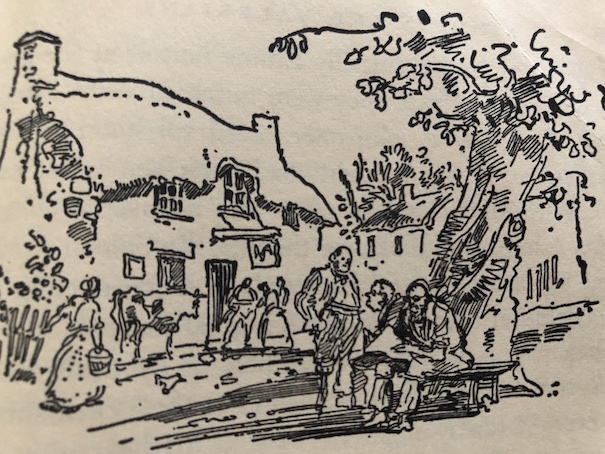
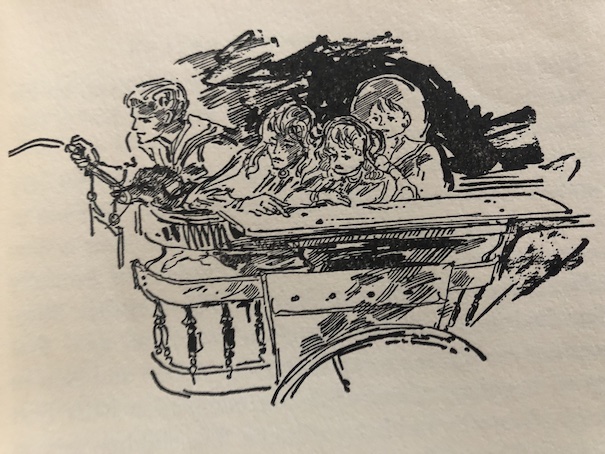
Robert manages to break out of the room where he’s been locked up, and he frees his siblings and their dog, Absolom. The four children set off with their dog, intending to walk to the mountains (just some mountains, somewhere to the west – nowhere specific and no real plan involved) and make their living there because Robert imagines that would be a good idea. As they pass an inn, they spot a pony and cart tied up outside, and they decide to appropriate them for some transportation. Besides, Robert has always wanted a pony. Nan is concerned that they’re stealing, but Robert says that they’re just “borrowing.”

The Linnet children have much more in common with their Uncle Ambrose than with their grandmother or other relatives. Uncle Ambrose is similarly unsociable and impatient. Uncle Ambrose was once a teacher, but now that he’s retired, he has no desire to spend time with children again. He also doesn’t like dogs. But, it turns out that the pony they “borrowed” belongs to him and takes them to his house. When Uncle Ambrose realizes who the children are, he takes them into his house and keeps them over night, although he doesn’t introduce himself to them immediately. The children feel much more at home with Uncle Ambrose, even when they don’t know who he is, because his house is a bit shabby and untidy, and he has a pet owl and a cat with kittens. Also, in spite of his gruff manner and assertion that he’s not happy about having children around, Nan has the sense that he actually likes them. The children decide that they’re going to try to behave themselves in this house because they like being there and want to stay.

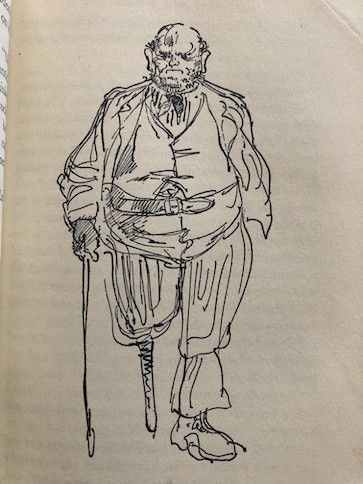
In the morning, Uncle Ambrose goes to town to get the groceries that his peg-legged gardener, Ezra, neglected to get the other day when the children stole the pony and cart in town. When he returns, he also has the children’s luggage with him. Uncle Ambrose went to see his mother about the children, and when he suggested that he could keep them at his house, the children’s grandmother eagerly took him up on the offer. The children are all intensely relieved that they won’t be sent back to their strict grandmother and her overly-tidy house and can stay with their eccentric uncle, the peg-legged gardener who comes home singing in the middle of the night when he gets drunk, and the wonderfully untidy garden outside, where they can play.

Uncle Ambrose confesses to the children that he has actually missed his students since he retired from teaching. He isn’t particularly fond of children by themselves, but he is fond of teaching them. As a condition of the children staying with him, Uncle Ambrose insists that they allow him to educate them. The children agree to this because one of their reasons for running away was so they would not be split up when Robert and Nan were sent to boarding school. The children just want to stay together with their dog. Uncle Ambrose agrees to this, saying that he doesn’t approve of sending young girls to boarding school at all, although he insists that girls be properly educated as well as boys. He says that he wouldn’t even consider sending Robert to boarding school until he’s had a better grounding because he’s not satisfied with the reports he’s had of Robert’s academic abilities. The children aren’t thrilled at the idea of studying, but they agree to it because staying together and studying with Uncle Ambrose sounds better than being split up or the other alternative, being sent to stay with their Uncle Edgar in Birmingham. Also, Uncle Ambrose is willing to give the children some time each day to themselves, to play or do what they want. He won’t even insist that they show up for meals, but if they miss them, they’ll just have to go hungry. (See? I told you it was a better strategy than fighting to get them out of the hen house.) As much as the kids don’t like the idea of studying, they love the idea of having some freedom. Freedom means that adventures could happen.

Now, the story at this point could have been a complete story by itself – a group of wild, undisciplined kids are left with their strict grandmother, and after a battle of wills between the children and the grandmother and some overly-harsh punishment, the children run away, finding a gruff but kindly bachelor uncle who rediscovers the pleasure of having children around and also happens to have once been a teacher and can tutor the children while their father is away, managing to inspire the children to behave a little better and learn to make some better decisions by granting them a little freedom to make some of their own choices instead of being too controlling. That’s all very nice as a single story. However, in this case, all of that is just the background for the story to come. We’re still in just the first part of the book.

Segue to the Magic

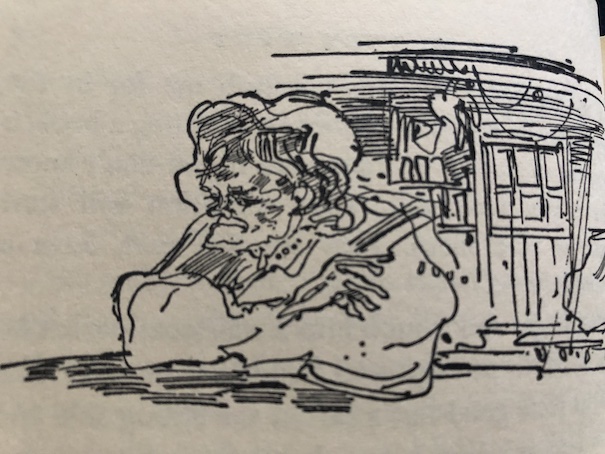
After it’s settled that the children will stay with Uncle Ambrose, they decided to go into town for their first free excursion. They stop at the little store in town to buy some sweets and a picture postcard to send to their grandmother because Nan has been thinking over their time with her and has realized that they were badly behaved and feels guilty about it. The store is managed by Emma Cobley, an old woman in an old-fashioned dress and cap and a red shawl who owns a black cat named Frederick. Emma is a little creepy and she warns the children to stay away from Lion Tor because it’s a dangerous place. (A “tor” is “a high, craggy hill.”)

When the children return to the house, Ezra insists upon introducing them to the bees. The children think that this is a very odd thing to do, but Ezra says that it’s important, and he asks the bees to look after the children. Timothy asks if it’s possible for bees to look out for people, and Ezra says that they once saved his life when he fell into an old tin mine and showed the vicar (the children’s uncle, after he retired from teaching – they’re all living at the vicarage now) where to find him. When Ezra hears that they’ve been to Emma Cobley’s shop, he tells them not to go there anymore. The most Uncle Ambrose buys there is stamps, but neither of them ever buys anything else from her, and Ezra is reluctant to tell the children why. There is something a bit creepy about Emma and some suspicious things in her shop, like the overly-appealing candy and the one postcard that she refuses to allow the children to buy or even look at for long.

As the children start having lessons with Uncle Ambrose, Robert asks him if he will be giving them pocket money. Uncle Ambrose says that he doesn’t give pocket money, but there are opportunities for earning some. He gives them a list of chores that they can do and what he’s willing to pay for doing them. He also points out to Robert that, as the oldest boy, he can’t expect to wriggle out of the tougher chores or leave them to the girls, but if he’s willing to tackle the tougher chores, he will pay him well for it. Uncle Ambrose has somewhat chivalrous sensibilities about what girls can handle, and he also reminds the boys that there are consequences for misbehavior, lying, or stealing. He says that he would never use corporal punishment on a girl, but he has caned boys before and could do the same to his nephews if they give him reason. He tells the children that, from this point on, they cannot interrupt their lesson time with any subjects that aren’t related to the lesson. (He never does hit any of the children and does make reasonable exceptions to this rule later in the story.) It isn’t just the threat of punishment that keeps the children in line, though. It turns out that Uncle Ambrose is an excellent story-teller, and when he starts describing other countries or historical events, the children are captivated. In many ways, Uncle Ambrose makes learning fun because he really loves his subjects and knows how to share what’s fascinating about them with other people. There are parts of the learning that seem like drudgery, but they are balanced out by the parts that are truly fascinating.

The children also gradually begin learning more about the other people who live nearby. There is a black man (called a “Negro” in the story) called Moses Glory Glory Alleluja. (That’s apparently his real name in the story and not just a nickname, to which I say, “God help us all!”) When the children first see him, they’re startled and afraid of him because he’s carrying a curved knife and looks like “a coal-black giant.” They stop and stare at him because they’re afraid, and Ezra tells them not to hurt the poor man’s feelings because he’s a gentle man. As he gets closer to the children, they realize that he’s not as fearsome as they had first thought from a distance. He’s actually very pleasant, and the knife he’s carrying is just a scythe for clearing plants.

Moses works for Lady Alicia (a sort of man-of-all work – cook, gardener, butler, etc.), and Lady Alicia also has a monkey called Abednego. When the kids go with Ezra to pick up a couple of extra beds that Uncle Ambrose is borrowing from Lady Alicia for the children, Abednego takes Betsy’s doll, and she has to chase after him to get it back. In the process, Betsy meets Lady Alicia, an elderly lady in very worn fancy clothes and wearing jewelry. The two of them introduce themselves to each other and explain a little about who they are. Lady Alicia once lived there with her husband and son, but she says that her son, Francis, was “lost” years ago on Lion Tor at the age of eight. She doesn’t explain at this point how that happened or even if her son died or simply disappeared. Her husband also disappeared a few years later overseas because he was a traveler and explorer. She doesn’t seem to expect to see either of them again. This is really where the main plot of the book is introduced.

The Magic

So, now we know that there’s a creepy old lady who owns a shop that isn’t quite what it seems to be and a mysterious and sad old lady whose husband and son have disappeared, and it’s all connected to Lion Tor. The children’s first encounter with Lion Tor happens when Betsy’s siblings realize that she’s missing at Lady Alicia’s house. Not knowing that she’s with Lady Alicia, they assume that she’s wandered off into the woods to pick flowers and go searching for her. Nan finds her way to Lion Tor, where she discovers a cave that is filled with paintings. She knows they weren’t done by cave people ages ago because people in the drawings are wearing modern hats. The artist turns out to be a bearded man in ragged clothes who seems unable to speak.

Nan learns that this man is called Daft Davie, but Nan doesn’t think that’s fair because he seems intelligent and artistically talented, even though he isn’t able to speak. Ezra explains to her that Davie used to work for a blacksmith in another village nearby but some boys kept teasing him and tormenting him because he couldn’t speak, so he eventually went to live by himself at Lion Tor.

The boys eventually find Betsy with Lady Alicia. To their surprise, Lady Alicia seems to be enjoying Betsy’s company, even though she doesn’t normally like visitors. She invites the children to return again with Nan, making an odd comment about how the Linnet family seems “inevitable” but might do her some good.

Uncle Ambrose allows Nan to use the parlor of his house as her private room, where she can do her sewing and darning or just have time to herself. He says that he hasn’t done much with the parlor himself, other than putting furniture in it, because the parlor is usually for the lady of the house, and he’s unmarried. Now that Nan is there, she counts as the lady of the house as the oldest girl, and Uncle Ambrose can tell that she’s a reflective kind of person who can use some quiet time to herself, away from the other children. Nan is appreciative, and she’s also surprised when Uncle Ambrose tells her that the previous lady of the house was Lady Alicia. Before her marriage to the local lord, she was the daughter of the previous vicar, and he found some of her old books in a hidden cabinet in the room.

Uncle Ambrose removed the books from the hidden cabinet and put them on the bookshelf in the room, but out of curiosity, Nan investigates the hidden cabinet and finds that it still contains a notebook. However, the notebook belonged to a young Emma Cobley, not Lady Alicia. The notebook contains what looks like evil witchcraft spells. Nan is alarmed, although later, she’s confused because she sees Emma Cobley at church. She isn’t sure what to think because she can’t imagine that a real, evil witch would go to church. Nan considers that perhaps Emma used to practice witchcraft in her youth but repented later and changed her ways. However, if that’s true, why does Ezra disapprove of her, and how can they explain Emma’s creepy black cat? When Nan studies the spells in the book, seeing spells that can prevent a person from speaking, cause a person to lose his memory, and cause a person to forget affection for another, Emma’s true character and some of the mysterious events of the past begin coming a little more clear.

When Nan talks to Ezra later, he says that Emma Cobley’s father was a black-hearted warlock who taught her evil spells. Ezra says that his own mother practiced white magic and that his family is descended from ancient peoples who were called fairies or gods. Nan had thought that there was something gnome-like in his appearance and isn’t surprised that he’s a bit magical. Ezra further describes the day that Lady Alicia’s son disappeared at Lion Tor. They’d been on a picnic with the boy’s nurse, and the nurse and the boy had been playing hide-and-seek. A mist came up, and they were unable to find the boy. They feared that he might have drowned in the marsh because his cap was nearby, but they were never able to establish that. Some other people thought he might have been kidnapped by gypsies, but there was no evidence of that, either.

In the cemetery of the churchyard, there is a memorial to Lady Alicia’s husband, Hugo Francis Valerian, and his son who was named after him, but the husband’s death date is unknown. The children argue about what that really means. Robert says that the Valerians are dead, but they’re just not buried at the site of the memorial because they were lost and nobody knows exactly when they died and where the bodies are. However, Betsy has the feeling that they’re not dead, and Nan agrees that disappearing isn’t the same as dying. But, is that really true? Are the Valerians alive or dead, and if they are alive, where are they?

Pieces of the past continue falling into place. Betsy and Nan accidentally find old love letters that Emma Cobley wrote to the elder Hugo Valerian … love letters that also contain angry threats when the love wasn’t returned. Pictures that Davie painted on the walls of his cave resemble ones from Lady Alicia’s tapestry. Uncle Ambrose doesn’t believe in the power of witches and thinks that what Ezra has been saying about magic and spells is just superstition, but Ezra knows a few things that Uncle Ambrose doesn’t. He’s the one who knows how to undo Emma Cobley’s wicked spells.

The book is available to borrow and read for free online through Internet Archive. Sometimes, this book also appears under the title The Runaways.

My Reaction and Spoilers

A Few Concerns

I didn’t like the parts with the harsh punishments or threats of it for the children. Locking children up or caning them would be considered child abuse by modern standards, although my feelings about that are somewhat offset because they kids are pretty wild and the book makes it clear that they are badly behaved in the beginning and provoked the punishment they received. I’m willing to let it go partly because nobody actually gets caned and because of the fairy-tale atmosphere of the story. In fairy tales, there is often a cruel relative, and in this case, it’s more like an overly-provoked one at her wit’s end. In either case, the children’s situation with their grandmother in the beginning establishes the reason why they go to live with their eccentric uncle and have magical adventures.

Some people might not care for the different standards for boys and girls in the story. It’s old-fashioned, out of date even for the time when the book was first published, but the setting is also old-fashioned, so I think it’s meant to establish the time and place. It’s common in older children’s books and stories that imitate them for boys to be given more freedom than girls but also for boys to be subjected to harsher, more physical punishments when they get out of line. Uncle Ambrose seems to have similar feelings in that direction, although he does give the boys and girls the same lessons because he feels that girls’ minds also need to be educated, and he allows all of the children to have equal free time and ability to play and explore the area together.

As another reviewer of this book observed, it seems a little strange that the children would be so frightened of Moses when they first meet him because they used to live in India, and you would think that they would be accustomed to the idea that there are people of different races in the world. This can’t be the first time that they’ve seen people who look different, although I suppose they could be a little intimidated by him being especially tall and carrying a scythe. That might be something that would be a little startling to see very suddenly until you look again and realize it’s just a really tall guy with a farm implement because we’re living in the countryside now. I liked the warning from Ezra to the children to behave themselves and not hurt Moses’s feelings. I thought it was good to emphasize that other people’s feelings are important, and that comment helped to humanize Moses because, even if he looks a little strange or intimidating at first, he’s still a human being with feelings.

However, there is another part of the story not too long after that, when they’re looking for Betsy and Robert, who has a habit of play-acting, pretends like he’s a Roman emperor giving a command to a “coal-black Nubian standard-bearer”, saying, “Slave, lead on.” There seems to be some self-awareness in the story that this wasn’t a good thing for Robert to say to Moses (who is a servant, not a slave, although Ezra later says that there is a rumor that Lady Alicia’s husband may have bought him in a slave market overseas when he was young), and Timothy is concerned that Robert might have offended him. The story says that Moses isn’t the kind of person who takes offense or holds grudges, and he seems to understand that Robert is play-acting, but I felt like this somewhat undermined the message of considering other people’s feelings by suggesting that the best way to be is not to have any particular feelings to consider. That’s not something anybody can count on in real life or insist that others provide for them. Real human beings are not like stuffed teddy bears, who can take endless abuse or respond to any comment with a constant smile and still be lovable and want to snuggle afterward, like none of it matters. Real humans have both feelings and limits, and this is one instance where I felt like someone should have thrown a little cold water on Robert’s play-acting. The whole story has an air of unreality about it, which is part of the charm, but I think even fantasy stories should be real about human behavior.

The Fantasy

The fantasy in the story is really very light, compared to most fantasy books. Although it becomes well-established by the end of the book that Emma Cobley is definitely a witch who cast evil spells which caused Lady Alicia to lose both her son and her husband, the spells and their undoing were done in such a way that Uncle Ambrose never seems to realize that it was all magic. Basically, the children and Ezra find the little figures with pins in them that Emma made, and Ezra recites a magical rhyme that allows them to remove the pins, thus breaking the spells. Then, they burn the figures and Emma’s old spell book, destroying her magic forever. After that, Lady Alicia’s son and husband both come back, Emma actually becomes a much nicer person, and everybody lives happily ever after.

The pace of the story is fairly slow, which is actually part of its atmospheric charm. For a book dealing with an evil witch, black magic spells, and unhappy people, it’s really pretty relaxing. I think part of that effect is because of its gradual pace and also because there are never very serious consequences for anybody in the story. It’s sad that Lady Alicia, her husband, and her son were all parted from each other for a period of years, but when the spells are broken, they are pretty quickly very happy again. Emma Cobley does try to prevent the children from learning her secrets and breaking the spells, but really, nothing bad happens to the children at all. There is one semi-frightening part where the boys and their dog are up a tree with Emma and her friends below it, but then Uncle Ambrose comes and takes the children home, and everything is fine. Emma tries to cast spells on the children at once point, but the children don’t even notice until they find the figures of themselves later. Ezra tells them that the witch’s spells were ineffective against them because he made his own figures of the children first and put them in the church, so they are protected. Emma herself faces no consequences in the end, either. They don’t have to destroy the witch to destroy her magic, and once her magic is gone, she is so changed and everyone is so happy that there’s no retribution, only forgiveness.

On the one hand, the lack of consequences in the story for things the children do make the story feel like the stakes are low. There is a sense of sadness around characters in the story, but is no particular sense of urgency. They are not racing the clock to break the spells, and the villains are pretty ineffectual at putting up obstacles to their success. On the other hand, it seems like most of the story focuses on atmosphere over action. This little village is an enchanting place to be. It’s charming, and the lack of consequences for the children, whether it’s for being racially insensitive or facing down a witch or even just staying out late, make the story feel like a very safe kind of adventure. Uncle Ambrose, Ezra, and their bees won’t let anything serious befall the children, and the worst punishment they have for misbehavior is being sent to bed with gruel (a kind of thin porridge) instead of a proper supper. Uncle Ambrose told them that if they missed meals, it would be their fault, and they’d have to go without. However, he never lets children go to bed hungry, and he even allows them sugar on their gruel. Again, very low stakes, but charmingly so. This story is not stressful, which is good, but it’s not for people looking for excitement.

I was a little impatient with the children for not making the connection between the spells in the book and Daft Davie even after seeing the figurines, including the one with the pin in its tongue. This spell is supposed to prevent people from talking, and who else do they know who can’t talk? There aren’t that many people in the area, and there’s only one person in the story whose main characteristic is an inability to speak. Even as they’re breaking the spells, they don’t know who they’re breaking them for, like they can’t even guess, and Nan is surprised when Davie can suddenly talk afterward. I think this is one of those stories that wants to make readers feel clever for figuring it out before the characters, but that can also feel a little frustrating. If there’s one thing I would change about this story (other than the racial bits), I would want the children to realize the truth about the spells faster and break them more deliberately.

I don’t really mind that Uncle Ambrose never believes in the magic. The book leaves the situation a little open for the characters, and possibly even the readers, to believe that there are other explanations for what happens. Maybe “Davie” lost his memory and ability to speak through an illness. The children in the story know that’s not it, but it’s not important for anybody else to know. Although, perhaps Uncle Ambrose knows more about magic than he lets on because, for reasons that are never explained, his pony never grows old, and his pet owl seems immortal. But, maybe that’s for the readers to decide.

Tom’s Midnight Garden

This is one of the most famous time slip stories for children! I remember either reading it or having it read to me when I was a kid, but I have to admit that I really remembered only the broad strokes of the story until I reread it as an adult.

When the story begins, Tom Long is sad and angry because his brother, Peter, has caught the measles, and it’s going to ruin their summer holidays. The two of them originally planned to spend the summer building a tree house in the apple tree in their backyard garden, but now, Tom is being rushed away from the house (sent into exile, as he thinks of it) so that he won’t catch the measles from his brother. Tom thinks that he would rather be sick with Peter than sent away by himself.

Tom is going to stay with his Uncle Alan and Aunt Gwen. His aunt and uncle are kind people who like kids, and in a way, it makes Tom feel worse because it makes him seem unreasonable for resenting spending the summer with them. If they were cruel, he could run away and everyone would tell him he was right for doing so, but when people are nice to you, there’s less to complain about, and Tom is in a complaining mood. The major problem with staying with Uncle Alan and Aunt Gwen is that they live in a small flat with no garden. Tom can’t even get out and see the sights of the city because he’s supposed to be in quarantine for awhile, just in case he’s already caught the measles from Peter and it hasn’t started to show yet. (It takes about 10 to 14 days after infection before measles symptoms start to show, so Tom has to stay in quarantine that long to be sure he’s not sick. Anybody with experience of coronavirus quarantines knows the drill, even if they didn’t before.) So, basically, Tom is going to be temporarily shut up like he’s sick, with the goal of making sure that he’s not sick and not going to be, but without the company of his brother or the comforts of his own home. They’re doing it for Tom’s welfare because measles can have serious side effects, and it’s not something anybody wants to get. There are sound reasons for trying to both protect Tom from infection if he hasn’t been infected already and also trying to protect others that Tom might infect while they’re waiting to make sure that he’s really okay, but it’s still a depressing situation. They’re planning on Tom quarantining for ten days with his aunt and uncle, just about a week and a half, provided that he doesn’t show any symptoms that would force him to quarantine for longer. The only people Tom is allowed to see during his quarantine period are people who have already had measles and are now immune to it, like his aunt and uncle.

The flat where Uncle Alan and Aunt Gwen live is in an old house in or near Ely, England that has been divided up into flats. It’s not a bad house, but Tom doesn’t think it seems particularly welcoming. He’s also a little offended that the guest room where he’s supposed to be staying used to be a nursery and has the characteristic bars on the windows that old-fashioned nurseries have to keep children from falling out. Aunt Gwen explains that those are left over from when the house used to be a private home and aren’t meant for him, but Tom is in no mood to be treated like he’s a baby. The one feature of the house he likes is the old grandfather clock that belongs to Mrs. Bartholomew, the owner of the house and his aunt and uncle’s landlady, who lives upstairs. The clock’s chimes can be heard all over the house, and it’s something of a joke and a source of irritation to the people living in the house because, even though the clock keeps perfect time, it never chimes the right number. The chimes are always some random number for no apparent reason. Of course, there is a reason.

Tom is bored and restless. All he has for entertainment is crossword puzzles, jigsaw puzzles, and his aunt’s old books from when she was a kid, and the books are just school stories for girls, so Tom doesn’t find them interesting. Tom helps his aunt in the kitchen, and he loves her cooking, but it’s a bit rich and gives him indigestion. Because of that, he often has trouble sleeping, but his aunt and uncle insist that he get ten hours of sleep a night because that’s what kids his age are supposed to need. They won’t let him read or get up or do anything when he can’t sleep, so he just has to lie awake, bored.

One night, while lying awake in bed, Tom hears the clock downstairs strike thirteen. That strikes him as odd because he’s never heard a clock strike thirteen times before, and he didn’t even think it was possible for a wrong clock to do that. He starts considering that maybe there is actually a hidden, thirteenth hour of night that his uncle knows nothing about, so that one free hour should belong to Tom, to with as he wishes. He’s not sure that idea really makes sense, but he feels compelled to get up and go downstairs to investigate.

When Tom gets downstairs, he can’t read the clock because it’s too dark, and he can’t find the light switch. Then, he gets the idea to open the back door so he can read the clock by moonlight. However, when he opens the back door, he sees a beautiful lawn and garden instead of the empty yard his aunt and uncle told him was there. At first, Tom is angry that they lied to him about there not being a garden. He thinks to himself that he’s going to come back and see the garden in daylight. As he’s heading back inside to look at the clock, he encounters a young maid. He’s surprised to see the girl enter someone else’s flat without knocking or ringing the bell in the middle of the night. Then, he begins to notice that the house is different from the way he saw it during the day. The grandfather clock is still there, but the laundry box, milk bottles, and travel posters have been replaced by an umbrella stand, a dinner gong, an air gun, and a fishing rod. The girl calls out that she’s lit a fire in “the parlour,” and Tom watches as she crosses to another room, kind of melting through the door instead of opening it like a living person would. Is Tom seeing a ghost? Then, the vision fades, all of the old-fashioned furnishing are gone, and everything in the downstairs hall looks the way Tom remembered it from his arrival.

In spite of realizing that the house might be haunted, Tom is happier from his adventures and knowing about the beautiful garden outside. He now has something more exciting to think about than just being bored. However, he’s still mad at his aunt and uncle for keeping him in the dark about the garden outside. He tries to hint to them that he knows about it, but when he mentions seeing hyacinths blooming, his aunt tells him that’s impossible because it’s summer, and hyacinths are out of season. Tom is unsettled by that, and he runs downstairs to check. When he gets there, the lock on the back door is different from what he remembered the night before, and when he opens the back door, there’s no garden there, only the dust bins his aunt and uncle mentioned and a man working on a car. Tom asks the man, who lives in the flat where Tom saw the maid enter to light a fire if he has a maid, and man tells him no. Tom tries to ask him about the garden, but he starts crying when he realizes that the garden couldn’t have been real. The man tries to ask him what’s wrong, but Tom doesn’t want to explain it. He stops Tom from running into old Mrs. Bartholomew, who has come downstairs to wind the grandfather clock. Tom watches the winding process with fascination and feels calmer.

Tom begins to reason out how he could have seen a garden the night before when there isn’t one there now. He’s sure that he didn’t just dream it or imagine it, so he decides to conduct an investigation. He considers the different pieces of the puzzle – the house that looks different at night, the clock that chimes thirteen times, and trees that are now in the backyards of neighboring houses but which must have been part of the large garden he saw. Tom begins writing a series of letters to his brother about what he’s experiencing and his investigations into it, which he asks Peter to burn after reading. At night, he stays up, waiting for the clock to chime thirteen again … and it does. When it does, everything is as he saw it before – the different furnishings downstairs, the different latch on the back door, and best of all, the garden.

Tom visits the garden every night, noting that every time he goes, it’s a different time of day or a different season of the year. Time in the garden doesn’t correspond to time in the real world. Months can pass between his visits, even though Tom goes there every single night. It seems like, no matter how long Tom spends there, exploring, only a few minutes of the night has passed when he returns. One night, he sees a tree struck by lightning, but the next time he looks, the tree is just fine. Tom starts a discussion with his aunt and uncle about time without fully explaining why he wants to know how time works. When he poses the question of how a tree could fall over and then be standing upright again later, his aunt thinks that he’s talking about fairy tale or something he dreamed or imagined. His uncle says that it’s impossible without turning back the clock. The mention of a clock being turned back intrigues Tom, but his uncle says that’s just an expression, meaning to relive the past, which nobody can actually do. It’s a clue to Tom, though, about what’s really happening in the garden.

Tom also quickly realizes that he seems to have little substance when he’s in the garden. He can climb trees in the garden, but he can’t open doors by himself, for some reason. If he concentrates hard, he can walk through doors like a ghost, which is both frightening and fascinating. Also, most of the people he encounters can’t see him. Animals react to his presence, but people tend to look through him or past him and don’t seen to hear anything he says. There are three brothers who spend time in the garden, and Tom thinks that he’d like to be friends with the middle boy, James, but James never sees or hears him. The boys have a younger cousin, Hatty, who follows them around. They’re not very nice to her and often ignore her or exclude her from their activities, but Tom discovers, to his surprise, that Hatty can both see and hear him. Hatty becomes Tom’s friend, and they begin talking to each other, playing, and exploring the garden together.

Hatty is a sad and lonely girl who often plays imaginary games by herself in the garden. She tells Tom that she’s a captive princess, that the cruel woman who claims to be her aunt isn’t really her aunt, and that the mean boys aren’t her real cousins. The truth is that Hatty is an orphan and that her aunt resents her being her responsibility. Hatty’s aunt and cousins have money and servants, but Hatty is emotionally neglected. She has no one to be close to and share secrets with except for Tom.

Tom is so captivated by his shared time in the garden with Hatty that he tells his aunt that he’d like to stay longer. His uncle is mystified that Tom is really that interested in staying with them because he knows their apartment is boring, but his aunt is enthusiastic about him spending an extra week beyond his quarantine so she can show him some of the sights of the city. Then, Tom catches a cold that requires him to stay in bed for longer, but he is still able to visit the garden at night.

By this time, Tom has figured out that the garden once existed in the history of the house and that Hatty was someone who lived in the house at some point in the past, but he doesn’t really understand how or why he is able to visit her in the no-longer-existing garden at night. He still thinks that Hatty might be a ghost and even the garden might be some kind of ghost that haunts the house. However, Hatty tells Tom that she thinks he’s the ghost. Tom denies it, knowing that he’s not dead in his own time, but it’s true that, whenever he’s in the garden with Hatty, he is somewhat non-corporeal, unable to affect physical objects but able to walk through solid objects when he tries, and he is invisible to most people. Tom says that the only reason why he can walk through closed doors is that the garden itself, and every physical thing in it, is a ghost – he’s not passing through them so much as they’re passing through him because he’s solid, and they’re not really. Tom and Hatty argue about who’s a ghost and who’s not because, from each of their perspectives, they’re both real and alive, but yet, the entire situation is unreal. Tom sees pieces of the past changing and disappearing, and he knows what’s real in his time. However, Hatty can also say the same – she knows what’s real in her time, and Tom has a definite ghostly quality when he’s in her garden. What is the truth, and how long can the two of them continue meeting like this?

The book is available to borrow and read for free online through Internet Archive (multiple copies, including one in Chinese). It’s been made into tv versions (parts sometimes appear on YouTube) and a movie in 1999. The movie is also available online through Internet Archive.

If you’re interested in other time slip stories, see my list of Time Travel books.

First of all, I just have to get it out of my system: Tom’s family is not a creative bunch. I know the aunt and uncle took Tom in on short notice, but I’m just saying that with a little imagination, they could find more things for Tom to do during his quarantine. Two weeks is not that long if you have things to do and think about. There were always art supplies at my house when I was a kid, and even if you don’t have them on hand, paper and colored pencils or crayons aren’t very expensive. The cooking is a good activity, and maybe the aunt could teach Tom some new recipes that he could make by himself. With as much as the aunt is cooking, she’s also probably using things that come in boxes and cans, and boxes and cans can be made into things. Also, they could get the kid a book on something more interesting he can learn and use, like magic tricks he can practice or secret codes. They wouldn’t have to buy him books for just a couple of week, either. They could just go to the local library and ask the children’s librarian for some recommendations. They could teach him how to fold different kinds of paper airplanes or carve things out of soap (save the shavings in an old nylon stocking – it’s almost like soap on a rope you can use in the shower) or make a kite he can fly in the park when his quarantine ends. Heck, if he had a deck of cards, he could at least learn different types of solitaire games. There are over one hundred variations, and the kid just has to be entertained for a couple of weeks, 14 days. The activities don’t have to be very impressive if you can think of enough of them to have a different one each day for him to try to break up the monotony of the the more usual stand-bys, like reading and puzzles. Just to prove that it’s possible, I made a list:

  1. Drawing – I mentioned before that paper and crayons or colored pencils aren’t too expensive, and he doesn’t need to be any good at it. It’s just a challenge and would give him something creative to do, maybe while listening to music on the radio or something. Bonus points if you know enough about art to tell him about different styles of art and suggest that he try some different styles, like cubism or surrealism. He could also use art supplies to map out things, like a plan of the tree house he and Peter want to build. After he’s done that, he could draw a creative map of an imaginary castle or mansion or a haunted house or an entire amusement park or an elaborate clubhouse he would build if there were no restrictions on space or money. It doesn’t have to be possible or even drawn particularly well as long as it’s entertaining.
  2. Paper airplanes or origami – You can make some fun things out of folded paper, and if you know how to make different styles of paper airplanes or can find a book about it, you can conduct tests to determine which styles fly the best. Yes, you then have a lot of paper airplanes laying around, but if your goal is to pass the time, cleaning up also takes up time.
  3. Card games – I covered that. There are a lot of things you can do with a deck of cards, even if you’re just playing solitaire. He could try to build a house of a cards. He could also learn card tricks and the order of poker hands. (I know that not every family would be okay with a kid learning the rules to a gambling game, but my parents never minded as long as we didn’t gamble with money, and it’s the sort of mildly daring activity that appeals to kids. Besides, this kid has nobody else to play with right now, except for his aunt and uncle.)
  4. Magic tricks – I covered this one. There are (and were back then) books of magic tricks that a boy could study, many of which use ordinary objects that a person could find around the house. He could practice a new trick each day or spend an entire day with one book, trying anything that looks interesting.
  5. Secret codes – Again, they had books about this even back then, and once you know a few principles, you can start making your own codes. When I was a kid, I liked to experiment with basic alphabet shifts, and secret codes often formed the basis of treasure hunts that I had with my brother. Tom can’t have a treasure hunt for his brother yet, but he could be encouraged to plan one. Give him a notebook where he can practice his codes and make notes of possible hiding places. He can also write coded messages to send to his brother and challenge him to read them.
  6. Current events – Kids don’t often read the newspaper, but his aunt and uncle could introduce him to features of the newspaper and what’s happening in the world. A new newspaper arrives every day, and it’s a source of reading material. At least, he could look at the comics or the sports pages, if he likes sports.
  7. Model town or castle – As I said, there are probably cardboard boxes and cans being thrown out of this house, and they could be appropriated for some kind of craft project, ideally one that would take awhile for Tom to build and that he could add to each day. One of the best things to make out of random junk would be a town or a castle. Tin cans are towers and turrets, and cardboard boxes are the main buildings. Cover the outsides of the cans and boxes with plain paper and draw on them for decoration. Make people out of paper and cardboard. It could turn out amazing if he’s willing to put the time into making it as detailed as possible, but if it doesn’t turn out amazing, it’s okay because it was just junk anyway.
  8. Plan for the future – This quarantine will end. Tom can mark off days on the calendar until he’s in the clear. Give Tom a guidebook to the city and tell him to make a list of places he wants to go and things he wants to do when the quarantine is over. It could be amusing for at least an afternoon. He’ll learn about the sights and landmarks of the city and be mildly entertained thinking of fun things to do in the near future. It will give him something to look forward to. It’s also an incentive for Tom to behave himself because his aunt and uncle can tell him that they’ll take him places he wants to go if he’s good about abiding by the rules of the quarantine until it’s over. Admittedly, Ely is one of the smallest cities in England, so there wouldn’t be as many sights to see as in London, and Tom already knows about the Cathedral, but there are shops, restaurants, and museums there. Some of them were founded after the 1950s, but there were some in Tom’s time, too. He visits at least one museum with his aunt at the end of the quarantine and goes to the movies with her. If they can’t find enough to do just in Ely when Tom’s quarantine is over, they could also spend a day visiting surrounding towns.
  9. Discover or develop your mental powers – The amusement potential with this one depends on whether the kid has reached that phase where kids get fascinated by things like psychic abilities. Many kids go through a phase like that, and since Tom seems to like the idea of being in a haunted house, he’s probably the right age. If you can get him a book about psychic powers or telekinesis, he’d probably find it a fascinating read. The aunt and uncle could talk to him about whether or not such things actually exist, and he could try to test himself to see if he has any such powers. I had an English teacher in middle school who actually did that with us. There was only one test I really did well. Most people don’t do those types of tests well at all, but it’s amusing for at least an hour or two to try or talk about. If he happens to do better than average on anything, he could brag about it to his brother and his friends, telling them that he discovered and honed his psychic powers in a spooky old house during his vacation.
  10. Write a story or poem – All you need is paper, a pencil, and some imagination. Writing a long story and trying to do it well could cover the entire quarantine period by itself, it would give him something to think about, and he’d have something to show for his relative isolation. Of course, the real goal is to be entertained and pass the time, so the story or poem doesn’t have to be great. It can be as crazy as Tom wants to make it, as long as he’s amused.
  11. Start learning a language – Two weeks isn’t enough to really learn to speak a language, but it’s enough to learn a few words and phrases. If his aunt or uncle has an old textbook lying around from their student days, they could use that, or they could pick up a used one cheaply or get one from the local library. It might make Tom groan because it’s a little like school, but it would be a challenge to practice using words from another language. Of course, that depends on which words and phrases the kid learns. There can be a lot of amusement potential in learning to insult people in other languages, although that lesson should also come with the warning that you never know which languages other people might know.
  12. Board games – A classic! If they’re not into card games, Tom can spend evenings playing board games with his aunt and uncle. Most people have chess and checkers sets (his uncle does offer to teach him chess later in his visit), and Monopoly and Clue (or Cluedo) were common back then. Monopoly games are notorious for taking a long time to finish.
  13. Invent a game – There are a lot of things you can do if you have paper and pencils, and one of them is to design your own board game. It can be about anything, and the rules can be anything you want. When you think you’ve got it the way you want, try playing it and see if there are any adjustments you need to make. Tom can also make his own jigsaw puzzles by cutting up a picture he’s drawn or gluing a magazine picture to a piece of cardboard and cutting it up. The cardboard can come from an empty cardboard box or he can remove the cardboard back of a drawing pad, if he no longer needs it.
  14. Jokes – Get Tom a joke book and have him mail his brother a new joke every day. When he’s done reading the book, they could challenge him to try to make up some jokes of his own. Sending and receiving mail is an activity by itself, and Tom does write to Peter during the story.
  15. Learn to dance – This is assuming that the aunt and uncle also know how to dance, but I think it was pretty common back then for people to know at least a couple of basic dances. Tom could practice with his aunt in their living room (if they have to rearrange the furniture to do it, that’s another time-consuming activity), and it would give him something to do for some mild exercise. Even if a boy might be embarrassed to dance with his aunt, nobody’s going to see them while he’s in quarantine, he doesn’t have to tell people who taught him, and if he’s willing to learn, it could help him later at school dances.

See? If you think about it, there are plenty of things to do for just a couple of weeks. There are even more if you’re willing to invest in buying things like craft kits or model kits or other things necessary to start a new hobby, but I was trying to be as basic as possible, mostly relying on inexpensive books and paper and pencils. However, the plot of the book requires Tom to be bored and lonely, so they can’t do those things, and that brings us back to the story.

How readers receive the beginning premise of the story, that Tom was sent away from home because his brother has the measles, depends partly on their generation. I have never actually seen a live case of the measles in my entire life, as of this posting. I was born in the early 1980s, and growing up, everyone I knew who had the measles was an older person who had it as a child in the 1950s or earlier, before the time that this story was written. Vaccines against measles have been available in the United States since the early 1960s, too late for my parents but well before I was born.

I know that this disease still exists, and it’s been the subject of recent controversy because there’s been a recent outbreak in the American Southwest among unvaccinated people (2025), but I grew up in a community where measles vaccines were required for going to public schools. Because all of the kids I knew when I was young went to the same school with the same requirement, everybody I knew in my own generation was vaccinated, and none of us ever got measles.

I’m pointing this out because the first generation of children to read this story would have found the situation familiar, but it’s not something that happened to me or anybody else I knew as a kid. When I was a kid, I used to think of measles as an old-timey old people’s disease, one of the diseases that your characters could get in the Oregon Trail computer game that could either delay or kill your characters, but not something that I ever expected to encounter in the real, modern world. When I read books like this as a child, that was kind of how I thought about it. For me, it marked the time period of the story as “old.”

The closest equivalent from my youth was chicken pox because that was a spot-causing disease that I knew people had to be quarantined for, and it was unavoidable because there was no vaccine available in my earliest years. I did have chicken pox as a small child, which is why I have a scar on my face now, and I was isolated from other children when it became obvious that I had it. However, my younger cousins were vaccinated for chicken pox when that vaccine became available in the 1990s, so they’ve never experienced the disease that afflicted me. For the next generation, I get to be the older person who has a story about an old-timey disease because life moves on. It’s just part of the cycle of time and history. But, just as background for my mindset as a child reader, when I was a kid, I pictured measles as a kind of old-fashioned but more serious chicken pox. That’s not medically true because they’re separate diseases, but I just never saw or experienced actual measles, and that was the closest equivalent I could imagine at that age.

For younger generations, the covid pandemic of the 2020s might be what they picture when someone talks about quarantines.

So, what is the truth about Hatty and the midnight garden? This is a time slip story, not a ghost story, although sometimes the two of those go together in books. In this case, the time slip is not based around ghosts but around memory. When Tom is seeing the garden as it was in the past, he is seeing it as it existed in Hatty’s memories. He is somewhat correct in saying that he is non-corporeal there because the garden itself is non-corporeal – it’s a memory. Hatty is still alive in Tom’s time, and Tom is able to enter the garden when she revisits it in her memories and when she remembers him.

The twist in the book (spoiler) is that Hatty is Mrs. Bartholomew, the current owner of the house and the landlady of the flats. When Tom is trying to figure out whether Hatty’s a ghost, he briefly considers asking Mrs. Bartholomew about the history of the house, but he rejects the idea because his aunt and uncle told him that Mrs. Bartholomew only moved to this house fairly recently, after the death of her husband, so Tom assumes that she has no connection with or knowledge of Hatty and her family.

I liked the part where Tom tries to do some research and figure out what time period child Hatty lives in based on the types of clothes people wear in her time. He has some difficulty finding a good source with details about the variations in clothing styles over the years. He does realize that Hatty was a child in the Victorian era, between the 1830s and the early 1900s, but he ends up guessing earlier in the Victorian era than she actually lived, which is why he thinks she’s definitely dead and a ghost instead of an elderly lady in the 1950s.

As Tom continues his time travels into the past, Hatty gradually ages because Mrs. Bartholomew is remembering different times in her life. Eventually, Tom sees Hatty fall in love with a young man she calls “Barty.” Tom is hurt because, when she falls in love with Barty, Hatty seems to forget about him and is suddenly unable to see him any more. It’s because Mrs. Bartholomew’s focus is shifting in her memories, focusing more on remembering Barty than remembering Tom. The last time when Tom tries to go back in time, the garden is suddenly not there, and he crashes into the dust bins outside. His aunt and uncle think he was walking in his sleep, and Tom is depressed that Hatty seems like she’s gone forever. He learns the truth when Mrs. Bartholomew insists that he come upstairs and apologize for waking her by knocking over the dust bins.

Mrs. Bartholomew thought for years that Tom was some kind of ghost who became harder and harder to see as she got older, probably because, as she got older and started thinking about other things, like Barty, she wasn’t concentrating so much on Tom. The night when the garden didn’t appear, Mrs. Bartholomew was dreaming about her wedding, so she wasn’t thinking about the garden. When Tom crashed into the dust bins, he called out her name, and she woke up and recognized his voice. Tom is happy that Hatty remembered him all these years, that she didn’t deliberately forget him, and that she’s not dead or a ghost. Mrs. Bartholomew tells him about what happened in her life after to marriage to John Bartholomew/Barty. Hatty and her husband moved away from the house, and they had two sons, who both later died during World War I. She and her husband continued living together for many years, until his death, when she returned to the house where she’d grown up.

So, now you know who Hatty is, but what does the clock and its thirteen chimes have to do with her memories and Tom’s time traveling? The mechanics of the time traveling in time slip stories are rarely fully explained, but the characters in this book do consider and discuss the possibilities. Part of it seems to involve the Biblical reference engraved on the clock about “Time no longer” from Rev. 10 1:6. I thought it was an interesting approach, bringing religious references into the story. When Tom tries to talk to his uncle about how time works, his uncle goes into scientific theories of time and gets annoyed with him when he tries to talk about the angel in the Bible. After talking to his aunt, Tom gets a sense that his uncle believes in a different version of “Truth”, and that makes it difficult to talk to him. Most of what his uncle says about more philosophical and scientific explanations of time goes over Tom’s head.

What Tom eventually figures out from bits and pieces of his uncle’s explanation and his own reflection about his time-traveling experiences, is that perspective matters in relation to time. He has his perspective of how time moves – he’s been traveling back to the garden every night for a few weeks during the summer. However, Hatty has her own perspective of time – Tom has appeared to her in the garden roughly every few months over a period of about ten years of her life. When Tom considers the situation from Hatty’s point of view, he decides that people’s individual experiences of time are just pieces of the much larger experience of time and history. This is the point when Tom realizes that neither he nor Hatty are ghosts, just two people whose experiences of time have crossed. When Tom enters into Hatty’s time, she perceives it as the present and him as a ghost because he’s outside of his natural time period and not fully a part of her present. Similarly, the maid appeared ghost-like to Tom at first because she had somewhat entered into Tom’s present before fading back to her present, appearing to vanish like a ghost. Time in the garden appears to jump around because Tom is entering into different sections of Hatty’s time. That’s why he sees the tree in the garden standing, then struck by lightning and fallen, and then standing again, and it’s also why he sees Hatty as being around his age, then younger, and then getting older. All of those things he sees are just sections of Hatty’s timeline that Tom experiences in isolation from each other, a different one every night.

Toward the end of the book, Tom tries to take advantage of the way time seems to stand still in his own time while he’s in the garden, so he can stay longer with Hatty. He thinks maybe he’ll stay for days or even forever, safe in the knowledge that time back home is standing still, and he can return there whenever he wants, enjoying carefree days of playing in the garden forever. However, he has not fully reckoned that time is still passing for Hatty even when it seems to pause for him while he’s in her time. Hatty has gradually grown up, and is moving forward with her life. She can’t stay a little girl, playing in the garden forever.

When Tom talks to the elderly Mrs. Bartholomew later, she observes that “nothing stands still, except in our memory.” When she was younger, she had always thought that the garden would stay the same forever, but it didn’t. She realized that when she saw the tree in the garden get struck by lightning. Everything changes, sometimes gradually, and sometimes suddenly, but time always moves forward. The property was eventually split up by her cousin James when he was having trouble with his business and needed money. He sold off pieces of land at a time, so parts of the garden were built over by new houses. Eventually, all that was left was the main house and part of the old yard. When James decided to sell off what was left and move to another country to start over, Hatty and Barty bought the old house and some of Hatty’s favorite things, including the grandfather clock. Hatty admits to Tom that she used to intentionally misunderstand what time it was chiming on the clock and often got up extra early in the morning to go play in the garden. This is apparently the source of the clock’s weird chimes that don’t match the real hour. The clock is now connected to Hatty’s memories of the house and the garden, and Hatty’s memories are what controls what time it is in the garden when Tom makes his nightly visits.

Old Hatty was controlling the timing of Tom’s visits through her memories, although young Hatty was unaware of it. However, Tom realizes that even old Hatty wasn’t completely in control, either. Old Hatty comments that this summer, she’s thought of the garden far more than she ever had before and how much she wanted someone to play with when she was little. Tom realizes that old Hatty is describing his desires. When he first came to his aunt and uncle, he was bored and lonely and just wanted to play with someone, like he would have with his brother in their garden. It seems like Tom’s mood influenced Mrs. Bartholomew’s memories and dreams of the past, and their shared wish for friendship produced the midnight garden, so they could play there again.

In the end, Tom decides that “Time no longer” means that both the past and the present are both real and connected, not separate from each other, just as he and Hatty were always both real and connected to each other through their sharing of the same time. They were not separated by time but joined each other in it.

According to Wikipedia, the theory of how time works in this story is based on a book called An Experiment with Time by J. W. Dunne. When he was young during the late 19th century, Dunne had dreams that seemed to be visions of the future, seeing himself flying in a sort of airplane before airplanes had even been invented. He eventually became an airplane designer, and he also theorized about the nature of time. Dunne’s theory of time, called serialism, postulates that human beings are only conscious of traveling along a base timeline, where we experience the past, present, and future of our physical lives, but that there is also a higher level of time that can be experienced by a higher level of the mind or human spirit. Part of his theory states that, while people eventually die a physical death in the lower timeline, their spirit or consciousness lives on in the higher timeline for eternity. This is partly the conclusion Tom comes to when he starts seeing his time and Hatty’s as being part of some bigger timeline, and it’s referenced by the phrases “time no longer” and “exchanged time for eternity.”

Mystery of the Green Cat

Mystery of the Green Cat by Phyllis Whitney, 1957.

Things just haven’t been the same for twins Andy and Adrian Dallas since their mother died two years ago. Now, their father has remarried to a woman he met through his work, and Adrian has been having an even harder time coping with it than Andy has. The twins have always been different from each other, not identical in appearance or personal interests, but now, Adrian is frequently angry and moody, and he’s getting on Andy’s nerves.

Their new stepmother, Emily, isn’t bad, and Andy can tell that she’s trying hard to be nice to them so that they’ll like her, but it does make the boys uneasy that their father seems to be having an easier time moving on from their mother’s death than they are. Also, Emily has two daughters, Jill and Carol, who have been living with their grandmother. Now that Emily has remarried, Jill and Carol are coming to live with her, her new husband, and the two boys in San Francisco. Emily has been saying that they’ll all be one big family now, but all of the children have misgivings about it. The twin boys have never lived with girls before, and they’re not looking forward to having a bunch of girly stuff around or Carol practicing her dancing in their new house. Meanwhile, the two girls aren’t sure that they’re really looking forward to suddenly having a couple of brothers. Carol is optimistic and thinks it might be fun, but Jill remembers that she hasn’t gotten along with the brothers of some of her friends. This new blended family is a major adjustment for everyone.

Adrian is so angry and upset about the coming of the girls that he refuses to go meet them at the airport with the rest of the family. Andy goes, although he is uneasy about meeting his new stepsisters, and Jill can tell that he’s not really happy to see them. Andy’s father explains Adrian’s absence by saying that he had a summer school art project to work on, although he does warn Jill that Adrian might need some time to get used to being around girls because he doesn’t make friends easily. Jill bluntly asks if that means that Adrian doesn’t want them around, and her stepfather says that it’s more that Adrian is still mourning his mother and having trouble adjusting to his new stepmother. But, he adds that he and his sons have really been lonely since his first wife’s death, and they’ve really needed someone like Emily in their lives, and he’s sure that Adrian will eventually realize that. He asks Jill, as the oldest girl, if she would try to make friends with Adrian. Jill’s not sure how she’s going to do that if Adrian doesn’t want to be friends with her. (This is a recurring theme in other mystery stories by Phyllis Whitney. The solution usually involves shared experiences binding people together, and this is partly the case in this book, too.)

The Dallas family house is situated on Russian Hill, and as they approach it, Jill’s mother points out another house higher on the hill, which she calls a “mystery house,” knowing that Jill loves mystery books. Her stepfather says that there are two women living there, Mrs. Wallenstein and Miss Furness. The two women are somewhat reclusive, and nobody really seems to know much about them. Andy says that Mrs. Wallenstein is a baroness, but his father says he thinks that’s just a rumor. The two elderly ladies also have a Japanese family working for them. The wife is their cook, and the husband is their gardener. Later, Jill spots someone spying on the Dallas house, peeking down from a wall surrounding their property, and Andy says that’s probably the daughter of the cook and gardener. Andy and Adrian have seen her around before, although they haven’t spoken to her much.

While they’re all sitting at the table, eating and talking, someone suddenly throws a rock through one of their windows. The rock came from the baroness’s house, so the father of the family says he’s going to call her and talk to her about it. However, when he calls, Miss Furness answers the phone, denies that anyone at her house would do such a thing, and hangs up. The boys tell Jill that this isn’t the first time someone has thrown rocks, but the last time, the rock just landed on the terrace and didn’t break anything. The boys haven’t wanted to tell the parents about the last time. Jill asks why not, and Andy refers to a “green cat” but doesn’t really explain what that means.

Later, the Japanese girl from the house next door stops by and introduces herself to Jill as Hana Tamura. (Hana’s English is imperfect, and this is one of those books where the author tries to write like the character is speaking to reflect the accent. Hana switches her ‘r’s and ‘l’s when she speaks in that stereotypical way Asians in old movies speak.) Hana admits to breaking the window and says that she did it by accident. She was just climbing the wall to see the new children who moved in next door when she kicked a stone loose from the wall that broke the window. She offers to pay for the damage. Jill’s mother says that won’t be necessary, but Hana insists that she accept some money. Jill’s mother invites her to stay and visit with Jill and Carol, but Hana says she can’t because Miss Furness doesn’t like her visiting with neighbors. Miss Furness doesn’t seem to like people much. Jill is disappointed because she could use a new friend in her new home, and Hana is interesting because she’s the first Japanese person Jill has ever met. (That’s interesting to me because Jill and Carol were originally from New York, and I would think that they’d see all sorts of people there.) Before Hana leaves, Jill asks her if she knows anything about a green cat. Hana refuses to answer, but Jill can tell that she’s a little disturbed at the mention of the cat. Jill’s mother is a little concerned that Hana isn’t being allowed to associate with neighborhood children and says that she’s going to try to talk to Miss Furness about it.

It turns out everyone has completely misunderstood the relationship between Miss Furness and Mrs. Wallenstein (“the baroness”). Rather than Miss Furness being the housekeeper for Mrs. Wallenstein, she’s actually Mrs. Wallenstein’s sister and the head of the household. When Jill spots Mrs. Wallenstein watching her with binoculars, Adrian says that she’s done that before and also finally confides that Mrs. Wallenstein was the one who threw a rock at him and Andy when they were on the terrace, not Hana. The “rock” Mrs. Wallenstein threw was actually just a little pebble, and Andy scooped it up, refusing to even show it to Adrian, although he doesn’t immediately explain why.

After a visit to the house next door to deliver a letter for Mrs. Wallenstein that was accidentally delivered to the Dallas house, Jill comes to realize that Miss Furness doesn’t treat her sister well, reading her mail and keeping people from her, and that Mrs. Wallenstein is in need of help. Andy finally explains to Jill that the rock Mrs. Wallenstein threw had a note tied to it, asking them to help her find her “little green cat.” He didn’t want to tell Adrian before because he didn’t think Adrian would take it seriously. The kids aren’t sure what the “little green cat” is, but both Jill and Andy want to help poor Mrs. Wallenstein.

Miss Furness doesn’t really mean to be mean to her sister, but she is extremely overprotective of her and keeps her isolated from other people because she has been suffering from ill health and memory problems. Mrs. Wallenstein went through hard times in her life after her husband died, and she was badly injured in an earthquake in Japan, which is why she’s now confined to a wheelchair. Sometimes, when Mrs. Wallenstein starts reminiscing about the past, she becomes confused about what’s past and what’s present, and it all begins blending into one. Her sister has been trying to shield her from past traumatic memories, but Mrs. Wallenstein has the feeling that there’s something important that she wants to remember, and she can’t quite figure out what it is. The key to unlocking Mrs. Wallenstein’s memory and learning the truth about the past lies in finding the little green cat.

The book is available to borrow and read for free online through Internet Archive.

Themes and My Reaction

Adjustment to changing family situations is a common theme in Phyllis Whitney’s young adult mystery stories, but this one is a little different from most. Most books by Phyllis Whitney are told only from the point of view of a girl, using third person limited. Even when boys play a major part in stories, the focus is usually on the girl. This book is told mostly from Jill’s perspective, but Andy is the one who begins the story, giving some insight into how he and his brother are feeling before the girls arrive. Although the boys and girls are separate when the book begins, their feelings toward each other are pretty similar. All of the children are trying to adjust to major changes in their lives and having misgivings about suddenly having new siblings of the opposite sex.

I think it’s also important to point out that, although the story focuses on a blended family, there is no divorce in the story. The two parents who are entering into a second marriage were widowed. This book was written in the 1950s, and in the first half of the 20th century, people didn’t talk about parents getting divorced as much. In children’s books of this time period, single parents and remarriages were usually the result of the death of a parent. It’s not that divorce was never mentioned; it’s just that it wasn’t nearly as prevalent in children’s literature, partly due to the social stigma against divorce at the time. I’ve sometimes thought that, in some ways, it was also probably easier for authors to explain the loss that accompanies a parent’s death, which would not have been the parent’s choice and was just a tragedy that couldn’t be helped, than the reasons why parents would willingly choose not to continue living with each other or why one parent would no longer live with the children. This is different from modern children’s books, where it’s usually more common to see divorced parents than dead ones. In fact, quite a lot of modern children’s books include divorced parents. Both death and divorce involve feelings of grief and loss, but if the loss is from a death that just couldn’t be helped, the author can avoid addressing the painful questions of “why” the separation happened. In real life, the reasons for a divorce can involve complex and sensitive issues that many adults would find difficult to discuss with children, including marital infidelity, emotional neglect, financial problems, addiction, and physical or psychological abuse. There’s never a happy reason for a divorce, so saying that the absent parents in the story died allows authors to skip over all of that. Death is sad, but it’s a little more self-explanatory. Andy and Adrian’s mother died from an unspecified long-term illness, and there’s no need for the characters to explain more than that. I could be wrong about some of my theories here, but that’s the impression that I sometimes get from older books. There is less social stigma surrounding divorce in modern times, and the prevalence of divorce in society has made it increasingly important to address children’s feelings about divorce in children’s literature, which is why there are now more books about it. That being said, the loss of a parent because of death is something that children still experience today, and the author of this story makes some important points about the feelings that someone can experience when they lose someone close to them.

As Jill gets to know Adrian, she comes to learn some of the reasons why he’s really unhappy. It’s partly because, when they moved to the new house after his dad remarried, he and Andy had to start sharing a room to make room for the two girls. Adrian and Andy have very different interests, and sharing the space has been particularly hard on Adrian. Adrian is a tidy person, and he’s very serious about art. He needs space to work on his artwork, and Andy is messy and likes to hoard pieces and parts for building things. Jill starts making friends with Adrian when she figures out how to make a better working space for him, but she upsets him again when she accidentally breaks the vase holding his brushes, which reveals the second reason why Adrian is unhappy. When the family moved to the new house, his father got rid of many of the things that used to belong to his first wife. Adrian has been blaming his stepmother for the loss of many of these sentimental reminders. Adrian doesn’t have many reminders of his mother left, and the vase was one of them, so now he blames Jill and her mother for the loss of that. As all the little reminders of his mother seem to be disappearing and Emily and her daughters are moving into the space, Adrian is afraid of losing all of the memories he has of his mother. It’s a situation that’s somewhat similar to Mrs. Wallenstein’s problem, using physical objects as a reminder of the past.

Mrs. Wallenstein has suffered sadness and trauma, which is part of the reason why her memory is so faulty. However she badly wants to remember some of the things she’s forgotten since her injury in the earthquake because they hold the key to the truth about her husband’s death. He died or disappeared under mysterious circumstances, and his business partner was murdered. Some people claimed that her husband might have actually killed his partner, but Mrs. Wallenstein doesn’t believe that. The clues to what really happened are tied up with the mysterious green cat.

However, part of the story also involves selfishness and self-centeredness. Mrs. Wallenstein’s husband’s business partner was a very selfish man, always needing to be the center of attention and taking credit for things that Mrs. Wallenstein’s husband did, and that’s tied in with the story of what happened to the two of them. In his own way, Adrian is selfish, too. It’s true that he’s still grieving for his mother, but the way he shows his grief is selfish, and Jill finally tells him so. Just because his stepmother isn’t his mother is no reason for him to be constantly cold and rude to her. Adrian is also rude and inconsiderate to other people, including Jill, their new friend Hana, and his own brother. Each of them is also dealing with something hard in their lives, but all Adrian cares about are his own feelings. While they all tiptoe around him, trying to make friends with him and be extra careful of his feelings because he’s “sensitive”, he says rude and condescending things to them or suddenly goes into a moody pout if he’s reminded of his mother’s death and/or his father’s remarriage. As Jill says, he’s sensitive, but only about himself; Adrian has no sensitivity for anyone else’s feelings. He’s even careless with Mrs. Wallenstein’s green cat after he learns that it has no monetary value, not considering what it means to her and her past. For someone who’s hyper-aware of belongings that have meaning for him, it’s an incredibly selfish thing to do. He not only doesn’t try to help the others solve the mystery of the cat, but when he finds out some information on his own, he deliberately doesn’t tell them until he can show off how clever he is while taunting the others about how they’re not as clever as they think they are. I honestly thought that he was going to be more help to the others in the story and reconcile his feelings through their shared adventure, but only Andy does that. Adrian resists right up until the very end, when Emily has a very honest talk with him about his feelings and hers.

I was a little annoyed at the way Hana’s speech was shown in the book because it always annoys me a little when authors try to show someone’s accent through spelling. It often seems to detract from what characters are actually saying, and the r/l swapping when Asians speak has a stereotypical feel to it. It’s not that Asians in real life never do the r/l swap, but it’s usually way overdone when it appears in books and movies, so it gets on my nerves. The real life r/l phenomenon is really based on the fact that Asian languages have a tendency to use the same symbol to represent r/l sounds, and the sound those symbols represent is about halfway between the two, depending on the language. In that case, it’s not really so much “swapping” the sounds as making one sound that is more in the middle than English speakers are used to hearing. The speaker may not actually be hearing the difference if they’re not accustomed to thinking of a difference between those two sounds, while listeners who are accustomed to listening for a difference in those sounds are confused about which of the two sounds they’re actually hearing when someone makes a sound that’s kind of in-between.

That being said, the perceptions of Asians, particularly Japanese people, in the book is favorable. This book was published about 12 years after WWII, so I thought it was nice that the characters were looking at the Japanese characters favorably. Jill is genuinely interested in being Hana’s friend, and Jill’s mother wants Jill to be friends with Hana. Later, Hana tells Jill and the boys a little about her own history, how her parents were married before WWII, but because her mother was unsure about coming to the United States, she ended up staying in Japan without her husband for a time. Hana was born shortly before the war started, and her father was unable to come to see her or bring his wife and child to the United States during the war. In fact, Hana and her mother were only reunited with her father a year before the story starts, so she was 13 years old the first time she met her father. Although the other children in the story have had their share of loss and family problems, Hana’s story about her own life helps to highlight that other people have their troubles, too.

The author, Phyllis A. Whitney, spent the first 15 years of her life in Asia because her father worked for an export business. She was actually born in Japan and also lived for a time in China and the Philippines. Because of all of the travel in her early life, Phyllis Whitney’s books often include travel to various countries around the world, people from different cultures, and children getting used to new homes or living among unfamiliar people, for various reasons.

There are some interesting tidbits of information about Asian cultures in the story, particularly about Japanese culture. I thought the part about how Japanese traditionally calculate age was interesting. There are also some interesting pieces of information about San Francisco and its landmarks. I’d heard of Telegraph Hill before, but I didn’t know the origin of the name until the book explained it.

I liked the book, both for the interesting tidbits of information and for the plot itself. This mystery is one of what I think of as the “mysterious circumstances” type of mystery. That’s a name I made up to describe mysteries where no crime (or at least no obvious crime) has been committed but yet there’s evidence of strange happenings and unknown events that must be figured out. I honestly wasn’t sure what direction this story was going to take when it started out, and I changed my mind several times along the way, but it has a very satisfying ending.

So Dear to My Heart

So Dear to My Heart by Sterling North, 1947.

The original form of this story was actually from 1943, when the book was called Midnight and Jeremiah. In that book, the black lamb was named Midnight, not Danny, and many of the subplots that came to dominate this edition of the book didn’t exist. This edition of the book was rewritten and published after the Disney movie of of the story, which is why it was given the same name. The Disney movie was half live-action and half animated, and it made some changes to the story that were reflected in this rewrite/reprint. Naming the lamb “Danny” after the race horse Dan Patch was Disney’s idea. I actually think that I would have liked the original book better because I didn’t like the way some of the characters were portrayed in this book.

I have to admit that I was really frustrated with one of the characters in the story, and because of that, I found it difficult to wade through the parts dealing with her. However, it is important to actually finish this story once you begin because, otherwise, you won’t get the full picture of the story. It’s not that the ending is particularly surprising, and I can’t say that I ever really became fond of the character I didn’t like, but the more you pay attention to how the story gets to the ending, the more you realize what the one of the points of this story really is. This story is about the love between a boy and an animal. It has Christian themes and themes about hatred, prejudice, and loss. However, what struck me the most in the end is that this is also a story about knowledge and perspective. Knowledge and being open to knowledge can change a person’s perspective, but also having a different perspective in the first place can give a person knowledge or leave them more open to gaining it.

I’ll warn you that this is going to be a rather long review, and parts are going to seem a little repetitive because the way my review is organized is based somewhat on the way this book was organized, giving bits and piece of information about the same underlying situation accompanied by reactions to it. At the end, I’ve also included some odd historical information that relates to things mentioned in the story.

Jeremiah Kincaid, called Jerry, lives with his grandmother on the Kincaid family farm in Cat Hallow outside of the small town of Fulton Corners, Indiana in 1903. His parents are dead, having died in a fire when he was young. The full circumstances behind their deaths are not explained until the end of the book, and there are a few things in the book about their deaths and some current happenings that seem a bit mysterious. This book is not really a mystery story, but in way, parts of it play out a little like a mystery because there are missing pieces of information that need to be filled in before you really understand what’s going on. Knowing exactly what happened to Jerry’s parents and why eventually helps Jerry and his grandmother to resolve some of their feelings about their deaths and their relationship with each other. For most of the book, Granny Kincaid thinks she knows what happened, but it doesn’t take long for readers to realize that she’s unreliable as a narrator. Jerry’s Granny Kincaid is a very strict and strongly religious woman, and she is the character I did not like, who almost discouraged me from finishing the book. It wasn’t being strict and religious that made me not like her. I wouldn’t have minded that so much by itself; it’s the rest of the story of what she is that got to me. In a way, that feeling of not wanting to look further also plays into the story and the desire of whether or not you want to know more about what is behind a bad situation. In an odd way, Granny actually did remind me of something, but I’d like to save what she reminded me of until near the end because it will make more sense then.

When the book begins, Jerry is angry with Granny for selling his beloved bull calf to a butcher. Jerry loved the calf because he had raised it himself, but to Granny, it was just part of the routine of farm work. To Granny, animals are meant for food unless they are specifically work animals. Jerry feels more of a personal connection to the animals, which is also important to the story. Jeremiah longs for an animal that he can actually keep and love. This is what guides Jerry throughout the story.

Jerry gets his chance of an animal to love when the new lambs are born and one of them is a black lamb, rejected by its mother. Granny would be content to let the little black lamb die, thinking of it as an evil omen. Her casual cruelty and callous attitude when Jerry points out that it’s just an innocent lamb who couldn’t help being born black and is scared and hungry and will surely die without care were, frankly, pretty disgusting from my perspective. Granny is very religious but without compassion or empathy. For her, animals are to be used, and whatever or whoever is meant to die isn’t something she’s going to bother herself about. Not only that, but part of her callous, unfeeling nature is based on bitterness toward events in her own past, which are clarified through the story. There is/was a bitter history between the Kincaids and the Tarletons, who owned the next farm over, and Granny knows that the little lamb was sired by the Tarletons’ old black ram. Even though I didn’t like Granny, I kept reading because the most compelling part of the book is learning the full history of the Tarletons and the Kincaids, which comes out bit by bit as the book goes on. The way that this knowledge of the family’s history is given to the readers, piece by piece, is important. Each time that Jerry learns a little more about his family’s history, the story changes a little, giving not only Jerry, but the readers, a slightly different impression of what happened and why.

To help explain it, I’ll give you a kind of summary of what Jerry learns in the first chapters of the book. In her youth, Granny Samantha Kincaid married David Kincaid, Jerry’s grandfather, who is now deceased. David’s rival for her affection was Josiah Tarleton. Before Samantha and David were married, the two men had a terrible fight over her which had left David the victor but permanently injured. Following the marriage of the Kincaids, Josiah settled on a farm near theirs. Over the years, the Kincaids experienced hardships of various kinds, while Josiah became a wealthier man and flaunted that wealth at the Kincaids to show Samantha what she had missed by not marrying him. Even after Josiah married a woman named Lilith, things were still bitter between the two families. Samantha became convinced that Lilith was a witch who cursed their sheep with illness, although David said that was only superstition. Although Lilith is now dead (as are Josiah and David), Samantha is still afraid of anything associated with the Tarletons, thinking of it as evil. That is Granny Samantha’s frame of mind, as it has been for years, and that is the basic reason why she regards the black lamb as evil, because of its association with the Tarletons. As far as the beginnings of the bitter Kincaid/Tarleton feud goes, it’s an accurate description of the situation. From this basic description, it sounds like the Tarletons were mean, greedy, and vindictive, lording their better fortune over the Kincaids and maybe even doing things to make life harder on them. However, that is not the entire story. That description barely scratches the surface of the real situation.

Granny is a callous person with some vindictiveness of her own. Jerry himself has been on the receiving end of Granny’s callousness, and the story mentions that his birth was “unwanted,” like the lamb’s, something that he senses from his grandmother (a major reason why I didn’t like her). Part of the reason why Jerry craves love in his life and shows it to the animals is because he doesn’t get it from family, what’s left of it. Jerry insists on taking care of the little unwanted lamb, naming him Danny. He persuades his grandmother that the lamb will give good wool. As the lamb grows and gets into trouble, Granny says that it’s proof that she was right to think of the lamb as evil. However, Jerry defends the lamb, saying that Danny is just an animal that doesn’t know what it’s doing and forbidding his grandmother to turn Danny into food, a sentiment echoed by Uncle Hiram.

“Uncle” Hiram Douglas is the local blacksmith, a family friend, not related by blood to anyone else in the story, although he acts as a father to Jerry, having no children of his own. Uncle Hiram knew both the Kincaid and Tarleton families for years, observing their feud from a different, more distant perspective, and his account of what happened is more reliable than Granny’s. He was careful not to involve himself directly in the families’ troubles because their situation was toxic, and he knew it. Early in the story, Uncle Hiram sees the parallels between Jerry and his lamb, both of which have been deprived of love and proper care through no fault of their own. He tells Jerry that both of them are from good stock and not to pay attention to the superstitious nonsense that Granny tells him. It is Uncle Hiram who suggests to Jerry that he should take Danny to the County Fair when he’s bigger and show him off because Danny has the potential to be a champion. Jerry seizes on the idea, and it gives him hope. For much of the story, saving his lamb from Granny and taking Danny to the fair are his main goals.

It is Uncle Hiram who tells Jerry more about his grandmother’s long-standing feud with Lilith Tarleton and how she blamed Lilith for an unexpected flood that almost drowned his grandfather and killed some of their sheep (one of many unrelated things that Samantha blamed on Lilith). Samantha had been so sure that Lilith was a witch and caused the disaster with a curse that she actually hid in a place where she knew Lilith would go and waited for her to come along so that she could throw rocks at her, stoning her as a “witch”, and this incident is generally known in the community. Josiah Tarleton may not have been a nice person, but for all of her Bible-quoting, Granny Samantha has a fierce temper and an unpredictable nature. The picture of what happened between the Tarletons and the Kincaids changes a bit with the added information of Samantha’s sneak attack on Lilith.

The book continues like that, shifting back and forth between things happening in the present and Hiram’s explanations of the past. As the descriptions of the past become more detailed, Granny’s views are increasingly shown to be wrong, and her behavior more erratic and hateful. I did not find Granny a likeable or sympathetic character, to say the least. She struck me immediately as callous and unhinged, and that image stayed with me throughout the story. She is unfair and has double standards for how she views the world and human behavior. When misfortune happens to someone else, like an innocent black lamb (as well as other people, as described later in the story), Granny says it’s just the will of God and she doesn’t care, but if misfortune happens to her, it’s evil black magic and she’ll stone the first person she doesn’t like as the one responsible for it. This is how her mind works. When Jerry interacts with the people of the nearby town, readers discover that Granny is hardly seen as a pillar of the community. In fact, she hardly interacts with the community at all. Even the men down at the general store joke about Granny Kincaid being a witch herself. Jerry hears them joking, and it leads him to talk to Hiram more about his family.

When Uncle Hiram explains about the jokes the men make that both of Jerry’s grannies were possibly witches, more of the conflict between the Kincaids and the Tarletons is revealed. Samantha Kincaid doesn’t like to talk about Jerry’s father, who is her dead son, or his wife and is often deliberately callous with Jerry because Jerry’s mother was actually Arabella Tarleton, Lilith’s daughter. Up until this point in the story, Jerry was completely unaware of this or the fact that Lilith was his grandmother, too. Now, Jerry knows that Samantha’s son, Seth, married Arabella, and both of them died in a fire, something which Samantha blames on Arabella. With this information, the story shifts again, looking a little like a Romeo and Juliet type of situation.

Uncle Hiram doesn’t believe in witches at all, and he explains the truth about his grandmothers to Jerry. He says that, whatever Granny Kincaid says, Lilith was never an evil person, and he doesn’t really think that Granny Kincaid is, either. I’m still a little less charitable toward Granny here. Granny’s behavior and attitudes show a definite sadistic streak. I’m not talking about the way she sees animals mainly as food because that’s just a natural side of farming. Samantha is a vindictive person, with an inability to put blame where blame is due, choosing instead to take it out on an innocent victim, possibly because the innocent victim is more vulnerable to attack or because she can’t handle the thought of what or who is really at fault for a situation. In her attacks, she frequently resorts to physical violence, even inflicting harsh physical punishment on Jerry and also some twisted psychology, when you consider some of the things that Granny says to him.

As even more of the history of these two families comes out, you learn that there are pieces of the story that Samantha is deliberately ignoring or distorting in her accounts of what happened. First, Samantha blamed Lilith for Josiah’s jealous vindictiveness, rubbing his successes and the Kincaids’ hardships in her face because she refused his “love.” At least, he did this up until he also suffered hardships and lost much of his money later in life. This is another part of the story that is revealed later. At first, the characters make it sound like Josiah was more prosperous overall and had less hardship than the Kincaids, but it was more the case that his hardships came a little later in life, something that changes his story a bit. The reality of the situation is probably that the families were more equal in terms of their wealth and luck than earlier described. Their farms are literally right next to each other, outside of a small town where nobody is truly rich. Also, one of the misfortunes Josiah suffered was the early death of his wife. It turns out that Lilith died much earlier in life than any of the older generation of adult characters, not even living to see her own children grow up. Samantha and Lilith actually knew each other for far less time than it would sound from the way Granny talks. After Lilith’s death, Josiah seemed to kind of give up on life and generally let his children run wild because he didn’t quite know how to deal with them. In spite of Lilith’s death, Samantha continued to blame Lilith for everything that went wrong in her family’s lives. None of it was Lilith’s fault, but Samantha decided it was because she could not or would not see Josiah, or even members of her own family, for what they really were and Lilith for what she was. Lilith was a gentle soul who died relatively young, but she remained the evil witch and lurking spirit that haunted Samantha’s own troubled mind.

So, what was Lilith really like, and how do I know that she was a gentler person? Uncle Hiram explains that, unlike Granny, Lilith actually loved animals, just like Jerry does. Her father in Kentucky knew the famous Audubon who studied birds, and Lilith was also something of an amateur naturalist. People in Indiana distrusted her because she was more educated than most, and they thought it was weird that she knew all the “fancy names” for different birds and plants. Hiram understands the names that Lilith was using because he actually interacted with Lilith as a friend, and hearing her explanations broadened his experiences. The people who just thought Lilith was strange and “witchy” never figured it out. If I had to live with people like that, I’d probably be more trusting of animals than my fellow human beings, too. Hiram suspects that Josiah may have harbored feelings for Samantha even after his marriage to Lilith (the fuel for his vindictiveness, wanting to see his former love suffer for rejecting him) and that Lilith indulged her love of nature as an escape from her husband’s uncomfortable preoccupation with a woman who never returned his affections (and who lived on the next farm over and liked to call her a witch and throw stones at her like a crazy person for things she never did and possibly knew nothing about before the sneak attack – no, I just can’t let that slide – going out into nature to escape from her husband and study the plants and animals was what Lilith was doing when Samantha violently attacked her), leading to Lilith’s reputation for being a bit strange and possibly a witch.

This picture of Lilith is vastly different from the picture that Granny had given Jerry and even what other townspeople say about her, and it is much more truthful. (There is also more evidence that supports it later in the story.) Lilith was a spirited and loving young woman who defied her father to marry Josiah. She was loyal to him in spite of his obsession with Samantha, and she ran a tidy household, educating her children herself as best she could and teaching her daughter to play the violin. This was the person Granny considers to be evil, even beyond the grave, in contrast to herself.

At one of the points in the story where they discuss Seth and Arabella’s wedding, Granny says that deceased Lilith’s spirit was angry because Josiah, who was still alive at the time, kissed her hand at the wedding. Josiah was a drunkard who had taken a liberty, by Granny’s description, but poor dead Lilith was still the bad one. (Another thing we learn along the way was that Josiah’s mind deteriorated in his final years, an apparent combination of drinking and stress from the early loss of his wife and other hardships his family suffered. This comes from Hiram, not Granny, whose own mind I found suspect from the first.) Possibly, Granny could not bring herself to fully label Josiah has the bad one because he always liked her. Granny is actually somewhat vain and self-centered, and although she was not in love with Josiah and would never return Josiah’s feelings, I get the impression that she was flattered by them. That two men fought over her, even though she had a clear preference for one of them, and that one of them continued to follow her and dwell on her made her feel good, if a bit awkward that Josiah was the more prosperous of the two for a time as well as somewhat vindictive. Lilith, as Josiah’s wife, took at least some of Josiah’s attention away from Samantha when she entered the picture, and I suspect this was probably the basis for her becoming the bad one in Samantha’s mind, for representing a competitor for Josiah’s feelings, even though Samantha was married to the man of her choice and wouldn’t have wanted Josiah anyway. Sometimes, even people who do not want something in particular for themselves still feeling strangely resentful when someone else gets it, especially if the other person seems to benefit from it. Early on in their marriages, Lilith seemed to have gotten the better deal by marrying the richer man … until more of the story is told, and you find out that wasn’t quite the case. It didn’t take that long for things to turn rough for the Tarletons, and Lilith’s life didn’t have a very happy ending.

Uncle Hiram says that he has tried to explain all of this to Granny for the last 30 years, but “She don’t listen, or she don’t understand, or she don’t want to know-cain’t quite figger it out.” (This is one of those books where the author uses misspellings to convey accent.) My theory is what I said before, that Granny blames the wrong person for the source of problems and that blame is based solely on personal dislike. Lilith got the man Granny could have had, even if he was a self-centered jerk who Granny didn’t really love, and a more comfortable, prosperous life (at least, for a time, in a way, on the surface), while Granny’s husband was injured by Josiah and constantly struggled to make a living in the face of repeated misfortunes that were mostly random chance. The longer Granny harbored that irrational hate, nursed it, and indulged it, the more difficult it was to let go of it, not only because it had become habit but because of what it would mean to her personally to admit that she had done something horribly wrong. If Lilith was really her opposite in everything, and it turned out that Lilith was a really good person and a good mother, educated and nature-loving, what would that make Samantha? It would mean that she was not “on the side of the angels” and righteousness, that she was the one causing harm to the innocent rather than being the poor, injured party herself. (I still remember that Samantha is the one who hides in bushes and throws rocks at unsuspecting people, not Lilith. Once you know certain things, you can’t un-know them.) It would be a difficult thing for her to take, the realization that she might be more witch than the supposed witch and hardly an angel. As I said, people in the community have noticed it, too. Lilith may have seemed “witchy” to them because, as Hiram said, she was a little different and they didn’t really understand her, but Granny is witchy for much more obvious reasons.

At one point, Hiram tells Granny directly that she’s being unfair to Jerry and not raising him with the love he really needs, and she angrily tells him that she has to be this tough to keep Jerry from going the way of his parents, whose souls she considers sinful. During the course of the story, she actually tells Jerry that his parents are not in heaven, making up a song about them and how their marriage lead to hell. This is a terrible thing to tell a child and a twisted upbringing to give an orphan! Hiram tells Granny that, while she’s had to struggle and work hard all her life, she’s not the only one who works hard, suffers hardship, and is a good person and that the way that she’s behaving is unfair, but she only responds by both complaining and bragging at the same time about how hard she works and how often she prays and how much she’s done for Jerry, as if that entitles her to behave the way she does. Samantha is stuck on herself but can’t see it because she phrases her vanity in terms of her hard work and personal suffering, which she considers virtues, ignoring the bad behavior she has indulged in and the suffering she herself has caused. The book calls it her “proud bitterness.” (Insert wordless scream of frustration here.)

Because Jerry is Lilith’s grandson as well as hers, Granny Samantha sees evil in him, like she does in the lamb, and Jerry senses that she does not really love him. That is the strongest reason why I dislike Samantha as a character, plus her vindictiveness toward the innocent and helpless and inability to establish limits on how she indulges her vindictiveness. Although I think the author meant us to see her more as sad and warped by sadness than bad, I didn’t really see her that way myself. To me, she was irrational and possibly dangerous, given her history of physical attack, not “purely on the side of the angels” as Uncle Hiram characterizes. Seriously, hiding in the bushes to throw stones at a “witch” is not a healthy coping mechanism. The guys down at the general store know this and that is why they make witch jokes, but Granny doesn’t seem to have grasped how this looks even to people in her own town. Living alone with her grandson on their isolated farm has kept her steeping in her own bitterness and out of touch with reality. Only Uncle Hiram’s influence has allowed Jerry to get in touch with the truth of his family’s past and situation, and this is a central part of the plot.

I’m down on Granny Kincaid a lot, as you can tell by my repeated rants against her, but part of what makes characters like this so frustrating is that they are so obvious as plot devices. If Granny were a kinder, more reasonable person, this book would both be much less frustrating and much shorter. She is deliberately uncaring and unreasoning because she has to be in order to complicate the plot. She is one of the obstacles that Jerry must overcome. There’s no use arguing with Granny because she will and must remain resistant to persuasion, providing necessary plot tension, until the point in the story where the other characters either find a way to get around her or she has a change of heart and redeems herself. Given that Granny is Jerry’s grandmother and that this story has religious themes, I guessed that we would be going the redemption route eventually. However, I also knew that, with about 200 pages in the book, I’d probably have had more than enough of Granny by that point, which made me wonder if it would be worth it. I wouldn’t say that the redemption was worth it for Granny’s sake because I still didn’t really like her at the end, but by the time I got through all of the information that I’ve provided so far about the Kincaid and Tarleton families, I began to notice how the story about the families shifts slightly with each new piece of information about them, as seen from Hiram’s more neutral perspective. There is a larger point to be made here as the story continues, and Jerry learns more about the circumstances of his parents’ deaths, clearing up some additional plot holes that have been left hanging.

What’s left to tell? Notice that, while I told you that Jerry’s parents died in a fire, the Kincaid farm is obviously still standing and so is the Tarleton farm. They have not burned to the ground. So, where was this fire that killed Jerry’s parents? Also, if Josiah, Lilith, and Arabella Tarleton are all dead, who is running the Tarleton farm? Remember, Danny the lamb was sired by the Tarletons’ old black ram. Who owns that ram? Keep these points in mind for a moment.

Getting back to Jerry’s goal of taking Danny to the fair to win a prize, Granny is naturally resistant to the idea of going to the fair at all, but Hiram starts to win her over by suggesting that she show some of her weaving there (a successful appeal to her vanity), and Jerry promises to earn the money they need to go. Earning the money to go to the fair provides another obstacle for Jerry to overcome. Jerry begins hearing violin music at times, although he’s not sure where it’s coming from. He begins to think that it might be his mother’s spirit, trying to encourage him in his goals. There is also a scare when Danny is lost during a storm, and Jerry fears that he will never see him again.

The loss of Danny during a terrible storm is the turning point in the story and the real beginning of Granny’s redemption. Jerry doesn’t know whether Danny is surviving the storm or not, and Granny becomes truly worried about how upset that Jerry is and how she is unable to comfort him. She tries to tell him that whatever happens to Danny is the Lord’s will, and Jerry stuns her by saying that the Lord can’t have his lamb. Granny chastises him for blasphemy, but he refuses to take back what he says. Granny worries that Jerry might feel the wrath of God for what he says, and she actually tries to say that it’s her fault that Jerry says these things, that maybe she hasn’t raised him right, in the hope of sparing him from God’s wrath. This is the most concerned that Granny has been for Jerry since the book began. Jerry says that love isn’t evil, and for the first time, Granny admits that it isn’t, unless a person loves himself more than God. When Jerry asks how he can love a God who took away both his parents and his lamb, Granny is at a loss for an answer. She tries to explain that God is both all-merciful and all-powerful, but Jerry says that if God was really all merciful, He wouldn’t have let his parents die, and if He was all-powerful, He could have saved them. This is part of the age-old problem of why bad things happen to good people. Was there something wrong with God, perhaps even his non-existence? There are some who would argue that. Or was the fault with the people involved in the story, that their fate was punishment for their sins or brought about by their wickedness, as Granny has always believed? Granny has always believed that her son died because of his sins and that Arabella was the one who led him into sin. This belief has been the basis of all of her harshness with Jerry. However, there is another possibility, that is it all more a matter of perspective, that there is more information missing from this story which would make the situation more clear.

Granny’s inability to answer Jerry’s questions about the nature of God and prayer and why bad things happen to good people are what bring about a change in her. The older I get, the more I think that a little uncertainty in life, and even in religious faith, can be a good thing. Uncertainty is what keeps people open to knowledge because they feel like there is more that they don’t know. People who think they know everything they need to know tend to close the books because they don’t feel the need to learn more. People who are sure that they are doing everything that God wants don’t ask themselves what more they need to do, whereas people who aren’t sure are open to improvement. Some of the least confident people in life are the ones who are actually doing the most and trying the hardest because they constantly question what they’re doing, check themselves, and are the most open to learning and improvement along the way, the exact opposite of the Dunning-Kruger Effect. There have been many famous people who have experienced severe self-doubt, and sometimes, that’s what pushes people on to greatness. Even saints, viewed by others as having a special relationship with God and providing others with help and a sense of peace, often experienced their own dark times, self-doubt, and even doubt in God and their service to them. The great thing about saints isn’t that they were superior humans without flaws and human troubles but that they didn’t let those things stop them from doing the great things that they were meant to do. Perhaps the key is in seeing doubt not as defect but as a tool and uncertainty not as a failing but as a guide to learning and improvement.

Up to this point in her life, Granny Samantha felt absolutely certain about everything. She was as certain of Lilith’s wickedness as she was of her own faith in God. She had thought of all of the family’s misfortunes only in terms of what had happened to her, and now she realizes that Jerry was the one who was truly punished by the loss of his parents while being just an innocent baby, with no sins that needed to be punished. Now, Granny is confronted by the fact that she really doesn’t know everything and that some things may not actually have a definite explanation, or at least not one that is easy to find. Granny experiences doubt for the first time. It affects her so deeply that she tells Hiram that she told God that it’s about time that He answered her prayers about something or she might stop believing in the power of prayer and that He should really let Jerry find his lamb. She feels a little odd about saying this to God, even though she felt strangely better after saying it, but Hiram tells her that he doesn’t think it’s so bad. He says that he’s experienced his own doubts over the years and that he thinks that prayer is basically a way of telling God how you feel and letting him share the burden of worries. It’s natural for human beings to feel things like doubt, worry, and anger when things are going wrong and everything seems unfair. Granny admits that she has felt better since she has admitted her true feelings to God, like she truly has left the problem with Him, instead of keeping all of those negative feelings to herself, as she has for years.

Fortunately, this story does have a happy ending. Jerry does find Danny again after he is lost, and they do manage to go to the fair. Danny does not win the livestock competition because, as a black lamb, the judges decide that he is in a class by himself, but noting his quality, they give Jerry and Danny a special award for being unique. But, what’s important happens while Jerry is still searching for Danny and how he learns the final pieces of the puzzle concerning his parents’ death.

While Jerry was searching for Danny, he also met and connected with his Uncle Lafe, Arabella’s brother and Danny’s only other living relative besides Granny. Lafe is somewhat slow mentally, what the other characters call a “moonling.” He is referred to in passing a few times earlier in the story, but no one explains much about him other than his mental slowness. His slowness was considered one of the misfortunes of the Tarleton family because it caused his parents some worry. Even though Lafe is still living on the Tarleton farm next door and is the owner of the black ram, Jerry has not seen or spoken to him up to this point. However, like Arabella before him, Lafe knows how to play the violin and has kept the violin that once belonged to his sister. Jerry had heard him playing at other times earlier in the story, taking comfort in the playing and believing that it was his mother’s presence, trying to communicate with him. Lafe doesn’t talk much, and although he can read and write a little, he’s not very good. He shows Jerry Lilith’s old collection of books, showing that she was an educated woman, as Hiram said. Lafe cannot read well enough to read all of the books, and Jerry admits that he can’t read that well yet, either. Lafe also shows Jerry where he recorded Jerry’s birth in their old family Bible, a common practice in old times, before modern birth certificates. Jerry realizes that, in spite of the rift between the Tarletons and the Kincaids and the fact that Jerry has never really met his uncle before, his uncle has always accepted him as a full member of his family, giving Jerry an unexpected feeling of belonging.

Before the story is over, Uncle Hiram tells Jerry the final truth about his parents’ deaths. Both Seth and Arabella were fed up with life in Cat Hollow. They were tired of their parents’ feud and the limited opportunities for life there. Arabella loved horses and had real skill with them, so they took a horse with racing potential and tried to start a life in horse racing in Kentucky, where Arabella’s grandfather lived, where both of their families had lived before coming to Indiana. Their involvement in horse racing and gambling was what made Granny decide that they were sinful people. They later died in a burning stable in Kentucky. Granny told Jerry that she believed that Arabella had sent Seth into the burning stable to kill him on purpose, using their race horse as an excuse. She said that they had been living apart before that and that Arabella probably just wanted to get rid of Seth. When Jerry asked her how Arabella managed to die in the fire as well, Granny says that she could never figure it out.

This final piece of the puzzle is solved when the man who managed Arabella’s grandfather’s horses explains the night of the fire to Granny and Jerry. Seth had temporarily gone to Chicago to find a job to support his wife and child, but he had returned to where Arabella was staying with her grandfather to visit her. The fire broke out at night, and when Seth realized that his wife’s beloved horse was in danger, he insisted on going into the barn to try to save it. Arabella actually tried to stop him, but he ran in anyway. Arabella ran into the barn after him to try to save him, and they were both killed. After her earlier humbling at Jerry’s unanswerable questions, admitting her true emotions about the family’s misfortunes, and the victories of both Jerry’s lamb and her quilts at the fair, Granny is finally in a state of mind where she is able to except the truth of her son’s death. It was not caused by his sinfulness, but his love and a set of unfortunate circumstances, and Arabella had tried to save him at the expense of her own life. This knowledge helps Granny to make peace with the ghosts of the past.

I do feel like Granny receives this new picture of what happened to her son with less comment and emotional release than I would have expected. For most people, this would have been a very emotional moment, perhaps with crying or a sense of guilt for having put all the blame in the wrong place for years. Granny even made a quilt depicting a demonic marriage and writing a song to sing to her grandchild about how his parents were wicked and in hell, for crying out loud! So, what does Granny actually say about this final revelation?

“Wal,” said Samantha, “it jest goes to show. Cain’t never tell about true love. Guess I’ll have to change the last few verses of my song ballad.  Burned to a crisp in each other’s arms, no doubt.  It’s a real sad story.”

And that’s her final word on the matter. Great. I guess it just “goes to show” why I really don’t like Granny: she doesn’t have much emotional range or empathy even after her redemption experience. All through the story, it was all about her: her husband who was hurt by the rival for her affections, her husband who was almost killed in a flood, her son who was taken from her, and her duty to raise her grandson. When it was all about her, she had her deepest emotions and was wrathful and vengeful, and after she is made to realize that it’s not really all about her and never was, all we get is, “it jest goes to show” and “it’s a real sad story.” On the plus side, she did demonstrate some real caring for Jerry’s welfare before the end, but she’s never going to really feel bad about all the bad things she did or show a sense of regret, and that’s all there is to it. It’s good for Jerry because the past finally seems to be dead and behind them, and Hiram comments that, one day, Jerry will also inherit the Tarleton properties from his Uncle Lafe as well as the Kincaid properties, which will put him on a much better footing in life. But, somehow, it just seems unfair that Granny never seemed completely sorry for her role in all of this misery that went on for years, and I was left feeling it more than she was.

Something that I didn’t mention earlier, that I was saving for the end and my final reaction, is that Granny’s obsession with the supernatural and her belief in Lilith as a witch/witch’s ghost may not be based not only on her upbringing and religious beliefs but also in an odd human phenomenon that even modern people experience. People expect the world to make sense, and we are all hard-wired to look for cause and effect. Granny has a long history of misinterpreting cause and effect, but she’s not the only one. A few years ago, I attended a lecture given by a group of ghosthunters in my home town. This group said that they are sometimes called in to investigate people’s homes when they think that they are being haunted. In one of their explanations, they implied, although did not explicitly state, that there are psychological roots in much of the haunting phenomena that they investigate. What they actually said was that most of that people who called them in to investigate hauntings were people who were already in very troubled circumstances in their lives. These were people who had suffered financial problems, work problems, marital problems, health problems, or problems with their children, and often some combination of these. Then, in all of these cases, something mysterious happened that they couldn’t explain, and it was just the last straw. People in a happier, healthier, and more stable frame of mind might shrug off something unusual that happened as just momentary bad luck or coincidence, but when someone is already on edge or paranoid, they begin to notice more and more odd things happening that they would otherwise ignore, drawing connections between them in their minds to the point where they become convinced that they are haunted and/or cursed. The ghosthunters did not call these people liars or delusional, and from the way they told their stories, they suggested that, because these people believed that they were haunted, in a way, they became haunted. For example, one man suffered a series of disasters after buying an odd mask at a garage sale to use as a wall decoration, and he became convinced that the mask was cursed. One of the ghosthunters actually said, “I don’t think this mask was cursed before he bought it. I think it became cursed because he bought it.” The disasters that befell this man would have happened to him anyway, with or without the mask, but because they happened around the time when he bought it, he kept attributing every bad thing to the mask, and it did take on a negative influence in his life. It even began to affect the ghosthunters in a negative way after they removed it from his house because they were influenced by the negativity that this man had associated with the mask, making them wonder if some problems they experienced around that time were also associated with it, even though they said that they really didn’t think so. In an odd way, the man actually became the curse on his own cursed mask because of his attitude, just as Granny may actually have been the witch that she always claimed Lilith was, even though she couldn’t see it herself. From this psychological perspective, Granny Samantha’s weird witch obsession becomes more understandable, and she does look a little more like a sad victim of circumstance. Josiah Tarleton set up a toxic situation in the beginning with his early rivalry with the Kincaids, rubbing his early successes and their misfortunes in their faces, so when bad things happened that might have happened anyway, whether the Tarletons had bought the farm next door or not, Granny developed an association between them and her misfortunes that she interpreted as cause and effect. Although, I kind of suspect that Samantha may have been a little unbalanced even before all that, making her more of a candidate for going superstition crazy than her husband, who tried to tell her that it was all just coincidence. Still, I can see that repeated misfortunes can have a negative affect on someone’s view of the world. I have to admit, even now, thinking about it from that angle, I still don’t like Granny for the way she affected innocent people around her and didn’t seem to show remorse for her actions, but this explanation for Granny’s thinking does make sense.

However, I think that the overall message of the story was a good one. Life doesn’t have convenient, tidy answers that can just be summed up in one brief paragraph of explanation. There is no short, easy answer to the question of why bad things happen to good people, and much of the time, we don’t get the full story of what actually happened in the first place because we can’t see it from every perspective, from all of the people involved. I had wondered how the Tarletons responded to Samantha throwing rocks at Lilith, but the story never said. Did they just let the matter slide because the townspeople had also been whispering that Lilith was a witch? Did Josiah actually stand up for his wife in some way? Did David tell Samantha to back down because he didn’t really believe in superstition, and she was acting crazy? At the end of the story, we still don’t know what actually caused the stable fire that killed Jerry’s parents. Was it a human accident or negligence, deliberate arson, or a lightning strike? Even the man who was there at the time doesn’t know or doesn’t say. By that point, it doesn’t matter, because what the characters were most concerned about was the relationship between Jerry’s parents and the character of the the Tarletons, especially Arabella. Having established that, they feel no need to inquire further into the matter. What happened in the past was a combination of bad luck, random chance, and personal choice on the part of the people involved, when they decided how to respond to the emergency. What mattered in the end was how everyone felt about it and what they decided to do because of it. When their feelings and circumstances changed, they were free to make a different choice of what they would do. Being open to new information is key to considering a situation from a different perspective, and a different perspective helped them to gain the new information they needed.

In the original book, Midnight and Jeremiah, the family’s money troubles and the fair are more the central plot than these family issues. Also, the lamb, Midnight, doesn’t get lost until after the fair is over. Uncle Hiram (who is apparently really Jeremiah’s uncle in the original book) and the town decide to celebrate the lamb’s victory at the fair, but the celebration startles the lamb, so it runs off in fright. Jeremiah eventually finds him near the nativity scene at the church on Christmas Eve.

The book is available to borrow for free online through Internet Archive.

As a historical footnote to this story, Jerry mentions early in the book that his family and some others in their little town have Scotch-Irish ancestry and that they migrated into Indiana from Kentucky. This is something that older families in Indiana did during the pioneering and homesteading days of the 19th century. Another book that I reviewed earlier, Abigail, is about a family who traveled to Indiana from Kentucky in a covered wagon, which is what both the Kincaids and the Tarletons did when the grandparents in the story were younger, actually around the time when Abigail takes place. Their circumstances would have been very much like the people in that story, and the girl in the story of Abigail, Susan, also learns how to weave using a loom very much like the one Granny uses in this book.

Scotch-Irish (sometimes called Scots-Irish) is not a term that is generally used outside of the United States because Scotland and Ireland are separate countries. Basically, what it refers to is people with ancestry from Scotland (largely Presbyterian) and Ireland (more specifically Ulster Protestants, who also had some Scottish and/or English ancestry) who came to the Americas in the 18th and 19th centuries, settling in the upper parts of what is now the southern United States but ranging as far north as Pennsylvania, generally covering the Appalachian region and states like Kentucky and Virginia. Regardless of which wave of immigration in which individual families first arrived or what mix of ancestries they had at that time, having settled in the same regions of the United States, families intermarried. If an individual has one of those factors in their background, it’s highly likely that they also have the other somewhere in their family tree. Even those with mostly Scottish or English ancestry tended to come to the Americas by way of Northern Ireland, which is why they and their descendants are often referred to by this combined name. Even though England isn’t mentioned in the term Scotch-Irish, these families also often have English ancestry, which you can see in many of their surnames. In fact, some argue that they may be ultimately more English in their origins than anything else. It would take closer examination of an individual’s family tree to mark their exact ancestry or combination of backgrounds, and in casual daily life in the United States, it wouldn’t really make a difference. The communities they formed in the United States lived basically the same sort of life, making them virtually indistinguishable and often interrelated. Sometimes, this name has been considered somewhat pretentious in its use, partly because one of the purposes behind its adoption was to distinguish people with Protestant ancestry from Irish Catholics who came to the United States later. Irish Catholics represent a different group of immigrants here. In spite of that, Scotch-Irish is a commonly-accepted description in the United States and gives a fair explanation of an individual’s family history when you understand basically what it means. Many of their descendants still live in the Appalachian region, but others have branched out to different parts of the country, as the families in this story did. They can be found everywhere in the United States in modern times.

Throughout the story, characters sing old folk songs and hymns, some that are traditional and some that they made up, sometimes accompanied by playing a dulcimer, a folk instrument found in many forms that is also used in Appalachian folk music. The Appalachian dulcimer is probably the one that the characters in the book used, given their background. One of the songs that stood out to me was Putting on the Style. This song comes in different versions, and I’d heard of it before seeing it in this book. It’s basically about how people play roles when they’re out in public and how the way they behave is partly because they’re fond of the image, not because it’s how they actually are in private. As the characters head to the fair at the end of the book, they sing this song and make up some verses of their own.

As another odd historical note, early in the book, when Jerry thinks about and describes the small town of Fulton Corners and how it is more exciting to a young boy than most people would think, he mentions the “haunted graveyard” because it looks old and creepy and is the kind of thing that a child might imagine to be haunted. He mentions that the monuments in the graveyard have different shapes and that the shapes mean things, like a lamb for a dead baby. This is true, and I’ve seen graves like that, even in Arizona, where I grew up. Modern American graveyards don’t do this and tend to have simpler markers, but in the 19th century, people used certain shapes to explain something about the deceased person. Lambs were for babies and very young children because they symbolized innocence and youth, and broken columns indicated a person who died unexpectedly in the prime of life. Jerry mentions other symbols in the story. Part of the reason why I know this is because I took a historic tour of the local pioneer cemetery in Phoenix, and also because there was an article in the local paper awhile back about some hikers who stumbled across an old graveyard that was once part of a ghost town, and they helped themselves to a lamb statue that they thought would make a good lawn ornament. At the time, they didn’t know the significance of the statue, but to anyone who realizes what they took, it’s horribly creepy. The author of the article told them to put it back. This is kind of an odd digression from the story, but since this is one of few books that mentions this odd historical detail, I decided to explain it here.

Cam Jansen and the Mystery of the Stolen Diamonds

Cam Jansen

#1 Cam Jansen and the Mystery of the Stolen Diamonds by David A. Adler, 1980.

This book is the first in the Cam Jansen series, introducing readers to her amazing photographic memory. Cam’s real name is Jennifer, but when people discovered her photographic memory, they started calling her “The Camera,” which was later shortened to Cam. When Cam wants to remember something, she says “click,” which she says is the sound that her mental camera makes.

While Cam is at the mall with her friend, Eric, and his baby brother, Howie, a jewelry store is robbed.  The thief got away with some diamonds.  Although the police caught the man who ran away from the scene of the crime, the people who witnessed the crime say that he was not the thief.  As Cam goes over the pictures in her mind, she realizes that something strange is going on.

Partly, Eric and Howie give Cam the clue that she needs to solve the mystery. Cam is an only child, but as she watches Eric taking care of Howie, she realizes how much stuff a baby needs. Howie has an entire diaper bag full of supplies. However, a couple who left the jewelry store earlier appeared to have only a baby in a blanket and a rattle. Cam realizes that a couple with a real baby should have been carrying more than that.

The man and woman with the “baby” were the running man’s accomplices. It was that man who actually committed the crime.  The other man who ran was a distraction.  The couple carried a doll and pretended it was their baby.  They hid the diamonds in the baby’s rattle.  Cam realizes that they were strange because they didn’t have a diaper bag or anything else with them that parents would normally carry around for their baby, like the bag that Eric’s mother has for Howie. 

Cam and Eric follow the thieves to their hideout and then get the police, although there is a tense scene where Cam is caught by the thieves, and she must hide with Howie until the police arrive.

The book is currently available to borrow online for free through Internet Archive.

The Snowy Day Mystery

Cam Jansen

CJSnowyDayMystery

The Snowy Day Mystery by David A. Adler, 2004.

One snowy day, Cam Jansen and her friends are on the school bus outside of their school.  Because of the snow, a lot of parents have decided to drive their kids to school, and with all the extra cars, it’s difficult for the bus driver to pull up and let the kids out.  Cam and her friend, Eric, pass the time while they’re waiting with a memory game.

Their game proves useful later, when one of their teachers discovers that someone has stolen three computers from one of the classrooms.  There are footprints in the snow outside the classroom window, but the window was locked from the inside after the theft.  Whoever took the computers must have actually entered the school and passed them to someone outside.  But, computers are big and heavy.  How did they get them away without anyone seeing them?

Cam and Eric begin to investigate, and Danny, a classmate with a habit of telling really bad jokes, tags along.  Part of the solution to the mystery has to do with all of the extra cars in front of the school that morning.  The thieves’ car would have blended in with all of the others, except that they were doing something that none of the other cars were doing, something that Cam realizes that no car would have had a reason to do.  Cam saw the thieves leave herself and is later able to describe the car to the police, but the unusual thing about it doesn’t occur to her until she thinks about where the thieves parked their car.

The book is currently available online through Internet Archive.