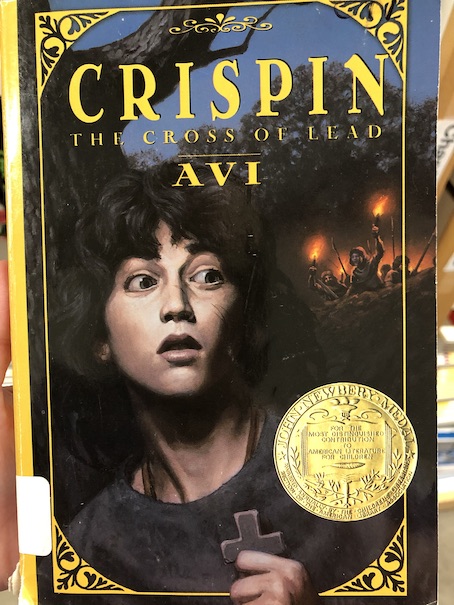
Crispin: The Cross of Lead by Avi, 2002.
The story begins in 1377 in England. It begins with the death of the boy’s mother, Asta. The boy is only known as “Asta’s son” at this point. Nobody has ever called him anything else for as long as he can remember. Even his mother only called him “Son.” He is 13 years old and has no knowledge of who his father was, although his mother told him that he died of the Plague before he was born. As a fatherless child, he was often taunted by others in their little village, and he noticed that no one really seemed to like his mother, although he never really understood why. The only real friend they’ve had is the village priest. With his mother gone and John Aycliffe, the steward of the manor of Lord Furnival that controls the area where they live, demanding his only ox as the death tax for his mother, the boy fears starvation.
As a bleak future lies before the boy, something happens which makes his situation even more dire. He witnesses a secret meeting between John Aycliffe and a mysterious stranger. The boy doesn’t understand the significance of the meeting, but Aycliffe catches him watching and tries to kill him. The boy escapes, but it soon becomes clear that he can’t go home again. Aycliffe has people hunting for him, and he overhears a couple of them talking, saying that the steward has accuse him of stealing from him. No one actually likes Aycliffe and they don’t really believe that the boy is a thief, but they have no choice but to follow the steward’s orders because he’s a relative of Lord Furnival’s wife, and that’s how he gained his position.
Not knowing why Aycliffe has framed him for theft and not having anywhere else to go, the boy turns to the village priest for help. He discusses the meeting he witnessed between Aycliffe and the mysterious stranger, and the priest reveals that Lord Furnival, who has been away, fighting, has returned home but is now dying. The stranger, Sir Richard du Brey, brought the news of Lord Furnival’s impending death, but the boy knows that Aycliffe and du Brey seemed concerned about another matter, something they said posed a threat to them.
The priest tells the boy that Aycliffe means to have him killed and that his only choice is to run away. The boy doesn’t see how he can do that or where he’s supposed to go because he has lived all of his life as a serf, bound to the land. The priest tells him that he needs to go to a big town and stay there for a year and a day to gain his freedom from serfdom (this was a true historical way for people to escape serfdom in the Middle Ages). The priest also tells the boy that his real name is Crispin, but his mother didn’t want anyone else to know, for reasons that he doesn’t explain. He asks Crispin if his mother ever told him anything about his father, but the boy just says that all he knows is that his father is dead. Crispin asks the priest if there’s something that he’s not telling him about his mother, but the priest doesn’t explain. Instead, he tells Crispin that the most important thing is for him to get away. He tells Crispin to hide in the woods while he gathers some things to help him on his journey, and he promises to tell him more about his father when they see each other again. He says that it would be safer for Crispin to know more right before he leaves. (You just know that when someone has something important to say but would prefer to say it later, that person is probably doomed.)
When Crispin waits for the priest to come for him later, a boy from the village shows up instead, saying that the priest sent him. The boy, Cerdic, guides him to Goodwife Peregrine’s house, and she advises him to go to the south because the steward’s men are searching the road to the north. She gives him some food and a cross made of lead in a leather pouch. Before Crispin leaves the village, however, Cerdic says that maybe he should head north after all because the steward might have been lying about searching the north, just to make Crispin think that he should go south. Cerdic says that the priest told him that the best way for Crispin to go would be west because that’s what everyone would least expect. It would be the last thing anyone would expect because the Lord Furnival’s manor house lies in that direction. However, Crispin soon discovers that he has been led into a trap and that the steward is waiting for him. He manages to escape, but he discovers that the priest has been murdered, preventing him from telling him whatever he knew.
Crispin wanders by himself until he finds an empty village where everyone was apparently killed by the Plague. However, there is one other person in the village, a traveling entertainer. The entertainer gives Crispin some food, but he also forces him to tell him his story. Realizing that the boy is a runaway, he forces Crispin to become his servant on the principle that a runaway serf can be taken by anyone. Crispin doesn’t want him for a master, but he has no choice because, if he refuses, the entertainer could easily turn him over to the steward at his former manor, where he would be killed.
The entertainer explains that his name is Orson Hrothgar, but his nickname is Bear because he is a large man. He shows Crispin his juggling and explains that’s how he makes his living. He asks Crispin what he can do, but all Crispin knows is the farming he did as a serf. Bear says that there is no way he could make a living on those skills in any city he went to and he’s going to have to acquire some new ones. Bear is a strange master, giving orders like a tyrant but at the same time claiming to hate tyranny and keeping Crispin firmly in his service while refusing to be called “sir” because he thinks that it makes Crispin sound too servile. As Bear and Crispin get to know each other, it starts becoming obvious that Bear is actually trying to help Crispin when he’s hard on him and even forcing him to serve him is actually in Crispin’s favor because Crispin doesn’t know how to survive by himself in the wider world and hesitates to make decisions for himself without guidance or orders from someone. The threat against Crispin’s life is real, and he’s gong to need help and guidance to survive.
Bear teaches Crispin how to sing and juggle so he can perform with him, but he also teaches the boy how to have some respect for himself and how to take charge of his own life. He can tell that Crispin has been badly neglected in his early life, taught only to obey orders and not ask questions. Because, for a long time, Crispin didn’t even know he own name, he thinks of himself as basically a nobody who doesn’t have a place in the world and isn’t worth anything to anyone. Bear takes Crispin in hand and shows him that his life and his own self are what he decides to make of them.
Bear’s own history is a strange story, and he tells Crispin how his father originally enrolled him in a Benedictine abbey at a young age to be a monk. While he was there, he learned to read and actually became a scholar, but before he took his final vows, he happened to meet a group of mummers, and he was charmed by the life of a traveling entertainer. He abandoned the abbey and traveled with the mummers for a time. He has also been a soldier, and during his time as a soldier, he met Lord Furnival. Crispin asks him what Lord Furnival is like because, even though he has always served on his land, he’s never actually met him. Bear describes Lord Furnival as a cruel man who used other men for his own gain and killed them when he had no use for them.
When they arrive at a new town, Bear assumes that Crispin will be safe to perform in public, having left his enemies behind because few people would pursue a poor boy of no important family or position over the theft that he was accused of doing back in his village. However, Crispin is alarmed to see Aycliffe as they enter the town. Bear realizes that there must be more to Crispin and his situation than even he knows. The murder of the priest back in the village is a shocking crime and must have been intended to silence him from telling whatever he knew. If Aycliffe poses a threat to Crispin, it seems that Crispin must also somehow pose a threat to him, a threat that he thinks must be eliminated. Discovering the reason for targeting Crispin also means unraveling the secrets of Crispin’s past and parentage, and along the way, Crispin also comes to a new vision of the future that he may build for himself.
There is a section in the back of the book which explains the history of this time period and some of the wider events that are a part of this story. The copy I read also had the text of an interview with the author.
This book is a Newbery Medal winner. It is available to borrow and read for free online through Internet Archive (multiple copies). There is also a sequel to this book called Crispin at the Edge of the World.
My Reaction and Spoilers
I read this book partly because I liked Midnight Magic by the same author, and I was pleased to see another mystery story by Avi set in Medieval times. However, the two books have a very different tone from each other. Midnight Magic featured palace intrigue and possible murder, but it was a spooky mystery adventure. Although there were dark themes, it had a sense of whimsy and fun adventure to it, playing with superstitions and a kind of spooky prank, even though it had high stakes. Crispin begins immediately with a mystery orphan who has people who are actively trying to kill him for reasons he doesn’t understand and who is forced to flee for his life. It’s much darker and more serious in tone, and there are parts where dead bodies are actually described in detail. This is definitely not a book for young kids!
The mystery in the story centers around the boy’s true identity and parentage. I thought it was obvious even from the beginning that the boy’s father would turn out to be someone important, whose identity might become known through the deaths of his mother and Lord Furnival and who might pose a threat to the villains in the story through whatever position and inheritance he might have.
It isn’t that much of a surprise that Lord Furnival is Crispin’s father. When he was alive (he dies during the story), he used women for his purposes as well as men. Crispin is not the only child he had by women other than his wife, who apparently, was unable to bear children. The story doesn’t explain who Crispin’s other half-siblings might be or where they are, but the other characters quickly realize that the reason why Lady Furnival and her kinsman, Aycliffe, want Crispin dead is that he might make a claim on his estate, or worse yet, other people might use Crispin to undermine their power. This is a dangerous time, and many people are competing for power and influence. Crispin’s mother was also no ordinary peasant girl. She has kin who are still alive and may be in a position to use Crispin and whatever inheritance or title he could claim to solidify their own positions. Even Crispin’s grandfather, if he became aware of the boy’s existence, might look at Crispin less as a beloved but previously unknown grandson, but more as an unexpected windfall that he could control and use to his advantage. Bear is really the only person who cares about Crispin’s welfare for his own sake, not for what he might be able to gain or achieve through him.
The plot is further complicated because it turns out that Bear is no ordinary entertainer. He turns out to be involved with a real historical character, John Ball, the priest who helped lead the Peasants’ Revolt of 1381. The pieces of philosophy that Bear discusses with Crispin throughout the story are not just academic, and for all of Bear’s apparent lightness as an entertainer, he is actually a deeply serious man who is participating in a clandestine organization that plans to put his principles into action in the form of a rebellion. In his travels, Bear acts as a kind of spy, carrying information to different leaders of his group. There are indications in the story of social unrest and the coming violence. Sadly, in real life, most of the leaders of this revolt were caught and put to death, including John Ball. This endeavor isn’t going to work out well for Bear’s associates and maybe not even for Bear himself, and that probably figures into the sequel to this book.
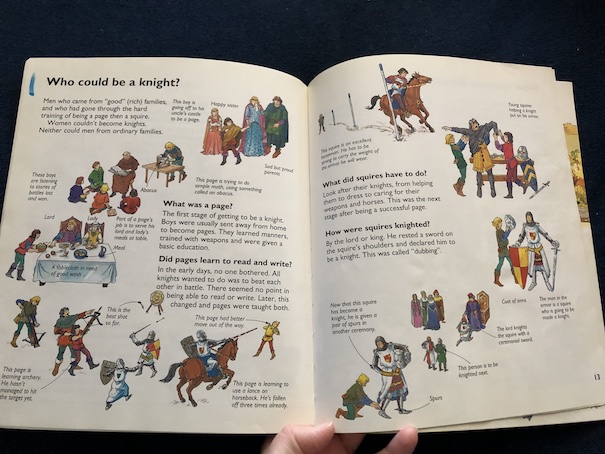
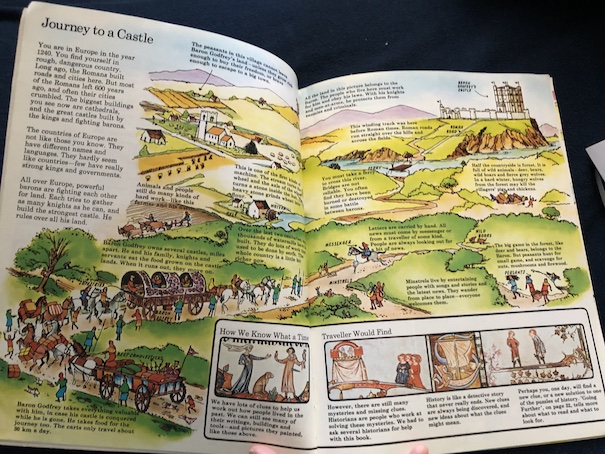
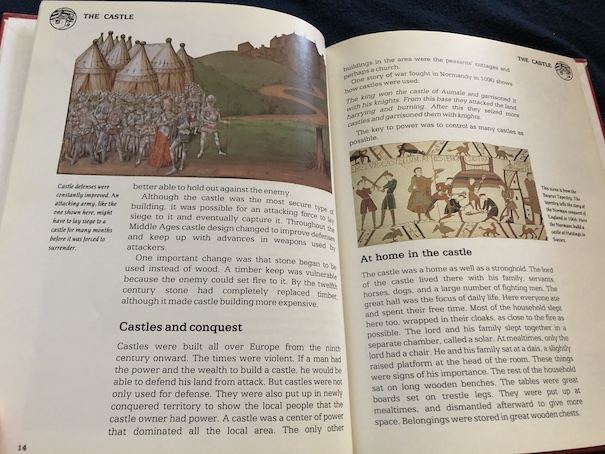
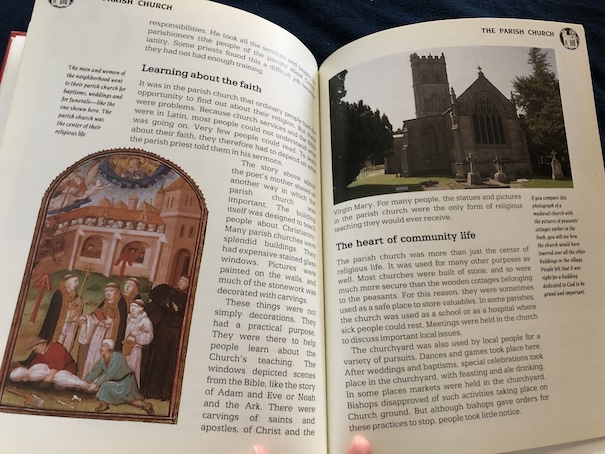
I particularly liked this book for the inclusion of many small historical details. Throughout the story, Bear and Crispin discuss aspects of Medieval law, social structure, and religion in England, and there are also some details about daily life and the Plague. The only Christian religion in the book is Catholic because the story takes place prior to the Reformation, so all of the religious talk in the book is from that perspective, although Bear and Crispin debate with each other about the role of God in determining a person’s position in life and human decisions (like when a person should wait to act on divine guidance vs making decisions for themselves) and the use of religious objects (like whether Crispin’s lead cross serves a purpose in prayer or if prayer should simply be private and mental, with no outside sign), which leaves room for readers to consider what they believe and their own views of the situation.
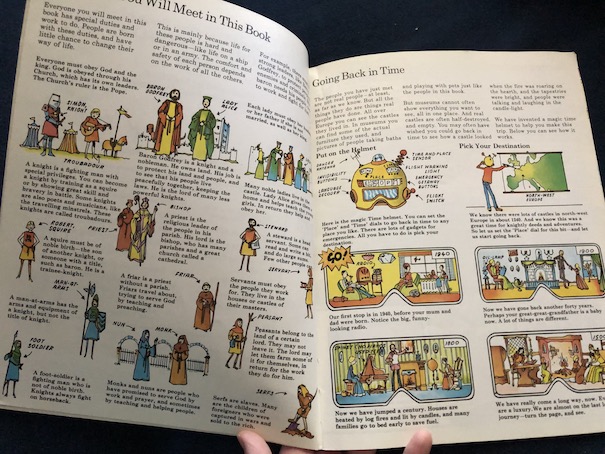
A small detail that I liked was Bear’s explanation of what the different colors of the robes of different types of monks mean. The different orders of monks and priests – Dominican (white robes), Franciscan (brown), and Benedictine (black) – still exist in modern times and still have a somewhat different focus from each other in their activities. As a Catholic, I know that Dominicans are usually (but not always) the priests who celebrate public masses in local churches (Bear describes them saying, “They preach well” because that’s a major focus of what that order of clergy does), and Jesuits (who don’t exist yet at the time of this story) are typically (but not exclusively) the ones who teach in Catholic schools (which I’ve never attended – I came up exclusively through public schools) and universities (Loyola Marymount University is an example). These are the two groups I’ve seen the most in my life in the modern southwestern US, but they are not the only orders of Catholic clergy. For example, the book didn’t mention the Cistercians, who also existed at the time of this story and are basically more strict, austere versions of the Benedictines. I like this particular detail because it shows how there is depth to every subject. A non-Catholic might not know that these different orders of clergy exist, and it matters because each of these groups does have a different focus in their views, methods, and lifestyles while still falling within the sphere of being Catholic. In Medieval England, because each of these groups would have performed somewhat different functions in society because of their different focus and people of the time would have been aware of the differences between them. If you’re a fan of Dungeons and Dragons, the concept of different subclasses of clerics have real-life parallels, not just in historical polytheistic religions but even in modern monotheistic religions.
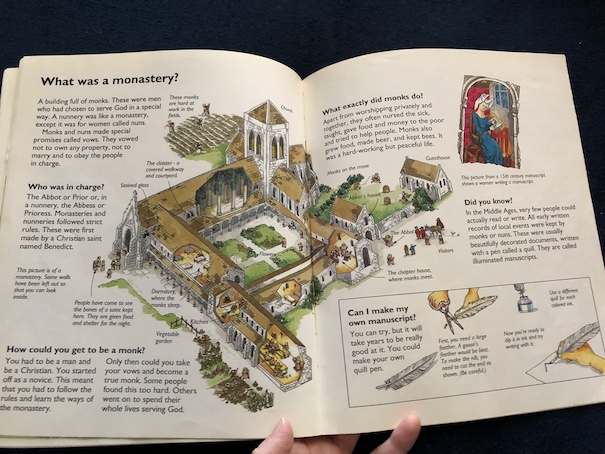
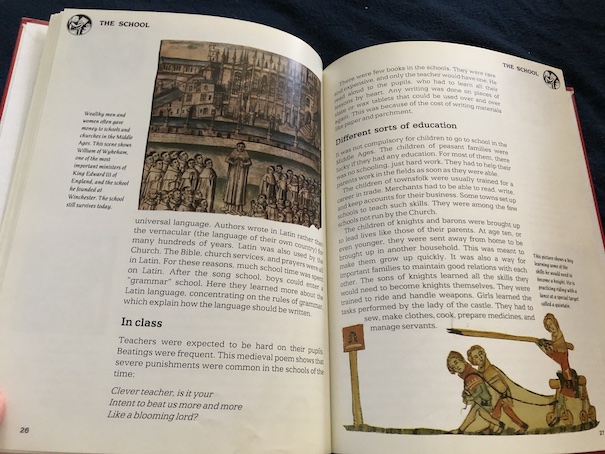
It was common for Medieval monastic orders to support themselves through agriculture (when society was largely based on agriculture, abbeys kept their own lands and animals for support), but monks, priests, and nuns could also fulfill a variety of professions and services in society, some as charity and others as paid roles to support themselves and their orders. Aside from their basic religious functions, they could act as scribes, copying, writing, and illustrating religious and historical books and manuscripts on commission (essentially, the book publishers of their day, before printing presses were available). When Bear was young, his father enrolled him in a Benedictine abbey. He explains that he learned to read in different languages there, so this was probably the work they were preparing him to do if he had continued with his training there, rather than the public preaching he would have been taught to do if he had joined the Dominican order. It was one of the functions that Benedictines were known for, and it would have been a good order for someone to join if they wanted to lead an intellectual or academic life in the Middle Ages. Bear gets much of his philosophical attitude and reflection from his early Benedictine education, although he values the independent form of free thought that he developed through his years of travel to the more strict form of traditional scholarship the abbey would provide. Religious orders that emphasized reading, writing, and learning could also provide tutors to wealthy families to teach their children these skills and clerks (derived from the word “clergyman” or “cleric”), who would keep important financial, legal, and political records for influential people in society. Abbeys and monasteries might also provide lodging for travelers in places where there were no inns, hospitals for the sick and injured, and various forms of charity for those who needed it (the social services of their time). Although joining one of these orders involved strict rules and vows of chastity and poverty (any wealth they acquired was supposed to be used to support the group and their functions rather than mere personal gain), there were opportunities for intellectual as well as spiritual development and a chance to lead a more varied life than other parts of society might provide at the time.
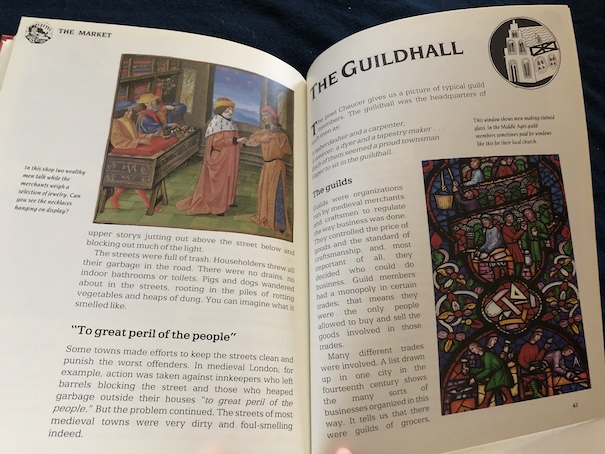
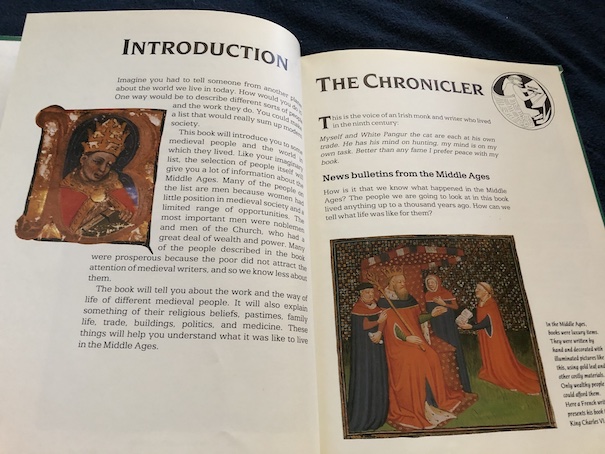
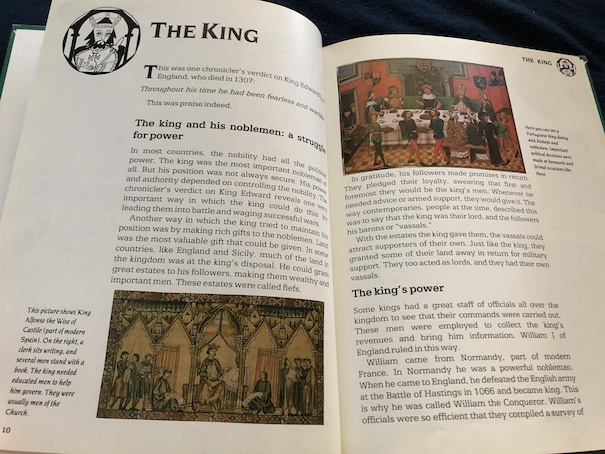
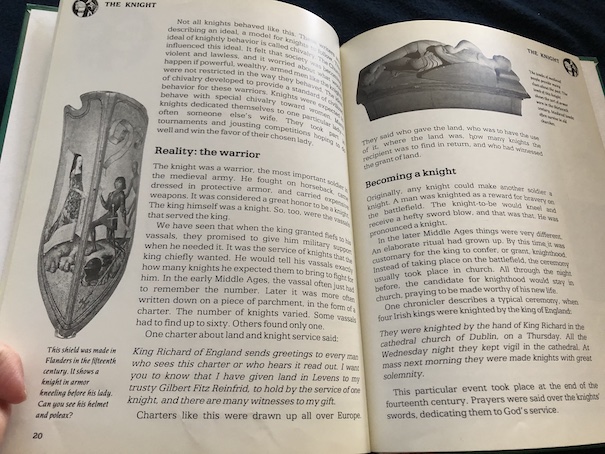
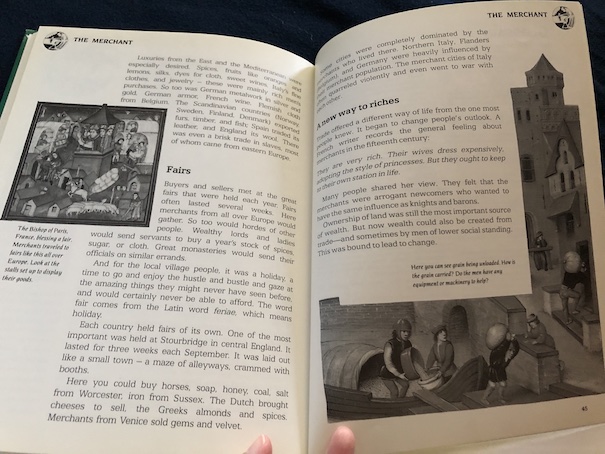
In their travels, Bear and Crispin see many different types of people who would all have been part of Medieval English society. Not all of their jobs and positions are described in detail, but if someone was using this book with students working on a Medieval lesson unit, they could make notes about all of the different types of people Bear and Crispin meet and look up the details of their roles in society to get a more detailed picture of the world these characters are moving through.





















 Jestress's Forgotten Books and Stories