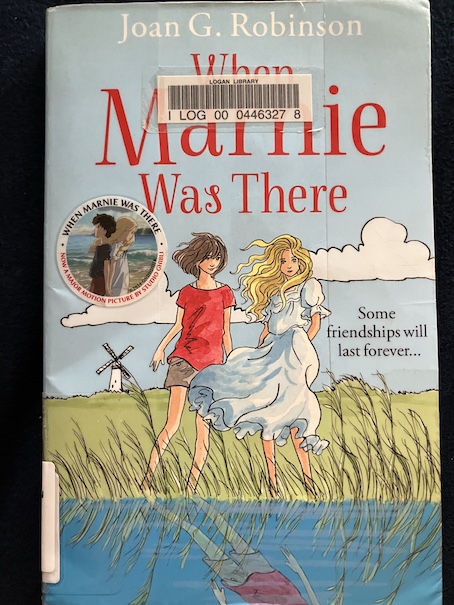
When Marnie Was There by Joan G. Robinson, 1967.
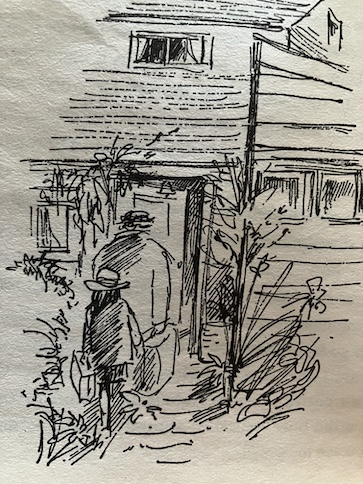
Anna is traveling alone by train to stay with Mr. and Mrs. Pegg for the summer. Anna lives with Mrs. Preston, who she calls her auntie, but the truth is that Anna is a foster child. She knows that her mother and grandmother are dead. Anna feels different from other children and has trouble relating to them. Anna often feels like an outsider around other people. She also suffers from asthma, which gets worse when she is stressed, and it’s been interfering with her going to school. Her vacation in the countryside with the Peggs is meant to help improve her health, but her health problems are partly based on her inner turmoil, which accompanies her to the countryside.
The Peggs are nice. Mrs. Pegg tries to get Anna to be friendly with a local girl, Sandra, but it doesn’t go well. Anna takes offense that Sandra cheats at cards, and she calls Sandra a pig. Sandra insults Anna by saying that she looks like “what she is.” Although the vague insult is probably because Sandra couldn’t think of anything better at the time, it stings because Anna really doesn’t think much of herself, and she constantly worries that it shows on the outside.
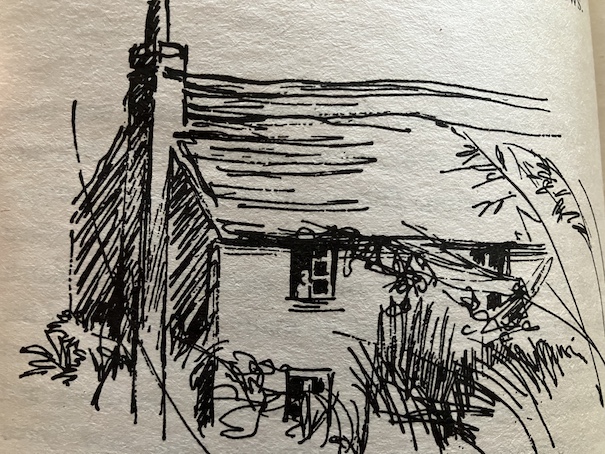
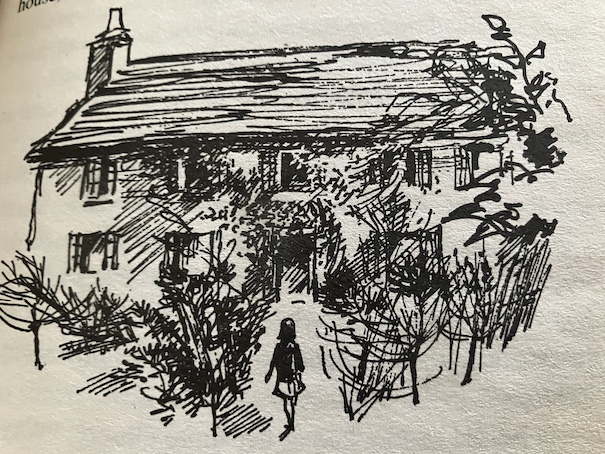
Anna is happiest when she’s left to wander and explore by herself and try not to think about all the things that bother her. As Anna explores the area alone, she finds a large, old house that intrigues her. She has the odd feeling like the house has been waiting for her and an odd sense of familiarity with it. Mr. and Mrs. Pegg say that’s the old Marsh house and that nobody lives there now, although they’ve heard that someone has bought it. Anna likes to imagine that the house belongs to her and that the family that will move into it belong to her, too. She thinks she sees a blonde girl in one of the windows, getting her hair brushed.
Then, one evening, she meets a pretty blonde girl with a little boat. The two of them hide and listen to the girl’s parents talk, and they begin to develop a kind of odd friendship. The two girls continue to meet in the evenings in the blonde girl’s boat. The blonde girl, who calls herself Marnie, says that she wants to keep their friendship a secret, and she would rather that they get to know each other slowly, only asking one question about each other in turn. For some odd reason, though, when Anna is with Marnie, she has trouble recalling details of her present life, and anytime she stops to focus on the present, Marnie suddenly disappears, although Marnie claims that Anna is the one who suddenly disappears.
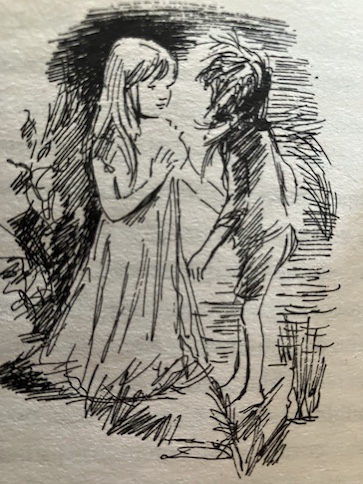
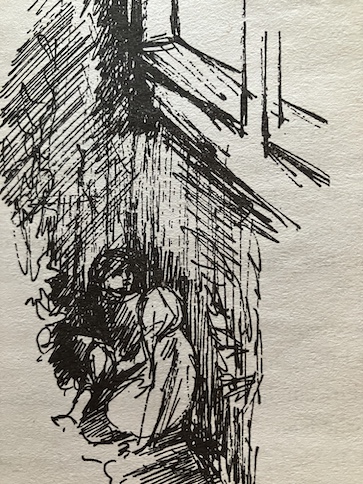
Marnie and Anna explore the countryside together, gathering mushrooms, and talking a little to each other about their lives. Anna admits to Marnie what she can’t bring herself to tell anyone else, the reasons why she’s been so upset. She fears that her foster family doesn’t really love her. She thinks they kind of do, but she has recently learned that they’ve been receiving payments from the local council for her support. Since she found out about the money they’re receiving for her, she’s felt a sense of betrayal and abandonment. She used to think they felt like she was their own child, but now, she thinks that they’re mostly just being paid to care for her.
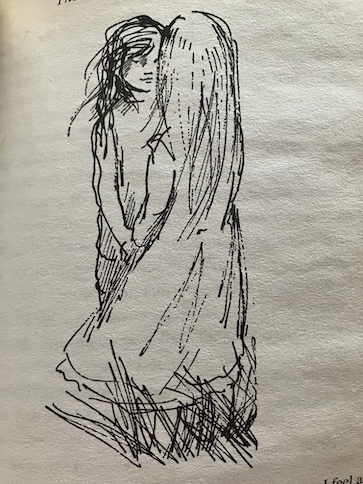
It seems like, all her life, Anna has been abandoned by the people who were supposed to live her the most. She doesn’t really remember her parents at all. She knows that her father abandoned her and her mother when she was small and that her mother remarried but died shortly after that. Anna’s mother had left her with her grandmother while she went away on her honeymoon, but then, she and her new husband were both killed in a car crash, so they never returned for her. Anna remembers a little about her grandmother, who took care of her after her mother died, but then, her grandmother also got sick and died. Anna tells Marnie that she hates them all for going away and leaving her. Marnie points out that dying wasn’t their fault, but Anna says that, before her grandmother went to the hospital, she promised to return soon. She broke her promise by dying. Ever since, Anna has had the feeling that she can’t trust anybody because people leave and break promises. Her feelings of not being able to trust people are at the root of her difficulties in forming friendships and confiding her true feelings to her foster family. Marnie hugs Anna and tells her that she really loves her and that they’ll be friends forever, and for the first time in a long time, Anna feels happy and feels like she can believe Marnie.
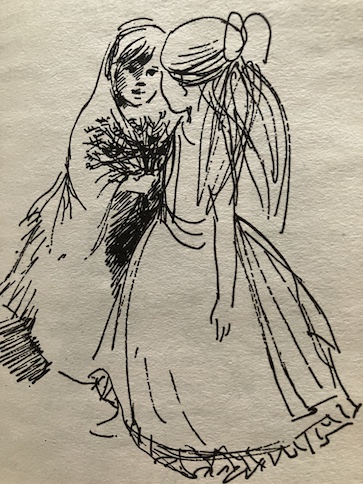
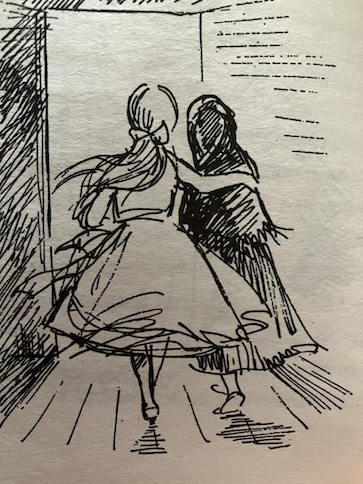
At first, Anna envies Marnie’s privileged life in the big house. Marnie’s father is wealthy, and her mother is beautiful, and it seems like Marnie has everything she could want. Anna even gets to attend one of the parties Marnie’s parents hold at the house when Marnie convinces them to let her in as a little beggar gypsy girl (the book’s description) selling sea lavender for luck. (There is minor alcohol use at this point because the people at the party give Anna a little glass of wine. People are also smoking at the party.) However, when Marnie explains a little more about what her parents are like and what really happens in her house, Anna comes to see that Marnie isn’t fortunate at all. Her parents are rarely home because her father is often away, in the navy, and her mother likes to spend most of her time in London. Marnie doesn’t exactly say what her mother does in London, but the implication seems to be that she spends a lot of time partying and hob-nobbing with high society. While they’re away, Marnie is looked after by her nurse, who can be abusive when she’s angry with Marnie, and sometimes she and the maids threaten to lock Marnie in the old windmill nearby, knowing that she’s afraid of the place. Anna thinks that’s horribly cruel, and she says that no adult in her life has ever hurt her or tried to frighten her on purpose. Marnie doesn’t think of herself as being so unfortunate because this is the only life she’s ever known, but Anna knows that not everybody treats children like that. Her heart goes out to Marnie, and she declares that she loves Marnie, too.
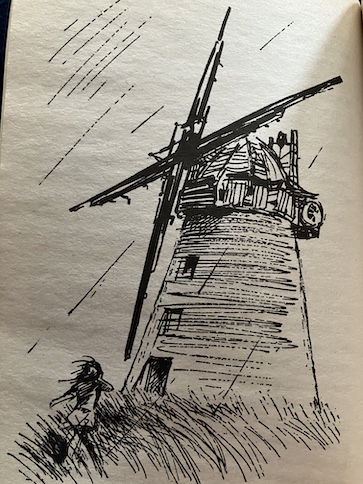
Anna’s relationship with Marnie teaches her how to open up to other people and trust them, but that trust is shaken after a frightening experience at the old windmill. Marnie’s distant cousin Edward, who seems to be the only person in her life who truly looks out for her, is also a bit strict and teasing with her when it comes to the things that she’s afraid of. He thinks that fears should be confronted, so he convinces her that she should be brave and get over her fear of the windmill. In an effort to face her fears, Marnie tries to go inside the windmill alone and climb up the ladder to the loft. However, once she’s up there, she becomes too afraid of the ladder to climb down again. Anna also climbs up and tries to comfort Marnie, but no matter what she says, Marnie is too scared to climb back down. The girls fall asleep in the windmill, and when Anna wakes up, Marnie is suddenly gone. Anna is angry at Marnie for leaving without telling her when both of them had been frightened. Once again, she feels betrayed and abandoned by someone she thought she could trust.
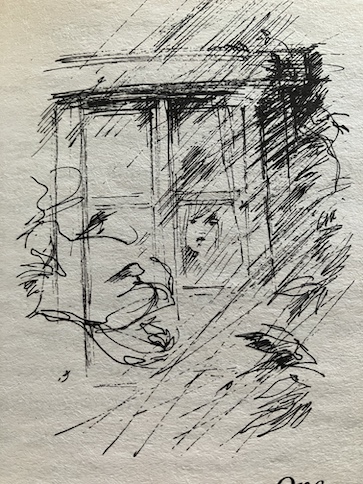
Then, during a storm, Anna sees Marnie gesturing to her from a window of the Marsh house. Marnie calls out to her that she’s sorry about leaving her and that she can’t come out because she’s locked in and is being sent away the next day. She just wants Anna to know that she loves her. Anna, seeing that Marnie didn’t mean to hurt her, forgives her and says she still loves her, too. To Anna’s shock, though, when she tries to look inside the windows of the Marsh house, the place looks empty and abandoned. Confused and upset, Anna stumbles and falls into the water nearby, nearly drowning, but she is rescued by a local man.
After that experience, Anna is ill and sad because she realizes that Marnie is gone from her life. When she recovers, though, she goes to look at the Marsh house again and encounters the children of the new owners, the Lindseys. Anna feels a surprising sense of connection to them, and they to her. As they get to know each other and become friends, one of the Lindsey children, Scilla, reveals that she’s found a diary in the house that tells her about Marnie’s life. At first, she thought Anna was Marnie when they met. Anna is shocked because she’s been starting to think that Marnie was only an imaginary friend of hers. When Anna and Priscilla read the diary, they learn more about the history of the Marsh house and Marnie. The diary is old and refers to the First World War as an event that is currently happening, bringing into question who and what Marnie really was when Anna was becoming her friend. Mrs. Lindsey says that they can ask their family friend, the elderly Gillie about Marnie. Learning about Marnie’s past awakens some of Anna’s memories and reveals some things about Anna’s own past. Understanding who and what Marnie was helps Anna to understand that her birth family, who seemed to have abandoned her, actually loved her. Accepting Marnie’s love helps Anna to understand and accept the love of her foster parents and new friends.
The book is available to borrow and read for free online through Internet Archive. This book has also been made into a Studio Ghibli movie of the same name, although they changed the location of the story from England to Japan. Changing the location of the story changes some of the historical details, but the essential parts of the story are the same as well as the lessons Anna learns from her experiences.
My Reaction and Spoilers
Probably, most people today are familiar with this story because of the Studio Ghibli movie. The movie is pretty faithful to the original book, although changing the setting from England to Japan changes some of the details. It kept the general sense of Anna’s family’s history, her personal connection with Marnie, and the lessons that Anna learns about love, trust, forgiveness, and connecting with other people. In both the book and the movie, Anna comes to realize that the feeling of being “outside” or “inside” relationships with other people is largely a reflection of how the person feels inside themselves. Anna is troubled because she has long-term trauma and inner turmoil that needs to be resolved. Finding out the truth about Marnie and her own past, especially now that she’s old enough to understand the situation, helps to resolve Anna’s feelings.
This is one of those stories where it’s difficult to talk about the book in detail without spoilers, so from this point on there are going to be some major spoilers.
Who is Marnie Really?
Readers will probably get the sense that there’s something odd about Marnie pretty quickly. There are a few odd time discrepancies when Anna’s with Marnie. Marnie vanishes at odd moments, especially when Anna tries to remember details of her present life in Marnie’s presence. For some reason, it takes a lot of effort for Anna to remember her present life when she’s with Marnie, and when she tries to focus on the present day, Marnie disappears.
Why do I keep talking about the “present”? Because this is a time slip story. It’s not immediately obvious to Anna that, when she’s with Marnie, she’s in a different time period because they’re spending time in the countryside with no signs of modern technology or the absence of modern technology, like television or radio, to give away the time periods. Marnie never goes into the Peggs’ household, and the only time Anna goes into the Marsh house with Marnie is during a party, where everyone is dressed up. There are a couple of minor clues, like Marnie referring to what Anna’s wearing as boys’ clothes because she’s wearing pants instead of a dress or skirt, but other than that, there are few references that would clarify the time period for Anna. Anna’s difficulty of thinking of or being in two different time periods at once also keeps her from making the connection.
After Marnie leaves and Anna knows that she is gone, Anna partly concludes that she was only an imaginary friend of hers, but the diary makes it clear that Marnie was a real person. It also adds some details that confirm Anna’s experiences with her and add some extra information that Marnie didn’t discuss with Anna that clarifies when she really lived in the Marsh house.
The truth is that Marnie was Anna’s grandmother, who is now deceased. The Marsh house was familiar to Anna because it was her home with Marnie during her earliest years. The things that Gillie has to say about Marnie help to fill in the blanks and connect Marnie’s story to Anna’s.
As a child herself, Marnie really was the poor little rich girl whose wealthy parents neglected her and frequently left her alone with an abusive nurse. Marnie was somewhat isolated as a child and, like Anna, was frequently happiest exploring the countryside or going out alone in her boat. The only person she felt that she could confide in was her distant cousin, Edward, who was older and tried to look after her, although he was also stern and not as emotionally understanding as he probably should have been. The summer that Anna experiences with Marnie was the summer when Marnie’s life changed forever, partly because of the windmill incident.
Marnie really did go into the windmill by herself in an effort to conquer her fear, and she did get trapped there because she was afraid to come down. Her nurse and the maids, unable to find her and not knowing where she went, finally called for a search party for the missing girl, but it was Edward who figured out where she was. He found her in the mill, unconscious, either passed out from fright or having fallen asleep from exhaustion, and carried her down the ladder himself, which is why Marnie was gone when Anna woke up. Edward didn’t see Anna there, probably because she had either shifted back to her own time while the girls were asleep or because not everybody is able to see Anna when she’s caught between times. The fact that the nurse had no idea where Marnie was exposes her neglect of Marnie, and when Marnie tells Edward about how the nurse and maids made her afraid of the windmill by threatening to lock her in there and how her nurse has given her abusive punishments, he makes sure that the nurse is fired. The reason why Marnie called out to Anna that she was being sent away was that, when the nurse was discharged, her family decided that it would be best for her to go to boarding school instead. Marnie’s father, who was in the navy during WWI/The Great War, was killed during the war, not very long after that party that Anna attended as the little beggar girl, and after boarding school, Marnie married Edward. They moved somewhere else, and they had a daughter of her own.
Unfortunately, Marnie’s life and family were plagued with problems, some of their own making and some beyond their control. When Anna and her new friends, the Lindsey children, try to ask Gilly who was responsible for how things turned out for Marnie, she says that the answer is complicated. The older a person gets, the more they realize that there are many factors involved in how a person’s life turns out, and it’s difficult to point to any one thing as a cause.
Marnie’s parents obviously neglected her, and although Edward really did love her, he wasn’t very understanding about emotional needs. Marnie herself, although she wanted to be a better parent to her daughter than her parents had been to her, didn’t really know how because she didn’t have good parental role models to follow and hadn’t been brought up to understand her own emotional needs, let alone how to care for the emotional needs of a child. She hadn’t fully matured emotionally by the time she became a mother, and outside events complicated her relationship with her daughter, Esme. Esme was young during WWII, and she was sent away to the United States as a child evacuee to escape the threat of bombing. Although Marnie sent Esme away for safety, they were separated for a period of years when Esme was very young. When Esme came back, she didn’t feel much connection to Marnie. She felt abandoned for being sent away from her mother and accused Marnie of never really acting like her mother because she wasn’t there for her, physically or emotionally. Marnie tried to repair her relationship with Esme, but as soon as Esme was out of school, she ran away and got married to Anna’s father.
We never learn who Anna’s father was. He is probably still alive somewhere, but Gillie describes him as having been too young and immature for the role of a husband and father. It wasn’t long before he and Esme divorced, and he was out of Anna’s life forever. The story seems to imply that he might have been from Spain because he has a darker complexion than Marnie or Esme and because he liked the Spanish sound of the name Marianna, the name that Esme originally gave to Anna as a baby and which came from Marnie’s mother. (We are told that Anna was unaware that her legal name is still Marianna and that Anna is a nickname that her foster family gave her.) Because her marriage failed when Anna was only a baby, Esme turned Anna over to Marnie almost immediately, so Marnie really was the one who was raising Anna the entire time. Esme tried to get her life straightened out, and the man she married next seems to have been a nice person. The family might have managed to get themselves back together as a family after that, but Esme and her new husband tragically died in a car accident on their honeymoon. Marnie genuinely loved Anna and tried to continue caring for her, but her own health was failing, and the shock of Esme’s sudden death made it worse. Marnie desperately wanted to recover and return to Anna at the Marsh house, but she really couldn’t help dying. When Anna fully comes to understand all of this, she manages to forgive her mother and grandmother for leaving her, knowing that they loved her and that leaving her the way they did wasn’t what they wanted.
Anna’s new sense of inner peace and acceptance of her family’s love for her, flawed as they all were, helps Anna understand and accept her foster family’s love. She and her foster mother also have a heart-to-heart talk about the payments they’ve been receiving to help support Anna. Mrs. Preston says that she hadn’t wanted to talk to Anna about the payments because she hadn’t wanted Anna to feel self-conscious about them or to think that the Prestons didn’t want to support her themselves, although the money has helped with Anna’s expenses. Mrs. Preston admits that she’s tried to avoid mentioning things that would make Anna seem more separate from the Preston family or less than fully hers, and she had noticed that Anna was uncomfortable when she was younger and Mrs. Preston tried to tell her what she knew about her mother and grandmother. Anna had been uncomfortable hearing about them because she was angry with them for their seeming abandonment of her, but Mrs. Preston hadn’t understood and was too uncomfortable herself to probe Anna’s feelings deeper, although she now sees that it’s better to be open about things, even when they’re uncomfortable. Anna’s relationship with her “auntie” improves because of their new understanding of each other, their feelings, and Anna’s past. I think Anna also sees that Mrs. Preston has treated her much better than Marnie’s own parents ever treated her, which shows that being blood relations isn’t always a guarantee of a close and loving relationship or the best treatment. Although, realizing that she originally did come from a family who loved her as best they could and that her grandmother really was her first real friend helps give Anna the basis she needs to establish loving relationships with other people.
What is Marnie Really?
As I said, this is a time slip story. Anna apparently really does go back in time, speak to Marnie as a living person in her time, and interact with other people at the party when Marnie pretends that she’s a little gypsy beggar girl (the book’s description) selling sea lavender. The beggar girl incident also appears in Marnie’s diary. Marnie doesn’t refer to Anna by name, but it seems to indicate that Marnie actually experienced the incident with Anna and that it wasn’t just a dream.
Although, I have seen other reviewers suggest that Anna could have been dreaming or imagining some of these things as the presence of the house awakens Anna’s memories of living there with Marnie and stories that Marnie might have told her about her childhood. Yet, the fact that Scilla saw Anna once looking up at the house and seeing Marnie in the window while none of her siblings could see Anna at that time suggests that something supernatural was happening and that only certain people can see Anna when she’s caught between time periods.
So, does that mean that Marnie was a ghost or that Anna was a type of ghost when she was slipping between time periods? It’s a possible explanation, and I think one of the characters makes that comparison. We don’t have an exact explanation for how the time slips happen except that Marnie and Anna have a strong emotional connection to each other and to the Marsh house. Marnie’s death and Anna’s unresolved feelings create a need for the two of them to meet again, almost for the first time, and come to understand each other.
I think the movie version somewhat implies Marnie deliberately reaching out across time to reconnect with her granddaughter and assure her of her love, but in the book, it seems as though Marnie is unaware that they are actually family. Marnie just loves Anna as Anna, not trying to justify their family’s circumstances but just being herself as she was when she was young and letting Anna see the person she really was. Just as Anna couldn’t climb down the ladder for Marnie, only trying to help her do it herself, Marnie can’t do all the emotional understanding for Anna. Her presence just helps Anna to come to a new understanding of her and their shared past.
In beginning, Anna was angry that her teachers accused her of “not even trying” at school or at getting along with others, but the truth is that she was missing some important pieces of information and understanding to make the efforts she needs to make. Marnie’s life turned out the way it did partly because she was also missing some understanding about emotions, relationships, and what it takes to be a good parent. We don’t know why Marnie’s mother was the way she was. Perhaps she was similarly raised by neglectful parents and distracting herself from her own past traumas in those constant parties she gives and attends. As Gillie says, it’s hard to know exactly where these things start when you begin to look at the bigger picture. However, Anna’s new understanding indicates that her life is likely to turn out better than the previous generations of her family. In an odd way, it seems she both needed both her connection to them and a kind of separation from them to get there and break their cycle.
 Jestress's Forgotten Books and Stories