Princess Tales

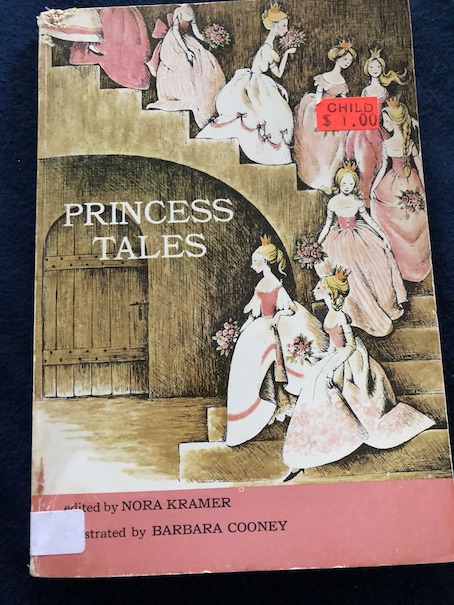
Princess Tales edited by Nora Kramer, illustrated by Barbara Cooney, 1971.

This is a collection of princess stories by various authors, including retellings of some classic fairy tales, some or all of which were printed in other locations before being included in this collection.  Although I have encountered some of these stories before this collection, I liked the illustrations in this book because I like Barbara Cooney’s work.

Stories in the Book:
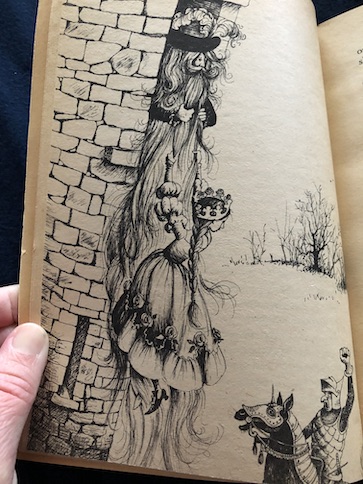
The Practical Princess by Jay Williams (1969) – I know this story from the story collection that is named after it, but it did appear in other printings before either of these.  Princess Bedelia was given the gift of common sense as a baby, and she uses her practicality to rid her kingdom of a dragon and save herself from marriage to an evil sorcerer.

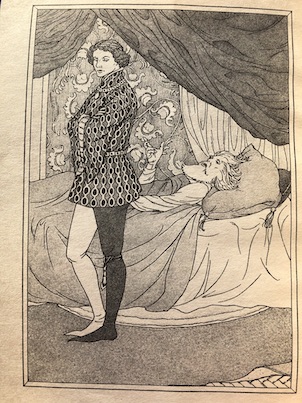
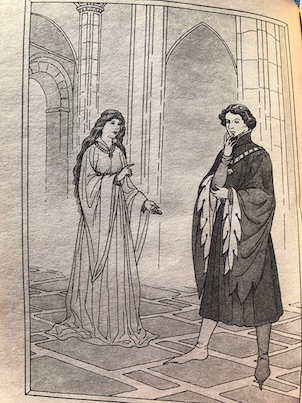
The Twelve Dancing Princesses by Virginia Haviland (1959) – A retelling of the classic fairy tale.  A French kingdom with twelve beautiful princesses is mystified by how the princesses’ shoes are always worn through every morning even though the door to their room is locked every night when they go to bed.  What are the princesses doing every night that ruins their shoes, and how are they doing it?  Michel, a young cowherd who has recently taken a gardening job at the castle and who has fallen in love with the youngest of the twelve princesses, discovers the answer.  When her sisters want to enchant Michel, as they have others who have discovered their secret to keep them from telling, Princess Lina needs to decide if she loves Michel as much as he loves her.

The Princess and the Vagabone by Ruth Sawyer (1942) – A beautiful but bad-tempered Irish princess learns a lesson in kindness when her father gets fed up with the way she treats her suitors.  All of her life, the princess has dealt out criticism and insults to everyone, when she sees a suitor with whom she can find no fault, she doesn’t know what to do (never having practiced kindness or spoken nicely to anyone) and gets angry, hitting him and crying as she runs from the room.  Her father, disgusted with her impossible behavior, tells her that he’s had enough, and since she has rejected all the royal suitors, he will force her to marry the next vagabone (vagabond) who comes begging at the castle.  As the wife of a vagabond, the princess learns to face hardships she has never experienced before, sees for the first time how much kindness from another person can really mean, and notes positive points about others for the first time, enjoying the ragged vagabone’s song.  But, there is still one more surprise when the vagabone turns out to be the perfect suitor the princess thought that she had rejected.

Melisande by E. Nesbit – A king and queen want to avoid the usual messes and curses that often result from holding a christening party for a new princess and forgetting to invite one of the fairies, so they decide that, for their daughter Melisande, they will simply hold an informal christening with no party.  However, all of the fairies get mad about this and come to give curses to the princess.  Fortunately, the king points out logically that, according to tradition, only one forgotten fairy can offer a bad curse to a princess after being left out of a christening party.  Fairies are held to certain rules and can vanish for breaking them, so since the first fairy already cursed the princess with baldness, the others simply agree to count themselves are party guests and leave.  Princess Melisande spends her childhood being bald, but the king offers her a fairy wish that he had been saving for something special so that she can wish for hair.  However, Melisande foolishly wishes for her hair to grow exceedingly fast and even faster when cut.  It’s far too much hair for her, even though people try to help her find uses for it, like weaving it into clothes and stuffing pillows with it.  As usual in these cases, the king offers Melisande’s hand in marriage to the prince who can help her to solve her problem.  At first, Prince Florizel thinks he’s found the solution when, instead of cutting the princess’s hair from her, he cuts her from her hair.  However, that has the unintended side effect of making the princess grow suddenly tall!  What will Prince Florizel do to get the princess and her hair to balance?  (At one point, this story references Alice in Wonderland.)
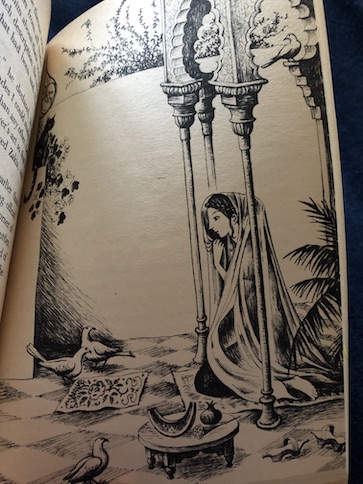
The Handkerchief by Robert Gilstrap and Irene Estabrook (1958) – At first, Zakia is not happy when her father, the Grand Vizier of Morocco accepts the sultan’s offer to marry her on her behalf. She doesn’t think that it’s fair for him to order her to marry anyone, and she doesn’t love the sultan. In response, she imposes a requirement on the marriage, that the sultan must learn a trade in case he loses his throne and has to earn a living. To the vizier’s surprise, the sultan thinks that sounds like a clever request, and the sultan learns the art of weaving. He enjoys it, and he makes a beautiful handkerchief for Zakia as a wedding present. Zakia appreciates the gift and marries him. The sultan’s ability as a weaver later saves him when he is in a desperate situation.

The Blackbird’s Song by Barbara Leonie Picard (1964) – An artist paints an unflattering picture of the king and is thrown into prison. However, the princess’s pet blackbird sings to him of the princess’s beauty and kindness, and he is able to paint a marvelous portrait of her without having seen her himself. When the princess falls in love with the artist, her blackbird and its friends help them to make their escape from her father.
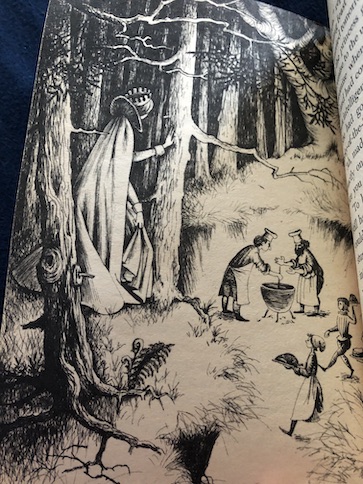
Ricky-of-the-Tuft by Polly Curren (1963) – A prince is born ugly, and his mother is worried, but a fairy gives him the gift of wit and intelligence, with the ability to give that gift to someone he loves. In another kingdom, a queen has two daughters. The eldest is beautiful and the youngest is plain. However, a fairy says that the plain girl will be bright and intelligent, and people who talk to her will forget what she looks like. The beautiful girl is less fortunate because she is not intelligent. People will enjoy looking at her, but they will quickly tire of her because she does not speak intelligently and has nothing to say. To compensate the beautiful girl, the fairy says that she will be able to make the person she loves beautiful as well. When the ugly prince, Rick-of-the-Tuft, meets the beautiful princess and falls in love with her, the two of them are able to use their gifts to help each other. The story is based on a Perrault fairy tale.

The Son of the Baker of Barra by Sorche Nic Leodhas (1968) – The baker’s son, Ian Beg, is a nice boy, and sometimes a little too nice. When his father sends him to take a cake to the princess, he is stopped by old women who ask him for a taste of the cake, and he cannot refuse them. However, it turns out to be a fortunate thing. The old women are actually fairy folk, and not only do they handsomely compensate him for the cake that they eat, but they also help him when the princess falls in love with him and the king tries to get rid of him by sending him off to find a castle of his own. The king doesn’t expect that Ian Beg will be able to find a castle and supply the kind of lifestyle that a princess needs, but he doesn’t know that Ian Beg has help.
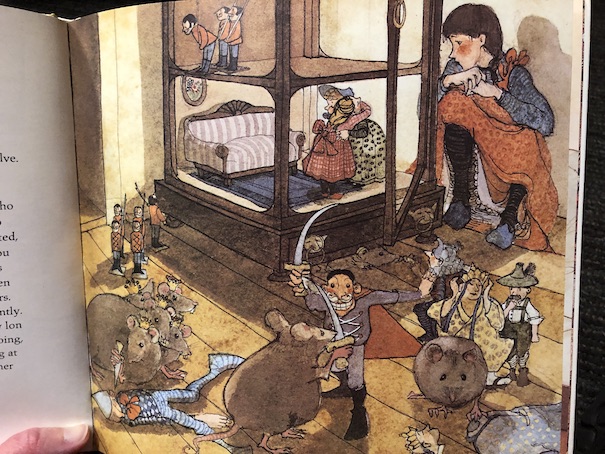
The Nutcracker

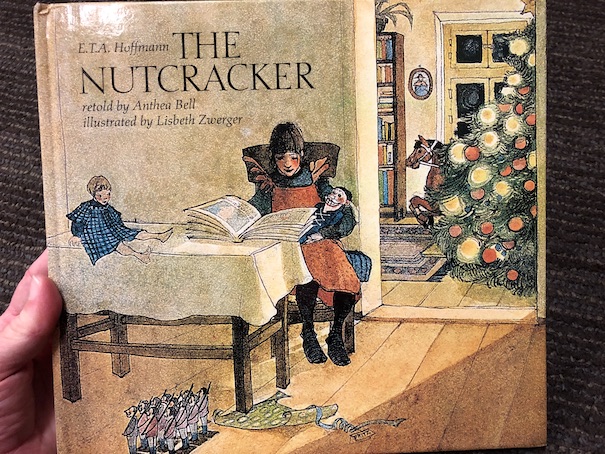
The Nutcracker by E.T.A. Hoffmann, retold by Anthea Bell, 1816, 1987.

The reason for the two dates of this book is that the original Nutcracker story was written by a German writer, E.T.A. Hoffmann, in 1816, as the novella The Nutcracker and the Mouse King. Some places, including the back of this book note different publishing dates for the original story because it was published more than once during the 1810s, as part of different story collections. This article gives more details about the original version of the story and different publications. Since then, it has been retold many times and in many different forms, including the famous ballet based on the story. In ballets and plays, the name of the heroine is often Clara, but in this picture book, as in the original story, the heroine’s name is Marie.

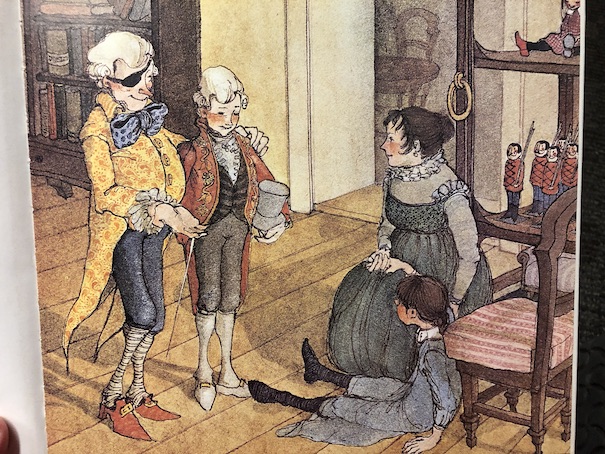
In the beginning of the book, which is set in the 19th century, Marie and her brother Fritz, are opening their Christmas presents on Christmas Eve. (The book explains that opening presents on Christmas Eve is a German tradition. A friend in Germany also explained that to me once because, in Germany, presents are supposedly brought by the Christ Child, not by Santa Claus. Since then, I’ve read that explanation may vary, depending on whether the household is Catholic or Protestant.) The children receive many wonderful presents, including a toy castle from their godfather, Mr. Drosselmeier. Marie’s favorite present is a nutcracker that looks like an odd little man. When Fritz is too rough with the nutcracker and breaks it, Marie takes care of it.

Marie stays up late, and when she finally puts the nutcracker away at midnight, she is astonished to see an army of mice coming out of the floorboards. The leader of the mouse army is the Mouse King, who has seven heads. The Nutcracker leads an army of toys against the mouse army. The mouse army appears to be winning, so, to save the Nutcracker, Marie takes off her shoe and throws it at the mice. Then, her arm hurts, and she apparently faints.

When Marie wakes up, she is in her own bed, and her mother tells her that she apparently put her arm through the glass door of the toy cabinet, cutting herself badly. When Marie tries to tell her mother about the battle between the toys and the mice, her mother and the doctor think that she’s ill and confine her to her bed for a few days. Mr. Drosselmeier repairs the Nutcracker and returns it to Marie, telling her the reason why nutcrackers look so strange and ugly, calling it The Tale of the Hard Nut.

Year ago, there was a royal banquet given by the King and Queen who were the parents of Princess Pirlipat. A mouse who claimed to be the queen of Mousolia demanded some food from the banquet as the Queen was preparing it. The King was angry that the mouse took some of the food and wanted revenge. The King asked his Court Watchmaker, who was also named Drosselmeier, to build some mousetraps to catch the mouse queen’s seven sons. When the sons were caught, the mouse queen vowed that she’d take her revenge on Princess Pirlipat. Princess Pirlipat was a pretty baby, but the mouse queen turned her ugly. The King took out his anger on the Court Watchmaker, ordering him to find a way to change Princess Pirlipat back to normal and threatening to behead him if he failed. After consulting the Court Astronomer, the Court Watchmaker learned that the key to breaking the spell on the princess was a special nut, which had to be cracked by being bitten by a man who filled certain special requirements, which all happened to be met by the son of the Watchmaker’s dollmaker cousin. The King had promised that the person who could break the spell could marry his daughter, but the mouse queen interrupted the last part of the ritual, causing the young cousin to turn ugly himself. When pretty Princess Pirlipat saw her rescuer turn ugly, she didn’t want to marry him anymore. The Court Astronomer said that the only way to break the spell on the young man was for him to defeat the new Mouse King – the mouse queen’s youngest son – and for him to find a woman who would love him regardless of his appearance.

Marie knows that the story is true because she has seen the Mouse King herself. She loves the Nutcracker and wants to help him. The Nutcracker returns to visit Marie during the night and makes repeated demands of her for her candy and toys. Marie knows that, no matter what she gives him, the Mouse King will keep returning to demand something else. The Nutcracker tells her that he needs a sword to fight the Mouse King. They borrow one from a toy soldier, and the Nutcracker successfully defeats the Mouse King, giving Marie his seven golden crowns.

As a reward for helping him, the Nutcracker takes Marie to the land where he is from, leading her there through a magic staircase in an old wardrobe. The Nutcracker’s land is beautiful, filled with candy and sweets and gold and silver fruit. (The Christmas Wood that they pass through reminds me of the woods in the wardrobe in The Lion, the Witch, and the Wardrobe.) The Prince Nutcracker’s home is Marzipan Castle in Candy City, where his beautiful princess sisters live. They welcome Marie and the Nutcracker home.

Then, suddenly, Marie wakes up, as if it were all a dream. However, Marie knows that it wasn’t a dream because she still has the Mouse King’s crowns. Marie tells the Nutcracker that she loves him. There is a sudden bang, and Marie faints. When she wakes up, she is told that Mr. Drosselmeier’s nephew has come to visit them. The nephew is the Nutcracker, restored to human form and now a handsome young man, thanks to Marie’s love. Marie later marries the nephew, and the two of them rule magical Kingdom of Sweets.

There is a section in the back of the book that explains a little more about E.T.A. Hoffmann and the original version of the Nutcracker story.

This book is available to borrow for free online through Internet Archive.

The King’s Equal

The King’s Equal by Katherine Paterson, 1992.

Everyone dreads the day that Prince Raphael will rule the kingdom instead of his father.  Prince Raphael is good-looking and highly educated, but he’s also selfish and greedy.  His one outstanding characteristic is that he’s arrogant.  He assumes that no one knows as much as he does about anything and no one is as deserving as he is . . . of anything.  Knowing that, as the old king lies dying, he makes his final decree that the prince will not wear his crown until he is married to a woman who is his equal.

When the prince hears that, he immediately becomes angry, saying (as his father guessed he would) that there could not possibly be any woman in the world who is his equal, who is as rich, intelligent, or beautiful as he is.  After his father dies, the prince immediately begins looting the kingdom for his own gain and generally abusing his subjects (as they had also guessed he would).  Still, he doesn’t have the one thing he really wants: his father’s crown.

The prince orders his councilors to find him an appropriate bride but (as the councilors feared), the task proves impossible.  No matter what options they place before the prince, the prince finds something about them to nit-pick.  Princesses of fabulous wealth are not beautiful or intelligent enough for him.  Princesses who have amazing beauty either aren’t beautiful enough or don’t know enough.  Princesses with amazing knowledge are still lacking in some area of knowledge or are just plain ugly in the prince’s eyes.  One by one, he dismisses them all.

Meanwhile, a farmer in the prince’s kingdom, has sent his daughter, Rosamund, to live in the mountains with their goats to avoid having the prince confiscate their only livestock, which he has done with everyone else.  During the winter, Rosamund and the goats almost starve, but they are saved by a magical Wolf.

The Wolf assures Rosamund that her father is alive and well, and Rosamund says that she is worried about what is happening in the kingdom.  The Wolf tells Rosamund that the kingdom would be saved if the prince finds the princess that he is looking for and that she should go to the capital and present herself as that princess.  Rosamund doesn’t see how she can do that because she is definitely not as wealthy as the prince, and she doesn’t think of herself as particularly beautiful or clever.  However, the Wolf tells her that her mother, who died when she was born, had blessed her, that she would be a king’s equal.  To fulfill her dead mother’s wish, Rosamund does as the Wolf tells her.

To Rosamund’s surprise, the prince falls in love with her beauty at first sight.  She also impresses him with her intelligence when she tells him that she knows what no one else does, that he is actually very lonely.  (Which is natural, since he thinks that no one can be his equal or true companion.)  Although she cannot demonstrate that she possesses great wealth, she can demonstrate that there is nothing in particular that she wants while the prince still feels like he is lacking things he needs (like his father’s crown).  The prince is satisfied that Rosamund has passed all the necessary tests to be his equal, but Rosamund turns the tables on the prince by pointing out that his description of her has made her more than his equal, challenging him to prove to her that he is worthy of marrying her.

It is in meeting Rosamund’s challenge, taking care of her goats in the mountains for a year, Raphael learns humility from the Wolf.  While he’s away from the palace, Rosamund tends to the kingdom, ruling more compassionately than Raphael had.  When Raphael returns, he is humble enough that he doesn’t think that he is worthy of marrying Rosamund, but his humility is precisely what makes him worthy, and they do marry.

My Reaction

Overall, I liked the story, although I wish that we could see a little more of the conversation between Rosamund and Raphael when she explains to him who she really is. They still get married, so whatever Rosamund told Raphael must have persuaded him, but it’s left to the imagination how she explains it. How I picture it is partly based on the fact that, during the last year, Rosamund has lived as a princess, even though she was originally a goatherd, and Raphael has lived as a goatherd, even though he is really a prince. By the time the year is over, they have each lived in the other’s place, and that is what really makes them each other’s equal. Raphael was callous and arrogant because he never thought about how other people lived until he tried it himself.

I don’t know if Rosamund really learned anything from her experiences as a princess, which bothers me a little because I think that she really should have because it was so far outside of her experience. We don’t really hear about that because the focus is on Raphael’s changing character. Personally, I’d like to think that part of what Rosamund may have learned is that running a country is a big, difficult job, and that, while her rule was better than Raphael’s for being more compassionate, it’s not a job that she would like to do alone, emphasizing that she and Raphael would be better ruling as a team than either of them would be by themselves. If Rosamund and Raphael really both need each other, it would be fitting for a story about equals.

The Practical Princess

PracticalPrincess

The Practical Princess and Other Liberating Fairy Tales By Jay Williams, 1978.

PracticalPrincessSilverWhistleThe modern fairy tales in this book (these are not traditional stories or folktales, although they are written in the style of old fairy tales) feature brave and clever girls. These are not just damsels in distress who need to be rescued, but girls who play heroic parts in their own stories. However, I don’t want you to think that the stories get too preachy about girl power. Some of the men in the stories may seem less than heroic at, but each of them is clever in their own way, and they are sometimes the main characters in the stories as well. The stories don’t lecture you about how “girls are just as good as guys and maybe even better“ or try to make the girls look smarter by making everyone else look dumb or things like that (in spite of the name, “Stupid Marco”, Marco really isn’t all that bad). They’re just fun stories in a fairy tale style with interesting heroines. The best part is that the stories also have a sense of humor.

There is only one full-color illustration in the book. The other pictures are done as silhouettes.

The book is available to borrow and read for free online through Internet Archive.

The stories in the book:

The Practical Princess

When Princess Bedelia is born, she goes through the typical fairy tale ritual of having fairies give her gifts. One of them gives her common sense. When she grows up, she uses it to devise a clever plan to free her kingdom from a fearsome dragon. Unfortunately, she attracts the attention of the evil Lord Garp, who tries to force Bedelia to marry him. When Lord Garp tries to cheat at the tasks she sets for him to prove his worthiness and she catches him doing it, he imprisons her in a tower, and she must use her wits and the help of his other captive to escape.

PracticalPrincessMarcoStupid Marco

People think that Prince Marco isn’t terribly bright because, instead of applying himself seriously to his studies as his brothers do, he has a habit of spending his time daydreaming and writing poetry, and he can never remember how to tell left from right. However, he has three major accomplishments: he is an extremely likeable person, he can whistle very loudly, and he can cure even the worst case of hiccups. In his kingdom, it’s a tradition for princes to win their future brides by going out and rescuing a princess from something (how do all these princesses get into that much trouble anyway?). To make this task easier for Marco, his father tells him about a princess he can rescue and gives him a set of simple instructions to follow. Of course, Marco loses his way and the instructions. He meets a nice young woman named Sylvia who offers to help him, but still, nothing goes as planned. However, there’s more than one princess in the world and more than one type of rescuing, so things turn out well in the end.

The Silver Whistle

When Prudence comes of age, she sets out in the world to seek her fortune. Before she leaves home, her mother, the Wise Woman of the West, gives her a magical silver whistle. If she blows it once, birds will come to her. If she blows it twice, insects will come. If she blows it three times, animals will talk to her. However, she cannot blow it four times because it will break. Prudence finds employment with an old witch who has a plan to make herself beautiful so that the prince of her kingdom will want to marry her. Although Prudence has doubts about her plan, she uses her magical whistle to help her, but only to a point. Besides, people have different ideas about what beauty is.

Forgetful Fred

Fred works as kind of an odd job man for a very wealthy man named Bumberdumble Pott. However, he tends to be somewhat absent-minded because his real love in life is music, and he’s often thinking about that when he should be focusing on what he’s doing. Bumberdumble Pott continues to employ him because he’s pleasant, kind, and likable. In spite of his wealth, there is something that Bumberdumble Pott wants that he can’t buy: the Bitter Fruit of Satisfaction. It’s a rare fruit found a long way away, across mountains and deserts and is guarded by a dragon-like create, the Fire Drake. Bumberdumble Pott knows that he’s too old to undertake the quest for the fruit, so he asks among his servants if someone else will go on his behalf. The only person willing to try is Fred, and Bumberdumble Pott promises him half his gold if he succeeds. It’s a long journey, and Fred has a map to keep him focused on his task. In the end, it’s no fault of his when he isn’t able to bring the fruit to his employer for his reward, but Fred attains his own kind of satisfaction when he is able to live the kind of life he likes with the nice girl who tried to help him and is able to play his music as often as he wants.

PracticalPrincessPetronellaPetronella

For generations, the royal family of Skyclear Mountain has always had three princes, who are always given the names Michael, George, and Peter. When the princes come of age, they all go on a quest. The two eldest princes go out and seek their fortunes elsewhere, never returning to their kingdom, but the youngest always comes back with a bride to continue the royal line. When the current king and queen have a daughter instead of a son for their third child, they’re not sure what to do. They name her Petronella instead of Peter, but what’s the point of sending her out to seek a bride when she’s older?  As a princess, she should wait for a prince to seek her as a bride. However, when the time comes, Petronella insists that she wants to continue the tradition by going out to seek her fortune and find a prince for herself. Even though it seems oddly backwards from how things are supposed to go, her family agrees. When she and her brothers come to a road that divides three ways, they ask the old man sitting nearby where the roads go. He answers their questions, but Petronella asks him the correct one to release him from the spell that had kept him there. In return, he tells her that if she’s looking for a prince, she should try the house of Albion the enchanter, and he gives her advice about completing tasks that he will set for her and the rewards she should ask for, which will allow her to escape from the enchanter when she decides to flee with the prince. Petronella follows his advice, but the situation isn’t quite what Petronella thinks it is.  Like Petronella’s own situation, circumstances at the enchanter’s house are . . . oddly backwards. In the end, she ends up saving an enchanter from a prince.

Philbert the Fearful

Most knights can’t wait to charge into battle or undertake a dangerous quest, but Sir Philbert is different. He prefers to stay home, read good books, and look after his health. However, his doctor recommends that he undertake a quest because he needs the fresh air and exercise. Whether he really wants to or not, Philbert finds himself going on a quest with three other knights to save the emperor’s daughter from the fearsome enchanter, Brasilgore. The journey is dangerous, and two of the knights are killed, but Sir Philbert does return with the emperor’s daughter. When the other surviving knight complains that Philbert used more trickery than true bravery to defeat his enemies, the emperor explains the value of prudence. Philbert uses his wits to take care of himself and the princess, and there are benefits to staying alive rather than losing your life in a foolhardy stunt.