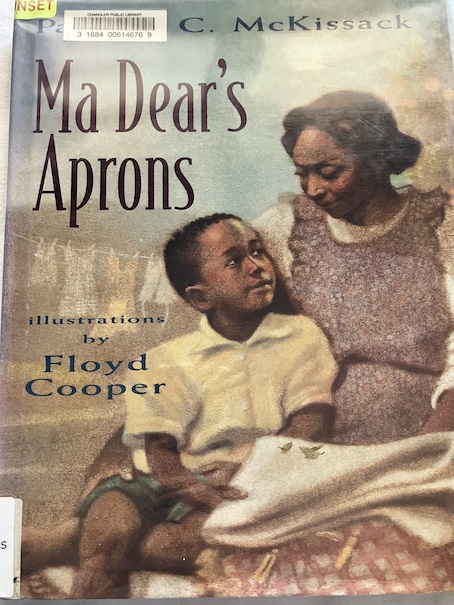
Ma Dear’s Aprons by Patricia C. McKissack, illustrations by Floyd Cooper, 1997.
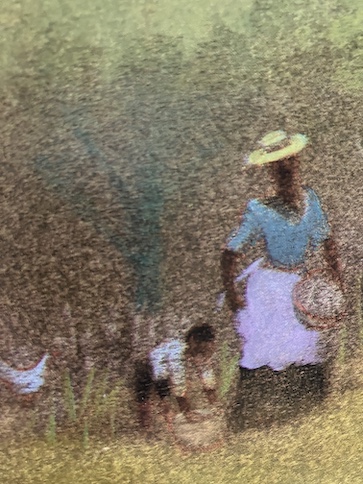
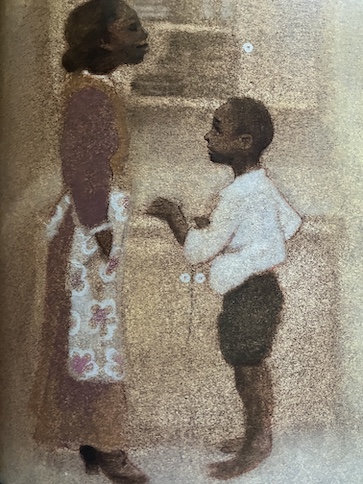
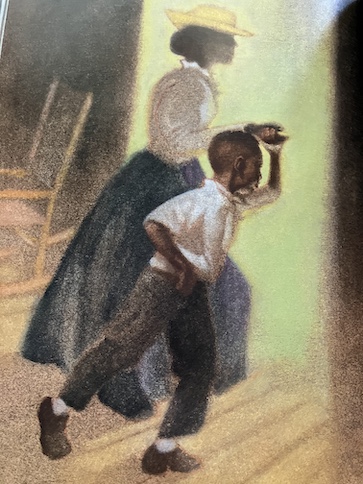
Young David Earl’s mother, called Ma Dear, has a different apron for every day of the week, and David can always tell what day it is and what the task of the day is by which one his mother is wearing.
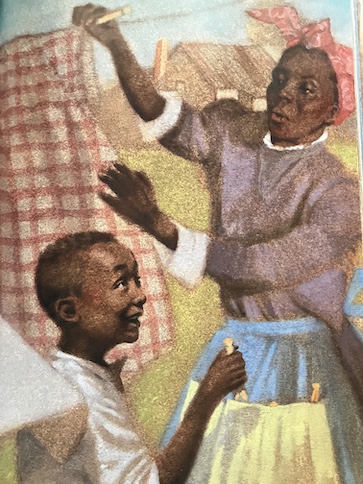
On Monday, she likes to wear her blue apron because that’s wash day, and she keeps clothespins in the pocket of that apron. After she’s done with the laundry, she has time to talk to David Earl, and she tells him about his father, who died as a soldier.
On Tuesday, she wears her yellow apron, when she does her ironing. On Wednesday, they deliver the finished laundry to their clients, and Ma Dear gives David Earl a treat from the hidden “treasure pocket” in her green apron.
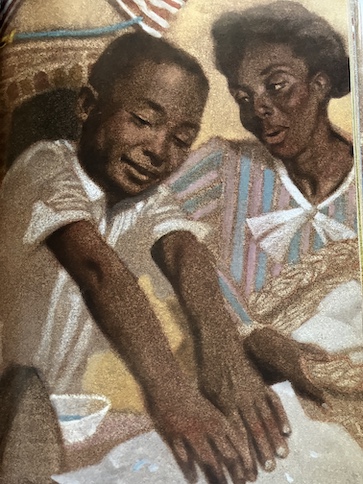
On Thursday, Ma Dear wears her pink apron, and they pick vegetables and visit people who are sick or elderly at their homes. On Friday, Ma Dear cleans the house of another family, so she wears her brown apron. David Earl comes along, and she sings to him while she works. Saturday is for baking pies to sell, so she wears her flowered apron. She also gives David Earl a bath on Saturdays.
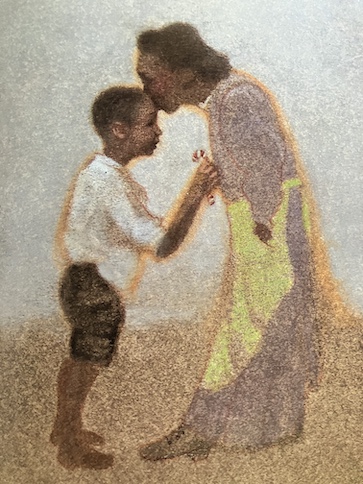
The best day of all, though, is Sunday. Ma Dear doesn’t work on Sunday, so she doesn’t wear an apron
My Reaction
The book starts with an author’s note, explaining that the characters in this story are based on her own family. “Ma Dear” was the nickname of her great-grandmother, Leanna, and Leanna was a single mother in Alabama during the early 1900s, who earned money by doing laundry, cooking, and cleaning for other people, like Ma Dear in the story. The story is about the family stories told to Patricia C. McKissack about her great-grandmother and how she made time for her children, even when she was tired from working hard. The aprons in the story are like one that Patricia McKissack inherited that used to belong to Leanna.
The author’s note, which I would have probably ignored when I was kid because I was too eager to get into the story, made this story better for me. I liked the explanation that this was a family story about a real person. The aprons are a device to help readers connect to memories of the real Ma Dear, similar to how the girls in Aunt Flossie’s Hats (And Crab Cakes Later) hear family stories and memories because they’re associated with the hats in their aunt’s collection. It’s a sweet way to share family memories.
I also like the soft, old-fashioned pictures that accompany the story. Their softness and sometimes slightly blurred quality help create the mood of memories.
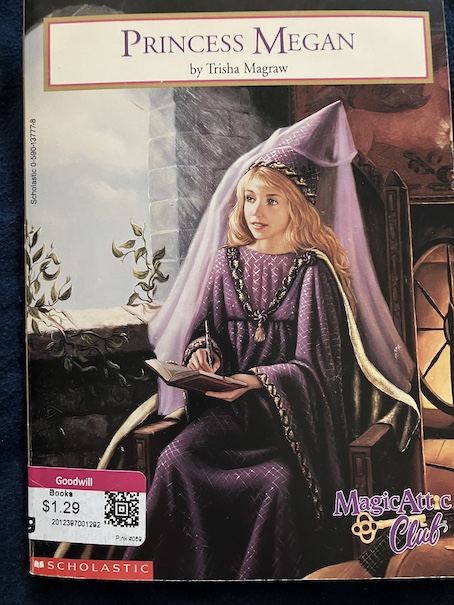
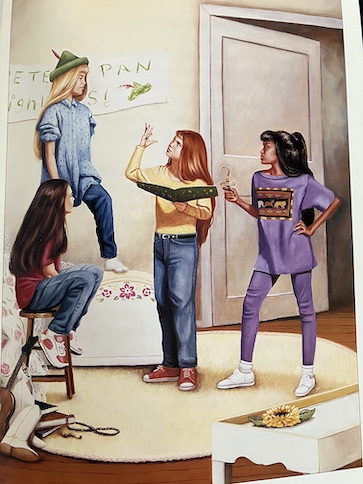
Meg and her friends are planning to perform a short play of Peter Pan at a local nursing home. Her friends chose her to be their director, and Megan is really looking forward to it. Then, her mother does something that threatens to derail the project.
Megan’s mother is a lawyer, and she frequently has to work late. The problem is that, this time, she’s going to have to work on Saturday, interviewing witnesses for a trial. However, that Saturday, Megan’s mother was supposed to be at the high school, receiving donations for a food drive. She asks Megan to take care of the food donations, but the problem is that the play Megan and her friends are supposed to perform is also on Saturday. Helping with the food drive would make it difficult for Megan to get to the play on time. Megan’s mother is tired and in no mood to listen to Megan’s objections that it wouldn’t be fair to derail her project with her friends. Her mother just wants Megan to take care of her obligations for her.
While Megan is fuming about the unfairness of the situation and worrying about what to do, she decides to visit their neighbor, Ellie Goodwin. Megan and her friends have a standing invitation to visit and explore her attic, which has the ability to send them to other places and times when they put on different costumes and look at themselves in the mirror.
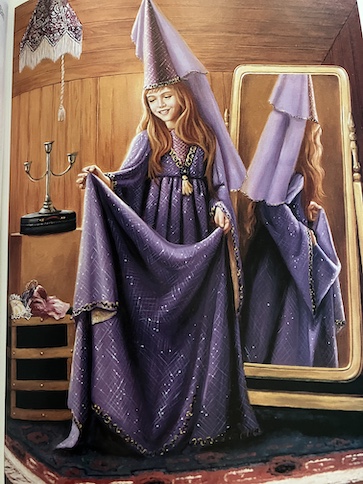
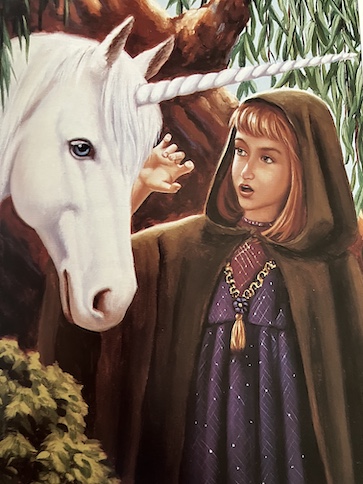
This time, Megan tries on a purple princess dress, and she finds herself in a Medieval village in France, near a castle. She meets a peasant girl named Michelle. Michelle tells her that there’s been trouble over the matter of the unicorn and the feast.
When Megan asks what she means, Michelle explains that Lord Claude and Lady Helene are hosting a feast and joust at their castle and that the king (who is supposedly Megan’s father in this world) has been invited as an important guest. At the end of the feast, they want to give the king a unicorn’s horn as a gift, but the problem with that is that they have to kill the unicorn to do that. Alternatively, it is possible to befriend a unicorn and get filings from its horn that also have magical powers, but Lord Claude and Lady Helene want to give the king the whole horn. Michelle confesses to Megan that her mother, who works in the castle’s kitchen secretly released the unicorn that they’d captured for the purpose. If they knew she was the one who did it, she would be in serious trouble.
Megan wants to help Michelle and her mother, and as someone who supposedly has the rank of princess, she should have some authority. However, she’s not entirely sure what kind of influence she can have because she knows that she’s not a “real” princess. Everyone thinks that she’s the king’s daughter, but Megan knows that she’s not. Can Megan find another way to save the unicorn’s life and Jacqueline from punishment, without revealing herself as an imposter princess?
The book is available to borrow and read for free online through Internet Archive.
My Reaction and Spoilers
Some children’s books that involve time travel have real, historical information for educational value, but this one, and others in the series, are pure fantasy. Megan doesn’t visit real Medieval France. This is a fairy tale version of the Middle Ages with a unicorn and an invisibility cloak. There are a few accurate details for the Middle Ages, like the practice of using straw or other plants on the floors and the fact that intricate tapestries took years of work to complete. However, the focus is definitely on fantasy.
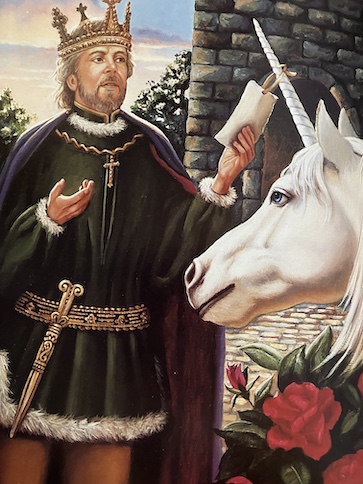
The invisibility cloak is critical to Megan’s plan to save the unicorn and make the king realize the value and beauty of the unicorn before someone can kill it on his behalf. When the king sees the unicorn for himself and reads the note that Megan wrote for him, he accepts the living unicorn and its presence as his gift instead of the horn. The problem with the unicorn is resolved pretty quickly, and so is Megan’s situation with her mother.
At first, I was expecting that the situation that Megan encountered in the fantasy world would have more of a direct parallel to Megan’s situation in her regular life, but it doesn’t really. It mostly serves as its own adventure, although it does highlight that Megan is creative when it comes to problem-solving and can be relied on in difficult circumstances. What Megan really needs to do is to explain to her mother why it would be difficult for her to take over her mother’s project without compromising her own. When Megan finally explains, it turns out that her mother didn’t know about her project with her friends. Handling both of their projects requires some careful scheduling and a little help from a friend, but they manage to work it out.
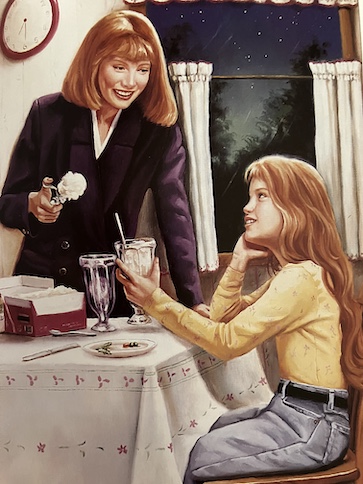
I really like the pictures in the Magic Attic Club books because they remind me of the ones in the American Girls books. They have a similar quality.
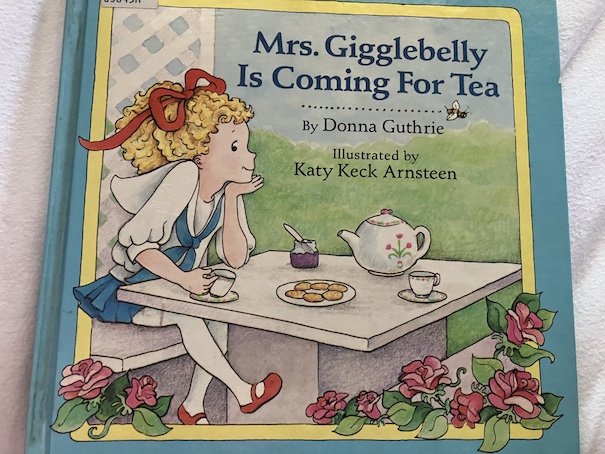
Mrs. Gigglebelly is Coming for Tea by Donna Guthrie, illustrated by Katy Keck Arnsteen, 1990.
Elizabeth Ann tells her mother that Mrs. Gigglebelly is coming for tea today, but her mother says that she’s in the middle of her spring cleaning and doesn’t have time to prepare for Mrs. Gigglebelly today. In fact, she suggests that Mrs. Gigglebelly might be busy today, but Elizabeth Ann says that Mrs. Gigglebelly always has time for tea with her.
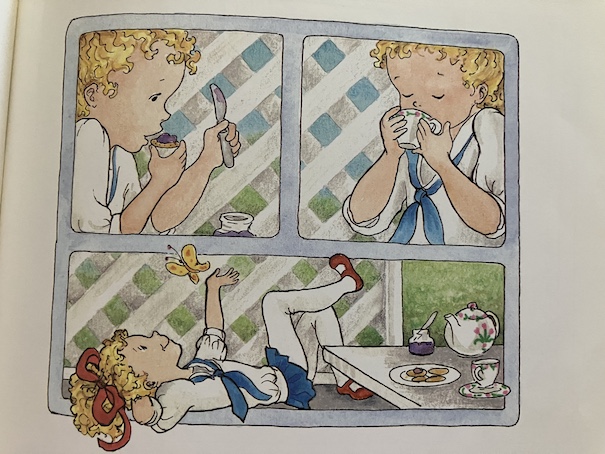
Since her mother is busy with chores and can’t prepare tea or a cake for Mrs. Gigglebelly, Elizabeth Ann fixes some lemonade and crackers with grape jelly for their “tea.” While Elizabeth Ann waits in the garden for Mrs. Gigglebelly, her mother dashes about, doing her chores.
At first, it seems like Mrs. Gigglebelly isn’t going to come, but she eventually arrives because she always has time for Elizabeth Ann … so does her mother.
My Reaction
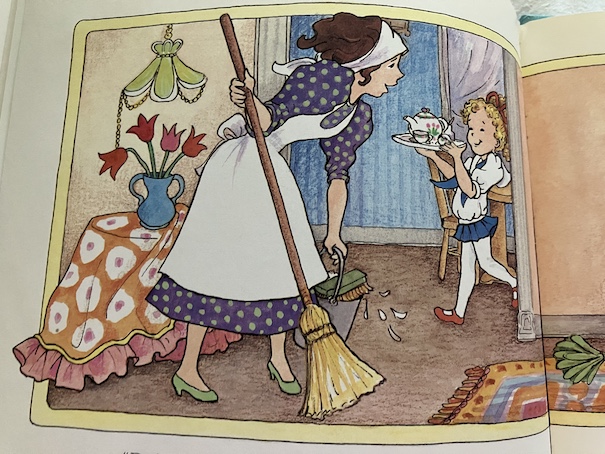
This is a cute story about a mother who makes time for her child, even when she’s busy. “Mrs. Gigglebelly” seems to be a game of pretend the mother and daughter play together when they have their tea parties. On this particular day, the mother is very busy, but she still throws together a costume for their game. The book doesn’t say that “Mrs. Gigglebelly” is Elizabeth Ann’s mother, but it’s implied in the story, and in the last picture, readers can see pieces of “Mrs. Gigglebelly’s” improvised costume around the room.
I thought it was sweet that the mother in the story took time for a little fun and silliness and a special moment with her daughter, even though she had work to do. Some mothers might just lecture their child about how they’re busy and the child just has to accept that, but this mother understands that her attention is important to her child. Sometimes, it’s the little moments that mean a lot, even if it’s just pausing to share a snack. She does make her daughter wait because there are things she has to do, but the wait is worth it because the mother follows through and makes the effort to make time for her daughter.
Elizabeth Ann also doesn’t nag her mother about hurrying up or try to convince her mother to drop everything she’s doing and play with her instead of doing her cleaning. Instead, she waits patiently, confident that her mother will have time for her eventually because her mother has already established that her daughter is a priority and that she will make time for her. It looks like this mother-daughter pair understands each other well and that they have a good relationship with each other, and I like that.
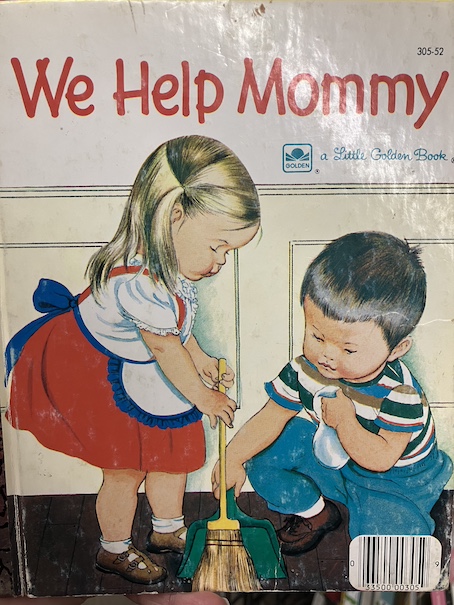
We Help Mommy by Jean Cushman, pictures by Eloise Wilkin, 1959.
In this classic Little Golden Book, two small children help their mother with various household chores throughout the day. There is a note in the beginning of the book that says that the children in the story are based on the author’s own children, Martha and Bobby, but the children shown in the pictures are based on two other children, who were asked to pose by the illustrator.
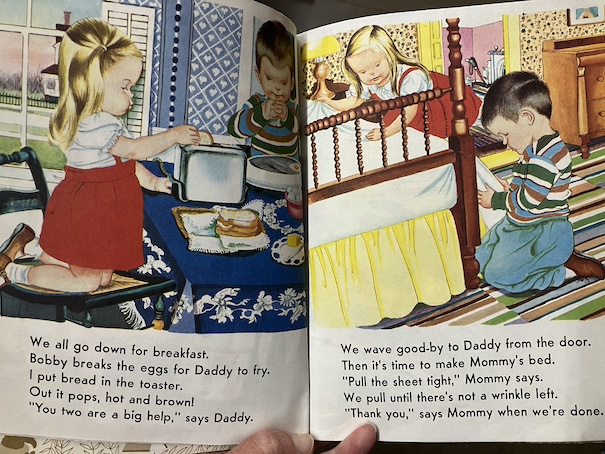
When the two little children in the story get up in the morning, the first thing they do is change from their pajamas into their clothes for the day. Sometimes, they need a little help from their mother because they’re still little. Then, they go downstairs and start making breakfast.
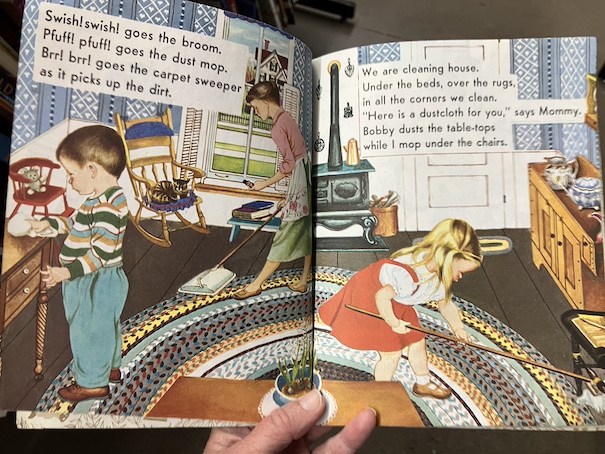
After their father leaves for work, they help make their parents’ bed. Then, they dust furniture and sweep the floors and put their clothes in the washing machine. Martha hangs her doll’s clothes up on a small clothesline, while her mother hangs up the family’s clothes on the high one. The children go to play with some friends next door.
Sometimes, the children go to the supermarket with their mother to buy groceries. When they get home, they put the groceries away and make lunch.
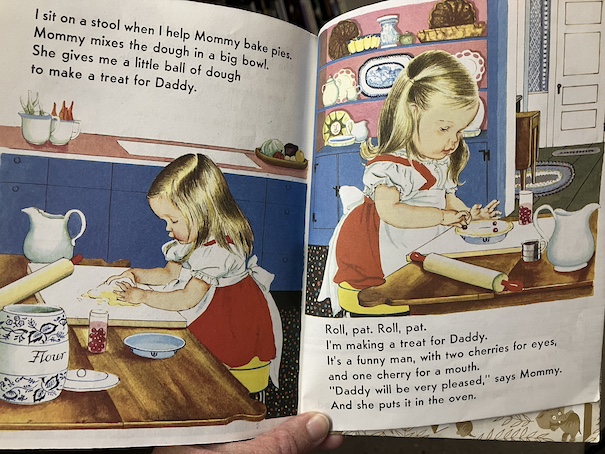
After lunch, they wash their dishes, and Martha makes a special little pie for their father for dessert.
At the end of the day, the children put away their toys. Their father comes to tuck them in when it’s time for bed, and he thanks Martha for the pie and both of the children for helping their parents.
The book is available to borrow and read for free online through Internet Archive.
My Reaction
I remember reading this book with my mother when I was a little kid in the 1980s. It’s just a cute, simple book for young children about helping their mother with daily chores. We still sometimes quote the line from this book, “Napkins for us all” when we set the table because, for some reason, that stuck in all of our minds and just got repeated for years.
At the time, I was too little to think about what year the story is from, and there was nothing in the book that was too seriously out of line with my experiences as a little kid. You can tell by the pictures that it’s from an earlier decade because of the family’s clothes and hair styles (particularly the parents), and the carpet sweeper the mother uses is older than I am. However, I have to admit that my parents still had one of those types of carpet sweepers in the 1980s, so I knew what it was when I saw it in the picture. They hang their clothes up to dry instead of using a clothes drier, but even that isn’t too far out of line because, even today, some people prefer to dry their clothes on a clothesline. In fact, there are 21st century people who consider it more environmentally friendly. The style of the clothesline they use is very mid-20th century, but my grandmother had one like that in the 1980s, too, so I had seen it before. Some of the things I was familiar with as a young child were hold-overs from previous decades, just like this book. Modern children might not be as familiar with some of these things, but this book is such a simple story about small children helping with daily chores that I think even 21st century children would understand it, even if it looks a little old-fashioned in some respects.
When I was a kid, I missed the part at the very beginning of the book about the children in the story being based on the author’s children, but I found it interesting when I looked at the book again as an adult. There is another Little Golden Book called We Help Daddy, which we also had when we were little kids. The two books read a little like companion books and were illustrated by the same illustrator, although We Help Daddy was written by a different author and features a different brother and sister. In We Help Mommy, the children mostly help their mother with chores around the house and buying and preparing food. In We Help Daddy, two kids help their father with yard chores, which somewhat shows how people in the mid-20th century typically expected domestic chores to be divided: the mother doing work inside the house and related to cooking, while the father mostly tends to chores outside the house. I don’t think this is a problem because, when the two books are taken together, both parents are still helping out and spending time with the children, but I thought it was interesting to notice that dynamic as an adult.
One of the things the mother and children buy at the grocery store in this book is a picture book. I didn’t understand that part as a little kid, but as an adult who studies and collects children’s books, I know that this is a reference to Little Golden Books because they were often sold at grocery stores, making them accessible to many families as inexpensive books for young children, sold where families would normally shop anyway. In fact, if you look closely at the cover of the Little Golden Book that the boy is taking out of the shopping cart, you can tell that it’s specifically Kittens: Three Complete Stories.
The Vanishing Scarecrow by Phyllis A. Whitney, 1971.
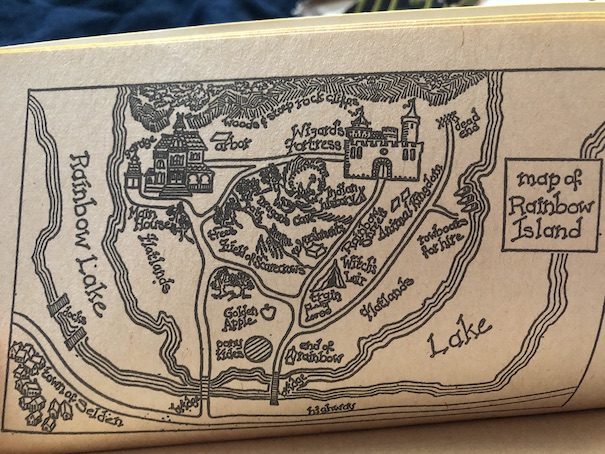
Joan Lang and her mother are moving from their town in Connecticut to Rainbow Island, where Joan’s Great Uncle Agate Benson owned his own amusement park. However, the move is sad because Great Uncle Agate’s death in a skiing accident has so closely followed Joan’s father’s death from a long illness. Joan and her mother knew that they were going to have to move to a smaller house because they could no longer afford their bigger one, and Uncle Agate’s sudden death means that they will inherit his house on Rainbow Island and the amusement park that goes with it. Joan and Uncle Agate had been writing letters to each other since her father’s death, and he made her feel less lonely, so Joan knows that she will miss him, but she is looking forward to seeing the amusement park that he had described to her.
However, the terms of Uncle Agate’s will are unusual, and his lawyer is vague on some aspects of them. What they know is that they must live at Rainbow Island and manage the amusement park for three years in order to gain full ownership. If they decide to leave before that time, Uncle Agate has another plan for the amusement park, but the lawyer refuses to tell them what it is immediately.
When they arrive at Rainbow Island, they meet Mrs. Fuller, who works at the amusement park’s gift shop and lives there with her two sons, Peter and Kent. Mrs. Fuller hopes that Kent and Joan will be friends because they’re close in age. Kent doesn’t seem particularly friendly at first, and when Joan confronts him about that, he says that he’s just trying to figure out what she and her mother are going to be like. Kent, like other people who live and work at Rainbow Island, was very attached to Uncle Agate. He appreciated his vision and imagination, and he misses him now that he’s gone. He has trouble believing that things will ever be like they were with Uncle Agate.
Mrs. Fuller and Kent both mention strange things that have been happening at the amusement park recently, including a scarecrow that frightened Mrs. Riddell, the wife of Wilson Riddell, who manages the park, but she says that she’d better let Mr. Riddell explain the situation. When Joan and her mother go to Uncle Agate’s old house to begin unpacking their things, Mr. Riddell comes to talk to them. He doesn’t seem particularly welcoming, either. Joan’s mother tries to ask him about the scarecrow incident, and he explains that someone, possibly a teenage prankster, has been pulling tricks around the park lately. Earlier that day, someone ran right through the Riddell house, terrifying Mrs. Riddell. Mrs. Riddell is described as being a very nervous person who is somewhat unwell, so Mr. Riddell seems uncertain whether his wife actually saw a person dressed as a scarecrow, as she described, or if that was her imagination. Earlier, she also claimed to see a witch. The idea of someone in a scarecrow costume is plausible because the amusement park includes a field of scarecrows, and they do have a spare scarecrow costume that they’ve used in the past to make it look like one of the scarecrows has come to life, to give guests a bit of a thrill. However, the employee who normally wears the costume hasn’t worn it for some time, and it seems like the recent scarecrow sightings are the work of a prankster.
As Kent shows Joan around the amusement park, they meet up with Peter in the Wizard’s Fortress, where he points out that someone has been messing around with the dioramas of historical scenes, moving some of the little figures around to scenes where they don’t belong. In the dungeon of the fortress, Joan meets up with Mr. Riddell’s daughter, Sheri, who is also about her age. Sheri has found the costume the scarecrow was wearing under some straw. Joan isn’t sure that she trusts Sheri because of the strange way she acts and how she seems to be sneaking around, keeping secrets, and playing weird pranks and tricks.
Could Sheri have something to do with the mysterious scarecrow, or could it be Emery Holt, the man who did odd jobs for Uncle Agate and sometimes wore the scarecrow costume as an act in the park? Another suspect could be Jud Millikin, an escaped convict who used to live in the area and who still has family living nearby. Joan and her mother hear people whispering about him, wondering if he might have come back to see his sick daughter, although people say it isn’t likely that he’d show his face in town since the police are looking for him. But why would he want to sabotage the Rainbow Island amusement park? Joan considers that there might be an answer closer to home when she learns that the Riddells and the Fullers don’t really get along, and there seems to be a silent power struggle between them for control of the park. Either of the families might want the other to leave, plus Joan and her mother, so they can be in charge.
Joan finds a message and an audio recording left behind by Uncle Agate for her, in which he seems to have had a premonition of his impending death and saying that the reason why he wants Joan and her mother to manage the park with Mr. Riddell is that the park needs someone with a fresh imagination to keep creating new exhibits and keep the park interesting for new generations of children. Joan wants to find out who is sabotaging the park and to keep Uncle Agate’s vision for the park alive, but her mother isn’t so sure that the situation is going to work for them.
Joan does have a fantastic imagination. She loves writing and making up stories, and she finds the atmosphere of the amusement park inspiring. However, Joan’s mother worries sometimes that Joan lives too much in her stories and doesn’t face up to reality enough. When Joan accuses her of not liking her stories, her mother says it’s not that, it’s just that writers also need a grounding in real life and the real world, and that it’s not good to use fantasies as a way of ignoring real life. She says that Uncle Agate was like that. Uncle Agate and his sister were orphaned from a young age, and while his sister was adopted by a family, Uncle Agate remained in the orphanage for the rest of his youth. When he grew up, he became successful in the toy industry, which was how he gained enough money and expertise to start his amusement park. However, Joan’s mother believes that much of what he did with the park was trying to live out childhood fantasies from his deprived youth and forget the hard realities of it. Joan’s mother says that she finds the real world outside of the amusement park more compelling, and she doesn’t want Joan to live too much in fantasy.
Joan is attracted to fantasy, but she’s realistic enough to know that there won’t be any hope for the park until she learns the true identity of the mysterious scarecrow that is trying to sabotage it. In the recorded message he left for Joan, Uncle Agate refers to a “right place” where Joan will find instructions that will tell her what to do. As Joan explores the the amusement park, familiarizing herself with the attractions and exhibits, she searches for the place that Uncle Agate referred to. Along the way, she has frightening encounters with someone dressed as a witch and the dangerous scarecrow among the regular figures in the exhibits.
My Reaction and Spoilers
The atmosphere of the story is great, and the author does a good job of making everyone Joan meets look like a potential villain or accomplice. All through the book, I kept changing my mind about who the real scarecrow was, and there are red herrings in the form of other people dressing up in costumes. Joan is never sure who to trust. There is a major twist toward the end of the book that turns the entire situation on its head. The rest of the ending after the scarecrow’s identity was revealed seemed a little abrupt to me, but the story has a good overall message.
At the beginning of the story, Joan does actually look at the amusement park on Rainbow Island as a kind of fantastic sanctuary from her problems, where she can escape from the sad loss of her father and uncle and the problems she’s been having at school. However, she learns that the amusement park isn’t really a sanctuary because it has problems of its own and the people associated with it also have their problems. However, these are problems that Joan is more motivated to solve because they are more exciting than her problems back home, and the stakes are high.
Joan and her mother have a frank discussion about facing up to life’s problems, and Joan points out that her mother’s impulse to run away from the park isn’t that different from her reluctance to face up to her problems with her schoolwork. Joan’s mother doesn’t find the park as interesting as Joan does, so she’s not as interested in trying to save it as Joan is. It’s similar to the way that Joan was unmotivated to work harder at school because it bored her, it was less imaginative than the creative writing she likes to do, and she was preoccupied with other major changes in her life. Joan’s mother acknowledges the truth of that, that it’s easier to try to solve a problem when you’re more motivated to work on it, and the two of them agree that, whatever else they do with their lives, they can’t just abandon the park without trying to catch the saboteur.
All of the characters in the story get new perspectives on their lives from this adventure, seeing how the park and their problems fit into a much bigger picture of life. Joan comes to understand that there are some problems that she’ll still have to face up to, like her school problems, no matter what else happens, and she sees that understanding the real problems that real people have is what will give her characters and stories greater depth.
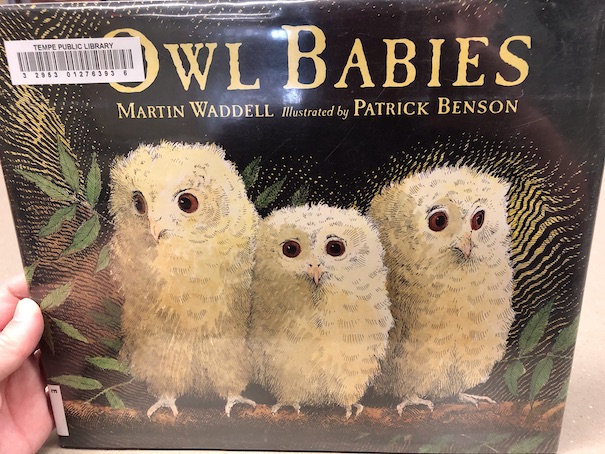
Owl Babies by Martin Waddell, illustrated by Patrick Benson, 1992.
Sarah, Percy, and Bill are three owl babies who live in a tree with their mother. One night, they wake up and can’t find their mother. They think it over, and they decide that she has probably gone out to get food for them.
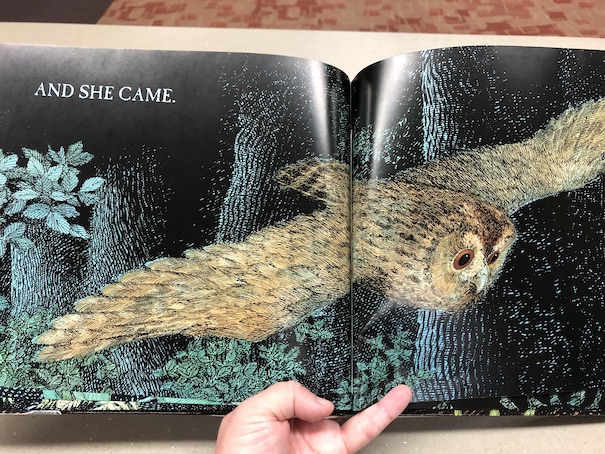
They wait for her and try to be brave, but they get worried that she isn’t coming back. Then, suddenly, their mother does come home!
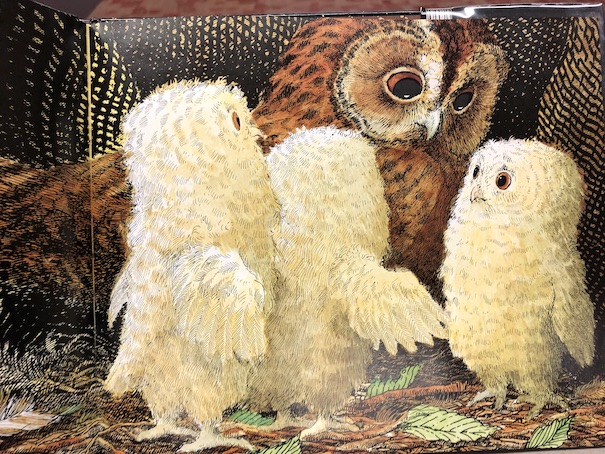
The little owls are happy to see their mother, and their mother reminds them, “You knew I’d come back.”
It’s common for children to worry when their parents go away without them, wondering if they will ever come back. The story reminds young children that, even when mommy has to go away for a while, she will still come back home.
The book is available to borrow for free online through Internet Archive.
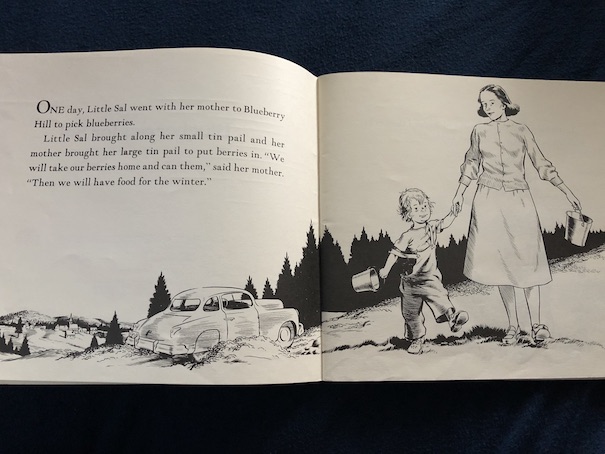
Sal is a little girl whose mother takes her to pick blueberries one day. The mother wants to can the blueberries for winter.
Sal gives in to temptation and eats the blueberries as she picks them.
Meanwhile, a mother bear and her baby come to eat blueberries.
Both Sal and the Little Bear lose sight of their mothers, and when they go looking for them, Sal accidentally finds the mother bear, and the little bear accidentally finds Sal’s mother.
Eventually, the mother bear realizes that Sal is following her when she hears the blueberries plunking into Sal’s pail. Sal’s mother realizes that a small bear is following her when he eats blueberries out of her pail.
Fortunately, nothing bad happens. The mothers just look around for their respective children and figure out where they are by the sounds they make. Then, the mother bear leaves with her baby, and Sal and her mother take their blueberries home.
At first, I was worried about Sal being with the mother bear and how Sal’s mother would react to the mother bear when she saw it, but the two mothers never meet in the story, and the children are fine.
The book is a Caldecott Honor Book. It is available to borrow for free online through Internet Archive (multiple copies).
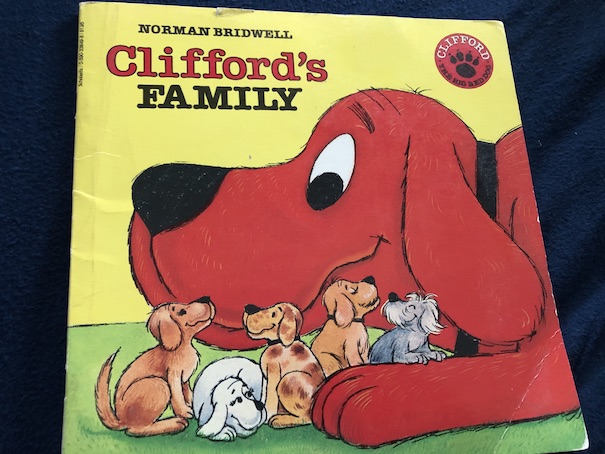
Emily Elizabeth and her enormous dog, Clifford, were both born in a big city, although they live in a smaller town now. They decide to go back to the city and visit Clifford’s mother, who is still there.
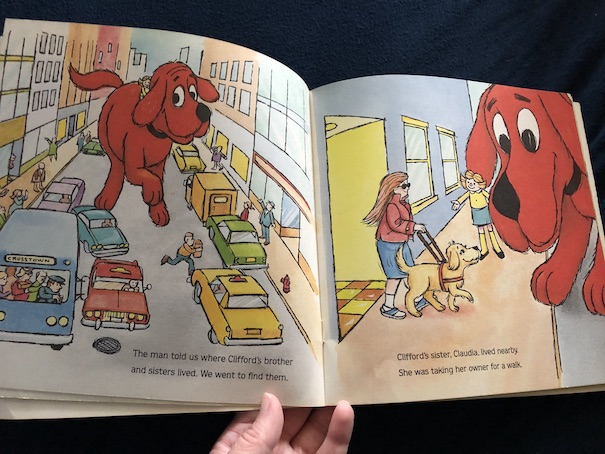
Clifford’s brothers and sisters all live with different people now, so they decide to visit them, too. Clifford’s sister, Claudia, has become a seeing-eye dog.
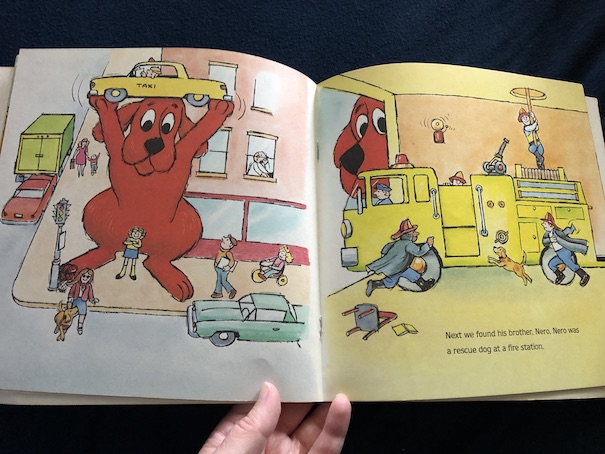
His brother, Nero, is now a fire rescue dog.
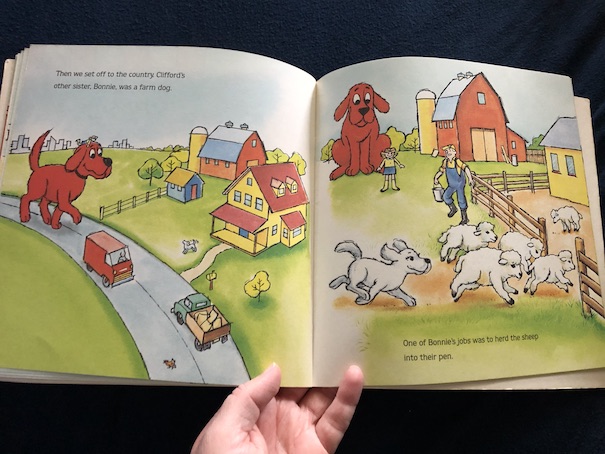
Clifford’s other sister, Bonnie, lives on a farm and herds sheep.
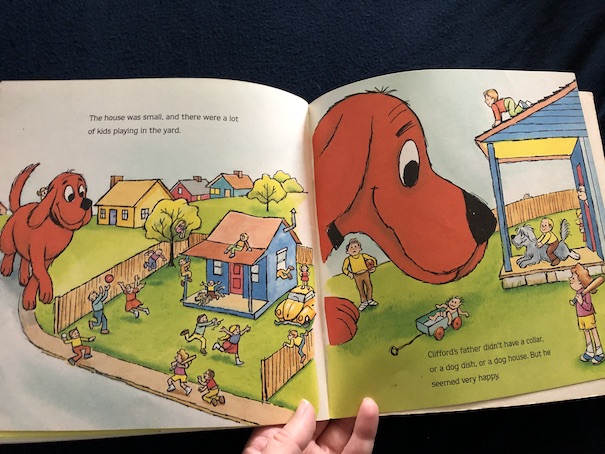
Clifford’s father doesn’t live with his mother. He lives in a house in another town with a lot of children, and he loves playing with them.
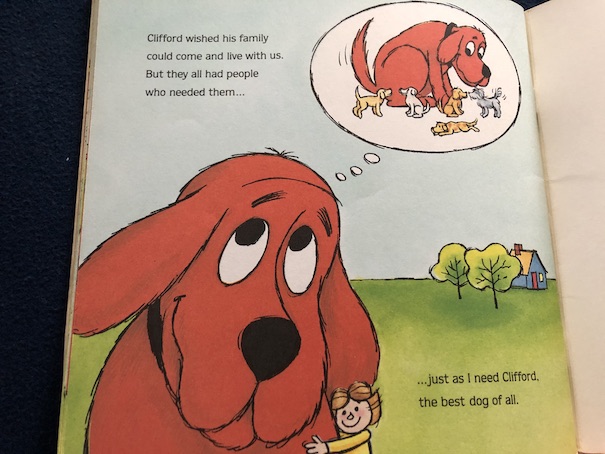
Clifford wishes that his family could live together, but he understands that every member of his family has other people who also need them.
I thought that this book did a good job of pointing out some of the jobs that dogs do, like seeing-eye dog, rescue dog, and herding dog. Clifford and his parents are all companions animals, like most pet dogs, but his siblings all have specific jobs to do for their owners.
The book is available to borrow for free online through Internet Archive.
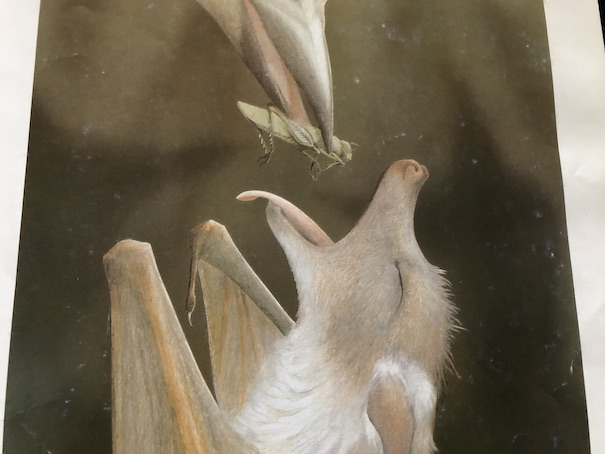
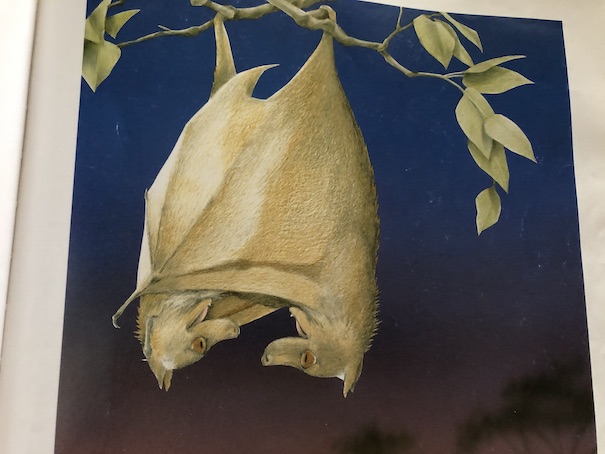
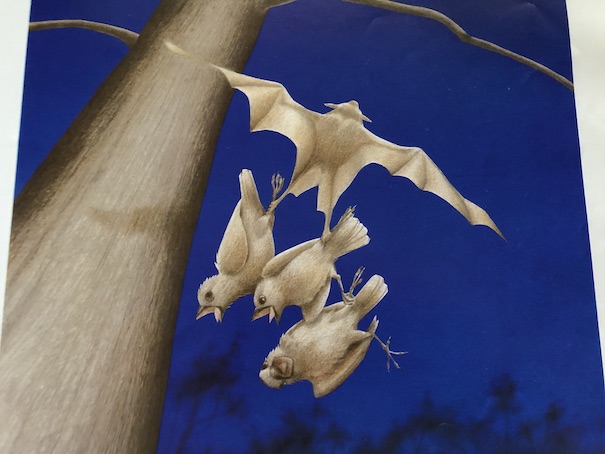
Stellaluna is a baby fruit bat. Every night, her mother carries her along while she goes looking for food.
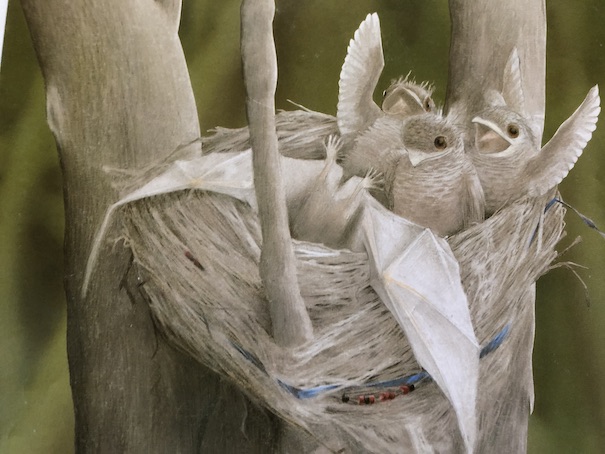
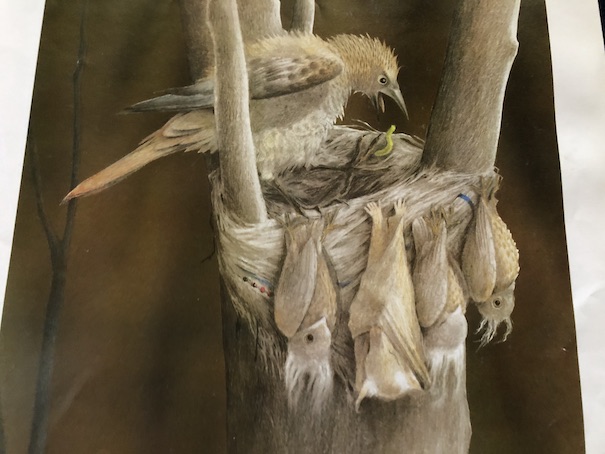
One night, they are attacked by an owl, and Stellaluna falls into the trees below. First, she is caught by some tree branches, and then, she falls into a bird’s nest. Stellaluna doesn’t really like the bugs that the mother bird brings her babies to eat, but she eats them anyway because she gets hungry.
Gradually, Stellaluna adopts the habits of the birds, staying awake during the day and sleeping at night. She tries to sleep upside down, hanging from the nest, but the mother bird stops her because the baby birds try to imitate her, and she’s afraid that they’re going to break their necks. The mother bird continues to care for Stellaluna, but insists that she obey the rules of their nest, which means that Stellaluna has to act like a bird.
Eventually, both Stellaluna and the little birds learn how to fly. However, Stellaluna has trouble landing on branches like the birds do. One day, she flies farther than the birds do and doesn’t return to the nest at night. She falls asleep in a tree, hanging by her thumbs because the mother bird told her not to hang by her feet, and she is found by another bat.
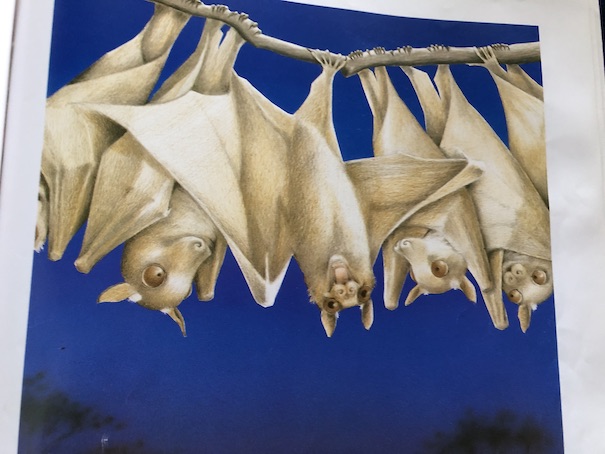
The other bat explains to Stellaluna that she is a bat, not a bird, and tells her that hanging by her feet is normal bat behavior. Soon, other bats come to look at Stellaluna, and Stellaluna’s mother recognizes her as her child.
Stellaluna is overjoyed to learn that her mother escaped from the owl, and her mother is glad to finally have her child back. Her mother begins teaching her what it means to be a bat, how to eat fruit instead of bugs, and how to see in the dark.
Stellaluna returns to the birds to introduce them to her bat family. The birds try to go on a night flight with Stellaluna, but they can’t because they can’t see at night like Stellaluna. Stellaluna helps them find a safe branch, and they talk about all the ways they are alike but yet very different. They decide that they will remain friends even though they have to live different types of lives.
This is a nice story about how people can love each other even though they are very different. The mother bird cares for Stellaluna like she is one of her children, even though Stellaluna is not a bird and has strange habits. Her insistence that Stellaluna act like a bird is because it is necessary for her to do so in order to live in the birds’ nest, and the birds are not able to live like bats and teach her how to be a bat. Eventually, Stellaluna has to return to the bats and live like the bat she is, but she still loves the birds who raised her and were like her brothers and sisters. It’s a little like human foster families. A foster family isn’t quite like a person’s birth family, and foster children have to adapt to new ways of doing things, but foster families can offer the affection of a birth family and help the children grow and reach the places where they really need to be in life.
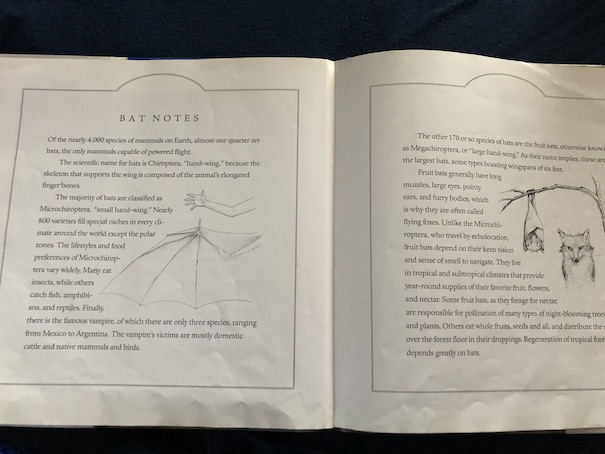
The book ends with a section of non-fiction information about bats.
The book is available to borrow for free online through Internet Archive (multiple copies). It is a Reading Rainbow book.
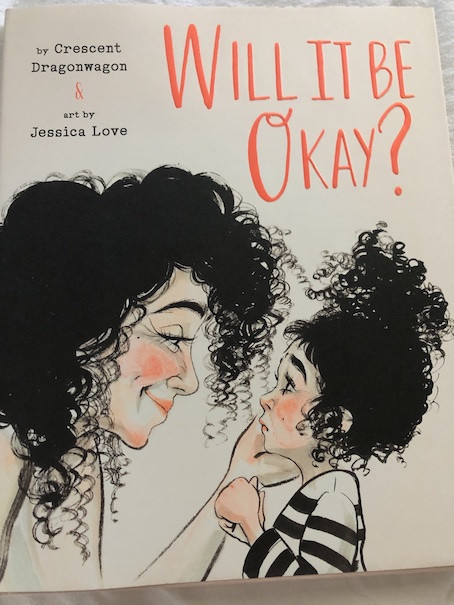
Will It Be Okay? by Crescent Dragonwagon, 1977, 2022.
I like to tie my book reviews into current events when I can, and I first wrote this review around the beginning of the coronavirus pandemic. It just seemed like the right time for this one. It’s a picture book, and, when I first wrote the review, my local libraries were closed because of the pandemic, so I couldn’t go find a copy to get pictures. However, the book is available to read online through Internet Archive, which is where I first encountered it.
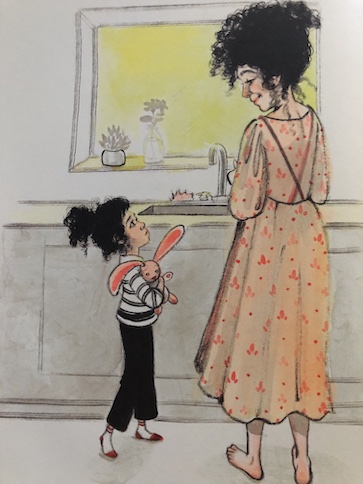
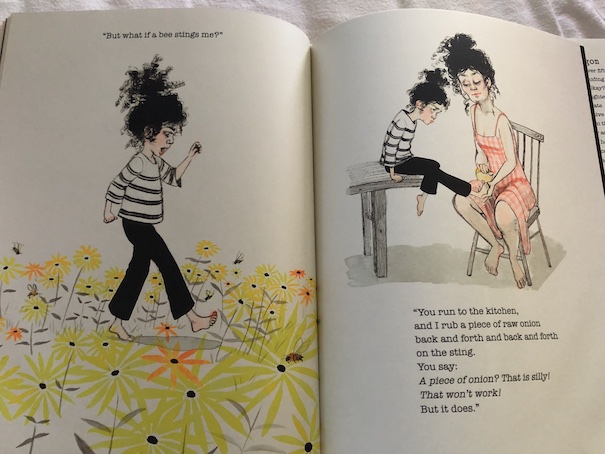
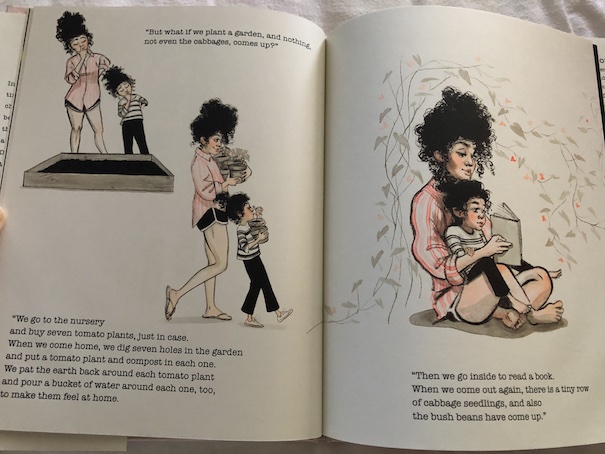
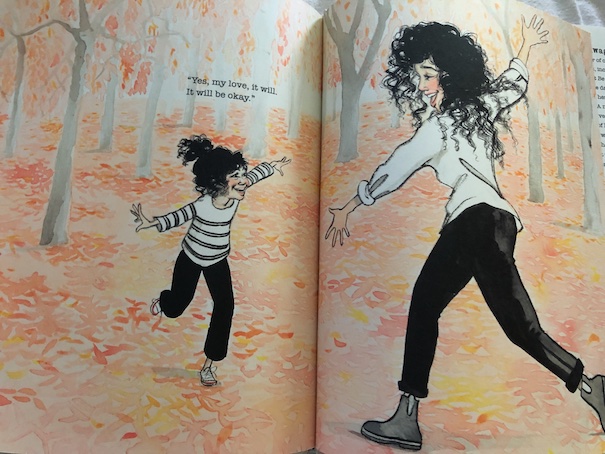
The version on Internet Archive is the older printing of the book, with its original pictures. Since then, the book has been reprinted with a set of new pictures. The pictures that appear here are from the new version. The older version of the book showed a blonde girl with a blonde mother, and the new version has a mother and daughter with black hair. Between the two, I prefer the newer illustrations, but readers can decide for themselves. I was surprised, but some of the text of the story was also changed between the versions of the book.
A young girl keep asking her mother about various types of problems that she might encounter, everything from storms to bee stings to forgetting her lines in the school play, and asking her what she would do if each of these things happen.
The mother gives her calm, reassuring answers. Some of them are based on common sense, like if their cabbages don’t come up, they’ll go get some tomato plants and plant tomatoes, and then their cabbages will likely come up anyway.
All of the answers have a poetic quality and answer the girl’s emotions, not taking all of the situations exactly literally, but capturing the feeling that the girl would need to have to get through life’s fears and uncertainties. When the girl asks what if no one likes her dancing, her mother describes how she can dance alone until she meets a new friend, who will dance with her and then come to her house to draw pictures and drink cocoa. I take this to mean what if people don’t like the girl instead of just her dancing, and her mother’s response to mean that she just needs to keep living her life, and she will meet people who will like her.
The last question that the girl poses to her mother is “But what if you die?” This is probably the fear that the girl has more than any of the other fears that she’s mentioned, but the mother still has a calm reply.
The mother tells her daughter that if she dies, her love will stay with her and she’ll have so much that she’ll have to give love away to other people. Her daughter will make new friends and dance with them and she’ll even come to love things like bees and thunderstorms and the other things that have frightened her. The girl will love other people in her life, and they’ll love her, too. Everything will be okay.
My Reaction
Life has many uncertainties, and bad things can happen, but there are other things that can make life better so that, in the end, we will be okay, in spite of the bad and scary things that come along. It’s not easy to believe that in the middle of scary situations, when you don’t know how it’s all going to work out, but I appreciate the sentiment. It’s always possible for things to improve. Bad things might happen, but we can handle them. It’s important to believe that we can handle situations and approach them with confidence.
The hardest, scariest thing to accept is when people die. Death is permanent. When someone has died or is facing death, it’s hard to believe that it could ever be okay because you can’t undo death. The mother in the story doesn’t try to deny that she could die at some point, but what she says is that her daughter will go on with her life and that she will always have her love. It’s what she leaves behind and what her daughter will continue to do after she is gone that will make things okay. The mother doesn’t want her daughter to focus on the sad and scary parts but to look forward with hope and confidence. As long as we can continue to move forward and love one another, things will be okay.
The last picture in the original version of the book is of the mother and daughter in the bathtub together, but they’re largely concealed by bubbles in the bath. Personally, I prefer the newer version of the book, which has the mother and daughter dancing in the leaves together under the trees.
Some of the situations in the book were changed between the old version and the new version of the book. In the old version of the book, the girl worries about what to do if she meets a big dog or if snakes come in the middle of the night, and neither of those were included in the new version of the book. Some answers in the old book are as improbable as the problems that the girl poses, like suggesting that the girl play a flute to charm snakes if snakes come. Both versions of the book have the scene where the girl worries that someone might hate her and her mother says that a frog will tell her that she’s lovable.














 Jestress's Forgotten Books and Stories