 Sarah Morton’s Day: A Day in the Life of a Pilgrim Girl by Kate Waters, 1989.
This book is part of a series of historical picture books. It features a young girl who was an historical interpreter at Plimoth Plantation, a living history museum, playing the part of a real pilgrim girl who lived in 17th century Plymouth. The pilgrim girl’s name was Sarah Morton, and she was nine years old in 1627, the year that Plimoth Plantation reenacts.
As Sarah Morton, the girl takes readers through a typical day in her life. She demonstrates the chores that a pilgrim girl would have to perform. She explains the clothes that a pilgrim girl would wear and what people ate. There is a recipe for 17th Century Indian Corn Bread, a simple recipe that readers can make at home, but it warns that modern people wouldn’t think that it tastes very good. It’s basically just water and cornmeal grits.
 Although much of Sarah Morton’s day is taken up with chores, she also discusses her relationship with her mother and her new stepfather. The death of a parent was something that pilgrim children often experienced. After her father’s death, Sarah’s mother remarried, and Sarah is concerned about whether her new father likes her.
However, her stepfather is a good man who cares about her. He gives her lessons in reading and writing, something that not every pilgrim girl would have. He also gives her a special toy: a knicker box, which is a wooden box with arches for rolling marbles through as a game. She gets to play with her friend, Elizabeth.
The two girls are also excited about a ship that has been sighted out at sea. Soon, new people will be coming to their colony, and they wonder if the ship is also carrying letters from England or special goods that they would like, like a new bolt of cloth.
In the back of the book, there are sections explaining a little about the Plimoth Plantation living history museum, the real Sarah Morton, and the girl portraying Sarah Morton, Amelia Poole. The Plimoth Plantation site has more information about the real Sarah’s Morton’s life, including what happened to her when she grew up. If you’re curious about what Amelia Poole is doing today, she is a fiber artist and lives in Maine.
The book is available to borrow and read for free online through Internet Archive.


 Never Hit a Ghost with a Baseball Bat by Eth Clifford, 1993.
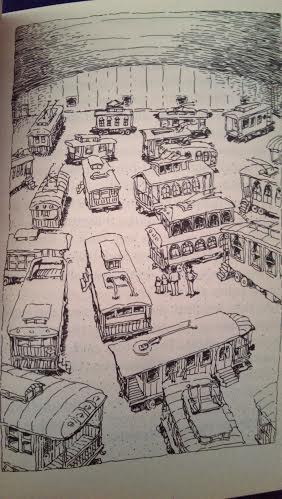 The girls explore the trolleys parked in the museum and admire the manikins dressed in old-fashioned clothing that are part of the displays in each trolley car, but more strange things happen. A teddy bear seems to speak to them, even though it isn’t the kind with a string and a talk-box. The manikins start to seem creepier. Mary-Rose and Jo-Beth are only armed with a baseball bat from one of the displays and the old teddy bear (which terrifies Jo-Beth). But, Mary Rose is determined to find the ghost, even if it’s the last thing she does!
 Scared Silly by Eth Clifford, 1988.
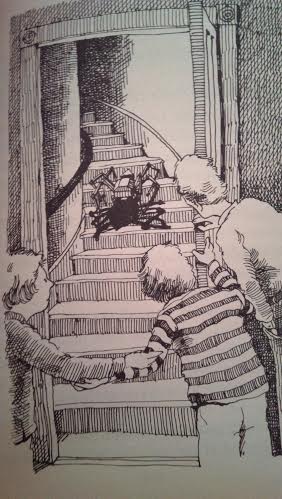 While the Onetree family is visiting the museum, a pair of shoes that once belonged to a Chinese emperor disappears. Like the two Onetree sisters, Gus considers himself the sensible brother and doesn’t take Razendale, the dreamier sibling, very seriously. He thinks Razendale ran off with the shoes as a prank. But, Erik, who seems more sensible than either of his uncles, says that they can’t just accuse him without proof. Gus provides them with an invention that could settle the whole matter, but that depends on whether or not they can trust Gus.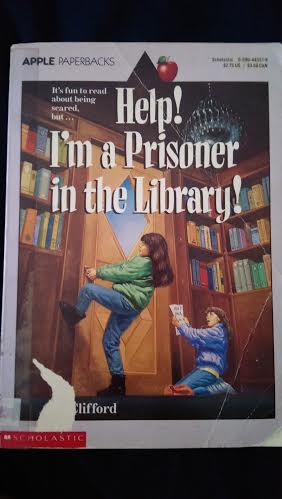

 Jestress's Forgotten Books and Stories