The Little Fir Tree

A little fir tree feels lonely among the large trees in the forest, but something happens that changes his life forever – he is chosen to be a living Christmas tree for a little boy!

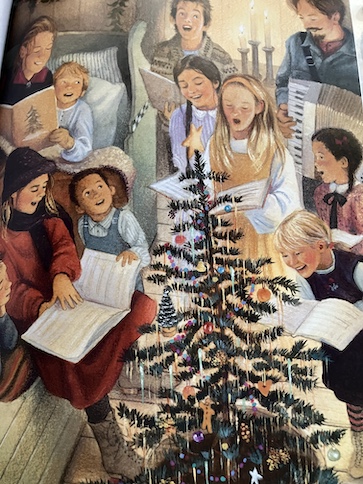
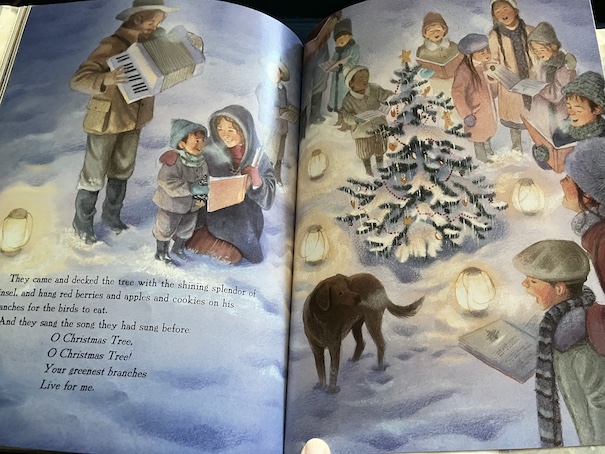
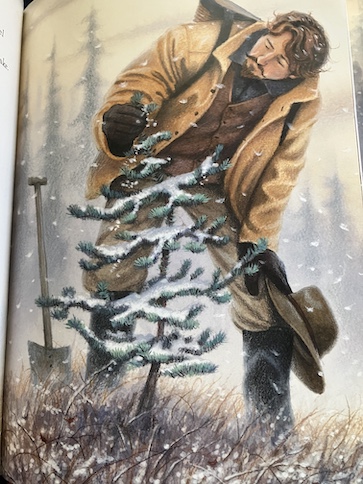
One winter, the boy’s father carefully digs up the tree and brings it home to his young son, who cannot walk because of a lame leg. The boy has been wanting to see the trees in the forest, but since he can’t go to the forest himself, his father has brought a free to him. The little fir tree loves being decorated, and the next evening, guests come and gather around him, singing Christmas carols.

In the springtime, the boy’s father takes the tree back to the forest, where he found it, and he plants the tree again so it will continue to grow. However, the following winter, the boy’s father returns to dig up the tree again and take it back to the boy for Christmas.

The little fir tree loves this ritual of visiting the boy and his family and being their Christmas tree every winter, but the next winter after that, the man doesn’t come to dig him up. The little tree is disappointed and lonely, but he is in for a surprise. This winter, the boy and his family come to see him in the forest!

The book is available to borrow and read for free online through Internet Archive, although that copy has different illustrations.

I mainly know Margaret Wise Brown for Goodnight Moon and The Runaway Bunny, but I found this Christmas story charming. I don’t like Christmas stories from the point of view of trees that are cut down, like the Hans Christian Andersen story, The Fir-Tree, which has a really depressing ending. I like it that this family in this book keeps the tree alive, returning it to the forest every year to continue growing. Things change for both the boy and the tree over the years, as they both continue to grow, but they change for the better, and they continue to be fond of each other and a source of inspiration for each other.

When I was a kid, our elementary school had a large tree on a hill on the kindergarten playground, and the story behind it was that it was once a living Christmas tree from the very first kindergarten class at the school. That tree is still there and alive today, about 50 years after it was first planted there and more than 30 years after I used to play under it. I like to imagine that it will be true of the little fir tree, too, that it will continue growing over the years.

Earlier versions of this book had different illustrations, but personally, I love the illustrations in this printing because they’re detailed and realistic. The version on Internet Archive has illustrations by Barbara Cooney, who is known for Roxaboxen and Miss Rumphius. Cooney’s illustrations are also good, but not as realistic as Larmarche’s, and they’re in a limited color range.

One other difference between versions of the book is that the earlier version also included the musical notes for the carols that the children sing and additional songs that aren’t included in the later version of the book. I enjoy books that include actual music and lyrics, like books that include recipes, because they are fun extras and add an extra dimension to the story by providing an accompanying activity. Although I like the more detailed and realistic illustrations of newer edition of this book, I do prefer the actual music and wider range of songs from the older version.

Grandma’s Records

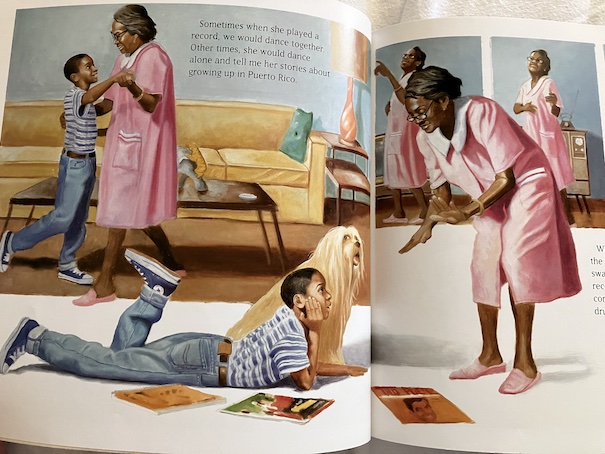
Every summer, a boy goes to visit his grandmother. He loves summers with his grandmother because she plays records from her record collection, teaches him to dance, and tells him stories about life in Puerto Rico, where she grew up.

She instills a love of music in her grandson and uses it to share memories with him about his grandfather and their home town. Sometimes, she lets him choose records from her collection to play, complimenting him on his choices. The boy likes art, and he makes sketches based on the album covers.

Then, his grandmother’s nephew comes to visit from Puerto Rico, along with his band. The boy is thrilled to meet them, and they give the boy and his grandmother tickets to see them perform in New York.

It’s a special occasion! They love the performance, and afterward, they visit with the band backstage. The boy and his grandmother continue sharing music with each other as the boy grows up, and as an adult, he continues to play it in his art studio.

At the end of the book, there are lyrics to one of the songs, In My Old San Juan (En Mi Viejo San Juan – YouTube video), both in English and Spanish. It’s a popular sentimental and nostalgic song for Puerto Ricans living abroad, as this YouTube video explains. The book is available to borrow and read for free online through Internet Archive (multiple copies, including one in Spanish).

The story is really about the author/artist of the book and his own grandmother. At the end of the story, the picture he’s drawing in his studio is the cover of this book. It’s a touching tribute to his grandmother and the special memories he shared with her as they bonded over music! Parts of the story reflect on their Puerto Rican heritage, which is something they share and discuss with the grandmother’s nephew and the members of his band. I like how the author emphasizes that what makes the music so special are the memories associated with it. At first, the memories are his grandmother memories, but through his experiences with his grandmother, he builds memories of his own associated with the music they’ve shared. It is these memories as well as the music that helps to fuel his art.

When Aunt Lena Did the Rhumba

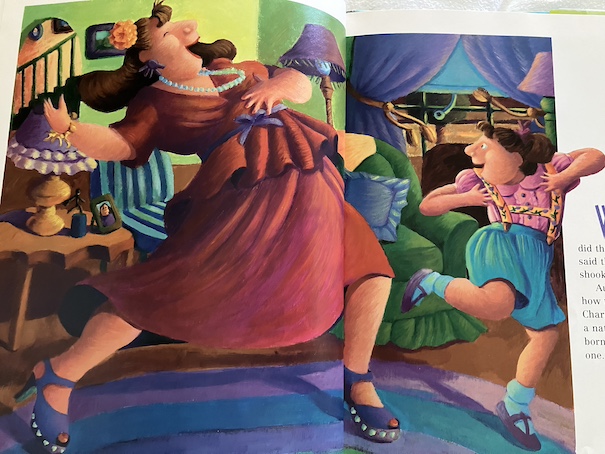
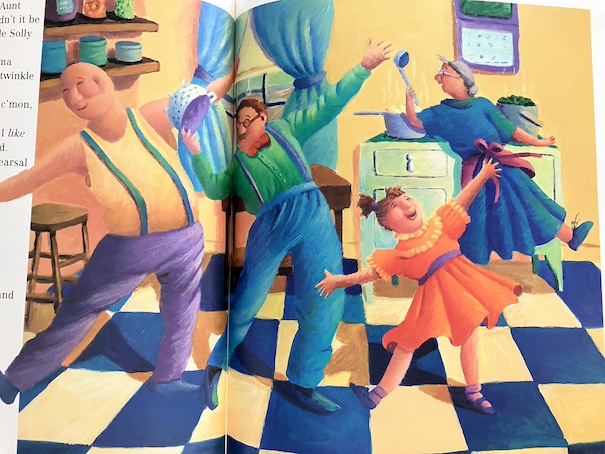
Sophie’s Aunt Lena loves music, dancing, movies, and theater, and she especially loves Broadway musicals. She goes to a musical matinee every Wednesday. After seeing a musical, she comes home, singing and dancing and acting out parts from the play she’s just seen.

One particular Wednesday, when she’s acting out a particularly dramatic dance in the kitchen, she accidentally slips and sprains her ankle. She has to stay home and rest until her ankle gets better, which means that she won’t be able to go to next Wednesday’s matinee.

Aunt Lena is so sad about missing the musicals she loves that Sophie gets an idea to cheer her up. Sophie recruits other members of her family to put on their own musical to entertain Aunt Lena.

Not everyone is enthusiastic about the idea at first, but when Sophie gets her grandmother to help her put together a costume fit for a Broadway musical and choose some music, they begin drawing other family members in.

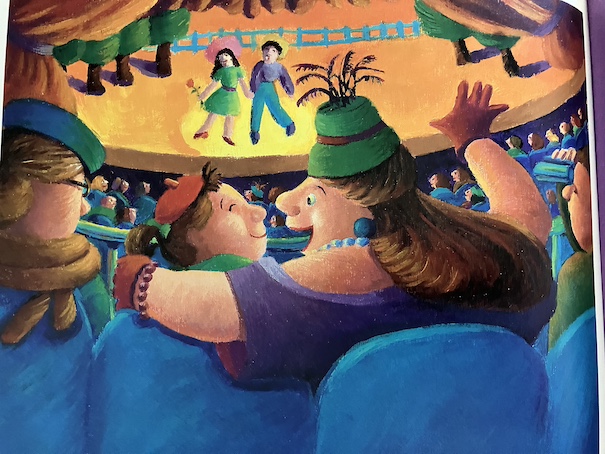
Aunt Lena loves their performance, and when she’s better, she takes Sophie to a matinee so she can see a real Broadway performance, too!

This book is available to borrow and read for free online through Internet Archive (multiple copies). It was also a Reading Rainbow book, and the episode of Reading Rainbow is also available to watch online through Internet Archive.

I didn’t see the original episode of Reading Rainbow that included this book when I was a kid because this book was published after I was too old for that. However, I always liked Reading Rainbow when I was a kid, and later, after I started this blog, I decided to go back and check out some of the books covered by Reading Rainbow after I stopped watching it. If you’re not familiar with Reading Rainbow, it was a children’s television program on public television in the US that encouraged children to read by discussing books and showing children things that were related to the books they were reading. For example, if they were reading books related to animals in an episode, the host, Levar Burton, might take a trip to a zoo and talk to zookeepers about animals in the zoo.

The themes of this particular story and the Reading Rainbow episode are music, dancing, and theater. In the episode, they show a boys’ choir and dancing class and talk about how performing helps the boys and young men develop confidence and maturity. There’s also a comedian who specializes in physical comedy, who talks about how he does his stunts, and an actress who plays one of the cats in the famous Broadway musical Cats.

I love how the aunt in the book shares her love of dancing and theater with her niece. The two of them have similar personalities and interests, so when her aunt is injured, her niece knows how to cheer her up. The ending of the story implies that the niece will now be going to performances with her aunt, or at least, will sometimes go with her. I also liked how the rest of the family participated in the girl’s plans when they saw what she wanted to do, even if they weren’t as enthusiastic about the idea themselves at first. Enthusiasm can be contagious, and I do think that adults sharing their interests with kids can spark lifelong interests in the next generation.

I also noticed that this seems to be an unconventional family, although the family’s living arrangements aren’t the focus of the story. The girl’s parents are never mentioned. She seems to live with just her grandmother, her aunt, and a couple of uncles, and there is no explanation why because it’s not directly important to the story. In any case, it seems to be a happy, close-knit family, with family members caring for each other and supporting each other’s interests.

The pictures in the book are bright and colorful, fitting with the energy, enthusiasm, and theatricality of the story.

Ben’s Trumpet

Ben’s Trumpet by Rachel Isadora, 1979.

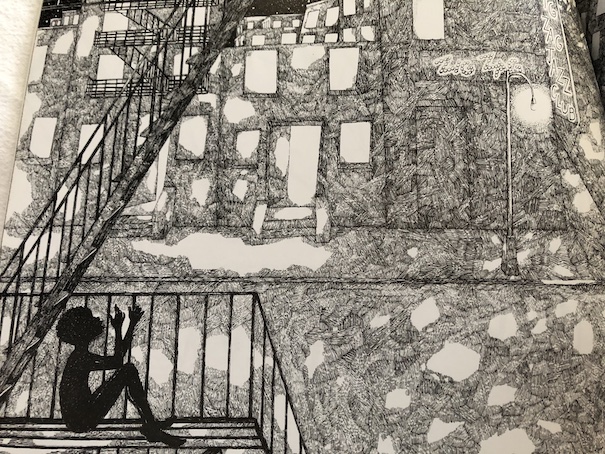
A boy named Ben likes to listen to the music coming from the nearby jazz club at night.

During the day, Ben stops by the club on his way home from school so he can watch the musicians practice.

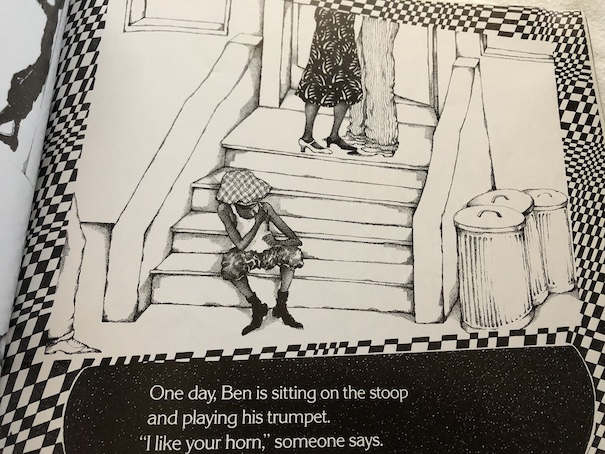
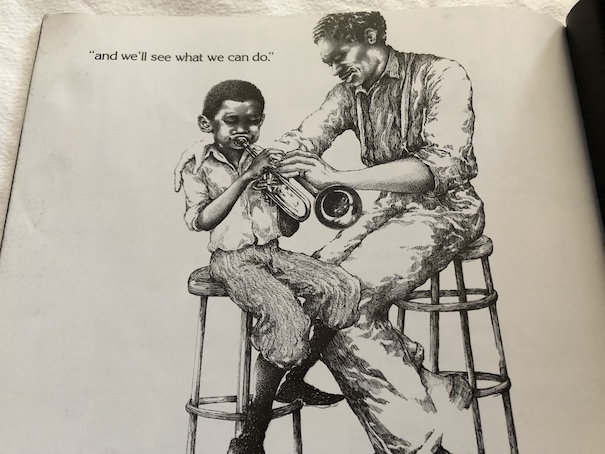
Ben’s favorite instrument is the trumpet. Ben doesn’t have a trumpet himself, but he imagines that he does and that he can play for his family or play along with the musicians from the club.

Some of the other kids in the neighborhood laugh at Ben for playing an imaginary trumpet, but the trumpeter from the club doesn’t laugh. When he sees Ben playing his imaginary horn, he compliments him.

Later, when he sees Ben watching the club, the trumpeter invites Ben inside and lets him try his trumpet for real.

This book is a Caldecott Honor Book. It’s available to borrow and read for free online through Internet Archive (multiple copies).

My Reaction

I thought this was a nice story about an adult who understands a boy’s dream and is willing to take him under his wing. Both Ben and the trumpeter understand the love of music, and the trumpeter sees how badly Ben wants to be a real musician. We don’t know whether Ben eventually becomes a professional musician or not because the story ends with him trying a real trumpet for the first time, but the story implies that the trumpeter may become a mentor to Ben and that this might be the beginning of Ben realizing his dream.

The book doesn’t give a specific date for the story, but the illustrations and use of terms like “the cat’s meow” indicate that it takes place in the 1920s. The illustrations not only give the story its 1920s vibe, but the abstract lines included in the pictures help to convey the sounds of the music and echo the art deco style popular during the 1920s.

There are a couple of things in the pictures that adults should be aware of. There is one picture where Ben’s baby brother is completely naked, for some reason, and there are adults with cigarettes. Other than that, I can’t think of anything else about the book that would be a cause for concern. There is no specific location given for the story, but it takes place in a city, and all of the characters are African American.

Famous Negro Music Makers

Famous Biographies for Young People

Famous Negro Music Makers by Langston Hughes, 1955.

I sought out an electronic copy of this book because I don’t own a physical one, and after I found out that it existed, I knew that I had to cover it at some point! The book is part of a series of biographies for children that I covered earlier, but what caught my attention was the author of the book, Langston Hughes, the famous poet of the Harlem Renaissance of the 1920s and 1930s. I mostly knew Langston Hughes for his poetry, and I wasn’t aware that he had written any children’s books until I found out that he had written several biography books for this children’s biography series. When I found out that he specifically wrote books about African Americans and other notable black people from history, it occurred to me that he might have even written biographies of people he knew personally because of the circles he traveled in.

This book focuses on prominent African American musicians. It contains a series of short biographies and profiles, beginning with musicians from the 19th century and continuing into the mid-20th century. Most of the musicians described in the book were contemporaries of Langston Hughes, but since the biographies are brief and focus only on providing an overview of the subjects’ lives, there is no indication whether Hughes ever met any of them himself. I was a little disappointed about that because I would have enjoyed hearing a personal perspective, but the personalities covered are still fascinating.

If you’re wondering why he uses the term “Negro” instead of “African American”, it’s because that term was one of the more polite and acceptable terms during his youth and around the time when he wrote this book. (That’s why the UNCF, or United Negro College Fund uses it as well. It was one of the polite terms in use at the time of its founding.) It sounds a bit out of date to people of the 21st century because, around the time of the Civil Rights Movement, which began around the time this book was written, people began advocating for a shift in the words used to describe black people. They wanted to distance themselves from old attitudes about race by using newer terms that didn’t have as much emotional baggage attached to them. This is when terms like “colored” and “Negro” feel out of use and were replaced by “African American” as the correct, formal term to specifically describe an American with African ancestry and “black” (considered somewhat impolite a century earlier, as I understand it, see the Rainbow and Lucky series for an example – I discussed it in the historical description of the 1830s) as the generic term to describe a person with dark skin and African ancestry, regardless of their nationality.

I enjoyed the range of different styles of music covered in the book. Recognized some of the most famous singers in the book by name alone, before I even started reading, but this book also introduced me to some musicians I hadn’t known about before. I knew about Duke Ellington, Louis Armstrong, Bessie Smith, and Marian Anderson, but I hadn’t heard of Lena Horne or Roland Hayes and some of the others. I’m sure that modern children would also be unfamiliar with some of the musicians included in the book. The biographies begin with musicians from the 19th century and end with musicians who were contemporaries of Langston Hughes in the 1950s.

Because this book was written in the mid-1950s, some of the information included is long out of date. People who were alive when Langston Hughes wrote the book are obviously not alive now, almost 70 years later. There are more recent books that cover the same topic and include information about late 20th century and early 21st century musicians Langston Hughes wouldn’t have known about. However, this vintage book is still interesting because of its famous author and because it was written at a turning point in American history, when society was changing and racial issues were being challenged.

The book is available to borrow and read for free online through Internet Archive.

The biographies included in the book are:

The Fisk Jubilee Singers, The Story of the Spirituals

This musical group began touring and singing spirituals in 1871. Some of the first members of this group had been born in slavery. After the end of the Civil War, the American Missionary Association of the Congregational Church established the Fisk School in abandoned army barracks in Nashville to teach black children at the high school level. However, it attracted a much larger student body than high school students. Many of the students had grown up in slavery and never learned to read, so that was the first skill they had to master. In addition to children of all ages, the school attracted older adults who wanted to learn enough to read Bible stories before they died. There was local opposition to a school for black people, and a lack of funding endangered the school’s existence. The school’s treasurer came up with the idea of holding musical performances to raise money. At first, the performers weren’t sure they wanted to sing their spirituals in front of white audiences, but they turned out to be very successful. They even did a European tour and sang before Queen Victoria. The Fisk School continued to grow and later became Fisk University, which still exists in Nashville and is considered one of the top historically black colleges in the US.

James A. Bland (1854-1911), Minstrel Composer

This section begins with an explanation of the creation of the banjo as an American instrument by slaves. People have negative associations with the term “minstrel show” in modern times, but the book explains that the first minstrel shows were performed by black slaves who had a talent for music. They were allowed to travel between plantations to perform their musical shows. Later, white actors and musicians adopted the style of these performances and started wearing blackface to perform their own minstrel shows.

However, James Bland fell in love with banjo music and the style of minstrel performances from a young age. Although minstrel music had a poor reputation, and his parents disapproved of his interest in this style of music, Bland earned extra money by giving street performances while he was in college. Although most theaters only wanted to book all-white minstrel groups in blackface as opposed to all-black minstrel groups, Bland managed to join an all-black group and make a name for himself as both a performer and composer.

Bert Williams (1875-1922), Artist of Comedy Song

In his youth, Bert Williams helped earn money for his family by singing in the street. Later, he formed a partnership with George Walker, and the two of them developed a musical comedy act. Bert Williams became famous for his act, but it also troubled him because he weirdly had to use blackface, even as a black person, because that’s what audiences expected, and he also had to act dumb when he was actually very smart. He wanted to move on to more serious roles as an actor, but people didn’t think he could play anything other than comedic roles. Also, in spite of his fame, he was treated as a second-class citizen everywhere outside of the theater because of Jim Crow laws. He was quoted describing the situation, “It is no disgrace to be a Negro, but it is very inconvenient.”

Bill Robinson (1878-1949), Music with His Feet

Bill Robinson was a famous tap dancer, often credited under his nickname, Bojangles. He was orphaned at a young age and partially raised by his grandmother, who was a former slave. He left school at the age of eight and got a job in a riding stable because he loved horses. He also earned extra money by dancing on street corners and ended up joining a traveling show. He became famous for his dancing and had dancing roles in movies. He is particularly remembered for his appearances in Shirley Temple movies in the 1930s.

(Note: He and Shirley Temple are regarded as the first interracial dance team in movies. While people of the time might have been scandalized by an interracial adult dancing team, it was acceptable for little Shirley Temple to dance with Bill Robinson because of her youth and innocence. Basically, because she was a young child, and he was in his 50s, it was obvious that there could be no romantic relationship between the two of them. Segregationists of the early 20th century feared interracial marriages and created laws to prevent them, which is why they feared any suggestion of romance between a black person and a white person. Shirley Temple was a safe person for Robinson to dance with because she was just a cute little girl dancing with her “Uncle Billy”, not a potential romantic partner.)

Leadbelly (1880s-1949), The Essence of Folk Song

His original name was Huddie Leadbetter, and he had a wild youth. He was a rough fighter who was even charged with murder and assault and sent to prison and escaped multiple times. (The book notes that he may not have actually killed anybody. The book explains that he was involved in brawls with other local people at Saturday night dances, where he was in demand as a musician. During one of these fights, in which a large number of people were involved, a man was killed, and Leadbelly, as he came to be called, was the one who was apprehended and charged for his death. However, in this type of free-for-all fight, it’s difficult to tell who did what, so it isn’t definite that he was responsible for the man’s death. I’m not completely sure whether the description of the fight in the book is fully accurate, though, because I saw it described differently elsewhere. It’s enough for readers to know that he had a rough youth, that he got in trouble for a fight in which someone was killed, and that he was in and out of prison for a time.) However, he had a natural talent for music and a love of folk songs that helped him to build a better life. His performances and recordings are credited for preserving songs that might otherwise have been lost to time.

Jelly Roll Morton (1885-1941), From Ragtime to Jazz

His original name was Ferdinand Joseph Le Menthe, and he grew up in a mixed race family in New Orleans. New Orleans was an exciting city with many different types of music, and Morton (as he later called himself) discovered his love of music early in life. He worked a variety of jobs in his youth, but through it all, he continued to play his music. He traveled the country, learning and playing ragtime and jazz music, eventually composing his own songs.

Roland Hayes (1887-(later D. 1977)), Famous Concert Artist

Roland Hayes was a student at Fisk University (whose origins were described in the first chapter of this book) in his youth. However, while the Fisk Jubilee Singers had popularized Negro spirituals and helped make it acceptable for theaters to book black people to sing these songs, Hayes was in love with classical music from Europe, the style of Beethoven and Brahms and classical opera, and theaters would not book a black performer to perform that style of music. Still, Hayes was determined to find a way to perform the music he loved. Strangely, motion pictures helped him to get his start. Because movies were silent then, all music had to be provided by live musicians in the theater. Hayes got his start singing behind the screens of movie theaters, where no one could tell that the performer was a black man. He also toured with the Fisk Jubilee Singers and made a name for himself in London, where he even sang before King George V.

William Grant Still (1895-(later D. 1978)), Distinguished Composer

In his day, William Grant Still was considered “the most prolific of American Negro composers.” He was raised to have a love of learning and music, although his mother and stepfather thought that music would be an unreliable career, unless he was teaching. For a while, he studied science at Wilberforce University, but he later attended Oberlin College to learn musical composition. He also worked for W. C. Handy’s music publishing company. He later moved to California and composed and arranged music for movies in Hollywood. However, his work extended beyond movies, and he is mainly remembered as a symphony composer.

Bessie Smith (1896-1937), “The Empress of the Blues”

Bessie Smith is described as being a large and tall woman with a powerful voice. She was a blues singer who mainly performed before black vaudeville audiences. The blues style of music had its roots in folk music, and it was considered lowbrow in the early 1900s. Gradually, it began to enter the wider culture and helped to form the style of popular jazz, but at the time, Bessie Smith’s style wasn’t taken seriously by Broadway. Bessie Smith was well-loved in her performances and may have gone on to be a bigger star, but unfortunately, she died from injuries in a car accident. According to the book,she might have survived, but the nearest hospital was for white people only and refused to take her. She died on the way to a hospital that would accept black people. This was just one of the harsh realities of life and death in the segregated South. However, the story about the whites-only hospital appears to have been discredited since this book was written. It seems that she did reach a hospital that accepted black people and lived to have her badly-damaged arm amputated, but she was too badly injured to survive.

Duke Ellington (1899-(later D. 1974)), Composer and Band Leader

Duke Ellington‘s birth name was Edward Kennedy Ellington. His father worked for the Navy Department of the Government, and he was born in Washington, DC. His early interests in life were art and baseball, but his mother had him take piano lessons. In high school, he and some friends started a ragtime band. The band was successful, and they moved to New York. After a few years, they began recording for Columbia Records and other recording companies. He composed music throughout his career, jazz and symphony orchestra.

Ethel Waters was born into a poor family in Pennsylvania and had a hard childhood. She started working as a hotel maid in her early teenage years, and she worked her way up through adversity in the theatrical world. She became a vaudeville singer and actress, eventually going on to make Hollywood movies.

Louis Armstrong (1900-(later D. 1971)), King of the Trumpet Players

Louis Armstrong began his musical education in a very odd way. When he was twelve years old, he was apprehend on the streets of New Orleans for firing a gun in the air on New Year’s Eve. Firing a gun in the air is a dangerous thing to do (people are sometimes killed by celebratory fire), and the authorities decided that he was he was a young hoodlum for running around, firing a gun in the streets. The sent him to the Colored Waif’s Home, which was being used as a youth reformatory as well as an orphanage. As a younger child, he had played music on street corners with some of his friends and had admired musicians who played horns, but he had never had a horn of his own. At the reform school, he was given a coronet and music lessons. Louis loved it, and he loved playing in the reform school’s band when it marched in local parades. He was disappointed when he didn’t get to keep the coronet when he left the reform school. However, his talent had become known. The owner of a local restaurant bought him a horn from a pawnshop so he could play in some of the local bands. At first, he had trouble adjusting to playing again because it had been so long since he had played regularly at the school, and his lip got sore. When that happened, he would fill in the trumpet part by singing in his gravelly voice. It was such a unique sound that word of it spread, and soon, he was getting attention from audiences and other musicians. Early on, he found it difficult to read music, so he learned to play by ear, and he had a talent for adding his own embellishments and variations to songs. He became famous for his scat singing.

Marian Anderson (early 1900s-(later D. 1993)), Metropolitan Opera Star

Marian Anderson began singing in the church choir as a child, and she was so talented that her church raised money to pay for her musical education. Later, she was also sponsored by the Philadelphia Choral Society. In 1925, she entered the New York Philharmonic Competitions and won first place. She did a singing tour of Europe, where she made a name for herself, and when she returned to the US, she became an acclaimed concert artist. In January 1955, she became the first black performer to sing for the Metropolitan Opera Company. (That was the year this book was written, and it discusses this event as a landmark for black musicians.)

Bennie Benjamin (1907-(later D. 1989)), Broadway Song Writer

I couldn’t remember having heard of Bennie Benjamin before, but I had heard of one of his songs, I Don’t Want to Set the World On Fire. It was his first big success, and he became a famous Broadway song writer. Something that made his music different from other black song writers of his day was that his music wasn’t inspired by spirituals, blues, or jazz. He was originally from the West Indies, and he moved to New York as a young man, so he was always more interested in Broadway styles of music than Southern music. At the time this book was written, he was still alive and writing songs.

Mahalia Jackson (1911-(later D. 1972)), Singer of Gospel Songs

As a child in New Orleans, Mahalia Jackson listened to Bessie Smith’s records and was inspired by her singing style. Mahalia’s specialty was gospel music. She never wanted to perform secular songs, but her music wasn’t the same as spirituals. Gospel music is different from spirituals because spirituals evolved from folk music with no known composer, and gospel music is more modern with known professional composers.

Dean Dixon (1915-(later D. 1976)), Symphony Conductor

Dean Dixon‘s mother was a music lover, and when he was a young child, she would take him to symphonies at Carnegie Hall. She had him learn to play the violin, and he played in his high school orchestra. He developed an interest in orchestration, and he formed a small chamber orchestra at the local YMCA, where he acted as the conductor. After high school, he attended the Julliard School of Music and did graduate work at Columbia University. While he was studying, he also led a mixed race symphony of children and adults in Harlem. He went on to become the first black person to conduct the New York Philharmonic Symphony.

Lena Horne (1917-(later D. 2010)), Singing Star of Hollywood

Lena Horne was an actress and singer. In 1942, she became the first black female singer to appear in a Hollywood move as a featured star in a film with white actors. At that time, typical movie roles for black people were minor comedic parts and servants. Even though black people in American society were educated and held professions like doctor or lawyer, movies typically showed them in more menial jobs, like chauffeur or maid. Lena Horne’s role in the movie Panama Hattie, in which she played a singer, helped to set a new precedent. During WWII she toured with the USO. After she became famous, she was known to turn down singing engagements in places that practiced segregation.

Famous Jazz Musicians (1800-1955), Congo Square to Carnegie Hall

This chapter explains the history and evolution of jazz music and discusses some prominent musicians from the early to mid-20th century who have not been discussed earlier in the book. Toward the end of the chapter, the author discusses a particularly interesting point that the National Association of Music Therapy was researching therapeutic uses for jazz music in the 1950s. Langston Hughes was also pleased that jazz could be used to encourage people to take an interest in other aspects of African American culture, like poetry, and how this style of music has spread all over the world.

Aria Volume 5

Aria Volume 5 by Kozue Amano, 2004, English Translation 2009.

This is the fifth volume of the second part of a fascinating manga series that combines sci-fi, fantasy, and slice of life. The series takes place about 300 years in the future, when Mars has been terraformed and renamed Aqua (because of all the water on its surface). The human colonies on Aqua are designed to resemble old-fashioned cities on Earth (called Manhome here). The people of Aqua prefer a much slower pace of life than people on Manhome, and aspects of life on Aqua more closely resemble Earth’s past.

The series is divided into two parts. The first two books are the Aqua volumes and introduce Akari Mizunashi, the main character, a young girl who came to Aqua to learn to become a gondolier in the city of Neo Venezia (which resembles Venice). Female gondoliers, called Undines, give tours of the city, giving Akari plenty of time to admire the beauty of her new home and meet interesting people. The two Aqua books are the prequel to the main series, Aria. Aqua covers Akari’s arrival on the planet, her introduction to life on Aqua, and the beginning of her training. The main Aria series show Akari’s continuing training, her progression to becoming a full Undine, her evolving relationships with her friends, and as always, her delight in learning more about her new home and admiring its beauty.

The series has received some criticism for being slow and lacking danger and adventure, but that is not really the point of the series. The main purpose is to show people how to appreciate the small pleasures of life. The sci-fi and fantasy elements (the spaceships, advanced environmental controls, intelligent Martian cats, and even the occasional appearances of the legendary Cait Sith) are mainly background to the stories about the magic of friendship and simple pleasures. Each volume contains a few short stories about Akari and her friends and the little adventures they have on a daily basis and the life lessons they learn. It’s a great series for relaxing when you’re stressed out.

The stories included in this volume are:

Mailman-San

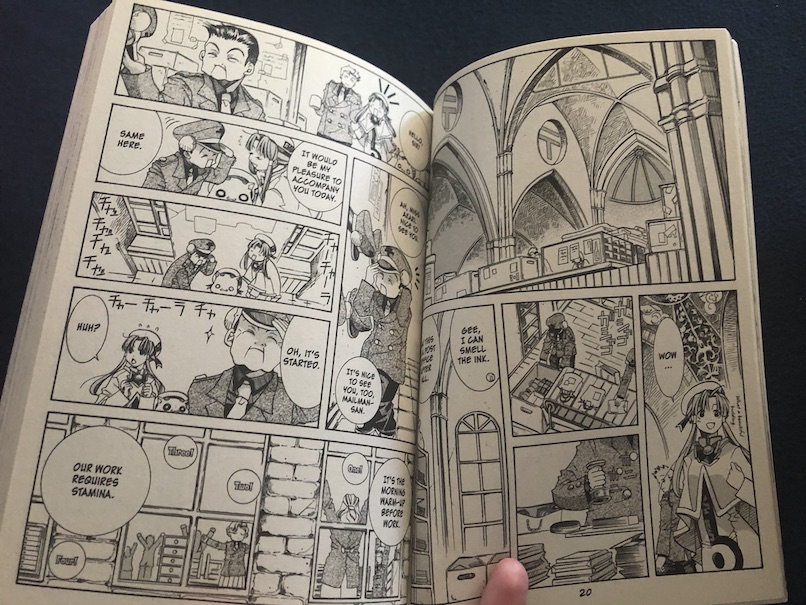
When Akari’s mailman friend has a hole in his gondola, he tries to hire Alicia to help him deliver the mail. However, Alicia is busy, so she allows Akari to help him instead, even though she’s only a trainee.

Akari gets to visit the post office and spends the day helping the mailman deliver the mail. During the course of the day, Akari thinks about the number of letters that people in Neo Venezia send and wonders why they send physical letters instead of e-mail. The mailman explains to her that physical letters feel different from e-mail, and Akari understands.

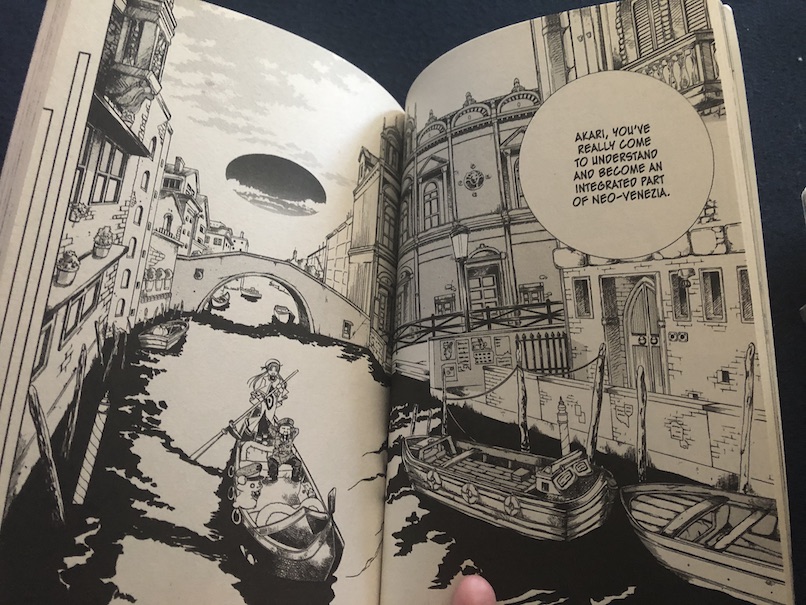
People in Neo Venezia like the feel of doing things the old-fashioned way, often because the old-fashioned ways have more of a personal touch. The mailman tells Akari that she has really become a part of Neo Venezia.

Canzone

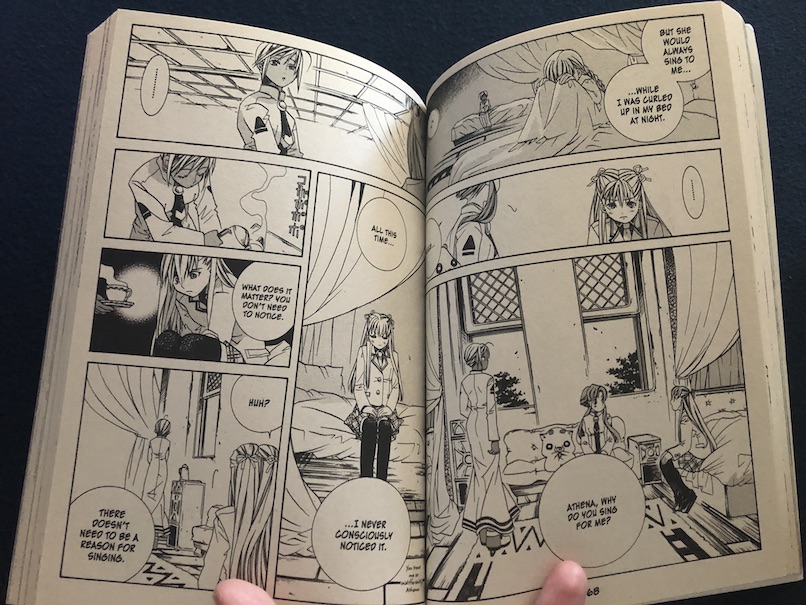
Alice’s mentor, Athena, is also one of the three greatest Undines on Aqua, the Three Water Fairies, like Akari’s and Aika’s mentors. However, Alice has little patience for her because she is clumsy outside of a gondola. Alice hates clumsiness and weakness, even punishing her own left hand for not being as strong as her right.

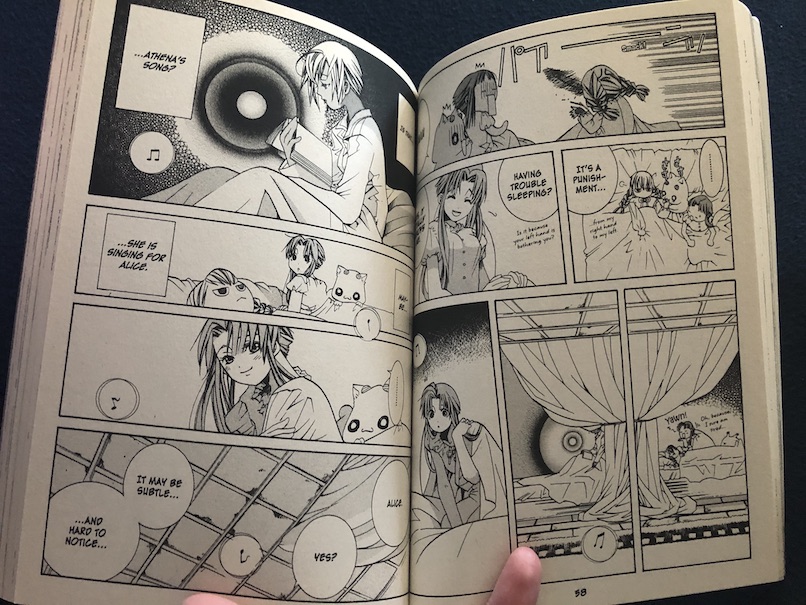
Akari is concerned about Alice when she sees what she’s doing to her left hand, and she has a sleepover with Alice to learn more about what’s happening with her. That’s when she meets Athena for the first time, although she had earlier seen her in her gondola, singing an enchanting canzone. Athena’s singing ability is one of the reasons why she is so famous as an Undine.

Akari observes the little things that Athena does for Alice, like singing to her at night, and points out to Alice that her left hand helps her more than she realizes.

Alice doesn’t believe it at first, but the next day, she begins to notice that Akari is right. While Alice eats with her right hand, her left hand holds her bowl. When she writes with her right hand, her left hand is holding the page. Her left hand isn’t inactive or useless; it’s been providing support that allows the right hand to do its job.

This revelation also causes Alice to see her mentor in a different light. Like her left hand, clumsy Athena has also been giving Alice quiet support that Alice often fails to notice. Alice reflects on how Athena’s singing comforted her when she first arrived at Orange Company and was homesick. Alice asks Athena why she sings to her, and Athena tells her that she’s just singing as she pleases, that she doesn’t need a reason to sing, that songs don’t really need to be noticed or thanked, and that she should just let the song do its work. However, Alice gains a new sense of gratitude toward her mentor and begins to treat her much better.

The Night of the Meteor Shower

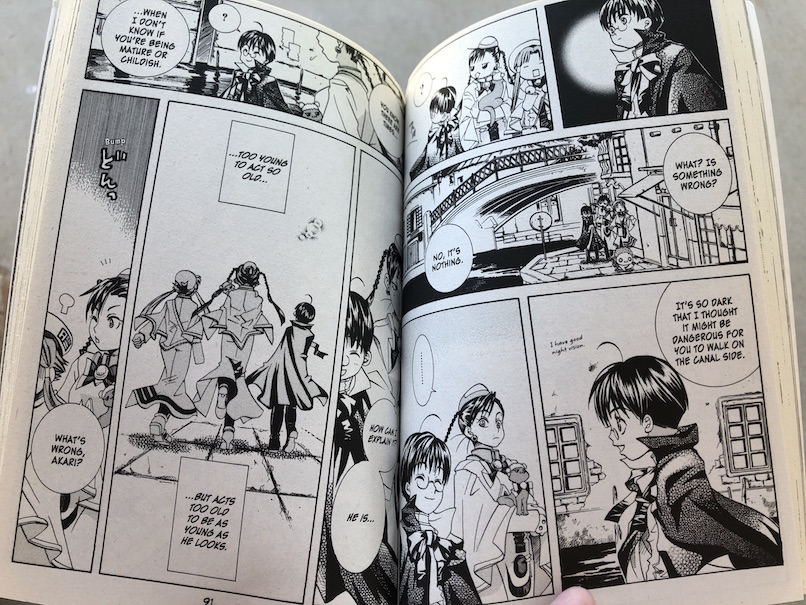
Akari and her friends find out that there is going to be a meteor shower, and Aika suggests that they invite Al the Gnome to watch it with them.

Of all the boys the girls know, Aika likes Al the best. Al isn’t temperamental like Akatsuki or spacey like Woody. Aika is kind of fascinated by how he looks younger than they are even though he’s older and also talks like an old man or an old-fashioned gentleman.

Plus, after living in the underground city, Al has really good night vision, which is helpful as the girls search for a good place to view the meteor shower, away from the lights and crowds of the public square.

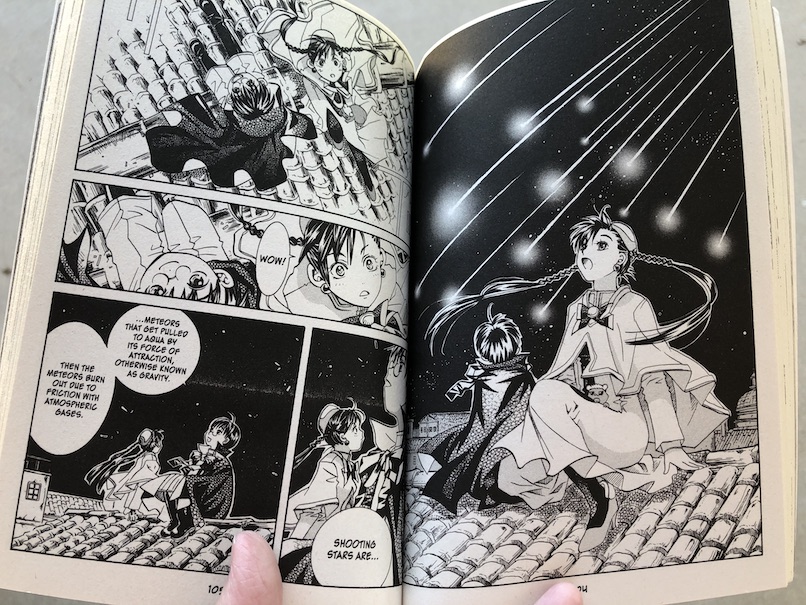
Aika finally suggests that they go up on the roof of one of the Himeya Company buildings, which has an excellent view.

Akari explores the rooftops a little on her own, leaving Aika and Al alone together. When Al, whose work as a Gnome is managing the gravity of Aqua, talks to Aika about gravity and attraction and how the gravity of Aqua pulls, the meteors in, she understands a little more about the attraction she feels for Al.

Margherita

Aika’s mentor, Akira, is tough, but she genuinely cares about her students. After a day of training in which many things go wrong, she finds a way to show the trainees how much she appreciates their hard work.

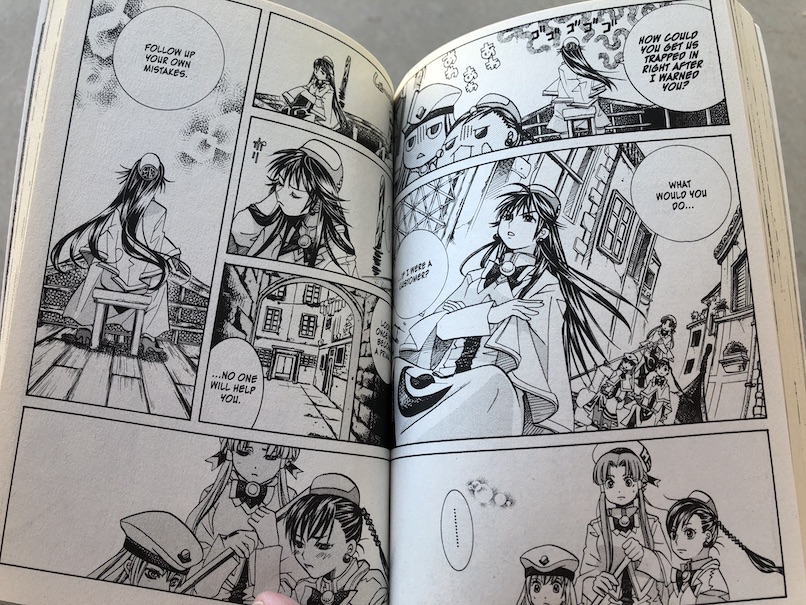
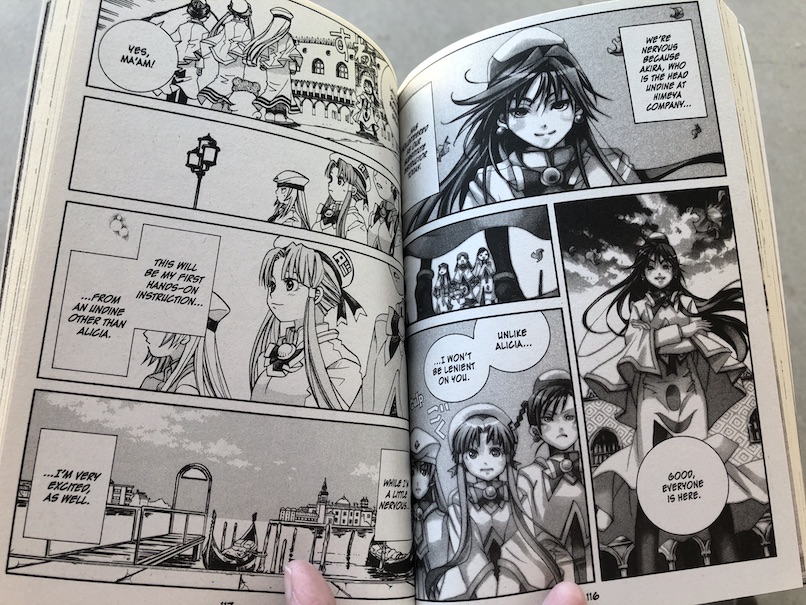
Akira has Aika, Akari, and Alice show her how they would handle a real customer, from helping them into the gondola to giving them a pleasant tour with interesting information. However, she is critical of the way they do things and particularly, some of the safety regulations they forget, like speed limits, not warning other approaching boats of their presence, and allowing themselves to be stuck when high tide comes and makes it impossible for them to pass beneath certain bridges.

Akira says that the reason why she’s being tough is that, when the girls become full Undines, they will be completely on their own in their boats with their customers, with no one else to help them. When there’s a problem or when they make a mistake, it will be their job to fix the situation themselves with their own skill and ingenuity.

When they become stuck on a section of canal because of the rising tide, Akira challenges them to find a way to solve the problem themselves. They find a side waterway that’s been closed off, and take the gondola through that way.

Akira rewards the trainees by taking them to a pizza parlor for a Margherita pizza. (Named for a queen, it’s topped with tomatoes, basil, and olive oil.) The trainees ask her why she didn’t punish them for making a serious mistake in their practice, and she tells them that there would be no point in punishing them because they realized what they did wrong and made an effort to improve, learning from their experience.

I quibble a bit with the teaching method just telling the students to find a way to fix the problem themselves without guidance. It kind of works here because Aika and Akari are now journeyman Undines and have had basic training and experience of the waterways of Neo Venezia to call on, but you can’t do this sort of thing with real beginners who haven’t had that grounding. I’ve had teachers who have tried, and I know the frustration of having them expecting me to call on a grounding I hadn’t received. When I was a kid, I felt terrible about those situations, like I was an idiot, but as an adult, who has since had gaps in my early education filled, I’ve come to realize that the fault wasn’t with me but with the teachers who had not taught me what to do but still expected me to somehow already know. I couldn’t figure out what to do because I didn’t know enough about what I could do yet. You can’t progress well in your education or training for anything without having someone explain the basics to give you the right grounding to build on. You can’t do algebra without knowing your basic operations. You can’t understand how to cook from memory or improvise a dish without first learning how to follow basic recipes. Akira’s approach to letting the students figure out the solution to a problem themselves calls attention to what the girls already know and encourages them to use it, but when that doesn’t work in real life, when you just don’t know what to do at all, it’s time to take a step back and reacquaint yourselves with the basics. You can figure out what to do if you know what’s possible to do, but I’d like to point out that if you don’t know what’s possible, you need some help and guidance to learn.
Shadow Chasing

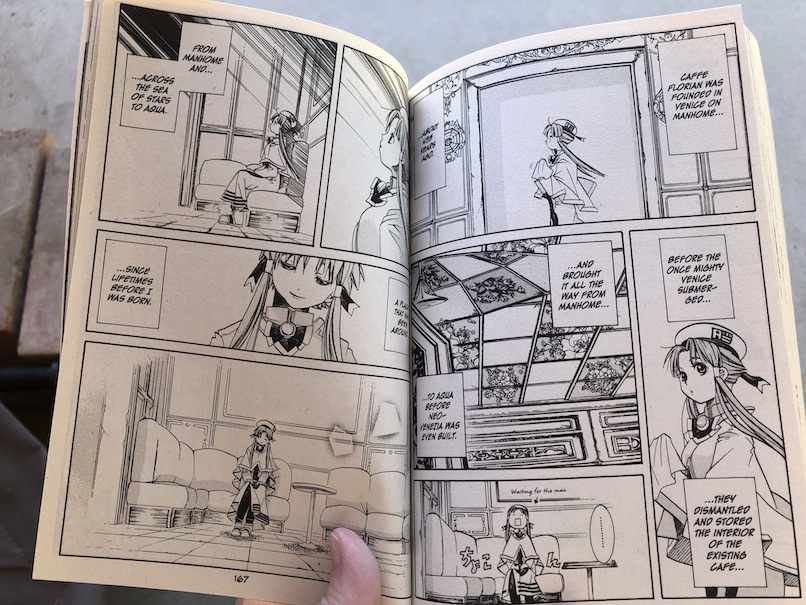
Akari never minds waiting for people because there are always interesting things and people to watch. One day, when Alicia has to attend a Gondola Association meeting at a famous cafe, Akari says that she and President Aria will just wait for her instead of heading home.

Akari drinks lattes and watches the people going by, just enjoying the ambiance of the square.

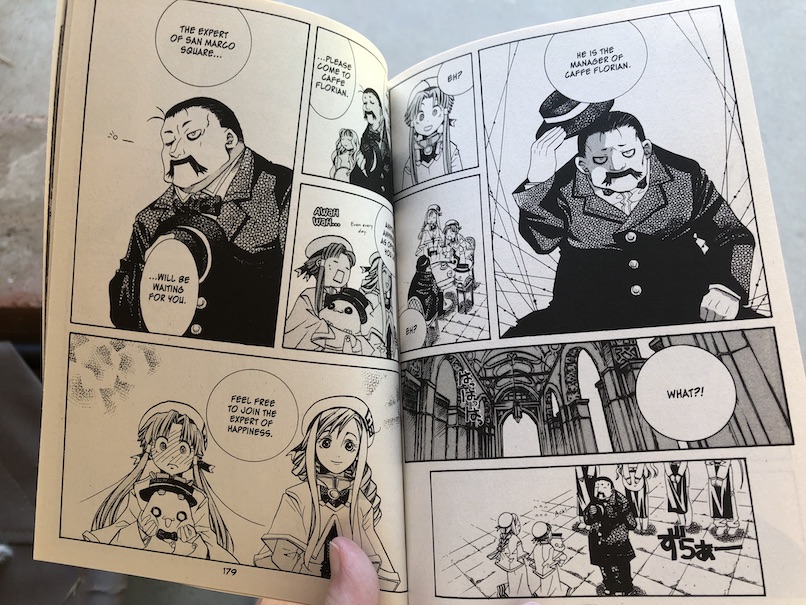
There is a man there who seems familiar to Akari, and the two of them begin talking to each other about people watching in the square. The man introduces Akari to the custom of “shadow chasing”, where the restaurant employees move the cafe’s tables into the shade as the shadows move.

Akari reflects on the history of the cafe, Caffe Florian, which she says is actually the same cafe that once stood in the original Venice (which, in Akari’s time, is now submerged beneath the ocean), having been dismantled and moved years ago.

It turns out that her new friend is actually the manager of the cafe.

Rosy Noses, Freezing Toes

Pee Wee Scouts

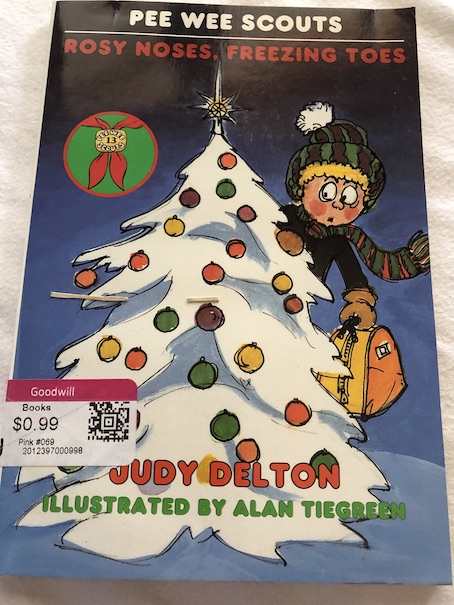
#13 Rosy Noses, Freezing Toes by Judy Delton, 1990.

At one of the scout meetings, Mrs. Peters, the troop leader, says that her antique vase is missing. It’s a family heirloom, and Mrs. Peters wants to ask the scouts if they know anything about its disappearance or if they have any idea of what could have happened to it. None of them knows, but they’re fascinated by the mystery. After they search the house and can’t find it, Mrs. Peters says that she’ll just have to report its disappearance to the insurance company. Mrs. Peters is willing to let the matter go at that, but the scouts keep wondering what happened to the vase and if one of them could have taken it.

Mrs. Peters tells the scouts that the next badge they will earn will be their music badge. To earn the badge, the children will have to sing or play an instrument or tell the group about the life of a composer. Some of the children already play instruments and know what they’re going to do, but others aren’t sure. Since it’s December, Mrs. Peters suggests that some of them could sing popular Christmas songs or a Hanukkah song.

Sonny Betz declares that he doesn’t want to participate because he can’t play an instrument and over the next few days, he seems upset and nasty with people. Molly asks him what the matter is, and Sonny tells her that his mother is forcing him to take violin lessons. Mrs. Betz has always wanted Sonny to learn to play the violin, and his new violin teacher has assured her that Sonny will be able to learn the first line of Jingle Bells in time for the scouts’ music show, even though it’s coming up fast. Sonny isn’t happy about it, and to make him feel better, Molly tells him that he’s lucky because nobody else will be playing the violin and it will make him different. Unfortunately, the other kids tease him and call him “Maestro,” so he starts feeling bad.

Molly doesn’t like the way the others keep teasing Sonny, and when Tracy says that Sonny is a baby, Molly tells her that it’s not his fault because his mother is the one who makes him take violin lessons and keep the training wheels on his bike even though he’s in the second grade and all the other things that people tease him about. Mrs. Betz doesn’t realize how much Sonny hates some of the things that she makes him do and how much the other kids tease Sonny about these things. Molly overhears her mother saying that Sonny will “be a handful by the time he gets to high school,” probably because she’s imagining that Sonny will rebel against all things his mother has been making him do once he’s a teenager. Actually, it’s not going to take that long.

Mrs. Peters uses the insurance money from her vase to buy a piano. The scouts’ music show goes okay at first, although none of the kids are spectacular at music. Molly, Mary Beth, and Lisa paint their noses red and sing Rudolph the Red-Nosed Reindeer. Kevin whistles. Roger plays White Christmas on the drums with no other accompaniment, confusing everyone about what song he’s actually playing. Poor Sonny has to go last, when everyone is starting to get tired of the entertainment, but he doesn’t play well. The other scouts cover their ears, and the screeching of the violin makes the dog bark and Mrs. Peters’s baby cry. Sonny is so upset that he runs away from the show and has a fit.

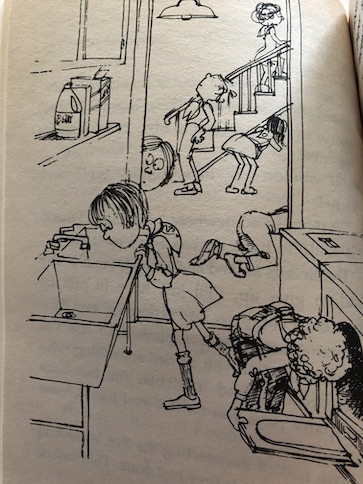
The next day, Molly learns that Sonny has run away from home completely, leaving behind a note that he’s heading to Alaska. Everyone is searching for Sonny and getting worried about him being outside alone in the snow. However, Molly soon discovers that Sonny hasn’t gone as far as everyone fears and he’s certainly not on his way to Alaska. She discovers Sonny hiding in her family’s bathtub. Sonny explains to her that he didn’t have the money to go to Alaska, but he couldn’t bring himself to go home, and he picked Molly’s house to hide in because Molly is the only one who didn’t tease at him. Molly promises not to turn him in, but she says that he won’t be able to stay in her bathtub forever. His mother has called the police to report his disappearance, and Molly’s parents are bound to find him eventually. Sonny swears that he can’t go home because he hates playing the violin so much. What can Molly do to help him change his mind?

I didn’t like the way the other scouts were so mean to Sonny in the book. Sonny does do childish things, like being mean to the younger kids on the playground when he’s upset and throwing fits when things go wrong. However, Molly tries to be understanding with Sonny, even when he’s being fussy and whining, and she recognizes that Sonny is in a difficult position. His mother has certain expectations of him, and Sonny doesn’t think that anything will change her mind. The way things work out, though, makes it seem like Sonny never really explained to his mother how upset he was about the violin lessons and maybe not even how upset he’s been about some other things. Part of Sonny’s difficulty and the reason why he seems babyish to the other kids is that he seems to have trouble managing and articulating his emotions, including standing up for himself and what he really wants. Some of the other scouts help Molly to convince Sonny that running away isn’t the solution, and Molly calls Mrs. Betz to tell her that Sonny is okay but won’t come home until she promises that he can stop playing the violin. Sonny declares that he wants to see that in writing, and his mother gladly writes him a note that says that he doesn’t have to play the violin again.

So, what about the antique vase mystery from the beginning of the story? Before the end of the book, they do locate the missing vase (not really stolen, more misplaced and forgotten), but Molly accidentally breaks it. Mrs. Peters says that it’s okay because, with the vase broken, she doesn’t have to give the money back to the insurance company, and she gets to keep her new piano. She’s been wanting a piano, and the truth is that she never really liked the vase, even though it was a family heirloom. Yay? Merry Christmas!

The book is available to borrow for free online through Internet Archive.

The Cuckoo Clock

CuckooClockStolz

The Cuckoo Clock by Mary Stolz, 1987.

Erich was a foundling, taken in by the Goddhart family as a baby after he was found on their doorstep. Frau Goddhart has a reputation for kindness, but sadly, that reputation is really all she has. She is outwardly kind, participating in local charities, only to enhance her reputation. At home, she is selfish and cruel, ruling the house with an iron fist and having tantrums when things don’t go her way. She sees Erich as an unwanted responsibility, only grudgingly raising him along with her own children because if she refused, it would ruin her reputation. Her husband is kind to Erich, but Frau Goddhart treats him more like a servant.

Erich only comes to know real love when he becomes Ula’s assistant. Ula is the town clockmaker, a master in his craft. Ula teaches Erich his craft and how to play the violin.


When Ula dies, leaving Erich his carving tools and his violin, the selfish Frau Goddhart tries to take them away, thinking that such things are too good for a mere foundling, a charity case. Before she can get these precious things, Erich runs away to seek his fortune elsewhere, but he leaves behind something that convinces the town that, although he may be the ungrateful wretch that Frau Goddhart says that he is, he has a talent that will lead him on to greater things.


One of the fascinating things about this book is the pictures, which are charming pencil drawings in a realistic style.  There is also a note in the back about the unusual typeface of the book.

CuckooClockStolzType

Something Queer in Rock ‘n’ Roll

SQRock

Something Queer in Rock ‘n’ Roll by Elizabeth Levy, illustrated by Mordicai Gerstein, 1987.

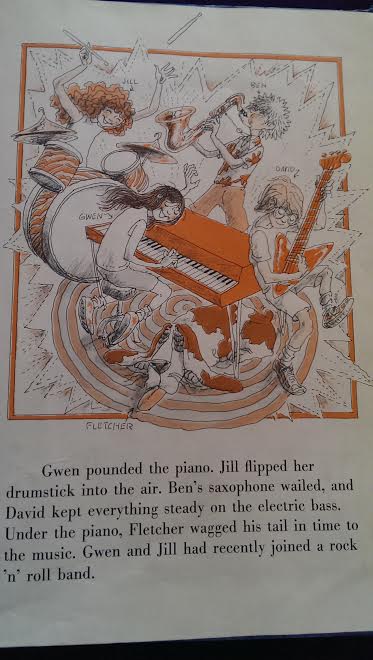
SQRockPic1Gwen and Jill join a couple of other friends in forming a rock band.  They want to enter a rock contest run by a local tv station.  In order to enter, they have to have an original rock song, so they write one about Jill’s dog, Fletcher.  They discover that Fletcher loves pizza so much that he gives a spectacular howl when they offer him some.  They make Fletcher and his wonderful howl part of their act.
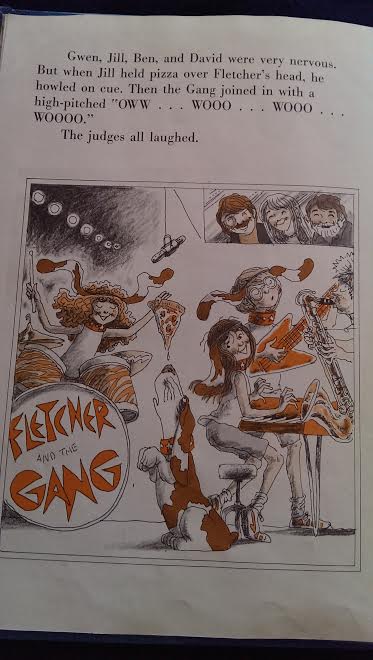
When they audition for the station, the put on dog ear costumes to match Fletcher’s ears and call themselves Fletcher and the Gang.  The people at the station love their act, especially Fletcher’s howl, and they are accepted onto the program.

However, shortly afterward, Fletcher disappears.  They search everywhere for him and put up posters, but no luck.  Jill is convinced that Fletcher must have been abducted because he would never run away.  It turns out to be true, and they discover it for sure when they get a phone call telling them where to find Fletcher.

SQRockPic2Fletcher is all right, but now, he suddenly hates pizza!  It seems that Fletcher’s abductor fed him nothing but pizza until he started to hate it.  Did someone do that on purpose to ruin their act for the contest?  How would this person have even known about their act?  Also, what can they do about the contest now that Fletcher is more likely to run from the sight of pizza than howl for it?

The other rock bands in the contest are all hilarious with themes that include spiders, potatoes, mummies, and clowns.

The book also includes the music and lyrics for the kids’ rock song about Fletcher: “Hungry All the Time.”

It is part of the Something Queer Mysteries.