Ruth Fielding at Silver Ranch

Ruth Fielding

Ruth Fielding at Silver Ranch, or Schoolgirls Among the Cowboys by Alice B. Emerson, 1915.

In the last Ruth Fielding book, Ruth and her friends met a girl named Jane Ann who had run away from home. In this book, Ruth and her friends go to Silver Ranch in Montana, Jane Ann’s home, which is owned by her uncle, Bill Hicks. Ruth’s best friend, Helen, is surprised that Ruth’s Uncle Jabez let her come on the trip because he’s been very upset about the money he lost investing in a mine. Helen says maybe the investment will turn out fine after all, and Ruth says that the mine he invested in, the Tintacker Mine, is coincidentally nearby. It’s supposed to be a silver mine, although Uncle Jabez now doubts whether the mine is real or some kind of scam. The young man who talked him into investing hasn’t answered Uncle Jabez’s letters for months. So, while they’re staying at the ranch, Ruth plans to ask some questions in the area about the mine and see what she can learn.

On their first evening at the ranch, while they’re playing music, singing, and enjoying themselves, they suddenly get word that there’s a prairie fire up by Tintacker, and a cowboy says that it was probably set by “Bughouse Johnny.” (“Bughouse” is an old-fashioned slang word meaning “crazy”, so this is a descriptive nickname.) Ruth and her friends go to help the cowboys with the fire, and they watch as they slaughter three steers and use the carasses to smother the flames.

Ruth asks some questions about Tintacker, and the cowboys mention a new man who’s been hanging around that area. They don’t know much about him, but he’s pretty young, and they call him “the tenderfoot.” Ruth thinks he might be the young man her uncle has been looking for. She also asks them about Bughouse Johnny, but they don’t tell her much more than he’s a crazy guy who camps out in the area of Tintacker.

Ruth explains her uncle’s situation to Jane Ann’s uncle. Bill Hicks says that, as far as he knows, there’s no more silver left in the Tintacker Mine, and he thinks that Ruth’s uncle has been cheated. Ruth asks him if there’s any way that she can see the official papers associated with the mine, and Bill Hicks introduces her to a friend of his who is a lawyer, Mr. Savage. Mr. Savage confirms that ownership of the mine belongs to a man named John Cox, who bought out the other heirs of the mine’s original owners. Like Bill Hicks, Mr. Savage thinks that the mine isn’t worth anything, but if the young man Uncle Jabez invested with is John Cox, the investment is valid, just not one that’s likely to see a return. Ruth says that she will give the lawyer’s information to her uncle and that her uncle may ask him to act on his behalf later, depending on how he decides to handle this investment.

Ruth and her friends have some Western-style fun and adventures with Jane Ann, the cowboys, and the other locals. Jane Ann gets to show off her riding and ranching skills, and they all attend a local dance, where Ruth and her friends play matchmaker between a shy cowboy and the haughty schoolmistress he admires. They have a hair-raising encounter with a wild bear, and the man who saves them by shooting the bear turns out to be the man from Tintacker who Ruth wants to see.

When Ruth and one of Hick’s men go to see this man later, they find him deathly ill. If the man doesn’t recover, and if the mine turns out to be worthless, Uncle Jabez will lose his money, and there will be no way for Ruth to continue attending the boarding school she loves with her friends! However, the answer to the truth about John Cox’s identity is closer than Ruth and her friends suspect.

The book is available to borrow and read for free online through Internet Archive (multiple copies) and Project Gutenberg (multiple formats).

My Reaction

Like many other early Stratemeyer books, this story contains elements of a mystery but is really more of an adventure. I didn’t like parts of the adventure because there were repeated instances of characters being attacked by animals and then the animals needing to be killed. At one point, Ruth herself beats an attacking wolf to death, and I thought that was a shockingly violent scene for a Stratemeyer Syndicate book! Although, earlier Stratemeyer Syndicate books are quite different from the later ones.

The mystery part of the story focuses on the identity of John Cox, the man who convinced Uncle Jabez to invest in his mine, and the truth about his mine. I actually felt a little silly for not figuring out the true identity of John Cox sooner because he actually shares the same last name as one of the other regular characters in this series, and it’s not a coincidence. John Cox is Mary Cox’s brother.

Mary Cox, nicknamed “The Fox” by her schoolmates for being sly, is along on the trip with the other Briarwood Hall girls, although she is a nasty rival for Ruth in particular. Even though she has gotten along better with some of the other girls in the past, her snooty attitude and bad behavior have finally gotten on everybody’s nerves in this book.

When Mary is temporarily in control of a wagon Ruth and Helen are in, she does something reckless and almost gets them all killed until Ruth takes control of the reins and saves them. Everyone knows that the situation was Mary’s fault and that Ruth saved the day, and this is not the first time that Ruth has saved Mary from something. (By my count, it’s the third time.) However, Mary is ungrateful for her help and in denial that she did anything wrong (as usual). Just when everyone has decided that they’re completely fed up with her, the discovery of her brother changes things. While Mary is unmoved by Ruth saving her life, she is genuinely grateful to Ruth for saving her brother when he was ill and alone, which is astonishing for a girl who has never seemed to genuinely care about anybody else before. John Cox is an honest man, and Uncle Jabez’s investment turns out better than expected, guaranteeing that Ruth will be able to return to boarding school with her friends.

I want to warn readers that this is one of the Stratemeyer Syndicate books that has characters using racial slurs. The Ruth Fielding books were written before the Stratemeyer Syndicate revised its books in the mid-20th century to remove language like that. As in other Stratemeyer books, the use of inappropriate racial language is used to show which characters are crude and antagonistic, and in the case of this book, that character is Mary.

Mary Cox sneers at one of Bill Hick’s men, Jib, because he is of Native American descent, although Helen’s brother Tom stands up for Jib, pointing out that he’s much better educated than most of the men Mary knows, even though he works as a cowboy, and that Native Americans used to own the entire country before white people came, which is nothing to sneer at. Mary still insists on calling him a “savage”, mostly because Mary’s habitual method of communicating with people is to put someone else down so that she can look superior. This entire exchange takes place during an episode when Mary is trying to flirt with Tom, and bringing up racial slurs to put someone down during a flirtation with someone else is a very weird thing to do. It’s mostly a part of the story to show why Mary is such a pain. Tom just ends up being disgusted with her. It’s not the last time Mary uses racial slurs. At one point, she also calls the ranch cook a “fat and greasy Mexican squaw.” It’s pretty bad to see that kind of language in a kid’s book, even though it’s there to show that Mary has a nasty personality and behaves badly, which irritates and embarrasses people around her.

On a lighter note, the story is peppered with all sorts of Western words and slang. Since slang changes over time, and I’m not sure how people said things in the 1910s, I’m not sure how accurate the slang is for the time, but I’d like to call attention to a couple of words in the story that will be familiar to readers, but not in the way that they usually see them. “Cañon” is actually the Spanish word for “canyon”, pronounced the same way that we say in English, but the little tilde symbol over the ‘n’ adds the ‘y’ sound. The word that confused me the most was “kiotes,”, not because I didn’t know what they were talking about, but because that is not the Spanish version of the word. It looks like a phonetic spelling of the way we pronounce “coyotes” in English, but the Spanish word is also spelled “coyotes”, just pronounced a little differently. I didn’t know where the spelling “kiotes” came from, and I’d never seen it anywhere else before. I tried Googling it to find out more, and I saw a few mentions of the word with that spelling. One mention said that it was a Native American word, but it didn’t explain much more than that, so I can’t be sure. The book also uses the plural of “beef”, which is “beeves“, a word that used to be a joke with my brother and my friends the first time we heard it years ago because we thought it sounded funny. It also mentions the girls wearing “furbelow“, a word that I’d never heard before that means ruffles, pleats, or flounces in women’s clothing.

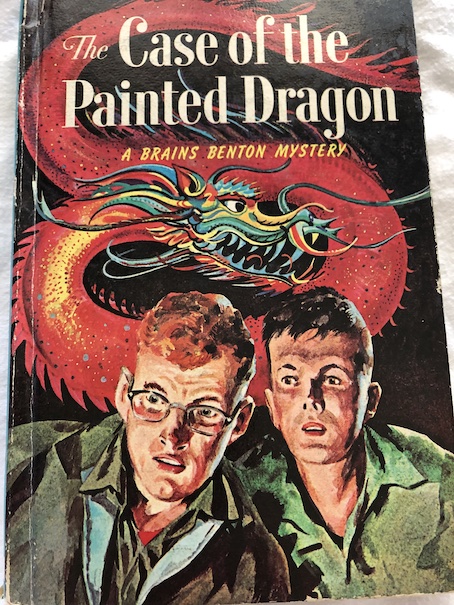
The Case of the Painted Dragon

Brains Benton

The Case of the Painted Dragon by by George Wyatt (Charles Spain Verral), 1961.

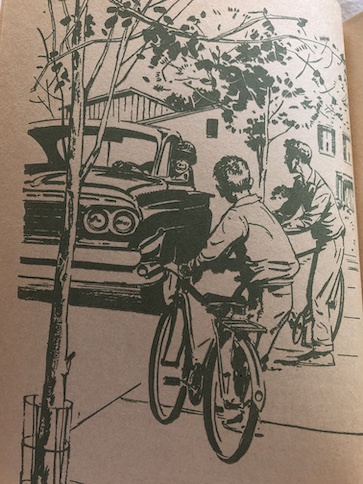
Jimmy and Brains are on their way to school when a strange man in a car stops and asks them if they know where he can find a Japanese kid. (He uses the derogatory terms “Jap” and “Nip”, and Brains disapproves. Also, the man is very unspecific about which kid he’s looking for. He offers no names, just that he’s looking for a Japanese boy about their age The town where the boys live is a fairly small college town, so I guess it’s supposed to be reasonable that there would only be one boy matching that description. I grew up in a larger university town, so the idea of there being only one person who could match any description and just expecting random people to know who it is seems really odd to me.) Brains just says that they don’t know anybody with Japanese ancestry, and the man drives away.

After the man leaves, the boy talk about how suspicious he was. They really don’t know who he could be looking for. The last Japanese family to live in their town was the Yamadas, but Mrs. and Mrs. Yamada were killed in a car accident the year before. (It was a point in the book’s favor that Brains doesn’t like derogatory racial terms, but the point is lost quickly when Jimmy is describing Mr. Yamada, who taught art at the boys’ school, and he says that Mr. Yamada “wasn’t one of those ‘inscrutable orientals’ you’re always reading about.” He says that Mr. Yamada was friendly and also coached the school’s swimming team. It’s nice that Jimmy liked Mr. Yamada, but the way he says it sounds a little back-handed. I suppose it’s a sign of the times when this book was written that the author thought it was reasonable for people, even kids, to “always” be reading about “inscrutable orientals”, but on the other hand, I’ve read other books from this time period and earlier that weren’t like that, so I’m inclined to think that it’s not really “always” and everyone.) However, the boys don’t remember the Yamadas having a son their age, so they doubt there’s a connection. They’re concerned because they think that the suspicious stranger might have bad intentions toward the kid he’s looking for.

After the boys get to school, Jimmy sees that stranger driving by the school, and he gets worried. Either the stranger is still looking for the Japanese boy, or he’s looking for Brains and Jimmy. Brains thinks that the best thing to do is try to find the Japanese boy before the man does. However, Brains doesn’t want to tell their principal or teacher about the stranger or the boy. Jimmy worries that maybe the stranger made up the Japanese boy as an excuse to get to him and Brain, and he decides to tell the principal about the stranger in the car, and the principal goes outside and demands that the stranger tell him who he is and what he’s doing, hanging around the school and scaring the students. Unfortunately, he confronts the wrong person in the wrong car, which is an embarrassing situation. (He did the right thing even if he confronted the wrong person. I give him credit for that, but they need to have a reason why the school authorities don’t do anything about the weirdo scouting the students.)

In the boys’ next class, they meet a new student, Mikko, who may be the Japanese boy that the stranger was looking for. The boys make friends with Mikko, inviting him to come to baseball practice with them. They want to warn him about the stranger, but before they talk to him about thr man who seems to be looking for him, they spot the car following them again. Mikko spots the car, too, and the boys ask him if he knows the driver. Mikko says, no, the man is a stranger. Aside from the people at school, the only people Mikko knows in town are Mr. and Mrs. Bevans, the people he’s staying with. Brains makes up a story about why the man might be following them because he doesn’t want to alarm Mikko too much and also because he doesn’t want anybody calling the police until he and Jimmy have had a chance to investigate the situation themselves. (This is a selfish move – Brains just wants a case to investigate, and he doesn’t want to share the case with the proper authorities. But, again, the story needs to provide a reason for Brains and Jimmy to handle the investigation without adult help.)

Jimmy’s mother knows about Mikko’s background and tells him about it when he gets home. It turns out that Mikko is the Yamadas’ son, but until recently, he had been living with relatives in Japan. Mr. Yamada was born in the US, but he worked in Army Intelligence during WWII, which is when he went to Japan and met his wife. Mikko had been born in Japan and was going to school there, but the Yamadas planned to move to the US permanently. Mr. and Mrs. Yamada had come first to get established, but they died in the car accident before they could bring Mikko to join them in the US. However, Mr. Yamada had wanted his son to become an American citizen, like him, and get an American education. The Yamadas had boarded with Mr. and Mrs. Bevans and became friends with them. The Bevanses’ have no children of their own, and they are considering adopting Mikko and giving him the American life that his father wanted him to have.

There is one adult who knows about the mysterious car following Mikko: Yama, an old family servant who accompanied Mikko from Japan to the US to make sure that he gets settled in his new home. Yama is a former sumo wrestler and a formidable man, and when Mikko tells him about the mysterious stranger in the black car, Yama says that he will protect him. However, when the Bevanses’ house is ransacked while the boys are playing baseball and they return and find Yama looking around Mikko’s room, they boys start to suspect that Yama may be involved with the mysterious stranger in some way. At least, he seems to know more than he wants to say about the situation because he refuses to call the police to report the ransacking.

After some further research, Brains and Jimmy learn that the Yamadas’ car accident might not have entirely been an accident, and Brains suspects that everything that has happened may relate somehow to Mr. Yamada’s former work in Army Intelligence.

My Reaction

This is the last book in the Brain Benton series, but it’s also more of a mystery than the previous books. In most of the books, it doesn’t take the boys long to realize who the villains are, and the mystery is more about how they’re going to prove it and stop the bad guys. However, in this book, Brains and Jimmy really do start off completely in the dark. First, they have to learn who the Japanese boy is that the strange man is looking for, and then, they have to learn the history of Mikko and his family. Brains and Jimmy do genuine investigative work, starting with old newspaper stories about the accident that killed Mikko’s parents. Little by little, they begin to reconstruct the past and learn why someone is looking for Mikko and what Mikko has that they want. Even when the boys know who the bad guys are and what they’re after, there is still the puzzle of where Mikko’s father hid it before he died.

I enjoyed the mystery in the book, but I didn’t like some of the ways Jimmy talked about Japanese people. I think it was good that he noted that derogatory terms are inappropriate, and I appreciated that he liked Mikko pretty quickly and pointed out good things about him. Those are good points. It’s just that, sometimes, even when Jimmy speaks favorable about some of the Japanese people in the story, it comes off sounding a little back-handed, like when he says that Mr. Yamada was actually a really nice and friendly guy and not “inscrutable” like characters Jimmy has heard about. I can see that it’s a positive point that someone who has been given a negative impression about certain types of people can consciously notice that the reality is both different and better than what he’s heard before. I think Jimmy is moving in a good direction in his attitudes. It’s just that compliments sound flat when they’re accompanied by a negative or implied negative. It’s like the difference between saying “He’s a really nice guy” vs. “He’s a really nice guy for being the kind of person I’ve always heard was really sinister.” It just adds an uncomfortable twist on the sentiment. I know that the reason Jimmy talks like this is because this book was written during the 1960s, when racial attitudes were changing, and the author probably felt like it was necessary to acknowledge old stereotypes, but I still don’t like it.

The Mystery of the Other Girl

The Mystery of the Other Girl by Wylly Folk St. John, 1971.

It’s a rainy Saturday in Florida for the Barron family when Stevie (short for Stephanie) gets a strange phone call from Mobile, Alabama that’s meant for her ex-boyfriend, John Henderson. Stevie just broke up with John, who likes to call himself “Ian” because he thinks it sounds classy, the day before, and she has no idea who the strange girl on the phone is or why she’s trying to reach John/Ian at her number. Stevie asks the girl for her name, and she says that she’s Morna Ross, but suddenly, the girl screams and is cut off, like someone put a hand over her mouth, and then someone hangs up the phone at her end. Stevie is disturbed by the call, fearing that something bad happened to the other girl, but she doesn’t know what to do about it because she doesn’t know Morna Ross and doesn’t know exactly where she was calling from or why she wanted to talk to Ian.

Since Stevie already has a date to go dancing with friends at a place where Ian and his band are performing that night, she tells her friends about the weird phone call and asks them what she should do. They say that they’ve never heard of Morna Ross and tell her that she should talk to Ian about it. However, Stevie feels too awkward about the breakup to talk to Ian and asks a couple of her friends to do it for her.

That evening, Stevie and her friends run into Stevie’s old friend, Hope. She and Hope haven’t seen too much of each other lately because she’s not interested in dancing and dating and other things that Stevie wants to do. This evening, though, Hope is out with a visiting cousin from Mobile, Alabama named Phil Walters. Stevie is glad that Phil is getting Hope to come out of her shell a bit. Stevie and Phil say that the style of dancing popular with teenagers today is better than older styles of dancing because they don’t have to take any lessons to learn it – it’s just moving to the music, like everyone else. On impulse, she asks Phil if he’s heard of Morna Ross, but he says he hasn’t. Stevie’s friends say that when they asked Ian, he claimed not to know Morna Ross at first, but then he said something about her being a girl who’s “crazy about him.” Apparently, he dated her before he dated Stevie, and since he and Stevie broke up, he decided to invite her to the Old Seville Festival that’s happening next week, a local celebration of the history of their town. Stevie thinks it’s strange that Ian didn’t mention that Morna lives in Mobile, since that’s the place she was calling from. Stevie’s friends think maybe Ian was lying about Morna being crazy about him and that he probably doesn’t really know her because Ian is always bragging about things, like how great his family is. Hope thinks Ian makes up things to brag about because he wishes they were true even though he knows they really aren’t. After she thinks it over, Stevie thinks that’s true, that Ian likes to keep up appearances and a superior attitude because, underneath it all, he’s actually a very insecure person. But if he made up his relationship with Morna, and he doesn’t really know her, why was Morna trying to call him?

Before the evening is over, Ian confronts Stevie and reminds her that their first date was almost a year ago, at the last Old Seville Festival and that he’s planning to see her there again this year because they promised each other that they would see each other during the festival every year. In return, Stevie confronts Ian about Morna. Ian says that she’s just another of the girls who have come to see his band perform and likes him. When Stevie asks why nobody’s met Morna at any of the teenage hangouts in town, he says that they like to hang out at the more adult spots. He begins spinning a story that Stevie is sure is at least half fiction about how he and Morna order non-alcoholic drinks at adult nightclubs but they sneak in some gin to mix in with it and how they’ve tried marijuana. (Keep in mind that marijuana was illegal everywhere in the US at this time.) Ian says that he and Morna don’t really want to become potheads, but they see trying these things as part of growing up, “to experience everything and then make a choice.” Stevie pauses to wonder about the word “everything.” (That is always a good thing to wonder about when someone talks about wanting to try “everything.” Define “everything.”) Stevie asks him where Morna lives, and he says that she lives across town, but her family has moved around a lot because her father deals in real estate and sometimes even sells their own house and moves his family to a different one. (Ian sounds like he thinks that’s clever. I thought it sounded really suspicious, like maybe Morna’s family is actually involved with the mafia or something and has to keep on the move.) Stevie doesn’t really believe any of this, but she pries a few more details out of Ian about what Morna looks like. Although she thinks that Ian made up most of the things he said about Morna, there is still the girl who called her earlier and screamed like she was in trouble. She was a real person, even if what Ian said about her wasn’t all true.

When Stevie gets home, she tells her mother what Ian said about Morna and how Ian likes to make up things. Stevie is still concerned about the girl who called and wants to find out who and where she is and if she’s okay. Her mother says that her father will be coming home from a business trip the next day, and they can ask him what to do about it. Stevie’s father is a fingerprint expert at the police department, so he knows about police procedures and can make inquiries. Stevie wishes that she had Morna’s fingerprints so her father can analyze them himself, and in another weird development, she gets that opportunity.

The next day, Stevie gets a letter from Morna. The letter is addressed to her and not Ian. Morna didn’t know her home address, so she addressed it to the high school she attends, and the letter was forwarded to her from there. Stevie handles it carefully so she won’t disturb any fingerprints. The letter even has Morna’s return address, so she knows where she lives in Mobile. The contents of the letter are strange. Morna talks about her school band and how they’re always short of instruments. She says that she’s liked Stevie since she saw her playing with her school band in a competition (Stevie really is in her school’s band) and wonders if her school would be willing to sell spare instruments. The letter is oddly worded, the word “see” is underlined twice, and there are doodles all over page. Also, the specific instrument Morna says that she wants is written in French and doesn’t sound at all familiar to Stevie. Stevie looks up the term Morna uses, and it turns out to be a French horn. But, if Morna meant “French horn”, why didn’t she just say that? Also, the price she mentions for the French horn is far less than what an actual French horn would cost. It seems like Morna is either crazy or trying to say something else in her letter.

Stevie has a younger brother named Lyle who is really smart, and he suggests that the letter might be in some kind of code. As they talk it over, Stevie realizes that the French horn refers to Ian because he plays the French horn in her school band. Lyle wants to study the letter more to see if he can figure out other parts of the code, and Stevie decides to invite her friends over to see it, too, because most of them are also in the band and might notice something else in the message that’s music-related. Little by little, the kids begin working out the real meaning of Morna’s message. First, the amount of money that didn’t make sense is meant as a clue the reader that there’s more to this message than just an inquiry about musical instruments. Second, Morna phrases sentences oddly in order to work certain words into the message and put them in the right order for her hidden message. Third, the doodles around the message are the beginnings of pieces of music. Stevie and her friends providing their musical knowledge and Lyle coaches them through code-breaking techniques. After awhile, Lyle goes to his room to work on the code alone because he finds it easier to think by himself and likes surprising people with his discoveries. When he returns, she has the final solution.

Morna’s message says that she has to get in touch with Ian. She says that she is being watched and her mail is being read, which is why she has to communicate in this way. Morna asks Stevie to write to her in the same way, promising to explain the situation later. Stevie remembers that Ian wanted to see her at the Old Seville Festival, so she decides to tell Morna when and where to come if she wants to see Ian. Shortly after Stevie mails the letter, Morna calls again, saying that she needs to warn Ian because someone might try to kill him. Then, she screams and someone hangs up the phone again.

At first, Stevie’s father thinks that Morna is some kind of prankster or maybe having some kind of paranoid fantasy because she’s into drugs or something, but Stevie is sure that Morna really is scared. The danger is real, and Stevie’s family realizes it when Lyle is kidnapped at the Old Seville Festival.

The book is available to borrow and read for free online through Internet Archive.

My Reaction

I was pretty sure, for much of the early part of the book, that the whole thing with Morna’s mysterious phone calls and messages was just an act that Ian dreamed up and got someone to do for him as one of his dramatic bids for attention. It seemed weird to me that Morna second phone call ended exactly the same way as her first, like it was part of a rehearsed routine. Also, someone who wanted to interrupt Morna’s phone calls and keep her from talking could do it in easier ways that wouldn’t involve dramatic screams that would get attention. They could have just unplugged the phone or held down the hang up button. (Remember, this is the early 1970s. Morna’s using an older style of telephone that has to plug into the wall, and there are buttons where the handset rests that hang up the phone. That was the first type of phone I ever used as a kid, and I know that you can push those buttons down with your hand to end a call even if someone is still holding the handset.) I would think that if a sinister person was watching Morna, they would cut her off that way rather than try to put a hand over her mouth while she screams. Also, if they really didn’t want her to communicate with anyone, I don’t think they’d let her write any kind of letter, not even one that just seems to be about band instruments. Even if they couldn’t figure out the code, I doubt that they’d want to take the chance that she might communicate something to the wrong person. It all just seemed too theatrical and not realistic. So, I couldn’t really blame Stevie’s father for initially thinking that the whole thing might just be some kind of prank. However, I did wonder why he didn’t just phone the Mobile police department and ask a colleague to do a welfare check on the girl at the address on the envelope to find out if it was a prank or not. Better safe than sorry, and if it turned out to be just a prank, knowing that the police knew about it would probably be enough to get the girl to stop.

As it turns out, it’s not just a prank. There is something genuinely sinister going on, although I wasn’t sure what it was for quite awhile. I thought it might have something to do with drugs because there were repeated references to drugs in the story, but that’s not what’s going on. It turns out that Ian/John has been having trouble with his self-image and even self-identity because he’s adopted. He’s aware that he’s adopted, which is why he secretly worries that he doesn’t really fit in with his family or friends and makes up fantasies about himself to impress people while being inwardly insecure. However, there’s quite a lot that Ian/John doesn’t know about his past, not even his birth name, and the truth of Ian’s past is even stranger than anything that he’s ever imagined. His blood relatives love him and didn’t forget about him, even though they couldn’t take care of him when he was a baby, and now, they’re trying to protect him from a very real threat. Finding out the truth comes as a shock to Ian, but it’s an important step in making peace with himself and realizing just how important he is just for being himself, not only to his adoptive family but to the family who gave him up for adoption and to the friends who cared about him even when he was a bit of poser and who took great risks to protect him and help him find the truth.

Lyle is fun as an eccentric genius character who has a pet walking catfish. I hadn’t actually heard of a walking catfish before reading this book, but that’s part of the fun. I enjoy stories that bring up interesting facts that I didn’t know before. Walking catfish can actually survive out of water for long periods of time and move across land. The walking catfish ends up playing a role in catching the bad guys in a way that actually makes sense, which is nice. I also like that, although Lyle is pivotal in solving the mystery, he didn’t get all the answers too easily, like some geniuses in stories, and he needed some specialized knowledge from other people. That makes him a more realistic character.

I would like to discuss the costumes that the characters wear to the Old Seville Festival, though. They explain that it’s common for people attending the festival to dress in historical costumes from different time periods in the town’s history to get into the spirit of the event. Ordinarily, I would think that’s fun and be completely supportive, but there’s one exception that I think crosses the line a little. Some people, including Lyle, dress in Native American costumes. I’m not Native American myself, but I know that real Native Americans are usually not too happy to see traditional forms of dress being used as costumes. I would cut the characters more slack for it if they confined themselves only to wearing clothes like traditional Native Americans, but what pushes it over the line for me is that Lyle is described as darkening his hair and his skin as part of his costume. He also does some kind of warpaint on his face, but it’s the skin coloring that he does that I think is unacceptable. I think that’s going too far, and that’s what pushes this costume into the realm of the tasteless and offensive. A little more restraint, just sticking to the clothes might have been okay, but looking like one of those white actors trying too hard with makeup to pass for a minority in an old black-and-white movie is just too much. It’s one of the things that really dates this book because fewer people today would be willing to take it that far, at least not without some embarrassment or criticism from other people. It was published in the early 1970s, and may possible take place a little earlier, in the 1960s, because no exact year is given. I’ve heard some people claim that it was normal for them to wear racial face makeup as part of costumes when they were kids, and never having seen that even once when I was a kid in Arizona during the 1980s and 1990s, I’ve wondered just when and where kids did that of their own free will when they were given the opportunity to wear literally anything else, and I think I have at least a partial answer here. Lyle carries a tomahawk as an accessory to his costume and gives war cries. He also comments about how hippies are bringing Native American style headbands back into style, which further dates the story.

I should also explain that Lyle is not just dressing as any random Native American; he is trying to be a real historical figure. He is specifically trying to be William Weatherford, a mixed-race plantation owner known for his involvement in the Creek War in the 1810s. I like the part where Stevie wonders about the authenticity of Lyle’s costume. Apparently, Lyle got some help from someone at the local museum, but Stevie realizes that nobody else at the festival is going to know (or care) whether Lyle’s war paint designs are accurate or not, and even if he’s dressed accurately as a Native American of the area, the real William Weatherford probably typically dressed in the British style favored by other plantation owners of the era because he was living in the same manner as fully white plantation owners and going by his English name rather than his Native American name. I’m not actually sure how the real William Weatherford dressed because this isn’t a part of history that I know much about, but Stevie’s logic makes sense. My guess is that he probably wore a variety of different clothes in his life, depending on his circumstances at the time. (After all, various other historical figures did. Emperor Hirohito was photographed at various times wearing traditional Japanese ceremonial clothing, Western-style suits, and military uniforms, depending on the event.) One thing I could state with confidence is that William Weatherford probably didn’t have a pet walking catfish on a leash, which Lyle does because he insists on bringing his pet to the festival with him.

It’s part of the plot that Lyle is wearing an outlandish costume and has his walking catfish with him when he’s kidnapped, but I still think that there are equally outlandish historical costumes that he could have chosen that could have chosen that would have worked. It’s important that Lyle dyed his hair for the costume, so he had the same hair color as Ian on the day he was kidnapped when his ordinary hair color is much lighter, but I think there could be other ways around that or maybe he could have worn a hat so his hair wasn’t visible at first. I wouldn’t mind if he just dyed his hair, but the skin coloring is just too much.

Personally, I prefer the costumes that Stevie and her friends wear to the festival. They decide to dress as Gibson girls from the late 1800s and early 1900s. They basically wear old-fashioned-looking skirts and blouses and put their hair in the typical Gibson Girl hairstyles. Historical costumes that are based on wearing different clothes and hairstyles are the type of costumes I favor.

Aside from the costume issue, I really liked the story. I honestly wasn’t sure what the real problem was until the very end of the book. I had several theories, but Morna really surprised me when she explained who she really was and why Ian was in danger. I thought that she might turn out to be a relative, but the situation wasn’t what I expected.

Mystery of the Fog Man

Mystery of the Fog Man by Carol Farley, 1966.

This is the first book of the Kipper and Larry mystery series. Kipper (real name Christopher) and Larry are 13-year-old cousins. The two boys meet each other for the first time in this book, when Kipper comes to visit Larry and his family in Michigan. The boys had written letters to each other before, but they were both excited to finally meet in person.

Larry and his father live in Ludington, on the shores of Lake Michigan, and Larry takes Kipper fishing soon after he arrives, which is when Kipper first encounters the mysterious figure known only as The Fog Man. This strange old man starts Kipper, and Kipper finds him eerie. Larry explains to Kipper that The Fog Man is kind of a local eccentric. He is apparently both deaf and mute. No one knows his real name. He apparently lives in the nearby forest, but during the summer, he comes to the beach to collect driftwood, which he sells to tourists, who are fascinated by this eccentric old man, and to the lady who runs the nearby gift shop, Miss Norton.

Shortly after this encounter, the boys learn that someone has stolen thousands of dollars from the safe on one of the car ferries that travel back and forth across Lake Michigan and Wisconsin. (Another book by the same author but in a different series takes place on one of these car ferries, The Case of the Vanishing Villain.) Kipper and Larry are able to see the scene of the robbery because of Larry’s father’s position as the local chief of police. However, the boys’ adventures are just beginning.

The most likely suspect in the robbery seems to be a man called Karminsky, who worked on the ferry. He disappeared around the time of the robbery, and Larry’s father thinks that he’s hiding out somewhere in the area, waiting for the police to stop looking for him so he can make his getaway. Larry is intrigued by the idea that the robber might be hiding out in the woods nearby. Although his father forbids the boys to go looking for the robber, they can’t resist checking out the woods anyway.

Larry confides in Kipper that he really wants to help his father catch this robber so that his father will be a big success and get public recognition. Larry sometimes feels bad that he and his father have been alone since his mother died when he was young. He thinks that, if his mother was still alive to help his father take care of him, his father would be able to do much more in his life and career, so Larry wants to be the help that he thinks his father really needs.

Soon, the boys think that they’ve found Karminsky’s hideout in the woods, but even though they lie in wait for him all night, they don’t manage to catch him there. The only person they see in the area is the Fog Man, and to Kipper’s shock, he sees the Fog Man walking without his characteristic limp!

When the boys later find the Fog Man’s coat and a fake white beard, they reach different conclusions about what happened. Kipper thinks that the Fog Man was involved in the robbery all along and that he was always in disguise from the beginning. However, Larry is accustomed to thinking of the Fog Man as a harmless old eccentric who has hung around town for the last few years, selling driftwood to tourists. Larry thinks that the Fog Man might be an innocent victim of Karminsky’s, that Karminsky may have killed him so he could take his place and blend in with the usual beach scene until he could make his escape.

Then, Larry’s father tells them that Karminsky has been found in another town, apparently having missed being on the ferry in the first place. So, if Karminsky was never on the ferry and never in Ludington, who stole the money and masqueraded as the Fog Man?

The book is available to borrow and read for free online through Internet Archive.

My Reaction

I bought this book because I always liked the Flee Jay and Clarice mystery story that I mentioned before and wanted to see more by the same author. I liked it because, while I thought that I understood things pretty quickly in the story, there are some surprising twists to the mystery. I thought that I had it figured out twice, but I was surprised both times, and the true identity of the Fog Man remains a mystery until the very end.

Mystery on Nine-Mile Marsh

Nine Mile MarshMystery on Nine-Mile Marsh by Mary C. Jane, 1967.

Lucille Pierce has been feeling lonely because her other friends joined a club with some other girls that meets over the weekend, and Lucille hasn’t been invited to join. The only people who are available to hang out with now are her brother Brent and his friend Kevin, and they don’t always want a girl hanging out with them.

When Brent and Kevin have an argument because Kevin laughed at Brent’s horrible spelling during a spelling bee (Brent is horrible at spelling because he never stops to think about what he’s doing, and he gets into fights fast because he also has a quick temper), Kevin invites Lucille to join him as he goes out to have a look at the old house on Moody Island before the new owners take over. The old farmhouse stands on an island in the marsh. Sometimes, people hear odd sounds coming from the house, and some people believe that it’s haunted by the ghost of John Moody, who was lost at sea years ago. Old Mrs. Moody, John’s widow, was a hermit in her final years, and now, the only living member of the Moody family is Clyde Moody, John’s nephew. Everyone had expected that Clyde would inherit the old Moody house, but instead, Mrs. Moody left it to a man named Arnold Lindsay, an apparent stranger. Miss Rand, who owns the diner not far from the Moody house thinks that Mrs. Moody should have left it to Clyde. Clyde has had problems with alcohol and hasn’t been able to hold any job for very long, and Miss Rand thinks that having the house to care for might have been good for him, providing him with some stability. No one even has a clue who Arnold Lindsay is.

Nine Mile Marsh HouseLucille and Brent take a bike ride out to the island, but a noise in the barn frightens them away. It isn’t that they really think there’s a ghost, but they’re concerned that someone may be trespassing on the property. They decide to keep an eye on the house to see if they can see anyone sneaking around, but they don’t.

A short time later, Lucille, Brent, and Kevin meet Arnold Lindsay, who turns out to be a nice man. Like the children, he becomes concerned about the condition of Pedro, the donkey that the Turner family owns and leaves neglected in one of their fields. To give the donkey a better life, Mr. Lindsay buys Pedro, telling the kids that they can come out to the Moody house and visit him.

Mr. Lindsay doesn’t have any idea why Mrs. Moody left him the house, either. He’s a writer, but not a famous one. He just writes newspaper columns. All he or the children can think of is that Mrs. Moody must have been a fan of his columns. She didn’t get out, but she did read newspapers.

Nine Mile Marsh PedroMr. Linsday has also heard strange noises around the Moody house, and he asks the children what they know about it. They tell him the ghost stories about the Moody place, but they say that they don’t really believe that there’s a ghost. Mr. Lindsay is fascinated by the stories. He says that his impression was that the noises he heard came from the cellar, but he didn’t see anything when he investigated. He invites the children to help him investigate further sometime.

Meanwhile, Lucille tries to make friends with a new girl at school, Barbara Rosen. At first, Barbara doesn’t want to be friends because she thinks that Lucille is part of the Saturday Club with the other stuck-up girls, but she becomes friendlier when Lucille tells her that she’s not with them. Barbara had worried that the snobby girls didn’t like her because they thought something was wrong with her, but she really likes Lucille and thought for sure that she would have been asked to join the club, too, having been involved in a lot of other activities at school. Both girls find it reassuring that the fact that they weren’t asked to join the club doesn’t mean that that there’s anything wrong with them, but maybe with the girls running the club and their priorities in choosing friends. Having each other for friends makes them both feel less lonely, so they can stop worrying about the club and its members so much.

Nine Mile Marsh MeetingBarbara’s father owns a clothing store in town, and she says that some of his customers have been saying bad things about Mr. Lindsay. Some of them have even said that he might be a spy. Lucille thinks that’s ridiculous and that they’re only saying things because they wanted to buy the property or see it go to Clyde. Lucille has to admit that she doesn’t know much about Mr. Lindsay, so she can’t swear that the rumors aren’t true, but she still thinks that he’s probably just a nice guy, and she wants to see him keep the house so that Pedro will have a safe place to live.

With Clyde Moody and others sneaking around the property, seeming to look for something, and Clyde’s new accusations that Mrs. Moody was never legally married to his uncle and therefore had no right to will the property to anyone, Lucille, her brother, and their friends try to help prove that Mrs. Moody was really Mrs. Moody and that the house does rightfully belong to Mr. Lindsay.

Part of the theme of this story is about loyalty.  Lucille feels hurt that the girls she had previously thought were her friends abandoned her to join the Saturday Club.  She thinks that people who are real friends should stand by each other, no matter what other friends come into their lives.  However, looking back on her friendship with these other girls, she comes to realize that she was mostly friends with them because they were the girls who lived nearby, and neither of them really had other options.  In the end, they didn’t really have much in common, and she realizes that she doesn’t think very highly of them, so she is as free to move on and make new friends as they are.

Similarly, that is how some of the people in town feel about Clyde Moody.  It isn’t so much that they like him as he’s always been there.  He’s familiar to them, and it would have made sense for Mrs. Moody to will the Moody house to him.  It doesn’t make sense to them that she would leave her house to someone she’s never met, so they get upset about it and assume that there must be something wrong with the situation or with Mr. Lindsay himself.  However, nothing is wrong with Mr. Lindsay, and Clyde isn’t really worth their loyalty.  He’s a known troublemaker who associates with other troublemakers, like the Turners. Mr. Lindsay really is a better person.

In part of the story, the children catch Miss Rand sneaking around the property.  At first, they think that she was there to help Clyde or get Mr. Lindsay in trouble, but she tells Mr. Lindsay that she was actually there for very different reasons.  There was something on the property that she wanted to protect.  She wasn’t sure that she could trust Mr. Lindsay, and she knew that she couldn’t trust Clyde, so she was taking it on herself to look after it.

The Mysteries of Harris Burdick

HarrisBurdick

The Mysteries of Harris Burdick by Chris Van Allsburg, 1984.

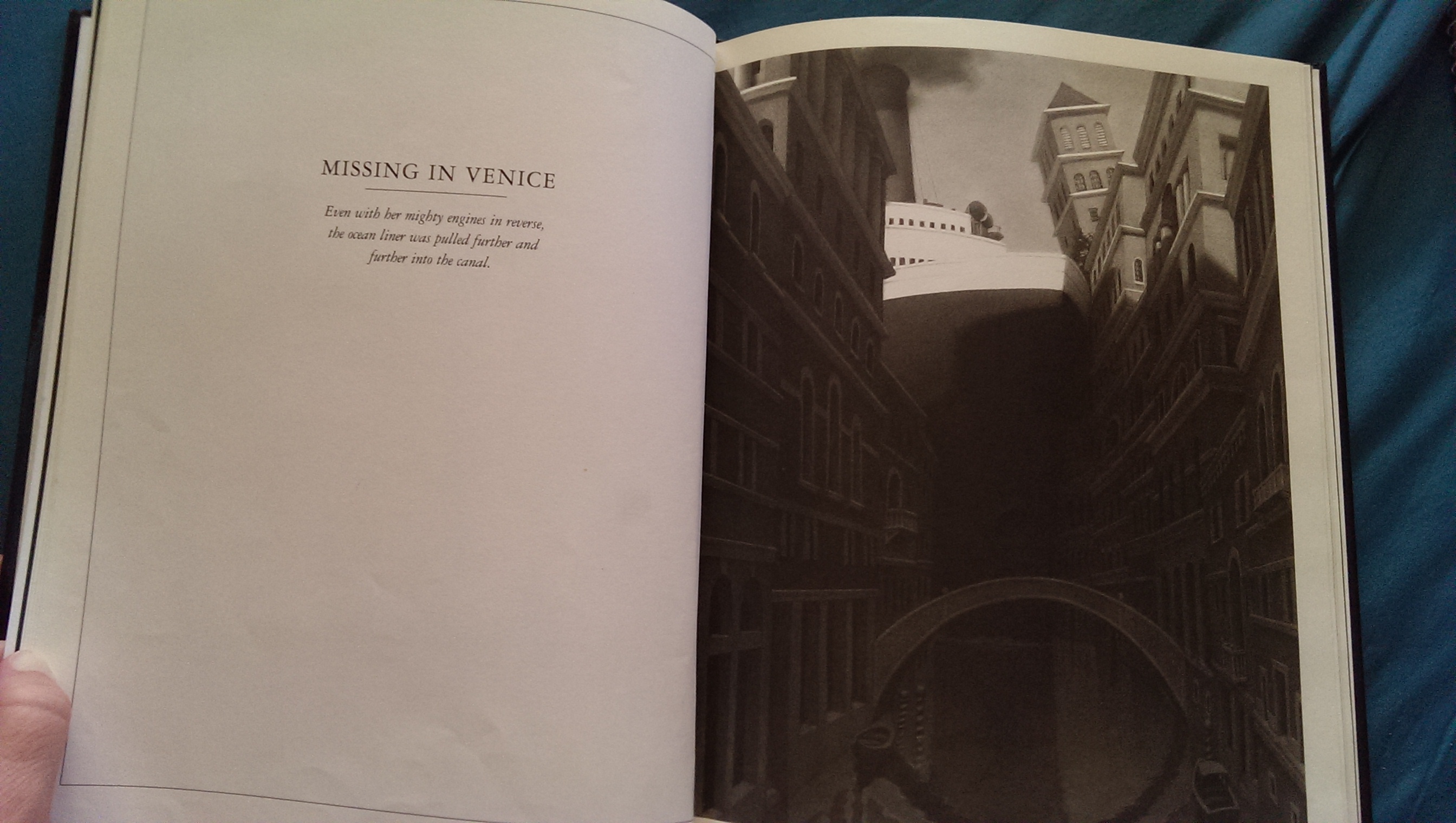
Harris Burdick isn’t exactly a mystery story, not even really a story exactly, but it is mysterious.  Most of the book is pictures, and that’s kind of the point.  The premise of the book is that a mysterious stranger known only as Harris Burdick approached a publisher about some stories that he had written and illustrated.  As examples of his work, he gave the publisher a collection of illustrations he had done for each of his stories with accompanying captions.  The publisher loved the illustrations, but Harris Burdick didn’t keep his appointment to bring in the complete stories the next day.  When the publisher tried to contact him about the stories, he was never able to find Harris Burdick and never heard from him again.  However, the publisher continued to be intrigued by the pictures and wondered what the stories were like, so his children and their friends wrote their own stories about them.  The pictures are therefore presented as a collection, and readers are invited to imagine the stories that they are part of.

HarrisBurdickAnotherPlace

I remember one of my teachers using this book as part of a writing exercise, having us each choose a picture and write the accompanying story as we imagined it.  Over the years, I’ve changed my mind about which picture is my favorite.

HarrisBurdickLibrary

I thought for awhile that “The House on Maple Street” could have inspired the author himself in writing Zathura, the sequel to his other book, Jumanji, although there is apparently no direct link between the two.

HarrisBurdickHouse

The book is currently available online through Internet Archive.  There is also a collection of stories called The Chronicles of Harris Burdick in which well-known authors present their own versions of each of the stories.

HarrisBurdickVenice

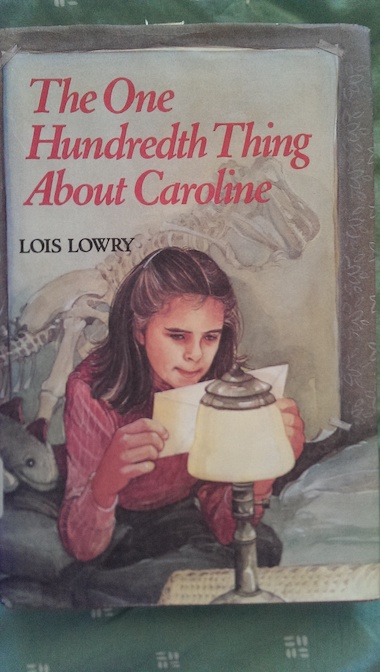
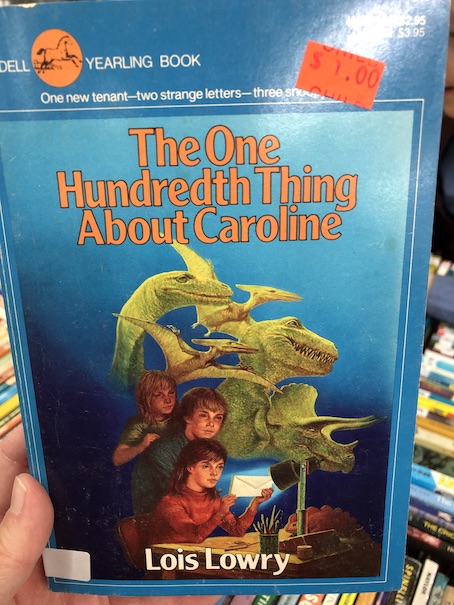
The One Hundredth Thing About Caroline

The One Hundredth Thing About Caroline

The One Hundredth Thing About Caroline by Lois Lowry, 1983.

Eleven-year-old Caroline Tate knows that she wants to be a paleontologist when she grows up, but she is also fascinated with her friend Stacy’s dream of becoming a great investigative reporter. For fun, the two girls begin investigating the people who live in their respective apartment buildings.

Caroline’s investigation focuses on the mysterious Frederick Fiske, who lives on the fifth floor of her building. In a wastebasket, she finds a letter written to him by a man she’s never heard of telling him to “eliminate the kids.” Also in the wastebasket, there is an overdue notice for Fiske from the library, and the book is about poisons. From this evidence, Caroline comes to believe that the strange Mr. Fiske is planning to murder some children.

The situation becomes worse when Mr. Fiske begins dating her divorced mother, and Caroline fears that the children Mr. Fiske is planning to murder are her and her brother, J.P.. Can Caroline, J.P., and Stacy prove that Mr. Fiske is a cold-blooded murderer before his relationship with the Caroline’s mother can go any further and before he succeeds in poisoning them?

The book is available to borrow and read for free online through Internet Archive.

My Reaction and Spoilers:

It’s a bit of a spoiler, but this is one of those stories where the mystery is largely based on a series of misunderstandings. The book is a comedy mystery.  Mr. Fiske isn’t really a murderer, although he has done some things which make the children suspicious.  It’s a humorous story, and the kids’ antics as they try to further their investigation and collect “evidence” against Mr. Fiske are hilarious.  Along the way, the kids end up helping Mr. Fiske with a problem he’s been having, and the kids realize that they’ve made a mistake about him and his intentions.  Whether Mr. Fiske learns of their suspicions about him or not is left to the imagination, although something at the very end of the story may bring everything out into the open.

The title of the book comes from a joke between Caroline and her mother.  Caroline’s mother is always talking about the things she loves about Caroline, giving them different numbers.

The Mystery on October Road

OctoberRoadThe Mystery on October Road by Alison Cragin Herzig and Jane Lawrence Mali, 1991.

A strange man has moved next door to Casey.  He always wears a bandana tied across the lower part of his face, like a bandit.  His pets are the strangest dogs Casey has ever seen, huge Irish Wolfhounds.  He’s started fixing up his new house, but for some reason, he only likes to work at night.

One day Casey and her friend Cats (really, they’re both named Catherine, but they each have nicknames) go to take the man some bread that Casey’s mother baked, and they’re frightened away by one of the dogs.  Casey goes back to get the bread they left behind, and the man tells her to go away and leave him alone.

Casey and her friends (Cats and Benny, a boy Cats likes) are curious about this strange man.  They even wonder if he could be some kind of gangster, hiding out.  At her friends’ urging, they sneak into his house one day to look around.  When the man comes back unexpectedly, her friends get away in time, but Casey falls and hurts her ankle.  The man finds her in his house, and she learns the truth about him.

The man isn’t a bad guy, and Casey even becomes a friend for him.  The story ends on Halloween, when the man creates a special Halloween display for Casey of beautifully carved pumpkins.  The part that always fascinated me was the way he carved them, by peeling the skin off the pumpkin and only leaving it in places where he wanted dark lines.

Part of the story is about how appearances can be deceptive.  The stranger is actually a good person, but he is physically disfigured, which is why he doesn’t like people to see him.  For part of the story, Cats isn’t really a very good friend for Casey, neglecting her feelings and the feelings of the mysterious stranger in order to impress Benny.  But later, when she realizes that Casey was right about the stranger and that she was really hurt in their little escapade, she shows that she can be a better friend, too.

The book is currently available online through Internet Archive.