Dancing with the Indians by Angela Shelf Medearis, illustrated by Samuel Byrd, 1991.
I love books with historical background, and this is a fascinating picture book that is based on the history of the author’s family. Like the author’s earlier book, Picking Peas for a Penny, it is told in rhyme, from the point of view of the author’s mother as a child in Oklahoma during the 1930s.
The girl and her brother are going with their parents to visit the Seminole American Indians. As they travel in their wagon, the parents explain to the children the history of their family. Many years before, the girl’s grandfather (the author’s great-grandfather) escaped from slavery and ran away to Oklahoma, where he was accepted by the Seminole tribe. Ever since, his descendants have continued to visit the tribe and join in Seminole celebrations and ceremonies as part of their extended family.
The night is an exciting celebration with dancing, drumming, and songs and stories of past triumphs.
They all dance and celebrate through the entire night, until morning. As the family returns home to tend to their farm, the father promises them that they’ll return to dance with the Indians again.
I liked this book because it explains an aspect of American history that I don’t remember being discussed much when I was in school. In fact, I think that the first time I saw anything that explained that escaping slaves sometimes headed west instead of north before the Civil War was in a Disney Adventures magazine, where they were talking about cowboy, specifically mentioning black cowboys. However, another option was for escaped slaves to join up with Native American tribes. The Seminole tribe of Florida and Oklahoma was one group that was known to accept escaped slaves and adopt them into the tribe, starting in the early 1700s continuing into the 1850s. Some of the escaped slaves married into the tribe. The African Americans who joined the Seminoles and their descendants came to be called Black Seminoles. Parts of the two cultures intermingled. Black Seminoles adopted Seminole traditions, and they also introduced Seminoles to aspects of their traditions. The relationship has had complications as well, and even in modern times, there are debates about how much Black Seminoles count as part of the tribe and how much they should be entitled to certain benefits
Colonial American Holidays and Entertainment by Karen Helene Lizon, 1993.
This book explains how people living in Colonial America would entertain themselves and celebrate holidays. Both entertainment and holidays varied between time periods and geographical areas.
In the early days of European colonies in North America, life was hard. People were occupied with daily survival and the establishment of their communities. As their communities expanded and became more settled, they were gradually able to have more leisure time. The book begins with a general history of the American colonies, briefly explaining the range of countries the early colonists came from, the effect their arrival had on Native Americans, and the role that indentured servants played in society and the adoption of slavery as a means of obtaining workers.
I was glad that they brought up the point about indentured servitude and slavery because I remember discussing it in my college history courses. Indentured servants were people who would agree to work for someone for a period of time in return for having that person pay for their passage to the colonies. There was a benefit for both sides in indentured servitude. For the indentured servants, they used their labor as a means to pay for transportation to the colonies that they could not have afforded by themselves, and once they had worked for the required period, they would be free to establish themselves independently in the colonies. For those who paid for the indentured servants, they would have guaranteed workers for the period of the indenture. However, plantation owners and other employers soon realized that they were not finding as many indentured servants as they wanted, and they didn’t like losing their labor force when their terms of indenture ended the workers left their employ. Therefore, they began to turn to slavery as a means of gaining a steady stream of workers who could not say no to them, no matter what the working conditions were like, and could never leave. Slavery wasn’t so much about race in the beginning as economics and employers who wanted cheap, permanent labor and didn’t care how they got it or what it would mean to the people they bought. But, I have other books that say more about what that led to. This book is mostly about lighter subjects, but it does acknowledge the serious aspects of American history and also makes the point that these completely unwilling immigrants also became a part of American society and, like other groups who came to America willingly, also brought traditions and folklore of their own that would gradually become part of American society, entertainment, and celebrations.
During the Colonial period, celebrations and entertainment varied throughout the regions of the American colonies, depending on the mixture of colonists living there and the holidays and traditions they brought with them from their homelands. Some of their holidays were ones that we still celebrate today, while others have fallen out of favor.
The book is divided into chapters based on different aspects of entertainment, and I’ve given a brief description of each, although all of these sections have more detail than I’ve provided. I particularly recommend reading the book if you would like more information about Native American entertainment or the lives of slaves because there is more information about these topics than I’ve described.
The chapters are:
Winter and Spring Holidays
Christmas seems like one of the most obvious holidays for colonists to celebrate, but it wasn’t so straight-forward. First, not all of the colonists were Christian (there were some Jewish people in parts of the colonies, and they celebrated Hanukkah in the winter), and even among those who were Christian, not all actually celebrated Christmas. The Puritans, who wanted to separate themselves as much as possible from traditions which they thought were not part of pure Christianity, did not celebrate Christmas. In fact, they didn’t celebrate many holidays or special days at all. Apart from the Sabbath, they only had a Day of Humiliation and Fasting and a Day of Thanksgiving and Praise, and those were not regularly scheduled events to be held on any specific date; they were only declared when it seemed that circumstances called for them. A Day of Humiliation and Fasting would happen at a time when things were going badly and the community was suffering, and the Puritans would use that day for prayer, reflection on their sins, and repentance. A Day of Thanksgiving and Praise would happen when the community was prosperous and felt blessed, and it was a time of prayer and feasting.
Also, among the Christians who did celebrate Christmas, not all of them celebrated it on the same day, and different groups had different customs for Christmas, depending on where they were originally from. People from Sweden celebrated St. Lucia Day on December 13th, and people from the Netherlands celebrated Sinterklaas Eve and Day on December 5th and 6th. It was also common for Christmas celebrations to continue through the Twelfth Night from Christmas itself, January 6th, also call Epiphany (the day that the Wise Men visited Jesus).
Easter is a common Spring holiday in modern times, but in Colonial times, it wasn’t so widely or elaborately celebrated. Colonial children were not told stories about an “Easter Bunny” delivering eggs or candy, although colonists from the Netherlands did decorate eggs with natural dyes and scratched designs into the shells.
A spring holiday that many of the colonists celebrated (but not the Puritans) but few people celebrate in modern America was May Day. On May 1st, people would gather flowers and dance around a Maypole.
Summer and Fall Holidays
The Fourth of July is the essential summer holiday of modern America, but it didn’t exist until the signing of the Declaration of Independence in 1776.
Many people’s lives centered around agriculture in colonial times, so fall was harvest time for them. Some colonists (although, not all, and definitely not the Puritans) also celebrated Halloween. The holiday was particularly celebrated in communities where there were people of Irish descent. (This book doesn’t say so, but at this time, it was particularly a Catholic holiday, the eve before All Saints’ Day on November 1st, although some other Christians celebrated it, too. Some Protestant groups, especially the Puritans, shunned the holiday as being too Catholic. I covered the general history of Halloween in more detail on my site of Halloween Ideas, including how Halloween became a secular American holiday.)
In some areas, colonists celebrated an anti-Catholic holiday called Pope’s Day on the 5th of November, where they would burn effigies of the pope. This was an older holiday than the English Guy Fawkes Day, celebrated on the same day, and that holiday was also celebrated in the parts of the colonies with English influence.
Of course, both colonists and Native Americans had harvest celebrations in the fall, including the periodic Thanksgiving feasts that led to our modern Thanksgiving holiday.
Sports and Recreation
Much of the lives of the early colonists focused on basic survival and the establishment of their new communities. (The book explains some of the ways Native Americans helped the early colonists to survive and adapt to their new environment and to unfamiliar foods.) There was always work to be done, and even young children had to help with daily chores. Still, they found ways to enjoy themselves. Hunting expeditions were a kind of adventure, and children were often assigned the fun chore of picking berries.
Then they had leisure time, they would enjoy games like shovelboard (like shuffleboard but played on long tables), ninepins or bowling (done at first outside on the village green), and billiards (some of the more prosperous families had their own billiard tables). In the 17th century, ninepins was the primary form of bowling with pins instead of our modern ten-pin games. Ninepins, also called Skittle, was the game that Rip Van Winkle played in the story set during this time by Washington Irving. When they talked about just “bowling”, they didn’t use pins at all, instead rolling a ball toward a designated mark on the ground. Boys played stick-and-ball types of games, like stool ball. Even Colonial women enjoyed a game of stool ball. Other games and sports Colonial people enjoyed include quoits (a ring toss game), tennis, battledores, swimming, canoe races, foot races, wrestling, and horse races. Wealthy families even engaged in fencing and (believe it or not) jousting.
During the winter, children built snow forts and had snowball fights and went sledding. Both adults and children went ice skating.
Games and Toys
Many Colonial children’s toys were homemade. It was common for boys to whittle wooden toys for themselves such as whistles and windmills. Boys also had toy guns and bows and arrows. Colonial children liked to roll hoops, either homemade wooden ones or metal hoops from an old barrel. They rolled the hoops upright along the ground using a stick to keep them going, and the object was to go as fast as possible without loosing control of the hoop or having it fall. (They did not use hoops as hula hoops.) Native Americans also played with hoops, and they liked to make it a challenge to throw a spear through a moving hoop. In modern times, jump rope is often considered a girl’s game, but in Colonial times, it was more popular with boys, and they had their own jump rope rhymes. Colonial children also played with spinning tops, marbles (Native Americans had their own traditional marble games as well), jackstones (a precursor to modern Jacks), kites, toy boats, balls, and swings. Girls had dolls (usually homemade and sometimes corn husk dolls at harvest time and paper dolls they made themselves), and some of the more fortunate girls had doll cradles and dollhouses with furniture. Many homemade toys were actually very durable and were passed on through families for generations.
Children also played many games that are still popular on modern playgrounds, including various forms of tag, counting-out rhymes (like the kind modern children use to choose who is going to be “it” in a game), hide and seek, blindman’s buff, leapfrog, cat’s cradle, and hopscotch (which they called “scotch hoppers”). Sometimes, they played board games, like Checkers, Chess, Backgammon, and Nine Men’s Morris.
People throughout the colonies played various types of dice, domino, and card games, some of which were gambling games. Gambling rules and taboos differed throughout the colonies, but in some areas, even children were allowed to gamble.
Social Amusements
A primary form of entertainment in Colonial times was visiting friends and neighbors, and they developed a form of social etiquette around visiting. Some people had specific days when they were expected at friends’ homes, and people often left calling cards to show that they had visited. (Since people couldn’t phone someone to say that they were coming to visit, they either had to prearrange the visit ahead of time to ensure that they were expected or leave a calling card if the person they were visiting happened to not be home, so they would know that a friend stopped by and wanted to talk to them.) Women who lived in towns held tea parties, and pioneer families had picnics that included fishing and berry-picking.
There were seasonal fairs in spring and fall with entertainment like juggling, puppet shows, tightrope walking, fortune-telling, music, exotic animal shows, and various types of contests. The fairs were also part business and involved trading and selling various types of products.
Colonists’ social lives also included political and religious community meetings. Towns would hold meetings to discuss town business and issues of local concern. Election days for public offices often had an air of public celebration as people watched public speeches and debates and booths sold good things to eat to the spectators. Citizens were welcome to attend criminal court trials and witness public punishments designed to humiliate offenders. Communities held market days when farmers, businessmen, and even Native Americans could gather to buy, sell, and trade products.
Church attendance and activities varied by denomination and geographical location. In some areas, church attendance was mandatory, and people would not engage in any other business or activity on Sunday. In areas where neighbors didn’t live close to each other, church was one of their main opportunities to see each other, and it was common for families to meet and share meals after church or for young men to visit with girls they liked.
Taverns, inns, and coffee houses also became important community meeting places. They could be uses as places for community meetings, political discussions, arranging business deals, distributing news and mail, and (as a later chapter explains) sometimes theatrical performances.
Entertainment and Pastimes
Because Colonial life was often hard and full of work, learning how to entertain yourself at home and keep yourself amused while performing chores were important. Work and entertainment often went hand-in-hand, and social occasions were often accompanied by chores and activities to keep the hands busy. Children started learning useful skills early in life. By the age of five years old, girls were able to sew. They also learned knitting, weaving, and embroidery, showing off the range and variety of stitches they knew in hand-sewn samplers. (Originally, samplers were meant to be exactly that – samples of the variety of sewing stitches a girl knew how to do. They were meant to be a demonstration of learning and accomplishment. They were very different from modern samplers that only contain one stitch – cross stitch.) Girls as well as boys knew how to whittle wood, and it was common for children to trade things they had made themselves for other things they wanted. Families had gardens where they grew vegetables, herbs, and flowers that the family could enjoy, and some women developed side businesses selling vegetable and flower seeds from the family garden.
While not everyone knew how to read, many people did, and they would read books like the Bible, works by Shakespeare, and books of poetry. Some people even wrote poetry for fun. Benjamin Franklin opened the first lending library in Philadelphia in 1731. Families often provided their own entertainment in the evening, telling stories and folktales around the fire.
Communities also had musical performances and public dances. Different colonies had different customs regarding dancing, with some communities making it taboo for men and women to dance together. Wealthy plantation owners held fancy formal balls. Music was a common part of children’s education because people who knew how to sing or play an instrument could help entertain their families at home. Some people simply used improvised instruments made out of various objects that they happened to have on hand, like a comb covered in paper, spoons, or tin kettles.
Early American Observances
Aside from the holidays described earlier, there were other special occasions that communities celebrated. Families gathered to celebrate births, baptisms, and weddings. Even funerals, while being a time of mourning, were also social gatherings. Sometimes, wealthy families would give little gifts to those who attended family funerals.
Some children had birthday parties. In the early days of the colonies, people were too occupied with the business of survival to bother much with remembering birthdays, but as communities became more settled and stable, birthdays were increasingly celebrated, especially among the more prosperous families. Sometimes, children were excused from chores on their birthday, and they were often given practical gifts.
Native American groups also had their own seasonal festivals and ceremonies of thanksgiving that varied among tribes. These seasonal festivals marked times for planting or harvesting crops or moving to seasonal quarters. They would also have ceremonies to mark special life events, like testing boys to see if they were ready to be men in their communities.
Working Bees
As I said, work and fun often went hand-in-hand in Colonial America, and sometimes, the colonists would hold special working parties called “bees.” When people got together in big groups to take care of major chores, the work got done faster, and they could have fun talking and visiting with each other while they did it. When they finished with whatever task they set out to do, they would finish the event with food, games, and other fun activities.
At harvest time, they would hold harvest parties to harvest food and prepare it for storage. At apple bees (the parties, not the restaurant), people would peel and core apples and make apple-based foods, like cider and applesauce. At husking bees, they would husk corn. There was also an element of flirting to husking bees because, if a man found an ear of red corn, he was allowed to kiss a woman sitting near him.
At other times of the year, they would hold different types of bees for specific tasks or crafts. “Raising days” were when people got together to build a new building, like a house, barn, or public building, like a schoolhouse. Women held quilting bees and knitting bees. Children today still compete in spelling bees, just like colonial children did. “Sparking bees” were kind of like colonial singles meetups. Single young people in the community would come to the bee to meet each other, and if they found someone who “sparked” their interest, they could begin a formal courtship with that person.
Games, Goodies, Gifts
The final chapter of the book has words for the counting-out rhyme “Intry, Mintry” and the rules for the tag game Fox and Geese and the spinning top game Chipstones. There are recipes for Maple Sugar-on-Snow, Furmenty, Speculaas (a Dutch Christmas cookie), and Raspberry Flummery (a sweet drink). There are also instructions for making a pomander ball.
The book is available to borrow and read for free online through Internet Archive.
Brother Eagle, Sister Sky: A Message from Chief Seattle with paintings by Susan Jeffers, 1991.
This is a picture book, but not one for very young children because of the serious subject matter. It’s a profound book with beautiful pictures, but before presenting it to children, adults should be sure that the children are old enough to understand the background of the book.
The book begins with some information about its background. It describes the variety of “Indian” (Native American) tribes that have lived in the Americas for thousands of years and how, after white settlers arrived from Europe, they were killed and pushed off their ancestral lands by the new arrivals. It’s historically true, but also dark subject matter, which is why it’s important for the children reading the book to be old enough to understand it. Most of the book is the text of a speech made by Chief Seattle (who lived c. 1786 to 1866) to the Commission of Indian Affairs for the Territory and other government employees when the US government wanted to buy land from his tribe. The historical details concerning this speech from the mid-1850s are complicated, and accounts of it might not be completely accurate, and there is a note in the back of the book that addresses that. I consider the spirit of this speech something worth preserving, so I won’t get too hung up on that right now. I just mention it for the sake of people interested in going deeper into the history.
Susan Jeffers particularly wants readers to consider the environmental message of the speech and how relevant the message is today for a society that has endangered itself by placing a higher priority on the acquisition of land, resources, and wealth than on preserving the land and environment that makes life itself possible. This book was written in the early 1990s, and having been a child at that time myself, I know that these themes were increasingly becoming topics in schools and in children’s entertainment during that time. I’d like to point out that I, and others who are younger than me, have heard similar messages about environmental concerns from an early age. This has given us different priorities from earlier generations who did not, although it’s also worth pointing out that many of us came to care more about the environment as children because of the influence of adults who already did.
Chief Seattle questioned the concept of buying land because of the absurdity of buying aspects of nature, like the sky or rain. Land and nature had sacred spiritual meaning for Chief Seattle’s people.
Chief Seattle’s speech was full of poetic imagery, as he explained how his people felt like they were part of the land and it was part of them. He said that they looked on animals like they were brothers.
The land also connected them to their ancestors and the memories of their people.
Chief Seattle questioned what would happen in the future, when the land was filled with people and all of the animals either killed or tamed, painting a bleak picture of a land deprived of life.
The speech ended with the thought that people didn’t “weave the web of life, we are merely a strand in it.” Chief Seattle called on the people wanting to buy the land to love it, care for it, and preserve it because “Whatever we do to the web, we do to ourselves.”
The environmental themes of the message are poignant for modern times because people have become increasingly aware of the consequences of environment pollution and careless use of natural resources.
This is the final book in the Indian in the Cupboard series. At the end of the previous book, Omri’s father learned the secret of Omri’s special cupboard and key, that it brings small plastic figures to life.
At the beginning of this book, Omri’s father suddenly announces to his family that he wants to take them on a camping trip. It seems like an impulsive decision because this isn’t something that the family usually does, and Omri figures that it must have something to do with the secret that the father and son now share concerning their small friends from the past.
After Omri’s father discovered his secret, the two of them had a serious talk, and Omri explained to him all about his past adventures and the very real consequences that they’ve had, both in the present and in the past. They need to consider carefully what they’re going to do because Little Bear has asked them for help with some trouble that his tribe in the past is having with the British. Knowing the history of the interactions between Europeans and Native Americans, both Omri and his father know that something serious is about to happen to Little Bear and his people, but how can they help? Omri explains to his father that they have the ability to go back into the past themselves, but in order to do that, they need to find something big enough to hold both of them, and someone else would have to turn the key for them to send them and bring them back.
Omri’s father later admits to him privately that he thought up the camping trip as a way for the two of them to disappear for a couple of days without anyone asking questions. Although he proposed the camping trip, he plans to arrange for him and Omri to have a private trip by themselves, discouraging the others from going along. Omri’s father also thinks that he’s figured out what they can use to send themselves back in time – the family car. It’s big enough to hold both of them, it locks with a key, and there’s even an LB in the license plate number, which they take as a hopeful sign. But then, Omri realizes that there’s a problem with that scheme. Even though the car locks with a key, it’s not the kind of lock that an old-fashioned skeleton key could open. They need a key with a different shape, something flatter. They decide that they need the help of Jessica Charlotte, who made the last key. Fortunately, Omri has a way to talk to her because he has the plastic figure of Jessica Charlotte.
When Omri brings Jessica Charlotte back, he finds that she has attempted to drown herself in a river (an event hinted at in the last book) because of her guilt at accidentally causing her sister’s husband’s death. Omri brings back a WWII Matron who has helped them before to treat Jessica Charlotte. When Jessica Charlotte recovers, she thinks at first that she must have died and that Omri is part of her afterlife. Omri assures her that it’s not the case, that she’s still alive. She is still lamenting over having caused Matt’s death and ruined her sister and niece’s lives, but Omri explains to her that he’s Lottie’s grandson. Jessica Charlotte feels better, hearing that Lottie grew up, married, and had children, so her life wasn’t completely ruined. Omri can’t bring himself to explain how Lottie was killed in a bombing during WWII, but he asks for her help to create a new key. Aunt Jessie, as she asks to be called, agrees to help Omri, and he and his father give her their car key to duplicate.
However, when Aunt Jessie returns with the key, they realize that they’ve miscalculated. When a person comes from the past with anything they make or bring with them, it’s always small, like the miniature people themselves. Aunt Jessie’s key is a duplicate of the key they gave her, but it’s small, too small to use in the car. Omri and his father aren’t sure how to get around this problem, so they decide to go on the camping trip with Omri’s brother Gillon, just camping like normal, while they think it over.
It turns out that something magic happened to the car key while it was in the past with Aunt Jessie. When Omri’s father turns the key in the car, Omri suddenly finds himself in the past, but not the past he was hoping to visit. Because they brought some things that belonged to his Great-Grandfather Matt with them on the camping trip, Omri suddenly finds himself in India, during the time that Matt was living there. Omri is inside a puppet in a marketplace, and his great-grandfather buys him. Also, to Omri’s shock, Gillon is also inside a puppet that his grandfather has.
Their mother eventually rescues them by opening the car and turning the key. She was alarmed because it seemed like her husband and sons all passed out in the car. Omri and his father don’t have a real explanation for her, not wanting to explain that the car key is now magic. (She decides that there must have been an exhaust leak, and they were all overcome by fumes.) Gillon was knocked unconscious when his puppet was dropped on its head, and his mother takes him to the hospital, using her spare car key. (When Gillon recovers, he thinks it was just a weird dream he had because of the car fumes.) Meanwhile, Omri and his father talk about the situation, and Omri’s father reveals that, while the boys were taken to India, he ended up in Little Bear’s time because he was carrying some wampum belonging to Little Bear.
So, know they know that it’s possible for them to use their car key to go back in time, but if they try it a second time, who will turn the key for them to bring them back at the appropriate time? The only other person who can come with them on their “camping trip” who knows their secret and can be trusted to help them is Omri’s friend, Patrick. However, Patrick isn’t happy that he’s only there to help Omri and his father go back in time and that he won’t be going himself. He does agree to help them, but unfortunately, he has plans of his own while Omri and his father are occupied elsewhere.
The book is available to borrow and read for free online through Internet Archive (multiple copies).
My Reaction:
Although Omri’s father wonders at first whether it’s a good idea to try to help Little Bear because of the risk of changing the past and affecting the future, Omri has learned that it’s not quite as simple as that. During his previous adventures, he has felt an irresistible pull to use the cupboard and the key, even when he wasn’t always sure it was a good idea, and there are indications that Omri’s interactions with people in other time periods seem fated to happen. He did save Jessica Charlotte’s life when she tried to drown herself, and other things Omri has done seem to fit with wider events.
When Omri and his father are figuring out how to help Little Bear with his problems with the British in his time, they do some research about Little Bear’s time and talk about the ways that 18th century British people treated Native Americans. Knowing what Little Bear is likely to face, they feel like they have a responsibility to help him as best they can. When Little Bear explains in more detail what his people have been suffering at the hands of the British and other settlers, Omri feels guilty, knowing that he’s also British, while at the same time knowing that he was not responsible for things that happened before he was born. This is something that people still struggle with today, hearing about difficult periods of history and knowing that their ancestors (or at least other members of their society, if not literally their direct ancestors) played a role in making life difficult for others, setting up situations where real people suffered or were killed. The best Omri can do is to help Little Bear make the best possible decisions to ensure the survival of his people. Of course, being able to help with that much is part of the time traveling fantasy of this story. Real people can’t actually go back in time and intervene to influence others and change the course of history.
The books in this series aren’t for young children, and as the series progresses, they get more serious in subject matter. There is discussion of suicide, not just with Jessica Charlotte’s attempt to drown herself but when Little Bear explains that his first wife killed herself after being raped by white men. There is violence in the story when the Native American village is attacked and people are shot. Overall, the story is pretty straight-forward in the way in confronts the dark sides of history. Omri and his father advise Little Bear to take his clan to a place where they know that they will be relatively safe and among other Iroquois, but they know and admit to Little Bear that even that won’t solve all of their problems and that there will be other hardships in the future. It’s an imperfect solution to a massive problem, but Omri senses that it is best choice that they could make and that Little Bear and his family will live the safest possible life because of the decision they made, and their descendants will survive.
Omri and his father struggle with knowing that things are going to be hard for Little Bear’s people no matter what choices they make. There is no magical solution to everyone’s problems in the story, and the book doesn’t offer a firm moral or solution to Omri’s guilty feelings when he sees firsthand how badly Native Americans were treated (a form of “white guilt“, although the book doesn’t use that term). Overall, I would say that the book confronts the dark parts of history and human guilt on a very individual level. Omri and his father can’t solve the large issues completely because they can’t control them. They can’t control the past, and they can’t control other people, not even the people who come through the cupboard as miniature ones, like living toys. Everyone is an individual with their own choices to make, and every choice, even the wrong ones, changes the course of history.
After Omri saves Jessica Charlotte’s life, she realizes that what she thought was a dream before she stole her sister’s earrings was real, that she saw and spoke to Omri, and that he could have warned her about what would happen if she went through with her theft, how Matt would have died and how everyone’s lives would be changed for the worse. However, Omri did choose not to warn her because not everything was changed for the worse. After Lottie’s father died and her family lost their money, Lottie still grew up, fell in love, got married, and had a daughter. It’s true that she did die young in World War II, while her daughter was still an infant, and changing the theft of the earrings might have changed that in some way, but not without changing other things. Omri has discovered that changing things about the past, even seemingly small things, can change larger parts of history, and his psychic gift seems to guide him toward making only choices that help the flow of history instead of working against it. If he had prevented the theft of the earrings, his great-grandfather might have lived longer and so might Lottie, but if that happened, would Lottie have ever met the man she eventually married and had Omri’s mother? Omri’s father wouldn’t be happy without his wife and sons, and if Omri never existed, would some of the other things he did that impacted history have happened? Also, if Lottie hadn’t died in the bombing during WWII, would someone else have been where she happened to be and died in her place? The bomb that killed her would have fallen anyway because that was part of someone else’s choices, a person who never enters this story and whose decisions can’t be controlled. Time and history and the ripple effects caused by individual choices are complex. Omri has his psychic gift to guide him, and even his father, who admits that he never used to believe anything he couldn’t see for himself, comes to trust it.
People without this sort of magical gift have only themselves to rely on to make the best choices they can to make the world as good as possible, even in the face of others’ bad decisions. I think that a large part of the choices that Omri makes in the story and dealing with “white guilt” in real life come down to the combination of frustration and the acceptance of choices made by other people who can’t be controlled. Modern people might hate what happened in the past and feel badly if people related to them were part of it, but we don’t have the option to change things that have already happened. There comes a point where you have to accept the knowledge that you can’t control others, no matter how much you might want to make better choices on their behalf. The only person you can control is yourself.
I’m a white person, descended from colonial settlers in America, and I don’t actually see “white guilt” as a negative thing. I see it as a human thing. If you can feel real emotion at someone else’s plight, a wish that bad things didn’t really happen, or a feeling that what happened shouldn’t have happened and an honest desire to change even the unchangeable past for the better, it means that you’re a real, thinking, feeling human being with a sense of right and wrong, and there’s nothing bad about that at all. Feelings are just tools, to give us hints of what we need to do or how we need to behave in our lives. Feelings aren’t always completely accurate, but sometimes, they give us hints of things that need to be fixed or clues that whatever we did before didn’t really work, that we made the wrong choice or did the wrong thing. I think what upsets and confuses other white people about “white guilt” is the conflict between loving ancestors and wanting to be proud of them and admitting that some of them had a real dark side and did some pretty awful things. Some people have trouble dealing with that, thinking that it’s impossible to feel two things at once, loving someone and being angry with them for things that they’ve done, but it really is possible. Two things can be true at once, and you can have mixed feelings about many things.
Feelings are complex, as complex as people are, and I think it’s as possible for a person to both like and hate another person for the things they’ve done as it is to both like a sweater for the way it looks but not want to wear it because it’s itchy and uncomfortable. I think that’s about the best advice that I can actually offer to other white people trying to make sense of that feeling. Sure, that sweater looks pretty impressive. It has a nice color and a cheerful pattern, and you might think it would look impressive on you if you wore it, but honestly, it’s better if you just leave it on the mannequin. It’s overpriced, out of style, and won’t look at all impressive when it makes you constantly want to scratch all of the places where it itches. Let it go.
“God, grant me the serenity to accept the things I cannot change, courage to change the things I can, and wisdom to know the difference.”
The frustrating thing about feelings about the past and about other people’s lives is that we can’t fix those particular things. In real life, we can’t go back in time, and we can’t even “fix” other people in our own time because that’s something they have to do themselves, if they’re going to do it. You can suggest things to other people, but there’s always a point where they have to make the decisions themselves. But, the good news is that, if you can’t control other people, nobody can completely control you! The way I see it, the most useful thing about this “white guilt” is remembering that this is something we don’t want. Maybe there’s something charming about the rosy, nostalgic view of the past, but honestly, you wouldn’t be happy living there, and if you actually had to live with your ancestors, you’d probably discover that you wouldn’t see eye-to-eye on a lot of things and maybe wouldn’t even get along at all. So, why would you want to try to carry their old baggage with you into your life and spend your life and your precious time constantly trying to explain or excuse their bad choices? You’ve got your own to life.
Give credit where credit is due for both the good and the bad things, and let our ancestors’ records speak for themselves. You won’t accomplish anything for twisting your feelings into knots for trying to protect the feelings of the dead and justify their actions. They don’t even feel anything anymore. They are dead. Let them rest. We don’t want to add to bad things that have been done in the past and to keep having things in our lives to feel guilty about, and that’s okay because there are new choices to be made every single day. Put your focus there. You have a present to live and a future to plan. Knowing about the past is interesting and informative, but the past isn’t where we really live. Admire it like a nice sweater on a mannequin, take note of the price tag, and move on. We don’t have to make the same old choices that have made people, including ourselves, unhappy just because that’s the way things have been before or because we feel like we have something to prove about our ancestors. They had their chance to make the choices in their time, for good or bad (and frequently, some of each, but you can’t help that), and now, it’s our turn to make the choices because this is our time.
Speaking of bad decisions, Patrick almost gets Boone and Ruby killed because of his recklessness when he brings them back while Omri and his father were with Little Bear, which he did just because he was bored and felt left out of their magical adventure, which wasn’t really pleasant and fun for them anyway. Boone and Ruby both make it clear how they feel about that, and Omri also makes it clear that this is the end of the magic for him and Patrick. Boone and Little Bear have their own lives to live, and Omri’s gift tells him that it’s time to let them get on with living their lives without interference. Omri still has the cupboard and the key, but he no longer feels the pull he felt before to use them because he has played his part in history and in the lives of his little friends, and there is nothing more he needs to do. He doesn’t feel the need to lock these things away as he did before because he already knows that he will never feel the urge to use them again. When something’s over and the moment has passed, you just know.
Before the end of the story, Omri’s mother admits to him that she knows all about the little figures and that the cupboard brought them to life, although she never actually saw any of them herself. She has also inherited the family gift and is aware of what the cupboard does, even though she has not used it herself. All along, she’s been pretending that she didn’t know what was going on, although she really did. She’s a little sorry that she didn’t see the little people herself, but she knew that not interfering was the right thing to do. She thinks that letting the magic go and not using the cupboard again are the right decisions, and she doesn’t want Omri or his father to tell Omri’s bothers about the magic because, if they do, it will never end, and it’s really time for it to all end. This really is the final book in the series.
Omri’s family has moved to a new house, but Omri doesn’t like it. The new house is bigger than the old one, but the neighborhood around it is a bit run-down and shabby. Most of the kids in the area go to the state school (public school in the US), but Omri attends a private school, and his school uniform makes him stand out from the other kids. The other kids in the neighborhood view him as an outsider and like to push him around, especially the group of bigger boys who like to hang out near the arcade. Omri is a little afraid of the local bullies, but he doesn’t like to show it. Instead, he remembers how brave his small American Indian friend, the one who came to life from his plastic figurine, was with him, even though Omri was many times bigger than he was. Still, Little Bear was a real warrior, who knew how to fight. Ormi wishes that he could fight like an American Indian or maybe a cowboy, like Boone. If he could do that, he wouldn’t have any reason to fear the local bullies.
Patrick, Omri’s best friend, is also living in a new house in the country and is now going to a different school because his parents have divorced. (The story indicates that Patrick’s father was abusive, hitting his wife and children.) When the two of them meet again, Patrick denies remembering their plastic figures that came to life. That bothers Omri, although he thinks that Patrick really does remember but doesn’t want to admit it because talking about things like that would make him seem weird when he’s trying to fit in with his new home.
Then, Omri wins a writing contest for a story that he wrote about his plastic Indian. He’s thrilled, although he also feels a little guilty because the contest was supposed to be for fiction, and his magical adventures with Little Bear were real. Although, his story is his own work, even if he didn’t exactly make up Little Bear.
Ever since his adventures with Little Bear the previous year, Omri has asked his mother to keep the key to the cupboard “safe” for him. Really, he has wanted to remove the temptation to bring Little Bear to life again. After their previous adventures, they had all decided that it would be better for Little Bear and Boone to remain in their own lives in the past. Yet, having won this contest, Omri has the sudden desire to see Little Bear again and tell him all about it. His mother usually wears the key as a pendant around her neck, and one day, when she takes it off, Omri decides that he’s going to use it.
However, when he brings Little Bear and his wife, Bright Stars, back to life from plastic, he finds that time has moved forward for Little Bear, just has it has for him. Little Bear is badly injured, having been shot by a soldier. Bright Stars begs Omri for help. Since Omri once brought a WWI medic to life to help with a wound before, he tries it again. Unfortunately, this time, all Omri gets is an empty pile of the medic’s clothes. Shocked, Omri realizes that this is a sign that the medic was killed in action. Time moved forward for him since their last encounter, and the medic, Tommy, who was a real person in the past, was killed during the war.
Still desperate to help Little Bear, Omri rushes to see Patrick at his aunt’s house and explains the situation. At first Patrick tries to pretend that the figures coming to life was just their imaginations, but when Omri impresses on him that Little Bear is in trouble and needs help, Patrick takes him seriously and comes up with a solution. One of his cousins got a set of plastic figures for her birthday, and they all have different professions. Among them, there is a nurse and two doctors. If they borrow one of those figures, they will have medical help. The cousin finds them messing with her toys and fights with them, so they have to rush off in a hurry, taking the nurse figure instead of one of the doctors, but she’s better than nothing.
After the nurse, known only as Matron, gets over the shock of finding herself very small, Omri explains Little Bear’s condition to her. She’s reluctant to try to operate on him herself because she’s not a surgeon, but since there is no one else to help, she does so anyway. Omri gives her Tommy’s medical bag so she’ll have the implements she needs. She manages to help Little Bear, and Little Bear recovers.
Although Patrick says that his mother got rid of most of his plastic figures when he stopped playing with them, he still has the cowboy, Boone, because he was special. Patrick uses the cupboard to bring him back to life, and they explain to him about Little Bear. When Little Bear is well enough to talk, he explains that his village was attacked by French soldiers, and many of his people are dead. Boone spots Omri’s collection of plastic figures, with soldiers from different periods and suggests sending them back with Little Bear to fight the French. Patrick is all for it, but Omri points out that there are problems with that. All of those figures aren’t just toy soldiers; they represent real people from history. They all come from different periods of history, and they all have their own goals and personalities. They would all be shocked at finding themselves in an unexpected place and a completely different time period than their own, and there’s no telling how these armed people might react. What would a Medieval knight, who might be on his way to the Crusades, understand about American Indians from the 18th century, and why would he be willing to fight on their behalf? Which side would a member of the French Legion pick? They wouldn’t be able to even speak to all of Omri soldiers because they come from different countries and speak different languages, and even if they choose modern British soldiers using modern weaponry, what would that mean for history? They don’t belong in the 18th century, and because they’re real people, they would be killing other real people and might get killed themselves.
Patrick thinks that Omri thinks too much, but Ormi knows that Patrick is too impulsive. Patrick does impulsively bring some modern soldiers to life, and they almost shoot everyone because they’re in the middle of a battle. Patrick quickly turns them back to toys and apologizes. Then Omri has another idea: they can’t explain to people from other time periods that Little Bear needs their help to fight in the French and Indian Wars, but they could appeal to other American Indians. Finding allies for Little Bear is fine, as long as they’re the kind of allies who could reasonably appear in Little Bear’s time and understand and be willing to aid him.
There are complications in this plan when Little Bear says that he wants modern weapons his people can use and a modern soldier to teach them how to use them. Omri has misgivings about this but gives in to Little Bear’s request. While Little Bear goes back to his time with his new allies and weapons, the boys worry about what’s happening in the battle and Bright Stars, who is still in their care, gives birth to Little Bear’s son. Boone suggests to Omri that, if he’s concerned about how the battle is going, there might be a way to go back in time and see it.
Ormi has an old wooden chest in his room, and Boone suggests that he could see if the key fits the box and use it to send himself back to Little Bear’s time. Not only does Omri help Little Bear and the others, but this odd army also helps Omri when the local bullies try to rob his house in the middle of the night.
The book is available to borrow and read for free online through Internet Archive (multiple copies).
My Reaction:
I read the first book in this series when I was in elementary school as part of a class assignment. There are parts of this series I like, but parts I don’t.
I like the way Omri thinks about the little people from his cupboard. He remembers that all of the plastic figures are only plastic when they’re toys, but as soon as they come to life, they are real people, pulled out of their own lives and into his, and they have a responsibility to them. He feels terrible when he realizes that his old friend, the WWI medic called Tommy, died during the war because he wasn’t just a toy, he was a real person who helped them when they needed him, and Omri realizes that he probably died not long after they returned him to his own time. Patrick is less thoughtful, but he does wonder if their interaction with him played a part in his death, and Omri thinks it probably didn’t because his full-sized body must have remained in the past and would have died anyway. When they last talked to him, Tommy said that he’d heard the sounds of an attack, and that could have been the attack that killed him. When Omri sends Little Bear back with his new allies and weapons, Omri feels guilty because he realizes that he’s basically playing God, sending real people to kill other real people in past, but he goes through with it because he feels committed to it at that point, having assembled and armed this fighting force and promised it to Little Bear.
I didn’t like some of the stereotypical stuff about cowboys and American Indians. This is one of those books where they try to write characters speaking with an accent, and that always feels awkward to read, and I’m not sure that everything Omri says about American Indians is true. At first, Omri says that American Indians gave birth alone, so he’s not too worried about Bright Stars. When I read that, I wasn’t sure if any American Indian tribes had that as a custom, so I looked it up. Apparently, there is some basis for that happening, although sometimes women would also help each other, and since most of the white people who said that Native Americans gave birth alone were men and wouldn’t have been involved in assisting the birth anyway, they may not have been fully aware of who else would have been involved. When Bright Stars starts giving birth, Omri remembers hearing that, when women give birth for the first time, it can take a long time for the baby to arrive, and he wonders if that’s true of American Indians as well as white women. That question made me cringe a little. As an adult white woman, I would assume it probably is because there many aspects of the human condition that are just universal, but again, Omri’s a boy who doesn’t have any relevant life experience experience, and even I can’t swear what Native American births are like, so I suppose I can’t fault him for wondering.
This is the book that establishes that the key used with the cupboard is magic by itself. It seems to fit in any lock and can send people back in time. When they’re sent back from the present day, Omri observes that the person sent to the past is cold and motionless in the chest, which scares him. Also, the boys observe that when they go to the past, they seem to be part of the scenery, part of the paintings on the side of Little Bear’s teepee, unable to speech or move by themselves, just watching what happens. It’s odd, but in stories where there’s magic, there are still rules, and as the boys experiment more with the key, part of the rules start becoming more clear to the readers.
The Indian in the Cupboard by Lynne Reid Banks, 1980.
Omri thinks that he’s starting to get tired of collecting and playing with plastic figures when his friend Patrick gives him a plastic American Indian figure that he doesn’t want anymore for his birthday. At first, Omri doesn’t think much of the Indian figure because it’s just a used plastic figure that doesn’t match any other figure sets he has, so he’s not sure how he can use it in his games. Then, his brother Gillon gives Omri a wooden cupboard that he rescued from an alley. Omri likes the cupboard, and his mother lets him have an old key that happens to fit the cupboard so he can lock it. His mother says that the key used to belong to her grandmother’s jewelry box, which fell apart years ago. As Omri tries to decide what he wants to keep in the cupboard, his mother suggests putting his American Indian figure in it because she found it in the pocket of his other pants. Omri puts the toy in the cupboard and locks it. Later, he hears sounds coming from the cupboard, and when he opens it, he discovers that his toy Indian figure has come to life!
Omri is startled to see that the Indian has come to life, and the tiny Indian is afraid of him. The Indian pricks him with his tiny knife and threatens to hurt him if he comes closer. The Indian insists that he’s not small, it’s Omri who is big. When Omri’s mother comes into the room, Omri quickly shuts and locks the cupboard so his mother won’t see that his toy has come to life. Later, when he opens the cupboard again, the Indian is just a plastic toy again. Omri is sure that he didn’t imagine the figure coming to life, but he’s not sure why that happened or why it’s just a toy again now.
Then, that night, after Omri locks the Indian in the cupboard again, he comes to life once more. This time, when Omri opens the cupboard and talks to the Indian, he asks the Indian what happened. The Indian replies that nothing happened, he just went to sleep. Then, he asks Omri for food and a blanket. Omri asks the Indian more about himself and learns that the Indian is named Little Bear and is the son of an Iroquois chief. He offers Little Bear a plastic teepee from his collection of toys to sleep in, but Little Bear recognizes that it’s not a real teepee and besides, Iroquois sleep in longhouses, not teepees. Omri can’t provide a longhouse, so he makes a better-looking teepee out of sticks and a piece of felt, so it’s at least not plastic. Little Bear accepts it.
Omri begins to realize that either his new cupboard or the key that he’s been using with it or both are magical and can bring toy figures to life. He begins doing experiments to see how it works and what else he can make real. The plastic teepee becomes a real one after being locked in the cupboard, but a metal toy car doesn’t change at all, making Omri realize that, for some reason, the cupboard only works with plastic toys.
Omri tells Little Bear that he’s in England now, not America, and Omri discovers that Little Bear approves of the English because the Iroquois fought with the English against the French and the Algonquins. Omri asks Little Bear if he also fought, and Little Bear brags about what a fighter he is and how many scalps he’s taken, but adds that they were French and not English. It sounds kind of stereotypical, but the author is referring to real battles that took place during the 17th century and 18th century around the Great Lakes area, during the French and Iroquois Wars and the French and Indian War, giving Little Bear a rough time period and location. This is meaningful not only for historical reasons, but also because it indicates that Little Bear isn’t just a toy with no personality or history. As far as Little Bear is concerned, he’s a real person with a past and memories and a life beyond being Omri’s toy. In fact, he doesn’t really know anything about being a toy sometimes in Omri’s time period. Omri also realizes that Little Bear’s history makes him a real person, somehow pulled more than 200 years into the future in miniature form, instead of just a toy brought to life.
Still, Omri delights in having adventures with Little Bear, introducing him to things Little Bear otherwise wouldn’t have. When Little Bear says that he’s never hidden a horse before because the Iroquois don’t have them in his time, Omri brings one of his plastic horses to life so Little Bear can ride. When Little Bear gets hurt, Omri brings a WWI medic from his set of toy soldiers to life so he can treat the wound. The medic, Tommy Atkins, is alarmed when he sees Omri and confused when he’s asked to treat an American Indian, but he does so anyway, deciding that it’s all just a dream. Omri lets him think so and then puts him back in the cupboard to send him home.
Omri does some research about Iroquois to learn more about Little Bear and his history. Patrick wonders about Omri’s obsession with the little toy figure he gave him, but Omri is reluctant to tell him. Then, when Omri buys another Indian figure, an old Indian chief, and brings it to life, the poor old man goes into shock at the site of Omri and dies. Omri feels terrible about causing the old man’s death, coming to recognize that the old man was also a real person, sometime and somewhere, and he wouldn’t have died if Omri hadn’t put him in the cupboard and brought him into his time as a miniature person. Then, Patrick gives Omri a plastic cowboy figure. Omri doesn’t want it because he doesn’t want the cowboy to come to life and hurt or kill Little Bear. Patrick is impatient, saying that’s how the game of cowboys and Indians goes and that’s what people do with figurines of cowboys and Indians, have them fight. That’s when Omri realizes that he needs to explain to Patrick that it’s more than just a game and there are real people involved.
Patrick is stunned when Omri shows him Little Bear, and when Omri tells him about the dead chief, he comes to realize that this game is serious. In spite of that, Patrick asks Omri to let him bring just one figure to life. At first, Omri tries to prevent Patrick from bringing another figure to life because the situation is already complicated enough, but Patrick does so anyway when Omri leaves him alone in his room … and the figure that Patrick picks is the cowboy.
Having an American Indian and a cowboy both in Omri’s room, even in miniature form is just as much trouble as Omri feared it would be. The two of them pose a very real threat to each other, and Omri tries to do his best to help them get along with each other. To make things more complicated, Little Bear says that he wants a wife, and the boys take him to the store to pick out a female American Indian from the plastic figures. The school principal sees the figures, but fortunately, decides that he’s just unwell and hallucinating. Meanwhile, Omri has to impress on Patrick that their little people are actually people and not toys simply to be played with. Of course, there’s only one way to ensure that their new little friends will be able to safely continue their lives: send them home!
Personally, I would have ended the game and sent Little Bear home as soon as I realized that he could die, like the chief in the story, but the boys keep their miniature living people for much longer. In fact, this is the first book in a series, and the boys have further adventures with Little Bear, Boone the cowboy, and other figures/people.
This book was commonly used in schools when I was a kid, and it might still be. When I was a kid, my teacher didn’t go into detail about Little Bear’s time period or explain about the context of his life and the conflicts with the French and Algonquin that he described. Now, as an adult, I have more context for understanding what he’s talking about. I also appreciate the author of the book pointing out that different types of Native Americans lived in different types of homes in the past, something that Omri didn’t understand at first, and I liked that Omri started doing his own research to better understand the Iroquois. The book never gives an exact date to Boone the cowboy or Little Bear’s time periods, but by context, Boone has to be more than 100 years younger than Little Bear, from sometime in the late 19th century. I appreciate having some historical details added to a fantasy story about toys coming to life, but the book isn’t very specific, focusing more on the complications involved in keeping miniature people from the past alive and secret in Omri’s bedroom.
There is also a movie version of this book. The book is available to borrow and read for free online through Internet Archive.
The Mystery of Drear House by Virginia Hamilton, 1987.
This book is the continuation of The House of Dies Drear, and the final book in the short series.
The Smalls are now settled into the house that formerly belonged to the abolitionist Dies Drear, who used secret tunnels to help smuggle escaping slaves to freedom as part of the Underground Railroad. Thomas Small’s father is a college professor, who finds the history of the house endlessly fascinating, especially now that they know about the hidden treasure that the caretaker, Mr. Pluto has been guarding for many years.
Apart from the Small family and Mr. Pluto, Pesty is only other person who knows where the hidden treasure is. Pesty (a nickname, her real name is Sarah) is the adopted daughter of the Darrow family, who live nearby. The Darrows are generally known to be nasty and scheming, and they have spent years looking for the treasure they know that Dies Drear hid. In the last book, Pesty helped the others to frighten off the Darrows when they were getting too close to the secret, but Thomas is still concerned that they might be a threat. He also privately questions Pesty’s loyalty, wondering if she’ll continue to keep the secret from the Darrows, although Mr. Pluto is confident that she will because she knew the secret of the treasure even before the Smalls did.
Mac, a boy about Thomas’s age, is the youngest of the Darrow brothers, and he’s not as mean as the rest of his family. Thomas kind of wants to be friends with him, but he’s not sure if he can really trust him. Mac tells Thomas that he can come over to visit sometime and that his mother is an invalid who sometimes spends months in bed. When Mac shows an interest in Thomas’s great-grandmother, who is coming to live with them, Thomas gets the idea to bring his great-grandmother over to the Darrow house to visit Mac and Pesty’s mother.
However, before they can visit Mrs. Darrow, she comes to visit them, entering their house through one of the secret passages that Thomas and his family haven’t learned about yet. She startles Thomas’s great-grandmother with her sudden arrival, and Thomas is irritated that Pesty didn’t tell him about that secret passage even though she knew about it. Pesty explains to them that her mother is mentally ill, a chronic condition of some kind, and she gets a little odd during times when she doesn’t take her medicine. Thomas’s great-grandmother seems to understand the situation, and she insists on escorting Mrs. Darrow home.
In the secret tunnel Mrs. Darrow used to come to their house, there are hidden rooms, and when they all arrive at the Darrow house, Mrs. Darrow begins telling them a kind of odd story, really little bits and pieces of stories that she has told Pesty and Mac before. Pesty seems to have a better understanding of what Mrs. Darrow is talking about than Mac does, but Thomas can tell that Mac has heard his mother tell these stories before and that he is also trying to get a better understanding of them. For some reason, Pesty seems to be holding back information from Mac as well as Thomas.
The story that seems to concern Mrs. Darrow the most is about an Indian Maiden (Native American). She seems to get upset at first when Thomas mentions that Mac had mentioned an Indian Maiden before. It turns out that the Darrows are part Native American, and the “Indian Maiden” is one of their relatives from the past. She played a role in the Underground Railroad with Dies Drear but lost her life when she was caught. The Indian Maiden was hiding secrets that Pesty is still trying to protect, and she has also been worried about Mrs. Darrow, who sometimes acts out part of the old story as if she were the Indian Maiden herself.
Meanwhile, it seems like someone is playing the ghost of Dies Drear and trying to frighten Mr. Pluto into telling him about the hidden treasure. Thomas and Pesty see the tracks of this person one day when they go to visit Mr. Pluto. The relationships between the different members of the Darrow family are complicated, and not all of them are really after the same thing.
The book is available to borrow for free online through Internet Archive.
My Reaction and Spoilers
Mrs. Darrow’s mental illness and the different motives of the younger Darrows vs. the older Darrow boys and their father are at the heart of much of the mystery and peculiarity of the Darrow family. Mac actually opposed his father and brothers the last time they tried to get the hidden Drear treasure, and since then, they’ve been shunning him. Pesty tries to look after Mrs. Darrow as best she can, but she’s been handling the job largely by herself, and at the same time, she could really use the support of a mother who can look after her. Pesty doesn’t really like all of the secrets that she has been forced to keep, but for a long time, she hasn’t felt safe in confiding the full truth of anything to anybody. She feels even more left out of the Darrow family than Mac is because she’s their adopted child, not a blood relative, even though she is always looking after Mrs. Darrow and thinks of her as her “Mama.”
The solution to many of the problems with the Darrows comes with the public exposure of the Drear treasure and the end to all the secrecy. The Smalls decide to give Mrs. Darrow the credit for finding the treasure, so although Mr. Darrow is angry that he will never get his hands on the hidden treasure that he and his family have searched for so long, they will get part of the reward money for finding it. The foundation that receives the treasure also gives jobs to Mr. Small and Mr. Darrow, changing the lives of the Darrows for the better. Even though Mr. Darrow didn’t get what his family originally wanted, they end up with something that improves their situation, and they no longer feel the need to hide Mrs. Darrow’s condition from everyone. The Darrows are freed from part of their past, and now, they’ll be able to go forward with their lives. Mr. Darrow also shows that he really cares about his adopted daughter.
The Darrows are a mixed race family, and their heritage is in keeping with real events in American history. People with mixed black and Native American heritage are sometimes colloquially known as “Black Indians,” and people with that type of mixed ancestry have existed in the Americas since Colonial times. By the end of the story, the Darrows’ full history isn’t completely explained in detail, but it seems that it was probably Dies Drear’s work with the Underground Railroad that brought their ancestors together. Freed and escaped slaves did sometimes intermarry with Native Americans.
Ten Little Rabbits by Virginia Grossman and Sylvia Long, 1991.
This picture book is loosely based on the Ten Little Indians counting rhyme, but with a twist. Instead of “Ten Little Indians,” it’s ten little rabbits. The rabbits in the pictures are dressed in traditional costumes from different Native American tribes. Also, unlike in some versions of the Ten Little Indians rhyme, none of the characters are eliminated during the course of the rhyme. The rhyme simply counts upward from one to ten.
The pictures are beautiful and detailed, and they do a good job of showing the rabbits in the poses of humans.
The book intentionally shows the rabbits acting out aspects of traditional Native American culture. Very young children might not fully appreciate what the book is trying to depict, but there is a special section in the back that explains which tribes the rabbits are supposed to belong to and what they are doing in the pictures.
The book is available to borrow and read for free online through Internet Archive.
The Day of the Ogre Kachinas by Peggy D. Spence, 1994.
My Dog, Betty
First, I would like to apologize for the cover picture above. This book was in better condition when I first got it. Then, I accidentally left it where my dog could play with it. Oops. She greatly enjoyed this book, which was printed on high-quality and apparently tasty paper, and thought it was a lot of fun, although she found it very difficult to get through. In fact, she did not get past the cover. (Thank goodness.) I enjoyed it much more.
The story is set in a Hopi town in Arizona (my home state!) and features Hopi traditions about kachinas. The introduction to the book explains a little about kachinas, which are spirits that represent concepts in the natural world. In Hopi ceremonies, men dress up as these spirits and dance or act out certain rituals. The ritual in this book is that of the Ogre Kachinas, which is meant to influence children’s behavior, teaching them what their community views as right and wrong and letting them know when they have overstepped the boundaries of their community. (I don’t know if eating the cover of a book counts as overstepping, but I promise that no doggies were harmed or even frightened as part of this book or the reading of it.)
Judson Honyouti, a young Hopi boy, is not a bad kid, but sometimes, like many other kids, he does things that he shouldn’t do. Sometimes, he forgets things or loses his temper and fights with people. His parents and the other adults in his village try to teach him the right things to do, but sometimes, he needs a little extra help to remember.
Judson is nine years old, and he knows that when he sees kachinas in a ceremony, it is only some of the men in his village, wearing costumes. He hopes that when he is old enough, he may become one of the kachina dancers himself, but for that to happen, he must follow his people’s ways and be a good member of his community. To be a good member of his family, Judson helps his father to take care of their cornfield and helps to look after his little sisters, but he still sometimes gets into trouble.
One day, Judson falls asleep while tending his family’s sheep, and most of them wander off. His father has to help him find the sheep again. Then, when his mother asks him to take some stew to his grandfather, Judson drops the bowl because he is playing and not paying attention. To make up for losing the stew, Judson gives his portion to his grandfather. Then, when Judson is supposed to be helping his mother to make piki (or paper bread) so that she can use it to trade in the market, Judson gives into temptation and eats too much. He has to help her make more.
In the market in the plaza, the Ogre Kachinas (really, men dressed up in costume), frighten the children and warn them that they must obey their parents. The Ogre Kachinas like to eat naughty children (but not really), and they say that they will return again soon to see if the children have been good. If they have been bad, the Ogre Kachinas might carry them away!
Even though Judson knows that the Ogre Kachinas are just human beings, their warnings worry him because he knows that he has been doing things wrong and has been getting into trouble. In spite of Judson’s attempts to do better, he still keeps getting into trouble. He fights with his sisters and even hits two other boys when he gets into fights at school. His father warns him that the ogres might come for him if he doesn’t behave, and sure enough, the Ogre Kachinas come one night.
The Ogre Kachinas dance around Judson and his parents and confront Judson with their knowledge of all of the things that Judson has been doing lately. They threaten to take Judson away and eat him because they like to eat bad boys! Even though Judson knows that the kachinas are just ordinary humans in disguise, it’s an alarming performance! However, as part of this tradition, Judson’s parents speak up for him and tell the Ogre Kachinas to leave Judson alone.
It’s true that Judson has done things that he shouldn’t have done, but in many cases, he also did something to try to make up for what he had done wrong, like when he gave his portion of the stew to his grandfather to make up for the portion that he had ruined. He gets into trouble, but he is also polite and helpful in many ways. His parents say that he is actually a good boy and would make the ogres sick if they tried to eat him. Judson is relieved to hear that his parents love him and value the good things he does, even when he isn’t perfect. The Ogre Kachinas not only remind children of what they are not supposed to do but provide an opportunity for the parents to explain that they value their children and what the children do right. As Judson’s parents give the kachinas gifts of food and send them away, Judson realizes that their parents must have done the same for them when they were children and that the same thing has also happened for all Hopi children for generations.
I like books that include a little history and interesting information about cultural practices, but I also like this book for its understanding of human nature. First, I grew up in Arizona (in the American Southwest, for those who live outside of the United States), where this story is set. Although I am not Native American and didn’t grow up on an Indian Reservation, like Judson, I knew about Kachinas and was fascinated by them when I was growing up. I read books about Kachinas, and I loved the display of Barry Goldwater’s Kachina doll collection at the Heard Museum when I was a kid. I used to remember more of the individual names of different kinds of Kachinas and could point out the different ones in the Goldwater collection, but I’ve forgotten some of them as an adult. These things slip away if you don’t reinforce them. The book describes how Kachinas function in Hopi culture. There are different kinds that perform different ceremonial functions, but the main ones in the story are the Ogre Kachinas, which are meant to help frighten children into good behavior.
The need for both positive reinforcement and negative reinforcement is a real part of the human condition. Negative reinforcement has a bad reputation in modern times for making people feel scared or ashamed, and I think that it isn’t enough to have just negative reinforcement (punishment or criticism for things that a person has done wrong) or just positive reinforcement (praise for doing things right) by itself; I think they function best as a pair, the way they do in this story. It isn’t enough to just tell people what not to do (negative reinforcement) because it often leaves them wondering what they should have done instead, and it’s not enough to just give them praise with no criticism because it leaves them with the feeling that they do nothing wrong, and they’re often surprised later when they find out that things they’ve been doing have been seriously getting on everyone’s nerves all along. I think an over-reliance on positive reinforcement alone is part of the modern phenomenon where people don’t realize that they’ve been acting like bullies or saying really inappropriate things for years because, somehow, no one clued them in earlier in life. I’m pretty sure that I know why that is: it’s difficult to be the bearer of bad news or criticism that someone has gone too far with their behavior, to play the role of the disciplinarian, the “rules police” who has to stop the game to tell someone they’re not playing right. In an odd sort of way, the Ogre Kachina costumes probably make it easier for the elders of the community to dish out the criticism and discipline because they’re not quite doing it as themselves; they’re doing it in disguise as the horrible “ogres.”
To help people understand how they’re really supposed to behave in society, they need to know both what they’re not supposed to do and what people really want them to do instead. Judson gets both kinds of feedback in the story during the Ogre Kachina ceremony. First, he is confronted by what he has done wrong, and then he gets to hear his parents explain what he has done right in order to emphasize both what they love about him while helping him to realize what he needs to fix in order to be a better person in their society. Having a child confronted by scary ogres that threaten to eat him for doing things wrong sounds pretty scary, but the book does note that Judson is old enough to know that the Kachinas are just people in costume. Even though he’s kind of scared at being confronted by them, and for a moment, he does feel like they’re really threatening to eat him, he is aware that they are not what they appear to be and realizes that it’s all part of the ceremony. It also means that he is old enough to accept the rebukes as the consequences of their behavior, and he finds his parents’ praise of his good deeds as a motivator to do even better next time, not as an excuse for the things he did wrong.
By the way, Betty the dog was not punished for eating the book cover. I just took the book away from her and gave her a toy she could chew on instead. She is a good doggy, and I should not have left the book where she could get it. Bad Tracy!
The book is available to borrow for free online through Internet Archive.
Knots on a Counting Rope by Bill Martin, Jr. and John Archambault, 1966, 1987.
The
reason for the two copyright dates is that this book originally had somewhat
different text and different illustrations.
I don’t have a copy of the original version, so I’m not sure how it
compares to the 1987 version.
The story is told in the form of dialog between a young Navajo boy and his grandfather. The story doesn’t explicitly say that they are Navajo, but they refer to hogans, which are a traditional type of Navajo house. There are no words in the story other than what the characters say to each other, not even to indicate who is speaking, but you can tell who is speaking based on what they say.
The boy
asks his grandfather to tell him the story of when he was born. The grandfather
says that he already knows the story, but the boy persuades him to tell the
story again.
The grandfather tells him that, on the night he was born, there was a storm, and it sounded like the wind was crying the word “boy.” The boy’s mother knew that she was going to give birth to a son. The grandfather quickly brought the boy’s grandmother to be there for the birth, and when the boy gave his first cry, the storm suddenly stopped.
When the boy was born, he was very frail, and everyone was afraid that he would die. Then, when morning came, the grandfather carried him outside, and although he did not open his eyes to the morning sun, he lived his arms up to two horses that had galloped by and stopped to look at him. The grandfather took it as a sign that the boy was a brother to the horses and would live because he had the horses’ strength. The boy did become stronger and was given the name of Boy-Strength-of-Blue-Horses.
However,
the boy was born blind. It is a hardship that he will always have to deal with. Even though the word “blue” in his name, the
boy says that he doesn’t really know what “blue” is or what it’s like because
he’s never seen it. The grandfather
describes it as being like morning because the sky in the morning is blue, and
the boy says that he understands what mornings are like because they feel and
sound different from night to him.
The boy has a horse of his own, and the two of them have a special bond. The two of them perform well at races, and the horse acts as the boy’s eyes when he’s riding. His grandfather says that it’s like the two of them are one.
As the grandfather tells the boy stories about himself, he ties knots on the counting rope. He says that when the rope is full of knots, the boy will have heard the stories enough that he will be able to tell them himself. The grandfather says that he will not always be there to tell the stories, and the boy is frightened, wondering what he will do without his grandfather. The grandfather says that he will be all right because his love will be with him.
The book is partly about the relationship between the boy and his grandfather and the grandfather preparing his grandson for the day when he will be gone, making sure that he knows the family stories about himself and the knowledge that he will need for the future. It’s also about the boy’s own struggles in life, which the grandfather refers to as the “dark mountains” that he must cross. Because of the boy’s blindness, he lives in a world of darkness, and there are things that are challenging to him that would be less challenging to a person with normal vision. Yet, the boy has innate skills which allow him to do things that some people with normal vision can’t do. Not everyone has the affinity for horses that the boy has. He shares a special bond with horses, and when he rides, he and his horse are a team. Because he has skills and a strong spirit, the grandfather knows that his grandson will be all right in his future, in spite of the challenges of his blindness.

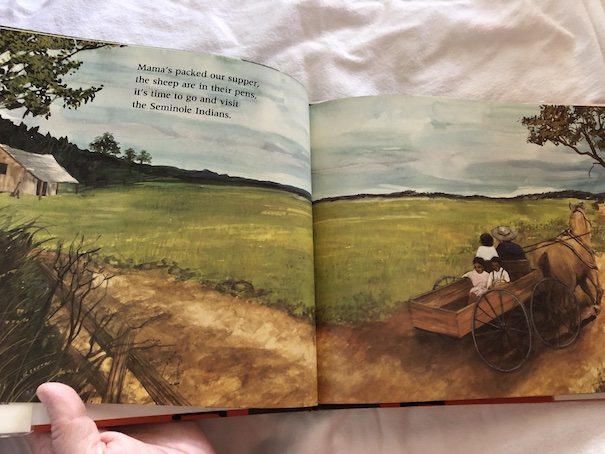
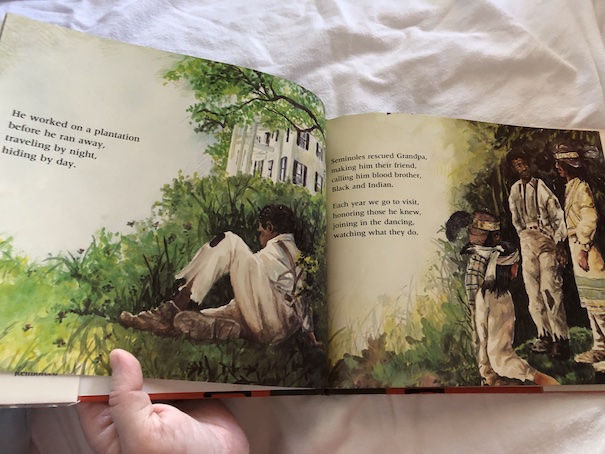
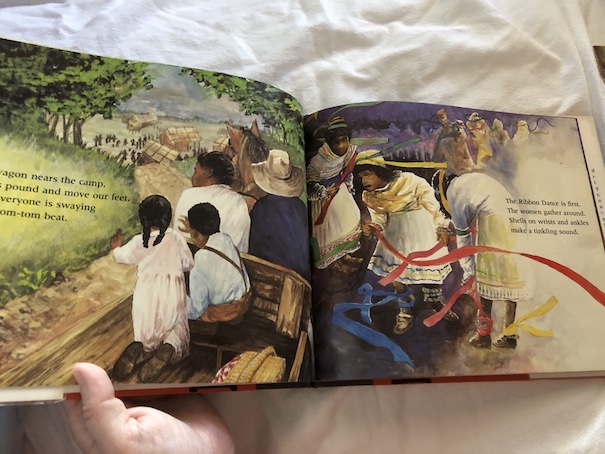
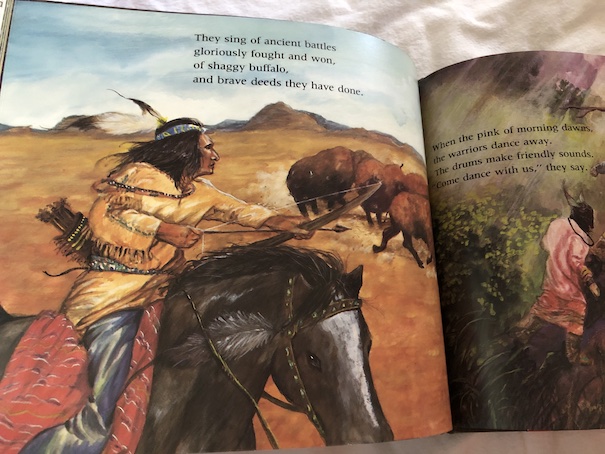
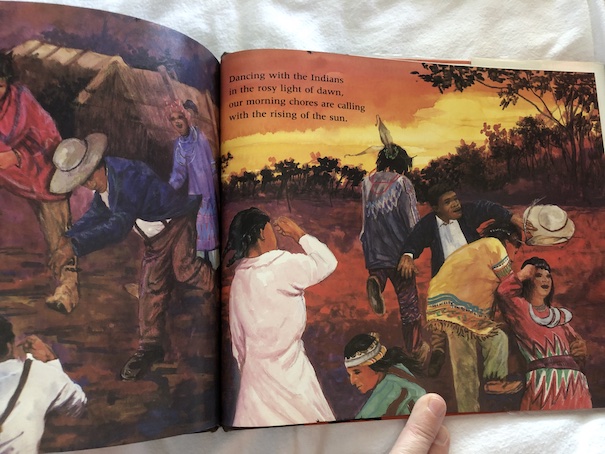
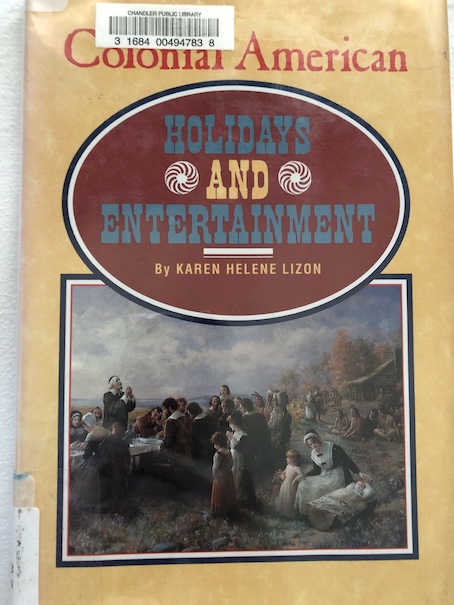

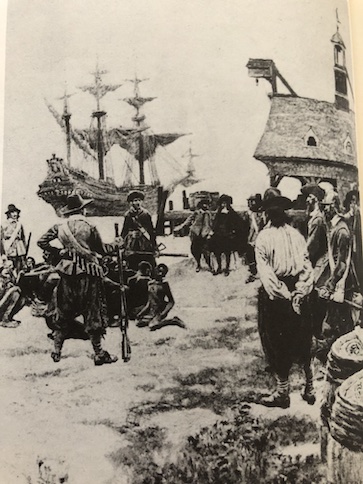
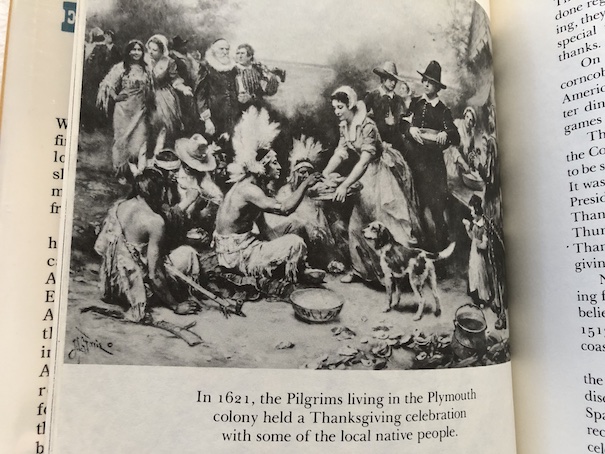


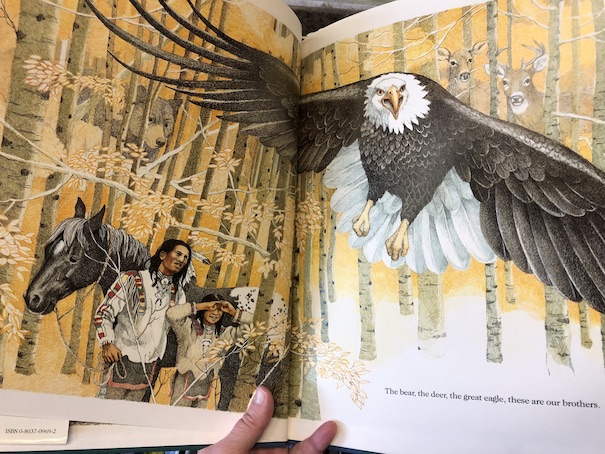
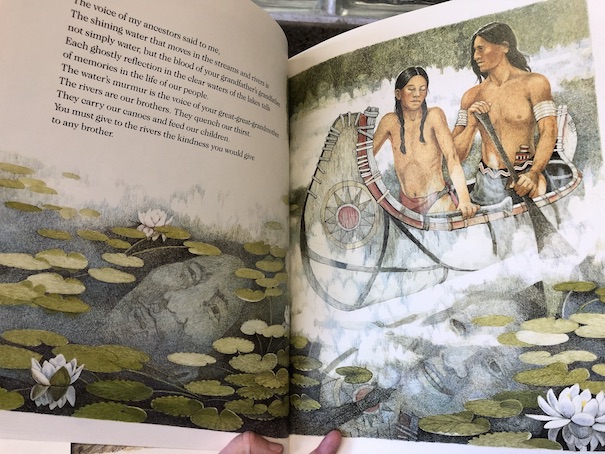
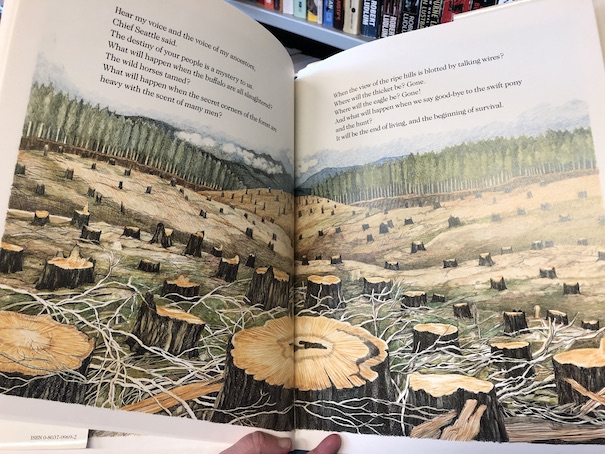
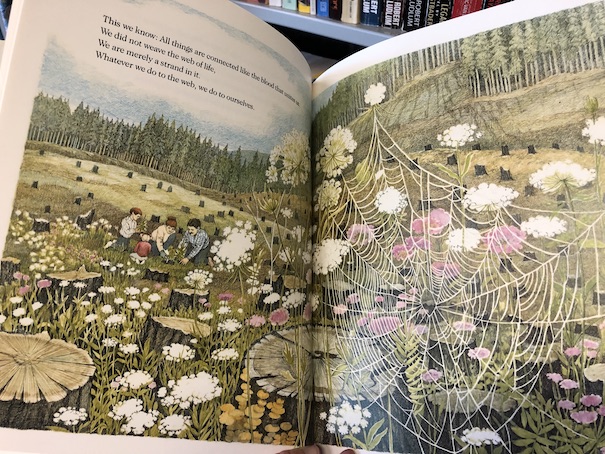


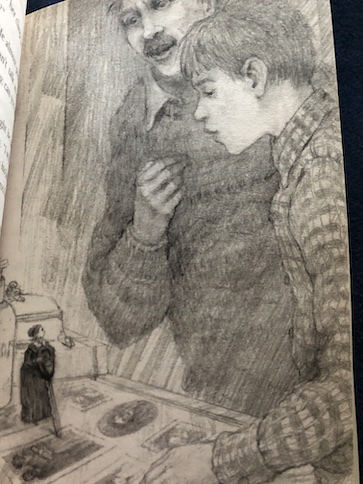

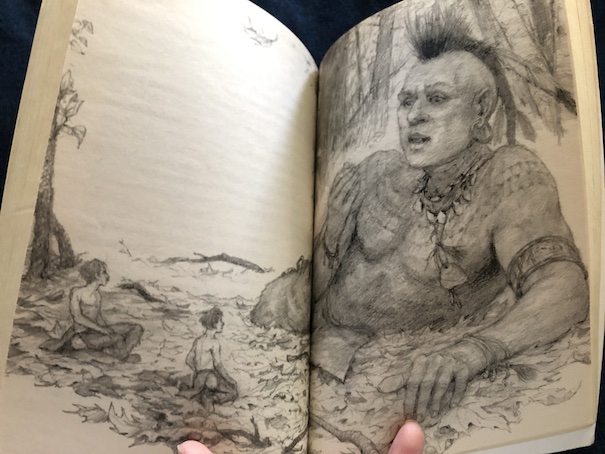

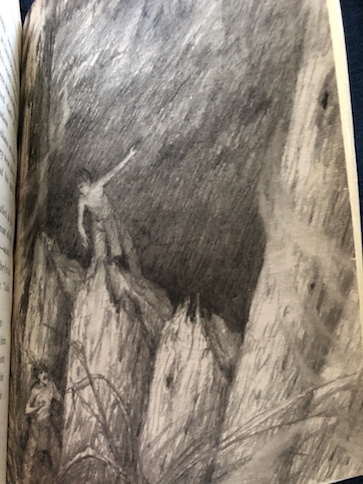
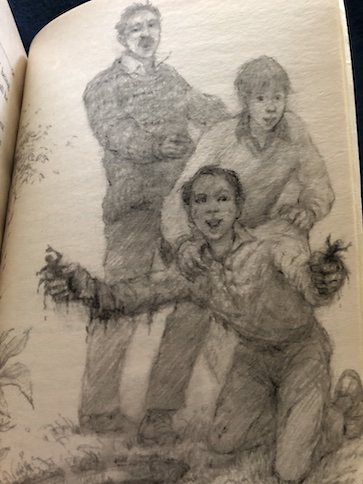


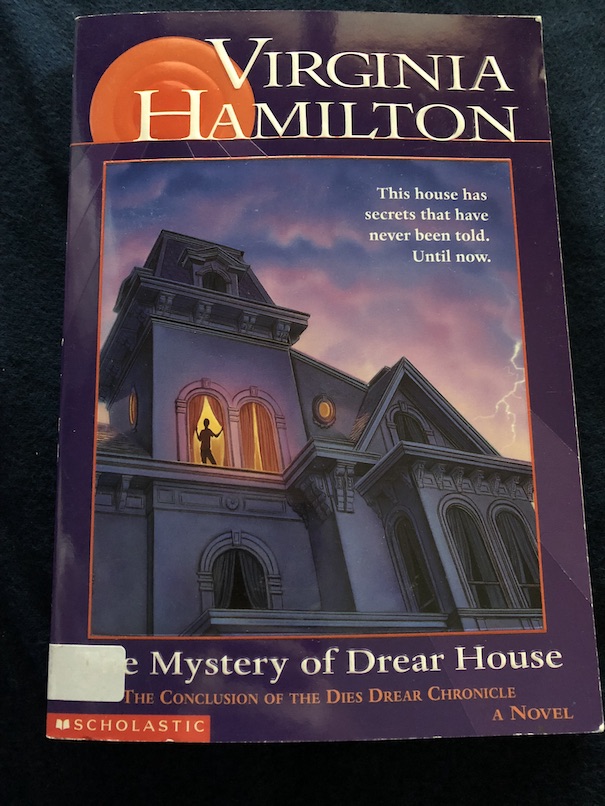

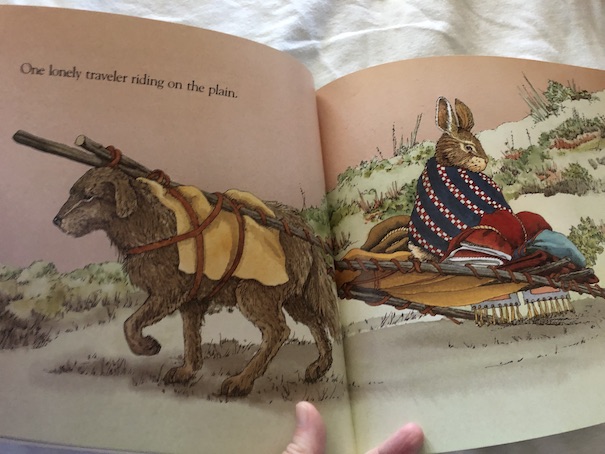


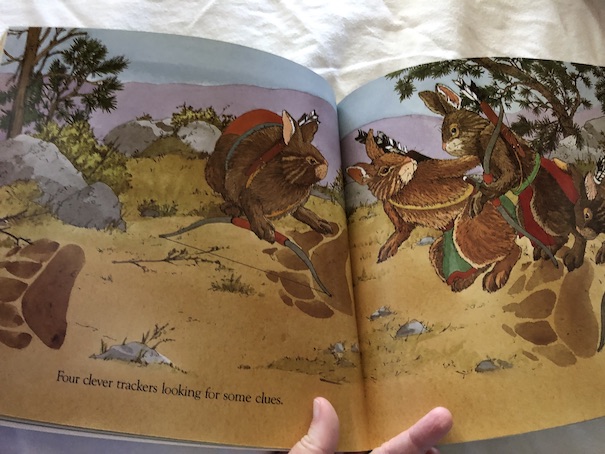


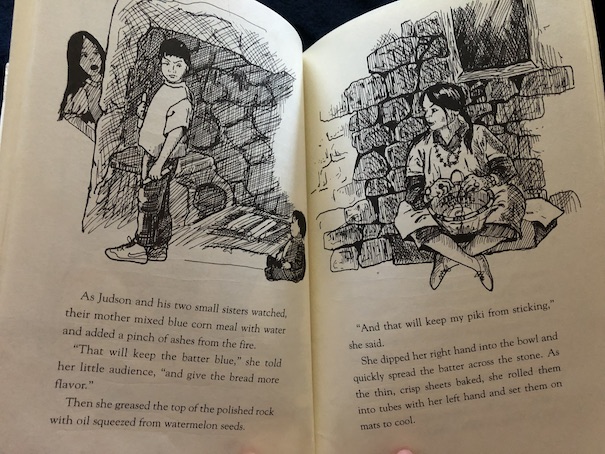


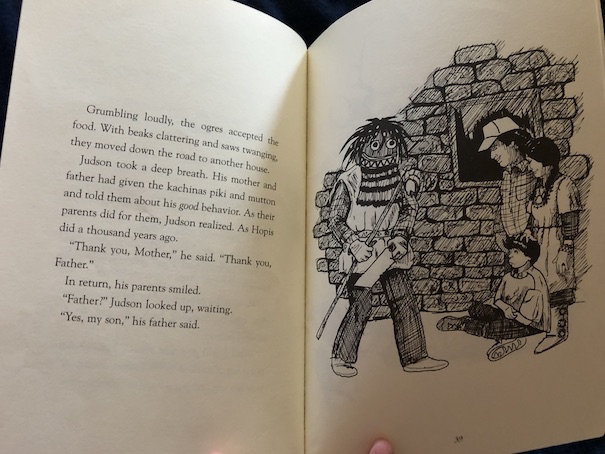

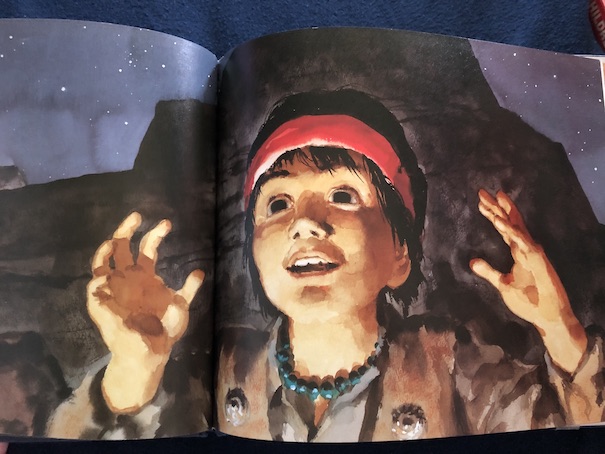

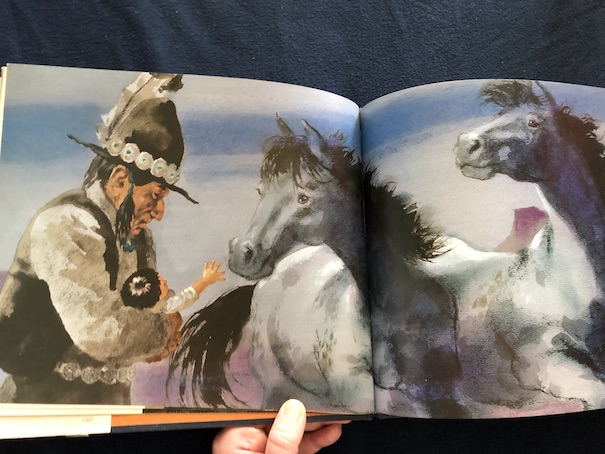

 Jestress's Forgotten Books and Stories