William’s House by Ginger Howard, illustrated by Larry Day, 2001.
It’s 1637 in Colonial New England, and a man named William is building a house for himself and his family. He wants a house that’s like his father’s house in England. The story describes all the steps he and his family go through to build the new house.
The descriptions include interesting historical details about homes from the Colonial era. When the family wants to put a window in their house, they don’t have any glass, so William uses a very thin piece of animal horn instead. It lets in light, but the window opening is still covered. William also uses stones and clay from a nearby creek when he builds a fireplace for the house.
William and his family also need furniture for the house. William uses boards from a wooden packing crate to make a table, and he stuffs bags with corn husks to make beds. When the house is finished, and the family is living in it, the book describes aspects of their daily lives. It describes how the family eats together.
The family has to change some of their habits and make additions to their house and the area around it because conditions are different in New England. The weather is hotter than they’re accustomed to from their lives in England, and their food spoils faster, so William digs a cellar for storing food. Before ice boxes and refrigeration, people would store their food underground in root cellars because it was cooler underground. When the thatch on their roof dries out and becomes a fire risk, William replaces the thatch with singles.
Then, when winter comes and it snows, they realize that the snow is too heavy for the roof, so William replaces the whole roof with one that has a steeper slope, so the snow will slide off. Then, he has to make the fireplace bigger because the house is so cold.
When spring comes, William’s cousin Samuel arrives from England with his wife, and he asks William about the design of his house. Originally, William wanted a house like the one he grew up in, but because he’s living in a different place and under different conditions, he’s had to make many changes to the house. Still, it’s his family’s new house, and it’s exactly what they need it to be.
The book is available to borrow and read for free online through Internet Archive.
My Reaction
I love stories about life in the past, and I liked all of the little details of daily life in this story. The main focus of the story is about the building of a new home, and at first, William wants a house like the one where he grew up in England. However, when the family experiences what life is like in New England, they realize that they have to make some changes to their home and the way they live. I like the way the book points out that the style of a person’s home depends on where they live and the circumstances of their life. The family doesn’t fully understand at first what their new lives will be like and what they really need, but they learn to adjust, and they make changes to their new house along the way.
When William’s cousin arrives, he doesn’t understand the design of their house at first. He hasn’t been living in New England yet, but readers know that he’s about to find out some of the reasons why people’s houses in New England are different from those in England at the same time period. At the end of the book, the characters are building a new house near William’s house, so it seems that his cousin and his wife will be living there, and they will benefit from what William has learned about building a house suitable for that environment.
The Four-Story Mistake by Elizabeth Enright, 1942.
The Melendy family is moving out of their brownstone in New York and going to live in a house in the country. The children aren’t happy about moving because they’ll miss their old home. They’re sure that no other house would ever be as good as their old one.
However, when they arrive at the house in the country known as the Four-Story Mistake (because it was originally supposed to have four stories but the original owner ran out of money and only could manage three floors and a cupola at the top), they are fascinated and charmed by its size and peculiarities. For the first time, each child in the family can have their own room instead of having to share, and there’s also a room that they can turn into an office (really a playroom), like the children had at their old house. Their father takes them up into the cupola and points out the different directions the windows face and how they resemble the outlooks of each of the children. He reminds Randy, the one who misses the old house the most, of the importance of looking ahead.
The children start to enjoy exploring their new house and the countryside around it. Seven-year-old Oliver finds a secret room in the cellar with some old things that belonged to past children who lived in the house. He keeps it to himself for a while, enjoying his secret, but he gradually lets the other children in on it. It takes Randy more time to learn how to ride her bicycle than the others, but she is thrilled when she finally masters it. However, the others are still doing better than she is. When she is separated from them on a bike ride and crashes in town, knocking herself unconscious and getting a cut on her head, she causes a stir. She is tended to by a traffic cop and his wife, who have a house full of plants and a pet alligator named Crusty, among other pets.
Gradually, the children settle in at the house and start feeling more at home there. They start making friends at the nearby school, and Rush builds a tree house with help from the family’s handyman, Willie. One day, when Rush is home with a sore throat and a fever, he gets restless and sneaks out of the house to hide in his tree house. He falls asleep and gets trapped there during a storm when the ladder falls, and he can’t get down. Eventually, his family realizes that he’s missing and rescues him, but he ends up with a case of bronchitis from the hours he spent in the tree house in the rain. Even that isn’t so bad, though, because they bring him food and let him read in bed until he gets better.
As winter starts, the kids play in the snow and use the sleds that Oliver found in the secret basement room. They also discover a hidden door behind some wall paper upstairs. It leads to a hidden room with blue wall paper that they had never noticed before even though they realize that they should have noticed that there were windows on the outside of the house that should have told them there was an extra room. The children decide to keep the hidden room secret from the adults until they can explore it themselves. Inside the room, they find a portrait of a girl labeled “Clarinda.” The kids secretly clean up the room and try to learn who Clarinda was. It takes some time before they learn what happened to Clarinda, but it’s a fascinating and inspirational story rather than a tragic one.
Meanwhile, WWII is still going on, and Mona comes up with a plan to help the war effort. She enlists the other kids to help collect scrap materials, learn to knit, and buy war bonds. They’re a little dubious about some of Mona’s plans, but they get more interested when she says that she wants to put on a play and charge admission to raise money. Mona is writing the play herself. It’s a fairy tale type story called The Princess and the Parsnip. Of course, Mona will also play the leading role as their resident actress. She almost quits the play when she accidentally gives herself a bad hairdo, but fortunately Cuffy helps her fix it. In fact, the play is such a success and Mona does so well that she gets her first real acting job – a role in a radio play.
Her father knows that she’s young, and he talks to her seriously about accepting the job. He makes sure that Mona understands that an acting career will involve hard work and some odd hours. He expects her to keep up with her school work and also take some time to be a real person and family member and not to put on airs. Mona acknowledges that and is really happy when she gets the part.
Rush becomes a little temperamental when Mona gets her job, and he admits to Randy that it’s because he feels bad that he isn’t making real money, like Mona is. The war has been on his mind, and he feels like he wants to do something serious and important and to also feel like he’s earning money for the family. The problem is that he can’t think of anything he can do. Out in the countryside, there aren’t as many job opportunities, so he feels useless. Then, Randy gives him a suggestion: he can teach piano lessons. Rush has always had a special talent for the piano, and they know that there hasn’t been a music teacher in town since the last one left to get married. Rush isn’t sure he likes the idea, but Randy says that if he isn’t interested in the job he could do best, maybe he wasn’t really serious about wanting a job at all. Thinking it over, Rush decides to give it a try, and he’s actually more successful at it than he expected. He almost quits after a particularly difficult student causes him to lose his temper and hit the other boy, but a talk with the boy’s father straights things out between them.
The book covers most of the children’s first year at their new house, with changing seasons and changes in the children’s lives. They have a Christmas with homemade Christmas presents and a few special surprises from their father and Mrs. Oliphant (a wealthy woman who’s an old family friend). There are adventures with ice skating, and in the spring, Randy finds a diamond at the brook. They acquire some new pets, including Crusty the alligator, who becomes another of their Christmas presents, having outgrown the bathtub where he was living with the policeman. Crusty later escapes and takes up residence in the brook before apparently migrating to Pennsylvania. Besides Mona and Rush finding their first jobs, the children begin showing other signs of growing up. Mona attends her first dance, although the children make a point that they’re not too grown-up yet. By the end of the book, the children are well-settled in their new home and are starting to become comfortable with the changes in their lives that come with moving and starting to grow up.
This story starts out as a story about kids adjusting to moving to a new house but also turns into a humorous story with Cottagecore elements. The house in the country known as the “Four-Story Mistake” is the stuff of many children’s dreams. It’s large enough for every kid to have their own room plus the room they call the “office”, which is a play room or activity room that all the kids in the family share. Their fabulous house has plenty of rooms to explore, including a cupola and a hidden room with a mysterious backstory.
One of the things I like about this book and others in the series is that there isn’t anything tragic or upsetting in the stories. They’re good books to relax with. When the kids hear the story of the secret, hidden room in their house, there’s an element of drama to the story (one of the stories-within-the story that often appear in this series), but nothing truly tragic. At first, I had thought maybe the original owner of that room had died young, and her family had sealed it up out of grief, but that’s not the case. It turns out that she had dreams of becoming a dancer, so she ran away to pursue her dreams. Her father disowned her and closed up her room after she left, but she actually did achieve her dream, so things worked out for her, and the Melendy kids find that inspiring.
There are woods and a stream nearby, so the kids have outdoor adventures. Even when something goes wrong and the kids have a hard time, like when Rush is sick and gets trapped in his tree house during a storm, it doesn’t end too disastrously, and the hardships are treated more as part of their exciting adventure. Even though Rush suffered during the incident, and Rush’s illness gets worse from being out in the storm, he kind of enjoys the fussing he gets afterward and the time when he’s allowed to stay in bed, reading, while he recovers.
The part where Rush lost his temper with a piano student and hit him surprised me, although how the student’s father reacted to it was even more of a surprise. I think most modern parents would be angry about Rush using physical violence against the other boy, no matter how he was provoked, but that’s not how the father in the story feels. The father knows his son very well, and he understands how he provoked Rush into losing his temper. He also knows why the son was being provoking. The boy wanted Rush to quit as his piano teacher because the boy doesn’t really want to take piano lessons at all. He’s only having piano lessons because his mother wants him to learn to play the piano. Rush handles his loss of temper as professionally as he can, admitting to the boy’s father what happened and offering to resign from the job, but the boy’s father, knowing his son and his son’s motives, refuses to accept that offer. If the father allowed his son to get away with provoking someone else to a fight and then rewarded him by giving the son what he wanted (the end to the piano lessons), the son would learn a bad lesson, that he could get what he wants by behaving badly and being too difficult to handle. It isn’t a good idea to give a kid the idea that acting out gets rewards because it provides an incentive for the kid to continue acting out to get his way.
Instead, the father acknowledges Rush’s professional authority as the piano teacher and says that the boy’s mother wants the piano lessons to continue. Because Rush is the professional authority here, he authorizes Rush to use whatever methods he deems necessary to deal with his student. The father says that he will have a word with his son about this. We never hear exactly what he says to his son, but the son at least grudgingly behaves himself from that point onward, so it seems that the father made it clear to him that bad behavior wouldn’t get him what he wants. It’s true that hitting people isn’t good, but neither is provoking people to a violent reaction, and I was glad that the father acknowledged the provocation and didn’t let it slide. Considering the context of the situation and the character and motives of the people involved, the father’s solution to the problem seems to have been an effective one.
There are coming-of-age elements in the book, partly because the kids are settling into a new home, but also because they’re generally growing up. Some children’s book series have characters who never age, but the Melendy children do age throughout their series. In this book, the two oldest Melendy children get their first jobs, and Mona attends her first dance. I did like it how, after Mona gets home from the dance, she and her siblings run outside to have fun because they want to make the point that they’re not too grown-up yet.
As in the first book in the series, WWII is happening in the background because the series is set contemporary to the time when it was written. The children undertake activities to support the war effort, and their knowledge that the war is happening does cause them to think a little more seriously about life, about doing their part, both for their country and their family. I thought it was an interesting choice for the author to write about children’s thoughts concerning the war while it was happening and the outcome of the war was still unknown. The author seems to be promoting children taking part in civilian activities to support the war, like raising funds, buying war bonds, and collecting useful scrap materials. I think that was probably the attitude of many adults in the 1940s, wanting children to make themselves useful and to show patriotism, and I can see those motives in the choice to let the war be part of the children’s reality. With the story’s other themes of moving, exploring the countryside, growing up, and finding fun and adventure in a new home, I can see how the author could have chosen to focus on those elements and left the time period of the story vague, but I appreciated how the author faced the reality of child readers, acknowledging the war and giving them suggestions for how they could handle their feelings through useful support activities. The countryside in the story isn’t a place where the children hide from the troubles of the world around them but where they can find their own way dealing with them creatively.
The four Guthrie children (Dit, Allen, David, and Winkie – short for Winifred) find it difficult to play in their family’s apartment, where they always have to be careful not to disturb the neighbors. One rainy day, while their mother is at a dentist appointment, the children act out a scene from The Swiss Family Robinson, where they’re throwing the animals overboard from the shipwreck to swim to the desert island when they accidentally break part of the floor, which is also the same as breaking part of the ceiling for the neighbors underneath. When they get a knock at their door, shortly after, they figure that the neighbors have come to complain.
However, it turns out that their visitor is the neighbors’ cousin, who is staying with them. The children explain about The Swiss Family Robinson, the shipwreck, and how they were throwing particularly heavy ducks overboard from their wrecked ship. The neighbors’ cousin is a good-natured man who enjoys talking to the children. When the children’s mother comes home, she apologizes for the damage and explains that she and her husband are currently looking for a new house with more room for the children to play, but they haven’t found a place yet. The cousin says that he comes from a smaller town himself, Anchorage, Connecticut, and he might be able to help them find a place to buy there.
The Guthries do rent a house in that town that has some land attached to it, and the children are excited about the move. They want to be able to camp out on their land, like castaways from their favorite book. When they stop in town to buy some supplies before heading to their new house, they are surprised that there don’t seem to be any children around. The shopkeeper explains that there’s a measles epidemic going around town, and most of the children have it right now. He asks the Guthries if their children have had measles before, and their mother says they have … except for the youngest, Winkie. She decides that, for safety’s sake, she should keep the children close to home until the epidemic is over, and the kids should wait to try to make some new friends in town.
The children are hoping to find some new friends, but there’s plenty to do at their new house in the countryside to keep them occupied for a while. On their first day there, they are delighted to find out that there’s a brook and a lake on their property. The children convince their father to come exploring with them, and he has them help him to make a map of the area, knowing that they will want to camp out later. After walking around a piece of land that’s bordered by the lake and the brook, they realize that it’s actually an island because it is bordered on every side by water. The lake is on one side, the brook on another, and there are two more brooks or streams on the other sides that separate it from the land around it and make it into a sort of oblong-shaped island. They call it “The Invisible Island” because it isn’t obvious that it is actually an island until someone walks all the way around it and realizes that it’s actually surrounded by water on all sides. As far as they know, nobody else besides them is even aware that it’s an island.
The children’s mother has some reservations about the children camping out on the island, but the children agree to some safety rules and bringing along some practical camping supplies. They make a raft to carry their supplies across the water to the island. The children begin calling their new house “The Wreck”, imagining that they are rescuing supplies from a shipwreck, like The Swiss Family Robinson. They create a hiding place for their tents, and they find a spring on the island, although their father won’t let them drink from it until he has the water tested to make sure that it’s safe.
The children have enough supplies to camp on the island for a week, and they begin having an idyllic summer, with little adult supervision. They swim and bathe in the lake, using colorful soap on a rope that Winkie found when the family bought supplies at the store in town. They feed the birds, explore, and pick wild strawberries. They get ideas for how castaways are supposed to act from The Swiss Family Robinson and The Mysterious Island.
Their parents do come to visit them and check on them, playing along with the shipwreck theme by calling themselves friendly “savages” when they visit the camp. Their father helps the children to bring stones from a quarry to build a hut. Their mother tells them that she has started to meet the neighbors, and they have some nice children who could make good friends for the Guthries, once they’re out of quarantine from the measles. Both the nice man who helped them find the house to rent and the local doctor have nieces and nephews. The children don’t care that their mother thinks the children are well-mannered. They’re more concerned about whether or not they’ll be adventurous types, who would have fun with them on their special island. They think that they would hate to share their island with “apron-string children” who would be too tied to their parents and home and wouldn’t appreciate the independence and adventure the island allows. The truth is that the children have been enjoying their freedom on the island so much that they’re not sure that they want to give it up yet to make friends with the local children, and in a way, they’re grateful to the quarantine for giving them this time to explore by themselves.
However, there are some strange things that the children have started to notice about the island. One day, Winkie’s soap on a rope disappears and reappears in a different place, strangely looking less used than when they last saw it. The children’s wishes also seem to be granted by a mysterious, unknown person. When they wish aloud for a book about castaways that they haven’t read before and book about birds so they know more about the birds they’ve been seeing, they soon find a wooden box that contains books matching that exact description. When they wish that they had more strawberries, they suddenly find more strawberries in their icebox that they can tell came from a store instead of the wild strawberry patch. Winkie has a bizarre encounter with a “dryad”, and the footprint of a 6-toed giant suddenly appears on the beach. Maybe they’re not as alone on the island as they thought, but who else is there with them?
The book is available to borrow and read for free online through Internet Archive (in audio form!)
My Reaction and Spoilers
Copies of this book are difficult to find now. It’s become a collector’s item, and copies go for hundreds of dollars on Amazon at the time of this writing. It’s a shame because it’s really a charming story, and I think it would really appeal to fans of Cottagecore. If I hadn’t found a copy on Internet Archive, I couldn’t even talk about this book at all.
There were many children’s book series published in the mid-20th century about children having adventures in the countryside and independent of their parents and guardians, like The Boxcar Children series or many of the books by Enid Blyton. Some of these books and series seem a little more realistic than others. Most require the children’s families to be at least middle-class or wealthy to be able to set the children up for their adventures. Some books, particularly the ones by Enid Blyton, feature parents who are preoccupied with their own problems or activities and seem less concerned with the children’s welfare than about getting the kids out of their hair. I thought The Invisible Island had a good balance of independence for the children and adult supervision.
The adults in this book know that the children have been camping before, so they have some basic camping skills, and they come to visit the children about every two days, to see how they’re doing and make sure they aren’t having any problems. The kids pride themselves on their independence (they brag that they’re “not apron-string children”), but at the same time, their parents do regularly check on them and are aware of developments on the island, sometimes more so than the children realize. The children confide to their parents some of the strange things they’ve noticed on the island, but not everything because they’re enjoying their adventure so much that “the castaways” don’t want to be “rescued.” Eventually, readers come to understand that the parents know who’s been hanging around the island and that the children are not in any danger.
Adults will probably realize pretty quickly that some of the neighbor children are also camping out in the area, and that these children are the ones moving things around, giving them things, and staging fantastical stunts, like the appearance of the “dryad” and the giant’s footprint. It’s just that they can’t introduce themselves to the Guthrie children yet because the quarantine is still on, and they have to stay mostly separate. As the quarantine ends, they’re able to let the Guthrie children see them and interact with them more, although the game doesn’t completely end until the official end of the quarantine and the surprise party they hold to celebrate. The book ends with the children and their new friends making plans for more adventures that summer.
One of the great things about this book is that it’s one of those children’s books that reference other children’s books. There are other vintage children’s books like this, where the child characters take their inspiration for their games of imagination from their favorite books. The books are named throughout the story, and presumably, child readers from the time when this book was originally printed, would also know these stories and identify with the children’s pretend play. The main favorite book of the Guthrie children is the classic The Swiss Family Robinson, which inspires them not just to camp out but to turn their camping trip into one big game of imagination in which they’re shipwrecked. Most of the things they do in the story are based around that concept, although some fantasy elements also creep in, like fairies and dryads and granted wishes, because the children also enjoy fantasy books and poems. The new friends they make in the area turn out to enjoy similar stories, so some of the mysterious incidents they stage are also based on those stories, further appealing to the children’s imaginations as well as their sense of adventure.
I wasn’t completely sure if the book that their new friends gave to the Guthrie children was meant to be a real book because there are many books with titles like The Smuggler’s Island, and I had trouble locating a book from before 1948 with that exact title. Since the other books and poems they reference are real, The Smuggler’s Island might be real, too. If anybody knows what it is and who wrote it, please let me know. On the other hand, that book, because the children say they’ve never read it before, might just be invented by the author to represent that general genre of children’s fiction.
Other real books, stories, and poems referenced by this story include The Mysterious Island by Jules Verne (which is a sequel to both his Twenty Thousand Leagues Under the Sea and In Search of the Castaways), The Hunting of the Snark by Lewis Carroll (at one point, David recites the lines from the poem, “His intimate friends called him “Candle-ends”, And his enemies “Toasted-cheese”), and the poem Overheard on a Saltmarsh by Harold Munro (which was the inspiration for the dryad scene because it contains a nymph and a goblin and a necklace of green glass beads).
The concept of a quarantine probably would have made this an excellent story for the coronavirus pandemic, but the setting is idyllic and enchanting for any time. The children are clever in the way they set up their camp, trying to keep it as secret as possible. Their island also includes a spring (which is safe to drink from) and a cave, and they start building a stone hut in this book.
There’s only one thing I can think of to complain about in this book, and that’s the concept of the “savages.” When the parents describe themselves as “savages” when they visit the children, they’re playing on themes from earlier vintage books with islands and shipwrecks. “Natives” and “savages” in those stories can either be helpful or, more commonly, threats to the castaways. I’ve complained about this before in previous book reviews with similar themes because there are stereotypes around these generic “natives” and “savages”, and modern children should be taught not to talk about people in those ways. However, there is no malice behind it in this story. The characters aren’t making fun of anyone or disparaging anybody for being “primitive.” It’s just that they’re playing a game of imagination built on these earlier stories, and they’re using this concept as a plot device to work themselves into the story as something other than visiting parents, preserving both the children’s sense of independence and the imaginary world of the children’s game. Anybody who can understand that should be fine with this book.
My only other complaint is that this book is so rare and so long out of print. I really do think it would appeal to modern audiences, especially fans of cottagecore.
Three children in England live a comfortable and happy life with their parents. Roberta is the eldest, followed by Peter and Phyllis, the youngest. Their family has servants, their mother enjoys helping the children with their lessons and making up stories for them, and their father is clever at fixing broken toys. When Peter turns 10 years old, he is given an electric toy train (a relatively recent innovation for their time and the type of toy only a wealthy family could afford), which is a wonderful present because Peter wants to become a mechanical engineer. However, something goes wrong with the toy train, and it explodes at his birthday party! When Peter’s father comes home, he looks at the toy train and says that he thinks he can fix it, but before he can say much more, some strange men come to the house and want to talk to him. They spend a long time talking while the children’s mother takes the children upstairs. Then, their mother goes downstairs to see their father. When she returns, she seems very upset, but she doesn’t want to discuss it with the children. She only says that their father has been called away and that the children should go to bed.
The next day, their mother is gone for a long time, and the children are worried about what is happening with their parents. Their mother finally returns in the evening, tired and still upset. She tells the children that the men who came the night before brought very bad news and that their father will be away for some time, so she is going to need them to help her. She says that there will be times when she will have to be away for long periods and that she wants them to behave themselves and not fight while she’s gone. She doesn’t want to tell the children what the problem is or for them to ask her or anyone else any questions about it. She only says it’s about their father’s business and none of them really understand their father’s business. They know that their father works in a government office, so his business has something to do with the government, but their mother doesn’t want to say more than that.
Over the next several weeks, their mother is gone for long periods, leaving the children with the servants and with an older aunt who will soon be taking up a position as a governess for another family overseas. The children don’t get along with their strict aunt. The servants are usually more pleasant, but the children have the uncomfortable feeling that the servants know more about their father’s situation than they do. One day, in spite of his promise to behave himself for their mother’s sake, Peter plays a prank on the parlor maid, and the parlor maid angrily tells him that if he doesn’t fix his behavior he’ll go where his father has gone. The children don’t know what she’s talking about, and when they ask their mother, she dismisses the parlor maid. She wasn’t going to keep the parlor maid much longer anyway because she tells the children that they’re going to move to the country.
When they move, they can’t take everything from their house with them because the house in the country is smaller, and their mother says that they have to take the most useful things, leaving many of their prettier things behind. She tells the children that they’re going to have to “play at being Poor.” Readers will understand that they’re not just playing, but the children’s mother tries to frame their move as a great adventure rather than the misfortune it really is. For the children, it is a kind of adventure.
They take a train to the countryside, but when they arrive, they have to walk from the trains station to their new little house because there are no cabs there. A man brings their luggage in a cart. When they arrive at the house, which is called Three Chimneys, it is night, and the woman the mother hired to clean up the house and make supper for them is gone. The man with the cart says that she probably left because their train was late and that she probably left the house key for them under the door step, as people in the countryside tend to do. The key is there, but they discover that the woman hasn’t really done any cleaning for them, and she didn’t make supper. Fortunately, they do have some provisions, packed by the strict but thoughtful aunt, so they are able to put together a small meal for themselves.
In the morning, Roberta wakes Phyllis and points out that they have no servants in this new house, so they had better get up and make themselves useful. They get things together as best they can for breakfast, although they don’t really know what they’re doing or where everything is. They start the kettle going too soon, burn the kettle, and let the fire go out. The children explore the house’s yard and garden. They can see the train tracks and a tunnel down the hill from the house, and they fall asleep outside because they got up too early. When their mother wakes up, she gets everything ready, fixing their clumsy efforts, and finds a note from Mrs. Viney, the cleaning woman. In her note, Mrs. Viney apologizes for not having everything ready for them the night before because there was a family emergency. She had to leave early because her son-in-law broke his arm, but she promises to be there later that morning to help them.
Life in the country is very different from life in their old home. Their mother now tells them that they are really poor. It’s summer, and the children are not going to school, and their mother spends most of her time writing because she wants to sell stories for money. The children still don’t know where their father is, and it still worries them, but they gradually get used to their new life and to not asking questions about their father. Deep down, Roberta knows that something terrible has happened and that their mother is very upset about it, but because her mother seems like she would be even more upset if the children knew the full truth or just how upset she is, Roberta makes a deliberate decision not to notice anything that her mother doesn’t want her to notice. Whenever it seems like her mother has been upset or crying or whenever there’s been any hint about her father, Roberta deliberately looks away and pretends that she didn’t see anything. She tries to keep cheerful and enjoy this “adventure” that they’re living.
The children develop a fascination for the trains that run by their house, and they go to have another look at the train station. They are not accustomed to being at train stations just to observe them, only to either catch trains or arrive on trains. They are fascinated to notice the details of the station and the train signals. They notice a white mark where the coal is stored, and Peter asks the porter what the mark is for. The porter tells him it’s to mark the level of the coal so they can tell if someone has taken some, giving them a friendly warning not to steal any.
The children’s new poverty doesn’t mean much to them at first because they still have plenty to eat, but when there’s a wet and chilly morning and Peter wants to light a fire, their mother tells him that they can’t afford to light fires in June and that they must save their coal for when it’s really cold. There are other little economies that the family must make. The mother tells the children that they can have either butter or jam on bread, but not both at the same time. If they eat too much at once, they’ll run out before they can afford more.
These small things that they can no longer afford give Peter an idea. He decides to stage a daring raid on the coal at the train station for the sake of their family. Although he knows that it isn’t really right, he doesn’t think of it as stealing but more like coal mining because he digs through the coal pile for the pieces underneath, which he figures they won’t miss. However, the station master catches him and insists that he and his sisters come into the train station and explain themselves. Peter explains how his family used to be able to afford fires on wet and cold days, but now they can’t because they’re poor. The station master becomes a little more sympathetic, but he gives the children a lecture about taking things that don’t belong to them. It’s still stealing, even if they think of it by another name. He lets the children keep what they’ve taken so far and lets them go with a warning not to do it again. Peter is horribly embarrassed by the incident, and he is uneasy for a while whenever he sees the station master, but the station master eventually lets him know that he is forgiven and gives them permission to visit the train station again.
The children enjoy visiting the train station and asking the friendly porter questions about the trains and how they work. The porter, whose name is Perks, likes chatting with them and answering their questions. The children watch the trains so much that they begin to recognize that each train is distinctive in its appearance. The trains no longer look all the same to them, and they start giving them nicknames, like the Green Dragon, because it’s pulled by a green engine. When Peter notices that individual trains have numbers written on them, Perks introduces him to the hobby of train-spotting, where people write down the numbers of trains that they’ve seen in a little notebook. (He doesn’t call it by that name, but that’s what he describes.)
The children become especially fond of the train they call the Green Dragon. Every day, they wave to this train, imagining that it’s a magical dragon that will carry their love to their father, wherever he is. Every day, a pleasant-looking older man who rides that train sees them and waves back to them. They begin to think of the man as a friend, waving to him and imagining that he’s also going somewhere to work on “business”, possibly with their father.
Their new train friend turns out to be very important. When their mother becomes ill with a serious case of influenza, the doctor gives them a list of things they should get for her, most of which they just can’t afford. The children are willing to make do with a diet of bread and water to get her some of the things she needs, but even doing that won’t get her everything she should have. Then, the children come up with a desperate plan. They use a sheet to make a sign to tell the old man on the Green Dragon to look out at the station. When the train comes through the next time, everyone on that side of the train sees the sign, and they all look out at the station, confused because they don’t see anything unusual. It’s just Phyllis at the station, and she slips a note to the old man, explaining their situation and asking if he could get the things they need for their sick mother. The children promise that their father will pay him back or, if he’s lost all his money (as the children are starting to suppose is the case), Peter will pay him back when he’s a man. The nice older man is amused and touched by the message, and he sends them a package with all the things they asked for, plus a few more that he thought of himself. In the note accompanying the package, he says that they should tell their mother only that a friend who heard she was ill sent these things, although they should tell her the full story when she’s feeling well enough to hear it. The old man says that he knows their mother probably won’t be happy that they asked a stranger for help, especially not without asking her first, but he says that he thinks the children did the right thing.
The old man is right about their mother’s feelings. When their mother is well and realizes what the children did, she is angry, and she starts to cry. She says that, while they’re poor, they’re not destitute, and they shouldn’t go around asking strangers for things. Part of that is personal pride and shame at their family’s reduced circumstances. She still can’t bring herself to talk about what really happened to the children’s father and why they’re so poor now. However, they do come to rely on help from strangers and new friends, and they learn that people will help others if they’re asked. Even when they’re not rich themselves and could use some extra money, some people, like the local doctor, still let them them have services at reduced rates and take some pride in their ability to help someone who needs it and who appreciates the help.
When Roberta decides to get help to fix Peter’s broken toy train, she accidentally hitches a ride on a train engine because she thinks that the train engineers know how to fix trains. The book explains that there are different types of engineers, from people who build engines to people who drive train engines and people who build things like bridges. Not all engineers do the same things, and the people who drive the engines don’t repair them. Fortunately, one of the train engineers has a relative who can fix things. Touched at the young girl’s request for help fixing her brother’s toy, he arranges for his relative to fix it.
The family also comes to experience what it’s like to help someone else who’s less fortunate when a man gets off at their train station, obviously ill and speaking a language that nobody understands or even recognizes. The only language the children have studied in school is French, so they decide to ask him if he speaks any French, even though they can tell that’s not the language he’s speaking. It turns out that the man does also speak French. Their mother speaks better French than the children do, and when she speaks to the man, she recognizes who he is. He is an author from Russia. He wrote a book about the plight of poor people and how to help them, which the mother has read and really appreciates. However, this book put him on the wrong side of the ruling class in Russia, and he spent time in jail as a political prisoner. He was later exiled to Siberia and put in a forced labor camp. The mother is surprisingly frank about the conditions in the camp and the forced marches where prisoners were whipped and left to die if they couldn’t go on. Since this man was able to get away, he has come to England in search of his wife and child. He heard that they had fled to England after his arrest, but he doesn’t know exactly where they are in England. At the train station, he was trying to explain that he was ill and that he lost his train ticket. The family lets him stay with them for a time while he recovers his health.
The children become heroes to the railroad when they witness a landslide that blocks the tracks and use the girls’ red flannel petticoats to make warning flags to stop the train. The children averted a terrible accident, and they are publicly thanked and given gold watches as a reward. The old gentleman from the Green Dragon is there, and the children learn that he is a railway director. They write him another note, asking if they can talk to him about an unfortunate prisoner.
The old gentleman meets with the children at their train station the next time his train comes through, and the children tell him about the Russian author, who is still looking for his missing family. The children say that the gold watches are a wonderful reward, but they’re willing to sell them or trade them back to the old gentleman in exchange for help locating the author’s wife and children. The old gentleman recognizes the author’s name and says that he has also read his book. The old gentleman knows some people in the Russian community in London, and since the author is a famous man, people in the Russian community are likely to know where his wife is currently living. He’s happy that the children’s mother is helping the author, and he says he will be glad to make some inquiries on his behalf. The old gentleman also asks the children for more information about themselves. He soon follows through on his promise to help the author, bringing the man’s wife and child to him.
Much of the book is about giving and the ways people help each other. When the children arrange a birthday surprise for Perks, he gets angry at first because he thinks they’re giving him charity. He changes his mind when the children tell him how they collected the birthday presents from various people in the community because they wanted to show him how much they all appreciate him and help that he’s given them in the past. His wife says that he’s been ungrateful for rejecting the presents, but Perks says that it’s not just about being given things but how and why they’re being given. If people gave him things because they thought that he couldn’t afford them or couldn’t work for them, it would have been an insult because he works very hard. If they’re given out of friendship and returned favors, it’s different.
In the background of the story, there is always the question of what happened to the children’s father and why they had to leave their old home. At one point, their mother worries about why the children have stopped talking about their father and is afraid that the children are forgetting about him. Roberta admits that they talk about him when their mother can’t hear them because she can tell that their mother is sad whenever they mention him around her. Their mother admits that’s true, and she still doesn’t want to tell them the full reason why, only that something bad did happen, and it will be a while before their father can be with them again. The reason for the father’s disappearance adds an element of mystery to the story, although most of the book focuses on the children’s adventures in the countryside. There are clues along the way, from the men who came to get their father to the clothes that Roberta discovers that her mother is keeping for him. There is her mother’s reluctance to be sociable with other people and the way she talks when she describes how awful it is to be in prison, away from your family, and the reasons why a person might be arrested, which aren’t quite the same in England as the reason why the Russian author went to prison. These are the things that Roberta tries to ignore … until she finds something that starkly tells her what all of the adults already know. When Roberta understands the real problem, she can only think of one person who might be able to help: the kind old gentleman who helped them before.
The book is now public domain, so it is available to read online through Project Gutenberg and Internet Archive (multiple copies). There is also a LibriVox Audiobook on YouTube. It’s been made into a movie multiple times, and you can see the 2000 version online through Amazon Prime. It fits well with the cottagecore aesthetic! There is also a sequel movie, not based on an E. Nesbit book, which takes place during WWII, when the children in this story are adults and other children are evacuated to the countryside from London.
My Reaction and Spoilers
The Children’s Father
There are clues all the way through the story to what happened to the children’s father. He was framed for being a spy and a traitor in relation to his work with the government, although he didn’t do was he was accused of doing. People thought he was a traitor because there were letters found in his office that incriminated him, placed there by some unknown person, and these letters convinced the jury at his trial that he was guilty. The trial was conducted during those weeks when the children were at their old home with their aunt and were being told not to ask any questions. They left for the country after he was sentenced to prison. Their mother turns to writing, something that she already enjoyed, to earn money to support herself and the children, and she doesn’t want to see much of anyone because she doesn’t want to face their questions about her husband.
Roberta learns the truth about her father when Perks gives her some old papers with pictures in them to amuse Peter after he is injured by a rake the children were fighting over. The newspaper that is wrapped around the bundle has an article about her father. Roberta reads the article and then asks her mother for the full story. Roberta understands why her mother didn’t want to tell the children what happened because she also can’t bring herself to tell Peter and Phyllis what she now knows, but Roberta still wants to understand the situation herself, now that she knows about it. Her mother tells her that her father suspects that the real traitor and the person who framed him is the man who took his job when he went to prison, but he can’t prove it, and nobody believes him. Although her mother has told her not to ask people for things, the situation is dire, and Roberta can’t let her father stay in prison for a crime he didn’t commit, so she asks the kind old gentleman if he can make some inquiries into the situation on behalf of her father. She just can’t keep the matter to herself, and he’s the only person she knows who seems to have some authority and connections and might be able to do something. The old gentleman is happy to help, especially after the children help his grandson when he is injured.
In the end, the real villain is discovered, and the father is released from prison, but the readers and the children don’t see exactly how that happens because the old gentleman seems to take care of it in London, away from the children and their mother. The book ends with the father arriving at Three Chimneys, so the family is happily reunited, but we also don’t see what their lives are going to be like after that point. They no longer have their old home, and I find it difficult to believe that the father would want to return to his old job, like nothing had happened. If all of your co-workers believed that you were some kind of traitorous spy and seemed to like the guy who framed you, returning to that office would be far too awkward. It’s a life-altering event that might have potentially been life-destroying, not just a small misunderstanding. In the end, it seems like the family will be okay. The family has a wealthy supporter now, so the old gentleman might be able to help the father find a new job. The family has also come to enjoy living in the country and has some friends there, and the mother indicates that she wants to continue her writing, so they might not move somewhere else, at least not right away. It will take the family some time to sort out what they’re going to do, rebuild their family finances, and move on from this incident. We just don’t get to see all of that happening as readers. The book ends on the happy note that things are being set right, and the family is reunited.
The Meaning of Charity and Helping Others
I’d like to point out that there is a theme of rich people coming to the rescue of deserving poor people in many books from the 19th century and early 20th century, like in this book and The Five Little Peppers. People in these stories take pride in being self-sufficient and doing their best on their own, but in the end, it’s the recognition of their worthiness from someone with money and authority who is willing to supply support them that really makes a difference in their lives and saves the day. I’ve thought sometimes that the rich-person-to-the-rescue theme seems to contradict the do-it-all-yourself attitudes that the characters in these stories often have, but I think the key to understanding it is in what Perks says about his birthday surprises – it matters how and why gifts are given.
The same gift or act of kindness can take on different meanings, depending on the motives and attitudes of the giver. Perks would have been insulted if people gave him charity because, to him, it would be like people telling him that he was incompetent at getting things for himself and his family, which isn’t true. However, the same gifts take on different meanings when they’re meant as a salute to his friendship and helpfulness to others because he can tell himself that he did things to earn them. The children in this story earn the help they get from the kind old gentleman (who is never named in the story) and others in the community through their acts of kindness and heroism to the community, so they are demonstrating their usefulness and competence instead of asking for things they haven’t earned and don’t deserve. They can take pride in their competence and good deeds, so they’re not mere “charity” cases, who take without giving. At least, I think these are the implications of stories like this. I get the concept about personal pride, but I don’t feel the same way about it because I think there are more important priorities.
Personally, I don’t have negative associations with the concept of “charity”, either giving or receiving. I’m more like Perks’s wife, who’s just grateful that somebody cares and that people think of them and are willing to give. I appreciate when things are getting accomplished, people are being helped, and objects are being put to good use by people who will actually use them. In situations like that, I’m more oriented toward the results than concerned about image. (My personal image has always been that of an oddball eccentric anyway. A basically pleasant and helpful oddball, but still an oddball. I like to maintain a certain level of eccentricity because I’ve discovered that there’s a kind of freedom in that. It’s like choosing to be a character actor instead of a teen heartthrob. Nobody can be a teen heartthrob forever, but being a character lasts a lifetime, and the ways you can do it are almost endless.) I have no objection to people giving me things I need or helping me accomplish things I want to do, and I’ve done the same for other people. It’s just life to me, and I think it’s best to focus on the good being accomplished and get on with doing things. (By the way, if you enjoy my nostalgic children’s book blog, please consider buying me a coffee to support the site! Proceeds will help support my book addiction, site maintenance, and future reviews and would be greatly appreciated.)
I’ve worked for nonprofits before, and people who work for nonprofits are there to do good and get the job done. They see needs in their communities, and they want to step in and supply them. There are people who make their lives and careers around making positive change. I certainly wouldn’t want people trying to stop those who are trying to do something good for others just because they have a negative attitude and no plan or effort for accomplishing positive change themselves. Of course, when you have a nonprofit or work for one, people come to you for things they need or to support your cause. They come to you because they’re in the mindset for making positive changes to their own lives or in the community, and that can also play into the concept of how giving is done. If someone just isn’t in the mindset of accepting help or gifts or making positive changes, there isn’t much to be done about it until they are in the mindset to do something.
I think this book actually does a good job of presenting that concept. The mother’s and Perks’s sense of pride and attitude toward the concept of charity contrast with the old gentleman, who seems willing to just go ahead and get the job accomplished when he sees what people need or what they’re trying to do. Both Perks and the mother seem to feel a blow to their pride when someone helps them or gives them something, yet both of them are happy to offer help to others who need it. Being the one offering something rather than receiving it seems to make them feel like they’re in a position of strength and competence. The mother takes in both the ill Russian author and the old gentleman’s injured grandson, not seeing those as insulting acts of charity. It’s when she’s both poor and ill herself and doesn’t feel strong or competent that receiving help from someone seems to remind her that she’s vulnerable. I think that’s the feeling that gives her a negative attitude toward charity – perhaps not that she’s fine without help but the thought that she’s in a position to need some help is scary. While she’s sick and has a high fever, Roberta tends to her through the night, and she hears her mother calling out for her own mother. It’s a moment of revelation to Roberta that, no matter how old a person gets, they still have moments of vulnerability, when they need someone else to comfort and help them, like a mother would. It can be a bit humbling to go through those vulnerable moments and have someone see you being vulnerable, but it’s human. The revelation that mothers are also humans who sometimes need other adults doesn’t make Roberta love or respect her mother any less. In fact, it makes her appreciate her mother more for what she goes through for her family and makes her more determined to be helpful and supportive to her mother.
I think Perks experiences a similar a similar attitude to the children’s mother. There are hints that he’s had a rough life himself and has worked hard for the level of stability he has now. When the children try to give Perks money for carrying the old gentleman’s gift to their mother to the house, he gruffly refuses it because he doesn’t want to take money for helping their sick mother. His refusal of their money for his service could be seen as an act of charity to them, but it’s framed more that he’s doing a personal favor or like Perks thinks that the children are offering him a kind of charity by trying to pay him for a service he is willing to provide for free. He also helps other people in the community, and helping others makes him feel strong and competent. Receiving something from others makes him feel like there’s something wrong with him or his life or like other people think there is. Perhaps it reminds him of hard times in his youth. It really seems like it’s only the attitudes of the giver and the receiver that determines what forms of giving are acceptable, and it’s bit subjective. The old gentleman understands that when he writes the note to the children that he sends with his gift to their mother, but he also says that he thinks they did the right thing. Maybe there are some kinds of giving or asking for help that are objectively good or right for reasons other than people’s opinions.
This is a good time to point out that the author of this story, E. (Edith) Nesbit, believed in socialism, although she wasn’t a radical on the subject. I think that’s why she examines the subject of helping others and receiving help from the point of view of people from different classes in society in this story. All of the adults in the story take some pride in their positions in society and in maintaining the appearances associated with those position. Victorian society was very class-based, but the family’s poor circumstances take them out of their usual class and changes the situation for them and others. The children and their mother sometimes really do need the help of other people, whether they like it or not, but they still have the capacity to help others in different ways. One of the themes in the story seems to be that everyone needs something from other people at some times. There are times when what they need might be help and support from others, and there are times when it might be a chance to show that they have the capacity to help others or appreciation for help they’ve already given.
This story raises many questions about giving which don’t have firm answers and can be viewed from different perspectives. Are all of the various forms of giving and receiving only different forms of charity, or are they just the interactions of human beings who all care about each other? Are people’s intentions or the image of giving really what’s important, or is it the giving itself? It may be better to give than to receive, but without someone willing to receive, what is the point of the act of giving?
For another early 20th century book that considers the differences between different classes of people and the meaning and benefits of charity, I recommend Daddy-Long-Legs, which is about an orphan whose college education is funded by a mysterious benefactor. That book is set in upstate New York, and it falls under the Light Academia aesthetic.
Fun Stuff
I always like seeing old books and historical books with scenes where people are playing games because I made a website about Historical Games. In this book, the children play a game that resembles Dumb Crambo (which was a precursor to modern Charades) called the Advertisement Game. In the Advertisement Game, the children act out characters they’ve seen in advertisements for each other to guess. There is also a scene with some boys from a nearby boarding school having a Paper Chase, which is a cross-country outdoor game. One player is the Hare, and he leaves a trail of bits of paper for other players to follow as the Hounds.
Mystery of the Pirate’s Ghost by Elizabeth Honness, 1966.
Abby
and Kit Hubbard’s mother has just received a letter telling her than her half
brother, Jonathan Pingree, has died and left her the old Pingree mansion. He has left over bequests to other family
members as well, and money to be held in trust for Abby and Kit. It’s exciting news, and the family may move
to live in the mansion they have inherited, although it partly depends on Mrs.
Hubbard’s other relatives.
Mrs. Hubbard, who was born Natalie Pingree, has never met her half-brother or half-sister. They were her father’s children, from his first marriage. She doesn’t know much about her father’s early life because he died when she was very young, and all that she knows about him is what her mother told her. Apparently, her father’s first marriage was not a happy one. He stayed in that marriage long enough for his first two children, Jonathan and Ann, to become teenagers. Then, he made sure that his first wife and children were settled comfortably enough in the family home and left them to move to Philadelphia to start a new life by himself. Sometime later, his first wife died and he married Natalie’s mother, who was much younger. After his death, Natalie and her mother moved in with her mother’s sister, Aunt Sophie. When Natalie got married, Aunt Sophie sent a wedding invitation to Johnathan and Ann, but they never came to the wedding or made any reply. Natalie assumed that they felt uncomfortable about their father’s remarriage and didn’t want to see her, which is why she’s so surprised about Jonathan leaving the family home to her. The only reason she can think of why he would do that is that neither he nor his sister ever married or had children of their own, so there was no one else to leave the house to. Both of them were more than 30 years older than Natalie, and Ann is now an elderly woman, still living in the house. Jonathan’s will has made provision for her as well, and the Hubbards go to see her at the Pingree mansion.
Mrs. Hubbard is pleasantly surprised that Ann is actually happy to see her. Ann Pingree explains that the reason why she and Jonathan never replied to the wedding invitation was that, until that invitation arrived, neither of them had known that their father had another child, and they felt awkward about it. However, Ann has been lonely since Jonathan’s death, being the last of the Pingrees, and she is glad to have Natalie and her husband and children with her and is eager to have them move into the mansion and live there. (Ann doesn’t live in the old mansion itself, but she does live nearby.)
Aunt Ann shows the family around the old mansion and explains more about its history and the history of the Pingree family. It turns out that the house, which has existed since Colonial times, although it has been burned, remodeled, and expanded over time. The house also has a number of secrets. Apparently, there used to be a tunnel running from the basement of the house to the beach that was used to bring in smuggled goods during the Colonial Era. There is also a hidden room behind a fireplace upstairs where the children of the family could hide during Indian attacks. (It doesn’t say how often that happened.) To the family’s surprise, Ann also tells them that the mansion is supposed to be haunted. The kids think it all sounds exciting, although Ann doesn’t explain much about the ghost the first time she mentions it. (Kit uses the phrase, “Honest Injun?” when asking Aunt Ann if she really means it when she says that the house is haunted. This isn’t a term that people use anymore because it isn’t considered appropriate.)
Mr. Hubbard is able to get his job transferred to a different branch of the company he works for, so the Hubbard family decides that they will move into the Pingree mansion. The kids like living by the beach, and their parents tell them that they can use the old ballroom of the house as a kind of rec room. Soon, they meet a couple of other children who live in cottages nearby, Chuck and Patty, and make friends with them. Chuck and Patty have already heard that the Pingree house is supposed to be haunted, although they’ve never seen anything really mysterious, just a light in the house once when they thought that the house was supposed to be empty.
The next time Aunt Ann comes to visit, the four children ask her to tell them about the ghost, and she tells them the story of the first Pingree to live at Pingree Point. This ancestor, also named Jonathan Pingree, built the original house in the late 1600s. He was a shipbuilder who owned several ships of his own, and he wanted to live near the sea. Later, he also became a privateer. When the kids call Jonathan a pirate, Aunt Anne agrees and explains that, unlike a pirate, Jonathan’s position as privateer was all perfectly legal because he had a Letter of Marque. (Yes, privateers operated within the law, but yes, they were also essentially pirates who raided other ships for their goods. In other words, they did the same things, but privateers did it with permission whereas ordinary pirates didn’t get permission. Historically, some privateers continued their pirating even after permission was revoked, so as Aunt Ann says, “the line between that and piracy was finely drawn.”) His son, Robert, was sailing on one of his father’s ships when it was taken by other pirates, and Robert was forced to join their crew. The family never saw Robert again and only found out what had happened from a fellow crew member who was set adrift and managed to make it back home. What happened to Robert is a mystery. His family didn’t know if he had really taken to the life of a pirate and couldn’t return home because he couldn’t face his family, if he had been killed in some fight, if he had been hung for piracy because he had gotten caught and couldn’t prove that he was forced into it. However, members of the family claimed that Robert’s spirit did return to the house and that he knocks at doors and windows, begging to be let back into his old home. Aunt Ann says that she’s never seen the ghost herself, but old houses can make all kinds of noises on windy nights, and that’s what she thinks the “ghost” is. As Chuck and Patty leave, they say, “we hope that old ghost doesn’t show up to frighten you.” Of course, we all know that it will because otherwise this book would have a different title.
One day, Kit is bored and starts playing around in the secret room, pretending that he’s hiding from American Indians. While Kit is in the secret room, he overhears the servants, John and his wife Essie, who have worked for the family for years, talking. Essie seems very upset and wants John not to do something that might risk their home and jobs, but John says that it’s too late and that they’re already “in it” and “can’t get out.” Kit tells Abby what he heard. That night, Abby hears banging and wailing during a storm and fears that it’s the ghost. Soon, other strange things happen, like a desk that mysteriously disappears and a cupboard that also mysteriously appears in its place. The children like John, and they don’t want to think badly of him, but he’s definitely doing something suspicious. One night, the children try to spy on him, and Abby once again hears the wailing and sees a mysterious, cloaked figure in the fog. Is it the ghost?
There are some interesting facets of this story that make it a little different from other children’s books of this type. For one thing, the children confide their concerns to their parents almost immediately, and the parents immediately believe them. In so many children’s mysteries, either the children decide to investigate mysterious events on their own before telling the parents or the parents disbelieve them, forcing the children to investigate on their own. It was kind of refreshing to see the family working together on this mystery. It actually makes the story seem more realistic to me because I can’t imagine that I would have been able to keep worries about mysterious things secret from my parents as a child, and they would have noticed if I was sneaking around, trying to investigate people, anyway. Abby and Kit do something dangerous by themselves before the story is over, but they also confide what they’ve done to their parents at the first opportunity and do not take the same foolish chance again.
The truth of John’s activities comes to light fairly quickly, although it takes a little longer for the family and the authorities to decide how to handle the situation. Investigating John brings to light some of the Pingree family secrets, and Abby and Kit soon discover the fate of Robert the pirate and the truth of his ghost. I’ll spoil the story a little and tell you that the ghost that Abby sees is apparently real, but it isn’t very scary. Once they learn the truth of what happened to Robert and see that his body gets a decent burial, the ghost appears to be at peace.
One thing that bothered me was the way that the characters talk about Native Americans in the book. It’s not the talk about Native American sometimes abducting children because I know that happened. It’s more how they picture that would happen. In the scene where Kit was hiding in the secret room, Kit imagines that the Indians were attracted to the house by the smell of his mother’s cooking and that he went into hiding while his mother fed them to avoid being abducted. As part of his scenario, he imagines that his mother would have wanted to “hold her nose against the Indian smell.” What? Where did that come from? There are all kinds of tropes about Native Americans in popular culture, from the “noble savage” image to that silly “Tonto talk” that actors did in old tv westerns, but since when are they supposed to smell bad? I’ve never seen characters in cheesy westerns hold their noses before, so what’s the deal? I tried Googling it to see if there’s a trope that I missed, but I couldn’t find anything about it. I’m very disappointed in you, Elizabeth Honness.
This book is currently available online through Internet Archive.
Are You There, God? It’s Me, Margaret by Judy Blume, 1970.
This is one of the more controversial children’s books because parents raised concerns about the discussions of religion and puberty which are central to the story, and it has been banned or challenged in some libraries. (Read to the end and see the spoilers before you decide if you agree with that.)
I wouldn’t recommend this book for young children because they wouldn’t understand the issues the story discusses, but it does speak to the concerns that pre-teen girls typically have about growing up, finding their place in the wider world, and fitting in with their friends as well as that haunting fear kids often have that they aren’t normal, compared to everyone else. This isn’t a spoiler for the story (although there are plenty of those later on because I can’t really describe my thoughts about this book without them), but I just have to say that, in my experience, by the time people are done with college, maybe even by the time they’re done with high school, most of them come to realize that nobody out there is completely “normal.” Some are just better at giving that impression. Everyone out there has their quirks or issues, so if you think you’re a little odd in one way or another, or if you think your family is a little weird, you’re in pretty decent company. Generally, it’s best not to worry too much about it and just get on with life. In a way, I think that does fit in with the ending of the book. But, I’ll talk a little more about my personal opinions about the controversial parts later.
When Margaret Simon is eleven years old, her parents decide to move from New York City to a suburb in New Jersey. Margaret is accustomed to living in an apartment in a big city, and her new town and house seem a little odd to her. She isn’t sure that she’s going to like her new home, and she knows that part of the reason why her mother wanted them to move was that she was worried that Margaret was becoming too close to her grandmother in New York and too easily influenced by her.
Margaret’s family is a little unusual in that her mother is Christian but her father is Jewish. (This is a little more unusual for when the book was first written than now because marriages of mixed religions are more common now than they were before, although they can still be complicated.) The religious differences between her parents caused conflicts in their family even before Margaret was born. Neither side of the family really approved of the match, so Margaret’s parents had to elope to get married. Margaret’s mother’s parents disowned their daughter because of her marriage and haven’t seen or spoken to the couple in years or met their granddaughter. However, Margaret’s father’s mother (his father is deceased) continues to spend time with the family, although she admits that it’s mostly for Margaret’s sake. Margaret’s only close grandparent likes to spoil her and pays for her education at a private Jewish school, which is why her mother has become concerned that Margaret is influenced by her too much. Margaret’s mother wants some separation so that she and Margaret can become closer as mother and daughter. The move and Margaret’s new friendships in New Jersey raise a number of troubling questions for Margaret about growing up, both physically and spiritually.
Because of the family religious conflicts, Margaret’s parents purposely raised her without a religion, telling her that she could choose for herself when she was old enough. Until now, Margaret was not terribly concerned about it, but the move, the new friends she makes in New Jersey, and her increasing awareness of how religious differences have influenced her relationships with her family and other people cause her to question the choices she must make and what she really believes. Throughout the book, she prays frequently in a casual, conversational fashion, telling God about the things that are happening in her life, the questions and problems she has, and what she really wants most. Sometimes, she gets angry with God or disappointed when things don’t work out well, but the story makes it clear that her relationship with God is evolving, just as Margaret herself is changing as she grows up. At one point, Margaret worries that, at age twelve, she is too old already to choose a religion and wishes that her parents had just given her one when she was little so she wouldn’t have this uncertainty. However, growing up is a long process that Margaret is only beginning to appreciate.
The first new friend Margaret makes is a girl her age who lives next door, Nancy. Nancy is eager to grow up and not at all shy about talking about things like boys, periods, bras, kissing, and even sex. Sometimes, Nancy talks like she knows a lot about such things, although more mature people (and, eventually, Margaret) would realize that she doesn’t. She introduces Margaret to two other girls, Gretchen and Janie, and the four of them form a kind of club that they call the Pre-Teen Sensations (PTS for short). They give themselves secret names and hold meetings, talking about boys, people they know at school, and concerns that they have in their lives, especially related to growing up, periods, and sex (no one has any in the story, but the girls are fascinated by the idea). One of the requirements of this club is that each of the girls has to wear a bra, and they feel each other’s backs at the beginning of each meeting to make sure. Up until then, Margaret didn’t have a bra, so she has to buy her first one. The girls worry about their breast size (none of them has much yet), and they try exercises to see if they can improve it (which is ridiculous, but it is the kind of thing that some pre-teen girls believe). At the beginning, none of the girls has had their first period yet, and they’re looking forward to it with nervousness and anticipation, wondering what it’s going to be like. They agree that whoever gets their period first has to tell the others about what it’s like. Margaret nervously worries that she’ll be the last one to get hers or that she’ll turn out to be “weird” and never have one for some reason, although her mother assures her that it’s not likely and that it’s really just a matter of time.
Meanwhile, Margaret has some awkwardness at her new school, getting to know new people, sometimes making mistakes in the ways she relates to others, and figuring out which boys she likes the best. (She doesn’t get a boyfriend, just crushes.) Her new teacher is also a little awkward because he’s young and this is his first teaching assignment, and he seems self-conscious that male teachers aren’t as common as female teachers. Even adults can worry about being accepted by others. He seems to be a good teacher, however, and he asks the students questions about themselves in an effort to get to know them better. He learns early on that Margaret doesn’t have a religion and that it bothers her. When he tells the students to choose a topic for a year-long research project into something that they care about, he allows Margaret to choose the topic of religion.
Margaret decides that her project for the year will be to learn about different religions and to finally choose one for herself. Her focus is mainly on trying to decide between Judaism and Christianity because that’s what the two sides of her families are, that’s what most of the people her community are, and she says at one point that she doesn’t know anyone who is Muslim or Buddhist, so she can’t talk to them about their religions. People in this community tend to belong either to the local YMCA or the Jewish community center, and Margaret thinks that if she figures out if she should be Christian or Jewish, she’ll be able to join one of those herself and fit in better. Her friends help her in her project, some of them letting her come to church with them. Each of the PTS girls is a different religion. Janie is Jewish, and Nancy and Gretchen each attend a different Christian church.
Margaret’s friends aren’t particularly concerned about which choice Margaret will eventually make. They find the story of her parents’ elopement romantic and are sympathetic to Margaret’s feelings. However, Margaret notices that other people react differently to her project. It seems like some of them view the idea of winning her to their side as some kind of personal victory for them, which hurts because she realizes that this is how her grandparents view her, even her beloved grandmother. When her mother’s parents decide to visit them for the first time, there is an ugly scene where the family conflicts over religion come to a head, and Margaret feels so overwhelmed that she wants to give up on God and religion completely. However, Margaret’s story isn’t over yet. She’s really just started growing up, and whether she believes it or not at first, God hasn’t given up on her. Getting what she wants most is really just a matter of time and patience. Everyone grows up eventually.
So, what’s my overall opinion? Generally favorable. I read this book when I was about Margaret’s age and had the same concerns she did (or very similar, no two people are alike) and my friends and I were talking about the same kinds of things she and her friends were. I think the key to this book is age-appropriateness. Like I said, girls younger than about ten or eleven years old probably would not understand Margaret and her concerns because they just don’t share them. It’s like Margaret and her friends themselves: they talk about the concerns that they all share, growing up and their new interests in boys and the idea of first periods. If the reader isn’t a girl at that phase of her life, she just wouldn’t understand and connect with the story, and a few years later, those girls would likely move beyond all of that and on to other concerns (like whether or not they should go to college, what their major or career should be, etc. – life is full of things to figure out). The things that seem so new and mysterious at age eleven, like real signs of growing up, later won’t matter so much because they’ve already lived it and found out that it’s not such a big deal. Girls eager to get their first period or start shaving their legs at age twelve because they want to feel grown-up often start thinking of these things as hassles when they’re older and it’s all just become part of the routine of life. They groan when a period starts on the day they want to go swimming or wear long pants on days when they’re too busy or just don’t want to bother shaving. The novelty wears off, and you never look at it the same way again. When older girls and women enjoy this book, it’s mainly as nostalgia for when they were Margaret’s age and still figuring things out.
The reason why this controversial story still remains popular even decades after its original publication is because it pretty accurately captures the thoughts and feelings of that pre-teen phase of life, when girls are just starting to grasp the complexities of life and the changes that lie ahead, alternately worrying about them and eager to get on with it and grow up. It speaks to girls who are currently in that phase. Reading it again as an adult, it reminds me of a time when I was in a similar place in life, although part of me now wishes that I could take young Margaret aside and tell her a few things that she eventually will come to realize:
That her friends are still finding their own way in life, just like she is, and even the ones who act like they know a whole lot really don’t (especially Nancy).
That growing up doesn’t end when you get your first period or even when you hit 18 or 21 because change is a life-long process and people mature at different rates, mentally as well as physically.
That many of the questions she’s struggling with are ones that everyone wonders about. Some of them, like the religious issues and her own identity, are life-long struggles, even for people raised in more religiously-conventional households. What human being can say that they thoroughly understand God and the mysterious ways in which He works? It’s a worthwhile struggle, but not one that people resolve with complete certainty, certainly not by age twelve (Margaret’s age at the end of the book). Margaret is far from being too old to consider these issues. Philosophers and theologians have spent entire lifetimes on that subject.
But, even if I could say some of those things to young Margaret, they probably wouldn’t help completely because some things just have to be lived to be understood, which is the main reason why I would say banning the book is a mistake. The issues Margaret deals with in the book are just common issues that come up in daily living, and the questions she asks about what she believes and what’s ahead for her are things that girls think about anyway and talk about with their friends, whether they read about them or not. There’s no point in trying to get kids to stop thinking about these things because, at some point, they just have to because it’s a part of life, growing up, and the world around them. Until they do consider some of these issues, it is difficult to move on to other, even more complex aspects of life, so I think it’s better to face them directly when the subjects come up instead of trying to dodge the subjects or put off thinking about them.
I think that Margaret’s elders were somewhat unhelpful in their approaches to Margaret’s religious life. Her maternal grandparents are clearly selfish in their motives, caring only about winning the argument for their side, not really taking any interest in getting to know Margaret personally or caring about her feelings. In fact, they only decide that they want to meet Margaret when they realize that she will be their only grandchild by blood, and even then, they make it clear that they expect the relationship to be on their terms alone. Margaret’s paternal grandmother is better in her approach, nurturing Margaret from an early age in the hopes that she will grow up in the way she thinks best, but she endangers her relationship with her granddaughter when it seems like her previous nurturing and attention had the same selfish motive, wanting to win the argument in the same way that her other grandparents did. Margaret wants them to like her for the person she is, not for what she might become or the ego boost they might get from her agreeing with their point of view. Margaret’s parents are more interested in allowing her to develop her religious side on her own terms, loving her no matter what she chooses. However, Margaret might be correct in that they should have started discussing the issue honestly with her earlier in life, being a little too hands-off in order to avoid trying to win the argument or influence her too much one way or the other.
Even if the adults in Margaret’s life aren’t always the most helpful, children also learn the things that they don’t want to do from their elders. Margaret at age twelve thinks that she’d like to raise any children she might have with a religion early in life so they won’t have to deal with the uncertainty and conflicts that she has, but she still has a lot of growing up to do, so anything can happen in her future. Margaret’s future children (if any) will depend in equal measure on who Margaret’s eventual husband turns out to be and what he believes. Life is a long journey, but Margaret seems headed for good things.
Many of Margaret’s growing-up issues will, like her first period, resolve themselves in time, and when she’s more experienced, part of her will look back and wonder why it all seemed so big and serious back then. But, that’s just the phase of life she has to live through first. Her religious issues will probably take a lot longer than physically growing up, but I think it’s important for readers to remember (as well as Margaret herself or anyone in a similar position) that Margaret is still young. At the end of the story, Margaret still doesn’t know what religion she will choose (if any), but she’s still growing and changing, her life is changing, she’s becoming more aware of the larger world, and her mind may change many times with maturity and experience (like how many of us change majors about two or three times in college and then eventually end up in a completely different career). Anything could happen in her life, and the range of possibilities in her life are part of the real magic of being young. Because Margaret is a thoughtful person who seriously wants to understand the bigger issues in life, I think that she will probably be okay in the long run and that her personal relationship with God will continue to develop even if she finds it difficult to connect to an established religion. That might not seem ideal to many people, but Margaret does the best she can with what she has in life, her circumstances and her understanding, and I think that’s a good sign.
Later editions of this book were revised to reflect new details of modern life, including how women and girls handle periods. I’ve never actually seen the old belt-style of period pads that Margaret describes in the original version of the book, and later versions of the book describe the ones that are common today. There is a movie version planned.
Laura and her twin brother, James, are practical children who are fond of useful facts, but still have imaginations and appreciate fantasy stories. In this part of the Tales of Magic series, all of the previous books in the series are fictional books that the characters have read and enjoyed, and real magic may or may not exist, as the title suggests. All throughout their coming adventures, the children are never quite sure how much of what happens is magic and how much isn’t, but they’re bound for an amazing summer.
Laura and James’s family has recently bought a house in the country, and the story begins with the twins taking the train to their new town while their parents follow in the car with their luggage and their baby sister, Deborah. Laura and James haven’t seen the new house yet, but they know that it’s pretty old, and they speculate if it could be haunted or maybe even magical, like something from a fantasy story. James doesn’t think so. He thinks that magic, if it existed, is a thing of the past. Then, a strange girl on the train tells them that magic does exist. She insists that her grandmother is a witch and makes a comment about how they should “drop a wish in the wishing well, and wait and see!”
Laura and James don’t know what she means, but it turns out that there is an old well on the property of their new house. James ignores it, but Laura can’t resist giving the wishing thing a try. After struggling to come up with something appropriate to wish for, she finally writes a note that says, “I wish I had a kitten” and tosses it into the well. The next day, when they meet the boy next door, Kip (short for Christopher), they find a basket with two kittens in it sitting on the edge of the well. Kip figures that Lydia found the note that Laura wrote in the well bucket and decided to make her wish come true by leaving a couple of stray kittens for her.
It turns out that the girl from the train is Lydia Green. Kip says that she lives nearby with her grandmother. Lydia’s grandmother is an artist, and both of them are eccentrics. Lydia is kind of a wild child who likes to spend her time riding around on her black horse. She’s something of an outcast in the community, and she knows it. When the other children go to see her to ask about the kittens, Lydia seems prepared for them not to like her and for her not to like them, either. However, when she finds out that Laura’s names for the kittens were inspired by the book The Midnight Folk, she warms up to them because she also likes fantasy stories, and Laura offers to share the magic of the well with her.
James is more skeptical about Lydia and insists that she prove that there’s magic around, if her grandmother is really a witch. Lydia is reluctant at first, but then she shows the other children her grandmother’s garden. She insists that one of the plants in the messy garden (which does look like it might belong to a witch) can bring visions when it’s burned and maybe even a visitor from another world. (Sounds trippy.) The others want to see it work, so they decide to burn some. Nothing happens, and when James demands to know how long they have to wait, Lydia gives a vague answer that it might not be the right time or that maybe she just made the whole thing up. James believes the second explanation, but Laura is willing to give Lydia (and magic) more of a chance.
The two girls bond over their shared love of fantasy stories, and Laura invites Lydia to come to their house the next day. The boys admit to Laura that they kind of like Lydia, although she’d be easier to get along with if she didn’t have such a chip on her shoulder. Kip says that she’s always like that, and that’s why kids at school don’t get along with her either. Even so, Lydia is an interesting person.
When Kip gets home, he finds more of the strange plant that Lydia burned growing around his house, and his mother tells him that it’s an ordinary wildflower. Still, the next day, something happens which makes it seem like Lydia’s notion that it “makes unseen things appear and seen things disappear” has come true – the old lawnmower that came with the house is now missing, and there’s a young tree on the property that wasn’t there before. Coincidence? Maybe, but Lydia had also said that it could “transform people so they’re unrecognizable overnight”, and suddenly little Deborah has a new, weird haircut. When Deborah happily announces that she’s been transformed by magic, James realizes that it’s a trick and that Kip arranged everything. Lydia is angry that Kip was playing a joke, but he says that it isn’t really a joke, that he just wanted to keep the game going. Lydia says that it isn’t really a game to her, although she finally admits that she left the kittens.
Laura turns on the boys and says that it’s obvious that Lydia only did those things because she wanted to make friends. Lydia tries to deny it at first, but then admits that it’s true, but that she is never able to make friends and that she doesn’t know how. Laura says that she is Lydia’s friend, and the boys are, too. James agrees, saying that he just likes “to get the facts straight,” but now that the facts are known, he hopes that they can all start over again. The children each apologize to one another for the awkwardness, and Laura says that she is a little disappointed that there isn’t any real magic.
This part could be a story all by itself, but, not so fast! Just as the children are making amends with each other, a strange woman comes up to them in a horse-drawn carriage, looking like a visitor from another world in strange, old-fashioned clothing. They ask her if she came because they wished for her, and she says it’s difficult to say, but wonders why they would think so. The children say that they were playing a game and wished for a visitor from another world. The woman says that, in a way, she is from another world. She says that when she lived in this same valley, when she was young, life was very different, so it’s like she has come from the past to the present. The woman, Isabella King, lives in a house by the old silver mine. She invites the children to come and visit her sometime to have some of her silver cake and see the old mine. After she leaves, the children debate whether Isabella was brought to them by magic, but James says that it doesn’t matter because it looks like they’re going to have an adventure, magical or not.
Isabella King really does like to live in the past, maintaining her house and the old, disused silver mine that her father left her in the way that she’s sure he would want them to be maintained. However, her house and mine are threatened when the bank announces that it will foreclose on the mortgage. The children badly want to help Miss King, so they decide to go see the banker, Hiram Bundy, about it and try to persuade him to give her some leniency. Before they go to see him, Laura decides to make another wish on the wishing well because, in spite of Lydia’s earlier confession, she thinks that the well still might be magic.
Hiram Bundy agrees to talk to the children partly because he enjoys Lydia’s grandmother’s paintings, but he tells them that money isn’t the only concern about Miss King. Her family has a reputation for getting “peculiar” as they get older, and people have voiced concerns to him that Miss King is no longer capable of handling her own affairs and that she might be better off living in a nursing home. The children angrily deny that Miss King is mentally incompetent, giving him some of the cake that Miss King had baked for them as proof that she is still capable of doing things. Miss King is an excellent baker, and Mr. Bundy admits that he is impressed. Lydia also finally speaks up about the way the people in town, including Mr. Bundy himself, look at her and other people who are eccentrics. Lydia’s grandmother is allowed to be eccentric because she’s a talented artist and people make allowances for her, but those same people look at Lydia as if she’s terrible just because she likes to spend time by herself, riding her horse around. Adults in town are always saying that she’s a disgrace and that “somebody ought to do something” about her just because she doesn’t like things that other people like and wants to live her own life, doing her own thing. It’s not that there’s really anything wrong with either Lydia or Miss King so much as some of the people in town simply don’t like them and the way they do things. Because they aren’t the town’s little darlings, they are unfairly characterized as being worse than they really are and ostracized. Mr. Bundy admits the hypocrisy, which he is also guilty of, and assures her that he will take responsibility and straighten things out with Miss King.
When the children later see Mr. Bundy having cake and talking with Miss King at her house, Laura remembers that part of her wish at the well had been that Miss King would have Mr. Bundy eating out of her hand, and once again, the wish seems to have come true, literally. Although it still isn’t positive proof that Mr. Bundy’s change of heart was due to the well’s magic, the children think it might have been. They start considering that perhaps the well came through for them because they were doing a good deed, and perhaps they ought to try to do the same for others, thrilling in the apparent power they have to change people’s lives.
Testing out their theory proves difficult at first because they have trouble finding another person with a problem for them to solve. At first, the only person who seems to want their help is the woman downtown who asks them to help with setting up for a local art show to encourage amateur artists. The art show is open to anyone in town, and the kids think that maybe they should enter it, too. However, the only art supplies that they can afford are paper and crayons, and only Lydia manages to draw something that’s any good. Lydia doesn’t particularly like her drawing, saying it’s just a doodle, but Laura stops her from throwing it away. Then, the clerk at the store asks them if the small boy in the store is their little brother. It appears that the little boy is lost, so they decide that their good deed for the day will be helping him to get home.
They do find the boy’s home, and he turns out to be the child of a wealthy family who wandered off while his nurse was talking to a friend in town and ignoring him. The nurse at first blames the children for kidnapping the boy when they come to return him. The boy’s father doesn’t believe that, but he does reprimand the children for taking all day to return him because they had wanted to find his house themselves with the help of the wishing well instead of the police and allowed themselves to be sidetracked with something else they had also wanted to do. In the end, the children question how much they really helped the “lost heir”, as they think of him, because he might have been found sooner without their interference. However, one good thing does come out of their adventures: Lydia wins a prize in the art contest because Laura entered her picture on her behalf.
Lydia (as Laura had expected) is at first angry that Laura entered her in the contest without her permission, but Laura explains to her that she’s realized something about Lydia: Lydia prefers to think that no one cares about her or will ever appreciate her because she fears their rejection too much to risk trying to do anything that might earn their approval. Laura points out that their interest in her art proves that people really do appreciate her. Lydia’s grandmother even apologizes for not realizing before that Lydia has artistic talent. Lydia is amazed because she never really thought of her doodles as being anything special before. Kids at school had always made fun of her “crazy pictures,” and her teacher had always insisted that she “paint from nature” instead of drawing what she really wanted to draw.
But, the children aren’t done with the wishing well yet. Mrs. Witherspoon, the head of the local garden club and self-appointed arbiter of all that’s right and what everyone should think and do, has set herself against the new school that is planned for the area. She doesn’t like the idea of more traffic, more kids running around, and the possible risk to property values. However, many families with children live in the area, and they really want the school for their kids. Mrs. Witherspoon has set herself against them because she’s accustomed to people simply agreeing with what she wants (often just out of habit). She’s one of the big voices that enforces conformity in their town. She’s so awful that the kids consider making a voodoo doll of her, but then, it occurs to them that she might be much worse if she were actually in pain instead of just busy being one. They decide maybe she really needs people to be extra nice to her in order to make her more agreeable, but she refuses to accept any of their gestures of kindness because she thinks that they just want money from her, and she calls them juvenile delinquents. Can the power of the wishing well do anything to change her mind? Or, do they really need it?
A surprising friendship with Mrs. Witherspoon’s son, Gordy, leads the children on one last adventure that may (or may not) involve a ghost from the past and answer the question of whether or not the wishing well is really magic (unless there’s another explanation).
All through the book, there are other explanations besides magic for everything that happens. In fact, the wishing well may not do anything aside from acting as a source of inspiration for the children. Mr. Bundy might have been influenced by the children’s arguments even without the well, but the well is what influenced them to become friends with Isabella King and try to help her in the first place. Similarly, Lydia was always talented in art; it was just that no one recognized it until Laura was inspired to enter her drawing in the art show. The strangest episode takes place at the end of the book, when the children supposedly meet the ghost of the woman who may have made the well magic in the first place, but even then, the children realize that the “ghost” may have been the work of someone else, perhaps part of a conspiracy on the part of the people they’ve been helping all summer. However, it’s never established one way or the other, so it’s up to the readers’ imaginations to decide.
Much of the story is about fitting in and finding friends. In the beginning, Lydia was the main outcast in the community, but it turns out that many others, including Gordy, in spite of his mother’s social status, don’t quite fit in, either. In fact, it seems that perhaps more people in town would have liked Lydia more and encouraged her in her art if she had ever felt confident enough before to let people really get to know her. However, here I have to say that it was really the townspeople’s fault for driving her away in the first place. For a long time, Lydia had lost confidence in other people and in her ability to make friends because of the way people treated her. That was why Lydia sometimes purposely acted strange and didn’t try to get people to like her; she was already pretty firmly convinced that they didn’t and never would. It was just the message that everyone seemed to be sending her, and it kind of turned into a vicious cycle that was pushing Lydia further and further away from other people. Lydia really needed intervention from a third party to end the cycle. When Laura accepts Lydia and convinces the others to accept her as well, it opens up new sides of Lydia’s character and new possibilities for her.
The drive that some people have to assert control over others, enforce conformity within a group, and maintain an “us vs. them” mentality with non-conformists is responsible for many social problems and behavioral issues. Mrs. Witherspoon is an example of this, although it turns out that even our heroes are somewhat guilty in the way that they view Mrs. Witherspoon’s son Gordy at first.
This book taught me a new vocabulary word, purse-proud, which is used to describe Mrs. Witherspoon and her friends. Basically, it means pride in having money, especially if the person lacks other sources of pride. Mrs. Witherspoon and her friends are all wealthier members of the community, which is why they feel that they’re entitled to dictate to others what they should do and how things should be. They think that because they have more, they know best. (I’ve seen this before, but now I have a new word to describe it.) Initially, Mrs. Witherspoon is unconcerned with how local children are educated because she’s wealthy enough to send her son to private schools. Other people’s needs are of no concern and possibly a source of inconvenience for her. Gordy is the one who changes her mind when he realizes that he has a chance at making real friends with the neighborhood kids if he goes to public school, like they do, and convinces his mother that it’s what he really wants. Although his family is pretty privileged, Gordy never really made any friends at the private schools that he has attended and has actually been rather lonely. In a way, Gordy receives the final wish of the wishing well (for this book, anyway) in getting the new friends that he has needed and learning that there are other, more imaginative ways to have fun than what he’s been doing.
Gordy is a nice surprise as a character. At first, he seems to be a kind of clueless trouble-maker, but his friendship with the other kids brings out better qualities in him. Perhaps a better way to put it is that the others’ acceptance of him encourages him to show more of what he’s truly capable of. When James and Laura are introduced to Gordy, he doesn’t seem very bright, and he does things he shouldn’t, like swimming in the reservoir instead of the river and throwing rocks at windows to break them just because he can. In some ways, the other kids are right, that Gordy is thoughtless and doesn’t behave well. However, when they end up agreeing to hang out with Gordy one afternoon after failing to win over Mrs. Witherspoon with kindness, they realize that part of the reason that Gordy acts the way he does is that no one ever suggests to him that he do anything different. Gordy lacks somewhat for positive influences in his life. His mother thinks that she knows best in everything but isn’t always aware of what her son thinks and feels. Other people try to avoid talking to Gordy because they see him as an annoyance or source of trouble, so no one explains to him how his behavior is keeping him from making friends. However, Gordy does have good points. Unlike Lydia, Gordy doesn’t seem to hold any grudges in spite of experiencing similar problems with fitting in and making friends. Even when the other kids are less than enthusiastic about hanging out with him at first, he still keeps trying to be friendly and is quick to forgive their earlier coldness. Gordy knows that he really wants friends and that part of the key to getting them is to remain open to the possibility of being friends, even when those friends aren’t perfect. In the end, he is really good at showing the acceptance of others that is part of the theme of this story. Acceptance of others and willingness to be friendly improves things for everyone.
Another thing that I really liked about this book is the children’s attitudes toward people’s conventional views of art and literature. Many people are eager to tell others what art or writing should be and how it should be done. Lydia said that people had criticized her drawings before for being “crazy” or not from real life. They couldn’t see the imagination and talent that it took to make them because they weren’t what people expected. Even Lydia’s grandmother complains about always having to paint scenes with maple trees in them because that’s what grows where they live. She’d rather paint something else, but people expect maples trees, so that’s what she paints. Kip says that he kind of understands because his teachers always tell him to “write what he knows”, but really, he thinks that the things he doesn’t know well are much more interesting. They all want the freedom to explore new ideas, and that type of exploration is what makes fantasy stories so interesting. There may be magic, and maybe not, but considering the possibilities is half the fun!
The book is currently available online through Internet Archive.
The Ghost of Windy Hill by Clyde Robert Bulla, 1968.
It’s 1851, and Professor Carver of Boston is living in an apartment above a candle shop with his wife and two children, his son Jamie and daughter Lorna. One day, a man named Mr. Giddings comes to see Professor Carver to request his help. For years, he has wanted to buy a particular farm with a beautiful house called Windy Hill. However, when he finally succeeded in buying the house and he and his wife went to live there, his wife became very upset. She said that she felt strange in the house and that she had seen a ghost. Now, she is too upset to return to Windy Hill. Mr. Giddings has heard that Professor Carver once helped a friend get rid of a ghost haunting his house, and he asks the professor if he would be willing to do the same for him.
At first, Professor Carver is reluctant to agree to help. He doesn’t believe in ghosts, and when he helped his other friend, he didn’t get rid of any ghosts. His friend had only believed that his house was haunted, and after the professor and his family had stayed there for awhile without experiencing anything unusual, his friend relaxed and was reassured that the house was alright. Mr. Giddings asks if the professor and his family would be willing to stay at Windy Hill for the rest of summer and see if they see anything unusual. If they don’t, perhaps Mrs. Giddings will feel better about the house and be willing to return there. Although the professor is still not that interested in the house, his family is, so he agrees to spend the rest of the summer there, about a month. His family can escape the summer heat in the city, and he can work on his painting while someone else teaches his class.
Jamie and Lorna are thrilled by the house, which is much bigger than their apartment in town. They can each have their own room, and there is an old tower in the house that was built by a former owner, who was always paranoid about Indian (Native American) attacks (something which had never actually happened). However, their new neighbors are kind of strange. Stover, the handyman, warns them that the house is haunted and also tells them about another neighbor, Miss Miggie. Miss Miggie is an old woman who wanders around, all dressed in white, and likes to spy on people. There is also a boy named Bruno, who apparently can’t walk and often begs at the side of the road with his pet goat, and his father, Tench, who is often drunk and doesn’t want people to make friends with Bruno.
The kids make friends with both Bruno and Miss Miggie. Bruno is unfriendly at first, but Lorna brings him cookies, and she and her brother tell him about life in the city. Miss Miggie brings Lorna a bag of scrap cloth so that she can make a quilt. Nothing strange has been happening in the house, so the family knows that they will be returning to the city soon, reassuring Mr. Giddings that the house isn’t haunted.
Then, strange things do start happening in the house. The quilt that Lorna has been making disappears and reappears in another room in the middle of the night. At first, the family thinks maybe she was walking in her sleep because she had done it before, when she was younger. However, there is someone who has been entering the house without the Carvers’ knowledge, and Jamie and Lorna set a trap that catches the mysterious “ghost.”
As Professor Carver suspected, there is no real ghost at Windy Hill, but this story has a double mystery. First, there is the matter of the mysterious ghost, who is not there to scare the Carvers away but actually to make them stay. Then, there is the question of what Mrs. Giddings saw that upset her so much, if anything.
The book is easy to read for younger readers and accompanied by black-and-white pictures. My only complaint is that some of the pictures are a little dark, and the artistic style makes them a little difficult to interpret.
The book is available to borrow and read for free online through Internet Archive.
The Roberts family is moving to a different house across town because they want a bigger place to live. Liza, Bill, and Jed are not very happy about moving, at least at first, because they will be farther away from their friends, especially Jimmy and Mary, who have been their best friends and next door neighbors. Liza is also worried because the house they will be living in is the old Blake house, which is rumored to be haunted. A couple of past caretakers have left because they claimed to hear ghostly noises. The boys tease her about it, and their father insists that there is no such thing as ghosts.
The house is definitely much bigger than their old one, and there is a barn, a garden, and a large wooded area on the property. When they actually move in, the kids become fascinated with the old things in the attic, which the children are allowed to go through. The kids also plan to start building a tree house. The boys become excited about the house, but Liza is still nervous about the ghost stories.
Then, strange notes and coded messages appear for the children, starting with a note taped to Liza’s window in the middle of the night. Little presents are left for them in a hollow tree with promises of bigger surprises later. Who is sending these messages? Could it be the ghost?
Like other books in this series, there are coded messages and word games that the readers can solve alongside the children. Some of them are easily recognizable, like word scrambles and Pig Latin, and others are a little harder. The kids walk readers through their solutions, but readers can attempt the puzzles on their own first.
The book is available to borrow and read for free online through Internet Archive.


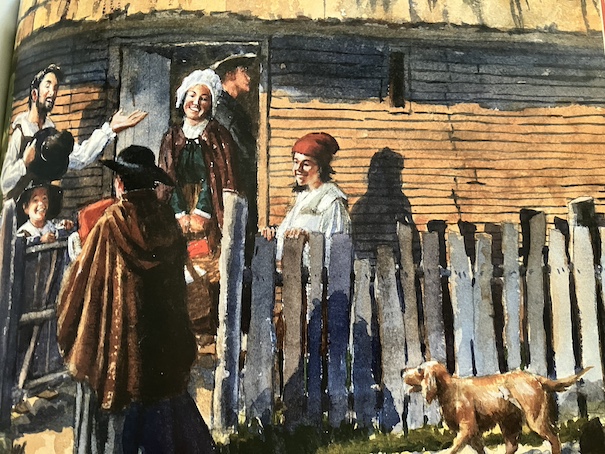


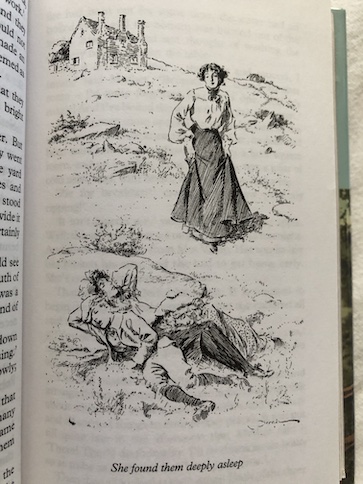
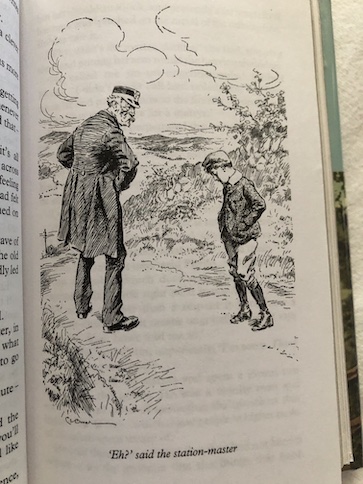

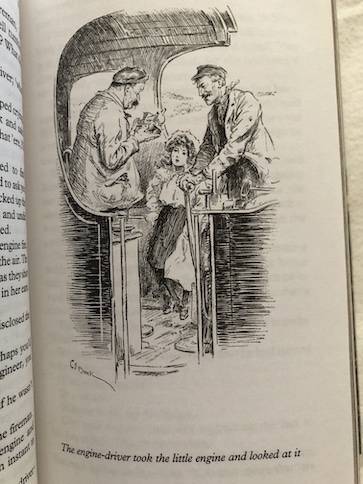

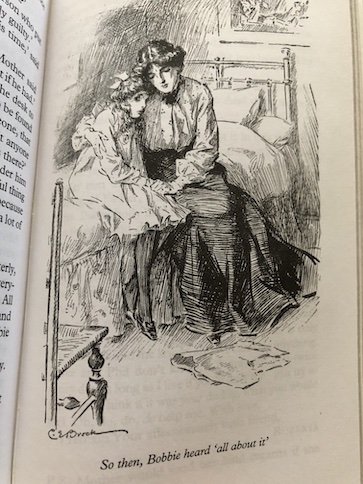


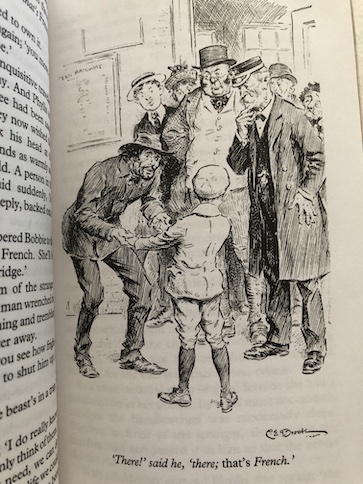


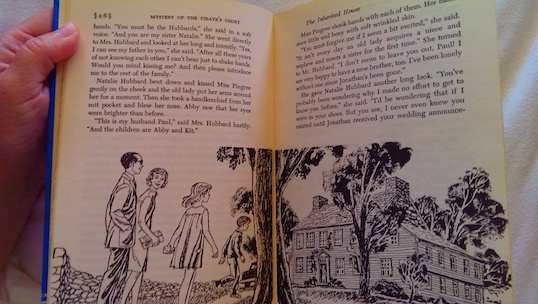


 Are You There, God? It’s Me, Margaret by Judy Blume, 1970.
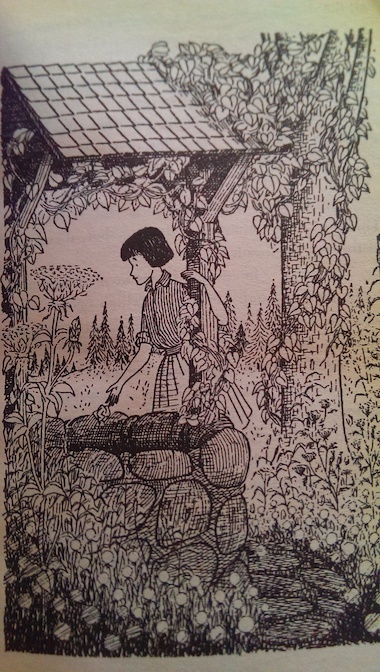
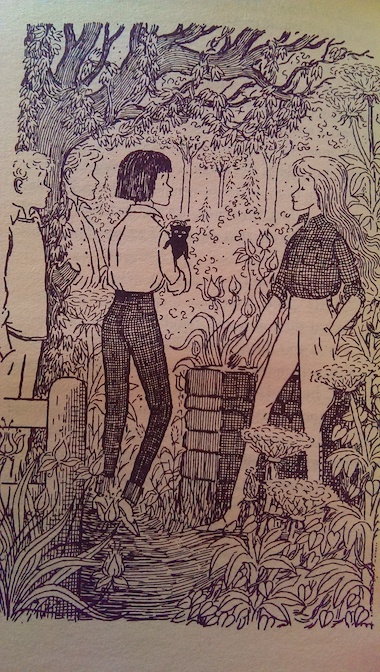

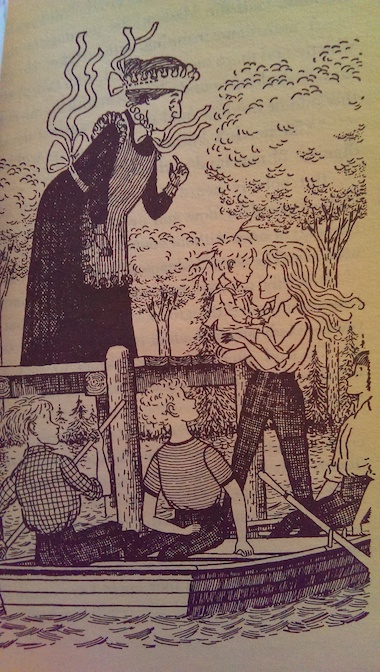
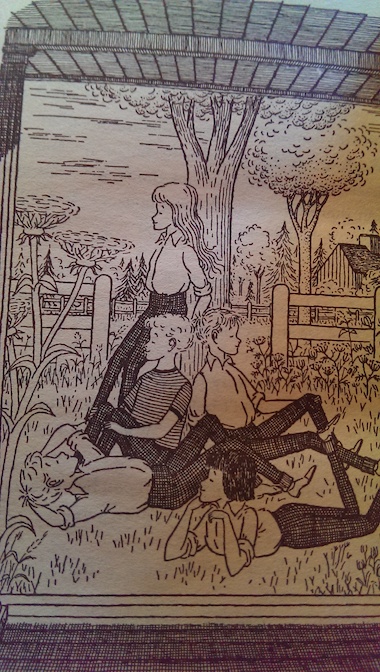

 It’s 1851, and Professor Carver of Boston is living in an apartment above a candle shop with his wife and two children, his son Jamie and daughter Lorna. One day, a man named Mr. Giddings comes to see Professor Carver to request his help. For years, he has wanted to buy a particular farm with a beautiful house called Windy Hill. However, when he finally succeeded in buying the house and he and his wife went to live there, his wife became very upset. She said that she felt strange in the house and that she had seen a ghost. Now, she is too upset to return to Windy Hill. Mr. Giddings has heard that Professor Carver once helped a friend get rid of a ghost haunting his house, and he asks the professor if he would be willing to do the same for him.
 Jamie and Lorna are thrilled by the house, which is much bigger than their apartment in town. They can each have their own room, and there is an old tower in the house that was built by a former owner, who was always paranoid about Indian (Native American) attacks (something which had never actually happened). However, their new neighbors are kind of strange. Stover, the handyman, warns them that the house is haunted and also tells them about another neighbor, Miss Miggie. Miss Miggie is an old woman who wanders around, all dressed in white, and likes to spy on people. There is also a boy named Bruno, who apparently can’t walk and often begs at the side of the road with his pet goat, and his father, Tench, who is often drunk and doesn’t want people to make friends with Bruno.
 Then, strange things do start happening in the house. The quilt that Lorna has been making disappears and reappears in another room in the middle of the night. At first, the family thinks maybe she was walking in her sleep because she had done it before, when she was younger. However, there is someone who has been entering the house without the Carvers’ knowledge, and Jamie and Lorna set a trap that catches the mysterious “ghost.”
 The Haunted House by Peggy Parish, 1971.

 Jestress's Forgotten Books and Stories