
Linnets and Valerians by Elizabeth Goudge, 1964.
The Beginning
When the story begins, in 1912, the four Linnet children are in a bad situation. With their father on his way to serve in the army in India with a stop in Egypt, they have been left behind to stay with their grandmother, who is not an indulgent, “grandmotherly” sort of grandmother. First, she’s planning to give away the children’s dog because she doesn’t like dogs. Then, she’s planning to send the two eldest children, Robert and Nan (short for Anna), to boarding school, while keeping the younger children, Betsy and Timothy, to be tutored at home. Worse, she locks the children up by themselves, sometimes in the dark, leaving them to scream.
Admittedly, the reason why they were locked up was because their grandmother had arranged a tea party to show them off to her friends, and the children, not liking parties, had barricaded themselves in a hen house, fighting off the gardener and their grandmother’s companion with rhubarb stalks until they were finally caught. They were locked away from the party guests until they were ready to apologize, which none of them want to do. (Bad strategy on the part of the adults. Some things are their own punishment. Rather than locking the children up, which is cruel, they should have let the children suffer the consequences of their own bad choice. Don’t get them out of the hen house; insist that they stay out there, not being allowed any of the goodies at the party or even being allowed back into the house until they first clean themselves up in the yard. The kids aren’t very good at planning, and I’m sure they don’t have food stores in the hen house. Everyone gets hungry eventually, and it should be clear to the children that it’s their personal choice how long they want to stay that way. But, the grandmother also shouldn’t give away the children’s dog without their consent, so it’s hard to feel too sympathetic here.) Realistically, it is acknowledged that their grandmother could be quite kind with children who were gentle, quiet, and well-behaved, but also realistically, this is not the case with her grandchildren. Frankly, the children are wild and have no inclination to compromise with their grandmother. With all of these things combined, it is clear that life with their grandmother is going to be impossible, and Robert decides that there’s only one thing to do: escape.
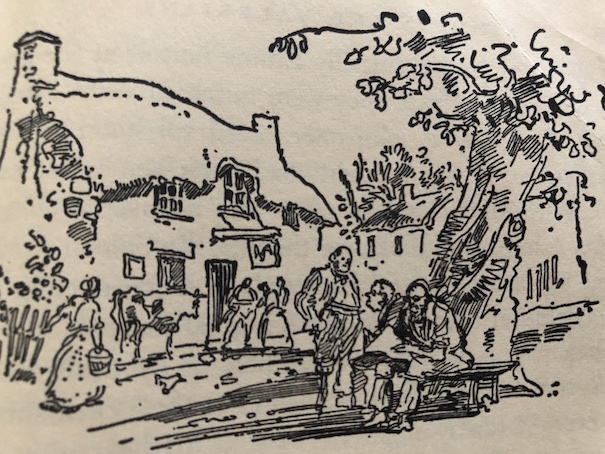
Robert manages to break out of the room where he’s been locked up, and he frees his siblings and their dog, Absolom. The four children set off with their dog, intending to walk to the mountains (just some mountains, somewhere to the west – nowhere specific and no real plan involved) and make their living there because Robert imagines that would be a good idea. As they pass an inn, they spot a pony and cart tied up outside, and they decide to appropriate them for some transportation. Besides, Robert has always wanted a pony. Nan is concerned that they’re stealing, but Robert says that they’re just “borrowing.”
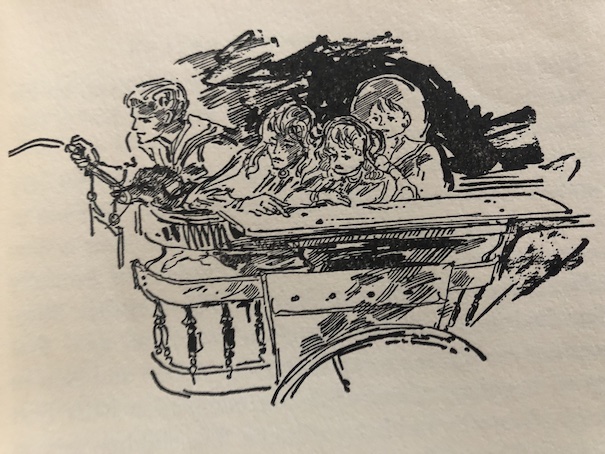
The Linnet children have much more in common with their Uncle Ambrose than with their grandmother or other relatives. Uncle Ambrose is similarly unsociable and impatient. Uncle Ambrose was once a teacher, but now that he’s retired, he has no desire to spend time with children again. He also doesn’t like dogs. But, it turns out that the pony they “borrowed” belongs to him and takes them to his house. When Uncle Ambrose realizes who the children are, he takes them into his house and keeps them over night, although he doesn’t introduce himself to them immediately. The children feel much more at home with Uncle Ambrose, even when they don’t know who he is, because his house is a bit shabby and untidy, and he has a pet owl and a cat with kittens. Also, in spite of his gruff manner and assertion that he’s not happy about having children around, Nan has the sense that he actually likes them. The children decide that they’re going to try to behave themselves in this house because they like being there and want to stay.

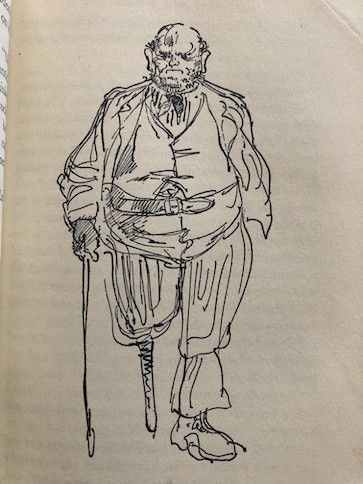
In the morning, Uncle Ambrose goes to town to get the groceries that his peg-legged gardener, Ezra, neglected to get the other day when the children stole the pony and cart in town. When he returns, he also has the children’s luggage with him. Uncle Ambrose went to see his mother about the children, and when he suggested that he could keep them at his house, the children’s grandmother eagerly took him up on the offer. The children are all intensely relieved that they won’t be sent back to their strict grandmother and her overly-tidy house and can stay with their eccentric uncle, the peg-legged gardener who comes home singing in the middle of the night when he gets drunk, and the wonderfully untidy garden outside, where they can play.
Uncle Ambrose confesses to the children that he has actually missed his students since he retired from teaching. He isn’t particularly fond of children by themselves, but he is fond of teaching them. As a condition of the children staying with him, Uncle Ambrose insists that they allow him to educate them. The children agree to this because one of their reasons for running away was so they would not be split up when Robert and Nan were sent to boarding school. The children just want to stay together with their dog. Uncle Ambrose agrees to this, saying that he doesn’t approve of sending young girls to boarding school at all, although he insists that girls be properly educated as well as boys. He says that he wouldn’t even consider sending Robert to boarding school until he’s had a better grounding because he’s not satisfied with the reports he’s had of Robert’s academic abilities. The children aren’t thrilled at the idea of studying, but they agree to it because staying together and studying with Uncle Ambrose sounds better than being split up or the other alternative, being sent to stay with their Uncle Edgar in Birmingham. Also, Uncle Ambrose is willing to give the children some time each day to themselves, to play or do what they want. He won’t even insist that they show up for meals, but if they miss them, they’ll just have to go hungry. (See? I told you it was a better strategy than fighting to get them out of the hen house.) As much as the kids don’t like the idea of studying, they love the idea of having some freedom. Freedom means that adventures could happen.
Now, the story at this point could have been a complete story by itself – a group of wild, undisciplined kids are left with their strict grandmother, and after a battle of wills between the children and the grandmother and some overly-harsh punishment, the children run away, finding a gruff but kindly bachelor uncle who rediscovers the pleasure of having children around and also happens to have once been a teacher and can tutor the children while their father is away, managing to inspire the children to behave a little better and learn to make some better decisions by granting them a little freedom to make some of their own choices instead of being too controlling. That’s all very nice as a single story. However, in this case, all of that is just the background for the story to come. We’re still in just the first part of the book.
Segue to the Magic
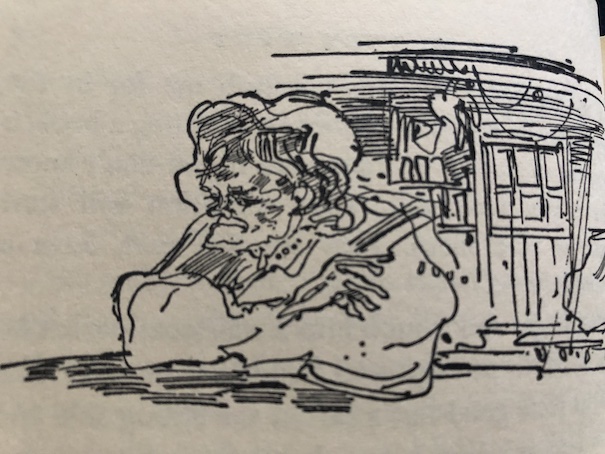
After it’s settled that the children will stay with Uncle Ambrose, they decided to go into town for their first free excursion. They stop at the little store in town to buy some sweets and a picture postcard to send to their grandmother because Nan has been thinking over their time with her and has realized that they were badly behaved and feels guilty about it. The store is managed by Emma Cobley, an old woman in an old-fashioned dress and cap and a red shawl who owns a black cat named Frederick. Emma is a little creepy and she warns the children to stay away from Lion Tor because it’s a dangerous place. (A “tor” is “a high, craggy hill.”)
When the children return to the house, Ezra insists upon introducing them to the bees. The children think that this is a very odd thing to do, but Ezra says that it’s important, and he asks the bees to look after the children. Timothy asks if it’s possible for bees to look out for people, and Ezra says that they once saved his life when he fell into an old tin mine and showed the vicar (the children’s uncle, after he retired from teaching – they’re all living at the vicarage now) where to find him. When Ezra hears that they’ve been to Emma Cobley’s shop, he tells them not to go there anymore. The most Uncle Ambrose buys there is stamps, but neither of them ever buys anything else from her, and Ezra is reluctant to tell the children why. There is something a bit creepy about Emma and some suspicious things in her shop, like the overly-appealing candy and the one postcard that she refuses to allow the children to buy or even look at for long.
As the children start having lessons with Uncle Ambrose, Robert asks him if he will be giving them pocket money. Uncle Ambrose says that he doesn’t give pocket money, but there are opportunities for earning some. He gives them a list of chores that they can do and what he’s willing to pay for doing them. He also points out to Robert that, as the oldest boy, he can’t expect to wriggle out of the tougher chores or leave them to the girls, but if he’s willing to tackle the tougher chores, he will pay him well for it. Uncle Ambrose has somewhat chivalrous sensibilities about what girls can handle, and he also reminds the boys that there are consequences for misbehavior, lying, or stealing. He says that he would never use corporal punishment on a girl, but he has caned boys before and could do the same to his nephews if they give him reason. He tells the children that, from this point on, they cannot interrupt their lesson time with any subjects that aren’t related to the lesson. (He never does hit any of the children and does make reasonable exceptions to this rule later in the story.) It isn’t just the threat of punishment that keeps the children in line, though. It turns out that Uncle Ambrose is an excellent story-teller, and when he starts describing other countries or historical events, the children are captivated. In many ways, Uncle Ambrose makes learning fun because he really loves his subjects and knows how to share what’s fascinating about them with other people. There are parts of the learning that seem like drudgery, but they are balanced out by the parts that are truly fascinating.

The children also gradually begin learning more about the other people who live nearby. There is a black man (called a “Negro” in the story) called Moses Glory Glory Alleluja. (That’s apparently his real name in the story and not just a nickname, to which I say, “God help us all!”) When the children first see him, they’re startled and afraid of him because he’s carrying a curved knife and looks like “a coal-black giant.” They stop and stare at him because they’re afraid, and Ezra tells them not to hurt the poor man’s feelings because he’s a gentle man. As he gets closer to the children, they realize that he’s not as fearsome as they had first thought from a distance. He’s actually very pleasant, and the knife he’s carrying is just a scythe for clearing plants.

Moses works for Lady Alicia (a sort of man-of-all work – cook, gardener, butler, etc.), and Lady Alicia also has a monkey called Abednego. When the kids go with Ezra to pick up a couple of extra beds that Uncle Ambrose is borrowing from Lady Alicia for the children, Abednego takes Betsy’s doll, and she has to chase after him to get it back. In the process, Betsy meets Lady Alicia, an elderly lady in very worn fancy clothes and wearing jewelry. The two of them introduce themselves to each other and explain a little about who they are. Lady Alicia once lived there with her husband and son, but she says that her son, Francis, was “lost” years ago on Lion Tor at the age of eight. She doesn’t explain at this point how that happened or even if her son died or simply disappeared. Her husband also disappeared a few years later overseas because he was a traveler and explorer. She doesn’t seem to expect to see either of them again. This is really where the main plot of the book is introduced.
The Magic
So, now we know that there’s a creepy old lady who owns a shop that isn’t quite what it seems to be and a mysterious and sad old lady whose husband and son have disappeared, and it’s all connected to Lion Tor. The children’s first encounter with Lion Tor happens when Betsy’s siblings realize that she’s missing at Lady Alicia’s house. Not knowing that she’s with Lady Alicia, they assume that she’s wandered off into the woods to pick flowers and go searching for her. Nan finds her way to Lion Tor, where she discovers a cave that is filled with paintings. She knows they weren’t done by cave people ages ago because people in the drawings are wearing modern hats. The artist turns out to be a bearded man in ragged clothes who seems unable to speak.

Nan learns that this man is called Daft Davie, but Nan doesn’t think that’s fair because he seems intelligent and artistically talented, even though he isn’t able to speak. Ezra explains to her that Davie used to work for a blacksmith in another village nearby but some boys kept teasing him and tormenting him because he couldn’t speak, so he eventually went to live by himself at Lion Tor.
The boys eventually find Betsy with Lady Alicia. To their surprise, Lady Alicia seems to be enjoying Betsy’s company, even though she doesn’t normally like visitors. She invites the children to return again with Nan, making an odd comment about how the Linnet family seems “inevitable” but might do her some good.


Uncle Ambrose allows Nan to use the parlor of his house as her private room, where she can do her sewing and darning or just have time to herself. He says that he hasn’t done much with the parlor himself, other than putting furniture in it, because the parlor is usually for the lady of the house, and he’s unmarried. Now that Nan is there, she counts as the lady of the house as the oldest girl, and Uncle Ambrose can tell that she’s a reflective kind of person who can use some quiet time to herself, away from the other children. Nan is appreciative, and she’s also surprised when Uncle Ambrose tells her that the previous lady of the house was Lady Alicia. Before her marriage to the local lord, she was the daughter of the previous vicar, and he found some of her old books in a hidden cabinet in the room.
Uncle Ambrose removed the books from the hidden cabinet and put them on the bookshelf in the room, but out of curiosity, Nan investigates the hidden cabinet and finds that it still contains a notebook. However, the notebook belonged to a young Emma Cobley, not Lady Alicia. The notebook contains what looks like evil witchcraft spells. Nan is alarmed, although later, she’s confused because she sees Emma Cobley at church. She isn’t sure what to think because she can’t imagine that a real, evil witch would go to church. Nan considers that perhaps Emma used to practice witchcraft in her youth but repented later and changed her ways. However, if that’s true, why does Ezra disapprove of her, and how can they explain Emma’s creepy black cat? When Nan studies the spells in the book, seeing spells that can prevent a person from speaking, cause a person to lose his memory, and cause a person to forget affection for another, Emma’s true character and some of the mysterious events of the past begin coming a little more clear.
When Nan talks to Ezra later, he says that Emma Cobley’s father was a black-hearted warlock who taught her evil spells. Ezra says that his own mother practiced white magic and that his family is descended from ancient peoples who were called fairies or gods. Nan had thought that there was something gnome-like in his appearance and isn’t surprised that he’s a bit magical. Ezra further describes the day that Lady Alicia’s son disappeared at Lion Tor. They’d been on a picnic with the boy’s nurse, and the nurse and the boy had been playing hide-and-seek. A mist came up, and they were unable to find the boy. They feared that he might have drowned in the marsh because his cap was nearby, but they were never able to establish that. Some other people thought he might have been kidnapped by gypsies, but there was no evidence of that, either.
In the cemetery of the churchyard, there is a memorial to Lady Alicia’s husband, Hugo Francis Valerian, and his son who was named after him, but the husband’s death date is unknown. The children argue about what that really means. Robert says that the Valerians are dead, but they’re just not buried at the site of the memorial because they were lost and nobody knows exactly when they died and where the bodies are. However, Betsy has the feeling that they’re not dead, and Nan agrees that disappearing isn’t the same as dying. But, is that really true? Are the Valerians alive or dead, and if they are alive, where are they?


Pieces of the past continue falling into place. Betsy and Nan accidentally find old love letters that Emma Cobley wrote to the elder Hugo Valerian … love letters that also contain angry threats when the love wasn’t returned. Pictures that Davie painted on the walls of his cave resemble ones from Lady Alicia’s tapestry. Uncle Ambrose doesn’t believe in the power of witches and thinks that what Ezra has been saying about magic and spells is just superstition, but Ezra knows a few things that Uncle Ambrose doesn’t. He’s the one who knows how to undo Emma Cobley’s wicked spells.
The book is available to borrow and read for free online through Internet Archive. Sometimes, this book also appears under the title The Runaways.
My Reaction and Spoilers
A Few Concerns
I didn’t like the parts with the harsh punishments or threats of it for the children. Locking children up or caning them would be considered child abuse by modern standards, although my feelings about that are somewhat offset because they kids are pretty wild and the book makes it clear that they are badly behaved in the beginning and provoked the punishment they received. I’m willing to let it go partly because nobody actually gets caned and because of the fairy-tale atmosphere of the story. In fairy tales, there is often a cruel relative, and in this case, it’s more like an overly-provoked one at her wit’s end. In either case, the children’s situation with their grandmother in the beginning establishes the reason why they go to live with their eccentric uncle and have magical adventures.
Some people might not care for the different standards for boys and girls in the story. It’s old-fashioned, out of date even for the time when the book was first published, but the setting is also old-fashioned, so I think it’s meant to establish the time and place. It’s common in older children’s books and stories that imitate them for boys to be given more freedom than girls but also for boys to be subjected to harsher, more physical punishments when they get out of line. Uncle Ambrose seems to have similar feelings in that direction, although he does give the boys and girls the same lessons because he feels that girls’ minds also need to be educated, and he allows all of the children to have equal free time and ability to play and explore the area together.
As another reviewer of this book observed, it seems a little strange that the children would be so frightened of Moses when they first meet him because they used to live in India, and you would think that they would be accustomed to the idea that there are people of different races in the world. This can’t be the first time that they’ve seen people who look different, although I suppose they could be a little intimidated by him being especially tall and carrying a scythe. That might be something that would be a little startling to see very suddenly until you look again and realize it’s just a really tall guy with a farm implement because we’re living in the countryside now. I liked the warning from Ezra to the children to behave themselves and not hurt Moses’s feelings. I thought it was good to emphasize that other people’s feelings are important, and that comment helped to humanize Moses because, even if he looks a little strange or intimidating at first, he’s still a human being with feelings.
However, there is another part of the story not too long after that, when they’re looking for Betsy and Robert, who has a habit of play-acting, pretends like he’s a Roman emperor giving a command to a “coal-black Nubian standard-bearer”, saying, “Slave, lead on.” There seems to be some self-awareness in the story that this wasn’t a good thing for Robert to say to Moses (who is a servant, not a slave, although Ezra later says that there is a rumor that Lady Alicia’s husband may have bought him in a slave market overseas when he was young), and Timothy is concerned that Robert might have offended him. The story says that Moses isn’t the kind of person who takes offense or holds grudges, and he seems to understand that Robert is play-acting, but I felt like this somewhat undermined the message of considering other people’s feelings by suggesting that the best way to be is not to have any particular feelings to consider. That’s not something anybody can count on in real life or insist that others provide for them. Real human beings are not like stuffed teddy bears, who can take endless abuse or respond to any comment with a constant smile and still be lovable and want to snuggle afterward, like none of it matters. Real humans have both feelings and limits, and this is one instance where I felt like someone should have thrown a little cold water on Robert’s play-acting. The whole story has an air of unreality about it, which is part of the charm, but I think even fantasy stories should be real about human behavior.
The Fantasy
The fantasy in the story is really very light, compared to most fantasy books. Although it becomes well-established by the end of the book that Emma Cobley is definitely a witch who cast evil spells which caused Lady Alicia to lose both her son and her husband, the spells and their undoing were done in such a way that Uncle Ambrose never seems to realize that it was all magic. Basically, the children and Ezra find the little figures with pins in them that Emma made, and Ezra recites a magical rhyme that allows them to remove the pins, thus breaking the spells. Then, they burn the figures and Emma’s old spell book, destroying her magic forever. After that, Lady Alicia’s son and husband both come back, Emma actually becomes a much nicer person, and everybody lives happily ever after.
The pace of the story is fairly slow, which is actually part of its atmospheric charm. For a book dealing with an evil witch, black magic spells, and unhappy people, it’s really pretty relaxing. I think part of that effect is because of its gradual pace and also because there are never very serious consequences for anybody in the story. It’s sad that Lady Alicia, her husband, and her son were all parted from each other for a period of years, but when the spells are broken, they are pretty quickly very happy again. Emma Cobley does try to prevent the children from learning her secrets and breaking the spells, but really, nothing bad happens to the children at all. There is one semi-frightening part where the boys and their dog are up a tree with Emma and her friends below it, but then Uncle Ambrose comes and takes the children home, and everything is fine. Emma tries to cast spells on the children at once point, but the children don’t even notice until they find the figures of themselves later. Ezra tells them that the witch’s spells were ineffective against them because he made his own figures of the children first and put them in the church, so they are protected. Emma herself faces no consequences in the end, either. They don’t have to destroy the witch to destroy her magic, and once her magic is gone, she is so changed and everyone is so happy that there’s no retribution, only forgiveness.
On the one hand, the lack of consequences in the story for things the children do make the story feel like the stakes are low. There is a sense of sadness around characters in the story, but is no particular sense of urgency. They are not racing the clock to break the spells, and the villains are pretty ineffectual at putting up obstacles to their success. On the other hand, it seems like most of the story focuses on atmosphere over action. This little village is an enchanting place to be. It’s charming, and the lack of consequences for the children, whether it’s for being racially insensitive or facing down a witch or even just staying out late, make the story feel like a very safe kind of adventure. Uncle Ambrose, Ezra, and their bees won’t let anything serious befall the children, and the worst punishment they have for misbehavior is being sent to bed with gruel (a kind of thin porridge) instead of a proper supper. Uncle Ambrose told them that if they missed meals, it would be their fault, and they’d have to go without. However, he never lets children go to bed hungry, and he even allows them sugar on their gruel. Again, very low stakes, but charmingly so. This story is not stressful, which is good, but it’s not for people looking for excitement.
I was a little impatient with the children for not making the connection between the spells in the book and Daft Davie even after seeing the figurines, including the one with the pin in its tongue. This spell is supposed to prevent people from talking, and who else do they know who can’t talk? There aren’t that many people in the area, and there’s only one person in the story whose main characteristic is an inability to speak. Even as they’re breaking the spells, they don’t know who they’re breaking them for, like they can’t even guess, and Nan is surprised when Davie can suddenly talk afterward. I think this is one of those stories that wants to make readers feel clever for figuring it out before the characters, but that can also feel a little frustrating. If there’s one thing I would change about this story (other than the racial bits), I would want the children to realize the truth about the spells faster and break them more deliberately.
I don’t really mind that Uncle Ambrose never believes in the magic. The book leaves the situation a little open for the characters, and possibly even the readers, to believe that there are other explanations for what happens. Maybe “Davie” lost his memory and ability to speak through an illness. The children in the story know that’s not it, but it’s not important for anybody else to know. Although, perhaps Uncle Ambrose knows more about magic than he lets on because, for reasons that are never explained, his pony never grows old, and his pet owl seems immortal. But, maybe that’s for the readers to decide.
 Jestress's Forgotten Books and Stories