The Princess and the Warrior by Duncan Tonatiuh, 2016.
This story is a folktale about the origins of a pair of volcanoes near modern Mexico City.
The Aztec emperor had a beautiful daughter, Princess Izta, and there were many men who wanted to marry her. They gave her many wonderful gifts, but Princess Izta wasn’t impressed by any of them.
The man she loved was a warrior called Popoca. Unlike her other suitors, he really loved her for the person she was. The emperor disapproved of Princess Izta marrying a warrior who wasn’t from a wealthy, influential, or royal family, but he also knew that Popoca was brave and a good warrior. Their kingdom was at war with a neighboring kingdom, led by Jaguar Claw, so the emperor promised Popoca that, if he could defeat Jaguar Claw, he would allow him to marry Princss Izta.
There were hard battles against Jaguar Claw, but Jaguar Claw gradually realized that he would lose the war. As a final act of revenge before defeat, he sent a messenger to tell Princess Izta that Popoca was dead. Worse still, the messenger gave Princess Izta a potion that would supposedly help her with her shock but which put her into a deep sleep.
When Popoca finally returned victorious, he was shocked and grieved to find Princess Itza in a deep sleep, from which nobody seemed able to wake her. He sat by her side, waiting for her to wake up. The story is based around the two volcanoes, one which looks like a sleeping woman and is dormant, and the other which looks like it’s sitting upright and shows signs of activity.
There’s an author’s note in the back of the book about the origins of the legend and how this version of it differs from other versions and about the volcanoes that inspired the story, Iztaccihuatl and Popocatepetl. There’s also a glossary of Nahuatl words used in the story.
My Reaction
I hadn’t heard this story before, but I enjoy folktales from around the world! The art style is fascinating, incorporating aspects of traditional Aztec art, such as showing things in a very two-dimensional style and human beings in profile. Even though there is fighting depicted in the story, it isn’t too graphic for children
When I was a kid, I would never read author’s notes, but I appreciate them as an adult, especially in cases like this, where they provide more information about the background of legends. This picture book is meant for children, but it can also be fascinating for adults, especially with the addition of the background information.
Kate Sutton and her sister, Alicia, live in the household of Princess Elizabeth in the year 1558. Alicia hates the Hatfield palace because it’s dreary and poorly maintained, apparently on purpose because Queen Mary Tudor resents Princess Elizabeth and wants her and her household to be uncomfortable. Kate and Alicia are maids in the household, and Alicia decides to write a complaining letter to Queen Mary about the condition of the house. Alicia thinks of herself at trying to help Princess Elizabeth by explaining how bad the conditions there are, but her letter gets heated and insulting toward the queen. Alicia is accustomed to getting away with things and with people not being angry with her because she’s pretty. However, Kate has to be the one with a brain, and she sees immediately that Alicia’s letter is bound to cause trouble.
When Princess Elizabeth receives a reply to Alicia’s letter, she summons the sisters to see her. Queen Mary is very direct in her letter about what she thinks of Alicia Sutton’s letter, but she ultimately blames Kate for it because Alicia is a favorite of hers and Kate reminds her too much of her father, who she never liked. She believes that Alicia is only a sweet innocent and that Kate is a corrupting influence, which is unfair. Queen Mary has decided to separate the sisters, taking Alicia into her own household and sending Kate to Sir Geoffrey Heron at his house, Elvenwood Hall, in Darbyshire. The queen wants Kate to stay at Elvenwood Hall and out of her sight or hearing from now on. Kate has no idea where Elvenwood Hall is, other than in Darbyshire, and she doesn’t know Sir Geoffrey Hall. Although Alicia is initially pleased that the queen doesn’t blame her, she becomes remorseful when she realizes that Kate is taking the blame for the letter, when she knew nothing about it. She offers to write to the queen again and confess everything, taking full responsibility for the letter, but Princess Elizabeth, Roger, and Kate herself all tell her not to. The queen’s mind is made up, and another of Alicia’s letters might make it worse.
Princess Elizabeth asks her tutor, Roger, if she knows anything about Sir Geoffrey Heron, and he says that he’s heard of him. The house, Elvenwood Hall, has another name, Perilous Gard. The word “gard” indicates that the place was once a castle, but Roger knows that the house has been rebuilt with old parts cleared away. The other part of the name “perilous”, indicates that there is a superstitious element to the place, like places rumored to be inhabited by fairy folk or associated with pagan religion. One of his old pupils told him some stories about the place, but Roger would rather not repeat them. The accounts that Roger has heard of Sir Geoffrey say that he is an honorable man, so he thinks that Kate will be safe in his household.
Other than that, Kate has little idea of what to expect from Elvenwood Hall. She doesn’t think that Alicia’s dire fears that Kate will be thrown into a dungeon are true. The queen wants her out of her sight, and that’s why she’s sending her to a relatively remote area where she won’t have to deal with her and putting her under the supervision of a supporter of hers, who is supposed to keep her out of trouble. Kate isn’t actually under arrest.
The journey to Elvenwood Hall is rough. On the way, the traveling party meets an old harper, Randal, who Sir Geoffrey says is a little addled since he suffered from a serious illness. When they tell the harper that Kate is coming to stay at Elvenwood, Randal asks if she might be lost like the last girl. Sir Geoffrey seems upset about what Randal says and hurries Randal away to get some food. Then, Kate hears a laugh and sees a strange woman looking at them from the hill. Then, her horse acts up, and when Kate looks again, the woman is gone.
When Kate sees Elvenwood Hall, it doesn’t seem to be very old due to the recent rebuilding, and its interior is luxurious, compared to the house where Princess Elizabeth is living. It is surrounded by ancient stone walls and battlements, and the older parts of the house are more castle-like and crumbling. Sir Geoffrey is still in the process of renovating the castle and turning it into a luxurious manor. The elderly Dorothy, former nurse to Sir Geoffrey’s wife, is the manor’s housekeeper, and Master John is the estate’s steward. Master John seems cold and unfriendly, but he is in charge whenever Sir Geoffrey is away.
Much to Kate’s dismay, Sir Geoffrey will be leaving Kate under Master John’s supervision while he makes a trip to Norfolk. Kate gets the impression that Sir Geoffrey doesn’t like being at Elvenwood, in spite of its renovations, but under the queen’s orders, Kate is required to stay at Elvenwood and not to travel away from it. Sir Geoffrey also tells her that the queen will not allow her to write to anyone or communicate with anyone outside of Elvenwood without Sir Geoffrey’s permission, of in his absence, Master John’s permission. Sir Geoffrey says that he will not be back at Elvenwood until All Saints’ Day, so Kate will be under Master John’s authority for months.
Elvenwood used to belong to Sir Geoffrey’s wife’s family, the Wardens, and old Dorothy doesn’t like Sir Geoffrey or any of the Heron family. Dorothy says that Sir Geoffrey’s brother, Christopher Heron, was responsible for the death of Sir Geoffrey’s daughter, that he had admitted it, and that Sir Geoffrey never punished him for it. Sir Geoffrey knows that Dorothy has been gossiping with Kate, but he is not upset with Kate for it. He also doesn’t offer any further explanations about what Dorothy said before he leaves on his trip to Norfolk.
Elvenwood Hall is pretty comfortable and nobody there mistreats Kate, but she is often lonely because the place is isolated. The farthest Kate is allowed to go from Elvenwood Hall is to the nearby village, but there isn’t much there. When Kate visits the village, people stare at her and act like they’re afraid of her. Even the village priest makes the sign of the cross at her, as if he thinks that she is something evil. Mostly, Kate has Dorothy as her companion.
Then, one day, she notices a pair of visitors, and Dorothy says that they are pilgrims, coming to visit the holy well on the grounds. Kate knows that some people believe that holy wells have the power to heal or make people more beautiful. Dorothy says that the holy well in the cave here will take away sorrow and pain, if a visitor offers a gift in exchange. The gift is for “those who rule over the well”, who Dorothy says were in this land long before saints and Christianity, but she hesitates to say more about it. She says that Kate can ask Master John, if she wants to know.
When Kate decides to take a look at the well herself, Christopher Heron finds her, grabs her, and hauls her away from it. Kate is startled, and he explains that he thought that she would fall in and be lost in the chasm under the rocks there. Kate thinks that’s silly because the well has a wall around it, but Christopher explains that’s what happened to Sir Geoffrey’s daughter, Cecily. At least, that’s what Christopher thinks happens to her.
He explains that Cecily was a little girl and that her mother was dead when he and his brother came to live at Elvenwood. One day, Sir Geoffrey left on one of his trips, and Christopher was responsible for Cecily. Cecily liked playing a kind of hide-and-seek game, but that day, Christopher found her antics irritating. He left her with Master John and went for walk to visit the well. However, he spotted Cecily following him, so he made a mock wish at the well that Cecily, being a spoiled child, would be in the care of someone else. And, that was the last time he saw Cecily. He supposes that she must have fallen when he wasn’t looking, although he didn’t actually see her fall, and they never found her body. They only found one of her shoes on the path. Christopher feels horribly guilty about losing Cecily, and he knows how her loss has hurt his brother, who has been the only person who loved and cared of him since his mother died giving birth to him. For him to lose Cecily when Geoffrey trusted him to take care of her was terrible, and he knows that his brother has not looked at him in the same way since. As a penance, Christopher has been living in the old leper’s hut on the estate whenever his brother is not in residence.
It’s sad, but Kate thinks that Christopher has been spending too much time feeling sorry for himself. She thinks it would be more sensible if he made a confession to the local priest to clear his conscience rather than brooding over what he could have done or should have done. Christopher says that it’s none of her business what he does, and he will give himself whatever penance he thinks is fitting. Kate thinks that Christopher is indulging in pride and self-pity over what was merely an accident.
When Kate helps to rescue a local boy from a flooded river, his grateful mother talks to her about the guardians of the well, insisting that it’s really the fairy folk. She says that they live in a cave under the hill, that the strange woman Kate saw on the hill is their queen, and that they sometimes steal away children to be their slaves … or worse. She and others in the village think that’s what really happened to little Cecily and that the people at the castle know it, too. She thinks they’re purposely letting Christopher blame himself so that Sir Geoffrey won’t learn that his daughter is really alive and a captive of the fairies.
It does seem to Kate that everyone but the Herons genuinely believes in the fairies and that’s what Dorothy was talking about when she was talking about the guardians of the well being older than the saints. She reflects that Roger believed that the stories about fairies are just references to pagan gods and religious practices, and she starts to wonder if the people of Elvenwood, or the Perilous Gard, are secretly practicing pagan rituals with their traditions about the well. If the fairies are only superstition and the remnants of old religion, though, who was the mysterious woman who was watching Kate’s arrival? Could that have actually been a real fairy queen?
Kate tries to discuss it with Christopher, but he’s convinced that he knows what must have happened to Cecily. Then, they have an encounter with Randal, who tells them that the fairies have stolen away his wits. He knows he’s a bit addled and missing some memories, but he insists that the fairies did it to him because they couldn’t use a musician as one of their sacrifices, so they sacrificed his wits instead. Then, he claims that he has seen a little golden-haired girl dancing with the fairies and that she gave him her slipper to show to someone. To their astonishment, Randal produces a little girl’s slipper that matches the one Cecily lost on the path the day she disappeared! This slipper is much more worn than the other one, indicating that the girl who wore it continued to wear it after she disappeared.
Realizing that Cecily is still alive, Christopher wants to make a thorough search of the chasm beneath the well, but Kate urges caution. Whatever is going on at the well and whatever happened to Cecily, she’s sure that the people at the castle know about it, like the woman from the village said. If they don’t want to find and rescue Cecily themselves, it’s because they have something to hide. Sir Geoffrey’s wife seemed eager to leave this place, where Kate is now trapped by the queen’s orders, after her marriage, and Sir Geoffrey only returned here after she was dead, apparently unaware of the dark things that have happened here and still may be happening. Whatever is going on, the people of Perilous Gard are involved, and Kate and Christopher cannot expect any help from anyone in the castle.
People leave coins and gold as gifts to the well when they ask it for something, and Christopher wonders if that could be the secret source of money for the estate that has funded all the luxurious renovations. Master John could be secretly taking all of the offerings the pilgrims leave. On the other hand, the name of the family that once owned this estate was “Warden”, a name that indicates the caretaker for something. Were they once the caretakers of the well, of a remaining cult of pagans that still practices the old religion and its rituals … or perhaps of actual fairies? What was Sir Geoffrey’s wife afraid of in her old family home, and where is little Cecily now? Was she taken as a hostage to ensure that Sir Geoffrey wouldn’t interfere with whatever the people at the castle are doing … or as a potential sacrifice to fairies or pagan gods? They reflect that the story of Tam Lin, about a lover who rescued her beloved from the fairies, was set on All Hallow’s Eve (Halloween). Cecily’s father plans to return on All Saint’s Day, the day after All Hallow’s Eve (November 1). Kate and Christopher need to get word to Sir Geoffrey or rescue Cecily themselves before it’s too late!
This is a Newbery Honor Book. It is available to borrow and read for free online through Internet Archive (multiple copies).
My Reaction and Some Spoilers
This book was fascinating and suspenseful! From the beginning, I wasn’t really sure whether or not this was a fantasy story. It turns out that it’s what I call pseudo-fantasy. It has all the trapping of fantasy, and there are points when it seems like something supernatural might be happening. However, it seems that, in the end, the “fairies” are humans practicing pagan rituals and who have convinced themselves that they are somehow different from the other humans who live above ground, out of the caves. There may be things that indicate that they might be more than that, but overall, Kate believes from the very beginning, that they are merely humans with strange and dangerous practices. As she puts it, “There were never any heathen gods, only heathen people who believed in them.”
Ancient Religion and Folklore
In their attempts to free Cecily, Christopher and Kate become the captives of the “fairies”, and Christopher is in danger of being used as one of their sacrifices. During their captivity, Kate gets to see some of their practices, and she realizes that they control people through things they give them to drink that affect their minds, and she learns what she needs to know about their rituals and beliefs to thwart their plans. In real life, there are a lot of gaps in our knowledge of pre-Christian religion in Britain because the practitioners didn’t leave written records. Mostly, what know about them is based on archaeology and accounts left by the Romans, which may not be entirely accurate. In the story, the “fairies'” beliefs are based around the idea of sacrifices, energy from humans and the earth, pieces of folklore, and probably the use of some kind of psychedelics. The most interesting and revealing part of their beliefs comes when Kate discusses the need for sacrifice with the fairy queen, and the two of them face off with their respective religious beliefs. During their discussion, they compare their beliefs on the subject of God/gods, power, and the purpose of sacrifice.
The fairy queen says that sacrifice is necessary to take the power from a human life and put it into the land and people through to keep them alive. In spite of her group’s isolation and life in the caves, she seems to understand some of the basics of Christianity, and she says that Kate should understand the notion of sacrifice because Christianity is built around one particular sacrifice. The fairy queen compares Christ’s sacrifice to the sacrifices that her cult holds – one person must give their life for the sake of the others as a way of transferring their life energy. Kate is a Christian, and she knows this description of Christ’s sacrifice isn’t completely accurate, but she tries to convince the queen that Christ’s sacrifice makes other sacrifices unnecessary. She says, since Christ gave Himself for the sake of humanity, He has guaranteed humanity’s safety so no others need to pay the price He paid. The queen argues that Christ’s sacrifice happened a long time ago, that His life energy has passed, and their cult holds a sacrifice on All Hallow’s Eve every seven years to renew the energy. Kate argues that Christ was special as the son of God, the only God that truly exists, and that His energy never dies, that it has transferred to living humans. She uses the story of Christopher’s namesake, St. Christopher, as an example of Christ’s power extending to humans. Unfortunately, the queen takes that to mean that Christopher holds some of Christ’s power in him, so sacrificing Christopher would not only give them the power of his life force but the power of Christ as well. Kate realizes that she can’t persuade the fairy queen or make her understand because the queen will just take everything she says and try to fit it into her views and what she has already decided needs to be done.
The philosophical and theological discussion between the two of them was fascinating, but the only way Kate can disrupt the sacrifice and save Christopher is to use the power of stories these people already believe. Kate never cared much for folk tales and ballads before, but she knows that the queen believes in the legend of Tam Lin and that the method the heroine from that story is the only one that can save a sacrifice like Christopher. When Kate finds out that the queen completely believes in that story, she realizes that she has to use the heroine’s solution from the story to rescue Christopher.
This is a point where the actual ritual differs from the magic in the story of Tam Lin. In the story of Tam Lin, he is physically changed into various forms that are frightening or difficult to hold onto, but his lover has to keep hold of him for him to be released from the magic. In this story, Christopher is not actually transformed into anything. It’s more psychological. The fairies believe that people who are going to be sacrificed need to give themselves to the sacrifice willingly, so they use psychological manipulation to convince Christopher that he has nothing to live for, playing on his feelings of guilt for not protecting his niece better and other traumatic pieces of his past, like his mother dying while giving birth to him and his father resenting him because of it. To hold on to him, like the heroine in the story, Kate has to speak up and convince him that the fairies are lying to him and that he does have things to live for. She needs to hold on to his mind and get him to assert his own will to survive while the fairies try to convince him that the only purpose he has left is to offer himself for sacrifice. “Holding on” in this case means holding on to one’s sense of self and one’s purpose, even in the face of doubts, insecurities, personal trauma, and the toxic influence or manipulation of other people.
Personal Growth
In her arguments with Christopher to get him to see that his life is worth living, Kate also confronts her own inner demons and insecurities – that everyone prefers her pretty sister, that she was blamed for things her sister did, etc. Their experiences with the fairies and confronting their personal demons are traumatic for Christopher and Kate, but they grow through them and come away with a better sense of self and greater self-assurance. Kate’s growth shows in the end both because she other women realize that she no longer fits into her clothes and will need new ones and in her maturity with dealing with her old insecurities when she sees her sister again.
There is a point when, because Alicia is thoughtless in the way she talks and has a habit of giving people the wrong impression about things, Kate thinks that Christopher has fallen in love with Alicia as the prettier sister and that he is going to marry her. This is crushing for Kate because Alicia is often favored by people and because she has fallen in love with Christopher through their shared experiences. The fairy queen makes a last appearance in which she offers to give Kate something to make Christopher fall in love with her, but Kate rejects it. While it would hurt for Christopher to reject her in favor of Alicia, and it would add to past hurts she’s had about Alicia being the favored girl, Kate has grown emotionally through the story. She is above the manipulations of the fairies, and whatever she encounters in her life that might cause her hurt, she has the emotional strength to handle it and do the right thing in spite of it. Her rejection of using dirty tricks is rewarded when Christopher proposes to Kate. Her doubts of his love were only because Alicia is thoughtless in the way she says things to people and because of Kate’s remaining insecurities. Kate is happy that she can accept Christopher’s honest love for what it is without attributing it to any manipulation. They’ve been through the worst together, they’ve seen each other’s insecurities, and they love each other all the more for it.
It isn’t just Christopher and Kate who grow through their experiences. Sir Geoffrey realizes that his own bad decisions and blindness to what was going on contributed to the danger his daughter was in. He had no idea what his steward was involved in and what was going on around the castle. He also realizes that little Cecily needs the attention of someone who can devote herself more to the little girl without distraction and a life in a more settled place with greater access to broader society, so he sends Cecily to her aunt’s house in London. Sir Geoffrey’s acceptance of his own failings absolves Christopher of the last of his guilt over Cecily’s disappearance/abduction.
I also appreciated that characters in the story didn’t hate each other even when they had suffered hut because of them. Sir Geoffrey didn’t stop loving his brother when he thought that Christopher had failed to protect Cecily. He found the loss of his daughter difficult to take, and his brother’s role in that was hard on his feelings for his brother. However, Sir Geoffrey never sought to banish or punish Christopher for it, and when he finds out that Christopher is in trouble, he races to the rescue! In the end, Kate also cares about Alicia. Even when she was punished for the letter that Alicia wrote and thought that she might lose Christopher to her, she didn’t let spite and resentment take over. I appreciate the characters’ growth, and I also liked the way they dealt with their emotions when they were hurt and things were difficult. They still care for their family members because, deep down, they still love them and want to do right by them, even when it isn’t easy.
When Saaski was only a few months old, her grandmother, Old Bess, started to notice that she didn’t look right, compared to the rest of the family or even compared to the way she looked when she was a newer baby. The grandmother tried to brush those thoughts aside, thinking that children change as they grow, and people of the village think that she’s odd herself as a widow who lives alone and knows about herbs. All the same, Saaski seems unusually fussy and throws tantrums, becoming a child who’s difficult to control. It could just be colic, or it could be something stranger.
Old Bess begins to put the pieces together about Saaski’s strange behavior. Saaski seems to hate or fear her own father, and Old Bess realizes that it’s because he is a blacksmith and wears an iron buckle on his belt. Saaski has an aversion to iron. She also has an aversion to salt, and only honey seems to soothe her. Saaski’s eyes change color from time to time, and Old Bess realizes that Saaski not only isn’t her grandchild but that she isn’t even human. Saaski is a changeling, a fairy child switched out for the human child before her christening.
When Old Bess tries to tell her daughter and her husband that Saaski is a changeling, her daughter refuses to believe her. Her husband seems to consider that Old Bess might be right, but he absolutely refuses to do the cruel things to the child that Old Bess tries to tell them will cause the fairy folk to take the changeling back and bring them their real daughter. Old Bess says that Saaski must either be made to tell her true age, which she cannot do because she cannot talk yet, or the parents must do cruel things to her, like beat her, burn her, or throw her down a well. The parents say that they cannot do such things to a baby, no matter what kind of baby it is, and they no longer want to discuss the matter, forbidding Old Bess to tell anyone else of her suspicions.
However, in this case, Old Bess is correct. The child known as Saaski is a changeling, and she knows it herself. Although she is in the form of a human baby, she knows that she is not really a baby. Her fairy name was Moql. She doesn’t know her true age, but she knows that she is a fairy youngling and that she used to live among the other fairies in the fairy mound. She doesn’t like being part of this human family, and she wishes that the fairies would take her back, but she knows that, whatever happens, they never will reclaim her. Even if this family treats her cruelly and the fairies decide to remove her from their house, she knows that they will just place her with a different human family.
The problem is that, unlike other fairies, Moql has no ability to hide from humans. Other fairies can change their shape or color, fade, or just wink out of human vision entirely, but Moql can’t. The fairies discovered it one day when Moql was unable to hide from a human shepherd. She is able to escape from the shepherd, but her blunder isn’t forgiven by the other fairies. Moql’s inability to hide from humans was considered a danger to whole band of fairies. She was taken before the prince of the fairies. When he sees that Moql cannot hide from humans, he remembers that a human man entered the fairy mound some time ago and stayed awhile with a fairy woman. Moql’s mother was a fairy, but her father was that human. As a half-human, Moql will never have the abilities that the other fairy younglings have.
When Moql is considered a danger to the other fairies, they feel little attachment to her or desire to keep her. They don’t consider a half-human likely to work out among the fairies, so they decide to swap her for a human child who might make a good servant to the fairies. They’ve done this before with other younglings like Moql. Moql is frightened because she doesn’t know how to be human. Life in the fairy mound is all that she knows. She is only half human, and if she’s not working out as a half fairy, how can she possibly work out as a human? What if she can’t work out as a human? Will she belong anywhere? What if she belongs nowhere?
The fairies tell her that she will start life all over again as a human baby and that she will forget all about the mound and her past life. The other fairies think nothing of casting her out. None of them really care about her. The fairies don’t feel emotions like humans do, and they don’t feel very much about anybody. Moql’s birth mother doesn’t feel anything for her but a mild curiosity and no concern for her future. Fairy mothers don’t really develop an attachment to their children, who are raised communally in the fairy nursery and school. Most fairies don’t even know who their parents are, and they don’t really develop feelings for their parents any more than parents feel attached to their children. Even fairy couples don’t stay together very long, forgetting about each other when they become bored with the relationship and moving on to others. Fairies don’t really care that much about relationships, like brother and sister, and fairies don’t even have a sense of what being a “friend” means. So far, even Moql hasn’t felt that much for anybody, either. Moql’s first human feelings come with her despair about being torn away from everything and everyone she’s ever known, made worse from realizing that nobody else feels anything for her. In their position, she might not feel anything for the loss of one of them because that’s the fairy way, but the human part of Moql longs for belonging and fears what will happen to her if she can’t find a place or people to belong to.
When Moql wakes the next day, she finds herself as the baby Saaski, but in spite of what the fairies said, she still retains her memories of her fairy life. Everything in this human household is strange. She fears the people who are supposed to be her parents, and most of the things that they offer her to soothe her aren’t soothing to a fairy or half-fairy, which is why she screams and throws tantrums. When she hears Old Bess describe her as a changeling and tries to urge her parents to do things to get rid of her, Moql realizes that she is stuck as a human, no matter what happens. Her only hope is to make herself forget or at least pretend that she doesn’t remember being a fairy and to try her best to be the human baby Saaski. It means pretending that she doesn’t have the ability to do things that a human baby shouldn’t be able to do and that she doesn’t know things that she actually does know. It’s not easy, but Saaski’s memories do fade a bit with time. She has vague memories of her past life, but the longer she lives as a human, the less she remembers of her past.
Time passes, and Saaski grows into a child, but the humans around her have an odd feeling about her. They whisper about her behind her parents’ backs. She doesn’t look like other human children, and odd things seem to happen around her. Saaski doesn’t trust Old Bess because she knows that Old Bess has always suspected she was a changeling. Other children in the village have heard their parents whispering about Saaski, and they start asking her if she really is a changeling. By that point, Saaski isn’t sure anymore what that means.
Old Bess does look for an opportunity at first to get the fairies to take back the changeling, considering shoving her into a pond at one point. However, when she realizes that Saaski has real feelings, she cannot bring herself to do it. She realizes that Saaski is also a victim of the switch when she was exchanged for the real Saaski. She doesn’t really belong among them, Saaski knows it, and Old Bess can tell that it hurts that she’s different and that others don’t accept her. Old Bess isn’t sure how much she understands about herself, her past, or her situation, but it’s been as unfair to her as it has been to the real Saaski and her family. The sense of belonging Saaski craves eludes her.
The only place Saaski really feels at home is out on the moor by herself, although she doesn’t really remember why anymore. That is where she first meets the orphan boy, Tam, who travels with the tinker. Tam knows what other people say about Saaski, but he isn’t afraid of her and likes her anyway. He is the first person who really seems to accept Saaski. For a time, her father forbids her to go on the moor again after she has a distressing encounter with a shepherd, who seems to recognize her as being a fairy.
Surprisingly, Old Bess turns out to be an ally of Saaski’s, urging her parents to let her go to the moor again. She knows how restless Saaski has been, confined to their home. The only thing that has soothed her is the old bagpipes that once belonged to her father’s father. She seems to know how to play them without anyone ever teaching her. Eventually, her parents allow her to return to the moor, partly so she won’t keep playing the bagpipes at home. When she’s able to see Tam again, he is happy to see her, and she shows him how she can play the bagpipes.
There are other things that Saaski seems to know without knowing how she knows. She sometimes sees strange symbols that no one else seems able to see. When Old Bess realizes that she can see these symbols, called runes, the two of them discuss it. Old Bess can’t see them herself, but she knows about them. She learned a lot about such things from an old monk she once cared for and from the books he left behind, which is also where she gained her knowledge of herbs.
Old Bess admits to Saaski that, like her, she is considered strange and that she doesn’t quite belong to the village where they live. She was brought to the village as an infant after she was found abandoned in a basket at a crossroads. They left her at the miller’s house, and she was raised by the miller and her wife. She doesn’t know who her birth parents were, where they came from, or why she was abandoned as an infant, and she was told that the gypsies who found her almost drowned her as a changeling before deciding to leave her in the village.
Saaski also knows that she doesn’t belong in the village, although she can’t think where she does belong. She can’t explain how she is able to see and understand fairy runes or do the other things that she seems able to do, apparently without anyone teaching her. Over time, she gradually discovers or rediscovers the things she could do and knew as a fairy. She discovers that she can see fairies when she spots one stealing Tam’s lunch. Later, a group of fairies try to steal her bagpipes. To Saaski’s surprise, she is able to understand their language, and they seem to recognize her.
Then, after the children in the village bully Saaski again, an illness comes to the village, afflicting all of the children but Saaski. Old Bess says it’s a normal childhood illness she’s seen before, and the children probably got it from the gypsy band who recently passed through town. However, the villagers, who have always been suspicious of Saaski whisper that Saaski is responsible, that she has cursed the other children. Saaski denies is, but the villagers are becoming increasingly hostile. They want her out of the villager, but if Saaski can’t stay there, where can she go?
When Saaski tries to bargain with a fairy for some help to hide from the villagers, the fairy reminds her that she was a fairy herself and that she was never able to disappear. Saaski is stunned at this confirmation of the villager’s suspicions about her being a changeling. When she tells Old Bess about it and about the memories that are now returning to her, Saaski realizes that she really doesn’t belong in this human village, at least not fully. Yet, she remembers that she doesn’t fully belong among the fairies, either. Once again, it leaves her the question of where she does belong. Saaski is going to have to take her fate into her own hands, but before she does, she wants to do something for the family that raised her and has loved her, in spite of everything: find the original Saaski in the fairy mound and return her to her parents.
The book is a Newbery Honor Book.
My Reaction
I enjoyed the story because it is a unique portrayal of the folkloric idea of changelings. Another book I read on the same topic, The Half Child, is told from a real world, historical point of view, without fantasy. In that book, changelings are disabled children or children who aren’t “normal” in some way who are labeled as being something other than human or “real” children because people of the past couldn’t understand why they were different or what was wrong with them.
The Moorchild, however, is fantasy and builds on the folklore concept. In other books with changelings, we see the changelings from the point of view of other people, who wonder about their true nature, but this book includes multiple viewpoints, including that of the changeling herself. In folklore, it isn’t entirely clear why the fairies would want to change their children with human children, leaving them to be raised by other people and possibly never seeing them again. This book builds on that concept, portraying the changeling children as being half human and/or flawed in some way, compared to the other fairies. They do use the human children they gain in the swap as servants, which is a folkloric concept, but this story explains why the fairy child left in exchange for the abducted human child is an acceptable loss to the other fairies.
Fairies in this story don’t have the same types of feelings as humans. In fact, they don’t seem to feel much at all, making most of their lives literally care-free because they just don’t care that much about others or the consequences of their actions. However, they don’t feel much emotional attachment to each other, either. Saaski/Moql’s birth mother doesn’t feel much of anything for her daughter or for the man whose life she changed and worsened through her seduction and rejection. She is completely unconcerned about what has happened to them or what will happen to them because of her. Later, Saaski realizes that the fairies are aware that Saaski is blamed for pranks they played, but they don’t mean it spitefully. They genuinely don’t care whether Saaski or someone else is blamed for things they do as long as they never get caught themselves. When Saaski realizes that the other fairies genuinely don’t care about her or what happens to her, she knows that they will never take her back and that she will never rejoin them.
Saaski feels more emotion than full fairies feel, but she doesn’t always respond in acceptable or predictable ways to the humans she lives with because she doesn’t share all of the emotions they feel. She craves a sense of belonging, but she doesn’t really know how to get it or create it. At times, she feels love and gratitude without being entirely sure what she’s feeling or how to express it. Strangely, she also doesn’t experience hate and resentment in the same way humans do. Tam tries to explain it to her, and Saaski recognizes that the children in the village who bully her feel hatred and resentment to her, but she doesn’t feel those emotions herself. She doesn’t like it when they bully her, and she feels hurt by them, but the emotion of hating and wanting to hurt them back isn’t there. I thought that was an interesting concept, exploring someone with non-conforming emotional reactions. Saaski’s emotions in the story are explained by her fairy heritage, but what made it interesting to me is that neurodivergent humans also have different ways of experiencing and showing emotions that can change the way they are accepted by or interact with other people, which brings the idea of changelings full circle, back to the concept of children who aren’t like other children from birth or a young age.
I thought it was fascinating that we get to see things both from Saaski’s point of view and from the point of view of other people, particularly Old Bess. Old Bess is the first to realize that Saaski is a changeling and not her “real” granddaughter. She understandably wants her real granddaughter back, and she knows the folklore that fairy folk will take back a changeling who has been abused. However, Saaski’s parents, even knowing or suspecting that Saaski might be a changeling, cannot bring themselves to do anything cruel to her, and Old Bess comes around to that point of view herself. By observing Saaski, she sees that Saaski is a child, if not an entirely human child, and an innocent victim of the switch herself, with feelings and a difficult life ahead of her because she doesn’t fit in with this community.
Old Bess also recalls and admits to Saaski that her own past isn’t quite normal and that she also doesn’t quite fit in. I wondered if we would ever get the full story of Old Bess’s past, but unfortunately, we don’t. We know that she was abandoned as an infant, apparently rejected by her birth family or guardian, but we never learn why. I had wondered at first if Old Bess would turn out to be a grown-up changeling. It seems that people once suspected that about her, but apparently, she isn’t because she can’t see the fairies or fairy writing in the way Saaski does. It seems that Old Bess is fully human and not half fairy. In the end, the important point is that, when Old Bess is honest with herself and Saaski about her past, her story has some elements in common with Saaski’s situation. They have both known rejection and abandonment, the difficulties of trying to fit in when they don’t entirely fit in, and the love of people who accepted them and cared for them in spite of it all.
I appreciated that Saaski’s parents do their best to love and care for Saaski even when they know she’s strange and may not be their daughter. They stand up to the people who bully their daughter and pressure them to get rid of her. In fact, in the end, even after Saaski and Tam set out into the world together and they have their birth daughter back, they still think of Saaski and miss her sometimes. Saaski was no replacement for the daughter they lost when they were switched, but at the same time, they realize that their birth daughter doesn’t entirely replace Saaski in their lives and affections. In the end, it’s like they’ve had two daughters, both of them “real”, although one didn’t fit in and eventually left to start a new life elsewhere.
Lucy Emerson (Lucy Watson after her marriage) and her family live in an English village in the 17th century. As an elderly woman in her early 60s, she looks back on her sister, Sarah. She has actually had two sisters named Sarah, but it’s her first sister Sarah that she thinks of.
Little Sarah was always a strange child. From when she was very small, she would do odd things, like rocking back and forth while singing odd little wordless songs and being very clumsy. She could never talk clearly, and most people couldn’t really understand her. Because she is abnormal, she is quickly labeled as a “changeling” – a fairy baby substituted for a regular human child. Those who don’t call her a changeling call her a “half-wit.” Only Lucy really values Sarah, whether she’s a little human child or a fairy child, and she tries hard to understand her and take care of her. What Sarah likes best are the little “stone dollies” – small statues of praying children – in the local church, and she always asks Lucy to take her there to see them.
Lucy and Sarah’s mother is often harsh with Sarah out of frustration because she’s difficult to understand and difficult to deal with. Some people in the community think that she should be even more harsh with Sarah than she is because, if she really is a changeling, the fairies or Little People might snatch her back if she isn’t being treated well, being beaten or starved. Their Granny believes that Sarah is a changeling, and she implies it often, comparing a changeling child to a cuckoo’s egg, substituted in the next for another’s bird’s egg. However, their mother never refers to Sarah as a changeling and doesn’t seem to believe that Sarah isn’t really her daughter.
Then, one day, they can’t find Sarah. It seems like she’s wandered off by herself. Lucy looks in the church to see of Sarah went there to look at the “stone dollies.” Sarah isn’t there, but one of the dollies has the daisy chain that Lucy made for Sarah. According to superstition, a daisy chain helps to protect a child from the fairies, and Lucy thinks that, without it, maybe the fairies did carry Sarah away. On the other hand, maybe Sarah fell in the river, and it carried her away. Worried, Lucy desperately searches the village for Sarah, until one woman says that she saw Sarah in the churchyard. She would have walked Sarah home, but Sarah didn’t want to come with her, so she came to get Lucy to take her. Lucy hurries back to the churchyard and finds Sarah there, waiting for her. Lucy demands to know what Sarah has been doing, and she says that she’s been playing with the “little people.” Fearing that Sarah is talking about the fairies, Lucy demands to know if she’s seen them before or had anything to eat from them, but Sarah just says, “Not telling.” Lucy considers that maybe Sarah meant something other than fairies when she said, “little people.” Maybe Sarah just met some other young children, or maybe she was talking about playing with the stone dollies again.
One day, Lucy leaves Sarah at home with their mother when she goes to visit their older sister, Martha, who is working at a farm near a neighboring town. Lucy’s mother tells her that Sarah should stay home because it’s such a long walk to the farm, and Sarah is too little to handle it. When Lucy returns home from the visit, she discovers that something disastrous has happened while she was away. Lucy’s mother, who was pregnant and due to give birth in another month or so, accidentally tripped over Sarah in some way and fall, bringing on the birth of the baby too soon. A neighbor who came to borrow some salt found her and called the midwife to come and tend to her. The baby is safely delivered and survives, but Lucy’s mother is in bad condition.
While everyone was busy attending to the mother, little Sarah apparently ran away from the house and disappeared. Lucy is too worried about her mother and the baby at first to leave the house and go looking for Sarah, although she sends her brother to ask the neighbors if they’ve seen her. Her uncle promises to look for her in the countryside and to send out criers to the neighboring towns if she isn’t found. However, the town is also disrupted that day by soldiers who vandalize the town’s church! Later, Lucy goes to look for Sarah in her usual favorite spots, but she doesn’t find her. When Lucy returns home, her brother tells her that their mother has died.
Their father says that their mother’s last wish was that this new baby girl will be named Sarah. Lucy is shocked because she is sure that the sister named she already has is still out there somewhere, lost. Lucy’s father isn’t so sure. He seems to suspect that the rumors were right, that Sarah was always a changeling, that maybe she has gone back to the fairies now, and that this new baby may be the Sarah they were always meant to have. At least, Lucy’s mother seemed to believe that when she told him that this new baby was to be named Sarah. Lucy never thought that her father believed the changeling stories, but he privately admits to Lucy that he doesn’t really know what to think. None of it makes sense to Lucy because, after all, her mother was pregnant with this new baby while Sarah was still at home with them. If the first Sarah was taken away and the “real” Sarah left her in place, surely there would be two babies now – the “real” Sarah plus this other new sister. As it is, there’s only one baby and one missing sister. Lucy father says that if Sarah returns before the baby’s christening, they will choose another name for the baby, but if she’s still gone, she is probably gone for good, and the baby will be named Sarah.
Sarah is not found by the time the baby is christened, so the new baby becomes the “new” Sarah. Sarah’s father and sister, Martha, try to console Lucy about the loss of the first Sarah, saying that it might be for the best and that Lucy’s life will be easier now because Sarah was too wild, too strange, and too difficult to care for. Lucy feels even worse then they say that because, although Sarah was difficult to look after, Lucy truly loved her and didn’t think of her as a burden. Lucy takes care of her new sister for a couple of years, never giving up hope that she will find the first Sarah or at least learn what happened to her. When Lucy’s father decides to remarry, Lucy goes to work on the farm where Martha is working, leaving the new Sarah to be cared for by their stepmother.
It’s only after Lucy goes to work on the farm that she eventually meets someone who is able to tell her at least some of what happened to the first Sarah after she was lost.
The book is available to borrow and read for free online through Internet Archive.
My Reaction and Some Spoilers
I first read this story as a young teen in middle school, and I found it fascinating for the historical and folkloric connections. This story takes place over a period of years. The year when the older Lucy reflects on her sister Sarah is 1700. During the year that the first Sarah disappeared, Lucy is talking to someone else, and they mention the Roundheads and that the king was executed the year before, so they are referring to the execution of Charles I in 1649, putting the year of that conversation at 1650. Most of the book is set around the middle of the 17th century.
In real life, there were stories about changelings, fairy children substituted for human children as infants, and stories like this seem to have been used to explain human children born with deformities or disabilities of various kinds. Modern people might recognize that young Sarah was born with some kind of developmental disability, which is why she’s not like her siblings, but people in the past didn’t have as much ability to diagnose or understand people who were born “different” from others. They couldn’t understand how children with disabilities could be born to apparently healthy parents, especially ones who had produced other healthy children, so they explained it by saying that those children were not the “real” children but substitutes left by the fairies in exchange for the healthy human children, like a cuckoo lays its eggs in the nests of other birds, to be raised and cared for by them. In the story, Lucy’s grandmother makes the comparison between Sarah and the cuckoo bird, although Lucy is very upset by that description.
During the course of the story, Lucy, as the one who seems to understand Sarah the best and love her the most, struggles to find her missing sister and learn what happened to her. At various times, she also struggles to reconcile what other people tell her about Sarah being a changeling or being taken away by fairies with her own love for Sarah as her sister, a real sister and not just a changeling, and her own worries about the more mundane tragedies that can befall a lost and neglected child. There are times when Lucy finds it difficult to ignore the superstitions of the people who raised her, and she finds herself at least halfway believing in fairies and that the girl she loves as a sister is in danger from them. While Sarah is with her, she makes daisy chains for her to wear as a precaution against the fairies taking her, although those who seem to most believe that Sarah is a changeling would be happy to see her reclaimed by fairies in the hopes of getting the “real” child back.
When their dying mother insists that the new baby girl be named Sarah, Lucy is heart-broken, realizing that her mother believes that Sarah was a changeling all along and that this new baby is the “real” daughter that Sarah should have been. However, to Lucy, who always loved the first Sarah, this new baby is the imposter Sarah, the “new” Sarah, taking the place of the Sarah she has loved and cared for. She never feels the same way about the new Sarah as she did for the first Sarah.
What always interested me about the story since I read it when I was young was how it demonstrates that real phenomena and the more inexplicable parts of human nature are part of the basis behind folklore. All through the book, people refer to children like the first Sarah as being “changelings” because they simply don’t understand why these children are the way they are, but the superstition is ultimately less about people genuinely trying to understand something and more finding a way of taking out their emotions on the “problem” or finding an excuse for not really dealing with it. Beyond the adults simply failing to understand children like Sarah and help their development to the best of their ability, their superstitions lead some of them to be deliberately cruel to children like her in the hopes that the fairies will decide to reclaim them. When a child like that runs away or is lost and never recovered, the adults tell themselves that the child was simply taken by the fairies, apparently both as an excuse to stop looking for a child they don’t know how to handle and also to soothe themselves that they don’t have to worry about her anymore because she is being taken care of by her “real” supernatural family. Whether they really believe that’s what is happening on an intellectual level or not, if they can convince themselves and others that it’s true on an emotional level, then they’re basically letting themselves off the hook and getting rid of an unwanted responsibility without guilt, which sounds a lot less noble than trying to understand and help make the situation better. I think that attitude comes from the sense that these people didn’t think it was even possible for them to understand or deal with the situation. From that attitude, the notion of the “problem child” magically vanishing would be appealing.
It’s sad because, as readers realize, that is not actually the case. Sarah’s disappearance isn’t magical. What Lucy learns about Sarah after the time she disappeared contradicts that idea because she did almost die but was rescued by a kind stranger who happened to be in the right place to find her. Sarah’s eventual whereabouts are unknown at the end of the story because she seems to have wandered off when her caretaker died or shortly before that. Until the very end of the story, elderly Lucy thinks that Sarah is probably dead, having spent some time wandering wild somewhere, but the fact that she never learns for sure leaves it open that Sarah could be alive or for Lucy to convince herself that maybe she finally got Sarah back in the end. When another child, who is very like Sarah, is born into the family, elderly Lucy finds herself wondering again about changelings. Is this new child just another unfortunate child who happened to inherit the developmental disability that Sarah had, or has the original Sarah managed to come back to Lucy in another form? They are so much alike that Lucy begins speaking to her as Sarah, and the new child answers just like Sarah always did, leaving the situation ambiguous in Lucy’s mind.
Although Lucy is ambivalent in her feelings at the end of the story, modern readers will likely side with the more scientific explanation of heredity and genes that sometimes reappear in later generations, producing lookalikes and people with similar health conditions. However, I think that the author did a good job of depicting the uncertainty that affects people confronted by situations and conditions they have no capacity to understand. The people of Lucy’s time did not understand what causes developmental disabilities. Because they needed to come up with an explanation for something they couldn’t understand, they developed the superstition about children like Sarah not being fully human or being substitutes for the “real” children, who were abducted by supernatural beings. Lucy finds herself torn between her own sense that Sarah is her real, human sister and that there must be more logical explanations and her own inability to understand what ultimately happened to her sister.
The book is a little sad because readers can recognize that, with better understanding and support, the original Sarah would have lived a much happier life and that Lucy (and others who appear later in the story) wanted to give her the support she needed but just didn’t know how. At the end of the book, Lucy reflects that times have changed since she was younger. Most people don’t believe in changelings and other old superstitions in 1700, not as much as they did in 1650. The Puritans, in particular, reject all such ideas as “pagan superstitions.” Society seems to be moving more in the direction of rationalism. Lucy says, “So there are plenty boasting nowadays that they cannot believe in such hocus-pocus, and that they have what they call a scientific reason for explaining any strange happenings that occur, instead of blaming the fairies, duergars or witches even. Though much that some call scientific I would say was just plain common sense.”
Even though Lucy generally believes in the rational explanations for what likely happened to the first Sarah, she experiences some doubt again at the end of the story, when she’s confronted with the young relative who looks so much like her. I liked the way the story ends on a slightly ambiguous note, with Lucy reconsidering whether or not Sarah was a changeling and if she has come back to her in another form. Modern readers know that’s not likely, but it does speak to the lifelong uncertainty that Lucy has lived with and the element of uncertainty that often surrounds the human experience in general. Even in modern times, there are many things that we don’t fully understand. In the 21st century, we’re more likely to accept the idea that, just because we don’t know the explanation for something doesn’t mean that there is no explanation that humans can understand but that we just don’t understand it yet. Still, that feeling that there are things beyond our mental grasp still appeals to the human imagination. If Lucy wants to believe that she has found Sarah again, after a fashion, it might give her some peace. For me, though, I just feel a little reassured that this member of the next generation might get more of the love, attention, and support that Sarah always needed, at least from Lucy, and less of the superstition surrounding her condition.
In the section at the back of the book about the author, it says that Kathleen Hersom used to volunteer at a hospital working with mentally disabled children. She was inspired to write this story both because of that experience and because of her interest in folklore.
#8 The Diamond Princess and the Magic Ball by Jahnna N. Malcolm, 1998.
Demetra is the Diamond Princess, and she lives in the White Winterland. She and each of her sisters has a different castle and region to rule over in their parents’ kingdom, but they still spend time together. After a visit with her parents, Queen Jemma and King Regal, at the Jewel Palace, Demetra finds herself worrying about how she measures up to her sisters. It seems like each of them has done something special for the people in their region, but Demetra can’t think of anything special she’s done. She talks about it with her friend, Finley the fox, but she can’t think of anything really special to do.
On the way home, they see a wagon with performers giving a show. Princess Demetra wants to stop and watch the show, but Finley warns her that it could be dangerous because they’re near the Mysterious Forest, which is a dangerous region. Demetra insists on stopping anyway, and she meets a fortune teller called Madame Zara. Madame Zara says that she can see that Demetra is a princess, and a boy from the audience says that’s not much for a fortune teller to see because Demetra is obviously wearing her crown.
Madame Zara says that she knows who the boy is, too. His name is Wink, and Madame Zara says that he’s a failed student wizard, rejected by the Wizard Gallivant. Demetra also knows Gallivant because he appointed her as the Diamond Princess. Madame Zara could have figured out Wink’s identity because his wizard robe is peeking out from his pack and has his name on it, but the part that’s harder to figure out is how she knew that the frog hidden in Wink’s shirt is actually his dog. Wink accidentally turned his dog into a frog.
Demetra decides that’s good enough proof that Madame Zara knows things other people don’t, so she asks her to tell her fortune. Madame Zara shows her a beautiful snow globe that looks like it has a scene of the White Winterland inside. Demetra can even hear the voices of people she knows inside it. Madame Zara says that the magic ball tells the future and asks Demetra if she would like to have it. Demetra says she would, although Wink tries to warn her not to trust Madame Zara. However, Demetra lets Madame Zara take a lock of her hair in trade for the magic ball.
As Demetra continues on her way home, she begins to see that the snow that always covers the White Winterland is melting! Something is terribly wrong, and it may have something to do with the magic ball!
The book is available to borrow and read for free online through Internet Archive.
My Reaction
I never actually read any of the Jewel Kingdom books when I was young, but I remember them being sold in stores along with little jeweled charms. It doesn’t take too long to get into the lore and backstory of the series, even though I’ve read the few books I’ve read out of order.
There are recurring villains in this series, especially Lord Bleak and his minions, called Darklings. When the Darklings appears in this story, the book explains who they are and about Lord Bleak’s backstory. Lord Bleak was an evil tyrant who used to rule the Jewel Kingdom, until he was vanquished by Queen Jemma and King Regal. Since then, he’s been trying a series of evil schemes to regain control. The Darklings used to be beautiful, but they were corrupted by evil, and now they’re hideous creatures in dark robes.
Because this story is meant for young children, Demetra makes the mistake of entering into a suspicious trade with a shady character, apparently not having had the “stranger danger” warnings and not heeding her friends’ concerns. Of course, it turns out that the lock of hair she traded for the magic ball was important because it gives the person who holds it power over her and her kingdom. To save her kingdom, she has to get her lock of hair back.
I enjoyed the story, though. It has a colorful setting, and I liked their trip to the Bizarre Bazaar.
Meg and her friends are planning to perform a short play of Peter Pan at a local nursing home. Her friends chose her to be their director, and Megan is really looking forward to it. Then, her mother does something that threatens to derail the project.
Megan’s mother is a lawyer, and she frequently has to work late. The problem is that, this time, she’s going to have to work on Saturday, interviewing witnesses for a trial. However, that Saturday, Megan’s mother was supposed to be at the high school, receiving donations for a food drive. She asks Megan to take care of the food donations, but the problem is that the play Megan and her friends are supposed to perform is also on Saturday. Helping with the food drive would make it difficult for Megan to get to the play on time. Megan’s mother is tired and in no mood to listen to Megan’s objections that it wouldn’t be fair to derail her project with her friends. Her mother just wants Megan to take care of her obligations for her.
While Megan is fuming about the unfairness of the situation and worrying about what to do, she decides to visit their neighbor, Ellie Goodwin. Megan and her friends have a standing invitation to visit and explore her attic, which has the ability to send them to other places and times when they put on different costumes and look at themselves in the mirror.
This time, Megan tries on a purple princess dress, and she finds herself in a Medieval village in France, near a castle. She meets a peasant girl named Michelle. Michelle tells her that there’s been trouble over the matter of the unicorn and the feast.
When Megan asks what she means, Michelle explains that Lord Claude and Lady Helene are hosting a feast and joust at their castle and that the king (who is supposedly Megan’s father in this world) has been invited as an important guest. At the end of the feast, they want to give the king a unicorn’s horn as a gift, but the problem with that is that they have to kill the unicorn to do that. Alternatively, it is possible to befriend a unicorn and get filings from its horn that also have magical powers, but Lord Claude and Lady Helene want to give the king the whole horn. Michelle confesses to Megan that her mother, who works in the castle’s kitchen secretly released the unicorn that they’d captured for the purpose. If they knew she was the one who did it, she would be in serious trouble.
Megan wants to help Michelle and her mother, and as someone who supposedly has the rank of princess, she should have some authority. However, she’s not entirely sure what kind of influence she can have because she knows that she’s not a “real” princess. Everyone thinks that she’s the king’s daughter, but Megan knows that she’s not. Can Megan find another way to save the unicorn’s life and Jacqueline from punishment, without revealing herself as an imposter princess?
The book is available to borrow and read for free online through Internet Archive.
My Reaction and Spoilers
Some children’s books that involve time travel have real, historical information for educational value, but this one, and others in the series, are pure fantasy. Megan doesn’t visit real Medieval France. This is a fairy tale version of the Middle Ages with a unicorn and an invisibility cloak. There are a few accurate details for the Middle Ages, like the practice of using straw or other plants on the floors and the fact that intricate tapestries took years of work to complete. However, the focus is definitely on fantasy.
The invisibility cloak is critical to Megan’s plan to save the unicorn and make the king realize the value and beauty of the unicorn before someone can kill it on his behalf. When the king sees the unicorn for himself and reads the note that Megan wrote for him, he accepts the living unicorn and its presence as his gift instead of the horn. The problem with the unicorn is resolved pretty quickly, and so is Megan’s situation with her mother.
At first, I was expecting that the situation that Megan encountered in the fantasy world would have more of a direct parallel to Megan’s situation in her regular life, but it doesn’t really. It mostly serves as its own adventure, although it does highlight that Megan is creative when it comes to problem-solving and can be relied on in difficult circumstances. What Megan really needs to do is to explain to her mother why it would be difficult for her to take over her mother’s project without compromising her own. When Megan finally explains, it turns out that her mother didn’t know about her project with her friends. Handling both of their projects requires some careful scheduling and a little help from a friend, but they manage to work it out.
I really like the pictures in the Magic Attic Club books because they remind me of the ones in the American Girls books. They have a similar quality.
Mr. Rogers has been watching a tv show called What’s Cooking? with Chef Du Jour, and there’s going to be a Bake-Off contest in town! Because Amelia Bedelia is so good at baking, Mr. and Mrs. Rogers think she should try to enter the contest.
She is a good baker, but Amelia Bedelia has already agreed to spend the day taking care of the bakery called Grace’s Cookie Jar with her Cousin Alcolu while Grace is out of town. Even though Amelia Bedelia is good at baking, it turns out that she isn’t any better at following someone else’s baking and recipe instructions than she is at following any other to do list written by someone else.
When Amelia Bedelia meets Cousin Alcolu at the bakery, they read the notes that Grace left for them. The first note tells them to “start every recipe from scratch”, so of course, they have to scratch each other’s backs before they begin cooking. From there, Amelia Bedelia thinks that cutting a recipe for chocolate chip cookies in half means that they have to literally cut the recipe paper in half. Then, for good measure, Amelia Bedelia thinks they should cut all the chocolate chips in half, too.
When Grace’s instructions ask them to bake “twelve pound cakes”, she assumes that she wants a cake that weighs 12 pounds instead of baking 12 small pound cakes. Fortunately, because that seems like such a big task, Cousin Alcolu suggests that they bake twelve one-pound cakes and just stack them, which is closer to what they’re actually supposed to do.
Amelia Bedelia and Cousin Alcolu get creative with decorating the cheesecakes because Amelia Bedelia doesn’t want to top them with cherries, like Grace asked. She just doesn’t think that cherries and cheese go together. Instead, they decorate them on the theme of cheese. Even though they don’t go about their baking in quite the way they’re supposed to, the things they make are still good.
At the end of the day, Amelia Bedelia is tired, but she bakes one last cake for the Bake-Off. Since she’s so tired, she uses that a creative theme for her “sheet” cake! The book includes the recipe for Amelia Bedelia’s Sheet Cake.
The book is available to borrow and read for free online through Internet Archive.
My Reaction
Amelia Bedelia books are supposed to be ridiculous, playing off of expressions and words with multiple meanings. They aren’t really supposed to make sense so much as poke fun at Amelia Bedelia’s literal interpretations or confusion over instructions that other people give her.
I found this one a little out of character for Amelia Bedelia because one of her signature traits is that she’s good at baking. In other books, her baking skills often save her job or diffuse people’s anger at other instructions that she’s misinterpreted. Of all the things that Amelia Bedelia might understand, you would think she would know how to read a recipe. Although, admittedly, this isn’t the first time that she’s misunderstood something that someone else asked her to bake because she once cut up a calendar when she was asked to bake a “date cake”, apparently not understanding that dates are fruit. Now that I think about it, Amelia Bedelia also seems to bake her best dishes from memory, not usually consulting a recipe. Above all, though, there are a lot of baking and cooking expressions that would be fun to see Amelia Bedelia misinterpret (like when Amelia Bedelia pinches Cousin Alcolu when a recipe calls for a pinch of salt), and that’s what’s really the point of the story.
I did enjoy that, even though Amelia Bedelia and her cousin misinterpret Grace’s instructions, the things they make still taste good, and most of them are more or less what they’re supposed to be, like the cookies and the pound cakes.
Amelia Bedelia and the Baby by Peggy Parish, pictures by Lynn Sweat, 1981.
A friend of Mrs. Rogers, Mrs. Lane, asks Amelia Bedelia to babysit her baby. Amelia Bedelia says she doesn’t know anything about babies, but Mrs. Rogers says that Amelia Bedelia is good with children and points out that babies are also children. When she puts it that way, Amelia Bedelia agrees to babysit. Fortunately, she doesn’t have the idea that babysitting involves sitting on the baby, but being Amelia Bedelia, she finds plenty of ways to misinterpret the list of instructions that Mrs. Lane gives her for taking care of the baby.
When the baby starts to cry, Amelia Bedelia consults the list and sees that she’s supposed to give the baby a bottle. She worries that a baby might break a bottle, though. She tries giving the baby a box and a can instead, but of course, that doesn’t work. Fortunately, Mrs. Carter stops by to drop off some strawberries and helps to fix the baby a bottle.
Amelia Bedelia successfully manages to give the baby a bath but thinks that the instruction to use baby powder means that she should use it on herself and that putting on the baby’s bib means that she should wear it herself. Similarly, Amelia Bedelia thinks that the instruction for naptime mean that she should take a nap herself, and she refuses to do it because she hates naps. Instead, she decides to make strawberry tarts while the baby takes a nap in her play pen.
Amelia Bedelia has some misinterpretations about what the baby is supposed to eat, and when Mr. and Mrs. Lane arrive home, the baby is a mess. Mrs. Lane is upset, realizing that Amelia Bedelia doesn’t understand anything about babies and baby food, but her husband gives her one of Amelia Bedelia’s amazing strawberry tarts. That, and realizing that the baby likes Amelia Bedelia makes Mrs. Lane change her mind.
The book is available to borrow and read for free online through Internet Archive (multiple copies).
My Reaction
Amelia Bedelia books aren’t supposed to be taken seriously. They’re just funny stories about the ways Amelia Bedelia misinterprets instructions people give her. She gets things wrong because she doesn’t understand certain expressions and words with multiple meanings.
In real life, putting someone like Amelia Bedelia in charge of a baby would be a complete disaster, and it could even be dangerous to the baby. Although things work out with the food Amelia Bedelia gives the baby, a real baby could choke on food they’re not old enough to handle. I couldn’t really blame Mrs. Lane for being upset when she realizes that she put someone who didn’t know what they were doing in charge of her small child. No real parents would be willing to let the matter go or invite her to come back in those circumstances just because they liked her strawberry tarts. However, because this is just meant to be a humorous story, everything works out okay in the end.
I did think it was kind of funny, in hindsight, that they never made any jokes about a babysitter sitting on the baby, which would be the kind of literal interpretation that Amelia Bedelia does. They probably couldn’t make that joke because, if Amelia Bedelia made any comment about that, nobody, not even Mr. and Mrs. Rogers, would dare leave Amelia Bedelia in charge of an infant. They also probably wouldn’t want kids to think that might be a funny thing to do. They also never made any jokes about “changing” the baby or having Amelia Bedelia wonder in what way she was supposed to be changed. That’s probably all for the best.
Amelia Bedelia Goes Camping by Peggy Parish, 1985.
Mr. and Mrs. Rogers are going camping, and they take along their maid/housekeeper, Amelia Bedelia. Amelia Bedelia has never been camping before, and she brings along her unique habit of taking things too literally or misinterpreting instructions as Mr. and Mrs. Rogers explain to her what she needs to do while camping.
When Mr. Rogers tries to teach her how to catch a fish, he doesn’t tell her right away that they need to use fishing poles, so Amelia Bedelia just jumps right into the stream and grabs a fish right out of the water. It’s actually kind of an amazing accomplishment, but Mr. Rogers is stunned when Amelia Bedelia lets the fish go, not realizing that they were supposed to keep what they catch. She thought the activity was only about catching.
When Amelia Bedelia is sent to “pitch the tent”, she meets some boys, who say that they’ve heard of Amelia Bedelia. Even knowing that she’s pitching the tent wrong, by simply throwing it and letting it come down wherever it lands, the boys happily participate. When they suggest to Amelia Bedelia that maybe they should move the tent or throw it again when it lands in the bushes, Amelia Bedelia says that isn’t necessary because the tent is conveniently out of the way there.
Amelia Bedelia also gets confused about starting a fire with pine cones because Mr. Rogers didn’t say to use a match, and she thinks “rowing a boat” means to put all the boats in a row. She also doesn’t understand that tent stakes aren’t the same as meat steaks and thinks that sleeping bags are bags that are asleep. The only order that I know that Amelia Bedelia refuses to obey is Mr. Rogers’s order to “go jump in the lake”, and that’s only because she is out of dry clothes! Fortunately, where Amelia shines is preparing a picnic feast for Mr. Rogers’s birthday!
The book is available to borrow and read for free online through Internet Archive.
My Reaction
The Amelia Bedelia books all poke fun at words with multiple meanings and the literal ways that Amelia Bedelia misinterprets various expressions. As with some of the other Amelia Bedelia books, though, the whole premise of the book is based on Amelia Bedelia not only getting confused about the proper meanings of words but also having no knowledge of the subject at hand. Amelia Bedelia doesn’t know what tent stakes are or what pitching a tent involves because she’s never been camping before. In spite of that, even knowing that Amelia Bedelia has no experience in camping and how she usually interprets instructions she doesn’t fully understand, Mr. Rogers assigns her tasks which he should know that she has no idea how to do. Not only does Amelia Bedelia never learn to check her understanding of what other people mean, Mr. and Mrs. Rogers never really learn that they have to teach Amelia Bedelia what she needs to know to do a task and check to make sure that she understands.
As with other books in this series, though, Amelia Bedelia’s cooking skills save the day and her job with Mr. and Mrs. Rogers! Maybe Amelia Bedelia should have just gotten a job in a bakery or something, but then again, she also messes up cooking instructions whenever she tries to do what someone else told her rather than just doing things the way she’s accustomed to doing them.
Amelia Bedelia is just starting her new job as a maid with Mr. and Mrs. Rogers! Mr. and Mrs. Rogers can’t be there to supervise her on her first day, but Mrs. Rogers leaves her a list of things to do and tells her to do exactly what the list says. Little does Mrs. Rogers know just how literal Amelia Bedelia can be!
When Amelia Bedelia reads that she’s suppose to “change the towels”, she thinks that she’s supposed to change the way they look instead of replacing them with new ones. To Amelia Bedelia “dust the furniture” means to add dust to the furniture instead of removing it. The instruction to “draw the drapes” sounds like she should draw a picture of them instead of closing them.
When Mr. and Mrs. Rogers return to see how Amelia Bedelia is doing, they are shocked at what she’s done!
There is only one thing that can save Amelia Bedelia’s job: her ability to make an amazing lemon meringue pie!
The book is available to borrow and read for free online through Internet Archive.
My Reaction
This is the very first book in the Amelia Bedelia series, and I remember reading it when I was a kid. The point of the Amelia Bedelia books is to introduce kids to expressions and words that have multiple meanings. They’re pretty funny to read, although even as a kid, I had trouble believing some of the phrases that Amelia Bedelia takes literally. For example, when she “dusts” the furniture, she thinks that Mrs. Rogers should have told her to “undust” the furniture instead. I see what the author is saying, that it’s funny that we say “dust” the furniture when we’re actually removing dust instead of adding it, but I’ve never heard anybody in real life use the term “undust” the furniture. Amelia Bedelia is funny, but sometimes, it seems like it’s reaching a little to find terms she can credibly misinterpret.
I also don’t think I fully understood the parts about trimming the fat on the steak and dressing the chicken as a kid because I wasn’t used to cooking. I think I got the concept that she was supposed to cut the fat off the steak rather than decorate it as one might trim a Christmas tree (a concept that Amelia Bedelia interprets the opposite way in her Christmas story). What she was supposed to do with the chicken she ended up “dressing” in clothes was a little more confusing. When I was a kid, I knew that people make stuffing or dressing to put in poultry, like chicken or turkey, when they cook it, or they can rub herbs and spices under the skin for flavoring, and I think that’s what Amelia Bedelia was supposed to do here. Even so, there are different types of stuffing or dressing to make and different mixtures of herbs and spices to use, and Mrs. Rogers doesn’t say what kind she wants. Of course, if she was more specific, Amelia Bedelia couldn’t have gotten so confused, and that’s really the point of the story.
I don’t know whether any teachers still use Amelia Bedelia books as examples of words and phrases with multiple meanings, but they are fun in that fashion. A good accompanying activity for these books is a project that I had when I was in school and that I’ve heard students still do – explain how to make a peanut butter sandwich (or any other kind of sandwich) to someone from another planet, who has no idea what a sandwich is or how to make one. Students doing this activity need to be as careful and detailed as they can because some phrases are easy to misinterpret if you assume that the person you’re talking to has no idea how anything works. I remember my old teacher would act out our instructions literally, almost like Amelia Bedelia. For example, if you said, “Put peanut butter on bread” without saying that you need to open the jar first and remove the peanut butter from the jar with a knife, the teacher would set the whole jar of peanut butter on top of the bread and just stare at it. If you explain the peanut butter sandwich instructions well enough that there’s no room for misinterpretation, you may have a future in technical writing!
The pattern established in this first book continues through other books in the series. In many other Amelia Bedelia stories, Amelia Bedelia misinterprets instructions she’s given by taking things too literally or misunderstanding words with multiple meanings, but she always manages to keep her job because she’s really good at baking and makes cakes, pies, and other treats that Mr. and Mrs. Rogers love.
If you read the 50th Anniversary edition of the book, there’s a section in the back about the Amelia Bedelia series and how it’s changed over the years!
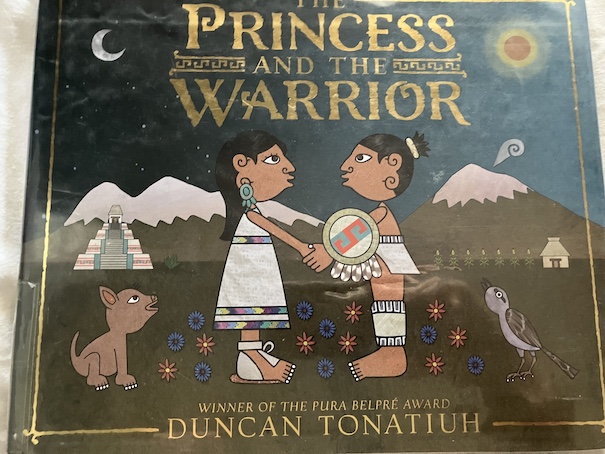
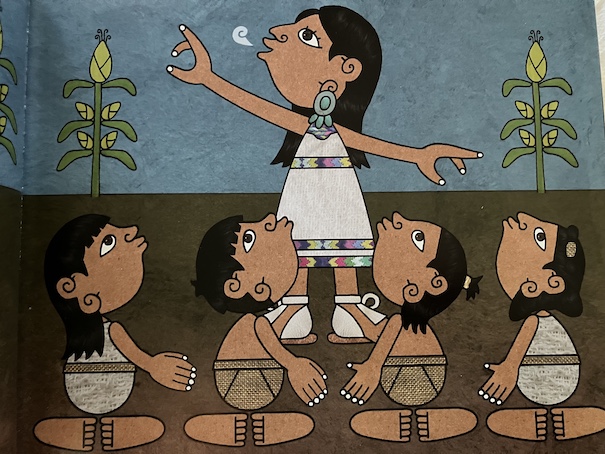
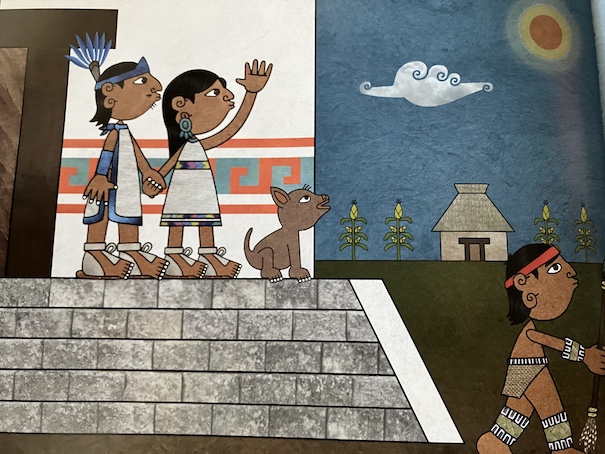
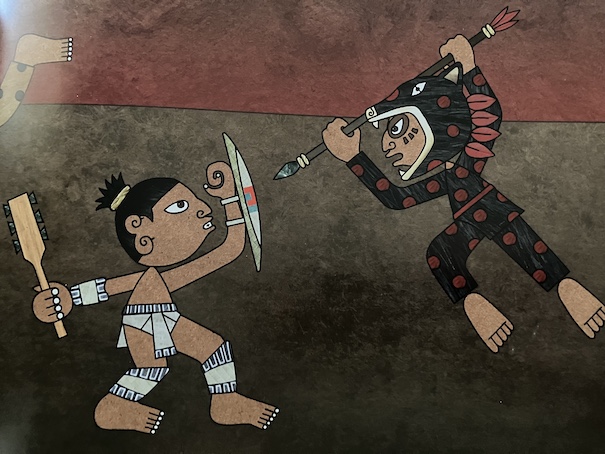
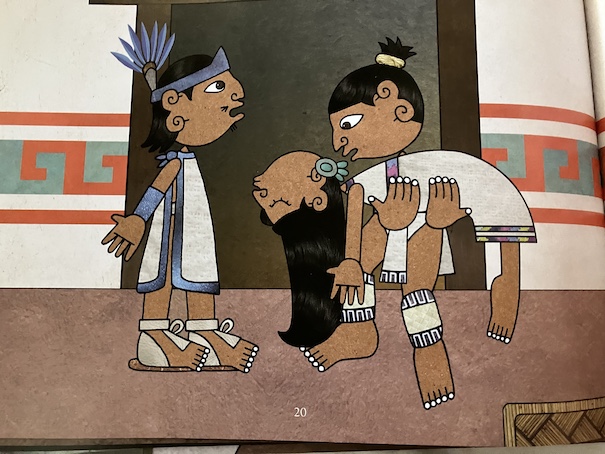
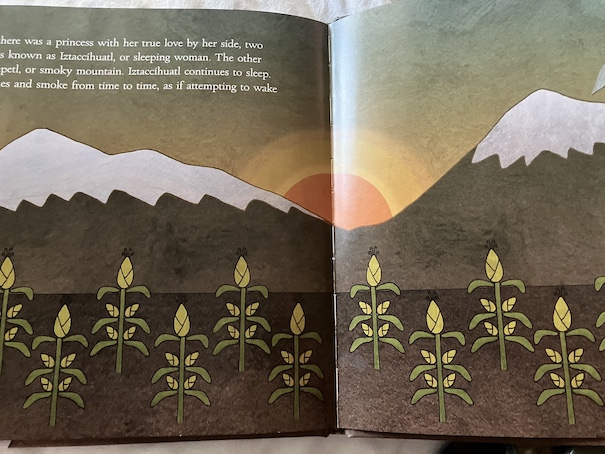
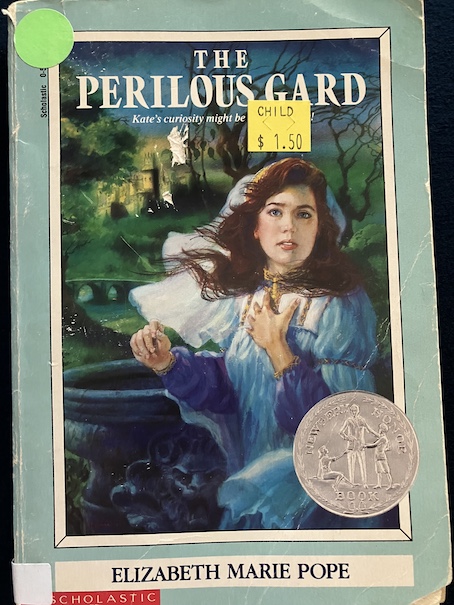
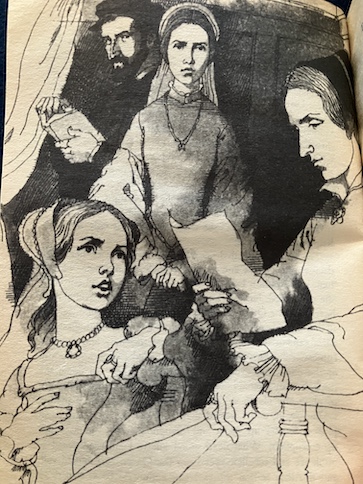
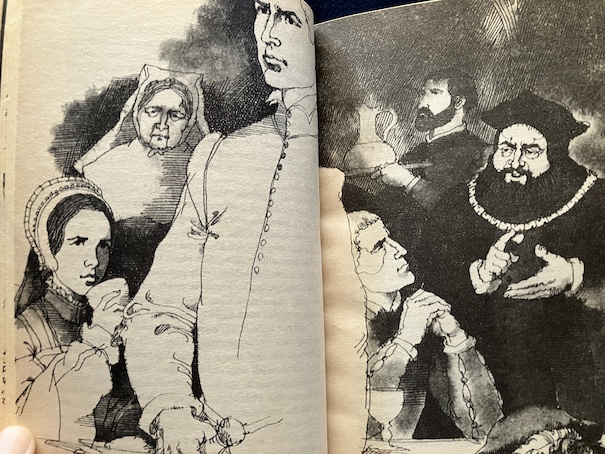
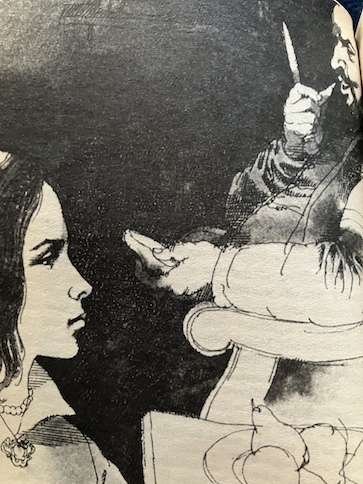
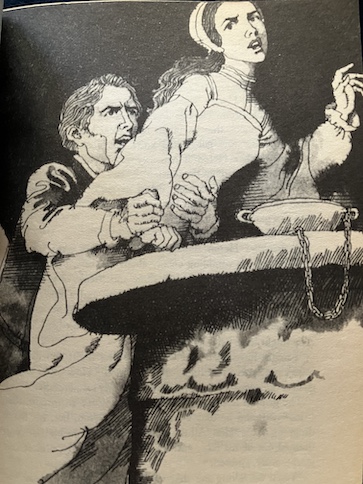
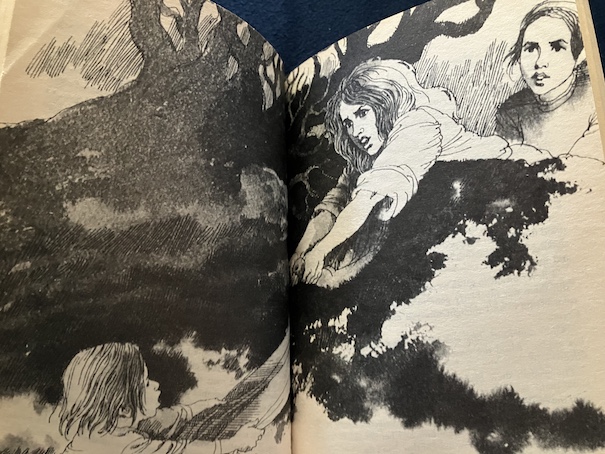
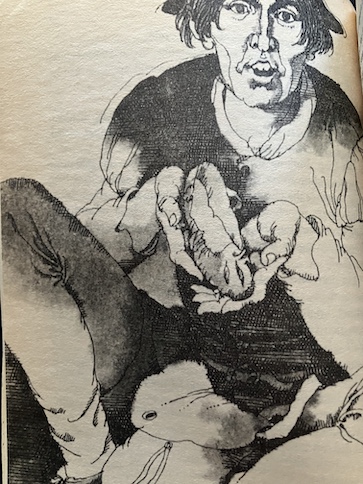
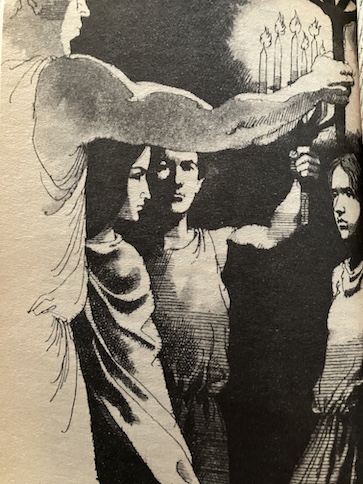
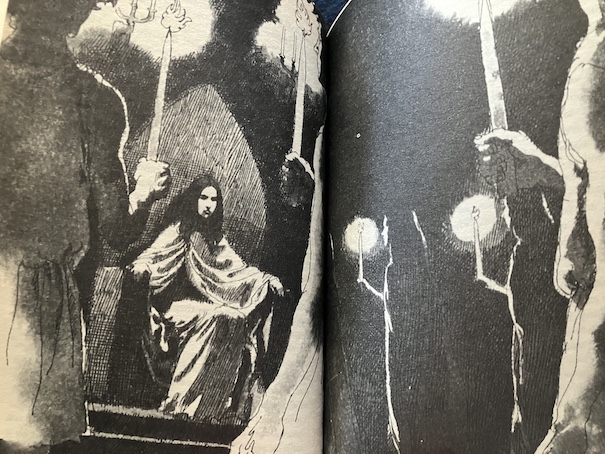
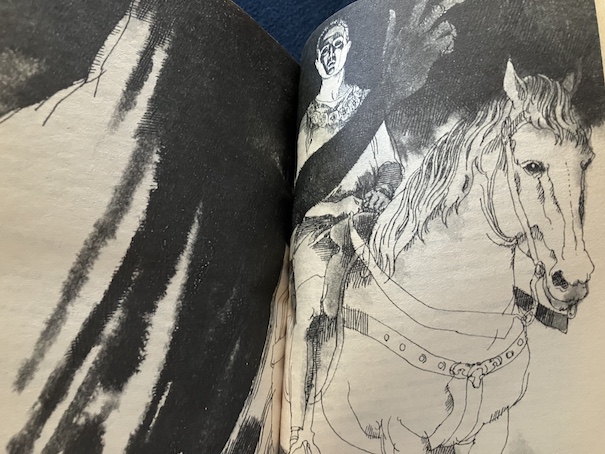
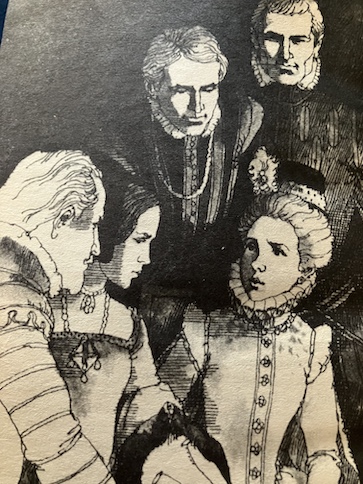
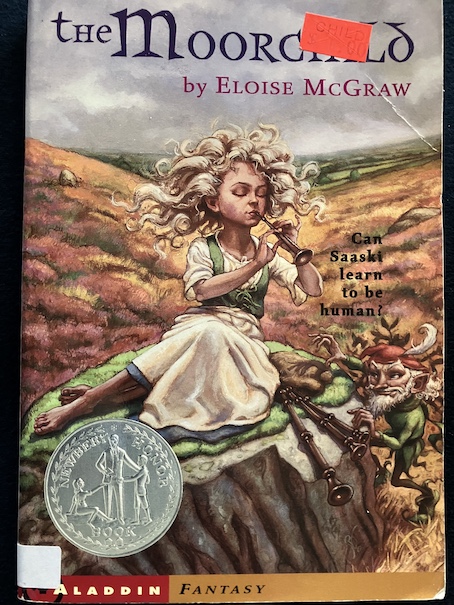
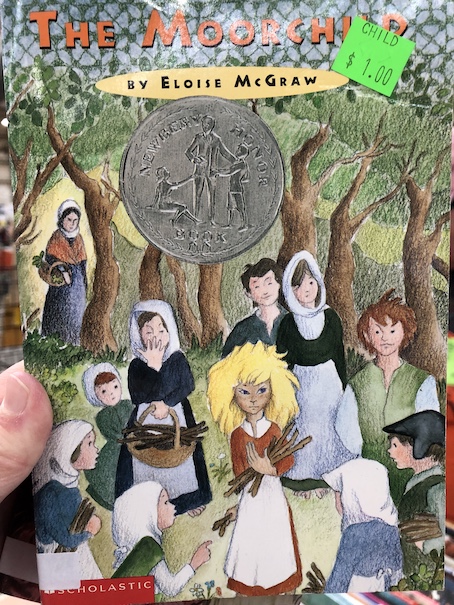
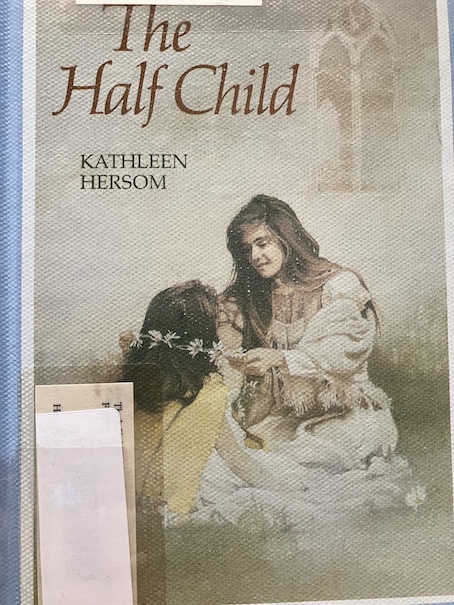
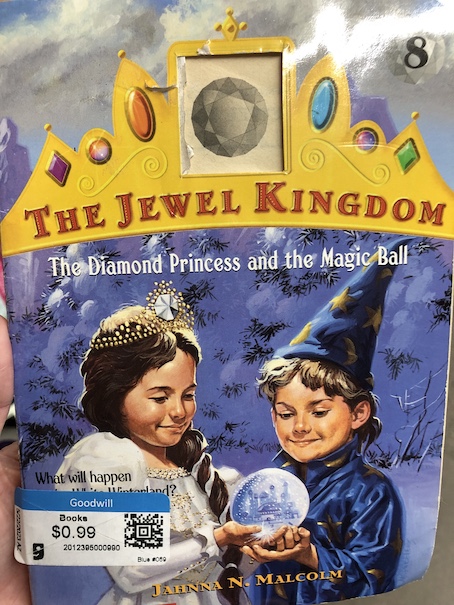
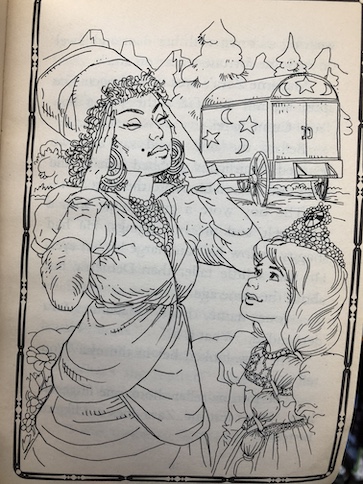
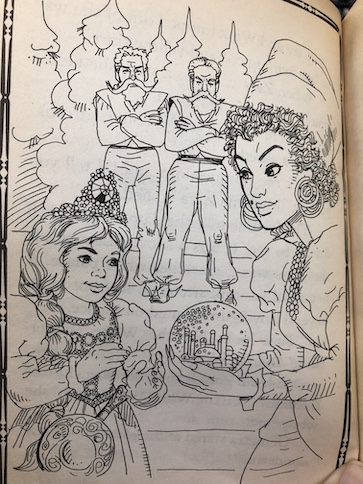
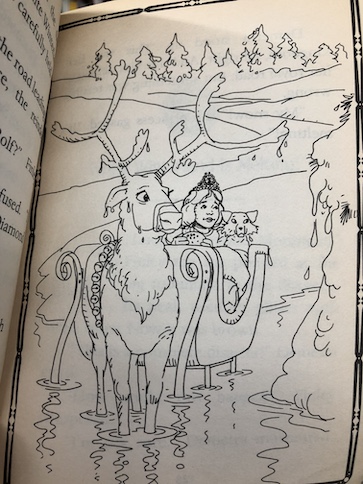
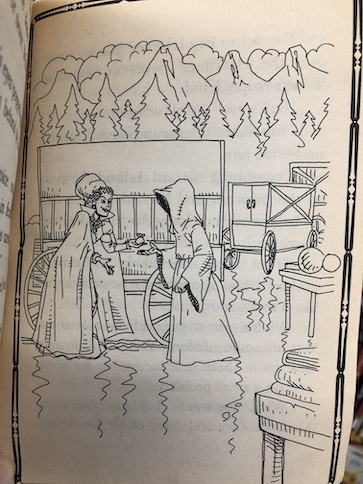
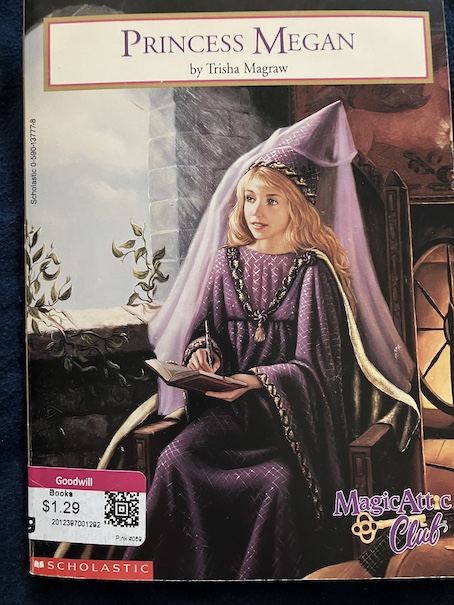
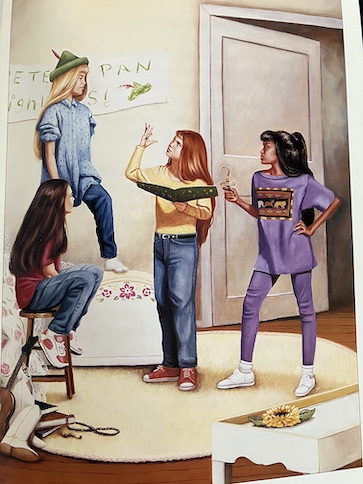
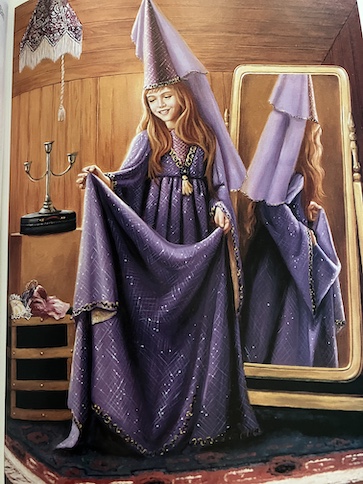
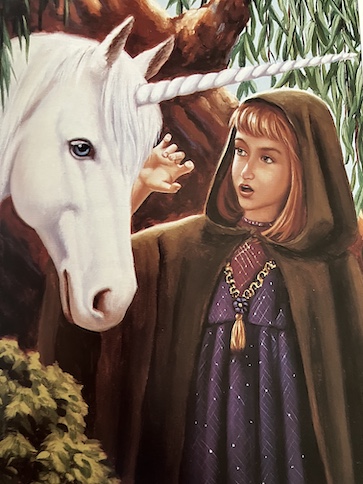
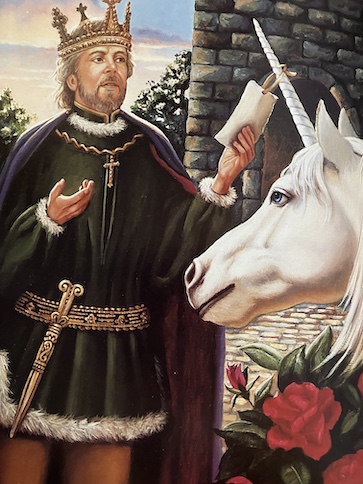
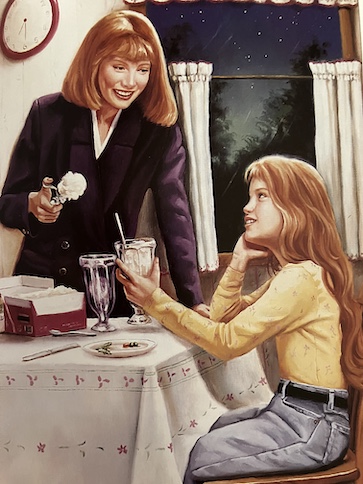
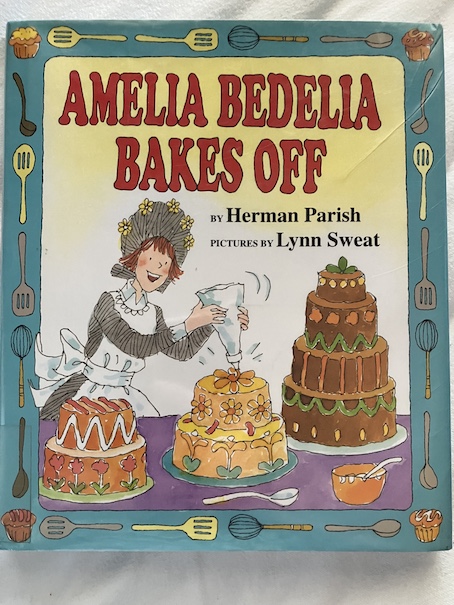
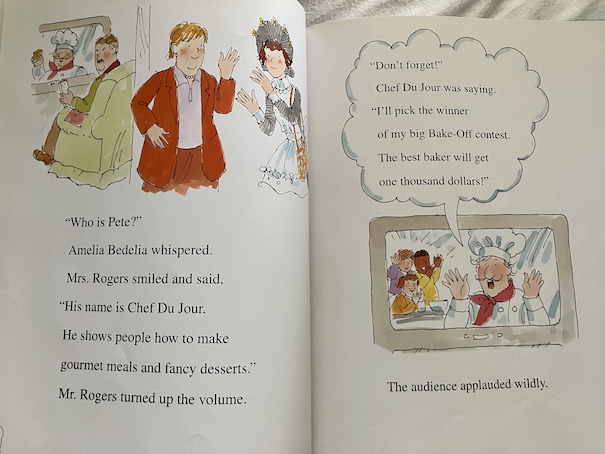
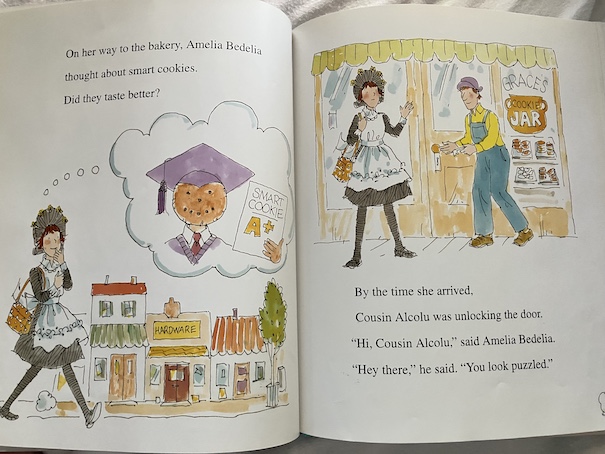
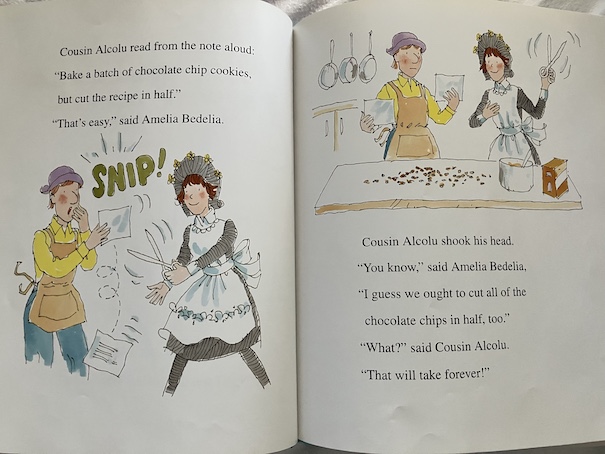
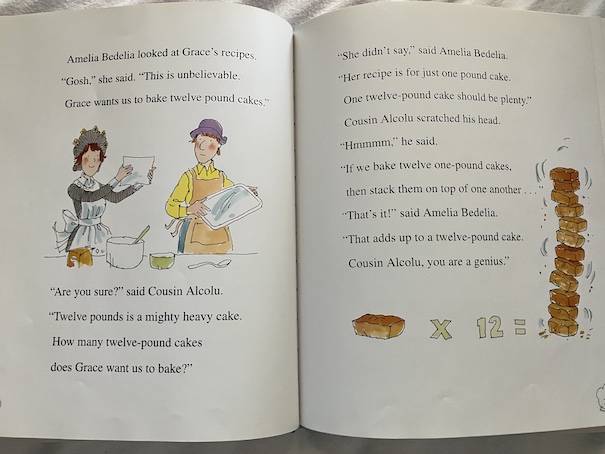
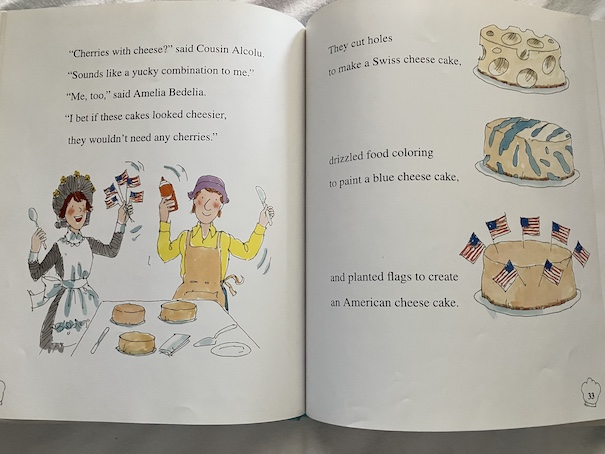
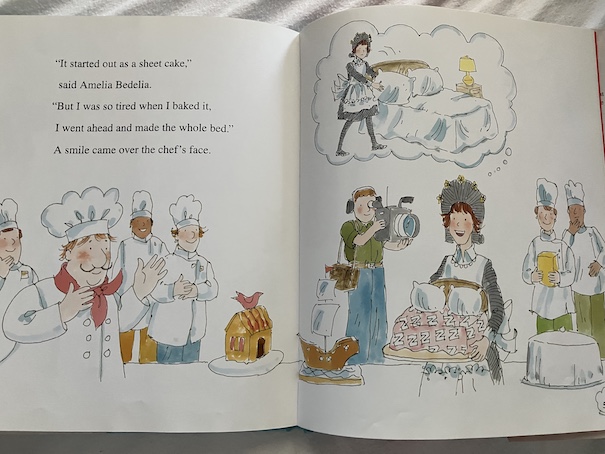
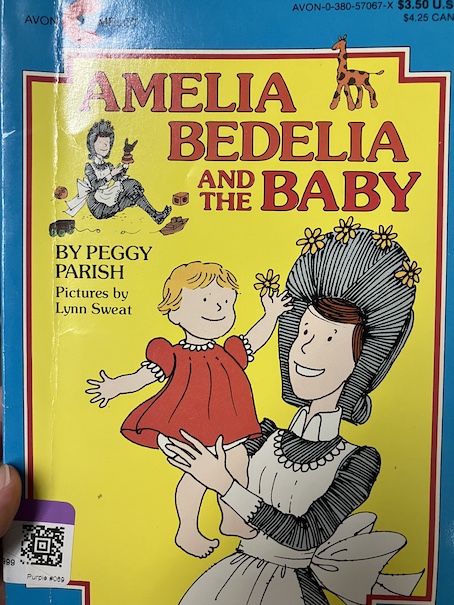
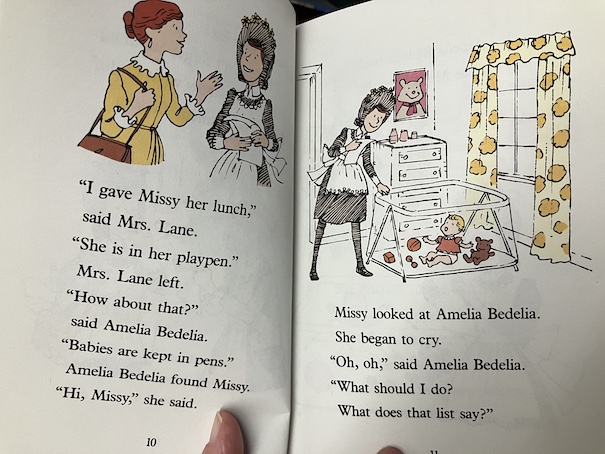
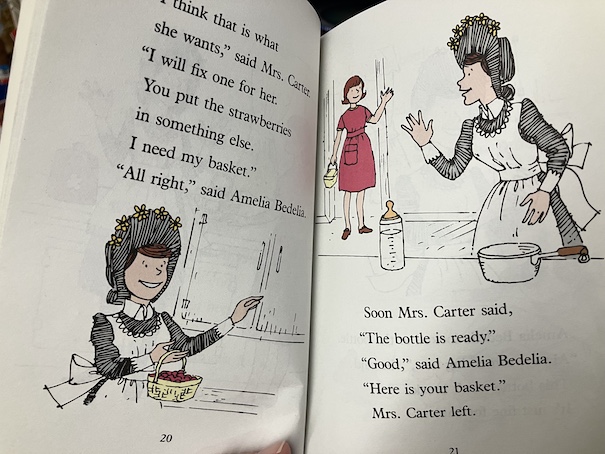
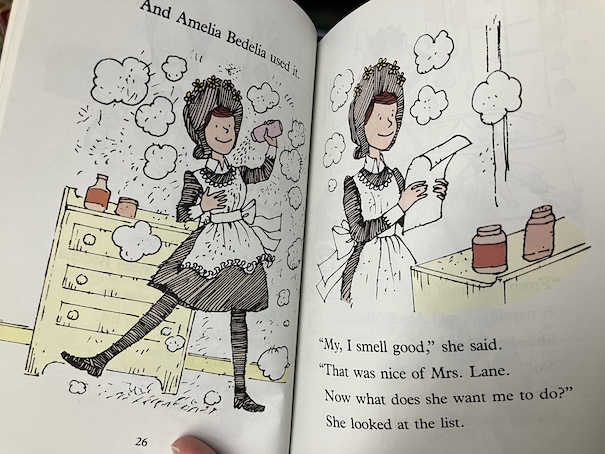

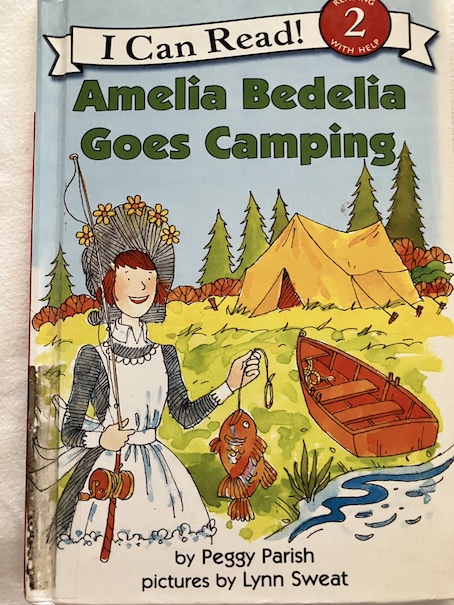
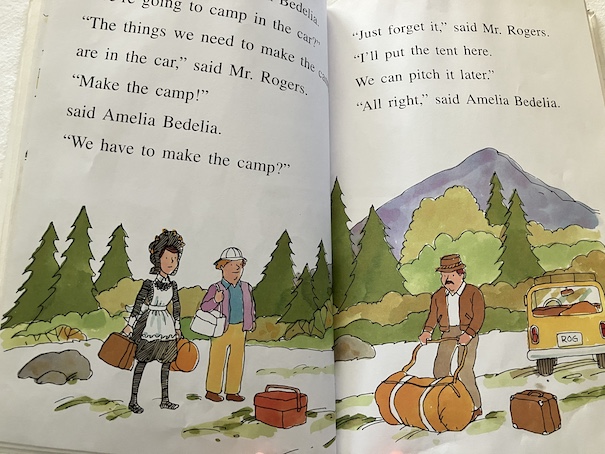
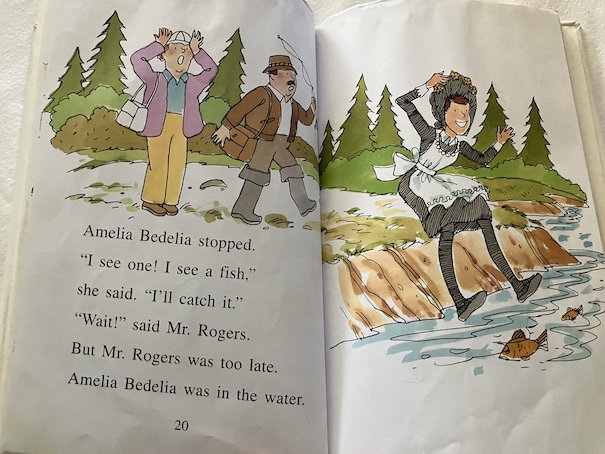
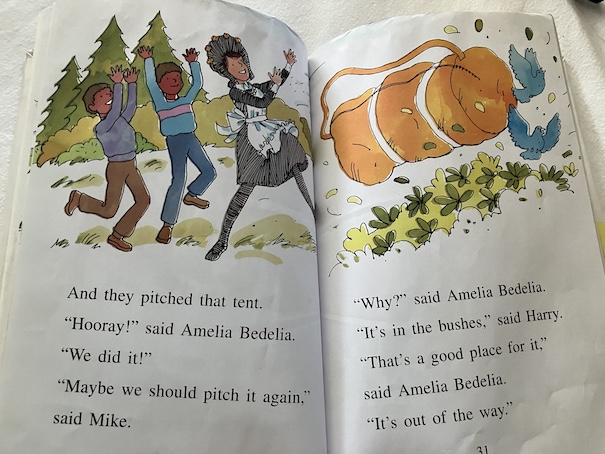
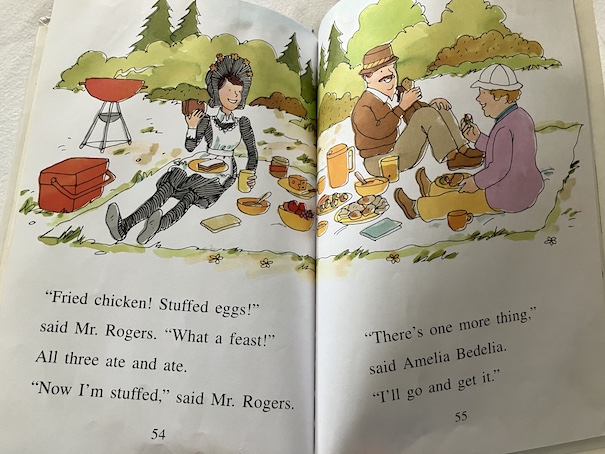
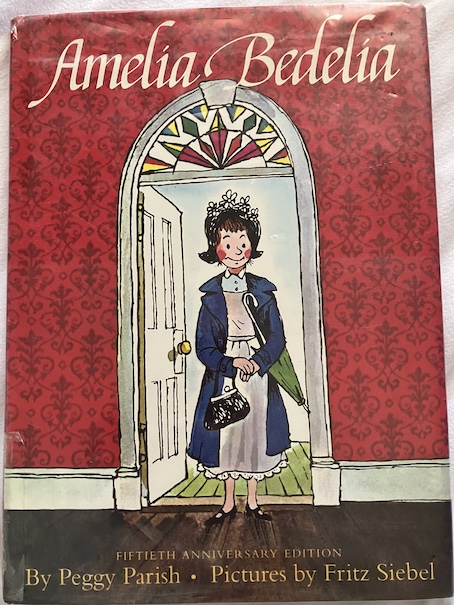

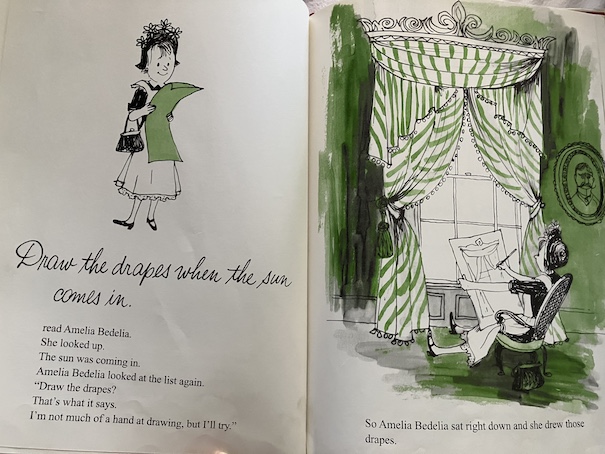
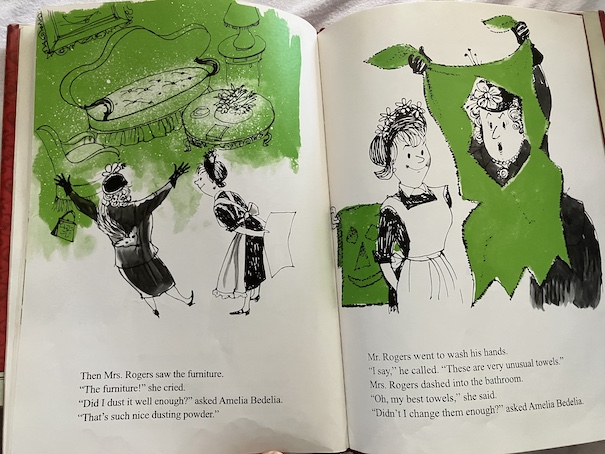
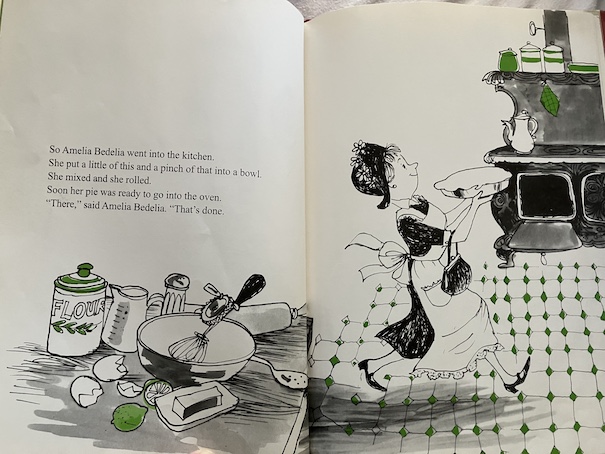
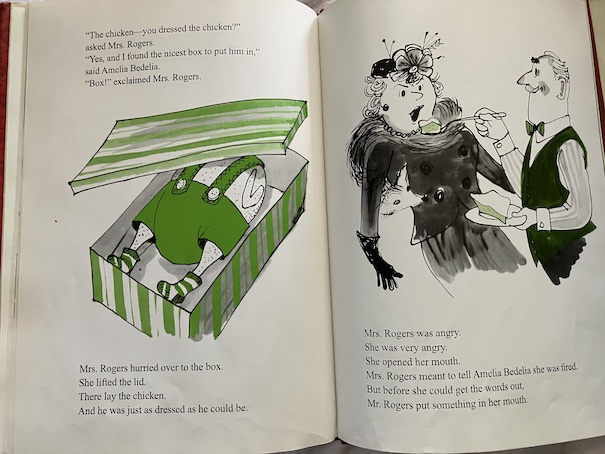

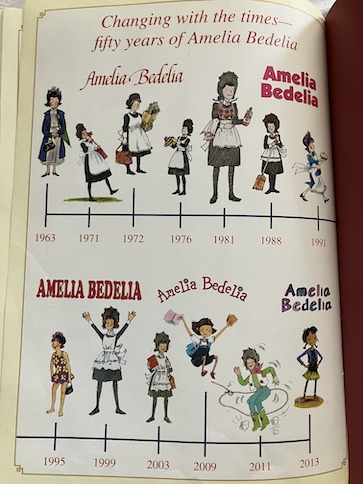
 Jestress's Forgotten Books and Stories