The Christmas Doll

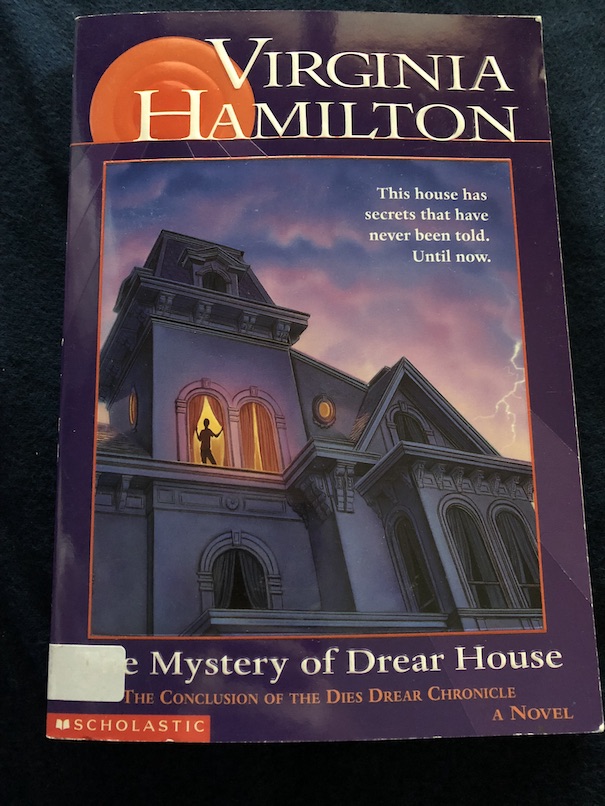
Young Lucy and Glory Wolcott are orphans in London during the Victorian era, 1848. Their parents died during a disease epidemic, and the penniless girls now live in a work house for orphans. They’ve been living there for 5 years, doing sewing for their support, although they are kept in terrible conditions there, with bad food. Then, another girl who lives in the work house dies of an illness, and people worry about the disease infecting others, as it did during the epidemic. Soon, other girls in the work house get sick. Lucy worries about her little sister, who is only 6 years old and already too thin from the bad food, will get sick and die, too. People begin saying that it may be safer living on the streets than being cooped up with the sickness.

The only comfort that Lucy and Glory have in their lives is each other and the story that Lucy tells Glory of her memories of Christmas with their parents. Glory was too young when their parents died to remember their parents or what life was like when their parents were alive, when they had someone to take care of them and actually had proper food. Glory loves the story that Lucy tells about the doll named Morning Glory that their mother gave her for Christmas but which was left behind when the girls were sent to the alms house and then to the work house when their parents died. Glory dreams that, someday, they’ll find that doll again. Lucy tells Glory that, when she finds her doll again, she’ll recognize her.

As more children at the work house die, Lucy increasingly fears that her sister will get sick and die. She thinks about running away from the work house with her sister, but she’s afraid of what they would do on their own. They don’t receive much food or care in the work house, and they’re subject to beatings and abuse, but what would they do on the streets, and how would they survive?

When Glory develops a cough, Lucy is sent to the sick ward at the work house, and Lucy is terrified that she will never come back. Both Lucy and Glory know that none of the girls who are sent to the sick ward with this cough have come back. Terrified, Lucy thinks that the only way to save Glory is to rescue her from the sick ward and get her out of the work house.

The two girls successfully run away, but once they’re on the streets, they have nowhere to go and don’t know what to do. They have nowhere to stay, and they have to sleep in the cold. Without food or money, Lucy trades a small pair of scissors that she brought from the work house for a couple of crumpets from a muffin seller, although a boy later tells her that the scissors were worth much more than that and that the seller took advantage of her. Lucy worries that they have no way to survive on their own because they don’t know what to do and have nothing else that they can sell or trade.

A kind washerwoman suggests to the girls that they go down to the river to join the mudlarks, who spend their days hunting for things to scavenge and sell in the mud at the river’s edge. Sometimes, she say, they find truly amazing things. With nothing else to do, the girls try it. The mud is smelly and disgusting, and at first, all they find are some old bones and bent nails. They’re about to give up when they find something that is truly amazing – a doll!

The doll is worn out, but its head is still good, and immediately, Glory declares that this is Morning Glory, the lost doll that has come back to them, just like the stories that Lucy has told her. With a heavy heart, Lucy realizes that they’re not going to be able to keep the doll. They have nothing else they can sell for money, and if they don’t sell the doll, they will have nothing to buy food and shelter.

At the suggestion of a rag and bone dealer, who is kind enough to let little Glory sleep by her fire for a time, Lucy takes the doll to a dollmaker. She hates having to do it and knows that it will break little Glory’s heart, but they are starving, and their lives are at stake. The doll is in such bad condition that only the head is worth something, and the dollmaker is prepared to offer Lucy a penny for it. That’s not much, but it’s more than Lucy was expecting. Then, something happens that changes everything for the better for Lucy and Glory.

The dollmaker notices the little morning glory flower embroidered on the apron Lucy is wearing. It’s actually Glory’s apron, and Lucy embroidered the flower for her because Glory was named after the morning glory flowers, just like her doll. The dollmaker asks Lucy who did the embroidery, and Lucy timidly admits that she did. At first, she worries that she shouldn’t confess that because she used thread from the work house to do it, and she would surely be punished for stealing if anybody knew. However, the dollmaker is impressed with Lucy’s sewing skills.

Then, before Lucy can leave the shop, the dollmaker gets word that Mary, the girl who sews the hearts on the dolls has been taken seriously ill and isn’t expected to survive. The disease that afflicted the girls in the work house is everywhere. The dollmaker worries because this particular doll shop is known for the signature hearts that are sewn onto their dolls, and the tradition is that only a girl can sew them, not an adult. Losing the girl who sews the hearts isn’t just sad but also serious for the doll shop because it’s only two weeks to Christmas, and they have a lot of orders to fill. If they can’t find another girl who can sew or break the tradition of the doll hearts, they won’t be able to complete their orders and will lose their shop’s reputation. Of course, it doesn’t take the the dollmaker long to realize that the solution to the problem is literally standing right in front of them.

Lucy is stunned when the dollmaker, Miss Thimbleby offers her the job of sewing the hearts on the dolls. It would only be through Christmas, but it would be regular work, something Lucy definitely needs. However, Lucy worries about what she will do with Glory. There doesn’t seem to be a place for her in the shop. Miss Thimbleby will let Lucy stay overnight in the shop to tend the fire, but Lucy isn’t supposed to let anyone else in after the shop is closed. Could she persuade Miss Thimbleby to let Glory in with her, or could Lucy find a place for Glory to be?

When Lucy returns to the rag and bone shop to talk to Glory, she discovers that the husband of the kind lady is much less charitable and has turned Glory out into the streets. In a panic, Lucy searches for her, losing their only penny out of her pocket. Eventually, she finds Glory with the boy who had told her that she was cheated over the matter of the scissors, Nick. Glory has told him about their escape from the work house, and Lucy sadly confesses her sale of the doll to Glory. Fortunately, Nick sees how Lucy’s new job at the doll shop can help them all.

Since the job requires Lucy to spend every night in the doll shop, tending the fire and keeping warm, Nick points out that Lucy can sneak him and Glory in after hours. In return for being allowed to sleep in the warm doll shop with the girls, Nick says that he will look after Glory during the day and that she can help him to make a little money that will help support them all. Nick is also a homeless orphan, and he get money catching rats and doing acrobatics on the streets. Glory doesn’t like the idea of the rats much, but Nick has her passing the hat while he performs on the streets. Her pitiful cough will help them get more charity.

It’s not an ideal situation, but Lucy agrees that this is the best way to manage things. Lucy continues to worry about her little sister, running around in the cold with Nick during the day, although they do have a warm place to sleep now. At night, Lucy lets Glory hold the doll Morning Glory, although she reminds Glory that the doll now belongs to the shop.

While working at the shop, Lucy notices that Miss Thimbleby also has a favorite doll, one that is never for sale. She calls this doll Charlotte and talks to it when she thinks nobody can hear here. The other women who work in the doll shop explain to Lucy that Charlotte, the real Charlotte, was Miss Thimbleby’s little sister. The sisters were orphans, like Lucy and Glory. Charlotte was much younger than Miss Thimbleby, and Miss Thimbleby raised her. Charlotte was the original hearts girl of the shop, the one who always sewed the signature hearts on the dolls and started the tradition. Sadly, Charlotte died young of an illness. The doll Charlotte was the very last one that the girl Charlotte gave a heart to before she died, and that’s why Miss Thimbleby refuses to sell it and sometimes talks to it, like she’s talking to her sister.

As Christmas approaches and Glory’s illness becomes worse, Lucy increasingly fears for her life. Glory’s illness is particularly bad on Christmas Eve. Miss Thimbleby has promised Lucy that, as part of the tradition of the hearts girl, Lucy may choose any unsold doll in the shop for herself on Christmas Eve. Lucy has her sights set on Morning Glory so she can return her to Glory, but a series of unexpected events and a generous, good-hearted decision from Glory lead to marvelous changes for the girls.

The book is available to borrow and read for free online through Internet Archive (multiple copies).

This story, set in a Dickensian London in the mid-19th century is touching and sometimes a bit tear-jerky, but it’s full of old-fashioned Christmas spirit! The book doesn’t minimize the risks to the children’s lives. The lives of poor people in this period were harsh, and children were vulnerable to being orphaned or even dying young of disease. The story even talks about children being taken advantage of by unscrupulous and uncaring adults, whether it’s being cheated out in a trade for food or the talk of children on the streets being kidnapped and forced into servitude as chimney sweeps. Parentless children on the streets wouldn’t know which adults to trust, and those realities are shown in the story. The children’s worries and hardships make the happy ending of the story touching.

Some readers might guess at the likely, most happy ending for the girls because there is one adult in the story who would have sympathy for a pair of orphaned sisters. The eventual fate of Morning Glory and whether her loss or gain would help Glory hangs in the balance for most of the story. The role Morning Glory plays in the ending of the story is important, and it’s Glory’s decision about Morning Glory that helps determine the girls’ fate and also touches two other lives. Don’t worry about the doll, though. The story works out well for the doll, being with someone who truly needs and appreciates her. The lives of all three children are changed for the better in the end, too.

The Diamond in the Window

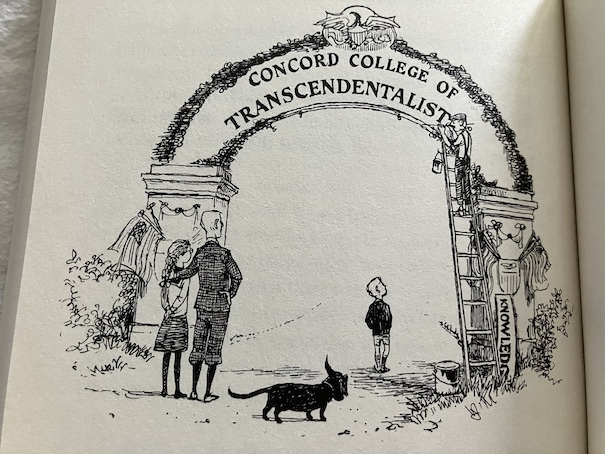
Eleanor and Edward Hall are orphans who live with their Aunt Lily and Uncle Frederick in their family’s big but somewhat shabby old house in Concord, Massachusetts. The family has lived there for generations, and they are intellectuals with a particular interest in the literary history of Concord. Uncle Freddy is obsessed with Ralph Waldo Emerson and Henry Thoreau, although he doesn’t share Eleanor’s love of Louisa May Alcott. When a couple of the town leaders threaten to take the family’s house because of unpaid back taxes and to destroy it because they think it’s an eyesore, the children come to learn that their house holds more secrets and history than anyone knows.

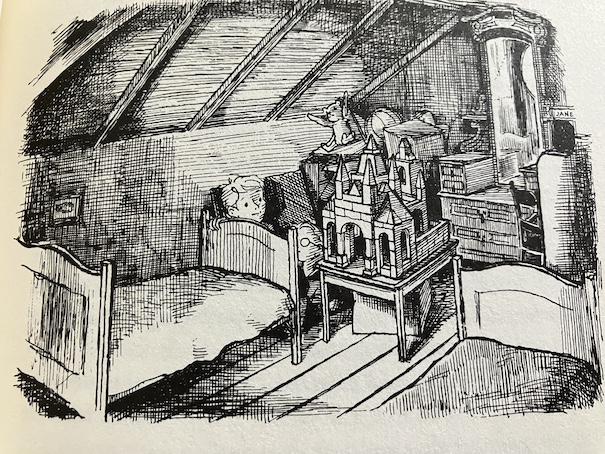
As Eleanor and Edward look at the house from the outside, they suddenly realize that there’s an window at the top of the house that’s shaped like a key and made of colored glass. They’ve never seen that window from the inside of the house, so there must be a secret room! The children search the attic and find a trap door that they never realized was there before. When they look into the hidden room, they find a pair of children’s beds and toys.

The children ask Aunt Lily about the room, and she sadly admits that she hadn’t wanted to tell them about it. Then, she begins to explain more about the family’s history and the aunt and uncle the children never knew. Aunt Lily is their father’s sister, and Uncle Freddy is their brother, but there were once two more children in the family, called Ned and Nora. Eleanor and Edward were named after them, but Ned and Nora mysteriously disappeared years ago. Aunt Lily still believes and hopes that, somehow, they will return someday, so she has always kept their room ready for them.

When she shows the children pictures of Ned and Nora in the family’s album, they also see a picture of a young man in a turban and ask about him. Aunt Lily says that the man is Prince Krishna, son of the Maharajah of Mandracore. Their Uncle Freddy has written books about Emerson and Thoreau and was once considered an expert on the Transcendentalists. People who were interested in Transcendentalism, like Prince Krishna, used to come and study with him. Aunt Lily wasn’t really interested in Transcendentalism, but she explains, “I think he said that the Transcendentalists believed that men’s minds were very wonderful, and that they could know all kinds of important things without being taught about them through their eyes and ears –because they were part of something called an Over-Soul.” Eddy approves of this concept because it sounds like it’s about learning without school, and he approves of anything that involves no school.

Everyone was fond of Prince Krishna while he lived and studied with the family, and Aunt Lily said that he used to make up fun games for Ned and Nora, like treasure hunts with real jewels as prizes because the prince was very rich. The children get the sense that Aunt Lily was in love with Prince Krishna, but he also vanished shortly after Ned and Nora did. When they discovered that Ned and Nora were missing from their beds one morning, Prince Krishna dashed around, looking for them, but suddenly, he was also gone, and no one knew where or how.

Eleanor and Eddy return to Ned and Nora’s room upstairs to have another look at it, and they find a mysterious poem called “Transcendentalist Treasure.” From the handwriting, which matches a note that Prince Krishna wrote to Ned and Nora with a present he gave them, Eleanor and Eddy realize that Prince Krishna also wrote the poem. Since the poem seems to be some kind of treasure hunt, the children think that it was probably part of the treasure hunts that Prince Krishna used to make for Ned and Nora. They try to figure out what the clues in the poem mean and what it might lead to, hoping that it might be the jewels that Aunt Lily told them about and which haven’t been seen in the house since Ned, Nora, and Prince Krishna vanished. If they could find those jewels, they could pay the back taxes and save their house!

However, they don’t really begin to grasp the full importance of the poem until they ask Aunt Lily if they can spend the night in Ned and Nora’s room. During the night, they have a bizarre dream, in which they’re climbing an elm tree with Ned and Nora and find a harp, which is something that was mentioned in the poem. A dangerous wind blows them out of the tree, and they wake up. They could have believed that it was only a dream except that they realize that they both dreamed the same thing, Eleanor has bruises and a scratch on her leg that she got from falling out of the dream tree, and Eddy has located the harp in Ned and Nora’s bedroom.

They show the harp to Aunt Lily, and she says that Prince Krishna had given it to Ned and Nora years ago, hanging it in a tree so that they would hear the wind blowing across it. The poem and the dreams that Eleanor and Eddy have seem to be hinting at the treasure hunts that Prince Krishna had with Ned and Nora. Eleanor and Eddy begin to think that solving the riddles in the poem may not only lead them to the jewels but to the truth about what happened to Ned, Nora, and Prince Krishna.

The book is available to borrow and read for free online through Internet Archive.

The book introduces the concept of Transcendentalism. I remember my English and history teachers discussing the Transcendentalists when I was in high school, but for some reason, they didn’t appeal to me back then, even though I went through a kind of phase where I was interested in metaphysical topics. I think my teachers put a lot of emphasize on their interest in nature, and I wasn’t an outdoorsy person. The background information in this story revived old memories of my high school classes and actually clarified a couple of points for me. The kids visit real places in Concord, Massachusetts, including the house where Louisa May Alcott once lived, and the book is full of discussions of literary figures and their lives and quotations from their works.

The children’s surrealist dreams connect to real objects in their lives and in the history of the family and their house. The dreams follow the poem that Prince Krishna left behind, and in each of their dreams, they see Ned and Nora up ahead of them, so the Eleanor and Edward realize that they’re following their path. The poem and the dream reference pieces of Transcendental literature and thought, and the children’s uncle explains the references throughout the story.

Many of the dreams also show the children’s personal and mental growth. In one dream, the children examine different images of their future selves, seeing how different choices they make can lead their lives in different directions, and they make up their minds which version of themselves they want to aim to be. In another dream, the children are trapped in a nautilus shell, and they discover that they have to think their way out of it. The thoughts they have help them work their way through each chamber of the nautilus, but they have to use thoughts with increasing depth and complexity to make progress. At first, remembering nursery rhymes is enough to help them move forward, but as they go further, they have to concentrate on more complex poems and higher-level moral and philosophical thoughts.

Although the dreams the children have are very surreal, and readers have no idea where they might be leading, the children do find Prince Krishna and their missing aunt and uncle. When the three of them return, Prince Krishna does explain where they were the entire time they were missing. He doesn’t offer a detailed explanation because they were trapped in a sort of magical/metaphysical prison, but he does explain who trapped them and why. There is a villain in the story, but it takes a while to grasp who and what the villain is because readers don’t really see it/him in his true form and don’t understand who he is and what his motives are until Prince Krishna explains. Eleanor and Eddy end up understanding more than Aunt Lily and Uncle Freddy do in the end, but finding Ned and Nora, Prince Krishna, and Prince Krishna’s treasure changes everyone’s lives for the better. Throughout the book, Uncle Freddy is mentally unbalanced, eccentric at the best of times and outright crazy at others. Local people want to see him committed to an asylum, but his mind was unbalanced by Ned and Nora’s disappearance. Once they’re back, he regains his senses.

The author wanted to write realistic children as her protagonists to appeal to real children. Eleanor and Eddy have their own insecurities and dreams which play into their characters all through the book and appear in the visions of the futures and choices they have to make in their dreams.

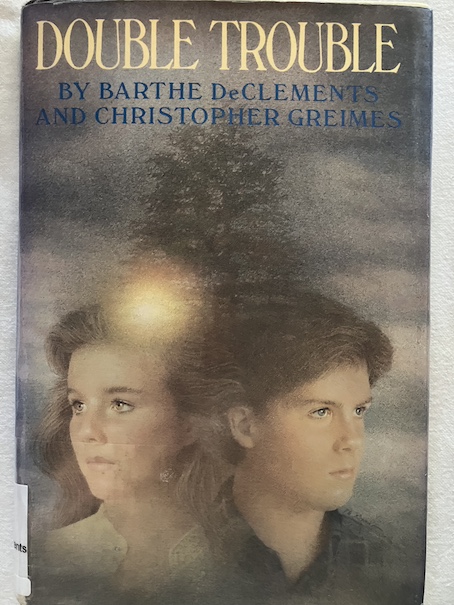
Double Trouble

Faith and Phillip are twins and the only members of their immediate family who are alive. Their parents and their older sister were killed in a car accident. Faith was taken in by their aunt, but their aunt didn’t think that she could manage to care for two children, so Phillip was sent to a foster home. The story is written in the form of letters to each other (this is called epistolary style) after their separation.

Separating is cruel, especially when they’re orphans, but there is something about Faith and Phillip that other people don’t know. They have psychic powers, and they have the ability to communicate their feelings to each other with their minds. They have to communicate specific information to each other in writing because their psychic abilities only communicate their general mood and circumstances, but their psychic link to each other makes them feel less alone when they’re apart. Apart from dealing with their grief over the loss of their parents and the changes to their lives, each of them is also in a troubling situation.

In her first letter to Phillip, Faith tells him about a disturbing encounter with a teacher at her new school. Faith was selling candy with another classmate, Sue Ellen, to support the school band. Sue Ellen gets the idea of going by Mr. Gessert’s apartment. Mr. Gessert is their social studies teacher and is considered one of the cool teachers in school. Faith can tell that Sue Ellen has a bit of a crush on him. He buys one of their candy bars, and Sue Ellen asks to use his bathroom. When Sue Ellen seems to be taking awhile, the teacher goes to see if everything is okay, and he catches Sue Ellen snooping around. He gets especially angry when Faith is about to touch his cane near the door. He grabs both girls by the arm and throws them out of the apartment. Although snooping in someone’s private rooms is rude, the girls are startled by how angry Mr. Gessert is. Faith asks Sue Ellen what she saw in his apartment, and Sue Ellen says that she didn’t see anything. She had just started to open the door to a room when he found her. The next day, Sue Ellen brags to other kids at school about having been in the teacher’s apartment, but Faith is still concerned about how angry Mr. Gessert was.

When Phillip replies, he says that he can understand why the teacher would be annoyed at someone snooping through his stuff, and he tells Faith about his new foster parents, the Wangsleys, Howard and Cynthia. He’s now living in Seattle, about 50 miles from where Faith is living. Phillip also got picked on at school by a bully, but a girl named Roxanne spoke up for him. He thinks Roxanne is pretty, and he describes her aura as being indigo. (The twins also have the ability to see people’s auras and use them to learn things about other people.) His new foster parents don’t take his vegetarianism seriously, trying to convince him to eat meat. They say that God put animals on Earth for people to eat and that he has to eat like they do. Their house is shabby, and Howard keeps Cynthia on a tight budget. That surprises Phillip because he thinks Howard must be making decent money at the shipyards. He wonders how Howard spends his money, if it’s not on his wife or home. He knows that Howard and Cynthia belong to some kind of religious group and that, whenever they return from one of their meetings, they act strangely, and their auras are weird. He’s still grieving their parents and sister, and with all the stresses of his new home, the only time he feels better is when he’s using astral projection, to get away from it all.

The twins learned their psychic skills from their sister Madalyn and Madalyn’s friend, Roger, who is an archaeologist. Faith doesn’t quite have Phillip’s ability with astral projection, but she can sometimes get visions of other people and what they’re doing. She uses this ability to try to learn more about Mr. Gessert, and she sees that his cane is actually a gun. She watches him loading it. Why would a teacher have a cane with a hidden gun?

Faith is still angry that her aunt didn’t take Phillip, too. She also hesitates to ask her aunt for things she needs because she doesn’t want to seem like a charity case. She has a part-time job taking care of her neighbors’ dogs while the neighbor is on vacation, and she uses the money to buy a pair of second-hand boots. When Aunt Linda finds out that Faith bought second-hand shoes, she says that Faith should have told her that she needed shoes because she doesn’t want people thinking that she isn’t taking care of her niece. Still, after she cleans them up, they don’t look bad, and she gets compliments on them at school.

The next time she sees Mr. Gessert in class, he seems normal at first. He gives the class a lesson on the Donner Party of pioneers, who were trapped by a snowstorm and resorted to cannibalism to stay alive. (This is actually described in gruesome detail in the book. Some kids like a good gross-out, but I never did.) After Mr. Gessert describes all the gory details in class, one of Faith’s other classmates comments that Mr. Gessert seems crazy. Faith knows that he was telling them the truth about what happened, but she finds it disturbing how much he seemed to enjoy recounting all the grossest parts, and other classmates agree. Phillip is concerned about Faith’s description of the teacher, so he uses astral projection to spy on him, and he agrees that Mr. Gessert gives off weird vibes.

Both Faith and Phillip connect with other kids at their schools who have an interest in psychic abilities. Faith meets a boy named Jake, who is intrigued because his father has been reading a book about remote viewing, which is what Faith does. As Phillip becomes friends with Roxanne, who is interested in the topic of astral projection. When Phillip confides in her about his astral projection abilities, she asks him to teach her how to do it.

One day, when Phillip and Roxanne are at the library, they see Mr. Gessert there. Mr. Gessert has an interest in Spanish treasure, and there is a special exhibit at the library with some very valuable pieces. Soon after that, the Spanish treasure is stolen from the library. It doesn’t take a psychic to see that Mr. Gessert, who has already been established as creepy and suspicious, might have a motive to steal it, but he’s not the only suspect. Working separately, with the help of their friends, Phillip and Faith use their special mental abilities to get to the bottom of Mr. Gessert’s secrets.

The book is available to borrow and read for free online through Internet Archive.

There are a lot of metaphysical themes to this story with the kids exploring their psychic abilities. It is revealed that their old family friend, Roger, is a kind of archaeologist/treasure hunter, but he is regarded as unorthodox by his colleagues because he uses his psychic abilities to guide his discoveries. Roger is the one who taught the twins and their older sister how to use their abilities.

In the story, the people who are open to developing their psychic/spiritual/metaphysical sides are the heroes, and they thrive when they connect to other, like-minded people and share what they know with each other, helping each other to develop. However, there are unhealthy forms of spiritual development in the story. Phillip is unnerved about the Wangsleys and their religious group from the beginning because the Wangsleys always act strangely after one of their meetings. Initially, I was concerned that this group might be doing drugs or something like that, but that’s not the case. It’s a little vague exactly what group the Wangsleys are part of, but it seems to be a very conservative Christian group with a cult-like devotion to their leader, and the the Wangsleys have an unhealthy relationship with it.

I don’t think it’s an unhealthy group for being Christian, but it seems like devotion to this particular group encourages overly harsh discipline and emotional manipulation and that Howard and Cynthia’s relationship with each other is troubled because of disagreements about their level of devotion to the group’s standards. I sometimes think that people who don’t have a religion imagine that all Christian groups are like that, but I’ve been to various Christian churches throughout my life, and most are not like this. There are some extreme groups like this, but this is definitely an extreme group. It seems to be an isolated group that isn’t part of a larger denomination. It seems to have just one charismatic leader. I think it’s implied, although not directly stated, that the reason why Howard isn’t spending more money on keeping up his house is that he’s contributing a large portion of his income to this religious group. I’m a little suspicious about the money issue and the long periods that the group’s leader seems to spend in Hawaii, ostensibly on religious business. While it isn’t stated explicitly, and I could be wrong, I think there are some implications about the Hawaii trips and the money of this group that make them seem suspicious.

Besides the metaphysical elements, there are themes of children adjusting to loss and trauma and major life changes with the deaths of the twins’ parents and their adjustments to their new homes. Initially, Faith doesn’t have a very good relationship with her aunt. She’s angry that her aunt didn’t accept her twin brother and sent him into the foster system, and she finds her aunt’s manners cold. She doesn’t trust her aunt enough to ask for the things she needs, even basic clothing, and her aunt gets upset about that. Things improve between them when they learn to communicate more openly with each other. Aunt Linda does care about Faith, but she’s also dealing with her own feelings and uncertainties about raising her niece. She has never married or had children, and while she does want Faith living with her, becoming a single parent is a major adjustment for her.

The Wangsleys are completely unsuitable as guardians for Phillip. They don’t accept his vegetarianism and complain about having to make special things for him. They keep trying to convert him, both to eating meat and to their religious group. I feel like their religious affiliation should have been disclosed from the beginning and that there should have been some discussion between them, Phillip, and Phillip’s caseworker about the differences between their lifestyle and the lifestyle that Phillip is accustomed to living, so they could all reach an understanding about what living together would mean for them before he actually went to life in their house. Phillip does describe some meetings with the Wangsleys and his caseworker during his time with the Wangsleys, where the caseworker tries to mediate circumstances between them and offer suggestions, such as ways they can deal with Phillip’s vegetarianism. Cynthia does make some efforts to accommodate Phillip’s eating habits, but they’re kind of half-hearted, and the Wangsleys absolutely cannot accept that Phillip doesn’t want to join their religious group. They heavily pressure him to convert, and when they discover Phillip’s astral projection activities, they’re convinced that he’s having visions given to him by the devil and demons. They tell Phillip’s caseworker that they want to adopt him, but Phillip finally speaks out about what life with them is really like. In the end, Roger decides that he will take Phillip, and the Wangsleys are forced to relinquish him to his caseworker.

From now on, Phillip will be living with a family friend who understands him and shares his lifestyle, and there are even hints of a possible romance between Roger and Aunt Linda. The hints of romance with Roger and Aunt Linda feel awkward, partly because the kids know that Aunt Linda is about 10 years older than Roger, a significant although not insurmountable age gap. Mostly, it just feels awkward to me because it seemed like there had been a romance relationship between Roger and the twins’ deceased elder sister. Switching attention from the niece to the aunt, even if the niece is now dead, just feels odd. Although, it’s not definite that their relationship will really be romantic. It might just end up being friendly.

The authors, Barthe DeClements and Christopher Greimes, are a mother and son team, and the inspiration for this story came from their own shared interests in psychic phenomena and “nontraditional methods of expanding awareness.”

I remember reading this book when I was a kid, and I was fascinated with the idea of communicating psychically with other people or being able to do astral projection. I don’t really believe in all of the metaphysical ideas that the book presents, but I think most children go through a phase where they’re interested in things like ESP and try to test themselves to see if they can do it. I actually had an English teacher in middle school who tested the whole class for ESP after we read some science fiction or fantasy story, just for fun. I can’t remember which story that was now, although I don’t think it was this one. I think it might have been a story about a typewriter that predicts the future, although I can’t remember the name of that one. I didn’t do very well on most of the tests, although there was one in particular where I did pretty well. After thinking it over for about 30 years, I’ve decided that it wasn’t because I had any significant psychic ability. The one test I did well involved predicting another person’s actions, and I think anybody could do that fairly well if you know something about the other person’s personality. The teacher did say that people do this activity much better if they do it with close friends, implying that friends have a special connection to each other, but I think it’s more the case that friends understand each other’s thinking better.

I can’t remember whether I read this particular book before or after I was tested for ESP, but I think it was after. I still had an interest in the subject, and I remember, one night, I tried my own experiment in astral projection. When I did it, I had a vision of space aliens. It was probably because I was dozing off in bed at night, and I was going through a sci-fi phase at the time, but I got spooked. You see, the punchline to this story is that I grew up in Arizona, and the night of my experiment happened to be the night of the Phoenix Lights. I was so creeped out the next day, when people were talking about UFOs that I stopped the astral projection experiments. Although I’m sure that it was all a coincidence, just a dream brought on by my own fascination with science fiction and space aliens, I decided that, while I was curious about how such things worked, I didn’t really want them to work for me. I might have been a cowardly child with a habit of spooking herself, but I was also a cowardly child who decided that there was no point in continuing to do things that she knew would spook her. I had my fun with that phase, and then it was time to move on to my next obsession.

Charmed Life

This is the first book in the Chrestomanci series.  There are many different dimensions with duplicate worlds, and in each of those duplicate worlds, there is a copy of every person.  People’s lives can differ dramatically between the different worlds, but there is one person in each generation who has no duplicates in any of the other dimensions or worlds.  This person is called the Chrestomanci.  All of the talents, abilities, and lives that would have been spread among the duplicates across the other worlds are now centered on that one person, giving that person, literally, nine lives.  Very often, the Chrestomanci doesn’t realize that he’s a Chrestomanci until he actually dies . . . and fails to die because he uses up one of his spare lives and continues living with the others.

When young Eric Chant’s older sister Gwendolyn gives him the nickname Cat at a young age, saying that he has nine lives, he doesn’t understand that it’s literally true.  Then, he and Gwendolyn are unexpectedly orphaned during a boat accident.  Their parents drown.  Gwendolyn doesn’t because she’s a witch, and the water rejected her.  Cat thought that he was saved because he grabbed hold of Gwendolyn.  Gwendolyn knows differently.

After their parents’ deaths, Cat and Gwendolyn live with their downstairs neighbor for a time, receiving support from the town. Their neighbor, Mrs. Sharp, is also a witch, and she recognizes Gwendolyn’s talent. When she goes through the children’s parents’ things, she finds three letters from someone called Chrestomanci, and she recognizes immediately that they are important. Cat doesn’t fully understand who Chrestomanci is, but everyone regards him as an important person, so much so that they even hesitate to say his name out loud. His signature is valuable, and Mrs. Sharp offers the letters as payment for witchcraft lessons for Gwendolyn from the best tutor in the area, Mr. Nostrum. Gwendolyn breezes through the early lessons easily, and everyone in the neighborhood recognizes her talents. They are sure that Gwendolyn is destined for great things, and they are all eager to ingratiate themselves with her. A local fortune-teller even says that Gwendolyn will be famous and may be able to rule the world if she goes about it in the right way. The fortune-teller also tells Cat’s fortune, but his fortune is a warning that he is in danger from two sides. Cat is frightened and unsure what to think of it.

However, there is still the question about how the children’s parents knew Chrestomanci and what their father argued about with him in their letters to each other. Mr. Nostrum is particularly curious to know what the children know about Chrestomanci, having apparently tried to learn things about him through his signature and failing, but neither of the children can tell him much. Cat still isn’t sure exactly who Chrestomanci is, so he suggests that Mr. Nostrum just write to Chrestomanci himself to ask. It’s such a straightforward approach that it never occurred to either Mr. Nostrum or Gwendolyn to do that before. Gwendolyn ends up writing the letter to Chrestomanci herself, exaggerating her plight as an orphan to gain sympathy, and implying that Cat also drowned in the boat accident. When Chrestomanci arrives to see Gwendolyn, he is initially surprised to see Cat.

Although their relationship to Chrestomanci isn’t explained at first, Chrestomanci takes custody of the children and brings them to live at his castle with his own wife and children, Julia and Roger. Everyone tells the children how lucky they are because living with someone as important as Chrestomanci means hob-nobbing with other important people. Cat realizes that the reason why Gwendolyn wants to go to Chrestomanci is that she is serious about becoming famous and ruling the world. She sees life with Chrestomanci as the first step. Cat is more intimidated and homesick.

Life in Chrestomanci’s castle is quite different from what Gwendolyn expected, though. There is some kind of enchantment over the castle that muffles Gwendolyn’s powers, and that drives her crazy. Gwendolyn is contemptuous of Julia and Roger for being plain and fat, but both of them turn out to be better at magic than she is and are fully capable of standing up to her magical tricks and bullying. Worst of all, nobody seems impressed by Gwendolyn or thinks that she’s special, and Gwendolyn is accustomed to people thinking that she’s special and impressive.

Chrestomanci makes it clear that none of the children are supposed to be practicing magic unless they are under the supervision of their tutor, Michael Saunders. When Gwendolyn and Cat begin having lessons with Michael Saunders along with Julia and Roger, it becomes apparent that Gwendolyn is far behind in her normal subjects, like math and history, even behind Cat, who is younger. Gwendolyn airily tells the tutor that she never paid attention to such things at their old school because she was concentrating more on learning witchcraft. Michael Saunders tells her that she won’t have any more magical lessons until she catches up in her normal studies, and Chrestomanci backs up the tutor. Gwendolyn is infuriated because, not only is nobody treating her like she’s special and impressive, for the first time in her life, they are treating her like what she really is: a spoiled and naughty child.

Gwendolyn’s parents didn’t fully have the ability to impose consequences on Gwendolyn when they were alive, although they were a restraining influence. After they died, nobody tried to restrain Gwendolyn, only trying to ingratiate themselves so she would help them or they could use her for their own purposes. Although Cat has idolized his older sister, there are dark sides to her personality that he has never realized before, and he soon discovers that she has sinister intentions that involve him.

One day, Gwendolyn vanishes and is replaced by one of her duplicates from another world, where magic doesn’t exist.  This other version of Gwendolyn, who is called Janet, has no idea where she is or how she got there.  It is from her that Cat learns that there is no duplicate of himself in her world.  While Cat struggles to figure out what is happening, he helps the new girl to pretend that she is the usual Gwendolyn, although she actually has a very different, much nicer, personality. The more Cat tells Janet about Gwendolyn, the less Janet likes her or the idea of being her, which makes Cat nervous.

When Cat and the new Gwendolyn realize what Cat’s Gwendolyn intends to do, they will need the Chrestomanci’s help to stop her and for Cat to claim his true destiny, the one that Gwendolyn has been attempting to conceal from him all along.

The book is available to borrow and read for free online through Internet Archive (multiple copies).

One of the best parts of the book for me was the setting at Chrestomanci Castle. The idea of living in a castle with magical playmates who can make toy soldiers move on their own is exciting! Cat and Gwendolyn’s rooms in the castle sound like the kind of bedrooms that any kid might imagine having. Even though the castle is strange and sinister things are happening, there is also a kind of coziness to the atmosphere. The children have hot cocoa every morning in the nursery. (I’m not sure why Cat, Gwendolyn, and Janet don’t like hot cocoa. Having hot chocolate for breakfast every morning would have made me happy as a kid, although I admit that, if Chrestomanci and Millie are concerned about their children’s weight issues enough to limit their marmalade intake, that’s not really the best morning drink they could have. I would have suggested tea instead. While we’re on the subject, I didn’t like the way they kept going on about the kids’ weight issues.) They have their own old-fashioned schoolroom in the castle with their own private tutor. When they get allowance money, they can walk to the charming, old-fashioned town nearby and buy candy and other small items. Millie is a doting magical mother, and even though Chrestomanci can be a little intimidating and fussy about appearances, he seems to genuinely care about the children and isn’t above sticking his well-dressed head into the nursery to say good morning and check on them.

During his time at Chrestomanci Castle, Cat learns things about his parents and his sister that he never knew before. His parents were actually cousins, and marriages between cousins in magical families are frequently dangerous, especially when they have children. Chrestomanci is also their parents’ cousin, and the argument he had with their father through their letters was about preventing the couple from having children any children with magical abilities, a suggestion that insulted and angered their father. Their father later came to regret that when young Gwendolyn first started using her powers, and even her parents started to see that she was dangerous. They weren’t quite sure how she was using Cat, but they had the sense that she was using him to do her magic somehow. Nobody thought to take Cat’s nickname seriously until Janet started questioning the reason why Gwendolyn started calling him that.

The truth is that Cat is a nine-lived enchanter. Gwendolyn realized this when he died at birth but didn’t actually die, and even though she was young herself, she found a way to hijack his powers. From the time when he was a baby, she’s been using his powers as if they were her own. That is how Gwendolyn appears to be unusually powerful for her age, even though she’s never really had the patience to go through any of her lessons by the numbers, just glossing over the beginning parts. Cat has been unable to use his own magical abilities because Gwendolyn has been keeping them all for herself, so for a long time, he assumes that he doesn’t have any magic at all. Since Gwendolyn has been doing this for his whole life, Cat has grown accustomed to how it feels and doesn’t notice it until Janet puts together the clues and realizes what’s been happening. When Gwendolyn does particularly powerful magic, she even sacrifices one of Cat’s extra lives, which she placed in a little matchbook for easy use.

Cat is appalled when he finds out about it, and he doesn’t want to believe it at first. However, when he tries to light one of the matches and instantly catches fire, he is convinced. What is even worse is that Gwendolyn and her magic tutor are planning to use him as a human sacrifice to open the gateway to other worlds so that they and the other evil magicians can use their powers to control these other worlds. Gwendolyn is a malevolent narcissist and always has been. Cat is devastated when he learns how little Gwendolyn cares about him, but he manages to finally summon enough anger to stand up to Gwendolyn and take his powers back from her. Like other victims of narcissists, he has always been the stronger and more powerful of the two of them, but he needed some help to see it.

Unlike Gwendolyn, Janet is not a narcissist and is capable of feeling empathy and caring for others. She’s even capable of selfless acts and personal sacrifices for the sake of others when necessary. When Gwendolyn escapes and permanently seals herself in another world where she is a queen, Janet is stuck in Cat’s world, unable to return to her own. It’s a terrible blow for her to be separated from her parents, who are alive in her world. However, when Chrestomanci asks her if she will be okay and if she wants him to try to return her to her own world, she refuses the offer because she has discovered that the double who replaced her in her world is an orphan who badly needs a family. While Gwendolyn was even going to volunteer Janet, one of her other selves as a sacrifice if Cat wouldn’t do, Janet is willing to sacrifice her former life in her world for the sake of one of her other selves. Janet is really the kind of sister that Cat has needed all along. She says that she was supposed to have a younger brother in her world but that he died at birth, and she is fascinated to find Eric/Cat alive in this new world and get to know the brother she lost. Janet learns to love her new brother and to get along with Julia and Roger, becoming the kind of girl Gwendolyn really should have been to her family. She doesn’t have any magical abilities, but she discovers that she can help help her new family because life in her usual world (which is supposed to be our world) has given her a different perspective from theirs. She is the one who suggests to Chrestomanci that he stop using silverware made of actual silver, which impedes his powers, and use stainless steel instead. When Gwendolyn played magical tricks at dinner, Chrestomanci always had trouble dealing with it because he was holding silver, but if he uses stainless steel, he won’t have that problem again. Chrestomanci and Millie admit that they never thought of that because stainless steel cutlery isn’t common in their world.

I remember finding this story fascinating the first time I read it as a kid. There are some dark themes with Gwendolyn’s narcissism, the threats to the children’s lives, and even Cat losing a few more lives. Cat’s growth is central to the story. Once Gwendolyn’s toxic influence is removed from his life, he begins to see the truth about himself and how Gwendolyn has treated him. Cat had always looked to her for comfort as his sister and his last living relative (so he thought), but all along, she was the one who was most dangerous to him, and that’s a terrible betrayal. Once Cat starts to understand the situation, he begins to see his own potential, and he also has some new people in his life who show him better treatment. The castle is charming, the world is fascinating, and the story is thought-provoking about the different ways a person’s life can go in different circumstances. Other books in the series go into more detail about how the different worlds in this universe function and how they split off from each other in different series, based on the outcomes of important events.

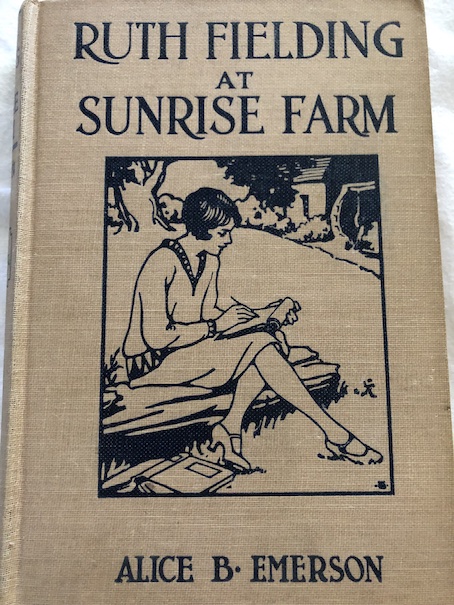
Ruth Fielding at Sunrise Farm

Ruth Fielding

Ruth Fielding at Sunrise Farm or What Became of the Baby Orphans by Alice B. Emerson (Stratemeyer Syndicate), 1915.

When the story begins, Ruth and her friends are at boarding school, and they are having a secret night meeting of their club, the Sweetbriars, to initiate some new members. Their initiation ceremony includes the story about the statue with the harp in the fountain that the girls were told during a scary initiation to another club in an earlier book, but the Sweetbriars are against tormenting and hazing new members. Instead of the scary ceremony, their initiation ceremony involves marching around the fountain while chanting a rhyme about the statue. There is supposed to be a mild prank of splashing the new members as if the fountain did it, but that’s as much hazing as the Sweetbriars will allow.

However, their ceremony is interrupted when one of the girls who is already a member of the club starts screaming. When everyone runs to see what happened, the girl who was supposed to do the splashing of the new members is all wet and says that someone pushed her into the fountain. She doesn’t know who did it, but she saw someone run away afterward. Ruth catches this mysterious lurker, and it turns out to be a younger girl who doesn’t belong to their school at all. The girl says that she had just been at the fountain, getting a drink of water. She says her name is Raby and that she ran away from some people called Perkins, who beat her. Ruth isn’t able to get much of Raby’s story that night, but she can tell that the girl is in trouble, so she says that if Raby will meet her the next morning, she can give her some money and help her.

The next day, Ruth’s friend, Madge Steele, invites Ruth and the other girls to spend part of the summer at a farm that her family bought near Darrowtown, where Ruth used to live with her parents before they died. The farm is called Sunrise Farm, and this trip is also meant to be a graduation party for Madge. Madge is older than the other girls, a senior at Briarwood, so these are her last few months at the school.

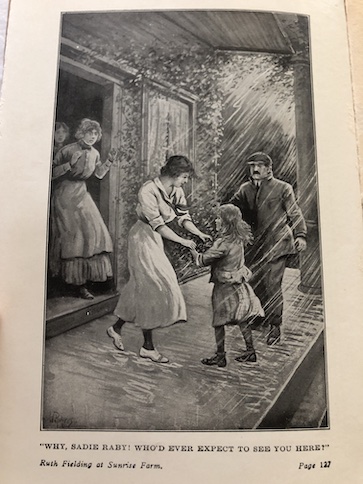
Ruth slips away from the others to bring some food to Raby, and she learns more about the girl’s plight. Raby explains that she’s an orphan. Raby is her last name, and her first name is Sadie. She was at an orphanage with her two younger brothers, a set of twins called Willie and Dickie. However, kids are only kept at the orphanage until about age 12, when they are put to work. Sadie is about 12 1/2 years old, and she was separated from her brothers when they were taken in by another family and she was sent to work for the Perkins family. The Perkins family acted kind in front of the adults at the orphanage, but they started treating her badly as soon as they got her to their home. Ruth is very much aware that she is also an orphan, and if it hadn’t been for her uncle and her friends, she would never have been able to go to a school like Briarwood and might have ended up in a situation very much like Sadie’s.

Ruth gets to see for herself what Mr. Perkins is like. While the girls are talking, he enters the school grounds to find her. Sadie runs away and hides, and Mr. Perkins grabs hold of Ruth. He has a whip with him, and he whips Ruth across the knees, demanding that she tell him where the runaway girl is. Mr. Perkins is interrupted by a stage driver, Mr. Dolliver, who sees what’s happening and yells at Mr. Perkins to leave Ruth alone and not to bother any of the girls at the school. Mr. Perkins claims that he didn’t know Ruth was a student, and Mr. Dolliver makes Mr. Perkins leave. When he’s gone, Ruth explains the situation with Sadie to Mr. Dolliver. Mr. Dolliver tells her that it’s against the law to help runaways. Ruth asks if that means that Sadie will be sent back to the Perkins family if she’s caught, and Mr. Dolliver says that’s probably the case: “Ye see, Sim Perkins an’ his wife air folks ye can’t really go agin’—not much. Sim owns a good farm, an’ pays his taxes, an’ ain’t a bad neighbor. But they’ve had trouble before naow with orphans. But before, ’twas boys.” Ruth says she hopes that the boy orphans also ran away from the Perkins family, and Mr. Dolliver says, “Wal—they did, by golly!” (Oh, surprise, surprise.)

Ruth begs Mr. Dolliver not to turn Sadie in if he sees her, and Mr. Dolliver says that his plan is to not see her, and he advises Ruth to do the same. Ruth tries leaving some food out for Sadie again, but she doesn’t return to the school. She hasn’t been returned to the Perkins family, either. Ruth is glad that she’s not with the abusive Perkins family, but she’s still worried about where Sadie went and what she’s going to do. As the school year comes to an end, Ruth gets a letter from Aunt Alvirah saying that her Uncle Jabez is willing to let her go to Sunrise Farm with her friends during the summer. Aunt Alvirah has hired a “tramping girl that came by” to help with the work around the Red Mill, so Ruth will be free for a relaxing visit. Ruth later learns that the “tramping girl” was Sadie, but Sadie has moved on to find work elsewhere by the time Ruth gets home from boarding school. Ruth hears stories about her from other people who employed her or helped her, and her best friend’s brother, Tom, says that he paid for her to get a ride on a train to a town called Campton.

Soon, it’s time for Ruth and her friends to go to Darrowtown and meet at Sunrise Farm. It’s an emotional journey for Ruth because she has bittersweet memories of Darrowtown from when she lived there with her parents, when they died, and the period when she was an orphan there, before she went to live with her great uncle. While she’s there, she stops to visit with Miss Pettis, a seamstress who looked after her before she went to live with Uncle Jabez. Miss Pettis is happy to see her, and the two of them spend some time catching up on what’s been happening to everyone since Ruth left Darrowtown.

When they all get to Sunrise Farm, Madge’s father is annoyed because he’s discovered that their neighbors, the Caslons, are having a bunch of “fresh air children” coming in the summer. (“Fresh air children” are children who come from the city, usually from unfortunate backgrounds, to experience the fresh air and wholesome activities of the countryside. There are still programs that do this, including the Fresh Air Fund in New York. In fact, I think that might be the program that the Caslons are supposed to be participating in as a volunteer host family during the story because it existed in this time period, and the series is generally set somewhere on the East Coast.) Mr. Steele thinks that the Caslons are bringing in a bunch of children to make noise and annoy him personally, but Madge says that she’s heard that they take in children like this every summer. Madge’s parents see this as a personal inconvenience to them. Ruth knows that Mr. Steele is a wealthy businessman who has always lived in the city. He doesn’t know much about the countryside, doesn’t understand the people who live there, and has little patience for any of it. When he bought Sunrise Farm, he did it with the idea of being kind of a gentleman farmer, but it’s starting to become obvious that he has little idea of what that means.

It turns out that Sadie’s little brothers are among the group of orphans who are visiting the Caslons this summer, and Sadie soon shows up, looking for them. At first, Mr. Steele thinks he should call the orphanage when Sadie shows up at Sunrise Farm, but after she rescues his young son from a runaway horse, Mr. Steele is grateful and decides not to. Instead, he plays host to Sadie and her brothers at Sunrise Farm. Then, they learn that a lawyer has been looking for the Raby family because they have inherited some property in Canada. When the Raby twins and some of the other “fresh air” boys run away and get lost on a prank, Mr. Steele and Mr. Caslon join together to find them and get a new respect for each other.

This book is now in the public domain and available to borrow and read for free online through Project Gutenberg.

My Reaction and Spoilers

This is one of the books in the series that is really more adventure than mystery. There are some moments of slight mystery, when Ruth wonders where Sadie is or where her brothers are, but those are cleared up pretty quickly, just by chance, without Ruth having to go out of her way to investigate. The Raby children’s unexpected inheritance is quite a convenient coincidence, but it still leaves the children’s custody to be decided. At first, I thought that they might stay with the childless Caslons, but Mr. Steele, having been won over by the children, agrees to look after them and manage their inheritance until they’re old enough to manage it themselves. It feels a little classist that rich Mr. Steele gets the children and manages their inheritance, but by the end of the book, the Steeles are getting along better with the Caslons, so I suppose they’ll be seeing each other on a regular basis. The Caslons will also probably continue to invite “fresh air” kids from the city to visit their farm.

I really appreciated the part in this book where Ruth gets emotional about returning to the town where she used to live with her parents before they died. Orphans are common in children’s literature, partly because their orphaned status can be a reason for leaving home and finding adventure. However, I’ve noticed that many children’s series don’t dwell on the loss of the parents for long after it occurs and the adventure starts. Even when a child grieves for the loss of a parent, that grieving doesn’t show up much in sequels in a series as the story focuses more on the orphan’s adventures and new friends, like they kind of got over it. The Boxcar Children, for example, rarely mention their parents at all, and their cause of death isn’t even described in the main series (except for the oldest edition of the first book, which has a really dark first chapter). Ruth Fielding, as a character, was kind of a precursor to Nancy Drew in the Stratemeyer Syndicate, and Nancy Drew also lost her mother, but she never really talks about it. Ruth is usually a pretty happy person, even in difficult circumstances, but I like this acknowledgement that she still feels something from the loss of her parents. Even though she tries to keep cheerful and busy, there are times when she can still get sad about their loss. It’s like that in real life. Even when someone has had a long time to get accustomed to a loss, they can still have moments when they think about it and feel sad. This is the type of character development that I like in the Ruth Fielding series that doesn’t appear much in other vintage children’s series.

This book also addresses the fact that, as orphans go, Ruth has been more fortunate than some. Ruth’s uncle isn’t rich, and he’s kind of a miser, but he still takes care of her, gives her a place to live, and makes sure that she gets an education. Uncle Jabez sometimes says that he doesn’t know what good a fancy education will do for Ruth and that other girls like her stay home to help with chores or go out and get jobs. However, Ruth’s friends are getting an education, so Uncle Jabez decided in earlier books that Ruth should go to the same school and not be left out. Ruth comes to see how other people look at orphans. People accept Ruth because she lives with her uncle and goes to school with girls from better-off families, but would they all look at her the same way if she’d been forced to grow up like Sadie?

Mr. Steele is rather self-centered, thinking only of his convenience in everything. He sees the presence of the young orphans next door as some kind of personal affront to him because he thinks they’re just there to cause noise and mess and make trouble for him. Madge and her mother don’t like that kind of talk, but Madge’s brother echoes everything his father says. Even some of the other guests at Sunrise Farm express similar sentiments about how troublesome the young orphans are or must be, even for the Caslons: “Just think of troubling one’s self with a parcel of ill-bred children like those orphanage kids.” However, when the young people talk to the Caslons, they learn that the Caslons love having the orphans visit them every year. While Mr. Steele tells himself (and anyone who will listen) that the Caslons have only decided to do this out of spite for him, they’ve actually been hosting orphans for years, long before they ever met the Steeles, and it has nothing to do with the Steeles. Their own two children died very young, and they find joy and fulfillment in helping to take care of other children. They know that kids cause a certain amount of noise, mess, and chaos, but they feel like the inconveniences are worth it because they truly enjoy the children and have fun with them.

There is also a theme in the story about neighbors, what makes somebody a good neighbor or a bad neighbor. Mr. Steele thinks that the Caslons are bad neighbors from the beginning, both because they invite the orphans to join them for the summer, which Mr. Steele thinks is going to cause him some kind of personal inconvenience, and because the Caslons refuse to sell their farm to him when he decides that he wants to buy them out, like he’s entitled to their farm and they’re somehow “bad” for not letting him have it when he wants it. From my perspective, Mr. Steele is the bad neighbor because he’s the one who comes in without knowing the things that people in this area do, and he expects everyone to change their plans even sell out to him just on his say-so. Mr. Steele wants everything to be about him, even when it takes place on someone else’s property, and it bothers him that other people’s property belong to them and not to him. It seems to me that various characters in the story rate their neighbors not on how their neighbors behave or what they actually do but on how they happen to feel themselves at that particular moment. Mr. Steele seems to be in a mindset where I would expect that anything a neighbor did on his own property would be some kind affront to him because what he really wants is the neighbor’s property itself. It feels to him like his neighbor is doing things to him because, in his mind, the neighbor’s property is already his, even though it’s not, so the neighbor is already committing a trespass just because they are on their own land and doing what they’ve always done there, which Mr. Steele doesn’t own outside of his own mind. Fortunately, Mr. Steele’s experiences with the Raby children and his acknowledgement that Mr. Caslon is more experienced with this area and better able to find the lost children than he is humble him a little and get him to take a different view of both the Caslons and the “fresh air” children.

Some of the characters seem to have poor priorities when it comes to figuring out who makes the best neighbors, and I think maybe they should take some of their neighbors’ actions under realistic consideration. I don’t know what Mr. Dolliver means when he says that Mr. Perkins “ain’t a bad neighbor.” That’s definitely not the impression I’m getting. When someone storms onto someone else’s property in a full rage and starts randomly grabbing and whipping a girl he’s never seen before, it’s not just a red flag anymore. A red flag would be a warning of potential danger, and this is full-on, uncontrolled physical violence in action in front of a witness! Ruth’s skin is described as having red welts from the whip! If this is part of Mr. Dolliver’s definition of a neighbor who “ain’t bad”, just how does he define a bad one? Honestly, where are the limits? It seems like the only thing Mr. Perkins has going for him is money from his “good farm” and “taxes”, which makes me think maybe the locals are easily bought off. As long as this neighbor seems to be contributing money (through direct or indirect means, through taxes) and there is the option to ignore his behavior, the local people seem content to ignore the behavior and accept the money.

From what Mr. Dolliver says about Mr. Perkins’s problems with other orphans before, his physical violence is repeated behavior. By Mr. Dolliver’s admission, the Perkins family has never had a different result with any orphan they’ve had in their custody. Each time, they mistreat the orphan and the orphan runs away in desperation, unable to return to the orphanage that’s supposed to be caring for them because the adults there seem to think that it’s more important to not say “no” to the Perkins family than to ensure the physical safety of children. I’m pretty sure they’re getting money for this, because otherwise, why in the name of all that is truly good, holy, and sane, would anybody ever let him have access to any other orphans after he’s already gone through multiple orphans in this fashion already? To very loosely quote Oscar Wilde, to lose one might be considered unfortunate, to lose two begins to look like careless, and to lose three or more brings everyone involved in the process into question. Insanity is doing the same thing over and over and expecting a different result each time. How many minors is the orphanage prepared to sacrifice to the Perkins family before they decide it’s enough, and at what point will it dawn on them that the Perkins family is the common element to the disappearance of all of the previous orphans?

I’m just going to say it: Mr. Perkins is a dangerous weirdo. He’s unsafe with vulnerable children or really anyone who gets in the way when he’s angry and is not in a position of authority or able to fight back. I’m sure his neighbors are either being bribed or they’re all in deep denial about it and that’s why they end up being complicit in the continuance and repetition of orphan abuse. I know that, as a character, Mr. Perkins is deliberately set up as a villain and an obstacle in the story to be escaped or overcome, but he’s such an over-the-top violent character, running around with a whip that he uses on total strangers, it just brings the orphanage, the neighbors, and everybody in the community who still calls this wacko a basically decent neighbor into question.

Island of Adventure

Enid Blyton’s Adventure Series

Island of Adventure by Enid Blyton, 1944.

Philip Mannering is spending part of his summer holidays at the home of one of his teachers, doing some extra studying, which is a bit depressing.  He has fallen behind in school because he recently suffered from Scarlet Fever and Measles, and he is trying to catch up.  He’s not the only boy studying at the teacher’s home, but he isn’t really friends with the others.

One day, he’s doing some studying on the hillside and hears a strange voice telling him to shut the door and not whistle.  There is no door on the hillside, and he wasn’t whistling.  Philip is very confused until he realizes that the voice is coming from a big, white parrot sitting in a tree.  Then, he hears a child’s voice calling the parrot from the garden of the teacher’s house.  Philip is happy, thinking that another boy has joined the study group, but it turns out that he’s only half right.

The voice in the garden belongs to Lucy-Ann Trent, who isn’t a student and isn’t there to study.  Her brother, Jack, is the one who needs to catch up in school because he never focuses on his studies.  Jack has only one interest in life, and that’s birds.  Jack owns the parrot, Kiki, and wants to be an ornithologist when he grows up.  He is bright but disinterested in anything that isn’t related to his chosen field.  Lucy-Ann is only there to spend time with him and keep him company while he gets extra tutoring.  The two of them are orphans.  They don’t remember their parents because they died in a plane crash when the children were very small.  Most of the time, they live at boarding school, which is why they don’t spend as much time together as they like.  Usually, during their holidays, they live with a fussy uncle, which is why the parrot is always barking orders at the children.

Philip also usually lives with an aunt and uncle when he’s not at school.  His father is dead. His mother is still alive, but she spends most of the time working at her art agency.  He also has a sister named Dinah, but they don’t usually get along.  Philip is surprised at how well Jack and Lucy-Ann get along with each other because he’s always fighting with his sister, who has a temper. (Although, admittedly, he does push Dinah to lose her temper.)  Strangely, Philip finds himself wishing that Dinah were also there because, when he becomes friends with Jack and Lucy-Ann, it occurs to him that she would nicely round out the group.

Philip, Jack, and Lucy-Ann become friends by bonding over their shared love of animals. Philip likes the parrot and tells Jack and Lucy-Ann that they would probably like his aunt and uncle’s house because they live by the sea, and there are many sea birds in the area.  Philip doesn’t know much about birds in general, but he likes collecting various small pets, including mice and caterpillars.  The teacher isn’t too happy about these animals because they disrupt study sessions.

Then, Jack and Lucy-Ann get a letter saying that they’re going to have to continue staying with the teacher through the rest of the summer because their uncle has broken his leg and can’t take them back.  The children aren’t happy about that and neither is the teacher because he had other plans after the summer tutoring session ended, even though the uncle has provided a generous check for the children’s care.

Then, Philip has a wonderful idea: maybe Jack and Lucy-Ann can come visit him and his sister at his aunt and uncle’s house.  Dinah has written to him that she’s bored and lonely and misses him, even though they usually fight.  She would like the company, and Philip knows that his aunt and uncle could use the money the children’s uncle is willing to offer for their boarding.  Jack and Lucy-Ann like that idea, but they’re not sure that their uncle and teacher would agree to let them go because they don’t know Philip’s aunt and uncle, and they think maybe Philip’s aunt and uncle wouldn’t want two strange children staying with them.  The children know their plan would be best for everyone, but since they’re not sure that they can persuade the adults, they take the attitude that it’s easier to ask for forgiveness than permission and plot for Jack and Lucy-Ann to run away and join Philip on the train home.  Jack and Lucy-Ann secretly send their trunks to the train station along with Philip’s and tell the teacher that they’re just going down to the station to say goodbye to Philip when he goes.  Then, they quietly buy their train tickets and leave.

When the children arrive at Philip’s home, Aunt Polly is irritated because she isn’t prepared for unexpected guests.  There are no rooms or beds for them, and she says that they can’t stay.  However, she is surprisingly won over by Kiki, who says, “Poor Polly!” over and over in a sad tone.  Not knowing that Kiki is also sometimes called Polly, Aunt Polly thinks that the bird knows her name.  She often feels overworked and rarely gets any sympathy, so she appreciates this gesture from Kiki, who repeats the phrase more often, seeing that it pleases Aunt Polly.  Aunt Polly is also charmed that Polly tells people to get a handkerchief when they sniffle or sneeze because she’s always saying that to Dinah.  When she telephones the children’s teacher to discuss the situation and learns about the fee the children’s uncle is willing to pay for caring for the children, she decides that maybe the children can stay after all.  The relieved teacher promises to endorse the check over to her.

Aunt Polly is relieved to get the extra money, and she reveals to the children that she’s been very worried about expenses because Philip and Dinah’s mother has been ill and hasn’t been able to send the money she usually sends from her job.  Her doctor says that she’s run-down and needs a rest, but her job is an important source of money to the whole family.  Everyone is relying on her, but since she hasn’t been able to send her usual support money for the children, Aunt Polly is worried about how she will afford the children’s school fees.  Philip bravely says that he’s willing to quit school and get a job instead to help out the family, but Aunt Polly says he’s still too young.  Philip has wished before that he was old enough to be the man of the family and provide for his mother.  His uncle isn’t much help with money and doesn’t pay attention to family expenses, too absorbed in his academic work.  Aunt Polly says that the money she’ll get from boarding the Trent children will help out.

Philip says that part of the trouble is that the house where they live is really too large. About half the house is crumbling into ruins from neglect, and the other half is really too big for Aunt Polly to maintain.  Aunt Polly agrees but says that moving would be difficult because few people would want a house like this one, crumbling and located in a rather lonely spot along the coast.  Besides, the children’s uncle loves it because he knows all the history of the area, and he wouldn’t want to leave.  Philip thinks the only thing that will really help is when he and Dinah are old enough to get jobs.  Then, the two of them will be able to help their mother afford a place for three of them.

Philip’s aunt and uncle have a gloomy man named Joe working for them, and he tells the children that the tower room where the boys will sleep on an old mattress (a prospect that seems adventurous to them instead of an inconvenience) isn’t a good room because it’s the only room where they can see the Isle of Gloom.  He says that bad things are associated with the Isle of Gloom because bad people who did terrible things lived there.  Jack asks Philip about the Isle of Gloom.  Philip says that it’s difficult to see, even from the tower room, and it’s always covered in mist.  Nobody lives there now.  Jack thinks it sounds great because the birds on the island have probably never seen people before and won’t be afraid of them, so he could get some amazing pictures.  He thinks maybe he’ll even find some rare birds.  Philip says that he and Dinah have never been there before themselves, and he’s not sure whether there are birds there or not. 

Staying at the house by the sea isn’t easy.  All of the children are expected to help with the chores.  There is no electricity, and they use oil lamps that need to be cleaned.  The water has to be pumped from a well.  Still, Jack and Lucy-Ann think that it’s just part of the adventure.  They enjoy going swimming and fishing with Philip and Dinah, and Jack has fun bird-watching, but Joe the handyman is always spying on them and acting creepy.  He keeps telling the children spooky stories about things lurking in the dark.  For some reason, Joe tries to discourage the children from exploring the area or going out in a boat, but they soon make an interesting discovery. 

While the children are exploring a cave, Philip teases Dinah, and she hits him.  He stumbles back and ends up in a hidden tunnel.  Philip and Jack explore the tunnel and discover that it leads to some carved stone steps and trapdoor that leads up to a storeroom that’s part of the cellars at the house.  Philip says that he never knew this part of the cellar existed.  The boys discover that the door to the storeroom is usually hidden by boxes, but Joe has the key and comes in.  Kiki, who is with Jack as usual, makes some sounds that terrify Joe, who thinks that there are strange and spooky things in the cellar.  The boys think that it’s hilarious that Joe got scared when he’s always trying to scare them.  They steal the key that Joe left in the door so they can come and go whenever they like, but they wonder why Joe even hides the door to the storeroom in the first place.  Philip is sure that even his aunt doesn’t know about that storeroom, or she would have mentioned it before.

Joe is definitely doing something suspicious, going out at night in a boat, fearful that the children will find out what he’s doing. The children make friends with a nice man named Bill, who is staying in an old shack nearby. Bill says that he’s there for bird-watching, but he doesn’t seem to know that much about birds or talk about them as much as Jack does. Bill has a boat and takes the children out sailing, but he doesn’t want to take them to the island and warns them to be careful of Joe. Does Bill know something the children don’t, or does he have some dangerous secrets of his own?

The book is available to borrow and read for free online through Internet Archive (multiple copies). It was first published in Britain, and some US copies use the title Mystery Island instead. The book was made into a movie in the 1980s, and you can see it on YouTube. The movie has John Rhys-Davies as one of the villains.

My Reaction

First, I’d like to get it off my chest that I didn’t like many of the family relationships throughout the book. Aunt Polly’s marriage is a little disturbing because she doesn’t have enough money to run the household, but her husband not only says that he has none to give her and wouldn’t give her any even if he did have money. He doesn’t seem to care about the welfare of either Polly, who is eventually revealed to have a heart condition, or the children in his care. He buries himself in his study most of the time and has almost no idea of what’s going on in the rest of the house or even who’s there. He’s not just obsessed with his studies, but at times, it seems like he’s deliberately hostile toward everyone else, including his wife, like their existence in the house is a terrible inconvenience to him.

I didn’t like the way Philip and Dinah were portrayed as always fighting physically in the book. Admittedly, my brother and I got into physical fights when we were little, but Dinah is twelve years old, and Philip is older than she is. Both of them seem to be too old to be acting the way they do in the story. Dinah is very emotional and has a hair-trigger temper, and Philip, knowing this, intentionally baits her into losing his temper. He likes to put creepy-crawly creatures on her or act like he’s going to, knowing she doesn’t like it and that she’ll react, and then he’s not happy when she lashes out and hits him. While Dinah shouldn’t react by hurting people physically, I could sort of understand it if she constantly has to put up with this from Philip. Living with someone who is always baiting you and escalating his behavior until you break would probably leave anyone broken in the end, and I can’t help but think that Dinah’s emotions would stabilize more if she didn’t have to deal with someone always trying to throw her off balance. Maybe she’d still be an emotional person, but I notice that it’s particularly Philip who gets her to fight physically while nobody else does because they don’t bait her into it. I found that sibling relationship kind of disturbing because Philip seems to know exactly what he’s doing, and as I said, he’s too old to be doing this stuff innocently.

Jack and Lucy-Ann seem to have a more fond sibling relationship. Lucy-Ann sometimes seems a little clingy with Jack, but I think that might be because the children are orphans and are not fond of their stern uncle, so they don’t really have anybody else to be close to except each other.

My copy of the book is one of the later editions that had some of the names and language changed to remove racially-problematic aspects of the story. In the original version of the book, the sinister handyman was a black man called Jo-Jo, and his race was unduly emphasized. I prefer the version where he’s just a weird guy named Joe.

The mystery isn’t bad. I knew right away that Joe was suspicious because he kept acting suspiciously, but the mystery is one of those type where it’s not so much about “whodunnit” as about “What is this person doing?” Readers know that Joe is up to something, but it isn’t clear for much of the book what it is. I had a couple of ideas early in the story, but neither was right.

Bill is also an interesting addition to the story. For part of the book, he looks a little suspicious because readers can tell that he’s not the bird-watcher he pretends to be, but he doesn’t seem to be allied with Joe. Bill is actually a good character, although he’s not what he appears to be, and he becomes one of the important characters in other books in the series.

The Puppy Who Wanted a Boy

The Puppy Who Wanted a Boy by Jane Thayer, illustrated by Lisa McCue, 1958, 1985.

A puppy named Petey tells his mother that he wants a boy for Christmas. His mother says that he might get one if he’s good, and when Petey is a good puppy, his mother tries to find one for him.

Unfortunately, Petey’s mother just can’t seem to find a boy for Petey anywhere. She suggests trying to see if any other dog is willing to part with his boy. However, no other dog wants to give up his boy.

Eventually Petey comes to an orphanage with a sign that says Home for Boys. Petey decides that if the boys have no parents, maybe they could also use a dog. It’s Christmas Eve, and most of the boys are inside are singing Christmas carols, except for one boy, sitting by himself outside.

Petey jumps into the lonely boy’s lap, and the boy loves him right away. When a lady comes to check on the boy, the boy asks if he can bring the puppy in, and she says yes.

All of the boys in the home love Petey and want to keep him. The lady says that Petey can stay if his mother lets him, and Petey knows that she will. Instead of getting just one boy for Christmas, Petey found fifty!

The story was first published in 1958, but my edition is from 1985 and has different illustrations. In the older book, the puppy looked like a beagle.

The book is available to borrow and read online through Internet Archive (multiple copies).

The Mystery of Drear House

The Mystery of Drear House cover

The Mystery of Drear House by Virginia Hamilton, 1987.

This book is the continuation of The House of Dies Drear, and the final book in the short series.

The Smalls are now settled into the house that formerly belonged to the abolitionist Dies Drear, who used secret tunnels to help smuggle escaping slaves to freedom as part of the Underground Railroad. Thomas Small’s father is a college professor, who finds the history of the house endlessly fascinating, especially now that they know about the hidden treasure that the caretaker, Mr. Pluto has been guarding for many years.

Apart from the Small family and Mr. Pluto, Pesty is only other person who knows where the hidden treasure is. Pesty (a nickname, her real name is Sarah) is the adopted daughter of the Darrow family, who live nearby. The Darrows are generally known to be nasty and scheming, and they have spent years looking for the treasure they know that Dies Drear hid. In the last book, Pesty helped the others to frighten off the Darrows when they were getting too close to the secret, but Thomas is still concerned that they might be a threat. He also privately questions Pesty’s loyalty, wondering if she’ll continue to keep the secret from the Darrows, although Mr. Pluto is confident that she will because she knew the secret of the treasure even before the Smalls did.

Mac, a boy about Thomas’s age, is the youngest of the Darrow brothers, and he’s not as mean as the rest of his family. Thomas kind of wants to be friends with him, but he’s not sure if he can really trust him. Mac tells Thomas that he can come over to visit sometime and that his mother is an invalid who sometimes spends months in bed. When Mac shows an interest in Thomas’s great-grandmother, who is coming to live with them, Thomas gets the idea to bring his great-grandmother over to the Darrow house to visit Mac and Pesty’s mother.

However, before they can visit Mrs. Darrow, she comes to visit them, entering their house through one of the secret passages that Thomas and his family haven’t learned about yet. She startles Thomas’s great-grandmother with her sudden arrival, and Thomas is irritated that Pesty didn’t tell him about that secret passage even though she knew about it. Pesty explains to them that her mother is mentally ill, a chronic condition of some kind, and she gets a little odd during times when she doesn’t take her medicine. Thomas’s great-grandmother seems to understand the situation, and she insists on escorting Mrs. Darrow home.

In the secret tunnel Mrs. Darrow used to come to their house, there are hidden rooms, and when they all arrive at the Darrow house, Mrs. Darrow begins telling them a kind of odd story, really little bits and pieces of stories that she has told Pesty and Mac before. Pesty seems to have a better understanding of what Mrs. Darrow is talking about than Mac does, but Thomas can tell that Mac has heard his mother tell these stories before and that he is also trying to get a better understanding of them. For some reason, Pesty seems to be holding back information from Mac as well as Thomas.

The story that seems to concern Mrs. Darrow the most is about an Indian Maiden (Native American). She seems to get upset at first when Thomas mentions that Mac had mentioned an Indian Maiden before. It turns out that the Darrows are part Native American, and the “Indian Maiden” is one of their relatives from the past. She played a role in the Underground Railroad with Dies Drear but lost her life when she was caught. The Indian Maiden was hiding secrets that Pesty is still trying to protect, and she has also been worried about Mrs. Darrow, who sometimes acts out part of the old story as if she were the Indian Maiden herself.

Meanwhile, it seems like someone is playing the ghost of Dies Drear and trying to frighten Mr. Pluto into telling him about the hidden treasure. Thomas and Pesty see the tracks of this person one day when they go to visit Mr. Pluto. The relationships between the different members of the Darrow family are complicated, and not all of them are really after the same thing.

The book is available to borrow for free online through Internet Archive.

My Reaction and Spoilers

Mrs. Darrow’s mental illness and the different motives of the younger Darrows vs. the older Darrow boys and their father are at the heart of much of the mystery and peculiarity of the Darrow family. Mac actually opposed his father and brothers the last time they tried to get the hidden Drear treasure, and since then, they’ve been shunning him. Pesty tries to look after Mrs. Darrow as best she can, but she’s been handling the job largely by herself, and at the same time, she could really use the support of a mother who can look after her. Pesty doesn’t really like all of the secrets that she has been forced to keep, but for a long time, she hasn’t felt safe in confiding the full truth of anything to anybody. She feels even more left out of the Darrow family than Mac is because she’s their adopted child, not a blood relative, even though she is always looking after Mrs. Darrow and thinks of her as her “Mama.”

The solution to many of the problems with the Darrows comes with the public exposure of the Drear treasure and the end to all the secrecy. The Smalls decide to give Mrs. Darrow the credit for finding the treasure, so although Mr. Darrow is angry that he will never get his hands on the hidden treasure that he and his family have searched for so long, they will get part of the reward money for finding it. The foundation that receives the treasure also gives jobs to Mr. Small and Mr. Darrow, changing the lives of the Darrows for the better. Even though Mr. Darrow didn’t get what his family originally wanted, they end up with something that improves their situation, and they no longer feel the need to hide Mrs. Darrow’s condition from everyone. The Darrows are freed from part of their past, and now, they’ll be able to go forward with their lives. Mr. Darrow also shows that he really cares about his adopted daughter.

The Darrows are a mixed race family, and their heritage is in keeping with real events in American history. People with mixed black and Native American heritage are sometimes colloquially known as “Black Indians,” and people with that type of mixed ancestry have existed in the Americas since Colonial times. By the end of the story, the Darrows’ full history isn’t completely explained in detail, but it seems that it was probably Dies Drear’s work with the Underground Railroad that brought their ancestors together. Freed and escaped slaves did sometimes intermarry with Native Americans.

Nellie’s Promise

American Girls

Nellie’s Promise by Valerie Tripp, 2004.

This book is a companion book to the Samantha, An American Girl series, focusing on Samantha’s best friend, Nellie. Personally, I don’t like the companion books to the main American Girls books as well as the original books, but this book does follow up on the events to the main series. At the end of Samantha’s series, Samantha’s aunt and uncle took in Nellie and her sisters, Bridget and Jenny, after their parents died. Nellie and her sisters were from a poor family and had to start working from a young age before their parents died. After their parents died, their disreputable uncle abandoned them, and they were sent to an orphanage before Samantha discovered where they were. Samantha’s aunt and uncle are wealthy, and the girls’ lives have improved considerably.

Nellie’s happiness is threatened by the sudden reappearance of her Uncle Mike. Uncle Mike sees Nellie walking down the street in her nice new clothes and wants to know what rich family the girls are living with. Nellie runs away from him, but he threatens to find out where she’s living and to take her and her sisters back, saying that it’s his right as her uncle. He says that he means to put the girls to work earning money for him. Nellie is afraid that he might be able to reclaim them from Uncle Gard and Aunt Cornelia because he is a blood relative.

At first, Nellie is afraid to tell anyone that she’s seen her uncle and that he threatened to take her and her sisters back. Before her parents died, her mother made her promise to look after her younger sisters, so Nellie makes up her mind that’s what she’s going to do.

Nellie worries about the future for her and her sisters. She feels like she doesn’t fit in with the wealthy girls at Samantha’s school, who have had very different lives from hers, and the lessons they learn are the type of lessons for fine young ladies who will marry rich men and spend most of their time raising families, overseeing a house with servants, and entertaining friends and their husbands’ business associates, not preparing for practical professions outside the home. Nellie thinks that it’s important that she have some kind of job skills because the future can be very uncertain, and she wants to know that she can provide for her sisters, no matter what happens.

Samantha senses that Nellie is unhappy, and she asks her if she likes living with Uncle Gard and Aunt Cornelia. Nellie tells her that she does, but she hesitates to explain what’s really worrying her. Instead, she lets Samantha think that she just wants to feel like she’s doing something useful for the family. Before her parents died, Nellie used to get sewing lessons at a settlement house (a place where immigrant families could go to learn English, new job skills, and other skills they would need in their new lives in the United States) run by Miss Brennan. Aunt Cornelia is involved with many good causes, and she wants to visit a settlement house and get an introduction to Miss Brennan. Because Nellie knows Miss Brennan, she can help arrange that. It’s in a rough part of town, but Nellie is more accustomed to navigating rough neighborhoods than Samantha or her aunt. It also occurs to Nellie that she could ask Miss Brennan what to do about Uncle Mike.

Miss Brennan is glad to see Nellie, and she lets her show Aunt Cornelia and Samantha around the settlement house. They have many different types of classes for children as well as adults. Nellie says that she likes the practical classes that she used to have there, and even the types of dances that they do seem more practical than the more purely artistic ones that they do at the school she now attends with Samantha. Aunt Cornelia is pleased with the classes that they offer for women, and because she is interested in women’s education, decides that she wants to help out at the settlement house. However, the visit to the settlement house leaves Samantha irritated for reasons that Nellie doesn’t fully understand.

As Nellie begins spending more time with Aunt Cornelia at the settlement house, Samantha begins spending more time with Bridget and Jenny, and Nellie becomes jealous of how Samantha seems more like their older sister than she is. However, the others still don’t know about Uncle Mike’s reappearance, and Nellie is still fearful of what he might do and what will happen to her and her sisters if Uncle Mike tries to take them away. She feels like her only option is to try to prepare herself for a better job than that of factory worker.

When Nellie finally gets the courage to tell Miss Brennan about her worries, Miss Brennan tells her that she needs to discuss the situation with Uncle Gard. Uncle Gard is a good man, but he’s also a lawyer, and he will know how to legally stop Uncle Mike from trying to take custody of the girls. However, Miss Brennan adds that, whatever else happens, Nellie will still need to make some decisions about her future and what she wants to do with her life and education. The more Nellie thinks about it, the more certain she is about what she wants to do. She wants to become a teacher, like Miss Brennan.

Nellie provokes more drama by applying to the boarding school in Boston where Miss Brennan said that she trained to be a teacher without talking to Aunt Cornelia, Uncle Gard, or Samantha about her decision or about her uncle. However, when the truth comes out about Uncle Mike, everyone understands that she was trying to hide and protect her sisters from him. It turns out that Uncle Gard has actually been looking for Uncle Mike because he already has the documents that he needs to legally adopt Nellie, Bridget, and Jenny, and he just needs Uncle Mike to legally release them into his custody. At first, Uncle Mike tries to extort money from Uncle Gard for the girls, but Nellie gets up the courage to tell him off, promising that if he doesn’t sign the papers and leave, she’ll tell everyone about how he stole all of their money and abandoned them to freeze the last time they were in his custody. The book ends happily, with Aunt Cornelia and Uncle Gard adopting the girls and understanding Nellie’s ambition to be a teacher. They enroll Nellie in a school in New York that teaches the skills she really wants so that she can continue living with them and not go to Boston. It also turns out that Samantha was mostly uncomfortable at the settlement house because she felt so sorry for the young children there and that spending time taking care of Bridget and Jenny was part of her way of trying to help Nellie by leaving her more free to do some of the things that she felt like she had to do. With everything out in the open, Nellie and her sisters are able to more fully become part of the family.

In the back of the book, there is a section with historical information about orphans and adoption in the early 1900s. There were not many laws and regulations governing care of orphans. Usually, orphans would be taken in by relatives, like Samantha was when her parents died. If a child didn’t have any relatives who were willing and able to take them, the child might be sent to an orphanage and possibly sent west on an orphan train as Nellie almost was at the end of the Samantha series. Families didn’t usually adopt children from different levels of society.

Settlement houses were important resources for poor immigrant families, and the education they received allowed immigrants to enter higher professions than servant or factory worker, which had been the primary source of income for many of them. It was common for settlement houses to help train young women to become teachers. There are still similar institutions and organizations in operation in 21st century America.

The book is available to borrow for free online through Internet Archive.

My Reaction and Further Historical Information

Part of the reason why I don’t like the companion books as much as the original American Girls series is that they tend to get more dramatic than the original books, and sometimes, I feel like the attitudes of the characters are less realistic for their time periods than they were in the original books. I think what made the original books more realistic was the restraint of the stories – they had their share of excitement and sometimes drama, but they never went overboard. The return of Nellie’s disreputable uncle struck me as both unlikely and unnecessary to Nellie’s and Samantha’s larger stories.

The historical details in this book are good. What they say about orphans of the time is basically true, although they note in the historical information section in the back of the book that Nellie’s experience of being adopted by a wealthier family was not typical of the time, and I think that’s part of what bothers me. Adoptions in general during the early 1900s were less formal than they are in modern times, and the idea of Uncle Gard hiring a private detective to find Uncle Mike and get him to sign legal documents doesn’t seem entirely realistic. I think it would have been more realistic to me the way that the last Samantha book ended, with Uncle Mike leaving and the assumption that none of the characters would see him again.

The reason why Nellie and her sisters were sent to the orphanage and why the orphanage was considering sending Nellie west on the orphan train was that no one expected that Uncle Mike would ever want to see the girls again. He’d already taken everything he could from them and left with them with no concern for what would happen to them. In the time that has passed since then, I would have expected that Uncle Mike would already have gotten into trouble that would keep him busy and out of their lives, maybe ended up in prison for being drunk and disorderly or hopping from job to job or begging for money as their little money ran out. Even if Uncle Mike had some thought of finding the girls, I don’t think it’s likely that he would have succeeded or even gotten close on his own because he is not that bright and he is not the kind of person who makes friends in places where he’s been before. I doubt that his former neighbor who took his nieces to the orphanage would have told him much if he had shown up again, looking for them. She knew that he was a drunk who abandoned the girls, and she made it clear that she didn’t like him. The people at the orphanage would have probably sent him away with no information because they would probably view the situation as closed since the girls are already placed out and Mike may not even have any proof of his identity and relationship to the girls. There is no such thing as a driver’s license during this period and many people did not even have birth certificates, so it’s possible that the people at the orphanage could simply choose to disbelieve this disreputable character and send him away. When I was watching a documentary about the orphan trains, former orphan train riders said that the orphanages that sent them west deliberately took notes from them that had their living parents’ addresses and otherwise cut off contact with living parents because they wanted the children to sever their ties to their difficult pasts and devote their attention to their new families, not maintain contact with the parents who were unable to care for them financially, so I wouldn’t expect that anyone at the orphanage in these books would go out of their way to reunite the orphaned girls with a rather shady uncle when they knew that the girls were already placed with a wealthy family and no longer their responsibility. Without help, which would be unlikely to be forthcoming, it doesn’t seem likely that Uncle Mike would be able to stumble on the girls by accident. As mentioned in Changes for Samantha, New York is a big city, people can be difficult to find if you don’t have a hint of where to look, and the wealthier part of the city where Nellie and her sisters live now is not a part of town where a guy like Uncle Mike would be likely to hang out. They could all easily live in New York City for years without meeting each other.

I feel like the situations in the story were a little contrived. By now, I would have thought that Nellie would know that Uncle Gard is a lawyer and would be the best person to ask about the laws. I don’t recall the earlier books saying what Uncle Gard did for a living, but Nellie lives with him now, and I would think that someone would have mentioned Uncle Gard’s profession by now. In the book, it oddly seems like as much of a surprise to Nellie as it is to the readers. I could believe that Nellie would go to the settlement house and do volunteer work there with Aunt Cornelia because it was already established in the previous books that Aunt Cornelia supports good causes, and although women of her level of society didn’t usually work for living, supporting good causes and charitable works would have been acceptable. Nellie’s level of knowledge seems a little odd, considering that she needed extra tutoring in basic subjects, like reading, in Samantha Learns a Lesson. In that book, Nellie never mentioned settlement house lessons, which she would have done if it hadn’t been a sudden decision to insert that this in book. Here, Nellie talks about classes that she had at the settlement house, where I would have expected to have more lessons to improve her reading, and it seems like she learned more there than she seemed to know before, even knowing a few words of foreign languages. In Samantha Learns a Lesson, one of Nellie’s skills was her ability to do math quickly handle money because she used to do the shopping for her mother, and in this book, she mentions that she helped to teach immigrants about American money, which she never mentioned before. These things are necessarily contradictory, but it all just seems a little off because they don’t quite fit into Nellie’s established character and history, and it implies that Nellie has had more education and training than she seemed to have before. It’s not necessarily impossible for a girl of Nellie’s time to know some of these things, but it’s the departure from what was already established about Nellie and her situation in life than kind of grates on me.

I think it could be reasonable for Nellie to develop the ambition to be a teacher. Even Samantha has previously some interest in that direction, having helped to tutor Nellie before. Not all women of this time went on to higher education, but those who did might attend a normal school, which is basically a college that focuses on training teachers. By contrast, the daughters of wealthy, high society families would be more likely attend a finishing school that emphasized social skills and entertaining more than academics. Both Samantha and Nellie are about twelve years old during this story and would be a little young for either of these options, but Samantha’s school seems to be more inclined toward preparing the girls for a finishing school. Given Aunt Cornelia’s interest in education and social causes and Uncle Gard’s support of it, I would expect that Samantha would be more likely to attend a women’s liberal arts college when she gets older, preparing her to marry a well-educated and culturally aware man as well as a wealthy one and probably engage in some form of social work and/or the arts in her spare time, but that’s just a guess. (I discussed some of this already in my review of Happy Birthday, Samantha. See also the book Daddy-Long-Legs for a description of what that might have been like for a girl of Samantha’s and Nellie’s time. The book was written a little later in than the time period of this book, but it’s set at about the right time for Samantha and Nellie to be old enough for college and includes characters of approximately their social backgrounds.) This book doesn’t really go into the subject, but if that’s the case, Samantha’s future might not be as different from Nellie’s as it first seems, and there might be a kind of middle path that both of them could choose. The Finch College in Manhattan, which was a fairly new preparatory school in Samantha’s and Nellie’s time, seems like it would have been a good option for both Samantha and Nellie, catering to upper-class girls while focusing on a more practical liberal arts education than the less academic finishing schools. Its founder, Jessica Finch, was a women’s rights activist and may have moved in similar circles to Aunt Cornelia. Her attempts to balance theoretical and practical knowledge sound like they would have appealed to the characters in the story. I’m not an expert on the Finch College, only having heard a little about it, but I think a school like that would present an intriguing possibility for the girls’ futures.

The Thief Lord

The Thief Lord by Cornelia Funke, 2000.

Prosper and Bo (short for Boniface) are orphans, running away from their caregiver. They were living with their aunt, a wealthy woman who likes little Bo and treats him like a little doll but doesn’t like Prosper because he is too old to treat like a toy. When the aunt starts considering sending Prosper away to boarding school, they run away to Venice to hide. There, they meet up with a band of orphans who live in an old movie theater. The other orphans/homeless children are Riccio, Mosca, and Hornet. Each of them is running from something in their past, and lacking adults to take care of them, has made their home in the theater, stealing and picking pockets to survive. The Thief Lord, the leader of this group, is the mysterious Scipio, a boy with his own secrets.

Many of the adults in this book are varying degrees of unhelpful and threatening as the children struggle to take care of themselves and their own lives. The boys’ aunt hires a detective to find them, and he does eventually figure out where they are living. Scipio turns out to be the son of the wealthy man who actually owns the disused theater. However, in spite of his father’s wealth, he does not have a happy home life. His father ignores and neglects him because he is too obsessed with his business concerns. At one point, the boy’s beloved cat is very sick, and Scipio fears that she might die, but his father brusquely tells him that he has no time to take it to a vet, and he’ll just buy him another one. (Don’t worry, the cat gets saved.)

One of the thefts that Scipio has the children attempt is the theft of a lion’s wing owned by a woman named Ida Spavento. A man known as the Conte, a customer of the man who buys the band’s stolen goods, specifically requested this item, although the children do not initially know why. Ida catches them in the act and tells them that the wing was once part of a magical merry-go-round that can change the ages of the people who ride it, making older people younger and younger people older. When Ida learns that the children received a request to steal the lion’s wing, she allows them to have it on the condition that she is allowed to come with them to see who hired them.

The Conte and his sister have discovered the merry-go-round and need the missing wing to complete it. Once the wing is restored, the merry-go-round turns them into young children. When Scipio sees that the merry-go-round really changes a person’s age, he insists on riding it himself. After a ride on the merry-go-round, Scipio becomes a young adult, able to live independently from his hard-hearted father and take care of his beloved cat. Barbarossa, the man who fences their stolen goods, also rides the merry-go-round and becomes a little boy again, far more adorable than the man he used to be. However, he accidentally breaks the merry-go-round so that the magic no longer works.

With the exception of Ida and the detective, Victor, the other adults in the story are irresponsible and self-centered, really more like children than the children. When the merry-go-round changes the ages of some of the characters, the changes end up suiting their personalities. Scipio was always more mature, and his new status as an adult reflects that. He ends up becoming an assistant to the detective in his agency, who understands the whole situation. Ida adopts Prosper, Bo, and Hornet and takes care of them. Prosper and Bo’s aunt is charmed by the now adorable Barbarossa and takes him in. Barbarossa, who is as shifty as a child as he was as an adult, is more than happy to let the aunt pamper him and fuss over him because he knows that he’ll get to enjoy her money in the process. The end does reveal that the aunt catches Barbarossa stealing from her and sends him to boarding school for some discipline, but he bullies and dominates the other boys into doing his bidding and even stealing for him, becoming the new Thief Lord.

The book is available to borrow for free online through Internet Archive.