Kirsten Learns a Lesson

Kirsten, An American Girl
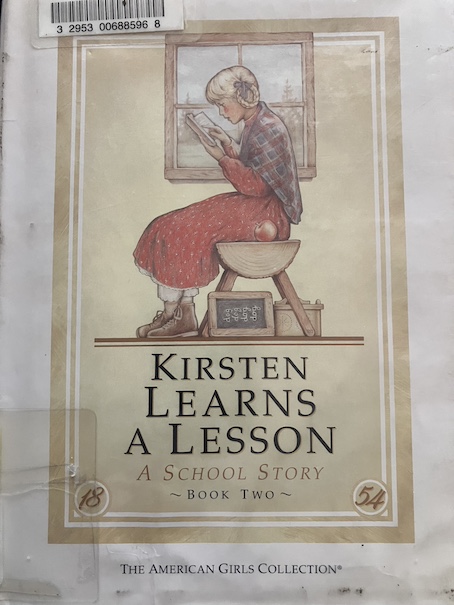
It’s November, 1854, and now that nine-year-old Kirsten’s family has settled in their new home in Minnesota and the harvest season is over, it’s time for the children to go to school. Kirsten and her brothers, Lars and Peter, will go to the small local school with their cousins, Lisbeth and Anna. Powderkeg School is a one-room schoolhouse in a little log cabin. Lisbeth and Anna’s stories about what Powderkeg School is like worry Kirsten. They talk about how strict their teacher, Mr. Coogan, is. Sometimes, the boys in class get rowdy and fight, and Mr. Coogan uses physical punishment on them. However, the girls tell Kirsten that she probably won’t have any problems with Mr. Coogan because he likes children who are well-behaved, and Kirsten is well-behaved. Still, Kirsten is nervous about what her new school will be like.
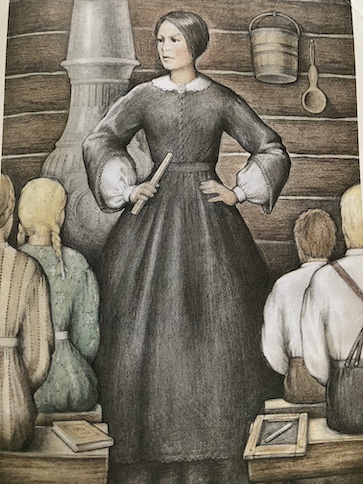
When they get to school, they learn that Mr. Coogan was injured in a fall from his horse, so they will have a replacement teacher, Miss Winston, who has only recently arrived from Maine. When one of the mean boys in class says he hops the horse also stepped on Mr. Coogan, Miss Winston tells him that nobody talks out of turn in her class and, although they live in the country, “we are not savages like the Indians.” (This is a 19th century attitude toward Native Americans, but this concept is challenged later in the story.)

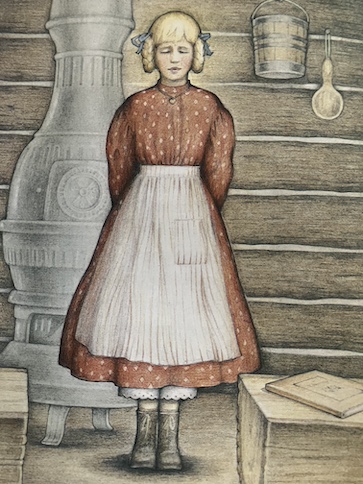
Miss Winston has each of the children in class introduce themselves so she can get to know everyone. When it’s Kirsten’s turn to say her name, she forgets to address her teacher as ma’am, like the other students. Miss Winston insists that she say “ma’am”, and when she sees Kirsten struggling with the language, she asks Kirsten if she speaks English. Kirsten says that she speaks a little, and her cousins explain that her family just came from Sweden and that they speak Swedish at home. Miss Winston says that “practice makes perfect”, so Kirsten will practice her English in school. For now, she will have the easiest lessons and share seven-year-old Anna’s schoolbook.

When the mean boy, Amos, laughs at Kirsten, Miss Winston glares at him and strikes the school’s iron stove with her ruler, startling the students. Miss Winston says that her father was a ship’s captain, so she knows how to be in charge of her students, like he was in charge of his crew. Then, she deconstructs the sentence “Miss Winston hit the stove”, pointing out which words are the subject, verb, and direct object of the sentence. Then she warns the class to “Be careful that the direct object of hit isn’t the student.” The implication is that Miss Winston is just as willing to use physical punishment against her students as Mr. Coogan was.

When Amos introduces himself to Miss Winston, we learn that he is nineteen years old, the same age as the new teacher, but the new teacher says that, in spite of being the same age, she’s still the teacher, and he’s the student. In spite of being more a young man than a boy in age, Amos has only just finished the third reader, and Miss Winston says her role is to help him read and do math like a man would, embarrassing Amos. (He can’t use his age to put himself on an equal footing with the new teacher because they are not intellectual equals. She’s the same age, but she has graduated from her own school and become a teacher, and he’s still struggling along with low level math and reading.)

Anna helps Kirsten with her lessons, and Miss Winston praises her for helping to teach Kirsten, but she doesn’t praise Kirsten for doing a good job. At the end of the school day, Kirsten and her cousins talk about the new teacher. Anna thinks that Miss Winston seems nice, but Kirsten thinks that Miss Winston doesn’t like her and that she seems very strict. She asks if that was what Mr. Coogan was like, and Lisbeth says he was worse. The best part of the day for Kirsten was lunchtime, when the children were allowed some play time. When she ran around and played tag with the other children, it didn’t matter if she didn’t speak much English.

When the girls play school with their dolls, Anna imitates Miss Winston and her comment about “savages.” Kirsten asks the other girls what that word means. They say it means “wild.” Kirsten asks them if the Indians (Native Americans) are really like that, and they say that some people say they’re kind and will help people if they need food but others day that they’re “cruel and bloodthirsty.” They’ve seen an Indian man before. He came to their house when their mother was roasting meat, and he left when their mother gave him some. They thought he looked pretty “savage” because his face was painted, and he had eagle feathers in his hair. The girls say that Native Americans also wear knives and live in tents. As a farmer, their father is concerned about the Native Americans. He knows that, if the farmers take too much of their usual hunting grounds for farming, it will drive away the animals, and the Native Americans will be starving and angry. While he is happy that he has been able to secure some farmland for his family (I explained a little about the famine conditions and lack of farmland in Sweden around this time that caused people like the Larsons to leave their country when I covered Meet Kirsten), he is aware that the Native Americans also need land for their survival.

At school, Miss Winston announces that each student will memorize a poem and recite it for the class. When they recite their poems, she wants them to say them with feeling and show the emotions their poem is trying to convey. Kirsten worries about this assignment because she’s still learning English. It’s hard enough for her to learn to read anything in English and understand the meaning of the words. She doesn’t know how she can also learn to memorize an entire poem and say it in front of everyone. Miss Winston gives Kirsten a short poem to learn, but having even a short one doesn’t seem to help Kirsten.
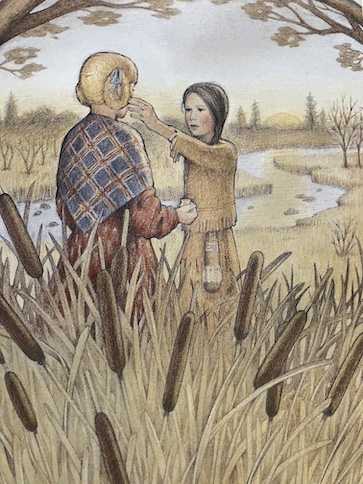
Meanwhile, Kirsten has her first encounter with a Native American when she spots an Indian (Native American) girl watching her while she’s getting water from the stream. The girl runs away, but Kirsten finds a blue bead that she dropped. Kirsten takes it and leaves her a little pretend cake that she and her cousins made for their dolls. Later, she finds that the cake is missing and that there’s a green duck feather in its place. She and the Indian girl trade little objects in this way, gradually becoming friends.

Kirsten’s secret friendship with the Native American girl becomes a comfort to her when school is stressful. Frontier teachers often board with families who live near the school, and when Miss Winston comes to stay at Kirsten’s aunt and uncle’s house, Kirsten feels like school is following her home. What’s worse is that Kirsten’s family will be joining them for dinner, and they will practice English during the meal. Kirsten knows that the meals, instead of being comfortable family time, will now be like lessons, and they will struggle to say things they would want to say because her family still hardly knows English. Worse yet, Miss Winston is cross with Kirsten because she can’t seem to memorize even her short poem.
Sneaking away to visit the Native American girl, who is called Singing Bird, gives Kirsten an escape from her struggles with English. Somehow, Kirsten and Singing Bird manage to communicate well enough with each other, even though neither of them speaks each other’s language. Then, Singing Bird takes Kirsten to see her village. To her surprise, Kirsten realizes that she has been gradually teaching Singing Bird English words without realizing it. However, Singing Bird’s people are going to be moving on soon. Kirsten’s uncle is correct that farming is driving away the animals the Native Americans depend on for food, and they’re suffering for it. Singing Bird invites Kirsten to come with her tribe when they leave, and it’s tempting to think of living an exciting life, traveling with Singing Bird and not going to school. But, is that what Kirsten really wants?

The book ends with a section of historical information about frontier schools in the mid-1800s.

The book is available to borrow and read for free online through Internet Archive (multiple copies).

Along with the first book in the series, this is the book that I remember the best of the Kirsten books. I think I either didn’t read the others or didn’t finish them because there are some sad things in the Kirsten stories that I didn’t like. In the first book, Meet Kirsten, another child Kirsten befriends on the journey to Minnesota dies of cholera. It’s historically accurate that some children died of disease on the journey west, but it was still hard to take. I also talked about how the reason why families like Kirsten’s wanted to come to America was that Sweden was experiencing famine around this time. The first book didn’t say much about that, but in this book, Kirsten remembers experiencing hunger in Sweden when her father’s crops failed and how her little brother cried from hunger.

Kirsten understands the plight of the Native Americans when they have to move to a new area when their food supplies run low. However, when Singing Bird invites Kirsten to come with them, she realizes that would mean leaving the rest of her family, and she can’t do that. While it’s tempting to go with her friend and escape the problems in her life, Kirsten can’t do that without also giving up the good things in her life and trading the problems in her life for a different set of problems. Although there are appealing aspects to their lives, the Native Americans also have their own struggles. To use an old adage, the grass isn’t always greener on the other side of the fence. People say it in different ways, but just because someone else’s situation is different doesn’t always mean that it’s better.

In this book, we also see what it’s like for Kirsten’s family as they begin learning English, so they can communicate with other people in their new country, and the children begin going to school. The little frontier school is different from other schools they’ve experienced before, and the teachers are strict. They have to be strict because some of the students are rough and fight with each other physically, and they have to make it clear that they’re not going to put up with that. This is a real-life aspect of schools from this time period. Fortunately, we never see the teacher actually using physical punishment against anybody. She just threatens to do it so her students will think twice about misbehaving.

When Miss Winston comes to board with Kirsten’s relatives, Kirsten thinks that everything is going to be worse, that she’s constantly going to be bombarded with lessons and the problems she’s been having at school. However, it turns into an opportunity for Kirsten and Miss Winston to get to know each other better. At first, Miss Winston can’t understand why Kirsten is having such a difficult time remembering her poem, even though it’s pretty short and easy. It’s partly because she’s still having difficulties with her English, but also, the content of the poem has no relation to anything currently happening in Kirsten’s life. It doesn’t interest her, and her mind is preoccupied with all the changes happening in her life, making it difficult for her to focus on the poem and remember it. When Miss Winston shows Kirsten a model of her father’s ship, it brings back memories of the ship Kirsten’s family traveled on when they came from Sweden. Miss Winston realizes that Kirsten has strong memories of the ship, so she gives her a different poem to memorize, one about a ship. Kirsten finds this poem easier to remember because it connects to memories she already has.

Although Miss Winston can be tough, she genuinely does care about Kirsten and looks for ways to help her learn. It just takes time to figure out the best way to help her, and Kirsten also needs time to adjust to her new language and new home. Once Kirsten sees that it’s possible for her to learn and for her new home to begin feeling like home, she begins to feel better about her new life in Minnesota.

I enjoyed the realistic aspects of the story and the references to historical events and real life conditions on the frontier. I think I liked this story better as an adult because I understood more about the historical background than I did when I was a kid. Parts of this series are still sad. Kirsten remembers people being sick and dying on the journey to America, and although she doesn’t go into detail about it, her family did suffer genuine hardship in Sweden.
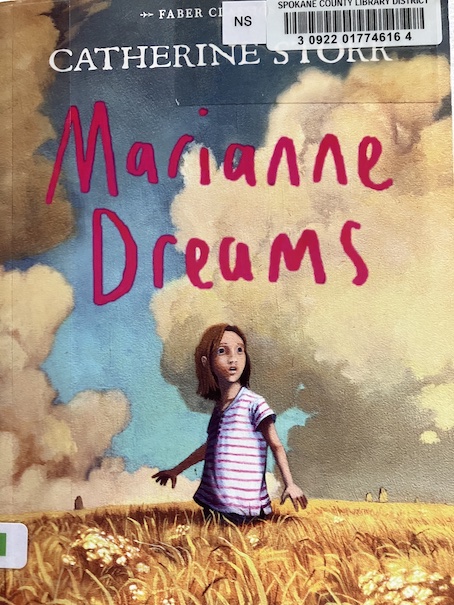
Marianne Dreams

Marianne has been looking forward to her birthday because her parents have promised her that when she is ten years old, she will be old enough to have riding lessons. She and her family live in town, so she doesn’t have easy access to horses, like children in the country do. Her special birthday present is going to have her first lesson at the local riding stable. Her birthday is wonderful, and the riding lesson goes very well, even if some of the more spectacular things that she had imagined before didn’t happen. Marianne would be perfectly happy except, at the end of the lesson, she is more tired than usual and feels achy. By lunchtime, she is feeling definitely ill, and she has a fever.

Marianne’s birthday illness quickly turns into the worst illness she’s ever had. Because of her illness, Marianne has to be confined to her bed for weeks, and she loses track of time. About three weeks after her illness began, she begins to feel a little more like herself and has more awareness of time and what’s happening around her. When she was at her worst, it was hard for her to be interested in anything or focus on anything, but now, she can think clearly enough to be bored and look for something to entertain herself. Marianne’s mother allows her to look through her grandmother’s old workbox, which mostly contains old needlework tools and an array of buttons, ribbons, beads, and other odds and ends that are interesting to look through and sort.

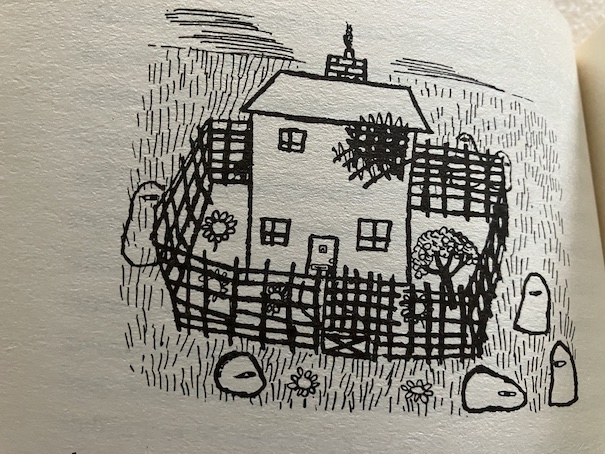
Among the things in the workbox, Marianne finds an old pencil. She immediately likes the look of the stubby old pencil and has the sense that it would be fun to use for drawing, so she picks up her drawing book and begins to draw a picture of a house with a fence around it and some flowers. Marianne’s drawing isn’t particularly great, not as good as what she pictured in her mind’s eye when she started it, but it is the start of something very special.

Although she is starting to feel better, Marianne’s doctor tells her that she is going to miss the whole rest of this term at school. He prescribes strict bed rest for her for the next six weeks. The doctor doesn’t actually say what’s wrong with Marianne, but he tells her that if she doesn’t rest, she could harm herself in a way that would last for the whole rest of her life. Even though she’s bored and says she’d rather be harmed or permanently ill than have to spend more weeks in bed, her doctor is firm with her that this is the way things are. He’ll see that she follows his instructions and recovers whether she likes it or not. Her condition is not contagious, so she can have visitors, but she must remain in bed and rest.

Marianne is sure that these weeks of bed rest are going to be horrible and boring, but soon, something strange begins to happen. She starts having dreams about the house that she drew with that special pencil. When she finds herself in the country with the house, the house is a little misshapen, and it unnerves her. The house is located on an empty, windy prairie, and Marianne can’t even get into the house because she didn’t draw a door handle on the door or put anyone inside the house who could let her inside.

Marianne realizes that she could easily remedy these things by adding more to her drawing, so when she wakes up, she adds a knocker and handle to the door. She also draws a boy looking out one of the windows of the house. The boy seems a little sad when she draws him, but she isn’t sure how to fix his expression, so she just leaves it. Although Marianne isn’t sure whether she’ll ever dream of the house again, she does. In her next dream, the door has the knocker and handle, just like she drew, and there is a sad-looking boy at one of the windows of the house. Marianne waves to the boy and asks him to let her into the house, but he can’t. The boy is upstairs in the house, and there aren’t any stairs down to the ground floor. Marianne asks the boy how he got up there without any stairs, but he says he doesn’t know. Marianne insists that she needs to get into the house, and the boy says that he needs to get out. Marianne gets angry at the boy and the situation, which seems impossible. However, this is not the end of the dreams, and the boy isn’t just a figment of her imagination.

Marianne’s mother hires a temporary governess to tutor Marianne at home so she doesn’t fall too far behind in school. Marianne doesn’t like the idea of the governess at first, but Miss Chesterfield turns out to be friendly, and her visits and lessons add variety to Marianne’s days. When Marianne asks Miss Chesterfield about her career as a governess, she learns that, unlike governesses in books, Miss Chesterfield doesn’t live with her clients. Instead, she tutors different children in their homes, visiting each for a couple hours at a time. All of the children she tutors are children who are behind in their studies or who are studying special subjects that aren’t covered at their school or whose circumstances prevent them for going to school for a time, like Marianne. One of the other children being tutored by Miss Chesterfield is a boy named Mark, who has been left partially paralyzed from a severe illness and can’t walk. Marianne asks Miss Chesterfield if Mark will be able to walk again someday, and she says that it’s likely he will if he takes care of himself in the next couple of months and does what his doctor says.

However, as with Marianne, obeying the doctor’s orders isn’t easy for Mark. While Marianne wishes that she could just be up and about instead of resting like she should, Mark is just the opposite. He loves being at home with his books, and he has trouble pushing himself to start getting up and moving again, which is what his condition really requires. Mark needs to do physical therapy to strengthen his body and retrain his muscles, but it’s difficult and painful. Marianne is sympathetic to Mark because she knows what it’s like to be ordered to do something she doesn’t want to do even though it’s for her own good. She wishes that the two of them could switch places for a time so he could do at least some of her bed resting for her, and she could have the chance to get up and move around. Miss Chesterfield says that she thinks the two of them are better off being themselves and doing what each of them needs to do.

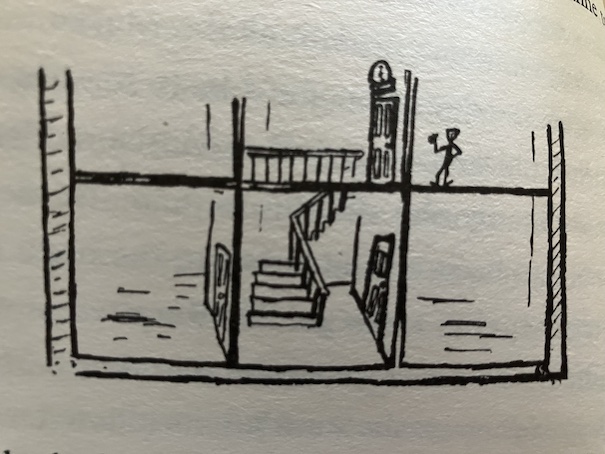
Marianne continues to feel the urge to draw in her spare time. She discovers that she’s unable to erase anything that she’s drawn, but she can continue to add to the picture. She adds more to the background so the house won’t seem to be in such an empty void, and on the opposite page in her drawing book, she draws the interior of the house, adding the stairs that the boy said were missing. This time, when Marianne dreams of the house, she finds herself in the interior, which is mostly empty because she hasn’t drawn furniture yet. She explores the house and finds the boy sitting on a window seat, looking outside, like he did before. The boy has noticed that the world outside the house has changed since Marianne drew hills and a tree. The two of them talk about their situation, trying to understand how they came to be in the house, and Marianne tells the boy that, now that there are stairs, he can go outside. The boy tells her that he still can’t because he can’t walk. He explains to Marianne about how he’s been ill for a long time, and he has special exercises he’s supposed to do to help his muscles, but it still isn’t definite whether he’ll be able to walk again or not. That’s when Marianne realizes that she’s talking to Mark, the same Mark that Miss Chesterfield told her about.

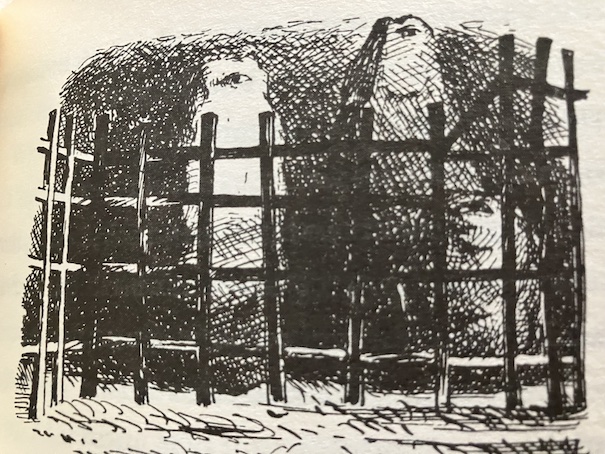
The two children could be dream companions for each other, but Marianne becomes more temperamental the longer she’s cooped up. One day, in a fit of anger because Mark made Miss Chesterfield late to see her and ruined her special surprise present for Miss Chesterfield’s birthday, Marianne turns the house in her drawing into a prison and the rocks outside into monsters that watch the house. Marianne thinks it would be a fitting punishment for Mark to be a prisoner in their dream house, but the problem with that is that Marianne still goes to the house when she’s asleep, too. Whenever she’s there, she’s also in a scary prison, surrounded by rock monsters.

It takes Marianne an embarrassingly long time to realize that everything she adds to her drawing changes the environment of the dreams that both she and Mark share, and even when she realizes that’s the case, Mark has a difficult time accepting it. It seems like, when the kids are in the dream world, they have some trouble remembering the waking world and making connections between the two, although Marianne has more memory of her waking life than Mark does, probably because Mark is more seriously ill. While Marianne has control of the special pencil and more ability to alter the world of their dreams, she can’t change everything, and the two children will have to work together to overcome their obstacles and escape the house. The house is useful for them during their recovery, but they quickly realize that it’s also a dangerous place, and they can’t stay there forever. Although Marianne didn’t draw a way for the rocks with the eyes to move, they are moving, and they’re getting closer all the time.

The book is available to borrow and read for free online through Internet Archive (multiple copies). In 1988, the story was made into a movie called Paperhouse. Paperhouse is a much darker version of the original story, though. There was a much earlier television mini-series from 1972 based on the book called Escape Into Night, which was much more faithful to the original story, although in that version, Marianne had a broken leg from a riding accident instead of being ill. All six episodes of Escape Into Night are currently on YouTube. I don’t know of any other way to watch it if you live in the US. There are dvds available on Amazon, but they’re region coded. For sci-fi fans, I swear that the rock monsters in Escape Into Night also sound like Daleks from the original Doctor Who. The book was originally published in Britain, and the movie versions are also British. There is also a sequel to this book called Marianne and Mark, where the two children from this book meet as teenagers in real life instead of in the dream world.

My Reaction and Spoilers

To begin with, I’d like to explain that, while the concept of a drawing coming to life somewhat reminds me of Harold and the Purple Crayon, this is definitely a more serious book with greater depth. The children in the story are dealing with some serious and frightening problems, both in the real world and the dream world.

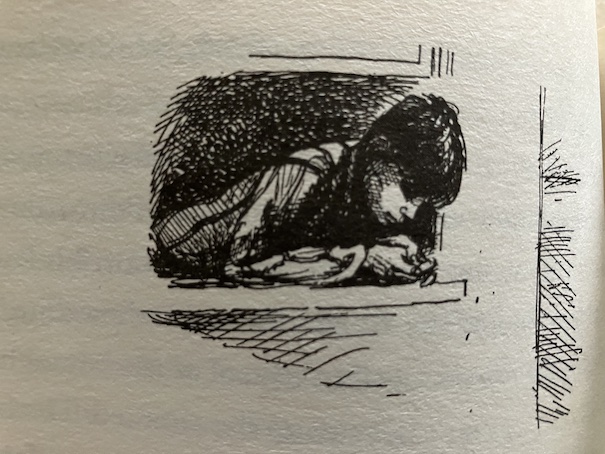
I love the way that the pictures in the book alternate between Marianne’s drawings and the children’s “real” experiences. First, we get to see what Marianne draws, and then, we get to see how her drawing comes to life in the children’s dreams. Marianne’s drawings are child-like, with crooked houses, misplaced windows, and stick figures. The dream drawings are as misshapen as Marianne’s drawings, but at the same time, they are more three-dimensional, as the children perceive them when they’re inside them in their dreams.

The book never explains exactly why Marianne is sick or what might happen to her if she doesn’t rest, although I have a couple of ideas. There are illnesses which can leave people severely weakened for long periods of time, and they have to rest or suffer lasting organ damage. When my aunt was young, she was extremely ill with valley fever. That’s probably not the illness Marianne has because valley fever comes from a fungus found in the soil in certain parts of the Americas, but I don’t think it’s found where Marianne lives in Britain. I mention it because I think that it’s similar in severity to Marianne’s illness. Most people who get valley fever don’t have it severely. In fact, most long-term residents of the area where I live have had it at some point in their lives, and it’s often mistaken for a mild flu. However, once in a while, someone has a much more serious case, like my aunt did. My aunt had to spend weeks at home, resting, and a tutor came to the house to help her with her schoolwork until she recovered enough to return to school. Even then, she had certain restrictions. Valley fever is hard on the lungs, so she couldn’t over-exert herself. For a period after she returned to school, she still tired quickly from ordinary activities, she could not take physical education classes, and she even had to use the elevator at her school (which was reserved only for those who needed it) instead of taking the stairs to classes like most of the other students. If my aunt had pushed herself too hard before she had fully built back her strength and stamina, she might have damaged her lungs permanently. I think that the doctor in this book is warning Marianne that her condition is similar, that she might cause herself some form of lasting organ damage if she doesn’t rest and let herself fully recover.

In Marianne’s case, I suspect that Marianne’s illness could potentially damage her heart because her doctor is concerned that she not get angry or over-excited, but that’s just a guess. Illnesses like that are relatively uncommon, but they do happen in real life. Depending on the condition she has, it’s possible that Marianne’s extended bed rest might also be shortened by more modern treatments, if this story happened during the 21st century. It’s difficult to say without knowing what her ailment is, but I think it’s worth pointing out that this story was written during the 1950s, which is also coincidentally the time period when my aunt had her illness in her youth.

In the movie version of the story, Paperhouse, they say that Marianne had glandular fever, but since the book never specifies, some readers have speculated that she might have had rheumatic fever, since the symptoms fit the description of her illness. I tend to think rheumatic fever is more likely because it can potentially cause a risk to the heart, and that seems to be the concern in the book, the reason why Marianne has to rest and be careful to avoid long-term damage to herself until she is fully healed. In Paperhouse, Mark is described as having muscular dystrophy, but the book actually says that Mark has polio. The first polio vaccine was developed by Jonas Salk in the early 1950s, although it took a few years for it to come into widespread use, so it’s plausible that Mark could have caught the disease before he had a chance to be vaccinated.

My parents were both in elementary school during the 1950s, and they remember getting their polio vaccinations and the boosters that they gave to kids in an edible form on sugar cubes. Other people who were young around that time period may have similar memories. Although I never saw a child or young person with polio when I was a kid, probably because all the kids I knew were vaccinated, my parents say that it was a real menace when they were young, and the serious consequences of the disease were a real fear. While my mother was still young, her aunt contracted polio as an adult. Her aunt survived having polio, but there were lasting effects. Even people who recover their strength after having polio while young or relatively young can have it come back on them when they’re older as post-polio syndrome. My mother remembers her aunt before she became ill, but by the time I met my great-aunt, she was an elderly lady in a wheelchair because of the condition. That’s part of the reason why my family believes in the benefit of vaccines in general. We’ve noticed definite improvements between generations because of them.

The characters in the story experience some personal growth from their ordeals. I liked it that, in the beginning of the story, Marianne considers some of the old-fashioned stories she’s read where girls suffer from severe illnesses or ailments that keep them in bed for long period of time. It is a common trope of 19th century and early 20th century books that characters’ lives and personalities are changed by illness because dealing with the illness and the restrictions imposed on them because of it teaches them patience and understanding. (See What Katy Did in the Carr Family series from the late 19th century for an example.) Marianne wonders if she’ll experience the same type of transformation or if she’ll still be the same Marianne she always was after her ordeal is over. Both Marianne and Mark have things they need to learn in order to overcome their respective problems. Miss Chesterfield’s belief that it’s best for them both to learn to manage their problems rather than envying each other is the correct one.

Marianne has to learn about emotional control. During her period of forced rest, Marianne’s temper gets worse because she’s frustrated with her situation, and her doctor warns her that she’s going to have to learn to keep calm because fits of temper are as bad for her health as physical over-exertion. Marianne needs to learn to relax, to not try to push herself or situations to move faster than they need to go, and to keep her temper even when she’s frustrated. When she realizes that the things she draws on paper with the special pencil have real consequences for Mark, who is also struggling through his illness, Marianne also becomes more compassionate and considerate, trying to find creative ways to help Mark through her drawings. It takes some trial and error, but Marianne does become a more thoughtful person. When it’s finally time for Marianne to get out of bed and start to strengthen herself again, she experiences some of what Mark has been struggling with, and it increases her understanding of his situation.

Meanwhile, Mark has to learn to push himself a little harder and to persevere even in the face of hardship. Miss Chesterfield has noticed that, while Mark will work and study hard at things he likes or things that are easy for him, he has a tendency to give up too soon or only make half-hearted efforts at things that are difficult or don’t come naturally to him. While his body is getting the the medical attention it needs, his spirit needs some stirring so he can find the inner strength to keep going with his efforts to restore and improve his physical health. He explains to Marianne how he feels, being physically weak and dealing with the uncertainty of whether or not the exercises he’s been given to do are even going to make a real difference or not. Because his condition is serious, even things that his doctor says are likely to help aren’t completely guaranteed to help. These feelings of uncertainty are a heavy burden for Mark to bear and another obstacle that he has to overcome. He finds it hard to continue making an effort when he knows that it might not make a difference in the long run. He needs to remind himself that, while trying his best may not be enough to help him walk again, doing nothing at all guarantees that he will lose that ability. A chance at improvement is better than no chance at all. Marianne provides support and encouragement for Mark, and seeing the results they experience from their efforts in the dream world encourages the children to do what they need to do in the waking world.

Although the book has fantasy themes, I thought that the descriptions of the children’s struggles in the real world and Marianne’s feelings about her illness were very realistic. Mark and Marianne have to use some different tactics when battling their illnesses because they have different problems. I think the book makes a good point that what’s necessary for one person’s situation isn’t always the same for another’s. Some people need to push themselves a little harder and tackle problems head-on while others need to develop a little more creativity and patience to work around their problems. In the end, Marianne and Mark do both. The children are an inspiration to each other, helping each other every step of the way.