
Heckedy Peg by Audrey Wood, 1987.
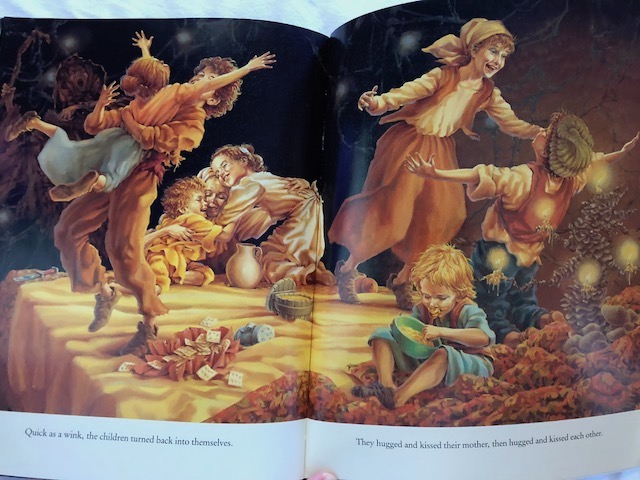
A mother leaves her seven children, all named after days of the week, alone at home while she goes to the market. Before she leaves, each of the children asks her for something special, and the mother warns them not to let strangers in or touch the fire.


However, while she is gone, a witch, Heckedy Peg, comes to the house and asks the children to light her pipe for her, offering them a sack of gold in return. At the sight of the gold, the children let her in, and she turns each of the children into a different kind of food, which she takes back to her hut in the woods.

When the mother returns home and discovers that the witch has taken her children, she goes into the woods to get them back. Heckedy Peg says that the mother can reclaim her children if she can determine which type of food on her table is which child. At first, the mother doesn’t know what to do, but then she realizes that the things her children wanted from the market are the clues to determine their identities.
The book is currently available online through Internet Archive.

My Reaction
The pictures in the book are wonderful, but the most interesting part for me is in the note on the back, which explains that the story is based on a 16th century game that children still play which involves guessing the identities of children within a certain category of things.
I wouldn’t recommend the book for very young children because the way the children in the story were turned into food might be frightening. Also, when the mother goes to the witch’s hut the witch refuses to let her in until she cuts off her feet, which she only pretends to do, but the idea is a little disturbing. The part about cutting off the feet is a reference to part of the original game.
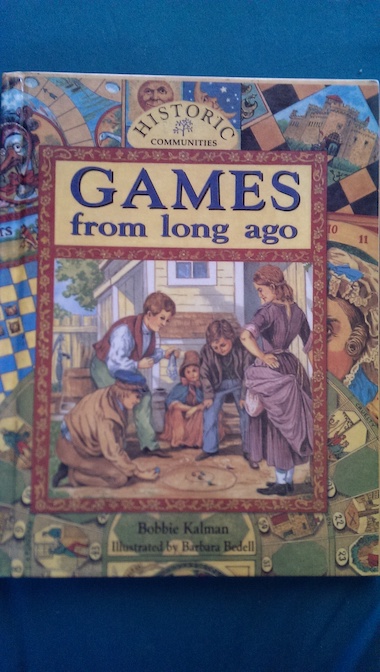
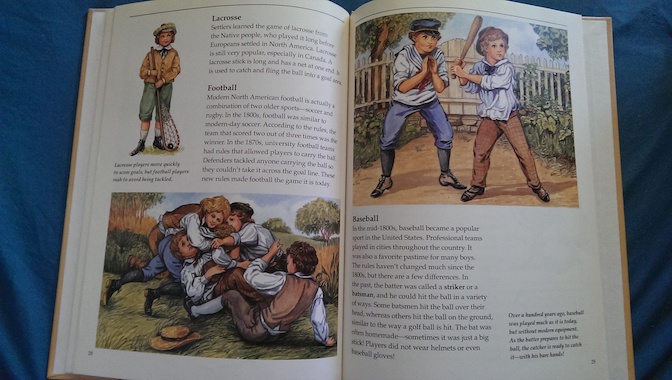
 This book is about games people would play in 19th century America. There is a variety of different types of games, although the main focus is on parlor games. Many of them have been passed on for generations by word of mouth and are still played today, such as Charades and Blind Man’s Buff, although the book discusses games that are no longer common.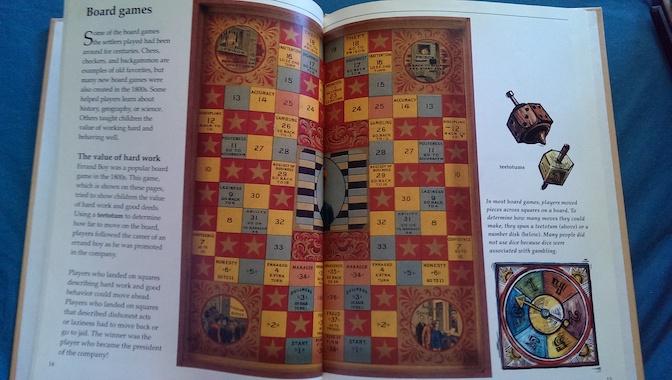

 Jestress's Forgotten Books and Stories