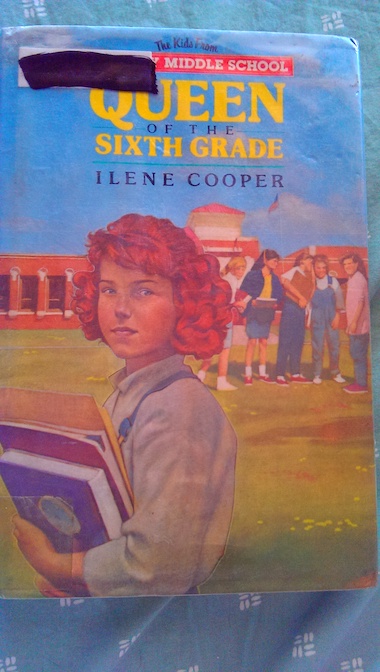
 Queen of the Sixth Grade by Ilene Cooper, 1988.
This is part of The Kids From Kennedy Middle School series.
Robin Miller has been best friends with Veronica for years, although it hasn’t always been the easiest friendship. Veronica can be exciting. She gets lots of interesting ideas and her apparent confidence in herself can be contagious. Unfortunately, she isn’t really a nice person, not even to her closest friends. She likes to call Robin “Curly” because of her hair, which Robin hates, but she tolerates the nickname for Veronica’s sake. The way Veronica teases and bullies other people makes Robin uncomfortable, too, but Robin hesitates to speak up about it both for the sake of maintaining her friendship with Veronica and because she doesn’t want to get on Veronica’s bad side herself. However, now that the girls are in sixth grade, things are about to change.
Veronica has decided to start a kind of club with some of the girls in their class called the Awesome Kennedy Girls (or AKG for short). Of course, Robin is a member. Veronica chooses the other members herself from the girls in the class that she thinks are the coolest, at least by her standards.
Then, Veronica tells Robin that she has a crush on Jonathan Rossi, a cute boy in their class. Robin likes him herself. In fact, she’s had a serious crush on him for some time, although she’s never told Veronica about it. It’s been Robin’s good fortune that she and Jonathan have been assigned to be partners for an oral book report in class. While working on the project together, Robin and Jonathan discover that they have some interests in common and start becoming friends. However, somewhat like the love triangle in Cyrano de Bergerac, Veronica asks Robin to use her influence with Jonathan to tell him that Veronica likes him and wants him to be her date for the Halloween party she’s planning. Because she always does what Veronica wants, Robin does attempt to do so, even though it pains her. But, Jonathan really likes Robin and misunderstands what Robin is saying, agreeing to be Robin’s date for the party. That’s when Robin’s real problems begin.
Veronica is used to getting what she wants and having people do thing her way. Instead of accepting Jonathan’s decision that he likes Robin completely on his own, she decides that Robin has “stolen” Jonathan from her. Immediately, Robin goes from being Veronica’s best friend to her worst enemy. Worse still, Veronica starts spreading terrible rumors about Robin to the other girls in class. Soon, no one in class wants to be friends with Robin, and the other girls in the AKG go out of their way to make life miserable for her with their bullying.
At one point in the story, Robin remembers back to when she and Veronica first became friends in the third grade. Before she met Veronica, she was friends with Gretchen, a fat girl who is now one of Veronica’s favorite people to bully. While Robin is on the outs with Veronica and shunned by most of the rest of the girls in class, she tries to become Gretchen’s friend again out of loneliness, but to her surprise and shame, Gretchen tells her that she is no longer interested in her friendship. Gretchen correctly realizes that Robin is still too much attached to Veronica and the way she does things. There were many times when she could have stood up to Veronica and defended Gretchen, but she chose not to. Gretchen points out to Robin that if Veronica decided that she wanted to be friends with her again, she’d be off like a shot after Veronica, dropping Gretchen and forgetting all about her like she did when they were younger. Robin is ashamed when she realizes that everything Gretchen says is true. In becoming friends with Veronica, Robin lost part of the nice person she used to be. Although she is not as mean as Veronica, Robin isn’t completely nice and, in some ways, has become rather shallow. If getting dumped and bullied by a former best friend hurts, it hurts even more when Robin realizes that she partly deserves it because of the kind of person she’s been and the type friendships she’s chosen.
However, there is hope for Robin in realizing the mistakes she’s made. She comes to admire Gretchen for her ability to put up with the bullying she’s endured and for continuing to stand on her own, not come crawling to the first person who offers her friendship. Gretchen is sometimes lonely and she did once fall for a trick of Veronica’s when she pretended to offer her a place in the AKG, but Gretchen still respects herself, in spite of the bullying she’s endured. In a way, she has better self-esteem than Robin does. Gretchen has her problems, but she doesn’t define herself solely by her relationships with other people, like Robin does at first. When Gretchen can’t find friends who appreciate her, she simply does the best she can without them, pursuing her own interests by herself. In a way, that attitude becomes the solution to Robin’s problems. At her mother’s urging, Robin begins pursing new interests in life.
Robin’s mother correctly points out that Robin needs to develop her own interests for her own sake and to look for friendship beyond her cramped little circle of “cool” kids. There are many other options for good friends around her, but Robin has been stuck in a mindset that hasn’t allowed her to see them. By getting out, finding new interests, and learning to be her own person again after spending the last few years mainly being Veronica’s sidekick/puppet, Robin develops new confidence and new insights on herself and the people around her.
Robin is successful at finding new friends when she takes a drama class. She even connects with another girl from her school who was neither part of the in-crowd nor the bullied ones in her class, Sharon. For a time, Robin still feels badly about what happened to her friendship with Veronica, but the more time they spend apart, the less Robin misses her and the more she begins to see Veronica, her behavior, and the problems in Veronica’s life for what they are. In the process, she begins to recover a bit of her old self, the nicer, freer person she was before she became Veronica’s friend.
When a drama project allows Robin to meet a celebrity, she becomes something of a celebrity in her class. Suddenly, people who had shunned her before are anxious to be her friend again, making Robin feel awkward because she knows their motives are self-serving, not honest or sincere. At the same time, Veronica’s controlling behavior and the one-upmanship she encouraged in her little club backfire on her. The other girls get fed up with her behavior, and Veronica is put in the uncomfortable position of appealing to Robin for help. With her former best friend and tormentor at her mercy, Robin has to decide if she will use the opportunity to take revenge or if she will go forward with her efforts to be a better person and use her new popularity for good instead of evil. There is power in popularity, but there is also power in knowing who you are and what you really stand for.
The book is available to borrow and read for free online through Internet Archive. I’d also like to give special kudos to this book for mentioning other books that Robin likes, including Where the Wild Things Are, The Wolves of Willoughby Chase, and The Westing Game (the book Robin and Jonathan use for their book report, which they both like).
 Secret of the Tiger’s Eye by Phyllis A. Whitney, 1961.
 Jestress's Forgotten Books and Stories