Eyewitness Medieval Life

Eyewitness

Medieval Life by Andrew Langley, photographed by Geoff Brightling and Geoff Dann, 1988, 2004.

I love books that explain the details of daily life in the past, and I especially like Eyewitness books because they include such great photographs to show objects that people would have used in the past.

This book begins by explaining the time period of the “Middle Ages”, which was the period between Ancient Greece and Rome and the Renaissance, when culture and knowledge from Ancient Greece and Rome came back into vogue. The Middle Ages lasted about 1000 years, roughly from 400 to about 1540 AD. (Estimates of the start and end dates vary because this was a period defined by cultural changes, which are gradual and don’t have precise start and end dates.) This long period of time can also be divided into smaller periods and contained many important events that helped to shape society and culture, including The Crusades and The Great Plague.

Medieval society was hierarchical and was based on land ownership. The king and the highest nobles controlled the land and allowed people in lower levels of society to use it or grant farming rights to peasants in exchange for rent in the form of their services and a share of what they produced. The peasants or serfs were tied to the land they farmed, and the land was owned by the lords they served. They were not regarded as “free” people, and they couldn’t leave their lord or the land except by raising enough money to buy some land for themselves or by marrying a free person from a higher level of society.

A lord’s manor included not only his manor house or castle but the nearby village, church, and the farmland where his serfs worked. Often, villages and manors had little contact with the outside world, so the people who lived there had to make most of what they needed themselves. Most people never left their land or were only able to travel a short distance from it, so the only new people they might meet would be traveling peddlers, soldiers, or pilgrims.
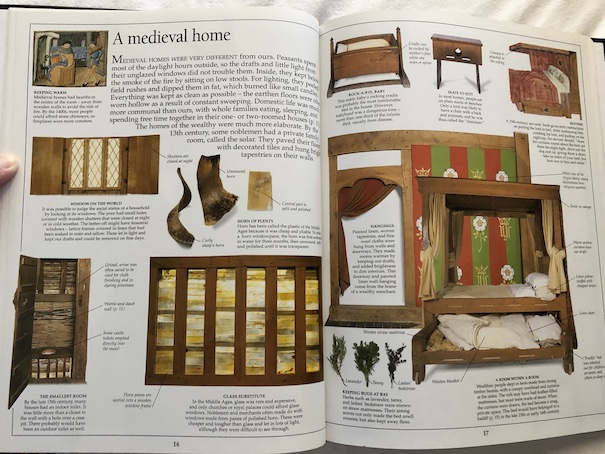
The book explains what would be found in a typical Medieval home. Poor people lived in houses that had only one or two rooms for the entire family. Few people could afford to buy glass windows. Poor people only had wooden shutters to cover their windows. Others might have tallow-coated linen over a lattice frame, which would let in light, and some wealthier people had pieces of polished horn in their windows, which also let in light, although you couldn’t really see through them well. What people ate varied depending on their social status. Wealthier people could afford a wider variety of foods, and poor people mostly ate what they produced themselves.

Women’s lives also varied depending on their social status. Pleasant women farmed and provided for their families alongside their husbands. Women in families of craftsmen and tradesmen often worked alongside the men in the family business. Wealthy women managed their husbands’ households or could rise to rank of influential abbess if they joined religious orders. However, the highest ranks in society were occupied by men.

While peasants served their lords, lords also owed services to higher nobles and, ultimately, to the king, although sometimes the king struggled to control powerful nobles and assert his authority over them. The king generally had to keep his nobles satisfied with his rule if he wanted to retain their loyalty because, while he was the source of their land and authority, they were effectively ruling over their own smaller lands with their own troops. While nobles owed their king military service and support, if they were dissatisfied with the state of their lands or were just unoccupied with other battles to fight and saw an opportunity, they would sometimes use their troops to raid the lands of neighboring nobles. Part of the king’s job involved preventing his nobles from being dangers to him and to each other. The king also made and enforced laws, settled disputes, and oversaw the collection of taxes.

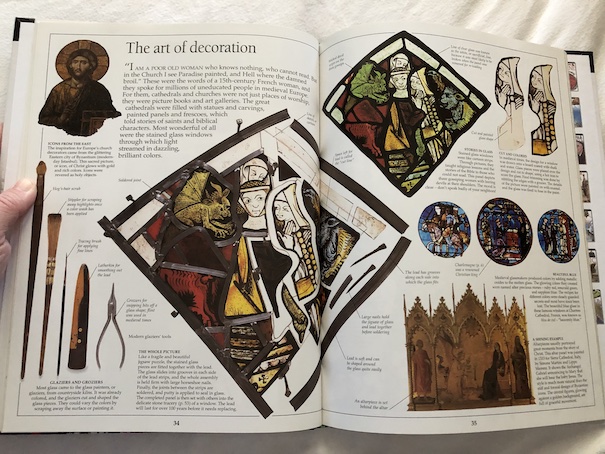
Christianity, specifically in the form of Catholicism, was central to the lives of people in the Middle Ages. During this time, stonemasons and craftsmen developed new techniques for building impressive cathedrals that still stand today. These cathedrals were lavishly decorated with statues, frescoes, and stained glass windows that depicted Biblical stories and the lives of saints. These works of art were important for helping to teach people who did not have the ability to read the Bible themselves about their religion.
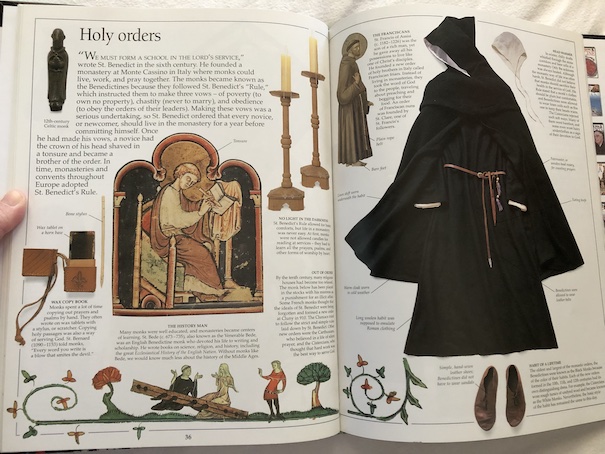
Religious orders of monks and nuns performed important functions for society, such as caring for people who were poor or sick, providing safe places for travelers to stay, and copying written texts by hand. In the centuries before the printing press was invented, there were only handwritten books, and they took time and skill to produce. It could take an entire year for someone to copy an entire Bible. Few people were able to own personal books, and much of the schooling in this period was provided by religious orders.
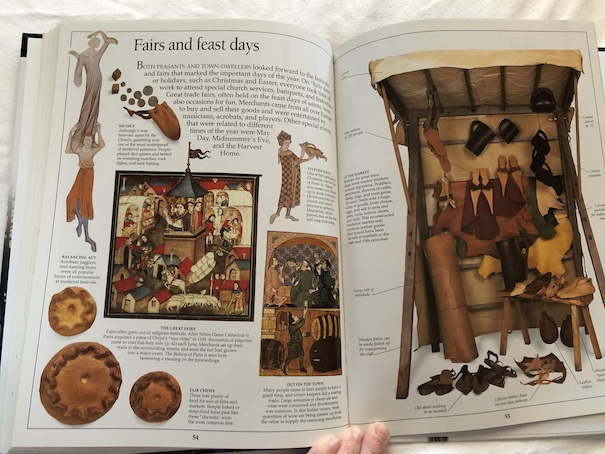
The book describes the rise of Islam during the early Middle Ages, increases in trade and commerce, the growth of towns, and guilds that controlled different professions. It also describes Medieval music and entertainment, such as plays and parades. One of my favorite parts of the book is about fairs and feast days.
The book ends by describing the beginning of the Renaissance and the rediscovery of classical Greek and Roman culture as well as the beginning of the Reformation and the development of new scientific discoveries and artistic styles.

The book is available to borrow and read for free online through Internet Archive (multiple copies).
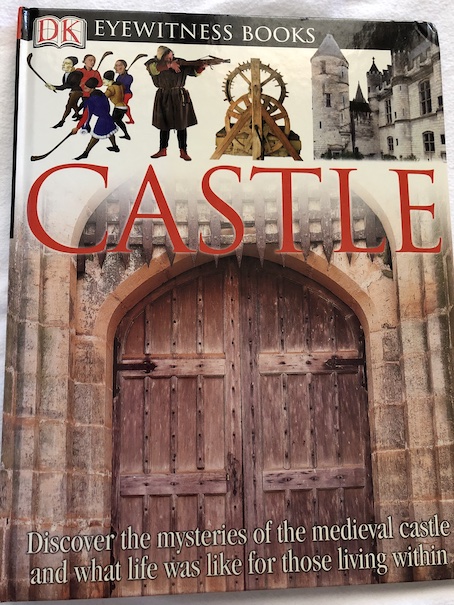
Eyewitness Castle

Eyewitness

Castle by Christopher Gravett, photographed by Geoff Dann, 1994, 2004.

Eyewitness books are always great for the photographs that they use to illustrate the concepts in the book!

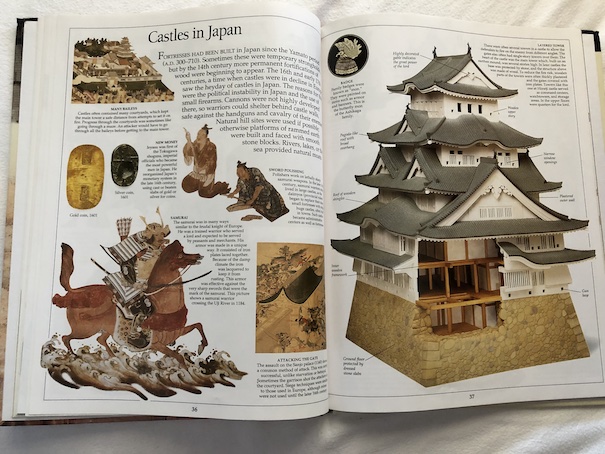
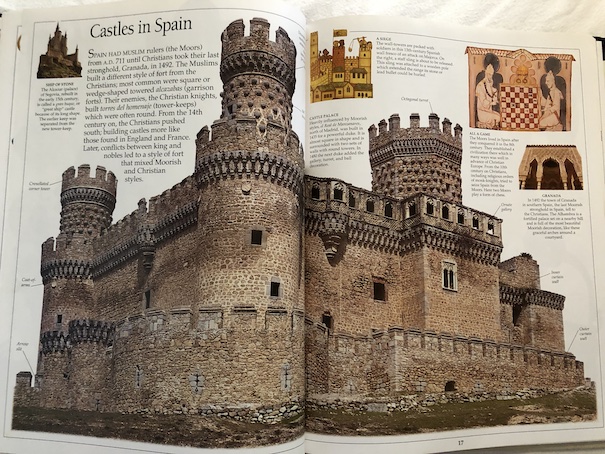
This book is all about Medieval castles. It starts by explaining the evolution of castle-building from early wooden motte-and-bailey castles to the great stone castles that we often think of as being the classic Medieval castle. However, stone castles could come in different shapes and styles, depending on where they were located.

The book shows examples of castles in different countries. Most of the focus of the book is on castles in European countries, including Spain, Germany, and France. However, the book also includes information about castles in Japan.

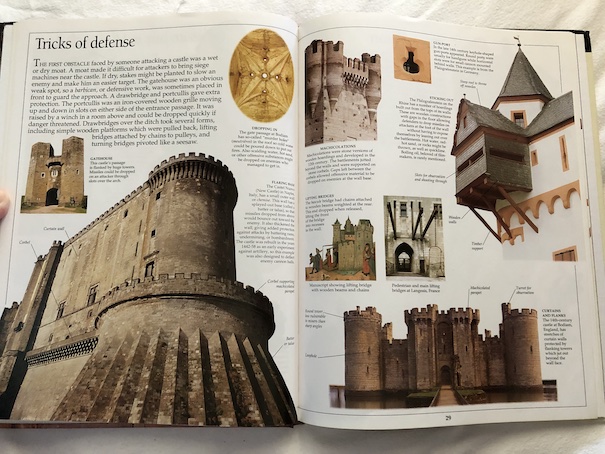
Castles were built for defense, and the book explains the types of defenses that castles would have, such as gatehouses, murder holes, lifting bridges, battlements with corbels and machicolations, and loopholes. It also explains what a siege was like, what types of weapons would have been used, and what knights and soldiers were like.

The parts of the book that I liked best were the parts that described the rooms in a castle and the daily lives of the people in a castle. Among the rooms in a castles were the great hall, kitchen, and chapel. I like how they show the objects that would be found in different rooms and how they would be used.

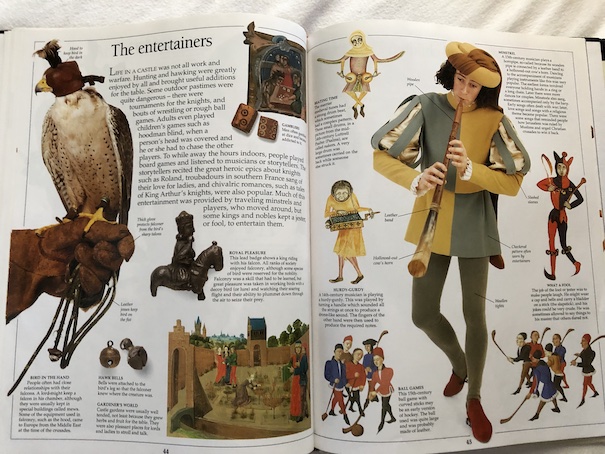
The book explains the lives of the lord of the castle and women and children who lived there. There is information about the types of foods they would eat in a Medieval castle and the types of games and entertainment they would have enjoyed.

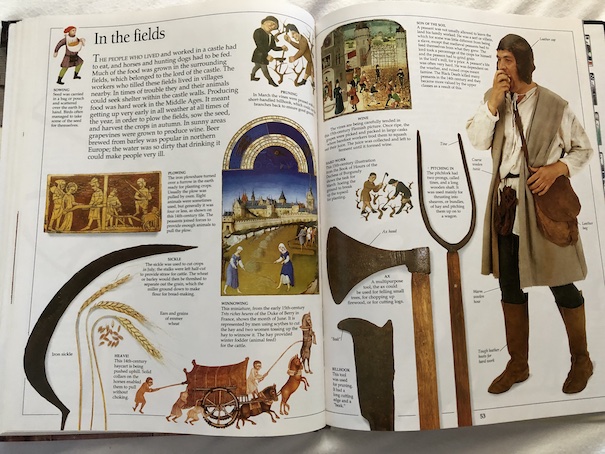
There is also information about other workers in and around the castle, including the castle builders and people who tended the castle’s animals and worked in the agricultural fields around the castle, producing food and textiles for the population.

There are sections in the back of the book with additional facts and information about castles and the people who lived in them and a glossary.

The book is available to borrow and read for free online through Internet Archive (multiple copies).
Eyewitness Ancient Egypt

Eyewitness

Ancient Egypt by George Hart, 1990.

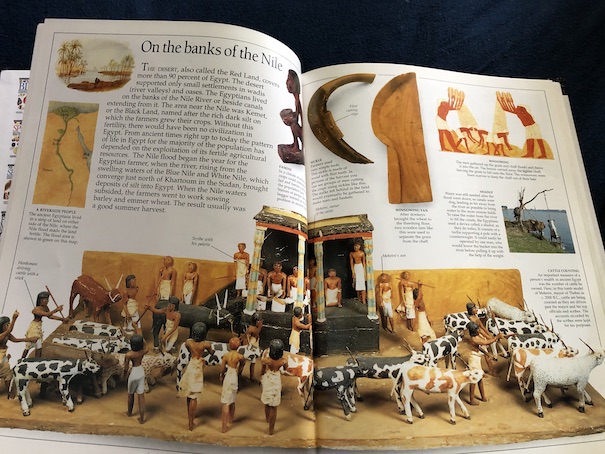
I love the way this book, like others in the Eyewitness series, shows photographs of artifacts so readers can not only read about how people lived but see the objects that they used. Each photograph in the book has a caption to explain what it is.

The book begins with an explanation about the origins of Ancient Egyptian civilization thousands of years ago, before there were pharaohs. Then, it explains about the geography of Egypt and the Nile and how the Nile floods and fertile lands along the river made Egyptian civilization possible.

The book then explains the concept of the Egyptian king as a “pharaoh.” The title of “pharaoh” comes from an Ancient Egyptian word meaning “great house”, referring to the palace where the king lived, so the king was the one who lived in the “great house.” However, the pharaoh was more than just the an important man living in a palace; he was also regarded as being a god. Most Egyptian rulers were male, although queens also sometimes ruled and were also regarded as divine. The book shows pictures of statues depicting pharaohs and explains a little more about some of the most famous pharaohs and queens. Then, it goes on to discuss life in the royal court.

Of course, no book about Ancient Egypt is complete without a discussion of mummies and tombs. Much of what we know about Ancient Egypt comes from what the Ancient Egyptians left in their tombs because Ancient Egyptians believed in life after death. They developed methods of preserving their bodies after death, and they stocked their tombs with things that they wanted to have with them in the next life. The book explains the embalming process, what pyramids and royal tombs were like, who the Egyptian gods and goddesses were, and what Egyptians believed about the journey to the afterlife.

I liked how the book not only explains different types of gods and goddesses in Ancient Egypt but also the roles of priests and temples in Egyptian society, types of religious rituals, and the role of religion and magical rituals in Ancient Egyptian medicine.

As the book covers a wide variety of different topics in Egyptian society, including scribes and writing, weaponry, and trading. I particularly like the parts focusing on daily life, like what Egyptian homes were like and some of the tools and details of different trades, like carpentry. The book has details about foods Ancient Egyptians ate, what music and dancing were like, and types of clothing and jewelry they had.

One of my favorite sections in the book is about toys and games in Ancient Egypt. We don’t know all of the details of games that were played in Ancient Egypt, but we do know that they had board games because they were found in tombs. Children’s toys were whimsical and included moving parts. Some of the games children played are similar to ones that children play today, like versions of leapfrog and tug-of-war and spinning tops.

The book is available to borrow and read for free online through Internet Archive (multiple copies, including some in different languages)

Tricky Pix

Tricky Pix: Do-It-Yourself Trick Photography by Paula Weed and Carla Jimison, 2001.

This book is part of the classic children’s hobby and activity series from Klutz Press and explains how to perform trick photography. Originally, this book came with a real camera that could be used to take trick pictures. The camera was a film camera instead of a digital camera, using 35mm film, but the film was not provided.

Now, digital cameras have almost entirely replaced film camera for popular photography, and film is actually much harder to come by, and not as many places offer film development services. In the very early 2000s, when this book was first published, digital photography was just starting to take hold, and digital cameras were more expensive, so a kid’s first camera was still likely to be a film camera. In just a few more years, that shifted abruptly with the increasing popularity of cell phone cameras and further developments that made digital cameras increasingly affordable for general use. The beginning of the book explains how the camera works and how to load the film.

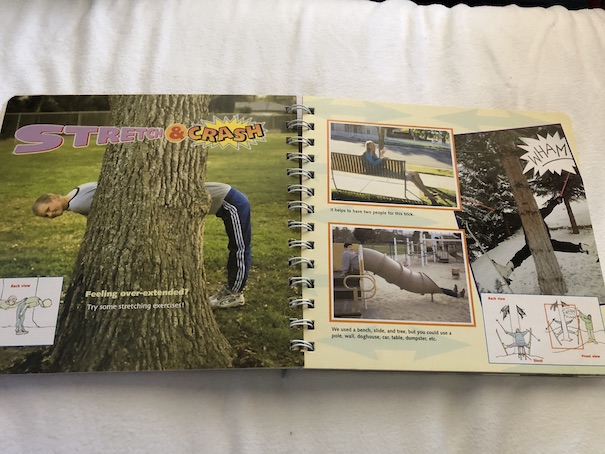
The fact that this book was designed to be used with a film camera is important because this style of trick photography relies on physical illusions, not images that are digitally altered with Photoshop or similar software. In a way, this makes the pictures more interesting because they are largely unaltered from their original form. That is, you’re seeing what the camera saw at the moment that the picture was taken. The tricks involve using different perspectives and camera angles to achieve the illusions.

Strategic poses and the use of physical objects to block part of the scene can be used to create illusions like disembodied heads, people with extra limbs, or people with really long legs or bodies.

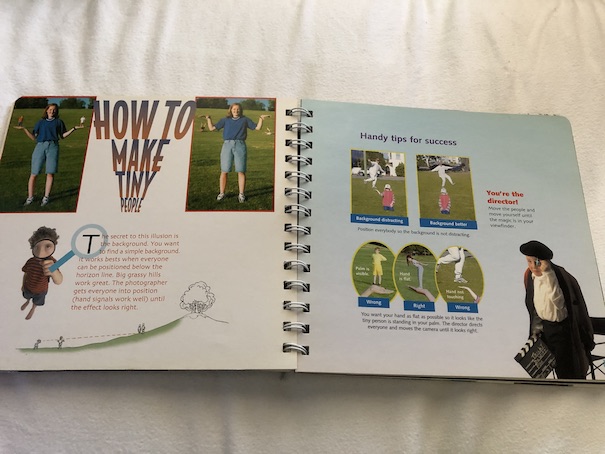
An often-used trick for making people look tiny enough to be picked up or stepped on by another person involves forced perspective – strategic positioning the subjects so that there is physical distance between them but no visual cues to indicate just how much distance there is between them so relative sizes are difficult to gauge.

When images in this book are altered, it’s with the old-fashioned method of literally cutting and pasting them onto each other, something that is now done digitally.

Personally, I enjoyed the fact that there was less of a reliance on software and digital technology in the production of these photographs. I think that learning how to do things without relying on technology to do most of the work can encourage creativity, and in particular, the use of physical illusions like forced perspective is also educational. Artists need to understand the use of physical space, perspective, and lighting, and these photographic tricks demonstrate these concepts well. Even though this book doesn’t make use of digital photography, any of the tricks in this book could also be performed when taking pictures with a digital camera.

The book is available to borrow and read online through Internet Archive.

On The Mayflower

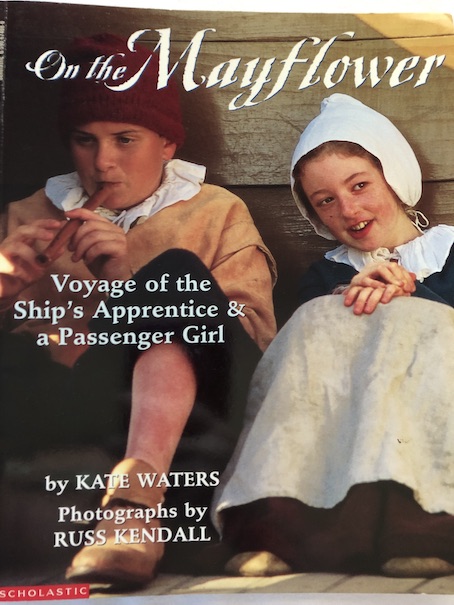
On the Mayflower by Kate Waters, 1996.

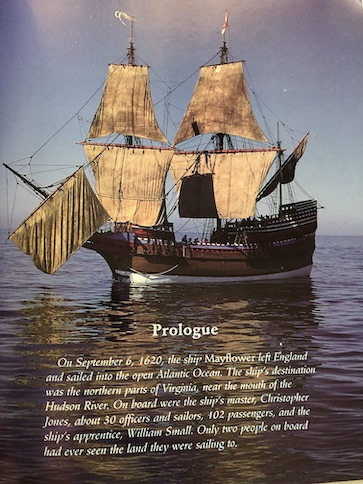
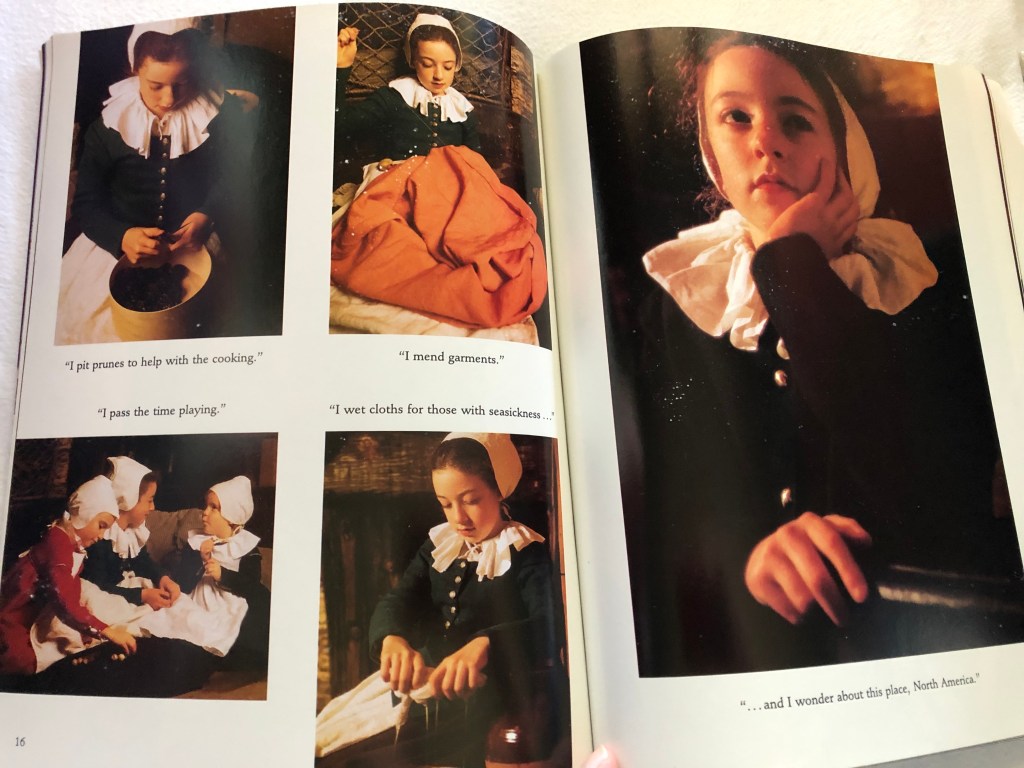
This book is part of a series by same author about children growing up in Colonial America. Each of the books is the series has photographs of historical reenactors portraying real people from Colonial history. This book focuses on two children who are traveling on the Mayflower in 1620, heading to what would become the Plymouth colony. One of the children is a girl who is a passenger on the ship, and the other is a boy who is part of the crew, a ship’s apprentice. In the section of historical information in the back of the book, the author explains that the girl was based on a real girl who was a passenger on the Mayflower, although the boy was not based on a specific apprentice; he is just meant to show what a ship’s apprentice would have been like at that time and to help explain the duties of the various crew members as he assists them.

The ship’s apprentice is called William Small. He is specifically apprenticed to the ship’s master, Christopher Jones (historical character). As an apprentice, he is learning basic navigation skills and assists the regular crew members with various tasks, including serving food.

The girl is named Ellen Moore. She and the other passengers are traveling in cramped quarters, and people are often seasick or trying to find ways to keep themselves occupied during the long journey. Ellen is traveling with younger siblings, and she plays with them in between performing routine chores, like sewing and preparing food.

During the voyage, there is a terrible storm, and the passengers are all confined below deck without light because lanterns and candles would pose too much risk of fire while the ship is rocked during the storm. William has to help the ship’s carpenter to repair leaks. Before the storm is fully over, Mrs. Hopkins, one of the passengers, gives birth to a baby she names Oceanus (historical person, the real Oceanus made it through the voyage although he sadly died young, possibly about age six, but the date of his death is uncertain).

The book ends with their arrival in the Americas. Because the storm blew them off course, the Mayflower did not arrive at its intended destination in Virginia but further north at Cape Cod in what is now Massachusetts. Because winter was setting in, the passengers decided not to risk further travel and established their colony there, 65 days after their ship first left England.

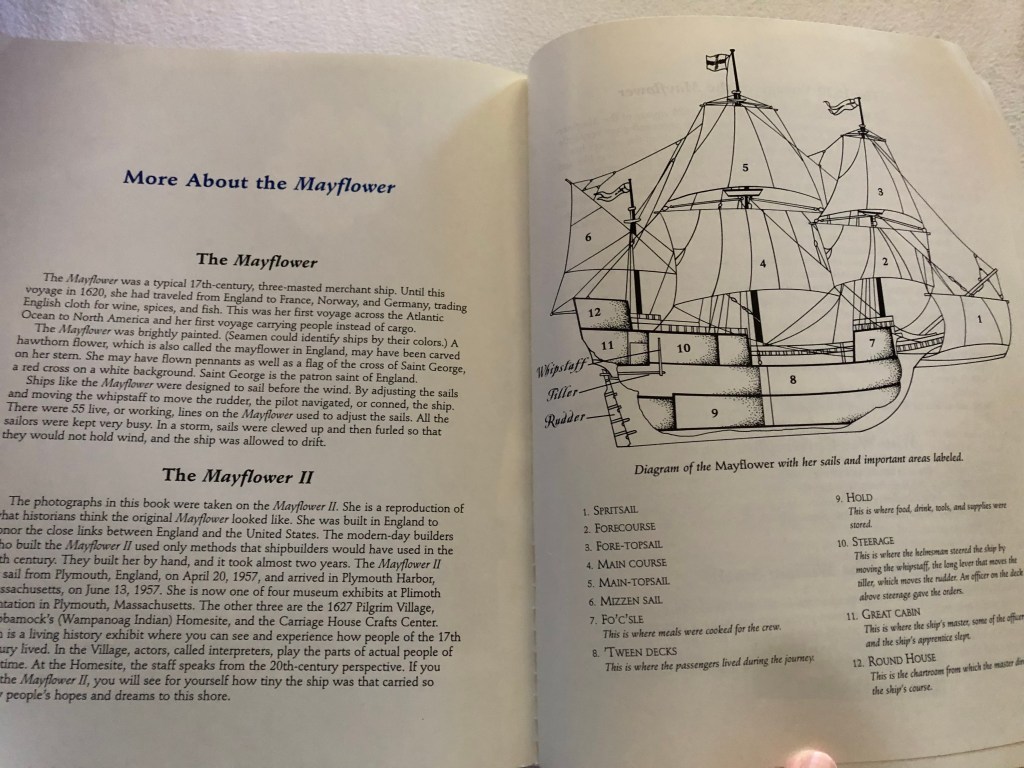
In the back of the book, the section with historical information explains more about both the characters in the story and the reenactors. The historical Ellen Moore and her siblings were traveling to the colony without their parents, under the guardianship of the other families, acting as young servants in their employment. The book mentions that the Moore children were without their parents because of a family tragedy but is not specific about what it was. I looked it up, and the story is both sad and bizarre. I can see why the author didn’t want to explain it in a children’s book. Apparently, the children’s parents had an arranged marriage and were not happy being married to each other. The children’s mother had a long love affair with another man, and also apparently, all of the children were the biological children of her lover. The mother’s husband began to notice that the children physically resembled his wife’s lover. The couple bitterly divorced, and after the husband was granted custody of the children (which, apparently, weren’t his anyway), he decided to send them away to the Americas with the departing pilgrims, paying for them to be taken on the voyage, never seeing them again. Sadly, Ellen probably did not survive the first winter at the Plymouth colony because she disappears from the historical record during that time. Out of the four Moore children traveling on the Mayflower, only one survived to adulthood, Ellen’s young brother Richard. Richard married twice in his life and had seven children of his own. He became a sailor and ship’s captain and eventually died an elderly man in Salem, Massachusetts, during the 1690s, not long after the Salem witch trials. None of this information about Richard is mentioned in the book, but I thought it was interesting background information. In the book, there is also additional information about the ship, The Mayflower, and the reproduction ship used in the pictures, The Mayflower II.

The book is available to borrow for free online through Internet Archive.

Cam Jansen and the Mystery of the UFO

CJUFO

Cam Jansen and the Mystery of the UFO by David A. Adler, 1980.

Cam Jansen‘s friend, Eric, wants to enter a photography contest.  All of the pictures for the contest must be taken in black-and-white, have to be “of local interest”, and must be completely natural, not posed.  As Cam and Eric look for things to photograph, Cam spots a kitten trapped in a tree.  Eric takes a picture of her rescuing the kitten.

Then, they see a bunch of people standing around, pointing at some strange, multi-colored lights in the sky.  A local newscaster even shows up to cover the mysterious lights and talk about UFOs.

Cam and Eric decide to investigate the area where it look like the UFOs landed.  When they get there, they spot some strange creatures with silvery skin and pointed heads!  However, it soon becomes obvious that these “aliens” aren’t what they appear to be.  They speak English, are called “Cindy” and “Steven”, and are actually covered in aluminum foil.  But, why are they playing alien, and what are the UFOs really about?

Cam decides to keep the cat that she rescued and names her Neptune.  When the true purpose behind the aliens’ hoax is revealed, Neptune helps to foil their plans.