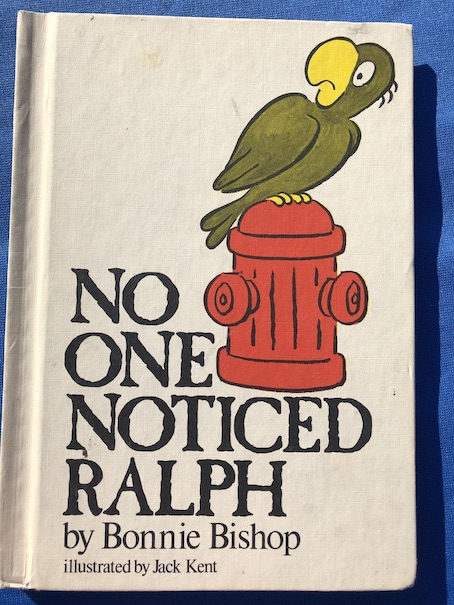
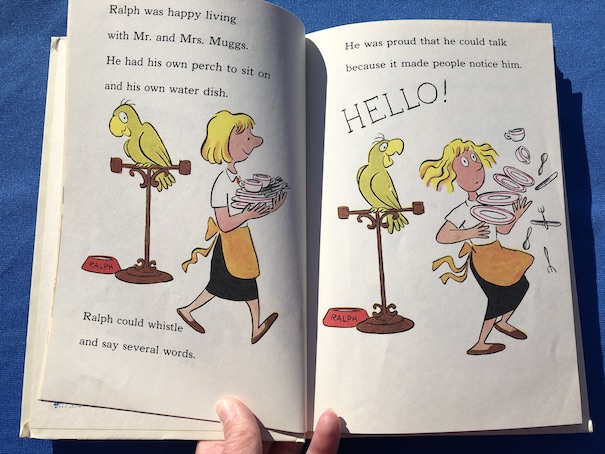
Ralph is a parrot, living in an apartment with Mr. and Mrs. Muggs. Ralph can whistle and talk, and he likes doing it because he enjoys the attention he gets from people when he does it.
He has certain times when he whistles, like when he wakes up Mr. and Mrs. Muggs in the morning, and certain words he says to get treats. Sometimes, in the evenings, Mr. and Mrs. Muggs will light a fire in the fireplace and make popcorn, so Ralph will say, “Fire!” to remind them.
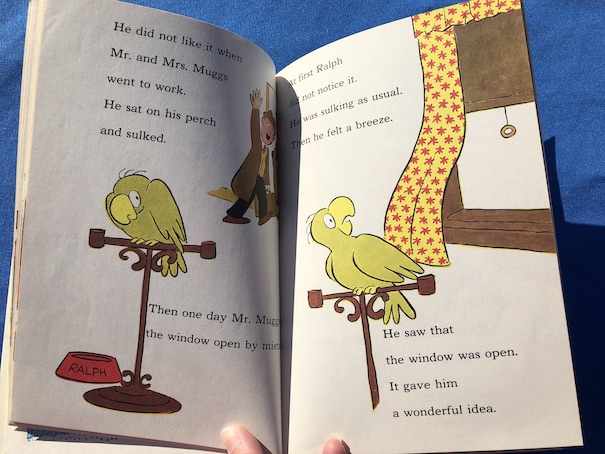
Ralph gets lonely when Mr. and Mrs. Muggs leave for work, and one day, he notices that they’ve left a window open. He decides to fly outside and look for people to give him attention.
When he reaches the street, there are plenty of people, but they don’t pay attention to Ralph. He tries whistling and using words he knows. It has an effect on the people around him, but not what Ralph expects, and still no one notices him.
Then, Ralph sees an apartment on fire, and says, “Fire!” It makes a man nearby notice the fire and call the fire department. The man who called the fire department realizes that Ralph is the one who yelled “Fire!” and calls him a hero. Finally, Ralph gets attention!
Mr. and Mrs. Muggs return home to see everyone with Ralph and hear the story about how he became a hero. Ralph is rewarded with a ride on the fire truck, his picture in the paper, and a lifetime supply of sesame seed crackers but it’s the attention he loves most.
I love this picture book and thought it was funny when I was a kid, when I had a pet bird myself.
Johnny and the Birds by Ian Munn, illustrated by Elizabeth Webbe, 1950.
This cute little picture book is a collection of short stories about a little boy named Johnny and his adventures with wild birds. The stories are very short and are meant to teach children about wild birds.
Johnny and the Catbird – Johnny thinks that he hears a kitten while looking for strawberries, but it’s actually the sound made by a catbird.
The Blue Jays – Father Blue Jay scares a hawk away from his nest.
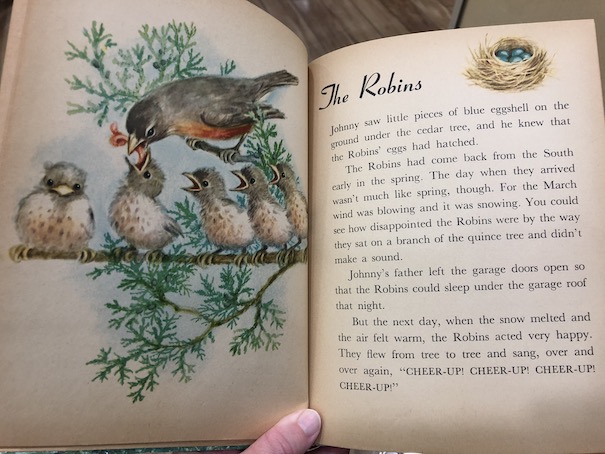
The Robins – Johnny knows that the Robin eggs have hatched when he sees the bits of blue eggshell under the tree where they live.
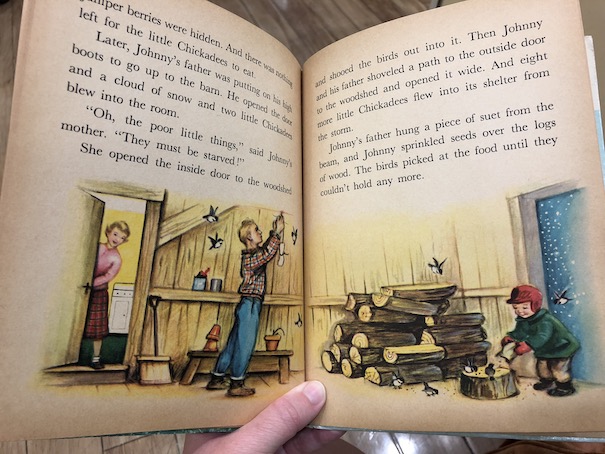
The Chickadees – The Chickadees don’t fly south during the winter like other birds, but Johnny’s family helps them when it’s snowing and they need something to eat.
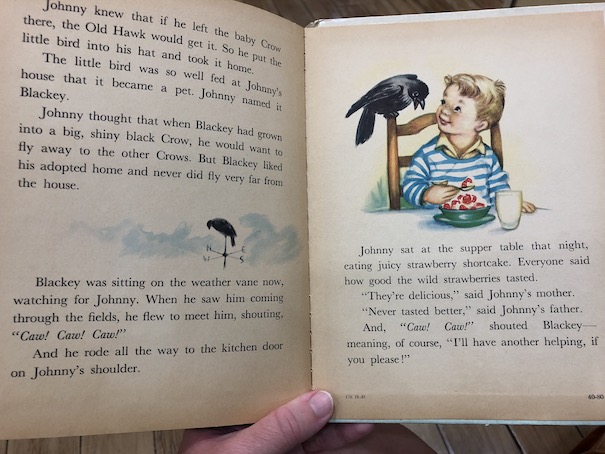
The Crows – Johnny finds a baby Crow out of its nest. Apparently, it’s an orphan, and Johnny fears that it might get eaten by a hawk, so he takes it home and takes care of it. It becomes a pet, and he names it Blackey.
The book is available to borrow and read for free online through Internet Archive.
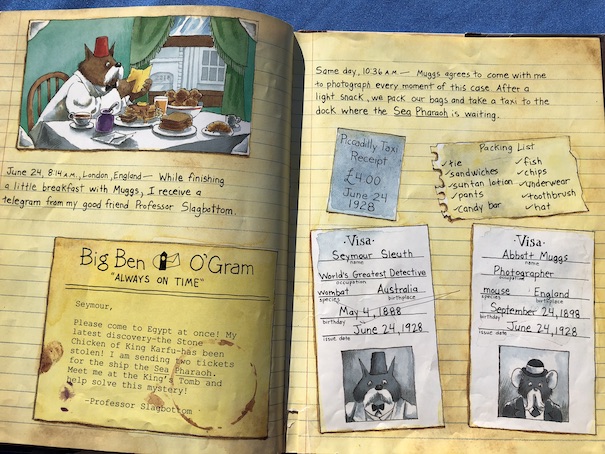
Seymour Sleuth, an Australian wombat living in London, introduces himself as “the greatest detective in the world.” His friend, Abbott Muggs, a mouse, is a photographer who assists him in his cases and documents them. When the story begins, Seymour receives a telegram from his friend Professor Slagbottom, who is working on an archaeological site in Egypt. Someone has stolen one of their finds, the Stone Chicken of King Karfu, and he needs Seymour’s help to find it! Seymour and Muggs head for Egypt!
King Karfu was a wealthy pharaoh and a wonderful cook, and the Stone Chicken may provide clues about the Lost Treasure of King Karfu, the nature of which is unknown. When they reach the dig in Egypt, Professor Slagbottom explains that he was researching a message in code on the outside of the Chicken when it was stolen. The suspects are the other people on the dig, who may be trying to steal King Karfu’s Treasure.
Seymour interviews the suspects one at a time and considers their connection to clues found at the scene of the crime. As an adult, I figured out who the culprit was pretty quickly, but for the benefit of child readers, Seymour provides notes about the clues and suspects to help them understand the connections. The pictures in the story also provide important clues. After Professor Slagbottom’s decoder is stolen, Seymour realizes who the thief is.
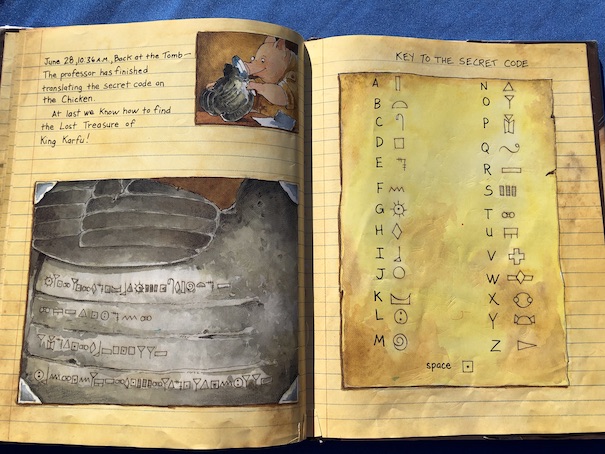
After they get the Stone Chicken back, readers can use the decoder provided to solve the code and learn where the Treasure is. It turns out that the Treasure is actually a recipe, written in the same substitution code – for peanut butter and jelly sandwiches!
I always like mysteries that involve codes and puzzles, and this cute animal mystery would be fun and challenging for young kids. With the key provided, it would be a good introduction to substitution codes for kids who have never seen them. There is one other book with Seymour Sleuth, The Mystery of the Monkey’s Maze. The author, Doug Cushman, is also the author of the Aunt Eater Mysteries.
The book is currently available online through Internet Archive.
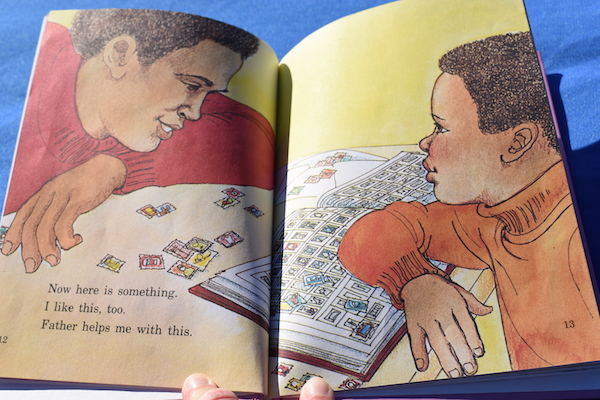
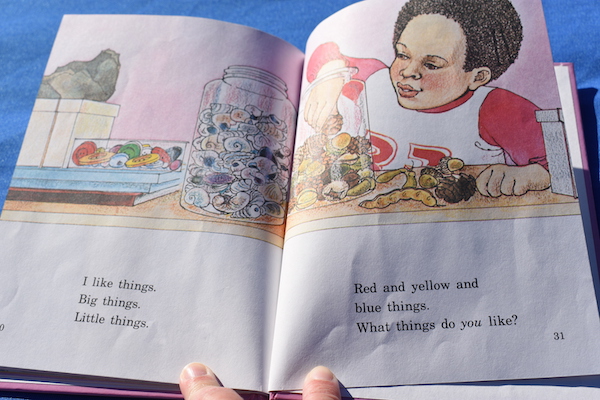
I Like Things by Margaret Hillert, illustrated by Lois Axeman, 1982.
This is
a cute little picture book about the fun of collecting things. A young girl talks about the things that she
collects and why she likes them.
She enjoys collecting all kinds of things with different shapes, sizes, and colors. Sometimes, she likes to sort the things in her collections, like buttons, by color or size.
Sometimes, her father helps her with her stamp collection. She also likes to find seashells and rocks at the beach. Sometimes, she and her friend trade sports cards from their collections.
At the end of the story, the girl asks readers what kinds of things they like, so adults can use the story to get kids to talk about what they like to collect.
I thought it was interesting how the girl put one of the bigger rocks in her collection into a jar that was partly full of water so that the water would act as a magnifier, making the rock look bigger.
One
thing I noticed is that the girl never refers to the objects in her collections
by name. Mostly, she just talks about
what she does with them using very simple words. I think that’s to make the book easier for
younger children. There is a word list
in the back of the book of all of the words used in the story, and there are
only 64 different words.
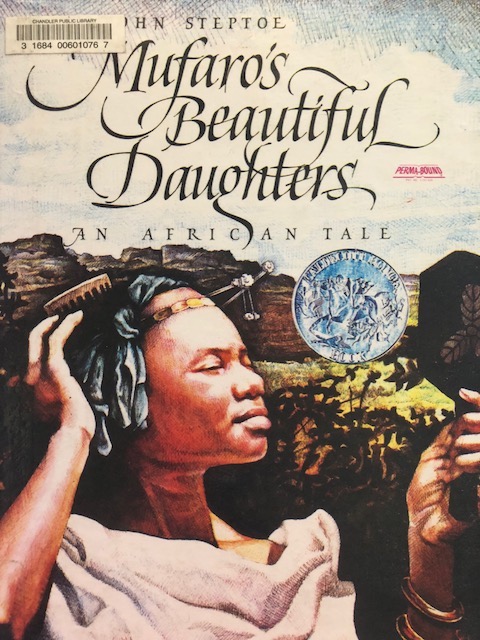
Mufaro’s Beautiful Daughters by John Steptoe, 1987.
This story, based on an African folktale, is somewhat similar to other folktales and fairy tales from other parts of the world such as Cinderella, Mother Holle, and Vasilisa the Beautiful, where a girl with a kind, hard-working nature triumphs over a mean sibling because someone in authority recognizes her good nature and rewards it.
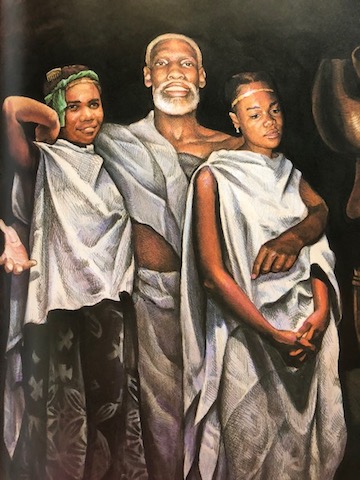
In a small village in Africa, a man named Mufaro has two daughters, Manyara and Nyasha. Both girls are beautiful, strong, and clever, but they have very different natures. Nyasha is kind, gentle, and patient. Manyara is bad-tempered, jealous, and self-centered. She frequently taunts Nyasha about how, one day, she will be the queen and her sister will be her servant. When Nyasha asks her why she is so mean, Manyara says that she hates the way people praise Nyasha for her kindness. She thinks that Nyasha is their father’s favorite child, and she wants to prove that Nyasha’s “silly kindness is only weakness.”
Since there is nothing that Nyasha can do to change her sister’s mind or attitude, she just continues doing her usual chores and being kind to people and animals. In particular, she makes friends with a small garden snake, knowing that his presence in her garden will keep away pests.
Manyara is sneaky and always behaves herself when their father is present, so Mufaro doesn’t know about the troubles between his daughters. When a messenger arrives, saying that the Great King is seeking a wife and that beautiful, worthy girls are summoned to his city so that he can choose from among them, Mufaro is proud and eager to present both of his beautiful daughters. Manyara tries to persuade her father to send only her, but Mufaro is firm that both girls must present themselves for the king’s decision.
Manyara decides that the only way to get the better of her sister is to be the first to arrive and present herself to the king, so she slips out in the middle of the night and begins the journey alone. However, both the journey and the king are not what Manyara thinks they are. Along the way, Manyara encounters various strange characters who ask for help or offer advice, but thinking that a queen doesn’t need to pay attention to others or do anything she doesn’t want to, Manyara ignores them all.
Nyasha, on the other hand, gets ready to leave at the appointed time in the morning. Everyone worries about Manyara but decides that the best thing to do is to follow her to the city, since she seems to have gone on ahead. As Nyasha travels with the rest of their friends and family, she listens to the people Manyara ignored and shows them kindness.
When they finally reach the city, Nyasha encounters a terrified Manyara, who hysterically insists that when she went to meet the king, she found a horrible monster instead. However, like everything else, it’s just another part of the test, and Nyasha is the one who passes because she, like her sister, has actually met the king before, but unlike her sister, she actually paid attention to him.
The pictures in the book are beautiful and colorful. A note in the front of the book says that the buildings in the illustrations were based on an ancient city in Zimbabwe that is now ruins. The note in the book also explains that the names of the characters in the story come from the Shona language. The meanings of the names are clues to the characters’ natures. Manyara means “ashamed”, and Nyasha means “mercy.”
The book is a Caldecott Honor Book. It is currently available online through Internet Archive.
Peter and his best friend, Archie, live in a big city (probably New York City), and they often play in empty lots between the apartment buildings. One day, Peter and Archie are playing in a lot filled with old, discarded junk, when Peter finds a special prize: a pair of motorcycle goggles!
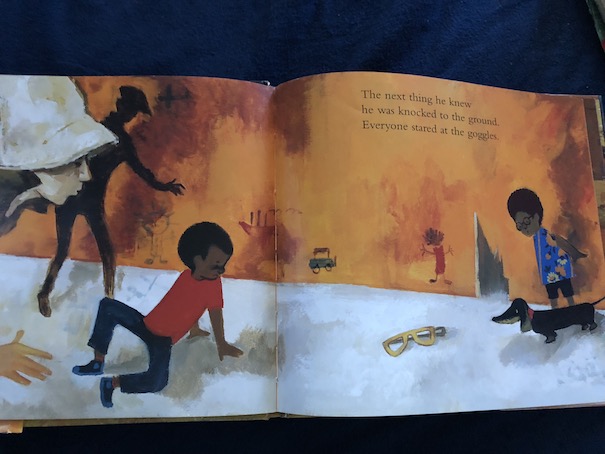
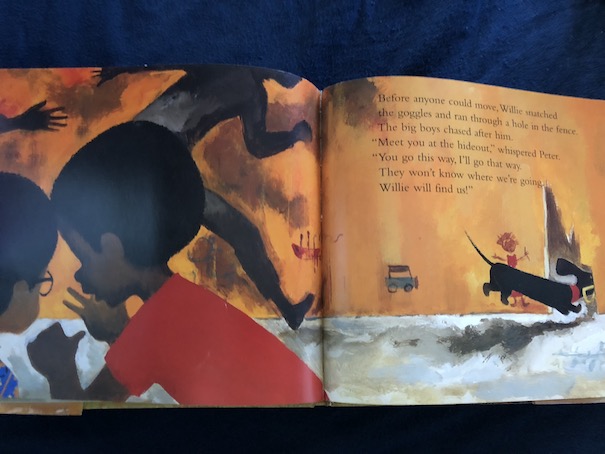
The boys have fun playing with the goggles, but then they’re spotted by a gang of bigger boys. The bigger boys try to make Peter give them the goggles, one of them even knocking him to the ground when he attempts to take them.
Peter’s dog, Willie, runs off with the goggles, and the boys split up to get away from the bullies, meeting back at their “hideout” in the vacant lot.
However, the big boys are still looking for Willie and the goggles. What can Peter and Archie do to get rid of them?
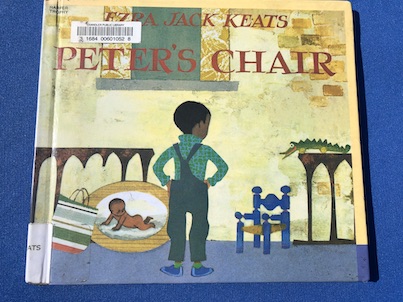
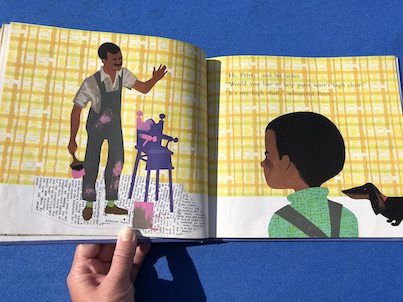
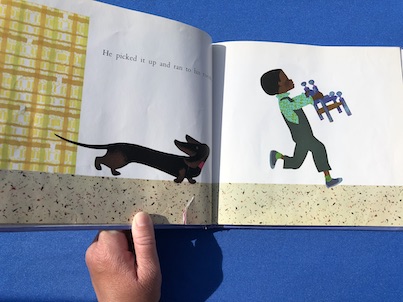
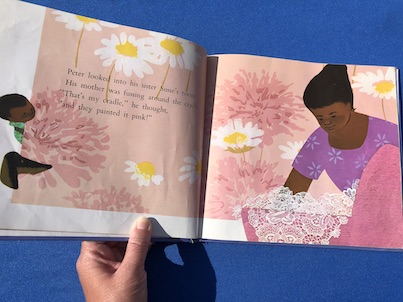
There is a new baby in Peter’s family, his little sister, Susie, and things are changing for Peter. He is no longer the baby of the family. He must play quietly to avoid disturbing the baby, and his father is painting all of his old, blue baby furniture pink for little Susie.
Peter feels badly, seeing the baby getting all of his old things. Spotting his old baby chair, which hasn’t been painted yet, Peter runs off with it, taking along some of his other old things.
However, what Peter eventually realizes is that he has grown too big to fit into his old chair. Nobody stays a baby forever, and Peter’s old baby things are of no use to him anymore.
Seeing that he is out-growing these old baby things helps Peter to be willing to let go of them and help his father repaint them for his little sister.
This is a cute story about change and growing up and the worries that children sometimes have about their siblings taking their place in the family. The art style of the book is also interesting because it includes pieces of patterned or textured paper for things like wallpaper, people’s clothing, the newspapers under the furniture being painted, and the baby’s lacy blanket. Other books by the same author also use this technique, such as Jennie’s Hat.
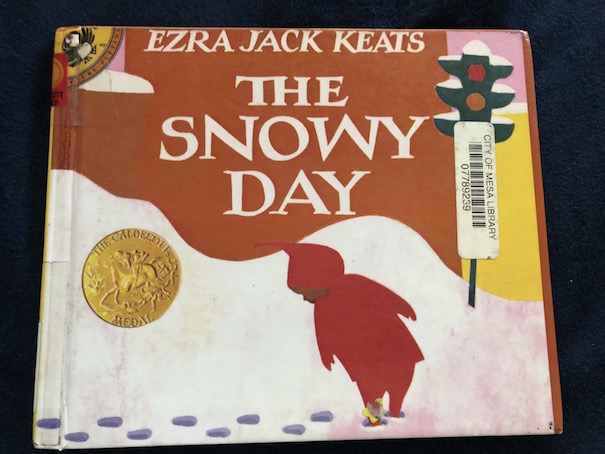
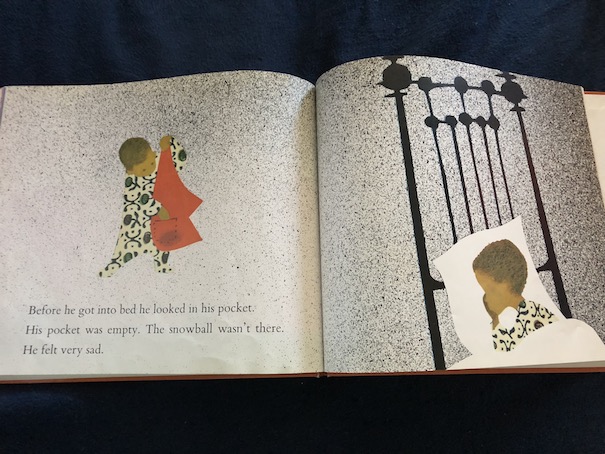
This is a pleasant, slice-of-life story about the fun and wonder of a snowy day for young children.
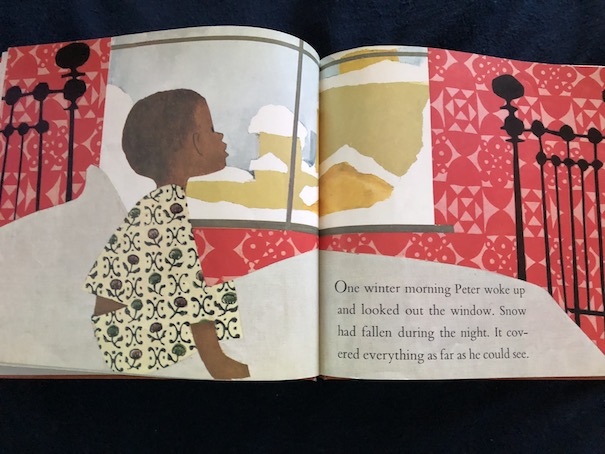
A young boy named Peter wakes up on a winter morning to discover that it snowed during the night.
Peter hurries out into the snow, experiencing all of the fun it has to offer. He studies the footprints that he makes in the snow and uses a stick to make marks in the snow and knock snow off of tree branches. He’s still too little to join in the snowball fight that the big boys have, but he has fun making a snowman and snow angels.
The snow is so much fun that Peter makes a snowball amd put it in his pocket to save for later. Of course, the snowball in his pocket doesn’t last, and he worries that the snow outside will disappear as well, but there is even more snow the next day. He gets a friend of his to come outside and join him in the fun.
It’s a simple, sweet story about one of the simple pleasures in life and one boy’s discovery of the wonders of snow. It would make a nice, calm bedtime story for young children.
This book is also a Caldecott award winner, and it is noted for being one of the first children’s books to feature a black main character. Peter’s race is never mentioned in the text and is not directly a part of the story, but it is shown in the pictures. Really, I think that’s part of what makes the book so great; although the book was considered ground-breaking for representing minorities, it does so in a way that’s completely relatable because his story could really happen to just about any child.
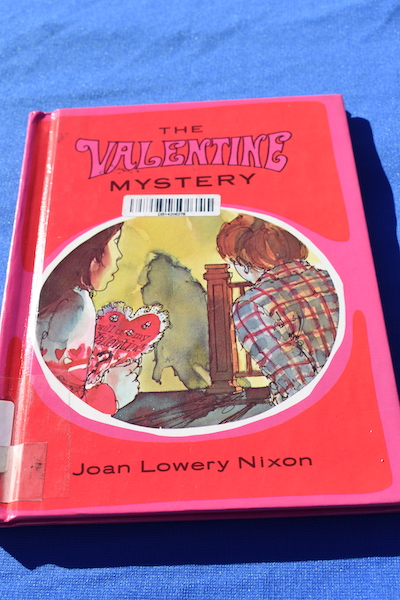
Someone leaves a mysterious, unsigned valentine for Susan Connally at her apartment on Valentine’s Day. Even though everyone was home at the time that the valentine was delivered, the only person who saw the person who brought it was Susan’s little, two-year-old brother, Barney. All Barney can say about this person is that “He had watches on his tennis shoes.”
Susan
and her other brother, Mike, decide to ask some of the other people who live in
their apartment building if they know anything about the valentine or a strange
person who wears watches on his shoes.
Nobody knows a person who wears watches on their shoes. Most people aren’t even wearing tennis shoes. They’re wearing boots because it’s snowing outside. The questions the kids are asking about people with watches on their tennis shoes sound so strange that one of their neighbors, Mrs. Pickett, thinks that the kids are trying to find the solution to a riddle and keeps guessing things like “a spotted dinosaur who has time on his hands?” (Mrs. Pickett is one of my favorite characters in this book. All of her solutions involve a spotted dinosaur, for some reason.)
There is a boy named Pete who lives in their apartment building. His family has only moved there recently, and he’s in Susan’s class at school. Susan thinks it would be nice if the valentine turned out to be from him, but he’s not wearing tennis shoes or watches. He’s also wearing boots with round buckles on them.
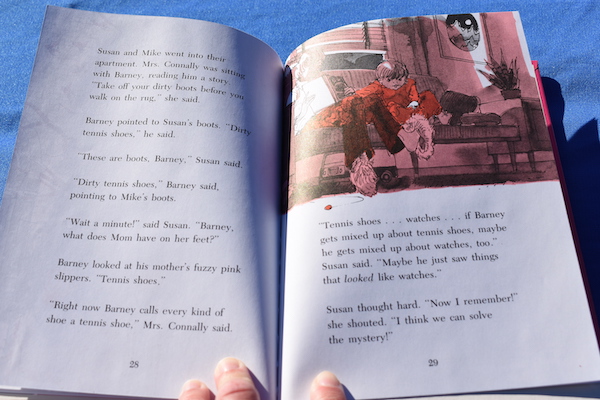
The breakthrough comes when the kids discover that their little brother is going through a phase where he calls all kinds of shoes “tennis shoes.”
The book is available to borrow and read for free online through Internet Archive.
I read this book when I was a kid and then spent years trying to remember what book involved a kid who thought someone had watches on his tennis shoes before I found it again. It’s a cute, fun Valentine’s Day mystery story, and I love all of Mrs. Pickett’s guesses about who would wear watches on their tennis shoes.
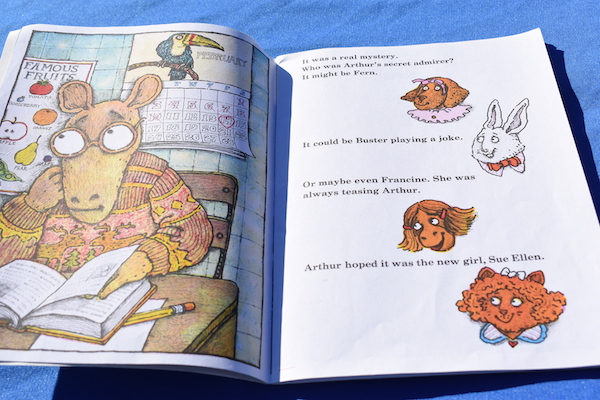
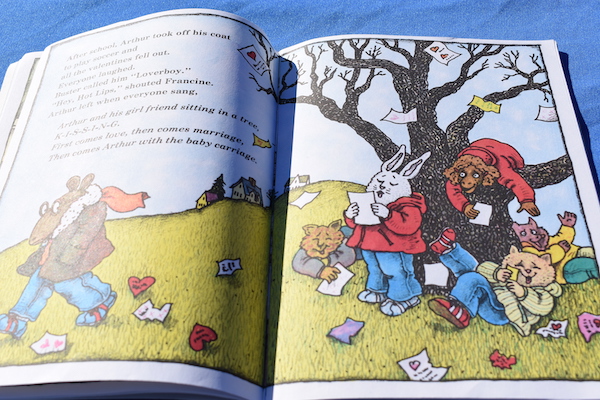
During the week before Valentine’s Day, someone keeps leaving unsigned valentines for Arthur. He wonders who it is, thinking about the different girls in his class at school. On the other hand, maybe someone is just playing a joke on him.
When his friends find out about his secret admirer, Arthur gets a lot of teasing. At one point, he thinks that he knows who the secret admirer is, but when he writes a valentine of his own for her, it turns out that he’s wrong, and it leads to more embarrassment.
However, Valentine’s Day isn’t over yet. Arthur’s secret admirer gives him a movie ticket, saying that she’ll meet him at the theater. With this last message, Arthur realizes who is secret admirer is and arranges a surprise of his own.






















 Jestress's Forgotten Books and Stories