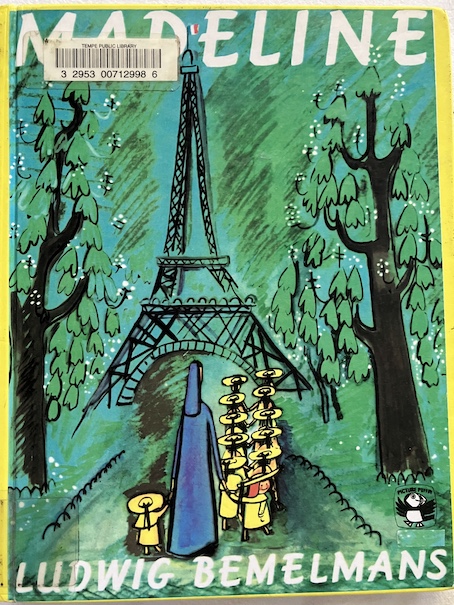
Madeline

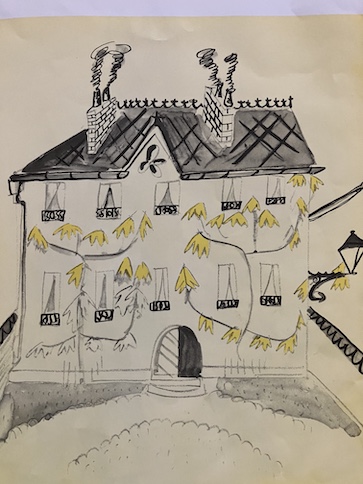
“In an old house in Paris
that was covered with vines
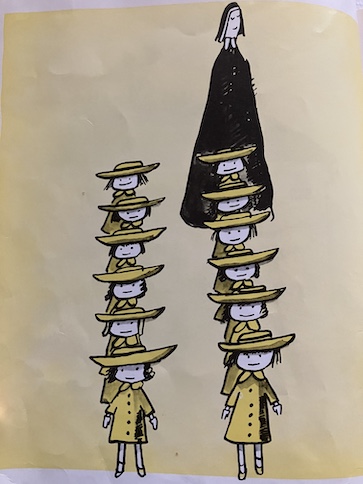
lived twelve little girls
in two straight lines.”

The Madeline stories are considered children’s classics today, and these words, which are the opening lines in other books in the Madeline series, introduce Madeline’s school. Madeline is a little girl who lives in a small boarding school in Paris, tended by Miss Clavel.
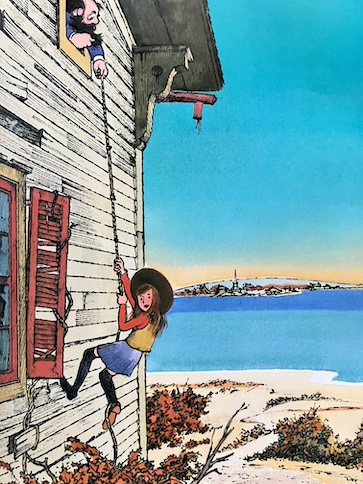
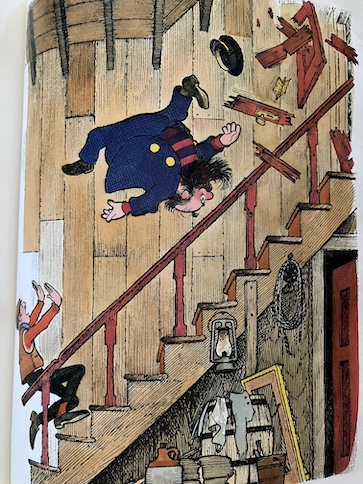
Madeline is the smallest girl at the boarding school. She’s a brave girl, who isn’t scared of either mice or lions at the zoo, and she sometimes does daring stunts that frighten Miss Clavel.

One night, Miss Clavel wakes up because Madeline is crying. She calls the doctor, who examines Madeline and rushes her to the hospital because she needs to have her appendix removed.
After the operation, Madeline has to stay in the hospital for a while. Miss Clavel brings the other girls from the school to visit her, and they are impressed by all the candy and presents that Madeline has received from her family. Even more impressive, Madeline now has a scar that she shows to the other girls.

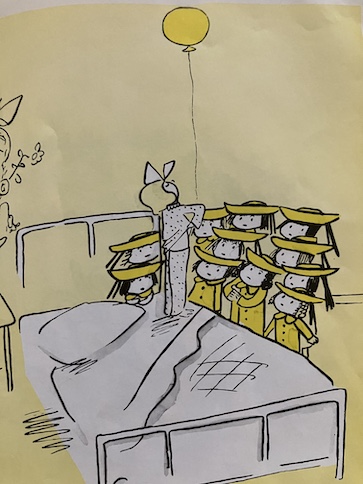
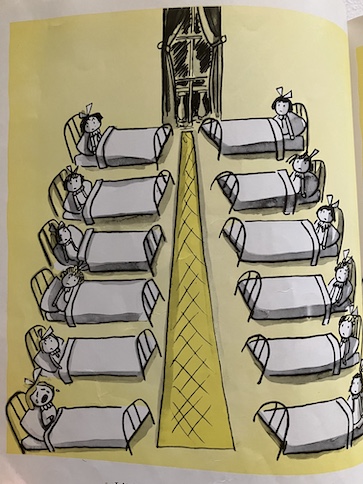
After the other girls return home and go to bed, Miss Clavel wakes up to find them all crying. Madeline has made having her appendix out look like so much fun, they all want to do it!

I wouldn’t say that I was a particular fan of Madeline as a kid, but I did read at least some of the books in the series. As an adult, I had forgotten that they were told entirely in rhyme, even though I still sometimes get those opening lines stuck in my head.

I remember thinking as a kid that I wouldn’t want to have my appendix out! Even if you get presents and an impressive scar, having an operation always sounded awful to me. It didn’t occur to me until I was older, but the Madeline cartoons and movie tended to portray Madeline as an orphan, but she isn’t. She’s just a student at a small boarding school. This book is one of the stories that mentions her family, with her papa sending her a dollhouse as one of the presents she receives while she’s in the hospital.

I also didn’t realize, until I was researching this series for the blog, just how old the first Madeline book was. It was originally published in 1939, on the eve of WWII. I don’t think the books ever have anything in them to tie the stories to any particular events, and they seem almost timeless, although I suppose that the girls’ school uniforms are a little old-fashioned. This timeless, idealized portrayal of Paris was popular with the book’s original audience of Americans during WWII.

I was curious about the author, Ludwig Bemelmans. He was born in Austria and grew up in Austria and Germany during the late 19th century and early 20th century. As a young man, he was apprenticed to his uncle, who owned a hotel, but Bemelmans was difficult to manage and got into trouble while working there. He later told a story about shooting and wounding a headwaiter who whipped him, although that might have been just a tall tale. Eventually, however, his uncle decided that he couldn’t deal with him, so he told him he would either have to go to reform school or go to the United States, where his father was living after having left him and his mother years before. He moved to the United States and lived there during WWI. He spent some time working in a series of hotels and restaurants. He eventually joined the US Army in 1917, although they wouldn’t send him to Europe because the US was at war with Germany, and he was German. He became a US citizen in 1918, and he developed an interest in art. He worked as a cartoonist before writing and illustrating children’s books. He wrote the first seven of the Madeline books, and the last one was published after his death. Since then, his grandson, John Bemelmans Marciano has written other Madeline books.
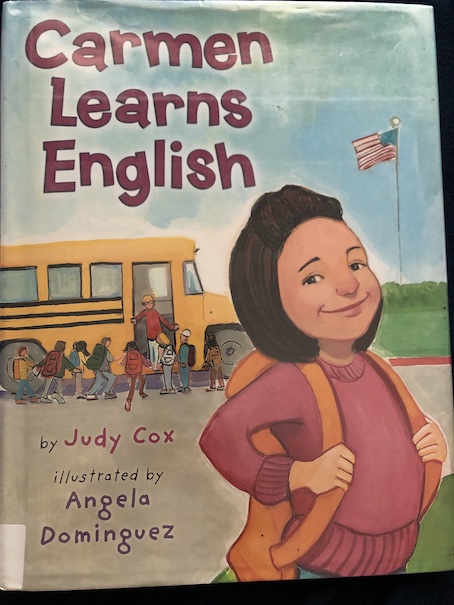
Carmen Learns English

Carmen is in kindergarten and has been learning English at school. Her little sister, Lupita, will start school next year, and Carmen thinks about how she wants Lupita to learn English before she starts school. The family is from Mexico, and the girls speak Spanish at home.

School hasn’t been easy for Carmen because the other kids don’t speak Spanish. They all speak English, and they speak fast, which makes it difficult for Carmen to follow their conversations. It helps that her teacher knows some Spanish. Her teacher’s Spanish isn’t very good, but in a way, Carmen finds that comforting because her teacher will understand if her English isn’t very good, either. People who are learning another language understand what it’s like when someone else is learning, too.

Carmen gradually learns new English words at school. When she gets home, she draws pictures of what she’s learned and teaches her mother and little sister the English words. At first, Carmen is too shy to say the words out loud at school because she isn’t confident about how she’s saying them, but she practices at home.

Sometimes, kids at school give Carmen a hard time. Some kids think that she talks funny. When she counts in Spanish instead of English, they think that she’s saying the numbers wrong. Her teacher helps by teaching all the class to count in both Spanish and English, so all the students will learn both languages. Carmen helps to teach the other students words in Spanish, and when she gets home, she teaches Lupita the English words that she has learned.

Because Carmen has been helping Lupita to learn English, Lupita will have an easier time at school than Carmen had when she started. Carmen realizes that she really likes teaching, and she thinks that she might like to be a teacher herself someday.

I thought this was a good story about a child starting school while having to learn a new language at the same time. My mother used to teach English language learners, and she liked the story, too. She said it reminded her of some of the students she used to teach.

I thought that the teacher’s approach, having Carmen teach the other kids some Spanish while she was learning English was a good idea. Some of the other students find Carmen a little strange and confusing at first because they don’t understand the way she speaks, but when they start trading words in different languages, they all start to understand each other better. The other students begin to understand the concept that people can speak in different languages and that there can be different words that mean the same thing, depending on the language they’re speaking. I think it also helps them start to identify with Carmen because, like her, they are also starting to learn an unfamiliar language. As I said, people who are learning a new language or who have studied another language before can understand the difficulties of now always knowing all the words they want to say or exactly who to say them and can sympathize with other people who are also learning new languages.

I also liked it that Carmen realizes that, if she helps her sister to learn some English before she starts school, her sister will have an easier time. She has compassion for her sister because of her own experiences and wants to make things easier for Lupita. By helping both her sister and her fellow students, she also learns that she likes sharing what she knows with other people. She discovers that she likes teaching and might want to be a teacher herself someday.

I read this book as an adult because it’s a relatively new book that didn’t exist when I was a kid, but it reminds me of another book that I did read as a kid, I Hate English, which is about a girl from China learning English. The Chinese girl has some similar troubles learning English and feeling uneasy around people who don’t understand her, although she also struggled with the fear that she would lose her native language or cultural/personal identity by learning a new one. Carmen doesn’t mention that in this story, but some of my mother’s old Spanish-speaking students had that worry when they were learning English, too. Perhaps part of the reason why Carmen doesn’t feel like that is because her teacher encourages her to teach the other students some Spanish, giving her the opportunity to keep speaking it from time to time and share the language with others. In a way, this story was closer to my experiences when I was younger because Carmen is like the kids my mother used to teach and because Spanish is what I studied in school myself.

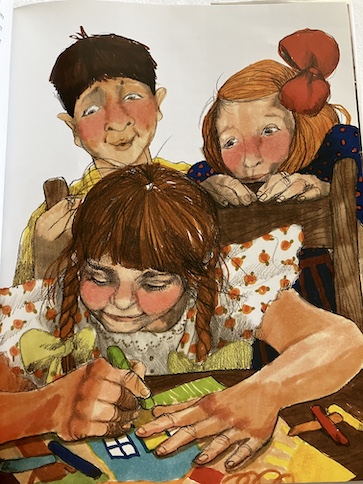
Thank You, Mr. Falker

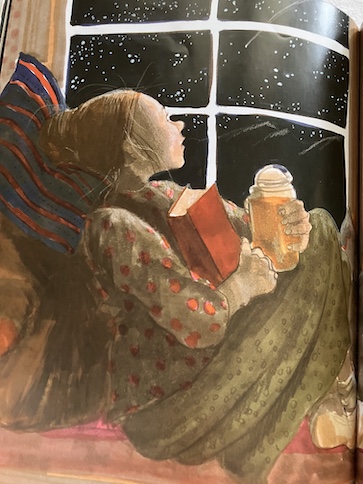
When little Trisha turns five years old, her grandfather introduces to her to reading in the same way he has done for other children in the family, with a taste of honey on a book, to remind her that knowledge is sweet. Trisha already loves books because her mother reads to her every night, and other members of the family also read to her. She’s looking forward to learning to read herself.

However, when she starts going to school, she finds that she has trouble learning to read. She likes drawing, and other kids at school admire her drawings, but for some reason, she struggles at deciphering the letters that other kids seem to learn so easily. When she looks at writing on a page, everything looks like wiggling shapes, and she has trouble figuring out what sounds they’re supposed to make. Other children move forward with their reading lessons, but Trisha struggles and starts to feel dumb.

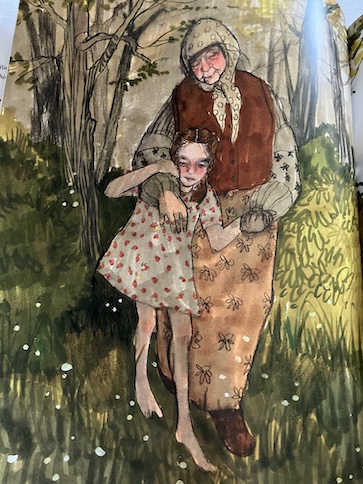
Trisha asks her grandmother if she thinks she’s different from the other kids, and her grandmother says that everyone is different and that’s “the miracle of life.” Trisha asks if she thinks she’s smart, and her grandmother says she is. That makes her feel a little better, but why can’t she read like the other kids?

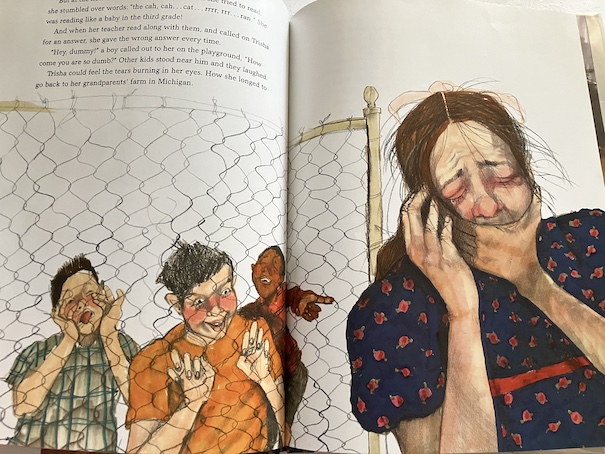
Trisha continues to struggle in school, even after the family moves from Michigan to California. She is in third grade at that point, and other children insult her and tease her when she struggles, and Trisha feels dumber than ever. She spends more time drawing and daydreaming, and she starts hating school, sometimes pretending that she’s sick so she won’t have to go.

Things only start to improve for her in fifth grade, when she gets a new teacher, Mr. Falker. Mr. Falker doesn’t cater to the teacher’s pets like other teachers do, and he notices Trisha’s artistic talent and praises her for it. He also stops the other kids from teasing Trisha in class when she struggles, although one boy, Eric, continues to bully Trisha terribly and get other kids to gang up on her when the teacher isn’t looking until Mr. Falker finally catches him.

Mr. Falker works with Trisha to improve her reading and reassures her that she is not stupid. He realizes that the reason she has struggled with reading is that Trisha doesn’t see letters the way other kids do, and he points out that she’s actually been clever in the way she’s managed to hide just how much she’s been struggling all this time.

Mr. Falker introduces Trisha to Miss Plessy, a reading teacher, and the two of them work with her to develop techniques that improve her reading skills. Gradually, Trisha begins to make real progress, and she begins to feel the sweetness of knowledge that her grandfather talked about.

The book is available to borrow and read for free online through Internet Archive.

The end of the book explains that the story is autobiographical. Patricia Polacco was the Trisha in the story, and she did have trouble learning to read until the read Mr. Falker realized how she was struggling and helped her. At the end of the story, the author says that she met Mr. Falker again years later and thanked him, telling him that she can become a children’s author.

There is a difference between real life and the story, though. In the book, Trisha is in the fifth grade when she gets help with her reading, but in real life, Patricia Polacco was apparently 14 years old and in junior high school. The book doesn’t say exactly what the cause of Trisha’s learning difficulties is, but she is apparently dyslexic, based on the description and because Patricia Polacco was dyslexic in real life.

I enjoyed seeing this part of the author’s childhood, although I found the part with the school bullies stressful. I do think it was important to include that part, though, because that can be part of the experience of children who struggle in school. Although Eric is an obvious bully in the story, the other kids also make Trisha miserable with their teasing and insults. It occurred to me that they may not all think of themselves as bullies, but at the same time, a person doesn’t have to think of themselves a bully in order to be one. Bullying is a behavior, and it exists independently of self-identity. Part of me wondered, if the girl and the teacher in the story are both real, were the bullies also real, and if so, did any of them ever read this story and recognize themselves? Maybe some did, and maybe they didn’t. Maybe not all of them would even care, if they had.

Regardless, I do think stories like this can be useful as a preemptive measure against bullying by showing kids how their behavior can affect other people and what may be going on in the life of a person they’re teasing or bullying. While I’m sure that everyone thinks of themselves as being the heroes of their own story, I think people sometimes need a reminder that, at the very same time, they are also supporting characters in everyone else’s story, for good or bad. In a way, we’re all self-casting in every story we’re in by the ways we choose to act as we go through life’s story in general.

The bully antagonists aren’t really the main focus of the story, though. They act as further obstacles to the problem that Trisha is trying to solve, but ultimately, the story is really one of gratitude toward the teacher. Part of what the teacher does for Trisha is to shut down the bullies so Trisha can focus on what she needs to learn and he can focus on helping her. Even more importantly, Mr. Falker helps Trisha to see that she is smart and capable. It takes a little more work for her to make progress than others because she has a condition to overcome, but with a little help, she can do it. It really opens up a whole new world for her, and she finally gets to taste that sweetness that comes with knowledge.

I’ve heard of the tradition of giving children a taste of honey before they begin their lessons. When I was a student, I thought I remembered a teacher mentioning this tradition to us as a Greek tradition. It might be, although when I tried to look it up, I couldn’t find anything about Greece. I found references to it as a Jewish tradition, which would make sense for Patricia Polacco’s family.

Patricia Polacco’s real-life grandmother also appears in the story, the same grandmother who appears in another of Polacco’s books, Thunder Cake. Her grandfather wasn’t present in that story, but he is in this one. Both of the grandparents are mentioned as dying before the story ends.

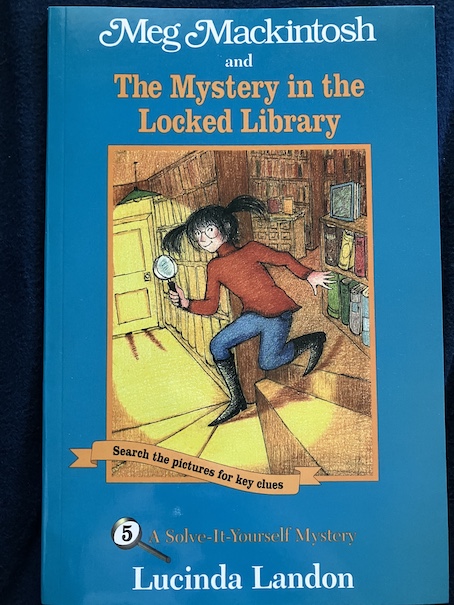
Meg Mackintosh and The Mystery in the Locked Library

Meg Mackintosh Mysteries

Meg, her brother Peter, and their grandfather are visiting their grandfather’s cousin, Alice, who was introduced in the first book of the series as the one who created the treasure hunt to find his missing Babe Ruth baseball when they were young. Grown up Alice is now a librarian, and she has created another treasure hunt for them.

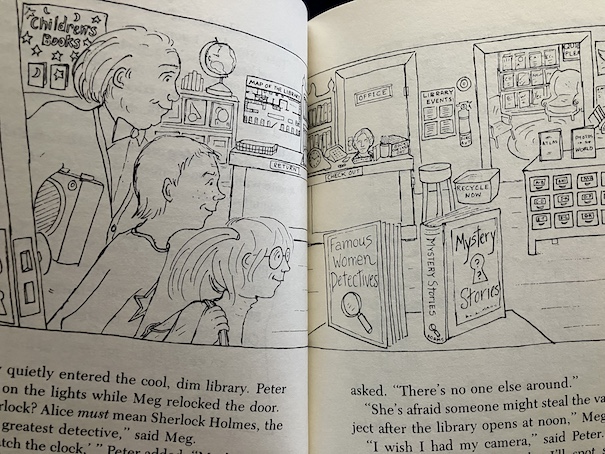
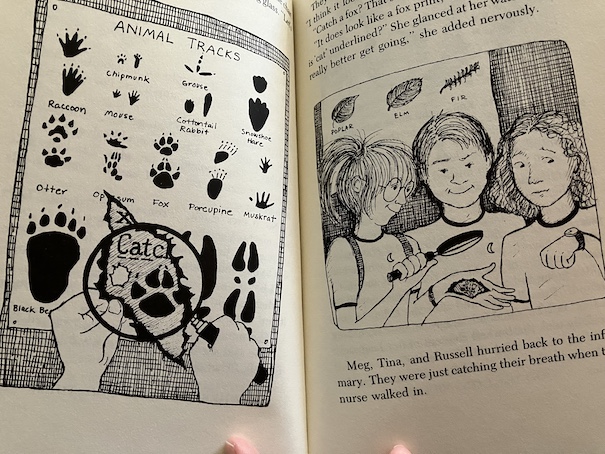
One morning, she leaves them a note saying that she has a dentist appointment, but she wants them to go to the library and find something valuable that she’s hidden there before the library opens at noon. Readers follow along with the clues that Alice has left for them to solve and the pictures in the book, seeing if they can solve each part of the mystery along with Meg. In keeping with the library and book theme of the story, the clues are based around books, particularly Sherlock Holmes books.
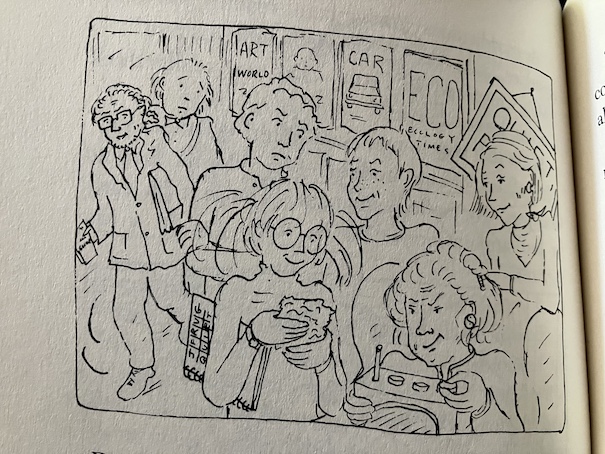
When Meg and her family arrive at the library and begin following the clues, they discover that there are other people in the library, even though the library isn’t officially open yet. Caroline is the assistant librarian, and Gerry also works there. Then, a man named Horace Plotnik shows up, saying that he’s an antiques expert and that Alice asked him to come to appraise something.

They discover that Alice didn’t make it to her dentist appointment because someone locked her in the library’s book repair room. It turns out that the valuable item that Alice hid was a first edition of The Adventures of Sherlock Holmes by Sir Arthur Conan Doyle that recently came to the library in a donation of books, but when Meg and Peter finish the treasure hunt and go to the place where Alice did the book, it’s gone! Was it stolen by the person who locked Alice in the book repair room, and if so, who was it?

The Book is available to borrow and read for free online through Internet Archive (multiple copies).

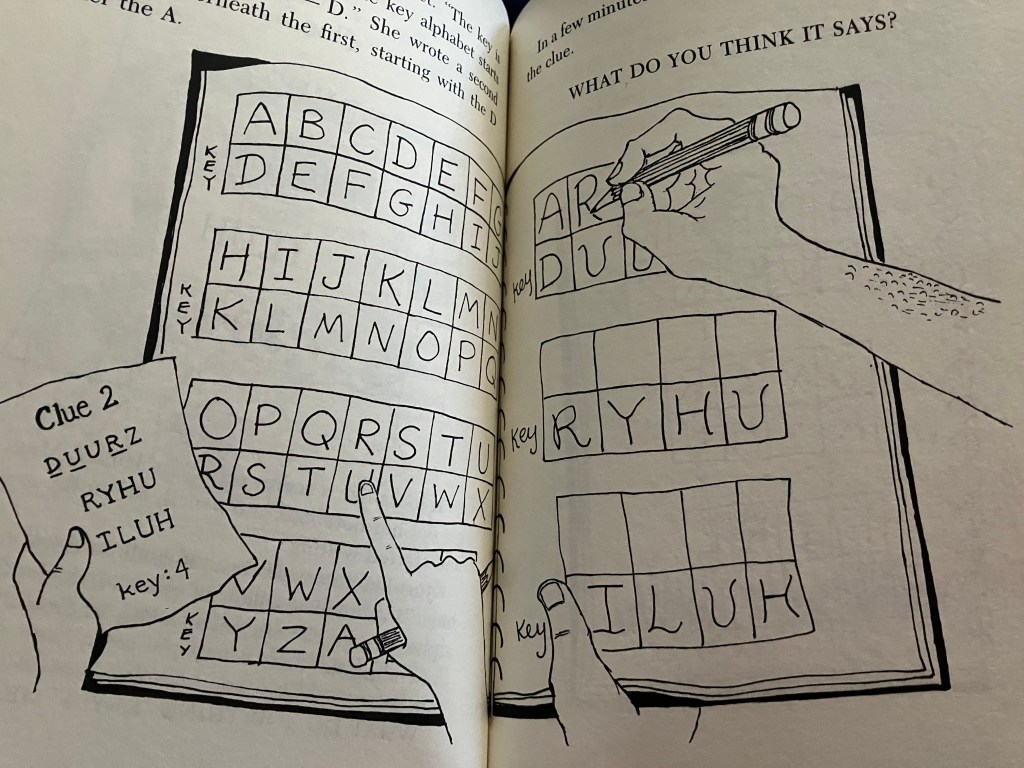
I always enjoy treasure hunt stories, and like other Meg Mackintosh mysteries, this story gives readers the opportunity to figure out the clues and puzzles along with Meg. The information readers need is in the pictures of the story. When I was a kid, I particularly liked puzzles based around solving a secret code, and there is a secret code puzzle in this book that readers can solve themselves.

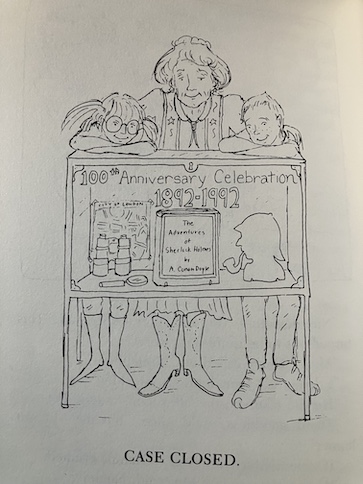
This treasure hunt is fun because it’s based around library and book themes, particularly focusing on Sherlock Holmes. The idea of hunting for a lost copy of a first edition Sherlock Holmes book was timely for when the book was originally written because, as the story indicates at the end, the book was written around the 100th anniversary of the character of Sherlock Holmes!
Meg Mackintosh and The Case of the Curious Whale Watch

Meg Mackintosh Mysteries

Meg and her brother, Peter, are going on a whale watch trip with their grandfather. As they board the boat, their grandfather tells them that the captain is well-known as a treasure hunter, looking for pirate treasure.

On board the Albatross, they are greeted by Captain Caleb and meet his mate Jasper, and the other whale watch guests. The guests are Mrs. Clarissa Maxwell and her nephew Anthony, who seems to like gambling; a man named Oliver Morley, who likes stamps; a college student called Carlos de Christopher; and a marine biologist, Dr. Susan Peck.

Meg asks Captain Caleb about his treasure hunting, and he shows everyone an old map that’s been in his family for many years. The sailor who gave it to them also gave them a whale’s tooth with a scrimshaw carving of a whale on it. It’s supposed to help explain where the treasure is hidden. Some of the members of the expedition debate about how much money the treasure of the map would be worth, but Dr. Peck is completely opposed to treasure hunting because it’s disruptive to the environment.

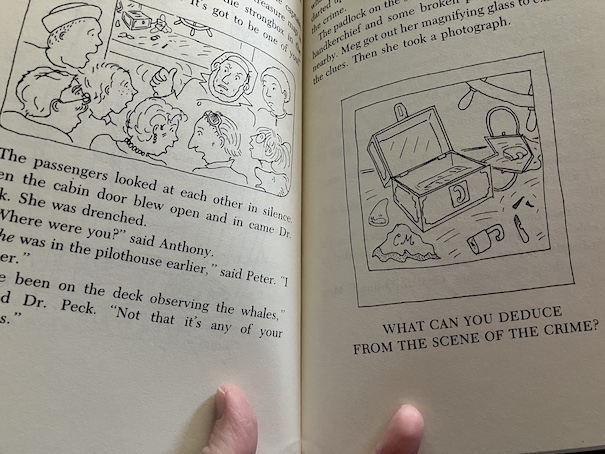
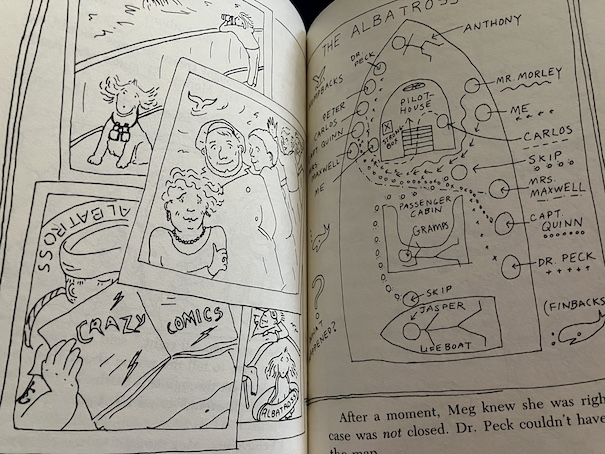
The group enjoys watching the whales, although Meg’s grandfather has to go lie down for a while because he’s seasick, and lazy Jasper spends his time reading comic books in the lifeboat. When they encounter a storm, and everyone goes into the cabin to get out of the rain, they discover that the map is missing!

Who could have taken it? Various members of the whale watch have talked about their need for money, and Dr. Peck said that she thought the map should be destroyed to prevent damage to the environment. Meg goes over the pictures she’s take to find the thief!

The book is available to borrow and read for free online through Internet Archive (multiple copies).

I like the Meg Mackintosh books because it’s fun to solve the mystery along with the heroine. Like other books in the series, readers are supposed to use the story and the clues in the pictures to solve the mystery. At various points in the story, the story pauses for readers to figure out something about what’s happening, and these are good points for readers to check that they’re on track and to review the information they know so far. The story isn’t very long, but there are multiple points for readers to figure out something about what’s going on.

I did figure out the answer to this one very quickly. It’s partly because I’m an adult and this is aimed at children, but more importantly, I’ve seen the movie Charade with Audrey Hepburn, which used a similar plot device. The story did a good job of making all the suspects look like they had a motive, but when you figure out what the thief’s real goal was, there’s only one person who qualifies. Kids in early elementary school would probably find the mystery more challenging.

Meg Mackintosh and The Mystery at Camp Creepy

Meg Mackintosh Mysteries

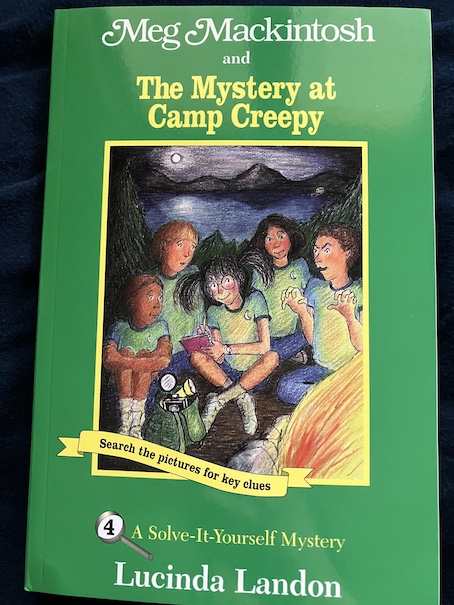
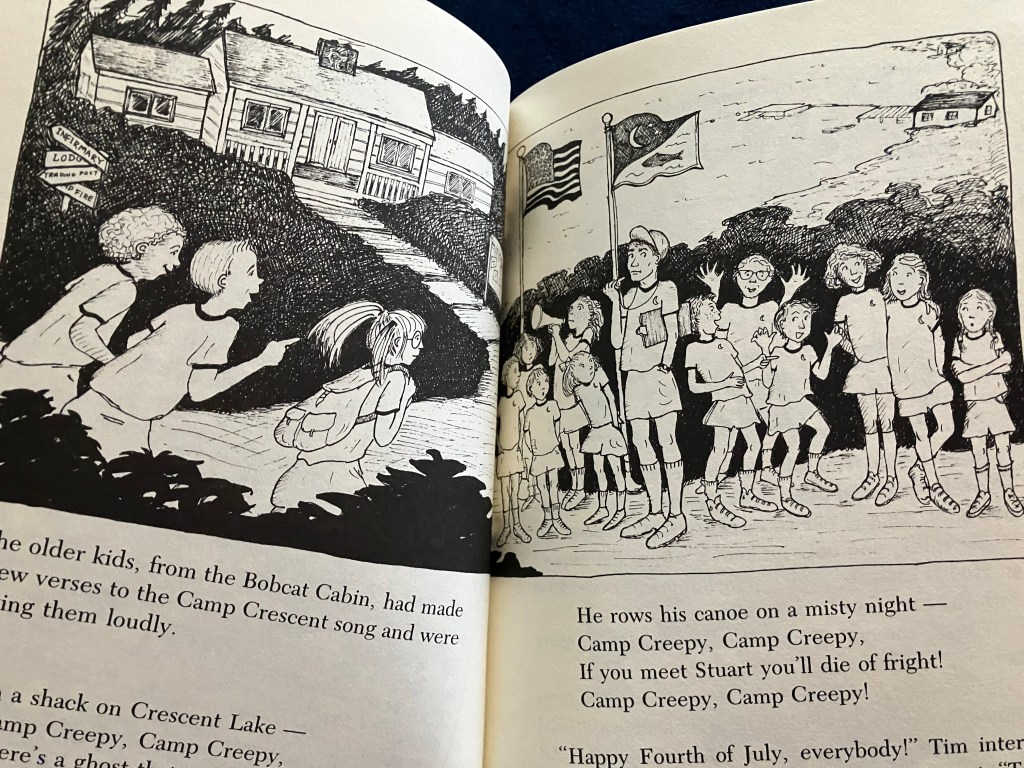
Meg Mackintosh is at a summer camp in Maine! The camp is called Camp Crescent, but it soon gets the name Camp Creepy because there’s a ghost story about the camp. The story says that an old man named Stuart once lived in the building that the camp uses for a boathouse and that he still haunts the camp. When people start hearing strange noises at night, the campers start thinking maybe the ghost story is true.

To celebrate the Fourth of July, the camp decides to hold a treasure hunt with puzzles for the campers to solve. Everyone is excited about the treasure hunt, but Meg is especially excited because she’s solved treasure hunts before. However, in her excitement to start the treasure hunt, she accidentally drops the first clue on the camp fire, and much of it burns.

Everyone is angry with Meg for messing up the treasure hunt because they’re supposed to solve it before nightfall to enjoy the prize. Although they don’t know what the prize is supposed to be, they’re told that it won’t be any good if they find it too late. While the others go on a hike, Meg fakes a stomach ache because she just can’t face the other campers again.

At the camp’s infirmary, Meg meets two other campers who are staying behind. Russell has a bad case of poison ivy, and Tina has been dealing with homesickness. They ask to see what’s left of the first clue, and Meg shows them. Something in the clue reminds Meg of something she saw at camp earlier, and the three of them begin thinking that they might be able to solve the after all. If they can just get past that first burned clue, they can continue the treasure hunt like normal.

Can the three of them manage to solve the treasure hunt and save the prize for all the other campers? Will they meet Stuart’s ghost along the way?

The Book is available to borrow and read for free online through Internet Archive (multiple copies).

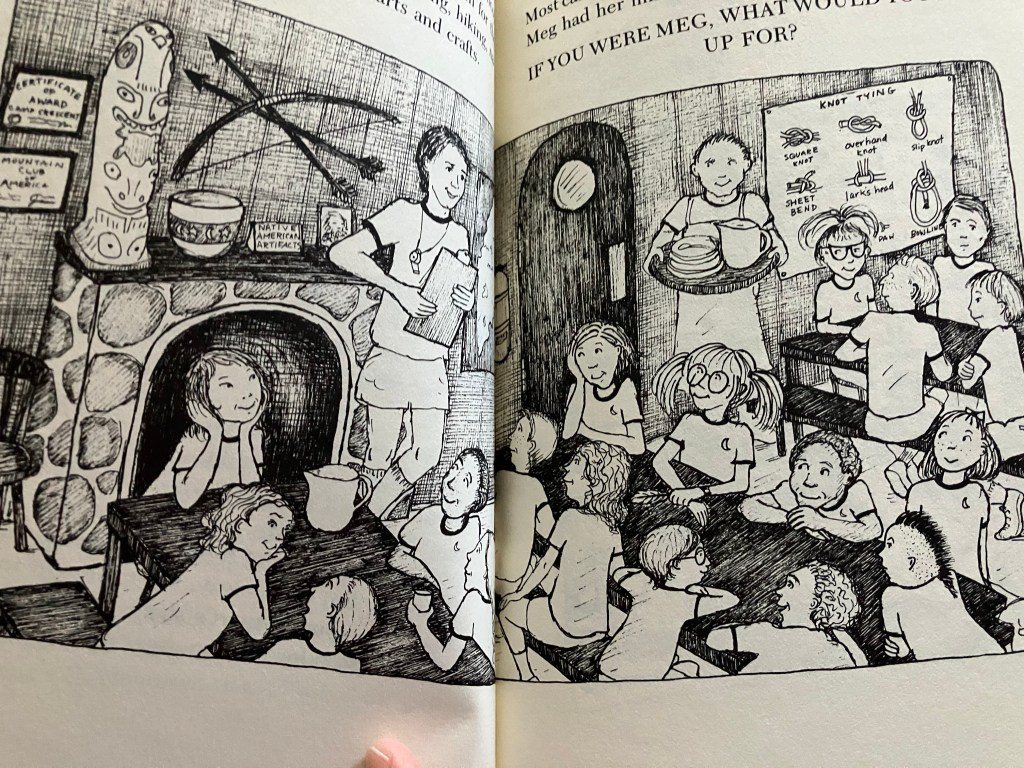
I always enjoy treasure hunt stories, and like other Meg Mackintosh mysteries, this story gives readers the opportunity to figure out the clues and puzzles along with Meg. The information readers need is in the pictures of the story.

Most of the focus of the story is on the treasure hunt, and the ghost is kind of a side plot. Maybe the ghost would seem a little spookier to young readers, but I have to admit that I found it difficult to think of anybody named Stuart as sounding very sinister. The legend of Stuart doesn’t even seem to carry any consequences for people who see him other than it just being spooky, so I didn’t think the story was that creepy.

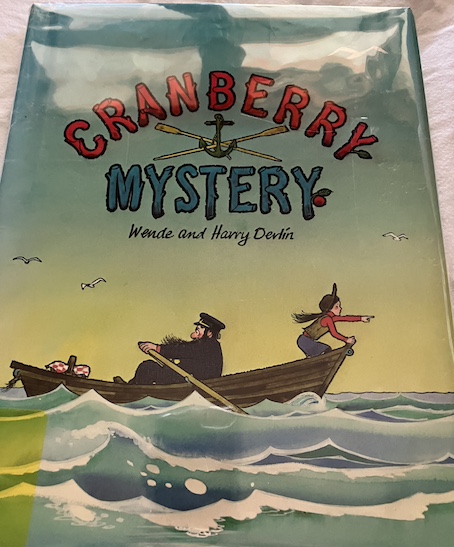
Cranberry Mystery

Antiques are being stolen from the people of Cranberryport, and no one knows who is responsible. People are looking at each other with suspicion.

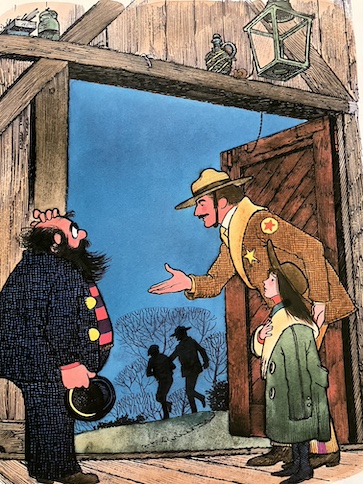
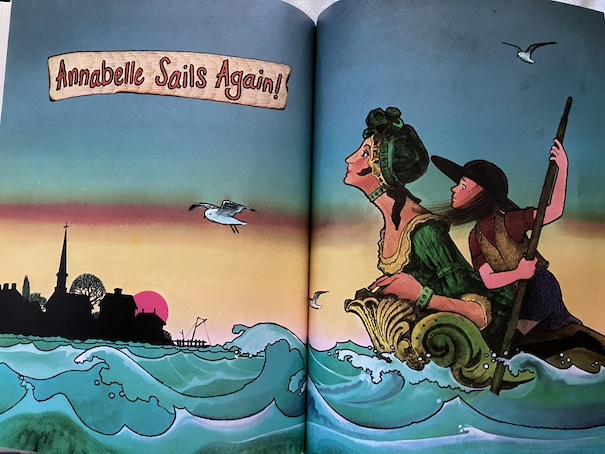
After Annabelle, an old figurehead that used to belong to Mr. Whiskers’s grandfather, is stolen from Mr. Whiskers’s house, Mr. Whiskers sees a light on Sailmaker’s Island. He believes that the thieves are hiding on the island, but the sheriff will not listen to him. The only person who listens to Mr. Whiskers and believes him is young Maggie.

When Mr. Whiskers and Maggie set out to the island to find the thieves by themselves, they are captured!  How can they escape and get the authorities?

The book includes a recipe for Grandmother’s Famous Cranberry Pie-Pudding.

The story is more adventure than mystery. The thieves are strangers, not anybody from the town, so there’s no evaluation of different suspects, and Mr. Whiskers has a pretty good idea where the thieves are hiding, so there isn’t much searching for them. It’s more about how Maggie and Mr. Whiskers escape from the thieves and alert the authorities. It’s a nice story, but I just think that the “mystery” could use a little more mystery. The best part is when Maggie uses the old figurehead, Annabelle, as an improved raft to reach the authorities.

The season in this story is “Indian summer“, which is when it’s technically fall, but there’s a warm period. There are different names for this phenomenon, but the term “Indian summer” might be based on the concept that this is the time of year when Native Americans prepared food stores for the coming winter.

Look Up!

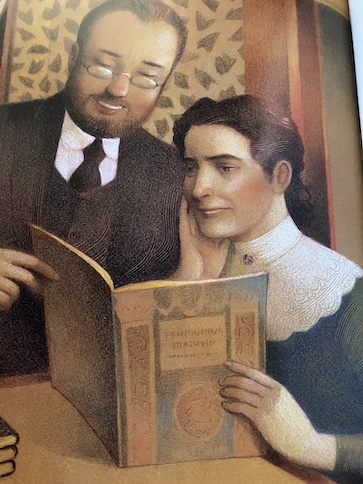
This picture book is about the life of Henrietta Leavitt, a “Pioneering Woman Astronomer” during the late 19th century and early 20th century.

The story says that Henrietta had a fascination with the night sky from a young age, often wondering just how high the sky was. When she got older, she formally studied astronomy, although most of the other students were men, and it was an uncommon profession for women.

After she graduated, she found a job with an observatory, although she rarely worked on the telescope. She was part of a team of other women who acted as human “computers”, doing basic calculations by hand and compiling information for others to use. Women like Henrietta were not expected to use this information themselves or draw conclusions from their own calculations, but Henrietta had her natural sense of curiosity and confidence in her ability to use her own mind.

She continued studying in her spare time, and while examining photographs of stars and doing her calculations, she began to notice some patterns that made her wonder about the explanations behind them. She studied an effect where stars seemed to become brighter and then dimmer, a kind of “blinking” effect.

She not only discovered that the existence of some of these stars had not been recorded yet, but she also found herself wondering about the pattern of this twinkling effect. Some stars appeared brighter and seemed to “blink” more slowly between bright and dim than other stars that weren’t as bright. By examining the relative brightness of the stars and the patterns of blink rate, she realized that it was possible to calculate the true brightness of the stars and use that to figure out how far away each star is from Earth. When she presented her findings to the head astronomer at the observatory, he was impressed. By using the chart Henrietta compiled, it was possible to calculate the distances of stars even beyond our galaxy. People of Henrietta’s time initially thought our galaxy might be the entire universe, but Henrietta’s finding shows that it was not and also that our galaxy is much larger than people thought.

The book ends with sections of historical information about Henrietta Leavitt and her discoveries and other female astronomers. There is also a glossary, some quotes about stars, and a list of websites for readers to visit.

I enjoy books about historical figures, especially lesser-known ones, and overall, I liked this picture book. The pictures are soft and lovely.

The only criticisms I have are that the book is a little slow and repetitious in places, and the subject matter is a little complex for a young audience. Some repetition is expected in picture books for young children, but how appealing that can be depends on what is being repeated. Henrietta’s work involves a lot of looking at pictures and figures and studying, so the text gives the feeling of long hours studying and “looking,” and many of the pictures are of her looking at books and examining photographs of stars through a magnifying lens. I found the story and pictures charming and in keeping with the Academic aesthetics, but I’m just not sure how much it would appeal to young children.

The story explains some of the concepts that Henrietta Leavitt developed and discovered, and it does so in fairly simple language. However, I still have the feeling that it would mean a little more to a little older child, who already knows something about astronomy, or to an adult like myself, who just enjoys the charming format of the story.

Part of me thinks that this story could have been made into a little longer book, perhaps a beginning chapter book, which would have allowed for a little more complexity. One of the issues with making the story of Henrietta Leavitt into a longer book is that, as the section of historical information says, “not a great deal is known about her life.” There just might not be enough known details about Henrietta’s life to put together a longer book.

Still, I really did enjoy the book, and I liked the presentation of 19th century astronomers and astronomical concepts. I especially enjoyed the way the story portrayed the concept of “human computers.” This type of profession no longer exists because we have electronic computers and computer programs that perform mathematical calculations faster than human beings can, but before that technology existed, humans had to do it themselves. “Human computers” had to work in groups to get through massive amounts of data and calculations, and it was long and tedious work, but their work was largely hidden from the public eye. As the story says, they were expected to do mathematical calculations and compile data, but they were compiling it for someone else’s use. Someone else would use their data to draw conclusions, and that person usually got the credit for whatever they discovered, ignoring all the people who did the grunt work that made it possible. Since women like Henrietta were more likely to be among the “human computers”, working in the background, they often didn’t get much credit for their work. The male astronomers were more likely to be the ones analyzing data and taking credit for the conclusions they drew, although they didn’t do the background calculations themselves. What made Henrietta different was that she stepped beyond the role of simply compiling information but also took on the role of studying patterns and drawing conclusions from the data she was compiling. She did all of it, from compiling data and making calculations to interpreting the data and laying out conclusions and discoveries from it.

Women once worked in similar positions as “human computers” at NASA. The 2016 movie Hidden Figures was about women working as “human computers” at NASA in the 1960s.

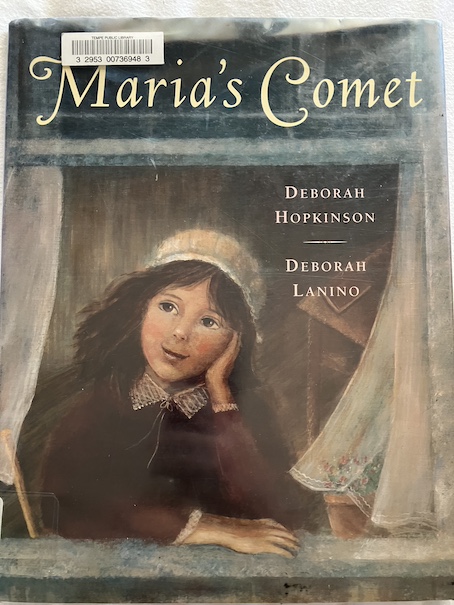
Maria’s Comet

This picture book is a fictional story about a real person, Maria Mitchell. (She pronounced her first name “ma-RYE-ah”, not “ma-REE-ah”.) Maria Mitchell was born into a Quaker family on Nantucket Island, Massachusetts in 1818, and she became the first female astronomer in the United States. She is known for discovering a comet only viewable through a telescope in 1847, and she also became the first astronomy professor at Vassar College. She is the namesake of the Maria Mitchell Association, a science center on Nantucket. She was also an abolitionist, although this topic is not touched on in the book. Maria’s father taught her about astronomy when she was young and encouraged her interests and career at a time when not many women were encouraged to pursue careers or higher education.

Maria’s papa is an astronomer. At night, he goes up on the roof their house to use his telescope, and he explains how the telescope works, gathering and focusing light to make distant objects look larger and closer than they would with just a person’s eyes. He especially likes to look for comets. In their time, they’re not entirely sure what comets are made of, and that’s part of what makes studying them interesting. Maria imagines what it would be like to travel across the sky with a comet, encountering the different planets.

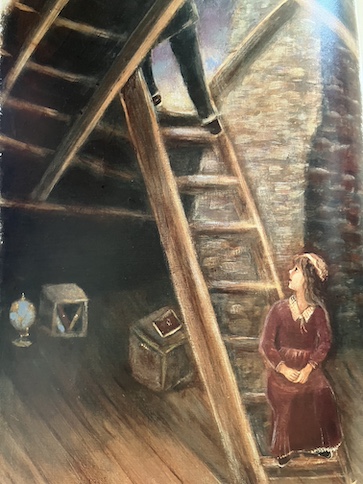
Most of Maria’s life centers around their house and family in Nantucket. There are nine children in the family, so Maria helps with chores and tells her siblings bedtime stories. Sometimes, she and her brother Andrew go into the attic and use an old atlas to pretend that they’re explorers. When they read books, Maria likes books about astronomers, but Andrew likes books about sailors. He wants to be a sailor himself.

When Andrew gets older, he runs away from his family to go to sea on a whaling boat. The entire family is sad that he is gone, and Maria soothes her siblings by telling them stories about all of the amazing places their brother will go. That night, after supper, Maria asks her father if she can come with him to look through his telescope or “sweep the sky” as she thinks of it. For a moment, Maria thinks they will say no, but they agree. Maria wants to be an explorer of the sky, like her brother wanted to explore the seas.

Maria’s father points out Polaris, the North Star, to Maria and says that sailors use it to navigate. Maria wonders if Andrew might be looking at the same star right now. Then, she sees a comet streak across the sky.

There’s an Author’s Note in the back of the book that explains about the real life of Maria Mitchell. It has some comments about what people of her time knew and didn’t now about the planets. When she was young, people only knew about seven planets in the solar system. Neptune was discovered during her lifetime (although not by her), and Pluto wasn’t discovered until 1930, after she had died. There is also a section about the astronomy terms used in the story and famous astronomers.

I enjoy books about historical people, although the author admits in the Author’s Note that this particular story about Maria Mitchell is fiction. I have mixed feelings about that. I don’t like to fictionalize real people, and I’m not entirely sure whether there’s any truth to the story about Maria’s relationship with her brother and how she felt when he left to become a sailor. On the other hand, I did appreciate how the book showed Maria becoming interested in astronomy by watching her father and joining him in his studies of the sky, which is apparently true. Overall, I did enjoy the story.

The pictures in the book are wonderful. They capture the coziness of an old-fashioned 19th-century home and also the wonderment of looking to the skies and imagining exploring the big, wide world and the stars beyond it.

Five Secrets in a Box

This story is about Virginia Galilei (1600-1634), the eldest child of Galileo Galilei, and her perception of his work and equipment as a young child. The book has sections of historical information about Galileo and Virginia in the front and the back inside cover, although the story itself is just about Virginia exploring Galileo’s study.

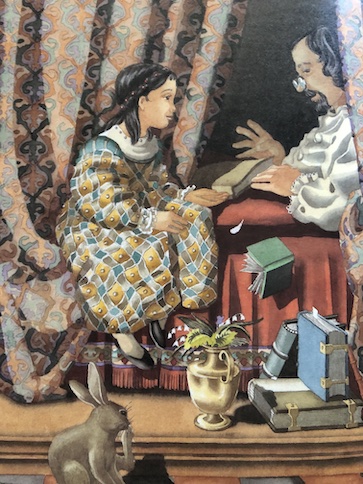
Virginia, as a young child, knows that her father stays up late at night, studying the night sky, while she is asleep. During the day, she must be quiet to let him sleep. She is not really supposed to touch his scientific instruments, but she can’t resist the temptation to take a look. In her father’s study, she finds a box with five mysterious objects in it, and she investigates what they do.

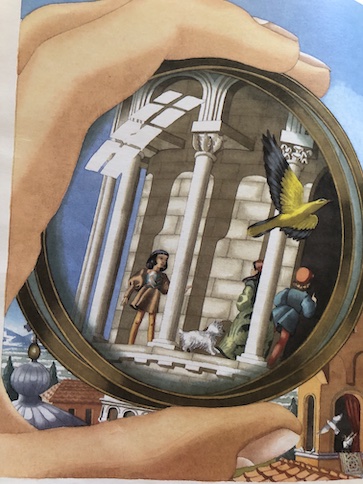
One of them is a lens that makes small things look bigger. Another is a lens that makes things that are far away look closer. There is another lens that makes everything look blue and another that makes everything look red. Then, there is also a plain, white feather.

Virginia wonders what the purpose of the feather is, and she asks her father about it. He tells her that it is important to his work.

The book is available to borrow and read for free online through Internet Archive.

According to the historical information provided, little Virginia’s mother left Galileo and married someone else while Virginia was still young. Virginia remained living with Galileo and was close to her father. When she was 12 years old, her father sent her to a convent, which was a fairly common way for upper-class girls at that time to get an education. However, Galileo probably intended for his daughters to join the Church as nuns rather than marrying when their education was complete. The book doesn’t explain this, but Virginia and her younger brother and sister were born out of wedlock. Because they were illegitimate (born outside of a legally-recognized marriage – the word “illegitimate” literally refers to someone born outside of the law and legal standing with implications about both the legal status of their parents’ union and the child’s possible future inheritance, depending on the laws of that particular society), their social status was compromised from birth. Galileo believed that it would be difficult for his daughters to find husbands, so joining a convent and becoming nuns would provide the girls with stable lives and careers as well as an education, which is what both of them did. Virginia remained at the convent as a nun, taking the name of Sister Maria Celeste, and unfortunately, died relatively young at the age of 34. The book doesn’t say why, but it was because she contracted dysentery, which is caused by consuming tainted water or food.

The story itself doesn’t really explain the purpose of the five special objects that Virginia examines in her father’s study. Some of them are obvious because readers will recognize what they are and the way they work. The purpose of the feather is left a little mysterious at the end, but readers get the full explanation by reading the section of historical information. Galileo was studying gravity, and apparently, he dropped objects off of the leading tower of Pisa to study how long it took them to fall. A feather will take longer to reach the ground than a stone, but that’s because of air resistance. One of Galileo’s premises was that, if there were no air to produce that air resistance, the stone and the feather would fall at the same rate of time due to gravity. I think I would have preferred to have Galileo explain some of this to his daughter when she asks him about the feather, but the story ends kind of abruptly at that point, with Virginia just playing with the feather. I felt like the ending isn’t exactly an ending without that explanation.

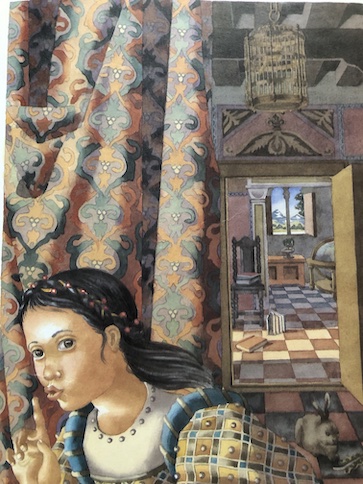
The pictures are the main reason why I really liked this book. They are colorful and realistic, and I thought they did a great job of showing the scientific instruments of the past. I also liked some of the little details of the house included in the backgrounds of the pictures. There is a crucifix hanging on the wall behind the telescope in Galileo’s study because this is a religious household, even though some of Galileo’s assertions about the way the world works clashed with Church teachings and got him placed under house arrest. (The book says that he was “sent to prison”, but he was actually placed under house arrest rather than being sent to a prison because he was elderly and in bad health by that point in his life.)

The book doesn’t go into detail about Galileo’s arrest because that happened later in his life, but he was basically considered a heretic for his belief in Copernicus‘s theory that the sun is the center of the solar system instead of the Earth. That sounds like a rather petty charge, and you might wonder why it matters or what different it could make to religion. It wasn’t a new idea because others had reached that conclusion long before him. Copernicus was never arrested for his ideas, partly because he didn’t live very long after he published them, but his book was placed on the restricted list by the Inquisition.

The reason why the relative positions of the sun and the Earth mattered depend on whether particular Biblical passages are meant to be interpreted literally or figuratively. Under a strict literal interpretation, which was the interpretation approved by the Church at that time, the conclusion was that the Earth was the center of the solar system, so saying otherwise would be to go against the Bible and Church teaching, making it a heresy. It wasn’t so much that the relative positions of the sun and the Earth were that important by themselves so much as the act of apparently contradicting the Bible. The Renaissance era was also the era of the Reformation, where Protestants were breaking away from the Catholic Church, partly because of the questions of literal interpretation of the Bible and Church doctrine. The Catholic Church’s response to that during this period was to become more strict in enforcing moral and doctrinal standards in the Counter-Reformation, so anything that seemed to challenge these aspects of the faith was taken far more seriously during this period. This stance would shift again later in history.

The background and aftermath to this story is far more complex than the story itself, although I think part of the charm of the story is it’s simplicity. This is one particular day and a small incident, seen through the eyes of a child, even though adult readers know that there are bigger events surrounding it.