Anno’s Journey

This picture book is unusual because there are no words in it at all until the very end. It’s all pictures, except for the part that explains the inspiration for the story. The author/illustrator, Mitsumasa Anno, depicts himself as a traveler, traveling through the countryside and towns of Europe. The “story” is the story of his journey, but it’s all in the pictures.

In the first pages of the book, we see Anno arriving by rowboat and either buying or renting a horse. The following pages are a little like the Where’s Waldo/Wally books, showing Anno’s travels. Anno appears somewhere on every page, riding his horse, but readers have to look for him. There are also other things to look for, but readers don’t get that explanation until the very end.

The scenes start out in the countryside, and as Anno goes through towns and cities, they can be very busy, with many people and lots of things happening. Toward the end of the book, Anno goes through the countryside again, and it ends with him riding off toward the horizon.

Along the way, there are interesting, detailed scenes that show various aspects of countryside and town life. There are people working in farm fields, people packing up to move house, some men carving tombstones for a churchyard, some children playing and running a race near their school, and a busy market square.
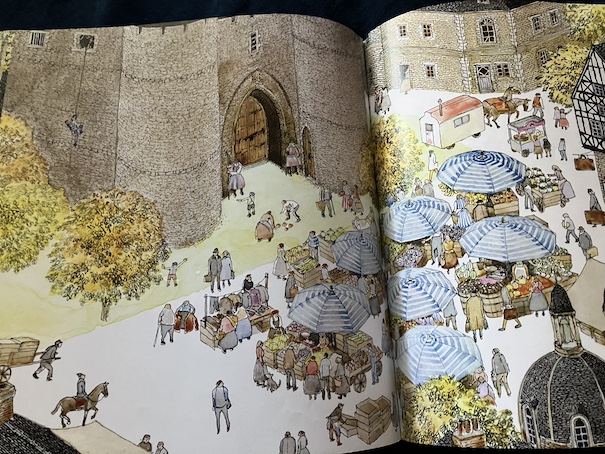
There are also special occasions and very busy scenes, from a wedding in front of a town church to a circus scene and a parade through a city. Aside from the main event in each scene, there are also other things happening in the background, from people working to repair a roof to a prisoner escaping from a castle. Through it all, Anno is always somewhere in the scene, riding the horse.
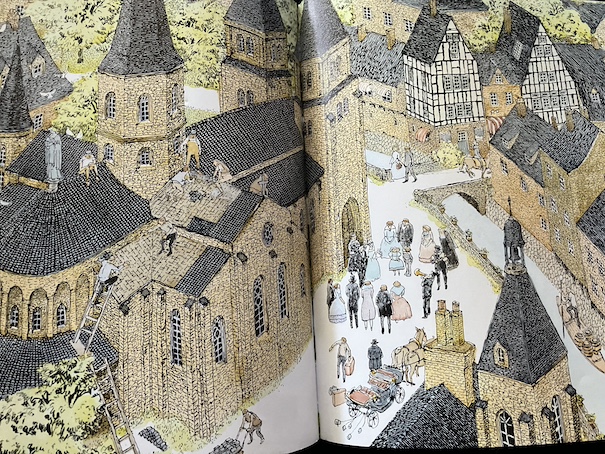
There is hidden depth to the pictures. There is a section at the back which explains the story behind the book. The author and illustrator, Mitsumasa Anno, is from Japan, but he has always been fascinated by European culture, art, and architecture. Twice, during the 1960s and 1970s, he visited Europe, taking in the sights and producing his own art. This book is based on his travels, and the pictures incorporate the types of towns, fields, and churches he saw. However, they also include many hidden details, including details from famous paintings, characters from books and folktales (and also Sesame Street), and the stories of some of the characters in this book, carried across multiple pages, for readers to notice.

The book is available to borrow and read for free online through Internet Archive, along with a couple of other books by the same author, in a similar format, Anno’s Italy and Anno’s Britain.

I enjoy books with detailed pictures, especially ones that contain details for readers to notice, like a game. I didn’t see many of the details that are hidden in plain sight until after I read the explanation of what to look for, but there is quite a lot to see in this book. It’s the kind of book that you can look at many times and notice something new every time! Although this is considered a children’s picture book, I think that there are many things that adults might see in it that would go over the heads of children. Children wouldn’t be likely to get all of the art references, for example. It’s a book that can appeal to a variety of people of different ages!

Moonflute

One night, a little girl named Firen can’t sleep. It’s a hot summer night, the moon is full, and Firen feels like the moon has taken away her sleep, so she must go out into the night and look for it.

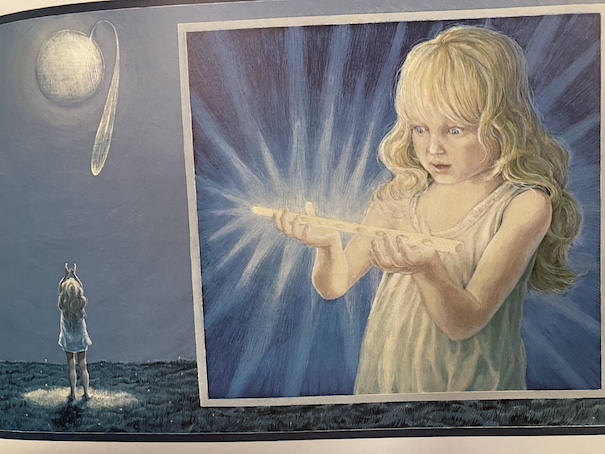
Outside, Firen raises up her hands to the moon and asks for her sleep back. The magical moon sends her a moonbeam, and when Firen touches it, she realizes that it’s solid. It’s actually a flute. When Firen plays the flute, it makes magical music that doesn’t sound like any normal flute, and it brings all sorts of wonderful smells of things that Firen loves. As she continues to play, she feels light and tingly, and she realizes that she is rising into the air!

Firen flies over the countryside, looking for her sleep. As she journeys through the night, she sees various animals and wonders if they have her sleep. She sees cats in a patch of catnip, whales playing in the ocean, and bats and monkeys in a jungle.

When Firen sees a couple of monkeys soothing a baby monkey to sleep, she thinks about her own parents and uses the flute to return home. Is the moonflute helping her find her sleep at home with her parents, or has she actually been asleep all the time?

The book is available to borrow and read for free online through Internet Archive.

This book follows the “It was all a dream” theme, where the main character experiences something fantastic, but they were dreaming all the time. While Firen was wondering where her sleep was, she apparently fell asleep. It isn’t definite that’s what happened, but it’s implied when her parents go to her room, and she’s in bed, without the flute. If readers would like to think of it differently, that Firen really did have her flying adventures, it’s possible to read it that way, too.

The pictures really make this book! The illustrations are oil paintings, and they are beautiful and ethereal. Firen witnesses some stunning scenes, like whales leaping in the ocean, with everything bathed in glowing moonlight.

I was intrigued by the name “Firen” because I don’t think I’ve heard it before, and I like unusual names. I couldn’t find much information about the name online, so it seems like it isn’t very common. I thought at first that it might be a modern, invented name, although one name site says that it has Arabic origins.

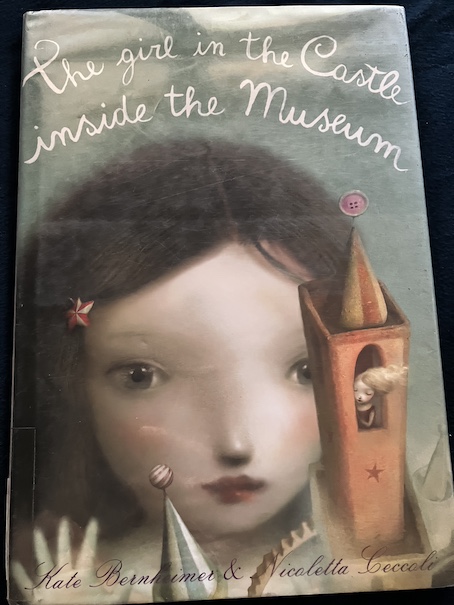
The Girl in the Castle Inside the Museum

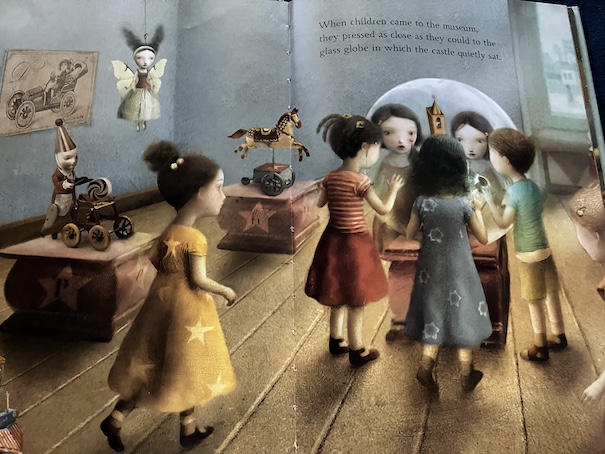
In this story, there is a little girl who lives in a castle in a museum, inside a big, glass globe.

Children love to come to the museum and look at her in her castle. The girl also likes it when the children come to see her.

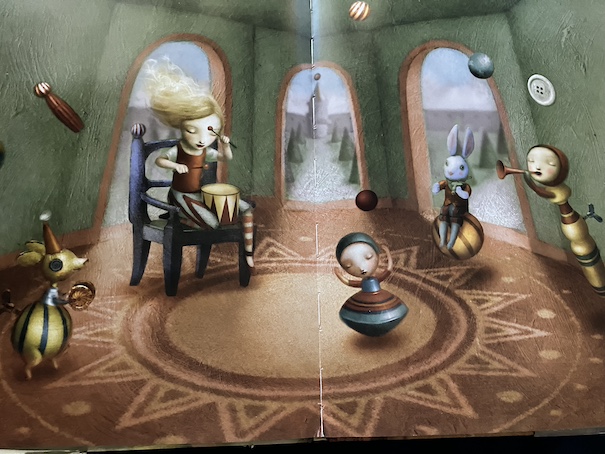
Although the girl in the castle has other creatures to play with and things she likes to do, like making music, she sometimes gets lonely when the museum closes, and all the children go home.

When the girl in the castle dreams, she dreams of the children who come to visit her at the museum, imagining their journeys to come see her.

When the children are visiting or when she’s dreaming about them, the girl isn’t lonely, but when she wakes up from a dream and there aren’t any children, she gets lonely again.

However, the girl gets an idea. If you, the reader, want to be her friend, you can give her your picture. When she looks at your picture, she won’t be lonely anymore!

The book is available to borrow and read for free online through Internet Archive (multiple copies).

I love the surreal, fantasy pictures in this book! We don’t know exactly what the girl is or why this tiny girl lives in a miniature castle in a museum. The book says that people claim “she’s lived there forever.” She is alive and has feelings, but she seems to be surrounded by fantasy creatures as companions in her castle rather than other people. She doesn’t seem to have parents or family. My theory is that she is a magical, living toy because the museum seems to be filled with other toys, the fantasy creatures in her castle seem to be toys with little wind-up keys in their backs, and the castle itself incorporates little toys and odd-and-ends, like buttons and marbles. However, the girl’s backstory is left up to the imagination of the readers.

This book breaks the fourth wall of the book, with the girl inviting readers to put their own pictures into the book and saying that the girl can see them through the book when they read it. Readers looking at the book keep the tiny girl company when she doesn’t have visitors to her museum. It’s not the first book that I’ve seen that uses the concept of readers keeping a book character company through their books. There is a book from the 1930s called The Tale of Corally Crothers, where a lonely girl with no brothers and sisters goes in search of a friend and finds you, the reader. (I haven’t found a copy of it myself, but you can see some pictures of this book on this site.) Books that involve the reader and invite the reader into their world are charming, and I found the fantasy elements of this particular book delightful!

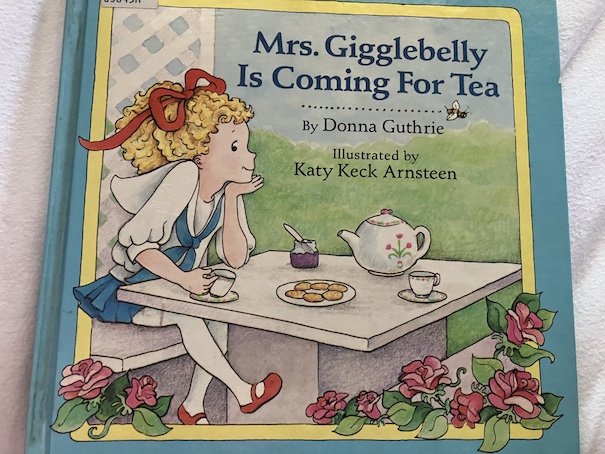
Mrs. Gigglebelly is Coming for Tea

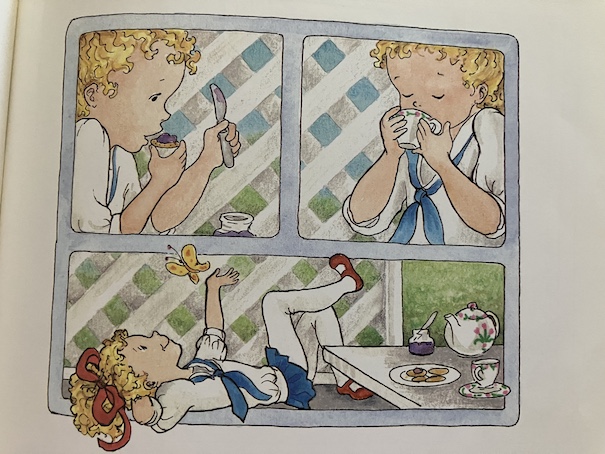
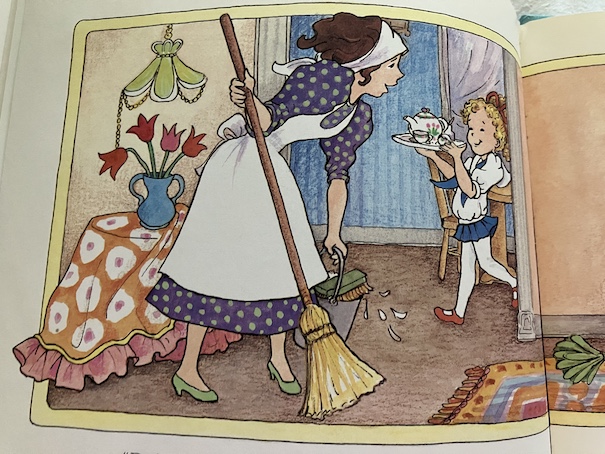
Elizabeth Ann tells her mother that Mrs. Gigglebelly is coming for tea today, but her mother says that she’s in the middle of her spring cleaning and doesn’t have time to prepare for Mrs. Gigglebelly today. In fact, she suggests that Mrs. Gigglebelly might be busy today, but Elizabeth Ann says that Mrs. Gigglebelly always has time for tea with her.

Since her mother is busy with chores and can’t prepare tea or a cake for Mrs. Gigglebelly, Elizabeth Ann fixes some lemonade and crackers with grape jelly for their “tea.” While Elizabeth Ann waits in the garden for Mrs. Gigglebelly, her mother dashes about, doing her chores.

At first, it seems like Mrs. Gigglebelly isn’t going to come, but she eventually arrives because she always has time for Elizabeth Ann … so does her mother.

This is a cute story about a mother who makes time for her child, even when she’s busy. “Mrs. Gigglebelly” seems to be a game of pretend the mother and daughter play together when they have their tea parties. On this particular day, the mother is very busy, but she still throws together a costume for their game. The book doesn’t say that “Mrs. Gigglebelly” is Elizabeth Ann’s mother, but it’s implied in the story, and in the last picture, readers can see pieces of “Mrs. Gigglebelly’s” improvised costume around the room.

I thought it was sweet that the mother in the story took time for a little fun and silliness and a special moment with her daughter, even though she had work to do. Some mothers might just lecture their child about how they’re busy and the child just has to accept that, but this mother understands that her attention is important to her child. Sometimes, it’s the little moments that mean a lot, even if it’s just pausing to share a snack. She does make her daughter wait because there are things she has to do, but the wait is worth it because the mother follows through and makes the effort to make time for her daughter.

Elizabeth Ann also doesn’t nag her mother about hurrying up or try to convince her mother to drop everything she’s doing and play with her instead of doing her cleaning. Instead, she waits patiently, confident that her mother will have time for her eventually because her mother has already established that her daughter is a priority and that she will make time for her. It looks like this mother-daughter pair understands each other well and that they have a good relationship with each other, and I like that.

Whose Garden Is It?

This is a cute picture book, told in rhyme, about who is the real owner of a garden.

One day, Mrs. McGee goes for a walk and passes a beautiful garden. She wonders aloud whose garden it is. Of course, the owner of the garden, who is tending the plants speaks up, but he’s not the only one.

A small rabbit also tells Mrs. McGee that the garden belongs to him because he’s lived there his whole life, and he eats the vegetables. Then, a woodchuck says that’s nothing because he eats everything that grows in the garden. A bird chimes in, saying he eats the worms from the garden. Then, a worm says that worms are there to make the soil in the garden better, so he’s the real owner of the garden.

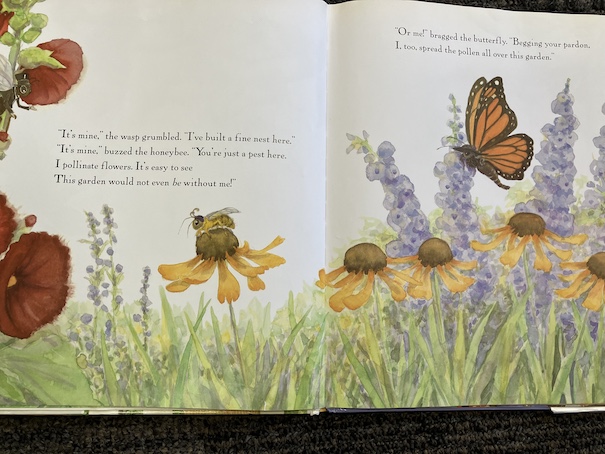
Various other creatures, big and small speak up, each of them pointing out that they live in the garden, what they’ve done for the garden, and what the garden has done for them. The bees and butterflies pollinate the flowers.

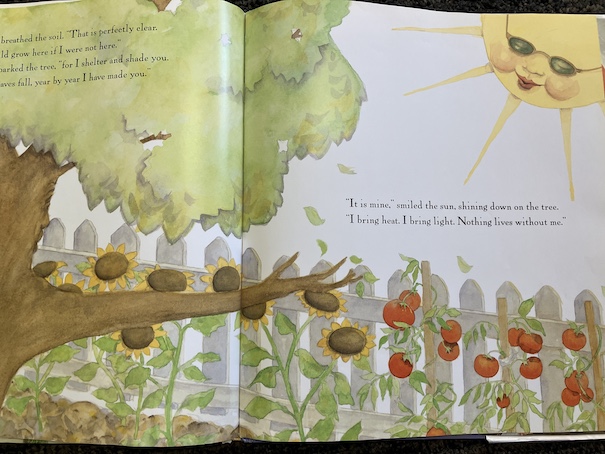
But what about the plants in the garden? They have a strong argument that they are what makes the garden a garden. Then again, the soil is where the plants grow, and the plants need the sun and rain to grow. Also, all plants grow from seeds, so the garden exists for the seeds that will be the future plants.

It seems that the answer to Mrs. McGee’s question isn’t as easy as she might have thought.

This is a charming story about how various plants, animals, creatures, and forces of nature are interconnected. The book doesn’t use the word “ecosystem“, but that’s the concept being described here. The garden’s ownership and the reason for its existence is much more than the gardener who owns the land and planted and tended the garden; it’s everything that’s growing in it, everything that contributes to its growth, and everything that depends on the garden. Without all of these creatures and natural forces put together, the garden wouldn’t be what it is.

The book doesn’t attempt to get scientific about the details of this garden ecosystem, and the animals wear clothes and talk, so the story isn’t meant to be entirely realistic. However, it is thought-provoking about how many different parts of nature affect each other. It could be a good book for introducing the topic to young children before teaching them about the science of ecosystems later. The rhyme scheme makes the story fun to read.

Isabel’s House of Butterflies

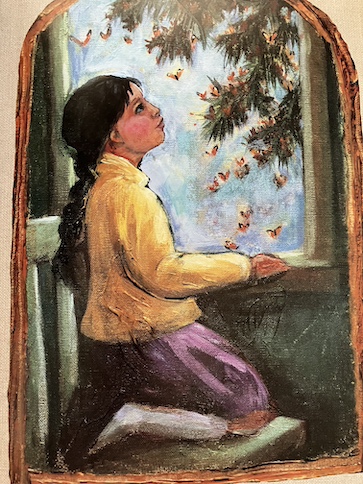
The story begins by explaining that the forests of Michoacan, Mexico are a sanctuary for monarch butterflies, but that sanctuary is in danger because of logging activities. The large-scale industry is a major threat, but sometimes poor people living in the area also chop down trees because they need to sell the wood. The author notes that there have been efforts to preserve these trees, but it’s difficult to enforce laws protecting them, and no one is sure what will happen to the monarch butterflies if the trees disappear.

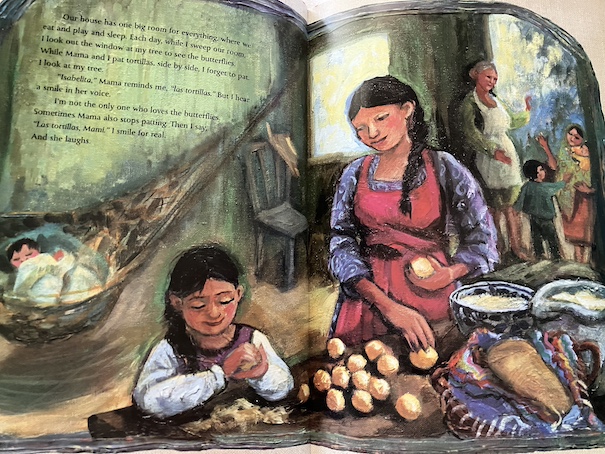
Isabel is an eight-year-old girl living with her family on a small farm, and the tree outside their house attracts butterflies on their migration route. She calls it, “La casa de las mariposas,” which means “The House of Butterflies.” Her family is poor, but they can’t bring themselves to chop down their special butterfly tree, like other families in the area have done. They love it that the butterflies appear there every autumn, and they think it’s a beautiful miracle to see them return every year. Sometimes, tourists come to the area to see the butterflies, and that brings the family a little extra money.

However, one year, there is very little rain, and they have a very bad harvest. The family sells their pigs and continues on as best they can, but their money is running low. They don’t have many resources left for money, and Isabel’s father is reluctantly considering cutting down their butterfly tree. He doesn’t want to do it, but he doesn’t know what else to do.

Isabel is distressed at the loss of the tree and the butterflies, so she suggests another plan to her parents. She often helps her mother to make tortillas, so she tells her mother that maybe they can set up a stand selling tortillas to the tourists who come to see the butterflies. The family decides to give Isabel’s plan a try.

The book is available to borrow and read for free online through Internet Archive.

The story ends on a somewhat hopeful note, but it bothered me a little because it’s not definite that Isabel’s plan is going to work. Isabel is hoping that they’ll be able to make enough money that they won’t need to cut down the tree, but we only see them getting set up, so we don’t know if they’re successful or not. I would have preferred to see them succeeding so we would know that things are going to get better, but the story just ends at that point, and it’s left up to the minds of the readers whether they were successful or not.

I think that hopeful but slightly worrying note at the end of the story is meant to reflect how people trying to preserve natural resources often feel – they have ideas and plans to help preserve natural areas and resources, but nobody knows for sure what will work or how well their plans will work. It’s realistic, if a little bit of a let-down. However, while nothing is guaranteed to be successful and life has its uncertainties, there is hope in the people who are willing to try different approaches to problems rather than simply giving up. The book does speak to the concerns that modern people, even children, have about the environment and the search for systems that work better than the ones that we already have.

The pictures in this book are soft, colorful, and lovely. Although the family is poor, they appreciate the small pleasures in their lives, like making the tortillas and the yearly appearance of the beautiful butterflies. I did also feel a little sorry for the butterflies the pigs ate, but the story doesn’t dwell on that part too much.

This book was published by Sierra Club Books for Children, and there is a small note with the publishing information about the origins of the Sierra Club, which is dedicated to protecting scenic and ecological resources.

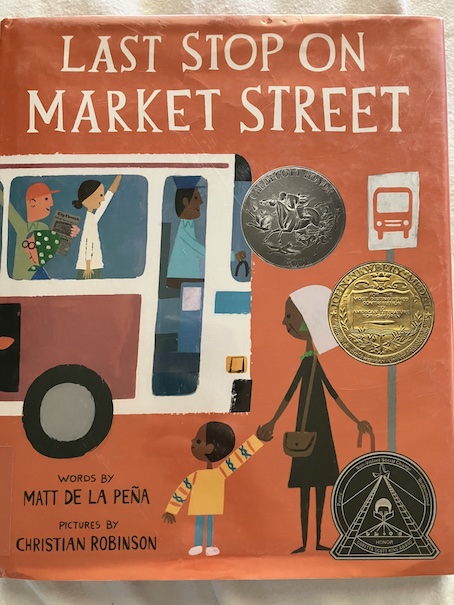
Last Stop on Market Street

After church, CJ and his grandmother have to wait for the bus while other people just get in their cars and leave. CJ is annoyed because it’s raining. He asks his Nana why they have to wait in the rain and why they don’t have a car. His Nana says that they don’t need a car because they have the bus.

The bus is interesting because many interesting people take the bus. The bus driver does little tricks, like pulling a coin from behind CJ’s ear, and there are interesting passengers, like the lady with a jar of butterflies and a man with a guitar.

While CJ’s friends, whose families have cars, go straight home after church, CJ and his Nana have somewhere else to go. CJ wishes that he could just go home, too, but Nana points out that the boys who just go straight home miss meeting so many interesting people. CJ does enjoy listening to the man with the guitar playing music on the bus.

CJ and his grandmother get off at the last stop on Market Street, which is in a bad neighborhood. CJ comments about how dirty it is, but his grandmother points out that people who surrounded by dirt know how to see what’s beautiful.

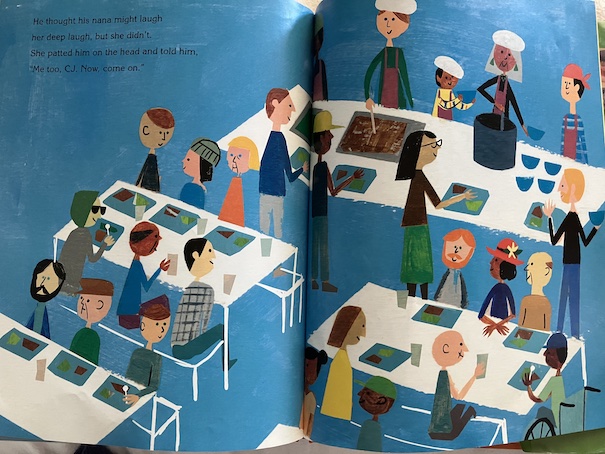
The reason why CJ and his grandmother are here is that they help out at a soup kitchen. CJ recognizes the faces of people he’s seen there before, and he realizes that he’s glad that he came.

This book is the winner of multiple awards. It’s a Newbery Medal winner, a Caldecott Honor book, and a Coretta Scott King Award honor book for its messages about appreciating and helping other people in a diverse community.

This is one of those picture books that I think can speak to adults as well as kids, maybe even more so because adults might understand some of the broader context of the story. CJ and his grandmother probably don’t have as much money as some of CJ’s friends and their families, which is why they don’t have a car. When CJ comments about why do they have to wait for the bus in the rain, his grandmother could have given him a straightforward answer about how they can’t afford a car, but that would have been depressing. Instead, she points out the positives of the bus and the people they meet. All through the book, she points out the positives about situations that both CJ and the readers can see are not entirely positive. It’s noticing these positives that help make the situation better.

CJ and his grandmother don’t have much money themselves, but Nana is teaching CJ how to help other people and build relationships with them. The people they meet are often poor people or people who are unfortunate in some way, but they still enjoy meeting these interesting people with colorful lives. There are times when CJ wishes that he could be somewhere else or doing something else, but yet, he also enjoys parts of where he is and realizes that what he’s doing is better than other things he could be doing. CJ and his grandmother experience the enrichment of life experiences and relationships with other people.

Aunt Flossie’s Hats (and Crab Cakes Later)

On Sunday afternoons, a pair of sisters, Susan and Sarah, go to visit their Great-Great-Aunt Flossie. They love her house because it is full of interesting things, especially Aunt Flossie’s hat collection.

When their aunt welcomes them in, she offers them tea and cookies and promises that they will get some crab cakes later. After they have their tea and cookies, Aunt Flossie lets the girls try on her hats and tells them stories about them.

The girls are fascinated by the different colors and styles of the hats, but to Aunt Flossie, they represent memories. As the girls pick hats to try, Aunt Flossie tells them what the hats remind her of.

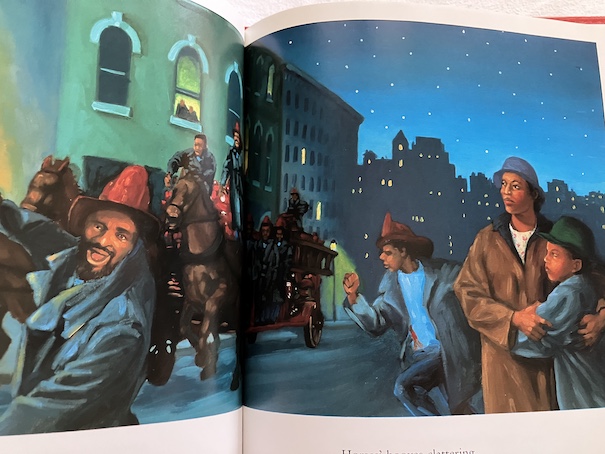
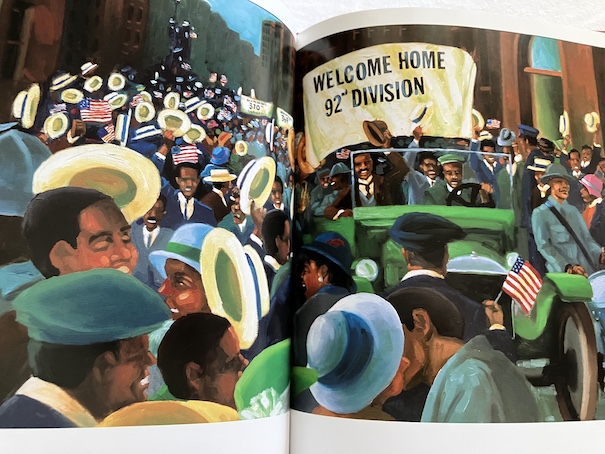
One hat that still has a slight smokey smell reminds Aunt Flossie of a big fire she witnessed in Baltimore. Another hat, one with a red feather, reminds Aunt Flossie of the parade she saw at the end of the Great War (what WWI was called before WWII).

Aunt Flossie’s favorite hat has pink and yellow flowers, and it reminds her of the time when she almost lost it, but it was rescued by a friendly dog. The girls love Aunt Flossie’s stories about her hats, and they love the crab cakes they get later with their family!

The book is available to borrow and read for free online through Internet Archive (multiple copies).

This is a sweet, slice-of-life story about an elderly aunt sharing her memories with her young nieces. The girls enjoy their time with their aunt, trying on the hats in her collection and getting glimpses of the past through her stories. By spending time together, getting together for tea (and crab cakes later) and trying on the hats, the girls are also building new memories. Years later, they will be able to tell stories about the afternoons they spent with Aunt Flossie and the stories she would tell them about her hats. A note in the book’s dedication indicates that the story is based on memories of the author’s own elderly Aunt Flossie.

The pictures in the book are colorful, like the colors of the aunt’s hats, and they’re also a little soft. I think the soft quality of the images is a good match for the memories the aunt shares with the girls and the new memories they’re creating by sharing stories and spending time together as a family.

Flossie and the Fox

Little Flossie Finley’s mother asks her to take a basket of eggs to Miz Viola because a fox has been troubling her chickens, and they’re too scared to lay eggs. The fox is a sly creature, and he always seems to outwit the hounds.

Flossie doesn’t remember ever seeing a fox before, and her mother tells her that foxes will do just about anything to get eggs. Flossie isn’t sure what she’ll do if she meets the fox, but she remembers what her mother says about how “a fox be just a fox.” She decides that doesn’t sound too scary.

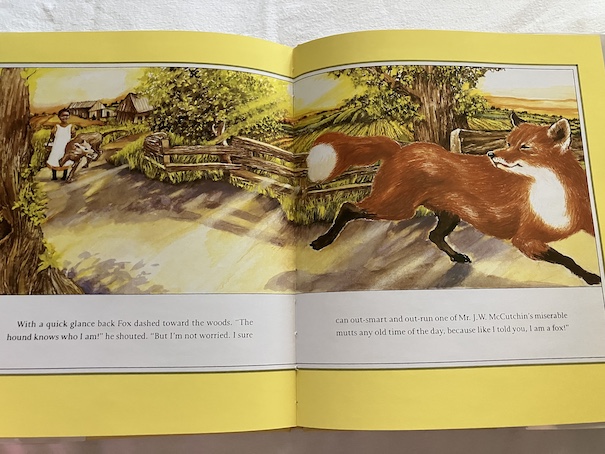
On the way, Flossie does meet the fox. The fox talks to her, and Flossie can tell that he wants the eggs she’s carrying. However, Flossie refuses to be impressed by the fox and tells him that she doesn’t even believe that he’s a fox because she’s never seen one before. The fox is surprised that she isn’t intimidated by him and tries to prove to her that he’s a real fox.

For everything the fox says to try to prove his identity, Flossie has an answer to deny it. He points out his thick fox fur, but Flossie says that rabbits also have thick fur. His pointed nose also doesn’t mean that he’s a fox because rats also have pointed noses. A cat they meet verifies that the fox is a fox, citing his yellow eyes and sharp claws, but since the cat also has yellow eyes and sharp claws, Flossie says that isn’t proof of being a fox. Even his characteristic bushy tail isn’t firm proof because squirrels also have bushy tails.

There is one being who knows for certain that the fox is a fox – the hounds that chase foxes. Flossie knows that as well as the fox does.

The author’s note in the front of the book says that the author enjoyed listening to stories told by her family when she was young, and the story in this book is one that she remembered from her youth. She particularly wanted to tell this story in a rural Southern dialect, like the one her grandfather used when he used to tell stories.

I enjoyed this fun story where a clever girl tricks a classical trickster. She knows that the fox is really fox, but she uses the similarities between the features of a fox and the features of other animals to pretend like she doesn’t and to keep the fox attempting to convince her until she reaches a point where the fox can no longer pursue her. Knowing the author’s connection to this folk tale style story adds an element of coziness, imagining the author hearing the story as a little girl herself.

The time period of the story is indefinite, but from the characters’ clothes, it looks like it might be some time during the late 19th century or early 20th century.

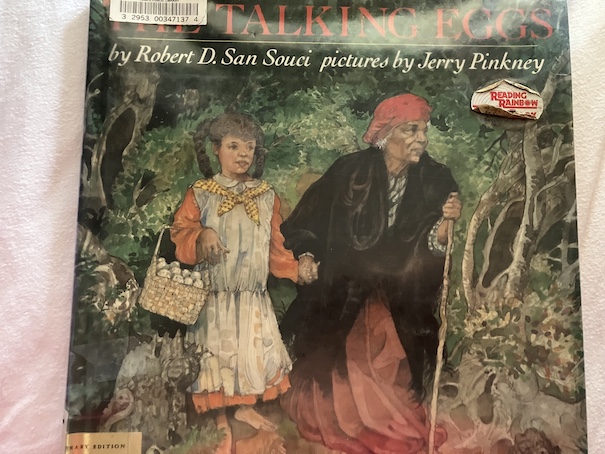
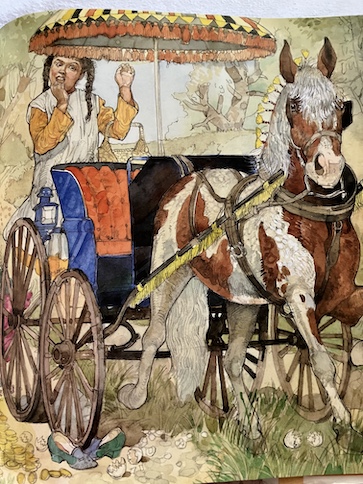
The Talking Eggs

There was a poor widow who lived on a small farm with her two daughters, Rose and Blanche. Rose was the widow’s favorite daughter because she was so much like her mother. They were both mean and bad-tempered, and they had grand dreams of becoming rich someday, although neither of them had the slightest idea how to accomplish that. Blanche, on the other hand, was a sweet girl, and her mother made her do all the work while she and Rose just sat on the porch, talking about all of their grand dreams.

One day, when Blanche goes to fetch water from the well, an old woman approaches her and begs her for a drink. Blanche gives her some water, and the old woman thanks her, telling her that she will be blessed for her kindness.

However, when Blanche gets home, her mother and sister yell at her for taking so long. They hit her, and Blanche runs away into the woods. Then, she meets the old woman again. She explains to the old woman what happened, and the old woman invites her to come to her house. However, she cautions Blanche not to laugh at what she sees there. Blanche promises that she won’t laugh.

The old woman is no ordinary woman, and everything at her house is strange. Some of these strange things are amusing, some are amazing, and some are just plain weird and a little alarming. The animals are all strange, with chickens of different colors and cows with curly horns. Then, inside the house, the old woman removes her head and puts it in her lap to brush her hair. Then, the woman produces a fancy stew from just one old bone. After supper, they go outside and watch rabbits in fancy clothing dance.

In the morning, the old woman tells Blanche to go out and gather some eggs before she goes home. Blanche is allowed to take any that tell her to take them and to leave ones that say not to take them. Blanche does as she is told, although the ones that tell her to take them are the plain-looking eggs, and the others are covered in jewels. The old woman tells Blanche to throw the eggs over her shoulder, one at a time, and when she does so, the eggs break and wonderful things burst out of them – fancy clothes, coins and jewels, and even a horse and carriage.

By the time Blanche gets home, she has many beautiful clothes, money, and luxurious things. Blanche’s mother pretends to be nice to her when she returns, but it’s only so Blanche will tell her where she got all the rich things. That night, when Blanche is asleep, her mother talks to Rose, telling her that she should also befriend the old woman and get the same rich rewards as Blanche. Then, they will steal all of Blanche’s things and head to the city to live the rich life that they’ve always dreamed of.

Of course, lazy and bad-tempered Rose isn’t as kind or hard-working as her sister. She ignores the old woman’s instructions and does everything she shouldn’t do. When she tries to force the old woman to give her riches, the old woman’s magic gives her and her mother their just desserts.

This book is a Reading Rainbow Book. It is available to borrow and read for free online through Internet Archive.

There is a note at the beginning of the book that this story comes from a Creole folktale that appeared in a 19th century collection of folktales from Louisiana by Alcee Fortier. It resembles folktales from Europe was probably adapted from fairy tales brought to Louisiana by French immigrants. It reminds me of the Mother Holle story, where a kind, well-behaved, hard-working girl is rewarded for following Mother Holle’s instructions, while her spoiled sister is punished for laziness and disobedience.

The old woman in this story is a similar figure to Mother Holle, with strange powers and magical objects, but there is no explanation of who she might be. The fact that she can remove her head just to brush her hair shows that she’s supernatural, but we don’t know if she’s supposed to be a witch or some other supernatural creature.

Personally, I don’t think I would laugh at any of the things in the old woman’s house. I think the strange animals sound more amazing than comical. I think I’d really be impressed by the different-colored chickens and the cows with the weird horns. I have to admit, though, that if someone takes off their head, my first reaction would probably be to run for it.