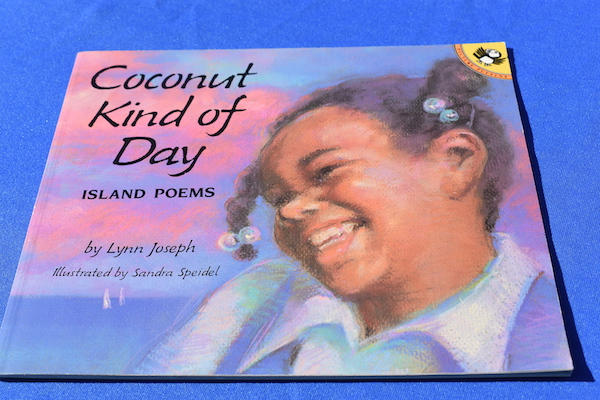
Coconut Kind of Day: Island Poems by Lynn Joseph, illustrated by Sandra Speidel, 1990.
The author’s note in the back of the book explains that the author was originally from Trinidad and that she wrote this book of poems about some of the things that remembers from growing up there. She also explains some of the terms used in the poems that people who aren’t familiar with Trinidad might not know:
Palet man – Ice-cream man who sells ice cream on sticks, like popsicles (I knew this one because I’m used to the Spanish word “paletero” from growing up in Arizona.)
Soursop – A type of fruit often used as an ice cream flavor
Pullin’ seine – When the fishermen start pulling in their nets, and other people help.
Jumbi man – A bogey man. It’s popular for people to dress in a Jumbi costume at Carnival time.
Sorrel – A plant used in making a drink around Christmas
The poems are mostly about small, everyday things, like going to school or to the market or how the children play together or get ice cream from the palet man.


There is one poem where the girls want to play cricket with the boys, but the boys won’t let them, and they decide that when they’re older, they’ll have a cricket team of their own.
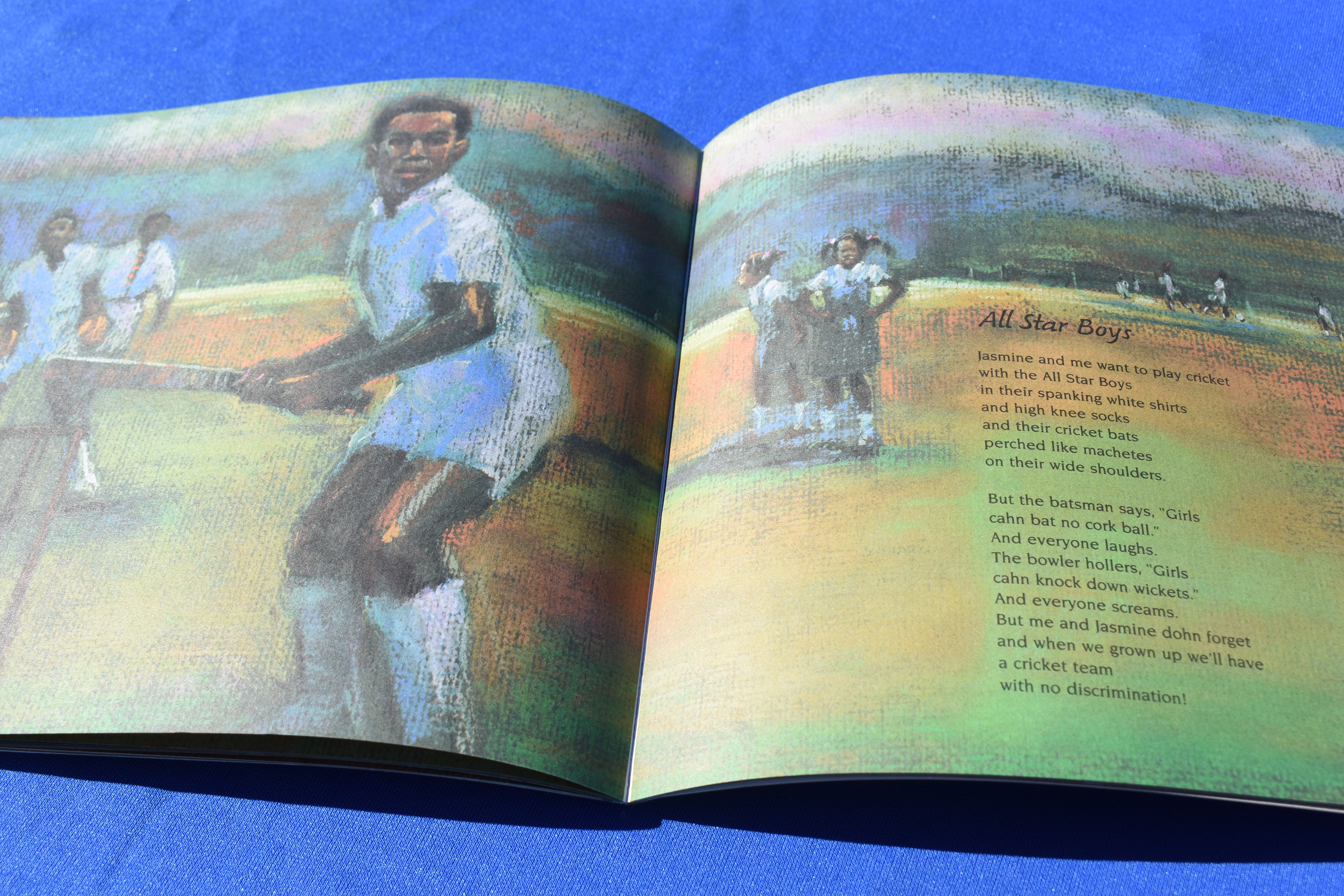
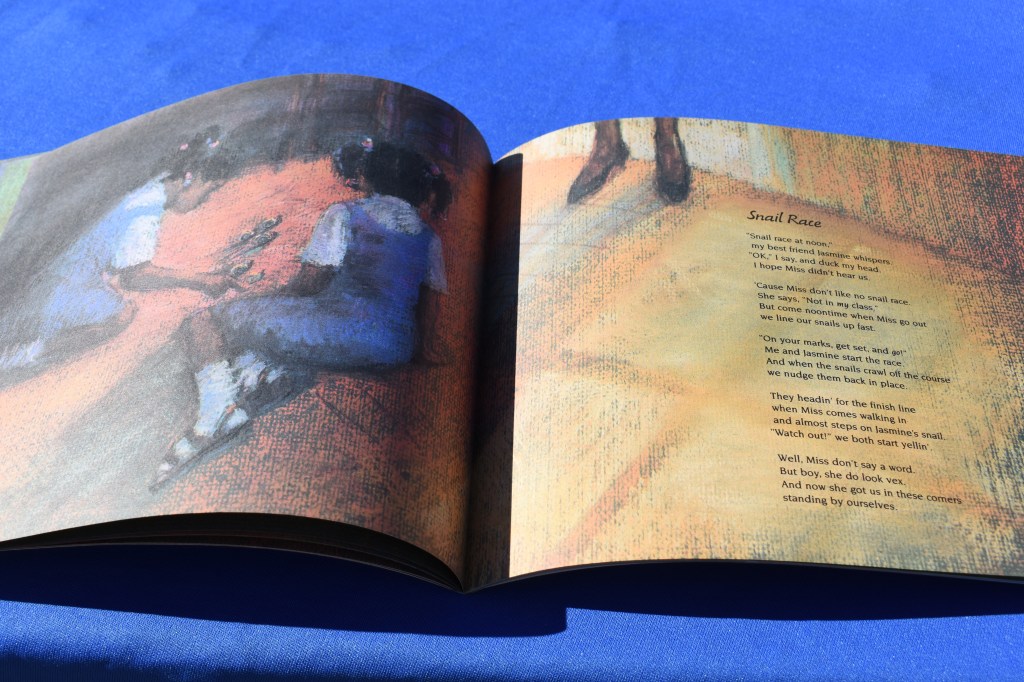
The pictures are beautiful, done in an impressionistic style.
 The D- Poems of Jeremy Bloom by Gordon Korman and Bernice Korman, 1992.
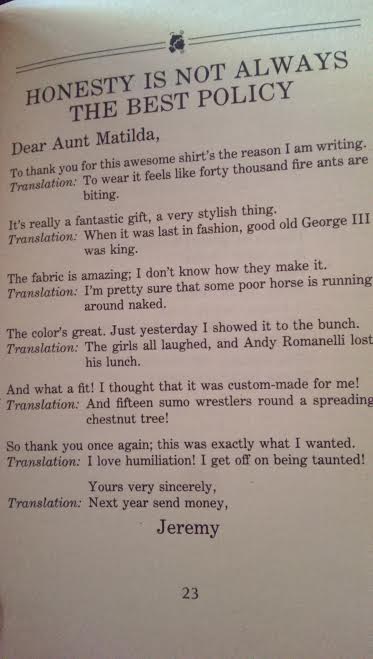 Jeremy tries to make the best of things, but somehow (partly through his own fault and partly by accident), he continually manages to do things to annoy his poetry teacher, Ms. Terranova (or, as the kids call her, Ms. Pterodactyl, thanks to a mistake Jeremy made when he said her name on the first day of class). Every single poem Jeremy writes during the year receives the same grade: D-. The book is divided into different periods of Jeremy’s work, along with an explanation about what Jeremy did during each period to tick off his teacher. At the end, the reader can be the judge: Are Jeremy’s D- grades because he’s a terrible poet or because his teacher is mad at Jeremy for everything else he does during the year? (The answer is pretty obvious.)
 Jestress's Forgotten Books and Stories