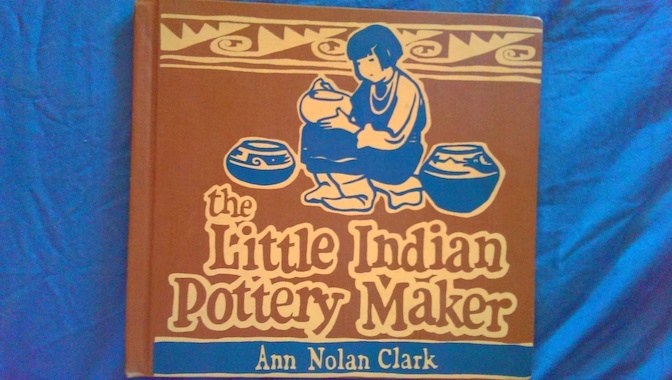
The Little Indian Pottery Maker by Ann Nolan Clark and illustrated by Don Perceval, 1955.
By “Indian,” the author means Native American. This book specifically focuses on the Pueblo Indians who live in the Southwestern United States, specifically New Mexico and Arizona. The story is about a young girl who is starting to learn the traditional art of pottery-making, and the book goes into the process involved in making pottery, step by step. Although the use of “Indian” instead of Native American is somewhat anitquated, the book has something of an interesting history and the picture it provides of the practice of traditional crafts is fascinating. The beginning of the book explains a little about Pueblo Indians, their history, and where they live.
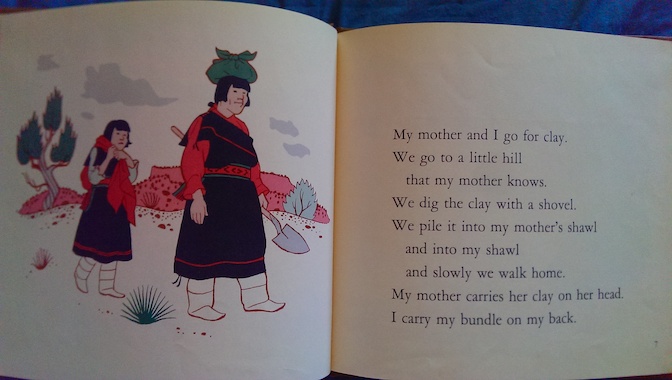
The young girl tells the story of how her mother introduces her to the traditional craft of making pottery and teaches her how to make her first pot. She describes every step in the process, from when they collect the clay themselves from a hillside until the pot is finally complete.
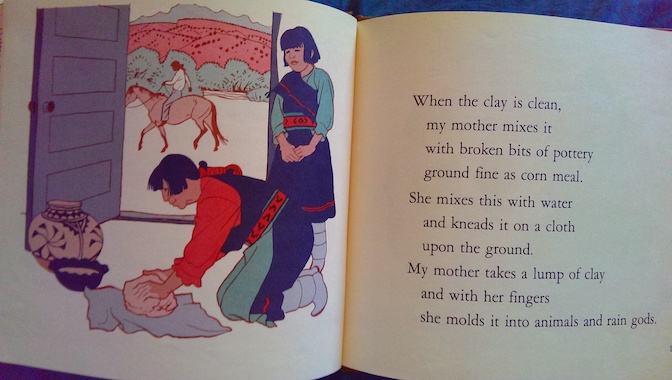
The girl’s mother explains about the different methods used to make pots, and pictures show how pots are shaped.


Making pottery is a long process that takes days to complete, including shaping, scraping and smoothing the sides, drying, decorating, and finally firing the pottery. The girl is proud of the first pot she has ever made.

I found this book at a thrift store a number of years ago and recognized it because I already owned a related book, The Little Indian Basket Maker, that I liked when I was a young child. I hadn’t realized then just how old the books were and that there were more of them by the same author.
The book, which was written in the mid-1950s, was one of a group of stories (not exactly a series because they didn’t have a specific set of characters in common and the themes varied somewhat) written by a woman who was a teacher with the United States Indian Service. The other books that she wrote, including The Little Indian Basket Maker, focus on members of different Native American tribes. She was not Native American herself, and the modern view of Indian schools is not favorable (for good reasons), so one might be a little suspicious of a book written about Native Americans by an Indian school teacher. However, these books interest me because of their explanation of traditional crafts. There are no white people in the stories at all, and they have a timeless quality to them. Reading them, it’s hard to get a sense of exactly when the stories take place because it’s never mentioned, and there aren’t many clues (no mentions of modern technology, it’s all about the crafts). I haven’t found any of the other books that the author wrote, but these two are very respectful in their tone, and they begin with explanations of the history of the tribes involved in the stories. According to Andie Peterson in A Second Look: Native Americans in Children’s Books, the author was deliberately trying to write books that her Native American students could relate to.
The art style of the books vary because they had different illustrators. The illustrator for this particular book was not Native American (unlike some of the illustrators of other books), but he was adopted into a Hopi tribe, apparently as an adult because of his accomplishments in representing Hopi culture in art.
 Jestress's Forgotten Books and Stories