Boxcar Children

#83 The Copycat Mystery by Gertrude Chandler Warner, 2001.
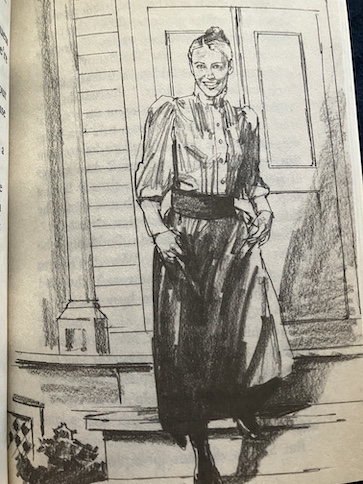
Aunt Jane invites the Alden Children to come visit her while her husband is out of town on a business trip, cryptically promising them “a trip back in time.” The Alden children wonder what that means, but it turns out that Aunt Jane is taking them to visit a Victorian farmhouse that’s been turned into a museum. Tour guides dress up in Victorian costumes and explain what life what like in the past.
The farmhouse museum has only opened recently, but it’s gotten off to a rocky start, and odd things are happening, and it makes the owner, Carl Mason, and the manager, Gwen, worry. When the Aldens arrive, the sign for the farmhouse is missing, and Benny finds it hidden by the old barn. Nobody seems to know who removed the sign and hid it, but Mr. Mason is angry because potential visitors would be unable to find the museum.
There also seems to be some hard feelings and tension among the people working at the museum and other members of the community. The groundskeeper, Draper Mills, who takes care of the farm doesn’t like the idea of the farmhouse being turned into a museum because he thinks visitors are going to trample the ground. Miss Penning, who lives nearby, is upset because Mr. Mason removed her great-great-grandfather’s portrait from the farmhouse. Her great-great-grandfather, Horace Wagner, used to own the farm, but Mr. Mason doesn’t want anybody to talk about him because Horace had a reputation as a practical joker. Miss Penning thinks it’s disrespectful not to acknowledge Horace’s role in the house’s past, but Mr. Mason doesn’t like the idea of practical jokes. He wants the museum to be more dignified and focused on educating people about life in the past. He think if they talk about Horace on the tours, it will make the house and museum seem more like a joke. Mr. Mason even removed Horace’s picture from the farmhouse so no one would see it. Meanwhile, Gwen is worried because the museum is short-handed over the summer. Gwen’s younger sister, Sharon, is helping out, but even so, they could use more help. Sharon seems to be quarreling with Gwen, too, although the Aldens aren’t sure why at first.
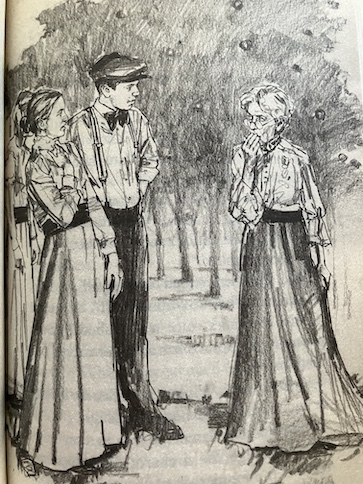
The Aldens like getting involved in projects, so they volunteer to help with the museum themselves. Dressing in Victorian clothes and leading tours sounds like fun! However, more odd things begin happening. An antique birdcage disappears and is found in an odd place with a live canary inside, and someone turns all the pictures in the house around and shortens the legs on Henry and Benny’s costumes. Odder still, Miss Penning says that each of the pranks is a copy of something that Horace did when he was alive. It’s like someone is duplicating all of Horace’s old practical jokes. The only difference is that Horace’s pranks were always in a good cause, like surprising someone with a special gift, helping someone feel better, or just being mildly silly and amusing. It seems like these copycat pranks are meant to disrupt the museum and cause trouble.
Miss Penning thinks that it’s the ghost of Horace doing these pranks, reminding people that he’s still a part of the house and that he wants acknowledgement. However, the Aldens think that it’s more likely to be a living person. Perhaps Miss Penning is doing these pranks herself to call attention to Horace’s memory. On the other hand, it could be Jake, the student reporter who is doing a story about the museum and who thinks the place seems too dull. Could he be trying to liven up his story? The Aldens also learn that Gwen has been Sharon’s guardian since their parents died, but the sisters have been quarreling because teenage Sharon wants to take part in a fashion show, and Gwen doesn’t approve. Could Sharon be staging the pranks to get even with Gwen? Mr. Mason is getting upset about all of these pranks, and if someone doesn’t put a stop to them soon, he might fire Gwen for not managing the museum well.
The book is available to borrow and read for free online through Internet Archive.
My Reaction

One of the themes of this story is about the differences between people’s perceptions of the past and the reality. People often think that people in the Victorian era were always “prim and proper” and joyless, but Horace Wagner was exactly the opposite. He had a quirky sense of humor and liked to display it.
Violet explains that people get the idea that Victorians were always stern and serious because they aren’t shown smiling in most old photographs, but that’s only because photographs in the Victorian era required everyone to sit perfectly still, and the subjects had to be extra careful not to move. When Horace had his picture taken, he also sat still and unsmiling, but he put the flower from his buttonhole behind his ear for the photo. Horace could never be completely serious, which is why Mr. Mason doesn’t think he fits in the Victorian museum, even though that museum was Horace’s old home. It’s ironic because the more serious view of the past that Mr. Mason likes to convey is actually a departure from the reality of the situation. Miss Penning is correct that removing Horace from the museum and never mentioning him is actually doing a disservice to the past, essentially hiding someone important to his time and the location because he didn’t fit the expected mold. The Aldens also realize that the stories about Horace are endearing to visitors and add an interesting dimension to the museum.
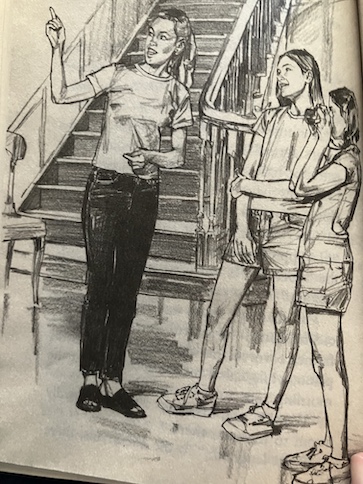
The solution to the mystery causes everyone to rethink a few things and to resolve conflicts they have with each other. Besides recognizing the difference between the perceptions of the past and the reality, some of the characters admit that they’ve been narrow-minded in their approaches and interpretations of other things. Gwen and Sharon reconcile when Gwen decides to allow Sharon to participate in the fashion shows. More importantly, Mr. Mason realizes that his approach to the museum was wrong and that Horace does belong in the story of the house and that it’s okay to present the less serious side of the past along with the more serious side.
I enjoyed this light-hearted mystery. I’m not a big fan of pranks in real life because they can easily go too far, and I don’t like practical jokes that seriously embarrass people or might hurt them. However, Horace was a more altruistic practical joker. His practical jokes were often meant to help people rather then hurt them. For example, when he was young, Horace’s brother was small for his age and worried that he would never grow, so Horace started shortening his brother’s pants secretly at night to make him think that he was growing, so he wouldn’t feel so bad. As the characters describe it, Horace’s pranks were generally pleasant. Only one, which he played on a local club that excluded a friend of his, was meant to cause some embarrassment to make a point about what it feels like to be excluded. Although the club members were embarrassed, his joke was pretty mild and served a higher purpose. As a character who drives the story without actually being present, I liked Horace. He was silly but basically good-hearted with his humor. By contrast, the modern practical joker copying his pranks is more self-centered and thoughtless about the consequences, although revealing this person does cause other people to consider the ways in which they’ve been thoughtless and make changes for the better.
The book ends with the characters enjoying “April Fool Pie”, which is a mock apple pie. They don’t provide an exact recipe, but they explain the ingredients.
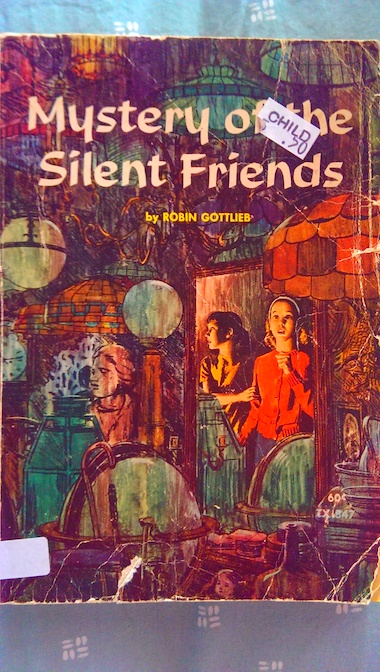 Mystery of the Silent Friends by Robin Gottlieb, 1964.
 For a time, it seems like there’s no risk of the automatons being sold because no one seems particularly interested in buying them. Then, suddenly, two different men come to the shop and ask to buy the dolls. Weirdly, each of them tells the same story to Nina’s father: that their name is George Ballantine the Third, that their family once owned the automatons, that the dolls are actually part of a set of three, that they own the third doll (a girl doll that plays the spinet), and that they want to purchase the other two in order to reunite the set. Nina’s father is bewildered by these two men with identical stories and identical names and refuses to sell the automatons because of his daughter’s attachment to them and because he doesn’t know which of the two men to believe and doesn’t trust either of them.
 At first, they all expect that Red Ballantine won’t be able to show them the third doll and will give up trying to buy the other two, but to their astonishment, he takes them to the same apartment where Brown Ballantine said that he lived and shows them the exact same doll they saw before. Instead of clearing things up, the identities of the two men seem to get all the more confusing. However, Muffin notices something strange about the tune that the doll plays on the spinet that gives them a clue as to why the three dolls are so important. Later, someone breaks into the antique store and uncovers a hidden secret about Henri as well.
 Jestress's Forgotten Books and Stories