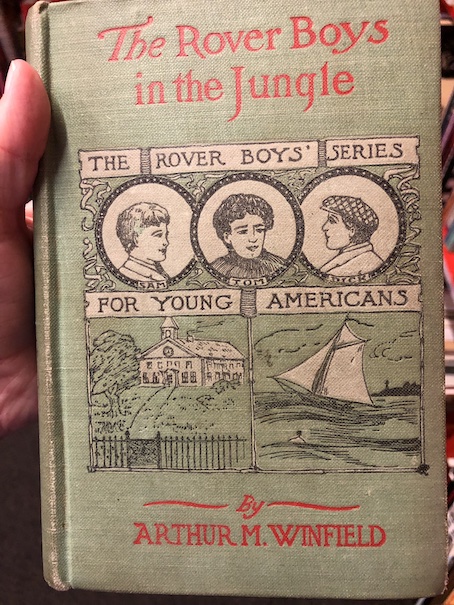
Stories of Rainbow and Lucky: Rainbow’s Journey

Stories of Rainbow and Lucky

This is the second book in the Stories of Rainbow and Lucky series. I’ve covered the first book this series, and I have to do all five books in a row because the series is set up like a mini-series. That is, none of the books in the series can stand alone; they are all installments of one, longer story. It’s an unusual series from the mid-19th century, written on the eve of the American Civil War, by a white author with a young black hero. Rainbow is a teenage black boy who, in the previous installment of the story, is hired by a young carpenter who is just a few years older than he is to help him with a job in another town. The rest of the series follows the two young men, particularly Rainbow, through their adventures, learning life lessons, even dealing with difficult topics like racism. (Lucky is a horse, and Lucky enters the story later.) The story is unusual for this time period because it was uncommon for black people to be the heroes of books and for topics like racism to be discussed directly. It’s also important to point out that our black hero is not a slave, he is not enslaved at any point in the series, and the series has a happy ending for him. People don’t always treat him right, but he does have friends and allies, and he manages to deal with the adversity he faces and builds a future for himself. Keep in mind along the way that there are a lot of pun names in this series and that people’s names are often clues to their characters.

This book is easily available to read online in your browser through NINETEENTH-CENTURY AMERICAN CHILDREN & WHAT THEY READ, I’m going to do a detailed summary below. If you’d rather read it yourself before you read my review, you can go ahead, but some people might want to know what it’s like in more detail.

For most of the last story, the focus was on Handie, his family’s financial problems, the inheritance he receives from his uncle, and how the lawyer who is the executor of the estate arranges for Handie to use the estate to his best advantage. Because Handie is 19 years old, he is still considered a minor. (The legal age is 21 during this time period and would stay the legal age until about halfway through the 20th century.) His uncle’s will specifically stated that Handie cannot take full ownership of the farm that he left to him until he is 22 years old. Uncle that time, the lawyer, Mr. James, will manage the estate on his behalf, using the money provided with the estate to hire someone to fix up the farm to rent it out to a tenant until Handie is old enough to take it. The Level family’s money problems are because Handie’s father is not good at managing his money, and Handie’s uncle knew that if Handie’s father got his hands on his son’s estate, he would probably blow the money and end up having to sell the farm to cover his debts, leaving Handie with nothing.

In the previous book, Mr. James discusses the situation with Handie, and they work out another solution to the Levels’ debt problems. He helps Handie take steps to separate the money he earns from his father’s money, and he hires Handie as the carpenter to work on repairing the farm he inherited on behalf of his own estate. It’s a somewhat odd arrangement because Handie is effectively being hired to work for himself but will be paid by Mr. James on behalf of the estate. Under the circumstances, it’s the best system for solving the family’s money problems and setting Handie up for a better future. 

Because Handie will need a little help while he’s working on the farm, Mr. James also provides money from the estate so he can hire an assistant. Handie offers the job to 14-year-old Rainbow. Rainbow doesn’t have any carpentry experience, but he’s strong for his age and a good worker, and Handie would rather bring someone he knows with him rather than trying to find someone else when he arrives at this new town. At the end of the previous book, Handie offers Rainbow the job as a carpenter’s assistant and tells him that they will be living in the town of Southerton for about 2 or 3 months during the summer while they do the job. The job will involve hard, physical work, but Rainbow can handle it, and this job could give him some good work experience. Rainbow accepts the job offer, with his mother’s permission, and they begin preparing for the journey.

When this story begins, Handie and Rainbow are about to leave the village where they both live. It’s a summer evening with good weather, and they will be traveling by stage coach. When Handie offered Rainbow the job, he didn’t explain that the farm where they will be working actually belongs to him, but word of Handie’s inheritance has spread around town since. Rainbow is astonished at the idea of someone so young having a farm of his own, and he decides that he will ask Handie more about it later, although he knows he should be careful to be polite about asking because he doesn’t want to seem rude by prying. Although these boys are friendly with each other, having grown up in the same small town, they also have a professional relationship now, and Rainbow’s mother impressed on him that he needs to treat Handie respectfully as his employer. They are becoming young men and venturing out into the world for the first time, so they need to learn how to behave professionally with each other, as befits their new, professional relationship. Neither of the young men is experienced with traveling anywhere, and they’re both looking forward to this exciting journey.

Things seem to be going well at the start of the journey, but then, the stage coach driver, while chatting with Handie mentions that he doesn’t like the look of one of the passengers. At first, Rainbow worries that the driver is talking about him because he’s accustomed to people making comments about him, ridiculing him, or telling him that he isn’t welcome among them for being black. Even though they are from a small village, and many people there like Rainbow for his good nature and helpfulness, he’s already seen his share of discrimination. However, the driver is talking about someone else. He explains that there’s a man on the stage coach called Burkill, who is wearing a bright waistcoat. He’s met Burkill before, and he knows that the man is trouble. 

Right now, Handie and Rainbow are riding on the top of the stage with the driver, but when Burkill joined them, he made a fuss to the driver about whether or not Rainbow would be riding inside the coach, objecting to the idea of riding with a black person. The driver, Trigget, who knows Rainbow and doesn’t like Burkill anyway, told him that Rainbow has paid his fare and will ride wherever he wants to: “I don’t pay any attention to the different shades of complexion of my passengers … Rainbow is suitable company for any honest man. You can judge best whether he is suitable company for you or not, and act accordingly.” It’s a bit of a slam. He’s implying that, if Burkill can’t get along with Rainbow, he’s probably not an honest man, and the driver already has reason to think he’s not, so he’d better not make a big deal about it. The other passengers also know Burkill’s reputation, so they get the joke and laugh at Burkill. Embarrassed, Burkill just gets on the stage coach without saying anything else. All of this happens before Handie and Rainbow get on themselves, and they don’t hear any of it, so their choice to sit up with the driver was just by preference, not because they were required to sit there. Trigget just tells them about it later, as they ride along.

(Note: I’m using the term “black”, and so did Burkill when he was speaking, but the driver corrects him, using the word “colored” because “colored” is considered the more polite word at the time this story was written. I’ve explained before that “colored” and “Negro” used to be considered more polite terms prior to the Civil Rights Movement in the mid-20th century. At that point, “black” became the accepted generic word, where it had once been considered somewhat rude, and “African American” became the polite, formal term. I’ve been using “black” in the modern generic sense for the purpose of these reviews because I think the modern audience will find it easier to follow, but this series was meant to be educational for 19th century children, like the author’s other books, so there are points in the story where the characters actually discuss which racial terms are more polite. The general rule they establish is that the best thing to call someone is whatever they would like to be called, and I think it’s a pretty good, general rule. I’m just explaining because it’s a plot point, and the racial words that people use are clues to their characters. Characters who use the wrong racial words are either ignorant or antagonistic, and Burkill falls into the second category. We haven’t know him long, but we’ve already established that Burkill is disreputable and a trouble-maker, and he also uses the wrong racial words and has a racist attitude. Basically, he’s bad news all the way around, and this incident is establishing his character for readers and setting the scene for further misbehavior from him.)

The author of this series likes to include detailed information about daily life in his stories for educational purposes, which is a boon to modern people who like learning about the details of life in the past. Some of what he says might have once been common knowledge to 19th century people, but it’s really helpful for people studying history. In this case, we leave off the racial talk to talk about the trials and tribulations of travel in the mid-19th century. 

While they ride with Trigget, Trigget asks Handie about his journey to Southerton and the inheritance he’s heard about. Handie explains to him about the farm he’s inherited and his arrangements with the lawyer, so Rainbow gets the rest of that story without needing to ask. Trigget explains that the stagecoach needs to be in Southerton by 4 o’clock because there’s a train that leaves Southerton at that time. Some of his passengers will want to be on that train. However, he’s also carrying mail on the stagecoach, and it’s even more important for the mail to make it there on time than the human passengers. 

Handie asks if people shouldn’t be considered more important than letters, and Trigget explains, “the passengers go at their own risk. We get them through if we can, but if we can’t it is their misfortune. We don’t absolutely engage to get them through at such a time. But as to the mail, it is different. We contract with the government to deliver it, without fail, at four o’clock at the station, and if we don’t do it we have a heavy fine to pay.” In other words, there are laws and consequences to guarantee that the mail gets to its destination on time, but nobody’s imposing consequences for delivering people safely to their destination, so the people just have to look out for themselves. That sounds worrying, but Trigget further explains that he can’t wait for people who just have to finish the story they’re telling at a stagecoach stop. The coach has to leave each stop at a specific time to make it to its destination on time for the sake of the mail, so the passengers need to make sure that they’re ready to go, or they’ll be left behind. It’s not much different from missing a bus, a train, or a plane today.

When Trigget says that they will reach Southerton at four o’clock, he means four o’clock in the morning. They set out in the evening, and this stagecoach travels all night. As they pass through the countryside and towns along the way, they notice that lights in houses start going out around 10 o’clock, the usual time for people in the countryside to go to bed, although the author notes that lights in the towns stay on for longer because people stay up later there.

Along the way, they stop at the post offices in various small towns and villages to sort the mail. The post offices are sometimes in buildings by themselves, but in some places, they’re located inside another business, like a store or a tavern. At each stop, they have to leave behind the mail for that particular area. At one point, they change horses on the coach, and Rainbow says that he might want a job like that someday, caring for horses. Each stop only takes a few minutes, but Trigget tries to keep things moving quickly so they can be at the next stop on time. He plans for an extra hour on his journey in case anything goes wrong, and they are about to need that extra time.

After the coach is moving again, Trigget suddenly realizes that the boy who harnessed the horses has accidentally left the reins on the right sides of the horses’ mouths unbuckled on the lead horses. It’s serious mistake because, when Trigget pulls on the reins, he’s pulling the lead horses off to the left instead of evenly on both sides, causing the entire team and coach to turn. When he tries to stop the horses from moving, he loses control of them, and they’re coming to a place where a dangerous turn could wreck the coach!

In desperation, Rainbow decides to try a dangerous stunt. He climbs out over the backs of the moving horses to reach the lead horses to fix the problem with the reins. At first, the horses are nervous with Rainbow climbing on them, but Rainbow is good with horses and manages to calm them. Unfortunately, he doesn’t manage to get the reins completely fixed before disaster strikes. They hit the turn that Trigget feared, and the coach overturns!

Fortunately, Rainbow manages to escape injury. He swings down from the horse he’s riding and manages to calm the horses down. The horses are uninjured, but the coach is on its side, and the passengers are in a panic! Trigget and Handie are also unhurt, and they begin helping the other passengers out of the overturned coach and assessing them for injuries. One of the young women who was in the coach is unconscious. The other passengers fear that she may be hurt very badly and will need a doctor, but Trigget thinks that she has only fainted from the shock. The axle-tree of the coach is broken, so they can’t merely right the coach and continue traveling. Trigget asks Rainbow to take one of the horses and ride back to the last stop and get some help and a wagon to pick up the mail and baggage from the coach. Trigget’s first concern, as he said before, is to keep the mail moving. Once someone comes to take the mail bags on, he turns his attention back to his passengers.

The unconscious girl revives, and she is not badly injured. When Rainbow returns with another wagon, they load all the luggage on it, and the entire party returns to the last tavern they passed, where they stay for the rest of the night. The owner’s wife, Mrs. Norton, gives the young women a room upstairs, but she doesn’t have enough unoccupied rooms for everyone. She suggests that Rainbow stay in the barn with the man who manages the horses, and Handie says that he’ll stay there with Rainbow, too. Mrs. Norton is grateful that they’re willing to take this lesser accommodation, and she gives them both sheets and blankets to use. The man who manages the horses, Hitover, offers his bed to Handie, and he says that Rainbow can use his assistant’s bed because the assistant, Jex, is the one who is currently taking the mail to its next stop. However, the boys decide that they would prefer to sleep on the hay with their sheets and blankets. Handie shows Rainbow how to shape the hay into a more comfortable bed, rolling up some to make pillows. (I thought that part was interesting because I’ve read about people sleeping on hay in other books, but I think this is the first story I’ve read that explains how to make an improvised bed in hay.) Then, they say their prayers and go to sleep.

Rainbow has a more difficult time going to sleep than Handie does, thinking about everything that’s happened and how strange it feels to be away from home. Both of the boys are becoming young men and venturing out into the world without their families for the first time, but in some ways, Rainbow’s position feels more precarious than Handie’s because he never knows how the people he meets might react to him, just because of his race. The book says:

Besides, the going away from home of a colored boy like Rainbow is a much more momentous event for him than such a change is for a white boy. A white boy, if he is of an amiable disposition and behaves well, even if he goes among entire strangers, soon makes plenty of friends. The world is prepared every where to welcome him, and to receive him kindly. But a boy like Rainbow feels that his fate is to be every where disliked and shunned. In every strange town that he enters he expects that the boys, instead of welcoming him as a new companion and playmate, will be ready to deride him, and to point at him, and to call him opprobrious names; so that, when he goes out into the world, there is no bright side of the picture to relieve the regret which he feels at leaving his home. He expects, wherever he goes, and however bright and beautiful may be the outward aspects of the novel scenes through which he may pass, that every thing human will look dark and scowling upon him, and that all who have loved him, or will love him, or care any thing about him, are left behind.

The one point of reassurance for Rainbow is Handie. Handie is kind to him, and he’s also Rainbow’s link to what’s safe and familiar to him. When he falls asleep, Rainbow dreams that he’s riding a wild horse. 

At one point during the night, Rainbow wakes up and sees Burkill sneaking around. Burkill hides a carpet bag under some hay, not seeing that Rainbow is awake and watching. Rainbow tells himself that he’ll have to mention it to Handie, and he goes back to sleep.

The next day, Handie goes to see about breakfast, and Rainbow gives Hitover some help with the horses. While Rainbow is helping with the horses, Burkill comes to the barn again, and he starts hassling Hitover about getting him a horse and wagon so he can get to Southerton faster. Hitover says that Burkill has been giving him a lot of trouble about that since the coach party arrived after the accident, but he keeps telling Burkill that he can’t help him. They only have one wagon, and Trigget will probably need it for handling his passengers and their baggage. When Trigget returns after getting the broken stage coach to a blacksmith, he says the same thing. Burkill tries to persuade him to forget about the other passengers because he’s willing to pay more, but Trigget says that he has a duty to all the passengers. Out of curiosity, Rainbow looks under the hay and sees that the carpet bag is still hidden there.

When Rainbow next speaks to Handie, Handie tells him that everyone’s bags and trunks will have to be searched because some things have been stolen. Handie’s pretty sure that he knows who will be most reluctant to have his bags searched, but he doesn’t say so aloud. (I think we all know at this point who the thief probably is.) While the search is being conducted, Rainbow quietly tells Trigget about Burkill’s hidden carpet bag. Trigget tells him not to say anything to anyone else yet. 

Instead, while Burkill is pressing him again about getting the wagon and leaving, Trigget says that he needs to get John Easterly and Handie to come to the barn with him first to talk about some hay he wants to buy. Burkill, worried about the possible discovery of the bag, goes with them without being invited. Trigget asks Rainbow to move some of the hay with a pitchfork, and Burkill tries to distract them from looking in the spot where the bag is hidden. When Rainbow uncovers the bag, Burkill admits that the bag is his and claims that he put it there to keep it from being lost. He tries to keep everyone from examining the bag, but Trigget says that, if he doesn’t show them what he has in the bag, they’ll all assume that he has the stolen goods, and they’ll fetch an officer to search the bag. For a moment, Burkill pretends that he’s lost the key to the bag, but Trigget finds it and opens the bag. Burkill does have John Easterly’s stolen watch in his bag, and he tries to claim that he just happened to find it and didn’t know who it belonged to, but nobody believes him. They fetch an officer, and Burkill is arrested. They can’t find the money that was taken from the young women on the coach, but everyone assumes that Burkill took that, too. Since the girls lost their money, Handie offers to lend the girls some money so they can continue their journey, and they accept.

Trigget says that he’s having the coach repaired, and any of the men (except for the arrested Burkill) who wants to wait for it can go with him that night. He is arranging for the girls to continue on immediately in the wagon, but if the men don’t want to wait for the coach, he will refund part of their coach fare, and they can make their own travel arrangements. Trigget says that they can continue to Southerton on foot, if they wish, and he’ll bring their baggage later, so Handie decides that’s what he and Rainbow will do. They’re about 20 miles away from Southerton at this point, and Handie says they can walk the distance and get there by five o’clock, maybe around seven o’clock in the evening, if they stop for a couple of hours on the way. That means that they will still get there faster than if they waited for the coach to be fixed. They remove a few things from their bags that they will need until Trigget can bring them their luggage in Southerton. Then, they set off on their way.

While they walk, they pass the place where the coach was wrecked. They look around to see if maybe the girls’ wallet with their money fell out somewhere. They don’t find it, and they consider going by the blacksmith’s shop to see if it’s still in the coach. The problem is that, when they come to a crossroads, they realize that Southerton is one way, and the blacksmith’s shop is another. They have to decide if they’re willing to go out of their way to visit the blacksmith and see if the girls’ wallet is in the coach. Handie doesn’t want to delay their journey too much because he doesn’t have much money. He gave what he could spare to the girls, and a delay in the journey would cause them to have to spend more money for food or accommodation. However, he feels like they ought to try looking for the purse anyway because he wants to feel like he did all he could for the unfortunate girls.

At the blacksmith’s shop, the blacksmith gives them permission to search the coach for the wallet. It doesn’t take them long to find it. When they do, Rainbow says that they ought to check if the money is there and maybe take what they need to pay themselves back what Handie lent to the girls, but Handie doesn’t think it’s right to look in the wallet without the girls’ permission. He thinks that it would be only right to deliver it to the girls intact. In fact, after he thinks about it, he decides that he should show it to the blacksmith, since the coach was in his custody, and that he will also seal it up for security. (The narrator says at this point that he’s not sure himself whether Handie is being truly right in this level of scrupulousness or just being overly particular. Rainbow thought this was going too far, but he didn’t want to say so. The narrator invites child readers who are unsure about the right thing to do in such a circumstance to discuss it with their parents or a trustworthy adult, which sounds like the advice that teachers typically gave us in school when I was a kid and anything came up on which they didn’t want to render an opinion or didn’t think it was their place to discuss.)

Handie shows the wallet to the blacksmith, and they discuss the proper way to handle it. The blacksmith says, in a way, he wishes that Handie hadn’t found the wallet because it does create an ethical quandary about which of them is the best person to handle it, since it doesn’t really belong to any of them, and he doesn’t want there to be any question about whether he might have taken any money from it himself, since it was in his possession. Handie suggests that they wrap the wallet up in paper and seal it, and he’ll write on the outside that they found it but didn’t open it and that they all sealed it up together. Then, the blacksmith can give it to Trigget when Trigget comes for the coach, and Trigget can deliver it to the girls. The blacksmith is satisfied with this arrangement.

After they’ve resolved that matter, Handie and Rainbow talk about how Trigget was wrong that Burkill stole the money, and Handie says, “And it shows us that we ought to be pretty careful how we judge and condemn people, even when we know that their characters are bad.” (I also took the lesson from it that a person like Burkill has made the kind of reputation for himself where nobody believes him on those rare occasions when he is telling the truth, so it’s also his fault when people don’t believe him. I mean, it’s hard to convincingly argue that you haven’t stolen something when people have already caught you with a different thing you just stole, lied about, and tried to conceal in the same 24 hour period, but that’s not where the story puts its emphasis.)

They continue on with their journey, and when they come to the next tavern, Handie decides to see if they will give them dinner in exchange for work instead of money, so he can save the money they still have. The tavern owner, Mr. Dorling, is a little “slack”, as one of his neighbors puts it. He’s not very on top of things, but his daughter, Margery, minds the business, and she can think of some things for Handie to fix around the place. Margery is very pleased with their help and considers that they have paid for their dinner many times over. Handie thinks that they probably still owe some money for dinner, so he asks Margery’s father what he thinks is fair. At first, it seems like Margery’s father still insists on them paying for most of the cost of their meals, which doesn’t seem fair, but then, they realize that they’ve misunderstood what he said. Mr. Dorling means that he will give them not only the promised meals but almost enough to buy two more meals for themselves. In other words, he’s the one who owes them more money, not the other way around. In fact, they’ve done such good work that Margery proposes that Handie and Rainbow stay the rest of the afternoon. There is more work to do, they can have their evening meals at the tavern, and Margery will also arrange for a wagon to take them to Southerton so they will arrive there at about the time they had planned. Handie accepts the offer, and they continue their work.

The boy who will be taking them to Southerton in a wagon, Tolie, says that he can drive them when he’s done bringing the cows in from the pasture, and they can go sooner, if Rainbow will help him finish the task. Rainbow and Tolie go out to the pasture together, and while they’re out there, they decide that they both want some lilies from the pond. Rainbow often helped younger children from his village get pond lilies and a couple of them have asked him to send some lilies from his journey, so he’s happy to help Tolie. When they collect the lilies, Tolie says he doesn’t see how Rainbow can send lilies back to his town without them wilting on the way. Rainbow does his best to get lilies with their roots intact, and he asks Handie if he can think of a way to send them home undamaged. Handie thinks about it, and he remembers that there’s an empty paint keg in the shed that the Dorlings probably don’t want anymore. He says they can ask the Dorlings if they can have it, and then, Trigget can pick up the lilies and carry them home when he passes this way again. Margery says it’s fine for them to have the paint keg, and she’ll make sure that Trigget picks up the lilies. Trigget is happy to do Rainbow the favor of delivering the lilies because Rainbow was so helpful during and after the coach accident.

Tolie is a little later in leaving with Handie and Rainbow than they originally agreed, and Handie talks to him about the importance of punctuality, telling him a little story about some boys trying for a job and how the one who planned ahead against accidents making him late was the one who got the job. They discuss the story a little, and then, Handie asks Tolie some questions about Southerton and what he knows about the Three Pines farm. Tolie says that Southerton is a small town but pretty nice. He is familiar with the Three Pines farm because boys in the area like to go fishing in a stream nearby. The Three Pines farm used to be very nice, but it has become run down. It was originally established by a man name Captain Stanfield, an early settler in the area. There really are three pine trees on the farm. Tolie says that Captain Stanfield deliberately left the three pine trees there when he cleared the land for planting, and there’s supposed to be a story about why he did that, but Tolie doesn’t know what the full story is.

Handie’s plan, on arriving in Southerton, is to get a room for himself and Rainbow at the local tavern. He only plans to stay at the tavern for a day or two, while he and Rainbow check out the farm, see what condition the buildings are in, and arrange a place for them to sleep there while they’re repairing the farm. Handie doesn’t expect to find furniture at the farm, so they stop at a farm on the way and buy some straw that they can use to make beds at the farm, if they can’t find anything else.

This volume of the story ends at this point, mentioning that Handie and Rainbow had other adventures in Southerton before they finally settle at the farm house and make beds for themselves from the straw they bought. The story promises that it will explain what happened in the next volume. It also explains that, when Trigget comes to bring them their luggage, he also brings them the girls’ wallet they found and turns it over to Handie to return to the girls, telling him to write to them about it. When he does, the girls tell him to take the money from the purse to pay himself back what he loaned them (so he might as well have done that in the first place). They say that he can mail the wallet to them, but instead, he arranges to send them the remaining money and purchases the wallet from them, with their permission. He finds a piece of poetry in the wallet along with the money and tries to ask the girls which of them actually owned the wallet, but they refuse to say. Handie keeps the poem as a keepsake.

Meanwhile, Burkill goes to trial for his theft of the watch, and Rainbow is called as a witness in court. We do not get to see the trial in the story, but we are told that Burkill is found guilty and sent to prison, and the rest of the story has to wait for the next installment in the series.

I liked this installment of the series better than the last one because it had more action to it! The last installment established the reasons for this journey and how Handie came to hire Rainbow as his assistant, but much of it focused on the money problems in the Level family and Handie’s negotiations with the lawyer handling their affairs. In this part of the series, we see Handie and Rainbow setting off on their journey by stage coach! We get to see them riding on top of a stage coach, a daring stunt by Rainbow to try to prevent an accident, and the aftermath of the accident when he isn’t successful. Everyone gives Rainbow credit for risking his neck to try to save the situation, and nobody regards it as his fault when the accident happened anyway. He didn’t do anything to cause it, and he was brave to try to save everyone. Fortunately, there were no fatalities or serious injuries from the accident, so it’s exciting without anyone having to feel scared or too sad about the outcome. 

Then, we also have a theft among the stage coach travelers. It’s not much of a mystery who committed it because we have one very definite shady character in the group, and Rainbow sees that person doing something suspicious, which gives it all away. For a while, I was afraid that someone would blame Rainbow for the theft or that our suspicious character might try to claim that the bag he was hiding actually belonged to Rainbow. I half expected it because parts of this series focus on racial issues, so I could see why some characters might be tempted to try to use Rainbow as a scapegoat. Fortunately, that doesn’t happen. It might not have worked even if someone tried because everyone knows who owned which bags because they were loaded on the stage coach in front of everyone, and both Handie and the driver know Rainbow, but I was glad to avoid the stress of a false accusation. Instead, the other characters believe what Rainbow saw, and the real thief is caught with the stolen goods, and we are told that Rainbow is later called as a witness against him in court. There is a definite point where racism enters the story, specifically from the suspicious character, but I want to talk more about racial issues below.

Even the parts of the story that are more educational were pretty interesting. As I said, the author liked to describe parts of daily life and how things work for the education of his young readers, and this is very helpful to people in the 21st century as information about how people lived and worked in the 19th century. In this installment, we really get a look at Handie’s work skills for the first time when he does some work at a tavern to pay for their food. We see him mending a broken door, a window, and a leak in a roof, and before that, we also see him fixing the tavern owner’s tools because they haven’t been well-maintained and Handie’s tools are with the rest of his luggage, waiting to be taken to the next town. The details of Handie’s work are minor details in the narrative, but they’re interesting for people with a fascinating for DIY skills.

When you’re reading the parts about racism and the people who stand up for Rainbow or correct the way that other people talk about black people, I’d like to remind you again that this book was written in the late 1850s. This book is pre-Civil War, not just in its setting, but when it was actually created. It was written about 100 years before the Civil Rights Movement. The author of this book, Jacob Abbott, did not live to see the Civil Rights Movement and never heard the term “woke” in its 21st usage or about Black Lives Matter, with all the emotional baggage those carry.

However, like many 19th-century children’s authors, he was very concerned with children’s education. He specifically wrote children’s books for educational purposes, not just pure entertainment. In his books, he explains to children how the world works around from, from the details about travel and mail delivery to the notes about when people habitually go to bed in the countryside vs. the towns to the ways people look at black people, speak about them, and treat them. These things are all parts of the world his child audiences were growing up in, and he wrote about them both to explain what children were seeing around themselves and also to teach the children some lessons about how he and others wanted them to behave and respond to situations they might encounter. Along with the lessons about the importance of hard work, money management, and prudent living (the main focus of the first installment in this series), there are lessons about the polite ways to address black people, how to treat them, and how to respond to someone who isn’t speaking or behaving well. The language that the author uses as polite racial terms isn’t what we would expect in the 21st century, as I explained above, because he didn’t see some of the cultural shifts that inspired the change in the terms that people use. For his time, “colored” and “Negro” were among the more polite words, and the generic “black” we use today was discouraged. However, I think his attitude that it’s best to call people what they want to be called or what they call themselves is generally in keeping with modern principles.

One of the reasons why I want to emphasize that this story, and its author, are from the 1850s, pre-Civil War, is to make sure that readers keep historical events and attitudes in perspective and in their proper order. People like Jacob Abbott existed before the Civil War. He wasn’t the only one who believed in principles of treating other people, including people of different races, with politeness and consideration. There were always people like that. They may not have always said it or shown it in precisely the same way, but there were people with similar attitudes and similar principles in Abbott’s time and even before that. They were there every step of the way, and it matters that they were because none of what happened next would have happened without them, and we wouldn’t be where we are today without their influence behind us. 

When I said that his principles are generally in keeping with modern principles, I’m not saying that Abbott was a man ahead of his time. The point that I’m really trying to make was that he was very much a man of his time. The Civil War was looming, tensions about slavery and treatment of black people had been building for some time, the country was sharply fractured, it was discussed openly, hostilities had already taken place, and people could see the war coming. This was the atmosphere in which Abbott was writing for children, and that’s why I find it intriguing that he was writing about racial issues. He is writing not to prepare the children for the coming war but for the little, everyday battles of their lives, for the times when they will live and work alongside people of different races and must learn to get along together. It matters because the man who fusses about where the black boy will sit on the stage coach aren’t that much different from the 1950s/1960s issues about who would sit where on a bus. When the stage coach driver says that Rainbow has paid his fare and can sit where he wants, he’s not that much different from people who defied segregation in restaurants by saying that one paying customer’s money is just as green as another’s, and that’s the color that matters. Different day, but same issues. 

The people who stood up against segregation and racism were partly fueled by other people who came before them, people like Abbott and books and magazines with themes like the ones in this story. The children who read this story were children during the Civil War. Their children lived during the second half of the 19th century, through increasing westward expansion and industrialization. Their grandchildren lived through the Jim Crow eras and segregated schools, seeing the popularity of Birth of a Nation in 1915 and the resurgence of the Ku Klux Klan in the 1910s and 1920s. Their great-grandchildren and great-great grandchildren would have been alive around the time of the Civil Rights Movement and the end of segregation, but what may have helped determine how they felt about all of these issues and how they felt about them in their daily lives was how their families felt about these things for all the generations leading up to those points when situations came to a head and whether they passed on those principles, generation after generation. Those children who read stories like this, absorbed the lessons, and believed in the principles probably also passed on those attitudes, even if they didn’t give their kids the same books to read. 

The Rainbow and Lucky Series isn’t well-known today, but I think it’s just one of those little pieces of the bigger puzzle. It’s the little things that add up to bigger ones later on. Even if later generations of the family didn’t read the same books, they might have been told by parents and grandparents not to call people impolite names or things they don’t like to be called. They might have been taught that people who are behaving themselves and paying good money for services should receive good service in return, no matter what they look like. There were white people who were against slavery long before the Civil War, there were white people who were supportive of the Civil Rights Movement in the mid-20th century, and there are still people in the 21st century who are determined to do what they can to help people suffering from forms of discrimination. Stories come and go, but the lessons we learn along the way and see our families and friends acting out in small, daily ways can stay not just for one lifetime, but the ones that follow. Major changes don’t happen overnight, and it can take generations for them to build, but it’s all the steps and all the people along the way who get us there and keep us moving forward. What I’d like people to remember is that this children’s series is one of those steps. You may not remember every step on the staircase as you go up, but each one gets you a little further up than you were before.
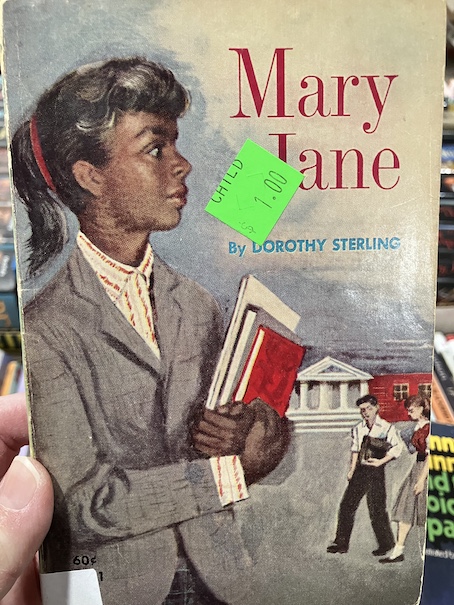
Mary Jane

Mary Jane is a twelve-year-old African American girl in the American South in the 1950s. Her father is a lawyer, and her older brother, James, is also studying law. Her older sister, Lou Ellen, is a nurse. Her grandfather used to teach at the state agricultural college, and now, he has a farm where he likes to experiment with different types of plants. Mary Jane spends her summers on her grandfather’s farm. Although this seems like a perfectly normal middle-class background, as a black girl in the 1950s, Mary Jane is aware that her race makes all the difference to some people, and she’s about to become even more aware.

Things are changing in society and education. When Mary Jane graduates from her old school, there is an announcement that the high school in her town that was formerly for white students only, Woodrow Wilson High, will become integrated and that black students, like Mary Jane, will be allowed to attend there the following school year, if they want to apply. It has a junior high school division, which is how she can move from the elementary school to the high school. Her older siblings attended the all-black high school for their education, and they have done well for themselves since, but Mary Jane knows that Woodrow Wilson High can offer her the best level of education that she can get for her town, and she wants to go there. It offers a wider curriculum than the all-black school, especially in the sciences, and Mary Jane’s ambition is to be a biologist. Her grandfather says that he became a biologist without attending the fancy high school. He was mostly self-taught, working his way up from being a farm laborer and cleaner to afford more education, but Mary Jane says that things are changing. People’s expectations about education are changing. Mary Jane knows that going to Woodrow Wilson High will give her knowledge she needs and wants and will open up important opportunities in her life. She also insists that it is her right to attend the school of her choice, so there is no reason for her not to go to that school. Her grandfather and parents ask her if any of her friends will be going to that school with her, and she says that only one boy she knows will be going, but she also insists that she doesn’t want to attend high school for socializing. She wants an education.

Education is the reason why Mary Jane’s family has done as well as they have. Mary Jane’s great-grandmother was a slave, and Mary Jane likes to hear her grandfather tell the story about how she learned to read and write in secret. When she had learned enough, she forged a pass for herself to leave the plantation where she lived so she could go north to New York City and start a new life. People with an education have an advantage in life.

Mary Jane thinks her great-grandmother was incredibly brave, and her grandfather says that she will also have to brave, especially if she attends Woodrow Wilson High. Even though she will be allowed to go there now, her grandfather knows that many people won’t want her there. Teachers and students and students’ parents have all made up their minds about what black people are like, and they’ll have many assumptions about Mary Jane before they’ve even met her. Her grandfather warns her that her education will be difficult, frequently lonely, and may involve some real hurt. Mary Jane isn’t too concerned at first because she says that things are changing and that she used to play with some white children in her neighborhood when she was little. Her grandfather says that it’s true that some white people care and can be friendly and helpful. People need friends and help from other people, and even Mary Jane’s great-grandmother found help from white people when she arrived in New York. Her grandfather says that there will be days when Mary Jane will feel like the whole world is against her, but it will help if she remembers that not everyone is against her and some will want to help.

When Mary Jane returns home from her trip to the farm to get ready for the new school year, things are exciting. Her father has given her new furniture for her room, so her room looks more grown-up and is a better place for studying. She also gets a new vanity table so she can do her hair in her room. Her mother buys her new clothes and has her hair done at a beauty parlor for the first time. Mary Jane doesn’t really care that much about clothes or having the latest hair style, but her mother says that appearances are important in high school. Her mother comments on the thing that “they” are wearing this year, not really defining who “they” are, and even the hair dresser says that if “they” say mean things about her, she shouldn’t pay attention. It bothers Mary Jane that people keep saying things like this to her because she realizes that “they” are the people who are going to be her new classmates at her new school, and it seems like everyone is bracing themselves and preparing Mary Jane to expect bad things from them. Mary Jane tries to tell herself and others that this experience of going to a new high school won’t be as bad as everyone seems to expect, but it really feels like everyone is trying to prepare her for a terrible ordeal. She knows that there are bound to be some mean kids, but there were mean kids at her old school, too. Is it really going to be that much different?

An article about Mary Jane and the other five black students who will now be attending Wilson High as it integrates appears in the local paper. (The book and the article refer to them as “Negro children” because “Negro” was a more common word at the time and considered one of the more polite words until around the time of the Civil Rights Movement, which is why it’s still a part of some organizational names, like the United Negro College Fund. Sometimes, the book also uses the term “colored” for similar reasons. The black people in the story refer to themselves by both of these terms. The Civil Rights Movement is responsible for the shift to “black” as a generic term because people wanted to distance themselves from older words that carried more emotional baggage, which is why “Negro” sounds out-of-date to us. It feels like it belongs to this time and these people, some of whom definitely have emotional baggage.) Everyone in town knows that there will be black students going to the formerly all-white high school. Mary Jane’s aunts and uncles give her presents and school supplies, and one of her aunts even thanks her for being the first in the family to do this because things will be much easier for the younger cousins who will come after her. It all makes Mary Jane realize that she is doing something very novel and that she will be accomplishing something beyond giving herself a better education. On the one hand, she feels proud, like a brave explorer entering uncharted territory, but on the other, she begins to get very nervous.

The night before Mary Jane’s first day at Wilson High, her father tells her that he will be taking her to school, accompanied by one of the other black students and his father. Mary Jane is surprised because the school is within easy walking distance. Then, her father tells her the reason why everyone is so nervous. While Mary Jane was visiting her grandfather on the farm over the summer, there were public protests and complaints about the black students attending the white high school. Some white adults have threatened that they will stop the black students from attending the school, and the students’ parents and the police are preparing to protect the children, if necessary. Mary Jane’s simple first day at a new school just a few blocks away is going to be much more complicated and possibly dangerous than she had imagined. Her father tells her that if she’s had second thoughts about it, nobody would blame her if she decided to back out at the last minute. However, Mary Jane can’t bring herself to do that. Even though she is starting to get scared, backing out would seem like a betrayal of the trust people are putting in her and her family’s dedication to improving themselves through education. Her aunt and cousins are hoping that she will pave the way for others. She wants to be like her brave ancestor, who escaped from slavery. She tells her father that she still wants to go to Wilson High.

As they approach the school on the first day, there are police cars in front of the building and angry, screaming protestors yelling things like, “Go back to Africa!” and “Two-four-six-eight, We ain’t gonna integrate.” (This is a direct, literal quote from one of these types of protests from real life. People shouted that at Ruby Bridges, too.) Grown women are threatening to rip young Mary Jane’s curls right out of her head, and all she can do is keep her eyes forward and keep walking past them into the school as the police officers physically retrain the protestors from actively carrying out their threats. (This is also completely true-to-life. Grown adults did threaten children, and there is historical film footage that shows them doing it. They really were like this, and I’ve had feelings about that since I saw some of that footage when I was still a child. In this one, the white man at the very beginning delivers an implied threat about how long the black students will live because he thinks it’s impossible for the police to stay at the school forever – remember, you heard it directly from him, not from me. I was a white child, but that didn’t make me feel any better when I saw things like this. I don’t think anybody in their right mind should ever trust that someone wouldn’t hurt you when you’ve already seen what they’re willing to do to some other defenseless kid, even if the ostensible reason doesn’t seem to apply to you. People’s toleration of you only lasts until they decide it doesn’t, and some people are more unstable, volatile, and generally untrustworthy in their personal temperament than others, especially when they’re deliberately being that way in public, in front of cameras and police. These people knew dang well what they were doing, it was deliberate and planned, and they were proud of themselves for doing it and weren’t at all sorry. Even young me could see that.) Fred, the black boy Mary Jane knows from her old school, shows Mary Jane how his hands are shaking after they get inside the building.

This ordeal is only the first of many ordeals. At the junior high assembly for the students in the lowest grades at the school, which includes Mary Jane and Fred, some of the students start chanting about how they don’t want her. The school principal puts a stop to that, calling the behavior “disgraceful”, but that doesn’t put a permanent stop to it. A girl named Darlene in her home room refuses to sit next to her because her mother told her not to, but the teacher tells the girl that students in her class sit where they are assigned and won’t take any nonsense. When Mary Jane talks to Fred, he says that he’s been receiving worse. Other students have kicked him and knocks his books out of his hands. The one white student who showed them any kindness at all was a blond girl who showed them how to find their classrooms. (This film footage of a newscaster interviewing white students at Central High in Little Rock in 1957 shows the mixed feelings of the white students at the time of integration. Some were against it, some seemed to be okay with it, and most seemed to think that the violent demonstrations against the black students were just taking everything way too far. I found it interesting when some students commented that the parents were more of a problem than the students because that was my sense as well.) The screaming mob is still outside the school when it’s time to go home, and flashes go off in their faces because there are photographers taking pictures of the new black students. At the end of the day, Mary Jane returns home to her mother, who has been listening to news reports about the protests at the school all day, picturing that her daughter might be beaten and bloody and could be lying in the halls of the school, dying.

Mary Jane is proud of herself for getting through this ordeal as well as she has, but this is only the first day of a very long school year. The ordeal isn’t confined to the classroom, either. Grown-up strangers, both men and women, call the house and threaten to murder her if she continues attending the school, some saying that they’ll blow up the family’s house. Mary Jane’s father just leaves the receiver off the hook and tells Mary Jane to ignore it. When Mary Jane sees her picture in the newspaper, awful Darlene is behind her in the picture with her face ugly and twisted in hate. (I think that image might have been inspired by the lady with the vicious expression in this famous photograph taken in front of Little Rock Central High School in 1957. When Darlene and her mother were first introduced, this was the face that I pictured for them.) Mary Jane thinks about what her grandfather told her and wonders if Darlene’s only problem is that she just doesn’t know Mary Jane and has too many assumptions about her. (I think Darlene’s issues go much deeper than that, but I’ll rant about that in my reaction below.) What keeps Mary Jane willing to keep going to Wilson High is the story about her slave ancestor. This school integration ordeal is a major defining moment of her life, and she imagines what stories she might have to tell her children someday.

The days continue, and the reactions to the students integrating at the school are almost schizophrenic. There are more protests, insults, and threats, but there are also more newspaper stories and even an offer for Mary Jane to be interviewed on a television show in New York. Mary Jane is excited at the idea of being on television, but her parents turn down the offer because she is a student who should be in school, not a television star in New York. Part of society declares that it wants to see the black students dead and might even make it happen if the police weren’t physically restraining them while part of society is praising the students for their bravery in the face of the protestors who are threatening to kill them. (The book doesn’t quite phrase it like that, but I think that’s actually a crucial point. This schizophrenic social reaction is like the mixed feelings that were exhibited in the footage I linked above.) Mary Jane even gets a fan letter from a girl in Tokyo, praising her for her bravery. Mary Jane tells everyone who asks that it’s “all right”, but on the inside, it really isn’t.

Mary Jane comes to understand what her grandfather tried to tell her about how her education at Wilson High would be lonely and even hurtful. She and Fred eat lunch together every day because no one else will eat with them. Other students either pointedly ignore them or stare at them like they’re exotic wild animals or harass them. Even though Mary Jane said that she wanted to go to school for an education, not to socialize, it’s hard when nobody wants to talk to her except to give her a hard time. Trying to ignore the yelling protesters outside the school also distracts her from listening to her teacher. Fred is the only one who really understands because he is going through the same experiences she is, but he gets busier when he joins the school’s basketball team. The boys on the team start accepting him because he plays basketball, but Mary Jane has trouble finding a club that will accept her. Even her old friends from her old school are busy now at the school where most of the black kids go, so they aren’t available to hang out on weekends, like they used to. It seems like they even resent her a little for going to Wilson, like she thinks that she’s better than they are and too good for their school. Gradually, the adult protesters stop coming to the school and calling the house, but the student bullies are still there at school, and Mary Jane is still painfully lonely.

There are times when people try to reach out to Mary Jane at school, but it doesn’t come off well because their efforts are clumsy and Mary Jane has been trying so hard to bury her feelings and resentment that she can’t bring herself to accept their efforts. A girl named Sharon acts nice and talks to Mary Jane, and Mary Jane briefly softens, but then, it turns out that Sharon is only pumping Mary Jane for information about her background because she believes a conspiracy theory that her family is actually from New York and that they were paid (by unspecified sources) to come to this town for the sole purpose of infiltrating this high school. Mary Jane is shocked, and when she tells Sharon that this is her home town and she was born there, Sharon loses interest and walks away from her before she’s even done speaking. This just makes Mary Jane even more reluctant to open up to anyone who approaches her. The choir teacher assumes that all black people are good at singing because of Negro spirituals, but Mary Jane insists that she can’t sing, which is true. She’s never been able to carry a tune, so it’s embarrassing to be pressured to sing when she knows she can’t. Although being good at music is a positive stereotype compared to some of the other stereotypes people have about black people, it’s still just as wrong for Mary Jane as all of the others, and it’s embarrassing to be confronted with it. Mary Jane feels like nobody will look at her outside of the usual stereotypes. Mary Jane does well in her classes, but she could use a little help in French. Her French teacher offers her tutoring after school, but Mary Jane turns it down because she feels like the teacher is offering it out of pity. At lunch, she buries herself in her French book, teaching herself phrases about all of the things she hates or how to tell herself that she doesn’t care, to avoid the other students who are being mean to her or staring at her, but in the process, she misses seeing students who are trying to get up the courage to actually talk to her for non-conspiracy and non-bullying purposes.

Things change when Mary Jane rescues a squirrel from a cat. She loves animals and knows how to care for them because of her grandfather. Sally, the girl who helped her find her class on the first day, also loves animals and is happy that Mary Jane saved the squirrel, and the two of them bond over their temporary pet. Sally helps Mary Jane to get the squirrel home, where Mary Jane’s mother says that she can only keep it until it has recovered. The girls’ mutual caring for the squirrel and their attempts to find a permanent home for him help them develop their own friendship and help Mary Jane to create bonds with the other students.

The book is available to borrow and read for free online through Internet Archive.

The author of this book, Dorothy Sterling, was not a black woman herself, and even if she had been, she would have been too old to be one of the students experiencing desegregation directly at the time it happened because she was born in 1913. Everything she talks about in this book was based on what she observed as an adult at the time of the Civil Rights Movement. She was a Jewish-American journalist, writer, and historian from New York. As an adult writer, she was researching strong women from history to use as inspiration for girls when she learned about Harriet Tubman. She found Harriet Tubman’s story particularly inspiring, and she was amazed that nobody had ever taught her about Harriet Tubman or other strong black women when she was young. She supported the Civil Rights Movement, and when the characters in this book talk about sympathetic white people who try to help, she’s partly talking about herself. Although Dorothy Sterling also wrote mystery stories for children (I’ve covered a couple on this site already), one of her best-known books was a biography of Harriet Tubman for children. She also wrote other nonfiction books about African American history. This video on YouTube explains a few details about her life. She also wrote an autobiography.

I wanted to read this book because I was intrigued about a story involving school desegregation that was written while it was all happening. I noticed, as I was reading the book, that it particularly drew on the desegregation of Central High in Little Rock in 1957 for inspiration, and based on the historical footage that I linked above, it was pretty accurate in its interpretation. I think the author was paying close attention to the events and news footage available at the time.

However, I knew before I even started reading it that it was going to be stressful because I find all stories about bullying and one-upmanship in any form to be stressful. I’ve mentioned that many times on this site, and I’ve probably also mentioned that I believe that racism is an extension of a bullying personality and one-upmanship behavior. I firmly think that this is part of Darlene’s problems. If racists weren’t bullying someone based on race, I’m positive that they’d be bullying someone else for some other reason or no reason at all because I think they are the type of people who don’t feel like they’re on top until they’re putting someone else down. It’s the combined defensiveness and aggression of petty social climbers who are deeply insecure about what, precisely, their real social position is, like they automatically move down some kind of imaginary numbered rank anytime something good happens to someone, somewhere. Who they’re putting down or why are probably just a matter of opportunity for them. I think they’re obsessed with being on top and look for any excuse to justify it that they can, unless they’re in a situation where they don’t feel the need to justify themselves at all.

I’ve come to these conclusions based not just on my reading but observations from life, and for me, that’s the worst part of reading books like this. I have names and faces from real life that I associate with the racists in these stories and with aspects of their personal behavior. Some of them might be classified more as bullies than racists, but since their behavior is practically identical, how much difference does it really make? Not much to me. If that sounds like contempt, derision, and judgement … yes, it absolutely is. I am very judgemental about this. While I understand issues like anxiety and insecurity and sympathize with other sufferers, I have very little sympathy for someone who uses their anxieties and insecurities to actively harm other people, and I insist that they must be stopped. Tolerance, like everything else, has limits, and here is where I draw the line. I think everyone has some issue that deeply bothers them and which they find intolerable, and in choosing this particular one, I think I’ve made a decent choice.

When I was a kid, I have to admit that I didn’t enjoy reading books about racism like this in school, but not for the reasons that certain people have been alleging, and I have feelings about some of these allegations, too. I’ve been reading in the news recently that certain people don’t want kids to read books about racism and similar issues in school because they’re afraid that white kids will be ashamed to be white, a much-disputed assertion. Since I grew up a white girl in public schools where we read stories about the Civil Rights Movement and incidents of racism similar to the ones described in this story, I think I’m qualified to have an opinion about my feelings at the time and the long-term effect that type of reading had on me.

I can’t speak for every kid out there, but that definitely was not what bothered me as a kid. When I say that I didn’t enjoy reading about racism, what I mean is I just didn’t like the frustration of hearing about mean people while being unable to do anything about them. It is depressing and frustrating to hear about awful things happening when there’s nothing you can do to stop them or change them because they happened before you were even born. I wasn’t sorry for the racists in those stories, and I didn’t identify with them or what they were doing on a personal level. I didn’t feel like one of them or want to be one of them or even want to be friends with them. I didn’t want any of them in my vicinity or even in my mind. I wanted to be rid of them or to avoid them. They are very mean and extremely frustrating people who don’t care and won’t stop, and that is stressful even just to hear about! I don’t like having them around even in book form, and it just can’t be avoided when the main story is specifically about people dealing with them and their antagonism. That’s the main hardship for books about racism for me. I know that’s the feeling that these stories are supposed to impart, to make you feel like you were there and show you what that felt like. It’s not supposed to be fun reading because nobody thinks that going through situations like that with racists and bullies picking on you is fun. These kinds of books are meant for education and encouraging empathy and understanding. There can be a kind of fulfillment in that, although it can be an emotional ordeal to get there. Life is full of mixed emotions.

As an adult, I think that it was good for me to read some books about some of the more turbulent and racist periods of our history for general understanding of life, history, and society, even though they were emotionally difficult to get through. I don’t regret reading any of them, and I would recommend that kids and young adults read at least some books of this type. I don’t think it’s something to read all the time. It helps to vary it a bit with lighter subjects to avoid getting too frustrated and depressed. It’s not what I would call light reading, but it’s worth it when you go into it with the understanding of what you’re reading and why. I think talking to kids about what these kinds of stories are about and what they’re referencing before they read them can help to prepare them for the rollercoaster of emotions they’re bound to experience while reading them. In fact, I think discussing difficult emotions in the context of both history and fiction can be an important tool for learning to identify and deal with difficult emotions in life in general.

As for the responsibility of white people with racism, I’ve come to realize as an adult that there are two definitions for the word “responsible”: the one where someone is at fault for something and the one where someone feels called to take action and control of the situation. I knew, even as a child, that as far as these past incidents of racism were concerned, I was not in the first category, but I very much felt the second one while being in a position where I could not take the action I wanted to take. I always felt like an old soul who took life more seriously than the other kids, and I very much understand the feelings of the children in this particular story. They have no control over the adults in their lives and the adults’ behavior because they’re just kids, but because the adults have not been behaving responsibly and dealing with issues in their society, it all falls on the shoulders of the kids to work it out among themselves somehow. It’s doubly hard because some of those same adults are sabotaging their efforts and recruiting their classmates to be against them every step of the way.

I was very interested in the interviews of the white students that I linked above because some of them did have the feeling, even at the time, that the parents were more of a problem than the students in the desegregation process. Even in cases where the students were acting out, it seemed to be because their parents already were and were urging them to do it. Even today, it’s a common complaint from teachers that the students with discipline problems are the ones whose parents also behave badly and who urge them to ignore their teachers’ efforts to get them to control themselves and to treat others with respect. The things that happened in both the story and in real life desegregation look like just a more extreme version of the same types of disrespect and bad behavior.

Sally becomes Mary Jane’s friend, but she can’t always do everything she wants to do with her friend because the adults in her life try to stop her. Her parents wouldn’t be so hesitant about what they allow her to do or the friendships she makes if they were able to make all the decisions by themselves, but during the course of the story, we learn that they are under pressure and threats from the pushy and racist people in their neighborhood. Because those people put themselves and what they want to do first and seem willing to back that up with harm, Sally’s parents feel forced to put their own priorities and standards second. That means Sally and her feelings and priorities come third, pushed aside by the angry and pushy neighbors and Sally’s parents’ efforts to protect her … from their own neighbors. Neighbors are supposed to be the people who have your back, but in both the story and in real life situations like this one, neighbors could be the people threatening a knife in your back if you don’t do what they want, and that is truly scary.

The adults in this community may, possibly, care about Sally somewhat, in a sort of shallow and general way because she is a child, but their hatred and their suspicious conspiracy theories (like the one Sharon has) are far more important to them than Sally and her parents are, and it shows. They back up those feelings with definite and deliberate actions. If they have to hurt, intimidate, or frighten their neighbors to get their way, even a child, so be it. If they have to exclude Sally from a store to exclude the person Sally’s with at the time, they do that. Sally’s white, but these other white people are not her friends. They do not treat her like a friend at any point in the story. She’s just a pawn in this nasty game they’re playing, and they get upset when she doesn’t play like they want her to.

I can see that Sally’s still a little higher than black people like Mary Jane in this social hierarchy, but in the grand scheme of things, it’s not by that much because certain other people insist on being first, and they back that up with threats and violence. That’s something that Mary Jane comes to see during the course of the story. Just because Sally is white doesn’t give her immunity from bad treatment from other white people. The people who are higher up the social chain have created their own team in this goal (like Darlene’s mother’s little coffee klatch of nastiness – the antagonistic mothers’ group that is not the PTA but thinks it should rule the school), and everyone else is the enemy or at least an acceptable casualty.

That was something I realized as a child, too. It’s something that still rankles. The racists and bullies both in real life and these stories might not have picked a white kid like me as their first target, if they had a more obvious target of opportunity, but that wouldn’t guarantee that I wouldn’t be a target. There’s no such thing as being safe around someone like that. The list of people and things they tend to nitpick and attack certainly isn’t limited to just one thing, is it? From people who dress in ways they don’t like to people who read things they don’t like to people who believe things they don’t like, they have about as many things to criticize about people who live in their own neighborhoods as Mrs. Mortimer did about the whole entire world. (See Countries of the World Described … or don’t. It’s an example of Victorian era children’s nonfiction that can teach you about as much about prejudice and mental illness as it can about geography. Few geography books would go as far as being critical not only about the personal habits and beliefs of people in every single country they cover but also about the relative quality of their rivers and trees, but Mrs. Mortimer is an intrepid armchair explorer, mainly followed by people with morbid curiosity.) In fact, I’m pretty sure that there are at least two things about me that would have made me a target for this particular group eventually, including the fact that I clearly do not like those kinds of people because of the way they act.

They might think they’ve got the right to dislike anybody they wish, say whatever they want, and treat other people as badly as they like, while thumping on the First Amendment to justify it, but God help the person who openly says anything against them. It’s maddening. That’s why I have that urge to get rid of them or get away from people like that. There just can’t be anything good from a relationship with someone like that. I don’t like these kinds of people because they are mean and selfish, and I feel constantly frustrated and angry around them. Those are not likeable qualities to bond over. I think these people care about themselves and their own status way too much to be truly concerned for anyone else’s well-being, either in the short term or the long term. Everyone is disposable if they think their own ego or social status are in the balance. This is why I feel the way I do about bullying and one-upmanship. They get in the way of everything that’s more decent and interfere with everyone who’s more responsible. People who are determined to be #1 at all costs are bound to give someone else #2, if you see what I mean.

I came back to add something to this review. I forgot to say what it was that I would have wanted to do if I had been present for the incidents described in this story or something similar. When I was a kid, I remember daydreaming about several possibilities, most of which would have likely ended with the racists and bullies wiping the floor with me because I was a small and nerdy little girl with glasses who wasn’t physically strong and didn’t expect any mercy from them for the sins of not liking them, telling them off, or fighting back. Of course, I’m 40 years old now, and that makes a difference.

If I were in charge of Darlene and had the ability to make unfettered decisions regarding her education and discipline, I know exactly what I would do, this is the way I would describe it to Darlene herself:

“Darlene, you know exactly why you’re here today and why I want to talk to you. By now, everyone at this school knows how you’ve been picking on Mary Jane and starting fights with her, and we all know why. I don’t want to argue this point with you. I’ve discussed this situation with your teachers, and you’ve been behaving this way in all of your classes. They’ve spoken with you and with your mother multiple times, and you have made no effort to improve. You’ve made it clear that you think that Mary Jane is undeserving of being at this school and that black people are inferior. You seem to think that you know a lot about black people. We’re going to find out just how much you really do know. Normally, when a student is physically aggressive with her classmates and disrespectful to her teachers, she might be suspended or expelled from school, but since you like to think of yourself as different and not bound by the rules of behavior that the other students follow, we are going to treat you as a special case. For the rest of this semester, you will be our exchange student to the local black school.

While you are there, you will follow their rules and listen to their teachers. Nobody will suspend you or expel you from that school because I know you would probably see that as a reward for your bad behavior. No, you will attend that school every day, and you will not be allowed to run away from any problems you decide to create there. Every day, you will return to that school and see the same people, who will all remember whatever you did or said to them the day before, and you will face the consequences of your actions. If you don’t, you might have to stay another semester to get their full school experience. You thought it was acceptable to be rude and abusive to the only black girl at a white school. Now, we’ll see how the only white girl at a black school manages.

Maybe you think you know how that will go, but I say that you don’t. Nobody really knows what other people will be like until they’ve actually met them and spent time with them. Nobody gets to control other people. The best any of us can do is behave as well as we can and hope that other people will do the same and at least treat us with respect. Of course, because humans have free will, they still have the ability to choose to treat you badly anyway, just like you did with Mary Jane, and that’s the risk you’ll be taking, both at the black kids’ school and everywhere else you go in life when school is over. The black children might surprise you. If the black students treat you better than you’ve treated Mary Jane, you might want to consider which of the two of you is really the better person. On the other hand, if they treat you just as badly as you’ve treated Mary Jane … well, at least you’ll find out what it’s like to be at the mercy of people who act just like you.

One thing I know for sure is that, if you’re as smart as you like to think you are, you’ll learn to work on making friends instead of enemies. Consider it important training for later life. Adults don’t always get to choose who they live near or who they have to work with, but they still have to live and get their jobs done. And you know what? Adults who know that they are capable of doing that, managing their emotions and getting on with life, no matter where they are who’s around have better self-esteem than those who don’t think they can do those things. That realization is an important tool in building self-confidence. Not all of the kids at school realize that your bad behavior is partly because you are not self-confident, but I can tell. That’s why you try so hard to control other people, isn’t it? I think you don’t feel like you have control of yourself or that you don’t measure up, and that’s why you put other people down, but that’s not a healthy way to deal with these feelings. Facing up to difficult situations and seeing that you can handle them and that you can control yourself, even when you don’t feel like it, will do much more for you. You won’t worry so much about who other people are or what they’re doing if you’re satisfied with yourself and your ability to manage yourself and deal with life, instead of trying to hide from things and people that make you uncomfortable or fight against them.

I know what I’m talking about, partly because that’s how I try to look at the situation when I’m dealing with you. I don’t find it easy or pleasant to deal with you because you do tend to take out negative emotions on other people. When you lash out at other people, it creates disturbances for me and your teachers to deal with, it encourages other students to behave badly, and it distracts everyone from the things they need to do. It makes my life and job as hard as you’ve been trying to make Mary Jane’s life and time at school, and that’s why this behavior can’t continue. However, as difficult as it is I’m still here, still doing my job, and trying to look after your education, even though it not easy or pleasant. I’ll still be checking up on you and working with you even while you’re attending the other school because I still want you to learn from this experience, both academically and emotionally. I also have a responsibility to your hosts at your new school to see that you don’t become a punishment or burden for them. You will learn how to behave yourself because I will be supervising your time there, I will tell you how to behave appropriately, and I will ask your hosts if you have been following my instructions. You will practice what I teach you, or there will be further consequences for you from me.

It’s better to work on developing emotional regulation skills and behavioral control while you’re young rather than older. This is serious, and it will affect your life in the future, even if you can’t imagine it now. The truth is that most adults quickly lose patience with other adults who can’t manage themselves and their emotions. Adults tolerate some of that in children, up to a point, because we know you’re learning and need time to practice, but by the time you are an adult, there will be the expectation that you have already mastered these skills. If you can’t control yourself as an adult, people will be angry with you and see you as immature and a troublemaker. It’s the sort of behavior that can end marriages and get people fired from their jobs. Employers will be less willing to tolerate bad behavior than your teachers are because they won’t want you to distract everyone from their jobs or drive away customers and co-workers. Even if you think that your only job will be that of a housewife, you should know that housewives sometimes have to help their husbands entertain bosses and co-workers. If you have a reputation for provoking people and creating disturbances and you make trouble between your husband and his co-workers, whoever they may be, it won’t reflect well on your husband’s career. Think, Darlene. This is your future we’re talking about. When you’re an adult, it will be no good saying that everyone should just accept you doing these things because people acted like that when you were a kid or your mom did this or said that when you were young. When you’re an adult, everyone will be looking at you and only you, and they won’t want to hear about what you did when you were a kid or what people used to let your mother do.

If you don’t learn to get along with people instead of antagonizing them or taking out your feelings on them, you’ll be arranging a lifelong punishment for yourself that will be far worse than anything I would arrange for a semester, and you’ll have no one to blame but yourself. A person who can’t get along with people could end up very lonely. You may find it difficult to make new friends, except among people with equally negative habits, and you may even lose some friends that you have when people get tired of all the fights, drama, and negativity. After this exchange student experience, I believe that you will not only come to see the reality of the people you’ve been harassing but will also acquire greater discipline and emotional control. If you don’t work on these things or if you continue to do things that provoke other people, you will at least learn how to face the consequences of your actions. You are dismissed.”

The Rover Boys in the Jungle

The Rover Boys

The Rover Boys in the Jungle by Arthur M. Winfield (aka Edward Stratemeyer), 1899.

My Foreword

I wasn’t particularly eager for this book after the first one in the series. I didn’t think the Rover Boys was as much fun as later Stratemeyer Syndicate books and there are some instances of racial language that are uncomfortable to explain. However, this is the book where the boys actually go to Africa in search of their missing father, and it resolves one of the major problems that the first book in the series set up, and I wanted to see it end.

As the book says at the beginning, the boys’ father went to Africa before the beginning of the series to look for gold mines and hasn’t been heard from since. The boys don’t know if their father is alive or dead, and meanwhile, the boys’ enemies from the first book in the series are still hanging around. The Baxters were put in prison for attempting to kidnap Dora at the direction of Josiah Crabtree in the book immediately before this one, but Dan Baxter escapes early in this book, and Crabtree is still around somewhere. The introduction and first chapter to the book brings readers up to date on developments from the previous books, sort of like the introductions to episodes of movie serials that didn’t exist at the time these books were written. Books in this series really need to be read in order, and if you skip any, like I did, you really need the introduction to bring you up-to-date.

The Story

There is a new boy at school, Hans Mueller, who is from Germany. This book was written before World War I, so there is nothing critical or derogatory about Germans, but the boys decide to tease Hans a little by playing up myths of the Wild West to scare him. They tell him that the school will be teaching them how to fight Indians (Native Americans) and that he’ll have to learn how to scalp people. Hans doesn’t know what they’re talking about at first, and when they explain it to him, he’s alarmed. (Good, Hans. That’s a sign of sanity.) Hans says that the only time he’s seen American Indians was at a traveling Wild West show that came to Germany, and he thought they looked scary. The other boys have a laugh about spooking poor Hans and drop the matter.

I mentioned in my last Rover Boys review that early Stratemeyer Syndicate books had archaic racial language and sometimes questionable racial attitudes that was later rewritten when various series were reissued. This early series hasn’t been revised. This first scene with Hans isn’t really so much a slur against Native Americans as prank with the boys playing up Wild West stories, but the book is just starting out.

Hans becomes the boys’ friend, but they prank Hans again later, scaring him with Tom wearing a Native American costume as he threatens to scalp him to continue their earlier joke, and they use the term “red man.” (We haven’t even gotten to Africa yet, so I was cringing at this point at what might be in store.) When Hans realizes that it was all just a prank, he tries to get the better of Tom by taking away the gun that Tom was using as a prop to scare him, and Tom tells him that the gun is too old to fire and isn’t dangerous. He just found it in the barn, and it’s all rusty. Tom tells Hans to pull the trigger and see that it won’t fire, which is the dumbest thing that anybody can do with a random old gun they just found somewhere. The gun explodes in Hans’s hands, knocking both Hans and Tom unconscious and scraping them with shrapnel. The other boys are scared, but they finally manage to bring them both around. Tom is horrified when he realizes what happened, saying that he’s been playing with that gun for awhile and pulled the trigger a dozen times himself, which is why he thought that the gun was unloaded and harmless (meaning he did the dumbest thing that anybody can do with a random old gun they just found somewhere repeatedly because, up to this point, dumb luck was on his side). He is shocked to realize that he’s lucky that he hasn’t shot somebody before and that he and Hans weren’t killed by the exploding gun. He apologizes to Hans and promises that this is the end of the pranks. Tom was always the lead prankster in earlier books, but he grows up a little here, realizing that reckless pranks have consequences.

At school, the boys participate in a kite flying contest, and Sam is almost pulled over the edge of a cliff by his kite. (Seriously.) Dora tells Dick that her mother had a dream that Crabtree tried to shoot him in a forest. (Prophetic?) The boys also have a run-in with Dan Baxter, who is still lurking around and swearing revenge.

Then, the boys turn their attention to a thief at school. Sam witnesses someone, who is probably the thief, sneaking around at night. Unfortunately, he didn’t see the person’s face, only describing this person as tall. Captain Putnam comes to believe that Alexander “Aleck” Pop, a black man who works for the school, is the thief because he receives an anonymous note that says he’s guilty. Sam doesn’t trust the anonymous note and tells the Captain so, saying that he can’t believe anyone as good-hearted as Aleck is would be a thief. However, the Captain insists that Aleck’s belongings be searched, and some of the objects that have been stolen turn up among his stuff. It’s a pretty obvious frame, and Alexander protests that he’s innocent, but Captain Putnam doesn’t believe him. There’s some ugly racial language used during this part. The word “coon” is used twice, and when the students at the school discuss the situation, one says the n-word. Fortunately, our Rover boy heroes aren’t the ones using that language, and Tom even tells the boy who used the n-word that he’s just resentful against Aleck for catching him doing something he shouldn’t have done earlier. The boy who used the n-word, Jim Caven, is portrayed as mean and unreasonable, and he gets into a fight with Tom in which he almost hurts him very badly. I was uncomfortable with the language in this scene, although I was somewhat reassured to see that it was used to characterize the ones using the worst of it as being the bad characters. My reassurance wasn’t complete because that’s not the only questionable racial language in the book.

Captain Putnam sends someone to escort Aleck to the authorities. He says that he supposes that the boys think he’s being too harsh with him, but he’s also suspicious of Aleck because he knows that members of his family have been in trouble with the law, too. The boys say it isn’t fair to blame him for things his relatives did and that they still don’t think he’s guilty. However, Aleck escapes before they reach the authorities, and they hear rumors that he went to New York City and boarded a ship to go overseas somewhere. The boys are sad, thinking that maybe they’ll never see him again. (You know they will.)

It’s not much of a surprise when the Rover boys later learn that Jim Caven has sold some things that match the description of other objects that have been stolen. Apparently, he’s been the thief all along and deliberately framed Aleck to get revenge on him. (I partly expected that the thief might be Dan Baxter, considering that he’s escaped from jail and is hanging around somewhere, probably needing money.) When the other boys confront Jim Caven, he flees into the woods. The other boys explain the situation to Captain Putnam, and he searches Jim Caven’s belongings, finding the rest of the stolen items. (You know, they could have just conducted a general search of the school and everyone’s belongings before this. This is a military academy, so a surprise dorm inspection wouldn’t be out of character, and it would have settled the matter much earlier.) Aleck’s name is cleared, but since he’s fled, they don’t know how to find him and tell him. Captain Putnam is sorry that he didn’t believe Aleck before.

However, they don’t have much time to consider it because the boys are soon summoned home by their uncle because he’s had news of their father. A ship captain has written Uncle Randolph a letter saying that his crew rescued a man who was floating on a raft off the Congo River. The man died soon after they brought him aboard their ship. They don’t know who the man was, but he was carrying a letter from the Rover boys’ father saying that he found a gold mine in Africa but was taken captive by King Susko of the Bumwo tribe (not a real African tribe, I can’t find anything about it) in order to prevent him from telling the secret of the mine to outsiders. Specifically, the tribe is afraid that the English and French colonizers will come to loot the mine and kill them. (Actually, a depressingly reasonable fear.) Anderson Rover explains in the letter that they don’t understand Americans. (That wouldn’t help, Anderson. Your boys attend a school run by a man who served with General Custer, and if this tribe knew what happened to Native Americans when gold was discovered on their land, they wouldn’t be reassured at all.) Anderson Rover is in fear of his life and asks his brother Randolph to come and rescue him if he can, but the letter is dated a year ago, so his family still doesn’t know if he’s alive now or not.

Uncle Randolph tells the boys that he wants to go to Africa to find his brother and asks Dick to come with him, as the oldest of his nephews. Dick, of course, agrees to go, but Tom and Sam refuse to be left behind. They decide that all of them will go.

On the ship to Africa, they meet an English adventurer named Mortimer Blaze, who is going to Africa for big game hunting. Tom asks him what will happen if the big game decides to hunt him instead, and he just says that it will be a “pitched battle.” (Doesn’t sound appealing to me.) When they talk about the people in Africa, they use the word “native” a lot and not in a flattering way. The general attitude seems to be that the “native” Africans are not very civilized (I was expecting they would say that because of the time period of this book), and Mortimer Blaze tells stories about tribes of people who are either very tall or very short. (I think he’s really referring to people from folktales, which I covered in the Encyclopedia of Legendary Creatures.) At one point, the characters say that the warm climate is the reason why Africa hasn’t made more progress toward civilization, that the warmth makes people want to be lazy. The adults in the story shock the boys by saying that not only is there no Christianity but that people there don’t really believe anything in particular, putting them even behind people Christians would consider heathens. They also make a shocking comment at one point about unwanted children being fed to crocodiles. They conclude that “civilization” can’t come soon enough to Africa, even if it has to be forced in with weapons. (Wow. I knew there was bound to be a lot of generic “native” and “savage” talk when I started this book because of the time period, but these matter-of-fact slights and accusations sound like they came straight out of Mrs. Mortimer’s books about Countries of the World Described, which heaps criticism and accusations of violence and immorality on pretty much all of the people of the world. Mrs. Mortimer’s books are much older than any Stratemeyer Syndicate books, and I wonder if Edward Stratemeyer read them in his youth. It wouldn’t surprise me because the attitudes match, and here he is, passing it all on to the next generation of kids in the form of an exciting adventure story.)

In a stroke of good luck, they end up rescuing Aleck, who was stranded at sea from the ship he boarded during his earlier escape. Aleck is glad to see the boys again, and they tell him that his name has been cleared and the real thief was caught. Aleck is glad to hear that, but he’s worried when he finds out that the ship that picked him up is headed for Africa. Aleck reflects that he always heard that his ancestors came from the Congo region of Africa, but he doesn’t really want to go there because he’s used to life in America and wouldn’t know what to do in Africa. (The Rover boys and Aleck go on for awhile about how great the United States is, and I know they were trying to sound patriotic, but the way they said it felt oddly like a sales pitch to me. I felt like saying, “You don’t need to sell me on the place. I already live here.”) The boys explain how they’re going there in search of their father. Aleck decides that he’d rather join their expedition than stay on the ship, and he offers his services as a valet. Uncle Randolph and the boys are glad to accept his help, and Uncle Randolph says it might be useful to have a black man with them who they know and trust in case they need someone to blend in with the native population and spy for them.

In a surprising twist, the boys also run into Dan Baxter on their arrival in Africa. When they ask him what he’s doing there, he says that he got drunk and was Shanghaied onto a ship, forced to work as a sailor. He was treated cruelly on the ship and ran away as soon as he had the chance. Now, he’s alone and has no money and no way home. The Rover boys feel sorry for him and give him money for him to buy his passage back to the United States. Dan Baxter asks to join their expedition, too, and they consider it as a sign that Dan is starting to reform because of his expedition. However, Dan is still a bully and an opportunist, and when he gets a counter-offer from someone else who is willing to hire him to make trouble for the Rovers, he accepts that instead, still holding a grudge against the Rovers because his father always told him that Anderson Rover stole a mine from him years ago that would have made them rich.

When I reviewed the first book in this series, I complained about the various unresolved story lines and miscellaneous villains still running around at the end of the story, still left to work on their individual plots against the Rover boys and their friends. In this book, every unresolved story line and villain from the first book collides with each other in Africa. Not only is Dan Baxter in Africa coincidentally at the same time as the Rovers, but Josiah Crabtree is also in Africa, for completely unrelated reasons from either the Rovers or Dan Baxter. He does attempt to kill Dick, but Dick survives. He is even rescued from a lion by one of his brothers.

So, is there true resolution with the main villains of the story, Dan Baxter and Josiah Crabtree? Not really. I looked up summaries of other books in the series, and even after they get some comeuppance, they continue to come back in sequels.

What is resolved by the end of the story is that the Rovers find their father alive. They rescue him from the village where he was being held captive, taking some of the women and children from the village with them as hostages to keep the village warriors from attacking them. They say privately that they wouldn’t have really hurt the women and children, but they tell the men that they’ll kill them if they don’t let the rescue party go. (This was another shocking part for me because I wouldn’t have thought of any of the usual Stratemeyer Syndicate heroes doing this. Somehow, I can’t picture the Hardy boys going this far, taking women and children hostage and threatening to kill them.) Once the rescue party is sure that they’re safe, they release their hostages and head for home. Anderson Rover says that he did find a gold mine, and someday, he’ll come back and loot it, er, mine it, but right now, all he wants to do is go home with his boys. It would be heartwarming if I didn’t know that he’s going to come back someday for gold on land that belongs to someone else who would never willingly sell it to him, and his boys are talking revenge on the king of the tribe that held their father captive.

This book is in the public domain and is easily available online in various formats through Project Gutenberg and Internet Archive (which has an audiobook).

My Reaction

I already gave much of my reaction to this book during the description of the plot because much of my reaction had to do with the racial language of the book. I knew there were going to be problematic portions before I even started, but frankly, there were too many of them for me to go into detail on all of them. What I described gives the broad strokes. I won’t say the book is deliberately trying to be insulting to black people. Aleck is portrayed as a good character who was wronged by a white boy by being framed for theft. However, there is a kind of casual racism in the story, like the casual references to how “uncivilized” Africa is and the characters’ off-hand supposition that it’s probably due to the climate there. I wouldn’t say that the characters or author hate black people (except maybe the non-Christian ones who feed children to crocodiles, which sounds like things Mrs. Mortimer accused various people of doing in the worst parts of Countries of the World Described), but I would say that there is a kind of condescension and dismissiveness that everyone, characters and author, seems to take for granted.

I can’t recall any of the characters using the phrase, “you know how they are”, but that’s the vibe I was getting. I got the feeling like the characters were saying things to each other and the author was saying things to his child readers with that sort of knowing tone, like “we all know these things.” No. “We” don’t. I know that Stratemeyer probably got a lot of this from a combination of old minstrel shows and Mrs. Mortimer or something very similar because I’ve seen Mrs. Mortimer‘s books, and I know how she talks. I also know why she says the things she does, and I’m not putting up with her attitude, even when it’s coming from someone else. Maybe the Rovers boys as characters and their child audiences would have read her books or similar ones before and nodded along with what Stratemeyer says because it confirms “information” they’ve seen before, but I’ve had more than my fill of wild accusations and crazy conspiracy theories, and I have no more patience left for any of it.

Mrs. Mortimer portrayed her book series as a factual introduction to world geography and the habits of people in different countries, but the truth behind her criticism, condescension, outspoken rudeness, and many of the wild accusations she makes about badly-brought-up children, dead bodies floating in rivers or just left in the street (depending on nationality), or the “antics” of “savages” around the world is her religious agenda (and, I think, probably some personal emotional and self-esteem issues, but that’s just a guess). She used missionaries with their own agendas as references for anecdotes in her books and tried to make people of various religions around the world sound evil and crazy on purpose to emphasize why “the Protestant” is the best religion (her words – she was specifically Evangelical and downright pushy about it). I would say that she also never hated black people … except maybe non-Christian ones, who as I recall, she claimed didn’t know what religion they were and were given to “antics”, dancing around and yelling or something. She wasn’t too clear on that point, probably because she didn’t know what she was talking about herself. On the other hand, she seemed inclined to be sympathetic to black people in the US who were victims of ill treatment, probably because they were Christian and most likely Protestant, which would have made all the difference in the world to her. She probably would have been okay with Aleck because he’s a Christian who was born in the US and has definitely never fed a baby to a crocodile in his life. She did not approve of the the concept of slavery at all and wouldn’t have tolerated physical cruelty of anyone due to race, which is to her credit, but none of that stopped her from spreading stories and rumors of violent savagery and teaching children that anyone who believed anything other than Protestant Christianity was “ignorant”, “savage”, and “wicked”, all words she actually used in describing people from various countries around the world because that’s what she wanted young children to “know” about other people. Mrs. Mortimer’s religious prejudices probably would have gone over the heads of the children who were these books’ original readers, especially if it echoed the talk of the children’s parents, but that’s how we end up with generations of children who grow into adults with casually racist ideas, thinking nothing of it, throwing around racist language without a clue or a care for the consequences. It’s in the book because it’s what “we” all “know”, dear Mrs. Mortimer said as much before, and Stratemeyer is just saying what “we” were all thinking, right? I think that’s about how that goes.

Let me bring you into the real world. If readers want to know what was really happening in Africa during the 19th century, there are far better sources. Africa is an entire continent, and there were many complex events happening all over, particularly related to European colonization. Outside forces were claiming territory in Africa, not so much for benefiting the people there and bringing them “civilization” as accomplishing their own personal aggrandizement and enrichment. (You know, rather like a man who is already rich in his own country coming to find and claim a gold mine that’s on someone else’s land because he’s addicted to the thrill of the hunt and acquisition and uses that thrill to hide from his own personal problems that he doesn’t want to face at home, like dealing with the loss of his wife and the raising of his boisterous sons. Just saying.) There were wars, famine, and disease in various parts of Africa during this period, partly due to internal power struggles among different African groups and leaders. I don’t know if anybody ever fed anyone to a crocodile on purpose, but infanticide is part of the dark side of humanity that comes out when times are desperate and hopes of survival in general are low. It’s a symptom of a society that’s suffering, and societies have suffered in that way many times around the world. If someone is likely to die soon after birth anyway, the hopeless parents might say, why even try? I suppose some might be tempted to say that having a religion that forbids killing children would help, but it hasn’t always, and having food also helps. I don’t blame 19th century missionaries for attempting to help people, but those who came in with a sense of self-importance, deciding ahead of time what would help without understanding the situation they were walking into, often didn’t help. Missionaries sometimes ended up getting killed in the middle of the unrest and power struggles. Some were even actively deceptive, using trickery and their position to gain advantages for themselves or the governments they represented at the expense of the people they were supposedly trying to help. But, the 19th century wasn’t all war, famine, and exploitation in Africa. The missionaries who were serious about doing some good and set up practical schools did provide useful centers of learning that helped educate future leaders and professional people and gave them tools they could use to build the lives they wanted. African societies did continue to build their own nations and identities. Overall, the colonization of Africa was more of an intrusive, disruptive force, providing additional hardships and obstacles to success more than solutions to any problems that Africa had before, not the glorious “civilizing” force that prevents people from feeding children to crocodiles that the book described.

So, now that I’ve talked about the historical and cultural influences behind the more uncomfortable parts of this book, I think it’s pretty obvious why early Stratemeyer Syndicate books had to be rewritten and revised in the mid-20th century. I knew this book was going to be cringe-worthy in places, but I have to admit that I was surprised at just how bad certain parts got. I hadn’t even considered that the word “coon” might appear. I never heard that word growing up and didn’t even know what it meant until I was in college, so I was pretty taken aback that a just-for-fun book for kids would use it, even one from the late 19th century. I suppose having grown up with the tamer, revised versions of books from the Stratemeyer Syndicate, I underestimated what the older series were like. I can only hope that I’ve made it pretty clear for people reading this review what the problems with this series were.

I debated about whether or not to even post this review, but I’ve talked about some uncomfortable books before (and said many highly critical things in my earlier rant about Mrs. Mortimer, my favorite example of a very popular bad influence in children’s literature – if you only know about her from The Peep of Day, you haven’t seen anything yet, even though the first chapter of that book is one of the most disturbing things I’ve ever read that was intended for small children). I’ve been planning a page discussing Stratemeyer Syndicate series books because they have been an important force in American children’s literature for so long, and it seemed only right to talk about their first series. So, now I’ve talked about it, and nobody else has to suffer through this book if they don’t want to. I found the characters, language, and situation aggravating, and the rewards for perseverance were inconsequential. This is certainly not something to spring on suspecting people, especially modern children, who might try using certain words for the attention-getting shock value without really understanding what they mean. I would say that this series should be primarily for adults interested in the history of children’s literature and others who know what they’re reading, understand what’s behind it, and can draw the line between fictional book and real life.

I’m not sure if I want to read any further books in this series because the unresolved problems of the stories get on my nerves, and there will probably be further issues with racial language, and I’d just have to repeat all the same explanations I’ve already given. I’m not saying a firm “no” to the rest of this series because there are indications that some people would like to see more coverage of them, but if I do any more, it’s probably going to be awhile and will only be delivered in small doses.

I wasn’t quite expecting to have these Mrs. Mortimer flashbacks from this book, but in honor of that experience, I might as well say that even though I’m leaving the Rover boys behind for now, I’m planning to go read many other useless novels “about people who have never lived”, which Mrs. Mortimer despised, and because I have access to some of them in audio book format, I can listen to them while knitting something completely unnecessary just because I want to. (If you read my rant/review about Countries of the World Described, you know what I’m talking about.) I’m not going to do it just because it would annoy Mrs. Mortimer. It’s something that I enjoy and do routinely anyway. I would do it even if it was something I thought Mrs. Mortimer would actually like. It’s more that knowing that she would have disapproved and can’t do anything about it makes me feel like we’re even because that’s the way I feel about her books and others like them.

Mystery of the Black Diamonds

Mystery of the Black Diamonds by Phyllis A. Whitney, 1954, 1974.

Twelve-year-old Angie (Angela) Wetheral and her eleven-year-old brother Mark are visiting the foothills of the Rocky Mountains in Colorado. They’re from New York, but their father is a mystery novelist, and he’s doing some research over the summer for a book that will take place in Colorado. As the kids explore the area and speculate about the murder that’s going to happen in their father’s new book, they meet Benjamin Ellington, an old timer who talks to them about the days when the gold and silver mines in the area were active. He tells the kids to call him Uncle Ben, and they talk about whether or not there’s any treasure still to be found in the area. They also meet Sam Springer, the park ranger, who worries about Uncle Ben exploring and digging in the hills by himself because he could get hurt and people wouldn’t know where to find him and help him. Uncle Ben says that Sam worries too much and that he knows the area well because he’s been digging out there for years.

Sam later tells the kids that Uncle Ben came to the area in 1889, when he was 15 years old. That means that Uncle Ben was born in 1874, and Angie says that means that he’s almost 70 years old now, which puts the date of this story in the early 1940s, during WWII, but they don’t talk about the war. Sam says that Uncle Ben actually struck it rich while he was in his teens and owned three or four mines. Apparently, Ben blew through most of his money pretty quickly, so he’s not that rich anymore. However, the kids are fascinated by the idea of finding gold or silver and striking it rich.

The reason why the family lives in New York is that it’s helpful for their father’s work. Besides writing mystery novels, he also writes shorter stories for magazines and does book reviews for various publishers, so it’s important for him to live close to the New York book publishers. Angie misses their old home in New Hampshire, where they had a view of the mountains. Colorado reminds her of her old home, and she wishes that they could stay there, so she could enjoy the beauties of nature and the outdoor life. Their father says that someday, when he’s saved enough money, they’ll be able to live anywhere they want, and he’ll take time away from his regular projects to work on a serious novel that he’s been thinking about writing for some time. Mark suggests to Angie that if they could strike it rich in the mountains, the family would have all the money they needed, they could live where they want, and their dad would have the time to write anything he wants.

The kids ask Uncle Ben about searching for treasure, and he gives them a piece of paper with a strange coded message that is supposed to be the map to the treasure. He tells the kids that if they want the treasure, they’ll have to work for it by figuring out how to read the message. Mark wonders why Uncle Ben would give them the key to a treasure when he could just go after it himself, but Uncle Ben says, “I’ve got all I need. I’ve had enough of treasure and the way it can ruin men’s lives.” Uncle Ben says that maybe the kids would do better with a treasure than most people, but he insists that the kids will have to work for whatever they find and refuses to give them any hints about what the message means.

Uncle Ben continues helping the children’s father with background for his mystery story. He suggests that Mr. Wetheral have a look at a nearby ghost town. Unfortunately, Uncle Ben is killed in a fall soon after. The children are nearby when he falls and call for help, but there is little that anyone can to for him. Just before he dies, he whispers to the children, “Black diamonds. Right where Abednego used to be.” It’s a reference to the coded message that he gave the children, one final hint at the treasure. His death leaves it entirely up to the children whether or not to go after it.

To the Wetherals’ surprise, they soon learn that Uncle Ben recently added Mark and Angie to his will, leaving them a house and some land in Colorado. The catch is that the house is in the old ghost town. Angie is hopeful that if they own a house in Colorado they might be able to stay there instead of going back to New York, but the question is whether or not they’d be willing to live in a ghost town.

The Wetheral family decides to go to the ghost town and camp out in their new house and see what it’s like. Mr. Wetheral thinks the ghost town would make a good setting for his book, and staying there will give him a chance to do some research and soak up the atmosphere. Plus, the family is going to have to decide exactly what they’re going to do with the house the kids have inherited.

Most of the ghost town is crumbling, but the house they’ve inherited appears to be in better condition than most. They even find some furniture they can use in a back room. As they explore the town, the kids have their mind on the treasure that Uncle Ben talked about. Most people think that was just a story he made up because he gave copies of the same treasure map message to other friends of his, and nobody has ever figured out what it’s supposed to mean. Mark and Angie think that there is more to the message than most people believe, and they’re determined to find the answers.

It turns out that the ghost town isn’t completely uninhabited, though. The Koblers and their granddaughter Juanita, who is nicknamed Jinx, also live there with their pet skunk. Grandpa Kobler is an old friend Uncle Ben’s, and he talks to the children about him and the old says of the ghost town, Blossom. He used to own the general store there, and his wife was once the schoolteacher, and they didn’t move away from Blossom when the others did. He’s aware of Uncle Ben’s “maps” and hints of treasure, but has no interest in treasure-hunting himself because he likes the life that he and his family are living and doesn’t want it to change. However, Angie can tell that Juanita/Jinx is unhappy and can’t understand why she doesn’t want to talk about her parents and where they are. Then, someone else shows up in Blossom, looking for the clues to Uncle Ben’s treasure. If there really is a treasure to find, can Mark and Angie find it first?

The book is available to borrow and read for free online through Internet Archive.

Themes, Spoilers, and My Reaction

It isn’t easy for the kids to get to know Juanita/Jinx because she has a prickly and defensive personality and doesn’t like to talk about her past. However, she gradually starts to bond with Mark and Angie because of their shared love of the town of Blossom. Eventually, she tells Angie that her parents died when she was very young. Her father was killed in a mining accident. He thought that there was still treasure worth finding in the old mine outside of town and tried to get at it even though Grandpa Kobler told him that it was dangerous and that there was probably nothing worth finding anyway. Juanita’s mother died of pneumonia soon after her husband’s death, leaving little Juanita to be raised by her grandparents. Juanita has a warm relationship with her grandfather, the only person who calls her by her real name. However, Juanita is convinced that her grandmother doesn’t love her and is only raising her out of a sense of duty. Juanita’s grandmother never approved of her mother, partly because her son’s early marriage is what stopped him from going to college. Juanita also thinks that her grandmother didn’t like her mother because she was Mexican, which is why Juanita has a Hispanic name. Her grandmother was the one who gave her the nickname “Jinx” because that’s what she would call her when she was chiding her for something, which seems to have happened all too often. Jinx often calls herself Jinx instead of Juanita because she’s trying to get away from her Mexican-sounding name and seem more American.

For part of the book, Jinx actively tries to sabotage the Mark and Angie in their treasure-hunting activities because she’s afraid that if they find treasure, everything in Blossom will change. She worries that other people will come to Blossom seeking treasure. If that happens, the town will be built up again, but that means destroying what’s already there. Also, Jinx fears the way other people will treat her. She doesn’t want other people to come into Blossom or to be sent away to school if her grandparents suddenly have the money to do it because she thinks that outsiders will always treat her badly and look down on her. Her grandmother has repeatedly told her that people look down on Mexicans, and Jinx thinks it’s true because some kids she met in Boulder were also mean to her and called her names. Angie tells her that it isn’t true that everyone hates Mexicans. The Wetheral family lived in Mexico one summer while her father was researching another book, and they liked it, and Angie still has a friend there. Angie realizes that the reason why Jinx’s behavior and attitude are so poisonous is that her grandmother has poisoned her mind because of her own twisted feelings. Angie declares that she’s going to have a word with Jinx’s grandmother about it, but Jinx stops her because she says that will just make her grandmother mad. She says that sometimes, when she’s especially well-behaved, her grandmother forgets that she’s half Mexican, and if anyone reminds her, she’ll just get angry all over again. It’s a pretty sick way to raise a vulnerable child who is isolated from other people who could give her a more balanced view of life and people’s feelings. Grandpa Kobler seems to realize this, which is why he wants Angie to be friends with Juanita and show her that there are different people in the world, including people who are willing to be friends. As Angie points out to Juanita, her grandparents are getting older, and someday, she will be an adult and they’ll be gone. Juanita is going to have to learn to get along in the wider world without them, and actually, dealing with strangers in the outside world might not be as bad as living full-time with her grandmother’s nasty attitude.

Some of Juanita’s feelings are resolved when Angie’s mother has a heart-to-heart talk with her about the things her grandmother has been telling her and her own opinions about herself. I agreed with Angie that some of the things her mother said to Juanita while challenging her attitudes were rather harsh, and I wouldn’t have said things like that, but Juanita does take what Mrs. Wetheral says to heart and realizes that she has as much reason to take some pride in herself and her background as anyone else. I didn’t like the part where Angie’s mother says that Juanita’s grandmother can’t help her opinions about Mexicans because that’s just the way she was raised and there’s nothing that can be done about it now. It seems to me that they’re discounting the idea of personal accountability. If Juanita’s grandmother can’t be responsible for her own mind and behavior, what can she be responsible for?

I know people can cling pretty hard to some weird ideas. One night, we took my grandmother out to dinner at a nice restaurant for a family celebration. My grandmother was actually really upset that the restaurant had given her so much food that she couldn’t eat it all, and she said that she was worried because her parents would never have approved of her not clearing her plate. She was genuinely upset about it, not just making an idle comment. It really bothered her. Now, I know that part of my grandmother’s youth took place during the Great Depression, when wasting anything was a sin, but at the time this incident took place, she was a widow who was over 80 years old. The Great Depression had been over for more than 60 years. I was her youngest grandchild, and I was an adult at this time. Her parents had been dead for longer than I had been alive. She was not only a parent herself, but she was also a grandparent and a great-grandparent. She was literally the oldest living member of our family, and nobody would have said a word about what she wanted to eat or not eat for dinner, but my grandmother just couldn’t get past the idea of what her parents told her years ago about always clearing her plate. It’s an odd thing to cling to, but admittedly, there are far more harmful ideas that people can’t bring themselves to give up because of stuff their parents said back in the day.

Mrs. Kobler has had years of living her own life and ample opportunity to work out her feelings, but I think that part of the reason she hasn’t is because there’s something else that’s preventing her. This theory is conjecture on my part because there’s never a point when Mrs. Kobler explicitly explains her thought processes, but although the book doesn’t really explain it, I think that her son’s death is probably the reason why Mrs. Kobler has been harboring so many negative attitudes and taking them out on Jinx. Although nobody actually says it, I suspect that Mrs. Kobler assigned blame to Jinx’s mother for her son’s death. If he hadn’t gotten married at a young age and went looking for a fabulous discovery to raise a fortune for his young family, he might have gone to college, gotten a good career, and still been alive. Even though the characters don’t explicitly say it, I think it’s logical. I further suspect that the really problematic part for Mrs. Kobler is that she needs to blame Jinx’s mother for what happened because, if she can’t, some part of her might blame herself for not stopping her son from doing what he did, and she can’t handle that. As long as she can tell herself (and Jinx) that her daughter-in-law was awful because she was Mexican and caused the downfall of her son, she won’t have to question why she wasn’t able to stop her son from dying. In her mind, I think Mrs. Kobler thinks that her son’s marriage was a terrible mistake that led to his early death, and by extension, her granddaughter really was a “jinx” because she came from that unlucky marriage. Some of Mrs. Kobler’s feelings get resolved later, when they discover that her son was right about the type of treasure he was seeking, even though he got killed pursuing it. A sudden disaster also makes Mrs. Kobler realize that there are many things that a person can’t control in life and that God’s will is taking her family in a direction she never anticipated. This book doesn’t really lecture about the subject of God and religion, but there are some Christian themes in the story.

All through the story, there is the theme of treasure – what is treasure, what do people do with treasure when they get it, and what are they willing to risk to get it? Early in the story, Uncle Ben talks about having lost his taste for treasure-hunting because he’s seen the way it ruins lives. It isn’t until the Wetheral family gets to Blossom and the children talk to Grandpa Kobler that they get the rest of the story about why Uncle Ben felt like that. After Uncle Ben dies, he is buried in the old cemetery in Blossom because that’s where his wife and young daughter are buried. They both died of diphtheria, and he blamed himself for them contracting the disease because they went to live in the big city after he got rich. Grandpa Kobler, who knew Uncle Ben back then tried to console him by saying that they could have caught that disease anywhere, not just in the city, but Uncle Ben still felt responsible. (Diphtheria is now a very rare disease in the US, thanks to the development of a vaccine to prevent it. It’s often given in a combination vaccine that also protects against tetanus and whooping cough, which is how I’ve received it. I was first given the vaccine when I was very young, and I still get my booster shots. I’d recommend it to anyone capable of receiving vaccines. I have never actually seen a person with any of those illnesses in my entire life, and I’m in my late 30s now.) The point is that money doesn’t buy love and happiness, and Uncle Ben came to the conclusion that the lifestyle his family lived when they were rich was unhealthy. He would rather have had his family back than the money from his mines.

Grandpa Kobler understands how Uncle Ben felt because, when Uncle Ben once asked him if he wanted a treasure, he said no. He was happy with the life he was living in Blossom, and he had enough money for his family to live comfortably. If he suddenly got rich, people would expect him to move to a bigger house in the city and start living a completely different life, and he realized that he wouldn’t be as happy doing that. In his youth, he saw the lives that other people lived after they got rich, and he didn’t like what he saw. Later, his son got killed while chasing a dream of treasure, which further emphasizes that there is a price for treasure-hunting, and sometimes, that price is too high. In the Wetheral family, Mark is the one who thinks that their lives would be better if they could find a fortune, but Angie points out that they don’t really need a fortune; they just need enough for their dad to feel comfortable taking the time to write the book that he wants to write and for them to have a home away from the big city, which is what they really want. There is the idea that having enough money is good, but having too much or trying too hard to acquire more can cause problems and complicate a person’s life.

Spoilers

Things are about to change in Blossom, in spite of what the people there want, and as Grandma Kobler concludes, it might be the will of God that they do. In the most dramatic part of the book, much of the town of Blossom is destroyed in a flash flood. Fortunately, all of the people and animals in the town survive, although the Koblers have a close brush with death. Juanita is in less danger because she’s on a picnic with Angie and her mother when the flood startes, and she is the first to realize the danger. At first, everyone is afraid that the Koblers drowned, but they eventually find Mrs. Kobler, just barely keeping her own head and her husband’s out of the water. During this time when they were almost killed, Mrs. Kobler admits that she had some revelations about many things, especially when she realized that she could depend on Juanita to come and help them. In spite of all of her nagging at Juanita, Juanita is bright and dependable and cares about her grandparents, even the grandmother who’s been making her life miserable. Mrs. Kobler never completely changes her mind about Mexicans, but she does change her mind about Juanita, giving her more respect than she did before. The book explains that she comes to realize that, while Mrs. Kobler disparaged Juanita as her mother’s daughter, she came to remember that she was her son’s daughter, too. It’s not as much as could be hoped for, but it’s a start. Mrs. Kobler also realizes that everything that’s happened is the will of God, there is nothing anyone could have done that would have changed the outcome, and God is leading her family in the direction He wants them to go, so she is just going to have to go with the flow (not exactly her words, but I think you catch my drift – ha, ha).

The secret of Uncle Ben’s treasure is also revealed. What he found wasn’t really “black diamonds” but something else that’s very valuable, the same mineral that Juanita’s father was looking for at the time he died. However, Juanita’s father was looking in the wrong part of the mine, which was why he got killed instead of finding what he was looking for. (Maybe he should have gone for his geology degree before going for the “treasure.” Just saying.) Uncle Ben was more experienced with mining and figured out the right place to look himself. It wasn’t until after Juanita’s father died that he came to realize the full value of what he had found, though. (It’s important that this story is set after WWII.) Uncle Ben’s lawyer reveals that, since samples of this mineral were sent to be analyzed, it has activated a part of Uncle Ben’s will that leaves the mine to Juanita Kobler, making her an heiress. Since the town of Blossom was destroyed in the flood, there’s nothing left to preserve that would prevent mining. Now that Juanita is an heiress, she’s going to have a much higher standing in the community, which might take care of some of the bullying she received at school in Boulder. The Wetherals also benefit from the discovery, as the mysterious stranger who came to town informs them that there’s a government finder’s fee for locating valuable mineral deposits.