The Mystery of the Magi’s Treasure

Three Cousins Detective Club

#6 The Mystery of the Magi’s Treasure by Elspeth Campbell Murphy, 1995.

Timothy, Titus, and Sarah-Jane go to visit their grandparents in the resort town where they live over the summer. Their grandfather is the pastor of a church, and in their Sunday school class, there are three boys, all named Kevin, who are close friends and have a reputation for being troublemakers and goofs. The three cousins have little to do with the three Kevins, but it’s because of the three Kevins that they are recruited to help with the community’s Christmas in July art fair.

The community holds an art fair every summer, and this year, they’ve chosen Christmas in July as their theme. Some of the local churches are holding a special concert of Christmas music as part of the event, and someone through it would be a fun idea to have children dressed in costumes from the Nativity play, like shepherds and angels, to hand out flyers for the concert. The three Kevins get the roles of the Three Wise Men, but it becomes obvious pretty quickly that this arrangement isn’t going to work because they’re more like the Three Stooges than stately wise men. The choir director says that they need more reliable children to be the Three Wise Men, so naturally, he gives the roles to the three cousins. After all, their grandfather is the pastor, and their grandmother is always bragging about how well-behaved they are.

As soon as they put on the wise men costumes, Timothy realizes that there’s method to the Kevins’ madness. If you get a reputation for being reliable and doing good work, people give you more work. If you get a reputation for not doing anything right, nobody will even let you do certain jobs. The job of being wise men in July is anything but fun. The robes are too heavy and hot for summer. They can’t even complain because everyone says they look adorable, which is humiliating, and their grandmother keeps telling everyone how proud she is of them. It’s almost like they’re being punished for being good, and they can’t say a thing about it without disappointing Grandma.

Then, something really strange happens while they’re passing out flyers. A woman they’ve never seen before runs up to them and gives them three boxes. She says that they’re supposed to be part of their costumes, the gifts for Baby Jesus. She seems a little flustered and has trouble remembering exactly what the gifts are supposed to be, forgetting the words “frankincense” and “myrrh.” She tells the kids that she’s in charge of the props and that they have to take good care of these boxes and only return them to her. Then, she rushes off again.

The kids think that it’s an inconvenience to have to carry around the boxes as well as pass out flyers, but the woman’s manner struck them as strange. When they look more closely at the boxes, the workmanship also seems unusually good for objects used only for a Nativity play.

Then, the kids overhear a couple of artists talking about some artwork stolen from a fellow artist. Suddenly, they have an uncomfortable feeling that they know what was stolen, who took it, and where it is now. The big problem is that the thief is watching them.

Theme of the Story: Goodness.

The book is available to borrow and read for free online through Internet Archive.

My Reaction and Spoilers

After the kids hear about an artist’s work getting stolen, it doesn’t take them long to realize that the boxes they were give were probably the stolen artwork and that the “prop” lady who didn’t seem to know what she was doing was the thief. She was just looking for a convenient place to leave her stolen goods so she wouldn’t be caught walking around with them, and she happened to spot the children in their wise men costumes. Three fancy boxes look like what people would expect the gifts of the Three Wise Men to look like, so the thief could essentially hide the stolen goods in plain sight. The artists talking about the theft were uncertain exactly what type of art was stolen, so most people at the fair also wouldn’t know what to look for and would just assume that the boxes were props.

The Kevins got them into this mess in the first place, and they turn out to be the way out of it, too. The thief was counting on the kids being easy for her to watch because they stand out in their costumes but almost invisible to bystanders because everyone else just disregards them as being in costume and doesn’t look closer. What the kids realize is that maybe she also hasn’t looked closely enough to really recognize them and is only following the costumes, no matter who happens to be wearing them. Once the cousins explain to the Kevins what’s happening, it’s exciting enough for the Kevins to be more than happy to participate. They finally put their playacting and thrill-seeking to a good purpose!

Weirdly, the thief also unintentionally did a good deed for the artist. The artist has been doubting herself and the quality of her work. While stealing from her was a bad thing to do, the thief unintentionally confirmed that her work was so good that she was willing to steal it! It reminded me of a funny line from an old episode of Remington Steele with an artist whose work was stolen: “I’ve finally hit the big time! I’ve been stolen!”

The theme of “goodness” sounds somewhat generic, but the story is really about turning something bad into something good. The kids didn’t really like getting the roles of the Three Wise Men, but if they hadn’t taken them, they wouldn’t have found this mystery and saved the stolen artwork. Instead of goofing off and messing up like usual, the Kevins came through when it was really important. The woman who tried to take something that didn’t belong to her proved that it was something with value. The boxes themselves were made from pieces of junk, but they’re beautiful. It doesn’t mean that stealing becomes right if it unintentionally accomplishes something good, but the kids come to realize that even things that don’t seem like they’re worth anything can have unexpected good sides. Even Baby Jesus was born in a humble stable.

The Mystery in the Snow

The Boxcar Children

Boxcar Children Mystery in the Snow cover

The Mystery in the Snow by Gertrude Chandler Warner, 1992.

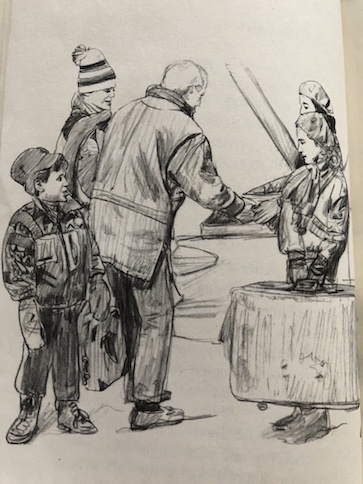
Boxcar Children Mystery in the Snow  arrival

The Alden children are disappointed because there is still no snow this winter, and they’ve really been looking forward to snow. Their grandfather tells them not to worry because, soon, they’ll have all the snow they want. A friend of his, Mr. Mercer, owns a ski lodge and has been urging him to visit and bring his grandchildren. There’s going to be a winter carnival there. The children are eager to go and have fun in the snow!

Boxcar Children Mystery in the Snow choosing teams

At the ski lodge, the Alden children meet a boy named Jimmy. Jimmy is a regular visitor to the lodge, but for some reason, he says that his parents never stay. There is also a girl called Freddie, which is short for Fredrica. Her parents aren’t at the hotel, either, because they’re visiting her sister, but she says that they will come later. Freddie could have gone to visit her sister, too, but she didn’t want to miss the fun at the ski lodge. She and Jimmy are both team captains for the winter games, which include skiing, skating, sledding, snow sculpting, and ice carving. Strangely, when the team captains get the box where kids are supposed to submit their names to join the teams, they can’t find the keys. The loss of the keys is worrying because, if they can’t find them, they won’t be able to get into the equipment shop for the equipment they need for the games. They still manage to put together the teams, and the Alden children also join.

Boxcar Children Mystery in the Snow  skates

Then, Mr. Mercer discovers that all four of the tires on his truck are flat. Grandfather Alden offers to drive him into town to get a pump for the tires and to talk to a locksmith about getting into the equipment shop.

While the adults tend to that, the kids talk about the try-outs for different events. The Aldens are all excited about different events. Violet notices that one girl, Nan, isn’t enthusiastic about the events at all and doesn’t want to try out for anything. Violet asks her why, and Nan says that joining in the games was her parents’ idea, not hers. They say it will be fun, but she never really enjoys herself at these things. She doesn’t think there are any events she can do, and she’d hate to be the one to lose an event for her team. To encourage her and build up her confidence, Violet suggests that they both sign up for the ice carving event, which doesn’t require a try out. Violet says that she doesn’t know how to do ice carving, and Violet says that’s fine because she doesn’t, either. She says that it would just be fun to try it out together. Nan points out that they would be competing against each other because they’re on opposite teams, but Violet says that doesn’t matter because they’re both equals, neither one of them knowing what they’re doing. Nan is cheered by Violet’s friendliness and signs up for ice carving.

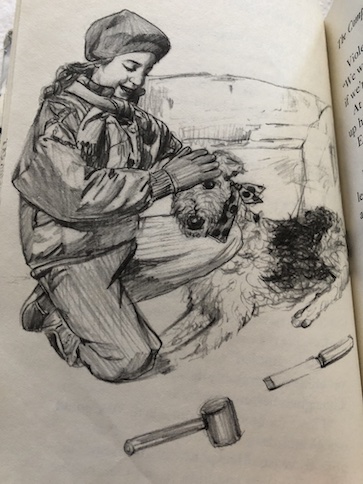
Boxcar Children Mystery in the Snow  Watch the dog

Nan isn’t the only unhappy child involved in the games, and the Aldens begin to feel that the focus on competition instead of simply having fun in the snow is partly to blame. A boy named Pete is upset that he didn’t get selected for any of the events he tried out for, and he says he doesn’t want to be the time team’s time keeper, which is the default position. Pete says he no longer wants to be involved in any of it. Freddie is angry because she and Jimmy drew names for their team members at random, and she thinks that Jimmy ended up with most of the really good team members. She wants a way to even things out. When the Aldens ask Jimmy if his parents will come to the awards dinner at the end of the games, he seems upset and doesn’t want to talk about it much. They’re not sure if Jimmy is more upset about his parents not being there than he pretends or if he’s worried about the awards ceremony in general.

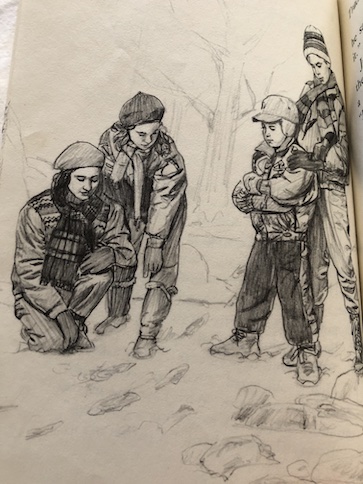
Boxcar Children Mystery in the Snow  smashed sculpture and footprints

It soon becomes apparent that someone is intentionally trying to sabotage the winter games. Someone smashes the snow sculptures that the Aldens made for their team. Then, someone steals a skier’s skis and ruins the ice sculpture made by the other team. The entire skating event has to be postponed when someone ruins the ice.

Who is doing these things and why? It could be someone who’s trying to make their team win the competition, but the sabotage has been aimed at both teams and at the event in general. Is it a kid who is unhappy with the contest or their position on their team? Jimmy seems eager to cancel events every time something goes wrong. Can the Boxcar Children figure out who is responsible?

The book is available to borrow and read for free online through Internet Archive (multiple copies).

My Reaction

Boxcar Children Mystery in the Snow  skis

There are themes in the story about competition and family. The Aldens aren’t accustomed to thinking competitively about other people because they’re used to doing things with each other cooperatively, as a team. Because they’re accustomed to thinking cooperatively, they are friendly with people on the other teams, like Nan, and they’re more focused on the fun of the events than on winning. That makes them different from some of the other kids, who are concerned about winning, but there are other issues in the book besides competition that matter more.

Boxcar Children Mystery in the Snow  knocking on the door

There are indications in the story that the parents of the children in the competition don’t always want the same things that their children want. Nan, for instance, didn’t even want to join contest, but her parents urged her to do it. Also, some of the children aren’t as good at others at conveying to their parents what they really want. When the most troubled child in the group finally manages to say what they really want, many things get straightened out.

I feel like there are many stories where the conflicts revolve around people who don’t really communicate with each other. In this story, there’s a character who blames others for not understanding how they feel, but even they have to acknowledge that they haven’t actually explained their feelings. They’ve just been expecting everyone else to know what they’ve been feeling. Some honest communication straightens out the problem, and that’s a good life lesson for kids and families.

Things to Do During Coronavirus

People are cooped up in their homes as communities around the world quarantine in an effort to slow the progress of the virus, both to prevent hospitals from becoming overrun with too many victims at once (although that’s happening already in some places) and in the hopes of a vaccine to prevent further illnesses (vaccines are being developed and tested in multiple locations, but from what I’ve heard, they aren’t likely to be widely available until sometime next year).

Personally, I’m been in something of an odd situation from the very beginning. Not odd in the sense that my life has changed weirdly. I mean odd in the sense that it hasn’t changed much at all. I take online classes, I work on personal websites and blogs, I volunteer for a local organization that helps teachers, but all of those activities involve my computer. Even my volunteer work is often done remotely. Basically, I’m accustomed to spending a lot of time in front of my computer or reading books. Now, I’m still sitting in front of my computer and reading books. Although my direct contact with the outside world (beyond the internet and my communications with friends in other places) is minimal, basically only what I need to do in order to get supplies and walk my dog, I still worry that I could end up getting the virus in spite of my precautions, but that’s the risk we all take, and others are in far more danger than I am right now. I learned a long time ago that it just isn’t possible to control everything that happens in your life, and I’ve arranged everything I can control as best I can, which is about as much as anybody can do right now.

I like to consider wider events in terms of terms of the books I’ve been reading. I talked about the coronavirus a bit in my reviews of Charlotte Sometimes (which takes place partly during the 1918 influenza pandemic, and I did that review before I knew that we were headed into a new pandemic) and Will It Be Okay? (which I couldn’t get pictures for because the local libraries are closed, but you can still read it online). So, I’ll be starting to cover some children’s activity books and adding some resources for helping people to carrying out the activities in the books. However, after some thought, I’ve decided to go further and create a list of resources, including websites and videos, not just books and sources of reading material, to help people keep busy while they’re sheltering at home during the pandemic.

I don’t really mind spending extended periods of time at home because I actually have many interests and hobbies, not to mention all the books I still want to read, and I never get enough time to do everything I want to do. I’m also a definite introvert, so a lot of what’s important to me happens in my head, and I appreciate relatively uninterrupted periods when I can develop ideas that I’ve been toying with in odd moments. Of course, this also often leads to more projects and hobby concepts than I will ever actually do. The more I read and think about stuff, the more things I think of that I want to try. It’s a vicious cycle. I don’t get bored very often; I get boggled, trying to decide what to work on next. So, for the benefit of those who don’t go through this process, I’m going to present a bunch of random ideas for things you can do at home that don’t require any usual materials or any particular skill. In fact, I’ve decided to start a new blog with some of my ideas.

In the meantime, here are a few things to help you stave off the boredom. I’ve grouped them by subject, and I’ve made notes about books that relate to some of them. Most of these activities are child-friendly, but not exclusively so. These are things that adults can do as well.

Places to Read Books for Free Online

All or most public libraries offer books online these days (provided that you have a card for that library), and Amazon offers some free public domain books for Kindle. However, there are other places where you can find books that you can simply read in your browser, some of which also have audio. I have a list of places where you can read books for free online on my Resources page. I’ll reprint the list here for easy reference:

Internet Archive

“A non-profit library of millions of free books, movies, software, music, websites, and more.”  It’s free to use, but it requires you to sign up for an account.  It has more than just public domain books.  Various organizations, such as libraries and book-selling companies, have donated scanned copies of many books and also various audio recordings, some software (such as old computer games), and other materials.  There is even help for users with print disabilities.  Patrons may borrow up to 5 items at a time, and books can be borrowed for up to 14 days, with the option to renew. When your time is up, the book simply disappears from your list of loans, so there are no late fees. You can also turn in books early if you’re done with them and want to get something else.  Patrons can also place holds on books which are currently being loaned.

Project Gutenberg

Provides free e-books of books that are in the public domain.  Some of the older vintage series described on my site are here. There is no need to sign up for an account. E-books are available in multiple formats.

Internet Sacred Text Archive

This is a collection of public domain works, especially those about religion and folklore. Most of it isn’t for children, but some of the folktales and fairy tales overlap with children’s literature. For example, they have a complete collection of the Lang Fairy Books (also known as the Color Fairy Books because of the titles). There is no need to sign up for an account, you can simply read the texts in the page.

Lit2Go

An online collection of public domain works by the University of South Florida. The description on the main page states:

“Lit2Go is a free online collection of stories and poems in Mp3 (audiobook) format. An abstract, citation, playing time, and word count are given for each of the passages. Many of the passages also have a related reading strategy identified. Each reading passage can also be downloaded as a PDF and printed for use as a read-along or as supplemental reading material for your classroom. “

The collection contains more than children’s literature and is free for the public to use. You can listen to the audio version of a book while reading the text version of a book in your browser at the same time. You can search for books by author, title, genre (broad categories such as mystery, adventure, fantasy, and horror), collection (shows specific topics such as African-American Literature, The Princess Collection for stories about princesses, or specific series such as the Oz books or the Lang Fairy Books), or reading difficulty according to the Flesch-Kincaid grade level system.

Writing for Fun

Writing can be a lot of fun, and writing really well requires practice and skill. However, you don’t have to be Shakespeare or Dickens to have fun with writing. Don’t worry about being a great writer, especially if you’re new to it. If you write at all, you’re a writer. The best way to learn is just to keep doing it and see what works and what doesn’t. Think of your craziest ideas and just get them out there! Put them on paper or on your computer

When you’ve written something that you want to share with other people, you could get a free online blog, possibly through WordPress (like my blog) or Blogger (through Gmail). There are also special sites to submit your writing online where it can be read by the public, reviewed, or sometimes, entered in contests.

Fanfiction.net – Exclusively for fan fiction. This means that people write their own stories based on characters and worlds that already exist in books, movies, tv series, and video games. Free to use, but requires you to set up an account.

Fictionpress.net – This is for original fiction, using original characters. Free to use, but requires you to set up an account.

Inkitt – Accepts a wide range of fiction, holds contests, and offers publishing deals for stories that get a lot of positive attention.

Writing When You Don’t Know What to Write About

Don’t worry about coming with a great idea, just start writing about something, anything, and see where it takes you. Good writing is creative and shows a strong voice, so you can start with a very basic topic and just allow your personality or your characters’ personalities to carry it from there.

Fan Fiction

If you don’t want to take the time to build characters or worlds for them right now, you could start by writing some fan fiction, which involves taking characters and situations from already-existing fiction and putting your own twists on them. For example, you could make up a new situation to happen on the Enterprise from Star Trek or a fictional planet for characters from Star Wars to visit. You could write a story that could happen to the characters from Harry Potter that occurs between their established adventures in the books, or you could play “what if” and write about how things could have gone differently if something from the original stories changed. For example, suppose that Harry’s father survived, even though his mother died protecting him? Or vice versa?

Imaginary Vacation

Travel for fun isn’t a particularly good idea right now because of the coronavirus, but I remember reading an article a long time ago about how planning a vacation can be very stress relieving, even if you don’t actually go. (I’d put the link there, but it was so long ago that I can’t remember where it was.) It’s a kind of mental vacation. In a way, I think mental vacations can be even better than actual vacations because you don’t have to worry about staying within your own personal budget, making your travel connections on time, or the availability of tickets and hotel reservation.

Just pick a destination and look up local sites and hotels. Plan an itinerary for yourself, and look up YouTube videos of sites in the area to get an idea of what they actually look like in person. Look up the history of the area for local flavor. You can even plan meals at the best restaurants in the area, whether you could normally afford to eat there or not.

You can expand on your dream vacation by turning it into a story, writing in romance or intrigue, or just file it all away as a vacation you’ll take some day, when you can.

Writing When You’re Just Really Bad at Writing

Don’t let that stop you. When you can’t write well, writing badly, and have fun doing it! As I said, you don’t have to be a great writer, you just need to keep on doing it, and that’s how you get better. Besides, if you think you’re just really awful at writing, have I got a writing contest for you! I just have one question: Can you be really bad at writing on purpose?

The Bulwer-Lytton Fiction Contest appeals to me not just because I like writing but because the aim of this contest is to write badly.  Specifically, you have to pretend that you are writing the first sentence to a very badly-written book, and the winner is the worst one.  There are quite a lot of contenders, which is how they have been able to publish books full of past entries. I covered one of these books on my other book blog.  The namesake of the contest is Edward George Bulwer-Lytton, who has sometimes been credited with originating the hackneyed opening line “It was a dark and stormy night …” (although that expression had actually been around before Bulwer-Lytton used it).  This line was the inspiration for the contest and is part of the title of each compilation of past entries. Anybody can enter the contest, and you can submit as many horrible opening lines as you want. The only requirement is that your entries have to be one single sentence, but it can be a very long run-on sentence. I entered this contest myself about six times last year but didn’t win, which means that I’m either not bad enough at writing to win or not good enough to make myself sound really horrible on purpose. It’s a toss-up.

For inspiration, you can read past winning entries online. They’re pretty entertaining, and it’s fun to imagine what the rest of those stories would be like.

If All Else Fails

Write about your experiences during the coronavirus, even if it’s just a rant about your worries and the inconveniences of getting groceries and household supplies or staying at home with family members who drive you crazy. You’re living through a major historical event that is affecting the entire world right now. What you have to say about it will be of interest to people later, and if nothing else, getting your thoughts out will do you some good. If you need someone to rant to, go ahead and comment below. I rant regularly when I feel the need, and I don’t mind airing a few rants from others.
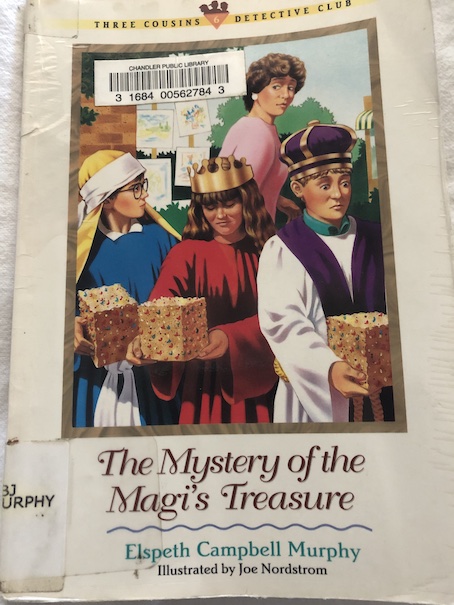
The Mystery of the Silent Nightingale

Three Cousins Detective Club

#2 The Mystery of the Silent Nightingale by Elspeth Campbell Murphy, 1994.

Sarah-Jane’s baby-sitter and friend, Kelly, is graduating from high school. Soon, she will be going away to college. Sarah-Jane is sad that she is leaving, but she is happy her family was able to find her a nice graduation present.

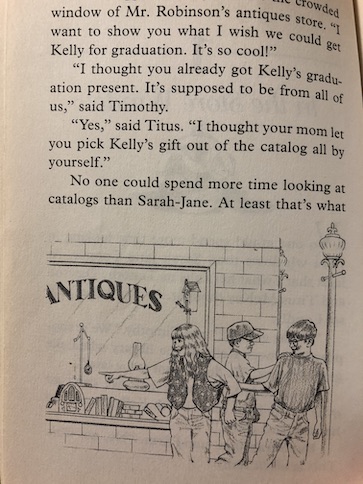
After they pick out their present, Sarah-Jane sees a locket with a nightingale on it in a store window. The nightingale is a Christian symbol for joy, and Sarah-Jane thinks that it would have made a nice present for Kelly if they didn’t already have one.

To everyone’s surprise, someone else buys the locket and leaves it at Kelly’s house. Sarah-Jane feels a little strange that someone else took the idea that she’d had for Kelly’s present. However, it is even more mysterious that there is no note or card with it to say who it is from. Kelly asks the cousins to help her find out who gave her the locket so that she can thank them. As it turns out, the present isn’t just an ordinary graduation present. It’s actually a thank you from someone who has been grateful to Kelly for a long time for a kindness she wasn’t even aware that she had done. Sarah-Jane even had a hand in it herself although she also wasn’t aware of it. Sometimes, it’s the smallest good deeds that can make the biggest difference in someone’s life.

The theme of the story is joy.

The book is available to borrow for free online through Internet Archive.

Themes and Spoilers:

The person who left the present for Kelly is Janice, who works for Kelly’s father. The kids had wondered why she seemed to recognize them when they stopped by Kelly’s father’s office early to show him Kelly’s graduation gown. It turns out that Janice has been grateful to Kelly for years for something kind that Kelly did for her when the cousins were very young. Kelly always used to read to the cousins when they were small, particularly Sarah-Jane. She took Sarah-Jane and the others to the library the day that Sarah-Jane got her first library card. That same day, Janice was also at the library.

Janice had never learned to read and was unable to finish her education. For a long time, she was ashamed to admit to anyone that she couldn’t read. Then, she heard about classes at the library for adults who had never learned to read and decided to go there. When she got to the library, she didn’t know where the classes were being held. She couldn’t read the signs, and she was too embarrassed to ask the librarian. There were some people she knew in the library, and she was so afraid of any of them finding out why she was there that she almost left. Then, Janice saw Kelly with Sarah-Jane and the boys. She saw how happy Sarah-Jane was to get her new library card, and she decided that she really wanted to learn to read, too. Janice knew that Kelly wouldn’t look down on her like some adults would, so she asked Kelly to help her find the class. Kelly helped her, even though she forgot about it later, and Janice was grateful to her for keeping her from backing out.

After Janice learned to read, she was able to finish her education. When she realized that the girl who had helped her years ago was her boss’s daughter, she wanted to give her a present. She wanted it kept secret at first because she was still embarrassed that it took her so long to learn to read. She was worried about what her boss would think of her. However, Kelly’s father doesn’t hold it against her, and Janice’s strict supervisor, Dorothy, even asks her to help tutor her grandson, who has been having learning difficulties.

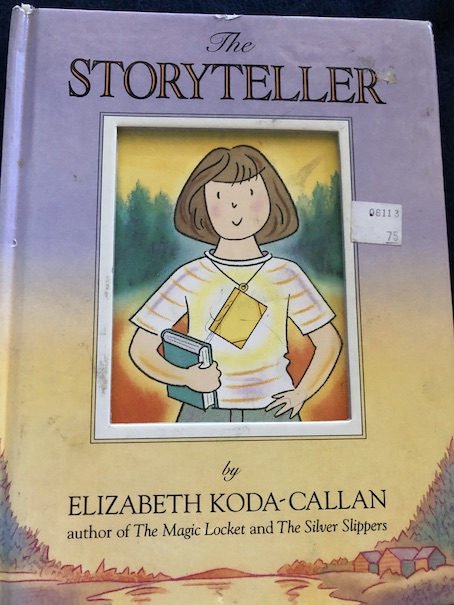
The Storyteller

Magic Charm Books

The Storyteller by Elizabeth Koda-Callan, 1996.

A young girl (unnamed, like in the other books in this series) who likes reading more than anything is sent to summer camp by her parents. When her parents first suggest the idea, the girl thinks that she might like camp, but then she gets worried that maybe she won’t or maybe she won’t make any friends there. She takes some of her books with her in case she needs something to do.

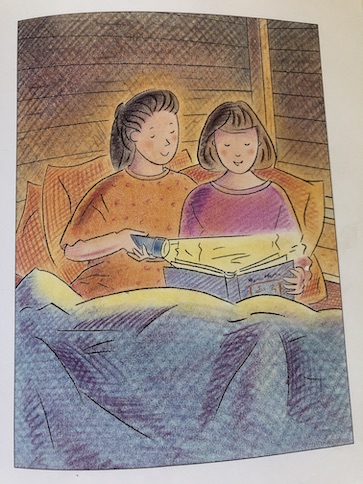
At first, it seems like camp isn’t going to be much fun after all. While the other kids seem to enjoy the typical camp activities, the girl doesn’t seem to be any good at them and doesn’t enjoy them much. However, she does make a friend, Jenny. When Jenny is homesick at night, the girl reads to her to help her feel better.

During the day, the girl keeps slipping back to her cabin to read while the other campers play volleyball because she isn’t good at the game. The camp counselor catches her reading all by herself, but she understands why the girl feels like she isn’t good at the other camp activities. To help her feel better, the counselor promises her an activity that she will be good at.

That night, while the campers are gathered around the campfire, ready to tell campfire stories, the counselor suggests that the girl read to them out of one of her favorite books. With Jenny’s encouragement, the girl reads to the other campers.

The other campers like the way the girl reads to them by the campfire, and Jenny helps the girl to improve at other camp activities. At the end of camp, the counselor gives the girl a charm shaped like a book as a reward for her storytelling skills.

All of the books in this series originally came with charms like the ones described in the stories. This book originally included a little golden book charm for the reader to wear. The hole in the cover of the book was where the charm was displayed when the book was new. The books in the series often focus on the unnamed main character (who could represent any girl reading this story – the books were aimed at young girls) developing new self confidence, and the charms were meant to be either a sign of their new self confidence or inspiration for developing it. In this case, the charm is a reward for the way the girl used her skills to make camp better for everyone while developing new skills in other activities.

The book is available to borrow for free online through Internet Archive.

The Beast in Ms. Rooney’s Room

The Kids of the Polk Street School

BeastMsRooney#1 The Beast in Ms. Rooney’s Room by Patricia Reilly Giff, 1984.

It’s the start of a new school year, and Richard Best (nicknamed “Beast”) is embarrassed to find himself in Ms. Rooney’s room once again because he was held back a year for his poor reading skills.  Everyone he knows has moved on to the third grade, and he’s still in a second grade class with kids who were first grade babies last year.  He feels awkward, being the tallest, oldest person in class, and kids in his old class tease him and refuse to let him play baseball on the playground with them because he’s a pathetic “left-back.”

At first, Beast tries to pretend that it was all a horrible mistake that will be straightened out soon, but that just makes him feel bad for lying.  The kids who are now in the same class he is, who he still thinks of as “babies,” try to make friends with him, but he doesn’t accept them at first because of his embarrassment at being older and still not as good at reading as some of them are.

BeastMsRooneyPic1However, even though he’s embarrassed at having to attend special reading classes with Mrs. Paris while most of the rest of his class has normal reading, these special classes really help him, not just to improve his reading skills, but to connect with other kids in his new class who have the same reading difficulties he does and who understand how he feels.

Beast discovers that it’s no shame to not know something or to have trouble doing something because everyone has different skills and it can take some people longer to learn certain things than others.  Emily Arrow, the girl who now sits next to him in class is a whiz at math but has as much trouble reading as he does.  Beast learns some new skills from his new, younger classmates and realizes that they’re not really babies.  They also really appreciate him and help him see some of the good things about himself.

The book is currently available online through Internet Archive.