Cookies and Crutches

Pee Wee Scouts

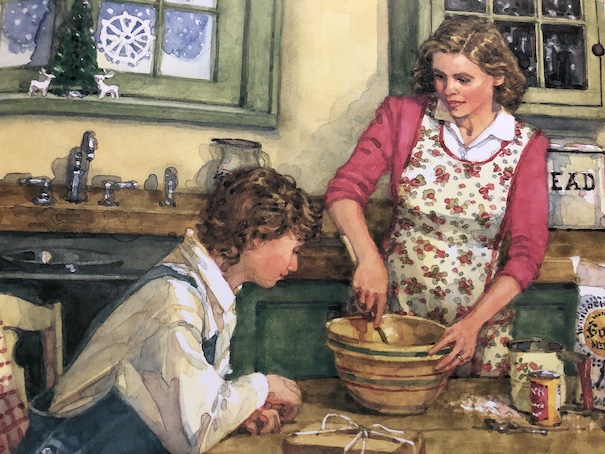
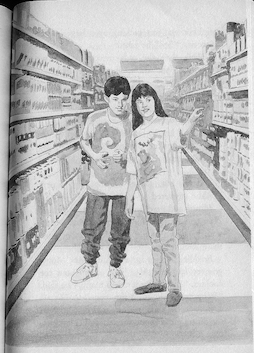
This is the first book in the Pee Wee Scouts series. The children in Troop 23 meet after school on Tuesdays, and their leader is Mrs. Peters. One Tuesday, they meet at Mrs. Peters’s house to bake cookies. Mrs. Peters says that, to earn their cookie badge, they must each bake cookies at home without help and have their parents write a note that they have done it. She teaches the children an easy cookie recipe that they will use.

Roger White doesn’t want to bake cookies because he thinks that baking is for girls. Sonny Betz argues that it’s not just for girls, but many of the other children think that Sonny is a sissy because his mother still walks him to school. Sonny thinks that Roger is a creep. Mrs. Peters says that cooking is for everyone who eats. If boys can eat, they can also cook.

Mrs. Peters demonstrates making a recipe for chocolate chip cookies (and the book provides the recipe). Molly and Mary Beth ask if they can make their own batch of cookies for their badge together. They are not supposed to have adults helping them, but Mrs. Peters says that it is fine if they work with each other. In spite of their earlier argument, Roger agrees to make cookies with Sonny as a team.

However, when Molly and Mary Beth try to bake cookies by themselves, they don’t think the cookie batter looks right. It looks too pale, and when Mrs. Peters made her cookies, the batter was more brown. To fix the color problem, they decide to pour in some root beer, which is not part of the recipe. Then, they decide that the batter is too runny, so they add some gravy mix to thicken it. Because they added things they shouldn’t have, the cookies come out all wrong, and the girls worry that they won’t get their badge.

At their next meeting, though, they learn that nobody’s cookies look like they should. Mrs. Peters has the kids make cookies together while she supervises, although she doesn’t help them directly, so they can say that they did it themselves. This time, the cookies work out, although some of them are oddly-shaped. However, all of the kids get their cookie badges together.

The scout troop then organizes an ice skating party with the kids’ fathers. It’s a little awkward because not all of the kids have fathers living at home. Most of the kids without fathers bring an uncle or brother instead, but Sonny doesn’t have either, so his mom comes. The other kids tease him about it because they think he’s already too much of a mommy’s boy.

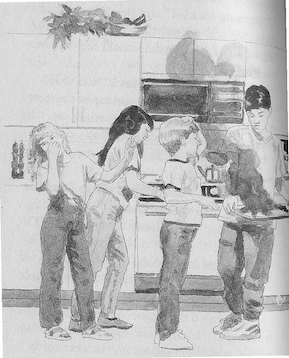
Some of the kids are also nervous because they don’t know how to skate, and they’re not even sure that their fathers know. Molly gets into trouble because Rachel makes a big deal about her fancy skates, which she owns so she doesn’t need to rent any, and about her dainty little feet. Molly rents a pair in the same size as Rachel’s, trying to prove that her feet aren’t too big, but they’re really too small for her. She has to take off her socks to put them on, and even then, it’s a hard squeeze. She ends up spraining her ankle badly because she’s wearing the wrong skates, and she has to use crutches. Molly doesn’t get her skating badge, but she does get one that’s almost as good as a consolation.

This is one of those children’s books/series where the kids in the story, although they are part of the same troop and seem to be friends for the most part, still say insulting things about each other, like when Roger called Sonny a sissy and Sonny called Roger a creep. I know that kids do things like this sometimes, but I don’t really like books that seem to promote or are permissive about that kind of talk. What bothered me is that, even though the boys were insulting each other in front of Mrs. Peters, she didn’t tell them to stop, which makes it seem like she tacitly thinks those insults are fine. I liked it that she contradicted Roger’s assertion that cooking and baking are only for girls, but I wish that she had said something about the way the kids were insulting each other.

I knew from the beginning of the story that the way Mrs. Peters was teaching these young children to make the cookies, just by watching her, and then expecting them to do it right completely on their own, with no adult supervision, was probably going to lead to a disaster of some kind. Of course, that’s because I’m reading this from an adult perspective. Nobody learns anything complex from only having seen it done by somebody else just one, especially if they just watched and didn’t actively participate. These kids are also young, just in the first grade of elementary school. They can read, but they don’t have advanced reading skills or much experience with cooking anything before. What I’m saying is that they really needed adult supervision, and I didn’t think that telling them that they had to do this completely by themselves wasn’t a great idea. Although, it’s possible that Mrs. Peters assumed that the kids would get more supervision than they actually got, even if the adults didn’t actively help. I think a lot of adults assumed that not helping meant no supervising and no advice or intervention when the kids were about to do something wrong. I have to admit, though, that there wouldn’t be much of a story if they did everything right, and this activity went as expected.

The story has two parts to it, which aren’t directly related. I thought, at first, that the kids would be serving cookies they baked to the dads, and that would be the tie-in between the cooking baking and the party with the fathers. They didn’t, though. The skating incident and Molly’s injury are unconnected to each other. The only connection I can see to the two incidents isn’t explicitly stated, but both of this incidents involve the kids doing something they’ve never done before and not really doing it right. They need to have experiences where things go wrong to start figuring out how to do things right. Although Rachel brags about her skating ability and her skates, after Molly is injured, Rachel admits that she fell down a lot when she was younger and was first learning. Molly feels a little better, realizing that nobody does things perfectly the first time. Although getting hurt isn’t great, learning to use crutches is also something new that Molly experiences that none of the other kids have experienced before.
The Gift of the Christmas Cookie

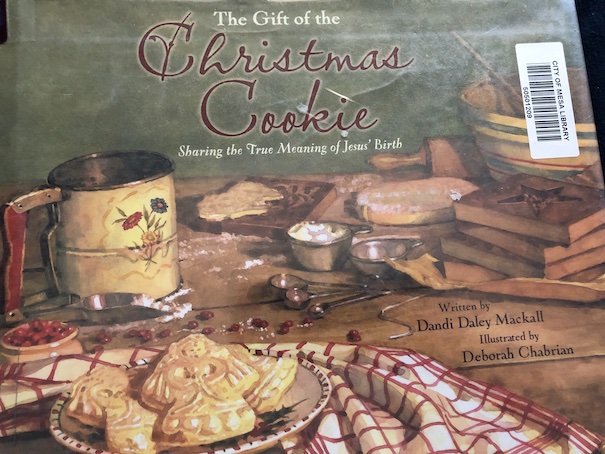
The Gift of the Christmas Cookie by Dandi Daley Mackall, illustrated by Deborah Chabrian, 2008.

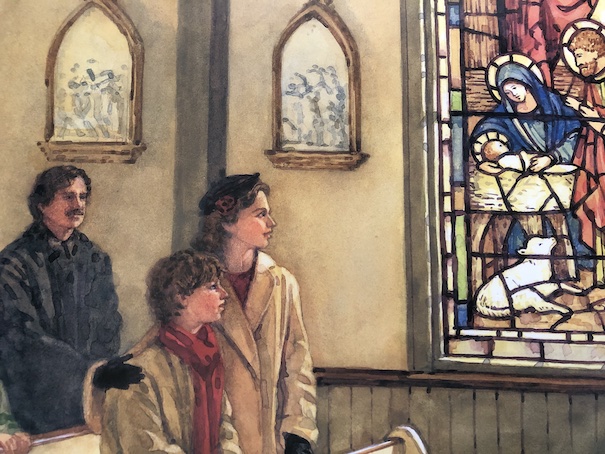
This is a sweet Christmas story that discusses the meaning of Christmas along with the history of Christmas cookies.

The story doesn’t provide a year, but it seems to be implied that it takes place during the Great Depression because Jack’s father is described as hopping a freight train to find work and send money home. Since then, Jack and his mother have lived alone, saving every penny that Jack’s father sends to them.

Then, before Christmas, Jack arrives home to find his mother making cookies. Jack is thrilled at the idea of having a rare treat, but his mother says that the cookies are for the needy at church. It’s disappointing because Jack has been feeling rather needy himself.

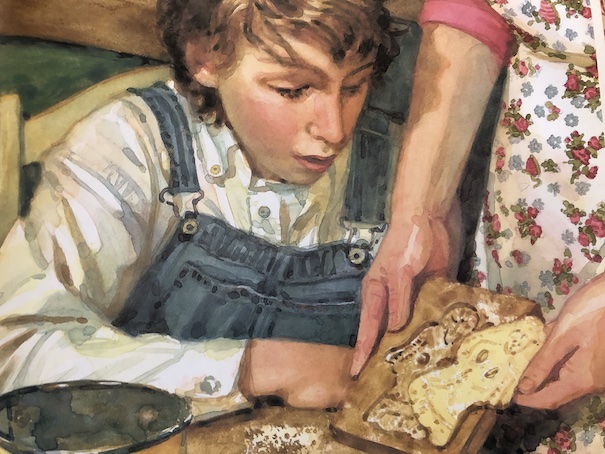
Then, his mother shows him the wooden cookie board molds that they will use. They are big with elaborate carvings of Christmas symbols. Making the cookies is labor-intensive, and Jack wonders why they’re working so hard to make such elaborate cookies that people will just eat anyway.

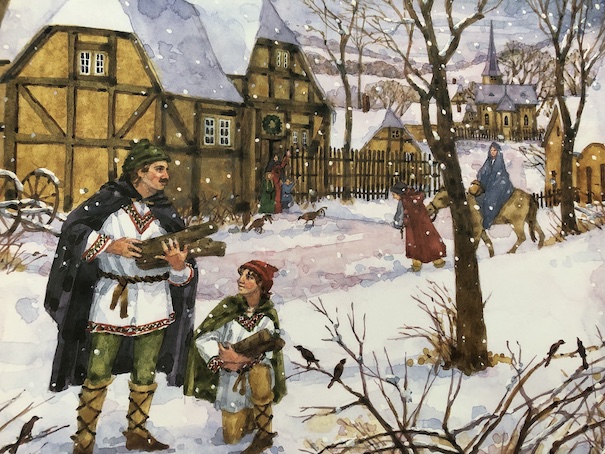
Jack’s mother tells him a story that takes place in the “Old Country” of their ancestors during the Middle Ages. (It’s in Germany, although Germany didn’t exist as the single country it is today back then.) Times were very hard, and people couldn’t afford much, but one family wanted to do something special for their neighbors for Christmas. The father of the family was a woodcarver, so he considered carving Nativity figures, but his wife said that many people were hungry, so it would be better to bake something they could eat. The woodcarver made wooden molds in the shapes of figures associated with Jesus’s birth, and his wife made the sweet dough to put in them, and they made cookies to share with their neighbors.

Jack’s mother saves one cookie from their batch in the shape of an angel for Jack so he can have a treat, but when a hungry man comes beginning for something to eat, Jack considers his own father, who might be traveling and hungry.

Jack is inspired to share his special Christmas cookie with someone who might need it more than he does and to pass on the story that goes with it.

My Reaction

I like stories that include some history, and I enjoyed this story about the origins of Christmas cookies and a lesson in generosity, giving to someone else as he hopes other people will be generous with his father. The invention of Christmas cookies can’t be traced back to any particular family, like the story in the book tells it, and Christmas cookies might have actually originated in Medieval monasteries because the monks would have had greater access to the sugar and spices needed than most people. However, the general concept of Christmas cookies made with molds is accurate. There is a brief note in the back of the book about the cookie boards or springerle molds that come from the Schwabian region of Germany, Switzerland, and Austria and how these molded cookies have had religious shapes since the Middle Ages. The book also notes that some cookie molds take the form of specially-carved rolling pins rather than the flat boards shown in the book, and this was the type of cookie mold that my grandmother used to use. When she made molded cookies, they were anise-flavored, which is traditional and tastes like licorice, although I prefer to make ginger cookies with my cookie mold rolling pin. The book includes a simple recipe for cookies that you can use with cookie molds or cookie cutters, and it uses the traditional anise flavoring.

The Little House Cookbook

The Little House Cookbook by Barbara M. Walker, illustrated by Garth Williams, 1979.

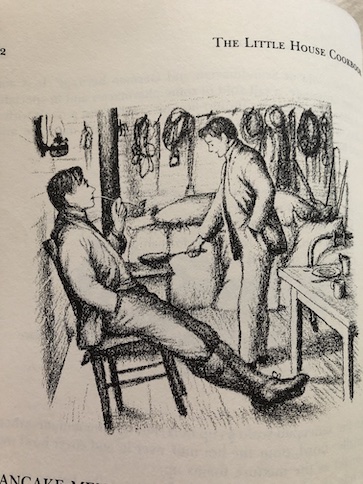
This children’s cookbook is based on the foods eaten in the Little House on the Prairie series. The series follows a farm family, and food is very important in the stories. I like the book because it provides historical explanations about the types foods that frontier families would eat. The illustrations in the books come from the original books.

The chapters in the book are:

Food in the Little Houses

The first chapter of the book explains about the life of Laura Ingalls Wilder and her family and how much of their time on the frontier was occupied with finding and producing food. The foods that they ate were ones they grew and hunted themselves. They had to prepare everything from scratch, and even the children in the family helped. When they had difficult times, there was often little to eat.

The chapter also discusses the nutrition of a pioneer diet. They didn’t understand much about the science behind vitamins and nutrition, but because their lives were based around hard physical labor, they were able to tolerate diets that were heavier in starches and sweets than most modern people would have.

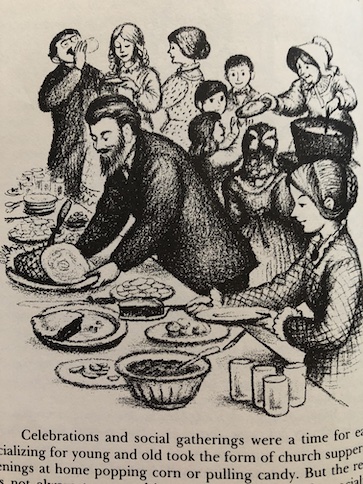
It also describes how celebrations and social occasions centered around food.

The Cook’s Domain

This chapter discusses what pioneer and farming families had in their kitchens and how they would cook and store food.

Staples from the Country Store

Although pioneers tried to be as self-sufficient as they could, nobody could ever make absolutely everything they needed. Country stores supplied a variety of good, especially the things that farmers couldn’t make by themselves, like farm tools, cooking pots, sewing supplies, guns, and some food staples that wouldn’t be produced by farms in the area or that required processing, like molasses and cornmeal. Country stores also allowed farmers to buy on credit or trade produce and other goods they had for ones they needed because they didn’t always have cash on hand.

The first two chapters were just informational, but this is the chapter where recipes start appear. Each of the recipes is accompanied by a quote from one of the Little House books where the dish is mentioned and some historical information. The recipes in this chapter are:

  • Fried salt pork with gravy
  • Hasty pudding
  • Fried cornmeal mush (a dish my grandmother said she ate growing up on a farm in Indiana in the 1920s and 1930s)
  • Johnny-cake
  • Corn dodgers
  • Cornbread
  • Crackling cornbread
  • Baked beans
  • Bean soup
  • Bean porridge
  • Oyster soup
  • Codfish balls

Foods from the Woods, Wilds, and Water

Pioneer families relied heavily on animals they could hunt and plants they could forage for food, like berries. This chapter discusses how they would process and prepare animals they hunted and what they could make with foods found in the wild. Personally, I have no interest in hunting, but the historical information is interesting. The recipes in this chapter are:

  • Stewed jack rabbit and dumplings
  • Spit-roasted wild duck
  • Blackbird pie
  • Fried fish
  • Roasted wild turkey with cornbread stuffing
  • Cranberry jelly
  • Blueberry pudding with a sauce
  • Huckleberry pie
  • Sun-dried wild fruit
  • Stewed dried fruit
  • Crab-apple jelly
  • Plum preserves
  • Husk-tomato preserves
  • Strawberry jam

Foods from Tilled Fields

This chapter discusses the crops farms produced, particularly wheat. There are recipes for different types of bread, biscuits, dumplings, crackers, doughnuts, and pancakes. There’s also a recipe for hardtack, which was a staple food for people going on long journeys because is wasn’t as perishable as other foods.

Foods from Gardens and Orchards

This chapter is about the types of fruits and vegetables that a family like the Ingalls would grow. It explains that these vegetables have changed over time because farmers developed new varieties of familiar foods, like potatoes. The flavors of these newer varieties aren’t quite the same as the old ones, but the newer varieties produce more food and are more resistant to disease.

The recipes included in this chapter are:

  • Mashed potatoes
  • Potato cakes
  • Fried potatoes
  • Hashed brown potatoes
  • Creamed carrots
  • Dried corn and creamed corn
  • Fried parsnips
  • Succotash – a dish of mixed vegetables with lima beans and corn
  • Lettuce leaves with vinegar and sugar
  • Ripe tomatoes with sugar and cream
  • Baked Hubbard squash
  • Raw turnip snacks
  • Mashed turnips
  • Stewed pumpkin
  • Pumpkin pie
  • Green pumpkin pie – It uses an unripened pumpkin, and it tastes a lot like an apple pie.
  • Apple turnovers
  • Apple pie
  • Birds’ Nest pudding – an apple dessert
  • Fried apples ‘n’ onions
  • Dried apples
  • Dried apple and raisin pie
  • Apple-core vinegar
  • Tomato preserves
  • Beet pickles
  • Green cucumber pickles
  • Green tomato pickles

Foods from the Barnyard

This chapter is about the types of animals kept on a farm as sources of meat, dairy, eggs, and fat.

The recipes included in this chapter are:

  • Lard and cracklings
  • Baked spareribs
  • Homemade sausage
  • Roasted pig
  • Mincemeat
  • Poached fresh eggs
  • Fried chicken
  • Chicken pie
  • Stuffed roasted hen
  • Roasted stuffed goose
  • Butter
  • Cottage cheese balls
  • Hard cheese
  • Pot roast of ox with browned flour gravy

Thirst Quenchers and Treats

This chapter covers special treats that farming families would have made or been able to buy at the general store. It explains the history and evolution of penny candies and other store-bought treats.

The recipes included in the chapter are:

  • Eggnog
  • Ginger water
  • Cambric tea
  • Lemonade
  • Pulled candy
  • Molasses-on-Snow candy
  • Vinegar pie
  • Custard pie
  • Heart-shaped cakes
  • Vanity cakes
  • Pound cake
  • Laura’s wedding cake
  • Sugar frosting
  • Ice cream
  • Parched corn
  • Popcorn
  • Popcorn balls
  • Popcorn and milk

There is a glossary in the back and a table of conversions.

One more thing I want to note is that the book refers to Native Americans as “Indians”, which is common in older books. There isn’t much information about Native Americans in the book because the focus is on pioneer farming families, but they are mentioned occasionally when there’s historical information about the origin and evolution of certain types of foods.

The book is available to borrow and read for free online through Internet Archive.

Kirsten’s Cookbook

Kirsten, An American Girl

This cook book is one of the activity books that was written to accompany the Kirsten series that is part of the American Girls franchise. The American Girls books were written to help teach American history (as well as sell the accompanying dolls and accessories), so this book has recipes of the type that people would have eaten on the American frontier during the mid-1800s, when the character of Kirsten lived, and some historical information.

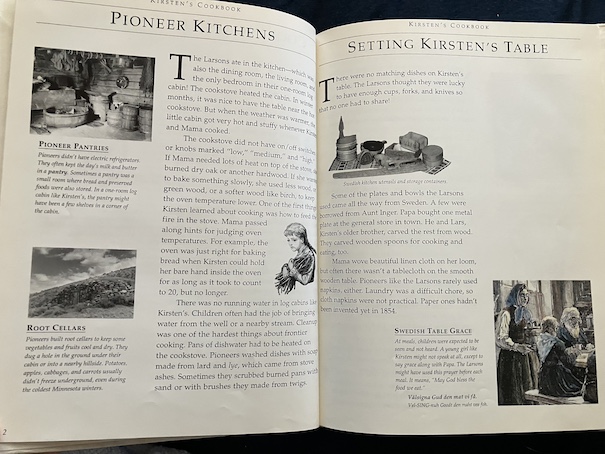
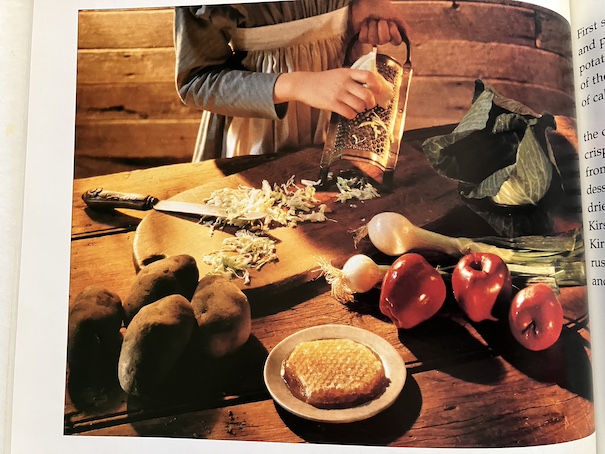
The book begins with some historical information about cooking on the frontier. Pioneer families like Kirsten’s family ate what they grew themselves and things they could gather from the woods around them. They ate certain foods only in the season when they could get them, and it was hard work to produce food and process it before using it in recipes. There were certain types of food that they had often because the ingredients were simple and often available, like potatoes and bread, and they rarely had time to prepare special or elaborate meals. However, they would take the time to make some special treats for holidays.

There are special sections that describe what pioneer kitchens were like and the dishes and table settings they would use. Pioneer families like Kirsten’s lived in one-room cabins, so her family cooked, ate, and slept all in that one room. They had a wood-burning cookstove, but stoves like that did not come with temperature settings. (This is why you don’t see temperatures specified in old recipes from the 19th century, although this book does include that information for modern readers.) People learned to judge roughly whether the temperature was right to bake bread or cook other recipes by feel, and could regulate the approximate temperature through the type or amount of wood they burned.

There is also a section of cooking tips and kitchen safety tips for modern child readers. Then, the recipes are organized by type of meal with a section of Kirsten’s favorite recipes. Each section and recipe is accompanied with additional historical information and trivia.

  • Pork sausage patties
  • Hard-boiled eggs
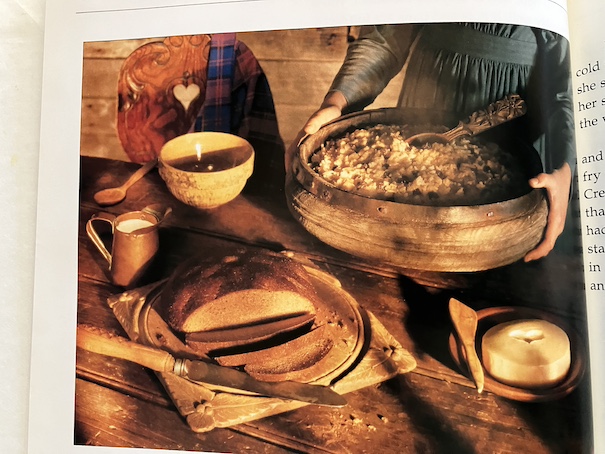
  • Swedish rice porridge
  • Round rye bread
  • Homemade butter
  • Ginger cookies – Although cookies seem like an odd thing to see at breakfast, a pioneer family might have them and save some for a snack in the mid-morning, before lunch, or as they called it, dinner.

“Dinner” is usually the biggest meal of the day, but depending on when and where you live, that might be either the midday meal or the evening meal. In modern times, it tends to be the evening meal, after a family or individuals are home from work or school and have more time for a large meal. Modern people sometimes use the terms “dinner” and “supper” (the evening meal) interchangeably for that reason. In Kirsten’s time and, sometimes, in rural areas even in modern times, the biggest meal is the midday meal, what most of us would call “lunch.”

  • Baked ham slice
  • Swedish potatoes
  • Cabbage and apple salad
  • Fruit Soup
  • Swedish Almond Rusks – Swedish rusks are crunchy sweet breads, a little like biscotti.

This section just has an assortment of recipes for Kirsten’s favorite foods. Some of them are traditional Swedish foods, and others are more American. There is a mention in this section that pioneers learned how to make maple syrup from “Indians”, meaning Native Americans.

  • Potato soup – Soup with bread and cheese was a popular supper meal for farming families in the 19th century.
  • Swedish meatballs
  • Fresh applesauce
  • Swedish pancakes – These thin pancakes are rolled and filled with jam.
  • St. Lucia buns – These special buns are topped with raisins, and it’s a tradition in Sweden and other Scandinavian countries to serve them on St. Lucia Day, December 13.
  • Pepparkakor cookies – These are thin, spicy cookies that are cut into shapes and served at Christmas.

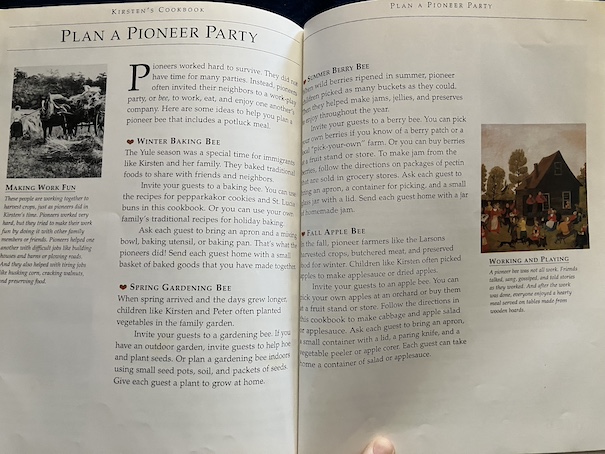
The book ends with a section of tips for having a pioneer-themed party. When real pioneers had parties, they were often organized around chores they had to do or tasks to accomplish. They called these work-play parties “bees”. Besides accomplishing a task, friends and neighbors would also bring food and share a meal, talk, and have fun. The suggestions in this section are organized seasonally. A Winter Baking Bee could involve everyone getting together to bake holiday treats, like the ones included in this book for St. Lucia Day and Christmas, or whatever the guests want to bake. At a Spring Gardening Bee, guests can get together to plant a garden or potted plants, with plants for guests to take home themselves. For a Summer Berry Bee, guests can pick berries (if they grow locally or at a “pick-your-own” farm) or make jam, with some for everyone to take home. For a Fall Apple Bee, guests can pick apples and make recipes with apples, like applesauce.

The book is available to borrow and read for free online through Internet Archive.

Samantha’s Cookbook

Samantha, An American Girl

This cook book is one of the activity books that was written to accompany the Samantha series that is part of the American Girls franchise. The American Girls books were written to help teach American history (as well as sell the accompanying dolls and accessories), so this book has recipes of the type that people would have eaten during the early 1900s, when the character of Samantha lived, and some historical information about cooking and dining during that period.

The first section in the book discusses innovations that made cooking easier in Samantha’s time than it had been in earlier time periods. The kitchen in Samantha’s house had running water, a gas stove, and an icebox for refrigerating food. Because Samantha comes from a wealthy family, who can hire people to cook for them, Samantha’s education focuses more on learning how to be a good hostess, meaning that she would be more likely to be in the dining room, helping to entertain guests, rather than in the kitchen, preparing food. However, Samantha would have been familiar with cookbooks, discussing new recipes and studying sections of cookbooks that offered advice about dining etiquette. There are sections in this book that discuss the role of servants in shopping for and preparing food and the proper way to set a table for an elegant dinner party.

After that, there is a section of cooking tips and kitchen safety tips. The recipes in the book are divided into sections based on meals, followed by a section of Samantha’s favorite recipes. The recipes are also accompanied by historical information.

The book explains that, because Samantha is from a wealthy family, her family’s cook begins making breakfast before Samantha wakes up in the morning, so it will be ready for her as soon as she’s awake and dressed. In her time, breakfast was typically the lightest meal of the day, but wealthy households had a variety of foods at breakfast. Breakfast was typically served with hot drinks. Adults usually had coffee or tea, while children might have hot chocolate.

  • Strawberries with cream
  • Ham slice
  • Cheese omelet
  • Saratoga potatoes – These are fried potato chips, which were a relatively new innovation in Samantha’s time. The book explains that potato chips were invented by a Native American cook at a resort in Saratoga Springs, New York in 1853 after a customer complained that the fried potatoes should be thinner.
  • Blueberry muffins

“Dinner” is usually the biggest meal of the day, but depending on when and where you live, that might be either the midday meal or the evening meal. In the past and in rural areas, “dinner” was often lunch. By Samantha’s time, as it typically is in modern times, it was the evening meal, after a family or individuals are home from work or school and have more time for a large meal. For wealthy families, like Samantha’s family, dinner was a very formal meal. They would often dress up for dinner, and at formal dinner parties, there would be name cards on the table to tell everyone where to sit. At a formal dinner in a household with servants, individual dishes and parts of the meal would be served in “courses”, but the number of courses could vary. Samantha’s family followed the English style, with fives courses at dinner. The book mentions Samantha’s family having soup, salad, appetizers, a main course with roasted meat, and dessert and coffee at the end of the meal. Some larger, fancier dinner parties could have many more, some as many as 18 courses!

  • Cream of carrot soup
  • Roasted beef tenderloin
  • Mashed potatoes
  • Fresh green beans
  • Corn oysters – These are fried corn patties.
  • French salad
  • Dressing
  • Ice cream snowballs – These are scoops of vanilla ice cream coated in shredded coconut.

This section has an assortment of recipes for Samantha’s favorite foods. The book explains that, while Samantha was being trained to be a hostess more than a cook, even wealthy girls like her would taught some basic cooking skills. Sometimes, Samantha would help the family’s cook in the kitchen and make some simple recipes.

  • Apple Brown Betty
  • Jelly biscuits
  • Cream cheese and walnut sandwiches
  • Chicken salad sandwiches
  • Gingerbread
  • Lemon ice

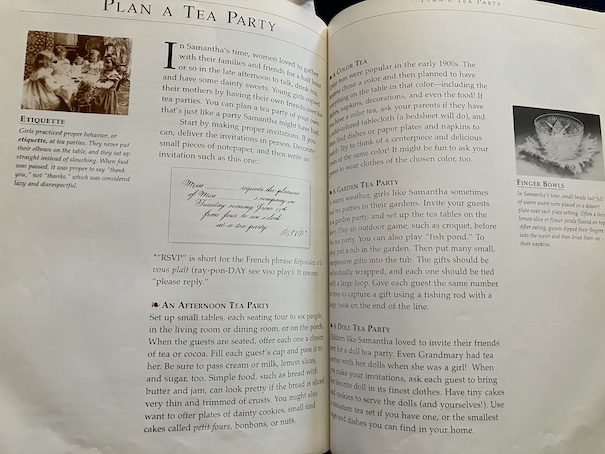
The book ends with a section about how to plan a tea party, like girls in Samantha’s time might have. The suggestions include themed tea parties, like afternoon tea, a color tea (a popular concept in the early 1900s, where everything at the party, from decorations to food, would be themed around a particular color), a garden tea party, and a doll tea party (girls would bring their dolls, and there would even be tiny treats to serve to the dolls).

The book is available to borrow and read for free online through Internet Archive.

Felicity’s Cookbook

Felicity, An American Girl

This cook book is one of the activity books that was written to accompany the Felicity, An American Girl series that is part of the American Girl franchise. The American Girls books were written to help teach American history (as well as sell the accompanying dolls and accessories), so this book has recipes of the type that people would have eaten during the American Revolutionary War, when the character of Felicity lived, and some historical information.

The book starts out with some historical information about cooking in Colonial Virginia, where Felicity lived, and some general cooking tips, like measuring instructions and safety information. It includes information about late 18th century kitchens, cooking utensils, and dishes. Colonial kitchens were frequently located in an outbuilding, separate from the rest of the house. It was best to keep the kitchen a little away from the house because, rather than using stoves, their main method of cooking was a large kitchen fireplace, which made the kitchen very hot. During warm months, the heat would be uncomfortable, so keeping the kitchen separate from the house kept the house cooler. They would vent heat from the kitchen by opening the kitchen windows. On the other hand, during cool or cold months, the warmth of the kitchen fire could be pleasant, so family members might gather there. Families with servants and slaves might have them live in a loft over the kitchen, keeping them separate from the family. The kitchen fire could also be a potential fire hazard, so the kitchen typically had a brick floor or packed dirt because a wood floor might catch fire.
The types of dishes a family might have depended on their social class and what they could afford. Felicity comes from a prosperous merchant family, and a family like hers might have imported dishes from England or China as well as locally-made dishes. Wealthy people might have had silver or pewter serving dishes, while poor people had wooden dishes, often poplar or linden, which wouldn’t contribute much flavor to the food.

Hospitality was very important in Colonial Virginia. Friends, family members, and business associates frequently visited each other’s homes, and because there were no telephones, there often wasn’t much advance notice that guests were coming. People were often prepared to provide food for unexpected guests. Because she is being raised to be a gentlewoman, much of Felicity’s education focuses on how to be a good hostess, how to plan meals and social events, and how to properly prepare and serve different types of foods.

Modern people might not view these topics as being very important from an educational standpoint, but in Felicity’s day, they served a very important purpose. The book doesn’t really go into the reasons why it was important for Felicity to be a good hostess as part of her social status, but it essentially boils down to what 21st century people might call “networking.” As the daughter of a socially-prominent businessman and the potential future wife of someone with a similar social standing, being a good hostess could help her family or future spouse establish and maintain good relations with other members of the community, helping to cement business arrangements or arrange marriages between members her family (siblings or her future children) and other families of good social standing, possibly including her own. Being capable of cooking delicious food and arranging dinner parties could be for fun and family celebrations, but the ability to be a competent and charming hostess for anyone who might have business with her family or anyone her family might want to associate with could help smooth over possible social difficulties or quarrels or promote better relationships with members of their community.

In a way, Felicity’s lessons in manners, tea party etiquette, making pleasant conversation, preparing appropriate meals, and providing food and a pleasant visit for guests on short notice would have been the 18th century equivalent of taking courses in social networking. This type of social role is one that housewives have performed for centuries, both before and after Felicity’s time, and it also appears in some of the other American Girl books, such as Samantha, An American Girl, which is set in the early 1900s and focuses on a girl from a wealthy family. It’s a sort of unofficial role, not unlike that of the First Lady of the United States, who organizes social events, acts as hostess for important visitors, and promotes good causes to better the public image of the President, although the specific methods they use to do this varies based on the social standards of the day, their own tastes and abilities, and the image they want to promote. This is the type of lifestyle that Felicity’s family is preparing her to fulfill. People still do this sort of thing, even if it’s just being prepared to offer someone coffee, tea, or water when they’re visiting on business, seeing to the small social niceties to make the guest a little more comfortable and start important discussions on a positive note. It’s not just about keeping women in the kitchen and out of men’s business; there’s a purpose behind it for promoting the family’s business and social standing. Deep down, Felicity might wish that she could be the one to work in the shop and make business deals directly rather than learning the social niceties and networking skills to promote relationships, but it’s still an important and useful role that her family wants her to fill.

The recipes in the book are organized by meal. Each section and individual recipes come with historical details related to the different types of food.

  • Apple butter
  • Johnnycakes
  • Breakfast puffs
  • Fried ham with gravy
  • Dressed eggs

“Dinner” is usually the biggest meal of the day, but depending on when and where you live, that might be either the midday meal or the evening meal. In modern times, it tends to be the evening meal, after a family or individuals are home from work or school and have more time for a large meal. Modern people sometimes use the terms “dinner” and “supper” (the evening meal) interchangeably for that reason. In Felicity’s time and, sometimes, in rural areas even in modern times, the biggest meal is the midday meal, what most of us would call “lunch.”

  • Chicken pudding
  • Veal balls
  • Sweet potatoes and apples
  • Sally Lunn bread
  • Green beans
  • Whipped Syllabub

This section just has an assortment of recipes for Felicity’s favorite foods.

  • Beefsteak pie
  • Baked pumpkin pudding
  • Raspberry flummery
  • Almond tarts
  • Queen cakes
  • Spiced nuts
  • Liberty tea – an herbal alternative to traditional tea, used after colonists started boycotting imported tea to avoid and protest taxes

The book ends with tips for planning a Colonial party, such as an elegant tea party or Twelfth Night party.

The book is available to borrow and read for free online through Internet Archive.

The Secret Garden Cookbook

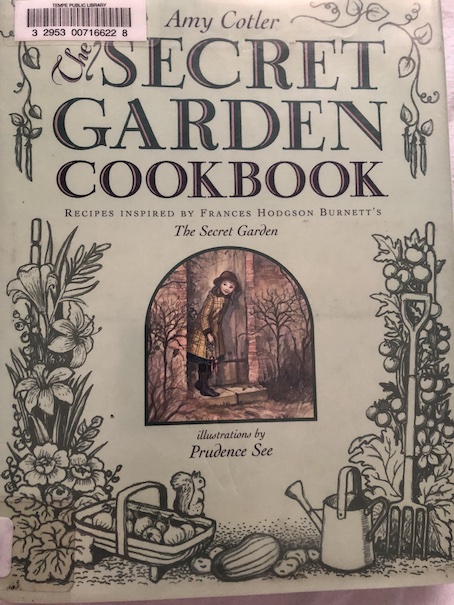
The Secret Garden Cookbook: Recipes Inspired by Frances Hodgson Burnett’s The Secret Garden by Amy Cotler, illustrations by Prudence See, 1999.

This book is a cookbook with recipes based on the types of foods eaten by characters in The Secret Garden by Frances Hodgson Burnett. Food is important in the story because Mary and Collin didn’t have any appetites when they were unhappy and unhealthy, but their appetites improve when they begin working in the garden and getting more fresh air and exercise. Most of the recipes are types of foods that are specifically named during the course of the story, but others are ones that the characters would have been likely to eat for the time and places where they lived. Because the original story focused on gardening, there is also an emphasis on using foods that would be grown in kitchen gardens

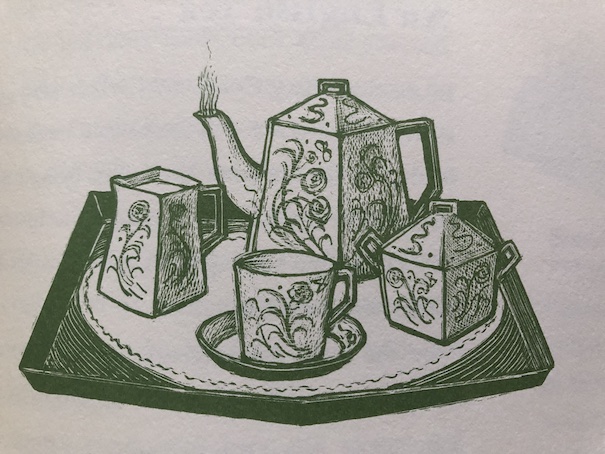
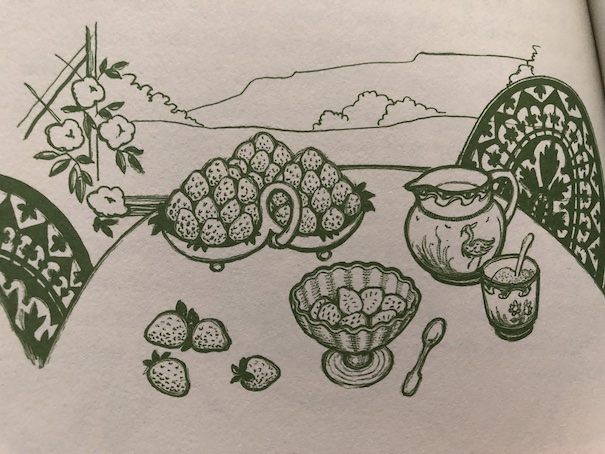
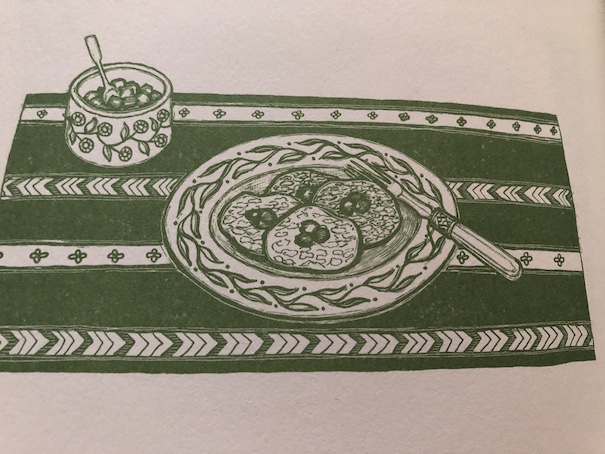
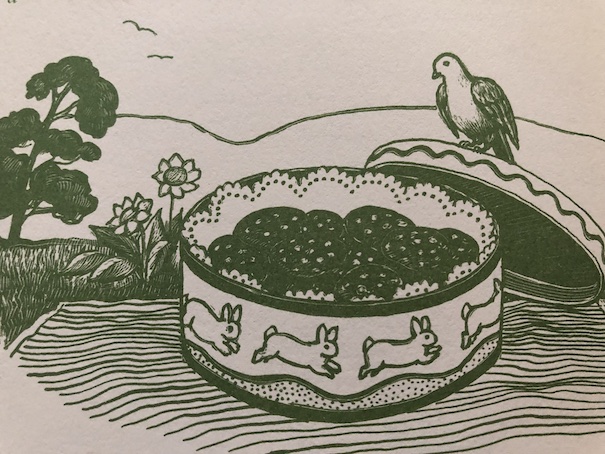
Most of the illustrations in the book are simple green and white drawings of different types of foods that accompany the recipes.

The recipes in the book are sorted into different categories, and each section has historical information about different meals and types of food. Individual recipes also have historical information, trivia, and quotes from The Secret Garden related to the dishes. Some traditional English foods need to be explained to Americans. For example, the word “pudding” refers to a specific type of dairy dessert in the US, but in England, it’s a more general word that can refer to any type of dessert.

I liked the selection of recipes, and I really liked the historical information provided with them!

The sections of the cookbook are:

Yorkshire Breakfasts

These are breakfast foods that the characters in the story ate or might have eaten during the Victorian era.

  • Porridge
  • Coddled eggs – Eggs cooked in a cup
  • Cheese muffins
  • Little sausage cakes
  • Cocoa

A Manor Lunch

This section explain the types of things that people of different classes ate as their mid-day meal in the Victorian era.

  • Yorkshire pudding – These are popovers with meat drippings.
  • Roasted fowl with bread sauce
  • Potato snow
  • Welsh rabbit – This is melted cheese on toast.
  • Cabinet pudding – This is a molded custard dessert with fruit.
  • Jam roly poly

An English Tea

This section explains things that Victorian people ate at afternoon tea.

  • A proper pot of tea
  • Cucumber tea sandwiches
  • Scones
  • Fruit tea loaf
  • Lemon curd tartlettes
  • Brandy snap baskets with whipped cream

The Kitchen Garden

This section is about things people would make from fruits and vegetables that they would grow in their kitchen gardens.

  • Fresh spring peas with mint
  • Glazed carrots
  • Summer pudding – This is a molded dessert made with bread and different kinds of berries.
  • Two fools – “Fools” are old-fashioned fruit-based desserts.
  • Raspberry jam
  • Raspberry vinegar
  • Molded spiced pears
  • Strawberries and cream

Dickon’s Cottage Food

Poor people, like Dickon’s family, would have eaten different things from the wealthier people in Victorian society.

  • Tattie broth – A potato soup.
  • Pease pudding
  • Yorkshire oatcakes
  • Cottage loaf – This is a basic bread recipe.
  • Dough-cakes with brown sugar – A basic dessert made with bread dough.
  • Parkin – A kind of oatmeal gingerbread.

A Taste of India

These are the types of foods that Mary might have eaten during the time she lived in India.

  • Fruit lassi – This is a kind of fruit shake made with yogurt.
  • Sooji – A hot breakfast cereal similar to cream of wheat.
  • Little bacon and coriander pancakes
  • Fresh mango chutney
  • Mulligatawny soup – This soup was invented in India for the British colonists. It’s curry coconut soup whose name means “pepper water.”
  • Florence Nightingale’s kedgeree – Florence Nightingale has nothing to do with the dish, but the Victorians named it after her because she was famous. It’s a rice and fish dish that was often made from leftovers and served for breakfast or lunch.

Garden Picnics

These are foods that can be prepared outside or are easy to pack for a picnic.

  • Roasted potatoes and eggs
  • Currant buns
  • Crumpets
  • Cornish pasties – These are savory pies or turnovers with meat and veggies, meant to be eaten with the hands. They’re sort of like larger, better-tasting Hot Pockets.
  • Chocolate picnic biscuits

The book is available to borrow and read for free online through Internet Archive.

Snowbound Mystery

The Boxcar Children

The school that most of the Alden children attend is closed temporarily because there was a fire and the building needs to be repaired. Henry is in college (this is one of the books in the early part of the series where the children age), but he doesn’t have to go back for another week, so the family is talking about what they’d like to do. Benny says that he wants to go up to the hunter’s cabin in the Oak Hill woods. Grandfather Alden belongs to the sportsman’s club that owns the cabin, but the hunters in the club don’t use it during the fall. It’s early for there to be snow, so Grandfather Alden thinks it will be okay. Grandfather Alden isn’t eager to go himself, but he thinks that it’s okay if the kids want to spend a week there.

The kids bring some food with them to the cabin, but they plan to buy more from the nearest store, which is a five-mile hike away. On their arrival, they choose the places where they’re going to sleep in the cabin, and they look through the cabin’s guest book for names they recognize. One name they recognize is the Nelson family. The Nelsons are the ones who own the store, and they kids wonder why they’ve visited the cabin three times recently because they wouldn’t have come there to hunt. They decide to ask the Nelsons about it when they go to the store.

The Nelsons are friendly and helpful at the store. When the kids ask about their trips to the cabin, Mr. Nelson just says that they sometimes like a change of scene. The cabin used to belong to the Nelson family before the sporting club bought it. However, the Nelsons’ young son, Pugsy, says that whenever they go to the cabin, they “look and look.” His parents stop him from saying more, but the Aldens wonder what the Nelsons could be looking for at the cabin.

The Nelsons give them useful advice about dealing with the squirrels at the cabin and about cooking. Mr. Nelson loves cooking and baking. In particular, he likes to make buns, but he makes an odd comment about how they’re not as good as they could be.

Back at the cabin, the Aldens find a hidden broom closet and a strange message that seems to be in some kind of code. They can’t understand what it means, and they wonder if this message could be what the Nelsons are looking for. Because they don’t understand the significance of the message, they’re not sure what to do about it. The Nelsons are nice, so the kids don’t want to think that they might be involved in anything bad, but if there’s an innocent reason for them to have this message, why are they being so secretive about it?

Although it is early for snow, a bad snow storm comes that leaves the Aldens snowbound in the cabin. Fortunately, they have plenty of supplies, and they can use their radio to hear about weather conditions. There are messages on the radio for people who have been separated from family members, and one of them is from the children’s grandfather, telling them to remain in the cabin and wait for help because he will get to them as soon as he can.

However, the Nelsons were also worried about the Aldens and made their ways through the snowy woods to check on them. The snow was worse than they thought, so now, the Nelsons are also stuck at the cabin with the Aldens. While they wait for their rescuers to arrive, the Aldens and Nelsons discuss the secret message and what the Nelsons are really looking for.

The book is available to borrow and read for free online through Internet Archive (multiple copies).

The Nelsons are actually a nice family, and there is an innocent reason for their behavior. Mr. Nelson’s father and grandfather also loved baking, and they had a special recipe that they used for making buns. Their recipe had a secret ingredient, but unfortunately, they both died before passing on their secret. Mr. Nelson thinks that, if he could make the buns like they did, he could become famous or at least earn more money for his family. He is a good baker, but the recipe is something special. The secret message is part of the recipe, but there’s still a missing piece of the puzzle. The Aldens and the Nelsons use their time when they’re snowbound in the cabin to look for the rest.

This story is equal parts adventure and mystery. Fans of the Cottagecore aesthetic will appreciate how the Aldens make do with the primitive conditions at the cabin, use plants as decoration, and gather nuts in the woods before the snowstorm.

Years after this book was published, another author wrote a cookbook based on food references in the Boxcar Children series, and she included a recipe for the buns in this story. The story never reveals the secret ingredient, and the author uses some shortcuts in preparing them, but it’s an easy recipe that kids can learn to make.

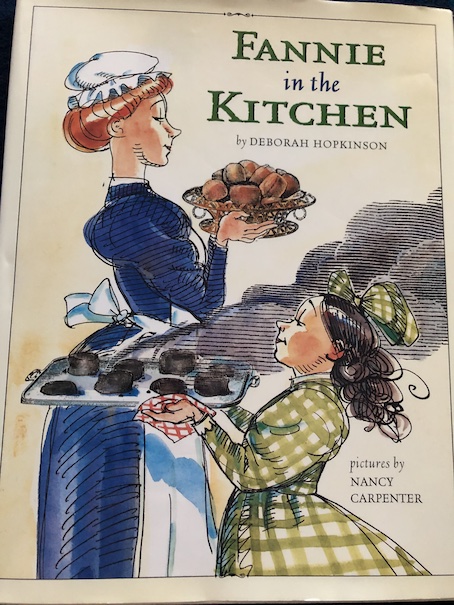
Fannie in the Kitchen

Fannie in the Kitchen by Deborah Hopkinson, 2001.

This is the story of Fannie Farmer and her famous and popular cookbook! When I first heard of the Fannie Farmer Cookbook (originally The Boston Cooking-School Cook Book (1896)), I wasn’t sure whether Fannie Farmer was a real person or if that was just a pseudonym or a marketing name for the cookbook, but Fannie Farmer was a real person in the late 19th century, and that was her real name. The story in this picture book is based on her real life, although details may be fictionalized, and the pictures give the story humorous twists.

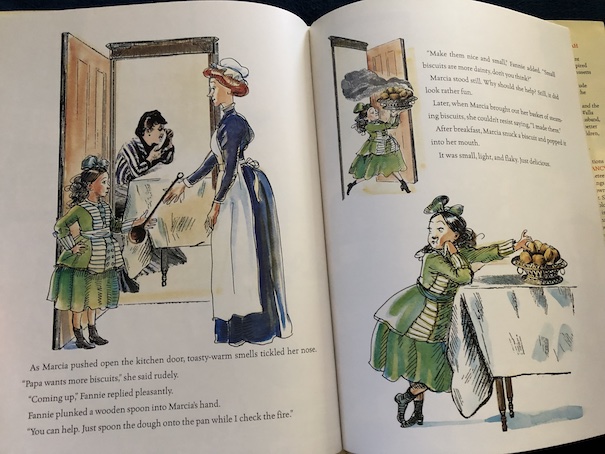
In the beginning of the story, a little girl named Marcia Shaw prides herself on how many things she can do around the house and how much help she can give to her mother. However, she’s still a little girl, and there are some things she doesn’t know how to do well. In particular, Marcia doesn’t know how to cook. Now that her mother is expecting another baby, Marcia’s mother decides that she needs to hire some extra household help, especially with the cooking.

Marcia is a little offended that her mother considers her inadequate to help by herself, but when the new help arrives, a young woman named Fannie Farmer, Marcia has to admit that she’s a good cook. Even better for Marcia, Fannie doesn’t consider her cooking techniques trade secrets. She enjoys letting Marcia help in the kitchen and teaching her cooking tips.

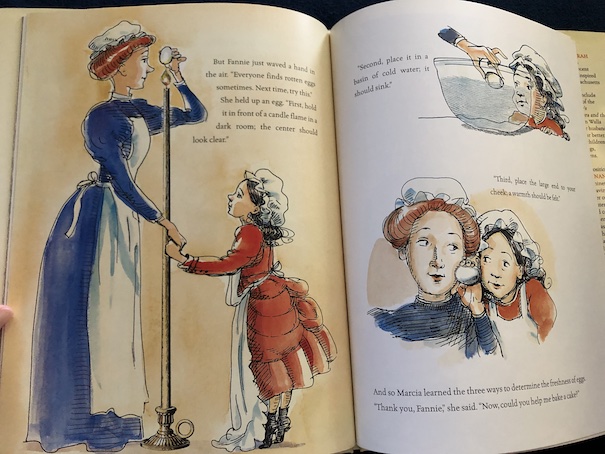
Under Fannie’s tutelage, Marcia’s cooking skills improve. Fannie teaches her many important pieces of information about cooking, like how to measure ingredients and how to tell when ingredients are fresh or if they’ve gone bad.

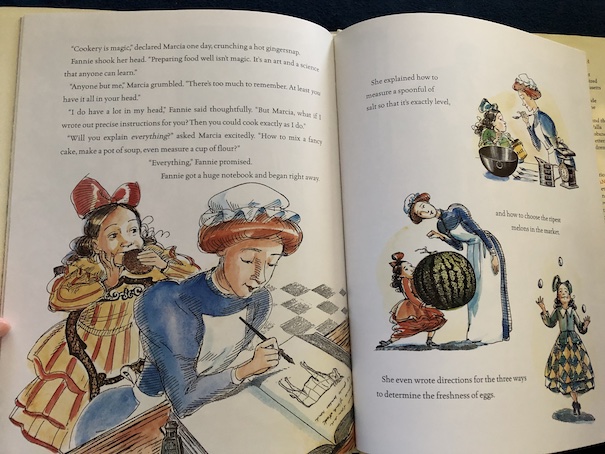
Marcia enjoys learning to cook with Fannie, but she thinks that she’ll never be as good as Fannie because there’s just too much to remember. She doubts that she’ll ever be able to memorize it all. Marcia is amazed that Fannie can keep all of that cooking information in her head. To help Marcia, Fannie decides to write out a notebook with recipes and cooking instructions, including all of the specific measurements for ingredients and detailed information about cooking techniques to make the recipes come out just right.

This is what makes Fannie Farmer and her cookbook so unique for their time period. If you’ve ever seen a very old recipe book or even just old family recipes written down, they often don’t have all of the amounts of ingredients written down, or the amounts are written in very vague terms. Old recipes also offer little to no cooking techniques, like how to tell when it’s time to turn a griddle cake over or how to tell if a cake is done baking. The assumption was that girls (usually girls for this time period) would learn to cook by watching their mothers and by learning from their examples. However, that assumes that their mothers knew all of these cooking tips themselves, that the mothers remembered to tell their daughters what they knew and explained it well enough for them to understand (some people don’t have much of a talent for teaching, even when it’s a subject they know themselves), and that the daughters understood or remembered everything their mothers said. Otherwise, the vague directions in cookbooks and family recipes were of little help, and new cooks had to learn through experimentation or trial and error. Fannie’s approach to cooking, as explained in the story, is an art and a science that anybody can learn if someone explains it well enough, so she puts her focus on recording all of the necessary details of her recipes.

Fannie’s recipe book, started for Marcia, turns out to be very popular with both the Shaw family and their friends and neighbors. As word spreads about it, people start coming by to borrow recipes or get cooking advice. Fannie realizes that there is a lot of demand for better teaching of cooking techniques, and she really enjoys teaching cooking, so she decides to accept a job at the Boston Cooking School.

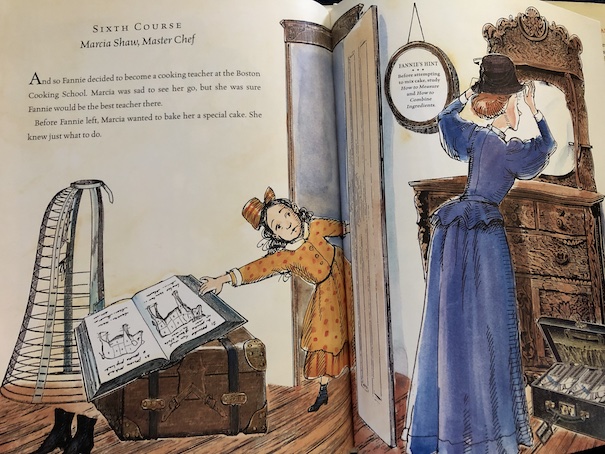
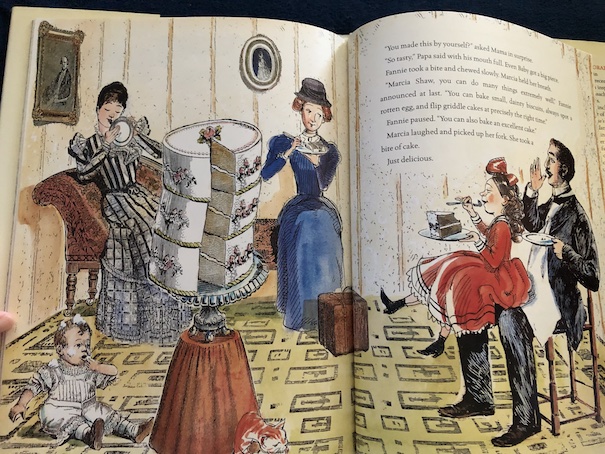
Before Fannie leaves the Shaws, Marcia borrows the cooking notebook and makes a special cake for Fannie to show her what she’s learned. The cake comes out just right because Marcia has followed Fannie’s directions.

There are hints from the Fannie Farmer cookbook throughout the book, and there is a section in the back of the book with historical information about Fannie Farmer. It also includes a sample recipe for Griddle Cakes.

The book is available to borrow and read for free online through Internet Archive (multiple copies). New and used copies are also available on Amazon. You can also buy the original Fannie Farmer Cookbook through Amazon or read it online through Internet Archive (multiple copies).

My Reaction

One of the things I liked about this book is the illustrations. There are eccentric details in the pictures that add humor to the story, like how Marcia stacks a bunch of chairs on top of each other while making candles, so she can make them extra long, and one of her extra long candles appears later, when Fannie shows her how to tell if an egg is fresh by holding it up to a light. For some reason, Marcia’s mother also has a weird habit of licking her dishes when she’s eating one of the yummy recipes, and there is one picture where it looks like she’s lost control of the baby carriage, and it’s rolling away with the baby. I’m sure these aren’t historical details and were just thrown in to be funny.

I think it’s also important to point out that the real-life Fannie Farmer lived an unconventional life for someone of her time period. She was plagued with health problems from a fairly young age. At some points in her life, she was unable to walk, possibly because of a stroke, and when she walked, she had a limp. She never married, but she built a fulfilling career around her talent for cooking. and achieved lasting fame because she wanted to share her knowledge with others. She is credited with establishing exact and level measurements in cooking in the United States, and she was also a strong believer in quality food and proper nutrition, especially for people with health problems.

The Super-Duper Cookie Caper

The Bobbsey Twins

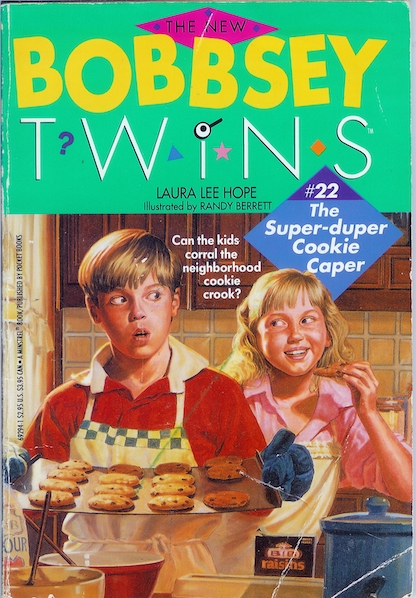
Bobbsey Twins Super-Duper Cookie Caper coverr

#22 The Super-Duper Cookie Caper by Laura Lee Hope (Stratemeyer Syndicate), 1991.

Before I begin, I’d like to acknowledge Sean Hagins, for supplying me with photos of this book! Usually, I take pictures of books myself, but I just couldn’t find a physical copy of this one. Sean is a big fan of the Bobbsey Twins, particularly the New Bobbsey Twins mysteries, and you can see some of his video reviews as well as videos about his photography work on his YouTube channel, SJHFoto. Thanks, Sean!

Freddie decides that he wants to get a new bike, and inspired by the school bake sale, he decides that he’ll make and sell cookies to raise the money. His grandmother makes really delicious oatmeal chocolate chip cookies that everybody loves, so he plans to make and sell them. He persuades his twin, Flossie, to help him by promising her part of the money from the cookie sales. Their parents approve of the plan, and their mother offers to help them because neither of them has much experience with cooking.

When Freddie and Flossie go to sell the cookies in the park, they’re pretty popular. Everyone loves the cookies, and Freddie boasts about his grandmother’s secret recipe. Their last customer is a man who gives them a dollar with some kind of white powder on it, and he doesn’t seem to think much of the cookies. Freddie doesn’t care because everyone else likes them, and they’re making money.

There are some complications to selling cookies. First, Flossie has a sweet tooth, and Freddie has to keep stopping her from eating their stock herself. Then, a boy at school, Brian, announces that he’s going to set up a rival business in the park, selling brownies. Freddie gets the idea of offering broken cookies as free samples and selling orders of cookies door-to-door.

Nan and Bert start helping with the cookie-baking, but things don’t always go well in the kitchen. There are times when they forget ingredients or let the cookies burn. Then, the children realize that the card with the recipe on it is missing! They search the kitchen and realize that there is a chocolate smudge on the kitchen window. It looks like someone reached through the window and stole the recipe!

There are a few logical suspects. It could be Brian, hoping to cash in on the success of the cookie-selling. It could be their old nemesis, local bully Danny Rugg, who stole their free samples earlier and generally likes to mess things up for the Bobbseys. Then again, there is the mysterious man who keeps showing up at the park. The Bobbsey Twins find out that he owns his own bakery. To find out who the recipe thief is, Freddie decides to invent a trap. He tells everyone that his grandmother has given him her other secret recipe for super-duper cookies that’s even better than the first one. Who will take the bait?

The book is available to borrow and read for free online through Internet Archive.

My Reaction

Sean and I were discussing earlier how later books in the New Bobbsey Twins series tended to focus more on the younger set of twins than the older Bobbsey twins and seem to involve lower-stakes mysteries. Earlier books in the series involved definite crimes, police matters, and strange phenomena. A stolen cookie recipe feels like much lower stakes. However, I thought this one was well-done for what it was. There are some definite suspects, enough to sow some doubt about who the recipe thief is. The actual thief is someone I suspected but not necessarily the most obvious suspect, and the thief’s motives do make logical sense, although I’m not sure (spoiler) any real adult would seriously consider that kind of business model. It sounds more like something a kid might do, and that’s partly what allows readers to doubt whether it’s a child or adult who took the recipe.

There is also a punchline to the story. There was one thing that I had guessed early on about the grandmother’s “secret recipe.” It’s not as “secret” as the kids think it is. I guessed that because, when I was a kid, one of my grandmothers always baked chocolate chip cookies. Those cookies were one of the highlights of going to her house. When we were little, my brother and I liked them so much that we guessed that she must have been a baker before she retired. When we were older, we found out that she’d actually been a bookkeeper and that her cookie recipe was just the Toll House recipe from the chocolate chip package. She made two versions, with and without nuts from the pecan tree in her backyard, but it was still the Toll House recipe. It’s a similar situation with the Bobbsey Twins’ grandmother’s secret recipe. The only thing the grandmother changed was the cooking time. Everyone just thought that the cookies were special because her grandchildren thought they were, and they convinced other people. Few things are as special as homemade cookies from your grandmother!