
The Mystery of the Other Girl by Wylly Folk St. John, 1971.
It’s a rainy Saturday in Florida for the Barron family when Stevie (short for Stephanie) gets a strange phone call from Mobile, Alabama that’s meant for her ex-boyfriend, John Henderson. Stevie just broke up with John, who likes to call himself “Ian” because he thinks it sounds classy, the day before, and she has no idea who the strange girl on the phone is or why she’s trying to reach John/Ian at her number. Stevie asks the girl for her name, and she says that she’s Morna Ross, but suddenly, the girl screams and is cut off, like someone put a hand over her mouth, and then someone hangs up the phone at her end. Stevie is disturbed by the call, fearing that something bad happened to the other girl, but she doesn’t know what to do about it because she doesn’t know Morna Ross and doesn’t know exactly where she was calling from or why she wanted to talk to Ian.
Since Stevie already has a date to go dancing with friends at a place where Ian and his band are performing that night, she tells her friends about the weird phone call and asks them what she should do. They say that they’ve never heard of Morna Ross and tell her that she should talk to Ian about it. However, Stevie feels too awkward about the breakup to talk to Ian and asks a couple of her friends to do it for her.
That evening, Stevie and her friends run into Stevie’s old friend, Hope. She and Hope haven’t seen too much of each other lately because she’s not interested in dancing and dating and other things that Stevie wants to do. This evening, though, Hope is out with a visiting cousin from Mobile, Alabama named Phil Walters. Stevie is glad that Phil is getting Hope to come out of her shell a bit. Stevie and Phil say that the style of dancing popular with teenagers today is better than older styles of dancing because they don’t have to take any lessons to learn it – it’s just moving to the music, like everyone else. On impulse, she asks Phil if he’s heard of Morna Ross, but he says he hasn’t. Stevie’s friends say that when they asked Ian, he claimed not to know Morna Ross at first, but then he said something about her being a girl who’s “crazy about him.” Apparently, he dated her before he dated Stevie, and since he and Stevie broke up, he decided to invite her to the Old Seville Festival that’s happening next week, a local celebration of the history of their town. Stevie thinks it’s strange that Ian didn’t mention that Morna lives in Mobile, since that’s the place she was calling from. Stevie’s friends think maybe Ian was lying about Morna being crazy about him and that he probably doesn’t really know her because Ian is always bragging about things, like how great his family is. Hope thinks Ian makes up things to brag about because he wishes they were true even though he knows they really aren’t. After she thinks it over, Stevie thinks that’s true, that Ian likes to keep up appearances and a superior attitude because, underneath it all, he’s actually a very insecure person. But if he made up his relationship with Morna, and he doesn’t really know her, why was Morna trying to call him?
Before the evening is over, Ian confronts Stevie and reminds her that their first date was almost a year ago, at the last Old Seville Festival and that he’s planning to see her there again this year because they promised each other that they would see each other during the festival every year. In return, Stevie confronts Ian about Morna. Ian says that she’s just another of the girls who have come to see his band perform and likes him. When Stevie asks why nobody’s met Morna at any of the teenage hangouts in town, he says that they like to hang out at the more adult spots. He begins spinning a story that Stevie is sure is at least half fiction about how he and Morna order non-alcoholic drinks at adult nightclubs but they sneak in some gin to mix in with it and how they’ve tried marijuana. (Keep in mind that marijuana was illegal everywhere in the US at this time.) Ian says that he and Morna don’t really want to become potheads, but they see trying these things as part of growing up, “to experience everything and then make a choice.” Stevie pauses to wonder about the word “everything.” (That is always a good thing to wonder about when someone talks about wanting to try “everything.” Define “everything.”) Stevie asks him where Morna lives, and he says that she lives across town, but her family has moved around a lot because her father deals in real estate and sometimes even sells their own house and moves his family to a different one. (Ian sounds like he thinks that’s clever. I thought it sounded really suspicious, like maybe Morna’s family is actually involved with the mafia or something and has to keep on the move.) Stevie doesn’t really believe any of this, but she pries a few more details out of Ian about what Morna looks like. Although she thinks that Ian made up most of the things he said about Morna, there is still the girl who called her earlier and screamed like she was in trouble. She was a real person, even if what Ian said about her wasn’t all true.
When Stevie gets home, she tells her mother what Ian said about Morna and how Ian likes to make up things. Stevie is still concerned about the girl who called and wants to find out who and where she is and if she’s okay. Her mother says that her father will be coming home from a business trip the next day, and they can ask him what to do about it. Stevie’s father is a fingerprint expert at the police department, so he knows about police procedures and can make inquiries. Stevie wishes that she had Morna’s fingerprints so her father can analyze them himself, and in another weird development, she gets that opportunity.
The next day, Stevie gets a letter from Morna. The letter is addressed to her and not Ian. Morna didn’t know her home address, so she addressed it to the high school she attends, and the letter was forwarded to her from there. Stevie handles it carefully so she won’t disturb any fingerprints. The letter even has Morna’s return address, so she knows where she lives in Mobile. The contents of the letter are strange. Morna talks about her school band and how they’re always short of instruments. She says that she’s liked Stevie since she saw her playing with her school band in a competition (Stevie really is in her school’s band) and wonders if her school would be willing to sell spare instruments. The letter is oddly worded, the word “see” is underlined twice, and there are doodles all over page. Also, the specific instrument Morna says that she wants is written in French and doesn’t sound at all familiar to Stevie. Stevie looks up the term Morna uses, and it turns out to be a French horn. But, if Morna meant “French horn”, why didn’t she just say that? Also, the price she mentions for the French horn is far less than what an actual French horn would cost. It seems like Morna is either crazy or trying to say something else in her letter.
Stevie has a younger brother named Lyle who is really smart, and he suggests that the letter might be in some kind of code. As they talk it over, Stevie realizes that the French horn refers to Ian because he plays the French horn in her school band. Lyle wants to study the letter more to see if he can figure out other parts of the code, and Stevie decides to invite her friends over to see it, too, because most of them are also in the band and might notice something else in the message that’s music-related. Little by little, the kids begin working out the real meaning of Morna’s message. First, the amount of money that didn’t make sense is meant as a clue the reader that there’s more to this message than just an inquiry about musical instruments. Second, Morna phrases sentences oddly in order to work certain words into the message and put them in the right order for her hidden message. Third, the doodles around the message are the beginnings of pieces of music. Stevie and her friends providing their musical knowledge and Lyle coaches them through code-breaking techniques. After awhile, Lyle goes to his room to work on the code alone because he finds it easier to think by himself and likes surprising people with his discoveries. When he returns, she has the final solution.
Morna’s message says that she has to get in touch with Ian. She says that she is being watched and her mail is being read, which is why she has to communicate in this way. Morna asks Stevie to write to her in the same way, promising to explain the situation later. Stevie remembers that Ian wanted to see her at the Old Seville Festival, so she decides to tell Morna when and where to come if she wants to see Ian. Shortly after Stevie mails the letter, Morna calls again, saying that she needs to warn Ian because someone might try to kill him. Then, she screams and someone hangs up the phone again.
At first, Stevie’s father thinks that Morna is some kind of prankster or maybe having some kind of paranoid fantasy because she’s into drugs or something, but Stevie is sure that Morna really is scared. The danger is real, and Stevie’s family realizes it when Lyle is kidnapped at the Old Seville Festival.
The book is available to borrow and read for free online through Internet Archive.
My Reaction
I was pretty sure, for much of the early part of the book, that the whole thing with Morna’s mysterious phone calls and messages was just an act that Ian dreamed up and got someone to do for him as one of his dramatic bids for attention. It seemed weird to me that Morna second phone call ended exactly the same way as her first, like it was part of a rehearsed routine. Also, someone who wanted to interrupt Morna’s phone calls and keep her from talking could do it in easier ways that wouldn’t involve dramatic screams that would get attention. They could have just unplugged the phone or held down the hang up button. (Remember, this is the early 1970s. Morna’s using an older style of telephone that has to plug into the wall, and there are buttons where the handset rests that hang up the phone. That was the first type of phone I ever used as a kid, and I know that you can push those buttons down with your hand to end a call even if someone is still holding the handset.) I would think that if a sinister person was watching Morna, they would cut her off that way rather than try to put a hand over her mouth while she screams. Also, if they really didn’t want her to communicate with anyone, I don’t think they’d let her write any kind of letter, not even one that just seems to be about band instruments. Even if they couldn’t figure out the code, I doubt that they’d want to take the chance that she might communicate something to the wrong person. It all just seemed too theatrical and not realistic. So, I couldn’t really blame Stevie’s father for initially thinking that the whole thing might just be some kind of prank. However, I did wonder why he didn’t just phone the Mobile police department and ask a colleague to do a welfare check on the girl at the address on the envelope to find out if it was a prank or not. Better safe than sorry, and if it turned out to be just a prank, knowing that the police knew about it would probably be enough to get the girl to stop.
As it turns out, it’s not just a prank. There is something genuinely sinister going on, although I wasn’t sure what it was for quite awhile. I thought it might have something to do with drugs because there were repeated references to drugs in the story, but that’s not what’s going on. It turns out that Ian/John has been having trouble with his self-image and even self-identity because he’s adopted. He’s aware that he’s adopted, which is why he secretly worries that he doesn’t really fit in with his family or friends and makes up fantasies about himself to impress people while being inwardly insecure. However, there’s quite a lot that Ian/John doesn’t know about his past, not even his birth name, and the truth of Ian’s past is even stranger than anything that he’s ever imagined. His blood relatives love him and didn’t forget about him, even though they couldn’t take care of him when he was a baby, and now, they’re trying to protect him from a very real threat. Finding out the truth comes as a shock to Ian, but it’s an important step in making peace with himself and realizing just how important he is just for being himself, not only to his adoptive family but to the family who gave him up for adoption and to the friends who cared about him even when he was a bit of a poser and who took great risks to protect him and help him find the truth.
Lyle is fun as an eccentric genius character who has a pet walking catfish. I hadn’t actually heard of a walking catfish before reading this book, but that’s part of the fun. I enjoy stories that bring up interesting facts that I didn’t know before. Walking catfish can actually survive out of water for long periods of time and move across land. The walking catfish ends up playing a role in catching the bad guys in a way that actually makes sense, which is nice. I also like that, although Lyle is pivotal in solving the mystery, he didn’t get all the answers too easily, like some geniuses in stories, and he needed some specialized knowledge from other people. That makes him a more realistic character.
I would like to discuss the costumes that the characters wear to the Old Seville Festival, though. They explain that it’s common for people attending the festival to dress in historical costumes from different time periods in the town’s history to get into the spirit of the event. Ordinarily, I would think that’s fun and be completely supportive, but there’s one exception that I think crosses the line a little. Some people, including Lyle, dress in Native American costumes. I’m not Native American myself, but I know that real Native Americans are usually not too happy to see traditional forms of dress being used as costumes. I would cut the characters more slack for it if they confined themselves only to wearing clothes like traditional Native Americans, but what pushes it over the line for me is that Lyle is described as darkening his hair and his skin as part of his costume. He also does some kind of warpaint on his face, but it’s the skin coloring that he does that I think is unacceptable. I think that’s going too far, and that’s what pushes this costume into the realm of the tasteless and offensive. A little more restraint, just sticking to the clothes might have been okay, but looking like one of those white actors trying too hard with makeup to pass for a minority in an old black-and-white movie is just too much. It’s one of the things that really dates this book because fewer people today would be willing to take it that far, at least not without some embarrassment or criticism from other people. It was published in the early 1970s, and may possibly take place a little earlier, in the 1960s, because no exact year is given. I’ve heard some people claim that it was normal for them to wear racial face makeup as part of costumes when they were kids, and never having seen that even once when I was a kid in Arizona during the 1980s and 1990s, I’ve wondered just when and where kids did that of their own free will when they were given the opportunity to wear literally anything else, and I think I have at least a partial answer here. Lyle carries a tomahawk as an accessory to his costume and gives war cries. He also comments about how hippies are bringing Native American style headbands back into style, which further dates the story.
I should also explain that Lyle is not just dressing as any random Native American; he is trying to be a real historical figure. He is specifically trying to be William Weatherford, a mixed-race plantation owner known for his involvement in the Creek War in the 1810s. I like the part where Stevie wonders about the authenticity of Lyle’s costume. Apparently, Lyle got some help from someone at the local museum, but Stevie realizes that nobody else at the festival is going to know (or care) whether Lyle’s war paint designs are accurate or not, and even if he’s dressed accurately as a Native American of the area, the real William Weatherford probably typically dressed in the British style favored by other plantation owners of the era because he was living in the same manner as fully white plantation owners and going by his English name rather than his Native American name. I’m not actually sure how the real William Weatherford dressed because this isn’t a part of history that I know much about, but Stevie’s logic makes sense. My guess is that he probably wore a variety of different clothes in his life, depending on his circumstances at the time. (After all, various other historical figures did. Emperor Hirohito was photographed at various times wearing traditional Japanese ceremonial clothing, Western-style suits, and military uniforms, depending on the event.) One thing I could state with confidence is that William Weatherford probably didn’t have a pet walking catfish on a leash, which Lyle does because he insists on bringing his pet to the festival with him.
It’s part of the plot that Lyle is wearing an outlandish costume and has his walking catfish with him when he’s kidnapped, but I still think that there are equally outlandish historical costumes that he could have chosen that could have chosen that would have worked. It’s important that Lyle dyed his hair for the costume, so he had the same hair color as Ian on the day he was kidnapped when his ordinary hair color is much lighter, but I think there could be other ways around that or maybe he could have worn a hat so his hair wasn’t visible at first. I wouldn’t mind if he just dyed his hair, but the skin coloring is just too much.
Personally, I prefer the costumes that Stevie and her friends wear to the festival. They decide to dress as Gibson girls from the late 1800s and early 1900s. They basically wear old-fashioned-looking skirts and blouses and put their hair in the typical Gibson Girl hairstyles. Historical costumes that are based on wearing different clothes and hairstyles are the type of costumes I favor.
Aside from the costume issue, I really liked the story. I honestly wasn’t sure what the real problem was until the very end of the book. I had several theories, but Morna really surprised me when she explained who she really was and why Ian was in danger. I thought that she might turn out to be a relative, but the situation wasn’t what I expected.

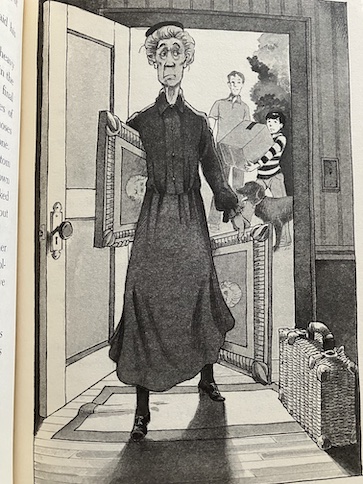

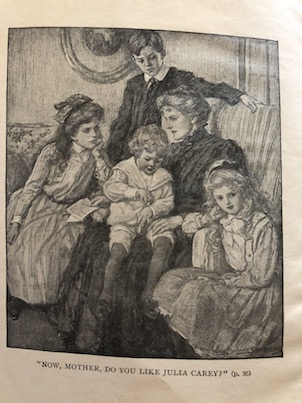 Then, the family receives word that Captain Carey’s brother is in failing health and that his business partner, Mr. Manson, is seeking to place his daughter, Julia, with a relative. Mr. Manson has already spoken to a cousin of the family about Julia, but this cousin has refused to take her. The now-fatherless Carey family knows that taking on another relative will be an added burden on them, but Julia has no other family and nowhere else to go, so they see it as their duty to help her. Admittedly, none of them likes Julia very much. They remember her as a spoiled child who was always bragging about the wonderful things that her wealthier friend Gladys Ferguson had or did. Even now, the Ferguson family has invited Julia for a visit before she goes to live with her aunt and cousins, but unfortunately, they have no intention of adopting her or even trying to care for her until her father is well themselves. Nancy sees them as simply spoiling Julia and preparing her for a life that the Carey family can’t possibly support.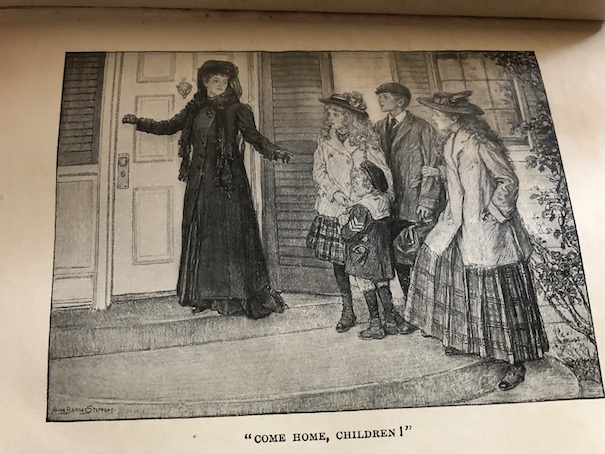
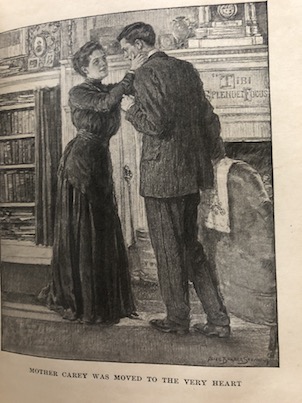 A character that appears in the movie, Ossian “Osh” Popham, is also in the book, although instead of being the store owner, he’s a local handyman who helps the family get the house in order. His children, also characters in the movie, are in the book, too, although I didn’t like the way the book described his daughter, Lallie Joy. It says that “she was fairly good at any kind of housework not demanding brains” and that she “was in a perpetual state of coma,” in case you didn’t understand that she’s basically stupid. I always hate it when stories make a character intentionally stupid. I did appreciate her explanation of her name, though: “Lallie’s out of a book named Lallie Rook, an’ I was born on the Joy steamboat line going to Boston.” I had wondered where the name came from.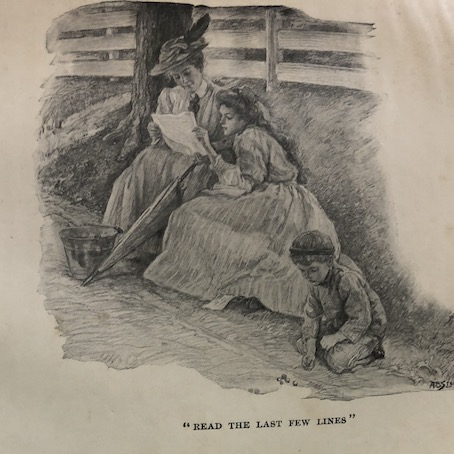
 When Lemuel tells the Careys that they can stay in the house for as long as they like, unless his son Tom wants the house, Nancy begins thinking of Tom as a possible threat to her family’s happiness. (She thinks of him as “
 Mystery Behind Dark Windows by Mary C. Jane, 1962.
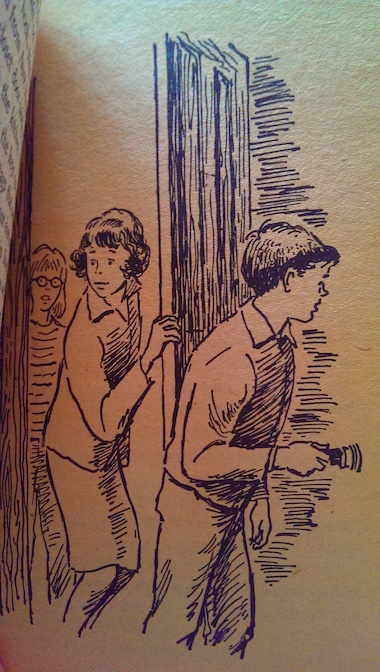 Then, one night, Ellie goes out to look for her aunt’s missing cat and hears someone in the old, supposedly empty mill. When she tries to tell Tony, he doesn’t take her seriously, but Ellie knows what she heard. Ellie later goes back to the mill to take another look at the place, and she sees Jeff, a boy from Tony’s high school, hanging around. Later, she confides what she’s heard and seen in Hank, an old friend who lives on the other side of the river, and Violet, another girl from her class whose family has suffered since the closure of the mill. The two of them start helping Ellie to investigate.
 Mystery Back of the Mountain by Mary C. Jane, 1960.
 When they get to Maine, they meet Uncle James’s lawyer, Mr. Palmer, to collect the key to the house. Mr. Palmer tells them that the house has a few items in it that could be considered valuable antiques, including a portrait of the woman that Uncle James had wanted to marry, Drusilla Randall. The children’s father asks Mr. Palmer more about Drusilla Randall, and he says that all he knows is that she had an argument with Uncle James and then disappeared. He thinks that she just left town, although he says that there are rumors that Uncle James may have murdered her. Mr. Palmer thinks that the rumors are ridiculous and doesn’t take them seriously, but Stevie and Anne are disturbed at the idea that their relative may have been a murderer, or that people thought he was. Mr. Palmer also mentions that Drusilla’s sister, Marion, has decided to return to her family’s old house for the summer as well, so she’ll be living close to their farm.
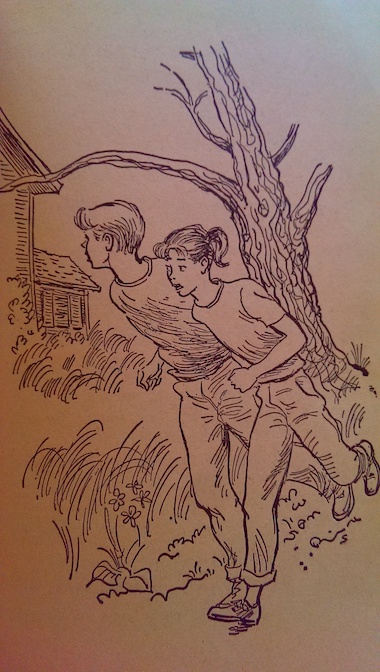 The house is certainly an isolated place, and their closest neighbors, the Hodges have an old grudge against Uncle James. The unethical business deal that Uncle James did years ago involved buying some of the Hodges’s family’s best land. Bert Hodges, who was young at the time, says that the deal ruined his father’s life, and it’s making his miserable, too, because he really needs that land to make his farm profitable. Anne hears this from Bert’s young niece, Oleva, an orphan who has come to live with her aunt and uncle. Although Uncle Bert is strict with her and somewhat bitter about the past and the family’s circumstances, Oleva likes her aunt and uncle and wishes they would adopt her, giving her the stable home she’s longed for since her parents died and she began being traded around among her relatives. However, Bert doesn’t have much faith in other people, and even though he likes his young niece, is afraid to commit to adopting her.
 Anne feels badly that Uncle James’s land deal seems to have ruined people’s lives. Oleva also tells her something disturbing about Drusilla, the girl that Uncle James loved. They were supposed to be married when Drusilla turned twenty, but she disappeared before that happened, and most people think that she drowned in the natural pool on Uncle James’s property. It’s deeper than it appears at first, and some things belonging to her were found nearby, so everyone thinks that she probably drowned and that her body is still somewhere at the bottom of the pool. Whether her death was an accident, suicide, or murder is still unknown.
 This book was originally written in German. It was written in Germany during the
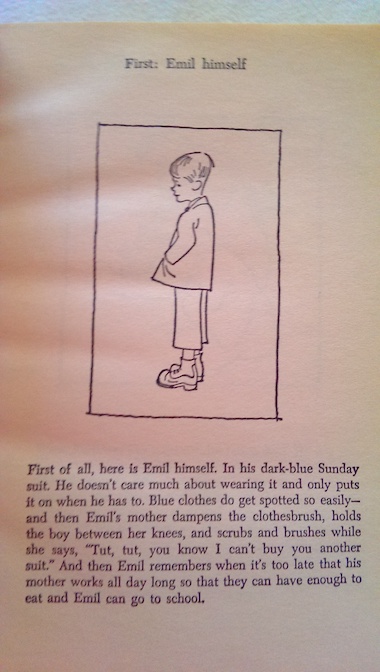
  At the beginning of this story, it explains that Emil Tischbein’s father died when he was very young and that his mother works hard as a hairdresser to support the two of them. When she can, she saves a little money for Emil’s grandmother as well. When the story begins, Emil is preparing for a train trip to Berlin to visit his relatives. Emil will be traveling by himself and will meet his relatives near the station when he arrives. His mother gives him some money to take to his grandmother and warns him to be careful. Emil pins the money inside his pocket for security.
 Determined to get the money for his grandmother back, Emil searches for Herr Grundeis and spots him getting off the train. It’s too soon for Emil’s stop, but he follows Grundeis off the train anyway, tracking him to a café.
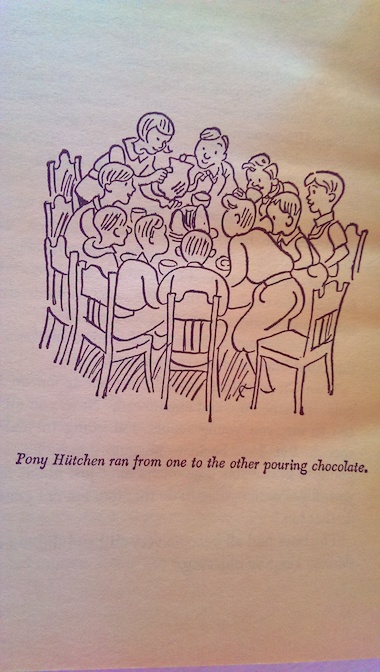 Gustav recruits a bunch of other boys from the neighborhood, and they continue tailing Grundeis through the city to his hotel. The boys call another friend at home, who keeps track of their progress and gives them reports about what others have said. Emil gets one of the other boys to tell his relatives that he has been delayed on important business, causing his cousin, Pony Hutchen, to come and tell him that everyone is worried and that he’s going to be in big trouble with his relatives if he doesn’t show up soon. However, they still have the problem of deciding how to confront Grundeis and get him to return the money. In this case, the detectives don’t need to solve the mystery of who the thief is. The real problem is how to prove it.
 There was a note in the beginning of my copy of the book that says that many of the character names in the book are actually jokes on the part of the author. It’s not as obvious in English because the forms of the names sound reasonable for German names, but anyone who knows German would spot that they aren’t real names. For example, Emil’s last name is Tischbein, which means “table-leg,” and the thief’s alias, Grundeis, means “ground-ice.”

