Eyewitness Medieval Life

Eyewitness

Medieval Life by Andrew Langley, photographed by Geoff Brightling and Geoff Dann, 1988, 2004.

I love books that explain the details of daily life in the past, and I especially like Eyewitness books because they include such great photographs to show objects that people would have used in the past.

This book begins by explaining the time period of the “Middle Ages”, which was the period between Ancient Greece and Rome and the Renaissance, when culture and knowledge from Ancient Greece and Rome came back into vogue. The Middle Ages lasted about 1000 years, roughly from 400 to about 1540 AD. (Estimates of the start and end dates vary because this was a period defined by cultural changes, which are gradual and don’t have precise start and end dates.) This long period of time can also be divided into smaller periods and contained many important events that helped to shape society and culture, including The Crusades and The Great Plague.

Medieval society was hierarchical and was based on land ownership. The king and the highest nobles controlled the land and allowed people in lower levels of society to use it or grant farming rights to peasants in exchange for rent in the form of their services and a share of what they produced. The peasants or serfs were tied to the land they farmed, and the land was owned by the lords they served. They were not regarded as “free” people, and they couldn’t leave their lord or the land except by raising enough money to buy some land for themselves or by marrying a free person from a higher level of society.

A lord’s manor included not only his manor house or castle but the nearby village, church, and the farmland where his serfs worked. Often, villages and manors had little contact with the outside world, so the people who lived there had to make most of what they needed themselves. Most people never left their land or were only able to travel a short distance from it, so the only new people they might meet would be traveling peddlers, soldiers, or pilgrims.
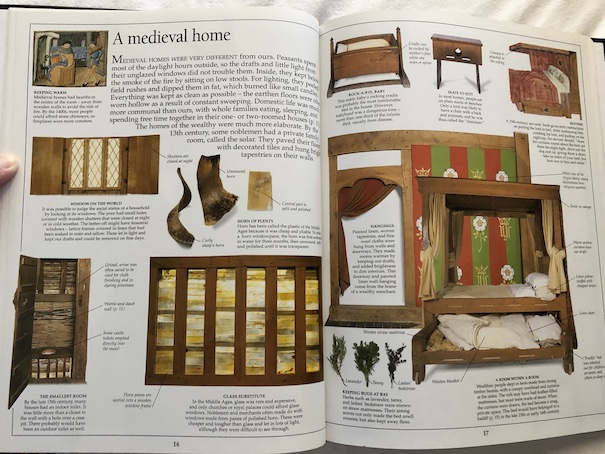
The book explains what would be found in a typical Medieval home. Poor people lived in houses that had only one or two rooms for the entire family. Few people could afford to buy glass windows. Poor people only had wooden shutters to cover their windows. Others might have tallow-coated linen over a lattice frame, which would let in light, and some wealthier people had pieces of polished horn in their windows, which also let in light, although you couldn’t really see through them well. What people ate varied depending on their social status. Wealthier people could afford a wider variety of foods, and poor people mostly ate what they produced themselves.

Women’s lives also varied depending on their social status. Pleasant women farmed and provided for their families alongside their husbands. Women in families of craftsmen and tradesmen often worked alongside the men in the family business. Wealthy women managed their husbands’ households or could rise to rank of influential abbess if they joined religious orders. However, the highest ranks in society were occupied by men.

While peasants served their lords, lords also owed services to higher nobles and, ultimately, to the king, although sometimes the king struggled to control powerful nobles and assert his authority over them. The king generally had to keep his nobles satisfied with his rule if he wanted to retain their loyalty because, while he was the source of their land and authority, they were effectively ruling over their own smaller lands with their own troops. While nobles owed their king military service and support, if they were dissatisfied with the state of their lands or were just unoccupied with other battles to fight and saw an opportunity, they would sometimes use their troops to raid the lands of neighboring nobles. Part of the king’s job involved preventing his nobles from being dangers to him and to each other. The king also made and enforced laws, settled disputes, and oversaw the collection of taxes.

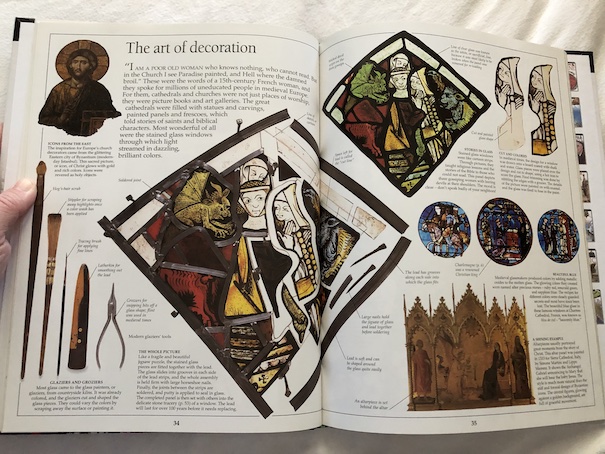
Christianity, specifically in the form of Catholicism, was central to the lives of people in the Middle Ages. During this time, stonemasons and craftsmen developed new techniques for building impressive cathedrals that still stand today. These cathedrals were lavishly decorated with statues, frescoes, and stained glass windows that depicted Biblical stories and the lives of saints. These works of art were important for helping to teach people who did not have the ability to read the Bible themselves about their religion.
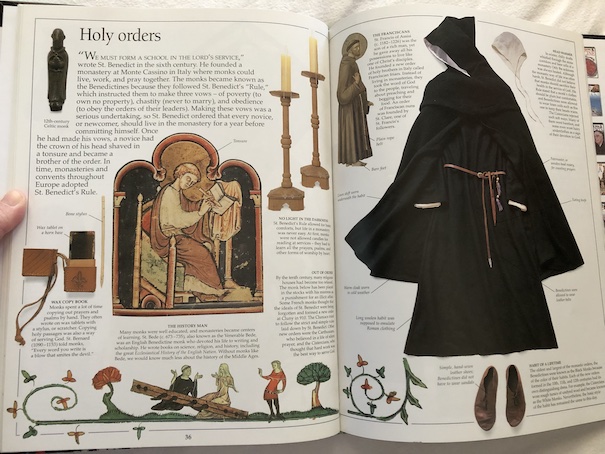
Religious orders of monks and nuns performed important functions for society, such as caring for people who were poor or sick, providing safe places for travelers to stay, and copying written texts by hand. In the centuries before the printing press was invented, there were only handwritten books, and they took time and skill to produce. It could take an entire year for someone to copy an entire Bible. Few people were able to own personal books, and much of the schooling in this period was provided by religious orders.
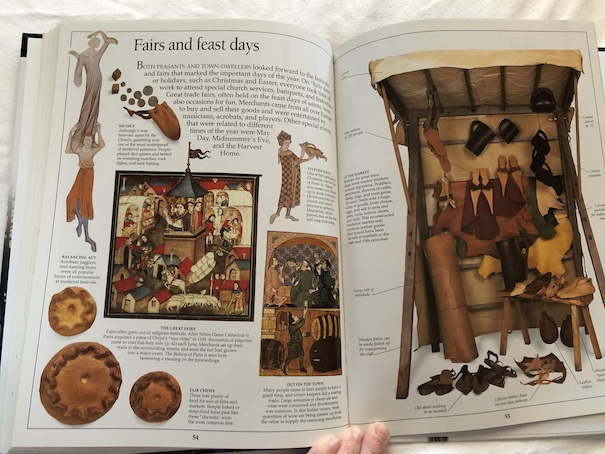
The book describes the rise of Islam during the early Middle Ages, increases in trade and commerce, the growth of towns, and guilds that controlled different professions. It also describes Medieval music and entertainment, such as plays and parades. One of my favorite parts of the book is about fairs and feast days.
The book ends by describing the beginning of the Renaissance and the rediscovery of classical Greek and Roman culture as well as the beginning of the Reformation and the development of new scientific discoveries and artistic styles.

The book is available to borrow and read for free online through Internet Archive (multiple copies).

The Pharaohs of Ancient Egypt

The Pharaohs of Ancient Egypt by Elizabeth Payne, 1964, 1992.

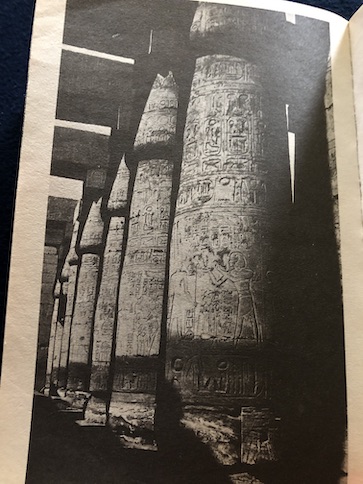
This is a book for kids about the lives of Egyptian pharaohs, including Hatshepsut, Akhnaton, and Rameses the Second. It also includes details of Ancient Egyptian history, daily life, and religion. I would put the difficulty level of the book around the middle school level. It’s a chapter book with very few pictures and more dense writing than others I’ve read in the same series. It’s one of the Landmark Books (called Step Up Biographies in earlier printings).

Egypt is among the world’s oldest civilizations, having a long history, extending over thousands of years. The Ancient Egyptians created a powerful legacy that has influenced other civilizations for millennia.

In the early days of Egyptian civilization, groups of small villages that early settlers had established along the Nile joined together to form kingdoms. At first, there were three of them:

  • The Bee Kingdom in Lower Egypt — at the Nile delta, on the Mediterranean
  • The Reed Kingdom in Middle Egypt — near the site of modern Cairo
  • The Hawk Kingdom in Upper Egypt — near the rapids that lay between Egypt and the Nubians to the South

If you’re wondering why “Lower Egypt” was in the northern part of Egypt and “Upper Egypt” was in the south, it’s because the Ancient Egyptians weren’t concerned about north and south with regard to their kingdoms. They lived along the Nile, their major source of water and transportation, and when they thought about the relations between cities and kingdoms, they were most concerned about whether they were upriver or downriver. So, “Upper Egypt” was the kingdom farthest upriver, and “Lower Egypt” was the one that was farthest downriver. The Nile just happens to flow from south to north.

Then, around 3200 B.C., the Hawk King known as the Scorpion conquered the kingdom in Middle Egypt. His successor Menes (also called Narmer), who ruled both Middle and Upper Egypt, conquered Lower Egypt as well, turning Egypt into a single nation with a single king. However, there were still rivalries between Upper and Lower Egypt, and the people in different regions spoke different dialects.

The Ancient Egyptians believed that their kings, called Pharaohs, were half-human and half-god. Part of the reason for this belief may have been because the Egyptians believed that a partially-divine ruler could help ensure that life in the Nile Valley could continue smoothly by appealing to his godly relations and partly because, if the king wasn’t completely human, he could be considered above the rivalries between the different regions and remain a unifying figure for the Egyptian people, no matter which region he had come from originally.

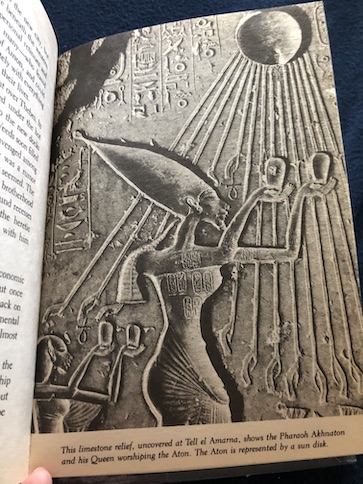
Although most Ancient Egyptians were polytheistic, like other ancient civilizations, there was one pharaoh who believed in only a single, all-powerful god. This pharaoh was Akhnaton, the father of Tutankhamen. (The book refers to Tutankhamen as a younger half brother of Akhnaton, but later sources say that he was Akhnaton’s son, although there is still some dispute about that. Either way, the two were related, and Tutankhamen was Akhnaton’s successor.) Akhnaton worshipped the sun, calling the sun god Aton. Part of the reason for this conversion to the worship of a single sun god instead of the many gods of the Ancient Egyptian pantheon may have been due to a power struggle between the pharaoh and the High Priest of Amon. However, Akhnaton seemed to genuinely believe in the Aton and was devoted to it, establishing a new capital city and outlawing worship of other gods. Unfortunately, his health was frail, and worship of the Aton didn’t extend beyond his death around the age of 42, with Egyptians returning to worship their old gods. Tutankhamen, who had been born Tutankhaton, changed his name and moved the capital away from Akhnaton’s city. Tutankhamen’s reign was short. He died in his late teens. (The cause of his death has never been precisely determined, although it seems likely that it was a combination of ill health, possibly a congenital condition due to inbreeding in the royal family, malaria, and a physical injury.) Tutankhamen’s main source of fame is his tomb, found largely intact in November, 1922.

Dynasties of Egyptian Pharaohs ruled Egypt for thousands of years, although in the later centuries of Ancient Egypt, foreign rulers moved in and took control for long periods. Then, in 332 B.C., Alexander the Great conquered Egypt, bringing it under Greek and Macedonian control and ending the reign of Egyptian Pharoahs forever.

The Clown of God

The Clown of God by Tomie dePaola, 1978.

The book begins with a note that the story is based on an old French legend, although the story actually takes place in Italy.

A young boy named Giovanni has no parents and must live as a beggar, but he knows how to juggle. He juggles fruit and vegetables in the marketplace, and the produce sellers give him food in exchange for drawing people’s attention to their wares.

One day, Giovanni sees some actors putting on a play, and he asks for a job with the troupe. After he demonstrates his juggling ability, they agree to take him on in exchange for food and a place to sleep.

Over time, Giovanni’s juggling act becomes more elaborate. Eventually, he becomes famous in his own right and leaves the troupe to become an entertainer for many important people.

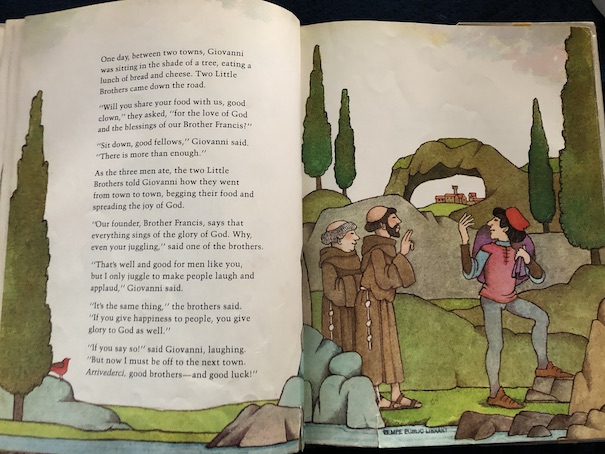
During his travels, he meets two monks, who ask him if he is willing to share his food with them. He agrees, and they tell him about Brother Francis, the founder of their order. (St. Francis of Assissi. They are Franciscan monks.) They say that everything in the world is a sign of God’s glory, even Giovanni’s juggling. Giovanni says that he never thought of it like that before. He just likes making people happy with his performance. The monks say that making people happy is a way of glorifying God.

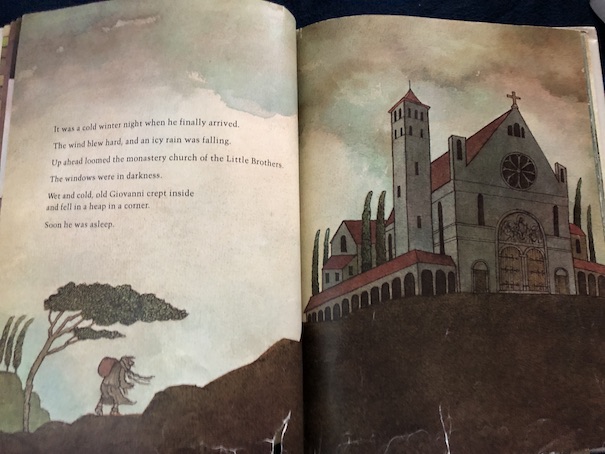
Giovanni continues his performances, but as he gets older, people get tired of his act, and one day, he actually drops one of his juggling balls. For a time, he has to live as a beggar again. However, he eventually finds his way to the monastery where the Franciscan monks live.

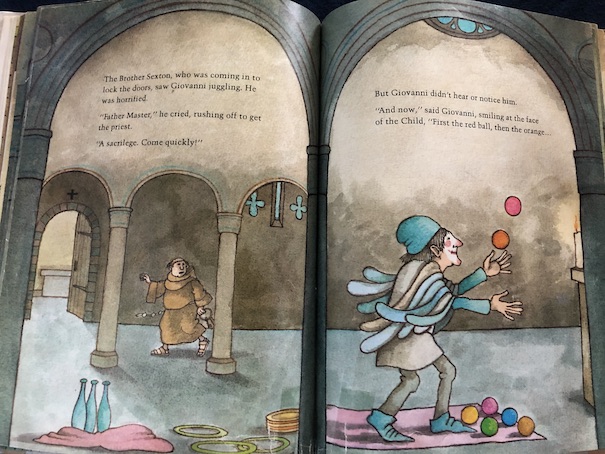
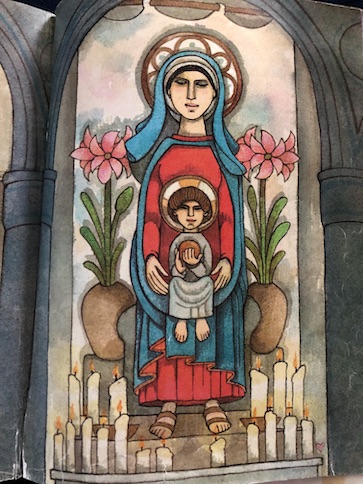
He arrives at the monastery at Christmas, and there is a special procession where people are offering gifts to the Christ Child, placing them in front of a statue of Jesus and Mary. Giovanni is struck by how serious the Christ Child looks in the statue, and so he decides to perform the act that used to make everyone smile.

When one of the monks sees him juggling in front of the statue, he thinks that it’s a sacrilege and calls the priest to come see what Giovanni is doing.

The story is sad because Giovanni’s exertion in giving the best performance of his life causes him to have a heart attack and die. However, the priest and the monk notice that, suddenly, the statue is smiling and holding Giovanni’s special golden ball.

The story is about using talents to the fullest. The juggler’s talent, as the monks said, was a gift from God. For as long as he could, he used it to make people happy, and when he was too old to do so anymore, he gave his last, finest performance for Jesus.

The book is available to borrow and read for free online through Internet Archive.

Home for Christmas

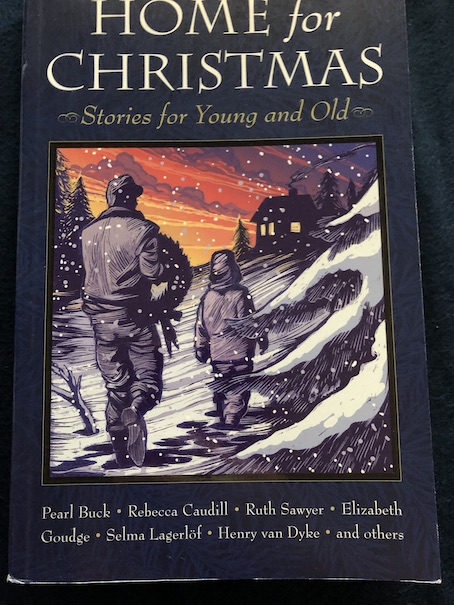
Home for Christmas: Stories for Young and Old compiled by Miriam LeBlanc, 2002.

Disclosure: Plough Publishing House sent a copy of this book to me for review purposes, but the opinions in the review are my own.

This is a collection of short Christmas stories written by famous authors from around the world. One of the things that I found interesting about the selection of authors in the book is that many of them are better known for writing on very different themes. Among the authors in this book are Madeleine L’Engle, who is known for writing science fiction, such as A Wrinkle in Time; Elizabeth Goudge, who wrote the mid-20th century classic children’s fantasy story The Little White Horse (later made into the film called The Secret of Moonacre); Katherine Paterson, known for her children’s novels, including Bridge to Terabithia, Jacob Have I Loved, and historical novels set in Asia, such as The Master Puppeteer; and Pearl S. Buck, author of The Good Earth.

Although the book is intended for children and families and many of the authors are known for writing for children and young adults, I think that many of the stories wouldn’t particularly appeal to children, especially younger children, because children wouldn’t be likely to understand them or they have darker themes, like bitterness that must be overcome and grief at the death of a child. The stories generally end well, but for young children, something simpler and lighter in subject matter, like the short stories in Merry Christmas from Eddie, would be more appealing. Really, I think this book would be best for adults, although I noted some of the more child-friendly stories.

One thing that I wished the book included is sections of information that explain a little more about the stories behind the stories. I recognized the historical references behind some of the stories, but other readers, particular children, might require a little more explanation to fully appreciate them. I think that’s another good reason why the stories might appeal more to adults.

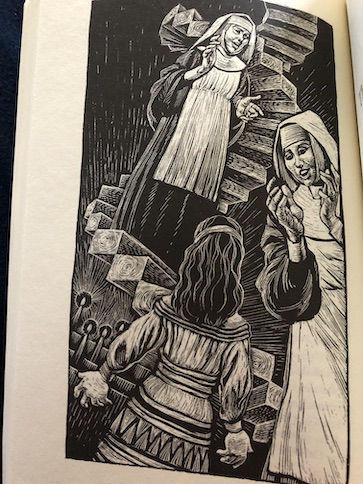
There are 20 stories contained in the book. Each of the stories in the book has one black-and-white picture in an old-fashioned woodcut style.

I don’t think that there are any copies of this book available to read for free online, but this book is available for purchase through Plough Publishing House.

The stories contained in this book are:

Brother Robber by Helene Christaller

A young monk sends three robbers away without food before Christmas because they are violent criminals, but an older monk convinces him to have compassion and to find them and give them the food they have asked for.

The compassionate brother, Brother Francis, is St. Francis of Assisi, although it is not explicitly explained in the story, and the younger brother, Brother Angelo, is the main character. The story of St. Francis, Brother Angelo, and the robbers is an old one that has been told before in other forms, but this is a good rendition.

Three Young Kings by George Summer Albee

Three boys at a school in Cuba are given the role of playing the Three Kings in their school play as well as delivering presents to the rest of the children in their community, giving them presents that their parents have already bought for them. However, their task proves harder than they thought when they see how upset the poor children are that they pass their houses and leave nothing because their parents couldn’t afford presents. What can they do?

This is a good book for talking about making choices. In the end, the community is satisfied with the boys’ choice, but a good topic for discussion after this story would be what the community will choose to do next year, when new boys become the Three Kings.

Transfiguration by Madeleine L’Engle

A nun in New York City struggles to answer a poor man’s questions about why Christmas should be so “merry” when there are so many poor people and bad things happening in the world. The real answer comes to her after the man tries to rob her.

The Cribmaker’s Trip to Heaven by Reimmichl

Willibald Krautmann spends his life making manger scenes for Christmas, and he is sure that his work will earn him a place in Heaven. Unfortunately, when he dies, he is not received in Heaven as he thought and, confronted with the history of his faults that prevents him from entering, he must seek an advocate to help him plead his case. However, it’s not too late for him to mend his ways, and the reader is left to imagine how much was real and how much was dream.

The Guest by Nikolai S. Lesskov

Timofai was a bitter young man, an orphan defrauded of his inheritance by his uncle. After a violent fight with his uncle, he is sent into exile in Siberia. Even after his life improves and he marries and has a family of his own, he still finds himself bitter about the injustice that was done to him. Is there anything that his friend and brother-in-law can say that will help him? When he finally meets his uncle again, after many years, will they both get the closure they really need?

Christmas Day in the Morning by Pearl S. Buck

An older man and his wife decide how to spend Christmas now that their children are grown and living their own lives, separately. As the man reflects on Christmases past, he realizes that love is what makes Christmas special and what you do to show other people how much you love them.

This is one of those stories that I think adults would understand more than children, although it’s a good thought to explain to older children.

The Other Wise Man by Henry van Dyke

The story of a wise man who set out to follow the star at Christmas, like the others, but didn’t arrive at Bethlehem with them because he stopped to help someone. Although he arrives too late to see the Christ Child, he is in the right places to help people because he set out on the journey. At the end of his life, this wise man does actually see Jesus at his crucifixion.

This is a famous 19th century story.

The Miraculous Staircase by Arthur Gordon

In Santa Fe, New Mexico, in 1878, an unusual carpenter promises that he can build a staircase to a church choir loft, even though the original architect didn’t leave space for stairs. Even though other carpenters had failed to find a solution to the problem, the mysterious stranger solves it. But, who was that mysterious carpenter, and how did he do it?

This is actually based on a true story! I’ve been to the church in Santa Fe, the Loretto Chapel, and I’ve seen this staircase myself! The short story ends with a few details about the history of the event.

No Room in the Inn by Katherine Paterson

When an eighteen-year-old boy’s parents leave him alone at the family’s inn, which is closed for Christmas while they visit his sister’s family, he’s a little sad at spending Christmas alone but also looking forward to some freedom to relax. However, a mysterious stranger who needs a place for the night changes his plans.

The Chess Player by Ger Koopman

The Christ Child must help an old man to forgive his estranged daughter on Christmas. Can the Christ Child soften a hardened heart over a game of chess?

The Christmas Lie by Dorothy Thomas

A poor young girl from a large family invents a story that some friends have invited the whole family to join them for Christmas dinner when, in fact, no invitation has been made. It had really been more of an impulsive wish that they had been invited, but when her family believes her and begins preparing for the event, can the girl find the courage to admit the truth? What will happen when everyone realizes that she lied?

This is one of the better child-centered stories in the book.

The Riders of St. Nicholas by Jack Schaefer

A group of cowboys have to decide which of them are going into town to celebrate Christmas and which of them will be staying on the ranch. The ones who get left behind plan a small feast for themselves as consolation for being left out of the fun. However, their plans change when they rescue a neighbor who got drunk and almost froze in a snowstorm.

Grandfather’s Stories by Ernst Wiechert

An old coachman tells stories that his grandfather told him. One Christmas Eve, his grandfather’s grandfather was driving a coach and saw a strange, smiling boy who seemed to be asking for something. Although his employer wanted him to drive on, the coachman gave the boy a ride, and it turns out to be the beginning of a miracle. In another story, a cruel master is changed for the better when he sees that the victim of his cruelty is Christ.

The Vexation of Barney Hatch by B.J. Chute

A panhandler gets recruited as a store Santa and helps a poor boy who only wants a harmonica.

The Empty Cup by Opal Menius

King Herod, knowing of a prophecy that a new king would be born, attempted to kill the new king to preserve his own power. Unable to tell which baby would be the prophesied king, Jesus, he ordered all of the boy babies in the area to be killed.

This story focuses on a man whose only child was killed. His wife seems unable to get over the shock and grief of their son’s death until another little boy teaches her how to get over a loss.

The Well of the Star by Elizabeth Goudge

The Well of the Star is a well where legend has it that the Wise Men stopped on their way to see Jesus. David is a poor shepherd boy who is left behind when the other shepherds go to see the baby Jesus. He is visited by the archangel Michael, who sends him to join the others, meeting the Wise Men on the way.

This is one of the better child-centered stories in the book.

A Certain Small Shepherd by Rebecca Caudill

Jamie’s mother died shortly after his birth, and for much of his young life, Jamie is unable to talk. When he begins going to school, he does well, except that he can’t answer questions out loud in class and not at all if he doesn’t know how to spell the word that he wants. It’s frustrating. However, when his teacher makes him a shepherd in the school Christmas play and his family has some unexpected visitors in a snowstorm, things change.

This is one of the better child-centered stories in the book.

The Carpenter’s Christmas by Peter K. Rosegger

The carpenter’s wife thinks that he isn’t be pious enough on Christmas, but he has an important job to do for someone less fortunate.

What the Kings Brought by Ruth Sawyer

In Spain, the tradition is that the Three Kings bring presents to children on Twelfth Night. A traveler in Spain shortly before Twelfth Night meets a poor young boy who is desperately trying to raise money to buy a new burro to help his father on his farm. The traveler and his friend come up with an idea to help the boy without it seeming like charity.

This is one of the better child-centered stories in the book.

The Christmas Rose by Selma Lagerlof

A Robber Mother trespasses on monastery ground and angers the monks when she tells them that their beautiful herb garden cannot compare to the way the forest looks on Christmas Eve. Abbot Hans decides to pay the Robber family a visit on Christmas, although it ends up being his last.

Are You There, God? It’s Me, Margaret

MeMargaretAre You There, God?  It’s Me, Margaret by Judy Blume, 1970.

This is one of the more controversial children’s books because parents raised concerns about the discussions of religion and puberty which are central to the story, and it has been banned or challenged in some libraries.  (Read to the end and see the spoilers before you decide if you agree with that.)

I wouldn’t recommend this book for young children because they wouldn’t understand the issues the story discusses, but it does speak to the concerns that pre-teen girls typically have about growing up, finding their place in the wider world, and fitting in with their friends as well as that haunting fear kids often have that they aren’t normal, compared to everyone else.  This isn’t a spoiler for the story (although there are plenty of those later on because I can’t really describe my thoughts about this book without them), but I just have to say that, in my experience, by the time people are done with college, maybe even by the time they’re done with high school, most of them come to realize that nobody out there is completely “normal.”  Some are just better at giving that impression.  Everyone out there has their quirks or issues, so if you think you’re a little odd in one way or another, or if you think your family is a little weird, you’re in pretty decent company.  Generally, it’s best not to worry too much about it and just get on with life.  In a way, I think that does fit in with the ending of the book.  But, I’ll talk a little more about my personal opinions about the controversial parts later.

When Margaret Simon is eleven years old, her parents decide to move from New York City to a suburb in New Jersey.  Margaret is accustomed to living in an apartment in a big city, and her new town and house seem a little odd to her.  She isn’t sure that she’s going to like her new home, and she knows that part of the reason why her mother wanted them to move was that she was worried that Margaret was becoming too close to her grandmother in New York and too easily influenced by her.

Margaret’s family is a little unusual in that her mother is Christian but her father is Jewish. (This is a little more unusual for when the book was first written than now because marriages of mixed religions are more common now than they were before, although they can still be complicated.)  The religious differences between her parents caused conflicts in their family even before Margaret was born.  Neither side of the family really approved of the match, so Margaret’s parents had to elope to get married.  Margaret’s mother’s parents disowned their daughter because of her marriage and haven’t seen or spoken to the couple in years or met their granddaughter.  However, Margaret’s father’s mother (his father is deceased) continues to spend time with the family, although she admits that it’s mostly for Margaret’s sake.  Margaret’s only close grandparent likes to spoil her and pays for her education at a private Jewish school, which is why her mother has become concerned that Margaret is influenced by her too much.  Margaret’s mother wants some separation so that she and Margaret can become closer as mother and daughter. The move and Margaret’s new friendships in New Jersey raise a number of troubling questions for Margaret about growing up, both physically and spiritually.

Because of the family religious conflicts, Margaret’s parents purposely raised her without a religion, telling her that she could choose for herself when she was old enough.  Until now, Margaret was not terribly concerned about it, but the move, the new friends she makes in New Jersey, and her increasing awareness of how religious differences have influenced her relationships with her family and other people cause her to question the choices she must make and what she really believes.  Throughout the book, she prays frequently in a casual, conversational fashion, telling God about the things that are happening in her life, the questions and problems she has, and what she really wants most.  Sometimes, she gets angry with God or disappointed when things don’t work out well, but the story makes it clear that her relationship with God is evolving, just as Margaret herself is changing as she grows up.  At one point, Margaret worries that, at age twelve, she is too old already to choose a religion and wishes that her parents had just given her one when she was little so she wouldn’t have this uncertainty.  However, growing up is a long process that Margaret is only beginning to appreciate.

The first new friend Margaret makes is a girl her age who lives next door, Nancy.  Nancy is eager to grow up and not at all shy about talking about things like boys, periods, bras, kissing, and even sex.  Sometimes, Nancy talks like she knows a lot about such things, although more mature people (and, eventually, Margaret) would realize that she doesn’t.  She introduces Margaret to two other girls, Gretchen and Janie, and the four of them form a kind of club that they call the Pre-Teen Sensations (PTS for short).  They give themselves secret names and hold meetings, talking about boys, people they know at school, and concerns that they have in their lives, especially related to growing up, periods, and sex (no one has any in the story, but the girls are fascinated by the idea).  One of the requirements of this club is that each of the girls has to wear a bra, and they feel each other’s backs at the beginning of each meeting to make sure.  Up until then, Margaret didn’t have a bra, so she has to buy her first one.  The girls worry about their breast size (none of them has much yet), and they try exercises to see if they can improve it (which is ridiculous, but it is the kind of thing that some pre-teen girls believe).  At the beginning, none of the girls has had their first period yet, and they’re looking forward to it with nervousness and anticipation, wondering what it’s going to be like.  They agree that whoever gets their period first has to tell the others about what it’s like.  Margaret nervously worries that she’ll be the last one to get hers or that she’ll turn out to be “weird” and never have one for some reason, although her mother assures her that it’s not likely and that it’s really just a matter of time.

Meanwhile, Margaret has some awkwardness at her new school, getting to know new people, sometimes making mistakes in the ways she relates to others, and figuring out which boys she likes the best. (She doesn’t get a boyfriend, just crushes.)  Her new teacher is also a little awkward because he’s young and this is his first teaching assignment, and he seems self-conscious that male teachers aren’t as common as female teachers.  Even adults can worry about being accepted by others.  He seems to be a good teacher, however, and he asks the students questions about themselves in an effort to get to know them better.  He learns early on that Margaret doesn’t have a religion and that it bothers her.  When he tells the students to choose a topic for a year-long research project into something that they care about, he allows Margaret to choose the topic of religion.

Margaret decides that her project for the year will be to learn about different religions and to finally choose one for herself.  Her focus is mainly on trying to decide between Judaism and Christianity because that’s what the two sides of her families are, that’s what most of the people her community are, and she says at one point that she doesn’t know anyone who is Muslim or Buddhist, so she can’t talk to them about their religions.   People in this community tend to belong either to the local YMCA or the Jewish community center, and Margaret thinks that if she figures out if she should be Christian or Jewish, she’ll be able to join one of those herself and fit in better.  Her friends help her in her project, some of them letting her come to church with them.  Each of the PTS girls is a different religion.  Janie is Jewish, and Nancy and Gretchen each attend a different Christian church.

Margaret’s friends aren’t particularly concerned about which choice Margaret will eventually make.  They find the story of her parents’ elopement romantic and are sympathetic to Margaret’s feelings.  However, Margaret notices that other people react differently to her project.  It seems like some of them view the idea of winning her to their side as some kind of personal victory for them, which hurts because she realizes that this is how her grandparents view her, even her beloved grandmother.  When her mother’s parents decide to visit them for the first time, there is an ugly scene where the family conflicts over religion come to a head, and Margaret feels so overwhelmed that she wants to give up on God and religion completely.  However, Margaret’s story isn’t over yet.  She’s really just started growing up, and whether she believes it or not at first, God hasn’t given up on her.  Getting what she wants most is really just a matter of time and patience.  Everyone grows up eventually.

So, what’s my overall opinion?  Generally favorable.  I read this book when I was about Margaret’s age and had the same concerns she did (or very similar, no two people are alike) and my friends and I were talking about the same kinds of things she and her friends were.  I think the key to this book is age-appropriateness.  Like I said, girls younger than about ten or eleven years old probably would not understand Margaret and her concerns because they just don’t share them.  It’s like Margaret and her friends themselves: they talk about the concerns that they all share, growing up and their new interests in boys and the idea of first periods.  If the reader isn’t a girl at that phase of her life, she just wouldn’t understand and connect with the story, and a few years later, those girls would likely move beyond all of that and on to other concerns (like whether or not they should go to college, what their major or career should be, etc. – life is full of things to figure out).  The things that seem so new and mysterious at age eleven, like real signs of growing up, later won’t matter so much because they’ve already lived it and found out that it’s not such a big deal.  Girls eager to get their first period or start shaving their legs at age twelve because they want to feel grown-up often start thinking of these things as hassles when they’re older and it’s all just become part of the routine of life.  They groan when a period starts on the day they want to go swimming or wear long pants on days when they’re too busy or just don’t want to bother shaving.  The novelty wears off, and you never look at it the same way again.  When older girls and women enjoy this book, it’s mainly as nostalgia for when they were Margaret’s age and still figuring things out.

The reason why this controversial story still remains popular even decades after its original publication is because it pretty accurately captures the thoughts and feelings of that pre-teen phase of life, when girls are just starting to grasp the complexities of life and the changes that lie ahead, alternately worrying about them and eager to get on with it and grow up.  It speaks to girls who are currently in that phase.  Reading it again as an adult, it reminds me of a time when I was in a similar place in life, although part of me now wishes that I could take young Margaret aside and tell her a few things that she eventually will come to realize:

  • That her friends are still finding their own way in life, just like she is, and even the ones who act like they know a whole lot really don’t (especially Nancy).
  • That growing up doesn’t end when you get your first period or even when you hit 18 or 21 because change is a life-long process and people mature at different rates, mentally as well as physically.
  • That many of the questions she’s struggling with are ones that everyone wonders about.  Some of them, like the religious issues and her own identity, are life-long struggles, even for people raised in more religiously-conventional households.  What human being can say that they thoroughly understand God and the mysterious ways in which He works?  It’s a worthwhile struggle, but not one that people resolve with complete certainty, certainly not by age twelve (Margaret’s age at the end of the book).  Margaret is far from being too old to consider these issues.  Philosophers and theologians have spent entire lifetimes on that subject.

But, even if I could say some of those things to young Margaret, they probably wouldn’t help completely because some things just have to be lived to be understood, which is the main reason why I would say banning the book is a mistake.  The issues Margaret deals with in the book are just common issues that come up in daily living, and the questions she asks about what she believes and what’s ahead for her are things that girls think about anyway and talk about with their friends, whether they read about them or not.  There’s no point in trying to get kids to stop thinking about these things because, at some point, they just have to because it’s a part of life, growing up, and the world around them.   Until they do consider some of these issues, it is difficult to move on to other, even more complex aspects of life, so I think it’s better to face them directly when the subjects come up instead of trying to dodge the subjects or put off thinking about them.

I think that Margaret’s elders were somewhat unhelpful in their approaches to Margaret’s religious life.  Her maternal grandparents are clearly selfish in their motives, caring only about winning the argument for their side, not really taking any interest in getting to know Margaret personally or caring about her feelings.  In fact, they only decide that they want to meet Margaret when they realize that she will be their only grandchild by blood, and even then, they make it clear that they expect the relationship to be on their terms alone.  Margaret’s paternal grandmother is better in her approach, nurturing Margaret from an early age in the hopes that she will grow up in the way she thinks best, but she endangers her relationship with her granddaughter when it seems like her previous nurturing and attention had the same selfish motive, wanting to win the argument in the same way that her other grandparents did.  Margaret wants them to like her for the person she is, not for what she might become or the ego boost they might get from her agreeing with their point of view.  Margaret’s parents are more interested in allowing her to develop her religious side on her own terms, loving her no matter what she chooses. However, Margaret might be correct in that they should have started discussing the issue honestly with her earlier in life, being a little too hands-off in order to avoid trying to win the argument or influence her too much one way or the other.

Even if the adults in Margaret’s life aren’t always the most helpful, children also learn the things that they don’t want to do from their elders.  Margaret at age twelve thinks that she’d like to raise any children she might have with a religion early in life so they won’t have to deal with the uncertainty and conflicts that she has, but she still has a lot of growing up to do, so anything can happen in her future.  Margaret’s future children (if any) will depend in equal measure on who Margaret’s eventual husband turns out to be and what he believes.  Life is a long journey, but Margaret seems headed for good things.

Many of Margaret’s growing-up issues will, like her first period, resolve themselves in time, and when she’s more experienced, part of her will look back and wonder why it all seemed so big and serious back then.  But, that’s just the phase of life she has to live through first.  Her religious issues will probably take a lot longer than physically growing up, but I think it’s important for readers to remember (as well as Margaret herself or anyone in a similar position) that Margaret is still young.  At the end of the story, Margaret still doesn’t know what religion she will choose (if any), but she’s still growing and changing, her life is changing, she’s becoming more aware of the larger world, and her mind may change many times with maturity and experience (like how many of us change majors about two or three times in college and then eventually end up in a completely different career).  Anything could happen in her life, and the range of possibilities in her life are part of the real magic of being young.  Because Margaret is a thoughtful person who seriously wants to understand the bigger issues in life, I think that she will probably be okay in the long run and that her personal relationship with God will continue to develop even if she finds it difficult to connect to an established religion.  That might not seem ideal to many people, but Margaret does the best she can with what she has in life, her circumstances and her understanding, and I think that’s a good sign.

Later editions of this book were revised to reflect new details of modern life, including how women and girls handle periods.  I’ve never actually seen the old belt-style of period pads that Margaret describes in the original version of the book, and later versions of the book describe the ones that are common today.  There is a movie version planned.

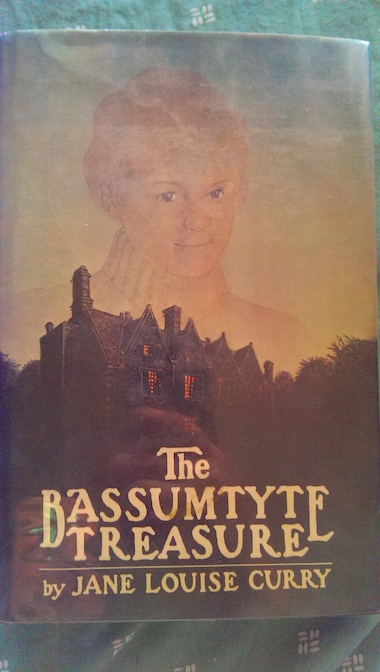
The Bassumtyte Treasure

BassumtyteTreasureThe Bassumtyte Treasure by Jane Louise Curry, 1978.

When young Tommy Bassumtyte’s parents died, he went to live with his grandfather. However, his grandfather is now dead, and he is living with his 92-year-old great-aunt, who is in a wheelchair, and her 72-year-old daughter, who has recently had her driver’s license revoked due to her poor eyesight. Although the pair of them have taken good care of Tommy, neighbors have become concerned that they will not be able to do so for much longer because of their age and failing health. Rather than see Tommy sent to a foster home, they decide that he must go to the man who Tommy learns should really be his legal guardian, a distant cousin also named Thomas who lives in the family’s ancestral home, Boxleton House, in England.

The elder Thomas Bassumtyte, who should have taken Tommy when his grandfather passed away, has also since died, but his son, also named Thomas, agrees to take him. Tommy is quickly shipped off to England before there can be a custody hearing in the United States about him because the relatives fear that some official might try to prevent Tommy from being sent out of the country. Tommy is eager to go because he remembers fantastic stories that his grandfather told him about Boxleton House. The current Thomas Bassumtyte also lives there, although the place has become rather run-down, and he fears that he will not be able to keep the place much longer. Thomas was a mountain climber, but he was injured in a fall and hasn’t been able to work much since. He tells Tommy that the two of them might have to move when he is fully recovered and can do more work for the Foreign Office, but Tommy loves Boxleton House from the first moment he sees it and wants to stay.

According to the lore of Boxleton House, a distant ancestor of theirs hid a treasure there, but no one has been able to find it. If young Tommy and Thomas can find it, it would solve many of their problems, and they would be able to keep the house and restore it. All young Tommy has is the mysterious rhyme that his grandfather told him and the strange medallion that his great-grandfather brought with him when he went to the United States in the late 1800s. Thomas tells him that the treasure was supposedly hidden by a distant ancestor of theirs who was fond of riddles, called Old Thomas.

The Bassumtytes were secretly Catholic during the reign of Elizabeth I. Old Thomas was alive then and had a son called Tall Thomas. Tall Thomas traveled frequently and was mysterious about the places he went. One night, he returned to Boxleton House with a young baby, who he said was his son. He had married in secret, and his young wife had died shortly after giving birth. Tall Thomas also brought her body back to Boxleton for burial. However, that wasn’t Tall Thomas’s only secret. Although he remarried, giving his son a stepmother, and lived on for a number of years, he was eventually executed for smuggling messages for the captive Catholic queen, Mary, Queen of Scots. The family was stripped of its noble title and only barely managed to hang onto their house and land. If there was a treasure hidden during this time, it was probably something that the Bassumtytes were afraid would be confiscated by the queen’s soldiers as punishment for the family’s disloyalty or something that Mary had given to Tall Thomas to hide for her.

As Thomas tells Tommy more about the house and the family’s history, he points out Tommy’s uncanny resemblance to Small Thomas, Tall Thomas’s son, as shown in an old painting. Tommy feels a strange connection to Small Thomas, and begins seeing and hearing strange things. An older woman comforts him in the middle of the night, having him recite the same rhyme that his grandfather taught him. A small painting later reveals that this woman was Small Thomas’s grandmother. She appears to Tommy other times, giving him a glimpse back in time and clues to solve the puzzles of Boxleton House.

It is only when Thomas accepts the advice of a family friend who works for a museum that they come to understand the full significance of their family’s heirlooms and the hidden treasure. The treasure may not be quite what the Bassumtytes have always believed it was, but then, the Bassumtytes themselves aren’t quite who they always thought they were, either.

The book is available to borrow and read for free online through Internet Archive.

The Ghost in the Tokaido Inn

ghosttokaidoinnThe Ghost in the Tokaido Inn by Dorothy and Thomas Hoobler, 1999.

In feudal Japan, more specifically in 1735, the family you were born into determined what you were meant to be in life.  Samurai were born into families of samurai, and merchants were born into merchant families.

This is a terrible disappointment to Seikei, the fourteen-year-old son of a tea merchant, who would love nothing more than to be able to become a samurai.  He has studied the samurais and their ideals and greatly admires their bravery.  He even loves to write poetry, as the samurais do.

One day, Seikei accompanies his father on a business trip from their home in Osaka to Edo (the old name for Tokyo).  On their way, they stay overnight at an inn.  There, Seikei makes friends with the daughter of a paper merchant, and she entertains him with a ghost story.  During the night, Seikei sees a strange figure that attempts to enter his room, which he fears might be an evil spirit (like the one in the ghost story), but he is unable to get a good look at it before it disappears.

The next morning, Lord Hakuseki, a daimyo (lord, nobleman) also staying at the inn, says that a jewel was stolen from him during the night.  The famous Judge Ooka comes to the inn to investigate the crime.  The paper merchant and his daughter are accused of the theft because the jewel is found among their belongings.  Seikei recognizes the jewel as one that Lord Hakuseki showed to both him and the girl the night before when they each went to show him their fathers’ wares, and he also realizes that he saw the “evil spirit” holding it.

When Seikei tells Judge Ooka all of this, his father is angry, saying that Seikei must have imagined the whole thing.  However, Judge Ooka believes him.  He points out that the silent figure was no doubt the thief, who merely looked like an evil spirit to the boy who had just been startled awake, with a ghost story still on his mind.  Judge Ooka is also impressed with Seikei’s bravery when Seikei describes how he got up to try to get a better look at the figure, even though he believed that it was an evil spirit at the time.

Judge Ooka recruits Seikei to help him further investigate the crime, and they realize that the theft is only part of a much larger and more serious plot of revenge.  Judge Ooka, himself of the samurai class, also understands Seikei’s feelings better than his father does.  In the end, he offers Seikei a way of living the kind of life that he’s always dreamed.

This book is the first in a series.  Judge Ooka was a real, historical figure, although Seikei, his adopted son, is fictional.  Because the story contains violence and some religious oppression, I recommend it for middle school level readers.  The book is currently available online through Internet Archive.

Silver Days

silverdaysSilver Days by Sonia Levitin, 1989.

This is the second book in the Journey to America Saga.

Escaping from World War II Europe was only the first step for the Platt family. Now that they are reunited in the United States, survival is still a struggle. They have very little money, and Lisa’s father struggles to find work and a permanent place for his family to live. Along the way, they encounter people who are prejudiced against them, some because they are Jewish and some because they are German, and are forced to confront certain prejudices that they hadn’t realized that they held as they settle into their new country and learn to live alongside people from different backgrounds who live very different lives.

Lisa describes her family’s day to day struggles and adventures with understanding. In Germany, her father had his own business, selling coats, but he has to struggle to get into the clothing business in America. Her mother, who had once had her own servants in Germany, is forced to take a job as a maid to help make ends meet. Besides the basic problems of learning a new language, dealing with a lack of money, and trying to find work, she also describes the parts of American culture that take her family by surprise. There are religious issues because most of the people around them are Christian, and Lisa’s mother is upset when her youngest daughter, Annie, ends up getting a role in her school’s Easter play. Her mother also isn’t sure what to make of the Japanese family who lives next door when Annie makes friends with their daughter.

Meanwhile, the war that they had feared is becoming a reality. People in the U.S. are starting to support the war effort, collecting materials that the army can use, starting Victory Gardens to help support themselves during food rationing, joining the army, and volunteering as nurses. The Platts also experience survivor’s guilt as they hear reports of friends and family who weren’t lucky enough to escape the Holocaust.

The Platt family is realistic, and they have their arguments as the stresses of all these changes take their toll on them. But, they are a loving family and continue to support each other through everything. The title of the book comes from a song, “Golden Days”, about looking back on happy times. When Lisa’s little sister Annie asks her if these are their “golden days”, Lisa tells her that she doesn’t think so, but she thinks that they might be silver ones, days leading up to happier times ahead.

In some ways, the children of the family have an easier time dealing with all the changes than their parents. In the beginning, they are aware that they don’t quite fit in, although they desperately want to. However, they do manage to make new friends, and Lisa and her older sister, Ruth, even find their first loves. While the world around them is changing, the three sisters also change, growing up, finding new interests, and learning more about themselves and the kind of lives they want to live in their new home.

The book is currently available online through Internet Archive.

Abigail

abigailAbigail by Portia Howe Sperry and Lois Donaldson, 1938.

Susan is a little girl living on a farm in Kentucky during the 1800s.  Her family has recently decided to move to Indiana, which is the new frontier of the United States.  Her uncle and his family are already living there, and he has persuaded Susan’s parents of the opportunities that await them.

As the family packs up to leave, Susan’s grandmother gives her a special present that she and Susan’s aunt made for her: a new doll.  Unlike Susan’s old wooden doll, this doll is a soft rag doll that she can sleep with.  They made the doll to look like Susan herself, but Susan names the doll Abigail after her grandmother.

Abigail accompanies Susan on her adventure as the family heads west to Indiana in their covered wagon.  Susan is sad and a little afraid at first, but when she thinks of what Abigail would say to her about her need to be brave and to explain to her all the strange things they will encounter on the journey, Susan regains her courage.

The family does have adventures on their two-week trek to Indiana.  They have to cross rivers, face down a bear, and worry about whether they will encounter unfriendly Indians (Native Americans).  Even after they arrive in Indiana, joining their other relatives, they will still have to get used to life in a new place.

Throughout the book, there are little side-stories, poems, and hymns that the family sings and tells each other.  Through it all, Abigail is Susan’s constant companion, helping her to feel at home in her new home.  I loved this book when I was a child because I always loved dolls.  This book was a bigger part of my youth than the Little House on the Prairie series, but it would probably appeal to Little House on the Prairie fans.

The book is available to borrow and read for free online through Internet Archive.

The Best Christmas Pageant Ever

christmaspageantThe Best Christmas Pageant Ever by Barbara Robinson, 1972.

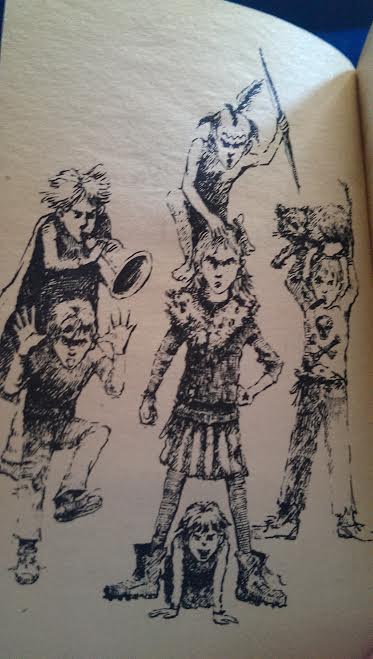
The Herdmans are the meanest, toughest kids in town.  They lie, cheat, steal, and when the mood strikes them, set things on fire.  Their father deserted the family, and their mother works all the time, so the six Herdman kids are pretty much left to their own devices, giving them plenty of opportunity to cause trouble.  Certainly, no one ever made the Herdman kids go to Sunday school.

But, to everyone’s surprise, the Herdmans suddenly show up at Sunday school in time to get cast for the annual Christmas pageant.  It wasn’t because the Herdmans suddenly found religion.  They were mostly there because they heard that there would be snacks.  Charlie told them so when they stole the dessert from his lunch at school.  In reality, Charlie exaggerated the snacks just to get back at the Herdmans.

christmaspageantpic1Although the Herdmans don’t get the cake Charlie mentioned and have little interest in Jesus, they begin to be fascinated by the description of the pageant and decide to stick around.  The Herdmans love movies, and the idea of being in any kind of play strikes them as fun.  Although the Christmas pageant basically goes the same way every year, typically using the same kids for the same parts, once the Herdmans make up their minds that they want the starring roles, they manage to push and bully their way right into the center of everything.

All of the other kids in Sunday school already know the story of Christmas and how the pageant usually goes, and they’re usually bored with the whole thing, but this year, the Herdmans make the pageant so unpredictable that even the kids the Herdmans tend to pick on find it fascinating.  The Herdmans are only hearing the story of Christmas for the first time as they assume their new roles of Mary, Joseph, the three wise men, and the angel.  Because they aren’t as familiar with the story and the routine of the pageant, they end up adding their own little twists to their performance.

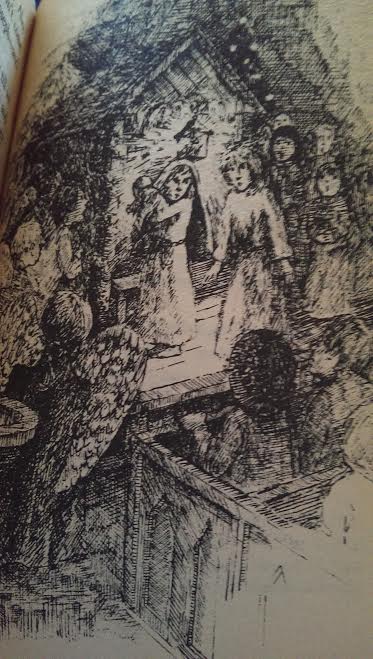
christmaspageantpic2At first, the more conservative adults in the church are horrified at the prospect of what the wild Herdmans might do on Christmas itself, but the minister and the lady overseeing the pageant decide to give the Herdmans a chance.  As the title says, it ends up being The Best Christmas Pageant Ever as the Herdmans unexpectedly bring out parts of the Christmas story that the other people who had taken the story for granted hadn’t really thought about much: the simple human reactions of a poor young couple who were strangers in a new town, the fear and expectation that accompany doing something great but unfamiliar and confusing, and the sense of wonder and surprise that are at the heart of the Christmas season.

Parts of the book are laugh-out-loud funny, and parts are actually touching.  While the awful Herdman kids stumble their way through the Christmas pageant, changing things, is it possible that the play is also changing them?

This is the first book in a short series about the Herdmans.  It is available to borrow and read for free online through Internet Archive (multiple copies).  There is also a movie version of the book.  Sometimes, you can find it on YouTube.