American Girls
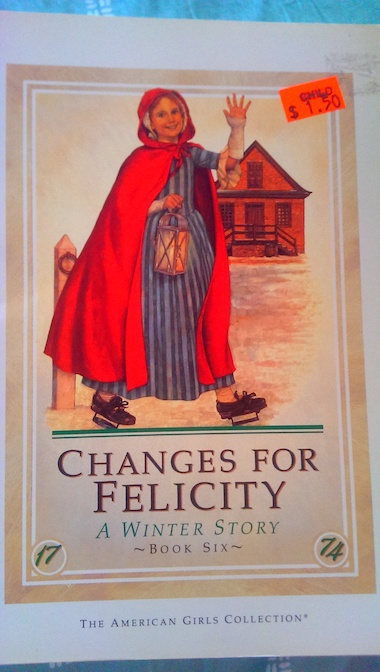
Changes for Felicity by Valerie Tripp, 1992.
 This is part of the Felicity, An American Girl series.
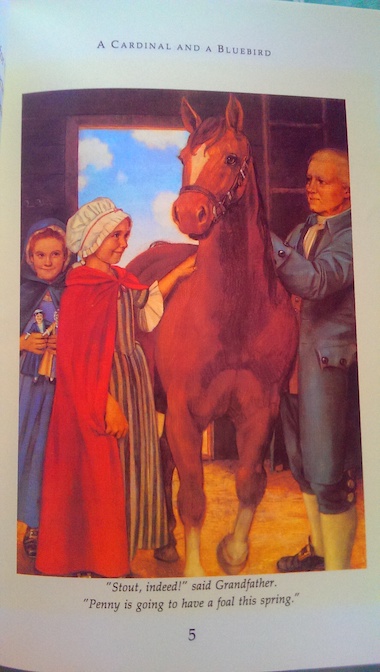
Everything is changing for Felicity. To begin with, her horse, Penny, is expecting a foal. Penny has been happy and healthy since she came to live with the Merrimans, but Felicity worries about what will happen when Jiggy Nye, her abusive former owner, gets out of prison. He has been in jail for not paying his debts. Felicity learns that he was once a respected member of the community and an expert with animals, but he became an alcoholic after his wife’s death. However, Felicity can’t bring herself to feel sorry for Nye after the way he’s behaved, even when she learns that he is sick. Felicity’s friend, Elizabeth, convinces her that they should send him some medicine and other supplies in prison, partly to have pity on him and partly so that he will feel grateful to Felicity when he gets out and not make trouble for her.
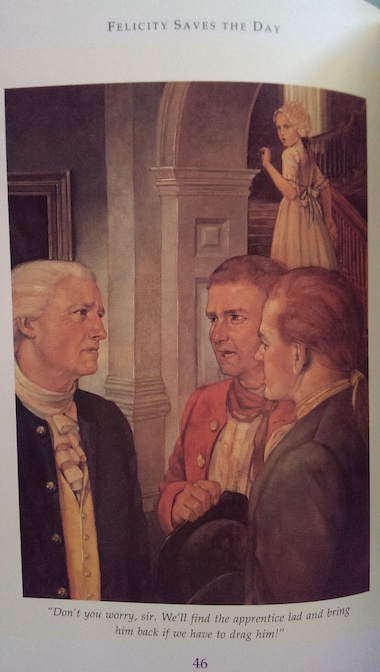
 Unfortunately, Elizabeth’s father also soon ends up in prison. Tensions between Patriots and Loyalists are high. The former governor has fled Williamsburg, and Patriots are arresting Loyalists. That Mr. Cole is a Loyalist has been well-known for some time. Felicity fears for Elizabeth and wonders what will happen to their friendship.
Then, Felicity’s grandfather also becomes ill. He soon dies of his illness, devastating her family, but before his death, he takes steps to make things better for Elizabeth’s family, Jiggy Nye, and his own family, especially Felicity. In return for Felicity’s charitable gift and her grandfather’s honorable payment for the horse, Jiggy Nye also helps Felicity and Penny when they need him the most, redeeming himself in everyone’s eyes.
 With the war everyone has dreaded finally becoming reality, there are still more changes yet to come. Elizabeth’s father must leave Williamsburg, Felicity’s father decides how he will support the war effort, and Felicity begins to play more of a role in the running of her father’s shop, as she had wished to do before.
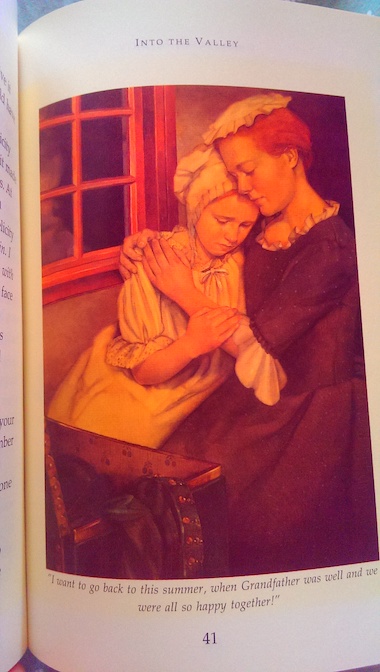
In the midst of Felicity’s grief over her grandfather’s death and worries about the coming changes in all of their lives, her mother has some poignant thoughts about the nature of death and change. While Felicity wishes that it were summer again, back when her grandfather was alive and they were all happy, her mother says that not all changes are bad ones. As she points out to Felicity, even though it might be tempting for her to wish that she were a child again herself, when both of her parents were still alive, to go back to that time would mean giving up her life with her husband and her children. She loves her children and enjoys seeing them grow up and change. The ability to witness those happy changes is worth dealing with the less happy changes in life as well. Death, like change, is just another part of life, and Felicity’s mother points out that love still connects us to those we’ve lost. Like everyone else, the only way Felicity can move in her life is forward, and that’s a good thing. Felicity still has growing up to do and happier changes yet to come.
In the back of the book, there is a section of historical information about the Revolutionary War.
The book is currently available online through Internet Archive.

 This is part of the
  At Miss Manderly’s the girls start having dancing lessons, and Felicity wishes for a new gown, like the one on the elegant doll at the milliner’s shop. Since Felicity is usually not very interested in clothes, her mother decides to grant her wish.


 Felicity’s grandfather is a wealthy man who owns the Kings Cross Plantation. Every summer, Felicity and her family go to visit him there, and Felicity loves it. Her grandfather teaches her a lot of things, like which plants can be used for food and medicine, and takes her for horse rides around his estate.
 Ben tells Felicity that he ran away from his apprenticeship to join the revolutionary army. He wants badly to fight for the colonies’ freedom from England, but he had a bad fall while traveling and hurt his leg. Felicity tries to convince Ben to let her get help for him and to return to her father to finish his apprenticeship, but Ben doesn’t want Felicity’s grandfather to find out that he’s there or why he ran away because he knows that he disapproves of the revolutionaries. Because Ben kept her secret when she used to sneak out to see Penny, Felicity reluctantly agrees to keep Ben’s presence a secret for awhile, sneaking him some food and supplies. She tells Ben that, while she thinks that standing up for what he believes is good, he’s going about it in the wrong way because breaking his apprenticeship was dishonest.


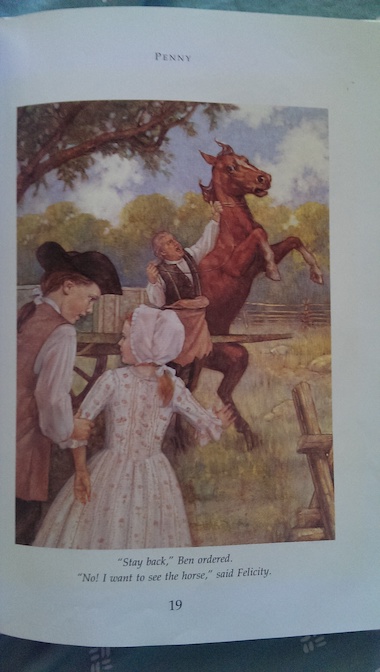 This is the first book in the
  Every morning for about a month, Felicity sneaks out of the house early, dressed in a pair of breeches that she borrowed from Ben without his permission. She goes to visit Penny and gradually gains her trust. When Penny finally allows her to ride her, Felicity thinks that she has won ownership of her, but Jiggy Nye accuses her of theft and takes back the horse. He denies that he ever promised to give her to anyone who could ride her, although Felicity’s younger siblings agree that they heard him say so.
 Going to School in 1776 by John J. Loeper, 1973.
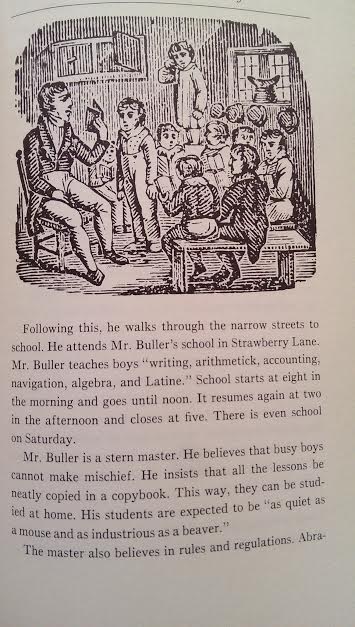 These explanations are told in story form, rather than simply explaining listing the ways children could live, learn, and go to school, trying to help readers see their lives through the eyes of the children themselves. The children’s lives are affected by the war around them. As the book says, many town schools in New England were closed during the war, so the students would attend “dame schools” instead. A dame school was a series of lessons taught in private homes by older women in the community. In other places, such as cities like Philadelphia, official schools were still open. Discipline was often strict, and school hours could be much longer than those in modern schools. Sometimes, children would argue with each other over their parents’ positions on the war.
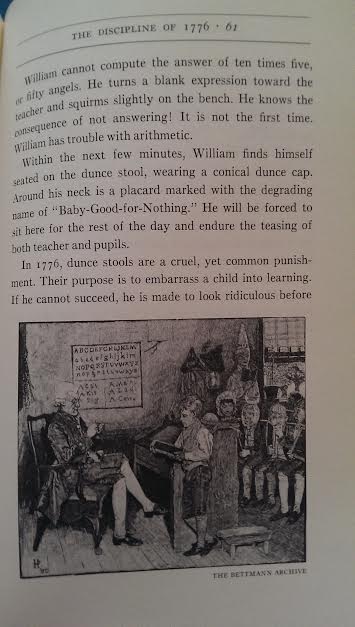 There were different standards for what girls and boys were expected to learn because their learning was guided by what they were each expected to do with their adult lives. A typical school might teach boys subjects like, “writing, arithmetick [sic], accounting, navigation, algebra, and Latine.” Generally, “reading, writing, arithmetic, and religion” were common elementary school subjects. Latin lessons and other advanced subjects were typically for boys who planned to become lawyers or clergymen. Girls were likely to receive little formal education beyond reading and writing, and black people were less likely to receive even that.
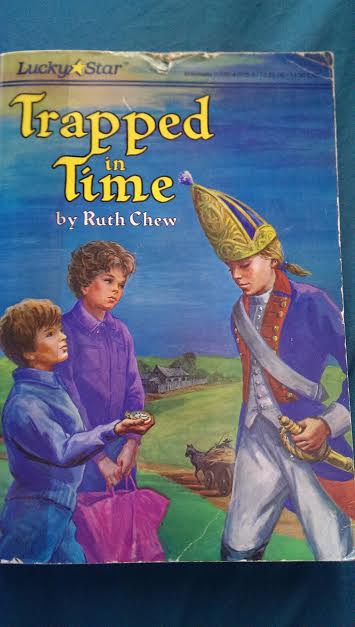 Trapped in Time by Ruth Chew, 1986.
 Franz had only joined the army in the first place because his parents were dead, and he didn’t know what else to do. Now, he has to find a new place to live, somewhere where there won’t be other Hessians who would recognize him as a deserter. Andy and Nathan also have problems because they’ve now realized what time they’re in, and they don’t know how to get home. The watch no longer seems to work.
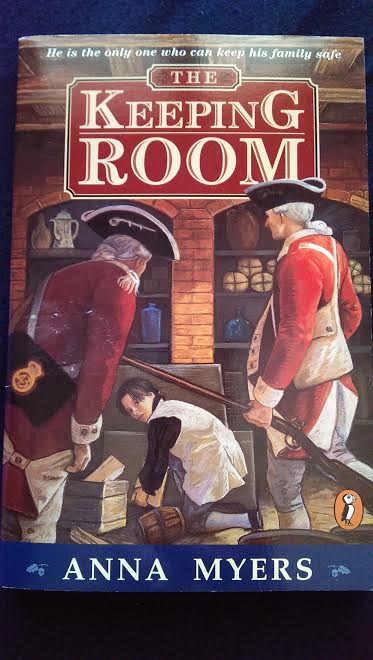 The Keeping Room by Anna Myers, 1997.
 Mary Geddy’s Day: A Colonial Girl in Williamsburg by Kate Waters, 1999.


