
Mystery at Kittiwake Bay by Joyce A. Stengel, 2001.
Cassie Hartt has only recently moved to Kittiwake Bay, Maine with her mother and brother following her parents’ divorce. Her mother is a nurse, and she has found a job at the local hospital, which is actually 30 miles away from the little town where they were able to find a house. Because of her mother’s long commute, Cassie will need to look after her 7-year-old brother, Danny. Soon after arriving, she meets a nice boy named Marc Nolan, who is a little older than she is and loves boats, and a girl name Liz Painter, who likes photography and walks her cat on a leash. Liz is the one who introduces Cassie and Danny to the Beachcombers Club, which is a group for kids Danny’s age who like to go swimming and camping and the kids who hang out at the Sand Shack coffee shop. Marc is one of the Sand Shack kids, and so is a boy named Ryan Jerrick, who is Liz’s crush. Cassie is glad to be making friends and starting to get settled into her new home, but soon, there are complications.
One evening, on her way home from the grocery store with her dog, Sam (short for Samson), Cassie sees some mysterious figures sneaking around in the dark. She doesn’t know who they are, but the way they’re sneaking around worries her. She later learns that there have been robberies in the area.
Cassie develops a fascination for the large house that she saw on a cliff near the ocean, and Marc and Ryan tell her that’s a senior citizens’ residence called Waterview Manor. Both of them work there part time. Liz says that the house wasn’t always a senior citizens’ residence and that there are a lot of weird stories about the place. It was built by a rich man before the Civil War, but it became property of the town in the 1950s. One of the stories about the place is that it was once part of the Underground Railroad helping escaped slaves. The boys say that a woman named Mrs. Wentworth says that her grandfather was one of the people helping escaped slaves. There’s also a story about Captain Kidd hiding his treasure somewhere around the old house, although Ryan doesn’t believe any of these stories. He thinks Mrs. Wentworth just tells tall tales. Cassie thinks that she might like to volunteer at the house, like the boys did before they started working there as employees. If her little brother joins the Beachcombers Club, she’ll have some free time for volunteer work.
When Cassie goes to Waterview Manor to sign up, she witnesses an argument between Ryan and Mrs. Wentworth, who is confined to a wheelchair. Ryan was being disrespectful because Mrs. Wentworth was telling one of her stories about the history of the town that Ryan thinks is outlandish, and Mrs. Wentworth was telling him off. Ryan doesn’t actually like working at Waterview, but he has to keep his job because he needs the money. Cassie thinks he’s arrogant. Ryan has no patience for the fetching and carrying he has to do for the older people, and he thinks that Mrs. Wentworth’s mind is going. Cassie thinks that Mrs. Wentworth sounds like she still has her faculties and is sympathetic when Mrs. Wentworth laments about not being able to do things she used to do because her hands and feet won’t obey her anymore. Mrs. Wentworth is physically feeble these days, but she knows what she’s talking about when it comes to local history.
After she signs up to volunteer, Cassie can’t resist a peek into the forbidden East Wing of the house, and she meets Marc there. They both admit that they’re curious about the stories of treasure in the house. Unlike Ryan, Marc believes Mrs. Wentworth’s stories, and Cassie can’t wait to hear more!
Mrs. Wentworth used to be a history teacher, and she does know more about local history than Ryan gives her credit. She tells Cassie how her grandfather used to be a conductor on the Underground Railroad and how his friend, Mr. Palmer, who was the original owner of Waterview Manor, was a stationmaster, which meant that he hosted and hid the escaping slaves that Mrs. Wentworth’s grandfather conducted to him. Mrs. Wentworth’s grandfather told her about a secret room where they used to hide people and a secret tunnel that would take them to the landing site for the boat that would smuggle the runaways to Canada. When Cassie asks her about the story about Captain Kidd hiding his treasure somewhere in the area, Mrs. Wentworth said that her grandfather always believed he did, although Captain Kidd was much older than both her grandfather and the Manor. She explains a little about the life story of Captain Kidd and how it seems that most of his treasure was never found.
However, they soon have a more modern mystery on their hands. Whoever has been stealing things in the area recently seems to have started taking things from Waterview Manor. First, an expensive chess set belonging to one of residents disappears. Then, some jewelry and a coin collection disappear. Then, someone steals Mrs. Wentworth’s beloved lavaliere necklace, a special present from her late husband. For someone to both know about the residents’ valuables and to have access to them, the thief must be somebody working at the Manor! Who, could it be? Is it grumpy Ryan, who needs money? Is it John, another employee, who often acts a little strange? Could it even be helpful Marc, who seems nice but is often lurking around areas where both he and Cassie aren’t supposed to be? Or is it someone else Cassie wouldn’t even think to suspect?
The mysteries of the past start mingling with the mysteries of the present. Cassie sees signal lights from the tower of the old house that remind her of of the signals Mrs. Wentworth said the Underground Railroad used. Is someone now using them for a different purpose?
The book is available to borrow and read for free online through Internet Archive.
My Reaction
The Underground Railroad is a popular subject in US children’s books. There is something compelling about people sneaking around on clandestine missions and hiding in secret rooms and secrets passages, and since these things were used in the real life Underground Railroad, they make convenient devices for US children’s books with some historical flavor. The former Underground Railroad secret passage in Waterview Manor does play a role in this story. Someone is using it for a new purpose, just like they’re using signals from the tower.
The purpose of the Underground Railroad secret tunnel in the story is also to show that Mrs. Wentworth knows what she’s taking about when she tells her stories about local history. Ryan tries to discount her stories because some of them sound a little far-fetched and dramatic and because he thinks scornfully of the old people he serves in his job. Ryan has a negative attitude and looks at the elderly as being senile and demanding. Cassie feels differently because she has more empathy and, perhaps, because her mother is a nurse, which may make her more aware of the human condition and more comfortable helping other people. She seems to understand what Mrs. Wentworth means when she talks about finding it frustrating that she can’t do things she used to do, and she says that she agrees with Mrs. Wentworth when she says that she likes keeping her hair long even though a nurse at the Manor says it would be easier to care for if she cut it shorter. The nurse is probably thinking that short hair would be easier on those who might have to help Mrs. Wentworth wash and brush it, but Cassie understands when Mrs. Wentworth explains why she likes her hair long. Cassie thinks the people who live at Waterview Manor are interesting, and she admits to her mother that she likes to pretend that they’re her grandparents. She is fascinated by Mrs. Wentworth’s stories, and because she and Marc believe what she says, they are able to get to the bottom of the mysteries surrounding the Manor.
I was pretty sure I knew who at least one of the thieves was, and I was also pretty sure I knew why. I was correct in my first guess, but there were enough red herrings along the way to give me some doubts, so there was plenty of suspense in the story. One of them wasn’t fully aware of what he was getting involved with at first, but he does bear responsibility for what he did even after he knew.
This book also deals with the subject of divorce and how it affects families and children. Books like this were once rare, but they have been very common staples of children’s literature since the late 20th century, reflecting changes in American society and a growing willingness to discuss difficult topics with children. Moving to a new state and starting over after the divorce wasn’t easy for Cassie, her mother, and her brother. Cassie quickly becomes interested in the history of her new town, and it doesn’t take her long to find some new friends and a volunteer activity to keep her occupied. However, other aspects of the changes in her life and family will take longer to get used to. Her mother has to work long hours with a long commute, so Cassie frequently has to be responsible for her younger brother when he’s not at activities of his own, and her mother often isn’t home for Cassie to discuss things with her.
There is also some tension between Cassie and her brother because the divorce has changed their relationship with each other. Because Cassie has become more of a caregiver to Danny because her mother has to work, she has to make arrangements for Danny before she can do anything on her own, which sometimes makes things awkward for her. Danny also becomes jealous because Cassie does have more ability to do things on her own than he does and because she makes friends and settles into their new town more easily than he does.
One part of this book that I hated was when Danny intentionally left Sam outside alone to spite Cassie, and Sam is poisoned by one of the villains and nearly dies. Cassie is very upset with Danny because of this incident, understandably so, but I didn’t like it that the other characters were pressuring her to be okay with Danny and forgive him too quickly. They do this because Danny is young, they think that he left the dog out by accident, and Danny feels really badly about almost getting the dog killed. Cassie knows, although Danny doesn’t initially admit it, that Danny left the dog outside on purpose. That purposefulness maliciousness is not a thing that I think should be too easily forgiven, especially not because someone just “feels bad.” Let’s insist on a little empathy here, Danny. Cassie feels bad because you almost got her dog killed. Sam really feels bad because he’s the one who almost died! Maybe your feelings shouldn’t be given first priority here, since you were the one who caused the harm. Sam is a dependent animal. Under no circumstances should animal abuse be excused, and leaving a dependent animal outside alone to be lost, hit by a car, or yes, harmed by some other malicious person is abusive. Danny should not be given a pass for malicious behavior or animal abuse just because he “feels bad.”
Giving people that type of excuse for malice and abuse just encourages more of it in real life because the person finds that there are no consequences for their actions and it gets them the forgiveness and attention they want, so they keep doing it. It’s a dangerous thing to allow. The story makes it clear that Danny was acting out on bad feelings that he already had about the divorce and feeling neglected by both his mother and Cassie, but I think it’s important to make it clear to him that, even if he’s “feeling bad”, that does not give him the right to hurt other people or animals. Nobody has the right to hurt others just because they’ve got mixed-up feelings. I hate it that the other characters don’t seem to feel that way.
The story ends happily when Danny tries to make it up to Cassie by investigating the situation and Cassie rescues him from the bad guys. They have a heart-to-heart talk that makes Cassie realize how important Danny is to her and that she has to make time for paying attention to him and supporting him more during this difficult time. Still, I feel very strongly that the story and the other characters should emphasize to Danny that causing hurt because you feel hurt is wrong and damaging to relationships. The way the other characters tried to make Cassie feel bad about the situation also really felt like gaslighting. She had a real and serious reason for being angry with her brother, and it just made me really angry when they acted like she was the bad one because Danny was “feeling bad” and she wanted him to be accountable for his actions. He knew what he was doing, and he should have known it was dangerous to Sam, even if he didn’t know that someone was going to deliberately try to kill the dog.
I know that Danny has some emotional issues that need to be addressed, but I’m saying that he also has some behavior issues that also need to be addressed. There are helpful ways to deal with emotions and destructive ways to deal with emotions. Danny is not too young to understand the consequences of his actions and to accept them. I don’t think that learning that it can take awhile to regain trust after betraying someone’s trust is also an unbearable lesson. In fact, I’d call it a life skill. If it helps him to develop more empathy and consider other people and the consequences of his actions before he lashes out, it is worth it.





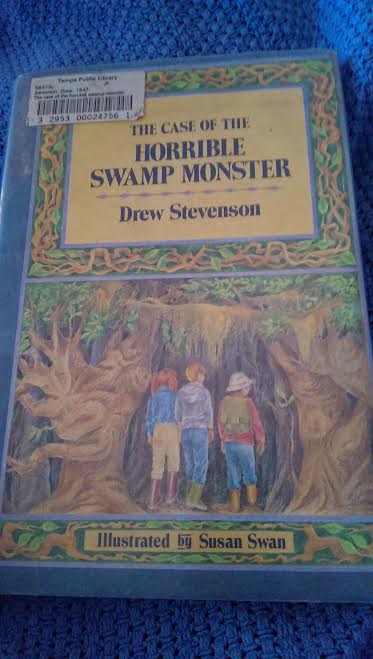 The Case of the Horrible Swamp Monster by Drew Stevenson, 1984.
 The course of their investigation takes a strange turn when friendly Mr. Walton, who works as a janitor at the same bank where Huntley and Verna’s mothers work, is arrested for stealing money. The kids refuse to believe that he’s guilty and soon learn that there is a connection between the thefts and the mysterious monster and possibly the strange fisherman who has also been lurking around the swamp.
 #3 Mandie and the Ghost Bandits by Lois Gladys Leppard, 1984.
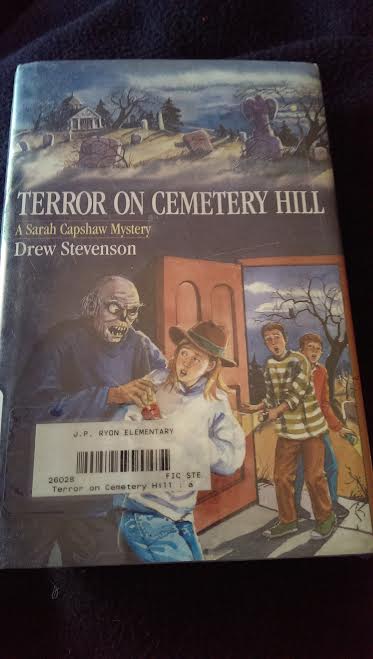 Terror on Cemetery Hill by Drew Stevenson, 1996.
 Jestress's Forgotten Books and Stories