Spooky Sleepover

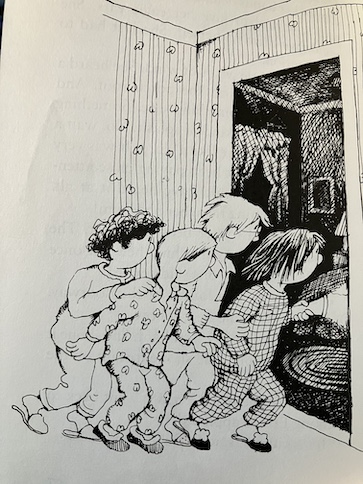
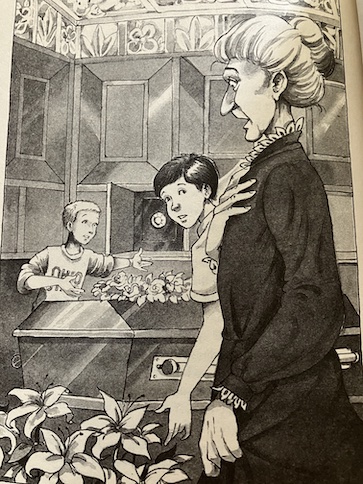
A couple of weeks before Halloween, Ernie decides to have a sleepover party for her friends. The kids enjoy scaring each other with ghost stories, and a thunderstorm adds to the spooky atmosphere.

Michael, in particular, keeps insisting that an old witch called Mrs. Maloney used to live in Ernie’s house with a bunch of cats. When spooky things happen during the course of the evening, Michael says that Mrs. Maloney and her cats have returned to haunt Ernie’s house. The kids try to stay up until midnight because ghosts are supposed to appear at midnight, but there’s no telling what they might actually see.

The kids fall asleep, but they wake up around midnight when they hear a crashing sound from the basement. Although they are afraid, they take their flashlights and go down to see what it is. Will they find a ghost?

The book is available to borrow and read for free online through Internet Archive.

This is one of those stories that has a pretty simple explanation, but the adventure seems bigger to the kids because their imaginations run away with them. I remember liking this series when I was a kid, and I think this is one of the books I read back then. I liked the creepy-cozy atmosphere of the story. Even though the kids have been scaring each other with ghost stories, they’re still just at a sleepover in an ordinary, safe house, and there’s nothing there that is harmful. It’s that kind of safe scariness that Halloween represents to young kids. They can enjoy the spookiness, knowing that there’s a logical explanation for everything. Adults and older kids will figure out pretty quickly what’s really going on.

The Dark-Thirty

The Dark-Thirty: Southern Tales of the Supernatural by Patricia C. McKissack, 1992.

There are ten short, scary stories in this book, not thirty. The author explains in the beginning that the name of the book comes from an expression kids used when she was young. The “dark-thirty” was the last half hour of light before it became truly dark outside, when the kids had to hurry home so they wouldn’t be out after dark, when the monsters came out. The author was African American, and the stories in this book have African American themes. They were based on stories that the author heard from her grandmother when she was young.

This is a book that I remember a school librarian introducing to us when I was in elementary school, probably around age 10 or 11. My memories of it are a little vague. I had forgotten most of what the stories were about, although the title stuck with me, and I remembered thinking that I should read it again someday. I have to admit that most of the emotions that I experience while reading this book as an adult were anger and frustration. The sad truth is that those are the emotions that permeate much of African American history, from the harsh conditions of slavery to the injustices of racism, and those are the aspects of the stories that stand out to me most as an adult. As I recall, I did think more about the ghost parts of the stories when I was a kid, but I didn’t have as deep an understanding of the background of the stories then. Maybe part of the lesson here is that human monsters are more terrifying than anything supernatural, partly because it’s the people who are or should be closest to you in a shared humanity are the ones who have the most opportunity to cause harm, if that’s what they’ve decided to do. That’s a rather dark thought, but these are dark stories with dark themes.

On a lighter note, I found the stories that introduced pieces of folklore fascinating. I’ve had an interest in folklore since I was a kid, which is part of why this book stuck in my mind for so many years.

I wouldn’t recommend this book for kids younger than 10 years old because of the dark themes. There is also derogatory racial language in the stories (including the n-word), particularly used by the villains, which helps show why they’re villains. I think, before kids are ready for this book, they need to have some background information on the subjects of racism and slavery to understand what’s going on, and they should also know that there are certain words they shouldn’t use themselves, even if other people do.

The book is a Newbery Honor Book. It’s available to borrow and read for free online through Internet Archive.

Stories in the Book:

The Legend of Pin Oak

The story is set during slave days. Harper McAvoy, a plantation owner, has resented one of his slaves, Henri, since they were both young. Harper was neglected by his father after his mother died giving birth to him, and years later, when his father finally returned to their estate, called Pin Oak, he learned that his other had another son with a free black woman, Henri. Their father had hoped that the two boys might be friends and that Henri would help Harper run the estate one day, but Harper always resented Henri for being more like their father than he was and for receiving the attention that his father never showed him. After their father died, Harper thought that he could sell Henri and be rid of him forever, but Henri has actually been a free person all along because his mother was free.

When the slavers try to take Henri anyway, he and his wife run away with their baby. They apparently die jumping to their deaths at a waterfall, although some say that they actually turned into birds and flew away while Harper is killed pursuing them. Others think that Henri and his family may have survived by jumping into a cave behind the waterfall, although there is evidence that Henri didn’t know there was a cave there. Their fate is left ambiguous.

We Organized

As part of the government’s effort to get people back to work during the Great Depression, the Library of Congress employed writers to record the stories of people who had been slaves. This chapter is a poem based on one of those stories.

Justice

This story is about the Ku Klux Klan. A wealthy and influential man called Riley Holt is murdered. The identity of the murderer is unknown, but local people are so shocked and angry at the crime that they are determined to get “justice” … one way or another. A bitter and suspicious local man called Hoop Granger blames a young black man named Alvin Tinsley. However, Alvin has an alibi, and the chief of police, knowing that Hoop is a bully and a liar and has a history of pushing Alvin to take responsibility for things he’s done himself, asks Hoop if he has an alibi, too. He says that he was working at his service station and his friends will vouch for him, but Chief Brown doesn’t think much of any of them as witnesses.

Hoop is a member of the KKK, and to throw suspicion for the murder from himself, he convinces his fellow KKK members that Alvin is guilty and needs to be punished. They capture Alvin and lynch him, but before Alvin dies, he promises to come back and prove his innocence. Hoop and his friends tell everyone that Alvin hanged himself after confessing to Holt’s murder. Not everyone in town believes the story, but they have no way of proving it’s a lie, and the authorities seem satisfied with the explanation (mainly because the mayor’s son was also part of lynch mob, and the mayor is forcing everyone to cover for him). However, Hoop can’t forget what Alvin said about coming back to prove his innocence. He seems haunted by Alvin’s words. Soon, he starts seeing things and becomes convinced that Alvin is coming back for him. Is it really a restless spirit or Hoop’s own guilty conscience?

The 11:59

This story is about train travel and the Brotherhood of Sleeping Car Porters. The Brotherhood of Sleeping Car Porters had stories that they liked to tell each other, like this story about a phantom train called the Death Train or the 11:59.

A retired porter enjoys telling the younger porters stories about how the Brotherhood was formed and the truly great men among the porters. Many of his stories are tall-tales. One of his stories is about the 11:59. When a porter hears the whistle of this phantom train, he only has 24 hours left to live, and nobody can escape it. Not even old Lester.

The Sight

There’s an old superstition that babies who are born with a caul over their heads will have psychic abilities and could be able to see the future or spirits. A boy named Esau gets “the sight” and is able to tell the future from a young age. However, people with “the sight” have to be careful who knows they have that power because some people will try to use them for unethical purposes, which might cause them to lose their gift, and Esau’s father is a con man. Esau knows that his father can’t be trusted, but when he feels compelled to warn his father of danger, his father learns what Esau can do. His father forces him to help him win at gambling with his gift until the gift finally fades. Then, his father deserts him and his mother. Esau’s mother says maybe it’s just as well to lose the sight, and Esau agrees, not liking it when he sees that bad things are about to happen.

Years go by, Esau grows up, and he eventually becomes a soldier in WWII. He manages to make it home safely, but he is surprised by the sudden return of his gift just in time to save his family.

The Woman in the Snow

This story involves the bus boycott in Montgomery, Alabama in the 1950s.

Grady Bishop, a white man with a bad history and a chip on his shoulder, has recently started working as a bus driver, although he’s never happy when he has to take the less prestigious route through the city, where a lot of black people catch the bus. Driving makes him feel powerful, but he considers this route beneath him.

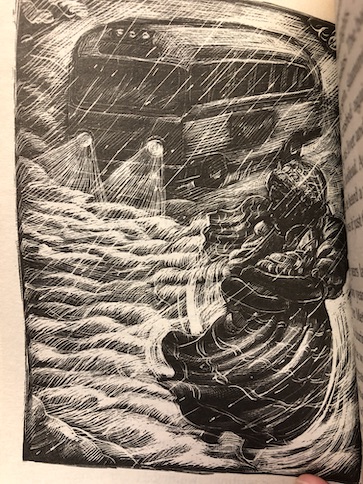
One day, during a bad snow storm, a poor woman with a sick baby begs him for a ride although she doesn’t have money to pay. She’s afraid if she can’t get the baby to the hospital, she’ll die. Grady refuses to give her a free ride, convinced that she’s making too much out of nothing and just trying to get a free ride. Later, he hears that the woman and baby froze to death in the storm. A year after that, he sees the same woman again on the same route. Startled, Grady crashes his bus and is killed.

Years later, a black bus driver has that route, and other drivers tell him about the ghost lady with the baby that they see whenever it starts snowing. He becomes the last person to see the ghost lady … because he’s the first to give her a ride.

The Conjure Brother

This story explains that “conjure women” were women who sold herbal cures and practiced folk magic to help people change their luck.

A girl named Josie is tired of being an only child and wants a brother. However, her mother shows no signs of being pregnant, even though Josie keeps asking her for a brother. When she hears a couple of women talking about the local conjure woman, Josie decides to go see her and ask if she can help her get a brother. The conjure woman gives her a set of instructions to follow, but Josie performs the ritual too early at night. Instead of getting a baby brother, Josie gets an older brother, called Adam. Her parents act like Adam has always been their oldest child. Adam is bossy, and some of the things that used to belong to Josie now belong to Adam. Josie starts to think of Adam as a pest and returns to the conjure woman to ask her to do something about Adam, but instead, she learns an important lesson about sharing her life and house with a sibling.

Boo Mama

This chapter talks about the tumultuous times of the late 1960s and the assassinations of Martin Luther King, Jr. and Robert Kennedy. Some people felt so overwhelmed by everything that was going on that they just wanted to “drop out” of society and ignore the chaos around them.

Leddy has been a social activist since she was in her teens, but then, her husband is killed in the war in Vietnam, leaving her with a young child. After the deaths of Martin Luther King, Jr. and Robert Kennedy soon after her husband’s death, Leddy feels completely overwhelmed. She’s been putting forth all of the effort she has for a long time, and the deaths of the man she loved and the people who inspired her feel like too much. She has a breakdown and starts questioning whether everything she and her friends have done has really accomplished anything. Deciding that she needs a change of scene for her and her son, she moves to a rural community in Tennessee.

At first, her young son seems to do better in the countryside, and Leddy finds the change of pace relaxing, but then, her young son disappears. He wanders away while his mother is hanging out the laundry. The locals put together a search party. They search for days, but all they can find is the boy’s teddy bear. Everyone is convinced that he’s dead, but Leddy can’t give up hope that her son is still alive. Her son does turn up, but he is strangely different. Where has he been, and what has happened to him?

The Gingi

There is an old superstition that “Evil needs an invitation.” Among the Yoruba people of West Africa, there is a belief that evil spirits need someone to welcome them into a house before they can enter, so they will try to trick unsuspecting people into giving them an invitation. They use special talismans called gingi to guard against evil.

A woman named Laura is fascinated by a strange statue that she sees in a shop window. However, when she tries to buy it, the shopkeeper says that she’s never seen it before and warns Laura that evil spirits sometimes disguise themselves to trick people into taking them into their homes. Laura thinks this is just superstition and insists that she wants the statue. The shopkeeper charges her a price that’s too high to discourage her from buying the statue, and it almost works, but for some reason, Laura feels compelled to buy it and pays for it anyway. Seeing that she can’t prevent Laura from taking the statue, the shopkeeper insists that she take a small complementary talisman and keep it with her. The talisman is a small doll, and she gives it to her young daughter to play with.

The Chicken-Coop Monster

The final story in the book is semi-autobiographical, inspired by the author’s feelings when her parents got divorced when she was a child.

A young girl named Melissa is upset about her parents’ divorce. Her parents send her to stay with her grandparents in Tennessee while they’re sorting things out, but she becomes convinced that there’s a monster living in the chicken coop on her grandparents’ property. She and her friends are part of a group called the Monster Watchers of America. Melissa’s grandmother doesn’t believe in the monster, but her grandfather teaches her an important lesson about facing up to life’s monsters.

The House on Hackman’s Hill

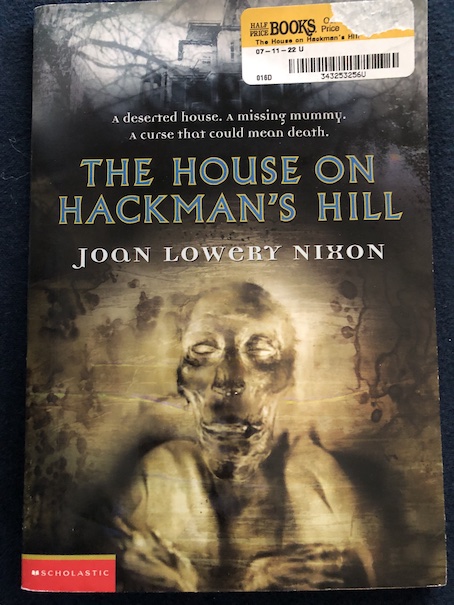
House on Hackman's Hill cover

The House on Hackman’s Hill by Joan Lowery Nixon, 1985.

This creepy book is interesting partly because it is told in two parts. About half the story is a flashback that explains the history of the house and the mummy inside it, and the rest continues in the present day.

The very beginning of the story is in the present, starting with a pair of cousins. While they are visiting their grandparents, Jeff tells his cousin Debbie that he’s found out about an old, abandoned house nearby that supposedly contains a hidden mummy and that there’s a reward for anybody who finds it. Debbie doesn’t believe him at first, but he says that he heard all about it from their grandparents’ neighbor, Mr. Karsten. Jeff persuades Debbie to come with him to check out the old house. Debbie comes and takes pictures of it because she’s interested in entering a photo contest.

The place looks really creepy, and they have the odd feeling like somebody is watching them, even though the house is supposed to be empty. Debbie says that they should ask their grandparents what they know about the old house. At first, the grandparents don’t want to talk about it. They just say that it’s an old house and not very interesting. Debbie asks them directly about the mummy, and they say that there are a lot of rumors about the old place, but they don’t really believe them. The kids decide to talk to old Mr. Karsten again. Mr. Karsten says that he knows all about the old house on Hackman’s Hill because he lived there for awhile when he was young, back in 1911.

Paul Karsten’s Story

Paul Karsten’s mother was a secretary, and she went to work for Dr. Hackman, the former owner of the house, after the death of her husband. Dr. Hackman was a strange man with changeable moods. He was pleasant enough to Mrs. Karsten, but he hated children and didn’t really like having her son Paul in his house. Dr. Hackman was a history professor, specializing in Egyptology. He was approaching retirement, and he wanted to devote himself to his papers and his collection of Egyptian artifacts. Mrs. Karsten’s job was to help him catalog his collection, and Dr. Hackman offered such a good salary, Mrs. Karsten couldn’t refuse. The mummy was delivered the same day that Paul and his mother moved into the house.

Paul was given a room in the tower of the house, and while he thought that it had a great view at first, he got nervous when he noticed how the tower room was situated on the edge of a cliff. One of Dr. Hackman’s servants, Jules, makes a comment about how Paul should be careful because they don’t want “another accident”, refusing to say more about whatever “accident” occurred there before. Paul was uncomfortable with the house and with Dr. Hackman. He tells his mother that the house frightens him and that he wants to leave, but his mother reassures him that the place only looks strange because of the Egyptian artifacts. Paul found the artifacts he once saw at a museum exhibit frightening and he’s particularly disturbed by a statue that Dr. Hackman has of a man with an animal head, but his mother says that’s just a statue of an Egyptian god.

Paul had notice earlier that a long box had been delivered to the house, and he gives into temptation and tries to look inside. However, he is stopped by Jules. Jules and his wife Anna warn Paul that this house isn’t very good for children and that Dr. Hackman doesn’t like people nosing around or messing with any of part his collection. At dinner, Paul admits to Dr. Hackman that he tried to look in the box and apologizes for his curiosity. Dr. Hackman accepts the apology, and before Paul goes to bed that evening, Dr. Hackman shows him the mummy case that was in the box. Paul asks him if it’s real, and Dr. Hackman says it is. Paul says that he heard that it’s illegal to take real mummies out of Egypt, but Dr. Hackman says that there are ways, if you’re willing to pay for it, and he was. Dr. Hackman says that his eventual goal is to turn his house into a museum of Egyptian artifacts so that scholars will come there to study them and read his papers, and he will be famous. He also says that he knows how to protect himself from the mummy’s curse. The talk of curses scares Paul, but Dr. Hackman says that nothing has ever happened to him personally because of any tomb curses … implying that something might have happened to someone else.

When Paul tells his mother that Dr. Hackman has a real mummy, she is worried and upset. She doesn’t like the idea of people obtaining artifacts through unethical or illegal means, although she knows that the laws are poorly enforced. Mrs. Karsten doesn’t believe in superstitious curses, but soon, strange things begin to happen. While putting away his things in his room, Paul discovers a strange, triangular piece of gold metal with some kind of design on it. When he goes up to bed, he feels like someone is there in the room, although he can’t find anyone. During the night, he wakes up, sees that one of his windows is open, and feels an odd urge to walk toward it, but fortunately, his mother comes to check on him and stops him. Paul and his mother both realize that they were woken by the sound of a cry in the night. His mother supposes that it was some kind of night bird, but Paul knows that it was probably something to do with the curse.

Paul insists that Jules and Anna tell him about the accident that took place in his room. They say that they weren’t working for Dr. Hackman when it happened, but they know that the person who fell from the tower room was a guest of Dr. Hackman’s, he was from Egypt, he died when he fell, and his body was shipped back home. At first, Paul thinks that the gold piece he found probably belonged to the Egyptian guest, but that’s not quite it.

Dr. Hackman gives Paul the job of polishing some of his statues, knowing that they bother him. It amuses Dr. Hackman as a mean joke. However, Paul’s fear of them fades while working with them because he begins to appreciate their artistry. Dr. Hackman is surprised that Paul is able to see that and not just be afraid of the statues. Paul asks him about the statue of the man with the animal head, and he explains that it’s a statue of Anubis, the god of the dead, and scares Paul again by saying that Anubis is the one responsible for the curses on tombs. He says that Anubis’s head is a jackal head and that jackals hunt at night and have a bark like a cry. This confirms to Paul that the curse was responsible for the cry he and his mother heard.

Paul eventually comes to realize that the strange gold piece attracts the mummy and the mummy’s curse, which is why Dr. Hackman knows that he’s in no danger. Dr. Hackman put it in the tower room to make sure that the mummy’s wrath would only come to whoever was in that room … and that’s why he made sure that Paul was given that room, too. To protect himself and his mother, Paul knows that he has to get rid of that gold piece.

Mr. Karsten finishes his story by explaining to Jeff and Debbie where he hid the gold piece and how Dr. Hackman disappeared, apparently a victim of the curse. Nobody ever discovered what happened to Dr. Hackman, and the mummy disappeared that same night, but a museum has offered a reward for anybody who finds the mummy. Mr. Karsten says that various people have tried to stay in the house and find the mummy, but nobody has succeeded. Everyone has been frightened off after just a single night in the house.

Jeff doesn’t believe in curses, and Debbie agrees to accompany him into the old house to find the mummy and claim the reward.

Return to the Present

The rest of the story is about Jeff and Debbie’s adventures with the house on Hackman’s Hill. Jeff says that he thinks all the spooky curse stuff was just put on by Dr. Hackman, who was a mean old man having a joke by scaring a kid with all that talk of curses. Dr. Hackman was definitely a mean old man who enjoyed scaring young Paul Karsten, but questions still remain. How much of what Paul experienced was really real, and what happened to Dr. Hackman? If the curse was just something he made up, why did he scream the night he disappeared, and where did he go?

Jeff’s idea is that all the creepy stuff happened at night, so the best time to go look for the mummy would be during the day. (That’s actually pretty sensible. Why go to a supposedly haunted house during the night if you don’t have to?) The kids make a plan and put together a collection of useful supplies and food for their mummy hunt. They decide to go while their grandmother is busy watching her favorite soap opera and their grandfather is in town, arranging some sort of surprise for them.

When they enter the house, they discover that everything is still inside. All of the furniture and Egyptian artifacts are like Mr. Karsten described them. Debbie has an instant camera that with takes pictures that develop themselves. (No brand name mentioned, but basically, a Polaroid instant camera or something very similar. Those were popular when I was a kid in the 1980s and into the early 1990s, especially for families and amateur photographers. They’re not as popular now with the popularity of smart phones and digital photography, but they’re still around. Although police photographers now use digital cameras, instant cameras have been used in accident and crime scene photography because they produce quick results, the photos last for a long time, and because they develop immediately after being taken, they can’t be digitally altered. What I’m saying is that Debbie has made a good choice for recording their adventures and any evidence that they uncover, and it pays off almost immediately.) When Debbie takes a picture of the statues that Mr. Karsten told them about, she notices something frightening right away: the Anubis statue doesn’t show up in photographs.

Jeff discounts the photographic evidence because Debbie’s hand shook, and the picture is somewhat blurred. However, the kids start hearing noises in the house. Then, Debbie notices that a bad snow storm is approaching. She wants to leave the house immediately, but Jeff realizes that they can’t because they’d never make it back to their grandparents’ house by the time the storm hit. Night approaches, and the kids are about to see just how true Mr. Karsten’s story was. The kids are trapped in the house by the snow storm, but they’re not there alone.

The book is available to borrow and read for free online through Internet Archive (multiple copies).

My Reaction and Spoilers

I thought that this was a fun, creepy story. The creepiness is tempered somewhat in the first half of this story because it’s told in the form of a flashback. We know during the first part of the story that Paul survives his ordeals and lives to old age because he’s telling the story of what happened when he was young to Jeff and Debbie as an old man. When Jeff and Debbie go into the house themselves, it’s less certain what’s going to happen.

There are points in the story after Jeff and Debbie enter the house where it seems uncertain how much of what Paul Karsten experienced was supernatural and how much might have been due to the machinations of Dr. Hackman, who seems to have been a very disturbed man by himself. They soon discover that the house has secret passages that could allow Dr. Hackman to move around the house unseen and create some strange phenomena himself to scare or harm people in the house. There was a point where I thought perhaps everything would turn out to be part of some elaborate plot by Dr. Hackman or someone else, but (spoiler) there is real supernatural phenomena happening.

Before the end of the book, Jeff and Debbie discover both where the mummy is hidden and where Dr. Hackman hid the mummy’s golden eyes, which Anubis has been searching for all this time. They also learn what really happened to Dr. Hackman all those years ago. He apparently did become the victim of the curse that he had tried to evade by inflicting it on others. When the story ends, it seems that the curse is ended permanently, although Jeff and Debbie do manage to get some things out of the experience.

I liked how, even though the story does turn out to be supernatural, the author introduced the idea that it might not be because that element of uncertainty kept the suspense going for longer and introduced some interesting possibilities for readers to consider. It also made it a little more plausible that the kids would be willing to enter the house because they could believe that the house itself was harmless without Dr. Hackman there to continue his plots.

More Scary Stories to Tell in the Dark

More Scary Stories to Tell in the Dark collected from folklore and retold by Alvin Schwartz, drawings by Stephen Gammell, 1984.

This is the second book in a series of popular ghost stories and American urban legends. Many of us who were children in the 1980s and 1990s heard these stories on school playgrounds, at summer camps, or at sleepovers, even if we didn’t read them in this book first. I found the stories in the first book in the series to be more familiar to me from my childhood than the ones in the second book, but there are still many popular and familiar ghost stories here. There is a section at the beginning of the book where the author/compiler discusses why stories like these have been popular for generations. In the back of the book, there is another section with more detailed information about the origins of the stories and their variants.

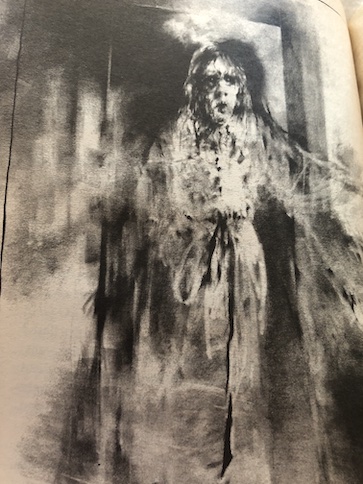
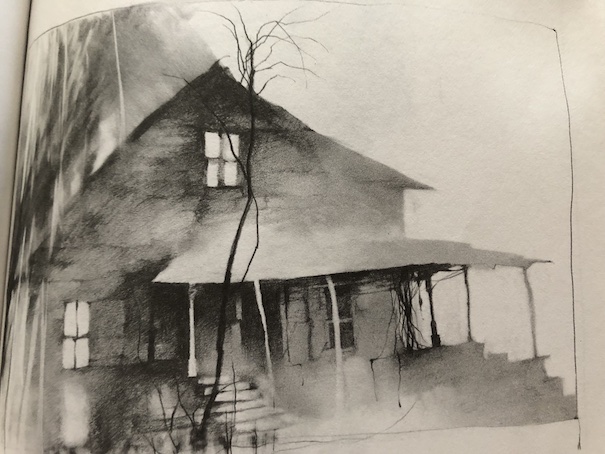
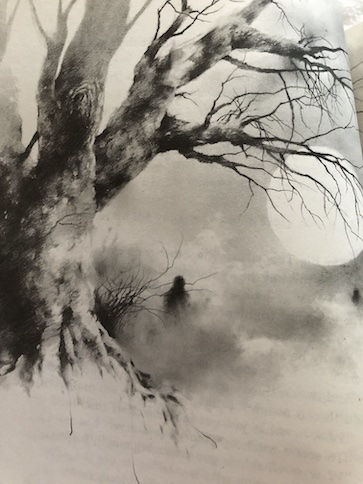
The drawings in the book also complement the stories well. They’re all in black-and-white and have an ethereal look, as those they were composed of spirits or smoke.

The book is available to borrow and read for free online through Internet Archive (multiple copies).

Stories Included in the Book:

The stories are divided into sections by theme or by the effect that the stories are supposed to have.

When She Saw Him, She Screamed and Ran

This section has stories about ghosts.

Something Was Wrong – A man is walking down the street, but for some reason, everybody is afraid of him. What’s wrong?

The Wreck – A guy meets a girl at a dance … only to learn that she was killed before she got there.

One Sunday Morning – A woman goes to church on Sunday but discovers that this isn’t a normal church service.

Sounds – Some fishermen take shelter in an empty house during a storm and hear the sounds of a past murder.

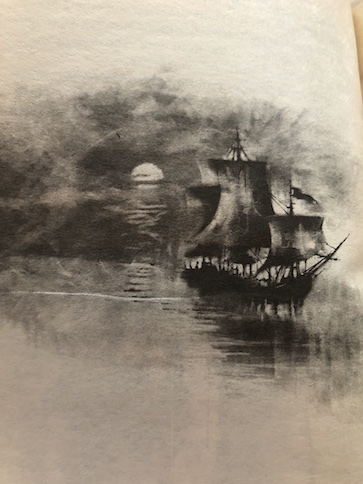
A Weird Blue Light – The crew of a ship during the Civil War witness something very strange, possibly the ghost of a pirate ship.

Somebody Fell From Aloft – The ghost of a murdered sailor gets his revenge.

The Little Black Dog – A murderer is followed by the ghost of a dog.

Clinkity-Clink – A grave digger steals the silver dollars laid on the eyes of a corpse, but the dead woman wants them back. (This story is supposed to end with a jump scare, like ghost stories told aloud around a camp fire.)

She Was Spittin’ and Yowlin’ Just Like a Cat

This is a selection of strange stories about different topics.

The Bride – The famous story about a bride who plays hide-and-seek and accidentally gets locked in a trunk.

Rings on Her Fingers – A thief tries to steal the rings from a dead woman, only she may not be quite as dead as everyone thinks.

The Drum – Two young girls meet a gypsy girl with a special drum that controls dancing figures. The girls want the drum, but the gypsy girl says that she’ll only give it to them if they do bad things.

The Window – One dark night, Margaret sees something with glowing eyes outside her window. What is it?

Wonderful Sausage – A butcher murders his wife and turns her into sausage.

The Cat’s Paw – A woman turns herself into a cat.

The Voice – A girl hears a voice in her room at night, but nobody is there.

When I Wake Up, Everything Will Be All Right

This section has stories about dangerous and scary places.

“Oh, Susannah!” – A university student thinks her roommate is humming at night, but her roommate is already dead.

The Man in the Middle – A girl sees three men on the subway late at night, but something’s wrong with the one in the middle.

The Cat in a Shopping Bag – A woman accidentally runs over a cat, and she puts the body in a bag to dispose of, causing a thief to get a terrible shock.

The Bed by the Window – A room at a nursing home has only one bed by the window. When one man kills another to get the view, he gets a shock.

The Dead Man’s Hand – A group of nursing students resent a fellow student who seems too perfect and decide to play a prank on her.

A Ghost in the Mirror – This story explains the spooky sleepover game Bloody Mary. Kids (typically girls) go into a dark or diml-lit room and look in a mirror to see a scary face appear. (This is actually a psychological trick, sometimes referred to as the “strange-face illusion“. Humans instinctively look for faces and facial emotions, and when someone can’t see their own face in the mirror very well because the room is too dim, their mind will try to reconstruct the missing details and interpret them, creating some strange illusions, like it’s someone else’s face when it’s just their own. The book doesn’t explain that, but that’s basically what “Bloody Mary” really is.) In the game, the identity of “Bloody Mary” and what she’ll supposedly do if you see her varies. This story explains different versions of the ghost story associated with the game.

The Curse – A fraternity initiation results in the deaths of two pledges and a curse on the remaining members.

The Last Laugh

This section has spooky stories with a humorous twist.

The Church – A man takes shelter in an abandoned church during a storm and thinks that he sees ghosts inside, but they aren’t what they appear to be.

The Bad News – Two old friends who love baseball and wonder if there’s baseball in heaven. There’s good news, and bad news.

Cemetery Soup – A woman makes soup with a bone she finds in the cemetery.

The Brown Suit – A woman thinks that her dead husband would look better in a brown suit for his funeral, and the funeral parlor comes up with a bizarre solution.

BA-ROOOM! – A spooky song.

Thumpity-Thump – People move into a spooky house and hear a mysterious thumping noise.

Scary Stories to Tell in the Dark

Scary Stories to Tell in the Dark collected from folklore and retold by Alvin Schwartz, drawings by Stephen Gammell, 1981.

This collection of creepy stories was a popular staple of my childhood! The stories included in the book are not original stories but popular ghost stories and American urban legends that were spread around by word of mouth before being collected and written down. Many of us who were children in the 1980s and 1990s heard these stories on school playgrounds, at summer camps, or at sleepovers, even if we didn’t read them in this book first. The very popularity of these stories was part of the popularity of this particular book and others in its series. The stories were frightening yet familiar, and reading them as an adult brings a sense of creepy nostalgia and Halloweens past. There is a section at the beginning of the book where the author/compiler discusses why stories like these have been popular for generations. In the back of the book, there is another section with more detailed information about the origins of the stories and their variants. The back of the book recommends these stories for ages 9 and up.

The drawings in the book also complement the stories well. They’re all in black-and-white and have an ethereal look, as those they were composed of spirits or smoke.

The book is available to borrow and read for free online through Internet Archive (multiple copies). There is also an audiobook copy.

Stories Included in the Book:

The stories are divided into sections by theme or by the effect that the stories are supposed to have.

Aaaaaaaaaaah!

This section has stories that are meant to make listeners jump at the end, like the kind people like to tell around camp fires, and there are tips for how to deliver the jump scares at the end.

The Big Toe – A boy finds a toe that seems to be growing in his garden, and his family decides to eat it (God only knows why), but that’s just the tip of something bigger …

The Walk – Two men walking down a road are each frightened by each other.

“What Do You Come For?” – A ghostly man comes down the chimney, part by part … and he comes for YOU!

Me Tie Dough-ty Walker! – A boy and his dog wait for a ghostly head that falls down a chimney.

A Man Who Lived in Leeds – A spooky rhyme.

Old Woman All Skin and Bone – A popular spooky song.

He Heard Footsteps Coming Up the Cellar Stairs

These are all stories about ghosts.

The Thing – Two friends see a frightening thing crawl out of a field, and it turns out to be prophetic.

Cold as Clay – A farmer separates his daughter from the man she loves, but when the man dies, his ghost makes sure that she gets safely home.

The White Wolf – When wolves are killing farmers’ livestock, a man becomes wealthy by hunting them. Then, a ghostly wolf takes its revenge.

The Haunted House – A preacher rids a haunted house of its ghost and brings her murderer to justice.

The Guests – A pair of travelers are looking for a room for the night. An elderly couple offers to let them stay in their house, but the travlers get a shock the next morning.

They Eat Your Eyes, They Eat Your Nose

These are an assortment of stories, and some are kind of gross-out stories. I never liked the gross-out scary stories when I was a kid, but I know some kids were really into them.

The Hearse Song – An old, traditional scary song that has several variations. “Don’t you ever laugh as the hearse goes by, For you may be the next to die.”

The Girl Who Stood on a Grave – Some kids at a party say that the graveyard down the street is scary, and one of them claims that if you stand on a grave, the person inside will reach up to grab you. A girl at the party doesn’t believe it and accepts a bet to go stand on a grave with frightening results.

A New Horse – A farmhand tells his friend that a witch turns him into a horse and rides him at night, and his friend finds a way to put a stop to it.

Alligators – A woman claims that her husband turns into an alligator at night and is turning their two sons into alligators as well. People don’t believe her, but there’s more truth to her story than they know.

Room for One More – A man has a prophetic dream that saves his life.

The Wendigo – A man on a hunting trip hears the wind calling to his companion. What does it mean?

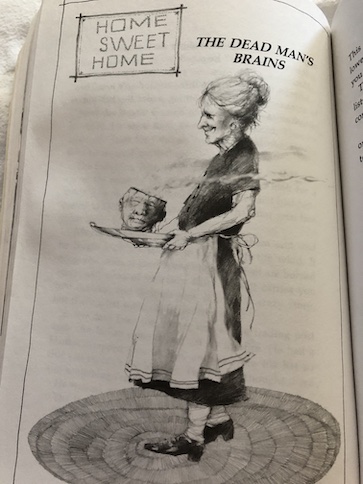
The Dead Man’s Brains – This story is actually played as a game, and it’s especially popular on Halloween. Many of us have played some version of the game, where someone describes the body of a dead person, giving people weird and creepy things to feel that are supposed to be body parts. In reality, the “body parts” are common things, usually food, like peeled grapes to represent eyes, etc.

“May I Carry Your Basket?” – A man walking home late at night helps a strange woman to carry her basket, but what’s inside the basket is truly terrifying!

Other Dangers

These are more modern horror stories and urban legends than the earlier ones in the book, and they focus less on old ghosts and more on the dangers of modern society.

The Hook – This is a popular story at camps and sleepovers! A young couple is listening the radio in their car when they hear about an escaped murderer. The girl gets frightened and wants to go home, and it’s only when they get there that they realize how close they came to being his next victims.

The White Satin Evening Gown – A girl wants to go to a dance but doesn’t have much money for a dress to wear. When she finds a dress that she can rent cheaply, it turns out that there is something very wrong with it.

High Beams – A girl realizes that she’s being followed as she drives home alone at night, but her pursuer isn’t the one she should be afraid of.

The Babysitter – A young babysitter keeps getting strange calls … and they’re coming from inside the house.

Aaaaaaaaaaah!

Even though this section has the same name as the first section, the stories in the final section of the book have humorous twists.

The Viper – One of my old favorites! The characters in The Haunting of Grade Three tell this story to each other. A woman keeps getting calls from a man calling himself “the viper.” Who is he, and what does he want?

The Attic – Rupert is looking for his dog when something happens to him on the way to check the attic that makes him scream.

The Slithery-Dee – A short rhyme.

Aaron Kelly’s Bones – Aaron Kelly is dead, but he doesn’t feel dead enough to stay in his coffin and won’t go back there until he does.

Wait Till Martin Comes – What will the cats do when Martin finally comes?

The Ghost with the Bloody Fingers – When dealing with a ghost, sometimes the practical approach is best.

My Sister the Witch

My Sister the Witch by Ellen Conford, 1995.

Norman Newman is convinced that his sister, Elaine, is a witch. When he goes to her room one evening to call her to dinner, he catches her all dressed in black and chanting strange words.

Norman likes to read horror and mystery books, and he uses some of the techniques that he has learned from reading his favorite mystery stories to investigate his sister. Some of these techniques don’t work as well for Norman as they do for the characters in his books, partly because he doesn’t really know how they work (like which end of a glass you’re supposed to put against a door when you’re trying to listen in on someone) and partly because the characters and situations in books are fictional and some of the things they do don’t work that well in real life.

Early in the story, Norman uses one of his scary stories for a book report for school, and his teacher tells him that she wants him to start to read other types of books. She makes him write an extra book report, telling him that he has a week to read something outside of his usual genre and report on it. That incident and some other pieces of bad luck cause Norman to think that maybe Elaine really is a witch and that she put a curse on him, just like a witch in the book he just read.

Norman’s friend, Milo, thinks that Norman’s imagination is just running away with him. It’s happened before because of the scary stories he reads. Once, he thought that their teacher might be an alien.

When Norman has a brief streak of good luck, he starts to think that whatever curse Elaine put on him may be over, but then, he gets sick to his stomach. He goes to the library to get a book for his new book report, and he also gets a non-fiction book about witches. Then, he overhears Elaine talking to her friend, Deirdre, about something being powerful and scaring Deirdre’s sister. The two of them begin chanting together. Norman decides that he was right about Elaine being a witch and that Deirdre must be a witch, too.

After some research, Norman and Milo learn that, to get rid of the effects of a magic spell, they need to learn the words to the spell and say it backwards. Norman doesn’t remember the whole spell from when he heard Elaine say it, so Milo says that he’ll just have to look for a copy of the spell in her room. The book they consult also says that a spell can be neutralized if the person it was cast on duplicates it, which means gathering all the materials used in the spell, but Norman doesn’t know where he would find things like newts’ eyes and frogs’ toes. Either way, it looks like Norman’s going to need a copy of Elaine’s spell. However, even when he gets it and tries to break the curse, things still go wrong. What can Norman do to get rid of this bad luck spell?

I particularly liked the character of Milo in the story. Milo uses a wheelchair because he was hit by a car when he was young and can’t walk. Norman notes that, although Milo can’t use his legs, he gets around very well in his wheelchair and that he has very strong arms. Milo is also more level-headed than Norman, pointing out to him how he has allowed his imagination to run away with him in the past.

The book is available to borrow and read for free online through Internet Archive.

Spoilers and Other Thoughts

I thought that the secret behind Elaine’s spell was pretty obvious from the beginning because the book repeatedly says that Elaine wants to be an actress. It reminded me of other stories I’ve seen where someone’s playacting was mistaken for some real life danger. Overall, I enjoyed the book, even though I figured out what was going on pretty quickly. Kids might be in suspense for longer.

By the end, Norman still hasn’t learned his lesson because the next scary story he reads leaves him looking at his dog suspiciously. There is at least one sequel to this story called Norman Newman and the Werewolf of Walnut Street.

In a Dark, Dark Room

In a Dark, Dark Room and Other Scary Stories retold by Alvin Schwartz, 1984.

This is a collection of classic scary stories based on folktales from around the world.  A special section in the back of the book explains more about where the stories came from.

This book was a favorite scary book of mine when I was a kid, and the stories are the type that kids commonly like to tell at camp or at sleepovers to spook each other.  Stories like these stay with you for years!

Sometimes, you can find individual stories from this book read aloud on YouTube. The book is currently available online through Internet Archive.

Stories in the Book:

The Teeth – A boy meets a series of strange people with increasingly long teeth.  Based on a story from Suriname. (Here is a video of someone reading this story as an example.)

In the Graveyard – A woman sees bodies carried into a graveyard. Based on the song “Old Woman All Skin and Bone.”

The Green Ribbon – A girl wears a green ribbon around her neck for her entire life, refusing to explain to even her husband why she wears it, until she is old and about to die.  Based on a European folk tale.  Originally, it was a red thread.

In a Dark, Dark Room – Classic slumber party story!  “In a dark, dark wood, there was a dark, dark house.”  What will it all lead to?  It is known in Europe and America.

The Night It Rained – A man gives a boy a ride home on a rainy night.  When he returns the next day to pick up the sweater he loaned the boy, he gets an eerie surprise.  Based on a class of ghost story known as “The Ghostly Hitchhiker,” which has many variants.

The Pirate – When Ruth visits her cousin’s house, her cousin tells her that her room is haunted by the ghost of a pirate.  Based on a British folktale.

The Ghost of John – A short poem. The author of this book first heard this from a young girl in California in 1979.

Aunt Morbelia and the Screaming Skulls

Todd Fearing is worried because his Great-Aunt Morbelia is coming to live with his family.  He has never met her before, but he has heard that she is rather strange, and he knows that his life will never be the same again.  Aunt Morbelia is very superstitious, and she sees bad omens everywhere.  When she first arrives at Todd’s house and sees that the family owns both a black dog and a black cat, she takes it as a sign that she should leave right away.  It takes a lot persuading to get her to stay on a trial basis.  By Joan Carris.

Having Aunt Morbelia at his house is sort of a mixed blessing.  On one hand, Aunt Morbelia likes baking good things for him to eat and helps him with his homework.  Todd is dyslexic and has extra assignments to help him improve his reading.  Aunt Morbelia used to be a teacher, and Todd really appreciates the help she gives him. On the other hand, Todd doesn’t like scary stories, and Aunt Morbelia’s talk of ghosts and bad omens gives him nightmares.  His friends like to hear her stories, particularly Rocky, a girl who typically doesn’t like feminine things.  Rocky, whose real name is RosaLynn, constantly pesters him about when Aunt Morbelia will tell more stories. 

Eventually, Todd gets tired of Rocky’s obsession with ghost stories and the way she encourages Aunt Morbelia to keep telling them, and he and his best friend, Jeff, decide to play a trick on her to cure her appetite for scary stuff.  However, their trick backfires, and in their attempt to make it up to everyone, especially Aunt Morbelia, they end up making things worse. 

Todd and Jeff succeed in scaring Rocky by dressing up as ghosts and showing up at her house in the middle of the night. They have so much fun with their trick that they decide to go to their friend Alan’s house to try it on him. Alan lives in the house right behind Todd’s, and that’s where they run into trouble. When they start their ghost act, they can’t get Alan to wake up and come to the window to see them. Jeff decides to throw a rock at Alan’s window to wake him up, but the rock breaks the window. To make matters worse, they startle Todd’s black cat, causing the cat to yowl. The boys run back to Jeff’s house, but Jeff’s father catches them. Todd has to go home and apologize to Aunt Morbelia, who was frightened very badly when the cat started howling.

The boys decide to take Aunt Morbelia on a tour of the historic places in town to make up for scaring her. Unfortunately, Jeff includes the funeral home that his father runs on the tour because it is in one of the oldest buildings in town. Although Todd tells her that she doesn’t have to go in if she doesn’t want to, Aunt Morbelia thinks that it would be rude to refuse. Unfortunately, Jeff’s father arrives with a dead body before their tour ends, and Aunt Morbelia faints when she sees it. Aunt Morbelia tells the boys that it isn’t their fault, but she says that she’s not sure she really belongs in their town. Even with all of Aunt Morbelia’s superstition craziness and spooky stories, Todd still doesn’t want her to leave.  Is there still something he can do to convince her to stay?

The book is currently available online through Internet Archive. There is also a sequel to this book, Beware the Ravens, Aunt Morbelia!

When I first read this book, I was expecting a spooky mystery, but it’s really more about a boy adjusting to a relative coming to live with his family and dealing with his dyslexia. Although Todd initially has some reservations about Aunt Morbelia living with him and his parents and her spooky stories scare him, Todd and Aunt Morbelia gradually come to understand each other better, and Todd genuinely wants her to stay. To help Aunt Morbelia change her mind about leaving, Todd has all the people who have met Aunt Morbelia since she arrived come by the house and tell her how much they all want her to stay.  After everyone has visited her, Todd himself tells her that he doesn’t want her to go.  They talk about the scary stories and how Todd feels about them, and Aunt Morbelia tells Todd that if he doesn’t want to hear a scary story, he can be honest with her and tell her so.  Now that the two of them understand each other better, Aunt Morbelia agrees to stay, and she accepts the invitation that one of Todd’s teachers makes to help tutor children at the learning center.

I didn’t like the part where the boys played the trick on Rocky and how awkward things were with her afterward. Jeff’s father says that part of that, with Rocky drifting away from her friendship with the boys, is because the kids are growing up. He says that, as they grow up, girls start changing before boys do and have different interests from boys and different ways of looking at things, including more tomboy girls, like Rocky. Toward the end of the story, Rocky does appear to need more friendships with other girls, and Todd decides that Jeff’s dad is probably right, that Rocky thinks and acts differently from his guy friends because she’s a girl, even if she’s usually not a particularly “girly” girl. Part of that may be true, but the boys’ trick was pretty mean. I think that the real issue is that real friends shouldn’t do that to each other, and Rocky might really be questioning what she’s looking for in a real friend. Although, to hear some of my male friends talk about their youths, boys (at least certain ones) might be more accepting and forgiving of that kind of rough humor from friends than girls would be, so perhaps boys vs. girls issues are partly at the heart of it.

I thought that the parts where Aunt Morbelia was helping Todd with his dyslexia were interesting. I don’t really have any experience with the condition myself, and I’m not quite sure what techniques teachers really use to help dyslexics. One of the tricks that Aunt Morbelia uses is to break down tasks into smaller pieces to make them more manageable. For example, Todd feels badly that he can’t keep the orders of months straight. When he tries to recite the months of the year in order, he mixes them up, which makes him feel bad because most kids his age should be able to do this easily. When I first read this, I wasn’t sure if this is a common issue among dyslexics, although I thought that I remembered reading something about dyslexics having trouble remembering the orders of certain things, like lists of instructions. I looked it up, and apparently, it is a common issue, along with memorizing things like days of the week. There are different techniques for handling it, some of which involve associating the things to be remembered with something else that sticks in the mind more easily, such as a rhyme or song. Aunt Morbelia does some association with Todd but she also breaks the months down into groups of three, representing the four seasons of the year, and giving him small bits of information to memorize. She calls the spring months, “the flower months” and the fall months “the leaf months” and so on. Todd finds that technique helpful, and Aunt Morbelia says that once Todd has mastered the seasons of the year, they will put the season of the year together so that he can recite the entire year. Todd also describes other ways that he is affected by his dyslexia and techniques that his teacher uses to help him.

The Ghost in the Tokaido Inn

ghosttokaidoinnThe Ghost in the Tokaido Inn by Dorothy and Thomas Hoobler, 1999.
In feudal Japan, more specifically in 1735, the family you were born into determined what you were meant to be in life.  Samurai were born into families of samurai, and merchants were born into merchant families.

This is a terrible disappointment to Seikei, the fourteen-year-old son of a tea merchant, who would love nothing more than to be able to become a samurai.  He has studied the samurais and their ideals and greatly admires their bravery.  He even loves to write poetry, as the samurais do.

One day, Seikei accompanies his father on a business trip from their home in Osaka to Edo (the old name for Tokyo).  On their way, they stay overnight at an inn.  There, Seikei makes friends with the daughter of a paper merchant, and she entertains him with a ghost story.  During the night, Seikei sees a strange figure that attempts to enter his room, which he fears might be an evil spirit (like the one in the ghost story), but he is unable to get a good look at it before it disappears.

The next morning, Lord Hakuseki, a daimyo (lord, nobleman) also staying at the inn, says that a jewel was stolen from him during the night.  The famous Judge Ooka comes to the inn to investigate the crime.  The paper merchant and his daughter are accused of the theft because the jewel is found among their belongings.  Seikei recognizes the jewel as one that Lord Hakuseki showed to both him and the girl the night before when they each went to show him their fathers’ wares, and he also realizes that he saw the “evil spirit” holding it.

When Seikei tells Judge Ooka all of this, his father is angry, saying that Seikei must have imagined the whole thing.  However, Judge Ooka believes him.  He points out that the silent figure was no doubt the thief, who merely looked like an evil spirit to the boy who had just been startled awake, with a ghost story still on his mind.  Judge Ooka is also impressed with Seikei’s bravery when Seikei describes how he got up to try to get a better look at the figure, even though he believed that it was an evil spirit at the time.

Judge Ooka recruits Seikei to help him further investigate the crime, and they realize that the theft is only part of a much larger and more serious plot of revenge.  Judge Ooka, himself of the samurai class, also understands Seikei’s feelings better than his father does.  In the end, he offers Seikei a way of living the kind of life that he’s always dreamed.

This book is the first in a series.  Judge Ooka was a real, historical figure, although Seikei, his adopted son, is fictional.  Because the story contains violence and some religious oppression, I recommend it for middle school level readers.  The book is currently available online through Internet Archive.

Jumble Joan

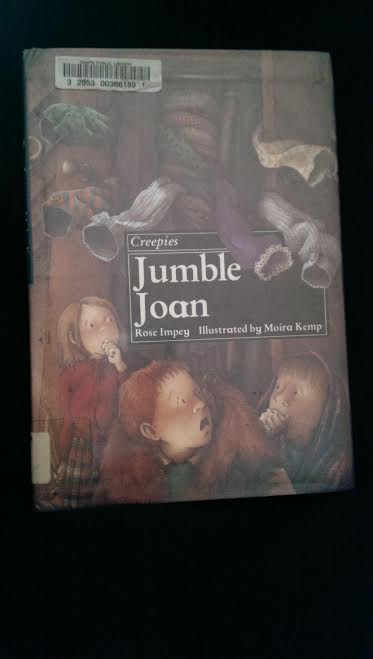
jumblejoanJumble Joan by Rose Impey, 1989.

A boy and his friend, Mick, take his little sister upstairs to explore their grandmother’s attic one evening.  The boys are hoping to scare the girl by telling her all sorts of creepy stories about the stuff they find in the attic, but if they’re scaring anyone, it might just be themselves.

A rocking horse becomes one of the dreaded “Ten O’Clock Horses” that might drag a child off into the night if she isn’t in bed on time.  An old stuffed parrot in a cage becomes “The Deadly Vampire Bat”, waiting to suck their blood.  But, the most sinister creature of all might be “Jumble Joan”, who hides by pretending to be a pile of old clothes, ready to steal away any little girls who might want to play dress up in their grandmother’s attic!

Although the brother narrates the story, the pictures show that his little sister knows exactly what the boys are trying to do, and she does things to turn the situation around.

This is one of the books in the Creepies Series.  Kids under the age of seven might find stories in this series a little scary because they focus on how stories about monsters can build in the imagination, even if you know that you made them up yourself.  Still, all of the books have good endings, and this one is pretty funny.

This book is available to borrow and read for free online through Internet Archive.