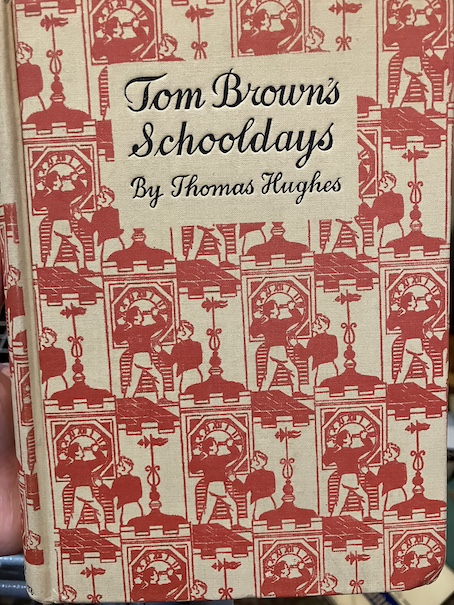
Tom Brown’s School Days

This classic children’s book from the mid-19th century is famous as the story that popularized the concept of British children’s boarding school stories, although many people in the 21st century haven’t read it themselves.

Young Tom Brown was brought up in a very close family, although they are often given to quarrels and drama among each other. He is the eldest of his parents’ children and spends his early young life in the vale where he was born, raised by his family and his nursemaid, Charity. Tom’s mother has a talent for training young servants. She is kind and patient with servants in training, treating them almost like older children of the family. Charity is rather clumsy and not too bright, and she has her hands full with young Tom. He is a strong and rebellious little boy. Charity’s relatives have a farm nearby, and she takes him there to pick up supplies for the Brown household. The people on the farm are kind to Tom, and they also help raise him. Because Tom resists training and supervision from women, the Brown family eventually hires an older servant, Benjy, to take care of Tom from about age four. Benjy takes little Tom fishing and tells him stories about the history of the Brown family. Generally, Tom’s early childhood is pleasant and easy.

As Benjy gets older, he is troubled more by arthritis and finds it harder to keep up with young Tom. Tom gets a governess at home, and when Tom begins lessons at the local school, he begins to calm down at home because he spends his energy at school and playing with the local boys in the village. Being friends with other boys his own age is good for Tom because they share the same interests and levels of energy. They play games and wrestle with each other for fun. Then, when Tom is nine years old, his family sends him away to boarding school. There are some sad goodbyes from the local boys in the village, and the other boys give him some little toys as going-away presents. This is the first time that Tom has ever been away from home, and this is where the story of Tom’s education really starts.

Tom spends about a year at a private school before going on to a public school. The author pauses here to explain the differences between British private schools and public schools. Unlike in the United States, “public” schools are still schools that require school fees, but private and public schools differ in who is accepted as a student and how the students are treated in their time outside of class. In the author’s time and young Tom’s time, students at private schools are more closely supervised in their off hours, with the idea that molding the students into good citizens (which is considered a higher goal in their education than the subjects taught in the classroom) cannot be adequately accomplished in classroom time only and that most of it takes place outside of the classroom. At public schools, the author says, the boys have more freedom and less supervision outside of class.

The boys at the private boarding school Tom attends are supposed to be supervised by school ushers, who monitor their behavior, resolve quarrels, and set a good example for them. Unfortunately, the ushers at Tom’s school aren’t very well educated or good at their job, and they have little interest in doing their job properly. As a consequence, the older students bully the younger ones, students are encouraged to tattle on each other, and physical punishments are used to keep the students in line. In spite of this and some homesickness, Tom actually has a pretty good time at school with his new friends at school. They have some adventures (some of which involves cruelty to animals they find, and the author makes it clear that he doesn’t endorse this and thinks that the bee stings they get are earned) and delight in scaring each other with ghost stories at night. However, this school isn’t really the best treatment or education Tom can get, so it’s just as well that he is sent to a public school after this.

Tom’s change in school comes when there’s an outbreak of disease in the area, and the schoolmaster of the private school is one of the people to become ill. All of the boys are sent home to their families. Since Tom has already told his father that he would rather attend a public school and since school at the private school is canceled for the rest of the term, Tom’s father decides to send him to Rugby. When Tom goes to Rugby, his father talks to him about his school experiences. Tom’s father says that he is going to Rugby at a younger age than he had planned to send him, and if schools are still like they were when he was young, he’s going to see people doing many cruel things and will hear bad talk from other people. He urges Tom, whatever happens at school, to be brave, kind, and truthful and, no matter what other people say, to not say anything he wouldn’t be willing to have his mother or sister hear him say. If he does these things, he won’t have to feel ashamed to see his family when he comes home from school, and they won’t be ashamed of him. This talk and the thoughts of his mother make Tom a little emotional, although he tries not to show it too much.

Tom’s father privately reflects on the reasons why Tom is going away to school. Partly, Tom is going to school because Tom really wants to go and have that experience. The fact is that Tom’s father doesn’t really care too much about Tom learning subjects like Latin, and his mother doesn’t care too much about academics, either. Tom’s parents aren’t too concerned about what kind of scholar Tom is. What Tom’s father really wants for Tom is what he has already told him to be. He wants his son to be brave and truthful, and he wants Tom to be a good and helpful English gentleman and a Christian. Basically, he’s more concerned with his son’s character and life choices than with his son’s grades. He thinks about whether or not he should warn Tom about various temptations he might experience at school, but he decides not to because Tom is still just a boy, and he thinks he wouldn’t understand.

Tom takes a stage coach by himself to school, nervous about what the school will be like but excited about the the experiences he is about to have. When Tom arrives at Rugby, a more experienced student, Harry East, helps Tom get settled and acts as a mentor to Tom about school life. East’s aunt is an acquaintance of Tom’s family, and she knew Tom would be coming to Rugby, so she asked East to hemp Tom. He explains the school grounds and uniform pieces to Tom, describes student activities and sports to him, and answers his questions.

Tom loves sports and is eager to play Rugby football, but East tells him that he won’t be able to play until he learns the game. Football is different at Rugby, and it’s a much rougher game than other schools play. East says players often get hurt and break bones. There is a match that day, and Tom finds it exciting to watch, especially since their house wins! After the match, East says that he doesn’t have any allowance money right now, so Tom buys some food they can have for tea, and they share some of it with some of the other boys from their school house. Tom starts making friends with the other boys, and they all talk about the match together.

After tea, East says that it’s time to join their house for singing. Tom is surprised, but East says that group singing among the students is a regular school activity. There are also speeches from other students at the school singing. Today’s speech is about their house’s victory at the football match. One of the students speaking, Brook, praises the players and congratulates them for their victory on behalf of the house, with all the other boys cheering. He says that their house won the match because their house has the best house spirit and team spirit, and they know they can depend on each other. However, he also issues a warning to the students about bullying in the house. Some of the older students have been picking on the younger ones. He doesn’t want to encourage tattling among the students, and he says that learning to deal with bullies is a valuable skill that makes a boy tougher, but at the same time, bullies are cowards, they encourage cowardly behavior among others, and they break up house spirit and bonds of teamwork among the students. He cautions everyone that too much bullying and allowing bullying to continue will destroy the house spirit that helped them win today, so if they want to continue winning and enjoying house victories, they’d better cut it out. Some of the younger students look at the older students have been doing the bullying, especially a boy called Flashman.

Brook also cautions the other students against drinking in the local pubs and talks to them about their new headmaster. Some of the students haven’t been happy with him because he’s changing some of the school customs. Students have been grumbling and would like to see the new headmaster gone, but Brook points out that Brook isn’t going anywhere and that the “customs” he’s been changing have been destructive pranks and other habits that were also causing problems. The new headmaster hasn’t touched some of the customs that really matter to the students, like their sports, and in fact, the headmaster was also watching the match today. There are mixed feelings among the boys at this part of the speech because they like the idea that the headmaster, who they call “the doctor”, was watching the match, but at the same time, the boys don’t really know him or trust him yet.

The author notes that the new headmaster found the school in a state of disorder and mismanagement when he took his position, and the changes he’s been making are about restoring order to the school. The boys, not knowing the difference between a more orderly and well-managed school and the one they got to know when they first arrived, don’t appreciate the doctor’s wisdom of kindness yet. Tom first encounters the doctor when he leads the students in prayers.

Before bed, Tom and the other younger boys meet with some bullying from Flashman and Flashman’s cronies. Some of the other boys are terrified, but Tom and East allow themselves to endure the bullying, being “tossed” by the older boys so the other boys will be spared. The other boys are grateful to them for this, so they start to hold Tom in high regard.

This eventful first day is a good introduction for Tom about what life at Rugby School will be like for him. Sports, bullying, pranks, fighting, camaraderie among the other students, singing, speeches, and the new headmaster are going to be major themes for him in his education. Like other younger students, Tom has to act as a servant and do chores for older students, part of a tradition called “fagging” (more about that below in my reaction). Tom does well in his classes at school because he has already had a good grounding in his subjects, and he is generally positive about his life at school, in spite of the bullying. He loves participating in the school sports and physical games, like Hare and Hounds.

However, things do get harder for Tom at school. Because he is doing so well at his grade level, he is quickly promoted to the next. When he gets there, with some of his new friends, like East, Tom becomes less studious and more unruly, like the others. Also, the older boys who were trying to set a good example for the others and protect the younger students from the bullies graduate from the school, leaving bullies and less conscientious students as the senior students. The bullying gets worse, and as Brooks had predicted, it breaks the spirit of teamwork in Tom’s house. The students in the house start dividing into factions of bullies and bullied, the younger students against the older.

The younger students get increasingly resentful of the ill treatment and bullying of the older students and start getting rebellious against the system of “fagging” at the school, with Tom and the others declaring that they simply won’t serve the older students anymore. When students like Flashman the bully call for them, they just pretend they don’t hear and refuse to answer them. Flashman and the others try to physically break into Tom and East’s room when they refuse to come, but Tom and East barricade themselves inside. Their success against the older students encourages other students to rebel. Tom considers going to the headmaster about it, but the others discourage the idea. None of the students want to go to the schoolmasters unless absolutely necessary because the students think that the right thing to do is to work out their own problems with each other.

Diggs, one of the older students who is nicer tells the others that, when he and Flashman were younger students, the students in their grade also rebelled against the older students to teach them not to bully them, but Flashman didn’t rebel with the others. Instead, he ingratiated himself to the older students, continuing to serve them and bribing them with treats he got from home. He has evaded discipline and consequences for his behavior by making himself into a useful toady for the students with more authority. Now, Flashman and his cronies increasingly bully the younger students and use physical hurt to subdue them. The younger students retaliate against them with pranks. Tom and East become Flashman’s particular enemies because they live close together in their house and because Tom and East started the rebellion and have been open and accurate in their criticism of his cowardice, refusing to be subdued by the beatings he gives them.

Matters with Flashman come to a head over a lottery, when Flashman pressures other students to turn over their tickets to him. Tom refuses to part with his, and Flashman and his cronies beat him and burn him, hurting him so badly that Diggs intervenes, worrying that they might kill Tom. Diggs shows Flashman to be a coward when he confronts him over the incident and hits Flashman, but Flashman doesn’t fight back because he’s afraid of getting hurt himself. This doesn’t end Flashman’s aggression against the younger boys, and when he starts getting worse again with Tom and East, Diggs urges the two boys to gang up on Flashman. For them to fight him singly wouldn’t be a fair fight because Flashman is several years older than they are and bigger, but Diggs considers it fair for both of them to stand up to Flashman at once. To Flashman’s shock, the two boys do gang up on him. He’s much bigger than they are but not as good at fighting and pretty cowardly about fights where he doesn’t have some obvious, overwhelming advantage. Tom and East win the fight, giving Flashman a cut on his head that bleeds. At first, Tom and East are worried about whether they’ve hurt Flashman badly, but Diggs has a look at the wound and tells Flashman off for being dramatic about how hurt he is. Flashman has only skinned his head a little, and he’s done much worse to the younger boys. Flashman never physically fights the boys again. He eventually leaves the school, being sent away by the headmaster after he becomes disgracefully drunk at a nearby pub one evening. The headmaster was already displeased with Flashman, and this was the last straw. The younger boys are glad to see the bully gone, although some of the older students bear some resentment against the younger ones for their rebellion and their triumph over someone from their level.

Tom and East are emboldened by their victory and for moving up at school, and they become regular rule breakers. They never consider the justice or reasons behind school rules, taking them more as challenges. They get into trouble for trespassing on someone else’s land to go fishing, and the land owner’s gamekeeper brings Tom before the headmaster. Later, Tom and East climb onto the roof of the school and carve their names on the minute hand of the school clock. They are caught because they accidentally change the time on the clock, and when someone investigates why the clock is wrong, finds their names.

Later, they sneak into town against the headmaster’s orders and get caught. They are both taken before the headmaster for this, and they receive floggings for their stunts. The headmaster also gives them a lecture about the dangerous nature of some of their stunts, pointing out that they could have fallen and broken bones from the clock stunt. He points out that they never think about the reasons why rules exist, thinking of them only as whims of the schoolmasters, which isn’t the case. The rules exist for good reasons, and they apply to everyone at the school, including Tom and East. The headmaster says he doesn’t want to keep giving them floggings for their stunts, and if they can’t gain some maturity and reform their behavior, he’ll send them both away from the school. Tom and East are shocked because they never thought that they might have gone far enough to risk their positions at the school. They love their lives at the school and don’t want to be sent home in disgrace. The headmaster tells them to think about their futures at the school seriously when they go home for a term break.

Privately, the headmaster has a word about the boys with one of the other schoolmasters. The headmaster is concerned that, if they continue their irresponsibility and recklessness, they will fail their studies, get into some really serious trouble, and possibly turn into thoughtless bullies of the younger children as they get older. The other schoolmaster acknowledges that they are not the best students and they are a problem, but he thinks that they’re not really bad boys and could still be turned into decent young men. He says to the headmaster that what these boys need is something to give them a sense of responsibility and suggests making each of them responsible for a younger boy at school. Protecting a new boy from the older bullies could settle them and make them more serious and responsible and prevent.
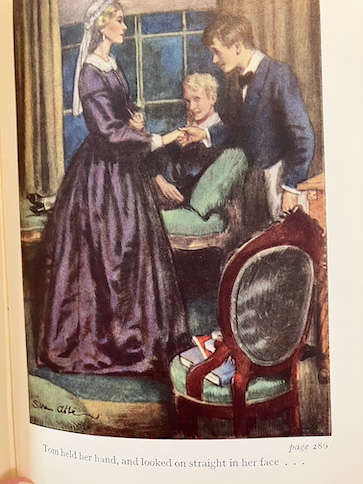
When Tom returns to school for the next term, he expects that he and East will be allowed to share a room and study, which is something that they’ve hoped for. They’ve been making plans for all the ways they can have fun and goof off in their own space. Instead, the school matron introduces Tom to a new boy who will be sharing his room and who will be Tom’s responsibility. George Arthur is a pale, timid, skinny boy, and Tom can see that he’s just the sort of boy who would be picked on by the others. Tom is annoyed at having his plans with East spoiled, but the matron stirs his sense of sympathy by telling him that George Arthur’s father is dead and that he has no brothers. Tom can see that young Arthur will probably be made miserable at school by bullies unless someone stands up for him and teaches him how to handle life at school, so he agrees to take responsibility for him.

The schoolmaster is correct that looking after little George Arthur changes the way that Tom looks at himself, his fellow students, and his education. The change starts when Arthur says his prayers openly at night, getting him a teasing from the other boys, who take any sign of weakness or sentiment as an opportunity for teasing. Tom defends Arthur from them. He also feels a twinge of shame because he remembers, for the first time in a long time, that he had once promised his own mother that he would always say his prayers at night, and he has become neglectful about this, specifically because he wanted to avoid the teasing or bad opinion of the other students. It shames Tom a little to think it, but he realizes that, although Arthur may be physically weaker than he is, he has displayed more moral courage than Tom has simply by saying his prayers, regardless of what the other students think.

Looking after Arthur gives Tom a sense of responsibility, as the schoolmaster hoped, and Tom appreciates feeling like he has a purpose. He enjoys seeing timid Arthur beginning to develop as a student and start to make a new friend on his own. However, Arthur also has things to teach Tom. Tom’s friendship with Arthur helps his own personal development and causes him to consider sides of himself he hasn’t thought about much. As Arthur opens up more to Tom, he explains that he is serious about religion because his late father was a clergyman. When he was alive, his father used to read the Bible with him. Inspired by Arthur’s example, Tom becomes more serious and starts exploring his religious side, although he takes some teasing and criticism from the other students over this budding sentimentality and defense of little Arthur. Tom and East start participating in Bible readings and study with Arthur, considering some of the deeper questions of life and religion that they’ve never considered before. They begin to think even more deeply about life and death when a disease spreads through the school. Arthur becomes ill and another boy dies. Tom is relieved when Arthur recovers, but his near death and the other boy’s death cause Tom to really consider life and death seriously for the first time.

As Tom develops a deeper understanding of life and religion, he finds himself a little at odds with East, who still doesn’t take life seriously. Fortunately, the two of them respect each other enough as friends to talk about their views seriously with each other. Tom doesn’t consider himself as knowledgeable about the subject or as good as explaining it to others as Arthur, but through their conversation, East realizes that he does actually care about the subject and goes to talk to the headmaster about his feelings and about confirmation. The headmaster’s kind understanding and reassurance is an inspiration to the boys, and they come to respect him, although Tom doesn’t fully understand the headmaster and what he’s done for the boys until he is a young man.

At the end of the story, Tom is with some college friends when he hears that the old headmaster has died, and he feel compelled to visit Rugby School again to pay his respects and reflect on his old headmaster.

The book is now in the public domain. It is available to read for free online through Project Gutenberg and Internet Archive (including an audiobook version). Tom Brown’s School Days has been made into movies and tv films and miniseries multiple times. There is also a sequel to this book called Tom Brown at Oxford, which focuses on Tom Brown’s university experiences.

Although it was not the first book set at an English boarding school, this 19th century book is famous for being the book that popularized the trend of British boarding school stories, which has continued for over 150 years since! There are also references to this specific story in other books, and I have to admit that it gave me a giggle to recognize the scene that Terry Pratchett parodied in his novel Pyramids. The story is semi-autobiographical, based on the experiences the author, Thomas Hughes, had when he attended Rugby School as a boy during the 1830s. There is now a statue of Thomas Hughes outside the Rugby School Library.

The headmaster in the story is only called “the doctor” for most of the story, until the very end, when Tom learns of his death and his last name is given as “Arnold.” Tom’s headmaster is based on Thomas Arnold, who was the real, historical headmaster of Rugby when the author of the book was a student there himself. The real Thomas Arnold did die suddenly of a heart attack at age 46 in 1842, and this book is an homage to his memory as well as the recollections and thoughts of the author on the subject of education. The real life Thomas Arnold did reform the habits and organization of Rugby School, like the headmaster in the story, focusing on the religious and character development of students and creating a system of prefects called “praepostors” as student monitors, something that is referred to in the story. Other British boarding schools copied and built on his ideas and practices. (Added fun fact: Thomas Arnold was the great-grandfather of the author Aldous Huxley, known for Brave New World.)

The book requires some patience for modern because the author spends some time setting the scene and explaining the background of Tom’s family and early childhood before really getting into the story. Part of the reason for that is that the author, Thomas Hughes, based the story on his own childhood and youth, and he spends some time comparing the childhood and conditions of life in young Tom’s time with life at the time he wrote the story.

Hughes admits that he doesn’t like the direction the social situation has been heading in his time, and he feels that his time period is at a changing point. He sees many of the old ways of life falling aside, and he partly blames the new upper classes, who take advantage of the working class, using them to enrich themselves (“buying cheap and selling dear”). He’s describing an increasingly industrialized and urbanized society with a significant wealth gap between the wealthiest members of society and the working class, which was characteristic of Victorian society. Hughes notes that some members of the upper classes profess to be trying to reform the lower classes, but the author says they don’t really understand the working classes at all. There is part of the story, early in the book, after he describes young Tom’s experiences at a local fair, where he delivers a lecture to the younger members of these rising upper classes on the subject. Hughes was a social reformer in the Victorian era, so he has many thoughts about how to improve society and a pretty accurate understanding of social conditions during his lifetime, and he works them into the story of Tom’s education.

It’s interesting to see Thomas Hughes’s descriptions of Rugby School and boarding school life and education in the 1830s. I’ve never been to a boarding school before, and neither have most of the other readers who enjoy boarding school stories. It’s getting to see a type of school that most of us will never attend that makes stories of this kind fascinating. Seeing them as they looked in the past is especially fascinating. I’ve read other books and seen documentaries about boarding schools in Britain, and it was interesting to note the aspects of school life that are the same or different from what someone might encounter in a modern school. From what I’ve learned about British boarding schools, extracurricular activities, like sports and singing, are still major features of British boarding schools that have stood the test of time. However, modern schools have cracked down on bullying and abuse from older, higher level students.

A couple of words that appears in the story, “fags” and “fagging” sound like derogatory terms from modern times, but it has nothing to do with homosexuality in this context. “Fagging” was a tradition at British public schools of this time and earlier, where senior students used younger students as servants, giving them menial chores to do. The “fags” described in the story are younger students, who are described as performing various tasks, like fetching things for the older students, cleaning, carrying messages, or arranging furniture for singing. The problem with the tradition of fagging was that it often led to bullying and abuse of younger boys at the hands of the older students, and this is something that’s addressed in the story. The bullying and abuse associated with this tradition is what led to the end of the tradition in modern times.

There are also other student habits which would seem odd by modern standards, including some which would definitely not be allowed for boys of this age. The students at the school are about 11 to 19 at the oldest, but they routinely drink beer, even the younger boys, although I think it’s probably a weak version. The ways the students are treated with regard to money and how they spend their money are also odd by modern standards. Their allowances may be withheld from them as a punishment. There are times in the story when students in need of money auction off some of their own belongings, a subject that appears in A Sweet Girl Graduate, although the boys don’t get in trouble for this as the girls in A Sweet Girl Graduate did. The older boys also impound the allowances of the younger boys for a lottery at one point, using the funds to purchase sweepstakes tickets on a horse race. The younger boys are not consulted about their participation in the gambling, and the only problem that arises from it is when Flashman tries to bully them out of their tickets to get ones he thinks are likely to win.

As the author reflects on his time at school, his experiences with friends and classmates, and the inspiration of his old headmaster, he also offers advice to other boys and his thoughts on what it means to be a man and to take charge of ones own development. I don’t think modern parents and teachers would agree on all of his advice, but he makes it clear what experiences from his school days have led him to believe what he does about how boys and men should conduct themselves.

At one point, he says that he has no problem with the idea of boys fighting with each other because he sees fighting and struggling as just part of the role of men in life. He says his only concern is whether or not they’ve chosen the right side to fight on. Flashman serves of an example of how bad people can actually be quite popular, at least among their cultivated cronies, and are often supported by the social system or know how to use the system to their advantage. The author warns other boys not to see another person’s popularity or social position as a sign that they are good people or that they are in the right in a situation because the opposite is very often true. What is good and right is independent of popularity, power, and money and is determined by other factors. He admits, through the character of Tom, that he has developed a soft spot for underdogs and says, even if you think the underdog is wrong in his beliefs, he shouldn’t be scorned but respected for his willingness to fight for what he believes, even knowing that he doesn’t have popular support.

At the end of the story, when the headmaster dies, the character Tom despairs because, although he has moved on from Rugby School, and he realizes that many of the boys who are there now don’t know who he is and wouldn’t recognize him as one of them, the headmaster was a guiding light in his life and spiritual development. He still feels ties to his old school and headmaster because his time there and the headmaster’s influence set him on the course for his life and development. The author reflects that Tom the character was still someone self-centered at this age, and in the first shock of hearing about the headmaster’s sudden death, he thinks of the loss of the headmaster as a personal loss that no one else would understand. However, when he returns to Rugby and thinks about it further, he realizes that he is not the only one whose life was touched by the man, remembering that he left behind a wife and children and that the headmaster cared about all of his students and influenced them all in different ways. Tom the character sheds some of his self-centeredness and realizes that it’s time to move on in his life. The author also says that there is a flaw in looking to mortal men, even the kindest and greatest among them, as the ultimate source of guidance because no mortal man lives forever. Tom the character will tend to his own spiritual development from this point forward and look to God Himself for guidance. In this way, it seems that young Tom the character has developed into the kind of young man his father wanted him to be in the beginning, making his education successful.

Before Tom learns of the headmaster’s death, he discusses his future ambitions with an old schoolmaster, saying that he wants to make a difference in the world as well as earn a good living. The schoolmaster cautions him to be certain of his priorities and know which of those two goals is more important. There are many people who spend their lives making money but do nothing of lasting importance for the world and other people, and there are many people who do good in the world without making much money. If Tom focuses too much on making money, he may sacrifice the goal of doing good in the world, so he needs to remember what he really wants to accomplish in his life and what he wants to prioritize.

Thomas Hughes went to Oxford after his time at Rugby School, like his character, and he became a lawyer, social reformer, and member of Parliament as well as a writer. Among his books are books about religion and the nature of manliness. The themes of Tom Brown’s School Days really were the themes of his life, and he genuinely means the advice that he offers to young men in the story.

Madeline’s Rescue

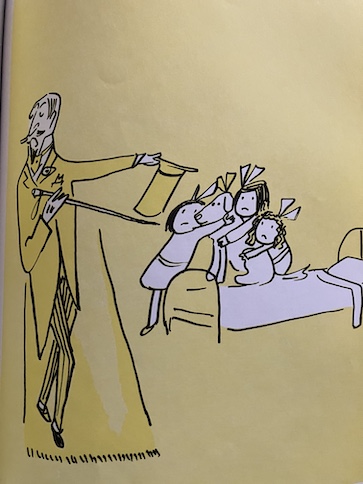
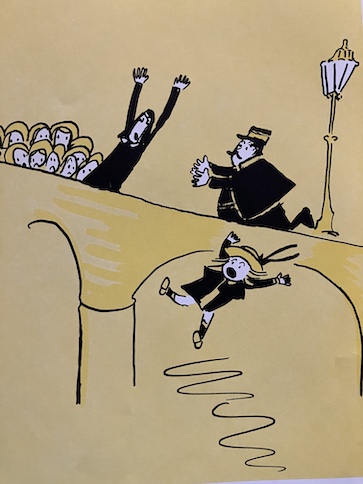
The Madeline stories are considered children’s classics, and this is one of the best-known books in the series. It starts out much like the first book in the series, introducing the old house in Paris where Madeline and her classmates stay for boarding school and describing how brave Madeline is. However, at the part that explains that Madeline knows how to frighten their teacher, Miss Clavel, Madeline falls from a bridge over the river while she’s trying to walk on the edge.

Fortunately, Madeline is saved from drowning by a dog that jumps into the water to save her. Miss Clavel and the other girls take Madeline and the dog back to the school, dry them off and put them to bed. The girls keep the dog and name her Genevieve. Genevieve is a smart dog, and soon, she’s a very pampered and happy pet.

However, when the trustees of the school come for an inspection, they raise a fuss about the girls keeping a dog in the school and turn Genevieve out! The girls are very upset, so they immediately go out and search for Genevieve.

Fortunately, Genevieve returns, and there is a surprise for the girls that finally settles all the arguments they’ve been having about whose bed the dog will sleep in that night!

The book is available to borrow and read for free online through Internet Archive (multiple copies).

As with the other books in the Madeline series, the beginning of the story echoes the first Madeline book, but this one expands on Madeline’s habit of walking on the edge of the bridge and frightening Miss Clavel, showing that Miss Clavel has reason to worry about Madeline’s stunts.

I remember reading this book when I was a kid and being really worried about what would happen to the dog, Genevieve! I always loved dogs, and I was worried about her when the trustees turned her out of the school. After Genevieve returns to the school, there’s no follow-up on how the trustees react and whether or not they approve of her and her puppies staying at the school, but it seems like everything will be okay. With plenty of puppies for the girls at the school, they no longer fight about who gets to sleep with Genevieve or give her attention. Staying at a boarding school where every girl gets a puppy of her own to look after would be a dream for many girls!

Something I noticed in this book is that the style of the pictures varies between cartoon style in black and yellow and a more impressionistic style with full color. This is also true in other Madeline books. The more colorful pictures tend to show more emotional or dramatic moments.

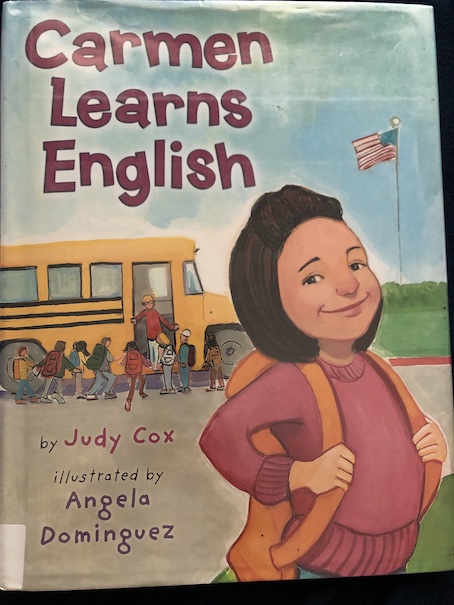
Carmen Learns English

Carmen is in kindergarten and has been learning English at school. Her little sister, Lupita, will start school next year, and Carmen thinks about how she wants Lupita to learn English before she starts school. The family is from Mexico, and the girls speak Spanish at home.

School hasn’t been easy for Carmen because the other kids don’t speak Spanish. They all speak English, and they speak fast, which makes it difficult for Carmen to follow their conversations. It helps that her teacher knows some Spanish. Her teacher’s Spanish isn’t very good, but in a way, Carmen finds that comforting because her teacher will understand if her English isn’t very good, either. People who are learning another language understand what it’s like when someone else is learning, too.

Carmen gradually learns new English words at school. When she gets home, she draws pictures of what she’s learned and teaches her mother and little sister the English words. At first, Carmen is too shy to say the words out loud at school because she isn’t confident about how she’s saying them, but she practices at home.

Sometimes, kids at school give Carmen a hard time. Some kids think that she talks funny. When she counts in Spanish instead of English, they think that she’s saying the numbers wrong. Her teacher helps by teaching all the class to count in both Spanish and English, so all the students will learn both languages. Carmen helps to teach the other students words in Spanish, and when she gets home, she teaches Lupita the English words that she has learned.

Because Carmen has been helping Lupita to learn English, Lupita will have an easier time at school than Carmen had when she started. Carmen realizes that she really likes teaching, and she thinks that she might like to be a teacher herself someday.

I thought this was a good story about a child starting school while having to learn a new language at the same time. My mother used to teach English language learners, and she liked the story, too. She said it reminded her of some of the students she used to teach.

I thought that the teacher’s approach, having Carmen teach the other kids some Spanish while she was learning English was a good idea. Some of the other students find Carmen a little strange and confusing at first because they don’t understand the way she speaks, but when they start trading words in different languages, they all start to understand each other better. The other students begin to understand the concept that people can speak in different languages and that there can be different words that mean the same thing, depending on the language they’re speaking. I think it also helps them start to identify with Carmen because, like her, they are also starting to learn an unfamiliar language. As I said, people who are learning a new language or who have studied another language before can understand the difficulties of now always knowing all the words they want to say or exactly who to say them and can sympathize with other people who are also learning new languages.

I also liked it that Carmen realizes that, if she helps her sister to learn some English before she starts school, her sister will have an easier time. She has compassion for her sister because of her own experiences and wants to make things easier for Lupita. By helping both her sister and her fellow students, she also learns that she likes sharing what she knows with other people. She discovers that she likes teaching and might want to be a teacher herself someday.

I read this book as an adult because it’s a relatively new book that didn’t exist when I was a kid, but it reminds me of another book that I did read as a kid, I Hate English, which is about a girl from China learning English. The Chinese girl has some similar troubles learning English and feeling uneasy around people who don’t understand her, although she also struggled with the fear that she would lose her native language or cultural/personal identity by learning a new one. Carmen doesn’t mention that in this story, but some of my mother’s old Spanish-speaking students had that worry when they were learning English, too. Perhaps part of the reason why Carmen doesn’t feel like that is because her teacher encourages her to teach the other students some Spanish, giving her the opportunity to keep speaking it from time to time and share the language with others. In a way, this story was closer to my experiences when I was younger because Carmen is like the kids my mother used to teach and because Spanish is what I studied in school myself.

Thank You, Mr. Falker

When little Trisha turns five years old, her grandfather introduces to her to reading in the same way he has done for other children in the family, with a taste of honey on a book, to remind her that knowledge is sweet. Trisha already loves books because her mother reads to her every night, and other members of the family also read to her. She’s looking forward to learning to read herself.

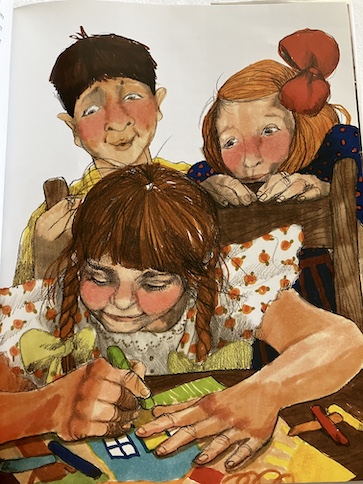
However, when she starts going to school, she finds that she has trouble learning to read. She likes drawing, and other kids at school admire her drawings, but for some reason, she struggles at deciphering the letters that other kids seem to learn so easily. When she looks at writing on a page, everything looks like wiggling shapes, and she has trouble figuring out what sounds they’re supposed to make. Other children move forward with their reading lessons, but Trisha struggles and starts to feel dumb.

Trisha asks her grandmother if she thinks she’s different from the other kids, and her grandmother says that everyone is different and that’s “the miracle of life.” Trisha asks if she thinks she’s smart, and her grandmother says she is. That makes her feel a little better, but why can’t she read like the other kids?

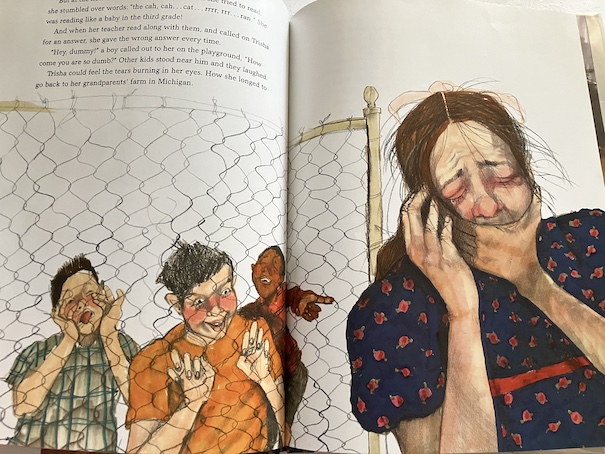
Trisha continues to struggle in school, even after the family moves from Michigan to California. She is in third grade at that point, and other children insult her and tease her when she struggles, and Trisha feels dumber than ever. She spends more time drawing and daydreaming, and she starts hating school, sometimes pretending that she’s sick so she won’t have to go.

Things only start to improve for her in fifth grade, when she gets a new teacher, Mr. Falker. Mr. Falker doesn’t cater to the teacher’s pets like other teachers do, and he notices Trisha’s artistic talent and praises her for it. He also stops the other kids from teasing Trisha in class when she struggles, although one boy, Eric, continues to bully Trisha terribly and get other kids to gang up on her when the teacher isn’t looking until Mr. Falker finally catches him.

Mr. Falker works with Trisha to improve her reading and reassures her that she is not stupid. He realizes that the reason she has struggled with reading is that Trisha doesn’t see letters the way other kids do, and he points out that she’s actually been clever in the way she’s managed to hide just how much she’s been struggling all this time.

Mr. Falker introduces Trisha to Miss Plessy, a reading teacher, and the two of them work with her to develop techniques that improve her reading skills. Gradually, Trisha begins to make real progress, and she begins to feel the sweetness of knowledge that her grandfather talked about.

The book is available to borrow and read for free online through Internet Archive.

The end of the book explains that the story is autobiographical. Patricia Polacco was the Trisha in the story, and she did have trouble learning to read until the read Mr. Falker realized how she was struggling and helped her. At the end of the story, the author says that she met Mr. Falker again years later and thanked him, telling him that she can become a children’s author.

There is a difference between real life and the story, though. In the book, Trisha is in the fifth grade when she gets help with her reading, but in real life, Patricia Polacco was apparently 14 years old and in junior high school. The book doesn’t say exactly what the cause of Trisha’s learning difficulties is, but she is apparently dyslexic, based on the description and because Patricia Polacco was dyslexic in real life.

I enjoyed seeing this part of the author’s childhood, although I found the part with the school bullies stressful. I do think it was important to include that part, though, because that can be part of the experience of children who struggle in school. Although Eric is an obvious bully in the story, the other kids also make Trisha miserable with their teasing and insults. It occurred to me that they may not all think of themselves as bullies, but at the same time, a person doesn’t have to think of themselves a bully in order to be one. Bullying is a behavior, and it exists independently of self-identity. Part of me wondered, if the girl and the teacher in the story are both real, were the bullies also real, and if so, did any of them ever read this story and recognize themselves? Maybe some did, and maybe they didn’t. Maybe not all of them would even care, if they had.

Regardless, I do think stories like this can be useful as a preemptive measure against bullying by showing kids how their behavior can affect other people and what may be going on in the life of a person they’re teasing or bullying. While I’m sure that everyone thinks of themselves as being the heroes of their own story, I think people sometimes need a reminder that, at the very same time, they are also supporting characters in everyone else’s story, for good or bad. In a way, we’re all self-casting in every story we’re in by the ways we choose to act as we go through life’s story in general.

The bully antagonists aren’t really the main focus of the story, though. They act as further obstacles to the problem that Trisha is trying to solve, but ultimately, the story is really one of gratitude toward the teacher. Part of what the teacher does for Trisha is to shut down the bullies so Trisha can focus on what she needs to learn and he can focus on helping her. Even more importantly, Mr. Falker helps Trisha to see that she is smart and capable. It takes a little more work for her to make progress than others because she has a condition to overcome, but with a little help, she can do it. It really opens up a whole new world for her, and she finally gets to taste that sweetness that comes with knowledge.

I’ve heard of the tradition of giving children a taste of honey before they begin their lessons. When I was a student, I thought I remembered a teacher mentioning this tradition to us as a Greek tradition. It might be, although when I tried to look it up, I couldn’t find anything about Greece. I found references to it as a Jewish tradition, which would make sense for Patricia Polacco’s family.

Patricia Polacco’s real-life grandmother also appears in the story, the same grandmother who appears in another of Polacco’s books, Thunder Cake. Her grandfather wasn’t present in that story, but he is in this one. Both of the grandparents are mentioned as dying before the story ends.

Schoolhouse Mystery

The Boxcar Children

It’s June, and the Aldens are trying to decide what to do for the summer. Benny says that his friend Max remarked that the Aldens always seem to find something exciting everywhere they go, but Max doesn’t think anybody could find anything exciting about the little village where his father likes to go fishing. Max says that it’s a tiny and isolated village on an island with little to do, and he doubts even the Aldens would find anything interesting or exciting there. The only people who usually go there are summer visitors going fishing, like Max’s dad. Mr. Alden has been thinking over other plans for the summer, but he says that, if the children want to take a short visit to his village, called Port Elizabeth, to test out Max’s theory of how boring the place is and see if they can find something exciting about the place, it’s fine with him. The Aldens think that purposely visiting a dull town and seeing what they can find there sounds interesting by itself, so they decide to go.

When they arrive, they find that the place is as small as Max described. It doesn’t take them long to explore the town. There is a small store, but it’s well-stocked with all the food they need. There’s a big old house that seems to be abandoned, and there’s a quaint little schoolhouse with a bell and an odd-shaped chimney.

The people of the town seem suspicious of them at first. They don’t get many outsiders coming to their town, and they can tell immediately that the Aldens are rich because of their car and their clothes. However, because the Aldens are friendly and polite visitors, people gradually begin warming up to them.

The Aldens learn that most people in town work for the local sardine factory. There aren’t many other job prospects in the area, and they don’t have access to higher education or even outside sources of information, like television, so the local kids don’t aspire to much more. Local kids work, too.

One day, a pair of twins approach Violent while she’s painting a picture and start talking to her about painting. They’ve never really owned any proper art supplies themselves, only some crayons, but they’ve been interested in learning to paint since a professional artist came to town to paint the seaside. They also tell Violet and her siblings that the town has had trouble keeping teachers. Most people don’t want to stay in the town very long because it’s so small, and there’s so little to do. Because they change teachers so often, the kids never really advance much in their classes. Every teacher basically keeps starting over in their lessons. The last one told them to study this summer to make progress and prevent themselves from forgetting what they’ve learned, but the local kids don’t really know how to study or what to study, and they’ve never had a teacher who taught any of the really fun subjects, like art.

The local kids ask the Aldens if they could help them study this summer, and the Aldens get the idea to set up their own summer school in the local schoolhouse. They speak to the lady who owns the schoolhouse, Miss Gray, and she gives her permission. The Aldens recognize her as a famous author, but now, she lives like she’s a recluse in her big, old house. She also asks the Aldens whether or not they know a blond man who smiles a lot, but the Aldens don’t know who she’s talking about.

The people in town don’t have much money, and they save what they can in cash rather than using a bank. However, something odd has happened recently because a man has bought a couple of coins from some of the locals for more than the face value of the coins. The locals don’t know why he was willing to do this, but they’re always grateful for anything extra they can get. The locals have started calling this blond man “the money man” because he not only buys coins but also various other odd, old things that most of the locals think of as junk. They don’t know why he wants these things, but they’re just glad he’s willing to pay something fro them. Mr. Alden is very interested in this man and wants to know more about him.

The Alden kids buy some art supplies and school supplies so they can get started with lessons for their summer school. Even though they provide some supplies and have some textbooks in the schoolhouse, they find that there are things they need because previous teachers in town haven’t left some of the things they need, like easy reading books. They improvise as best they can, with Benny helping the kids in class write simple stories about themselves and their lives to use for reading lessons. The local children talk more about the “money man” and how he trades them new toys for old ones they’ve had. The children think that’s great, but the Aldens are suspicious about the “money man’s” apparent generosity.

It isn’t long before Mr. Alden and the children have an encounter with the blond “money man.” The man, called Freddie, notices that Mr. Alden has a rare penny on his watch chain and offers to buy it. He explains that he deals in coins and antiques. Mr. Alden can tell that Freddie is knowledgeable but slick when it comes to buying collectible items. Mr. Alden refuses to sell the man his coin or his watch, and after he leaves, the children tell their grandfather what they know about his dealings with the local people.

It has become apparent that Freddie is cheating the locals, buying antiques and collectibles from them while either paying them much less than what they’re really worth or trading them for newer but cheaper items. Because this town is relatively isolated and the people don’t have much money, they’ve spent generations keeping and reusing antique items without knowing how valuable they’ve become. The local children are thrilled when he lives them newer and more colorful toys in exchange for their old ones, because they don’t know how much their antique toys are worth. Technically, Freddie hasn’t done anything illegal because the people he’s been buying from and trading with have agreed to the deals so far and been satisfied with what they’ve gotten, but that’s only because they don’t know that they could have gotten much better deals from someone else. Freddie’s dealings aren’t really fair or ethical, and Mr. Alden and the local author have become concerned that he may take even bigger advantages of the local people than he already has.

When some valuable collectors’ books disappear from the little village’s neglected library, the author, Miss Gray is convinced that Freddie is responsible. How can they catch him and prove to everyone what he’s been doing?

As with many of the earlier Boxcar Children books, there is an element of mystery but more emphasis on the adventure and the kids’ summer experiences than on the mystery. We have an obviously suspicious right at the beginning, and we have a sense of what he’s doing that’s a problem pretty quickly. This is one of those mysteries where the protagonists have an obvious villain and a good understanding of what’s going on, but the mystery is about getting the evidence and proving it. Part of the issue at first is that duping people into trading things with him or selling them to him for less than what they’re really worth is more unethical than illegal because, as long as the participants are satisfied with the trade and willingly agree to it, it’s difficult to prove that they were deceived. It’s when the villain crosses the lines and actually steals something nobody agreed to give him or sell him that they can really start to nail him for what he’s been doing.

Part of the solution felt a little contrived because it turns out that the villain has been hiding his ill-gotten gains in a location that is right under the children’s noses, and there is something special about the place that allows them to watch the villain without being observed. It’s an interesting set-up, but I usually prefer a more traditional style mystery where there’s more for the amateur detectives to figure out.

Emma in Winter

This is the second book in the Aviary Hall Trilogy. Each of the books in the series could be read independently of each other, but this book in particular makes more sense if you have read both the first book, which is The Summer Birds, and the third book, Charlotte Sometimes before reading this one. People in this book directly reference events in The Summer Birds, something with Charlotte Sometimes does not. Although Charlotte Sometimes was written and published after this book, it actually takes place during the autumn before this story and it does inadvertently contain a spoiler for Charlotte Sometimes because Charlotte appears at the beginning of the book. It’s just my own preference that it’s better to read this book after Charlotte Sometimes because it makes Charlotte Sometimes more suspenseful. Like Charlotte Sometimes, this book also involves time travel, and the characters do some research on the subject of time and how it works.

At the beginning of the story, Emma Makepeace is upset because her older sister, Charlotte, will be leaving early for the new term at her boarding school after Christmas. At this point, Charlotte has already had her first term at boarding school (which is where and when Charlotte Sometimes takes place, although there are no references to the events of that story here), and she has been invited to visit one of her new friends from boarding school before they return to the school together. All through Charlotte’s first term at boarding school, Emma has been lonely without her and has been finding life at their home, Aviary Hall, increasingly difficult. 

The girls are orphans (although the books never explain what happened to their parents) who live with their grandfather and his housekeeper. Between the two of them, Charlotte is the more serious and responsible and Emma is the more mischievous and thoughtless. Up to this point in their lives, Charlotte has acted the part of the caring older sister, trying to teach Emma to behave herself and covering for her when she doesn’t. Charlotte has realized that their grandfather has little patience for misbehaving children and that Emma pushes the limits, so she has frequently intervened and smoothed things over when Emma tries his patience. 

Emma has often thought of Charlotte as a kind of spoilsport for trying to act grown-up and mature, but during Charlotte’s absence at boarding school during the previous term, Emma has suddenly come to see how much Charlotte has been helping her and saving her from the consequences of her own actions and the realities of their home life. Without Charlotte there to be the motherly big sister, providing some warmth and affection and acting as a buffer between Emma and the adults, the grandfather has become more impatient with Emma’s immaturity. Both he and the housekeeper have been more direct with Emma about her behavior and bad habits, and there’s no one there to shield Emma from it. Emma is lonely for Charlotte’s company and feels picked on by the adults, so when Charlotte cuts her time with Emma short after her first visit home to go visit one of her school friends, Emma is angry and resentful. Charlotte is tempted to back out of her friend’s invitation for Emma’s sake, but she feels like she can’t, and their grandfather tells her that she must go ahead with the visit.

Emma is in a state of emotional turmoil through most of the story, adjusting to Charlotte’s absence, the new expectations of the adults in her life for her to mature and improve her behavior, and her own resentment about these things. While all this is happening, something else strange happens. Emma begins having strange dreams about flying. They remind her of the children’s flying adventures from two years previously, as described in The Summer Birds. It has been so long since she last flew that she struggles to remember how in her dreams, and when she wakes up, her muscles feel sore from the effort. However, at first, she can’t remember what happened in her dreams.

At school, when the new term begins, Emma is made head girl because she is the eldest girl in the class. A boy called Bobby Fumpkins is made head boy because he is the eldest boy. Emma is embarrassed and uncomfortable about being the head of the class in partnership with Bobby. She hates Bobby because he is fat, awkward, and spoiled. Before his mother gave birth to Bobby’s younger sister, who is still a baby, she babied Bobby more than she really should have at this age. Their family also has their own tv set, something most of the other children’s families don’t have at this time, and which Bobby bragged about when they got it. For these reasons, most of the other children in the class don’t like Bobby, either, and they’ve teased him mercilessly for years. They think he’s a sissy and a baby because of his mother’s attention and because he’s milder-mannered than they are and never stands up to them. Because of his awkwardness, they like to call him Jemima Puddle-Duck after a character from a children’s book by Beatrix Potter. Bobby tells himself that his classmates mean all this teasing good-naturedly, but they don’t really. Emma is particularly adamant within herself that she genuinely hates Bobby.

However, like it or not, Emma’s life has become intertwined with Bobby’s. Their teacher expects the two of them to work together at school during the day, and at night, she gradually begins to realize that he is sharing in her same dream of flying. Other children at school tease Emma about being friends with Bobby, particularly one girl who really wants to cause trouble for Emma because, as the next eldest, she would be next in line for the head girl position herself. Emma denies being Bobby’s friend, partly because he still gets on her nerves and partly because she’s still lonely without Charlotte and is worried by being shunned by the other children at school. However, she gradually begins to feel guilty about the way she and others have been treating Bobby, and she begins to feel the impulse to try to be nicer to him. 

As her relationship with Bobby improves, Emma begins remembering more of their shared dream, and the two of them talk about the dream together. Bobby was one of the children at school who shared in their flying adventures two years before, and the two of them discuss their past adventures with each other and how they compare to the dream they’re now having. There are a few things that they begin to notice that are different from their past flying adventures. One is that they both have the feeling that someone is watching them. It seems to be a stern or hostile presence, a pair of eyes that belong to some unknown person, but they don’t know who it is. They also begin to notice that it looks like plants are growing backward as they fly over the countryside. That is, grown plants seem to be returning to small plants and seeds. They gradually notice that the land seems to be going back in time. Eventually, they start seeing dinosaurs in their dreams, and it looks like they might be going back to the beginning of the world. What will happen to Emma and Bobby in their dream when they eventually reach the beginning of everything?

The book is available to borrow and read for free online through Internet Archive.

I’ve already explained my reasoning about the reading order of the books. The Summer Birds is the first book in the trilogy, and you really have to read it before you read this book because the characters directly reference events from that story. Actually, I thought that was a really interesting choice, to have Emma and Bobby talking openly with each other about the summer when they learned to fly. They just accept that event as a common event in their lives that they shared and that everyone who shared it with them openly acknowledges. Sometimes, in children’s fantasy stories, the characters later downplay magical events, feeling like they were dreams they had or games of pretend they played because they seem too strange to have really happened, but no, in this book, the characters all know what happened to them and just accept it as a part of their lives. I thought it was interesting that this book acts as a bridge between the theme of flying and the themed of time travel in Charlotte Sometimes, although I still think that Charlotte Sometimes keeps more of its suspense if you don’t know that Charlotte safely returns to her own time before you read it. 

I still think that Charlotte Sometimes is the best book in the trilogy. It is the best known, and unlike this book, it can be read independently of the others in the trilogy. It doesn’t reference either of the other two books at all. There are no references to Charlotte having participated in any previous magical adventures in that story. That may be partly because she is among strangers at her new boarding school who wouldn’t know anything about her flying adventures, but even her private thoughts don’t give any hint to that. What I think that The Summer Birds and Emma in Winter add to Charlotte Sometimes are some further insights into Charlotte and Emma’s personalities and the relationship between them. I still think that Charlotte Sometimes is the best book in the trilogy. It is the best known, and unlike this book, it can be read independently of the others in the trilogy. It doesn’t reference either of the other two books at all. There are no references to Charlotte having participated in any previous magical adventures in that story. That may be partly because she is among strangers at her new boarding school who wouldn’t know anything about her flying adventures, but even her private thoughts don’t give any hint to that earlier adventure. What I think that The Summer Birds and Emma in Winter add to Charlotte Sometimes are some further insights into Charlotte and Emma’s personalities and the relationship between them. Emma in Winter also adds some thoughts about the nature of time and time travel, which add some further insights into Charlotte’s time travel experiences.

Emma and Bobby do some research about time in her grandfather’s study, a room where Emma is usually forbidden to go. One of the theories they find is that time moves in a coiled pattern, like a spring, and that the coils of the spring can be pushed together so different points on the coils can touch each other. This theory really relates better to Charlotte Sometimes than to Emma in Winter, but what is more relevant to this story is the idea that human thought can be the force that pushes the coils together and makes them touch. This is also a part of Charlotte Sometimes, and I explain in my review of that story about how Charlotte and Clare having many similarities and being in a similar state of mind as well as sharing the same physical space at different times allowed them to switch places with each other. However, the emphasis in Emma in Winter is Emma and Bobby realizing that their own thoughts and feelings influence their dreams and, therefore, their time travel.

This story is rather metaphysical and a little difficult to follow during the dream phases. I noticed that some other reviewers seemed confused about the point of the time traveling. I found it a little confusing, too, but it seems like this is a coming-of-age story, like the other books in the trilogy. The Summer Birds focused on Charlotte and how her more mature outlook helped the other children make an important decision that would alter their lives forever. Charlotte Sometimes raises the question about what defines a person’s identity and how a person’s identity can be tied to someone else’s even when they’re separate people. Emma in Winter focuses on emotional understanding.

Both Emma and Bobby are going through major changes in their lives, particularly ones that require them to become more mature than they once were. Bobby has been somewhat spoiled and coddled by his mother, but he’s no longer the center of attention at home, now that he has a little sister. At first, Bobby finds it hard to cope with his mother no longer giving him the attention she used to give him, but it does give him the opportunity to become more independent and mature. Emma despises Bobby for being babyish because he was spoiled and overprotected by his mother when he was younger, but the truth is that Emma is also babyish. She’s not accustomed to being accountable for her own behavior and bad habits because Charlotte usually takes responsibility for her and shields her from some of the reactions of the adults and other people. 

When Charlotte goes away to boarding school, Emma is left on her own for the first time to deal with the consequences of her actions and other people’s reactions to them. It’s a bit of a shock for her at first, and she realizes that she hasn’t fully appreciated what Charlotte was doing for her for the whole time. She also comes to the disquieting realization that, even thought she feels like the adults are picking on her over her behavior, she doesn’t like the way she behaves, either. She comes to feel guilty about the way she treats Bobby, and when she draws some nasty pictures of her teacher, she is startled to realize how much she has hurt her teacher’s feelings and how badly she feels about doing that. For the first time in her life, Emma has to face her own behavior and see how her behavior truly affects other people. She is shocked and troubled when she realizes that she doesn’t like what she sees and it’s her own fault. Only Emma can decide how nice or how mean she is and who she really wants to be.

The children’s time traveling adventures that they have while dreaming lead them to explore their relationship with each other. Emma realizes that she has to be nice to Bobby and learn to get along with him for them to be able to function with each other in the dream. Their final dream together is confusing and rather surreal, but it also involves the two of them confronting aspects of themselves, their lives with other people, and their own behavior. 

When they move all the way back in time as far as they can go, they’re confronted by a vision of their teacher, not as she actually is, but as Emma drew her in a mean drawing. Emma has to remind herself and tell the figure that it’s only a drawing she made; it’s not reality. They also see visions of other people in their lives and even of themselves at their worst and most frightening, but they have to hold on to the reality of themselves, as they are now, the people they’re becoming, not who they used to be or how other people see them. I took it to mean that neither of them can go backward in their lives anymore, to their old habits and who they were or how they were as younger children, but they have to accept the changes taking place in their lives and in themselves to return to the real world, their own time, and the lives they have ahead of them. They discover that the key to traveling through time is thinking, so they have to think themselves out of their time travel dreams, focusing on their real selves and the real lives, accepting and even loving themselves as they are. Change has been coming for both of them, but they have to make the decision to face it and embrace it and to let go of their past selves to move on in time and in their lives.

The Case of the Tricky Trickster

The Bobbsey Twins

Before I begin, I’d like to acknowledge Sean Hagins, for supplying me with photos of this book! Usually, I take pictures of books myself, but I just couldn’t find a physical copy of this one. Sean is a big fan of the Bobbsey Twins, particularly the New Bobbsey Twins mysteries, and you can see some of his video reviews as well as videos about his photography work on his YouTube channel, SJHFoto. Thanks, Sean!

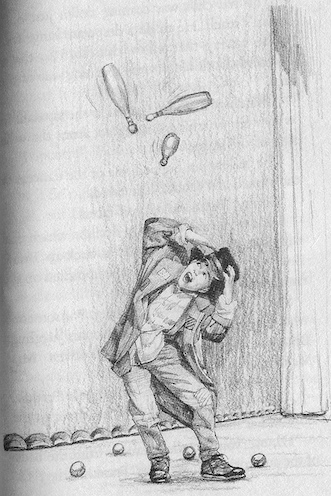
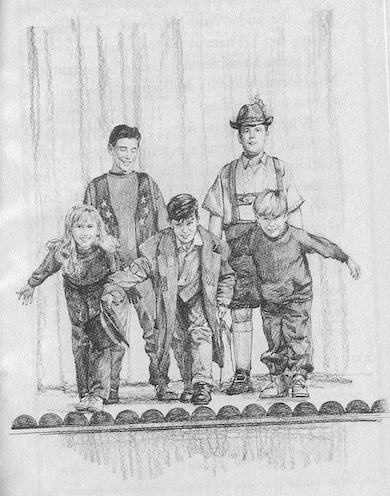
The PTAs at the schools the Bobbsey Twins attend, elementary and middle school, are holding a variety show to raise money, with students showing off their talents. A boy in Freddie and Flossie’s class, Brian, is going to put on a juggling act, but Freddie and Flossie are going to help another friend, Teddy, with his magic act. Nan and Bert have a rock band with some friends called the Aliens, and they’re going to be performing, too. Danny Rugg, the school bully, even has an act where he’s going to play the accordion.

However, things soon start going wrong with the show. During the rehearsal, someone turns on the Aliens’ amplifier, making a loud sound that startles everyone. Then, a pole falls and almost hits a student while she’s singing. Then, Brian slips on some floor wax. Freddie and Flossie suspect Danny of playing pranks on everyone because he was near the places where the pranks occurred, and it seems like the kind of thing he might do, but there are other suspects.

Some of the other students seem nervous about performing their acts or think that the show won’t really be that good. Could someone be trying to sabotage the show to get out of performing? Then again, there seems to be some kind of rivalry between the music teacher who is directing the show and Mr. Horton, the fifth grade teacher. Mr. Horton seems resentful that he wasn’t given the chance to direct the show, and he keeps trying to prove that the music teacher is doing things wrong and that he could do them better. Just how far would he go to prove that he would be the better director?

The book is available to borrow and read for free online through Internet Archive.

I thought that the mystery was good, although I also thought that the culprit was obvious about halfway through the story. It might take kids longer to figure out who it is, but there is one person who gets more than their share of the sabotage, and some of the tricks are ones that a person could only play on themselves. There is a student who is trying to get out of having to perform, but once the Bobbsey Twins figure out why, they manage to work things out so that the student is able to go ahead with their act.

The story reminded me a little of The Tap Dance Mystery in the Eagle-Eye Ernie series, although the mysteries aren’t the same. What reminds me of the other book is that both stories involve family expectations. Performing in front of classmates is enough to make anyone nervous, but having family with high expectations present puts a great deal of pressure on a child performer. There is a bit more than that because there are reasons why the student doesn’t think they can live up to everyone’s expectations, but fortunately, a little help from a friend can go a long way!

The Pet Day Mystery

This book is part of the Sherlock Street Detectives series.

It’s Pet Day at school, and twins Walter and Ann are bringing their dog, Watson, and their cat, Fuzz Face to school with them. Watson is really Walter’s dog, and Fuzz Face is Ann’s cat. The school bus is chaotic and noisy because the other children have their pets with them, too.

At school, each of the kids tells the rest of the class about their pet. When it’s time to go to lunch, the kids give their pets food and water and leave them in the classroom.

When they come back from lunch, a pair of hamsters are missing, and their owner, Tina, thinks that Fuzz Face might have eaten them. Ann points out that Fuzz Face couldn’t have eaten the hamsters because Fuzz Face was in his cage during lunch.

The kids figure that the hamsters are probably hiding somewhere in the room, and they ask Tina to tell them everything she knows about the hamsters so they can find them. They use what Tina tells them about the habits of hamsters to figure out where they are.

The book is available to borrow and read for free online through Internet Archive.

It’s a fun picture book mystery, but it’s also educational, like other books in the series. The information the kids give about their pets is true. Some of them say where their pets originally came from, like Pedro, who says that his pet parrot is a breed that comes from South America. Ann mentions that her cat takes vitamins and has to go to the vet sometimes, like people have to visit their own doctors. I liked how the characters use facts about the behavior of hamsters to figure out where the hamsters went.

I was a kid about the age of the characters at the time this book was published, although I don’t remember reading this book at the time. When I was in kindergarten, the year before the book was published, we had a special pet event in my class, but we didn’t do it like the class in this book. As I recall, different people brought in pets on different days so it was less chaotic and there was no chance of one pet eating another, which is a real risk. Also, all pets had to be in cages to keep them from running away or causing trouble, and they were never left unattended. My mother helped me bring our pet birds to class, and she took them home with her immediately afterward, so they weren’t left sitting around the classroom.

The book has a vocabulary list and glossary in the back.

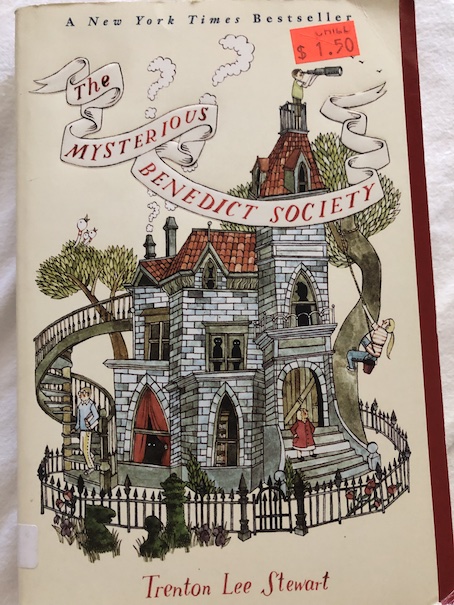
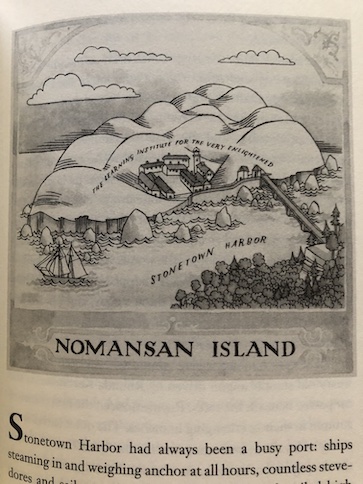
The Mysterious Benedict Society

A boy named Reynie (short for Reynard) is taking a series of tests to apply to an unusual school. Reynie lives in an orphanage in Stone Town, and he is highly intelligent. He is often laughed at by the other children for being smart and using big words. He has finished all of the lessons the orphanage has to offer and has been studying with a private tutor, but he is running out of things to do with the tutor. He and his tutor like to read the newspaper together, and they see an advertisement for gifted children looking for new opportunities. His tutor encourages him to look into the advertisement, which is how he comes to take a series of tests to qualify.

The tests have strange instructions. The first part of the tests asks some brain teaser questions and a few personal questions, such as whether Reynie likes to watch tv or listen to the radio (he doesn’t really like either) and whether he thinks of himself as brave. Only a few children qualify to take the next part of the test, which will be given at another building with students only allowed to bring a single pencil and eraser. The instructions say that if they bring anything else with them, they will be disqualified. Reynie would have asked more questions, but the person giving the first test leaves by a window to avoid having to deal with parents who are angry that their child didn’t pass the first test.

When Reynie arrives at the second building, there are two girls there, one of them with green hair. The green-haired girl accidentally drops her only pencil down a storm drain. Since she is only allowed to have one pencil and the others don’t have a spare one to lend her, it looks like she won’t be able to take the test. The other girl seems relieved that there will now be less competition, but Reynie solves the problem of the missing pencil by snapping his own pencil in half and giving the other half to the green-haired girl, who is named Rhonda. She is so grateful that she offers to help him on the test, saying that she already knows the answers. Reynie doesn’t understand how she can know the answers when they’ve only just arrived, but he turns down the offer because he doesn’t want to cheat. It’s just as well because the person administering this test tells them that cheaters will be “executed.” Then, she tells the shocked children that she means “escorted”, as in they will be escorted out of the building. She tells the children that they must follow the test instructions exactly, and although the test looks fiendishly difficult, Reynie does his best.

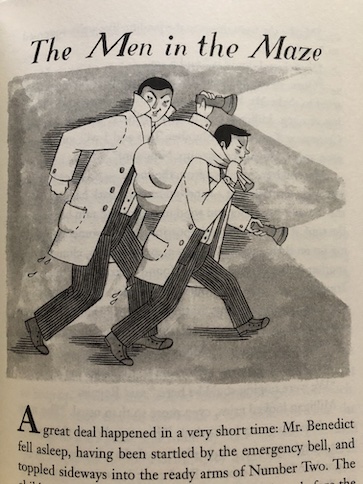
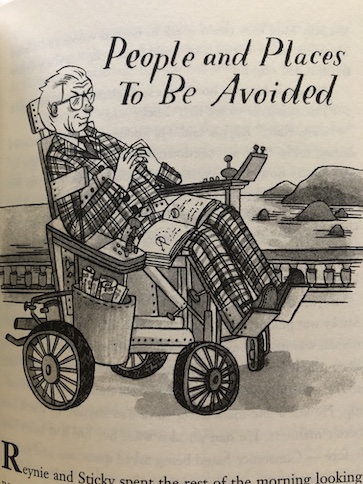
It turns out that the test is actually a puzzle and that the answers to all the questions are found within the test itself. Following the instructions shows Reynie how to find the answers. Reynie passes the test and is told to go on to the third part. Reynie wants to talk to his tutor, and the woman who administered the test says that she’s already spoken to her. She leaves Reynie to wait with another boy, who has a bald head. The bald boy, called Sticky as a nickname because things he reads stick in his head, says that, like Reynie, he was the only person in his group who passed the second test. When the boys compare their experiences, they realize that Rhonda was a part of the test. Each of them met a girl who lost their pencil and who offered to let them cheat off her.

The boys are soon joined by a girl named Kate, who is carrying a bucket full of random things, which she says are all useful. As an example, she describes how she met a girl earlier who lost her pencil in a storm drain and how she managed to get it back by using things from her bucket. The boys realize that she also met Rhonda and that she also passed the second test, including the Rhonda portion. Actually, Kate tells them that she failed the test, along with the other kids, but she was allowed to stick around for the next test anyway because she helped out the test administrator when she was cornered by angry parents.

The other tests that the children take are similarly puzzles and brain teasers. They all pass by using lateral thinking and unorthodox approaches that highlight their unusual personalities and unique abilities. When they are informed that they’ve passed the tests, they are joined by a fourth test-taker, who has also passed, weirdly by refusing to try to pass the tests. Instead, the fourth test-taker, a girl called Constance Contraire, passed the tests by questioning everything, including the very nature of the tests and trying to go contrary to every rule. The others can’t understand why she passed the tests when the did the opposite of everything she was told to do, but these tests aren’t like the types of tests students usually take.

After they are told that they passed the tests, the test administrators introduce the four children to the man behind the tests, the mysterious and narcoleptic Mr. Benedict. Mr. Benedict says that he has been trying for years to assemble a team of children with unique abilities to undertake a dangerous but important mission. It hasn’t been easy because he’s had a difficult time finding children who can pass his tests, and until now, too few children passed the tests at once to form the team. The test administrators are actually the first children who passed his tests years ago, but they’re too old to really be considered children now. They’re young adults. Now, with four passing children at the same time, Mr. Benedict thinks they finally have the children they need for the team.

Each of the children has demonstrated their thinking skills and unusual approaches to problems. Each of them is also alone, in one way or another, not accountable to any adults, so they can make their own decision to join the team without asking for adult permission. Mr. Benedict says that joining the team will be dangerous, and normally, he would never want to put children at risk, but the situation is serious, and harm may come to them and other people if they don’t solve the problem at hand. Each of the children considers the situation and decides to accept the offer to join the team. (Constance only joins after Mr. Benedict makes it clear to her that she would be joining not because she was told to join, but because she wants to and that her obedience to the group’s rules would also be because she chose it. Constance never does anything just because someone tells her to, which is part of the reason why Mr. Benedict recruited her.)

The kids are given rooms in Mr. Benedict’s book-filled house, which can only be entered through a complicated maze. They are under the guidance and protection of Mr. Benedict’s three assistants:

Rhonda – She was originally from Zambia and was one of the first children to pass Mr. Benedict’s tests several years earlier. Mr. Benedict adopted her.

Number Two – She is also one of Mr. Benedict’s adopted daughters, but she refuses to tell the children what her real name is, preferring to go by her code name. She always wears yellow and rarely ever sleeps.

Milligan – He is an amnesiac who knows nothing about his early life. He’s not even sure that his real name is Milligan, but it’s the only name he could remember. His earliest memory is about escaping from some people who were interrogating him, and he thinks his amnesia is due to a head injury.

When the children are told that they are being protected at Mr. Benedict’s houses, they want to know who or what they’re being protected from. Mr. Benedict explains that he has discovered that someone is sending subliminal messages to the general public through radio, tv, cell phones, and other forms of electronic media. These subliminal messages are being delivered in children’s voices, which Mr. Benedict thinks is part of the sender’s plan. Adults often disregard things that children say, which makes it easier for the messages to go into the adults’ subconscious brains. Some people, like the children and Mr. Benedict and his assistants, are less susceptible to these messages than other people. Mr. Benedict plays the messages for the children so they can hear what they sound like. The things they say are confusing and annoying, but they don’t sound immediately dangerous. Mr. Benedict says that these same messages are being transmitted in different languages all over the world, and he thinks that they’re merely the precursors to something more dangerous. However, Mr. Benedict things that the messages are merely a prelude to something more sinister. Constance asks why Mr. Benedict hasn’t gone to the authorities with what he knows, and he says that he has tried. He used to be a consultant for law and government agencies, but they no longer believe what he has to say. They think that he’s a crackpot. People who would have believed him and been his allies have mysteriously disappeared, and he is sure that’s also part of the sender’s plot, removing anybody who stands in his way.

The children become fully aware of the danger when some men try to kidnap them from Mr. Benedict’s house. Mr. Benedict’s assistants subdue the kidnappers with tranquilizer darts and remove them from the house. Mr. Benedict explains that, if they had successfully kidnapped the children, they would have likely taken them to the Learning Institute for the Very Enlightened (the acronym isn’t bad, but the reverse acronym is), which is a mysterious boarding school on an island that teaches orphans and runaways and other children who, like the children in Mr. Benedict’s house, are alone and unsupervised by outside adults. Sometimes, the school also kidnaps vulnerable children to use for its sinister purpose.

Mr. Benedict believes that the mysterious messages are being transmitted from this school by a group of its top students. The dangerous mission that Mr. Benedict has in mind for the team of children is for them to infiltrate the school as students and join this elite group so they can learn the truth about what’s happening and how to stop it.

The children spend some time preparing for their mission at Mr. Benedict’s house while Mr. Benedict and his assistants work on forging papers and getting the children admitted to the school as students. The kids practice learning Morse code and other helpful skills. They also learn a little more about each other and start figuring out how they can work together as a team.

Reynie was orphaned as a baby and has no memory of his parents or his life before coming to the orphanage. Nobody really seems to understand him or care about him except for his tutor, Miss Perumal.

Kate also used to live in an orphanage because her mother died when she was small, and she was apparently abandoned by her father. She can’t remember her mother at all, and she only has one memory of her father from a time when he took her swimming. She remembers him as a nice man, but she thinks maybe she was wrong about that, since he abandoned her. She lived in the orphanage for several years before she ran away to join the circus. Because of her circus life, she’s very strong and athletic, and she’s also surprisingly good at estimating sizes and distances with just her eyes.

Sticky isn’t an orphan but a runaway. He thought that he had a happy life with his parents until they discovered his amazing memory. From then on, they insisted on entering him in contests and quiz shows to earn money. As Sticky won these contests, his parents became more and more money-grubbing, entering him in more and bigger contests. They stopped letting him play with friends and made him constantly study so he would know all the answers to everything. Sticky became stressed out and wanted to quit, but they wouldn’t let him. Eventually, he pretended to run away and hid nearby to see what his parents would do. At first, they were worried and tried to find him, but then, people began donating money to them to help in the search. His parents kept up the search in a nominal way, so people would continue to donate, but they weren’t really interested in finding him. They said to each other that they were getting more money for him not being there, so they were better off with him gone. Sticky was shocked at their lack of love and concern for him, so he left for real. The reason why he’s bald is that he used hair remover to disguise himself from anybody who might still be looking for him.

These three children get along well with each other, but Constance is different. She doesn’t tell the others much about herself or her background. She’s a contrarian who rarely shows any consideration for her teammates. She even refuses to stop calling Sticky “George Washington”, which is Sticky’s real name, but he hates it. Kate wonders why she’s on the team when she’s not a team player and doesn’t seem to have any special abilities. She is much smaller than the other kids and has a generally cranky disposition. Reynie talks to Mr. Benedict about it, and Mr. Benedict assures him and the others that he has a reason for wanting Constance for the team. She has traits that will be of help to them later. Constance is the one who names the team The Mysterious Benedict Society when the others have trouble thinking up a good name for themselves.

When the children arrive at the school, they are told that the top students there become “Messengers” and get special, secret privileges, so they have to try to gain those positions themselves. The school also gives them many weird, mixed messages, which sound a lot like the secret messages being broadcast from the school. The kids are told that there are very few rules at the school, but there are so many exceptions to the “no rules” rule that the school effectively has a lot of rules. The Messenger showing the kids around the school doesn’t understand what they mean when they point it out the inconsistency. The kids are encouraged to always leave their television sets on, and they are always watched by well-dressed people known as the Executives.

The Executives are former students, particularly former Messengers, who now act as teachers at the school. The lessons at the school are as contradictory and annoying as the secret messages being sent over radio and tv. The kids are just made to memorize and repeat these contradictory phrases, like “Work longer hours to have more free time” and “War is necessary to have peace.” None of the other students seem to notice how these phrases don’t make sense. They’re all just memorizing the messages to get good grades and competing to be given Messenger status. Nobody knows what the extra privileges are that Messengers have, but everybody wants them. Messengers also fear new students becoming Messengers because there can only be a set number of Messengers at a time, and the current Messengers can lose their status if other students pass them in their classes.

Most of the chores at the school are done by people called Helpers, who are not allowed to be speak unless someone asks them a question. They’re not even supposed to made eye contact with the students. Students are periodically called to a place called “the waiting room”, which seems to involve some kind of punishment. The other students seem terrified about it.

The kids are told that the school was founded by a wealthy man, Mr. Curtain, and that tuition is free for everyone. The messengers say that Mr. Curtain works very hard and never leaves the school. When the kids see Mr. Curtain at the welcoming assembly, they are shocked that he looks exactly like Mr. Benedict! They wonder if he could actually be Mr. Benedict and if they’ve been tricked. However, Mr. Curtain seems to have exactly the opposite character of Mr. Benedict. It seems that Mr. Benedict has an evil twin! The kids of the Mysterious Benedict Society have to figure out who they can really trust and if they’re now trapped at this very weird school with people who are truly dangerous.

I couldn’t find a copy of this book available online, but it’s still in print and easily available. It’s the first book of a series. It’s also been made into a tv series.

One of the things I loved about this book is that it is full of riddles, brain teasers, and wordplay. The name of the island where the school is located is Nomansan Island, or “No Man’s An Island.” Ha, ha.

Some of the characters’ names are also clues to their characters and identities. I understood the significance of Milligan’s name way before he and Kate did because I was already starting to look for word games and clues.

The messages that the kids and Mr. Benedict and his assistants send to each other take the form of riddles, just in case someone intercepts them. This makes some of Mr. Benedict’s instructions a little difficult for the kids to interpret, but it does add extra challenge for the readers as well.

Mental and emotional manipulation are major themes in the book. Mr. Curtain is actually a deeply insecure person who craves control over others. He understands enough about his own personal fears to understand how fear has a strong effect on other people, and he uses that as his weapon. Through his machine called the Whisperer, Mr. Curtain can dispense both fear and reassurance as he tries to steer the entire population in the direction he wants: putting himself in charge.

The strange messages being transmitted are meant to plant fearful and contradictory images in people’s minds, making them feel like everything is out of control. Then, he can present himself as the man with all the answers, soothing the fears that he intentionally created. He wants to be be put in a position of being in control of everyone and everything because that’s what he feels like he needs to feel safe and reassured.

The contradictory lessons and rules at the school are part of the images that he wants to place in people’s minds. The rules that there are no rules except when there are gives people a false sense of freedom when he’s in control. They no just longer notice the control because he’s told them to feel free, and they do. This goes along with the school’s teachings that there is no need for regulation of businesses except when there is. This leads up to government is good, except when it’s bad, and it’s always bad … because Mr. Curtain isn’t in charge. He wants everyone to distrust and disregard the forces that might oppose him and trust only him: the guy who says what everyone is apparently thinking and tells them things that make them feel good. (This all sounds scarily familiar.)

At one point in the story, Mr. Curtain explains to Reynie that the messages he transmits with the Whisper are simple ones with hidden layers of meaning and complexity because people who are scared, which is what Mr. Curtain wants them to be, crave simple answers to complicated questions to soothe their minds. Mr. Benedict says that one of the gifts that the children share is a love of truth, which allows them to resist the messaging, but I would argue the children also have a love for complexity. The puzzles and brain teasers bring out their complex thinking, and the kids like to think about things and examine them from different angles. They’re creative and unconventional, not just doing what other people might tell them is the “smart” thing to do. They’re not looking for just the easy answers and the warm fuzzies or what gets them ahead of other people today but the bigger pictures. Some people are scared to confront complexity and things they don’t understand, but other people thrive on it. They’re not scared by mere ideas or trying to avoid thinking because it’s difficult or unpleasant. In the end, it’s partly the children’s ability to confront some of the things that they’re truly afraid of, whether it’s doubts about themselves or their own cravings for comfort and belonging, that help them overcome Mr. Curtain and his machine. Fear is powerful, but facing up to it with honesty does more in the long run than trying to hide from it.

Many people in the story have repressed memories an hidden pasts. When some of these are revealed, t’she story also raises the question of how sorry we should feel for the villains. We learn that Mr. Benedict and Mr. Curtain are identical twins who were separated as babies when their parents will killed in a lab accident. They were raised by different people, but they both had hard childhoods. They are very much alike, but they are different in the ways they were raised and also in the ways that they responded to adversity in their lives. Mr. Benedict coped with his lack of family by surrounding himself with good friends, who became his new family. Mr. Curtain has gone a different route, seeking to control and manipulate other people.

Mr. Curtains evil plan, which he calls the “Improvement” is based on his hard childhood and his need for control over other people as an adult. We can feel badly that his youth was terrible, but he is doing truly evil things that harm people. The kids discover that many of the children at the school were actually kidnapped. When the children first arrive at the school after being kidnapped, they’re terrified, but they later become happy and obedient because Mr. Curtain has developed a method of wiping people’s memories (more accurate, hiding people’s memories from themselves), so he can make the people’s he’s kidnapped forget that they were kidnapped and scared. He targets orphans and runaways for his school because they won’t have parents or anyone else looking for them, and many of the kids cling to the school and try to excel there, becoming Messengers and Executives, because it gives them the feeling of belonging that they’ve always craved. Yes, Mr. Curtain had a bad childhood, but he’s using his adulthood to do horrible things to vulnerable kids who are very much like he was at their age.

When the kids realize that many of the people who are now Executives were once lonely, kidnapped children, they wonder if they should feel sorry for them. They think it over and decide that they don’t really feel sorry for them and that they still hate them. They feel that way because the Executives have become like Mr. Curtain. They have no empathy toward children who are very much like they were once, they knowingly do things to these vulnerable children that once terrified and hurt them, and they do it all for their own personal promotion and the good feelings they get from doing Mr. Curtain’s bidding. The machine Mr. Curtain uses for the children to transmit his messages to the world gives the children good feelings when they use it, feelings of comfort and having their worries wiped away, which is why the Messengers cling so hard to the “privilege” of using it. They all have sad pasts and a craving for belonging and achievement, but there are acceptable and unacceptable ways to deal with those types of feelings. Everything the Executives do, from assisting in the kidnapping other kids and punishing them in horrible ways at Mr. Curtain’s direction, is terrible. The kids know that the Executives have had their minds and emotions manipulated by Mr. Curtain, but even knowing that doesn’t help them relate much to the Executives because the Executives are still their enemies and still doing horrible things. Trying to sympathize with them won’t change that because the Executives only care about pleasing Mr. Curtain and get their comfort from his machine and sense of power and authority he gives them over the kids. They are not open to sympathy or bonding with others. Their only chance at redemption is getting their memories back and seeing Mr. Curtain and his manipulation of them for what it is.

The kids also realize that the missing agents and allies that Mr. Benedict talked about are the Helpers at the school. Mr. Benedict wiped their memories more thoroughly than he did the children’s because they were adults and had established lives, duties, and families outside of the school. He gave them mental reconditioning to turn them into the grunt workers at the school and to keep them from prying into the memories they have of their lives which periodically resurface. Unfortunately, he can do little about the depression that hangs over them constantly because, on some level, they know that they’re missing parts of themselves and their past lives. The kids realize that’s what happened to Milligan. He had his memory wiped by Mr. Curtain, but he escaped before he was reconditioned, which is why he’s more aware than the Helpers are. People whose memories were apparently wiped haven’t actually lost them, but they need reminders of things and people who were important to them in their past lives to bring their memories to the surface again.

I was pretty sure that I knew Milligan’s real identity and the fate of Kate’s father early in the book when Milligan said that “Milligan” was all that he could remember as his name. The entire book makes use of puzzles, and I realized that “Milligan” isn’t really a real name but a dim memory of the last thing that Kate and her father talked about doing. Later in the book, the kids find out that what triggers memories in the Helpers is someone mentioning people who were important to them or unfulfilled obligations. When Kate last saw her father, she wanted to go to the mill pond again, and they never did because her father disappeared, and everyone assumed that he had abandoned her instead of that he’d gone missing. This was partly the fault of Mr. Curtain because one of the secret messages he’s been transmitting is that “the missing are not missing, merely departed”, discouraging anyone from trying too hard to find all of the people he’s kidnapping. Therefore, it never occurred to anyone that Kate’s father was a missing person, only that he’d left. Kate is not only glad to have her father back but relieved to understand that the father she’d loved was abducted instead of abandoning her.

At the end of the book, it’s also revealed that Sticky’s parents were similarly victims of Mr. Curtain’s messaging. When their son disappeared, they knew only that he’d left, and they were stuck in the mode of not trying too hard to look for a missing person. I felt like the matter of Sticky’s parents was a little too easily resolved when Mr. Benedict reveals that they had not been saying that they were better off without Sticky but they felt like Sticky might be better off without them because he was much smarter than they were, and they felt like they’d failed as parents. They were charmed by living the high life for a while, but before the end of the book, they regretted not trying harder to find Sticky and blew all of their money in a real search. Mr. Benedict says that he believes that they’re sincere in wanting Sticky back because they really do love him, enough to throw off the last of the influence Mr. Curtain’s messages had on their minds.

Earlier in the story, Mr. Benedict told Reynie that, as a child, he used to wish for a family, but not anymore. Reynie asks him if he grew out of wanting a family, but Mr. Benedict says no, it’s just that he’s been able to build one of his own as an adult. He has his friends and associates and his adopted daughters. He also adopts Constance. Reynie is adopted by his beloved tutor, so he also gains a family, along with his new friends.

Ruth Fielding at College

Ruth Fielding

Ruth Fielding and her friends have graduated from their boarding schools, and now, they’re headed off to college! Ruth and her best friend, Helen, will be attending Ardmore, a college for young women only. Helen’s twin brother, Tom, will be going to Harvard. When they were at boarding school, they also attended girls’ only and boys’ only schools, but their schools were located near each other, and they were able to visit each other on weekends and attend joint social events held between the schools. Helen and Tom are close as twins, and Helen worries that she won’t be able to see her brother as often while they’re in college. Tom and Ruth are also fond of each other, and although they’re excited about college, they’re also a little sad at the idea of being apart.

While they’re having tea with Aunt Alvirah (the housekeeper), the hired hand working for Ruth’s Uncle Jabez, Ben, comes in and says that there is a boat adrift on the river that runs by the mill where they live. Everyone goes outside to have a look at the boat. At first, they think no one is in it, and Uncle Jabez says, if it’s abandoned, then he will go after it as salvage. Then, they see that someone is in it after all, just lying down in the bottom of the boat, but the boat is drifting toward the dangerous rapids below the mill! Whoever is in the boat seems incapacitated or unaware of their dangerous situation.

Uncle Jabez is less eager to go after the boat when he knows there’s somebody in it than he was when he thought he could get a free boat, but Ruth persuades him that they have to rescue whoever is in the boat. They manage to reach the boat, and they find an unconscious girl in it. They bring the girl back to the house with them, and Tom says that he will get a doctor. However, Aunt Alvirah doesn’t think that a doctor will be necessary because it looks like she has only fainted, and she thinks that the girl will be all right.

When the girl wakes up, she explains that her name is Maggie and that she was working at Mr. Bender’s camp for summer vacationers up the river. After the season ended, the vacationers left, and Mr. Bender paid her for her time at the camp, someone was supposed to give her a ride across the river with her luggage, but Maggie fell asleep while she was waiting in the boat. When she woke up, she was drifting down the river alone. She got scared, and she fainted. Ruth says, if her job is over, then she has no reason to return to Mr. Bender’s camp, and Maggie says that’s true and that she needs to find another job. Ruth says they can use their telephone to call Mr. Bender’s camp to explain the situation and reassure Mr. Bender that Maggie is all right.

Ruth likes Maggie, and she notices, from the way she talks, that she seems more refined than most poor working girls. Aunt Alvirah is getting older, and she often has trouble with her rheumatism. Ruth suggests to Uncle Jabez that they hire Maggie to help Aunt Alvirah at the mill this winter while Ruth is away at college. Uncle Jabez is still a miser and he grumps about Ruth spending his money. Ruth has money of her own now, and she is willing to pay Maggie’s wages, although she says that Uncle Jabez must make sure that Maggie has good food because she looks undernourished. Ruth and Uncle Jabez often butt heads over the issues of money and Ruth’s education because Uncle Jabez never had much education and is both proud of the money he has now and is tight-fisted with what he has. At this point, the story explains some of the history of the characters. Since Ruth retrieved a stolen necklace for the aunt of one of her school friends and received a reward for it (in Ruth Fielding and the Gypsies), Ruth has had enough money to be financially independent of her uncle and to fund her education. She is also correct about Aunt Alvirah’s age and health, and she is concerned for the older woman’s future.

Aunt Alvirah welcomes the idea of help at the mill, and Maggie accepts the position. Ruth notices that Maggie studies an Ardmore yearbook, and she is surprised that Maggie is interested in the school. She has the feeling that there is more to Maggie’s past than she knows.

When Ruth and Helen go to Ardmore, some of the girls have already heard about Ruth’s reputation as a writer of movie scenarios from the movie that Ruth wrote and her classmates helped make to raise funds to replace a dormitory that burned at their school. Some of them are prepared to despise Ruth as being stuck up about her writing, although some who saw the moving picture liked it.

A girl named Edith thinks that they’ll have to “take her down a peg or two” as soon as she arrives. One of the other girls, Dora, reminds the others about the rules against hazing at the school. The rules have been strictly enforced since a hazing incident went too far last year and traumatized a student, Margaret Rolff, who was trying to join the Kappa Alpha sorority. Since that incident, the college has forbidden sororities to initiate freshmen or sophomore students as members and cracked down on hazing rituals. Edith, a sophomore, thinks that’s a shame because the sororities are fun, while May sarcastically remarks about how fun “half-murdering innocents” is. The students aren’t really supposed to talk about what happened to Margaret, although the sophomores don’t see why not because everybody who was at the school when it happened knows about the incident.

Margaret’s nerves were apparently shattered by the incident, and a valuable silver vase, an ancient Egyptian artifact, disappeared from the college library the same night. It isn’t entirely clear what the Kappa Alpha sorority told Margaret to do, specifically, but it seems that Margaret’s initiation task involved both taking the vase from the library and going to nearby Bliss Island alone at night. She was found there the next day in a terrible state. Nobody is sure what happened to the vase, and Margaret was apparently unable to explain it. She left the school soon after, and nobody knows where she is now. The vase might have been stolen by somebody else that night, or it might have somehow been lost in the confusion of the initiation stunt that went wrong. Because the Kappa Alpha sorority was responsible for telling Margaret to commit a theft from the school (or, at least, borrow a rare and valuable object without permission), they are raising money to replace the vase. The students’ opinions about the incident waver back and forth between thinking that Margaret was a naturally nervous and delicate person to be so dramatically affected by the incident to thinking that maybe she faked her trauma as an excuse to get away with the theft herself.

When the other girls start discussing Ruth Fielding again and how grand she must think herself, being involved with the movie industry, a plump girl who is listening to them starts laughing, but she refuses to tell the other girls why. Then, a wealthy-looking girl with a lot of fancy luggage arrives at the school, brought by a chauffeur. Her luggage is stamped with European labels and has the initials “R. F.” on it, so the other girls assume that this must be the overly-grand Ruth Fielding. The plump girl struggles not to laugh as she watches their reactions because she knows Ruth and knows that this girl is someone else.

Meanwhile, Ruth and Helen have traveled to the school by train and are coming from the train station by bus. They arrive at their college dormitory, Dare Hall, just in time to see the other girls giving “R. F.” a hard time because of her fancy luggage. When Edith addresses “R. F.” as “Miss Fielding”, “R. F.” corrects her in front of the other girls, telling her that her real name is Rebecca Frayne. The plump girl, Jennie Stone, laughs at Edith’s presumptuous mistake and greets the real Ruth Fielding and Helen.

Jennie Stone was one of their fellow students at their boarding school, Briarwood Hall, in upstate New York. She was affectionately known as “Heavy” because she’s always been “plump” (or, as the book sometimes calls her, “fleshy”). Ruth and Helen are surprised to see Jennie at Ardmore because they thought that she was lacking some credits to go to college, but Jennie says that she made up those credits, and she wanted to go to college because she really had nothing to do after graduating from Briarwood but eat and sleep and put on more weight. There is some joking about Jennie’s weight, and Helen gives her a teasing pinch, but Jennie reminds her that she has feelings, too. People in Jennie’s family are naturally big, but she is determined that, as part of her college experience, she will lose weight. She wants to keep busy and reform her diet. The mathematics instructor at Ardmore has been advising her about her eating habits, urging her to eat more vegetables. The teacher seems to be hard on Jennie on the point of her weight, but the teacher openly tells her that’s only because she cares about Jennie. She knows that Jennie will want to make friends in college, and she won’t want to get a reputation as the heaviest girl in her class. It’s hard on Jennie, but she appreciates the teacher’s advice and the fact that she cares.

The mathematics teacher, Miss Cullam, also privately confides in the girls that she’s worried about the incident that happened on campus last year. She has some suspicions about the older classes of girls, although she can’t really prove anything against them. Few other people know this, but Miss Cullam admits that she had hidden some papers for last year’s mathematics exam inside the vase that disappeared from the library. It was an impulsive move and only meant to be temporary hiding place for them, but when she tried to get the papers out of the vase, she couldn’t because they were stuck. She went to get some tongs to retrieve them, but by the time she returned to the library, the vase was gone. At exam time, several students that she had not expected to pass her class did unexpectedly well on their final exam. She can’t prove that they got hold of the papers from the vase, and she hates to think that any of her students would cheat, but she still suspects they did. It bothers her that she doesn’t know for sure that they didn’t. Although the vase had value itself, the mathematics teacher’s story raises the possibility that someone knew that the exam papers were in the vase and that was the motive for the theft.

Ruth, Helen, and Jennie talk about the politics between the freshmen, sophomores, and upperclassmen in college. Edith seems undeterred by her earlier mistake and still gives Ruth a hard time about her writing and budding movie career. It doesn’t entirely surprise Ruth that people would give her a hard time because she is a noticeable figure among the freshmen, and having been to boarding school, she knows how things typically work among cliques and class levels at school. Although some of what Edith says embarrasses her and hurts her feelings, she knows that it’s best not to make too much fuss about the things people say, and just wait for it to blow over. It helps that Helen and Jennie stand by her and stand up to the other girls on her behalf. Ruth is somewhat reassured that hazing is forbidden at Ardmore, so she expects that little will happen other than occasional mean comments.

Although hazing is forbidden on campus, the college does allow the upperclassmen some privileges over the underclassmen. They do it with a purpose in mind, using it as a tool to get the freshmen to bond with each other and solidify their class leadership. Few freshmen pay attention to the elections for class president until the seniors put up notices to tell the freshmen that they must all wear baby blue tams (hats), that no other colors will be allowed, and that the freshmen only have three days to comply. The freshmen aren’t sure what the upperclassmen will do if they don’t comply, and some of them are resentful about the upperclassmen commanding them to buy new hats. Helen, like some of the others, initially thinks they should just ignore the command and not bother, showing the upperclassmen that they won’t be bossed around, but Ruth decides that she would rather buy and wear one of the tams because she doesn’t want to draw unnecessary attention to herself and maybe more resentment from the older girls on campus. When they go shopping in town, they see that every shop is selling baby blue tams, and one shop keeper (described as a “Hebrew” for no real apparent reason and having an accent that seems to indicate that he’s an immigrant) comments that blue is their class color, which gives the girls a clue that this is an organized campus tradition or stunt with the support of the local businesses. Because those tams are everywhere in town and other freshmen are buying them, even most of the reluctant freshmen end up with one of those hats. After that, the freshmen realize that they need to get serious about organizing their class leadership so the upperclassmen won’t be dictating everything to them.

There is one hold-out among the freshmen who doesn’t buy one of the tams, and that’s Rebecca Frayne. She just keeps wearing the same tam she was wearing when she arrived at school. When the three days are up, and Rebecca still doesn’t have a baby blue tam, the upperclassmen start boycotting her. If she comes to class in her usual tam, they all get up and walk out. They even walk out on meals when they see her. This seems like more of a punishment for the upperclassmen, who have to leave without finishing their meal, than it is a punishment for Rebecca, and someone does point that out.

(I see what the students say about these traditions being bonding experiences, but I really don’t have any respect for these catty and manipulative tactics because it looks dumb, and I think it just disrupts class for everyone to have so many students walking out. I think my college professors would have counted them as absent if they walked out of class over a dumb hat because student social activities need cannot impact the education they are supposedly here to receive and have no place in the classroom. Whatever they do needs to be done on their own time, not on the teacher’s or the class’s time. Actually, I did have a professor who used to award extra points to students who showed up on days when class attendance was low due to bad weather or people ditching class for sporting events. He would have us take notes or a short quiz and write a special phrase at the top of the paper as a sign that we were there that day when others weren’t, like “Rainy Day Faithful” or “Sports Day Faithful.” I kind of wanted to see the instructors in the story do something similar. On the other hand, if they self-punish themselves by sending themselves away from the dinner table, I’m inclined to think it’s deserved. I’d be inclined to let them do that until they get hungry enough to stop. It’s a rare example of a problem that will eventually solve itself.)

However, Rebecca’s apparent defiance of the social order even gets on the nerves of her fellow freshmen. The others have come to appreciate the bonding experience of buying the matching hats and solidifying their support of their own class leadership. It was a ridiculous and high-handed order from the upperclassmen, but ultimately, a fun and harmless one, a reason for a short shopping trip, and only a minor expense that supports local businesses. The other freshmen don’t understand why Rebecca isn’t joining in with them in class solidarity. Rebecca doesn’t mix much with the other students, and the others think that she doesn’t want to be friends, although Ruth can see that the boycotting she’s suffering is hurtful to her.

However, there may be another explanation for Rebecca’s behavior besides defiance or stand-offishness. Ruth begins to realize that Rebecca not only always wears the same hat but that she’s only ever seen Rebecca wear the same three outfits, over and over. They’re good quality clothes, but it’s odd that she never seems to wear anything else. Although they all saw Rebecca arrive at college with a lot of luggage, more than the other students had, she either doesn’t seem to have many clothes or never wears the other clothes she brought. From the way she arrived and the amount of luggage she had, everyone expected that Rebecca would be the wealthy fashionista of their class, but that hasn’t been the case. Is Rebecca not as wealthy as they thought, and could her choice to not buy a blue hat be because she can’t afford one? But, if her luggage wasn’t full of fashionable clothing, what was really in her large trunk? Ruth becomes concerned about her and tries to figure out what’s really going on with Rebecca.

Meanwhile, Ruth, Helen, and Jennie have been exploring the area around the college. One day, the three of them go to Bliss Island to have a look around. Jennie is hoping that hiking around the island will help her in her quest to lose weight. While they’re exploring, Ruth thinks that she sees someone else on the island. She doesn’t get a good look at this other person, but she thinks it looks a lot like Maggie. Helen thinks that she must be wrong because Maggie is supposed to be helping Aunt Alvirah back at the mill. Later, Ruth sees a light on the island at night and realizes that someone must be camping there.

When Helen and Ruth go to investigate who is camping on the island, Ruth expects to find Maggie. Instead, they find a strange girl who seems to bear a resemblance to Maggie. This other girl seems suspicious and doesn’t want to explain much about herself. What is she doing on the island, and does it have anything to do with what happened on Bliss Island during the hazing incident?

The book is in the public domain and is available to read for free online through Project Gutenberg.

In a way, this story is what I had hoped that Ruth’s first adventures at boarding school in Ruth Fielding at Briarwood Hall would be like. It doesn’t have any spooky stories, but there is an unresolved mystery involving the initiation rituals of a campus sorority, the theft of a valuable object, and a possible cheating scandal. There also also mysteries about the behavior of other students and girls Ruth knows. At first, I thought there might be a connection between all of these things, but the mysteries aren’t call connected.

Ruth is correct that Rebecca isn’t as rich as she looked at first. When Ruth speaks to Rebecca privately, Rebecca explains that her family was once wealthy, and they still live in the biggest house in their small town, but the family’s fortunes have diminished over the years. Her aunt, who takes care of her, thinks it’s important to keep up appearances, which is why she has a few nice clothes but not many. The family has to make real sacrifices to keep up the pretense that they have more money than they really have, and Rebecca arrived at college thinking that she would have to make an impression on the others at the beginning that she came from money so they wouldn’t think that she didn’t belong.

Ruth explains to her that college isn’t really like that. Not everyone at college has much money, and many other girls get part time jobs, like waitress, to pay for their education. Belonging at college comes from participating in activities with everyone else, and Rebecca is pushing other students and potential friends away by not joining in the traditions of the college. Personally, I thought the other students were being too militant about this silly hat thing. I get how people can bond over shared traditions and how school traditions and spirit events are meant to be bonding experiences, but I just think that they went overboard, making too much of a big deal about this one student, with only Ruth thinking to actually talk to her and find out what’s going on with her. It does beg the question of whether the students are really focusing on this as some kind of school initiation/bonding ritual for the fun of it or because the older students are on a power trip and trying to exert control and be exclusive. In a lot of ways, I share Olivia Sharp’s feelings about exclusive clubs and initiation rituals from The Green Toenails Gang. It’s one thing if a club has a particular purpose, but being pointlessly exclusive is something else. This is something that Ruth actually addresses with the upperclassmen later, which was a relief.

However, even though Ruth is sympathetic to Rebecca, Ruth points out to Rebecca that her resistance to participation with the other students is causing problems in her relationships with others. When she doesn’t do what everyone else is doing, she isn’t sharing in their experiences and doesn’t bond with them. That’s when Rebecca says she really can’t afford to buy one of the blue tams, and her aunt would never allow her to take a part time job because that would ruin the pretenses the family tries to maintain about their actual money troubles. Ruth thinks the Frayne family pretenses are as silly as I thought the students’ militant hat ritual was, but she can see that a more creative approach is necessary to solve Ruth’s problem. Rebecca knows how to crochet, so Ruth suggests that she crochet a tam for herself in the baby blue color of their class because that would be cheaper than buying a tam. This will allow Rebecca to participate in this campus ritual and tradition but on her own terms and within her budget.

Then, Ruth quietly has a word with some of the senior students and freshman students about Rebecca’s situation to keep them from harassing Rebecca further while she’s working on her new tam and so they won’t give her a hard time about anything related to money. She even stands up to the seniors and tells them that, if their enforcement of the tam rules was for the sake of campus tradition and creating a memorable bonding experience among the students, they should have compassion for Rebecca and her situation, but if it was only to bully and exert power over the younger students, she will tell the other freshmen that’s the case, the freshmen will completely rebel, and everyone will stop wearing the hats or doing anything else the seniors say to do. If the upperclassmen continue to insist on leaving the dining hall in the face of their disobedience, the freshmen will make sure that the upperclassmen don’t eat on campus for the rest of the year. The seniors understand the situation, appreciate Ruth standing up for her classmate, and like her spirit, so they finally lay off their boycott of Rebecca.

Ruth also helps Rebecca solve her money problems when she realizes that Rebecca has brought something with her to college that is worth real money. Rebecca’s trunks were from the attic of her house, and she brought them just to create the illusion that she had more money and belongings than she really does, but she hasn’t appreciated the value of what they contain. Rebecca has many lessons to learn about the real value of many things. The contents of the trunk seemed a little anti-climactic at first because I had initially thought the story was building up the idea that she might be carrying something more suspicious, maybe something illegal or a smuggled person, but I liked the theme that Rebecca and her family know more about the superficial look of things rather than their true value.

The mystery of Rebecca and her behavior is an interesting side plot that adds dimension to the main plot and mystery, which concerns campus politics and initiation rituals and what happens when they go too far. Most of the rest of the plot and mysterious happenings centers around what happened to Margaret and the vase. In some ways, the solution to that problem turns out to be disappointingly simple. Margaret was a very nervous person who, although academically bright, was too easily influenced by other people and unable to stand up for herself. When Margaret got nervous and messed up the initiation ritual, she didn’t know how to explain herself and fix things. The situation does get resolved, and Margaret is fine. (You might have even guessed where she is through most of the story.)

However, I thought the story did a good job of demonstrating how social initiation rituals and school stunts can get out of hand when closed societies don’t consider how the things they do or ask others to do affect other people. The sorority didn’t really know Margaret as a person before they set her a task that was more difficult for her to do than it might have been for someone else, and Margaret was too timid, nervous, and anxious to be accepted by others to explain how she really felt about it or refuse to do it. This is part of the reason why the school later forbids the sororities from initiating freshmen and sophomores, so the younger students have time to get to know the campus and its groups, develop some confidence, and understand what’s acceptable for a group to ask and what isn’t. Having the sororities only recruit upperclassmen also gives them time to get to know prospective members and set appropriate tasks for people who know their own limits and when the groups are asking too much. The task should also not have involved taking a valuable object that didn’t belong to the sorority and putting it in a position where it could be lost. That is the Kappa Alpha sorority’s fault for setting a task that really wasn’t appropriate under any circumstances.

I liked the multiple mysteries of the story, the ones that connected to each other and the ones that were more stand-alone. There’s also a brief subplot where some of Ruth’s friends fake a haunting to get a relative of a faculty member to move out of her room in their dormitory so they can use the space. Before she came, that room was being used as a public sitting-room for the students, and they resent her taking it. The students involved in the plot don’t tell Ruth what they’re doing or ask her to join them, but they explain it to her when they’ve accomplished their goal. I appreciated that the plot was subtle, just making subtle noises at night using a rocking chair.

Up to this point in the series, Ruth Fielding and her friends were teenagers at boarding school. Now, they’re becoming young women and young men in college. I liked how aspects of their college life resemble their experiences at boarding school, but the characters show that they are now more experienced. The things that happen with the social politics on campus build on the girls’ earlier boarding school experiences, but they are now more aware of the dynamics of these situations and how to deal with them. There are some times when it’s better to go along with the group for the sake of building friendships, but there are also sometimes when they have to stand up for themselves and others and tell the groups on campus that they’ve gone too far. There are times when it’s better to take some teasing and let it go, and there are times when teasing and enforcement of group conformity goes too far, and someone needs to be told to stop and go easier on someone. They still have things to learn, but it was nice to see their development and the use of things they have already learned. Students like Rebecca and Margaret suffer more at college at first because they are more new to the large school environment, and they don’t understand what others expect from them or when and how to stand up for themselves. They need some help from compassionate, experienced students to find their way.

Readers also see main characters are continuing to build their future lives and develop as people. Ruth has already started her writing career, and through the story, we are told that she is still working on a play she’s writing, and she and her friends also take part in the filming of another movie during a school break. Ruth is planning to go further in her writing and movie career, and she is serious about using her education to develop her career.

We don’t know as much about what Helen and Jennie are planning for their futures. Helen’s family is wealthy, so she technically doesn’t need a career, but she is a serious student. Jennie’s trait of being overweight, something which has helped to define her character through the series is interesting in this story both because Jennie stands up for herself and emphasizes that she has feelings and so more than just a fat person to be made fun of, and she’s also decided that she wants to change her image. While her teacher urges her to eat healthier, Jennie also starts joining in the sports on campus. At first, it’s difficult for her, but she gradually becomes stronger and more athletic, and she enjoys it. College is a time for people to experiment with their lives, habits, and self-image, and Jennie specifically wanted to go to college for that reason as part of her personal development.

I didn’t like the repeated references to Jennie as “plump” or “fleshy.” I did like seeing her try new activities to change her appearance and develop different sides of her personality, but the older Stratemeyer Syndicate books do have this odd focus on describing characters’ weight. Heroines are usually described as “slim” or “slender”, pleasant sidekicks are “plump”, and villains and unpleasant characters are actually fat. These designations appear repeatedly in various Stratemeyer Syndicate series, although I think they finally stopped doing it after people raised public awareness about fat shaming. In Jennie’s case, I minded it less than I’ve minded the weight references less than I’ve minded it in other books because she does remind people of her feelings and because her decision to try to improve her weight situation was her own decision rather than one she was bullied into making and is an extension of her trying new activities, experimenting with her self-image, and the college experience of personal development. Jennie was at a point in her life where she felt the need for a change, so she’s just going for it.

At this point, I want to remind readers that characters who develop and change are rare in Stratemeyer Syndicate books, at least the ones that most people remember from their childhoods, because in the series that are still in print, the characters’ ages are frozen.

I’ve pointed this out before, but one of the hallmarks of most of the classic Stratemeyer Syndicate books that most people remember reading when they were growing up is that the characters never age. In series like Nancy Drew and the Hardy Boys, they’re always in their late teens or early twenties, and their exact age often isn’t specified. Readers just know that they’re old enough to be traveling around and doing things without adult supervision, sort of like the characters in the Scooby-Doo cartoons. Also, like Scooby-Doo cartoons, the series get redone about every decade or so to update technology, slang, and world circumstances so that the books take place roughly around the time when they were written. (For example, you won’t find any Cold War references in books written after the 1990s, and existing books for series that were still in print were rewritten and reissued in the mid-20th century, around the time of the Civil Rights Movement, to remove unacceptable racial terms and stereotypes.)

However, it’s worth reminding readers that this wasn’t always true of Stratemeyer Syndicate books. The oldest series produced by the Stratemeyer Syndicate are often unknown or forgotten by modern readers because the characters did age. As the series ran their course, characters grew up, graduated from school, married, and became parents themselves. When Stratemeyer Syndicate characters got too old to be teen detectives or young adventurers, the Stratemeyer Syndicate would simply stop producing their series and start a new one, often with characters who were somewhat similar to characters in previous series but not exactly the same, so they could continue writing series with similar themes and a similar feel, but also a little different. Ruth Fielding is one of those forgotten characters because she did age, and her series ended around the time that the first Nancy Drew books were published. Nancy Drew was meant to be the next generation series to Ruth Fielding, a similar character who has investigates mysteries and has adventures with her friends, but by that point, the Stratemeyer Syndicate realized that, if they never let Nancy age, they would never have to end her series or replace her with anyone else. This is the reason why 21st century readers know who Nancy Drew is, but not many people know Ruth Fielding.

Also, because Ruth Fielding books weren’t being produced during the mid-20th century, when existing Stratemeyer Syndicate books were being revamped and modernized, the Ruth Fielding books were not modernized. The movie industry, which becomes increasingly prominent in the books, makes silent movies because the stories are set in the 1910s. There are some racial terms in books, while not being deliberately insulting, also don’t sound right because they’re not polite by modern standards. It did throw me a bit when the book referred to a shopkeeper as being “Hebrew.” I think I might have heard this before in relation to Jewish people (I can’t remember where right now, although I think it might have been an older book as well), but not often. Using the word “Hebrew” in this way is acceptable in some languages, but not in modern English, and it is considered a derogatory reference by modern standards. It took me out of the story temporarily when I got to that part because I had to stop and think it over. I came to the conclusion that the kind of person who would use “Hebrew” instead of “Jewish” to describe a Jewish person sounds like someone whose primary knowledge of Jewish people comes from reading the Old Testament rather than talking to them in life. Then, after I considered that, I had to stop and consider how Ruth Fielding could know that the shopkeeper was Jewish without even knowing his name or him saying anything about it. I suppose it might have been his general look, but that’s not always reliable. More importantly, it’s a case of the author telling us something as if it makes a difference to the character or the scene when it doesn’t. This goes absolutely nowhere. Ruth has never seen this shopkeeper before because she’s new in town, and we never see him again. This is why writers are discouraged from bringing up people’s racial or ethnic backgrounds unnecessarily because it sounds like they’re trying to make a point about something when there’s no point. This is also why I don’t mind rewrites of books that include outdated or unacceptable racial terms because I read them as a distraction that actually takes away from the story. I suppose, from a scholarly viewpoint, it’s kind of informative about the way people spoke in the past, but from the point of view of someone just trying to enjoy the story, it acts like a speed bump that shakes the reader out of it.
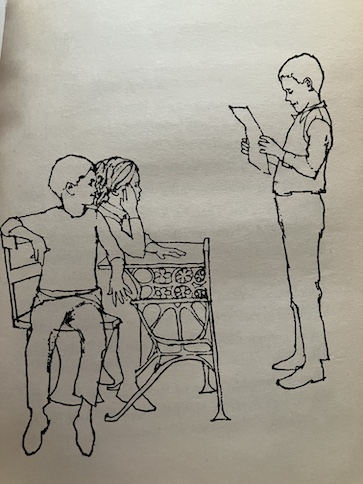
I don’t think the Nancy Drew or Hardy Boys books ever connect the characters with any world events with known dates because that would also mark the characters’ ages relative to events and make it obvious that they don’t age over time, but the Ruth Fielding books do connect to world events, and we’re almost to the point in the series when the characters become directly in World War I. I’ll have more to say about that when we reach that point in the series.