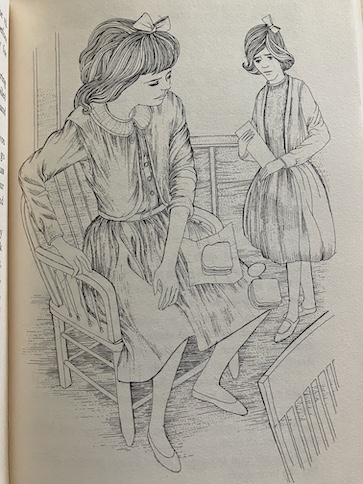
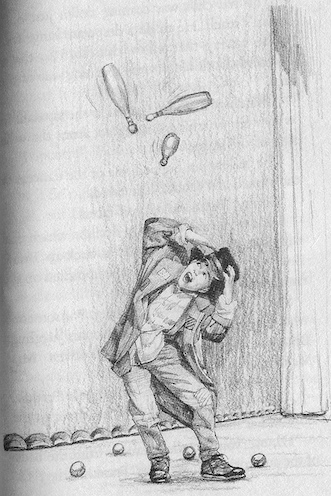
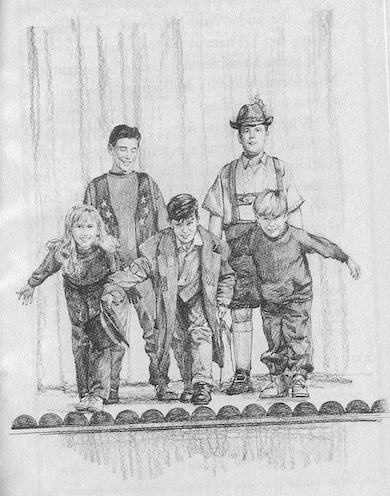
In 1943, 11-year-old Howie Crispers lives in Brooklyn and goes to public school. Although he’s still a kid in school, every part of his life and every part of the lives of people he knows, like his best friend, Denny, has been impacted by WWII. Howie’s father is in the Merchant Marines, which means that he’s away most of the time, taking supplies overseas. Howie never knows exactly where his father goes because people aren’t supposed to talk too much about the movement of people and supplies for the war. The phrase “Loose lips sink ships” has special meaning for Howie. When letters from his father arrive, they arrive censored, with pieces of important information cut out of them, so Howie’s father can’t accidentally give away information that might potentially be important to an enemy if the letter was intercepted or if his family mentioned things that they shouldn’t from his letters.
Denny’s father is in the army somewhere in North Africa, and other classmates have fathers or brothers overseas or family members involved in war work in some way within the United States. The kids also participate in volunteer activities related to the war effort, like gathering useful scrap materials that can be made into supplies. Many things are rationed, and people can’t always get what they want. Sometimes, there are blackouts and air raid drills. Whenever someone has to make do with things as they are or put up with abnormal situations, they tend to shrug it off and say, “Don’t you know there’s a war on?” Howie’s noticed that phrase seems to be an excuse for a lot of things.
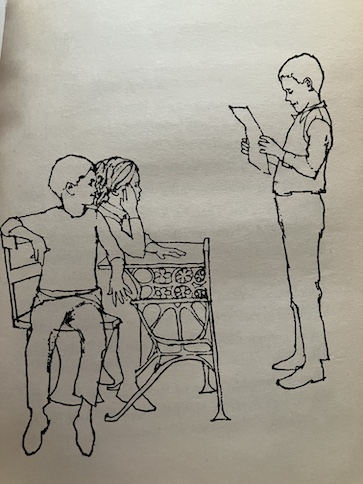
Howie and Denny, like other kids, love listening to plays on the radio, and popular entertainment also frequently focuses on the war. Howie and Denny are especially fascinated by stories of spies, and they start wondering if there could be spies around them even now. Their primary suspect for being a spy is their school principal, Dr. Lowminster. With most of the men they know away fighting or working in some capacity related to the war, they wonder why he isn’t also in the armed forces or doing some kind of war work. Dr. Lowminster is a strict man, and when Howie spots him leaving the school one morning just as classes are about to start, he realizes that this is something out of character for him and his usual routine.
Skipping class himself, Howie follows Dr. Lowminster and overhears a conversation between him and an unknown woman about firing Howie’s teacher, Miss Gossem! Howie likes Miss Gossem and even has a secret crush on her, and he’s appalled that Dr. Lowminster wanted to get rid of her. He doesn’t give an exact reason for firing her during the discussion Howie overhears, only saying something vague about Miss Gossem not maintaining the correct moral standards. Howie doesn’t know what that means, but he’s sure that sweet, pretty Miss Gossem couldn’t have done anything bad enough to get fired.
Since he’s already suspected Dr. Lowminster of being a spy, he also starts thinking of him like the villains in radio show or movie serials, who do cruel things to get revenge on pretty women who refuse to marry them, and he considers that this could be a similar situation. Maybe Dr. Lowminster is just mad at Miss Gossem because she doesn’t love him or something. In such cases, in movies or on the radio, a hero steps in and saves the lady from the villain, so Howie decides that he’s going to be Miss Gossem’s hero!
Later, when he can talk to Miss Gossem in private, Howie confides in her that he knows that she’s being fired and that he wants to help her. Miss Gossem, who has only just learned about it herself is surprised how Howie knew, and he’s forced to confess the embarrassing details about how he spied on the school principal because he thought he was a spy. Miss Gossem says that she doesn’t think the principal or anyone else at the school is a spy and that the woman the principal was talking to was Mrs. Walsh, who is the acting school superintendent and the principal’s boss. Howie asks Miss Gossem if there’s anything he can do that would help her, but Miss Gossem says that this is something that she’ll have to work out for herself. She only asks that he not tell the rest of the class about it yet. Howie agrees, although he’s already told Denny.
He and Denny talk it over, and Denny’s still convinced that the matter might have to do with spies or something related to the war. One evening, when Howie is caught outside during an air raid drill near Miss Gossem’s apartment, a policeman tells him to get off the street, so he asks Miss Gossem if he can come in. She lets him in, and she asks him how he knew she lived there. Howie admits that he’s spied on her, too. Miss Gossem tells him that he shouldn’t be spying on her. When he sees a picture of a young man in an Air Force uniform on her table, he asks her who it is, and Miss Gossem admits that it’s her husband. She still goes by her maiden name because not many people knew that she got married. They got married rather suddenly before he went overseas, and now, she’s worried because she hasn’t heard from him and doesn’t know where he is. She worries that he might be dead. Howie confides in her that he worries about his father, too, and how he sometimes has nightmares about horrible things happening to his father.
As teacher and student confide their worries to each other, Howie asks Miss Gossem again about why she was fired and learns some things about her situation. Miss Gossem asks him not to tell the rest of the class what he knows, but he does anyway because he thinks they can help prevent Miss Gossem from being fired. Miss Gossem is upset with Howie for revealing her secrets, and she worries that, if the principal finds out, it will make her situation worse. Miss Gossem insists that she is an adult and has to deal with things herself. Howie is upset because he was only trying to help.
Howie doesn’t know what else to do, but his little sister, Gloria, who listens to romantic soap operas instead of hero stories, offers him another perspective and some suggestions that help to change the situation. Dr. Lowminster is a man, but the nature of Miss Gossem’s problems might get more sympathy from adult women … like their mother and Dr. Lowminster’s boss, Mrs. Walsh.
My Reaction
This story contrasts with another by the same author, Who Was That Masked Man, Anyway?, which is also about a boy growing up in the United States during WWII, coming to terms with the effects of the war on daily life and the people around him, and indulging in a little fantasy and adventure based on radio plays and popular entertainment of the time. The difference between these two stories is that the boy in Who Was That Masked Man, Anyway? lives far more in the world of fantasy and his own imagination than Howie is in this story. Both boys are inspired by radio play adventures, but the boy in Who Was That Masked Man, Anyway? has some serious problems coping with the mundane and hard realities around him and frequently acts and speaks as though he’s living in a radio play.
In this story, Howie is much more accepting of the realities of situations around him, once he understands what the realities are. He is genuinely worried about his teacher’s problems and the effects that they are having on her life. At one point, he sees Miss Gossem looking out over a cliff and worries that she might be contemplating suicide because of her despair at her situation. Fortunately, she isn’t, and although she finds Howie’s efforts to help her somewhat embarrassing, he and his friends and sister are able to get some help for Miss Gossem, at least enough that she is able to finish working until the end of the school year.
However, while Who Was That Masked Man, Anyway? had a somewhat idealized ending in spite of the characters’ troubles and the chaos around them, Don’t You Know There’s a War On? ends on a more realistic and imperfect note. The characters in Don’t You Know There’s a War On? can’t solve all of the problems around them in the end. At the end of the story, the war ends, and the characters’ lives change yet again, as they shift into a new mode where they they can’t keep saying, “Don’t you know there’s a war on?” We don’t fully get the end of everyone’s story because Miss Gossem and Denny both move away, but we know that they have to go on with their lives as they are now, changed because of the war. It’s not exactly a happy ending although it’s not completely unhappy, either, because the characters’ lives will go on. It’s somewhere in the middle between happy and unhappy with an element of uncertainty about exactly what’s going to happen and how things will ultimately end up, which is very realistic.
Because Don’t You Know There’s a War On? was written after Who Was That Masked Man, Anyway?, I had the feeling that the author wanted to revisit that time and a similar setting in a more realistic way than he did in the previous book. Both books are enjoyable, but reading each of them is a different experience. That’s not unlike real life, too. Different people can experience the same situation in different ways. There are common threads between the two stories because the boys are experiencing some shared events and elements of popular culture in their time, but because their situations aren’t exactly the same, and they have very different personalities, their stories take different directions.
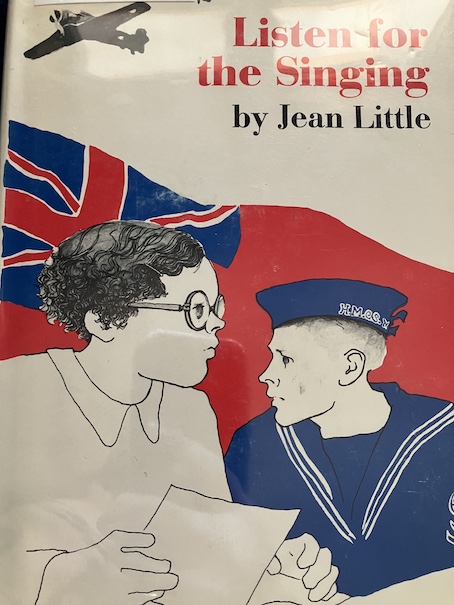
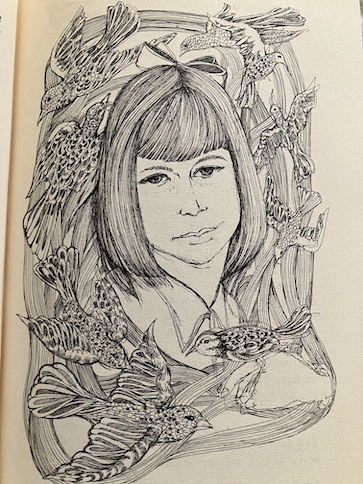
This book is the sequel to From Anna. In the previous book, Anna’s family moved from Germany to Canada both to claim an inheritance from a relative and also to escape the Nazis, whose hold has been increasingly tightening on their country. The inheritance isn’t large, mostly just a house and a small grocery store, but it offers the family a chance to start over, away from the Nazis. Anna, the youngest of her siblings was often clumsy and had learning difficulties that her family did not understand. They were often rough, critical, and impatient with her. However, in Canada, Anna has her first thorough physical with a doctor, who reveals to Anna’s startled parents that Anna has an extremely low level of vision, to the point where she is almost blind. For the first time, Anna gets powerful glasses and special classes that help her to cope with her disability and catch up on the learning she’s missed. Anna’s family repents of how hard they were on her when they didn’t understand her problem, and Anna realizes that she is capable of more than she had ever imagined possible.
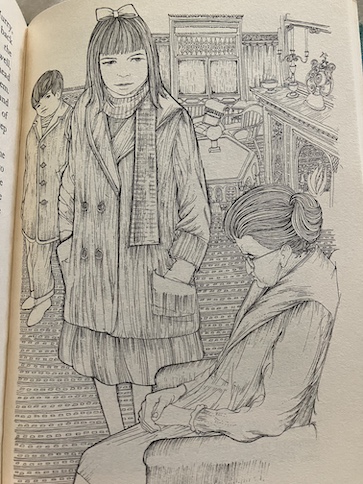
The sequel begins about 5 years after the previous book, in the fall of 1939. Anna has been wearing glasses for years now, and she’s adjusted to them well. However, changes are coming for her and her family. She is about to leave the special program that she’s been in for students with vision problems and attend a regular high school. She remembers that she used to have problems in regular classes when she lived in Germany, and she worries that she won’t be able to cope with regular classes. Her family, friends, and teacher all remind her, though, that she’s learned things in the last few years that will help her to do much better now. Her teacher says that she’s ready to move on. Anna gets upset when she learns that her friend Isobel from her old school will be going to a different high school, but Anna’s oldest sister, Gretchen, points out that she won’t be alone in high school. Rudi has already graduated from high school, but Gretchen will still be there, and so will the twins. Gretchen says that she will help Anna register on the first day and help her find her way around.
Anna has also begun to worry about her father, who has been distracted by the news they’ve been hearing about the impending war. Her family left Germany partly because they were worried about the direction it was heading under Hitler and the Nazis, and it seems that everything they worried about is now coming true. Then, they hear on the radio that Britain has now declared war on Germany (marking the beginning of the book as September 1939). The onset of war changes things for the family and creates tensions for them among the people in Canada.
When Anna goes to the first day of high school, she learns that her homeroom teacher will be Mr. Lloyd. Her siblings have had Mr. Lloyd as a teacher, and Anna already knows that he’s mean. He plays favorites in class, even though he teaches world history, he doesn’t actually know much about history. Rudi embarrassed him when he was a student, pointing out things he got wrong, and Mr. Lloyd has no love for him or any of the other Solden siblings. Worse still, Mr. Lloyd has a severe prejudice against students with German last names, asking them in class where they were born and if they were proud of their “Fatherland.”
Anna is upset when she is one of the students he singles out, and she’s not sure what to say, but a couple of other students in class speak up to shut him down. Paula voluntarily tells him that, while her mother is Scottish, she was born in Austria … the same place where Hitler comes from. Mr. Lloyd is taken aback, and Anna is surprised both at how bold Paula is and that Mr. Lloyd doesn’t punish her for talking about. Paula later tells her that her mother works for the local school board and has a reputation for standing up for kids who are bullied by teachers, and Mr. Lloyd knows who she is. He has to be careful what he says to Paula or in her presence, or her mother will deal with him. The other student who spoke up is the son of the local alderman, so his father also has influence. Mr. Lloyd could be risking his job if he pushes them too far or says too much in front of them that they might report to their parents.
Anna is grateful to Paula for her intervention, and she also appreciates some help she gets from Paula’s best friend, Maggie. The girls and their other friend, Suzy, make it a point to walk with her to their next classes when Anna explains that she’s been having trouble getting around because she can’t see well. The four girls become friends, and Anna is happy that she already has a friend group at school on the first day.
However, Anna is still troubled about Mr. Lloyd and his targeting of kids with German backgrounds. When she gets home from school and tells her oldest brother, Rudi, what happened, Rudi gets so upset that he goes to his room and refuses to talk anybody. When Anna walks down to the store that her parents manage, she sees Gretchen upset and arguing with their parents about her name. One of her new teachers is also targeting students with German names and gave her a hard time about being called “Gretchen” when the English version of her first name is “Margaret.” At first, Gretchen tries to persuade her parents that she should change her name to Margaret, but after she calms down a little, Gretchen realizes that a name change isn’t really going to solve the problem. There isn’t really anything she could do to make this teacher like her because the teacher is severely paranoid about Germans and talks about how there are German spies everywhere.
Dr. Schumacher, Anna’s family’s doctor and friend, has also experienced some of the same sentiment that the children are experiencing at school. He’s lost at least one of his patients, who no longer trusts him because of his German background, and Anna overhears some of his other patients gossiping about him and speculating on whether or not he’ll serve in the armed forces. Dr. Schumacher tells Anna and his wife that he isn’t overly concerned about these gossipy women, and he doesn’t consider the patient who switched doctors to be a big loss. He, like other young men, feels called to do something about the situation happening around them, but he cannot join the army because he has a heart murmur from having had rheumatic fever when he was younger. His wife (who is also Anna’s former teacher) is relieved that the army has rejected him because they are also expecting a baby.
As Anna and her new friends get to know each other better, Maggie and Paula ask Anna questions about her vision problems. At first, Suzy doesn’t think it’s kind to ask too many questions about it, and the talk of disabilities seems to make her uncomfortable, but the others let her know that she’s misread the room. Rather than finding it uncomfortable to talk about who vision problems, Anna is actually relieved that she can open up about it and that having these problems isn’t regarded as a shameful secret, and Maggie and Paula say that they genuinely want to know what Anna is experiencing so they can help her when she needs it. Anna admits that, sometimes, she’s not even entirely sure when she needs help because, not being able to see certain things, she doesn’t always know what she’s missing. When Anna needs to use alternate materials in class because of her vision problems, she is nervous that Mr. Lloyd will yell at her or bully her, knowing how he feels about students with German backgrounds, but to her surprise, he doesn’t. In fact, he proves very helpful and supportive to her. Mr. Lloyd treats Anna with more consideration than other students because he understands the nature of Anna’s visual problems better than most.
When Anna has trouble in algebra, her father suggests that she talk to her brother, Rudi, who is a math whiz. However, Anna hesitates to ask him for help because Rudi always used to tease her about her awkwardness, worse than her other siblings. She finds it hard to admit to him that she needs help with anything else. When she does ask him, though, Rudi enjoys teaching Anna about his favorite subject, and he even helps her with other things to help her fit in at high school, like teaching her how to dance and encouraging her to get her hair done.
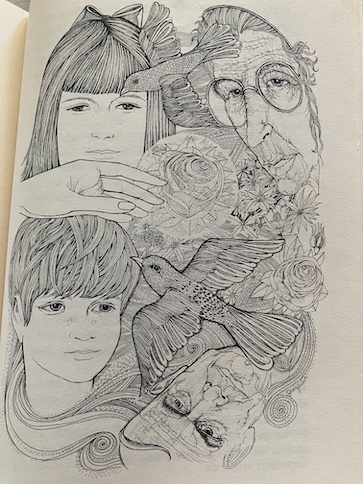
As the story continues, the war increasingly becomes a larger part of everyone’s life. Anna’s father is upset because word reaches him that his sister was arrested in Germany for being a housekeeper for an elderly Jewish man, who was also arrested. At school, the principal makes a speech on Armistice Day where he acknowledges that the war is going to have a profound effect on all of the students and that they will have to grow up faster because of it. As part of the speech, he quotes a preacher who said, “Faith is when you hear the bird singing before the egg is hatched.” This phrase is what gives the book its title because the principal urges the students to “listen for the singing”, to look to the potentials of the future and have faith that they will get through the crisis that is enveloping the world and that the world contains better things.
Anna tries to discuss the idea of imaging how things will be or could be, like hearing the bird sing before the egg hatches, with Rudi, but he doesn’t understand. Rudi seems like he has a promising future ahead of him. He’s already started college and has a talent for mathematics and engineering. He really enjoys college, but at the same time, with so many other young men like himself preparing for war, he feels the pull to join them. When they hear of their aunt’s arrest in Germany, it only makes it worse. Rudi can’t stop thinking about people he knows back in Germany whose lives have already been affected by the Nazis – people who have fled, been arrested, or simply disappeared. He also thinks of the headmaster of their old school back in Germany, who was known to be a Nazi, and how afraid all the children were of him. Rudi decides that he can’t stand back and let people like that win, so he joins the navy against his parents’ wishes.
It turns out to be a disastrous decision. Rudi is still in Canada when he suffers an accident where cleaning fluid is splashed into his eyes, leaving him blind. The doctors don’t believe that Rudi will ever regain his sight. Although Rudi tries to act brave and calm about his new disability, Anna can see that he’s suffering. Having learned to come out of her shell and cope with her own disability, she has a sense of how difficult this is for Rudi, who is usually accustomed to being able to do things pretty easily. Anna realizes how serious Rudi’s mental state is when she hears him crying one night and even praying to die. Anna knows that Rudi needs help, both physically and mentally. He’s suffered a terrible loss, and he feels like his life is over because he can’t see a way forward. Anna has to help him “listen for the singing”, to envision the possibilities.
The book is available to borrow and read for free online through Internet Archive (multiple copies).
My Reaction and Some Spoilers
From Anna told a complete story by itself, but I still enjoyed this new story with Anna and her family. It was nice to see Anna making progress in school and life, finding new friends, and her family treating her better. Because her mother and siblings treated her badly for years before they realized that Anna was slow and clumsy because she couldn’t see, there are some lingering feelings that affect their relationships. Anna’s mother and siblings have repented about their treatment of Anna and have become much more helpful, supportive, and considerate, but Anna still has some lingering fear of Rudi, who was always the one who was the meanest to her. However, even he admits that he regrets his past behavior. Even before he is afflicted with his own disability, he makes it a point to help Anna with her math lessons, learning to dance, and going to her first hair appointment.
Rudi becomes much more thoughtful and mature in this book. He especially comes to appreciate Anna when Anna helps him through the shock and depression after the accident that leaves him blind. When the story ends, it’s still at the beginning of the war, and we don’t know the ultimate fates of many of the characters. The war is just starting to change people’s lives. We know that, like Rudi, many of them will end up marked for life in some way by the things that are about to happen. Some of the other characters in the book see family members going off to war, and we have no idea whether they will come back or not. Mr. Lloyd comes out of his shell a little around Anna because they come to understand one another, thanks to their shared disability. It turns out that Mr. Lloyd’s vision is also very poor, much more than most of his students know, making him sympathetic to Anna. At the end of the story, things are looking brighter for Rudi, as he realizes that his life isn’t over, and there are ways he can cope with his new blindness and continue the studies he initially abandoned to join the navy. We only get to see the beginning of the war, but it’s enough to show us that it’s going to have a profound change on people in many ways before it’s over. Like Anna, readers must also “listen for the singing” to imagine how the characters will continue forward from this point. There will be hard things because of the war, but also hopeful developments in the character’s lives.
I enjoy the literary references in the story. During the story, Anna is reading the book A Girl of the Limberlost, and Anna enjoys studying Emily Dickinson’s poems. Anna also mentions other books she’s reading and bits of poetry or book characters, like Little Lord Fauntleroy. The movie The Wizard of Oz is playing in theaters at the time of the story, and Anna and her friends go to see it.
People With Visual Impairment
As in the first book, there’s information about people coping with forms of visual impairment, based on the author’s own experiences, growing up with low level vision. There’s also a lot about the attitudes the main character witnesses toward people with disabilities and her own feelings about the ways people treat her and how she wants to be treated. Some people, like Suzy, try too hard to shield Anna from public scrutiny by trying to avoid mentioning her disability or shutting down questions about it, but Anna actually prefers to discuss her vision with people who genuinely care and are trying to help her.
Anna is surprised at how much Mr. Lloyd helps her when everyone knows that he has anti-German sentiment. In fact, he goes out of his way to make sure that Anna has what she needs, sometimes even before she asks. Anna realizes why he is so helpful to her when she looks at the notes on his desk, which are printed larger for him, the way that he ensures Anna’s test materials are printed. The truth is that Mr. Lloyd also has low level vision. He covers up for his disability, but he privately admits to Anna that he also struggled when he was young. His parents got him a private tutor because his vision was so bad, and he admits to Anna that he’s impressed at how well she does in a standard school. Mr. Lloyd has strong feelings about some things, but Anna realizes that he’s also a bit shy and socially awkward. The two of them bond over their shared disability and experiences they’ve had in common.
When Rudi becomes blind, he initially feels like his life is over. He can’t continue in the navy, and he doesn’t know how he can return to his studies. Although he tries to cover up how hopeless he feels, Anna realizes that he feels like he can’t do anything anymore. He even lacks the will to use the resources he’s being offered. Anna pushes Rudi to “see” things differently, showing him how he can do things besides sit around and feel sorry for himself. She introduces him to recorded books (on records, not tapes or CDs, because of the time period) and Braille. When Rudi begins to see that he can still think and study, even if he can’t see, he begins to feel more hopeful and see new possibilities for his future. The part of the story about Rudi’s blindness doesn’t come until the end of the book, about the last third or quarter, but it serves to illustrate the point about envisioning hopeful possibilities for the future, even in the midst of misfortune and the chaos of the world around them.
Anti-German Sentiment
Anti-German sentiment was common among the Allied countries during both World Wars. People were paranoid about spies being among them. In most cases, it was just paranoia, but as with many conspiracy theories, it’s the odd case where it actually turned out to be true that kept people in that constant state of paranoia. Realistically, most average schools during this period did not have enemy spies in them, but the possibility that a spy could be anywhere haunts the characters, and that’s behind some of the prejudice that Anna’s family experiences in the story. (See also Charlotte Sometimes for an example at a boarding school for girls during WWI.) In the story, Mr. Lloyd’s prejudice isn’t just about the rise of the Nazis but also about his own brother’s death in the previous war against Germany. To him, the war that’s just starting brings back painful memories of the last one.
Later in the story, after Anna and Mr. Lloyd come to an understanding with each other over their shared vision troubles, Anna speaks to Mr. Lloyd about his prejudice against Germans. She points out to him that a lot of Germans don’t support the Nazis, and they are also at their mercy. She doesn’t know whether or not she’s ever going to hear from her aunt again after she was arrested by the Nazis. Mr. Lloyd admits to Anna that he’s probably not going to be able to let go of all of his feelings about Germans because he’s had years of resentments about them, but he also apologizes to her that his feelings have made things harder on her. This is a small concession, but it may be a turning point in Mr. Lloyd’s attitude. He tells Anna to give his regards to Rudi and is nice to Anna’s father when they meet. Seeds of change have been sewn for Mr. Lloyd, and we see the beginnings in the story. It’s another point where we see the beginning of something and can imagine how it might play out over time.
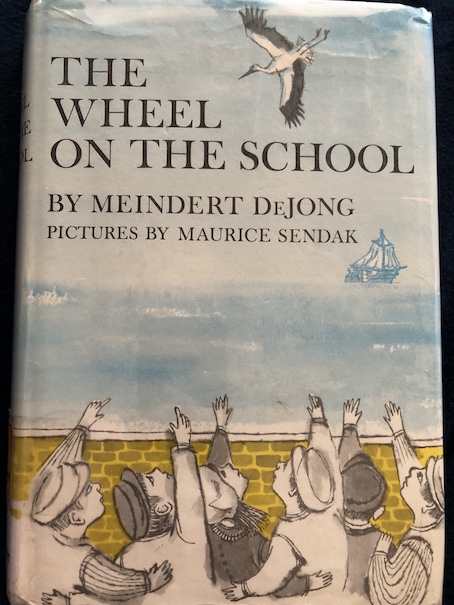
The Wheel on the School by Meindert DeJong, pictures by Maurice Sendak, 1954.
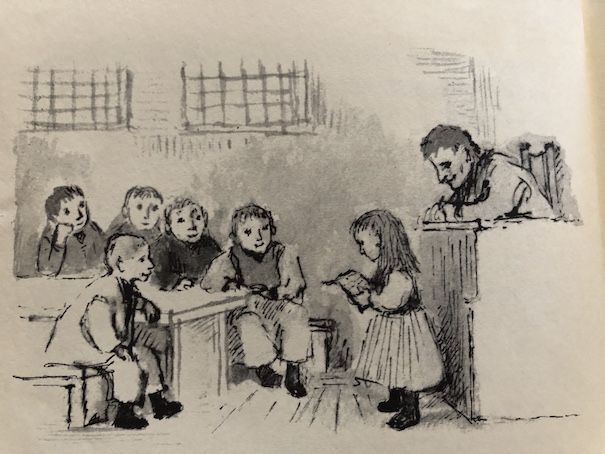
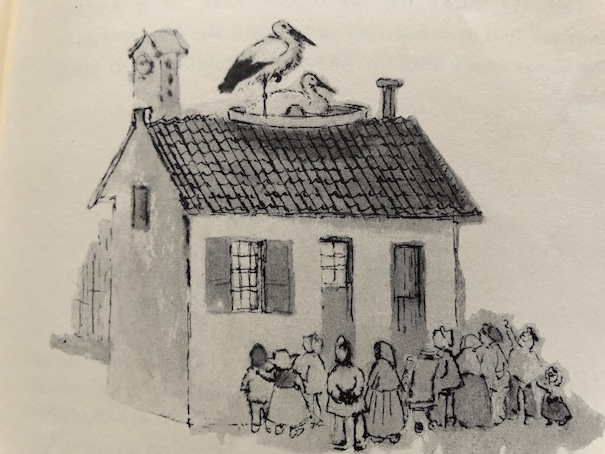
The story takes place in a small fishing village in Holland called Shora. Because the town is small, the local school is also very small, with only six children in the village old enough to attend. Five of them are boys: Jella, Eelka, Auka, and Pier and Dirk (a set of twins). The sixth student is Lina, the only girl. Lina is the one who gets the other students thinking about storks because she writes a story/essay about them. It wasn’t a school assignment. Lina just wrote it because she thinks that storks are interesting. It’s supposed to be good luck if a stork nests on your roof. Lina also notes that, while storks nest in other towns around them, like the one where her aunt lives, they never nest in Shora, for some reason. This starts a class discussion about storks, and the students generally agree that they know very little about storks because storks don’t live in their little village. The teacher says that, even when people don’t know much about a subject, they can still wonder about it, and he challenges the students to wonder about storks and why they don’t nest in their village. He is sure that, if the students wonder about it and think about it, they will learn the reason why the storks don’t come to their village. In fact, he lets the students out of school early so they can spend some time thinking about it. He mysteriously says that their wondering may cause things to happen.
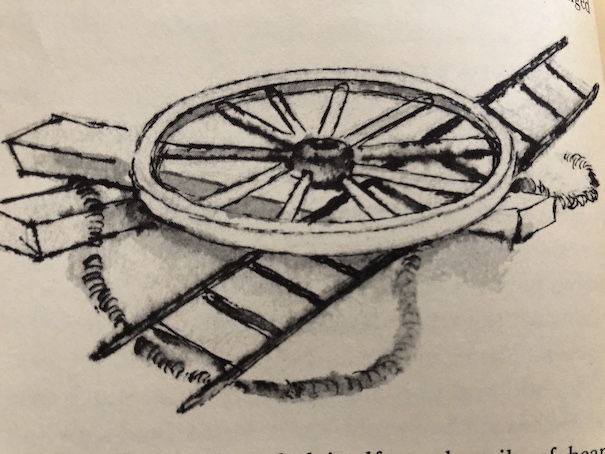
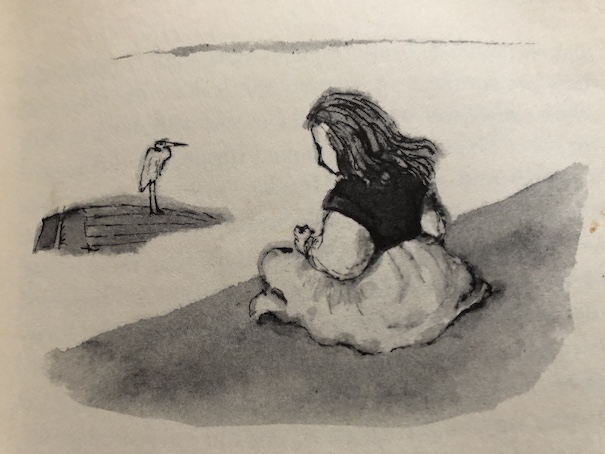
The children are thrilled at being let out of school early, but they feel bound now to wonder about storks and why storks don’t nest in their village. They’re not sure exactly how to begin thinking about this subject or how to figure out the answer, but they take a good look around their village. They find themselves looking at familiar places like they’ve never seen them before, but after a while, some of them become restless. Eventually, the boys all run off to play, leaving Lina to wonder by herself, to her annoyance. However, while wondering by herself, Lina notices something important: that all of the roofs in town are steep and that the school has the steepest roof of all. She realizes that the steep roofs are the reason why the storks can’t nest in Shora. When she realizes that, she also realizes that she knows what to do about it. Her aunt has a wagon wheel on top of her roof, and the storks nest there. Lina realizes that, if they put a wagon wheel on top of the roof of the school, the storks would have a place to nest.
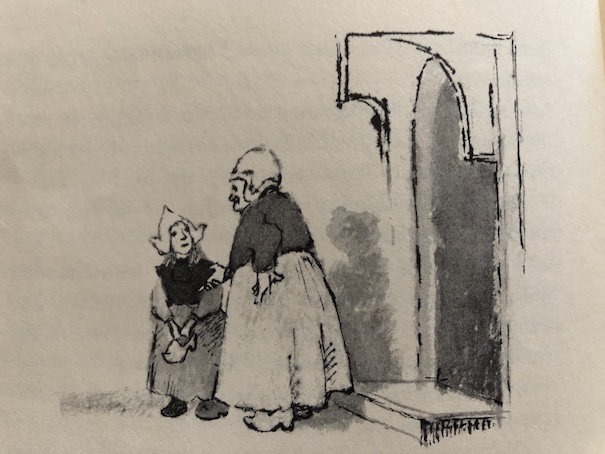
Lina is thrilled that she’s managed to figure out the answer all by herself, but since all the boys ran off, she has nobody to tell about it. Then, an elderly lady who everyone in the village calls Grandmother Sibble sees Lina and asks her what she’s doing. Lina is a little shy about talking to Grandmother Sibble, but she finds herself talking to Grandmother Sibble about the storks and what she’s realized. Grandmother Sibble says that what Lina has realized is true, but she also points out that houses in other towns have trees around them, too. That’s important because Shora doesn’t have trees. Grandmother Sibble says that, if Lina wants to really understand what storks want and need, she has to imagine what it’s like to be stork and consider how a stork would think. Lina likes that idea and starts thinking about what storks would want.
Grandmother Sibble says that, when she was Lina’s age, she was the only girl in Shora, just like Lina is now. Back then, they used to have trees in Shora, and they also had storks there. What changed Shora was that there was a terrible storm that destroyed the trees. Grandmother Sibble says that the storks haven’t returned to Shora since. Lina is surprised about Grandmother Sibble’s story, but it helps explain more about why their village is the way it is. Grandmother Sibble says it’s important to consider the whole picture of the village and everything that’s there and look at it from a stork’s point of view. Grandmother Sibble says that she’s missed the storks ever since they stopped coming to Shora, so she will think about it with Lina and consider what to do. Lina is pleased that Grandmother Sibble is as interested in the storks as she is, and she also realizes that this project has changed the way she looks at Grandmother Sibble. She now sees Grandmother Sibble, not as an unapproachable old lady but as a friend, as someone who used to be a girl very much like herself and who understands how she thinks and what she cares about.
The next day, the teacher asks the students who spent time wondering about storks and what they learned from it. Lina is irritated that the boys say that they thought about storks, too, when they all ran off to play, but the boys tell her and the teacher that they did do some thinking. Jella says that he asked his mother about storks, and his mother says that there were never storks in Shora and that there’s nothing they can do about it. Lina contradicts him, telling the class what Grandmother Sybil said. Jella is forced to admit that his mother was wrong. She probably didn’t know storks had ever been in Shora because she isn’t as old as Grandmother Sibble and wouldn’t remember when they were there. Eelka says that he also thought about trees, partly because he got wet when he was playing with the other boys and wished that there was a tree to hang his clothes on. It made him think that maybe the storks wish there were trees, too. The teacher asks them if that’s their firm conclusion that the lack of trees is the main reason why storks don’t come to Shora, but Lina says that she still thinks that the lack of wheels on the roofs is important because storks nest on the roofs, not in the trees. She thinks that, when the trees in the town died, everyone just assumed that the storks were gone for good and stopped trying to put wheels on their roofs like they used to and like people in other towns do.
As the students argue and debate about the importance of trees and wheels on the roofs, the teacher asks them what they can do to test their theories. The students realize that growing trees would take a long time, and some of them think it might be impossible because their village has too much wind and salt in the air and soil from the sea, which is why the trees they used to have died. Someone points out that one person in town has a cherry tree, but it’s small, and he won’t let anybody near it. He has a fence around it to keep people and animals away, and he scares away birds who try to take the cherries. The teacher says that the cherry tree is evidence that at least some trees can survive in Shora, if they are cared for and protected. He also tells the children that making changes and making dreams come true does take time and work, so they can’t expect results from the theories they test immediately. Still, by trying different approaches, he believes that they will learn more and that they can get storks to nest in Shora again. If they can get even one pair of storks to build a nest in Shora, they will know that they’re on the right track.
Since the idea of putting a wagon wheel on a roof is one that they can do more quickly than growing new trees, they decide to start by testing that theory. The nesting season for storks has already started, so they want to get started right away, or they’ll miss the season. Their teacher agrees to give the students time away from school to work on the project, as long as they’re willing to make up the study time later, and they agree. The teacher helps them to coordinate their search for a wagon wheel they can use. The children are sometimes distracted or tempted to go play instead of working on their project, but they quickly realize that, if they don’t focus on their task, they’ll miss their opportunity.
In the children’s quest to find a wagon wheel they can use, they learn a little more about some of the people in their little community and come to a new understanding and appreciation of them. When a big storm comes, the children worry that all of the storks will be killed and that their efforts have been for nothing, but reassurance and help comes from an unexpected source.
The book is available to borrow and read for free online through Internet Archive (multiple copies).
My Reaction
The author of the book, Meindert DeJong, was born in the Netherlands, and the tradition of putting wheels on roofs for nesting storks is real. If you Google it now, it’s difficult to find a mention of it that isn’t also about this book. I have found some pictures of stork nests on wheels (including some in Alsace, where they apparently have a similar practice) and some up on special poles. It’s a fascinating tradition that, admittedly, I wouldn’t have known about or thought to look up if the book hadn’t described it. There is also another children’s book, Wheel on the Chimney by Margaret Wise Brown, that also describes this type of nest for storks.
What I really enjoyed about this book was how the teacher encouraged the students to work through the issue of why there were no storks in their town in their heads, collect observations, brainstorm different possible explanations, and test their theories. Basically, he was teaching them a simple version of the scientific method, although he never calls it that. When Lina raises the question of why there are no storks in Shora when other towns around them have storks, the teacher encourages the students to put their minds to the question, collect some observations about their town, conduct research (like asking the adults what they know about storks in their town), develop a working hypothesis (the storks need a place to nest), and conduct an experiment to test their theory (provide storks with a place to nest and see if they can get a pair of storks to build a nest there).
The teacher provides some guidance as the children go through these steps, but then, he allows the children to approach the project by themselves, only stepping in when they run into problems. In some cases, the children do run into serious problems, even putting themselves in physical danger, which shows the dangers of not drawing some limits ahead of time or providing more direct supervision, but the children do manage to work out their problems, and fortunately, nobody is seriously hurt. By the end of the book, the children have also drawn many other adults in the community into their project, often in ways that help the adults as well and bring the community closer together. In the process, the children also learn a few things about themselves and their own abilities. In some ways, it reminded me of the Christmas story Starlight in Tourrone, where a community comes together to re-create an old ritual that people in a small village have otherwise abandoned.
I appreciated how the children develop some better understanding for the adults in their community by bringing them into the project or approaching them for help, and parts of the story actively encourage the children to be empathetic and look at different situations from someone else’s point of view.
Grandmother Sibble, the first adult Lina talks to, tells Lina that, to think what would attract a stork, she has to think about the village from a stork’s perspective and consider what a stork would want and need. Lina is fascinated at the idea of thinking like a bird would, but she also comes to think a little like Grandmother Sibble when Grandmother Sibble recounts her memories of how the village used to be when she was a little girl and the great storm that destroyed their trees. Lina comes to realizes that Grandmother Sibble wasn’t much different from herself when she was a girl and that the two of them understand each other better than she thought.
Jella angers a nearby farmer by taking a wagon wheel without his permission, and the teacher helps to soothe the farmer’s feelings by getting him to remember something he did as a boy Jella’s age, so he can understand why Jella did what he did. It’s a bit eye-opening for Jella as well, to see that adults around him were once very much like himself. The teacher also persuades Jella to give the farmer some help to make up for the inconvenience he caused the farmer, and Jella and the farmer bond over a shared love of archery.
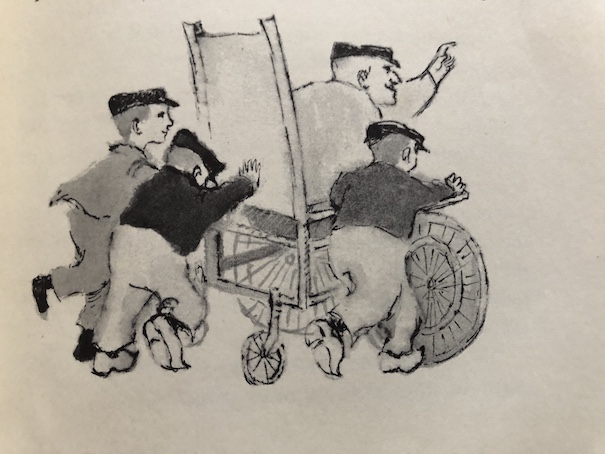
Later in the story, when the children consider approaching Legless Janus, an intimidating man in a wheelchair who has lost both of his legs and who has a reputation for having a nasty temper, Pier pauses to consider what it must be like to be Janus, how hard it would be to be confined to a wheelchair, and how that might make a person angry and temperamental. When Pier and his twin try to sneak into Janus’s garden to see if has any wagon wheels, there’s a confrontation between them and Janus, and Pier reveals to Janus some of the thoughts he had. Janus is surprised at how the children see him and the stories that they tell about him. He tells them the truth about how he lost his legs and reveals a shared interest in the children’s project that turns them from mutual antagonists into friends.
Besides the children in the story learning to think about situations from other people’s perspectives and getting to know other people better, the children also learn a few things about themselves that give them some different perspectives on their own futures. Lina often feels a little left out of things because she’s the only girl among the children old enough to go to school in their village. The boys don’t always include her with things they do because they say that girls don’t like to get their clothes wet and messy and that they cry or giggle too much. Even Lina at times wishes that, like a boy, she had less of an impulse to cry at times, and modern readers may roll their eyes at some of the story’s old-fashioned attitudes about boys and girls. With the exceptions of Lina and Grandmother Sibble, women in the story often play subordinate roles in the story, and the story refers to a male stork as being his mate’s “lord and master.” However, there are also parts of the story that prove some of those assumptions wrong. Lina does some daring things in her pursuit of the wagon wheel, and isn’t afraid to get wet or dirty while doing it. The women urge their husbands to help the children in their efforts, even in bad weather, and their support proves important and is appreciated, even when they’re not the ones leading the project. There are also times when the boys get a bit emotional or on the verge of tears, showing that the boys also have emotions, even when they try to fight them or hide them. The roles of boys and girls and men and women in the story aren’t what we typical want or expect in 21st century America, but I liked it that all of the characters are shown as being capable and that their contributions are appreciated.
Grandmother Sibble also helps Lina to see herself and her future from a new perspective. She reveals that, like Lina, Sibble was also the only girl in the village at her age. As the eldest girl of her generation in the village, Grandmother Sibble eventually became the eldest woman in the village, the “grandmother” of everyone, and eventually, Lina herself will someday be Grandmother Lina, the eldest woman in the village, telling stories about what used to be and how things have changed to younger generations. Lina isn’t just a girl but a kind of future village wise woman in the making, actively bringing about some of the changes that will later become part of village lore.
Some of the boys learn a few things about themselves, too. Eelka is a big boy who is often slow and clumsy, which is why some of the other boys, like Jella, are reluctant to let him join in games. Part of his difficulty is that he doesn’t always think things through all the way before he does them, which is how he gets into trouble in the story. Another issue is that, as the youngest of all of his brothers, he’s used to the idea that other people can do things that he can’t do. When Eelka rescues Jella from a dangerous situation, partly brought about by Eelka’s impulsiveness and the need he feels to try to tackle big jobs by himself to prove himself and partly caused by Jella’s own impulsiveness, Eelka comes to fully appreciate that he’s a lot stronger than even he knew. When he and Jella talk about it, Eelka says that his family is in the habit of thinking of him as the “baby” of the family who doesn’t know anything and can’t do things, but the truth is that people grow. Eelka isn’t a baby anymore, and he has developed strengths he didn’t know he had until he is forced to use them. He just needs to learn how to use them wisely.
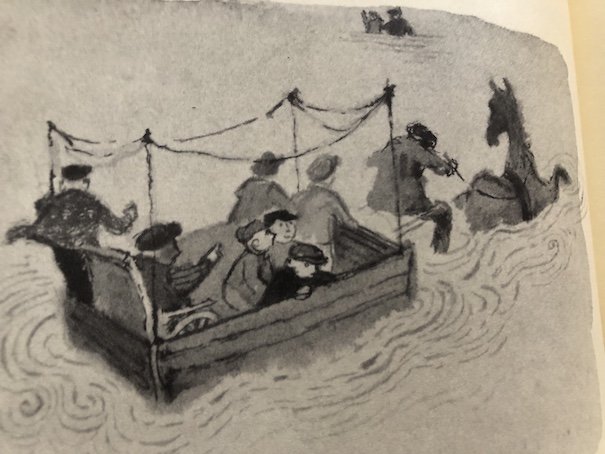
The village’s shared participation in the project and the quest for a wagon wheel also brings out sides of the adults that some of them haven’t shown for years, giving them new confidence in themselves as well as greater appreciation from the village children. 93-year-old Douwa shows Lina that elderly people are sharper and can do more than she thinks they can and gets the opportunity to relive one of the most heroic escapades of his own youth. Legless Janus enjoys the most exciting adventure he’s had in years and shows that, even though he is now disabled, he has nerves of steel and an ability to take charge in an emergency. He also knows carpentry, so he creates the mount for the wheel on the school and later, he begins making new wheels for other roofs, finding a new trade to practice. He is also the one who reassures the children that reports of storks killed by the storm are exaggerated or made up because he has spent years watching birds and knows their behavior. He says that the storm probably scattered them over land, but they have instincts that would have prevented most of them from being over water when the storm was coming and that they will come resume their journey as the weather clears.
A few other concepts in the story are consideration for the environment, problem-solving, and time management. All through the story, the children are confronted with problems of various kinds, and they have to figure out how to solve them, using their own wits and whatever they have to work with. They also learn the importance of time management because they know that they don’t have long before the storks’ nesting season will be over, so they must use their time wisely, putting aside playing or other distractions to accomplish their mission. I was particularly interested in Grandmother Sibble’s description of how Lina needs to look at the whole picture of the village, what it has, and how it has changed over the years in considering why storks no longer nest there. Essentially, what’s she’s describing is the ecosystem of the village, how all of the different elements work together to either make it a hospital place for the storks or an inhospitable one. The wheel on the roof is one of the factors, but the trees (or lack of them) are also a factor, and the windy and salty conditions are further factors in the growth of trees and how friendly the environment is too wildlife. The story doesn’t use the term “ecosystem”, but that’s what this interplay of different environmental factors is. Changes to one part of the ecosystem will bring about other changes, just as the terrible storm that happened when Grandmother Sibble was young radically changed the character of the village.
There are a couple of things that readers might want to be aware of. First, there is some corporal punishment of children in the story. Janus spanks Jella badly when he tries to steal cherries from his tree, and the farmer hurts Jella’s ear when he takes his wagon wheel without permission. In 21st century America, we don’t generally encourage physical punishment, although Jella does get over these incidents and doesn’t hold it against either of them in the end. Admittedly, Jella was doing something he shouldn’t have been doing both times, and they don’t abuse him beyond the immediate incident either time. Each of them also admits after the fact that each of them might have gone a little too far in their punishment, and both Janus and the farmer do Jella favors, helping him with the wheel on the school project and teaching him how to make arrows for his bow, so the negative experiences are balanced with positive ones. Sometimes, adults in the story also use harsh insults to rebuke children, like “idiot” and “lunkhead”, which we also don’t encourage.
The presence of Janus in the story also leads both the children and readers to consider the feelings of people with disabilities and how people with disabilities would like to be treated. The children are afraid of Janus at first because he has a temper and can be pretty fierce in defending his cherry tree, but they later learn that he actually does care more about the children than his defense of his property makes them think. What Janus really wants the most is to feel useful and to show that he is still smart, strong, and capable, in spite of his disability. Later in the story, when the other men in the village get tired of Janus barking orders at them while they’re putting the wheel on the school, and one of them calls Janus a “slave-driver”, saying that he just needs a whip. Janus retorts that he doesn’t need a whip when he has a sharp tongue. He’s only slightly embarrassed at being called a “slave-driver.” It would be a very negative thing to say about someone in the 21st century US, but in some ways, it actually makes Janus feel a little better that the other men see him as being tough and not someone to be coddled or treated too carefully because of his disability. They even feel comfortable enough to joke with him about it. There is a moment when he’s a little unsure how to take a man’s comment that maybe the “shark” that got his legs should have taken his tongue instead, but when Janus sees that the man isn’t serious about it, he responds in the same bantering way, bragging that his tongue was too intimidating for the “shark”. (His legs weren’t really lost to a shark. That’s a kind of joke/village rumor.) Janus is also thrilled when one of the men makes a thoughtless comment that, if Janus isn’t satisfied with the way they’re working, he should come up on the roof and do it himself. It was a thoughtless thing for the man to say, and there’s an awkward moment when everyone remembers that Janus can’t climb up on the roof without legs. However, Janus tells the children that he’s actually pleased because the way the man made that comment shows that, for a moment, he completely forgot that Janus has no legs. Janus thinks that’s a good sign because it means that people are no longer thinking of him only in terms of his disability. He doesn’t want his disability to define him.
Toward the end of the story, the children do find some drowned storks, showing that an article the children saw in the newspaper about storks being killed in the storm wasn’t all “fake news” as Janus made it sound. At least some storks were killed in the storm. The adults in the story aren’t always right about everything. However, Janus is correct that the storks weren’t all killed. He helps the children to stage a daring rescue of a couple of exhausted storks off a sandbar before the tide comes in, saving them from drowning.
Overall, I though it was a very positive story that provides many things for young readers to think about. Sadly, as of this writing (March 2026), it is out of print. Used copies are still available, although some are a bit expensive, and libraries still have it. There is also an unofficial reading of the story on YouTube.
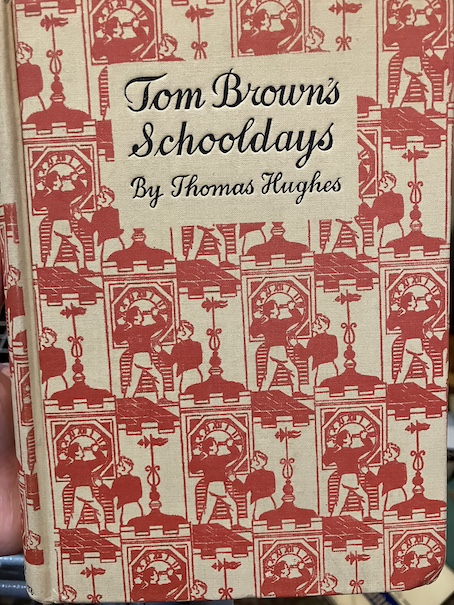
This classic children’s book from the mid-19th century is famous as the story that popularized the concept of British children’s boarding school stories, although many people in the 21st century haven’t read it themselves.
Young Tom Brown was brought up in a very close family, although they are often given to quarrels and drama among each other. He is the eldest of his parents’ children and spends his early young life in the vale where he was born, raised by his family and his nursemaid, Charity. Tom’s mother has a talent for training young servants. She is kind and patient with servants in training, treating them almost like older children of the family. Charity is rather clumsy and not too bright, and she has her hands full with young Tom. He is a strong and rebellious little boy. Charity’s relatives have a farm nearby, and she takes him there to pick up supplies for the Brown household. The people on the farm are kind to Tom, and they also help raise him. Because Tom resists training and supervision from women, the Brown family eventually hires an older servant, Benjy, to take care of Tom from about age four. Benjy takes little Tom fishing and tells him stories about the history of the Brown family. Generally, Tom’s early childhood is pleasant and easy.
As Benjy gets older, he is troubled more by arthritis and finds it harder to keep up with young Tom. Tom gets a governess at home, and when Tom begins lessons at the local school, he begins to calm down at home because he spends his energy at school and playing with the local boys in the village. Being friends with other boys his own age is good for Tom because they share the same interests and levels of energy. They play games and wrestle with each other for fun. Then, when Tom is nine years old, his family sends him away to boarding school. There are some sad goodbyes from the local boys in the village, and the other boys give him some little toys as going-away presents. This is the first time that Tom has ever been away from home, and this is where the story of Tom’s education really starts.
First Boarding School Experience
Tom spends about a year at a private school before going on to a public school. The author pauses here to explain the differences between British private schools and public schools. Unlike in the United States, “public” schools are still schools that require school fees, but private and public schools differ in who is accepted as a student and how the students are treated in their time outside of class. In the author’s time and young Tom’s time, students at private schools are more closely supervised in their off hours, with the idea that molding the students into good citizens (which is considered a higher goal in their education than the subjects taught in the classroom) cannot be adequately accomplished in classroom time only and that most of it takes place outside of the classroom. At public schools, the author says, the boys have more freedom and less supervision outside of class.
The boys at the private boarding school Tom attends are supposed to be supervised by school ushers, who monitor their behavior, resolve quarrels, and set a good example for them. Unfortunately, the ushers at Tom’s school aren’t very well educated or good at their job, and they have little interest in doing their job properly. As a consequence, the older students bully the younger ones, students are encouraged to tattle on each other, and physical punishments are used to keep the students in line. In spite of this and some homesickness, Tom actually has a pretty good time at school with his new friends at school. They have some adventures (some of which involves cruelty to animals they find, and the author makes it clear that he doesn’t endorse this and thinks that the bee stings they get are earned) and delight in scaring each other with ghost stories at night. However, this school isn’t really the best treatment or education Tom can get, so it’s just as well that he is sent to a public school after this.
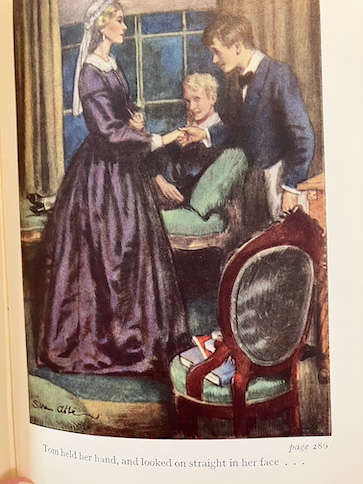
Tom’s change in school comes when there’s an outbreak of disease in the area, and the schoolmaster of the private school is one of the people to become ill. All of the boys are sent home to their families. Since Tom has already told his father that he would rather attend a public school and since school at the private school is canceled for the rest of the term, Tom’s father decides to send him to Rugby. When Tom goes to Rugby, his father talks to him about his school experiences. Tom’s father says that he is going to Rugby at a younger age than he had planned to send him, and if schools are still like they were when he was young, he’s going to see people doing many cruel things and will hear bad talk from other people. He urges Tom, whatever happens at school, to be brave, kind, and truthful and, no matter what other people say, to not say anything he wouldn’t be willing to have his mother or sister hear him say. If he does these things, he won’t have to feel ashamed to see his family when he comes home from school, and they won’t be ashamed of him. This talk and the thoughts of his mother make Tom a little emotional, although he tries not to show it too much.
Tom’s father privately reflects on the reasons why Tom is going away to school. Partly, Tom is going to school because Tom really wants to go and have that experience. The fact is that Tom’s father doesn’t really care too much about Tom learning subjects like Latin, and his mother doesn’t care too much about academics, either. Tom’s parents aren’t too concerned about what kind of scholar Tom is. What Tom’s father really wants for Tom is what he has already told him to be. He wants his son to be brave and truthful, and he wants Tom to be a good and helpful English gentleman and a Christian. Basically, he’s more concerned with his son’s character and life choices than with his son’s grades. He thinks about whether or not he should warn Tom about various temptations he might experience at school, but he decides not to because Tom is still just a boy, and he thinks he wouldn’t understand.
Going to Rugby
Tom takes a stage coach by himself to school, nervous about what the school will be like but excited about the the experiences he is about to have. When Tom arrives at Rugby, a more experienced student, Harry East, helps Tom get settled and acts as a mentor to Tom about school life. East’s aunt is an acquaintance of Tom’s family, and she knew Tom would be coming to Rugby, so she asked East to hemp Tom. He explains the school grounds and uniform pieces to Tom, describes student activities and sports to him, and answers his questions.
Tom loves sports and is eager to play Rugby football, but East tells him that he won’t be able to play until he learns the game. Football is different at Rugby, and it’s a much rougher game than other schools play. East says players often get hurt and break bones. There is a match that day, and Tom finds it exciting to watch, especially since their house wins! After the match, East says that he doesn’t have any allowance money right now, so Tom buys some food they can have for tea, and they share some of it with some of the other boys from their school house. Tom starts making friends with the other boys, and they all talk about the match together.
After tea, East says that it’s time to join their house for singing. Tom is surprised, but East says that group singing among the students is a regular school activity. There are also speeches from other students at the school singing. Today’s speech is about their house’s victory at the football match. One of the students speaking, Brook, praises the players and congratulates them for their victory on behalf of the house, with all the other boys cheering. He says that their house won the match because their house has the best house spirit and team spirit, and they know they can depend on each other. However, he also issues a warning to the students about bullying in the house. Some of the older students have been picking on the younger ones. He doesn’t want to encourage tattling among the students, and he says that learning to deal with bullies is a valuable skill that makes a boy tougher, but at the same time, bullies are cowards, they encourage cowardly behavior among others, and they break up house spirit and bonds of teamwork among the students. He cautions everyone that too much bullying and allowing bullying to continue will destroy the house spirit that helped them win today, so if they want to continue winning and enjoying house victories, they’d better cut it out. Some of the younger students look at the older students have been doing the bullying, especially a boy called Flashman.
Brook also cautions the other students against drinking in the local pubs and talks to them about their new headmaster. Some of the students haven’t been happy with him because he’s changing some of the school customs. Students have been grumbling and would like to see the new headmaster gone, but Brook points out that Brook isn’t going anywhere and that the “customs” he’s been changing have been destructive pranks and other habits that were also causing problems. The new headmaster hasn’t touched some of the customs that really matter to the students, like their sports, and in fact, the headmaster was also watching the match today. There are mixed feelings among the boys at this part of the speech because they like the idea that the headmaster, who they call “the doctor”, was watching the match, but at the same time, the boys don’t really know him or trust him yet.
The author notes that the new headmaster found the school in a state of disorder and mismanagement when he took his position, and the changes he’s been making are about restoring order to the school. The boys, not knowing the difference between a more orderly and well-managed school and the one they got to know when they first arrived, don’t appreciate the doctor’s wisdom of kindness yet. Tom first encounters the doctor when he leads the students in prayers.
Before bed, Tom and the other younger boys meet with some bullying from Flashman and Flashman’s cronies. Some of the other boys are terrified, but Tom and East allow themselves to endure the bullying, being “tossed” by the older boys so the other boys will be spared. The other boys are grateful to them for this, so they start to hold Tom in high regard.
Getting Into Trouble
This eventful first day is a good introduction for Tom about what life at Rugby School will be like for him. Sports, bullying, pranks, fighting, camaraderie among the other students, singing, speeches, and the new headmaster are going to be major themes for him in his education. Like other younger students, Tom has to act as a servant and do chores for older students, part of a tradition called “fagging” (more about that below in my reaction). Tom does well in his classes at school because he has already had a good grounding in his subjects, and he is generally positive about his life at school, in spite of the bullying. He loves participating in the school sports and physical games, like Hare and Hounds.
However, things do get harder for Tom at school. Because he is doing so well at his grade level, he is quickly promoted to the next. When he gets there, with some of his new friends, like East, Tom becomes less studious and more unruly, like the others. Also, the older boys who were trying to set a good example for the others and protect the younger students from the bullies graduate from the school, leaving bullies and less conscientious students as the senior students. The bullying gets worse, and as Brooks had predicted, it breaks the spirit of teamwork in Tom’s house. The students in the house start dividing into factions of bullies and bullied, the younger students against the older.
The younger students get increasingly resentful of the ill treatment and bullying of the older students and start getting rebellious against the system of “fagging” at the school, with Tom and the others declaring that they simply won’t serve the older students anymore. When students like Flashman the bully call for them, they just pretend they don’t hear and refuse to answer them. Flashman and the others try to physically break into Tom and East’s room when they refuse to come, but Tom and East barricade themselves inside. Their success against the older students encourages other students to rebel. Tom considers going to the headmaster about it, but the others discourage the idea. None of the students want to go to the schoolmasters unless absolutely necessary because the students think that the right thing to do is to work out their own problems with each other.
Diggs, one of the older students who is nicer tells the others that, when he and Flashman were younger students, the students in their grade also rebelled against the older students to teach them not to bully them, but Flashman didn’t rebel with the others. Instead, he ingratiated himself to the older students, continuing to serve them and bribing them with treats he got from home. He has evaded discipline and consequences for his behavior by making himself into a useful toady for the students with more authority. Now, Flashman and his cronies increasingly bully the younger students and use physical hurt to subdue them. The younger students retaliate against them with pranks. Tom and East become Flashman’s particular enemies because they live close together in their house and because Tom and East started the rebellion and have been open and accurate in their criticism of his cowardice, refusing to be subdued by the beatings he gives them.
Matters with Flashman come to a head over a lottery, when Flashman pressures other students to turn over their tickets to him. Tom refuses to part with his, and Flashman and his cronies beat him and burn him, hurting him so badly that Diggs intervenes, worrying that they might kill Tom. Diggs shows Flashman to be a coward when he confronts him over the incident and hits Flashman, but Flashman doesn’t fight back because he’s afraid of getting hurt himself. This doesn’t end Flashman’s aggression against the younger boys, and when he starts getting worse again with Tom and East, Diggs urges the two boys to gang up on Flashman. For them to fight him singly wouldn’t be a fair fight because Flashman is several years older than they are and bigger, but Diggs considers it fair for both of them to stand up to Flashman at once. To Flashman’s shock, the two boys do gang up on him. He’s much bigger than they are but not as good at fighting and pretty cowardly about fights where he doesn’t have some obvious, overwhelming advantage. Tom and East win the fight, giving Flashman a cut on his head that bleeds. At first, Tom and East are worried about whether they’ve hurt Flashman badly, but Diggs has a look at the wound and tells Flashman off for being dramatic about how hurt he is. Flashman has only skinned his head a little, and he’s done much worse to the younger boys. Flashman never physically fights the boys again. He eventually leaves the school, being sent away by the headmaster after he becomes disgracefully drunk at a nearby pub one evening. The headmaster was already displeased with Flashman, and this was the last straw. The younger boys are glad to see the bully gone, although some of the older students bear some resentment against the younger ones for their rebellion and their triumph over someone from their level.
Tom and East are emboldened by their victory and for moving up at school, and they become regular rule breakers. They never consider the justice or reasons behind school rules, taking them more as challenges. They get into trouble for trespassing on someone else’s land to go fishing, and the land owner’s gamekeeper brings Tom before the headmaster. Later, Tom and East climb onto the roof of the school and carve their names on the minute hand of the school clock. They are caught because they accidentally change the time on the clock, and when someone investigates why the clock is wrong, finds their names.
Later, they sneak into town against the headmaster’s orders and get caught. They are both taken before the headmaster for this, and they receive floggings for their stunts. The headmaster also gives them a lecture about the dangerous nature of some of their stunts, pointing out that they could have fallen and broken bones from the clock stunt. He points out that they never think about the reasons why rules exist, thinking of them only as whims of the schoolmasters, which isn’t the case. The rules exist for good reasons, and they apply to everyone at the school, including Tom and East. The headmaster says he doesn’t want to keep giving them floggings for their stunts, and if they can’t gain some maturity and reform their behavior, he’ll send them both away from the school. Tom and East are shocked because they never thought that they might have gone far enough to risk their positions at the school. They love their lives at the school and don’t want to be sent home in disgrace. The headmaster tells them to think about their futures at the school seriously when they go home for a term break.
The Headmaster’s Solution
Privately, the headmaster has a word about the boys with one of the other schoolmasters. The headmaster is concerned that, if they continue their irresponsibility and recklessness, they will fail their studies, get into some really serious trouble, and possibly turn into thoughtless bullies of the younger children as they get older. The other schoolmaster acknowledges that they are not the best students and they are a problem, but he thinks that they’re not really bad boys and could still be turned into decent young men. He says to the headmaster that what these boys need is something to give them a sense of responsibility and suggests making each of them responsible for a younger boy at school. Protecting a new boy from the older bullies could settle them and make them more serious and responsible and prevent.
When Tom returns to school for the next term, he expects that he and East will be allowed to share a room and study, which is something that they’ve hoped for. They’ve been making plans for all the ways they can have fun and goof off in their own space. Instead, the school matron introduces Tom to a new boy who will be sharing his room and who will be Tom’s responsibility. George Arthur is a pale, timid, skinny boy, and Tom can see that he’s just the sort of boy who would be picked on by the others. Tom is annoyed at having his plans with East spoiled, but the matron stirs his sense of sympathy by telling him that George Arthur’s father is dead and that he has no brothers. Tom can see that young Arthur will probably be made miserable at school by bullies unless someone stands up for him and teaches him how to handle life at school, so he agrees to take responsibility for him.
The schoolmaster is correct that looking after little George Arthur changes the way that Tom looks at himself, his fellow students, and his education. The change starts when Arthur says his prayers openly at night, getting him a teasing from the other boys, who take any sign of weakness or sentiment as an opportunity for teasing. Tom defends Arthur from them. He also feels a twinge of shame because he remembers, for the first time in a long time, that he had once promised his own mother that he would always say his prayers at night, and he has become neglectful about this, specifically because he wanted to avoid the teasing or bad opinion of the other students. It shames Tom a little to think it, but he realizes that, although Arthur may be physically weaker than he is, he has displayed more moral courage than Tom has simply by saying his prayers, regardless of what the other students think.
Looking after Arthur gives Tom a sense of responsibility, as the schoolmaster hoped, and Tom appreciates feeling like he has a purpose. He enjoys seeing timid Arthur beginning to develop as a student and start to make a new friend on his own. However, Arthur also has things to teach Tom. Tom’s friendship with Arthur helps his own personal development and causes him to consider sides of himself he hasn’t thought about much. As Arthur opens up more to Tom, he explains that he is serious about religion because his late father was a clergyman. When he was alive, his father used to read the Bible with him. Inspired by Arthur’s example, Tom becomes more serious and starts exploring his religious side, although he takes some teasing and criticism from the other students over this budding sentimentality and defense of little Arthur. Tom and East start participating in Bible readings and study with Arthur, considering some of the deeper questions of life and religion that they’ve never considered before. They begin to think even more deeply about life and death when a disease spreads through the school. Arthur becomes ill and another boy dies. Tom is relieved when Arthur recovers, but his near death and the other boy’s death cause Tom to really consider life and death seriously for the first time.
As Tom develops a deeper understanding of life and religion, he finds himself a little at odds with East, who still doesn’t take life seriously. Fortunately, the two of them respect each other enough as friends to talk about their views seriously with each other. Tom doesn’t consider himself as knowledgeable about the subject or as good as explaining it to others as Arthur, but through their conversation, East realizes that he does actually care about the subject and goes to talk to the headmaster about his feelings and about confirmation. The headmaster’s kind understanding and reassurance is an inspiration to the boys, and they come to respect him, although Tom doesn’t fully understand the headmaster and what he’s done for the boys until he is a young man.
At the end of the story, Tom is with some college friends when he hears that the old headmaster has died, and he feel compelled to visit Rugby School again to pay his respects and reflect on his old headmaster.
Although it was not the first book set at an English boarding school, this 19th century book is famous for being the book that popularized the trend of British boarding school stories, which has continued for over 150 years since! There are also references to this specific story in other books, and I have to admit that it gave me a giggle to recognize the scene that Terry Pratchett parodied in his novel Pyramids. The story is semi-autobiographical, based on the experiences the author, Thomas Hughes, had when he attended Rugby School as a boy during the 1830s. There is now a statue of Thomas Hughes outside the Rugby School Library.
The headmaster in the story is only called “the doctor” for most of the story, until the very end, when Tom learns of his death and his last name is given as “Arnold.” Tom’s headmaster is based on Thomas Arnold, who was the real, historical headmaster of Rugby when the author of the book was a student there himself. The real Thomas Arnold did die suddenly of a heart attack at age 46 in 1842, and this book is an homage to his memory as well as the recollections and thoughts of the author on the subject of education. The real life Thomas Arnold did reform the habits and organization of Rugby School, like the headmaster in the story, focusing on the religious and character development of students and creating a system of prefects called “praepostors” as student monitors, something that is referred to in the story. Other British boarding schools copied and built on his ideas and practices. (Added fun fact: Thomas Arnold was the great-grandfather of the author Aldous Huxley, known for Brave New World.)
The book requires some patience for modern because the author spends some time setting the scene and explaining the background of Tom’s family and early childhood before really getting into the story. Part of the reason for that is that the author, Thomas Hughes, based the story on his own childhood and youth, and he spends some time comparing the childhood and conditions of life in young Tom’s time with life at the time he wrote the story.
Hughes admits that he doesn’t like the direction the social situation has been heading in his time, and he feels that his time period is at a changing point. He sees many of the old ways of life falling aside, and he partly blames the new upper classes, who take advantage of the working class, using them to enrich themselves (“buying cheap and selling dear”). He’s describing an increasingly industrialized and urbanized society with a significant wealth gap between the wealthiest members of society and the working class, which was characteristic of Victorian society. Hughes notes that some members of the upper classes profess to be trying to reform the lower classes, but the author says they don’t really understand the working classes at all. There is part of the story, early in the book, after he describes young Tom’s experiences at a local fair, where he delivers a lecture to the younger members of these rising upper classes on the subject. Hughes was a social reformer in the Victorian era, so he has many thoughts about how to improve society and a pretty accurate understanding of social conditions during his lifetime, and he works them into the story of Tom’s education.
A Victorian Boarding School
It’s interesting to see Thomas Hughes’s descriptions of Rugby School and boarding school life and education in the 1830s. I’ve never been to a boarding school before, and neither have most of the other readers who enjoy boarding school stories. It’s getting to see a type of school that most of us will never attend that makes stories of this kind fascinating. Seeing them as they looked in the past is especially fascinating. I’ve read other books and seen documentaries about boarding schools in Britain, and it was interesting to note the aspects of school life that are the same or different from what someone might encounter in a modern school. From what I’ve learned about British boarding schools, extracurricular activities, like sports and singing, are still major features of British boarding schools that have stood the test of time. However, modern schools have cracked down on bullying and abuse from older, higher level students.
A couple of words that appears in the story, “fags” and “fagging” sound like derogatory terms from modern times, but it has nothing to do with homosexuality in this context. “Fagging” was a tradition at British public schools of this time and earlier, where senior students used younger students as servants, giving them menial chores to do. The “fags” described in the story are younger students, who are described as performing various tasks, like fetching things for the older students, cleaning, carrying messages, or arranging furniture for singing. The problem with the tradition of fagging was that it often led to bullying and abuse of younger boys at the hands of the older students, and this is something that’s addressed in the story. The bullying and abuse associated with this tradition is what led to the end of the tradition in modern times.
There are also other student habits which would seem odd by modern standards, including some which would definitely not be allowed for boys of this age. The students at the school are about 11 to 19 at the oldest, but they routinely drink beer, even the younger boys, although I think it’s probably a weak version. The ways the students are treated with regard to money and how they spend their money are also odd by modern standards. Their allowances may be withheld from them as a punishment. There are times in the story when students in need of money auction off some of their own belongings, a subject that appears in A Sweet Girl Graduate, although the boys don’t get in trouble for this as the girls in A Sweet Girl Graduate did. The older boys also impound the allowances of the younger boys for a lottery at one point, using the funds to purchase sweepstakes tickets on a horse race. The younger boys are not consulted about their participation in the gambling, and the only problem that arises from it is when Flashman tries to bully them out of their tickets to get ones he thinks are likely to win.
Education and Manhood
As the author reflects on his time at school, his experiences with friends and classmates, and the inspiration of his old headmaster, he also offers advice to other boys and his thoughts on what it means to be a man and to take charge of ones own development. I don’t think modern parents and teachers would agree on all of his advice, but he makes it clear what experiences from his school days have led him to believe what he does about how boys and men should conduct themselves.
At one point, he says that he has no problem with the idea of boys fighting with each other because he sees fighting and struggling as just part of the role of men in life. He says his only concern is whether or not they’ve chosen the right side to fight on. Flashman serves of an example of how bad people can actually be quite popular, at least among their cultivated cronies, and are often supported by the social system or know how to use the system to their advantage. The author warns other boys not to see another person’s popularity or social position as a sign that they are good people or that they are in the right in a situation because the opposite is very often true. What is good and right is independent of popularity, power, and money and is determined by other factors. He admits, through the character of Tom, that he has developed a soft spot for underdogs and says, even if you think the underdog is wrong in his beliefs, he shouldn’t be scorned but respected for his willingness to fight for what he believes, even knowing that he doesn’t have popular support.
At the end of the story, when the headmaster dies, the character Tom despairs because, although he has moved on from Rugby School, and he realizes that many of the boys who are there now don’t know who he is and wouldn’t recognize him as one of them, the headmaster was a guiding light in his life and spiritual development. He still feels ties to his old school and headmaster because his time there and the headmaster’s influence set him on the course for his life and development. The author reflects that Tom the character was still someone self-centered at this age, and in the first shock of hearing about the headmaster’s sudden death, he thinks of the loss of the headmaster as a personal loss that no one else would understand. However, when he returns to Rugby and thinks about it further, he realizes that he is not the only one whose life was touched by the man, remembering that he left behind a wife and children and that the headmaster cared about all of his students and influenced them all in different ways. Tom the character sheds some of his self-centeredness and realizes that it’s time to move on in his life. The author also says that there is a flaw in looking to mortal men, even the kindest and greatest among them, as the ultimate source of guidance because no mortal man lives forever. Tom the character will tend to his own spiritual development from this point forward and look to God Himself for guidance. In this way, it seems that young Tom the character has developed into the kind of young man his father wanted him to be in the beginning, making his education successful.
Before Tom learns of the headmaster’s death, he discusses his future ambitions with an old schoolmaster, saying that he wants to make a difference in the world as well as earn a good living. The schoolmaster cautions him to be certain of his priorities and know which of those two goals is more important. There are many people who spend their lives making money but do nothing of lasting importance for the world and other people, and there are many people who do good in the world without making much money. If Tom focuses too much on making money, he may sacrifice the goal of doing good in the world, so he needs to remember what he really wants to accomplish in his life and what he wants to prioritize.
Thomas Hughes went to Oxford after his time at Rugby School, like his character, and he became a lawyer, social reformer, and member of Parliament as well as a writer. Among his books are books about religion and the nature of manliness. The themes of Tom Brown’s School Days really were the themes of his life, and he genuinely means the advice that he offers to young men in the story.
Madeline’s Rescue by Lugwig Bemelmans, 1951, 1953.
The Madeline stories are considered children’s classics, and this is one of the best-known books in the series. It starts out much like the first book in the series, introducing the old house in Paris where Madeline and her classmates stay for boarding school and describing how brave Madeline is. However, at the part that explains that Madeline knows how to frighten their teacher, Miss Clavel, Madeline falls from a bridge over the river while she’s trying to walk on the edge.
Fortunately, Madeline is saved from drowning by a dog that jumps into the water to save her. Miss Clavel and the other girls take Madeline and the dog back to the school, dry them off and put them to bed. The girls keep the dog and name her Genevieve. Genevieve is a smart dog, and soon, she’s a very pampered and happy pet.
However, when the trustees of the school come for an inspection, they raise a fuss about the girls keeping a dog in the school and turn Genevieve out! The girls are very upset, so they immediately go out and search for Genevieve.
Fortunately, Genevieve returns, and there is a surprise for the girls that finally settles all the arguments they’ve been having about whose bed the dog will sleep in that night!
The book is available to borrow and read for free online through Internet Archive (multiple copies).
My Reaction
As with the other books in the Madeline series, the beginning of the story echoes the first Madeline book, but this one expands on Madeline’s habit of walking on the edge of the bridge and frightening Miss Clavel, showing that Miss Clavel has reason to worry about Madeline’s stunts.
I remember reading this book when I was a kid and being really worried about what would happen to the dog, Genevieve! I always loved dogs, and I was worried about her when the trustees turned her out of the school. After Genevieve returns to the school, there’s no follow-up on how the trustees react and whether or not they approve of her and her puppies staying at the school, but it seems like everything will be okay. With plenty of puppies for the girls at the school, they no longer fight about who gets to sleep with Genevieve or give her attention. Staying at a boarding school where every girl gets a puppy of her own to look after would be a dream for many girls!
Something I noticed in this book is that the style of the pictures varies between cartoon style in black and yellow and a more impressionistic style with full color. This is also true in other Madeline books. The more colorful pictures tend to show more emotional or dramatic moments.
Carmen Learns English by Judy Cox, illustrated by Angela Dominguez, 2010.
Carmen is in kindergarten and has been learning English at school. Her little sister, Lupita, will start school next year, and Carmen thinks about how she wants Lupita to learn English before she starts school. The family is from Mexico, and the girls speak Spanish at home.
School hasn’t been easy for Carmen because the other kids don’t speak Spanish. They all speak English, and they speak fast, which makes it difficult for Carmen to follow their conversations. It helps that her teacher knows some Spanish. Her teacher’s Spanish isn’t very good, but in a way, Carmen finds that comforting because her teacher will understand if her English isn’t very good, either. People who are learning another language understand what it’s like when someone else is learning, too.
Carmen gradually learns new English words at school. When she gets home, she draws pictures of what she’s learned and teaches her mother and little sister the English words. At first, Carmen is too shy to say the words out loud at school because she isn’t confident about how she’s saying them, but she practices at home.
Sometimes, kids at school give Carmen a hard time. Some kids think that she talks funny. When she counts in Spanish instead of English, they think that she’s saying the numbers wrong. Her teacher helps by teaching all the class to count in both Spanish and English, so all the students will learn both languages. Carmen helps to teach the other students words in Spanish, and when she gets home, she teaches Lupita the English words that she has learned.
Because Carmen has been helping Lupita to learn English, Lupita will have an easier time at school than Carmen had when she started. Carmen realizes that she really likes teaching, and she thinks that she might like to be a teacher herself someday.
My Reaction
I thought this was a good story about a child starting school while having to learn a new language at the same time. My mother used to teach English language learners, and she liked the story, too. She said it reminded her of some of the students she used to teach.
I thought that the teacher’s approach, having Carmen teach the other kids some Spanish while she was learning English was a good idea. Some of the other students find Carmen a little strange and confusing at first because they don’t understand the way she speaks, but when they start trading words in different languages, they all start to understand each other better. The other students begin to understand the concept that people can speak in different languages and that there can be different words that mean the same thing, depending on the language they’re speaking. I think it also helps them start to identify with Carmen because, like her, they are also starting to learn an unfamiliar language. As I said, people who are learning a new language or who have studied another language before can understand the difficulties of now always knowing all the words they want to say or exactly who to say them and can sympathize with other people who are also learning new languages.
I also liked it that Carmen realizes that, if she helps her sister to learn some English before she starts school, her sister will have an easier time. She has compassion for her sister because of her own experiences and wants to make things easier for Lupita. By helping both her sister and her fellow students, she also learns that she likes sharing what she knows with other people. She discovers that she likes teaching and might want to be a teacher herself someday.
I read this book as an adult because it’s a relatively new book that didn’t exist when I was a kid, but it reminds me of another book that I did read as a kid, I Hate English, which is about a girl from China learning English. The Chinese girl has some similar troubles learning English and feeling uneasy around people who don’t understand her, although she also struggled with the fear that she would lose her native language or cultural/personal identity by learning a new one. Carmen doesn’t mention that in this story, but some of my mother’s old Spanish-speaking students had that worry when they were learning English, too. Perhaps part of the reason why Carmen doesn’t feel like that is because her teacher encourages her to teach the other students some Spanish, giving her the opportunity to keep speaking it from time to time and share the language with others. In a way, this story was closer to my experiences when I was younger because Carmen is like the kids my mother used to teach and because Spanish is what I studied in school myself.
When little Trisha turns five years old, her grandfather introduces to her to reading in the same way he has done for other children in the family, with a taste of honey on a book, to remind her that knowledge is sweet. Trisha already loves books because her mother reads to her every night, and other members of the family also read to her. She’s looking forward to learning to read herself.
However, when she starts going to school, she finds that she has trouble learning to read. She likes drawing, and other kids at school admire her drawings, but for some reason, she struggles at deciphering the letters that other kids seem to learn so easily. When she looks at writing on a page, everything looks like wiggling shapes, and she has trouble figuring out what sounds they’re supposed to make. Other children move forward with their reading lessons, but Trisha struggles and starts to feel dumb.
Trisha asks her grandmother if she thinks she’s different from the other kids, and her grandmother says that everyone is different and that’s “the miracle of life.” Trisha asks if she thinks she’s smart, and her grandmother says she is. That makes her feel a little better, but why can’t she read like the other kids?
Trisha continues to struggle in school, even after the family moves from Michigan to California. She is in third grade at that point, and other children insult her and tease her when she struggles, and Trisha feels dumber than ever. She spends more time drawing and daydreaming, and she starts hating school, sometimes pretending that she’s sick so she won’t have to go.
Things only start to improve for her in fifth grade, when she gets a new teacher, Mr. Falker. Mr. Falker doesn’t cater to the teacher’s pets like other teachers do, and he notices Trisha’s artistic talent and praises her for it. He also stops the other kids from teasing Trisha in class when she struggles, although one boy, Eric, continues to bully Trisha terribly and get other kids to gang up on her when the teacher isn’t looking until Mr. Falker finally catches him.
Mr. Falker works with Trisha to improve her reading and reassures her that she is not stupid. He realizes that the reason she has struggled with reading is that Trisha doesn’t see letters the way other kids do, and he points out that she’s actually been clever in the way she’s managed to hide just how much she’s been struggling all this time.
Mr. Falker introduces Trisha to Miss Plessy, a reading teacher, and the two of them work with her to develop techniques that improve her reading skills. Gradually, Trisha begins to make real progress, and she begins to feel the sweetness of knowledge that her grandfather talked about.
The book is available to borrow and read for free online through Internet Archive.
My Reaction
The end of the book explains that the story is autobiographical. Patricia Polacco was the Trisha in the story, and she did have trouble learning to read until the read Mr. Falker realized how she was struggling and helped her. At the end of the story, the author says that she met Mr. Falker again years later and thanked him, telling him that she can become a children’s author.
There is a difference between real life and the story, though. In the book, Trisha is in the fifth grade when she gets help with her reading, but in real life, Patricia Polacco was apparently 14 years old and in junior high school. The book doesn’t say exactly what the cause of Trisha’s learning difficulties is, but she is apparently dyslexic, based on the description and because Patricia Polacco was dyslexic in real life.
I enjoyed seeing this part of the author’s childhood, although I found the part with the school bullies stressful. I do think it was important to include that part, though, because that can be part of the experience of children who struggle in school. Although Eric is an obvious bully in the story, the other kids also make Trisha miserable with their teasing and insults. It occurred to me that they may not all think of themselves as bullies, but at the same time, a person doesn’t have to think of themselves a bully in order to be one. Bullying is a behavior, and it exists independently of self-identity. Part of me wondered, if the girl and the teacher in the story are both real, were the bullies also real, and if so, did any of them ever read this story and recognize themselves? Maybe some did, and maybe they didn’t. Maybe not all of them would even care, if they had.
Regardless, I do think stories like this can be useful as a preemptive measure against bullying by showing kids how their behavior can affect other people and what may be going on in the life of a person they’re teasing or bullying. While I’m sure that everyone thinks of themselves as being the heroes of their own story, I think people sometimes need a reminder that, at the very same time, they are also supporting characters in everyone else’s story, for good or bad. In a way, we’re all self-casting in every story we’re in by the ways we choose to act as we go through life’s story in general.
The bully antagonists aren’t really the main focus of the story, though. They act as further obstacles to the problem that Trisha is trying to solve, but ultimately, the story is really one of gratitude toward the teacher. Part of what the teacher does for Trisha is to shut down the bullies so Trisha can focus on what she needs to learn and he can focus on helping her. Even more importantly, Mr. Falker helps Trisha to see that she is smart and capable. It takes a little more work for her to make progress than others because she has a condition to overcome, but with a little help, she can do it. It really opens up a whole new world for her, and she finally gets to taste that sweetness that comes with knowledge.
I’ve heard of the tradition of giving children a taste of honey before they begin their lessons. When I was a student, I thought I remembered a teacher mentioning this tradition to us as a Greek tradition. It might be, although when I tried to look it up, I couldn’t find anything about Greece. I found references to it as a Jewish tradition, which would make sense for Patricia Polacco’s family.
Patricia Polacco’s real-life grandmother also appears in the story, the same grandmother who appears in another of Polacco’s books, Thunder Cake. Her grandfather wasn’t present in that story, but he is in this one. Both of the grandparents are mentioned as dying before the story ends.
#10 Schoolhouse Mystery by Gertrude Chandler Warner, 1965.
It’s June, and the Aldens are trying to decide what to do for the summer. Benny says that his friend Max remarked that the Aldens always seem to find something exciting everywhere they go, but Max doesn’t think anybody could find anything exciting about the little village where his father likes to go fishing. Max says that it’s a tiny and isolated village on an island with little to do, and he doubts even the Aldens would find anything interesting or exciting there. The only people who usually go there are summer visitors going fishing, like Max’s dad. Mr. Alden has been thinking over other plans for the summer, but he says that, if the children want to take a short visit to his village, called Port Elizabeth, to test out Max’s theory of how boring the place is and see if they can find something exciting about the place, it’s fine with him. The Aldens think that purposely visiting a dull town and seeing what they can find there sounds interesting by itself, so they decide to go.
When they arrive, they find that the place is as small as Max described. It doesn’t take them long to explore the town. There is a small store, but it’s well-stocked with all the food they need. There’s a big old house that seems to be abandoned, and there’s a quaint little schoolhouse with a bell and an odd-shaped chimney.
The people of the town seem suspicious of them at first. They don’t get many outsiders coming to their town, and they can tell immediately that the Aldens are rich because of their car and their clothes. However, because the Aldens are friendly and polite visitors, people gradually begin warming up to them.
The Aldens learn that most people in town work for the local sardine factory. There aren’t many other job prospects in the area, and they don’t have access to higher education or even outside sources of information, like television, so the local kids don’t aspire to much more. Local kids work, too.
One day, a pair of twins approach Violent while she’s painting a picture and start talking to her about painting. They’ve never really owned any proper art supplies themselves, only some crayons, but they’ve been interested in learning to paint since a professional artist came to town to paint the seaside. They also tell Violet and her siblings that the town has had trouble keeping teachers. Most people don’t want to stay in the town very long because it’s so small, and there’s so little to do. Because they change teachers so often, the kids never really advance much in their classes. Every teacher basically keeps starting over in their lessons. The last one told them to study this summer to make progress and prevent themselves from forgetting what they’ve learned, but the local kids don’t really know how to study or what to study, and they’ve never had a teacher who taught any of the really fun subjects, like art.
The local kids ask the Aldens if they could help them study this summer, and the Aldens get the idea to set up their own summer school in the local schoolhouse. They speak to the lady who owns the schoolhouse, Miss Gray, and she gives her permission. The Aldens recognize her as a famous author, but now, she lives like she’s a recluse in her big, old house. She also asks the Aldens whether or not they know a blond man who smiles a lot, but the Aldens don’t know who she’s talking about.
The people in town don’t have much money, and they save what they can in cash rather than using a bank. However, something odd has happened recently because a man has bought a couple of coins from some of the locals for more than the face value of the coins. The locals don’t know why he was willing to do this, but they’re always grateful for anything extra they can get. The locals have started calling this blond man “the money man” because he not only buys coins but also various other odd, old things that most of the locals think of as junk. They don’t know why he wants these things, but they’re just glad he’s willing to pay something fro them. Mr. Alden is very interested in this man and wants to know more about him.
The Alden kids buy some art supplies and school supplies so they can get started with lessons for their summer school. Even though they provide some supplies and have some textbooks in the schoolhouse, they find that there are things they need because previous teachers in town haven’t left some of the things they need, like easy reading books. They improvise as best they can, with Benny helping the kids in class write simple stories about themselves and their lives to use for reading lessons. The local children talk more about the “money man” and how he trades them new toys for old ones they’ve had. The children think that’s great, but the Aldens are suspicious about the “money man’s” apparent generosity.
It isn’t long before Mr. Alden and the children have an encounter with the blond “money man.” The man, called Freddie, notices that Mr. Alden has a rare penny on his watch chain and offers to buy it. He explains that he deals in coins and antiques. Mr. Alden can tell that Freddie is knowledgeable but slick when it comes to buying collectible items. Mr. Alden refuses to sell the man his coin or his watch, and after he leaves, the children tell their grandfather what they know about his dealings with the local people.
It has become apparent that Freddie is cheating the locals, buying antiques and collectibles from them while either paying them much less than what they’re really worth or trading them for newer but cheaper items. Because this town is relatively isolated and the people don’t have much money, they’ve spent generations keeping and reusing antique items without knowing how valuable they’ve become. The local children are thrilled when he lives them newer and more colorful toys in exchange for their old ones, because they don’t know how much their antique toys are worth. Technically, Freddie hasn’t done anything illegal because the people he’s been buying from and trading with have agreed to the deals so far and been satisfied with what they’ve gotten, but that’s only because they don’t know that they could have gotten much better deals from someone else. Freddie’s dealings aren’t really fair or ethical, and Mr. Alden and the local author have become concerned that he may take even bigger advantages of the local people than he already has.
When some valuable collectors’ books disappear from the little village’s neglected library, the author, Miss Gray is convinced that Freddie is responsible. How can they catch him and prove to everyone what he’s been doing?
My Reaction
As with many of the earlier Boxcar Children books, there is an element of mystery but more emphasis on the adventure and the kids’ summer experiences than on the mystery. We have an obviously suspicious right at the beginning, and we have a sense of what he’s doing that’s a problem pretty quickly. This is one of those mysteries where the protagonists have an obvious villain and a good understanding of what’s going on, but the mystery is about getting the evidence and proving it. Part of the issue at first is that duping people into trading things with him or selling them to him for less than what they’re really worth is more unethical than illegal because, as long as the participants are satisfied with the trade and willingly agree to it, it’s difficult to prove that they were deceived. It’s when the villain crosses the lines and actually steals something nobody agreed to give him or sell him that they can really start to nail him for what he’s been doing.
Part of the solution felt a little contrived because it turns out that the villain has been hiding his ill-gotten gains in a location that is right under the children’s noses, and there is something special about the place that allows them to watch the villain without being observed. It’s an interesting set-up, but I usually prefer a more traditional style mystery where there’s more for the amateur detectives to figure out.
This is the second book in the Aviary Hall Trilogy. Each of the books in the series could be read independently of each other, but this book in particular makes more sense if you have read both the first book, which is The Summer Birds, and the third book, Charlotte Sometimes before reading this one. People in this book directly reference events in The Summer Birds, something with Charlotte Sometimes does not. Although Charlotte Sometimes was written and published after this book, it actually takes place during the autumn before this story and it does inadvertently contain a spoiler for Charlotte Sometimes because Charlotte appears at the beginning of the book. It’s just my own preference that it’s better to read this book after Charlotte Sometimes because it makes Charlotte Sometimes more suspenseful. Like Charlotte Sometimes, this book also involves time travel, and the characters do some research on the subject of time and how it works.
At the beginning of the story, Emma Makepeace is upset because her older sister, Charlotte, will be leaving early for the new term at her boarding school after Christmas. At this point, Charlotte has already had her first term at boarding school (which is where and when Charlotte Sometimes takes place, although there are no references to the events of that story here), and she has been invited to visit one of her new friends from boarding school before they return to the school together. All through Charlotte’s first term at boarding school, Emma has been lonely without her and has been finding life at their home, Aviary Hall, increasingly difficult.
The girls are orphans (although the books never explain what happened to their parents) who live with their grandfather and his housekeeper. Between the two of them, Charlotte is the more serious and responsible and Emma is the more mischievous and thoughtless. Up to this point in their lives, Charlotte has acted the part of the caring older sister, trying to teach Emma to behave herself and covering for her when she doesn’t. Charlotte has realized that their grandfather has little patience for misbehaving children and that Emma pushes the limits, so she has frequently intervened and smoothed things over when Emma tries his patience.
Emma has often thought of Charlotte as a kind of spoilsport for trying to act grown-up and mature, but during Charlotte’s absence at boarding school during the previous term, Emma has suddenly come to see how much Charlotte has been helping her and saving her from the consequences of her own actions and the realities of their home life. Without Charlotte there to be the motherly big sister, providing some warmth and affection and acting as a buffer between Emma and the adults, the grandfather has become more impatient with Emma’s immaturity. Both he and the housekeeper have been more direct with Emma about her behavior and bad habits, and there’s no one there to shield Emma from it. Emma is lonely for Charlotte’s company and feels picked on by the adults, so when Charlotte cuts her time with Emma short after her first visit home to go visit one of her school friends, Emma is angry and resentful. Charlotte is tempted to back out of her friend’s invitation for Emma’s sake, but she feels like she can’t, and their grandfather tells her that she must go ahead with the visit.
Emma is in a state of emotional turmoil through most of the story, adjusting to Charlotte’s absence, the new expectations of the adults in her life for her to mature and improve her behavior, and her own resentment about these things. While all this is happening, something else strange happens. Emma begins having strange dreams about flying. They remind her of the children’s flying adventures from two years previously, as described in The Summer Birds. It has been so long since she last flew that she struggles to remember how in her dreams, and when she wakes up, her muscles feel sore from the effort. However, at first, she can’t remember what happened in her dreams.
At school, when the new term begins, Emma is made head girl because she is the eldest girl in the class. A boy called Bobby Fumpkins is made head boy because he is the eldest boy. Emma is embarrassed and uncomfortable about being the head of the class in partnership with Bobby. She hates Bobby because he is fat, awkward, and spoiled. Before his mother gave birth to Bobby’s younger sister, who is still a baby, she babied Bobby more than she really should have at this age. Their family also has their own tv set, something most of the other children’s families don’t have at this time, and which Bobby bragged about when they got it. For these reasons, most of the other children in the class don’t like Bobby, either, and they’ve teased him mercilessly for years. They think he’s a sissy and a baby because of his mother’s attention and because he’s milder-mannered than they are and never stands up to them. Because of his awkwardness, they like to call him Jemima Puddle-Duck after a character from a children’s book by Beatrix Potter. Bobby tells himself that his classmates mean all this teasing good-naturedly, but they don’t really. Emma is particularly adamant within herself that she genuinely hates Bobby.
However, like it or not, Emma’s life has become intertwined with Bobby’s. Their teacher expects the two of them to work together at school during the day, and at night, she gradually begins to realize that he is sharing in her same dream of flying. Other children at school tease Emma about being friends with Bobby, particularly one girl who really wants to cause trouble for Emma because, as the next eldest, she would be next in line for the head girl position herself. Emma denies being Bobby’s friend, partly because he still gets on her nerves and partly because she’s still lonely without Charlotte and is worried by being shunned by the other children at school. However, she gradually begins to feel guilty about the way she and others have been treating Bobby, and she begins to feel the impulse to try to be nicer to him.
As her relationship with Bobby improves, Emma begins remembering more of their shared dream, and the two of them talk about the dream together. Bobby was one of the children at school who shared in their flying adventures two years before, and the two of them discuss their past adventures with each other and how they compare to the dream they’re now having. There are a few things that they begin to notice that are different from their past flying adventures. One is that they both have the feeling that someone is watching them. It seems to be a stern or hostile presence, a pair of eyes that belong to some unknown person, but they don’t know who it is. They also begin to notice that it looks like plants are growing backward as they fly over the countryside. That is, grown plants seem to be returning to small plants and seeds. They gradually notice that the land seems to be going back in time. Eventually, they start seeing dinosaurs in their dreams, and it looks like they might be going back to the beginning of the world. What will happen to Emma and Bobby in their dream when they eventually reach the beginning of everything?
The book is available to borrow and read for free online through Internet Archive.
My Reaction and Spoilers
I’ve already explained my reasoning about the reading order of the books. The Summer Birds is the first book in the trilogy, and you really have to read it before you read this book because the characters directly reference events from that story. Actually, I thought that was a really interesting choice, to have Emma and Bobby talking openly with each other about the summer when they learned to fly. They just accept that event as a common event in their lives that they shared and that everyone who shared it with them openly acknowledges. Sometimes, in children’s fantasy stories, the characters later downplay magical events, feeling like they were dreams they had or games of pretend they played because they seem too strange to have really happened, but no, in this book, the characters all know what happened to them and just accept it as a part of their lives. I thought it was interesting that this book acts as a bridge between the theme of flying and the themed of time travel in Charlotte Sometimes, although I still think that Charlotte Sometimes keeps more of its suspense if you don’t know that Charlotte safely returns to her own time before you read it.
I still think that Charlotte Sometimes is the best book in the trilogy. It is the best known, and unlike this book, it can be read independently of the others in the trilogy. It doesn’t reference either of the other two books at all. There are no references to Charlotte having participated in any previous magical adventures in that story. That may be partly because she is among strangers at her new boarding school who wouldn’t know anything about her flying adventures, but even her private thoughts don’t give any hint to that. What I think that The Summer Birds and Emma in Winter add to Charlotte Sometimes are some further insights into Charlotte and Emma’s personalities and the relationship between them. I still think that Charlotte Sometimes is the best book in the trilogy. It is the best known, and unlike this book, it can be read independently of the others in the trilogy. It doesn’t reference either of the other two books at all. There are no references to Charlotte having participated in any previous magical adventures in that story. That may be partly because she is among strangers at her new boarding school who wouldn’t know anything about her flying adventures, but even her private thoughts don’t give any hint to that earlier adventure. What I think that The Summer Birds and Emma in Winter add to Charlotte Sometimes are some further insights into Charlotte and Emma’s personalities and the relationship between them. Emma in Winter also adds some thoughts about the nature of time and time travel, which add some further insights into Charlotte’s time travel experiences.
Emma and Bobby do some research about time in her grandfather’s study, a room where Emma is usually forbidden to go. One of the theories they find is that time moves in a coiled pattern, like a spring, and that the coils of the spring can be pushed together so different points on the coils can touch each other. This theory really relates better to Charlotte Sometimes than to Emma in Winter, but what is more relevant to this story is the idea that human thought can be the force that pushes the coils together and makes them touch. This is also a part of Charlotte Sometimes, and I explain in my review of that story about how Charlotte and Clare having many similarities and being in a similar state of mind as well as sharing the same physical space at different times allowed them to switch places with each other. However, the emphasis in Emma in Winter is Emma and Bobby realizing that their own thoughts and feelings influence their dreams and, therefore, their time travel.
This story is rather metaphysical and a little difficult to follow during the dream phases. I noticed that some other reviewers seemed confused about the point of the time traveling. I found it a little confusing, too, but it seems like this is a coming-of-age story, like the other books in the trilogy. The Summer Birds focused on Charlotte and how her more mature outlook helped the other children make an important decision that would alter their lives forever. Charlotte Sometimes raises the question about what defines a person’s identity and how a person’s identity can be tied to someone else’s even when they’re separate people. Emma in Winter focuses on emotional understanding.
Both Emma and Bobby are going through major changes in their lives, particularly ones that require them to become more mature than they once were. Bobby has been somewhat spoiled and coddled by his mother, but he’s no longer the center of attention at home, now that he has a little sister. At first, Bobby finds it hard to cope with his mother no longer giving him the attention she used to give him, but it does give him the opportunity to become more independent and mature. Emma despises Bobby for being babyish because he was spoiled and overprotected by his mother when he was younger, but the truth is that Emma is also babyish. She’s not accustomed to being accountable for her own behavior and bad habits because Charlotte usually takes responsibility for her and shields her from some of the reactions of the adults and other people.
When Charlotte goes away to boarding school, Emma is left on her own for the first time to deal with the consequences of her actions and other people’s reactions to them. It’s a bit of a shock for her at first, and she realizes that she hasn’t fully appreciated what Charlotte was doing for her for the whole time. She also comes to the disquieting realization that, even thought she feels like the adults are picking on her over her behavior, she doesn’t like the way she behaves, either. She comes to feel guilty about the way she treats Bobby, and when she draws some nasty pictures of her teacher, she is startled to realize how much she has hurt her teacher’s feelings and how badly she feels about doing that. For the first time in her life, Emma has to face her own behavior and see how her behavior truly affects other people. She is shocked and troubled when she realizes that she doesn’t like what she sees and it’s her own fault. Only Emma can decide how nice or how mean she is and who she really wants to be.
The children’s time traveling adventures that they have while dreaming lead them to explore their relationship with each other. Emma realizes that she has to be nice to Bobby and learn to get along with him for them to be able to function with each other in the dream. Their final dream together is confusing and rather surreal, but it also involves the two of them confronting aspects of themselves, their lives with other people, and their own behavior.
When they move all the way back in time as far as they can go, they’re confronted by a vision of their teacher, not as she actually is, but as Emma drew her in a mean drawing. Emma has to remind herself and tell the figure that it’s only a drawing she made; it’s not reality. They also see visions of other people in their lives and even of themselves at their worst and most frightening, but they have to hold on to the reality of themselves, as they are now, the people they’re becoming, not who they used to be or how other people see them. I took it to mean that neither of them can go backward in their lives anymore, to their old habits and who they were or how they were as younger children, but they have to accept the changes taking place in their lives and in themselves to return to the real world, their own time, and the lives they have ahead of them. They discover that the key to traveling through time is thinking, so they have to think themselves out of their time travel dreams, focusing on their real selves and the real lives, accepting and even loving themselves as they are. Change has been coming for both of them, but they have to make the decision to face it and embrace it and to let go of their past selves to move on in time and in their lives.
The Case of the Tricky Trickster by Laura Lee Hope (Stratemeyer Syndicate), 1992.
Before I begin, I’d like to acknowledge Sean Hagins, for supplying me with photos of this book! Usually, I take pictures of books myself, but I just couldn’t find a physical copy of this one. Sean is a big fan of the Bobbsey Twins, particularly the New Bobbsey Twins mysteries, and you can see some of his video reviews as well as videos about his photography work on his YouTube channel, SJHFoto. Thanks, Sean!
The PTAs at the schools the Bobbsey Twins attend, elementary and middle school, are holding a variety show to raise money, with students showing off their talents. A boy in Freddie and Flossie’s class, Brian, is going to put on a juggling act, but Freddie and Flossie are going to help another friend, Teddy, with his magic act. Nan and Bert have a rock band with some friends called the Aliens, and they’re going to be performing, too. Danny Rugg, the school bully, even has an act where he’s going to play the accordion.
However, things soon start going wrong with the show. During the rehearsal, someone turns on the Aliens’ amplifier, making a loud sound that startles everyone. Then, a pole falls and almost hits a student while she’s singing. Then, Brian slips on some floor wax. Freddie and Flossie suspect Danny of playing pranks on everyone because he was near the places where the pranks occurred, and it seems like the kind of thing he might do, but there are other suspects.
Some of the other students seem nervous about performing their acts or think that the show won’t really be that good. Could someone be trying to sabotage the show to get out of performing? Then again, there seems to be some kind of rivalry between the music teacher who is directing the show and Mr. Horton, the fifth grade teacher. Mr. Horton seems resentful that he wasn’t given the chance to direct the show, and he keeps trying to prove that the music teacher is doing things wrong and that he could do them better. Just how far would he go to prove that he would be the better director?
The book is available to borrow and read for free online through Internet Archive.
My Reaction and Spoilers
I thought that the mystery was good, although I also thought that the culprit was obvious about halfway through the story. It might take kids longer to figure out who it is, but there is one person who gets more than their share of the sabotage, and some of the tricks are ones that a person could only play on themselves. There is a student who is trying to get out of having to perform, but once the Bobbsey Twins figure out why, they manage to work things out so that the student is able to go ahead with their act.
The story reminded me a little of The Tap Dance Mystery in the Eagle-Eye Ernie series, although the mysteries aren’t the same. What reminds me of the other book is that both stories involve family expectations. Performing in front of classmates is enough to make anyone nervous, but having family with high expectations present puts a great deal of pressure on a child performer. There is a bit more than that because there are reasons why the student doesn’t think they can live up to everyone’s expectations, but fortunately, a little help from a friend can go a long way!