 Wayside School Gets a Little Stranger by Louis Sachar, 1995.
Just when you didn’t think it was possible . . .
Having finally managed to remove all of the cows from Wayside School (see the last story in the previous book in the Wayside School Series), Louis declares that Wayside School is ready for the students to return. Everyone is glad because they were all sent to far more normal schools while Wayside was closed, and they hated it. Nothing normal ever happens at Wayside, the school that was built sideways (and has a missing floor, where all the really strange stuff happens).
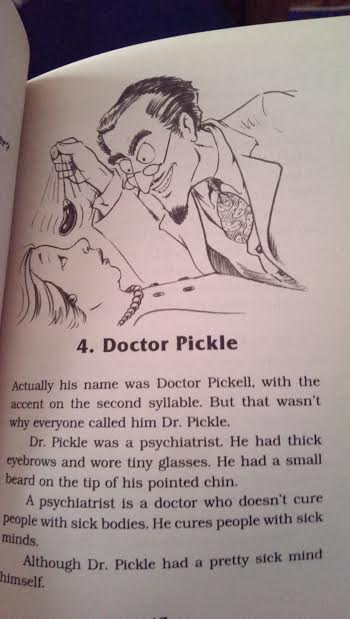
But, things are about to get stranger yet. The school hires a new school counselor (they probably needed one) named Dr. Pickell (or Dr. Pickle, if you prefer). He takes the job when he can’t practice psychiatry anymore because of his tendency to play practical jokes on people while they’re under hypnosis. Can he finally cure Paul of his desire to pull Leslie’s pigtails?
 Meanwhile, the principal declares that “door” is a very bad word and that everyone should say “goozack” instead. Mrs. Jewls tells the children to write poems about colors, but some colors rhyme better than others. Kathy tries to convince everyone that Santa doesn’t exist. Miss Zarves (who also doesn’t exist), laments about how difficult teaching really is.
Then, the children learn something really surprising: Mrs. Jewls is expecting a baby! She has to take a break from teaching, and the children have a series of substitutes who are stranger than Mrs. Jewls. Mr. Gorf turns out to be Mrs. Gorf’s son, and he wants revenge. Mrs. Drazil turns out to be Louis’s old teacher, the one he was always afraid of, and she wants revenge. Mrs. Nogard is an unhappy person who wants to make other people unhappy . . . until she realizes that isn’t what she really wants. Wayside School may be strange, but it does have happy endings!
By the way, anyone notice what the substitutes’ names spell backward?
This book is currently available online through Internet Archive.
 Wayside School is Falling Down by Louis Sachar, 1989.
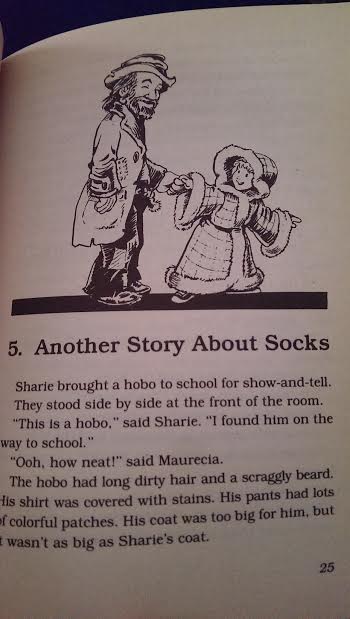 Socks figure into many of the stories, with a special jingle invented by Mac, who used to be named Nancy until he traded names with a girl. It’s fortunate that Mac invented the jingle because Allison uses it to free herself from the non-existent 19th story. Myron chooses freedom over safety, emancipating himself from the school’s rules. Bebe invents a younger brother, and things turn around for Leslie when her pigtails pull Paul. Rondi fears that she’s no longer cute now that her front teeth have grown in. Joy learns the best thing about the toy dog that Todd brought to school, and Ron actually tries the school lunch.
 Each of the books contains thirty stories, like the school (ha, ha!). It would take awhile to describe them all, but there are stories about each of the kids in Mrs. Jewls’s class. Mrs. Jewls took over the class on the 30th floor after Mrs. Gorf accidentally turned herself into an apple. She used to turn her students into apples when they made her mad, but most forms of revenge backfire eventually. Mrs. Gorf ends up turning herself into an apple when one of her students holds up a mirror, and then, Louis the yard teacher eats her.
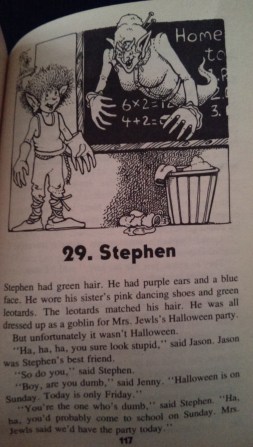 Mrs. Gorf does make one more reappearance on the Friday before Halloween. Mrs. Jewls and the children argue that she can’t haunt the school if it’s not Halloween, but when Halloween falls on a weekend, schools have to have their Halloween party on the Friday before. Stephen’s just happy that the ghost of Mrs. Gorf justifies his costume.
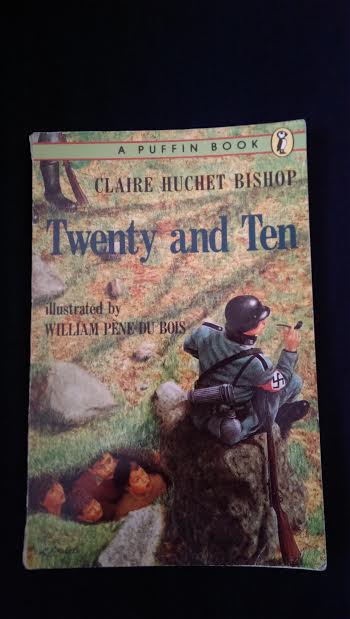 Twenty and Ten by Claire Bishop, 1952.
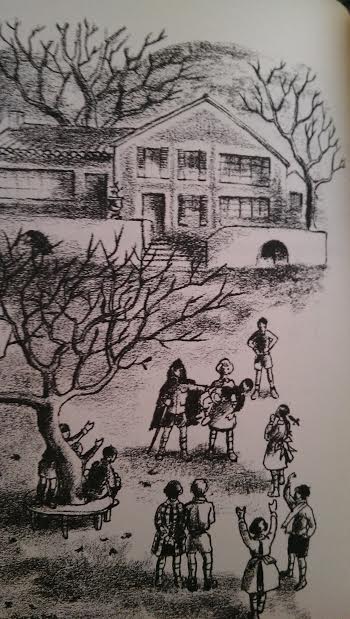 The two groups of children soon make friends, and one of the Jewish children, Arthur, shares something special with his new friend, Henry: a small piece of chocolate. With the rationing, none of them have seen chocolate in a long time. Henry decides to share a little with Janet because he likes her, and they decide to hide the rest and save it for later. When Denise spies them with the chocolate and wants to have a little herself, she steals the piece of chocolate from where Henry has hidden it. The others chase after her to get the chocolate back, and they end up accidentally discovering a cave that none of them knew was there.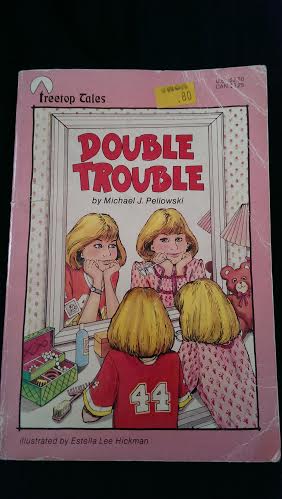
 But, everything goes wrong when Randi’s coach talks to her teacher about the championship game, and it turns out that her teacher is secretly a soccer fan. When Sandi arrives for the tutoring session and the teacher and coach tell her the happy news that “Randi” can play in the championship game, Sandi has no time to tell Randi about it and switch places with her again. Will their hoax be exposed? Will the girls be able to switch places again in time to save the championship?
 Jestress's Forgotten Books and Stories