
Merry Christmas From Eddie by Carolyn Haywood, 1986.
This is a collection of short stories, most of which involve one of Haywood’s favorite characters, Eddie. Eddie is often full of big ideas and is eager to get involved in new projects. Although this book was written in the 1980s, aspects of it seem more like Christmas in the 1950s in a fairly small town. A few of the stories at the end focus around a special children’s program that the kids take part in.
The book is currently available online through Internet Archive.
Stories in the Book:
 Eddie’s Christmas Card
Eddie loves the decorations down at the used car lot, especially the fire engine with Santa Claus at the wheel. Eddie thinks it would be great if his father could take a picture of him sitting next to Santa Claus so he can use copies of it as Christmas cards, but a surprise snow storm changes his plans.
How Santa Claus Delivered Presents
Every year, there’s a large public Christmas party at the town hall, and children from the local children’s shelter are invited and given presents. This year, Eddie’s father is in charge of the celebration. Mr. Ward is loaning the fire engine from his car lot for transporting the presents, but they need some extra help transporting the extra-large Christmas tree.
Christmas Is Coming
Eddie and Boodles go Christmas shopping. Boodles wants to get a pet bird for his mother, and Eddie has decided to buy a small present for a little boy on his street who has a broken arm. Then, Eddie ends up winning a prize for being the ten thousandth child to enter the department store. It solves the problem of what to buy for the little boy, but getting it home isn’t going to be easy.
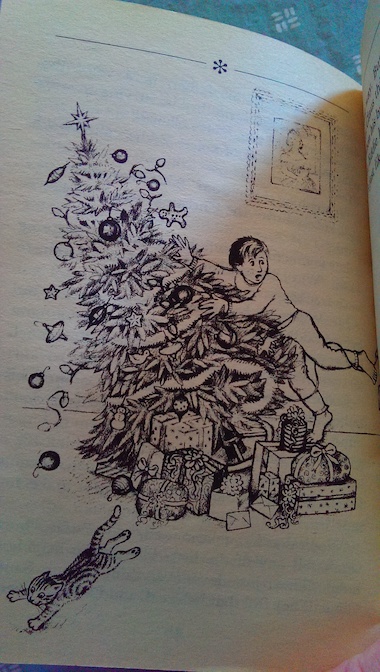 How the Christmas Tree Fell Over
Eddie is old enough to figure out that his father is the one who puts the presents under the Christmas tree on Christmas Eve, eats the cookies they leave out, and leaves a thank you note from Santa. This year, he gets a funny idea: he’ll leave extra presents under the tree for everyone and a second thank you note for the cookies and make everyone wonder where they came from. But, his brilliant idea doesn’t quite go as planned.
Christmas Bells for Eddie
Eddie regrets that he never joined the school orchestra now that he’s learned that they will be performing for a Christmas program on television. His mother suggests that Eddie could sing, but he says that the singing parts have gone to Anna Patricia’s cousin, L.C.. Then, Eddie’s father gives him an early Christmas present that will allow him to join the orchestra after all.
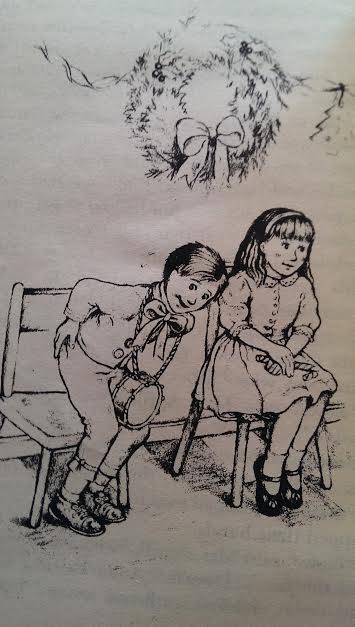 The Christmas Concert
L.C. is spoiled and refuses to sing unless they give him chocolate-covered marshmallows.
New Toys from Old
Eddie’s third grade class is collecting and repairing old toys to be given as presents to the children at the children’s hospital. Boodles has some fun making Anna Patricia think that Eddie painted the wrong colors on a doll’s face, and people question whether it was such a good idea to turn a nice white horse into a zebra.
The Christmas Program
Eddie has to be Little Boy Blue in the program that his class is putting on at the children’s hospital, but he has doubts about whether his old costume fits him well enough to get through the program.
The Mystery of the Christmas Cookies
Eddie’s mother plans to make some cookies for Eddie to give to his teacher, Mrs. Aprili, for Christmas, but a series of mistakes prevents him from giving those cookies to Mrs. Aprili. Eddie finally gives up and orders some cookies from the bakery for her. However, unbeknownst to Eddie, someone else tries to correct for his mistake and ends up creating a mystery for both Eddie and his teacher when a second batch of cookies unexpectedly arrives that is very different from both the cookies he ordered from the bakery and the ones his mother baked.
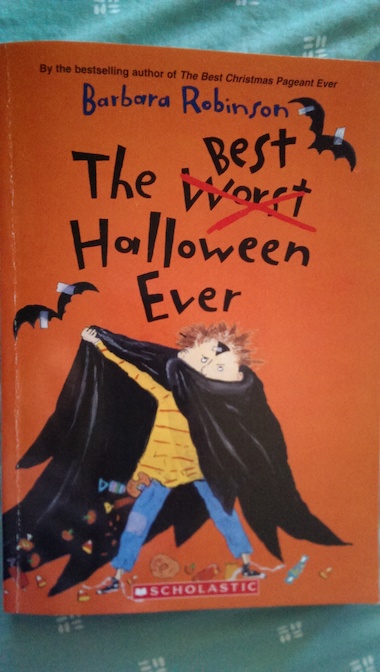 The Best Halloween Ever by Barbara Robinson, 2004.

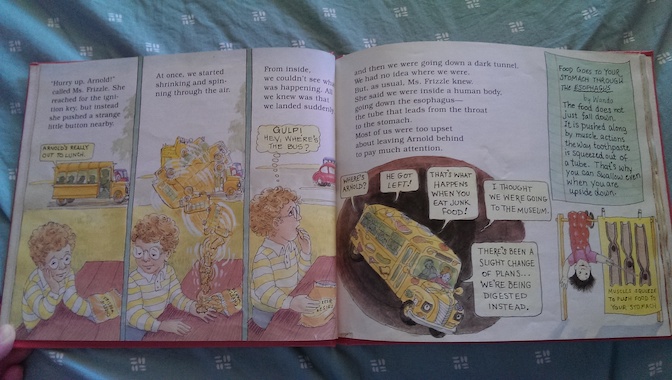





 #3 The Candy Corn Contest by Patricia Reilly Giff, 1984.
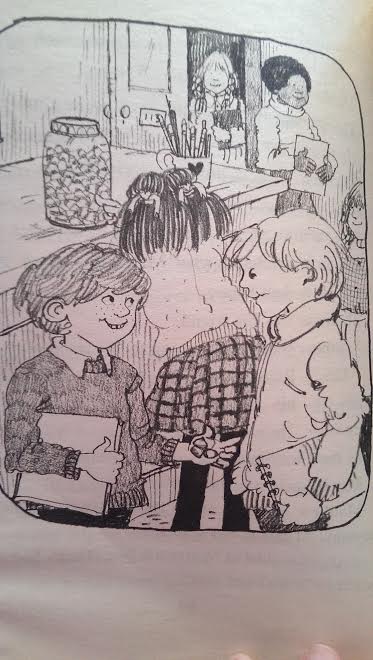 While Richard is worrying over his mistake, he’s also worrying about the sleep-over party his parents are letting him have over the Thanksgiving break. At first, he was looking forward to it, but some of the other boys in class can’t come and some of those who said they could are concerned because Matthew is coming. Matthew and Richard are friends, and people in class generally like Matthew, but everyone knows that Matthew still wets the bed. Some of the other boys are worried that they’ll have to sleep next to Matthew at the sleep-over. As much as Richard likes Matthew, it feels like his problem is going to ruin the party, and when Matthew is nice to him, it only makes Richard feel worse.
 #2 Fish Face by Patricia Reilly Giff, 1984.
 The title of the story comes from the fish faces that Emily was making, imitating the classroom pet fish. She shows Dawn her fish face when she’s trying to joke with her, but Dawn just thinks it’s weird. Dawn worries that she’s not making friends, but at the same time, she also seems determined not to like things and people at her new school and stealing Emily’s unicorn and lying about it was a sure way to make her angry.
 #1 The Beast in Ms. Rooney’s Room by Patricia Reilly Giff, 1984.
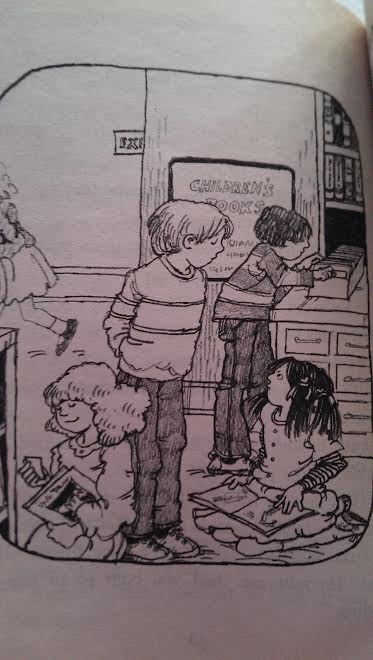 However, even though he’s embarrassed at having to attend special reading classes with Mrs. Paris while most of the rest of his class has normal reading, these special classes really help him, not just to improve his reading skills, but to connect with other kids in his new class who have the same reading difficulties he does and who understand how he feels.
 Going to School in 1776 by John J. Loeper, 1973.
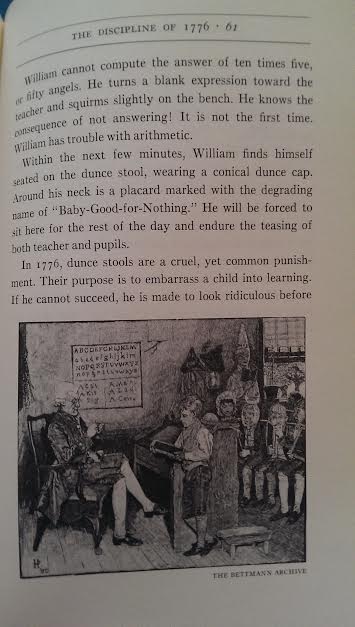
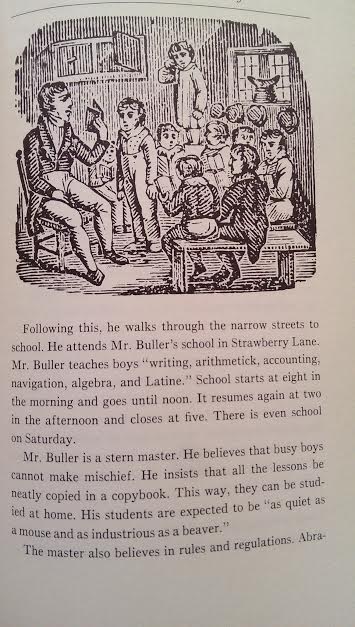 These explanations are told in story form, rather than simply explaining listing the ways children could live, learn, and go to school, trying to help readers see their lives through the eyes of the children themselves. The children’s lives are affected by the war around them. As the book says, many town schools in New England were closed during the war, so the students would attend “dame schools” instead. A dame school was a series of lessons taught in private homes by older women in the community. In other places, such as cities like Philadelphia, official schools were still open. Discipline was often strict, and school hours could be much longer than those in modern schools. Sometimes, children would argue with each other over their parents’ positions on the war.
 There were different standards for what girls and boys were expected to learn because their learning was guided by what they were each expected to do with their adult lives. A typical school might teach boys subjects like, “writing, arithmetick [sic], accounting, navigation, algebra, and Latine.” Generally, “reading, writing, arithmetic, and religion” were common elementary school subjects. Latin lessons and other advanced subjects were typically for boys who planned to become lawyers or clergymen. Girls were likely to receive little formal education beyond reading and writing, and black people were less likely to receive even that.
 #3 The Secret at the Polk Street School by Patricia Reilly Giff, 1987.


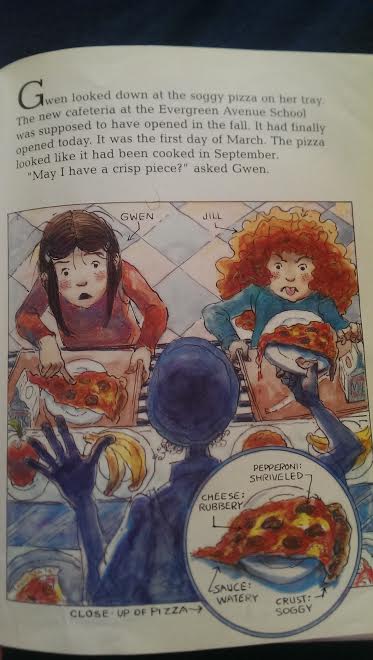 Ms. Lensky, the cafeteria lady at Gwen and Jill’s school, is just plain mean. All of the food that the cafeteria serves is yucky, even though the cafeteria is new. There will be a party to celebrate the opening of the new cafeteria, and even the kids’ parents and the mayor are invited. Gwen and Jill are happy because their class will get to help decorate the cake. However, Ms. Lensky, the M.C.L. (Mean Cafeteria Lady), doesn’t like the girls, and she blames them for a number of accidents that happen in the cafeteria.

 Jestress's Forgotten Books and Stories