Miss Nelson is Missing

NelsonMissing

Miss Nelson is Missing! By Harry Allard and James Marshall, 1977.

The kids in Miss Nelson’s class at school are terrible! No matter how nice she is to them, they always act up and refuse to do their work. Miss Nelson knows that this can’t continue.

NelsonMissingClass

Then, one day, Miss Nelson doesn’t show up for class. The kids have a substitute teacher, the terrible Miss Viola Swamp. Miss Swamp is super strict. She makes the kids work harder than they’ve ever worked in their lives, and she doesn’t put up with any nonsense.

NelsonMissingMissSwamp
NelsonMissingSwampWork

Miss Swamp is so mean that the kids really start to miss nice Miss Nelson. What happened to her? The kids try to find their nice teacher so they can get rid of the mean substitute. They try to go to the police to report her as a missing person and go to her house to see if she’s there, but the only person they can find is Miss Swamp. They imagine all sorts of terrible things that could have happened to Miss Nelson.

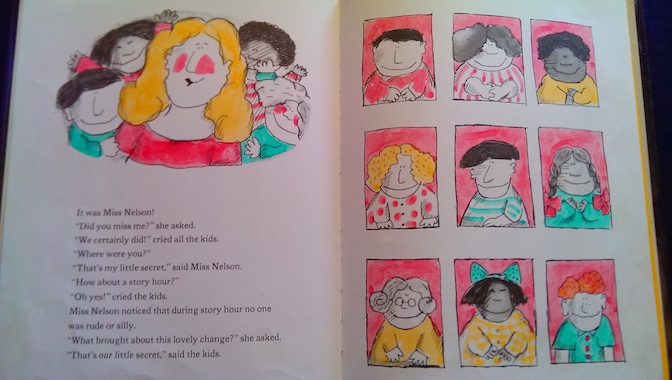
Then, just as they’re sure that they’ll never see Miss Nelson again, suddenly she’s back. Miss Nelson never says exactly where she’s been, but the kids are so glad to see her that they behave much better.

NelsonMissingReturn

This is the first book in a series.  It is available to borrow and read for free online through Internet Archive.

My Reaction and Spoilers

The big joke of the book, and all the others in this series, is that Miss Nelson and Miss Swamp are the same person. It’s not much of a spoiler to say that because, even though the story never explicitly says that they are the same person, it’s heavily implied, especially at the end of the book. The fun is that the kids in Miss Nelson’s class never guess, leaving readers to enjoy the joke along with Miss Nelson.

NelsonMissingSecret

Some people like to take advantage of people who are “too nice”, but just because a person prefers to be nice doesn’t mean that they’re weak, stupid, or incapable of being tough when they need to be. Miss Nelson just found a creative way to be as tough and mean as she needed to be to get the kids in her class to behave without ruining her own reputation as a nice person.  “Viola Swamp” will always be there whenever Miss Nelson needs her again … and that leads into the rest of the books in the series.

The Bassumtyte Treasure

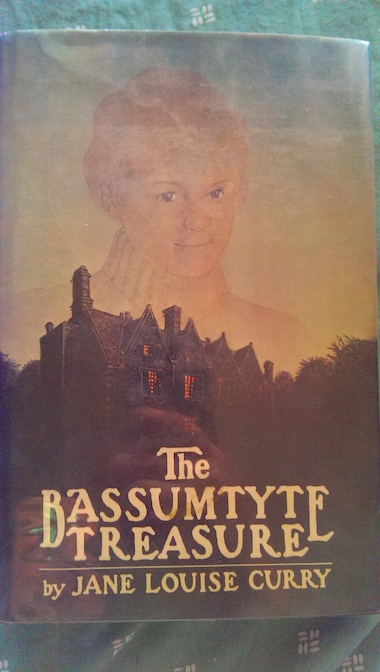
BassumtyteTreasureThe Bassumtyte Treasure by Jane Louise Curry, 1978.

When young Tommy Bassumtyte’s parents died, he went to live with his grandfather. However, his grandfather is now dead, and he is living with his 92-year-old great-aunt, who is in a wheelchair, and her 72-year-old daughter, who has recently had her driver’s license revoked due to her poor eyesight. Although the pair of them have taken good care of Tommy, neighbors have become concerned that they will not be able to do so for much longer because of their age and failing health. Rather than see Tommy sent to a foster home, they decide that he must go to the man who Tommy learns should really be his legal guardian, a distant cousin also named Thomas who lives in the family’s ancestral home, Boxleton House, in England.

The elder Thomas Bassumtyte, who should have taken Tommy when his grandfather passed away, has also since died, but his son, also named Thomas, agrees to take him. Tommy is quickly shipped off to England before there can be a custody hearing in the United States about him because the relatives fear that some official might try to prevent Tommy from being sent out of the country. Tommy is eager to go because he remembers fantastic stories that his grandfather told him about Boxleton House. The current Thomas Bassumtyte also lives there, although the place has become rather run-down, and he fears that he will not be able to keep the place much longer. Thomas was a mountain climber, but he was injured in a fall and hasn’t been able to work much since. He tells Tommy that the two of them might have to move when he is fully recovered and can do more work for the Foreign Office, but Tommy loves Boxleton House from the first moment he sees it and wants to stay.

According to the lore of Boxleton House, a distant ancestor of theirs hid a treasure there, but no one has been able to find it. If young Tommy and Thomas can find it, it would solve many of their problems, and they would be able to keep the house and restore it. All young Tommy has is the mysterious rhyme that his grandfather told him and the strange medallion that his great-grandfather brought with him when he went to the United States in the late 1800s. Thomas tells him that the treasure was supposedly hidden by a distant ancestor of theirs who was fond of riddles, called Old Thomas.

The Bassumtytes were secretly Catholic during the reign of Elizabeth I. Old Thomas was alive then and had a son called Tall Thomas. Tall Thomas traveled frequently and was mysterious about the places he went. One night, he returned to Boxleton House with a young baby, who he said was his son. He had married in secret, and his young wife had died shortly after giving birth. Tall Thomas also brought her body back to Boxleton for burial. However, that wasn’t Tall Thomas’s only secret. Although he remarried, giving his son a stepmother, and lived on for a number of years, he was eventually executed for smuggling messages for the captive Catholic queen, Mary, Queen of Scots. The family was stripped of its noble title and only barely managed to hang onto their house and land. If there was a treasure hidden during this time, it was probably something that the Bassumtytes were afraid would be confiscated by the queen’s soldiers as punishment for the family’s disloyalty or something that Mary had given to Tall Thomas to hide for her.

As Thomas tells Tommy more about the house and the family’s history, he points out Tommy’s uncanny resemblance to Small Thomas, Tall Thomas’s son, as shown in an old painting. Tommy feels a strange connection to Small Thomas, and begins seeing and hearing strange things. An older woman comforts him in the middle of the night, having him recite the same rhyme that his grandfather taught him. A small painting later reveals that this woman was Small Thomas’s grandmother. She appears to Tommy other times, giving him a glimpse back in time and clues to solve the puzzles of Boxleton House.

It is only when Thomas accepts the advice of a family friend who works for a museum that they come to understand the full significance of their family’s heirlooms and the hidden treasure. The treasure may not be quite what the Bassumtytes have always believed it was, but then, the Bassumtytes themselves aren’t quite who they always thought they were, either.

The book is available to borrow and read for free online through Internet Archive.

The Twin in the Tavern

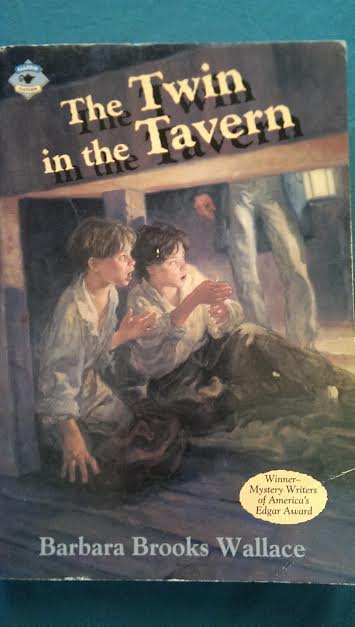
TwinTavernThe Twin in the Tavern by Barbara Brooks Wallace, 1993.

Young Taddy has lived with his Aunt and Uncle Buntz in Virginia ever since he can remember. When they die during an epidemic, he is left completely alone and afraid that he will be sent away to a work house. Before his uncle dies, however, he tells Taddy something that gives him even more reason to be afraid. He tells Taddy that nothing is how it seems and that Taddy is not really their nephew. He says that Taddy will only learn the truth when he finds his twin, but he must beware because he is in danger. Unfortunately, he never says where Taddy’s twin is or what kind of danger he is in.

Before Taddy can decide what to do, a couple of thieves, Neezer and Lucky, come to rob the house because they heard that Mr. and Mrs. Buntz were dead. When they discover Taddy in the house, they bring him with them to Alexandria and make him work in their tavern. Taddy is only given scraps to eat and he must sleep under a table in the kitchen with another boy who works for Neezer called Beetle. However, by coincidence, Neezer and Lucky may have brought Taddy to the very place he needs to be to find the answers about his past and his true identity.

Danger seems to lurk around every corner in the city, and Taddy doesn’t know who to trust. Even when Neezer hires him out to work in the home of the wealthy Mrs. Mainyard and her two daughters, sinister characters surround him, from the suspicious Professor Greevy to the stern John Graves, who visits the family.  At one point, Taddy thinks that he’s found his twin, but the boy mysteriously vanishes. Will Taddy find his twin and the secret of his past, or will the danger that his uncle warned him about find him first?

This book was a BOOKLIST Editors Choice Book in 1993 and won the 1994 Edgar Allan Poe Award.  It is available to borrow and read for free online through Internet Archive.

My Reaction

This was one of my favorite mystery stories when I was a kid!  Orphans with mysterious pasts are staples of children’s literature and make for compelling mystery stories, and the addition of a secret twin makes it even better!  Secret twins can be somewhat cliche in stories, but this one is good because there’s an unexpected twist for Taddy that he never considered until the truth is finally revealed.

Many of Barbara Brooks Wallace’s mystery books involve sinister characters with hidden agendas and children who don’t know who to trust because they don’t fully understand the plot they’re caught up in.  This book is like that because Taddy doesn’t know the real source of danger to him.  Like other children in stories of this type, Taddy frequently depends on the help of other children because he doesn’t know which adults to trust.

The story is set at an unspecified time in the past, although it appears to be sometime in the 19th century.

Cousins in the Castle

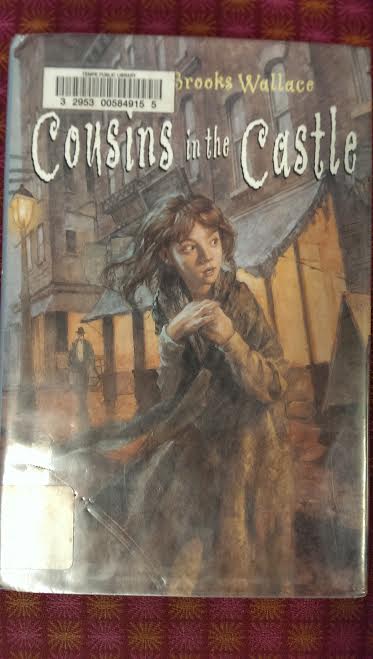
cousinscastleCousins in the Castle by Barbara Brooks Wallace, 1996.
Young Amelia Fairwick is living a happy life in London with her father and her father’s fiancée, Felicia, when her father leaves on a business trip and word reaches her that he has been killed in a hotel fire. Now, the poor orphaned girl must go live with her deceased mother’s cousins in New York. Amelia leaves behind everything that is familiar to her when she accompanies her stern and gloomy Cousin Charlotte on the ship to New York.

On the ship, she makes only one friend, a young actress and singer named Primrose Lagoon, whom Cousin Charlotte forbids her to see. Although the future looks gloomy for Amelia, there are far stranger and more sinister events in store for her. As soon as they reach New York, Cousin Charlotte abandons Amelia on the docks. A kind woman named Nanny Dobbins and her son offer help her, only to steal her luggage and make her a prisoner in a small cellar in a bad part of town.

When her jailer, the drunken Mrs. Shrike, falls asleep, leaving the door open, Amelia escapes and attempts to find Primrose, her only friend in the city. Throughout Amelia’s adventures, she doesn’t know who to trust, and every step she takes seems to bring her closer to the mysterious Cousin Basil, who is supposed to be her guardian, and his castle-like home.

The time period for this story is never exactly defined, but it appears to take place during the 1800s because of the gaslights in use.  Like many of Wallace’s books, things and people are not what they seem, but in spite of the villain’s sinister intentions, it all ends happily.

Ghosts in the Gallery

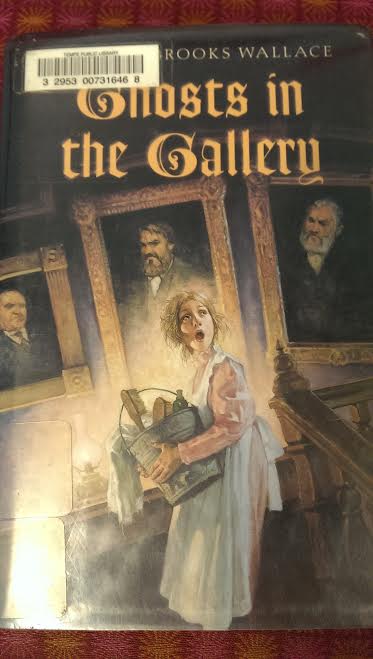
ghostsgalleryGhosts in the Gallery by Barbara Brooks Wallace, 2000.

Eleven-year-old Jenny was raised in China by her mother and stepfather, who ran a dance studio. She has no memory of her real father, who died when she was a baby. When her stepfather dies and her mother becomes deathly ill, her mother writes a letter to her real father’s father, a grandfather that Jenny never even knew existed before. In the letter, her mother explains that she is dying and that she will be sending Jenny to live with her grandfather. Then, Jenny starts the long journey from China to the East coast of the United States alone.

Leaving her dying mother to head to a strange country to live with her previously unknown relations is frightening enough, but there is still worse to come. When Jenny arrives at her wealthy grandfather’s home, no one is expecting her or knows who she is. Her uncle, Winston Graymark, insists that her mother’s letter never arrived. Worse still, he believes that Jenny is an imposter, and that her mother merely made up the story about his long-lost brother being her father.

At first, he angrily threatens to send Jenny back to China, but Madame Dupray, a servant who cares for Jenny’s ill grandfather, suggests that she be taken on as a household servant. Jenny is given a dreary little room in the cellar and embarks on the drudgery of household chores. Could the Graymarks really be her relatives? If so, what happened to the letter that Jenny’s mother sent? Something sinister is happening in Graymark House, and Jenny will have to face suspicious servants and attempted murder before she finds the truth.

The “ghosts” in the title are the portraits of Jenny’s ancestors, which hang in the gallery. They appear grim and frightening at first, but when Jenny begins to recognize them as her relatives, they no longer frighten her.  Like many of Wallace’s books, this book contains sinister characters with hidden motives, but ends happily.  The story takes place at some point during the Victorian era.

The Master Puppeteer

masterpuppeteerThe Master Puppeteer by Katherine Paterson, 1975.
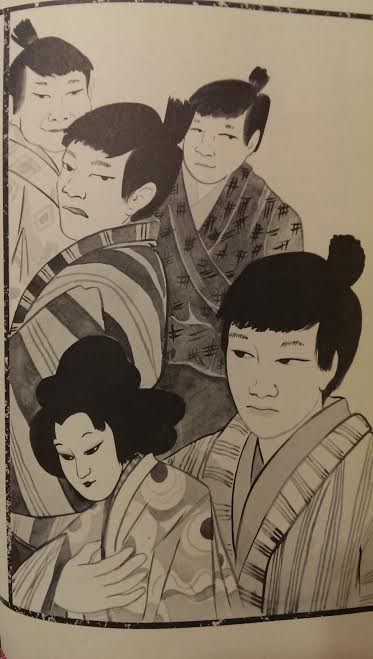
Jiro was born during a terrible time in the history of Osaka, Japan, during the 18th century. Around the time he was born, a plague swept the city, killing his other siblings, making Jiro the only child of Isako and Hanji, the puppet maker. His mother resents him for surviving when her other children didn’t and criticizes him for being clumsy when he tries to help his father make puppets. Now there is famine in Osaka, and Jiro’s family is on the verge of starvation. The only way they can support themselves is by making puppets for Yoshida’s puppet theater, the Hanaza.

The Hanaza has been doing well in spite of everything because the rice merchants are still wealthy enough that they can afford to spend money attending the theater. One day, when Jiro goes with his father to bring a puppet to Yoshida, Yoshida comments that the boy has spirit and offers to take him on as an apprentice at the theater. Hanji does not take the offer seriously, but Jiro does. He knows that he will not be able to help his parents by making puppets, and the people at the theater earn money and have plenty to eat. He joins the theater without telling his parents, introducing himself to the old, blind Okada, who chants the words of the plays.

masterpuppeteerpic1Okada was once Yoshida’s teacher, and he accepts Jiro into the theater. Jiro is fascinated with the world of the theater, studying alongside Yoshida’s son, Kinshi, who becomes his closest friend. However, he must first graduate from apprentice to puppeteer before he can begin earning enough money to support his family, and the news from outside the theater is grim. Word has reached him that his father is ill and his mother is starving. The poor people of Osaka, starving and oppressed by the wealthy merchants and tax collectors, begin rioting.

Saburo, the leader of a gang of bandits, has become a hero to the people, taking food and money from rich people in clever and daring raids and using it to feed some of those who are starving. Kinshi in particular admires Saburo and sets off on his own mission to save the poor people of Osaka. Jiro fears for Kinshi’s safety but does not know who to turn to for help until he finds evidence that seems to point to the true identity of Saburo.

One of the fascinating things about this story is the way the puppets are operated.  Unlike either hand puppets or marionettes, where the operators are never seen, the operators of puppets in Japanese theater are on stage with them.  However, the operators are dressed completely in black with hoods, so the audience will disregard their presence.  Because of the violent episodes in this story, I would recommend it for middle school level.