Noleen-Anne Maypother’s mother died shortly after she was born, while holding her for the first time, so her life started with her first encounter with death. Since then, Noh has been raised by her widowed father with some help from her two aunts. Noh doesn’t realize it, but there’s usually one child in her family in each generation who has unusual talents, and in this generation, it’s her.
One summer, her naturalist father is going to study newts in the Appalachian Mountains, so he sends her to stay with one of her aunts. However, when she arrives, she finds out that her aunt has gone on a trip to the beach with her cousins because she wasn’t expecting Noh to arrive. Unsure of what to do at first, Noh realizes that she can just go to her other aunt, Aunt Sarah, who teaches English at a boarding school. Noh is supposed to attend this boarding school this coming fall anyway, so she decides that she can just go to the school early.
By the time Noh arrives at the school, her father and Aunt Sarah have realized what happened, and Aunt Sarah is expecting Noh to arrive. From the very beginning, this school is strange, though. Noh likes the school, but she has an odd encounter with a strange old lady when she tries to take a shortcut through a cemetery, and the woman gives her something that looks like an evil eye.
Later, when Noh is exploring the school, she meets a friendly girl called Nelly. Nelly chats with her, but Noh feels uneasy around her, for some reason. Although Noh doesn’t realize it right away, the reason is because Nelly is dead. Nelly is part of a group of ghosts who inhabit the damaged West Wing of the school, where no students live now.
Each of the ghost children who “live” there now died at the school at varying points in the past. Nelly died from an allergic reaction to a bee sting, which was ironic because she always wanted to be an entomologist. Trina died falling from a horse, although that doesn’t keep her from being friendly and nosing into other people’s business. She likes to follow living students around and listen to their gossip. Henry is an older ghost, having died at the school at the age of 13, about 50 years earlier. He is lonely for his parents and his old life, even though he has the other ghosts for company, and he sometimes broods over the letters he got from home before he died. Thomas is older still. He’s been dead for about 80 years, and he likes watching the school’s cook make pies in the kitchen.
At dinner that night, Noh tries to ask about Nelly because she notices that she is the only child among the faculty. The adults tell Noh that there are no other students at the school yet and that they’ll arrive in the fall. Someone suggests to Noh that maybe she saw a ghost, and Noh starts to wonder. When she returns to the West Wing to investigate, she meet Henry. Noh is startled at this confirmation that there are ghost children at the school, and Henry is startled that a living person can actually see him. There are plenty of ghosts around the school, but Henry has never met a living person who can see ghosts before.
While the two of them are talking, something strange happens. A bright light appears, and Henry goes into it, disappearing. Noh doesn’t understand what happened or what it means. However, when she meets Trina later, she learns that other ghosts around the school have vanished, and Trina is worried. It seems to have something to do with the strange parades of ants that have been moving across the school, carrying something white with them.
Strange things have been happening at this school for generations. Noh learns that it’s a place that attracts people with unusual abilities, and it has been home to bizarre experiments and a shape-shifting monster that wants badly to eat “something big” as well as home to various ghosts. There are secret passages and hidden rooms and faculty who seem to know much more than they want to tell about the mysterious things that happen there. Noh must learn the school’s secrets to help her new ghost friends!
My Reaction
I enjoyed this creepy story. I think it was well-written and fun to read, although I also did feel like Noh figured out some things unnaturally quickly at the end. In the end, readers are given enough answers that the plot makes sense, and we can get a general pictures of what’s been happening at this school, but there are some things that appear intentionally open-ended. It felt to me like the author was setting up this story to be the first in a series, but as far as I can tell, it doesn’t have a sequel.
The story combines many elements of classic scary stories – spooky boarding school, ghosts, weird teachers with secret knowledge, secret passages and hidden rooms, girl with apparent psychic abilities that she doesn’t fully understand, secrets buried in the past, a bizarre invention that appears to have been made by some kind of mad scientist and has an unknown purpose, and a lurking monster that wants to eat someone. Although the story has plenty of creepy elements, they’re softened by humor along the way. There is a monster referred to as the “nasty thing that refuses to be named”, which appears periodically throughout the story to remind us that it once ate “something big”, that what it ate was “really big”, that it wants to eat “something big” again, that it can tell that readers don’t like it but that it doesn’t care what you think, etc. By the end of the story, we are told what the monster actually is, but it’s still on the loose, leaving it open to Noh and the ghost kids trying to hunt it down again later.
The author, Amber Benson, is also an actress, known for her role on Buffy the Vampire Slayer.
For as far back as Jean can remember, she was raised by her Aunt Constance Wainwright at her school for girls. Jean knows that she’s an orphan, and technically, Aunt Constance isn’t a blood relative, but the two of them are very close. Aunt Constance has always been like a mother to Jean, and Jean has no memory of her birth mother. Jean’s ambition is to become a teacher like Aunt Constance and continue working and living at Aunt Constance’s school. It’s the summer of 1894, when Jean is almost 13 years old, when events begin happening that change Jean’s life forever and give her a new perspective on her past.
Jean is young, but she receives an unexpected job offer for the summer from Daniel Thiel, one of the trustees of the school. He is a regular visitor at school dinners, where he and Aunt Constance tend to debate each other. He has asked for Jean to come and help him to sort through and process the Callender papers, which were left to him, along with the large house in the countryside, where he lives, after the death of his wife. The reason why he wants Jean’s help is that she’s had enough education and some knowledge of other languages to read through and process the papers, and she’s too young for the people in the small town nearby to gossip about her having a romantic relationship with him. Jean is tempted by the job because it’s the first real job offer she’s ever had, and she knows that she will need money to continue her education.
Before she accepts, however, her Aunt Constance talks to her about Daniel Thiel’s history and the history of the Callender family. Daniel Thiel is now an artist, but when he was a young man, he refused to fight in the American Civil War. (The book refers to it as “the War Between the States”, an old name for it.) He was one of the “Hiders”, young men who ran away and went into hiding rather than be pressured to fight. Jean isn’t sure that she approves of this, and she knows that Aunt Cynthia’s brothers died in the war. However, even though Daniel Thiel was considered a disgrace for running away and hiding, he later returned to the area where he had grown up and married Irene Callender, the daughter of the wealthy Callender family. Irene was somewhat unfortunate because her mother died when she was young, and she largely raised her younger brother, Enoch. She had not originally expected to marry, but she married Daniel Thiel later in life, after Enoch was grown and married himself. Together, she and Daniel Thiel had a child of their own, but Irene died under mysterious circumstances while the child was very young. Since then, Daniel Thiel has been a recluse, and nobody knows what happened to his child.
Aunt Constance has no objection to Jean taking a job from Daniel Thiel because she thinks he’s a good man, in spite of some of their personal differences. What worries her about this job is the other people in the area. She’s not sure that she approves of them. However, she agrees to let Jean accept the job.
Jean is excited at first about this job, which will allow her to earn money to further her education. However, when she actually leaves her aunt’s school, she becomes nervous. It’s her first time being away from her aunt and the school she’s called home for as long as she can remember, and Daniel Thiel seems like a strange, temperamental man, who mostly prefers to be left alone. He has a housekeeper who has her own sad history, having once been sent to prison for stealing something from Enoch Callender to help her sick brother when her family was desperate for money. Jean realizes that Daniel Thiel does support good causes and likes to help people, but he doesn’t like to get much attention for it.
When Jean begins working with the Callender papers, sorting through them, organizing them, and deciding what’s important, she’s a little nervous at first about her ability to discern what’s important. Daniel Thiel talks to her a little about it and assures her that she can understand what’s important. The more Jean reads through the documents, the more real the Callender family seems to Jean, and the more she is drawn to the details of their lives, wanting to know more about them.
Daniel Thiel’s brother-in-law, Enoch Callender, still lives nearby with his wife and children. Soon after Jean’s arrival, Enoch meets up with her, seemingly by accident and plays a game with her at guessing her name. Jean is amazed when he guesses correctly. Enoch asks Jean questions about her life and where she came from, and Jean finds herself telling him more about her background than she expected. Enoch also tells Jean a little about his own family. The Callender family used to live in New York, and Enoch really prefers life in the city. He has ambitions for his children and feels bored and stifled in the countryside. He has no real profession himself. He admits that he was spoiled by his sister, Irene, who raised him, and he explains that Irene died ten years before, under odd circumstances. His father died around the same time. Then, he shows Jean something that he says was a secret between himself and Irene – a board that acts as a bridge over a river. Jean thinks it looks dangerous, but Enoch crosses it himself and bounces on it to prove that it’s safe. He tells Jean that she can also use this crossing.
Jean finds Enoch Callender charming but at the same time disturbing, and she can’t forget that he is the one who sent Daniel Thiel’s housekeeper to prison for a minor crime that she committed out of desperation. Jean asks Daniel Thiel more about the history of Enoch Callender and the housekeeper. She learns that the Enoch’s father and sister had both tried to persuade Enoch to not press charges, and when he insisted on pressing charges anyway, Enoch’s father paid for the housekeeper’s defense in court. Jean realizes that the Callenders were caring people, but Enoch was the exception. Enoch was technically in the right legally but at the same time, he was needlessly cruel.
Jean befriends a local boy named Oliver, who prefers to be called Mack, and begins tutoring him in Latin. Mack witnessed the meeting between Jean and Enoch, and he comments that, what seemed like an accidental encounter to Jean was actually done on purpose by Enoch. Mack doesn’t trust Enoch, and although locals somewhat keep their distance from the housekeeper since she was in prison, they also blame Enoch for what happened. Jean is annoyed at Mack’s description of the charming Enoch as being untrustworthy, and they quarrel about it, but there is also some truth to what Mack says.
Jean is beginning to see what Aunt Constance meant about not being sure about the people living in this area. People here aren’t quite what they seem. The locals are suspicious of people like Daniel Thiel and his housekeeper, whose pasts are strange and tragic, but yet, Daniel Thiel and his housekeeper seem like good people to Jean. Charming people like Enoch also have dark sides, and past incidents seem to haunt everyone there. Mack explains more to Jean about the mysterious death of Daniel Thiel’s wife, who died from injuries from a fall. Local people think maybe she was actually murdered, and they look suspiciously at Daniel Thiel. They also wonder what happened to Daniel Thiel’s small child, who also mysteriously disappeared after his wife died. He brought in a nurse to take care of the child, and one day, the nurse and child both disappeared, nobody ever saw them again, and Daniel Thiel refuses to talk about them, as if they never existed.
When Enoch talks about the past, he thinks it’s unfair that his bringing charges of theft against the housekeeper has earned him disapproval from other people because, after all, she did steal from him, and he was only doing the right thing under the law. He also chatters and laments to Jean about his family’s prospects. His eldest son, Joseph, is charmer, like his father, and his family hopes that he will marry well. They think that will be the best solution to securing the family’s future. Joseph doesn’t have any particular profession in mind for his future other than that. Enoch’s daughter is also expected/hopeful that she will marry well. The younger son, Benjamin, is more ambitious but seems to have little idea how to go about his ambitions. Enoch thinks that their futures will be better elsewhere, but money is always an issue, and he is tied to this location because the old Callender fortune is here, and the family’s old will, which controls the family’s fortunes is complicated. Jean can tell that Enoch’s wife and children aren’t happy, and Enoch’s wife tearfully confides to Jean that she thinks that she and their children are disappointing to Enoch. Enoch admits that he spends more time ruminating on old wounds than trying to do anything useful with his life. Enoch says that he wonders and worries about what happened to his daughter’s missing child, and Jean feels for him. When she talks to Enoch, he charms her, and Jean finds it difficult to believe too badly of him, in spite of indications that he has done wrong.
As Jean continues to sort through the Callender papers and learns more about the Callenders, Daniel Thiel, and the past events that still haunt this community, she finds herself trying to sort through the good and evil people who surround her and trying to decide which is which. She finds herself questioning what she really knows about people and whether she can really tell what their true natures are. What really happened to Irene Callender Thiel ten years ago, and where is her child? Could Daniel Thiel have murdered them, or has he been wrongly suspected all this time? Could the answers to all of these questions and more be contained in the Callender papers that Jean has been hired to sort through? Jean must come to understand the truth about the Callenders because her life is now also in danger! There are things about the Callenders that someone doesn’t want anyone to know. Jean is getting too close to the answers and is a bigger threat to someone than she ever suspected.
The book won the Edgar Allan Poe Award in 1984. It’s recommended for ages 9 to 13. It is available to borrow and read for free online through Internet Archive.
My Reaction and Some Spoilers
I don’t want to spoil the mystery too much because that’s what makes the story exciting. The mystery is based on an understanding of past events in this family and community. The incident with the housekeeper was just part of a chain of quarrels, disappointments, and misdeeds that lead up to the tragedy of Irene’s death. Readers might also guess that orphaned Jean’s past is more intertwined with the Callenders than she knows, which is why Daniel Thiel asked for her to come and work with the Callender papers and why Aunt Constance allowed her to take the job. Both Aunt Constance and Daniel Thiel know more about Jean’s past than she does and the answers to questions that Jean hasn’t even thought to ask yet.
Much of the mystery is also a character study. Jean is correct that she’s unaccustomed to thinking of people in terms of good and evil. In Aunt Constance’s school, she realizes that she was surrounded by basically good people, and the worst that she ever had to complain about there was that some teachers were a little more strict than they needed to be and some of the other girls had petty quarrels with each other. In this small town and within the Callender family, Jean has to confront some of the harsh realities of life, the dark sides of human nature, people who have committed truly wicked deeds, people who have genuinely suffered wrongs, and how misdeeds of the past can haunt the present.
As Jean struggles to understand the members of the Callender family and their motivations, she finds herself questioning where the lines between “good” and “evil” are drawn. For various reasons, she finds herself being sympathetic toward people who have done wrong things. For example, she can readily understand why the housekeeper was driven to steal because of her desperation to help her sick brother, but at the same time, she knows that stealing isn’t right and that her decision ultimately put her in an even worse position.
Jean finds Enoch Callender both disquieting and fascinating at the same time. While she thinks that he should have been more forgiving to the housekeeper, she also comes to understand that much of his behavior comes from frustration and old quarrels with his own father, who put him in the position of living in a place and lifestyle that ultimately doesn’t suit him. He has lived a varied life and knows more about high society and low society than Jean has ever experienced. The stories he tells opens up the world to Jean, which is part of why she finds him so compelling. When it comes to concepts of right and wrong, Enoch has knowledge of the dark undersides of society, and in spite of his prosecution of the housekeeper, he says that he finds the desperate deeds of the lower parts of society far more compelling than the unethical but legal dealings of the upper classes. He is a thrill seeker, and he is fascinated by people willing to risk everything for what they want.
Jean finds a letter that Irene wrote to her father about her brother and their inheritance. Their father found Enoch’s ethics and way of living objectionable, and Irene argued with him that Enoch should still receive most of the estate because she felt that they were responsible for spoiling him as a child and, as an adult, she thinks that he needs more money than she does, whether for good or bad. Enoch is undeniably charming, which makes people, including Jean and his late sister Irene, inclined to make excuses for him rather than holding him to account. However, does his charm really excuse some of the things he’s done or just give him license to do worse? How much responsibility did his father and sister have for the man he has become, or was that always Enoch’s responsibility?
Jean discusses issues of right and wrong and good and evil with Daniel Thiel, and they debate about the various points that may make one person’s actions less wrong or more forgivable than others. Daniel Thiel holds more blame for Enoch than for his housekeeper because, while the housekeeper did something she shouldn’t, she faced up to what she did and took the consequences for it, even though they were harsher than she really deserved. Enoch is not in such a desperate situation and has been keeping his past misdeeds secret and doing nothing to atone for them. Jean’s discussions with Daniel Thiel also open her eyes to other aspects of the world, philosophy, charity, and human suffering. However, while Enoch’s discussions often leave her feeling more witty and sophisticated and taking herself and her own thoughts less seriously, Daniel Thiel’s discussions make her feel respected and help her solidify her own views and arguments.
This is a good book for starting a philosophical debate about the different degrees of wrong-doing that exist and how an individual’s circumstances, character/personality, and sense of accountability can play a part in how much leniency they are or should be allowed. Showing sympathy for one person may be warranted and more humane than thoughtlessly administering the harshest punishment, but on the other hand, too much leniency emboldens a wrong-doer with a different nature, especially a person who lacks sympathy and empathy himself. Daniel Thiel’s point of view is that there should be limits on what someone is willing to excuse. If we, as humans, automatically forgive any and every person who does wrong because they’re just too likable or have somehow suffered a misfortune or disappointment in life, we would never be able to hold anyone to account for anything, no matter how many innocent people that person hurts. Sympathy for one person shouldn’t grant them the license to continue harming or abusing other people.
The difficulty for Jean at first is that she has little information about who in this situation has actually done what. She is only just beginning to learn about the Callenders and the other people in this community, and she has to uncover the truth of what happened in the past, piece by piece. Even then, she finds herself questioning the truthfulness of her sources of information. Whose accounts of the past are more trustworthy, Daniel Thiel’s or Enoch Callender’s? Can she really believe either of them when one or both may have had something to do with the death of Irene and the disappearance of her child? The secret is in the terms of the Callender will and depends on whether or not the child is still alive.
The Mystery of Castle Croome by Hilda Boden, 1966.
Molly Stewart, an American college student attending Oxford, is an orphan who is barely scraping by when she suddenly receives word that she has inherited an ancient castle in Scotland from her great-uncle, who has recently died. Molly’s friends, a pair of twins called Pat and Penny Roderick (short for Patricia and Penelope), go with her to have a look at the place, but right from the beginning, it seems like nobody wants her there.
Although the lawyer, Mr. Harding, is aware that Molly has been attending Oxford, he also knows that she is planning to return to the United States when she finishes her degree. He also knows that her great-uncle, Sir Malcolm, disapproved when her father married an American and moved to the United States himself, so he was surprised when Sir Malcolm’s will left his estate to his nephew or his nephew’s heirs. Mr. Harding had expected that Sir Malcolm would leave the estate to Jamie Campbell instead because Jamie has been the caretaker for years. The estate doesn’t come with much of an income, and the farms attached to it don’t have tenants, so they’re not bringing in rent money. It would take a lot of work to restore the estate. Since Mr. Harding would rather deal with Jamie Campbell anyway, he thinks that Molly would find it a better deal to just sell the castle to Jamie and use the money to finish her degree and go back to the United States. Molly asks why Jamie Campbell would want to buy the castle if it’s not worth much and needs so much work to restore. Mr. Harding says he might buy it out of sentiment, but Molly wants to have a look at the castle before agreeing to sell it. After seeing it, she might decide that it isn’t the kind of place where she could live, but she won’t know for sure until she sees it herself. Mr. Harding agrees and says that he will tell Jamie Campbell that she’s coming.
When Molly arrives with Pat and Penny, they see that the castle is isolated and rather eerie. Inside, it is run down, and living conditions are primitive. Jamie Campbell, an elderly man, isn’t happy that they’re there. There is no other staff, and while Jamie was happy to serve the old laird and nurse him through his final years, he has no intention of serving this young American grand-niece. Although there is an electrical generator at the castle, Jamie says that it hasn’t worked in years, and he and the old laird used oil lamps and candles. If Molly and her friends think he’s going to go to special efforts for their comfort, they can think again. Molly refuses to be intimidated by his disrespect, and she tells him that, because this castle has been his home for years, he is welcome to continue staying there, although Jamie Campbell thinks that she’s only extending that invitation to get a free caretaker.
Molly is studying engineering at college, and her friends think that she could probably fix the generator, but Molly tells them that she would like to wait to look at it. She hasn’t had much practical experience yet, so she wants to take time to study the situation before she does anything. She also tells her friends not to mention to Jamie Campbell that she has any engineering knowledge. She doesn’t trust Jamie, and she thinks it might be better for him to think that they’re more helpless than they actually are.
Molly sees definite signs that Jamie Campbell hasn’t been honest with them about the real condition of the castle and about even the contents of the castle at the time that her uncle died, and she can tell that he’s deliberately trying to make life harder for them to drive them away from the castle. After Jamie Campbell tells them that there is no running water at the castle, the girls notice that soap next to a sink is still wet, indicating that Jamie has very recently washed his hands there. The girls think that he probably shut off the water right before they got there, and they also think there is probably nothing wrong with the generator, that Jamie probably just turned it off. He tries to keep them from even looking at it, and he’s reluctant to hand over the keys to the castle to Molly. Many pictures are missing from the walls of the castle, and Jamie says Molly’s uncle sold them for money, but another painting disappears during their stay, showing the girls that Jamie is the one looting artwork from the castle. Molly realizes that nobody seems to know exactly what was in the castle at the time her uncle died, making it difficult to prove that Jamie is stealing things. When Molly tries to search her uncle’s desk, she finds that it’s been completely cleared of even routine papers, and Jamie admits in a cagey way that he may have tidied up a little.
Things improve for Molly and her friends when they set out to buy some food and make contact with other people outside the castle. Jamie refuses to even feed them, saying that he barely has enough for himself. He says that he might have been able to provide something for Molly if she was alone, but he can’t be expected to feed her friends, too. Fortunately, the girls have some provisions with them that get them through their first night at the castle. When they set out in the morning to buy more food, they can’t take their care because there’s a large nail in one of the tires. They can’t prove that Jamie sabotaged the car, but they all suspect he did. They decide to set out on foot to find somewhere with a telephone or somewhere they can buy some food. They meet up with a scout troop camping nearby, and they save the girls from stumbling into a bog. They share a meal with the girls, and the girls tell them what’s been happening at the castle.
The scout leaders don’t like the sound of Jamie and the things happening at the castle, and they tell the girls that they will send a mobile shop to the castle to sell them food. There’s a van that travels among the farms in the area, selling groceries, sort of like a food truck, and it carries a surprising variety of goods. The scouts also tell the girls how they forage for wild foods, and they offer their services for changing the car’s tire and other things they might need.
That night, Molly has a frightening encounter with a ghostly white figure, although she believes that it’s just Jamie, trying to frighten her away from the castle. The next day, Molly and her friends confront Jamie about the missing painting, and he tells Molly that her great-uncle sold that painting years ago. He tries to convince her that the only reason why she thought she saw it is that she has “second sight.” He says that it was a favorite painting of her great-uncle’s and that she only saw it because she’s a member of his family and has psychically sensed the memory of the picture. Molly knows that can’t be true because her friends also saw the picture. Molly also asks Jamie about a strange roaring noise that she heard at night that sounded like machinery of some kind, and Jamie tells her that it’s the “Roar of the Stewarts.” He says it’s a bad omen, and that Stewarts hear it before something bad happens. Although none of the girls admits to having seen a “ghost” the night before, Jamie also tells them about the “Specter of the Castle”, and he insists that all of these bad omens are signs that Molly and her friends should leave the castle because it’s dangerous for them.
Molly and her friends know that Jamie badly wants to frighten them away from the castle, and part of that might be that he’s been looting objects from it since Molly’s great-uncle died, but what is the real cause of the machine noises in the night? Then, suddenly, Jamie welcomes a pair of unexpected guests into the castle as paying guests. Mr. and Mrs. Smith claim that they’re traveling tourists who think it would be exciting to stay in a real castle. Molly tries to discourage them from staying by charging them more than anyone might expect from staying in a run-down castle with primitive living conditions, but the Smiths insist that they would enjoy an authentic experience. Molly and her friends are immediately suspicious, especially when they realize that the Smiths don’t seem to have a car, and there’s no obvious way they could have even reached this out-of-the-way castle. Who are they really? Are they confederates of Jamie’s? What has Jamie really been doing at the castle, and what is he so afraid that Molly and her friends will discover if they stay?
The book is available to borrow and read for free online through Internet Archive (multiple copies).
My Reaction
I found this book recently at a used book sale, but I recognized the title because I tried to find this book when I was a kid. I wanted it because it was on a list of suggested books in the back of another mystery book I read and liked as a kid. Actually, I think I enjoyed it more as an adult than I would have has as a kid. As a kid, I would have liked the notion of a girl inheriting a spooky old castle that might be haunted, but in this story, it’s pretty obvious right away that Jamie is behind all the mysterious things happening.
This story is not like other mysteries where you have to wonder who among the suspects could be responsible for the mysterious happenings because Jamie is the only suspect from the beginning. The real mystery, for both the characters and the readers is why he’s doing it. It’s a “whydunnit” more than a “whodunnit.” Although it would have been fun and atmospheric if Molly and her friends believed that the castle was haunted and were scared, I have to admit that I loved how unimpressed the girls were when Jamie awkwardly makes up his spooky stories and excuses about “second sight”, the “Roar of the Stewarts”, and the “Specter of the Castle.” They know that he’s just making it all up. They just don’t kick him out of the castle immediately because he’s an old man who’s been there for years, and they also want to know that he’s up to.
It turns out that part of what he’s up to is obvious and part actually resembles the mystery book that had this listed as a recommended book. Readers can figure out the more obvious part themselves, but there’s a revelation later that Jamie is also involved in another crime that he can’t explain away as any misunderstanding. There’s a suspenseful part of the story where the girls are trapped in the castle with Jamie and his confederates and need to figure out how to escape or summon help. I thought that the ending part wrapped up a little quickly, but overall, I liked the story. I think I enjoyed the book more now than I would have if I’d found it when I was a kid.
School will be out soon, and eleven-year-old Megan and her best friend, Annie, are making plans for the summer. Megan’s family doesn’t have much money because her father died when she and her brother, Sandy, were very young, and her mother struggles to find a job that will pay enough to support the three of them. They’ve moved around multiple times in the last several years while her mother looks for better work, and they get by with some help from Megan’s grandfather. This summer, Megan’s family is planning to visit her grandfather at his cottage by the lake. Her grandfather is already staying there, recovering from an injured foot, and Megan’s mother agreed that Annie can come with them on the trip.
However, before school lets out for the summer, something happens that suddenly changes their plans. One evening, while their mother is in the kitchen, clearing up from dinner, she suddenly drops her favorite salad bowl, cutting herself on the glass. Megan and Sandy help her clean up the mess and bandage her cut, but they can tell that it wasn’t just clumsiness that made their mother drop the bowl. She really seems to be upset and even afraid of something. Since they didn’t have any phone calls or mail that could have given her upsetting news, they can only think that it must have been something she heard on the tv news. Their mother had been listening to the news on the small tv in the kitchen before she dropped the bowl, and she quickly turned it off when the children came to see what was wrong.
Their mother refuses to explain what upset her, and she tries to pretend that nothing is wrong, but she quickly tells the children to pack their things because she’s taking them to their grandfather at the lake early. Megan protests that school isn’t out yet, but their mother says that they’ve already finished their tests, so they won’t be missing anything important. Megan also worries that they’re leaving without Annie or even telling Annie that they’re going early, but their mother says it can’t be helped. Then, Sandy overhears their mother asking a friend of hers on the phone, asking her to put their things in storage for her while they’re gone, making the kids worry that they’re leaving for good and not just for vacation. Refusing to answer any more questions from the children, their mother hurries them through their packing and out of the house that very night. She drives them all through the night to get to the lake.
When they get to their grandfather’s cottage at the lake, he is surprised to see them, showing that their early arrival wasn’t something he had arranged with their mother. Later, Megan overhears them talking. Her grandfather urges their mother to tell them the truth about what’s happening because kids are more resilient than they seem, and whatever they’re imagining might be worse than the truth. However, their mother says that the truth really is upsetting, and while she knows that she has always insisted that her children tell the truth, telling them the truth now would mean admitting that she has already lied to them.
Megan is shaken by what she hears. What has their mother lied to them about? Is it something to do with her father? Megan barely remembers him, and their mother gets upset when she asks questions about him. Her mother seems to be hoping that this whole matter will just blow over, but her grandfather comments about how what happened eight years ago didn’t just blow over. He implies that whatever secret their mother is hiding is the real reason why the family has moved around so much, that it wasn’t just because she needed to find new jobs. Megan worries about what her mother could be hiding and what terrible thing could have happened eight years ago that would affect her family today. Then, Megan remembers that eight years ago is about when her father died.
Megan tells Sandy what she overheard and that their mother is hiding a secret, something that might have to do with their father’s death. Before either of the children can talk to their mother and ask her what’s going on, she tells them that she’s leaving them with their grandfather at the lake for a few days because there’s something she has to do. She won’t say where she’s going or what she needs to do, but she says that they’ll be safe there with their grandfather. Megan finds it disturbing that her mother made it a point to say that they’ll be safe because it implies that the reason why they left home so suddenly was that, for some reason, they weren’t safe at home. Megan also begins to wonder whether whatever danger there was at home might find them at the lake.
Sandy seems to find it easier than Megan to put aside whatever worries and secrets are following the family and just enjoy being at the lake, going fishing with their grandfather and exploring the area with Megan, although he later admits that he tried to ask their grandfather some questions while they were fishing that he refused to answer. Megan can’t stop wondering and worrying, though. She and Sandy agree that coming to the lake wasn’t just a vacation. Their mother brought them there to hide from something … or someone.
Megan remembers that, every time they’ve moved before, their mother refused to let them even write letters to friends they were leaving behind. Sandy says that she didn’t tell them not to write any letters this time, and with no phone at the cottage, there’s no other way for Megan to tell Annie what happened and to apologize for their ruined summer plans. Megan decides to go ahead and write to Annie. That letter to Annie changes everything for Megan and her brother.
Megan and Sandy go rowing out on the lake and find an island with a beautiful hiding place beneath an overhanging rock that’s almost like a cave. It becomes a special place for Megan, and she goes there to think. Then, one day, they meet a boy named Ben who’s also staying at the lake for the summer with his divorced father and has been exploring the island that Megan has started to think of as hers. Megan doesn’t like Ben at first because he’s bossy, but he proves to be someone she and Sandy can confide in when the adults won’t give them answers, and he become a useful ally in their troubles.
Ben tells the Megan and Sandy that his father said that someone in the nearby town is looking for a couple of kids with red hair, matching Megan and Sandy’s description. This man claims to be their uncle, but Megan and Sandy don’t have an uncle. Then, Megan spots a strange man prowling around the outside of their grandfather’s cottage. A letter that Megan receives from Annie says that people have been asking about them since they left town, and Ben correctly realizes that someone has traced them through Megan’s letter to Annie. Whatever trouble their mother has been hiding them from has found them. With their mother still away and their grandfather having gone to town for some x-rays on his injured foot, Megan and Sandy hide out with Ben in a tree house they’ve built on the island. The island seems to be their last safe place to hide while they wait for their mother and grandfather to return. But, when they do, will they finally get the answers they need? What terrible secret has their mother been hiding from them all these years?
The book is a winner of the Edgar Allan Poe Award.
My Reaction and Some Spoilers
I didn’t read this book when I was a kid, but I did read others by the same author, The View From the Cherry Tree and Baby-Sitting is a Dangerous Job. I really liked this book. I think one of the author’s strengths is her ability to create suspense. This story is very compelling. Right from the beginning, readers as well as Megan know that her mother is behaving oddly and that what she is doing has sinister or troubling implications. There isn’t a wholesome or happy reason why anybody decides to skip town suddenly in the middle of the night. I could hardly put the book down, wanting to get into the details of the situation. It was hard for me not to skip to the end to see what happened and what it was all about, but I made myself slow down a little to appreciate the journey.
I guessed, at the beginning, that this was going to turn out to be a case of a non-custodial parent kidnapping their own children after a messy divorce. We are told that Megan’s father died when she was very little and that she barely remembers him, and then, we are told that the family moves frequently because the mother has trouble getting work as a single parent. That, by itself, isn’t necessarily sinister, but after we see the mother rush her children away in the middle of the night and we learn that she has never allowed them to keep in touch with old friends after any of their other moves, it starts to look like a suspicious pattern. I had guessed that what upset her mother while she was watching the news was that there was an announcement about the father looking for his missing children. My other thought was that maybe they were in the Witness Protection Program, possibly because their father was murdered and the mother needed protection from the people who killed him, and that what alarmed the mother on the news was that his killer was being released from prison. That second theory of mine was way off. The first one was closer, but that’s still not quite the situation, although elements of that are close to what happens in the story.
Because the suspense in this was so good, I don’t want to spoil the ending entirely. The custody of the children is the reason for the mother’s panic, but there’s a twist on it that I wasn’t quite expecting, and as the story goes on, it becomes apparent that there are two sets of people hunting for the children instead of one. One set of searchers is who the mother was expecting, but the other set is someone else who has different motives and is an even bigger threat.
I thought it was interesting that the story brought up the question of a person’s right to disappear and whether that disappearance can sometimes be justified. The fact is that it’s not a crime if an adult decides to go voluntarily missing. It’s only a crime if the adult has committed a crime prior to disappearing or in the process of their disappearance or if the person is missing because they’re the victim of a crime. Otherwise, any adult has the right to walk away from their old life, cut off old relationships, change their name, and reestablish their identity somewhere else. People can do this for a variety of reasons, but it usually has something to do with overwhelming problems in the person’s life, mental health issues, and/or abusive relationships. It occurred to me that the mother in the story might be afraid of her ex-husband because he was abusive, and she was afraid of what he might do to the kids if she had to either give him custody of them or share custody with them. Again, that’s not quite the case here, although I was thinking about it through a good part of the story because it would explain the mother’s behavior.
If the mother was a non-custodial parent or had violated custody arrangements with the children’s father, then she would have committed a crime by taking the children. However, that doesn’t turn out to be the case here. The mother hasn’t committed any crime, but the fact that she has the children with her is the reason why someone is looking for them. Missing children is a matter of legal concern and can be a matter of humanitarian concern, although even then, the issue can be complicated. Not all runaway children are “saved” by being found or returned to legal guardians, and some of them have had very good reasons for leaving toxic or abusive home environments. The sad fact of real life is that, sometimes, the people who are searching for missing children can be the very threats those children are escaping. People who disappear have reasons for doing so, but giving them the type of help they need means discovering what those reasons are.
To be honest, I’m not completely sure of the legality of the person looking for the particular children in the story or publicizing their search for them, but it is telling that this individual is using a private investigator to look for them, not the official police. The official police are not looking for the family because the mother hasn’t committed a crime. She is their real mother and has legal custody of the children. The person who is searching for the children does not. When their mother reveals the truth to the children, Megan is forced to consider that a person might have good reasons or at least a compelling motive for wanting to get away from their past and not be found by people who are looking for them.
Part of the issue related to that is that Megan and her brother Sandy were never consulted about whether or not they wanted to separate from their old life or to live the kind of lifestyle they’ve been living. Up to this point, they’ve taken for granted that they’ve had to move and lose contact with friends repeatedly because their mom needed to look for work and had trouble finding jobs as a single parent. When they realize that what’s been happening to their family isn’t normal, that their lives have been disrupted, and that their mother has lied to them about important pieces of their past and even their own identities, the children are understandably shocked and upset. Megan is angry with her mother for the position she’s put them in, and she is right that she needs answers.
Fortunately, things do work out for the best for the kids and their mother in the end. It is a relief that the mother has not actually committed a crime because of what she’s doing. She apologizes to the kids for not explaining things to them sooner, but she explains that, when the whole thing started, they were only little toddlers and couldn’t understand the seriousness of what was happening or what was at stake for them. When Megan learns the full truth, she does come to understand her mother’s motives, and she realizes that it has also changed the way she’s always felt about her father, whose life and death turn out to be very different from what she’s always assumed. Perhaps, if she had found out the truth earlier, when she was much younger, it would have been harder for her to take. Now that she and her brother are old enough to speak up for themselves and the situation they were running from has changed somewhat, things are likely to be much better for them. We’re not entirely sure at the end how things will be for their family or where they will be living, but it seems like their days of hiding and running are over.
The addition of Ben as a character not only gives Megan and Sandy an ally during their worries and evading the people searching for them, but he also provides a different perspective on their situation, in more ways than one. While Megan struggles to come to terms with her family’s secrets and the idea that both she and her family are not quite what she’s always believed they are, she also considers how her situation compares to Ben’s situation with his family.
Ben isn’t a happy kid. He’s been in trouble at different schools and behaves badly because he’s deeply troubled about his parents’ divorce and his mother’s remarriage to a man who isn’t thrilled to be his stepfather. Part of Ben’s troubles with his parents and stepfather are because he’s been acting out, and they don’t know how to deal with him, but deep down, he feels like his parents don’t love him. In fact, he admits that he’s been getting into trouble at school on purpose to get his parents’ attention. He had hoped that things would be better while he was staying with his father over the summer, but his father is a writer and absorbed in his work. He doesn’t seem to care much about what Ben does as long as he doesn’t disturb him while he’s writing. Ben feels like neither of his parents really loves him or wants him.
One thing that Megan has always been sure of is that her mother loves her, and even though her mother hasn’t told her the truth about everything before, Megan can tell that she still cares about her, takes time for her, and does things to ensure her safety. Megan’s family has their problems, but they are still a family. Even though Ben still has two parents and a stepfather, he doesn’t feel like he’s part of a family or that he can really rely on his parents. Megan’s realization that she feels very differently about her mother is part of what convinces her to listen to her mother and understand her side of the story.
Things start working out for Ben by the end of the story, too. He admits that he knows the way his dad acts is because he’s also upset about the divorce. He hadn’t really wanted to divorce his wife, but Ben’s mother wanted to marry someone else. He also hasn’t meant to neglect Ben. He’s just been preoccupied. Before the end of the story, he finishes the book he’s been working on and apologizes to Ben about being so busy. He’s not a bad father, and he and Ben usually get along better with each other. Now that he’s finished with his project and has more time to concentrate on Ben, Ben will get more attention. Ben also reassures Megan and Sandy, who are worried about how other people will look at them when the truth about their family’s past gets out, that he doesn’t see them any differently because of what he knows and that real friends will know and like them for who they are, not judge them for what their family members did.
The Mysterious Benedict Society by Trenton Lee Stewart, 2007.
A boy named Reynie (short for Reynard) is taking a series of tests to apply to an unusual school. Reynie lives in an orphanage in Stone Town, and he is highly intelligent. He is often laughed at by the other children for being smart and using big words. He has finished all of the lessons the orphanage has to offer and has been studying with a private tutor, but he is running out of things to do with the tutor. He and his tutor like to read the newspaper together, and they see an advertisement for gifted children looking for new opportunities. His tutor encourages him to look into the advertisement, which is how he comes to take a series of tests to qualify.
The tests have strange instructions. The first part of the tests asks some brain teaser questions and a few personal questions, such as whether Reynie likes to watch tv or listen to the radio (he doesn’t really like either) and whether he thinks of himself as brave. Only a few children qualify to take the next part of the test, which will be given at another building with students only allowed to bring a single pencil and eraser. The instructions say that if they bring anything else with them, they will be disqualified. Reynie would have asked more questions, but the person giving the first test leaves by a window to avoid having to deal with parents who are angry that their child didn’t pass the first test.
When Reynie arrives at the second building, there are two girls there, one of them with green hair. The green-haired girl accidentally drops her only pencil down a storm drain. Since she is only allowed to have one pencil and the others don’t have a spare one to lend her, it looks like she won’t be able to take the test. The other girl seems relieved that there will now be less competition, but Reynie solves the problem of the missing pencil by snapping his own pencil in half and giving the other half to the green-haired girl, who is named Rhonda. She is so grateful that she offers to help him on the test, saying that she already knows the answers. Reynie doesn’t understand how she can know the answers when they’ve only just arrived, but he turns down the offer because he doesn’t want to cheat. It’s just as well because the person administering this test tells them that cheaters will be “executed.” Then, she tells the shocked children that she means “escorted”, as in they will be escorted out of the building. She tells the children that they must follow the test instructions exactly, and although the test looks fiendishly difficult, Reynie does his best.
It turns out that the test is actually a puzzle and that the answers to all the questions are found within the test itself. Following the instructions shows Reynie how to find the answers. Reynie passes the test and is told to go on to the third part. Reynie wants to talk to his tutor, and the woman who administered the test says that she’s already spoken to her. She leaves Reynie to wait with another boy, who has a bald head. The bald boy, called Sticky as a nickname because things he reads stick in his head, says that, like Reynie, he was the only person in his group who passed the second test. When the boys compare their experiences, they realize that Rhonda was a part of the test. Each of them met a girl who lost their pencil and who offered to let them cheat off her.
The boys are soon joined by a girl named Kate, who is carrying a bucket full of random things, which she says are all useful. As an example, she describes how she met a girl earlier who lost her pencil in a storm drain and how she managed to get it back by using things from her bucket. The boys realize that she also met Rhonda and that she also passed the second test, including the Rhonda portion. Actually, Kate tells them that she failed the test, along with the other kids, but she was allowed to stick around for the next test anyway because she helped out the test administrator when she was cornered by angry parents.
The other tests that the children take are similarly puzzles and brain teasers. They all pass by using lateral thinking and unorthodox approaches that highlight their unusual personalities and unique abilities. When they are informed that they’ve passed the tests, they are joined by a fourth test-taker, who has also passed, weirdly by refusing to try to pass the tests. Instead, the fourth test-taker, a girl called Constance Contraire, passed the tests by questioning everything, including the very nature of the tests and trying to go contrary to every rule. The others can’t understand why she passed the tests when the did the opposite of everything she was told to do, but these tests aren’t like the types of tests students usually take.
After they are told that they passed the tests, the test administrators introduce the four children to the man behind the tests, the mysterious and narcoleptic Mr. Benedict. Mr. Benedict says that he has been trying for years to assemble a team of children with unique abilities to undertake a dangerous but important mission. It hasn’t been easy because he’s had a difficult time finding children who can pass his tests, and until now, too few children passed the tests at once to form the team. The test administrators are actually the first children who passed his tests years ago, but they’re too old to really be considered children now. They’re young adults. Now, with four passing children at the same time, Mr. Benedict thinks they finally have the children they need for the team.
Each of the children has demonstrated their thinking skills and unusual approaches to problems. Each of them is also alone, in one way or another, not accountable to any adults, so they can make their own decision to join the team without asking for adult permission. Mr. Benedict says that joining the team will be dangerous, and normally, he would never want to put children at risk, but the situation is serious, and harm may come to them and other people if they don’t solve the problem at hand. Each of the children considers the situation and decides to accept the offer to join the team. (Constance only joins after Mr. Benedict makes it clear to her that she would be joining not because she was told to join, but because she wants to and that her obedience to the group’s rules would also be because she chose it. Constance never does anything just because someone tells her to, which is part of the reason why Mr. Benedict recruited her.)
The kids are given rooms in Mr. Benedict’s book-filled house, which can only be entered through a complicated maze. They are under the guidance and protection of Mr. Benedict’s three assistants:
Rhonda – She was originally from Zambia and was one of the first children to pass Mr. Benedict’s tests several years earlier. Mr. Benedict adopted her.
Number Two – She is also one of Mr. Benedict’s adopted daughters, but she refuses to tell the children what her real name is, preferring to go by her code name. She always wears yellow and rarely ever sleeps.
Milligan – He is an amnesiac who knows nothing about his early life. He’s not even sure that his real name is Milligan, but it’s the only name he could remember. His earliest memory is about escaping from some people who were interrogating him, and he thinks his amnesia is due to a head injury.
When the children are told that they are being protected at Mr. Benedict’s houses, they want to know who or what they’re being protected from. Mr. Benedict explains that he has discovered that someone is sending subliminal messages to the general public through radio, tv, cell phones, and other forms of electronic media. These subliminal messages are being delivered in children’s voices, which Mr. Benedict thinks is part of the sender’s plan. Adults often disregard things that children say, which makes it easier for the messages to go into the adults’ subconscious brains. Some people, like the children and Mr. Benedict and his assistants, are less susceptible to these messages than other people. Mr. Benedict plays the messages for the children so they can hear what they sound like. The things they say are confusing and annoying, but they don’t sound immediately dangerous. Mr. Benedict says that these same messages are being transmitted in different languages all over the world, and he thinks that they’re merely the precursors to something more dangerous. However, Mr. Benedict things that the messages are merely a prelude to something more sinister. Constance asks why Mr. Benedict hasn’t gone to the authorities with what he knows, and he says that he has tried. He used to be a consultant for law and government agencies, but they no longer believe what he has to say. They think that he’s a crackpot. People who would have believed him and been his allies have mysteriously disappeared, and he is sure that’s also part of the sender’s plot, removing anybody who stands in his way.
The children become fully aware of the danger when some men try to kidnap them from Mr. Benedict’s house. Mr. Benedict’s assistants subdue the kidnappers with tranquilizer darts and remove them from the house. Mr. Benedict explains that, if they had successfully kidnapped the children, they would have likely taken them to the Learning Institute for the Very Enlightened (the acronym isn’t bad, but the reverse acronym is), which is a mysterious boarding school on an island that teaches orphans and runaways and other children who, like the children in Mr. Benedict’s house, are alone and unsupervised by outside adults. Sometimes, the school also kidnaps vulnerable children to use for its sinister purpose.
Mr. Benedict believes that the mysterious messages are being transmitted from this school by a group of its top students. The dangerous mission that Mr. Benedict has in mind for the team of children is for them to infiltrate the school as students and join this elite group so they can learn the truth about what’s happening and how to stop it.
The children spend some time preparing for their mission at Mr. Benedict’s house while Mr. Benedict and his assistants work on forging papers and getting the children admitted to the school as students. The kids practice learning Morse code and other helpful skills. They also learn a little more about each other and start figuring out how they can work together as a team.
Reynie was orphaned as a baby and has no memory of his parents or his life before coming to the orphanage. Nobody really seems to understand him or care about him except for his tutor, Miss Perumal.
Kate also used to live in an orphanage because her mother died when she was small, and she was apparently abandoned by her father. She can’t remember her mother at all, and she only has one memory of her father from a time when he took her swimming. She remembers him as a nice man, but she thinks maybe she was wrong about that, since he abandoned her. She lived in the orphanage for several years before she ran away to join the circus. Because of her circus life, she’s very strong and athletic, and she’s also surprisingly good at estimating sizes and distances with just her eyes.
Sticky isn’t an orphan but a runaway. He thought that he had a happy life with his parents until they discovered his amazing memory. From then on, they insisted on entering him in contests and quiz shows to earn money. As Sticky won these contests, his parents became more and more money-grubbing, entering him in more and bigger contests. They stopped letting him play with friends and made him constantly study so he would know all the answers to everything. Sticky became stressed out and wanted to quit, but they wouldn’t let him. Eventually, he pretended to run away and hid nearby to see what his parents would do. At first, they were worried and tried to find him, but then, people began donating money to them to help in the search. His parents kept up the search in a nominal way, so people would continue to donate, but they weren’t really interested in finding him. They said to each other that they were getting more money for him not being there, so they were better off with him gone. Sticky was shocked at their lack of love and concern for him, so he left for real. The reason why he’s bald is that he used hair remover to disguise himself from anybody who might still be looking for him.
These three children get along well with each other, but Constance is different. She doesn’t tell the others much about herself or her background. She’s a contrarian who rarely shows any consideration for her teammates. She even refuses to stop calling Sticky “George Washington”, which is Sticky’s real name, but he hates it. Kate wonders why she’s on the team when she’s not a team player and doesn’t seem to have any special abilities. She is much smaller than the other kids and has a generally cranky disposition. Reynie talks to Mr. Benedict about it, and Mr. Benedict assures him and the others that he has a reason for wanting Constance for the team. She has traits that will be of help to them later. Constance is the one who names the team The Mysterious Benedict Society when the others have trouble thinking up a good name for themselves.
When the children arrive at the school, they are told that the top students there become “Messengers” and get special, secret privileges, so they have to try to gain those positions themselves. The school also gives them many weird, mixed messages, which sound a lot like the secret messages being broadcast from the school. The kids are told that there are very few rules at the school, but there are so many exceptions to the “no rules” rule that the school effectively has a lot of rules. The Messenger showing the kids around the school doesn’t understand what they mean when they point it out the inconsistency. The kids are encouraged to always leave their television sets on, and they are always watched by well-dressed people known as the Executives.
The Executives are former students, particularly former Messengers, who now act as teachers at the school. The lessons at the school are as contradictory and annoying as the secret messages being sent over radio and tv. The kids are just made to memorize and repeat these contradictory phrases, like “Work longer hours to have more free time” and “War is necessary to have peace.” None of the other students seem to notice how these phrases don’t make sense. They’re all just memorizing the messages to get good grades and competing to be given Messenger status. Nobody knows what the extra privileges are that Messengers have, but everybody wants them. Messengers also fear new students becoming Messengers because there can only be a set number of Messengers at a time, and the current Messengers can lose their status if other students pass them in their classes.
Most of the chores at the school are done by people called Helpers, who are not allowed to be speak unless someone asks them a question. They’re not even supposed to made eye contact with the students. Students are periodically called to a place called “the waiting room”, which seems to involve some kind of punishment. The other students seem terrified about it.
The kids are told that the school was founded by a wealthy man, Mr. Curtain, and that tuition is free for everyone. The messengers say that Mr. Curtain works very hard and never leaves the school. When the kids see Mr. Curtain at the welcoming assembly, they are shocked that he looks exactly like Mr. Benedict! They wonder if he could actually be Mr. Benedict and if they’ve been tricked. However, Mr. Curtain seems to have exactly the opposite character of Mr. Benedict. It seems that Mr. Benedict has an evil twin! The kids of the Mysterious Benedict Society have to figure out who they can really trust and if they’re now trapped at this very weird school with people who are truly dangerous.
I couldn’t find a copy of this book available online, but it’s still in print and easily available. It’s the first book of a series. It’s also been made into a tv series.
My Reaction and Spoilers
Riddles and Brain Teasers
One of the things I loved about this book is that it is full of riddles, brain teasers, and wordplay. The name of the island where the school is located is Nomansan Island, or “No Man’s An Island.” Ha, ha.
Some of the characters’ names are also clues to their characters and identities. I understood the significance of Milligan’s name way before he and Kate did because I was already starting to look for word games and clues.
The messages that the kids and Mr. Benedict and his assistants send to each other take the form of riddles, just in case someone intercepts them. This makes some of Mr. Benedict’s instructions a little difficult for the kids to interpret, but it does add extra challenge for the readers as well.
Emotional Manipulation (Spoilers)
Mental and emotional manipulation are major themes in the book. Mr. Curtain is actually a deeply insecure person who craves control over others. He understands enough about his own personal fears to understand how fear has a strong effect on other people, and he uses that as his weapon. Through his machine called the Whisperer, Mr. Curtain can dispense both fear and reassurance as he tries to steer the entire population in the direction he wants: putting himself in charge.
The strange messages being transmitted are meant to plant fearful and contradictory images in people’s minds, making them feel like everything is out of control. Then, he can present himself as the man with all the answers, soothing the fears that he intentionally created. He wants to be be put in a position of being in control of everyone and everything because that’s what he feels like he needs to feel safe and reassured.
The contradictory lessons and rules at the school are part of the images that he wants to place in people’s minds. The rules that there are no rules except when there are gives people a false sense of freedom when he’s in control. They no just longer notice the control because he’s told them to feel free, and they do. This goes along with the school’s teachings that there is no need for regulation of businesses except when there is. This leads up to government is good, except when it’s bad, and it’s always bad … because Mr. Curtain isn’t in charge. He wants everyone to distrust and disregard the forces that might oppose him and trust only him: the guy who says what everyone is apparently thinking and tells them things that make them feel good. (This all sounds scarily familiar.)
At one point in the story, Mr. Curtain explains to Reynie that the messages he transmits with the Whisper are simple ones with hidden layers of meaning and complexity because people who are scared, which is what Mr. Curtain wants them to be, crave simple answers to complicated questions to soothe their minds. Mr. Benedict says that one of the gifts that the children share is a love of truth, which allows them to resist the messaging, but I would argue the children also have a love for complexity. The puzzles and brain teasers bring out their complex thinking, and the kids like to think about things and examine them from different angles. They’re creative and unconventional, not just doing what other people might tell them is the “smart” thing to do. They’re not looking for just the easy answers and the warm fuzzies or what gets them ahead of other people today but the bigger pictures. Some people are scared to confront complexity and things they don’t understand, but other people thrive on it. They’re not scared by mere ideas or trying to avoid thinking because it’s difficult or unpleasant. In the end, it’s partly the children’s ability to confront some of the things that they’re truly afraid of, whether it’s doubts about themselves or their own cravings for comfort and belonging, that help them overcome Mr. Curtain and his machine. Fear is powerful, but facing up to it with honesty does more in the long run than trying to hide from it.
Memories and Hidden Pasts (Spoilers)
Many people in the story have repressed memories an hidden pasts. When some of these are revealed, t’she story also raises the question of how sorry we should feel for the villains. We learn that Mr. Benedict and Mr. Curtain are identical twins who were separated as babies when their parents will killed in a lab accident. They were raised by different people, but they both had hard childhoods. They are very much alike, but they are different in the ways they were raised and also in the ways that they responded to adversity in their lives. Mr. Benedict coped with his lack of family by surrounding himself with good friends, who became his new family. Mr. Curtain has gone a different route, seeking to control and manipulate other people.
Mr. Curtains evil plan, which he calls the “Improvement” is based on his hard childhood and his need for control over other people as an adult. We can feel badly that his youth was terrible, but he is doing truly evil things that harm people. The kids discover that many of the children at the school were actually kidnapped. When the children first arrive at the school after being kidnapped, they’re terrified, but they later become happy and obedient because Mr. Curtain has developed a method of wiping people’s memories (more accurate, hiding people’s memories from themselves), so he can make the people’s he’s kidnapped forget that they were kidnapped and scared. He targets orphans and runaways for his school because they won’t have parents or anyone else looking for them, and many of the kids cling to the school and try to excel there, becoming Messengers and Executives, because it gives them the feeling of belonging that they’ve always craved. Yes, Mr. Curtain had a bad childhood, but he’s using his adulthood to do horrible things to vulnerable kids who are very much like he was at their age.
When the kids realize that many of the people who are now Executives were once lonely, kidnapped children, they wonder if they should feel sorry for them. They think it over and decide that they don’t really feel sorry for them and that they still hate them. They feel that way because the Executives have become like Mr. Curtain. They have no empathy toward children who are very much like they were once, they knowingly do things to these vulnerable children that once terrified and hurt them, and they do it all for their own personal promotion and the good feelings they get from doing Mr. Curtain’s bidding. The machine Mr. Curtain uses for the children to transmit his messages to the world gives the children good feelings when they use it, feelings of comfort and having their worries wiped away, which is why the Messengers cling so hard to the “privilege” of using it. They all have sad pasts and a craving for belonging and achievement, but there are acceptable and unacceptable ways to deal with those types of feelings. Everything the Executives do, from assisting in the kidnapping other kids and punishing them in horrible ways at Mr. Curtain’s direction, is terrible. The kids know that the Executives have had their minds and emotions manipulated by Mr. Curtain, but even knowing that doesn’t help them relate much to the Executives because the Executives are still their enemies and still doing horrible things. Trying to sympathize with them won’t change that because the Executives only care about pleasing Mr. Curtain and get their comfort from his machine and sense of power and authority he gives them over the kids. They are not open to sympathy or bonding with others. Their only chance at redemption is getting their memories back and seeing Mr. Curtain and his manipulation of them for what it is.
The kids also realize that the missing agents and allies that Mr. Benedict talked about are the Helpers at the school. Mr. Benedict wiped their memories more thoroughly than he did the children’s because they were adults and had established lives, duties, and families outside of the school. He gave them mental reconditioning to turn them into the grunt workers at the school and to keep them from prying into the memories they have of their lives which periodically resurface. Unfortunately, he can do little about the depression that hangs over them constantly because, on some level, they know that they’re missing parts of themselves and their past lives. The kids realize that’s what happened to Milligan. He had his memory wiped by Mr. Curtain, but he escaped before he was reconditioned, which is why he’s more aware than the Helpers are. People whose memories were apparently wiped haven’t actually lost them, but they need reminders of things and people who were important to them in their past lives to bring their memories to the surface again.
I was pretty sure that I knew Milligan’s real identity and the fate of Kate’s father early in the book when Milligan said that “Milligan” was all that he could remember as his name. The entire book makes use of puzzles, and I realized that “Milligan” isn’t really a real name but a dim memory of the last thing that Kate and her father talked about doing. Later in the book, the kids find out that what triggers memories in the Helpers is someone mentioning people who were important to them or unfulfilled obligations. When Kate last saw her father, she wanted to go to the mill pond again, and they never did because her father disappeared, and everyone assumed that he had abandoned her instead of that he’d gone missing. This was partly the fault of Mr. Curtain because one of the secret messages he’s been transmitting is that “the missing are not missing, merely departed”, discouraging anyone from trying too hard to find all of the people he’s kidnapping. Therefore, it never occurred to anyone that Kate’s father was a missing person, only that he’d left. Kate is not only glad to have her father back but relieved to understand that the father she’d loved was abducted instead of abandoning her.
At the end of the book, it’s also revealed that Sticky’s parents were similarly victims of Mr. Curtain’s messaging. When their son disappeared, they knew only that he’d left, and they were stuck in the mode of not trying too hard to look for a missing person. I felt like the matter of Sticky’s parents was a little too easily resolved when Mr. Benedict reveals that they had not been saying that they were better off without Sticky but they felt like Sticky might be better off without them because he was much smarter than they were, and they felt like they’d failed as parents. They were charmed by living the high life for a while, but before the end of the book, they regretted not trying harder to find Sticky and blew all of their money in a real search. Mr. Benedict says that he believes that they’re sincere in wanting Sticky back because they really do love him, enough to throw off the last of the influence Mr. Curtain’s messages had on their minds.
Earlier in the story, Mr. Benedict told Reynie that, as a child, he used to wish for a family, but not anymore. Reynie asks him if he grew out of wanting a family, but Mr. Benedict says no, it’s just that he’s been able to build one of his own as an adult. He has his friends and associates and his adopted daughters. He also adopts Constance. Reynie is adopted by his beloved tutor, so he also gains a family, along with his new friends.
The original cover is public domain and available through Wikimedia Commons
The Windy Hill by Cornelia Meigs, 1921.
Oliver and Janet are spending the summer with their mother’s cousin, Jasper, who is a wealthier man than the rest of their family. Janet is enjoying the visit and Jasper’s grand house so far, but Oliver is very uneasy there. Oliver doesn’t like the vast, empty house, and he’s noticed that Jasper’s manner seems different from he remembers the last time they saw him. Oliver senses that something is troubling Jasper, something that he doesn’t want to discuss. Jasper is usually a cheerful person who enjoys his cousin’s children, but during this visit, he hardly pays attention to them and never smiles. Janet finds things to do to keep herself occupied, but Oliver is terribly bored and bothered by Jasper’s odd behavior.
Then, one evening, Jasper sees Oliver looking at a nearby house. He says that the people who live in that house are also cousins of theirs, but he’s been too busy lately to see much of them. Jasper apologizes for having neglected Janet and Oliver during their visit so far, and he says that he will invite Eleanor, the daughter of the cousin who lives in that house, to lunch the next day. Eleanor is close in age to Janet and Oliver, and Jasper thinks that they will be friends and that a visit from her will liven up the visit for them. Janet is pleased at the idea of another girl cousin visiting, but Oliver is at that phase where he doesn’t like girls. He can’t imagine that he would have anything in common with this unknown girl cousin, and he thinks he’ll be bored while Janet and Eleanor have fun together. He tries to tell Jasper as much, but Jasper is just amused by his attitude and tells him that, if he is afraid of girls, the sooner he gets over it, the better.
When Jasper orders his car and driver to take Janet and Oliver to see Eleanor, Oliver decides to rebel by going to the train station and trying to get a train home. However, while he is waiting at the train station, he becomes curious about the countryside around him and the nearby river he hasn’t yet investigated. He wanders off to explore a little and encounters a man and a girl at a nearby cottage. The man and the girl ask him to help them with their beehives. Oliver is a little nervous of the bees at first, but he follows the beekeeper’s directions and finds himself enjoying the work. The beekeeper and his daughter, Polly, invite him to join them for lunch afterward. After a lunch of biscuits, honey, and iced cocoa, Oliver feels much better about everything.
Polly thinks that she and her father have somewhere they need to be after lunch, but her father tells her not to worry about that. Instead, he entertains Oliver and Polly with a story about a Native American medicine man, a boy who is curious about what lies beyond the ocean, and their first encounter with white people. By the time the story is over, Oliver realizes that he has missed his train. He decides to return to Jasper’s house, where he is told that Janet didn’t go to see Eleanor because Eleanor was delayed somewhere. (Guess where.)
More and more, Jasper’s odd mood becomes apparent. His servants have also noticed how worried he’s been, and it seems like he’s always more upset after a mysterious and disagreeable man comes to see him. Nobody knows who he is or what his visits are about. Oliver knows how to drive, and Jasper has Oliver drive him out on a mysterious errand one evening to see someone. Oliver doesn’t know who Jasper talks to or what they say to each other, but the visit takes a long time, and it makes Jasper angry.
Oliver’s visit with Jasper gets better because Jasper allows him to use the car by himself from that point on. He takes Janet to visit the Beeman and Polly. Although Oliver is still not enthusiastic about girls, he likes Polly because she is very different from how he imagines that cousin Eleanor must be. The Beeman says that they have to pick up some new beehives that day, and Oliver volunteers to take the girls to get the hives from a man named John Massey. John Massey complains about his landlord, who hasn’t been maintaining the dikes. Massey has had to take it on himself, and the burden is becoming too great for him to bear.
It turns out that Massey’s landlord is Anthony Crawford, the unpleasant man who has been troubling Jasper. Crawford also seems more than happy to let Olive and Janet know that he is also a cousin of theirs. He seems to be under the impression that Jasper has cheated him in some way. Jasper says that he’s already given him what he’s entitled to have, but Crawford says that his share should be more than that. Crawford says that, if Jasper doesn’t give him what he really owes him, he can take everything Jasper has and destroy his reputation in the process. There are secrets in their family’s past that would cause a scandal if the public knew about them, and Crawford says that if people knew that there was one crook in their family, they would all be suspicious that Jasper is much the same way.
Oliver doesn’t know what to think of Crawford’s insinuations or his threats. Not knowing who else to turn to, Oliver explains the situation to the kindly Beeman and asks him what he should do to help Jasper. The Beeman knows far more about everything that’s been happening than Oliver knows, and he say that Crawford has unknowingly been laying a trap for himself. Crawford thinks he’s pretty sharp in his dealings with other people, but he’s been neglecting something very important. Actually, multiple things.
In a series of stories that the Beeman shares with the children, he indirectly tells the children the history of their family and quarrels that go back generations. He tells them about a family with a shipping business that restored their lost fortunes during the War of 1812 by turning to piracy. He tells them about siblings divided by quarrels over money during the Gold Rush. Although the Beeman doesn’t admit to the children that all of his stories are true in the beginning, they soon come to realize that they are and that they are directly connected to the them and the current situation.
Toward the end of the book, the Beeman ties all the pieces of the puzzle together before telling them the final story, the one about three cousins named Jasper, Anthony, and Thomas, who were all raised together and were very close, until they had a falling-out over Anthony’s scheming and his unethical dealings. There are reasons for everyone to resent Anthony for his meanness and greed, but the Beeman is correct that Anthony has set himself up for a fall. He really should have listened when everyone tried to tell him to fix the dike.
The book is available to borrow and read for free online through Internet Archive (multiple copies) and Project Gutenberg. Because it is in the public domain, there is also a LibriVox Audiobook recording.
My Reaction and Spoilers
The Family’s Story
In some ways, the story of the family in the book is also a celebration of American stories. The short stories about different generations in their family are set at turning points in American history. Something that fascinated me about these stories was that they were not all glowing about these points in American history and their associated legends. There are parts of the stories that emphasize the bold American values of adventure and ingenuity, but there are also dark sides and downsides to the stories and flawed characters. The family fortunes were set partly by piracy, but one of the heroes of the family was the man who realized when it was time to stop. Members of their family have been consumed by greed and quarrels, although some have overcome their flaws and misconceptions to come together and be a family again. Again, the Gold Rush story resolves happily when the brothers involved also realize the folly of endlessly pursuing riches at the expense of relationships with the people they love. There is even a slight rebuke against the westward expansion of the United States – portrayed heroically but also as highly costly as people died and killed others over land and gold and promoting an endless, unhappy quest for more and more, with people living their whole lives never feeling satisfied. In short, the family, like the stories and American history itself, is a mixed bag, and they are at their best when they realize their wrongs and make the decision to change. For a book from the early 1920s, a period of heightened patriotism and prejudice after WWI, it seems remarkably insightful and self-aware.
It was Anthony’s decision to forge a relative’s name to get money to cover his unethical dealings that ruined his relationship with his family. It was only by their charity and intervention that he wasn’t charged with his crime and sent to prison. He’s fully aware of that, but he’s been resentful about it rather than grateful. Even from a young age, Anthony had always coveted what other people had. Even if he didn’t really want things for their own sake, he would go through elaborate schemes and bitter fights to get what someone else had, just because someone else had it. Out of greed and spite, he has resurrected old property quarrels in their family. He not only got the old house that was originally willed to Jasper, but he has been scheming to get Jasper’s new house. The Beeman (who is the third cousin in the last story and father of Eleanor, who is called Polly as a nickname) says that Anthony should have headed the lessons learned by their family during the Gold Rush, that always reaching and reaching for greater prizes means never being satisfied with what one has and risking its loss in pursuit of the unattainable.
In the end, when Anthony’s scheming and corner-cutting leave him with no one to turn to but the family members he has harassed and schemed against, he finally experiences a change of heart. I find stories where the villain has a sudden change of heart after long-term villainy to be unrealistic, but the crisis that Anthony realizes he caused is sudden and serious. Because he has neglected the dike and driven away the people who were helping to cover his negligence at their own expense, he suddenly realized that he has endangered many lives, and everyone knows that it’s all his fault. He schemed to get control of that land but didn’t take care of it when he had it. Everyone knows what he did, nobody’s going to cover for him, and while he’s unscrupulous enough to scheme to get others’ property, he doesn’t want to be responsible for killing people. It’s enough to make him swallow his pride and acknowledge the reality of the situation to his cousins. They help him for the sake of the people in danger, and in return, he decides to leave the area.
In the end, Anthony takes a hard look at himself and his life, and he realizes that he and his wife and children were better off when they lived in another community, where he was forced to work for a living instead of by his schemes. He now fully understands his weaknesses and temptations, and rather than continuing to resent the things and people in his life that stop him from furthering his schemes, he has come to welcome them as the guiding forces that keep him from making destructive decisions. The way he phrases it struck me as a little corny, almost like the end of a PSA, but I approved of the sentiment. His family members made him angry because they saw him for who and what he was, but the point is that he now understands who and what he is himself. Although the others are willing to allow him some leniency because of the way he handles the crisis, Anthony realizes that he must give himself the discipline he needs and be the changing force in his own life.
Overall, I thought it was a pretty good story, although there are a few issues with racial language related to Native Americans. I’m not sure if there is a modern revised version of this story or not. The version that I’m reviewing is the original from the 1920s.
Native Americans in the Story
I found the first story the Beeman tells, the one about the Native Americans, fascinating because the story contains the concept that Native Americans arrived in the Americas by crossing the Pacific Ocean and moving eastward across the continent. I know that’s the modern concept of the origins of Native Americans, but I was surprised to find the concept in a book from the early 1920s. I didn’t realize that people in the 1920s had that concept because I thought the older theory was that Native Americans crossed a land bridge.
During the story about the Native American medicine man, the book uses the term “squaw”, which is a controversial term because, although it apparently can mean just “woman” in some Native American languages, it can mean something vulgar in others. Modern books avoid the use of the word, but it appears in some older books, like this one, because white people weren’t always aware of the connotations the word could have. This is the danger of using words you don’t fully understand. It isn’t meant in an insulting way in this book, but be aware that the word appears here and that it isn’t a good word to use yourself. If you’re referring to a Native American woman, just say “Native American woman”, and leave it at that.
The book also uses the word “Indian” instead of Native American, something that also appears in older books. I’ve explained before that this hearkens back to a much earlier misunderstanding about who Native American peoples were, and the nickname has stuck to a certain degree. However, modern convention is just to say “Native Americans” because it’s both a more accurate description and less confusing than explaining American Indians vs. Indians from India. I don’t mind the use of that term too much because it isn’t insulting. However, the book also occasionally uses the term “Red Man” to refer to Native Americans. The characters saying that don’t seem to use it out of malice, but I still think it’s inappropriate. I think that sort of thing went over my head when I was a little kid because I knew people were referred to as “white people” and “black people”, but after I was old enough to understand that there were other connotations to the term it became one of those terms that I think of as “derailing terms.” Even if the characters use it in a non-hostile way or kind of thoughtless way, we (the readers) know that there are hostile or demeaning connotations to the term. It just derails the train of thought of readers like me because we stop to process whether or not the character is trying to be insulting or demeaning, and it just distracts from the rest of the sentence and the thread of the story. I’m generally in favor of reprintings of books like this, with the racial terms updated because, provided that the author and characters are not trying to be demeaning or insulting, a change in the language can clarify attitudes and put the readers’ attention back where it belongs – on the story itself.
Native Americans also appear in the story about the Gold Rush, as risks encountered by westward travelers. Their appearance in the story is minimal, if stereotypical.
Following the death of Jodie and Peter’s father in a car accident, Jodie’s mother decides that she want to move to a new town and have a fresh start. For some reason, people have been gossiping about the family, particularly Jodie’s Aunt Claire. Jodie doesn’t really want to leave her old home, but she does make a new best friend in her new school. However, they don’t return to their home town of East Hill until Great Aunt Winifred invites them to visit for Christmas.
Jodie loves Aunt Winifred and her big, old-fashioned house with the old toys in the attic. She has fond memories of her whole family getting together for Christmas there, and she thinks that if they visit for Christmas, things will be like they used to be. Jodie’s mother knows differently. Things are not like they used to be with Jodie’s father gone and the gossip still hanging over the family, although Jodie doesn’t understand why. Her mother refuses to return to East Hill, but she says that Jodie can visit Aunt Winifred if she wants. Jodie doesn’t want to be away from her mother and little brother on Christmas itself, so they decide that Jodie can visit Aunt Winifred the week after Christmas, between Christmas and New Year’s.
Jodie still can’t understand why her mother doesn’t want to see Aunt Winifred, but it’s really Aunt Claire that she doesn’t want to see. Jodie’s mother explains that, around the time that Jodie’s father died in the car accident, some money was stolen from Mr. Carrington. Jodie’s father was a lawyer, and Mr. Carrington was once of his clients, and the theft was discovered after Mr. Carrington himself died of a heart attack. Aunt Claire accused of Jodie’s father of stealing the money, but since he was killed in the accident, he never had a chance to defend himself against the accusation. Uncle Phillip, Claire’s husband and vice-president of the bank where Mr. Carrington kept his safe deposit box, never believed that Jodie’s father took the money, but it was bad publicity for the bank when it was stolen. He was trying to get to the bottom of the situation, but he had been in the car with Jodie’s father during the car accident and was also killed. That may have been why Aunt Claire started making public accusations against Jodie’s father – to deflect any blame or suspicion of Phillip because of his role in the bank and maybe also because she blamed Jodie’s father for getting him killed in the car accident when they skidded on a snowy road.
In spite of everything that’s happened, and even because of it, Jodie feels like she has to return to East Hill to see Aunt Winifred and face Aunt Claire. She’s not sure how, but she thinks that if she goes back to East Hill, she might find something that will clear up the situation. There had been another suspect in the theft, a nephew of Mr. Carrington, who was known to be in debt, but nobody could figure out how he could have stolen the money. When it comes down to it, Aunt Claire herself spends more money than she should.
When she gets to East Hill, she realizes that her mother was correct that East Hill doesn’t feel like it used to. Jodie no longer feels like East Hill is her home. She likes her new town and misses her best friend. Her older cousin, Lisa, who is Aunt Claire’s daughter, used to get on her nerves sometimes because she was always the “perfect” child. She is very pretty and talented on the piano, always seems to look great and do everything right, and is also kind of a snob. When Lisa is at the train station with Aunt Winifred to meet Jodie on her arrival, Jodie realizes that Lisa bothers her even more than she used did before.
Lisa is still fussy and snobby and impatient with Aunt Winifred, who sleeps more because she’s getting old. One thing that interests Lisa about Aunt Winifred is that she’s heard that Aunt Winifred is making a new will, and she openly speculates about who is going to get the most out of it. Jodie is disgusted by this talk and asks her why anybody has to get more than anyone else, and Lisa matter-of-factly tells her that there is always a favorite and that the favorite always gets the most. (I can guess that her mother probably told her this.) From the way Lisa talks, Jodie can tell that she thinks of herself as the “perfect” favorite and, therefore, already entitled to receive the most. It disturbs Jodie that Lisa doesn’t seem to care that Aunt Winifred would have to die for her to get anything at all. One day, she overhears Aunt Claire lecturing Lisa that she needs to practice her piano music more while visiting Aunt Winifred because she wants Aunt Winifred to pay for Lisa to study music in Europe. Aunt Winifred seems to want it even more than Lisa does.
While Lisa busies herself with practicing at the piano and calling her friends on the phone, Jodie goes up to the attic to see the old toys they used to play with. When she looks in the attic, she is surprised that her feelings about the attic have also changed. There is something about the attic that now bothers her, but she can’t quite think what it is. She feels like something in the attic has changed or that she wants to change something there, but she’s not sure why. When she looks for a log cabin toy with little pioneer and Indian (Native American) figurines that her father always loved, she is surprised that it is missing. Aunt Claire doesn’t think much of it, suggesting that Aunt Winifred might have just thrown it away, not knowing that it was Jodie’s father’s old favorite toy. However, Jodie knows that can’t be it. Aunt Winifred never had any children of her own, and she loved her two nephews as if they were her sons. She was very sentimental about the toys that they loved, and Jodie doubts that she would just suddenly decide to get rid of one of them.
When Jodie finally figures out what happened to the log cabin toy, the whole truth about the theft comes out.
The book is available to borrow and read for free online through Internet Archive.
My Reaction and Spoilers
I liked the setting of the story. Big old houses like Aunt Winifred’s aren’t very common anymore, and I always wanted to live in a house with an attic that had a solid floor to it, like the one in the story. Jodie’s memories of playing with the old toys and dress-up clothes there sound fun. Although Jodie doesn’t spend Christmas itself at the house, she is still there during the Christmas season, so the Christmas tree with its unique, old ornaments is still there, and the family enjoys Christmas treats, like chocolates and mince pies.
I had theories about the mystery right from the start. I hoped that Mr. Carrington’s nephew, who we never met, wouldn’t be the thief because that felt too much like bringing in an outsider as the culprit. When Jodie meets a boy named Kenny and becomes friends with him, I thought his family might have something to do with the theft, but they don’t. He’s just a boy who likes Jodie and has fun with her, doing things that Lisa thinks she’s too grown-up to do anymore, like throwing snowballs and making a snowman.
I really suspected Aunt Claire as the thief from the beginning. She definitely has expensive tastes, and when she appears in the story, her clothes and hairstyle sound much more expensive than I would expect from a widow raising a daughter in a fairly small town. The way she and her daughter talk about getting their hands on Aunt Winifred’s money emphasizes how callous and money-grubbing she is. Even Lisa admits that she doesn’t really want to go to Europe to study music. Her mother is the one who wants to go to Europe, and she’s using Lisa as the excuse to get money so both of them can go there. Lisa doesn’t like her mother’s plans because she wants to stay at her school with her friends. It occurred to me that Claire’s accusations about Jodie’s father taking Mr. Carrington’s money could have been to cover up for herself doing it. Since her husband worked at the bank, she could have used his position to get access to the money herself. That’s not exactly what happened, though.
Claire is not the thief. In a way, she was the motive for the crime, so when the truth comes out, it’s still going to hurt. When Jodie discovers what really happened, she even feels sorry for her aunt because she knows that the truth will be hard for her to hear and will affect her reputation in this town in the same way that the suspicions about her father affected her mother. Jodie also feels sorry for Lisa, which I felt was more justified than sympathy for Claire. However, the story ends with Jodie finding out the truth for herself, and we aren’t shown the moment when she reveals it to everyone. We don’t get to see everyone’s reactions, and if it changes any of Aunt Winifred’s thoughts about her will, we don’t see that happen. We don’t know what arrangements Aunt Winifred made originally, so that doesn’t matter too much. The talk about the will is really to establish the moral characters of Aunt Claire and Lisa.
I suspected that Aunt Claire was set up as being so awful and unlikable that readers wouldn’t be sorry if she turned out to be the thief, kind of like how the people who get murdered in old episodes of Murder She Wrote are usually the people who are the most nasty to everyone during the first ten minutes of the show, so viewers are not too sad about them dying and can get on with the puzzle of figuring out who did it. Aunt Claire makes a great villain because I disliked her so much that I wouldn’t have cared no matter what she was guilty of or what happened to her. She’s the snotty kind of woman who says awful things about other people, both behind their backs and to their faces. She criticizes people she sees for being fat and offers unsolicited critiques of their clothes, like she’s the fashion police. She’s extremely manipulative of other people and their emotions for the sake of getting what she wants and making herself feel good, and this even extends to her own daughter. Basically, she’s one of those middle school mean girls who never grew up beyond that point. That she’s good at being awful to other people and getting things she wants is enough justification to her that she sees nothing wrong with being the way she is. I’ve known so many other horrible adults exactly like that in real life that I knew I would cheer to see her shoved under the proverbial bus.
I was expecting that her greediness and high maintenance lifestyle were her motives and that her nastiness was a set-up so readers could focus on the puzzle of how she gets caught. I even thought that the story might take a dark twist with her tampering with Aunt Winifred’s medicine to slowly poison her for the inheritance she expected, since Aunt Winifred said that her medicine was making her unusually sleepy. However, Aunt Claire isn’t an attempted murderer any more than she’s a thief. She’s just an awful person who uses people, and her high maintenance lifestyle was the motive for the real thief, who was probably also manipulated by Claire and her expensive tastes.
Lisa’s character softens a little during the course of the story. She’s still fussy and a little spoiled because of the way her mother is, but Jodie realizes that Lisa isn’t very happy with the way her mother is. Lisa likes music, but her mother is manipulating her as much as anyone else to further her lifestyle. Lisa knows what she wants for herself, and hopefully, even though the truth about the theft is going to hurt her, it might actually change things for Lisa’s benefit in the long term.
I also wondered whether the car accident had anything to do with the theft, but apparently, it doesn’t. It doesn’t seem to have been caused deliberately or by anything directly related to the theft. It was just an accident that took place at an unfortunate time.
Gosick: the Novel by Kazuki Sakuraba, illustrated by Hinata Takeda, 2003.
The year is 1924, and a boy from Japan named Kazuya Kujo is attending a prestigious boarding school called Saint Marguerite Academy, in the small European country of Sauville (fictional). The students at this school have an obsession with ghost stories. Kazuya is a very serious boy, and he doesn’t see the appeal of all of these gruesome stories, although his friend, Avril Bradley (an international student from Great Britain) loves them and insists on sharing scary stories with him. Part of the reason why Kazuya doesn’t like all the scary stories is that other students insist on calling him “the Reaper” based on a character from one of the more popular ghost stories. However, he’s not the only student at school who stands out, and some of the school’s ghost stories have more truth behind them than Kazuya would have dreamed.
There is one seat in Kazuya’s class which is always empty. That seat belongs to Victorique, and Kazuya is one of the few people at the school who has ever seen her. Victorique never comes to class, preferring to spend her time reading and studying by herself in the conservatory at the top of the library. One day, when their teacher gives Kazuya some papers to take to Victorique, Avril tries to ask Kazuya what Victorique is like. Kazuya doesn’t want to explain much about Victorique, just saying that she can be blunt and kind of mean, which is true. Victorique is brilliant, a child genius, and she looks like a little china doll, but she’s not easy to get along with. She’s temperamental and not used to dealing with other people in general. She smokes a pipe, like Sherlock Holmes, and makes deductions using her “fountain of knowledge”, even about places she hasn’t been and things she hasn’t witnessed, like Nero Wolfe.
Victorique is not allowed to leave the school grounds (for reasons which are explained as the series continues), and aside from Kazuya, there’s only one other person who visits her: her older half-brother, a local police detective. He never admits that he gets help from Victorique on his cases, and he typically prefers to act like he’s talking to Kazuya rather than speak to Victorique directly. Victorique, who is often bored, enjoys solving puzzles and mysteries, so she does give her brother help, although there is little affection between them.
One day, Victorique’s brother, Grevil de Blois, comes to consult with her, through Kazuya, about the murder of an elderly fortune teller. After hearing a description of the murder, Victorique correctly realizes that the fortune teller was killed by her maid. However, that isn’t the end of it. Kazuya thinks that it’s unfair that de Blois always takes the credit for Victorique’s solutions to mysteries. This time, when he finds out that the grateful family of the fortune teller has given de Blois a yacht as a present and that he’s planning to spend the weekend on it, Kazuya decides that he’s going to make de Blois share this present with Victorique. Victorique is normally forbidden to leave the school grounds, but with Kazuya threatening to reveal the true secret of his success, de Blois agrees to take Kazuya and Victorique with him on the weekend yachting trip. Neither of the two kids really likes de Blois, and the thought of spending an entire weekend with him, even aboard a luxury yacht isn’t great, but it is one of the rare opportunities Victorique has to leave the school.
Victorique has rarely been anywhere other than the mansion where she was born and the school, so everything is new and fascinating to her as they take a train to the seaside to meet de Blois at the yacht. When they get there, de Blois informs them that they’ve been having trouble understanding the maid who murdered the fortune teller because she only speaks Arabic, but apparently her motive was revenge for something she calls “the box.” Then, de Blois suddenly gets word that the maid has escaped. He has to leave the kids aboard the yacht, but he tells them to just stay there and wait for him.
Victorique realizes that the yacht once belonged to the fortune teller and that some of her belongings are still on it. Among them, they find a strange invitation to a dinner party called “Evening at the Bottom of the Box” on a luxury cruise ship anchored nearby. The invitation also mentions that the main dish will be rabbit. This is chilling because it is known that the fortune teller kept rabbits and periodically allowed her dog to hunt them. It was part of her fortune telling – she would predict things based on which rabbits survived the hunt and which did not. (There is a graphic description of this at the beginning of the book that I hated. Although I found the overall mystery intriguing, there are some very gross and violent things in it.) Since they are bored and want to learn what the mystery is about, Victorique and Kazuya decide to use the invitation and attend the dinner in the fortune teller’s place.
When Victorique and Kazuya join this mysterious dinner party on the luxury ship, Kazuya suddenly recognizes that the name the of ship is the same as the one of a ghost ship in one of the scary stories that Avril told him at school! The ghost stories that have been going around the school have more truth to them than Kazuya or even the students who are obsessed with them have guessed. Some dark things have happened in the history of Sauville which have become part of its local legends. Events that resemble the ones that happened years before and are described in the ghost story are starting to repeat themselves. There is at least one murderer among the dinner party guests, and someone is playing a deadly game. Now, Victorique and Kazuya will have to play along to find the answers and save their own lives!
This is the first book in the Gosick series of Japanese light novels and one of only two that were published in English. There is a full set in Japanese, of course, and I think the German language translation is also a complete set. There is an English translation of this first book available to read for free online at Internet Archive. Because not many copies were published in English, English copies are collectors’ items and can be expensive. As of this writing (September 2023), the cheapest copies on eBay are about $30, and they can go for much higher on Amazon. All of the stories in the series have been made into an anime, and that is available in the US on Amazon Prime. Because of the violence in the story, I would recommend this book and the anime for teens or young adults. It’s not for young kids!
My Reaction
This was the first book in this series that I read, one of only two published in English. The first time I read it, I was surprised at how many tropes of old ghost stories and detective stories that the series references. Victorique uses a pipe, which is an obvious reference to Sherlock Holmes and his famous pipe, but Victorique is also frequently a Nero Wolfe type of detective, relying on an assistant to go places that she can’t go and give her information. She spends most of her time amassing knowledge through reading, and she is able to use that knowledge to make order out of the “chaos” of a mystery.
The basis of this mystery is in fortune telling, and at the beginning of the story, Victorique is reading a book about fortune telling. She explains to Kazuya Kujo how fortune telling actually works. Basically, it’s all about psychology. People think that fortune telling works because they believe it will work, and they make things happen to cause the predicted future to happen. It’s like all prophecies are self-fulfilling prophecies – they may or may not have happened except that people believed that they would, so they made sure they did. People remember and record accurate predictions because those are the most exciting and amazing, and they forget all the inaccurate ones. Fortune tellers are also good at reading people and telling people what they want to hear, which is what they already think will happen or what they’re hoping and working to make happen.
Fortune telling is at the heart of the mystery. Mysteries in this series tend to have over-the-top plots, and this one is no exception. The grudge against the fortune teller and the other guests invited to the dinner goes back to when the fortune teller staged a very large experiment in fate at the request of some very wealthy and influential clients. This past fortune telling experiment was along the lines of the ones that she did with rabbits, only it was with human children. As I said, there are violent and gruesome aspects of this story, and in this case, they were playing with human lives.
As with other books and stories in this series, the ghost stories that the kids pass around at school turn out to have at least some basis in fact. Sauville (remember, it’s a fictional country) and some of its leading citizens have violent histories. There is a long history of conspiracies, power struggles, and general skullduggery in this place. Because of the citizens’ long obsession with stories and legends, much of what has happened there has become legendary, and important people have used the citizens’ superstitions and stories to obscure the truth. Solving the crime means exposing what really happened and the truth behind the legends.
What I found most interesting about this story was its references to some classic characters in detective fiction and ghost stories, and I appreciated Victorique’s thoughts on the nature of fortune telling and human expectations. In the end, it may be more important what people believe and work to make true than what was actually predicted. However, I have to admit that the over-the-top plots of these mysteries are probably a large part of why this series wasn’t printed beyond the second book in the United States. In the beginning of the book, there is also a reference to Kazuya being suspected of a crime. This incident was in the Gosick manga, not the light novels. It is shown in the anime, but I don’t think the manga was printed in English.
At St. Martin’s Orphanage, there are usually about 30 children at a time, and the matron does her best to nurture her parentless charges. Mandy is a ten-year-old girl who has lived in the orphanage her entire life. She is intelligent, and she loves reading and daydreaming. She is allowed to work part time at a grocery store, and she spends most of her money buying books. She also loves nature and taking walks by herself. She enjoys spending time alone because she likes to daydream and admire flowers and other beauties of the natural world.
However, Mandy isn’t really happy, either. Even though the orphanage is kind to her, she gets along well with the other orphans, and she has her books and other things to keep herself busy, she is lonely and still misses having parents and the family life she’s never known. Because she has no memory of these things, it’s difficult to say whether she truly understands what she’s missing, but she definitely feels the lack of them in her life. As she gets older, she begins to feel more and more melancholy about it. She knows only that something is missing from her life, and she becomes more desperate about it. She craves a place that she can call her own, a place where she really belongs.
There is a wall behind the orphanage, and Mandy, with her vivid imagination, becomes increasingly curious about what’s on the other side of the wall. She asks Ellie, the maid at the orphanage about it, but as far as Ellie knows, it’s just more of the countryside. She’s never actually explored it herself. Mandy likes to imagine that there might be a castle and a unicorn beyond the wall.
One day, Mandy decides to try climbing over the wall to see for herself. What she sees is an apple orchard and a path through it. When she climbs down from the wall and follows the path, she finds an old, disused cottage with the remains of a garden. The cottage is empty of furniture. Mandy lets herself into the cottage and finds it dusty and in need of repair, and there’s no sign than anyone has been there for years. However, there is a marvelous room in the small house that is decorated with real seashells! Mandy is fascinated, and she wonders who used to live there.
The idea comes to Mandy that she could “adopt” the house and care for it as if it was her own. Obviously, nobody has been there for a long time, and nobody would know or care if she cleaned it up, but she would feel good, having a place of her own and something to care for. When she returns to the orphanage, Ellie tells her that she asked the matron what was on the other side of the wall, and she says that it’s a large, old estate, where nobody lives anymore. Mandy is pleased with that because, if no one lives on the estate where the cottage is, there will be no one to notice when she goes to visit the cottage.
She asks for gardening advice from the gardener at the orphanage without telling him exactly why she wants to know, and he even lets her borrow some tools. Mandy loves tending to her very own garden, and she uses some of her pocket money from the grocery store to buy seeds for the garden and some things for the house. Mandy loves seeing how the cottage and garden improve under her care, but her roommate, Sue, begins to wonder where she keeps disappearing to, and the adults begin to wonder what she is doing with the things she buys and borrows.
The matron tells Mandy that she’s worried about what Mandy is doing because it could be dangerous for her to go off alone where nobody knows where she’s going. Mandy lies to her, saying that she had a project of making a garden for herself but that she gave it up because it was too much work. The matron says that she understands why she would want to have a place to call her own and offers her a spot in the orphanage garden to tend as her own. Mandy feels terrible about lying to the matron, but the thought that the matron might make her give up the special place she’s found because it doesn’t really belong to her or because it’s too dangerous for her to go there alone is just too much.
As the seasons change, Mandy enjoys slipping away to her cottage whenever she can, working in her garden and watching the animals that live nearby. However, the matron has become increasingly suspicious of Mandy’s odd behavior, Sue is angry with her for keeping secrets from her, and there are signs that someone has been at the cottage while she wasn’t there. There are footprints outside the cottage and the hoofprints of a horse, and there are signs that someone has been fixing things. Fortunately, this mysterious person doesn’t seem to mind her being at the cottage. Her mysterious friend leaves little presents and notes for her. More and more, Mandy fears that her secrets will be discovered, but when she becomes ill and needs help at the cottage, she becomes grateful for the help of a friend who knows where she is. Having a place to call your own is good, but having friends and a family who care make a place a real home.
The book is available to borrow and read for free online through Internet Archive (multiple copies).
Update: A site reader pointed out that I should have explained that Julie Andrews Edwards is the same Julie Andrews who played Maria Von Trapp in The Sound of Music, Mary Poppins in the Disney musical, and the queen in The Princess Diaries movies. When I was younger, I didn’t realize that she also wrote children’s books. She is also known for writing The Last of the Really Great Whangdoodles, which I haven’t covered yet. Julie Andrews’s early life was difficult because her parents divorced and each married other people during WWII. At various times, Julie Andrews lived with each of her parents and stepparents and traveled around as she began performing with her family as a child. Her family was poor, and she later described her stepfather as being a violent alcoholic. Her chaotic early life may have been a factor in this story about a lonely girl looking for a place to belong and a real sense of family.
My Reaction and Spoilers
This is a sweet story about having a place to call home and a real family. Mandy craves for these things, even before she truly understands what it means to experience them. Parts of the story are sad and sentimental, but others are just enchanting. This book fits well with the Cottagecore aesthetic. The cottage in the orchard is charming, and Mandy’s care for it reminds me of other children’s books, like Dandelion Cottage, where children have their own secret places to fix up and care for.
Mandy gets wrapped up in her special secret place, tending the garden and watching the animals there, but it gets her into trouble with her friend and roommate, Sue, and with the matron of the orphanage because of the secrets she’s keeping and the way she keeps helping herself to things she really shouldn’t take and slipping away to spend time at the cottage without telling anyone where she’s going. Mandy loves the cottage because she can imagine it as her own home, a place that belongs to her and where she belongs, but Mandy needs people, too. Sue’s friendship for her helps her when she gets into trouble, the matron turns out to be more understanding than Mandy feared, and Mandy’s adventures with her cottage bring her into contact with people who become the family Mandy really needs. Once Mandy has the family she needs, she no longer feels compelled to keep the cottage all to herself, and she decides to share it with the other girls at the orphanage. Mandy’s new home with her new family is every bit as charming and magical as her cottage. It’s a big, old house with secret passages that she explores with her new brother.
However, I think that it’s important to note that not everything in the story is easy and happy for Mandy. All through the story, she struggles with her emotions, experiencing sadness and loneliness and trying to understand what they mean. Her new family doesn’t fully accept her immediately, either. They are never mean or rejecting of her. They are friendly and helpful people from the first time they meet Mandy, but it takes some time of them getting to know her before they decide that they want her to be a permanent part of their family. There isn’t a lot of high drama, and her new brother is never jealous of her or mean to her. However, the family does take some time to make their decision after Mandy spends Christmas with them, and that adds to Mandy’s inner distress.
There are points in the story when Mandy’s fate seems uncertain, and she considers running away from the orphanage. The headmistress becomes concerned about Mandy because of her melancholy and tells the family considering her that Mandy has begun asking her questions again about her parents and how they died, something that she hasn’t done for years, showing that she has become preoccupied with the concept of family life and her lack of it. The family is concerned for Mandy and understanding of her feelings, but I thought that having the family take time to get to know Mandy and to consider what having her join their family would mean was realistic. I think the drama was softened a little to keep the gentle feel of the story, but there’s enough emotion and inner turmoil that it doesn’t feel like Mandy’s problems resolve too easily.
Sue and Mandy bring up the question about whether Mandy’s discovery of the cottage and her new family was a matter of luck. Sue is envious because it seems like everything happens to Mandy. Mandy asks her new father if that’s a matter of luck, but he says that Mandy is special and that things happen to her because she is brave and goes looking for them. She is a quiet person, but she takes her life into her own hands and pursues what she wants, where other people might be too timid to do it. Technically, Mandy broke rules and took some risks to care for her secret cottage, but she did it because it was important to her, and it worked out in the end. Her new father seems to appreciate Mandy’s spirit and determination.
One moonlit evening, as Gail Foster walks home from the movies with her brothers, a pair of twins named Ted and Tim, and their friend, they pass the old house called Morgan’s Green. The old house was ruined by fire years before. The house hasn’t been repaired since the fire, but the owner, Miss Morgan, pays someone to maintain the grounds and to keep trespassers away. The old ruin bothers people in the neighborhood because Miss Morgan seems to have no intention of ever repairing it so anybody can live there again. For some reason, she seems to want it to just stand there, a ruined and empty eyesore.
As the children pass the house, Gail suddenly hears a knocking or rapping sound. She stops the boys and gets them to listen, but by the time they do, the sound has stopped. The children debate about what the sound could have been. One of her brothers worries that maybe someone has wandered into the old house and gotten hurt, but the other one thinks that maybe Gail just imagined the sound because she likes to write stories and recently wrote a scary one about a ghost. The brothers’ friend, a boy named Conan, has a job helping the groundskeeper at Morgan’s Green, and he says that he’ll check everything over when he goes to work there the next morning.
Gail feels uneasy about the idea of some unknown person being at the old house because the truth is that she has been secretly trespassing on the grounds herself. She went there one day when she was chasing her brothers’ dog, and she found an old, disused tool shed with a workbench inside. This forgotten shed struck her as a good place to go and write in secret. Her brothers have been teasing her about the stories she writes, so she could use a little privacy. Actually, she could use any privacy. Her brothers routinely sneak into her room, read her stories and her private diary, and even deface the diary and tell their friends what she wrote. Their father always tells Gail that the boys’ teasing and bullying is her fault because she makes it too easy and fun for them by showing her emotions, and her parents refuse for punish the boys for any of it or allow Gail to have a lock on her bedroom door to keep them out. It’s no wonder Gail feels the need to escape. Now, Gail worries that maybe someone (or some thing?) knows about her trespassing and that the knocking sound was some kind of warning for her to stop.
The next day, she reconsiders that idea, remembering that she has heard about thefts in the area lately. Maybe what she heard was actually thieves! Miss Morgan still has some furniture stored in part of the old house that might tempt a thief. Conan’s father is the local sheriff, and he hasn’t had leads on the robberies yet.
The next time that Gail goes to write in the old shed, Conan comes to talk to her. At first, she is worried that her secret hiding place has been discovered, but Conan tells her that he’s known about it for a while because he’s seen her going there before. Gail tells him how badly she needs a place with some privacy. He hasn’t told Gail’s brothers about it, and he says that he doesn’t care if Gail wants to continue using the shed.
Conan is also the only one who’s really taken the rapping that Gail heard seriously. Conan tells Gail that he’s looked around Morgan’s Green, but he hasn’t found any sign of whatever made the noise. However, he has some worse news. The groundskeeper at Morgan’s Green, Mr. Hopkins, has fired Conan, and he won’t even give Conan a reason. They’ve always gotten along well enough before, and Mr. Hopkins has never had any complaint about Conan’s work. Conan feels badly about getting fired, but all he can think of that’s changed lately is the rapping sound and the way he looked over the old house to see if he could find a source. It makes Conan wonder if Mr. Hopkins knows something about what caused the noise and wanted to keep him from finding out about it.
Gail wonders if Miss Morgan could be involved with the local thieves and told Mr. Hopkins to get rid of Conan to keep him from finding their secret hideout or something. The kids pause to consider what they really know about Miss Morgan. She does seem to have odd feelings about the old, burned house. It used to belong to her aunt and uncle, who didn’t used to socialize with the people in town much. After they died, Miss Morgan only lived in the house for a few years before it burned. Now, she doesn’t seem to want to either fix it up or sell it, and no one knows why or what she plans to do with it. However, the kids conclude that she has too much money of her own to get involved with thieves. Still, Conan wants to investigate the situation more because he’s sure something strange is going on at Morgan’s Green, and he wants to find out what it is and if it has something to do with him getting fired.
Gail volunteers to help him investigate, and Conan says that he wants to investigate with just her and not the twins. The twins don’t take things seriously and would be less likely to keep quiet about the whole operation. Conan and Gail do involve Gail’s friend, Lianne, because visiting her gives Gail a reason to walk past Morgan’s Green, both on her way to Lianne’s house and on her way back.
The kids see a strange young man hanging around Morgan’s Green with a sketch pad, and Gail learns that his name is Steve Craig. He’s an art student who makes custom Christmas cards to fund his education at design school. Even Gail’s parents have hired him to make a set of Christmas cards for them with a drawing of their own house on them. When Steve comes to talk to Gail’s parents about the sketches he’s made of their house, Gail mentions that she saw him at Morgan’s Green earlier and asks him why he was there. He says that he was fascinated by the house, but he doesn’t think it will do for his paintings. Gail asks Steve if he has a studio, and he says yes, that he has a room in the attic at his house where he had do his work and that it’s important to have a private place to work. Tim and Ted take this opportunity to jump in and publicly tease their sister about her writing again, the reason why she wants and needs some privacy (from them, specifically). Fortunately, Steve isn’t having any of that, and he makes it clear. The dinner guest speaks to the boys more severely than their father ever did, telling them the plain truth, for once, “You two boys don’t sound very understanding. I can see why your sister would need a place of her own for her writing. But then, you’re rather young. Gail will have to be patient with you.” (Oh, thank God! I hope those useless, idiot parents listened, too. I hated them by this point in the story.) The twins are stunned and embarrassed by this response because no one has ever said anything like this to them in their entire lives. (They would have if the parents weren’t useless twits with obvious favorites among their children. I enjoyed seeing someone tell the twins what they’re really like.) The parents say absolutely nothing. (Again, useless.)
Later that evening, Conan walks Gail home from Lianne’s house, and as they pass Morgan’s Green, they hear voices. They can’t catch everything the voices say, but they do hear one talking about “a few more days.” Who was it, and what’s happening for “a few more days”? When Gail tells Lianne what they heard, Lianne is afraid that maybe the place is haunted.
From Lianne’s parents, they learn that Mr. Hopkins has been moving furniture at the old house. Lianne’s parents think that Miss Morgan might have decided to sell the place after all. However, when Conan mentions that to his father, he talks to Miss Morgan, and Miss Morgan says that she didn’t know Mr. Hopkins was moving anything around at Morgan’s Green. She also doesn’t know anything about Conan being fired.
Mr. Hopkins looks kind of sinister when they hear this, but there are still other suspects and an interesting twist that reveals a secret that Miss Morgan herself has been trying to keep for years. There is a reason why she hasn’t wanted to sell Morgan’s Green, and the revelation of one mystery also reveals the other.
The book is available to borrow and read for free online through Internet Archive (multiple copies). This book is also still in print and available on Kindle through Amazon.
My Reaction and Spoilers
The Mysteries
I liked the layers of mystery in the story and range of possible suspects. First, there is the mystery of why Miss Morgan doesn’t want to fix up and sell the house, why she’s left it empty and ruined for years. There is a reason that is revealed toward the end of the book. I liked the reason, which opens up some intriguing elements in the story and a device that the kids themselves use, although I felt like there could have been a little more priming for the reason if people had talked a little more about the aunt and uncle’s history. They were involved in something that Miss Morgan didn’t want to reveal, but surely at least some people in the area should have known about their interests in spiritualism and seances. A good book along some similar lines is The Talking Table Mystery.
Then, there is the question of who, aside from Gail, has been sneaking around Morgan’s Green and why. There are some thieves active in the area, which provide logical suspects, and there are some valuable pieces of art in the possession of the Morgan family that could make targets for thieves. However, Mr. Hopkins has also been acting strangely, and Steve Craig, as an art student, would have a special interest in art. Even though Mr. Hopkins and Steve are usually nice, they behave suspiciously enough to give readers more suspects to consider, and each of them turns out to know more about the Morgan family than they initially let on. Overall, I really liked the setting and mysteries in the story.
Gail’s Family and Teasing
I have very strong feelings on the subject of teasing, and I was appalled at the way Gail’s parents allowed her brothers to treat her and her personal belongings. It wasn’t just that the boys were ribbing her a little about liking to write stories. They kept going into her room and not only reading her stories and making fun of what she says in them, but they also read her diary, actively deface her diary, and tell all of their friends about things in her private diary to invite public teasing. This is a serious privacy violation, and when she asks if she can have a lock on her door to keep them out, not only do the parents not punish the boys for any of this, her father says, “They only do it because you get so excited about it. You’re just too teasable, Gail.”
Oh, I see. It’s all Gail’s fault for having emotions and caring about her privacy and the fact that her parents are refusing either to help her or punish the boys for what they’ve done. Her parents always promise her that they’ll punish the boys “next time”, but each time “next time” arrives, they don’t! They’ve repeatedly broken promises, refused to actively parent their children, and enabled the twins’ bad behavior and abuse of their sister. They’re also gaslighting Gail, trying to make her think she is in the wrong for being a human. The father’s basically saying that it’s right for people to victimize others in any way they want as long as it’s easy and fun to do, and that the way bullies act is 100% the fault of the victim and 0% the responsibility of the bullies themselves. That’s the level of personal responsibility he teaches his sons. It’s the level of parental responsibility he shows for teaching his sons how to act and treat other people.
As I was reading, I couldn’t help but think that the father would probably be the first to holler if someone just walked into his room and started going through his drawers and finding those embarrassing things that adults often have hidden away from kids, and I can just imagine his response if that person told him they did it because he made it “too easy”, so it was all his own fault. I don’t know what things he might have hidden away specifically, although as an adult, I think I could make some decent guesses. (Just for starters, a search of the parents’ room would probably reveal what kind of birth control they use, if any, and whether or not they have any private reading material that would be unfit for kids and not safe for work. Should we also count the number of pairs of underwear the father has that have stains or holes?) I just know that everyone has something that they wouldn’t want the general public to see, whether it’s a private diary or clothes that we just can’t get rid of even if they might be embarrassing to wear or something that indicates much more personal habits that might change the way other people might see us if they were made public. The parents are either unable or unwilling to see how they would feel in Gail’s place and take an active role in teaching their sons how to act, imposing consequences for bad behavior.
Gail’s parents say that they worry that she spends too much time alone writing as it is to let her have privacy or a lock on her door, but privacy is also about trust. The fact is that Gail can’t really trust either her brothers or her parents, not with her private belonging and not even with her personal feelings. They repeatedly and deliberately disrespect and violate both and try to gaslight her like it’s her fault, and that’s deeply damaging to personal relationships. They say that they’re worried about her, but how can they be if they’re not in tune with her feelings and continually allow and support the boys in making her feel uncomfortable, embarrassed, disrespected, violated, and abused? The fact that they can’t figure that out or maybe do know it and just don’t care just makes me angry with them.
I don’t think the twins are bad for doing this kind of thing to their sister once, but I do think that they’re bad for doing it repeatedly, knowing that it causes her distress, because they enjoy her distress. Kids do act up and tease siblings, but it’s the parents’ job to lay down the house rules and enforce them and teach the children standards of behavior that they will carry out into the rest of the world with them. These parents are very deliberately not doing that and dodging every opportunity to do it, giving the twins the impression that what they’re doing it fine and fun and there’s no reason to ever stop. This father makes me sick because I can tell that he’s not stopping the boys from teasing their sister and violating her privacy because he identifies with them and is secretly enjoying his daughter’s distress himself.
Pain-in-the-butt people raise pain-in-the-butt kids, and if those boys don’t somehow get some personal awareness or get someone else to make them shape up, they’d be hashtag material in their later years and deeply offended that anyone sees a problem with their behavior because they’ve never had anybody give them consequences for their behavior in their entire spoiled lives. At every single misbehavior, they’ve experienced only excuses, justifications, and free passes from their parents. I’ve always hated this kind of attitude from people and every single person who does this because it does not get better with age alone. Without something to make them realize that there are reasons to restrain themselves, it just escalates until someone finally hits them with a consequence, and then, they’re stunned because it’s never happened to them before, just like the twins are stunned when Steve points out at dinner that they’re behaving badly and that they should think of their sister’s feelings. You can tell that nobody, certainly not the parents, has ever mentioned it to them before, ever. Just imagine them at age 50, explaining to a police officer, a set of angry parents, and a distraught teenager, that the 14-year-old girl they up-skirted made it “too easy”, they were “just having fun”, it was all her fault for being pretty and wearing the wrong clothes, and phones wouldn’t be equipped with cameras if there were any restrictions on how they could use them, no clue why everyone’s mad at them, because that’s the level of morality and personal responsibility, they were raised with. It’s good for people to get feedback on their behavior when they’re young and learning how to be around other human beings. If they don’t get any rules for behavioral standards or an emphasis on considering other people’s feelings during their formative years, they won’t have any basis for understanding behavioral standards, consequences, or human empathy later in life. The older they are when someone finally gives them a consequence for inappropriate behavior of any type, the angrier they typically get because they think they know what they’re entitled to as adults, and they just want the free passes and apparent tacit approval they always get.
The key is confrontation, facing behavior and the consequences of misbehavior directly and honestly. Maybe Gail’s parents are afraid to punish the boys because they think that punishing them would be a reaction to them and the volatile boys will just act up more, but that’s not really the case. The boys take their nonreaction as approval for what they’re doing and, in the father’s case, I think that might really be it. He strikes me as one of those awful people who thinks that nothing should matter when the boys are having fun, and it’s everyone else’s responsibility to deal with the situation because the people having fun shouldn’t be bothered. The mother at least says once that they shouldn’t be messing with Gail’s things, even though she does absolutely nothing at all about it, but I noticed that the father never says that even once and didn’t say anything to agree with his wife that the boys were doing something they shouldn’t.
The twins are shocked and embarrassed whenever anybody says something negative about the way they’ve behaved or even just calls it into question. They don’t know what to do when that happens because, apparently, nobody has ever said anything negative to them about their behavior or questioned them about it … certainly not their own parents. Even when Lianne is careful not to react much to one of the boys repeatedly taking her hat and throwing it in the gutter and in the street, the boy keeps on doing it three times in a row. The nonreaction doesn’t stop him. What finally stops him is Lianne asking him calmly what he’s trying to do. The boy is again shocked and embarrassed. It’s like he’s never had to think about his own actions before in his life. He probably hasn’t because his parents have never taught the twins that they should think about their actions, the consequences, and other people’s feelings before. It’s not just when people don’t react to them (like “Don’t feed the trolls”), it’s when someone actually says something to them that makes them take a hard look at what they’re doing that makes them realize that they’re just being mean and stupid and how that looks to everyone who sees them, and then, they get embarrassed. These are things that they need to hear from somebody, and they’re sure as heck not going to hear them from the people who are supposed to be raising them and teaching them how to function in life. The twins’ parents never say anything about how they should behave, never make them stop and think, and never talk to the twins about thinking of other people or thinking before they act. They let near strangers and other kids do that important piece of parenting for them, and at no point do they present any follow-up to these comments from other people to support the idea.
I found the twins and their parents to be the most stressful parts of the book. It’s partly by design because they represent obstacles for Gail to overcome and reasons for Gail to look for privacy and support outside of the family home. Her need to get away from them helps to move the action forward, but I still found them stressful because of how awful mean people and irresponsible parents are in real life. Like I said, they’re the kind of people who end up getting called out in hashtagged social media messages later and getting angry about it, like people haven’t been trying to deal with them for years, even decades, leading up to it.
The twins never become really great people by the end of the book, either. People are giving them direct messages and hints about their behavior, and there are brief moments when they show some effort to understand why peoples’ reactions to their bad behavior are embarrassing to them, but they never fully get the message, probably because the parents are still enabling them. They’re still kind of mean little twits at the end of the book. They also almost poison their dog by feeding her 21 pieces of chocolate, and they don’t seem very concerned about that, either. Apparently, that’s another thing that their parents never talked to them about. Gail is the one who is concerned about the dog and looks after it, not the boys or the parents. I get the feeling that even the twins’ friends are getting fed up with their babyish meanness, partly because Conan starts preferring to hang out with their more serious sister instead.
Fortunately, at least some of the other adults in the story are starting to get the idea that maybe Gail needs a little privacy, even though the parents aren’t caring enough and are deliberately ignoring Gail’s direct requests and other adults’ comments. Gail’s grandparents give her a diary with a lock on it, so they seem to know how much she likes to write and how much she needs a little privacy and protection from her brothers. She also finds a way to get a desk with a lock, so she can at least lock her work in her desk so the twins can’t get in the desk, even though they can still get in her room.


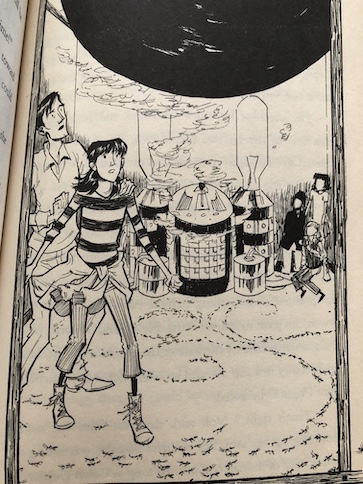
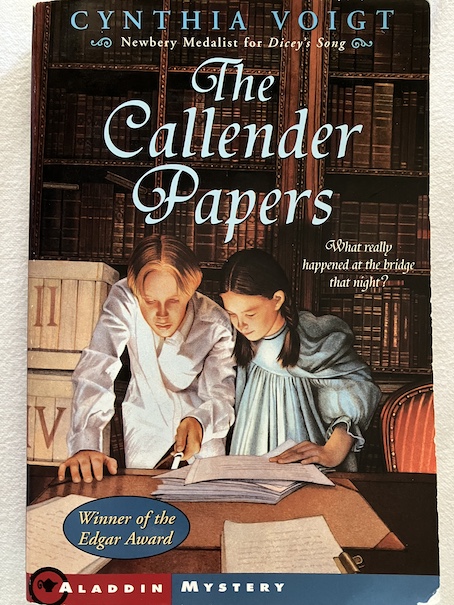


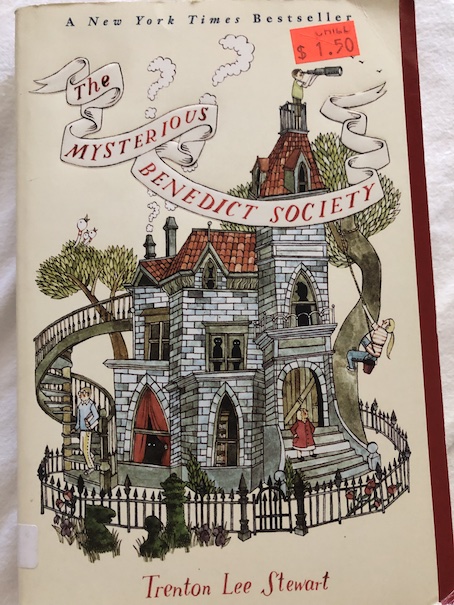


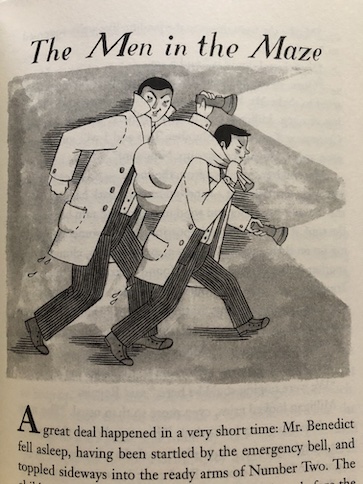


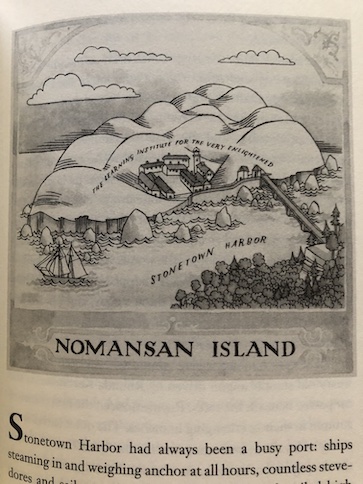
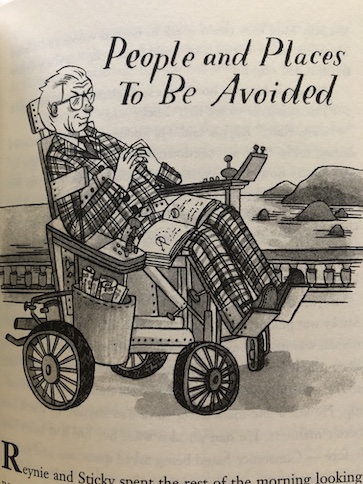

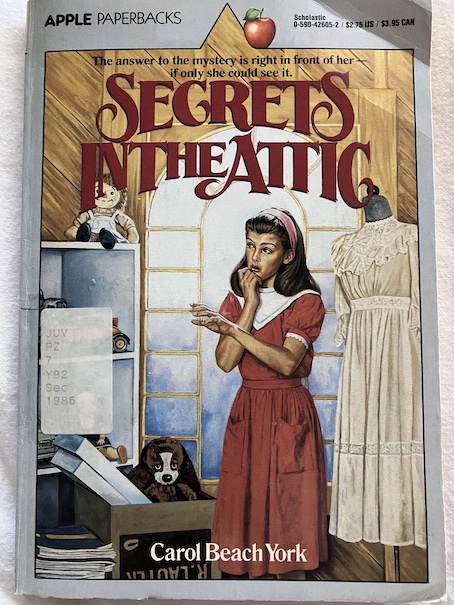



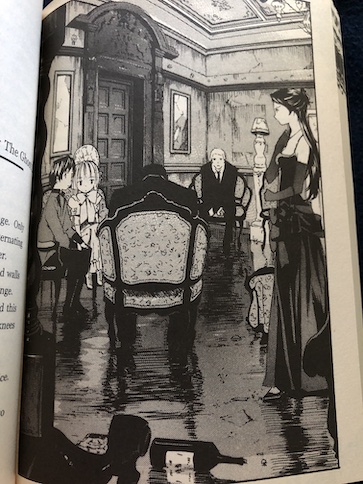




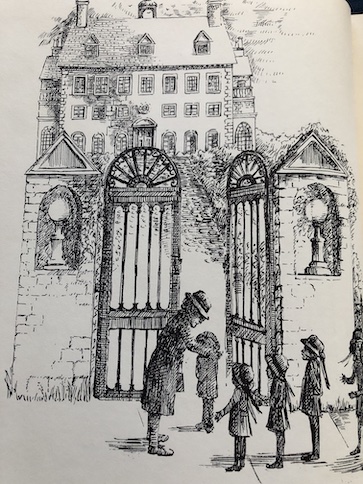

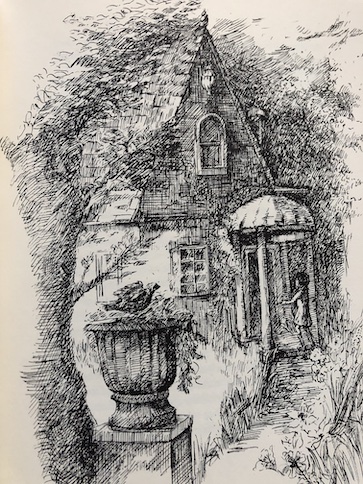
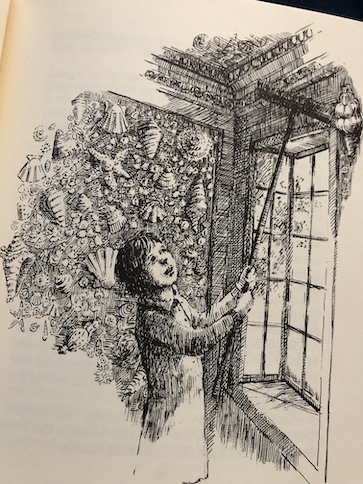


 Jestress's Forgotten Books and Stories