Years ago, Aunt Morbelia inherited the Fearing family estate, Harrowwood, after her cousin died. Aunt Morbelia goes to England to inspect the estate and make some decisions about its future. The estate is in disrepair, and taxes have been eating up the funds intended for its upkeep. Todd and his friend, Jeff, also go to England with Aunt Morbelia to see the family estate and famous places in London.
Some of Aunt Morbelia’s fascination with creepy stories becomes apparent as she recounts the dark history of the estate and the mysterious death of her wicked, possibly murderous, uncle. He was apparently killed by animals after his cruelty to the animals on his estate was discovered. When they spend the night at the estate, Todd and Jeff hear a frightening howl. They are only too happy to move on to London and go sightseeing.
At Harrowwood, Todd finds an old journal belonging to his aunt’s cousin, Albert, and he thinks it would be interesting to see the places that he visited when he went to London years ago. Albert was an eccentric man who died in an insane asylum because people thought he was crazy for going around town making bird sounds all the time. Still, Todd is fascinated by the strange drawings and cryptic notes in the journal. Before Todd can figure out what they mean, he and Jeff spot mysterious characters following them around, and someone leaves a threatening note at the bed and breakfast where they are staying. Todd is determined to find out who their mysterious stalkers are and put and stop to it!
The book is currently available online through Internet Archive.
My Reaction and Spoilers
The first book in this two-book series wasn’t a mystery, but this one is. (The first book in the series focused more on Todd and Aunt Morbelia getting used to each other when she moved in with Todd and his parents, and it had more discussion of Todd’s dyslexia in it than this one did.) There are things that Aunt Morbelia doesn’t know about her family and the family estate. The estate has meaning for her, but it has greater meaning for someone else, and so does the journal that Todd found. The Fearings have always been an eccentric bunch, and when they learn who has been following them around, Todd and Aunt Morbelia have some suggestions that change things for the better.
Aunt Morbelia didn’t know it, but her cousin had a son before he died, and he is bitter that Morbelia inherited the estate instead of him. He and his family have been secretly living on the estate for years, and they are afraid that Morbelia will have them thrown off. They admit that they were trying to scare Aunt Morbelia and Todd away so they could have the estate to themselves. They also want the journal that Todd found and has been carrying around the whole time. The journal contains Albert’s notes of his research on birds and bird calls. Albert believed that he had discovered the language of birds and could communicate with him. His son wants to carry on his strange work and maybe learn to communicate with other animals, too. Todd gives the journal back to them, and Aunt Morbelia assures them that she will not throw them off the estate. In fact, she suggests that they give nature lessons to tourists in order to support the upkeep of the estate. Because they demonstrated their skill with disguises and acting while following them around London, she also suggests that they put on mystery plays and host mystery weekends on the estate. They enthusiastically agree to the plan, and Aunt Morbelia and Todd talk about visiting next year to see how things are going.
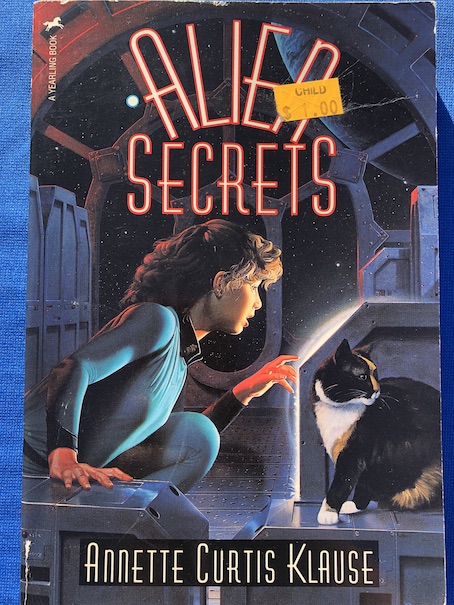
Robin Goodfellow, nicknamed Puck (her parents were fond of Shakespeare), is a human girl from Earth in the future. When the story begins, she has been kicked out of boarding school on Earth and is traveling by space ship to join her parents, who are scientists who have been working on another planet. They left Robin with her grandmother on Earth, who enrolled her in an English boarding school in order to give her some discipline and some friends her own age, but she was expelled for failing her classes (not to mention throwing a fit and burning her books when she discovered that she had failed). Puck dreads what her parents will say when she arrives on the planet where they are now living because they had always hoped that Puck would also become a scientist and work with them, but this journey will change Puck’s life.
Before
the ship she will be traveling on leaves Earth, Robin witnesses a man attacking
someone else, possibly killing him.
Robin does not report the attack because she doesn’t know whether or not
the other person was killed, and she doesn’t think that anyone will believe her
anyway. She witnessed this attack while
sneaking around a place where she wasn’t supposed to be, and she is being sent
to her parents in disgrace after being expelled, so she doesn’t sound like a
very credible witness. However, the man
in the fight, Mizzer Cubuk (“Mizzer” is how they say “Mister” in the book),
turns out to be traveling on the same ship as Puck. All Puck can think of to do is to try to
avoid him on the ship and hope that he didn’t get a very good look at her after
she ran away from his fight.
To
Puck’s surprise, the captain of the ship she is traveling on, Captain Cat Biko,
asks her if she could make friends with an alien who is also traveling on the
ship. The alien is one of the Shoowa,
who were enslaved by another group of aliens called the Grakk. Now, he is free and finally traveling home to
Aurora, the same planet where Puck is going.
The captain feels sorry for him and thinks that he might appreciate a
friend and that he might find a human child less intimidating than an adult.
Later,
Puck and other passengers are woken out of their sleep by the sounds of wailing
and moaning. One of the women on board,
Leesa, says that she saw something that looked like a ghost that walked
straight through her. Other people, who didn’t see or hear it, assume that it
was nightmares or imagination, but Puck knows that it wasn’t. One of the crew members, Michael, tells Puck
that there have been rumors that the ship is haunted and that other people have
seen and heard strange things.
Strange things are happening on the ship, and some of the passengers seem to be hiding something. Who can Puck trust, and who isn’t who they seem to be?
The
alien who is traveling on board the ship understands Puck’s feeling of
failure. The alien, called Hush, says
that he carries shame because he lost something important, something that his
people were counting on him to take home to their planet. Puck and Hush discuss how people from Earth
had fought the Grakk and sought to learn about Grakk technology from Shoowa
slaves who were freed after the war.
Even the ship they are now traveling on was once a Grakk ship. The Earth people kept delaying sending the
slaves home because they wanted to pump them for more information and because
they were trying to decide if they could really trust them more than the Grakk. After negotiating with the Earth people about
returning home, the Earth people agreed, with some provisions. They arranged for some of the Shoowa to stay
on the Grakk home planet, still working with humans. Some of them would travel on ships with Earth
people, and some others could go home to their own planet. Hush is the first one to head home, and he
was entrusted carrying home an important symbol of his people that his family
had protected for generations: a statue that represents a child because
children are the future and a source of freedom, according to an ancient Shoowa
prophecy. Unfortunately, the statue was stolen from Hush before he could return
it to its rightful home. He reported the theft to the Earth security personnel
at the station, but they didn’t take him seriously. They thought that he probably
just lost it by accident.
The
haunting is real in this book. On a tour
of the ship, Puck learns that the ship’s navigator has also seen the ghost
aliens. One of the characteristics of a
ship’s navigator is the ability to see hyperspace, something that not everyone
has the ability to do, although even scientists in Puck’s future time don’t
seem to know why some people can do that and others can’t. Slowly, it becomes evident that people who
are able to see hyperspace are also able to see the ghosts.
On the journey to Aurora, Puck also learns that she is one of the rare people who are able to see hyperspace, giving her a possible future in navigating a space ship, something that she would really enjoy learning. When she arrives at Aurora and is greeted by her parents, who have missed her while they were apart, Puck also comes to realize that her parents will always love her, even in spite of failing her classes. Even Hush’s people tell him that, although they are happy to have the statue back, his safe arrival was always the most important thing, and they wanted him to come home, whether he successfully brought the statue or not. Both Hush and Puck come to realize that their families will always love and value them even with their imperfections and failings. With parents who love her and a new vision of the future ahead of her, Puck is ready to make a new life on Aurora.
The book is available to borrow and read for free online through Internet Archive.
This is both the fourth book in the Enchanted Forest Chronicles and the first book in the series that was written. The author wrote this story before the others and then wrote the other three to explain how the characters got to this point. The first three books in the series focus on Princess Cimorene and her adventures, but this book focuses on her son, Prince Daystar.
Partly
because this series is kind of backwards, with the last book being the first
written, I’m going to start with a spoiler.
When the book begins, Daystar is unaware that he is a prince and that
his father is the king of the Enchanted Forest.
He grew up in an ordinary cottage on the edge of the forest, so he is
accustomed to the presence of all kinds of fantasy creatures and fairy tale
characters. He thinks of himself and his
mother as ordinary poor folk. However,
his mother has taught him not only reading and writing but other skills that
are more unusual for peasants, like music, fighting, and even a little magic.
When
Daystar is 16 years old, a wizard named Antorell comes to their house. Daystar’s mother, Cimorene, seemed to know him,
and he knows her. Antorell demands “the
sword” and the boy, and Cimorene casts a spell to melt him. (“’No! Not again!’ he screamed.” If you’ve read the other books, you already
know why. But, again, this book was
written first.)
The
next day, Cimorene gives Daystar a sword that he’s never seen before but which
seems to draw him to it, and she starts giving him instructions. The instructions are vague, but Cimorene
insists that Daystar is to go into the Enchanted Forest and not to come back
until he can explain why he had to go in there in the first place. Also, he is not allowed to draw the sword
from its scabbard unless he really needs to use it. Cimorene says that she can’t explain more
because it might “ruin everything.” Not knowing
what else to do, Daystar starts into the Enchanted Forest. When he glances back, Cimorene and the cottage
have suddenly disappeared. Daystar has
no idea why, but he has no choice but to keep going.
In the
forest, Daystar meets a talking lizard called Suz, who claims to know
everything about the Enchanted Forest and what goes on there (a tall claim, considering
everything that goes on there). When
Daystar asked him if he knows anything about the mysterious, magical sword that
his mother gave him, Suz tells him that it’s the Sword of the Sleeping King and
that everyone has been looking for it.
Daystar knows nothing about it, which surprises Suz. To Daystar’s surprise, both the sword and
Daystar’s lack of knowledge agitate Suz, who says that he must get Kazul, who
will know what to do. Before he then
runs off, leaving Daystar wondering who Kazul is, Suz tells him that he’s going
to have to learn about the sword by himself because there are certain rules
associated with magic, but that he should follow the sword to find out.
The
next person Daystar meets is a red-haired girl who is stuck in a hedge. She is surprised by how easily Daystar can
get into the magical hedge, and at first, she thinks that he is a wizard. She is relieved when she finds out that he’s
not. The girl, Shiara, tells Daystar
that wizards have been chasing her because she burned the Head Wizard’s staff. Most people could never accomplish that
because wizards’ staffs are extremely powerful and have protective spells on
them, but Shiara is a fire-witch.
As the
two of them talk, Daystar learns that, while fire-witches are extremely rare
and powerful come by their powers naturally, Shiara’s abilities are more
unpredictable than most. She has trouble
casting spells on purpose, but when she gets mad, she can do some extremely
powerful ones without really trying. Fire-witches
tend to have tempers, and Shiara is no exception. Because of that, she doesn’t have many
friends. Most people are afraid to be
around her because they never know when she’ll lose her temper and accidentally
set things on fire. Even worse, for
Shiara, is knowing that most fire-witches are able to do very impressive spells
and are almost invulnerable, but yet, she can’t even burn her way through a
hedge when she tries it. The wizards are
very interested in her because most fire-witches are immune to their spells. When they learned that she was a fire-witch who
couldn’t cast her own spells, they tried to kidnap her in order to study her
magic, which she how she ended up setting the Head Wizard’s staff on fire.
Daystar
and Shiara finally get out of the magical hedge when Daystar suggests that
Shiara try being polite to it instead of losing her temper. Creatures and objects in the Enchanted Forest
tend to respond well to politeness. When
they’re out of the hedge, a wizard shows up and tries to kidnap Shiara again,
but Daystar defends her with his sword.
However, Daystar’s hand is injured when he tries to pick up the pieces
of the wizard’s staff, and it explodes.
Daystar
and Shiara seek help from Morwen, a witch who lives nearby. It is from Morwen that Daystar begins to get
a sense of what his sword is capable of doing.
He also meets up with Suz again, who tells him that he should go to the
castle and that Kazul will meet him there.
Daystar still doesn’t know what he’s walking into, but missions in the
Enchanted Forest can’t be ignored, and he has a mission to complete that everyone
has been waiting for since before he was born.
By the end of the story, Daystar has learned what he needs to do to rescue his father, and Cimorene and Mendanbar are reunited. Shiara ends up getting what she wants, partially, because she gains the ability to use her powers, but is forced to be polite in order to do so, which really irritates her. She becomes Kazul’s new princess, where she will learn both the personal skills and magical skills she needs to control both herself and her ability. Cimorene believes that Shiara will end up marrying Daystar eventually and becoming the next queen of the Enchanted Forest. However, the series ends here, and the future is left to the imagination. Morwen also decides to marry Telemain, a character from the previous books.
Like other books in this series, this book contains a lot of humor and parodies on popular fairy tales and fairy-tale creatures. Personally, I like the first two books in the series the best, but this one is also fun. There is a mild touch of romance to it, which is also nice.
The book is currently available online through Internet Archive.
There is one more story after this series, a short story in the collection Book of Enchantments that features Daystar and both of his parents but does not have Shiara.
Poor Mouse works as a scullery maid in a castle in Medieval England. She has lived there all her life, since someone abandoned her at the castle as a baby. She has no idea who her parents are, when her real birthday is, or exactly how old she is (the cook once said she was about eleven, but he wasn’t sure). She doesn’t even have a real name; Mouse was simply the name given to her by the cook, who makes her work hard and beats her if she makes a mistake. Mouse’s life is hard, but then one day, she makes a big mistake, and the cook gets in a rage and attacks her with a meat hook. Mouse escapes from him and flees the castle. She knows that she cannot go back, but she doesn’t know where to go.
For the first time in her life, Mouse’s fate is in her own inexperienced hands. For a time, she joins up with a group of travelers, who take her to the city of York. However, none of them can adopt Mouse, and she must struggle to make a life for herself. In York, Mouse sees a puppeteer performing, and she is inspired to learn to be a puppeteer herself. Through a mixture of trickery and pleading, Mouse convinces the puppeteer to take her on as an apprentice.
Although Mouse makes many mistakes at first, and the puppeteer gets angry and threatens to leave her behind, the two eventually learn to get along with each other. Mouse gains skill at making and manipulating the puppets, and her confidence grows. However, danger still lurks in the future, for the puppeteer also has a dark past and dark secrets which pursue the two of them in their travels.
The book is currently available online through Internet Archive.
My Reaction and Spoilers
Stories with abused and neglected children are always sad. Mouse is failed by various adults who are mainly focused on their own lives and securing their own positions in life before she finally becomes independent. We don’t know why Mouse was abandoned as a baby, although it was probably because her parents were poor and maybe unmarried, which would have been a stigma at the time. We can be pretty sure that, whatever happened, Mouse’s parents’ position in life was too precarious to take care of her themselves. The castle cook she lives with is mainly worried about his own job and is more of an unwilling employer to Mouse than a parent. In fact, employment is more of a theme in Mouse’s precarious life than family. Even the puppeteer is more of an employer to Mouse than a parent. Mouse learns from the puppeteer, but it’s as an employee, and Mouse is well aware that she can be abandoned at any time if she fails to please her employer. In the end, Mouse gains an independence that pleases her, but I still found it a little sad because it seems like the one and only person who can’t abandon Mouse is Mouse herself and that there is little or no security in trusting or relying on others. The eventual goal turns out to be employing herself so she doesn’t haven’t to rely on someone who can dump her. I suppose that can be true in real life, too, but it’s one of hard, dark sides of life.
Although, the adult characters’ focus on securing their own lives and positions first is also a testament to the nature of the time when the story is set. Opportunities are limited by social level, and there are few sources of support for those who suffer unfortunate circumstances. Although it seems like the adults in the story are cruel and neglectful, there’s also a desperation to their own situations. The one person in the story who is willing and able to offer more generosity to Mouse than other characters is able to do so because of his privileged position in life. Even the puppeteer, while seeming more free than other characters, is living under danger and threat, and there is genuine risk to sharing in her life that Mouse doesn’t come to understand until later.
The puppeteer always dresses in loose-fitting clothes to cover up the fact that she is a woman. Although there is no reason why women cannot be puppeteers, she finds it necessary to disguise herself because she is pursued by an enemy from years ago. Once, her father, who was a master puppeteer, saved the life of a young Duke who was attacked by a man named Ordin. Ordin was trying to steal some of the duke’s lands. The old puppeteer and his daughter stood witness against him, and he was thrown into prison. Later, when he got out of prison, he attacked the party on the road, killing the old puppeteer and his companions. Only the daughter escaped alive, and she became a puppeteer to support herself. Ordin escaped, and she was forced to disguise herself to protect herself. She even refuses to tell Mouse or anyone else what her real name is through most of the book.
However, Ordin recognizes her one day while she and Mouse are giving a performance. He and another highwayman follow them on the road and attack them. The puppeteer kills the other highwayman but is gravely wounded herself. Mouse fights back against Ordin, knocking him into the fire, and he burns to death. They are not far from the duke’s castle, so the puppeteer sends Mouse there to get help. Mouse tells the duke what happened to the puppeteer, and he has her brought to his castle. The puppeteer, realizing that she will not recover from her wounds, finally tells Mouse her story and offers her name if Mouse wants it for herself. The duke offers to let Mouse stay at his castle. Mouse stays the winter, but in the spring, she decides to leave. She has come to love life on the road, and she promised the puppeteer that she would take care of the puppets. Mouse decides to take the puppeteer’s name, Sabine, as her own and sets off on a journey to find a place to perform her new puppet play, one telling the puppeteer’s story.
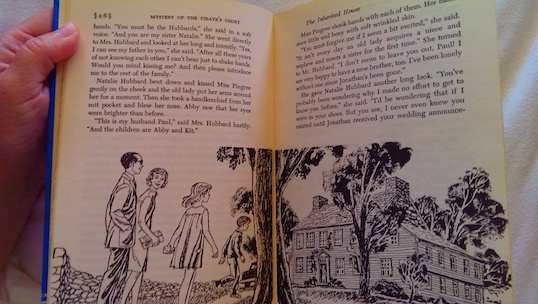
Mystery of the Pirate’s Ghost by Elizabeth Honness, 1966.
Abby
and Kit Hubbard’s mother has just received a letter telling her than her half
brother, Jonathan Pingree, has died and left her the old Pingree mansion. He has left over bequests to other family
members as well, and money to be held in trust for Abby and Kit. It’s exciting news, and the family may move
to live in the mansion they have inherited, although it partly depends on Mrs.
Hubbard’s other relatives.
Mrs. Hubbard, who was born Natalie Pingree, has never met her half-brother or half-sister. They were her father’s children, from his first marriage. She doesn’t know much about her father’s early life because he died when she was very young, and all that she knows about him is what her mother told her. Apparently, her father’s first marriage was not a happy one. He stayed in that marriage long enough for his first two children, Jonathan and Ann, to become teenagers. Then, he made sure that his first wife and children were settled comfortably enough in the family home and left them to move to Philadelphia to start a new life by himself. Sometime later, his first wife died and he married Natalie’s mother, who was much younger. After his death, Natalie and her mother moved in with her mother’s sister, Aunt Sophie. When Natalie got married, Aunt Sophie sent a wedding invitation to Johnathan and Ann, but they never came to the wedding or made any reply. Natalie assumed that they felt uncomfortable about their father’s remarriage and didn’t want to see her, which is why she’s so surprised about Jonathan leaving the family home to her. The only reason she can think of why he would do that is that neither he nor his sister ever married or had children of their own, so there was no one else to leave the house to. Both of them were more than 30 years older than Natalie, and Ann is now an elderly woman, still living in the house. Jonathan’s will has made provision for her as well, and the Hubbards go to see her at the Pingree mansion.
Mrs. Hubbard is pleasantly surprised that Ann is actually happy to see her. Ann Pingree explains that the reason why she and Jonathan never replied to the wedding invitation was that, until that invitation arrived, neither of them had known that their father had another child, and they felt awkward about it. However, Ann has been lonely since Jonathan’s death, being the last of the Pingrees, and she is glad to have Natalie and her husband and children with her and is eager to have them move into the mansion and live there. (Ann doesn’t live in the old mansion itself, but she does live nearby.)
Aunt Ann shows the family around the old mansion and explains more about its history and the history of the Pingree family. It turns out that the house, which has existed since Colonial times, although it has been burned, remodeled, and expanded over time. The house also has a number of secrets. Apparently, there used to be a tunnel running from the basement of the house to the beach that was used to bring in smuggled goods during the Colonial Era. There is also a hidden room behind a fireplace upstairs where the children of the family could hide during Indian attacks. (It doesn’t say how often that happened.) To the family’s surprise, Ann also tells them that the mansion is supposed to be haunted. The kids think it all sounds exciting, although Ann doesn’t explain much about the ghost the first time she mentions it. (Kit uses the phrase, “Honest Injun?” when asking Aunt Ann if she really means it when she says that the house is haunted. This isn’t a term that people use anymore because it isn’t considered appropriate.)
Mr. Hubbard is able to get his job transferred to a different branch of the company he works for, so the Hubbard family decides that they will move into the Pingree mansion. The kids like living by the beach, and their parents tell them that they can use the old ballroom of the house as a kind of rec room. Soon, they meet a couple of other children who live in cottages nearby, Chuck and Patty, and make friends with them. Chuck and Patty have already heard that the Pingree house is supposed to be haunted, although they’ve never seen anything really mysterious, just a light in the house once when they thought that the house was supposed to be empty.
The next time Aunt Ann comes to visit, the four children ask her to tell them about the ghost, and she tells them the story of the first Pingree to live at Pingree Point. This ancestor, also named Jonathan Pingree, built the original house in the late 1600s. He was a shipbuilder who owned several ships of his own, and he wanted to live near the sea. Later, he also became a privateer. When the kids call Jonathan a pirate, Aunt Anne agrees and explains that, unlike a pirate, Jonathan’s position as privateer was all perfectly legal because he had a Letter of Marque. (Yes, privateers operated within the law, but yes, they were also essentially pirates who raided other ships for their goods. In other words, they did the same things, but privateers did it with permission whereas ordinary pirates didn’t get permission. Historically, some privateers continued their pirating even after permission was revoked, so as Aunt Ann says, “the line between that and piracy was finely drawn.”) His son, Robert, was sailing on one of his father’s ships when it was taken by other pirates, and Robert was forced to join their crew. The family never saw Robert again and only found out what had happened from a fellow crew member who was set adrift and managed to make it back home. What happened to Robert is a mystery. His family didn’t know if he had really taken to the life of a pirate and couldn’t return home because he couldn’t face his family, if he had been killed in some fight, if he had been hung for piracy because he had gotten caught and couldn’t prove that he was forced into it. However, members of the family claimed that Robert’s spirit did return to the house and that he knocks at doors and windows, begging to be let back into his old home. Aunt Ann says that she’s never seen the ghost herself, but old houses can make all kinds of noises on windy nights, and that’s what she thinks the “ghost” is. As Chuck and Patty leave, they say, “we hope that old ghost doesn’t show up to frighten you.” Of course, we all know that it will because otherwise this book would have a different title.
One day, Kit is bored and starts playing around in the secret room, pretending that he’s hiding from American Indians. While Kit is in the secret room, he overhears the servants, John and his wife Essie, who have worked for the family for years, talking. Essie seems very upset and wants John not to do something that might risk their home and jobs, but John says that it’s too late and that they’re already “in it” and “can’t get out.” Kit tells Abby what he heard. That night, Abby hears banging and wailing during a storm and fears that it’s the ghost. Soon, other strange things happen, like a desk that mysteriously disappears and a cupboard that also mysteriously appears in its place. The children like John, and they don’t want to think badly of him, but he’s definitely doing something suspicious. One night, the children try to spy on him, and Abby once again hears the wailing and sees a mysterious, cloaked figure in the fog. Is it the ghost?
There are some interesting facets of this story that make it a little different from other children’s books of this type. For one thing, the children confide their concerns to their parents almost immediately, and the parents immediately believe them. In so many children’s mysteries, either the children decide to investigate mysterious events on their own before telling the parents or the parents disbelieve them, forcing the children to investigate on their own. It was kind of refreshing to see the family working together on this mystery. It actually makes the story seem more realistic to me because I can’t imagine that I would have been able to keep worries about mysterious things secret from my parents as a child, and they would have noticed if I was sneaking around, trying to investigate people, anyway. Abby and Kit do something dangerous by themselves before the story is over, but they also confide what they’ve done to their parents at the first opportunity and do not take the same foolish chance again.
The truth of John’s activities comes to light fairly quickly, although it takes a little longer for the family and the authorities to decide how to handle the situation. Investigating John brings to light some of the Pingree family secrets, and Abby and Kit soon discover the fate of Robert the pirate and the truth of his ghost. I’ll spoil the story a little and tell you that the ghost that Abby sees is apparently real, but it isn’t very scary. Once they learn the truth of what happened to Robert and see that his body gets a decent burial, the ghost appears to be at peace.
One thing that bothered me was the way that the characters talk about Native Americans in the book. It’s not the talk about Native American sometimes abducting children because I know that happened. It’s more how they picture that would happen. In the scene where Kit was hiding in the secret room, Kit imagines that the Indians were attracted to the house by the smell of his mother’s cooking and that he went into hiding while his mother fed them to avoid being abducted. As part of his scenario, he imagines that his mother would have wanted to “hold her nose against the Indian smell.” What? Where did that come from? There are all kinds of tropes about Native Americans in popular culture, from the “noble savage” image to that silly “Tonto talk” that actors did in old tv westerns, but since when are they supposed to smell bad? I’ve never seen characters in cheesy westerns hold their noses before, so what’s the deal? I tried Googling it to see if there’s a trope that I missed, but I couldn’t find anything about it. I’m very disappointed in you, Elizabeth Honness.
This book is currently available online through Internet Archive.
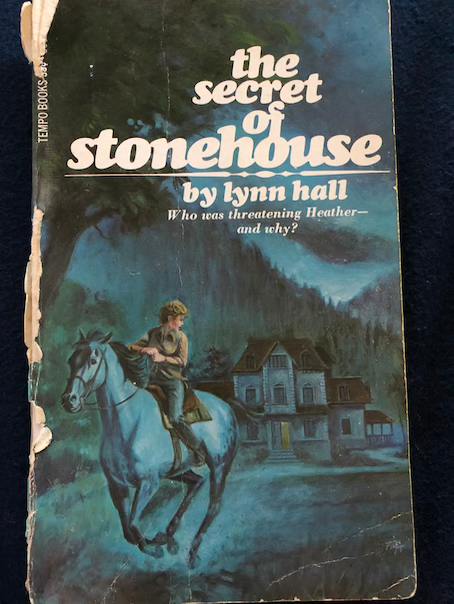
Heather has lived her entire life (as far as she can remember) in Scotland with her grandmother and her uncle, Donald. Donald has raised her since she was small. He’s been like a father to her, and she loves him like a daughter. However, he recently decided to move the two of them to the United States, taking them to a small town in Wisconsin. Heather can’t understand the reason for the move, and for the first time in her life, it seems like Donald is keeping secrets from her.
Donald seems oddly concerned that Heather shouldn’t tell people that she is adopted, something that he’s never seemed concerned about before. Heather has asked him about her parents before, but all he can tell her is that his wayward brother Ewen brought her to the family farm in Scotland, saying that she was his daughter and that her mother was dead. Ewen simply left her with Donald, never trying to see her or talk to her again and never sending her any money. Heather also knows that, although says that he’s going out to search for a new job, he’s been hanging out in other places, spending time with the mysterious Mr. Worley.
Heather makes friends with a boy named Gus who lives nearby. Gus lets her ride one of the horses that his family owns, Cloud, and invites her to go riding with him sometimes and participate in local riding events called “shodeos.” Heather loves horses and enjoys their rides together.
On one of these rides, the two of them go near a large, old, stone mansion that gives Heather a strange feeling. Gus’s family tells her the tragic story of the family who used to live there, the Selkirks. They were wealthy, but young John Selkirk was killed in an accident the day that his beautiful young wife, Molly, gave birth to their only child, a little girl named Hebron. John’s parents never recovered from the loss of their son and passed away soon after, leaving just Molly and the baby. However, when Hebron was only three years old, she was apparently abducted for ransom and later murdered, and her mother died soon after. The story makes Heather uneasy, and the house gives her a strange feeling, like she’s drawn to it.
However, other sinister things start happening. Someone in a car that looks disturbingly like Donald’s tries to run her and Cloud off a bridge. When Donald spends the night away from home “on business”, someone sneaks into the house. Heather begins to realize that someone is out to get her, some mysterious person means her harm. Memories, dangerous ones, are beginning to surface in Heather’s mind, and someone is determined to try to keep her from remembering.
Part of the mystery is pretty obvious (at least, I thought it was, and you might guess it from my plot description), but the part that I didn’t guess was who was behind it all.
The Case of the Wandering Weathervanes by E.W. Hildick, 1988.
Brains Bellingham brings a new case to the other members of the McGurk Organization: a weathervane that he was using for his latest science experiment has been stolen! Although Brains says that the weathervane was extremely valuable because it was a critical part of his experiment, the others don’t think much of it. However, Brains’ weathervane turns out to be just one of many weathervanes that have disappeared all over town.
At first, everyone is sure that it’s just a prank, probably by some local kids, and it gets reported as an odd tidbit on the local news. However, the more weather vanes that disappear and the more time that goes by without them being returned, the more disgruntled the local citizens become. People (like Brains) start claiming that their weathervanes were worth more than they probably were, although there were a couple of legitimate collectors’ items among the stolen weathervanes. The police fail to see the humor behind the incident and start talking about serious consequences for the one responsible for the weathervanes’ disappearances. Unfortunately, as often happens in these cases, people begin looking at Wanda’s brother, Ed, as the culprit.
Ed has a long-standing reputation as a prankster, and so is the first person most people suspect when strange things start happening. Wanda is sure that he isn’t guilty this time, though. Her brother wouldn’t be above taking something for a short period of time just as a joke, but he wouldn’t just steal things from people and keep them. When some of the weathervanes start reappearing, at the wrong houses, it looks like it might have been a prank after all, but Ed still maintains that that he’s innocent.
The members of the McGurk Organization believe that the real culprit might be a friend of Ed’s who admires some of his pranks and might be trying to imitate him with a wild scheme of his own. However, if Ed’s friend is really guilty, where are the missing weathervanes and why haven’t they been returned? A professional private investigator has been pressing the kids for what they know about the thefts, and Ed suddenly disappears! There may be much more to the mysterious disappearing weathervanes than meets the eye. What started as an odd prank may have uncovered something more serious!
The book is currently available online through Internet Archive.
The Sly Spy by Marjorie Weinman Sharmat and Mitchell Sharmat, 1990.
Someone has been trying to steal Olivia’s business by covering up her flyers with ones that say E.J.’s Spy Service. At the same time, Olivia’s friends are trying to keep Desiree’s birthday present a secret even though she has been snooping at their houses to find out what it is.
Olivia’s friends bought her a pet canary because she said that she likes feathers, and they ask Olivia to hide it at her penthouse until the party. However, it looks like Desiree has hired E.J. to spy on her friends and discover what they’re giving her for her birthday. Olivia has to outwit the spy and prove to him that some cases aren’t worth taking.
In a way, this story is kind of like business ethics for kids. First, covering up Olivia’s ads to prevent her from getting business was a form of unfair competition. Then, when Olivia points out to E.J. that he also has a surprise present to give to Desiree, she helps him to understand why the other kids want to keep their present a secret. It wasn’t really ethical for E.J. to take Desiree’s case in the first place since it would be better for her to be surprised on her birthday. Olivia makes sure that E.J. only has a vague notion about what Desiree’s present actually is, and he figures out what to tell Desiree so that he can fulfill his duty to her without giving away the surprise.
The Pizza Monster by Marjorie Weinman Sharmat and Mitchell Sharmat, 1989.
Olivia lives in a penthouse in San Francisco with her chauffer, Willie, and her housekeeper, Mrs. Fridgeflake. Her wealthy parents live there, too, but they are often traveling and are rarely home. When her best friend, Taffy, moves away, Olivia is lonely. She buys herself a pet owl named Hoot, but that still doesn’t completely help. She needs something to help keep herself busy. Olivia realizes that she is good at keeping secrets and at helping people with their problems, so she decides to busy herself running a service to help people with their secret problems. She has a bunch of flyers made and hangs them up around town saying that she is an agent for secrets and will help people.
A boy named Duncan, who Olivia knows from school, asks her to help him with his friend, Desiree. He says that they were together at the pizza parlor when she suddenly got angry and walked out. He doesn’t know what made her angry, but he asks Olivia to help him find out and fix their relationship.
Olivia’s attempts to help are a matter of trial and error. At first, Olivia thinks that Desiree was merely offended that Duncan gave her the smallest slice of pizza. She suggests that Duncan buy her another whole pizza, but that doesn’t work. Even Olivia’s idea to buy her a lot of different kinds of pizza doesn’t work. Eventually, Olivia talks to Desiree herself and learns that there is another reason why she is angry with Duncan.
It turns out that the problem doesn’t have anything to do with pizza but with Duncan himself. He’s always full of doom and gloom and criticism for everything. What Duncan needs is an attitude adjustment. He doesn’t realize that his pessimism and negativity makes it difficult for others to be around him. Olivia encourages him to be more positive and to develop his sense of humor. Once his attitude improves, so does his relationship with Desiree.
Larry Damar and Josh Toomey are sailing in a boat off the coast of Peolle Island in the Caribbean when they rescue an old man from what seems to be a skiff. But, as soon as they get him aboard their own boat, they realize that what they thought was a skiff is actually more of a long boat, and it looks old. Very old.
They take the old man, who is suffering from exhaustion, to their fathers. While the old man rests, they inspect the boat and confirm that it is an antique. Oddly, from the condition of the wood, they believe that it has been resting in water for some years, but not salt water. It’s the kind of longboat that would have been carried aboard larger naval ships from a couple hundred years earlier. The name on the side of the boat, HMS Tiger, is familiar, but they heard that it was lost at sea ages ago. The old man is also carrying what appears to be some very old documents, but they are unable to read them, and when the old man speaks, they’re not quite sure what language he’s speaking.
They send a message to Sir Harry Arnold at the antiquities department of the British Naval Archives about the boat and the old man. When he arrives, he confirms that the longboat came from the HMS Tiger, a three-masted ship built in England in 1791. The Tiger was considered a jinxed ship because of everything that went wrong during its construction and its maiden voyage. Because of that, no one wanted to sail on it again or even work on the ship to dismantle it. So, the builder decided to send the boat on one last voyage by itself. He and his men loaded up the ship with supplies as if it had a crew aboard and then set it adrift, watching it sail off majestically, without a crew. Everyone had assumed that it would have eventually sunk, damaged by the weather, but apparently, it survived for longer than anyone had suspected.
Since no one can understand his language, the old man, who calls himself Vali, draws pictures to explain to them where he came from. Vali indicates which island he came from, and according to his other drawings, he lived there with many other people until many of them were killed in some kind of storm. He also draws a picture of a young girl with a crown on her head. Then, Larry’s dad, Vincent, recognizes the seal on a signet ring that Vali shows them. Vincent has read about the history of the country of Grandau (fictional country), and he recognizes its royal seal.
About 200 years before, Grandau was overrun by a neighboring country. Members of the royal family of Grandau escaped the invasion along with some loyal servants and tried to flee across the Channel to England to seek sanctuary. However, they were only in an old fishing boat, and it was thought that it sunk in a storm before they reached England because such a small craft would be unlikely to have survived. Grandau has not been a happy country since then. Over the years, they have been ruled by a series of dictatorships, and it has been in an almost constant state of unrest.
Now, the presence of the longboat from the HMS Tiger presents a much more intriguing theory of what happened to King Tynere of Grandau and his people. By an unbelievable coincidence (your suspension of disbelief is required for this story), the royal family’s attempted escape to England happened around the same time that the HMS Tiger was sent off alone and fully equipped for its final voyage. It now seems that the desperate people on the fishing boat were saved by encountering this grand, unmanned ship that no one else wanted, that everyone feared was jinxed. Grandau was not a seafaring nation, so the people were probably unable to actually sail the ship, simply letting it drift until they found land. Eventually, they arrived at an island in the Caribbean, and their descendants have been living there ever since in anonymity, until the disaster that prompted Vali to risk venturing out for help.
Unfortunately, their attempts to determine what language Vali was speaking and where he came from have also come to the attention of the wrong people. The government currently in power in Grandau has been working hard to stamp out the history and culture of the country in order to tighten its hold on the people, although their hold has never been more than tenuous, just like all the other dictatorships since Grandau’s royal family fled. Now that word has reached them that members of the royal family that the people of Grandau mourn may actually still be alive, they are determined to eliminate them before they can return to their ancestral home.
The author of this book, Mickey Spillane, is best known for his Mike Hammer series of hard-boiled mysteries for adults, and some of his hard-boiled style shows in this adventure book for children. This book is also part of a short series, although I don’t have the first book, The Day the Sea Rolled Back. In that book, Larry and Josh are helping their fathers hunt for sunken treasure, but their efforts are being sabotaged by a pair of treasure-hunting brothers.






 The Ship That Never Was by Mickey Spillane, 1982.
 Jestress's Forgotten Books and Stories