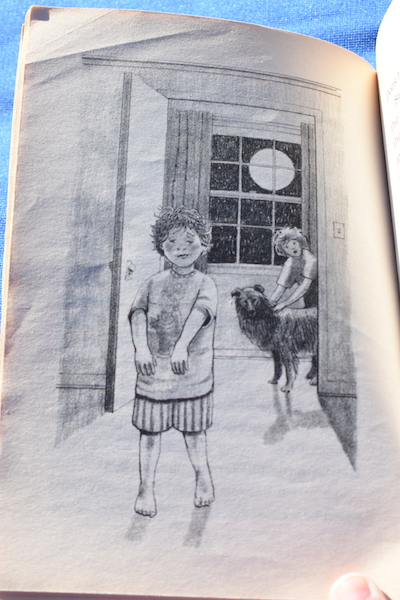
And This is Laura

And This is Laura by Ellen Conford, 1977.

Twelve-year-old Laura Hoffman feels out of place in her family. Her other three siblings are over-achievers. They all have particular talents and interests and earn awards for them or just have the ability to impress people. Laura gets good grades in school, but apart from that, she doesn’t seem to have any unique talents or interests. She doesn’t think there’s anything about her that would earn an award or impress anybody. Laura feels depressingly average next to the other members of her family.

It isn’t that her family is pressuring her to achieve anything in particular or to be like them or do what they’re doing. It’s just that Laura wishes that she had something more interesting and distinctive about herself. Other people who know Laura’s siblings keep comparing her to other members of her family. When she joins the drama club at school, one of her teachers seems a little disappointed that she’s not quite as good at acting as her older sister is. Laura’s friend, Beth, tells her that she’s good, but Laura feels like she’s never good enough, never as distinctive as she should be.

By contrast, Beth’s family is much more conventional. She only has one younger sibling, not three siblings, like Laura. Her mother is a lawyer, and their house is always neat and stylish. Laura’s house is noisy and chaotic, and she describes their household clutter as looking like a rummage sale. Laura thinks of herself as being a more ordinary, conventional person, and it occurs to her that she feels more at home in a conventional house. When Beth comes to visit Laura’s house, Laura worries at first that Beth will think her family is too weird. However, Beth is charmed by their eccentricity. In fact, Laura feels a little hurt at how interesting Beth finds the rest of her family. Laura worries that she’ll always be boring and ordinary compared to everyone else. However, Laura has a special talent that even she doesn’t realize that she has.

While Beth is having dinner with Laura and her family, Laura’s mind wanders from the chaotic conversation at the dinner table. She suddenly finds herself having a vision of her scientist father in his laboratory. She sees him meeting a man in a white shirt and then acting excited, like he’s just had an important discovery. The vision feels strange to Laura different from a daydream. When it’s over, she hears her father saying that he has a lot on his mind, and Laura absent-mindedly tell him that he’ll figure it all out tomorrow, after the man with the white shirt comes. Suddenly, everyone stops eating and stares at her, wondering what she meant, but even Laura herself isn’t sure. She’s aware that she knew her father was working on some difficult problem because he was juggling hard-boiled eggs earlier (something her eccentric father does whenever he needs to think), but she’s never had visions like that before and doesn’t know who the man in the white shirt is or what her vision really means. She just thinks it’s nice that everyone seemed to notice her.

There must be something to Laura’s visions because her father later tells her that he figured out his problem just like she said she would. Beth is intrigued by Laura’s apparent ability to predict things and tries to help her have another vision. Laura sees Beth on a stage with flowers at her feet and takes that to mean that she’ll be the star of the drama club play. However, Laura isn’t sure that her visions are always true because, when Beth tries out for the lead, she only gets the second best part in the play.

Another odd thing about Laura’s ability is that the girls realize that it doesn’t work well in a quiet environment, like Beth’s house. Laura gets visions when she’s surrounded by noisy chaos and starts to feel like she’s either outside of the situation or wants to be outside of it.

At first, Laura likes feeling special and noticed because of this unusual ability she seems to have, but it soon starts to worry her. She’s not sure that she can always trust her visions to be right or her ability to interpret them. She also begins to realize that it’s not so much that people are starting to notice her as a person but to pay attention to her ability, which is different. It starts to make her feel even more out of it than before.

Then, Laura has a terrifying vision where her younger brother, Dennis, is missing and her mother is frantic with worry. Is that vision real? Is something really going to happen to Dennis, or is there another explanation? The vision wasn’t clear on what would happen to Dennis, and if it is a real vision, can Laura do anything to protect her little brother?

The book is available to borrow and read for free online through Internet Archive.

My Reaction and Spoilers

This story starts off like many other kids’ books I’ve read, where a character feels out of place in their family or wishes that they had some talent that would make them stand out from their siblings. Then, it takes a turn for the mysterious when Laura begins to have visions that make it seem like she can predict the future. At first, Laura enjoys the feeling of being special and noticed, but then, her visions start to frighten her.

Another girl at school, Jamie, hears her talking about it with Beth, and she tells Laura that she’s fascinated by people with psychic abilities. She’s read about it before, and she points out to Laura that not being right all the time or not knowing what a vision means at first doesn’t mean that she isn’t gifted. When she explains to Laura how alarming visions can have perfectly innocent explanations because visions can be metaphorical, Laura feels better.

Jamie persuades Laura to give psychic readings to classmates for money, but the idea of turning her newfound ability into a business doesn’t feel right to her. Sometimes, she sees things that she doesn’t like, things that frighten her. It’s bad enough to predict that a classmate will fail a class, but another vision suggests that a classmate will die. He doesn’t die, but he does get into a car accident, and that’s bad enough. Laura realizes that it’s horrible to see that bad things will happen without having a way to do anything about it. Also, instead of being pleased and proud of her, her family finds the whole business unnerving and all of the kids who come to see her for psychic readings too chaotic, even for them.

There are also the disturbing visions that Laura keeps seeing about Dennis. She takes her friends and her old sister, Jill, into her confidence. Jill says that she will keep a close eye on Dennis to make sure nothing happens to him. Dennis does disappear during the story, and people worry about him, but nothing bad happens to him. Nobody in this story dies, and Laura uses her visions to figure out where Dennis is.

Toward the end of the book Laura talks to her parents about whether or not they’re proud of her because of her psychic abilities. They have a family talk about what it means to be proud of someone. The parents say that they’re not proud of their children for being talented because they don’t see themselves as being directly responsible for their talents. They love all of their children simply because they’re their children, and they’re good people, who do what they think is right and care about others. As far as talents and accomplishments go, the parents see their role as parents as making resources available to their children so they can develop whatever talents they have to the fullest, whether that means letting them have music lessons or encouraging them to try out for the school play. Whatever talents the children have are simply what they were born with, and their achievements are signs that they’re making use of what they have. The children accomplish what they work for themselves, and they’re doing it because they love doing it, not because the parents require it. What makes the parents proud of their children is when they find out what they’re good at and what they love doing. It doesn’t matter to them what their children’s talents are or how their talents compare to each other’s; they just want all of their children to find fulfillment in what they do.

In fact, her mother says that she thinks part of Laura’s trouble is that she’s good at too many things. She’s always gotten good grades in every class, so none of her subjects seems to stand out. If she only got mediocre grades in most subjects and good grades in just one, she would feel like she had a particular talent for that one subject. When she gets equally good grades for everything, nothing stands out to her as her special talent. Rather than being “boring” and “ordinary”, as Laura thinks of herself, she’s actually well-rounded and multi-talented.

Her parents have always been confident that Laura would find her own interests and talents in life. She just feels unaccomplished next to her siblings because, except for Dennis, her siblings are older than she is and have had more time to figure out what their interests are and build up accomplishments. Laura is also a good, caring person, who has been using her talent to help other people to the best of her ability. She looked into everyone else’s future but her own. Her parents say that having a lovable and loving daughter means more to them than any number of impressive accomplishments would be. Whatever anyone else in the world thinks about Laura and her abilities, her family loves her for who she is, not her abilities.

I like the parents’ attitudes, and it seems that the rest of Laura’s family feels the same way, especially her older sister, Jill. I enjoyed how supportive Jill was about both Laura’s psychic abilities and about her acting. When Laura tells Jill that she’s thinking about quitting the drama club because her teacher seems disappointed that her acting isn’t as good as Jill’s, Jill persuades her not to quit. Jill tells Laura that she would understand if she wanted to quit the drama club because she discovered that she really didn’t like drama after all, but she doesn’t want her to quit because she thinks she isn’t good enough. Jill says that Laura is good but that she just needs a little more coaching. She wants her sister to see that she is more talented and capable than she thinks and to make the best use she can of her talents, all of them.

There were a few instances of mild swearing in the book and one semi-dirty joke. When Laura thinks that she’s hopeless at acting because her teacher is disappointed that she’s not like her sister and says that she’s going to give up the drama club, Jill insists that Laura read the role for her so she can see what her performance is really like. Laura doesn’t really want to, but Jill insists that she stand up and read it properly because “You can’t act lying down.” Laura quips that “You can if you’re in an x-rated movie”, and Jill wryly tells her that she’s too young for that. The joke only works if the reader knows what an x-rated movie is, so it would probably go right over the heads of anyone too young to understand it.

One part of this book that I thought was amusing was when Laura explains about her mother’s writing career. When her mother was younger, she played bit parts in movies, and now, she writes gothic romance novels and westerns. Laura doesn’t like the westerns, but she’s read a couple of the gothic romances, and she has noticed that her mother’s gothic romances are very formulaic – “heroines who go to live in crumbling old castles where dark family secrets are buried and everyone acts strangely and the heroine finds herself in Terrible Danger.” That is a concise and accurate description of that entire genre of books. Her mother says that’s part of the challenge of writing gothic romance – writing the same story over and over in different ways so readers can hardly recognize that it’s the same story at all.

The reason why that’s funny to me is that, years ago, my brother and I were sorting through some old books, and we found our mother’s old collection of gothic romance books. I was immediately struck that all the covers on the books looked alike. They weren’t completely identical, but they all had young women in dresses running away from crumbling old manor houses or castles while looking scared. Sometimes, the heroine had a blue dress and sometimes a red one. (More often than not, the dress was blue, but sometimes, there would be a girl in red, pink, or white. Other colors were rare.) There were a few where it looked like it was even the same girl or the same castle viewed from a different angle. I thought it was so funny, I picked up a couple more with very similar covers from a thrift store and made a couple of digital collages with them that I turned into backgrounds for my computer screen. The same story, told over and over in different ways. You can’t judge a book by its cover, but these covers do explain a genre. I’m not saying it’s not a fun genre, only that I find it funny. Whoever did the covers for these books was undertaking the same sort of challenge that writers like Laura’s mother did in writing them.

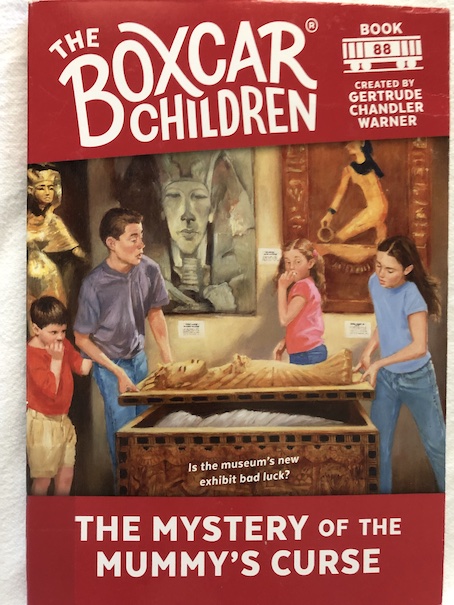
The Mystery of the Mummy’s Curse

The Boxcar Children

The Mystery of the Mummy’s Curse by Gertrude Chandler Warner, 2002.

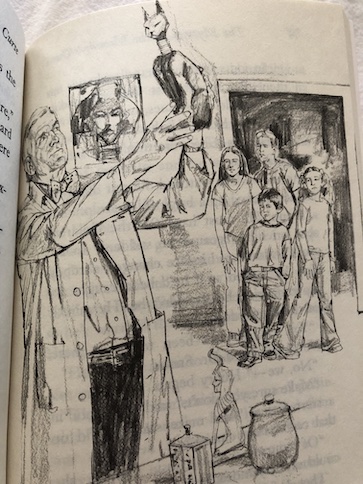
The Alden children are at the museum to get a sneak preview of the new Egyptian exhibit because the man in charge of the exhibit is the son of one of their grandfather’s friends.  When he shows them the mummy that will be the centerpiece of the exhibit, one of his assistants accidentally falls off a stepladder and breaks her ankle.  The museum personnel joke that it’s the “mummy’s curse,” although they quickly reassure the children that they don’t believe in curses.

With the opening of the exhibit coming soon, there’s a lot of work to do, including cleaning up the exhibit hall where it will be set up.  Losing the assistant has left the museum short-handed, so the Aldens volunteer to help with the cleaning and setting up.

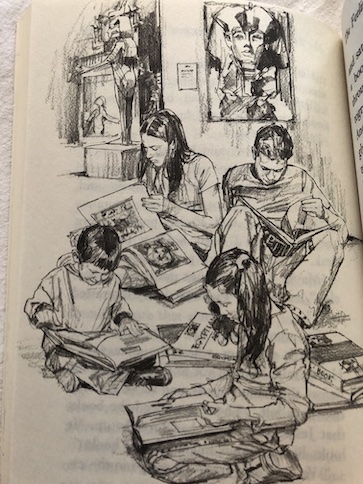
However, the children notice other odd things about the exhibit when they’re helping to clean up.  They hear strange noises, as if someone were creeping around the off-limits areas where the artifacts are being stored and the exhibit getting set up.  Then, some of the artifacts that they noticed when they were first introduced to the exhibit disappear.  When they check to see what else is missing, they realize that some of the artifacts they’ve seen aren’t even listed on the official roster.  Jessie tries making her own list of artifacts in the exhibit, since the master list isn’t reliable, but someone steals it.

Who is stealing from the Egyptian exhibit?

The book is available to borrow and read for free online through Internet Archive.

My Reaction

I enjoyed the mystery. I was pretty sure that I knew early on who was responsible for the thefts, but mysteries involving museums, mummies, and stolen artifacts are my cup of tea!

I did think, as I was reading this, that few museums would let random kids help set up an exhibit like this, including valuable artifacts, even if most of what they were doing is just cleaning up. In the story, the eldest of the Alden children is 14, and I’ve done enough volunteer work to know that there are age limits and training requirements for certain volunteer tasks. There are really only two reasons why kids like the Aldens would be doing this. One, the requirements of the story: having the kids help set up an exhibit of Egyptian artifacts is exciting, something that plenty of kids would find fascinating, and it allows them to be in the right place to notice the thefts. Two, Grandfather Alden is rich: if the children’s grandfather wasn’t rich and well-connected, the Aldens wouldn’t be doing most of what they do in the stories. The second reason isn’t as charming as the first, and it never occurred to me when I was younger that the Aldens are actually very privileged to be in the position to do the things they do and meet the people they meet, but they are.

I wouldn’t say that the knowledge spoils the story for me, but it did make me stop and think. Sometimes, when adults, especially older adults, look back on books like the Boxcar children series, they talk about how independent the kids in these stories are and how willing to work, but the truth is that, in most of the stories, the kids’ grandfather sets them up with the opportunities for volunteer work or independence that the children have. The kids didn’t get this volunteer position because it’s an extension of special classes any of them are taking in history or archaeology or because they’ve done lower-level volunteer work for the museum before, working their way up, or because they applied for the position. They got it because of someone their grandfather knows. The Alden children are still willing to take advantage of opportunities that come their way and work hard at them and learn whatever they can, but when you think about it, it’s not quite the same as people who have to prove themselves and their merits first just to get the opportunity to do the same thing. So, I enjoy the story for the fun and mystery, but thinking about it now, as an adult who has done volunteer work for museums as well, I’m not quite so impressed with the way other, older adults compare the characters to real kids of non-rich, non-connected parents.

There are still volunteer opportunities for youths who want to get involved in museum work, but most of them require the kids to be older teens. One of the reasons for the age requirements is that there can be liability issues if someone gets hurt on the job, but people who hire volunteers also want to know about the skills the volunteers have, what kind of training they’ve had or need, and how much they can alreay do unsupervised. Rules can vary by location and position, but in the places I’ve been, kids under 14 are usually required to be supervised by an adult, 18 or over. Often, teens who do those sorts of jobs have already proved their skills or worked their way up in some way, applying for volunteer jobs and discussing their skills, taking related classes, being part of museum programs for younger children before, and/or volunteering in tandem with a parent first. The same is true of other places where I’ve volunteered, like animal shelters. So, the kids who seem more independent are that way because the adults in their lives took them through the preparation and training first and helped them connect with people who could take them further. This is a fun mystery story, but just understand that real children often aren’t like kids in mystery adventure books because they are real people in the real world, where circumstances are different from the ones in fiction. Real life has rules and regulations, and not everybody has a rich grandfather or family friends who are willing to treat them as special exceptions to the rules. If you want to see the kids around you get involved in a cause like this and gain some skills, the best way to go about it is to get involved yourself, both with the cause and with the lives of the kids, and give them the training and knowledge they need to go further on their own. Things like this don’t just happen on their own.

Mystery at Kittiwake Bay

Mystery at Kittiwake Bay by Joyce A. Stengel, 2001.

Cassie Hartt has only recently moved to Kittiwake Bay, Maine with her mother and brother following her parents’ divorce. Her mother is a nurse, and she has found a job at the local hospital, which is actually 30 miles away from the little town where they were able to find a house. Because of her mother’s long commute, Cassie will need to look after her 7-year-old brother, Danny. Soon after arriving, she meets a nice boy named Marc Nolan, who is a little older than she is and loves boats, and a girl name Liz Painter, who likes photography and walks her cat on a leash. Liz is the one who introduces Cassie and Danny to the Beachcombers Club, which is a group for kids Danny’s age who like to go swimming and camping and the kids who hang out at the Sand Shack coffee shop. Marc is one of the Sand Shack kids, and so is a boy named Ryan Jerrick, who is Liz’s crush. Cassie is glad to be making friends and starting to get settled into her new home, but soon, there are complications.

One evening, on her way home from the grocery store with her dog, Sam (short for Samson), Cassie sees some mysterious figures sneaking around in the dark. She doesn’t know who they are, but the way they’re sneaking around worries her. She later learns that there have been robberies in the area.

Cassie develops a fascination for the large house that she saw on a cliff near the ocean, and Marc and Ryan tell her that’s a senior citizens’ residence called Waterview Manor. Both of them work there part time. Liz says that the house wasn’t always a senior citizens’ residence and that there are a lot of weird stories about the place. It was built by a rich man before the Civil War, but it became property of the town in the 1950s. One of the stories about the place is that it was once part of the Underground Railroad helping escaped slaves. The boys say that a woman named Mrs. Wentworth says that her grandfather was one of the people helping escaped slaves. There’s also a story about Captain Kidd hiding his treasure somewhere around the old house, although Ryan doesn’t believe any of these stories. He thinks Mrs. Wentworth just tells tall tales. Cassie thinks that she might like to volunteer at the house, like the boys did before they started working there as employees. If her little brother joins the Beachcombers Club, she’ll have some free time for volunteer work.

When Cassie goes to Waterview Manor to sign up, she witnesses an argument between Ryan and Mrs. Wentworth, who is confined to a wheelchair. Ryan was being disrespectful because Mrs. Wentworth was telling one of her stories about the history of the town that Ryan thinks is outlandish, and Mrs. Wentworth was telling him off. Ryan doesn’t actually like working at Waterview, but he has to keep his job because he needs the money. Cassie thinks he’s arrogant. Ryan has no patience for the fetching and carrying he has to do for the older people, and he thinks that Mrs. Wentworth’s mind is going. Cassie thinks that Mrs. Wentworth sounds like she still has her faculties and is sympathetic when Mrs. Wentworth laments about not being able to do things she used to do because her hands and feet won’t obey her anymore. Mrs. Wentworth is physically feeble these days, but she knows what she’s talking about when it comes to local history.

After she signs up to volunteer, Cassie can’t resist a peek into the forbidden East Wing of the house, and she meets Marc there. They both admit that they’re curious about the stories of treasure in the house. Unlike Ryan, Marc believes Mrs. Wentworth’s stories, and Cassie can’t wait to hear more!

Mrs. Wentworth used to be a history teacher, and she does know more about local history than Ryan gives her credit. She tells Cassie how her grandfather used to be a conductor on the Underground Railroad and how his friend, Mr. Palmer, who was the original owner of Waterview Manor, was a stationmaster, which meant that he hosted and hid the escaping slaves that Mrs. Wentworth’s grandfather conducted to him. Mrs. Wentworth’s grandfather told her about a secret room where they used to hide people and a secret tunnel that would take them to the landing site for the boat that would smuggle the runaways to Canada. When Cassie asks her about the story about Captain Kidd hiding his treasure somewhere in the area, Mrs. Wentworth said that her grandfather always believed he did, although Captain Kidd was much older than both her grandfather and the Manor. She explains a little about the life story of Captain Kidd and how it seems that most of his treasure was never found.

However, they soon have a more modern mystery on their hands. Whoever has been stealing things in the area recently seems to have started taking things from Waterview Manor. First, an expensive chess set belonging to one of residents disappears. Then, some jewelry and a coin collection disappear. Then, someone steals Mrs. Wentworth’s beloved lavaliere necklace, a special present from her late husband. For someone to both know about the residents’ valuables and to have access to them, the thief must be somebody working at the Manor! Who, could it be? Is it grumpy Ryan, who needs money? Is it John, another employee, who often acts a little strange? Could it even be helpful Marc, who seems nice but is often lurking around areas where both he and Cassie aren’t supposed to be? Or is it someone else Cassie wouldn’t even think to suspect?

The mysteries of the past start mingling with the mysteries of the present. Cassie sees signal lights from the tower of the old house that remind her of of the signals Mrs. Wentworth said the Underground Railroad used. Is someone now using them for a different purpose?

The book is available to borrow and read for free online through Internet Archive.

My Reaction

The Underground Railroad is a popular subject in US children’s books. There is something compelling about people sneaking around on clandestine missions and hiding in secret rooms and secrets passages, and since these things were used in the real life Underground Railroad, they make convenient devices for US children’s books with some historical flavor. The former Underground Railroad secret passage in Waterview Manor does play a role in this story. Someone is using it for a new purpose, just like they’re using signals from the tower.

The purpose of the Underground Railroad secret tunnel in the story is also to show that Mrs. Wentworth knows what she’s taking about when she tells her stories about local history. Ryan tries to discount her stories because some of them sound a little far-fetched and dramatic and because he thinks scornfully of the old people he serves in his job. Ryan has a negative attitude and looks at the elderly as being senile and demanding. Cassie feels differently because she has more empathy and, perhaps, because her mother is a nurse, which may make her more aware of the human condition and more comfortable helping other people. She seems to understand what Mrs. Wentworth means when she talks about finding it frustrating that she can’t do things she used to do, and she says that she agrees with Mrs. Wentworth when she says that she likes keeping her hair long even though a nurse at the Manor says it would be easier to care for if she cut it shorter. The nurse is probably thinking that short hair would be easier on those who might have to help Mrs. Wentworth wash and brush it, but Cassie understands when Mrs. Wentworth explains why she likes her hair long. Cassie thinks the people who live at Waterview Manor are interesting, and she admits to her mother that she likes to pretend that they’re her grandparents. She is fascinated by Mrs. Wentworth’s stories, and because she and Marc believe what she says, they are able to get to the bottom of the mysteries surrounding the Manor.

I was pretty sure I knew who at least one of the thieves was, and I was also pretty sure I knew why. I was correct in my first guess, but there were enough red herrings along the way to give me some doubts, so there was plenty of suspense in the story. One of them wasn’t fully aware of what he was getting involved with at first, but he does bear responsibility for what he did even after he knew.

This book also deals with the subject of divorce and how it affects families and children. Books like this were once rare, but they have been very common staples of children’s literature since the late 20th century, reflecting changes in American society and a growing willingness to discuss difficult topics with children. Moving to a new state and starting over after the divorce wasn’t easy for Cassie, her mother, and her brother. Cassie quickly becomes interested in the history of her new town, and it doesn’t take her long to find some new friends and a volunteer activity to keep her occupied. However, other aspects of the changes in her life and family will take longer to get used to. Her mother has to work long hours with a long commute, so Cassie frequently has to be responsible for her younger brother when he’s not at activities of his own, and her mother often isn’t home for Cassie to discuss things with her.

There is also some tension between Cassie and her brother because the divorce has changed their relationship with each other. Because Cassie has become more of a caregiver to Danny because her mother has to work, she has to make arrangements for Danny before she can do anything on her own, which sometimes makes things awkward for her. Danny also becomes jealous because Cassie does have more ability to do things on her own than he does and because she makes friends and settles into their new town more easily than he does.

One part of this book that I hated was when Danny intentionally left Sam outside alone to spite Cassie, and Sam is poisoned by one of the villains and nearly dies. Cassie is very upset with Danny because of this incident, understandably so, but I didn’t like it that the other characters were pressuring her to be okay with Danny and forgive him too quickly. They do this because Danny is young, they think that he left the dog out by accident, and Danny feels really badly about almost getting the dog killed. Cassie knows, although Danny doesn’t initially admit it, that Danny left the dog outside on purpose. That purposefulness maliciousness is not a thing that I think should be too easily forgiven, especially not because someone just “feels bad.” Let’s insist on a little empathy here, Danny. Cassie feels bad because you almost got her dog killed. Sam really feels bad because he’s the one who almost died! Maybe your feelings shouldn’t be given first priority here, since you were the one who caused the harm. Sam is a dependent animal. Under no circumstances should animal abuse be excused, and leaving a dependent animal outside alone to be lost, hit by a car, or yes, harmed by some other malicious person is abusive. Danny should not be given a pass for malicious behavior or animal abuse just because he “feels bad.”

Giving people that type of excuse for malice and abuse just encourages more of it in real life because the person finds that there are no consequences for their actions and it gets them the forgiveness and attention they want, so they keep doing it. It’s a dangerous thing to allow. The story makes it clear that Danny was acting out on bad feelings that he already had about the divorce and feeling neglected by both his mother and Cassie, but I think it’s important to make it clear to him that, even if he’s “feeling bad”, that does not give him the right to hurt other people or animals. Nobody has the right to hurt others just because they’ve got mixed-up feelings. I hate it that the other characters don’t seem to feel that way.

The story ends happily when Danny tries to make it up to Cassie by investigating the situation and Cassie rescues him from the bad guys. They have a heart-to-heart talk that makes Cassie realize how important Danny is to her and that she has to make time for paying attention to him and supporting him more during this difficult time. Still, I feel very strongly that the story and the other characters should emphasize to Danny that causing hurt because you feel hurt is wrong and damaging to relationships. The way the other characters tried to make Cassie feel bad about the situation also really felt like gaslighting. She had a real and serious reason for being angry with her brother, and it just made me really angry when they acted like she was the bad one because Danny was “feeling bad” and she wanted him to be accountable for his actions. He knew what he was doing, and he should have known it was dangerous to Sam, even if he didn’t know that someone was going to deliberately try to kill the dog.

I know that Danny has some emotional issues that need to be addressed, but I’m saying that he also has some behavior issues that also need to be addressed. There are helpful ways to deal with emotions and destructive ways to deal with emotions. Danny is not too young to understand the consequences of his actions and to accept them. I don’t think that learning that it can take awhile to regain trust after betraying someone’s trust is also an unbearable lesson. In fact, I’d call it a life skill. If it helps him to develop more empathy and consider other people and the consequences of his actions before he lashes out, it is worth it.

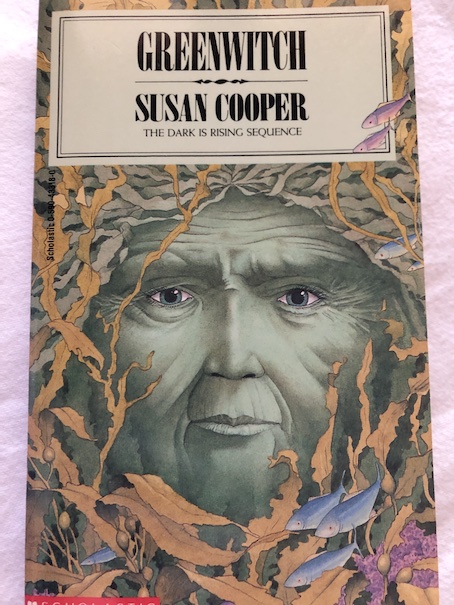
Greenwitch

The Dark is Rising Sequence

Greenwitch by Susan Cooper, 1974.

This is the third book in The Dark is Rising Sequence, and it brings together the two sets of characters who have already been established in the series: the three Drew children from the first book and Will Stanton and the Old Ones from the second book.

The story begins with the theft of the grail that the Drew children found in the first book with their Great-Uncle Merry, otherwise known as Merriman Lyon. The grail was stolen from the museum where it was being studied, and Merry wasn’t there because he was supposedly on an extended trip to Greece. However, when word of the theft spreads, Merry comes back to see the children. He is the only person other than the children who know that the thieves who took the grail were not ordinary thieves but agents of the Dark, the forces of evil. Merry say that he believes that they took the grail because it will lead them to something else that they’re seeking. He says that he will need the children’s help again and asks them to trust him. There will be danger, but he promises them protection. The children agree and accept Merry’s invitation to spend their holidays in Cornwall with him again.

Meanwhile, Will Stanton is bored because his older brothers and sister are off doing other things. Even though he is secretly one of the Old Ones and has great powers, he is also still the youngest in his family and feels left out of things that his older siblings are able to do. Then, a mysterious stranger arrives and introduces himself as Will’s Uncle Bill. Will was named after Bill, who is one of his father’s brothers and has been living in the United States for as long as Will can remember. Will’s parents are glad to see Bill, and Bill offers to take Will with him on a trip to Cornwall because a friend of his who is also staying there will have a couple of nephews about Will’s age staying with him. Will is eager to go, and his parents agree to let him.

Of course, the friend that Uncle Bill is talking about is Uncle Merry, and the nephews are Simon and Barney Drew, along with their sister Jane. At first, the Drew boys don’t like Will much because they think he’s going to interfere in their mission with their Uncle Merry, not knowing yet that Will has special powers and is directly involved in the fight against the Dark as their ally.

Shortly after they arrive in the village where the Drew children stayed in the first book, Will and Uncle Merry mention a pagan ceremony that is still being practiced in the area called the Greenwitch. Uncle Merry says that Jane may watch it, but not the boys because only women are allowed to attend the ritual. However, the dog Rufus that the children befriended on their last visit is kidnapped, and they are given the warning that the captain who owns him had better stay away from the Greenwitch if he wants him back. Unbeknownst to the children, the captain, who is the man who owns the house where they stayed last time, is another of the Old Ones.

Still, Mrs. Penhallow, the wife of a fisherman they met in the first book, invites Jane to come with her to see the Greenwitch being made. Jane doesn’t know what that means at first, but she goes to the ceremony anyway. Jane watches the local women weaving branches together to make a strange figure. It makes Jane uneasy because it doesn’t seem human but it has a kind of power. The women tell her that few people can sense its power but that people make wishes on it before tossing the Greenwitch into the sea for luck. Jane is given the opportunity to make a wish herself, and she finds herself wishing that the Greenwitch could be happy because she senses a loneliness about the figure. She feels a little silly for that wish after she realizes that she could have wished to find the grail again instead. One of the women there approves of the sentiment of Jane’s wish although she notes that it’s also a dangerous one because it’s difficult to know what might make someone happy. Some people find happiness in dark or dangerous things, but in this case, it might be a very good wish.

However, the forces of darkness are also targeting Barney. Barney has recently been developing artistic skills, like the children’s mother, and an artist who serves the Dark steals one of his drawings to gain control over him. The Dark needs Barney, at least for a short period, because he can do something that none of them can; Barney can look into the grail and tell them what he sees.

The book is available to borrow and read for free online through Internet Archive (multiple copies).

My Reaction

There are even more pagan references in this story than in the previous two. The Greenwitch is a fictional ceremony, but it seems like it’s based on or inspired by a kind of folk magic. It might be that the local women who make the Greenwitch are meant to represent a coven performing magic. I’m not going to go too deep into the history pre-Christian traditions because this isn’t a real ritual that I can trace and the history of neo-paganism is complicated. If you’re curious, I recommend watching this documentary about the life of Gerald Gardner, the founder of Wicca. I don’t really believe in Wicca myself, but I think Gerald Gardner is a delightful eccentric and fun to hear about. (Just don’t show the documentary to kids without watching it yourself. There are a couple of things in there that night not be suitable for young kids.)

It’s not all focused on the folklore of the British Isles, though. At one point in the story, the characters seek the help of Tethys, a figure from Greek mythology. The Greenwitch is meant as a tribute to her, so she has power over it, and the characters need something from the Greenwitch. This story introduces the idea that, although the stories are about the struggle between good and evil, Light and Dark, there are also some powerful, ancient forces that are not part of this struggle, including Tethys and the Greenwitch. These forces are neutral, and their neutrality requires that they neither help nor hinder either side in the struggle. Tethys and the Greewitch are among those neutral forces.

Part of this story also involves characters doing things they shouldn’t because they don’t have all of the information they really need to make better decisions. Ignorance and half-knowledge are annoying parts of stories like this, plot devices to allow characters to get into dangerous situations. It all works out for the best in the end, though.

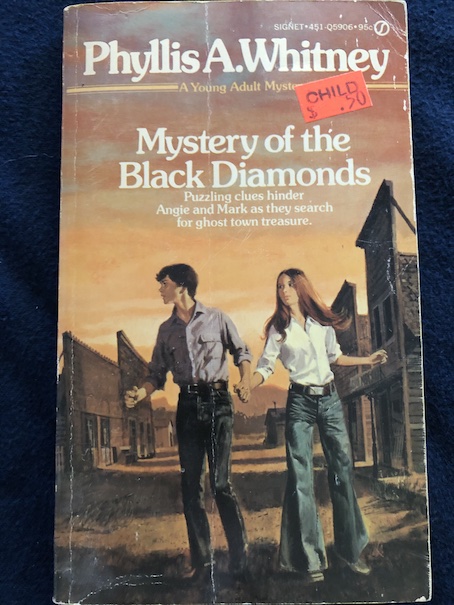
Mystery of the Black Diamonds

Mystery of the Black Diamonds by Phyllis A. Whitney, 1954, 1974.

Twelve-year-old Angie (Angela) Wetheral and her eleven-year-old brother Mark are visiting the foothills of the Rocky Mountains in Colorado. They’re from New York, but their father is a mystery novelist, and he’s doing some research over the summer for a book that will take place in Colorado. As the kids explore the area and speculate about the murder that’s going to happen in their father’s new book, they meet Benjamin Ellington, an old timer who talks to them about the days when the gold and silver mines in the area were active. He tells the kids to call him Uncle Ben, and they talk about whether or not there’s any treasure still to be found in the area. They also meet Sam Springer, the park ranger, who worries about Uncle Ben exploring and digging in the hills by himself because he could get hurt and people wouldn’t know where to find him and help him. Uncle Ben says that Sam worries too much and that he knows the area well because he’s been digging out there for years.

Sam later tells the kids that Uncle Ben came to the area in 1889, when he was 15 years old. That means that Uncle Ben was born in 1874, and Angie says that means that he’s almost 70 years old now, which puts the date of this story in the early 1940s, during WWII, but they don’t talk about the war. Sam says that Uncle Ben actually struck it rich while he was in his teens and owned three or four mines. Apparently, Ben blew through most of his money pretty quickly, so he’s not that rich anymore. However, the kids are fascinated by the idea of finding gold or silver and striking it rich.

The reason why the family lives in New York is that it’s helpful for their father’s work. Besides writing mystery novels, he also writes shorter stories for magazines and does book reviews for various publishers, so it’s important for him to live close to the New York book publishers. Angie misses their old home in New Hampshire, where they had a view of the mountains. Colorado reminds her of her old home, and she wishes that they could stay there, so she could enjoy the beauties of nature and the outdoor life. Their father says that someday, when he’s saved enough money, they’ll be able to live anywhere they want, and he’ll take time away from his regular projects to work on a serious novel that he’s been thinking about writing for some time. Mark suggests to Angie that if they could strike it rich in the mountains, the family would have all the money they needed, they could live where they want, and their dad would have the time to write anything he wants.

The kids ask Uncle Ben about searching for treasure, and he gives them a piece of paper with a strange coded message that is supposed to be the map to the treasure. He tells the kids that if they want the treasure, they’ll have to work for it by figuring out how to read the message. Mark wonders why Uncle Ben would give them the key to a treasure when he could just go after it himself, but Uncle Ben says, “I’ve got all I need. I’ve had enough of treasure and the way it can ruin men’s lives.” Uncle Ben says that maybe the kids would do better with a treasure than most people, but he insists that the kids will have to work for whatever they find and refuses to give them any hints about what the message means.

Uncle Ben continues helping the children’s father with background for his mystery story. He suggests that Mr. Wetheral have a look at a nearby ghost town. Unfortunately, Uncle Ben is killed in a fall soon after. The children are nearby when he falls and call for help, but there is little that anyone can to for him. Just before he dies, he whispers to the children, “Black diamonds. Right where Abednego used to be.” It’s a reference to the coded message that he gave the children, one final hint at the treasure. His death leaves it entirely up to the children whether or not to go after it.

To the Wetherals’ surprise, they soon learn that Uncle Ben recently added Mark and Angie to his will, leaving them a house and some land in Colorado. The catch is that the house is in the old ghost town. Angie is hopeful that if they own a house in Colorado they might be able to stay there instead of going back to New York, but the question is whether or not they’d be willing to live in a ghost town.

The Wetheral family decides to go to the ghost town and camp out in their new house and see what it’s like. Mr. Wetheral thinks the ghost town would make a good setting for his book, and staying there will give him a chance to do some research and soak up the atmosphere. Plus, the family is going to have to decide exactly what they’re going to do with the house the kids have inherited.

Most of the ghost town is crumbling, but the house they’ve inherited appears to be in better condition than most. They even find some furniture they can use in a back room. As they explore the town, the kids have their mind on the treasure that Uncle Ben talked about. Most people think that was just a story he made up because he gave copies of the same treasure map message to other friends of his, and nobody has ever figured out what it’s supposed to mean. Mark and Angie think that there is more to the message than most people believe, and they’re determined to find the answers.

It turns out that the ghost town isn’t completely uninhabited, though. The Koblers and their granddaughter Juanita, who is nicknamed Jinx, also live there with their pet skunk. Grandpa Kobler is an old friend Uncle Ben’s, and he talks to the children about him and the old says of the ghost town, Blossom. He used to own the general store there, and his wife was once the schoolteacher, and they didn’t move away from Blossom when the others did. He’s aware of Uncle Ben’s “maps” and hints of treasure, but has no interest in treasure-hunting himself because he likes the life that he and his family are living and doesn’t want it to change. However, Angie can tell that Juanita/Jinx is unhappy and can’t understand why she doesn’t want to talk about her parents and where they are. Then, someone else shows up in Blossom, looking for the clues to Uncle Ben’s treasure. If there really is a treasure to find, can Mark and Angie find it first?

The book is available to borrow and read for free online through Internet Archive.

Themes, Spoilers, and My Reaction

It isn’t easy for the kids to get to know Juanita/Jinx because she has a prickly and defensive personality and doesn’t like to talk about her past. However, she gradually starts to bond with Mark and Angie because of their shared love of the town of Blossom. Eventually, she tells Angie that her parents died when she was very young. Her father was killed in a mining accident. He thought that there was still treasure worth finding in the old mine outside of town and tried to get at it even though Grandpa Kobler told him that it was dangerous and that there was probably nothing worth finding anyway. Juanita’s mother died of pneumonia soon after her husband’s death, leaving little Juanita to be raised by her grandparents. Juanita has a warm relationship with her grandfather, the only person who calls her by her real name. However, Juanita is convinced that her grandmother doesn’t love her and is only raising her out of a sense of duty. Juanita’s grandmother never approved of her mother, partly because her son’s early marriage is what stopped him from going to college. Juanita also thinks that her grandmother didn’t like her mother because she was Mexican, which is why Juanita has a Hispanic name. Her grandmother was the one who gave her the nickname “Jinx” because that’s what she would call her when she was chiding her for something, which seems to have happened all too often. Jinx often calls herself Jinx instead of Juanita because she’s trying to get away from her Mexican-sounding name and seem more American.

For part of the book, Jinx actively tries to sabotage the Mark and Angie in their treasure-hunting activities because she’s afraid that if they find treasure, everything in Blossom will change. She worries that other people will come to Blossom seeking treasure. If that happens, the town will be built up again, but that means destroying what’s already there. Also, Jinx fears the way other people will treat her. She doesn’t want other people to come into Blossom or to be sent away to school if her grandparents suddenly have the money to do it because she thinks that outsiders will always treat her badly and look down on her. Her grandmother has repeatedly told her that people look down on Mexicans, and Jinx thinks it’s true because some kids she met in Boulder were also mean to her and called her names. Angie tells her that it isn’t true that everyone hates Mexicans. The Wetheral family lived in Mexico one summer while her father was researching another book, and they liked it, and Angie still has a friend there. Angie realizes that the reason why Jinx’s behavior and attitude are so poisonous is that her grandmother has poisoned her mind because of her own twisted feelings. Angie declares that she’s going to have a word with Jinx’s grandmother about it, but Jinx stops her because she says that will just make her grandmother mad. She says that sometimes, when she’s especially well-behaved, her grandmother forgets that she’s half Mexican, and if anyone reminds her, she’ll just get angry all over again. It’s a pretty sick way to raise a vulnerable child who is isolated from other people who could give her a more balanced view of life and people’s feelings. Grandpa Kobler seems to realize this, which is why he wants Angie to be friends with Juanita and show her that there are different people in the world, including people who are willing to be friends. As Angie points out to Juanita, her grandparents are getting older, and someday, she will be an adult and they’ll be gone. Juanita is going to have to learn to get along in the wider world without them, and actually, dealing with strangers in the outside world might not be as bad as living full-time with her grandmother’s nasty attitude.

Some of Juanita’s feelings are resolved when Angie’s mother has a heart-to-heart talk with her about the things her grandmother has been telling her and her own opinions about herself. I agreed with Angie that some of the things her mother said to Juanita while challenging her attitudes were rather harsh, and I wouldn’t have said things like that, but Juanita does take what Mrs. Wetheral says to heart and realizes that she has as much reason to take some pride in herself and her background as anyone else. I didn’t like the part where Angie’s mother says that Juanita’s grandmother can’t help her opinions about Mexicans because that’s just the way she was raised and there’s nothing that can be done about it now. It seems to me that they’re discounting the idea of personal accountability. If Juanita’s grandmother can’t be responsible for her own mind and behavior, what can she be responsible for?

I know people can cling pretty hard to some weird ideas. One night, we took my grandmother out to dinner at a nice restaurant for a family celebration. My grandmother was actually really upset that the restaurant had given her so much food that she couldn’t eat it all, and she said that she was worried because her parents would never have approved of her not clearing her plate. She was genuinely upset about it, not just making an idle comment. It really bothered her. Now, I know that part of my grandmother’s youth took place during the Great Depression, when wasting anything was a sin, but at the time this incident took place, she was a widow who was over 80 years old. The Great Depression had been over for more than 60 years. I was her youngest grandchild, and I was an adult at this time. Her parents had been dead for longer than I had been alive. She was not only a parent herself, but she was also a grandparent and a great-grandparent. She was literally the oldest living member of our family, and nobody would have said a word about what she wanted to eat or not eat for dinner, but my grandmother just couldn’t get past the idea of what her parents told her years ago about always clearing her plate. It’s an odd thing to cling to, but admittedly, there are far more harmful ideas that people can’t bring themselves to give up because of stuff their parents said back in the day.

Mrs. Kobler has had years of living her own life and ample opportunity to work out her feelings, but I think that part of the reason she hasn’t is because there’s something else that’s preventing her. This theory is conjecture on my part because there’s never a point when Mrs. Kobler explicitly explains her thought processes, but although the book doesn’t really explain it, I think that her son’s death is probably the reason why Mrs. Kobler has been harboring so many negative attitudes and taking them out on Jinx. Although nobody actually says it, I suspect that Mrs. Kobler assigned blame to Jinx’s mother for her son’s death. If he hadn’t gotten married at a young age and went looking for a fabulous discovery to raise a fortune for his young family, he might have gone to college, gotten a good career, and still been alive. Even though the characters don’t explicitly say it, I think it’s logical. I further suspect that the really problematic part for Mrs. Kobler is that she needs to blame Jinx’s mother for what happened because, if she can’t, some part of her might blame herself for not stopping her son from doing what he did, and she can’t handle that. As long as she can tell herself (and Jinx) that her daughter-in-law was awful because she was Mexican and caused the downfall of her son, she won’t have to question why she wasn’t able to stop her son from dying. In her mind, I think Mrs. Kobler thinks that her son’s marriage was a terrible mistake that led to his early death, and by extension, her granddaughter really was a “jinx” because she came from that unlucky marriage. Some of Mrs. Kobler’s feelings get resolved later, when they discover that her son was right about the type of treasure he was seeking, even though he got killed pursuing it. A sudden disaster also makes Mrs. Kobler realize that there are many things that a person can’t control in life and that God’s will is taking her family in a direction she never anticipated. This book doesn’t really lecture about the subject of God and religion, but there are some Christian themes in the story.

All through the story, there is the theme of treasure – what is treasure, what do people do with treasure when they get it, and what are they willing to risk to get it? Early in the story, Uncle Ben talks about having lost his taste for treasure-hunting because he’s seen the way it ruins lives. It isn’t until the Wetheral family gets to Blossom and the children talk to Grandpa Kobler that they get the rest of the story about why Uncle Ben felt like that. After Uncle Ben dies, he is buried in the old cemetery in Blossom because that’s where his wife and young daughter are buried. They both died of diphtheria, and he blamed himself for them contracting the disease because they went to live in the big city after he got rich. Grandpa Kobler, who knew Uncle Ben back then tried to console him by saying that they could have caught that disease anywhere, not just in the city, but Uncle Ben still felt responsible. (Diphtheria is now a very rare disease in the US, thanks to the development of a vaccine to prevent it. It’s often given in a combination vaccine that also protects against tetanus and whooping cough, which is how I’ve received it. I was first given the vaccine when I was very young, and I still get my booster shots. I’d recommend it to anyone capable of receiving vaccines. I have never actually seen a person with any of those illnesses in my entire life, and I’m in my late 30s now.) The point is that money doesn’t buy love and happiness, and Uncle Ben came to the conclusion that the lifestyle his family lived when they were rich was unhealthy. He would rather have had his family back than the money from his mines.

Grandpa Kobler understands how Uncle Ben felt because, when Uncle Ben once asked him if he wanted a treasure, he said no. He was happy with the life he was living in Blossom, and he had enough money for his family to live comfortably. If he suddenly got rich, people would expect him to move to a bigger house in the city and start living a completely different life, and he realized that he wouldn’t be as happy doing that. In his youth, he saw the lives that other people lived after they got rich, and he didn’t like what he saw. Later, his son got killed while chasing a dream of treasure, which further emphasizes that there is a price for treasure-hunting, and sometimes, that price is too high. In the Wetheral family, Mark is the one who thinks that their lives would be better if they could find a fortune, but Angie points out that they don’t really need a fortune; they just need enough for their dad to feel comfortable taking the time to write the book that he wants to write and for them to have a home away from the big city, which is what they really want. There is the idea that having enough money is good, but having too much or trying too hard to acquire more can cause problems and complicate a person’s life.

Spoilers

Things are about to change in Blossom, in spite of what the people there want, and as Grandma Kobler concludes, it might be the will of God that they do. In the most dramatic part of the book, much of the town of Blossom is destroyed in a flash flood. Fortunately, all of the people and animals in the town survive, although the Koblers have a close brush with death. Juanita is in less danger because she’s on a picnic with Angie and her mother when the flood startes, and she is the first to realize the danger. At first, everyone is afraid that the Koblers drowned, but they eventually find Mrs. Kobler, just barely keeping her own head and her husband’s out of the water. During this time when they were almost killed, Mrs. Kobler admits that she had some revelations about many things, especially when she realized that she could depend on Juanita to come and help them. In spite of all of her nagging at Juanita, Juanita is bright and dependable and cares about her grandparents, even the grandmother who’s been making her life miserable. Mrs. Kobler never completely changes her mind about Mexicans, but she does change her mind about Juanita, giving her more respect than she did before. The book explains that she comes to realize that, while Mrs. Kobler disparaged Juanita as her mother’s daughter, she came to remember that she was her son’s daughter, too. It’s not as much as could be hoped for, but it’s a start. Mrs. Kobler also realizes that everything that’s happened is the will of God, there is nothing anyone could have done that would have changed the outcome, and God is leading her family in the direction He wants them to go, so she is just going to have to go with the flow (not exactly her words, but I think you catch my drift – ha, ha).

The secret of Uncle Ben’s treasure is also revealed. What he found wasn’t really “black diamonds” but something else that’s very valuable, the same mineral that Juanita’s father was looking for at the time he died. However, Juanita’s father was looking in the wrong part of the mine, which was why he got killed instead of finding what he was looking for. (Maybe he should have gone for his geology degree before going for the “treasure.” Just saying.) Uncle Ben was more experienced with mining and figured out the right place to look himself. It wasn’t until after Juanita’s father died that he came to realize the full value of what he had found, though. (It’s important that this story is set after WWII.) Uncle Ben’s lawyer reveals that, since samples of this mineral were sent to be analyzed, it has activated a part of Uncle Ben’s will that leaves the mine to Juanita Kobler, making her an heiress. Since the town of Blossom was destroyed in the flood, there’s nothing left to preserve that would prevent mining. Now that Juanita is an heiress, she’s going to have a much higher standing in the community, which might take care of some of the bullying she received at school in Boulder. The Wetherals also benefit from the discovery, as the mysterious stranger who came to town informs them that there’s a government finder’s fee for locating valuable mineral deposits.

Secret of the Samurai Sword

Secret of the Samurai Sword by Phyllis A. Whitney, 1958.

Before I explain the plot of this book, I’d like to point out some of the aspects of the book that make it interesting. The story takes place in Japan following World War II. The book wasn’t just written in the 1950s but set during that time (no exact year given, but the characters refer to the war as being “more than ten years ago”, putting it contemporary to the time when the book was written and published), and the war and its aftermath are important to the plot of the story. Although the main characters are American tourists, readers also get to hear the thoughts and feelings of people living in Japan after the war. The author, Phyllis A. Whitney actually born in Japan in 1903 because her father worked for an export business in Yokohama, and she spent much of her early life living in and traveling through Asia. Her parents gave her the middle name of Ayame, which means “Iris” in Japanese, although she had no Japanese ancestry. Her parents were originally from the United States, but the family did not return to the United States until Phyllis was 15 years old, following her father’s death in 1918. That means that Phyllis Whitney was very familiar with what Japan was like before both of the World Wars as well as after. She lived a very long life, passing away at age 104 in 2008, and she saw many major world events and changes through her life. I was interested in hearing how she viewed the effect of the World Wars, especially WWII, on Japan and its culture in this book. In the back of this book, there is a section where the author explains some of the background of her life and this story and her inspiration for writing it.

Celia and Stephen Bronson are American teenagers who are spending the summer in Japan with their grandmother, who is a travel writer, not long after the end of World War II. Celia and Stephen are really just getting to know their grandmother, whom they have not seen since they were very young (they don’t explain much about why, except that she travels a great deal) and don’t really remember, and she is getting to know them. Stephen’s passion in life is photography, and Celia likes to draw, although she doesn’t consider herself to be very good. Stephen is the older sibling, and he’s lively and outgoing, often doing the talking for Celia as well as himself because she’s quieter and less confident. Celia often hesitates to voice her opinions in Stephen’s presence because he jumps on her for things she says and shuts her down when she speaks. (Yeah, I’ve been there before, kiddo.) Stephen is often brash and insensitive, bluntly referring to his sister as “beautiful but dumb” right to her face and in public when she accidentally leaves one of their bags with some of his camera equipment behind at the hotel where they were staying in Tokyo. Celia is embarrassed at her mistake because she knows that sometimes her mind wanders and she doesn’t focus properly. Celia is a daydreamer. She feels bad that she does silly things sometimes, but she had hoped that this trip to Japan might help her and Stephen to be closer, more like they used to be when they were younger, before Stephen started getting so impatient and disapproving with her. However, Stephen’s about to get a little disapproval of his own. (And more from me later.) Stephen gets a rebuke from his grandmother for using the word “Japs” in the conversation because they are guests in Japan, and she won’t have him using “discourteous terms” for the people there. The kids’ grandmother says she’ll just write a note to the hotel, telling them where to forward the forgotten bag, and it’s not a big deal.

The kids and their grandmother, whom they call Gran, are not staying in Tokyo but renting a house in Kyoto. Gran knows her way around because she has been to Japan before, multiple times, and she can speak a little Japanese. Everything is new to Celia and Stephen, even the train trip to Kyoto, where their grandmother introduces them to the bento boxed lunches they can buy at the train station, which come beautifully wrapped with included chopsticks, and little clay teapots with green tea. (I love stories that include little pieces of cultural information like this. When they finish with their lunch boxes and pots of tea, they wrap them up and put them under the train seats to be collected by staff later.)

While they’re having lunch on the train, the kids’ grandmother tells them a little about the house she’s rented. It’s a very old house, and a Japanese family used to live there, but after WWII, the Occupation Army used it for a time and updated some parts of the house, so it’s an odd mixture of Japanese and Western style now. (Gran says that the house now includes a “real bathroom.” Here, I think what she’s really talking about are the toilets, not the baths. Americans don’t make a distinction between rooms for baths and rooms for toilets because our houses usually have both in the same room. In Japan, like in Britain, that’s not always the case. What I’m not sure about is whether she’s saying that the house didn’t originally have indoor plumbing because it was really old or if she’s just saying that the army changed the traditional squat toilets for western style ones. Either way, I think she’s trying to say that they can expect western style toilets, similar to what they have at home.) She also tells her grandchildren that the house is supposed to be haunted by a ghost in the garden. She thinks the prospect of a ghost sounds exciting and will make a nice addition to the book she’s writing. However, Stephen says that he doesn’t believe in ghosts. Celia hesitates to voice much of an opinion because she doesn’t want Stephen to jump all over her verbally again. Gran tells Stephen that people in Japan look at things like ghosts and spirits differently from people in the United States hints that he should keep more of an open mind.

The three of them discuss the bombings of Japan during WWII, and Gran explains that Kyoto wasn’t bombed, like Tokyo and Yokohama were. It’s a very historic city because it used to be the capital of Japan, and Gran is happy that the historic shrines and temples of the city survived the war. Celia admires the beautiful countryside and thinks about drawing it later. Although she said earlier that she would be happier if someone else saw the ghost instead of her, Celia thinks that an elegant Japanese lady ghost pining for a lost love in her garden would make a very romantic image. However, the ghost isn’t an elegant lady. It’s the ghost of a samurai, pierced with arrows, and he’s looking for his lost sword.

When they finally reach Kyoto, Celia is surprised by how modern it looks and how many people are wearing American style clothes instead of kimonos. Finding the house is a bit tricky because the houses don’t always have house numbers and not all of the streets have names. (This is true, although there is a system behind the lack of names and irregular numbering.) People stare at the Bronsons because they’re blond and stand out from everyone else as foreigners. At the house, they meet the maid, Tani, and the cook, Setsuko. Gran explains to the kids how they need to change their shoes when they enter the house and how the bedding in the bedrooms is folded and put away during the day. (Again, I really like the little pieces of information about daily life and culture.) Celia admires the garden of the house, but she notices a strange lump of concrete that seems oddly out of place. It turns out to be a bomb shelter, left over from the war. The door to the shelter is locked, so for much of the book, the characters are unable to look inside.

Then, Celia spots a Japanese girl from a nearby house watching her. She tries to say hello, but an elderly man discourages the girl from talking to Celia. However, a boy named Hiro stops by because he’s been studying English in school and would like to practice by talking to them. Hiro isn’t bad, but his pronunciation is off, partly because of the r/l sound that’s practically cliche in fiction. (The r/l confusion in Asians who speak English is based in reality, not just fiction. Many Asian languages, including Japanese have a sound that’s about halfway between ‘r’ and ‘l’, which causes confusion to English speakers, who are accustomed to those sounds being completely separate from each other. This is one of those books that spells things people say how they’re pronounced in order to convey accent, which I tend to find annoying. The way Hiro’s speech is conveyed seems to be pretty accurate for a beginning speaker of English who is accustomed to Japanese, including his mispronunciation of “baseball” as “beso-boru.” I’m not really fond of books that over-emphasize accents in writing because there are a lot of really corny jokes in old movies based on the r/l sound confusion, and they tend to overdo it and try to carry the jokes too far, but I’ll go easier on this particular book because it’s important to the story that Hiro is learning English pronunciation. I also appreciate that there are some Japanese words and phrases and their translations in the book, which is educational.) Stephen, always the rude one, picks on Hiro’s pronunciation while he’s visiting, and when he leaves, he calls him an “oddball.” Gran disapproves of Stephen’s attitude and tells him that Hiro might teach him “a few things.” Stephen does become friends with Hiro and some of Hiro’s friends, and Celia admires Stephen’s ability to make friends easily, but it occurs to me that might not be entirely due to Stephen’s friend-making abilities because his new friends also need the ability to tolerate him. (Mean people can be sociable and attract others because they’re self-confident, but rudeness is also trying, especially when you’re around it for long periods. Also, I’m pretty sure that Hiro doesn’t know what Stephen said about him behind his back.)

Celia tries to ask Tani about the ghost in the garden, but all Tani will tell her is that only her cat sees the ghost. Later that night, Celia wakes up and hears the sound of someone wearing wooden clogs walking around outside and music being played on a stringed instrument. Celia is too comfortable and too tired to get up, so she doesn’t see the ghost that night, but she believes that’s what she heard.

When Celia and Stephen are allowed to do some exploring on their own, Celia meets the Japanese girl she saw before and learns that she’s actually American, too. Sumiko Sato’s parents were born in Japan, but she was born in San Francisco and only arrived in Japan the month before to stay with her grandfather. Sumiko doesn’t think of herself as being Japanese, although she speaks the language. Her grandfather, Gentaro Sato, is a famous artist, but he is also an old-fashioned man who doesn’t like Americans, partly because of the destruction from the war. Sumiko is Hiro’s cousin, and Sumiko is a little angry that her grandfather allowed Hiro to go talk to the Americans the other day to practice his English but wouldn’t allow her to go when she’s really an American who speaks fluent English. She says that it’s part of her grandfather’s old-fashioned attitudes and because Hiro is a boy. Apparently, boys are allowed more freedom than girls in Japan. Since she and her mother came to Japan after her father died, Gentaro has been trying to teach his granddaughter to be a proper Japanese girl, but Sumiko is used to living as an American and hates it that her grandfather wants to mold her into being something else. She also says that the other girls in the area don’t accept her because they know that she’s an American who doesn’t fit in. Sumiko doesn’t even care for her grandfather’s traditional style of art, which only has nature themes and no people. She likes the pictures Celia draws with people in them. She wishes that they’d stayed in San Francisco because she really wants to go to the university in Berkeley, where Celia and her brother live, but her mother missed Japan, and Sumiko is only 14, the same age as Celia, too young to stay in the US by herself. Celia sympathizes with how Sumiko seems caught between two cultures, but she’s grateful that Sumiko is there because she could really use a friend this summer. Really, both of them could use a friend who speaks their language, in more ways than one. Celia asks Sumiko if she knows anything about the ghost that’s supposed to haunt their house. Sumiko says that her grandfather has seen it, but she refuses to believe in it until she sees it herself.

Celia’s first knowledge of the lore of the samurai who is supposed to haunt their garden comes when she and her grandmother are looking at prints of Gentaro Sato’s work in a shop. The shop owner also has a painting by Gentaro Sato that he did in his youth, when he did paint pictures of humans. The picture is of an ancestor of the Sato family, a samurai who died bravely in battle. It’s a frightening image but a powerful one. Later, when they see Sumiko at a shopping center with her younger cousins, and they ask her about the samurai painting. Sumiko says that people in her family talk about the painting, but she’s never actually seen it herself because her grandfather gave it away years ago, although the family wishes that he hadn’t. Gentaro said that he just couldn’t bear to have it in the house anymore. After the war ended badly for Japan and his eldest son (Hiro’s father, not Sumiko’s) died, Gentaro was greatly depressed. It turns out that Hiro’s father didn’t just die but committed suicide along with his commanding officer at the end of the war because they felt like the defeat of Japan was a personal dishonor for them as soldiers. At least, Hiro’s father’s captain felt that way, and Hiro’s father killed himself out of loyalty to him. (Japanese soldiers in real were known to have killed themselves in various ways at the end of the war. Some committed suicide as individuals and some in large groups, and some in last-ditch battles. Even civilians killed themselves and even family members for fear of how they might be treated by an occupying American army. The war’s deaths didn’t end with the war itself.) That means that Hiro’s father’s death was a direct result of the defeat of Japan. The Sato family said that, after that, Gentaro sat and stared at the samurai painting for days until, one day, he couldn’t stand to see it anymore. Now, he doesn’t even like talking about it. During an English language practice session with the Bronson family, Hiro further explains that, while Gentaro hadn’t wanted Japan to enter the war in the first place, he was even more shocked when Japan lost because he always thought that the gods favored Japan and wouldn’t allow the country to be defeated. The defeat shook his confidence in everything he thought he knew and believed in.

Even though it’s been more than ten years since the war ended, the memory of the losses and destruction of the war is still strong, and Gentaro still struggles with his feelings about it. He gave up drawing and painting people and samurai for his nature drawings because he wanted to get as far from the themes of war as possible. All of this ties directly with the house the Bronsons have rented because the Sato family originally owned the house. They were forced to sell it to the Occupation Army because they badly needed money after the war, and they moved to a smaller house nearby, just another loss from the war for Gentaro to mourn. When Celia and Sumiko take doll-making lessons together, their teacher, Mrs. Nomura, who has known the Sato family for a long time, tells them things that even Sumiko hasn’t heard from her family. Apparently, before Hiro’s father killed himself, he hid the sword that his samurai ancestors kept for generations because he didn’t want the occupation forces to find it. (It was a valid concern. Although Sumiko points out that American soldiers wouldn’t take the sword to use against Japan as her grandfather initially feared because most Americans, even soldiers, don’t know how to fight with swords, some US soldiers were known to take weapons and other objects they found as “souvenirs” or war booty.) Gentaro originally told his son to destroy the sword to keep it out of enemy hands, but no one knows whether he did or not. However, metal swords are very difficult to destroy, so people think he might have just hidden it somewhere.

The ghost that haunts the house and garden is the samurai from Gentaro’s painting, even including the arrows piercing his body. Celia does eventually see him, even noting that he doesn’t have his sword with him, like he did in the painting. Strangely, Gentaro actually seems happy whenever he sees the ghost. He thinks the ghost is trying to tell him something, although he worries because he can’t figure out what the ghost wants and thinks that he might not be able to provide it. Why does the ghost appear in the garden at night? Or, perhaps a better question, why would someone want to make it seem like a ghostly samurai is haunting the garden? Is someone really trying to send a message to Gentaro? And, what did Hiro’s father really do with the sword years ago?

My Reaction

The Mystery

I’ve read other books by this same author, so I know that she wrote mysteries, not ghost stories. I knew from the beginning that the ghost wasn’t really a ghost. I was pretty sure, for about half the book that I knew who the “ghost” was going to be because there was one really obvious place for the “ghost” to get his costume, but I wasn’t completely sure, and I also couldn’t figure out the motive. The missing sword is at the center of the mystery, but I wasn’t sure why someone would play ghost to find it. I mean, the ghost act does allow someone to enter the garden without permission without being recognized, but when Celia and Stephen see the ghost, the ghost doesn’t really seem to be actively searching for anything. The “ghost” seemed to be meant to be seen by other people, but I couldn’t figure out why or what that was supposed to accomplish.

As it turns out, I was only partially right with my first theory. I was right about where the costume came from, but not who was wearing it. I had rejected one of the characters as a possibility because this person was accounted for during one of the ghost sightings, but this person had a little help to establish an alibi. The ghost stunt wasn’t meant to upset Gentaro but to help him to let go of the past by staging a conclusion to a family tragedy in order to help Gentaro to regard the situation as resolved. The “ghost” had a final act to the drama in mind when Celia’s investigation interfered, but it all turns out for the best because Celia realizes where the missing sword must be. In the end, they don’t tell Gentaro the whole truth because the “ghost” deception would upset him, but when they return the sword to him, he is able to believe that the spirit of the samurai is now at rest. The sword was not destroyed, but Hiro’s father did manage to break the blade in half in order to render it unusable to anyone who might find it. Gentaro regards the broken blade as a fitting metaphor for the end of the war and, hopefully, the beginning of a more peaceful future.

The mystery is good, and the nighttime sightings of the ghost are fun and creepy, but much of the emphasis in this story is on the characters, their relationships with each other, and the history and culture of Japan.

Japanese Culture

I’m not an expert on Japanese culture, although I know a little about Japanese history. The author of this book actually lived in Japan during her youth, and she later returned to visit, so this is a subject near and dear to her heart. The book is full of explanations of daily life and culture in Japan, more than I even mentioned above. The characters visit some famous landmarks and collect stamps in their stamp books to mark places they’ve been. I also enjoyed the scene where Celia watches Gentaro as he pays his respects to a local shrine. The rituals Gentaro observes at the shrine resemble the ones described in this video for the benefit of tourists visiting Japan. The kids also visit a Japanese movie studio with their friends because Hiro and Sumiko’s uncle is an actor, and Hiro gets a part as an extra in a movie. The book ends around the time of some Japanese festivals that honor the dead, which is fitting.

The books seems pretty accurate on history and culture, but I can’t vouch for everything the author says, both because I haven’t lived in Japan myself and because the book takes place more than 60 years ago, so some things may have changed since then. Sumiko makes some comments about Japanese family life and family dynamics during the course of the story, and I don’t know if all of them still apply or if some of them even really applied to families other than Sumiko’s. There’s probably at least some basis for what she says about how girls are treated differently from boys and how discipline of young children works, but I’m just not sure to what extent Sumiko’s experiences reflect real life because family dynamics can be personal among families. There may be some general trends in these areas, but actual results may vary or change with time.

If you’d like to see some street scenes of Tokyo during the 1910s, when the author lived in Japan as a girl, for an idea of how Japan looked to her at the time, I recommend this video (colorized and with ambient sound added because it was originally silent). There are also videos that show Japan in the 1950s (with added music) and part of a documentary about family life in Japan during the early 1960s (which discusses how Japanese culture and clothing became more Westernized after the war) to give you an idea of what the author might have seen on her return visit to Japan and how Japan might have looked to the characters in the book. Again, these are just brief glimpses, and actual results may vary in real life, but I did like that the 1960s documentary shows what a Japanese house of the era looks like because that’s important to this story. It also shows scenes from a children’s art class, which is also appropriate to the story. This video from 1962 shows scenes in Kyoto and Nara which include a print shop and a temple, which are also places the characters in the story visit. For a look at modern 21st century life in Japan, I recommend the YouTube channels Life Where I’m From and japan-guide.com, which are in English and designed to be educational for visitors to Japan. In particular, the Life Where I’m From channel includes this video, which shows and explains old townhouses in Kyoto, which can help you further understand the types of homes in the story.

The War

Since the book takes place during the 1950s, the focus is on the end of World War II and what happened immediately after. If you want to know more about how the war started (a lot of it had to do with resources as well as the state of international affairs following WWI), how Japan entered the war, what led up to the attack on Pearl Harbor, and how the US became involved, I can suggest the videos I’ve linked in this sentence for some brief explanations with historical footage. I particularly like the ending to the CrashCourse video that briefly explains WWII, where the host talks about the aftermath of the war and the development of nuclear weapons, explaining that, “the opportunity of studying history is the opportunity to experience empathy. Now, of course, we’re never going to know what it’s like to be someone else, to have your life saved or taken by decisions made by the Allied command. Studying history and making genuine attempts at empathy helps us to grapple with the complexity of the world, not as we wish it were, but as we find it.” I think this fictional mystery story captures some of that sentiment. What happened at the end of the war wasn’t happy. It was good that the war was over, but Japan was in a bad state, and its people were in a bad situation. The characters in this story have to acknowledge that and come to terms with it, and empathy is one of the tools they use to do it.

It helps to remember that the original audience for this book was American children about the age of the child characters in the story, who were probably too young to remember the war themselves and were dependent on their elders to tell them what happened. The book was meant to explain some of the Japanese perspective and encourage empathy. The author notes in the back of the book that she consulted with some Japanese friends about the aspects of Japanese culture included in the book. It’s worth pointing out that Americans and Japanese have different memories of the war because, while both countries experienced trauma from it, the parts that caused each country the worst trauma were different. For Americans of the time, the beginning of the war and Pearl Harbor were the most traumatic parts, and for the Japanese, the end of the war, the atomic bombs, and the suffering that came immediately after the end of the war were the most traumatic. All of those events were part of the war, and they were all bad, but some parts were worse for some people than others, and that influenced how they all felt afterward. It’s worth keeping that in mind because it explains how different characters in the story feel and how they approach the subject and also what the author is trying to point out to the American children reading the book.

Because this book was intended for a young audience, probably kids in their tweens (pre-teens) or early teens, it doesn’t go into gory detail about all of the horrors of war, but there’s enough here to give a realistic impression of genuine suffering. For example, we know that Hiro’s father committed suicide with his commanding officer after the war, but the book doesn’t explain the method he used to do that. It’s left to the imagination. (Hiro’s father didn’t use his family’s sword for that or it would have been found with his body, but that’s all we really know.) Readers are invited to empathize with the characters about what they’ve endured as well as what they’re continuing to go through. Celia empathizes with Gentaro when she learns what he and his family suffered because of the war, although she still thinks that it’s a little unreasonable for him to still hate all Americans because he now has a granddaughter who counts as an American by birth and upbringing and Celia’s family wants to be friends. Celia follows her grandmother’s attitude that the war ended more than ten years ago, and it’s time to move on and build a new future. Of course, that’s easier to say when you’re not the one whose life was shattered and completely changed by the war. Gentaro has had some time to work through some of his feelings about what’s happened, but the damage done to his family is serious and lasting, and the truth is that nothing will ever be the same for them again. The characters have to acknowledge and accept some of the grim realities of the past before they can move on.

I was surprised that the book never mentioned Japanese internment camps in the US during WWII because I would have expected that to have an effect on Sumiko and her attitudes about being an American, but I suppose we’re meant to assume that her family wasn’t among those sent to the camps. Of course, this is more than ten years after the war, and since Sumiko is fourteen, she was probably very young during the war and wouldn’t have much of a memory of that time.

I’ve talked somewhat about how Sato’s family was affected by the war and their thoughts about it, but there’s much more detail about that in the book. The book doesn’t shy away from talking about the atomic bombs dropped on Japan. The characters in the story don’t visit Hiroshima in the book, but at one point, the subject comes up when Celia and Hiro have an honest talk about what the missing sword means to the Sato family. Hiro describes the museum and monument at Hiroshima to explain how his family feels about the nature of war. The sword is no longer a symbol of war to them but his family’s connection to the past and their ancestors. Gentaro wants it back because he thinks the ghost is his samurai ancestor, searching for the sword because it’s lost, and he gets upset because he can’t return the sword to this spirit. (That’s not what’s happening, but that’s what Gentaro thinks at first.) Celia is moved to tears at what Hiro tells her about Hiroshima and how both Americans and Japanese go there to mourn and pay their respects and there is “no resentment left against those who had dropped the bomb.” (I’m not sure that there is “no resentment” at all because people like Gentaro are still struggling with their feelings, and that’s completely understandable, but the story is focusing on how people were coming to terms with what happened in a form of sad acceptance.) Hiro quotes the words on the monument, “Sleep undisturbed, for we shall not repeat this error,”, adding “Japan makes error. America makes error. But these words do not mean to apologize for wrong. By ‘we’ monument means mankind. It is man who must never make error again.” It’s a broad statement against war itself, and this is the sort of sentiment the author is encouraging the readers to have, reflecting on what war does to people, even just ordinary families, letting them feel for others, and consider what they really want for the future.

The bright side is that, although there were dark times in the recent past and everything has changed for the Sato family, not every change has to be a bad one. With the help of the young people in the story, Gentaro begins to see that there is new life and hope for the future. Even though they don’t speak the same language and have to communicate through a translator, Gentaro bonds with Celia over their shared love of art and the beauty of nature. Celia is quiet, shy, and observant, very unlike the loud and rough Americans Gentaro has seen before (including her brother). Gentaro begins to realize that not all Americans are alike, and some can be kindred spirits. Similarly, not all Japanese girls are really alike, and Sumiko is just a different kind of Japanese girl. Gentaro realizes that he has to take people as he finds them, even his own complex and seemingly incongruous granddaughter. Sumiko has some soul-searching of her own to do before she and her grandfather finally have a heart-to-heart talk, but their interactions with the American family put their relationship into a new light. Gentaro’s life isn’t what he once thought it would be, but this is the life he has now, and not all of it is bad. Sumiko isn’t the granddaughter he would have expected, but she’s also one he has, and she’s not bad, either. Gentaro also realizes that Celia has some good qualities that she could use to be a good influence on his granddaughter, especially her ability to see the beauty in things around her and communicate it to other people. Celia is very perceptive, and Gentaro recognizes it. Although Sumiko has been resisting traditional Japanese culture because it’s unfamiliar and uncomfortable to her and she thinks that even the people in her own family don’t like her, she begins to appreciate the beauty of traditional Japanese arts through Celia’s appreciation for them. Celia also helps her to see a different side of her family. Because Celia can bond with Gentaro over their shared love of art, Sumiko realizes that she also values her grandfather and admires his art and begins to bond with him by learning how to show her interest and appreciation. When Gentaro draws a picture for Celia, Sumiko tells her that he’s never drawn a picture for her, so Celia tells Sumiko to ask her grandfather for a picture so he’ll know that she wants one and will value what he gives her. Gentaro’s appreciation for Celia also helps her to resolve some problems in her own life.

The story works on a small scale, focusing on one American family and their interactions with a Japanese family and seeing how they can help each other and find some common ground. However, you might be wondering what was going on in the bigger picture at this time. As the author explains in the section in the back where she talks about her own travels in Japan, there were American tourists going to Japan and seeing and doing things very much like what the characters in the book do. Americans could safely visit Japan in the 1950s and receive hospitality, although the war was still in everyone’s mind, and there were lingering feelings about it. The fact that, when the book takes place, more than ten years have passed since the end of the war helps. The children in the story were either very young when it was still happening or weren’t born at all, so they don’t remember the war themselves the way their parents and grandparents do. Also, there are two other factors that are worth addressing here although they aren’t fully addressed in the book.

The first is that, in the face of the devastation of the war and the hardships that came after, many people developed a kind of stoicism, a sense that that situation simply “couldn’t be helped” because it was all just a part of the nature of war and that the best thing to do was to try to go on with life as best they could afterward, rebuilding their cities and their lives. They didn’t like what happened (to put it mildly), but they accepted circumstances for what they were. There was still plenty to justifiably complain about, but the focus shifted to doing something about building the future, which is empowering. This mindset also helped people in Japan to shift the blame for the results of the war away from the soldiers who engaged in it and onto the concept of war itself, a sentiment that is reflected in the story. As Hiro puts it when he’s describing the monument at Hiroshima to Celia, “But no more enemy. Only war is enemy. Enemy of all people.”

The second factor is that the US learned something from the end of WWI. Part of the reason why WWII happened was that Germany was left in a bad state with a crippled economy after the end of WWI and a lot of resentment for those who had left it in that condition, those who blamed Germany for the entire war. As WWII came to an end, the US didn’t want to leave Japan in a similar condition, setting up further suffering and resentment that might erupt in revenge later, and they also hoped to shift the cultural focus of Japan away from some of the imperialistic and nationalistic feelings that helped fuel Japan’s involvement in the war. (Gentaro and his son’s despair at Japan’s loss of the war was partly based on what they had always believed about their government and leadership and what victory and loss would mean, and that’s an example of the sort of thinking that the US wanted to discourage during the rebuilding process, to redirect attention from the war and defeat mindsets. In real life, there were more complicated and controversial factors, of course, relating to political and economic structures, but this is the sort of reference to mindsets that enters this particular story. They’re pointing out that the defeat of Japan in the war doesn’t really mean what Gentaro and his son originally thought it meant for Japan’s future and even the future of the Sato family.) So the US government made it their business to contribute to the rebuilding of Japan, starting almost immediately after the end of the war. Being an occupied country after a war is never a great thing, and there was an admitted element of self-interest in the efforts the US made (fighting Japan once was a horrible nightmare, so they were ready to do things that would make that less likely to occur a second time, plus Japan also proved helpful in providing bases for US troops as the Korean War started) and perhaps a lingering sense of guilt over the use of atomic weapons, but the ability and willingness to take some responsibility and back it up with both work and money is worth something.

The book takes a rather optimistic view of the US occupation of Japan after the war, probably more than it really deserves. For example, Gran and Stephen both discount the possibility that US soldiers would take anything that didn’t belong to them as souvenirs, but they were known to do that in real life. They don’t even touch on some of the darker the subjects, like rape and prostitution, because this is a book for kids, but those were realities as well. In real life, post-war recovery was a long, hard effort with a lot of problems and mistrust along the way, but as time went on, the efforts helped because the people involved were willing to continue putting in the work even though it was difficult, people didn’t do everything right, and things weren’t always working well. So, the US did cause immense destruction to Japan but the fact that they stayed to become rebuilders after the war probably made a big difference in the long term relationship between the two countries. The US couldn’t bring back the dead, but in the end, they did do something to help the living. By the time the American Occupation ended in 1952, just seven years after the end of the war, Japan was on a much better footing, economically sound enough to begin operating independently again, albeit with some continuing military restrictions.

Tourists to Japan helped bring in additional sources of business and revenue, and when tourists were genuinely interested in the history and culture of Japan, as the characters in the story are, they made pleasant visitors. Probably, these positive interactions helped smooth over some of the bad and bitter feelings from the war and dissolve some prejudices on both sides. Real life is complex and messy, but the book emphasizes these types of positive interactions and the feelings of understanding they can produce. The author showed her young readers that not all Japanese are scary soldiers, like the ones who attacked Pearl Harbor; some are artists who create beautiful things and love nature, like Gentaro, and some are kids, like Sumiko and Hiro, who are much like the kids who originally read this book and can be friends. Also, if Americans can go to places like Hiroshima and face the past, showing real feelings like sorrow and remorse, and they can also appreciate the good parts of Japanese culture with respect and genuine interest, maybe they’re not so bad and scary, either. This is the way the author wants her readers to behave and to look at other people.

Gradually, the US and Japan developed a sense of mutual respect, which improved over time. It can’t be said that it’s a completely perfect relationship because nothing on Earth ever is completely perfect, but it’s a very good relationship in modern times, especially considering what it started from. (Actually, way before WWII and the atomic bombs, the first interactions that the US had with Japan in the 19th century were also pretty rocky, such as when Matthew Perry sailed there in 1853 and told isolationist Japan that they had better open up for trade or he would open fire. That’s one way to make a first impression.) The improvement came largely because the people involved cared enough to work for the improvement. The way things happened wasn’t always good, and sometimes, it was about as bad as it could get, but people took what they had and made it better, and that’s what makes a relationship worth something.

Theme of Respect

Speaking of relationships that are based on mutual respect (and even more about those that aren’t), I found the character of Stephen in the story really annoying, and if you’ve read other reviews of mine where I complain about characters like him, you can probably guess why. He is rude and inconsiderate and occasionally downright nasty. One of Stephen’s functions in the story is to be an example of ways not to behave, and that means that readers have to watch him do things that are annoying and cringe-inducing. The other way he functions is to provide a reason for Celia to want to prove her intelligence in spite of his criticism that she’s “dumb.” He’s kind of a negative force, moving the situation forward, not because he does much to help it, but because Celia wants to prove that she’s not as dumb as he thinks she is and earn his respect. I understand the points the author wants to make with Stephen, but putting up with him along the way isn’t fun. What I have to say about Stephen largely about the issue of respect, which is a theme that runs through the book.

To begin with, although Stephen is outgoing, and that helps him to make friends with some of the Japanese boys, including Hiro, but Stephen really isn’t a very respectful visitor in Japan. He starts off the trip using the word “Japs” freely on the train until his grandmother stops him. He laughs at Hiro and calls him an “oddball” behind his back for the way he speaks when Hiro knows more English than Stephen does Japanese. When they visit a temple, Stephen openly laughs at one of the worshipers because he thinks something the man does looks silly. Stephen is the kind of American tourist who gives other tourists a bad name, embarrassing us all. Perhaps I might feel differently if he was ten or twelve or younger, but he’s fifteen years old. That’s one year away from driving and three years away from college and registering for the draft, even back then. The older someone is, the worse it is when they act that way, like they don’t have a clue. When you’re in high school, you’re old enough not to behave like a little kid who doesn’t know that he’s supposed to sit still and not to use potty words in church. When they first start talking about going to the temple, Stephen gives Celia a funny look like he’s thinking, “that if he took her along she’d do something foolish so that he’d be sorry she was there,” but Stephen is the one who does offensive things. He’s worse than Celia’s occasional accidental clumsiness because he’s mean. I partly blame his parents and grandmother for that. He’s got this entitlement attitude, like everyone else has to think of him first and like he can do anything he wants while he jumps all over his sister for every little thing, and I think it’s because his parents issue corrections to Celia that they just don’t with him, no matter what he does. He thinks that he’s great and can do no wrong.

Stephen’s grandmother does correct him sometimes. When he laughs at the man at the temple, she says, “Don’t forget that the things we do seem every bit as funny to the Japanese, but they are at least polite enough not to laugh in our faces.” That’s a large part of Stephen’s problem – his sneering contempt for other people that he thinks is funny and his complete inability to figure out how others feel even when they actively tell him. Basically, Stephen is an arrogant brat. He doesn’t know how to have genuine respect for others and appreciate things they do, or at least, he’s quick to show disrespect because he thinks it’s cool and funny. His behavior forces other people to exercise more self control because he won’t control himself. Worse, while the grandmother has an honest talk with both Celia and Sumiko about their problems, she seems to have a “boys will be boys” attitude about Stephen and doesn’t tell him much. From what Celia says, it sounds like her parents are the same way. Yeah, I’m sure that boys are boys, but that’s only to the point where they’re legally men. While we’re at it, adults are adults, and I’d like to see a bit more adulting going on here from the people who are supposed to raising Stephen. Gran lets the kids roam around town and famous sites by themselves, and I wouldn’t feel comfortable doing that if I didn’t have confidence that they could be trusted to behave themselves unsupervised. If I were in charge of these kids, and I knew that I had a boy like Stephen, I’d prime him for certain situations, telling him ahead of time, in no uncertain terms, what I expect and what’s going to happen if he doesn’t follow through, but if Gran ever has a serious talk with Stephen beyond a mild rebuke a couple of times, we don’t see it. No preemptive talks or warnings like the kind I would have gotten as a kid. I also wish the grandmother had had an honest talk with Stephen about the way he treats his sister.

Celia’s feelings about her brother are a major part of her character and the conflicts she feels in the story. When she was little, she admired her older brother because it seemed like he knew so much and could do everything so well, and she felt like she wasn’t as good. She still admires him, but having respect for Stephen hasn’t caused Stephen to have any respect for her in return. This is the source of the problems between them. As the story continues, Celia still wants his respect, but she gets more and more fed up with her brother’s attitude and disrespect for her, picking at every little thing she does or likes or thinks or says and insisting on calling her “beautiful but dumb,” even when things that happen aren’t her fault and she apologizes anyway to placate him. Her self-esteem is a little low because of the way he picks at her and repeatedly calls her dumb, but at the same she realizes that she isn’t really dumb and that there are things that she actually understands certain things better than he does. He belittles painting as a skill to his sister, knowing that it’s something she likes to do, because photographs are more accurate at capturing what a subject really looks like, not appreciating the talent that it takes to make a painting and convey a feeling through it. Stephen doesn’t have a clue about anyone’s feelings. When Celia gets fed up with him for his rudeness to her when a picture she was trying to take for him is messed up because she was accidentally startled by a car horn, he can’t understand why Celia is irritated with his rudeness because, as far as he’s concerned, he’s the only one who’s entitled to have feelings. “Why should you be mad? You’re the one who spoiled the picture for me.” Yeah, and you’re the one who spoiled the day for her because you’re rude, self-centered, and inconsiderate, Stephen, and you’ve been that way for this whole trip. Maybe look in the mirror once in awhile and listen to yourself talk.

Gran sees Stephen’s arrogance, negativity, and disrespect. At one point, she suggests that the children take a class in something and learn a skill in Japan that they wouldn’t be able to learn at home. Stephen becomes interested in learning judo, and Gran suggests that Celia learn to make a doll after they admire some in a shop. When she sees Stephen shaking his head over the doll-making, Gran tells him, “Never mind. We’ll be polite and not tell you what we girls think of judo.” It’s a reminder that Stephen doesn’t have to like everything, but he should be polite enough to allow others to like what they like and not ruin things for them just to make himself feel bigger and better. Gran characterizes Stephen more as being thoughtless and teasing than intentionally mean toward his sister, but I don’t think that’s quite accurate. Calling someone “dumb” repeatedly, even when you can tell it’s making them mad, isn’t affectionate teasing; that’s just a direct insult. I’m not fond of any kind of teasing in general, but thoughtless but affectionate teasing would be more like someone joking around and giving someone a cutesy but embarrassing nickname, like calling a short person “munchkin” or something. When you’re just nitpicking someone to death and calling them dumb, you’re just nitpicking them to death and calling them dumb. It’s much more straightforward. Actually, I’m personally creeped out by the “beautiful but dumb” comments Stephen keeps making. Referencing his sister’s attractiveness while simultaneously telling her that she isn’t worth anything is a really weird thing for a brother to do. It’s not only really harmful to her self esteem, because Celia semi-believes what Stephen keeps telling her (and Gran openly acknowledges that), but it’s also pretty gross when you begin to think about what he’s really saying, implying that she’s a girl who’s “only good for one thing” and doesn’t need to be respected. I doubt that Stephen really means it that way, but I think he’s such a dang arrogant idiot that he hasn’t got a clue what he really means about anything. He has contempt for other people, so I have contempt for him.

Gran sees all of this as a phase that Stephen will get over someday. She says that he’s not thinking about Celia’s feelings because he’s too busy thinking about other things right now, but deep down, he really realizes that she’s a good sister. I don’t see it that way. I don’t think people just magically grow out of anything and that they need to have things spelled out for them because most people aren’t good at guessing why something they’re doing is bothering someone. I wish that Gran had told Celia that she can turn down things that Stephen asks her to do if he’s not appreciative of her efforts. Trying to help him is a thankless chore that exposes her to ridicule, and I don’t think anyone should be obligated to put up with that. Tell him, “If you want something done right, do it yourself!” Then, stand back and watch Stephen take some responsibility for himself. When someone’s taking you for granted, one of the best ways to stop it is to say “no” to them once in a while, and that’s a life skill that can help Celia in other ways as well. Respect is a taught skill, and Stephen’s not being taught. His grandmother speaks up when he says something culturally offensive but never tries to put a stop to his disrespectful treatment of his sister, even when he does it right in front of his grandmother. Gran is completely and totally aware of the situation, and she does nothing because Stephen is a boy and he’s at that “teasing” age, and that really bothers me. At the end of the story, when Stephen finally tells Celia that she’s smart for figuring out the mystery and Celia is surprised that he gave her any credit for what she did, Gran just says, “What a funny one you are. Don’t you know that he has always thought you were plenty smart? But he’d feel foolish showing it. Boys are like that.” Why no, Celia didn’t realize that Stephen had anything nice to say because he usually doesn’t, and if it’s so embarrassing for him to say that Celia is “smart”, he could just say nothing at all or at least cut out the creepy “beautiful but dumb” stuff. Celia isn’t “funny”; Stephen is weird and inappropriate. That’s not okay, Gran. It’s not okay at all, and I have a song for you. Someone should point out to Stephen how he sounds to other people and enforce some behavior standards. Gran also needs to have a second think or three because I don’t like the lessons she’s teaching Celia. I don’t care if Stephen is happy about getting some discipline or not because, when you’re responsible for a child, you have to do what’s best and teach them what they need to know. You can’t always be the boys’ best friend, and Gran also has a responsibility to Celia and needs to make sure that she knows how to speak up for the respect she deserves and not let someone put her down and push her around. We all teach other people how to treat us, and Stephen needs fewer allowances and more very direct lessons about respect of the sort that Gran gives to Sumiko.

I thought it was interesting that each of the grandparents in the story helps the other’s granddaughter. Gentaro helps Celia by pointing out her strengths – her eye for detail as an artist and perceptiveness of feelings, which she uses in solving the mystery and improving her self-esteem. Gran helps Sumiko by pointing out that some of her problems are rooted in her own behavior. Sumiko explains that she really envies Celia because she’s blonde and pretty and nobody would ever question whether she was a “real” American or not. Sumiko is under a terrible pressure because she is caught between cultures. Stephen refers to her as “neither fish nor fowl“, indicating a person who doesn’t seem to belong anywhere or in any particular category, and Gran tells him that’s not right – Sumiko is both American and Japanese at once, equally part of two groups at the same time, and that’s more difficult. Sumiko says that people might chuckle a little when Celia and the other Americans make a mistake, but it’s a tolerant kind of amusement because they’re obvious foreigners who aren’t expected to know better. It’s different with Sumiko because of her Japanese ancestry and family. She looks Japanese, so people expect her to already know all of the cultural rules in Japan, but she doesn’t because she didn’t live there until recently, and there are things no one has told her yet. People get impatient with Sumiko and expect her to know things that no one has explained to her, like teachers who test on material that wasn’t covered in class. (I told you that preemptive warnings are a good idea. They clear up a lot of misunderstandings.) People can be condescending when Sumiko doesn’t know the answers and does the wrong thing. This attitude isn’t endearing Sumiko to life and people in Japan. From her perspective, it’s like she’s expected to constantly please people who are both impossible to please and who don’t seem to appreciate her efforts or care about her feelings. Sumiko wants to give up trying and just go back to America. It’s a situation that somewhat mirrors Celia’s situation with Stephen, trying to please someone who apparently won’t be pleased, but while the brother and sister issues are based in Stephen’s thoughtlessness and disrespect and Celia’s lack of self-confidence, Sumiko feels more like her troubles are an inherent problem with who she is because of who her family is and where she was born and raised. Gran understands the awkwardness and tells Sumiko that there’s nothing wrong with who she is, but there is something wrong with her behavior – the same thing that I wish she had said to Stephen.

Gran points out to Sumiko that her own attitude is part of the problem. She hasn’t really been trying to bond with her Japanese relatives, and she actually shows them some of the condescension that she says they show her. When Sumiko begins ridiculing her grandfather for being superstitious during the Bon Festival (which seems somewhat like Dia de Los Muertos, where people pay respects to the dead and families believe that deceased loved ones return for a visit), talking to his dead sons as if they had really returned, Gran points out that Americans actually have a similar belief that those who love us never really leave us. Gran herself still speaks to her deceased husband about things that are happening in her life and sometimes feels like he answers her because she knew him so well that she can imagine what he would say to her. What Gentaro is doing isn’t really so different, and Gran can understand that because she is in a similar phase of her life as a grandparent and has similar feelings. Sumiko feels like she can’t talk to or connect with her family because they don’t understand her. Only her father seemed to, and he’s gone. However, Gran tells her that she can still talk to her father, and if she’s honest with herself, she can probably imagine what he would tell her in return.

Gran also tells Sumiko that she has known other Japanese people who were born in the United States (“nisei” as they call them), and being born in American doesn’t mean that she can’t also be Japanese. The difference between her and the other nisei that Gran has known is that Sumiko is fighting against the very things that would lead to her acceptance. From the beginning, Sumiko has thought that everyone is judging her harshly because of where she was born and how American she is, and she says that everyone thinks that she’s really stuck up, but Gran points out to her that it’s partly because she behaves that way. Sumiko was so sure that everyone would reject her that she’s been trying hard to reject every piece of Japanese culture and family heritage that her family has been trying to share with her. She ridicules things they tell her as silly or “superstitious.” When she goes to buy some flowers and accidentally buys the type that people put on graves because she doesn’t know better, her family has her start to take flower arranging lessons so she can learn something about it, but she hates the hates the lessons. Sumiko won’t accept anything from her family, yet she complains that they won’t accept her. Gran says that she has the ability to change that by changing her attitude. If she wants other people to drop their prejudices, she’s going to have to drop some of hers, too. Gran also references the Civil Rights Movement, which had started by the time this story takes place, and how American society is trying to rid itself of some past prejudices, so learning some tolerance and acceptance is a very American thing for Sumiko to do. Sumiko admits that she never thought of the situation like that. Sumiko takes Gran’s advice to heart, and she has a talk with her grandfather about how she really feels. Sumiko is surprised that he listens to her when she talks to him, but Gentaro really does love his granddaughter and cares about how she feels. The two of them come to an understanding, and Sumiko decides that she can do some things to try to meet her grandfather halfway. Although she still prefers Western-style clothes, Sumiko decides that she can wear kimonos now and then to please her grandfather and try to learn what he has to teach her about her family and culture. It’s about respect, and when Sumiko and her grandfather show that they respect each other and each other’s feelings, their relationship improves. So, why is it that Stephen is so special that he can’t be told that because he’s a boy being a boy?

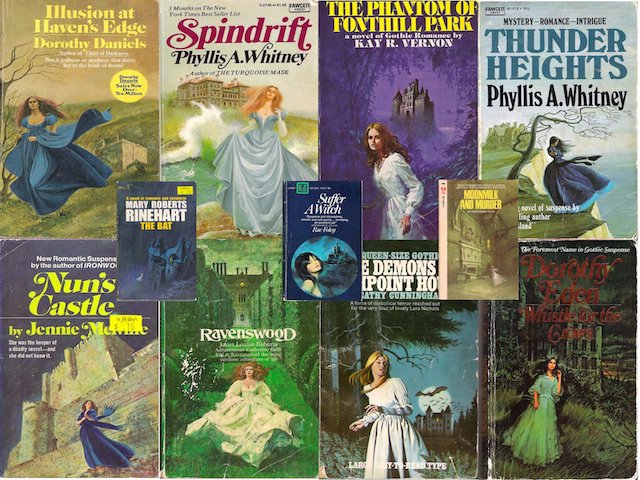
From the Mixed-Up Files of Mrs. Basil E. Frankweiler

From the Mixed-Up Files of Mrs. Basil E. Frankweiler by E.L. Konigsburg, 1967.

Twelve-year-old Claudia Kincaid is bored with her dull suburban life in Connecticut with her parents and her brothers. Her life also often seems unfair, like she has more responsibilities than her brothers do and she has more chores than her others friends. Basically, Claudia is bored and feeling unsatisfied with her life. She wants to get away from it all and have a little adventure … although not too much adventure because Claudia isn’t the overly-adventurous type.

Claudia is cautious and methodical. When she plans to run away from home, she carefully plans every step and invites her more adventurous nine-year-old brother Jamie to go with her, both for the companionship and because he is a tightwad and has the cash necessary to fund their adventure. Although Claudia and Jamie bicker as siblings, they’re closer to each other than to either of their other brothers. Jamie eagerly accepts Claudia’s proposition to run away, although at first, he’s a little disappointed when he finds out where they’re going.

Claudia plans for them to run away to New York City because, as she puts it, it’s “a good place to get lost.” The city is so big, Claudia is sure that two runaway children will be easily overlooked. She’s also found a great place for them to stay during their adventure: the Metropolitan Museum of Art. Claudia loves comfort, convenience, and beauty, and the museum can offer all of that without the fees of staying in a hotel. There are exhibits of furniture, which provide them with a bed to sleep in, and interesting exhibits to keep them entertained and educated, and all they have to do is evade the security guards. At first, Jamie thinks that sounds a little too tame, but their adventure soon proves to be exciting and challenging, with enough mystery to satisfy both of them.

Claudia and Jamie develop routines for sneaking around the museum, evading the guards, hiding the backpacks and instrument cases that hold their clothes, and raiding the coins in the fountain for extra money. One day, while they’re hiding in the restrooms and waiting for the museum staff to leave, the staff set up a new exhibit for an angel sculpture sold to the museum by the wealthy and mysterious widow Mrs. Basil E. Frankweiler, who is actually the person narrating Claudia and Jamie’s story in a letter to her lawyer.

Claudia develops a fascination for the angel and a desire to learn the truth about the theory that the statue was made by Michelangelo. Between the two children, Claudia is the more imaginative and romantic, but Jamie’s logical mind and zest for adventure serve them well as they delve deeper into the mystery. They do learn something important at the museum, but to get the full truth, they have to leave their planned hiding place in the museum and go see Mrs. Basil E. Frankweiler herself.

Mrs. Frankweiler is a delightfully eccentric student of human nature, who is fascinated by the young runaways who come to her for answers to a mystery hundreds of years old. In exchange for the details of their exploits, Mrs. Frankweiler gives the children a chance to locate the answers they’re seeking in her strange, mixed-up files. In the process, the children learn a secret that gives both of them the sense of being part of something secret and exciting and much bigger than their ordinary, hum-drum lives, which is what they were originally looking for when they ran away from home.

The book is a Newbery Award winner, and it is available to borrow for free online through Internet Archive (many copies).

My Reaction

During the course of the adventure, Claudia and Jamie become closer to each other than they were before they ran away from home. They learn a little more about each other and themselves, and neither of them is quite the same as they were before they started, which is at the heart of Claudia’s reasons for wanting to run away from home in the first place. The language and descriptions in the book are colorful, which is part of the reason why this book is popular to read in schools.

There were two movies made of this story. One is a made-for-tv movie version from 1995, although it changed some of the details from the original story. In the 1995 movie, there is a scene with Jamie getting sick and Claudia worrying about him and taking care of him that never happened in the original book. Also, in the movie, Claudia stops Jamie from taking the coins from the fountain when they had no qualms about raiding the fountain for money in the book. At the end of the book, the children don’t tell their parents where they were hiding when they return home, but in the movie, the parents do find out. There is also an older movie from 1973 which is sometimes called The Hideaways.

Voices After Midnight

Voices After Midnight by Richard Peck, 1989.

Three children, Heidi, Chad, and Luke, are traveling from their home in California to spend a couple of weeks in New York during the summer because their father has to do some work for his advertising firm there.  Heidi, the oldest child, didn’t want to go on the trip.  She would rather have stayed at home with her best friend, but her parents insisted that she go because she borrowed her mother’s car without permission and took it out driving without an adult in the car even though she only had a learner’s permit, not a real driver’s license, and barely even knew where the car’s controls were (she took her younger brothers along just so they could tell her about the controls, which shows her level of driving skill).  The resulting accident she had took out a flower bed.  Although her parents didn’t find out about the accident, she decided that perhaps it would be a good idea to get out of town for awhile while the whole incident blows over.

Chad is the narrator of the story, and he explains that his father’s company has rented a house for them to live in while they’re in New York, or rather, part of an old house.  It’s a very old house, and it’s five stories tall.  There is an old cage elevator that has been repurposed as a telephone nook.  It’s a nice place, but there’s something strange about it.  Even before they arrive in New York, both Chad and Luke begin dreaming about snow.  Then, on their first night in the house in New York, Chad hears voices in the house after midnight.  It sounds like a man and a woman.  They are trapped somewhere, and they are cold.  Even the family’s dog, Victoria Alexandrina (Al for short) is frightened in the house.

Luke loves old houses and places with history, and he seems to have an odd ability to sense the past, even being able to describe what places looked like in the past without doing any research to find out.  Luke tries to tell Chad that he has the same ability to get in touch with the past, but Chad doesn’t believe it at first.  Luke thinks that they have a special mission in New York, to resolve some kind of unfinished business, although he’s not sure what. 

Then, Luke admits to Chad that he’s been hearing the voices in the house, too.  The two of them sneak up to the upper floors of the house, the part that they haven’t rented, and they see that the rooms are all empty and in bad repair.  When they look out of the windows, they see the landscape as it was years ago, with buildings being constructed that are already old in modern times.  Heidi finds them up there and becomes fascinated by a dress that they find in an old trunk.

The boys’ abilities to see the past keep getting stronger, and more strange things happen in the house.  A bouquet of flowers suddenly appears in Heidi’s room with a message from a mysterious admirer, and then almost as suddenly, the flowers wilt and the card with the message fades, as if they had aged suddenly.  The boys keep seeing people and things from the past all over town as they explore New York City.

At night, Chad and Luke find themselves going back in time in the house’s history.  Chad is frightened, but Luke knows that they’re looking for an event in the house’s history, something that must be changed.

Back in the late 1800s, the Dunlap family lived in the house, with two teenage children, Emily and her older brother, Tyler.  Their family is fairly well-off, but not as wealthy as the family of the girl Tyler has a crush on.  One night, Chad and Luke witness a conversation between Emily and her mother about Tyler’s marriage prospects.  Emily thinks that Tyler is making the wrong choice, pursuing the wrong girl in his romantic life.  It doesn’t seem like an earth-shattering tragedy, but events are moving closer to an even greater tragedy.  It is Emily and Tyler’s voices that the boys have been hearing after midnight in the house.

Chad finds their trips into the past unnerving and he fears that he and Luke might accidentally become stuck in the past.  He wants to stop, but Luke insists that they keep going.  The situation becomes more urgent because Heidi has also found her way into the past and is falling in love with Tyler!  When Chad and Luke go into the past, they are invisible to the people there, but Tyler not only sees Heidi but dances with her at a New Year’s ball.  From then on, Heidi is also involved in the adventure.  Like Luke, she has a sense that there is something that they need to do in that house, in the past.

Something bad is going to happen to Emily and Tyler.  Somehow, they are going to die.  Cold.  Trapped.  During the Great Blizzard of 1888.  The kids are not sure quite what exactly is going to happen until almost the end, but they can feel it coming.  It has already happened in the distant past, but they need to find the right moment in time to stop it from happening again!

All three of the children, Chad, Heidi, and Luke, have psychic abilities and are able to see and travel through time, although Chad and Heidi have mostly worked to ignore it in their lives, trying to just be normal kids.  When they succeed in saving Tyler and Emily Dunlap, they not only change the past but the present, eventually meeting some of Tyler’s descendants (who he marries is a bit of a surprise, although it’s not either of the girls that Emily had expected it to be).  There is a kind of odd time loop, though.  At the end of the story, they learn about their own, special, previously unknown connection to the Dunlap family and the possible reason why they are gifted with their time-traveling abilities.  In saving Tyler and Emily, they are also saving themselves, which oddly, begs the question of how real they were before . . . but, maybe they were always fated to succeed.  In the end, the house in New York is still “haunted”, but the final joke (unknown to the current owners) is that Heidi becomes the beautiful but mysterious “ghost” who appeared at the right time and then suddenly disappeared and whose story has been passed down through the generations.

The book is available to borrow for free online through Internet Archive.

Terror By Night

PFTerrorNight

Terror By Night by Vic Crume, 1971.

This book is part of the Partridge Family book series, based on the The Partridge Family tv show.

Shirley has been thinking that she and her children could use a vacation, and her family band’s manager, Reuben Kinkaid, suggests a place where they could have a little vacation and do some rehearsing.  Reuben arranges for the family to rent a large house with several acres of land attached in a small New England town not far from Salem, Massachusetts.  That should have been their first clue.  That, and the fact that the town’s name is Haunt Port.

At first, the Partridges are just thinking about how they can rehearse without disturbing anyone on such a big place, and Danny and Chris want to try camping out.  However, when they arrive in town, they learn that the name of the house they’ve rented is Witch’s Hollow and that it’s close to a place called Hangman’s Hill.  Soon after the family arrives at the house, Keith and Laurie also find a dummy hanging from a tree with a note that says, “Welcome! The Hangman.”  It’s pretty disturbing, but Keith and Laurie decide to hide the dummy and not scare the others.  They don’t know who is behind this awful joke, but they don’t want to give that person the satisfaction of seeing them react to it.

However, the disturbing things don’t end there.  The family’s dog, Simone disappears.  Also, people in town seem to have a strange attitude toward the house’s cook/housekeeper, Mrs. Judbury, and her daughter, Prudence.  Prudence is sullen and anti-social with a habit of catching toads for fun.  Keith has to admit that he can see how Prudence might have gotten a reputation for being a witch, but there’s more behind the strange happenings at Witch’s Hollow than that.

Simone eventually returns, although it’s clear that she’s frightened and hasn’t been fed well, and Mrs. Judbury tells the family the story of her family’s history in Haunt Port.  One of Mrs. Judbury’s husband’s ancestors was one of the accusers at the Salem witchcraft trials, but later, when people began to realize that they had executed innocent people, some of the accusers themselves found public opinion turning against them.  This ancestor decided to leave Salem and go to Judbury Port (the old name for Haunt Port) because he had family there, but he and his wife were never really accepted there, either.  This man later hanged himself in despair (at the place called Hangman’s Hill), and his wife later died alone, also shunned by the town.  Although some of the townspeople might feel bad about how things ended up with the Judburys, the old uneasy feelings about the family have remained, and Prudence’s stand-offish attitude, combined with her mother’s apparent psychic premonitions, has fueled some of the old stories.

At one point, Keith tells Prudence that he knows why she acts the way she does, because it’s much easier for her to keep her distance from people and behave strangely than it is for her to try to learn to get along with them and make friends.  Prudence isn’t responsible for what the townspeople did in the past, but she isn’t helping things in the present.  Jane Parsons, whose family owns the local store, also helps in a way because she and Prudence are cousins, and Prudence joins her in welcoming a cousin of their and his friend when they visit town.  As Prudence becomes friendlier, she and her mother become allies in trying to figure out the mysteries of Witch’s Hollow, which turn out to have less to do with past wrongs than current crimes.

The book is available to borrow for free online through Internet Archive.

The Haunted Underwear

The Haunted Underwear by Janet Adele Bloss, 1992.

Things have been rough for ten-year-old Kelly Towser since her parents decided to adopt a four-year-old boy named Stevie.  For the first part of her life, Kelly was an only child, and now she misses that peaceful period of her life.  Now, her parents don’t have as much time to spend with her.  Everyone showers little Stevie with attention and presents.  Although she doesn’t say so, Kelly worries that maybe her parents adopted Stevie because they were disappointed in her or secretly really wanted a boy instead.

To make things worse, Stevie’s little-kid antics get on Kelly’s nerves.  Stevie keeps making messes, throwing his toys all over the place.  Kelly’s parents tell her that she used to make a lot of messes when she was little, too.  Kelly doesn’t remember doing it, but her parents say that she used to like to throw her clothes all over the place, even hiding her underwear in random locations in the house.  They used to joke about her “haunted underwear,” mysteriously showing up in strange places.

Because Kelly complains that Stevie is getting all kinds of presents, and she isn’t, her parents agree to give her a special present to celebrate her getting a new brother.  After thinking about it a little, Kelly decides that she wants a new puppy.  The family already has a dog named Star, but Kelly thinks that the new puppy could be a friend for Star while she’s at school.

At the pound, Kelly selects a cute brown puppy.  One of the workers tells her that the puppy was found abandoned at the side of the road, dirty and hungry.  Stevie is excited about the new puppy and wants to play with him, but Kelly is determined to keep the puppy for herself, something that she doesn’t have to share with Stevie.  When Stevie insists that the dog’s name is Boscoe because he used to have a dog named Boscoe, Kelly insists that the dog’s name is Jingle.  Stevie gets upset that she isn’t sharing the dog, but Kelly doesn’t think that Stevie would be careful with the puppy because he has already pulled Star’s tail.

As older readers might guess, Kelly soon finds herself in a similar position with Jingle as her parents are with Stevie.  Star gets jealous of the new puppy in the same way that Kelly is jealous of Stevie, feeling like she’s been replaced in her own house.

Kelly does try to get her parents’ attention with some silly stunts, but when her clothes and underwear mysteriously start appearing around the house, she has no explanation.  Her parents punish her, thinking that this is just another attention-getting stunt, but Kelly knows it’s not her.  She starts thinking that the real culprit is Stevie, trying to steal her parents’ attention and affection more than he already has.  However, there is another explanation for the mysterious underwear ghost, and as Kelly investigates, trying to catch Stevie with her underwear, she learns a number of important things.

I figured out pretty early who was responsible for the underwear around the house, although it helped that I’ve had experience with dogs. Star, feeling neglected because of the new puppy, was trying to get Kelly’s attention in the same way that Kelly was trying to get her parents’ attention. Stevie does look guilty for a while because Kelly discovers that he is a sleepwalker and has been having nightmares.  However, when she gets up in the night to catch Stevie sleepwalking with her underwear, she finds Star taking it instead.  Understanding Star’s feelings help Kelly to better understand her own feelings, and she resolves to spend more time with Star so she’ll feel less neglected. When her parents discover the truth, they apologize to Kelly and reassure her that they didn’t adopt Stevie as a replacement for her and that they don’t love her any less.

Kelly’s mother also talks to Kelly about what she knows about Stevie’s history.  Although they don’t know the names of Stevie’s birth parents, Kelly’s parents know that Stevie’s mother wasn’t married and had no money and gave up him for adoption in the hopes that he would be raised in a more stable home.  Stevie has not seen her since he was two years old, two years ago.  Stevie is troubled by nightmares because his young life has been very chaotic, and he has been moved from foster home to foster home, with people always giving him up.  He deeply fears that his new family will also give him up and is terrified when they seem like they’re going to go somewhere, afraid of that they’ll never come back.  That is what his nightmares are really about.  Kelly comes to realize that his situation is very much like Jingle’s, that the fact that someone gave him up doesn’t mean that he’s bad and that all he needs is time, attention, and love to grow out of his problems.

Even though things work out okay, this is one of those books where I found myself getting impatient with the parents.  I think that some of Kelly’s bad feelings might have been resolved much sooner or avoided altogether if Kelly’s parents had spoken more honestly with her in the beginning, preparing her to be patient with Stevie and to understand when he has problems.  Apparently, they did tell her at least some of what they knew about Stevie’s past in the beginning, but they don’t seem to have spoken to her much about how that might influence his behavior and how he will need a lot of time and reassurance to get over his fears. 

When I used to volunteer at an animal shelter, we used to tell people who were adopting dogs that they would have to expect that their new dog would destroy something that they owned, especially if it was an energetic young puppy. When you bring a new dog into your house, it doesn’t know the area, it doesn’t know you very well, and it doesn’t know the rules that go with you and your house. It’s almost certain that, soon after arriving, it will relieve itself in the wrong place or pick the wrong thing to use as a chew toy. Something is likely to get ruined or some mess will be made. The best you can do is to take some preemptive measures, like securing valuables, closing the doors to rooms with things that the dog shouldn’t get into, and taking the dog to the place where it should relieve itself immediately on arriving at the new home. These steps can help head off problems, but at the same time, something is still likely to go wrong because the dog needs time to learn what you find acceptable and unacceptable and will probably do something wrong while learning. We didn’t tell the new owners this to scare them off from adopting but to help manage their expectations so that they wouldn’t panic and try to return the new pet at the first sign of trouble. I think that Kelly needed a similar warning about her new brother to help manage her expectations.

Early in the story, Kelly says that when her parents first started talking about adoption, she thought that it would be great because she’s always wanted a little brother that she could teach to do fun things like roller-skating or flying a kite.  Her attitude toward her new brother only soured when he seemed to be taking all of her parents’ attention and crying all the time and making messes.  She thinks at one point that it’s hard to love someone who seems determined to get you in trouble, which is what she thought Stevie was doing with the underwear.  My thought is that, if Kelly’s parents had explained more to her that Stevie might misbehave or be nervous in his new home and would need time to be taught how to live in their family, perhaps Kelly wouldn’t have been so upset and the parents would have been less quick to blame Kelly for the underwear issues. Knowing that there might be some problems that would be temporary would have been reassuring to Kelly that there were better things ahead for her and her new brother.

Also, even though the parents seemed to understand that Kelly was seeking their attention, they didn’t really do anything positive about it at first, just punishing her for leaving the underwear around.  If they had told her, straight out, in plain English, that even though they’ve been very busy with Stevie that doesn’t mean that their feelings for her have changed and that she doesn’t need to pull stunts to get their attention because they would be spending some quality time with her soon, it might have helped to head off Kelly’s bad feelings.  The closest they get to that at first is when they tell her that she’s old enough to know that there are better ways to get their attention than silly stunts.  They don’t mention what the better ways are, and they don’t follow it up with much of an attempt to give her a little attention. What annoyed me most was that Kelly’s mother waited for Kelly to approach her to talk, but in her place, I think I would have taken the initiative, especially after Kelly’s stunts included some potentially dangerous bike stunts. I’m a great believer in direct communication. I tell people if there’s something I want them to know, and if I want to know what they’re thinking, I ask. Over the years, I’ve discovered that if you leave people guessing what you’re thinking or what you want, you discover that most people aren’t good at guessing.  I won’t say that Kelly’s parents are the most clueless ones I’ve seen in children’s books because they made more of an attempt to tell Kelly things and talk to her than some other parents in books do. All the same, it always gets to me when problems in books could be avoided with just an extra conversation or two.  There were a couple of times in the book when I wished that I could step into the scene, call “Time!”, and make the characters just stop and really talk to each other and take a real look at the situation.

The book is available to borrow for free online through Internet Archive.