The Egyptian Cinderella

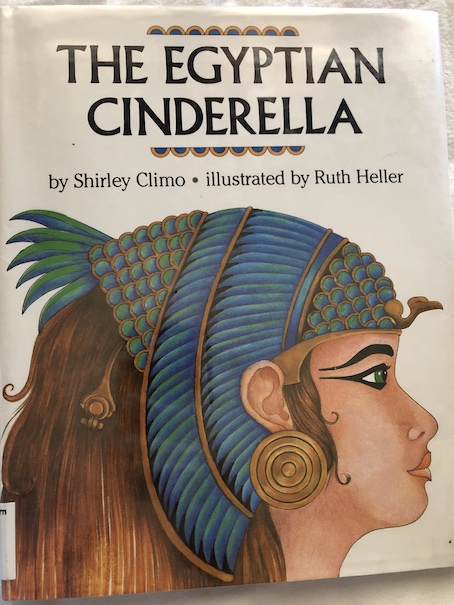
The Egyptian Cinderella by Shirley Climo, illustrated by Ruth Heller, 1989.

Rhodopis is a slave girl in Egypt. When she was young, she was abducted from her home in Greece by pirates, who sold her into slavery. Her blonde hair and green eyes make her look very different from the Egyptian servants, and none of them like her.

Most of Rhodopis’s friends are animals, and in the little free time she has, she likes to dance. The elderly man who owns her sees her dancing and has a special pair of rose-red gold shoes made for her so she can wear them while she dances. However, the Egyptian servants are all jealous of her for getting this special gift.
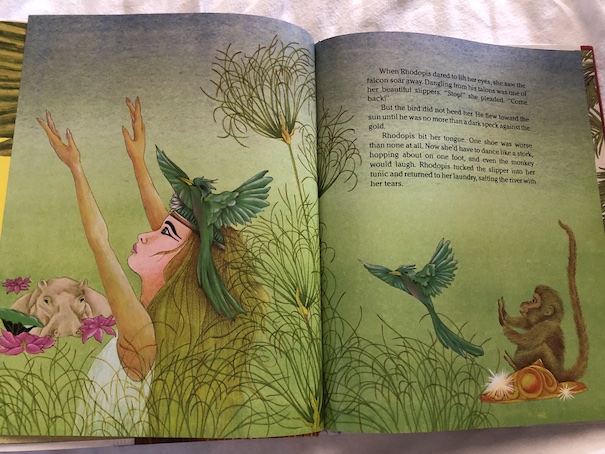
One day, the servants all leave her behind when they go to a special court held by the Pharaoh. While they are gone, a falcon snatches one of Rhodopis’s slippers and flies away. The falcon flies to the court and drops the slipper in the Pharaoh’s lap. The Pharaoh takes this as a sign from Horus that the girl who owns that shoe is destined to be his wife and immediately begins searching for her.

When he finds Rhodopis, the servant girls protest that she is not Egyptian and is only a slave, but the Pharaoh compares her green eyes to the color of the Nile, her light hair to papyrus, and her pink skin to a lotus flower. In his eyes, there could not be any other girl who could represent Egypt, and her slave status doesn’t matter.

The book is available to borrow and read for free online through Internet Archive (multiple copies).

My Reaction

I remember loving this book when I was a kid! I always liked fairy tales and folktales, and I think this was one that was introduced to me by our school librarian, probably around the time it first came out in 1989. For a long time, I was unaware that the same author also wrote other books based on variations of the Cinderella story: The Korean Cinderella, The Persian Cinderella, and The Irish Cinderlad. One of the fascinating things about the story of Cinderella is that variations of the story about a girl (usually, it’s a girl, although there are some variations with a boy) who is abused by her stepmother and stepsisters but who triumphs in the end when she marries a king or a prince, who identifies her as the girl he loves by a lost shoe, have appeared in cultures around the world. The classic one that most of us know is the French version by Perrault, but there are other versions of the story that are older.

There is an author’s note in the back of the book that explains that this Egyptian version of the Cinderella story is one of the oldest known Cinderella stories. The Roman historian Strabo recorded the story in the first century BC. The story is legend, but according to the author, Rhodopis was a real slave girl who married the Pharaoh Amasis in the sixth century BC (although accounts of her vary, and it can be difficult to separate history from legend).
Miss Bianca

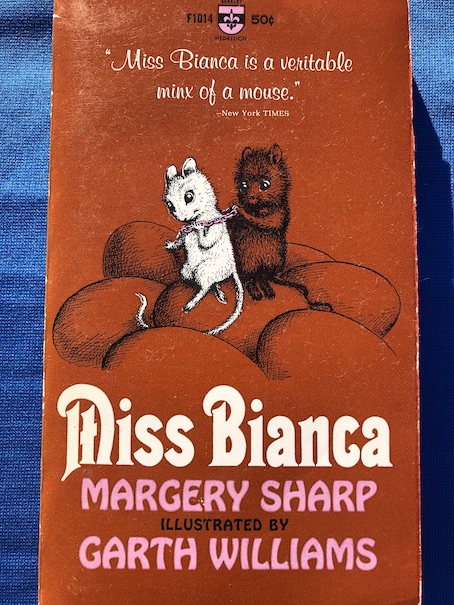
Miss Bianca by Margery Sharp, 1962.

Miss Bianca is still a hero to the Mouse Prisoners’ Aid Society after the rescue of the Norwegian poet in the last book.  Bernard is a lesser hero, even though he was part of the mission, but such is the lot the organization’s Secretary.  Since the success of the rescue mission, the society is keen to perform another rescue, a deviation from the society’s usual role of merely providing comfort to prisoners.  The rescue mission that they have in mind this time is that of a little girl.  (The first Disney The Rescuers movie also featured the rescue of a little girl, but the circumstances in the book are very different.)

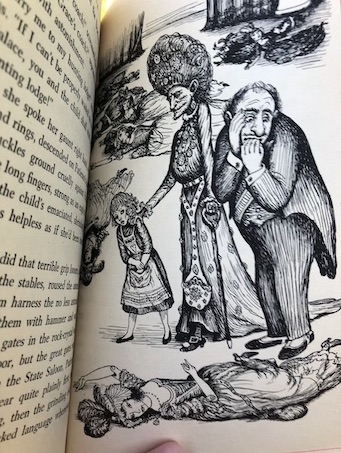
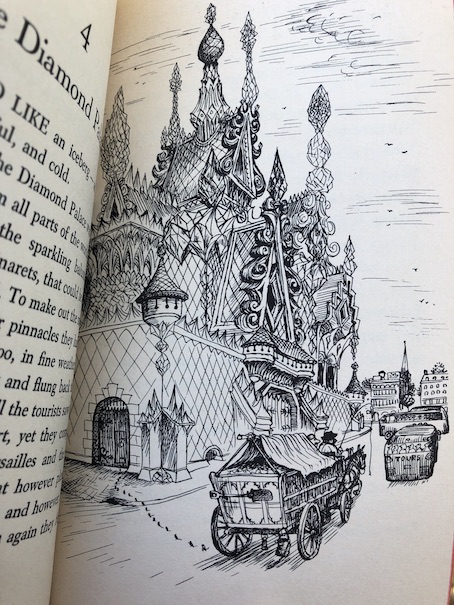
Patience is an eight-year-old orphan who has been abducted and enslaved by the Grand Duchess and is being held in her Diamond Palace.  The Grand Duchess is cruel, and some people think that she’s a witch.  Miss Bianca appeals to the Ladies’ Guild of the society to help free Patience.  The Ladies’ Guild doesn’t usually take part in the more exciting missions of the society.  The mice are somewhat concerned about what they will do with the child once they have rescued her because other prisoners they’ve helped have had homes to return to, but Miss Bianca assures them that they have a home in mind for the girl, a farm family in Happy Valley who have lost a daughter and would be likely to take in another girl.  The Ladies’ Guild agrees to undertake the mission.  Bernard wanted to come, too, but Miss Bianca insisted that they didn’t need his help.

The Diamond Palace is a strange place, in many different ways.  People often come to see it because it looks like it’s made out of diamonds, although it’s actually rock crystal.  It’s cold all the time, but even weirder than that, there seem to be less servants in the Palace than Miss Bianca would expect, given that the Duchess is always surrounded by ladies-in-waiting, who would be expected to have maids of their own.  It turns out that the “ladies-in-waiting” aren’t real people – they’re clockwork automatons! 

Rather than being a witch, the Duchess is simply an odious person who has so much money that she can give full reign to a nasty personality without anyone stopping her.  She’s so nasty and spoiled and used to forcing people to do what she wants that all of her previous, human ladies-in-waiting found that they just couldn’t handle her increasingly unreasonable demands, like insisting that they all stand perfectly still all day long while she sits on her throne, not even the slightest movement allowed.  No human being could possibly manage that.  When the human ladies-in-waiting all fainted after trying to keep perfectly still for forty-eight hours straight, the Duchess screamed that they all must have done it on purpose and dismissed them, replacing them with automatons.  The mechanical people are almost perfect because they always stand perfectly still until they’re needed and never complain or have human needs, but the Duchess discovers that they’re not quite perfect because there are some chores that they can’t do and she also misses seeing people react fearfully or start crying when she bullies them.  Keeping Patience as her slave gives the Duchess someone to do those chores and also someone to abuse.  The Duchess has had other child slaves before, but the others have died from the abuse, ill-nourishment, and general bad treatment.  (This is a darker story in a lot of ways from the Disney one.)

When Miss Bianca and the other mice meet Patience, she is also under-nourished and desperately lonely.  Miss Bianca sends the others back to the society to report about the automatons and stays with Patience to keep her company, trying to decide how to deal with the strange, mechanical people.  Bernard worries anxiously about Miss Bianca when the others come back without her and decides to go after her.

The Duchess’s other human servant, Mandrake, her Major-domo, is also little more than a slave.  The Duchess has evidence of a crime that he once committed and uses it to keep his loyalty.  Usually, he’s the only one who gets to go out the back door because he doesn’t trust Patience to take out the garbage without running away.  However, Patience tells Miss Bianca that the clockmaker sometimes comes in that way when he comes to wind up the mechanical ladies-in-waiting.  Miss Bianca hatches a plan that involves making the ladies-in-waiting break down.

However, to Miss Bianca’s surprise, the Duchess commands Mandrake and Patience to come with her to her hunting lodge when the ladies-in-waiting break down.  There is no opportunity for escape.  However, it turns out that the hunting lodge is actually above Happy Valley, and Bernard knows where it is.

Of course, they do get Patience safely to her new foster family.  Miss Bianca actually talks to the girl’s foster mother and tells her that Patience will probably forget about her eventually, when she grows up, but the foster mother likes the lullaby that Miss Bianca sings for Patience and promises to keep it as a family tradition.

The darker aspects of the story really bothered me, and I have to admit that I didn’t like it as well as the Disney version.  Mandrake actually reappears in another book in the series.

The book is currently available online through Internet Archive.